

The DOI matches its Crossref record; 161 of the 162 references it cites were found in a registry or an index.
Role of TET enzymes in DNA methylation, development, and cancer
Open accessAbstract
The pattern of DNA methylation at cytosine bases in the genome is tightly linked to gene expression, and DNA methylation abnormalities are often observed in diseases. The ten eleven translocation (TET) enzymes oxidize 5-methylcytosines (5mCs) and promote locus-specific reversal of DNA methylation. TET genes, and especially TET2 , are frequently mutated in various cancers, but how the TET proteins contribute to prevent the onset and maintenance of these malignancies is largely unknown. Here, we highlight recent advances in understanding the physiological function of the TET proteins and their role in regulating DNA methylation and transcription. In addition, we discuss some of the key outstanding questions in the field.
Overview
The claims and statistics of this paper haven’t been checked yet.
Run the check — free, no account needed. It reads the open-access text and checks the sources it cites.
Integrity signals
Registry
Cites
Statistics
Figures
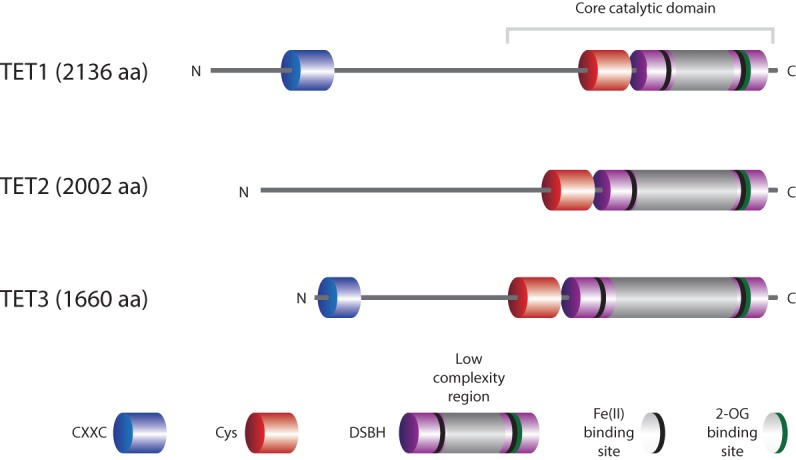
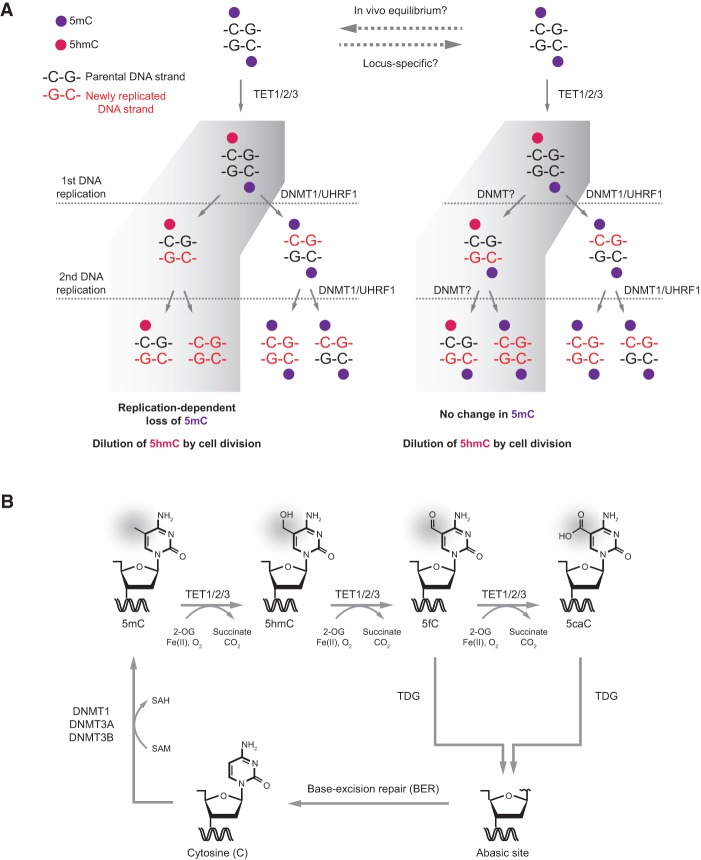
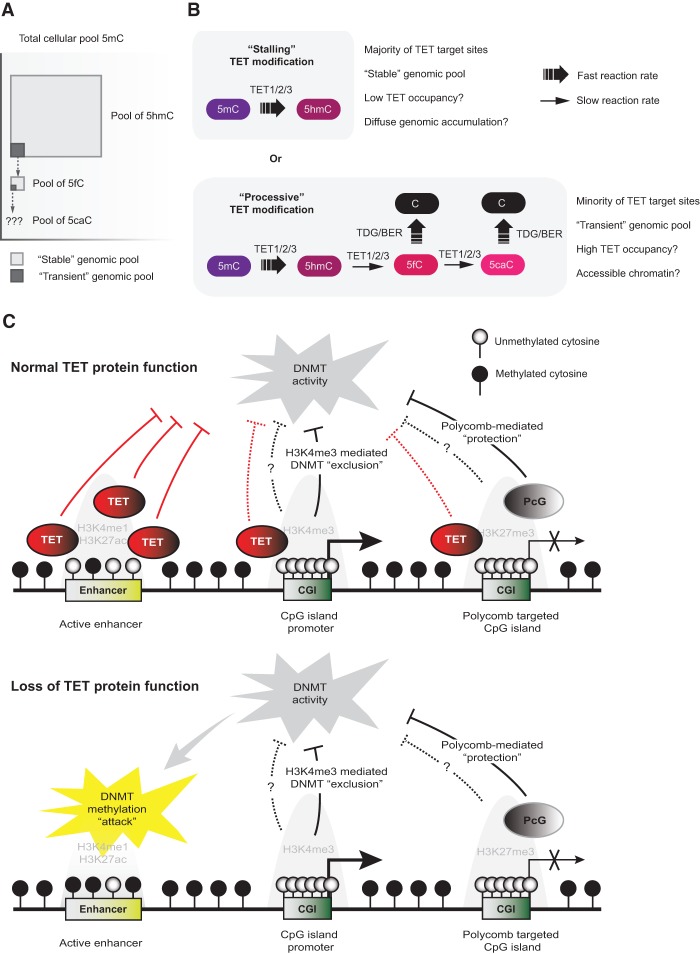
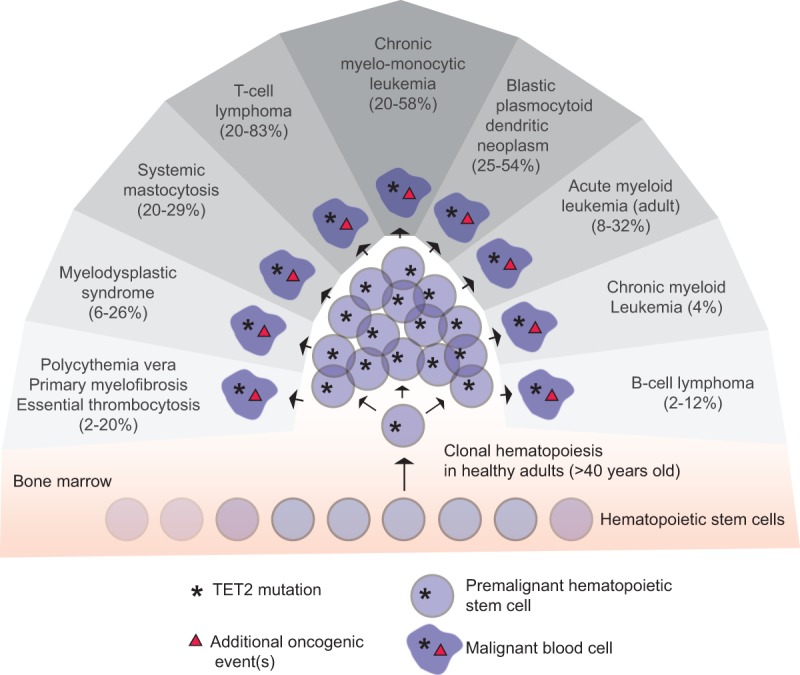
Verification
Claims the paper makes
The claims and statistics of this paper haven’t been checked yet.
Run the check — free, no account needed. It reads the open-access text and checks the sources it cites.
Claims other papers make about this one
Each is checked against this paper’s own text: does it say what the citing paper says it does?
The source backs part of the claim, not all of it — or backs it for a different population, condition or comparison.
In the citing paper
“Generally, 2OGO catalyze specific hydroxylation of substrates, which, in turn, leads to demethylations via other catalytic cycles or downstream pathway involving thymine-DNA-glycosylase, which catalyzed base excision with DNA base excision repair [101,120].”
From Vitamin C-Sources, Physiological Role, Kinetics, Deficiency, Use, Toxicity, and Determination (2021) · cites this paper as [120]
Experimental — accuracy not yet measuredIn the citing paper
“TET2 is frequently mutated or lost somatically in both myeloid and lymphoid malignancies63,64.”
From Targeting cancer vulnerabilities with high-dose vitamin C (2019) · cites this paper as [63]
Self-check
Percentages, sums and reported differences re-computed from the paper’s own numbers.
The self-check needs the paper’s full text.
Citations
Cites
Conversion of 5-Methylcytosine to 5-Hydroxymethylcytosine in Mammalian DNA by MLL Partner TET1
Tahiliani, M., Koh, K. P., Shen, Y., Pastor, W. A., Bandukwala, H., Brudno, Y., Agarwal, S., Iyer, L. M., Liu, D. R., Aravind, L., et al. (2009) · Science · doi:10.1126/science.1170116 · Cited by 5,836 · cited 1×
“Thus, it was remarkable when ten eleven translocation protein 1 (TET1) was discovered and shown to be able to modify methylcytosine and potentially erase DNAmethylation (Tahiliani et al. 2009).”
BackgroundGenomic and Epigenomic Landscapes of Adult De Novo Acute Myeloid Leukemia
The Cancer Genome Atlas Research Network (2013) · New England Journal of Medicine · doi:10.1056/nejmoa1301689 · Cited by 5,078
Age-related clonal hematopoiesis associated with adverse outcomes
Jaiswal, S., Fontanillas, P., Flannick, J., Manning, A., Grauman, P. V., Mar, B. G., Lindsley, R. C., Mermel, C. H., Burtt, N., Chavez, A., et al. (2014) · New England Journal of Medicine · doi:10.1056/nejmoa1408617 · Cited by 4,841 · cited 1×
“Second, TET2 mutations are frequently observed in aged healthy individuals with clonal hematopoiesis and increase the propensity to develop hematopoieticmalignancies (Busque et al. 2012; Genovese et al. 2014; Jaiswal et al. 2014; Xie et al. 2014).”
BackgroundClonal hematopoiesis and blood-cancer risk inferred from blood DNA sequence
Genovese, G., Kähler, A. K., Handsaker, R. E., Lindberg, J., Rose, S. A., Bakhoum, S. F., Chambert, K., Mick, E., Neale, B. M., Fromer, M., et al. (2014) · New England Journal of Medicine · doi:10.1056/nejmoa1409405 · Cited by 3,531 · cited 1×
“Second, TET2 mutations are frequently observed in aged healthy individuals with clonal hematopoiesis and increase the propensity to develop hematopoieticmalignancies (Busque et al. 2012; Genovese et al. 2014; Jaiswal et al. 2014; Xie et al. 2014).”
BackgroundTet proteins can convert 5-methylcytosine to 5-formylcytosine and 5-carboxylcytosine
Ito, S., Shen, L., Dai, Q., Wu, S. C., Collins, L. B., Swenberg, J. A., He, C., & Zhang, Y. (2011) · Science · doi:10.1126/science.1210597 · Cited by 3,451 · cited 3×
“6-fold) substrates compared with the initial oxidation reaction of 5mC (Ito et al. 2011; Hu et al. 2015).”
BackgroundXu, W., Yang, H., Liu, Y., Yang, Y., Wang, P., Kim, S.-H., Ito, S., Yang, C., Wang, P., Xiao, M.-T., et al. (2011) · Cancer Cell · doi:10.1016/j.ccr.2010.12.014 · Cited by 2,875
A decade of exploring the cancer epigenome—biological and translational implications
Baylin, S. B., & Jones, P. A. (2011) · Nature Reviews Cancer · doi:10.1038/nrc3130 · Cited by 2,871
Tet-Mediated Formation of 5-Carboxylcytosine and Its Excision by TDG in Mammalian DNA
He, Y., Li, B.-Z., Li, Z., Liu, P., Wang, Y., Tang, Q., Ding, J., Jia, Y., Chen, Z., Li, L., et al. (2011) · Science · doi:10.1126/science.1210944 · Cited by 2,776 · cited 4×
“Subsequent to the discovery of oxidized 5mC bases, it was demonstrated that TDG has no effect on 5hmC but shows robust recruitment and in vitro catalytic activity toward 5fC and 5caC (He et al. 2011; Maiti and Drohat 2011; Spruijt et al. 2013).”
BackgroundInfluentialFigueroa, M. E., Abdel-Wahab, O., Lu, C., Ward, P. S., Patel, J., Shih, A., Li, Y., Bhagwat, N., Vasanthakumar, A., Fernandez, H. F., et al. (2010) · Cancer Cell · doi:10.1016/j.ccr.2010.11.015 · Cited by 2,766
The Nuclear DNA Base 5-Hydroxymethylcytosine Is Present in Purkinje Neurons and the Brain
Kriaucionis, S., & Heintz, N. (2009) · Science · doi:10.1126/science.1169786 · Cited by 2,700 · cited 1×
“By comparison, the products of further TET-mediated oxidation, 5fC and 5caC, are observed at ∼10-fold to 100-fold lower levels than 5hmC and often close to or under the detection limit (Kriaucionis and Heintz 2009; Globisch et al. 2010; Szwagierczak et al. 2010; He et al. 2011; Ito et al. 2011; Pfaffeneder et al. 2011…”
Background
Cited by
Sorted by citations
Items 601–700 of 1,001
Laranjeira, A. B. A., Nguyen, D. T., Pelosof, L. C., Doroshow, J. H., & Yang, S. X. (2024) · Diseases · doi:10.3390/diseases12070163 · Cited by 10
“They are large (~180 to 230 kDa) multidomain enzymes that convert 5-mC to 5-hydroxymethylcytosine (5-hmC) in DNA through their catalytic dioxygenase activity and initiate demethylation at 5-mCpG sites [15].”
BackgroundJang, J., Lee, Y. J., Ha, I., & Park, H. (2024) · PAIN Reports · doi:10.1097/pr9.0000000000001200 · Cited by 13
“26 The continuous reaction of ten-eleven translocation (TET) enzymes initiates DNA demethylation, converting 5-mC to 5-hmC. 40 The TET family is divided into 3 proteins: TET1, TET2, and TET3.”
BackgroundDiagnostic Challenges in the Pathological Approach to Pleural Mesothelioma
Lucà, S., Pignata, G., Cioce, A., Salzillo, C., Cecio, R. D., Ferrara, G., Corte, C. M. D., Morgillo, F., Fiorelli, A., Montella, M., et al. (2025) · Cancers · doi:10.3390/cancers17030481 · Cited by 10
“Diagnostic Utility of 5-hmC Immunohistochemistry 5-Hydroxymethylcytosine (5-hmC) is a modified nucleotide derived from 5-methylcytosine through the action of the TET family of DNA hydroxylases [148,149].”
Interrogating the regulatory epigenome of cellular senescence
Thanos, D.-F., Ntintas, O. A., Athanasiadis, E. I., Papaspyropoulos, A., Petty, R., & Gorgoulis, V. G. (2025) · Cellular and Molecular Life Sciences · doi:10.1007/s00018-025-05848-w · Cited by 10
“In this context, of great interest are TET enzymes that serve a key role in the epigenetic regulation of several biological processes by oxidizing 5-methylcytosines (5mCs), thereby demethylating DNA [326 ].”
Ghosh, K., Chatterjee, B., & Kanade, S. R. (2018) · Biochemical Journal · doi:10.1042/bcj20180009 · Cited by 10
RetractedZeng, Z., Wang, Y., Xiao, Y., Zheng, J., Liu, R., He, X., Yu, J., Tang, B., Qiu, X., Tang, R., et al. (2022) · Arthritis Research & Therapy · doi:10.1186/s13075-022-02741-w · Cited by 10
“DNA hydroxymethylation is a new type of DNA methylation that converts methyl- to hydroxymethylcytosines by ten-eleven translocation methylcytosine dioxygenase (TET) proteins, subsequently achieving demethylation [10, 11].”
BackgroundConcurrent Zrsr2 mutation and Tet2 loss promote myelodysplastic neoplasm in mice
García-Ruiz, C., Martínez-Valiente, C., Cordón, L., Liquori, A., Fernández‐González, R., Pericuesta, E., Sandoval, J., Cervera, J., Gutiérrez‐Adán, A., & Sanjuán-Pla, A. (2022) · Leukemia · doi:10.1038/s41375-022-01674-2 · Cited by 10
“TET2 is involved in the epigenetic control of gene regulation, HSC self-renewal, and myeloid lineage commitment [12].”
BackgroundEpigenetics of Thymic Epithelial Tumors
Nicolì, V., & Coppedè, F. (2023) · Cancers · doi:10.3390/cancers15020360 · Cited by 11
“The ten-eleven translocation enzymes (TET enzymes) are the proteins involved in the active DNA demethylation processes, mediating the successive oxidation of 5 mC to 5-hydroxymethylcytosine (5 hmC), 5-formylcytosine (5 fC), and 5-carboxylcytosine (5 caC) [67].”
BackgroundGuirgis, S. A., El-Halfawy, K. A., Alalem, M., & Khalil, H. (2023) · Journal of Medical Microbiology · doi:10.1099/jmm.0.001676 · Cited by 13
Liu, J., Min, S., Kim, D. C., Park, J., Park, E., Pei, S., Koh, Y., Shin, D., Byun, J. M., Ko, M., et al. (2023) · Leukemia · doi:10.1038/s41375-023-01954-5 · Cited by 12
“Somatic deletion of TET2 and loss-of-function mutations in TET2 are observed in 6–27% of primary and secondary AML [1].”
BackgroundUsing NMR to Monitor TET-Dependent Methylcytosine Dioxygenase Activity and Regulation
Treadway, C. J., Boyer, J. A., Yang, S., Yang, H., Liu, M., Li, Z., Cheng, M., Marzluff, W. F., Ye, D., Xiong, Y., et al. (2024) · ACS Chemical Biology · doi:10.1021/acschembio.3c00619 · Cited by 10
Jia, M., Li, X., Jiang, C., Wang, K., Zuo, T., He, G., Qin, L., & Xu, W. (2019) · Reproduction Fertility and Development · doi:10.1071/rd18474 · Cited by 10
Ahn, H., Lee, H. J., Lee, J., Cho, H. D., Oh, M., Son, J. W., & Jang, S. (2020) · Pathology - Research and Practice · doi:10.1016/j.prp.2020.153188 · Cited by 10
Peng, S., Chen, H., Chen, L., Yang, G., Liu, J., Cheng, X., & Tang, Y. (2022) · Chemical Research in Toxicology · doi:10.1021/acs.chemrestox.1c00254 · Cited by 10
Yang, X., Yang, L., Dai, W., & Ye, B. (2016) · OncoTargets and Therapy · doi:10.2147/ott.s117161 · Cited by 10
A novel requirement for DROSHA in maintenance of mammalian CG methylation
Σταθοπούλου, Α., Chhetri, J. B., Ambrose, J. C., Estève, P., Ji, L., Erdjument‐Bromage, H., Zhang, G., Neubert, T. A., Pradhan, S., Herrero, J., et al. (2017) · Nucleic Acids Research · doi:10.1093/nar/gkx695 · Cited by 10
“TET proteins are capable of oxidizing 5mC to 5hmC and other derivatives and are considered to play a role in both active and passive loss of DNA methylation (33).”
BackgroundDobosz, P., Stempor, P., Moreno, M. R., & Bulgakova, N. A. (2022) · Heredity · doi:10.1038/s41437-022-00533-1 · Cited by 9
“4 and Rasmussen and Helin 2016).”
Zhu, L., & Zhou, Q. (2023) · Journal of Chemotherapy · doi:10.1080/1120009x.2023.2219920 · Cited by 9
“Since disruption of epigenetic landscapes, including DNA methylation patterns, is a hallmark of cancer, precise regulation of DNA methylation patterns, which is partly mediated by TET enzymes, is of great importance to provide fundamental protection against cellular transformation in cancers [10].”
BackgroundAlbrecht, C., Rajaram, N., Broche, J., Bashtrykov, P., & Jeltsch, A. (2024) · Genes · doi:10.3390/genes15010080 · Cited by 9
“…protein family of dioxygenases, catalyzing the iterative oxidation of 5-methylcytosine (5mC) to 5-hydroxymethylcytosine (5hmC), 5-formylcytosine (5fC), and 5-carboxylcytosine (5caC) [7–9], which is followed by the removal of the oxidized bases 5fC and 5caC catalyzed by Thymine-DNA glycosylase [10].”
BackgroundTecik, M., & Adan, A. (2024) · Current Treatment Options in Oncology · doi:10.1007/s11864-024-01202-7 · Cited by 9
“TET2 mutations are considerably common in hematological malignancies among three TET genes and TET3 alterations are the least common [143, 144].”
BackgroundFactors affecting neutrophil functions during sepsis: human microbiome and epigenetics
Ma, Y., Zhao, Y., & Zhang, X. (2024) · Journal of Leukocyte Biology · doi:10.1093/jleuko/qiae107 · Cited by 9
Álvarez-González, E., & Sierra, L. M. (2024) · International Journal of Molecular Sciences · doi:10.3390/ijms25169054 · Cited by 10
Epigenetic mechanisms in non-small cell lung cancer therapy and chemoresistance
Xu, Y., Yang, M., Xu, Y., Han, J., & Zhu, Q. (2025) · Biochimica et Biophysica Acta (BBA) - Reviews on Cancer · doi:10.1016/j.bbcan.2025.189356 · Cited by 10
Protein O-GlcNAcylation in reproductive biology and the impact of metabolic disease
Scrivener, A. L., Westwood, M., Ruane, P. T., & Aplin, J. (2025) · Human Reproduction Update · doi:10.1093/humupd/dmaf013 · Cited by 9
“TET1, 2 and 3, members of the ten-eleven translocation (TET) family of enzymes, promote locus-specific conversion of 5-methyl cytosine to 5-hydroxymethyl cytosine (Rasmussen and Helin, 2016), and are all substrates for OGT.”
Yu, L., Zeng, J., Luo, B., Li, W., He, Y., Zhao, W., Hu, N., Jiang, N., Luo, Y., Xian, Y., et al. (2020) · Molecular Immunology · doi:10.1016/j.molimm.2020.08.003 · Cited by 10
Epitranscriptomic signatures in stem cell differentiation to the neuronal lineage
Șelaru, A., Costache, M., & Dinescu, S. (2021) · RNA Biology · doi:10.1080/15476286.2021.1985348 · Cited by 10
Papini, C., Wang, Z., Kudalkar, S. N., Schrank, T. P., Tang, S., Sasaki, T., Wu, C., Tejada, B., Ziegler, S. J., Xiong, Y., et al. (2022) · iScience · doi:10.1016/j.isci.2022.105077 · Cited by 9
“Determining the factors that influence cancer mutation formations byA3AandA3B is critical for further understandingof cancerpathogenesis andcan informdrugdiscovery efforts targeting these proteins (Kelley et al., 2014; Rasmussen and Helin, 2016; Subramaniam et al., 2014; Wyatt, 2013).”
BackgroundMartino, P. D., Marcozzi, V., Bibbò, S., Ghinassi, B., Baldassarre, A. D., Gaggi, G., & Credico, A. D. (2024) · Brain Sciences · doi:10.3390/brainsci14060553 · Cited by 9
“The transformation of 5mC to 5hmC is facilitated by the Ten–Eleven Translocation (TET) family proteins, representing the initial phase in the DNA demethylation process, as 5hmC is swiftly converted into unmethylated cytosine [20].”
BackgroundZhang, C., Zheng, J., Liu, J., Li, Y., Xing, G., Zhang, S., Chen, H., Wang, J., Shao, Z., Li, Y., et al. (2024) · Frontiers in Pharmacology · doi:10.3389/fphar.2024.1418456 · Cited by 9
“…α -Ketoglutaric acid ( α -KG) and Fe2+-dependent dioxygenases, which regulate DNA demethylation, modulate gene transcription, and in fl uence various life processes such as embryonic development, as well as the onset of various diseases including tumors (Rasmussen and Helin, 2016; Ma et al., 2021).”
BackgroundDRONE: Direct Tracking of DNA Cytidine Deamination and Other DNA Modifying Activities
Sasaki, T., Kudalkar, S. N., Bertoletti, N., & Anderson, K. S. (2018) · Analytical Chemistry · doi:10.1021/acs.analchem.8b01405 · Cited by 9
Epigenetic-Based Therapy—A Prospective Chance for Medulloblastoma Patients’ Recovery
Strejczek, A., Woszczyk, D., Urbaniak, H., Różańska, M., Robak, M., Matuszewska, Z., & Barciszewska, A. (2021) · International Journal of Molecular Sciences · doi:10.3390/ijms22094925 · Cited by 8
“proteins, which require Fe(II) and ketoglutarate as cofactors [84,85].”
BackgroundYun, J., Ji, Y. S., Jang, G. H., Lim, S. H., Kim, S. H., Kim, C. K., Bae, S. B., Won, J.-H., & Park, S. K. (2021) · Current Issues in Molecular Biology · doi:10.3390/cimb43020065 · Cited by 9
“TET2, which is involved in epigenetic modification, is one of the most frequently mutated genes in MDS [9].”
BackgroundZachou, K., Arvaniti, P., Lyberopoulou, A., Sevdali, E., Speletas, M. G., Ιωάννου, Μ., Koukoulis, G. Κ., Renaudineau, Y., & Dalekos, G. Ν. (2022) · Liver International · doi:10.1111/liv.15176 · Cited by 9
“The latter is counterbalanced by an active DNA demethylation process comprising of the oxidization of 5C into 5hydroxymethylcytosine (5C) by Ten Eleven Translocation (TET1,2,3) deoxygenases (13).”
BackgroundNguyen, D. B., Joo, S., & Choo, J. (2016) · Journal of Molecular Structure · doi:10.1016/j.molstruc.2016.08.066 · Cited by 10
A novel requirement for DROSHA in maintenance of mammalian CG methylation
Σταθοπούλου, Α., Chhetri, J. B., Ambrose, J. C., Estève, P., Ji, L., Erdjument‐Bromage, H., Zhang, G., Neubert, T. A., Pradhan, S., Herrero, J., et al. (2017) · Nucleic Acids Research · doi:10.1093/nar/gkx736 · Cited by 9
Epigenetic and Epitranscriptomic Factors Make a Mark on Hematopoietic Stem Cell Development
Kasper, D. M., & Nicoli, S. (2018) · Current Stem Cell Reports · doi:10.1007/s40778-018-0113-0 · Cited by 9
Chen, L., Song, H., Luo, Z., Cui, H., Zheng, W., Liu, Y., Li, W., Luo, F., & Liu, J. (2020) · International Journal of Oncology · doi:10.3892/ijo.2020.5001 · Cited by 9
“There are three TET proteins, TET1, 2 and 3, among which TET2 is the most commonly mentioned member and has been investigated in previous tumor studies (12,13).”
BackgroundDNA methylation status correlates with adult β-cell regeneration capacity
Khurana, I., Al‐Hasani, K., Maxwell, S., Kaipananickal, H., Okabe, J., Cooper, M. E., Collombat, P., & El‐Osta, A. (2021) · npj Regenerative Medicine · doi:10.1038/s41536-021-00119-1 · Cited by 9
TET2 binding to enhancers facilitates transcription factor recruitment in hematopoietic cellsPreprint
Rasmussen, K. D., Berest, I., Kessler, S., Nishimura, K., Simón-Carrasco, L., Vassilou, G. S., Pedersen, M. T., Christensen, J. F., Zaugg, J. B., & Helin, K. (2018) · bioRxiv (Cold Spring Harbor Laboratory) · doi:10.1101/336008 · Cited by 10
Self-citationEpigenetic OCT4 regulatory network: stochastic analysis of cellular reprogramming
Bruno, S., Schlaeger, T. M., & Vecchio, D. D. (2024) · npj Systems Biology and Applications · doi:10.1038/s41540-023-00326-0 · Cited by 9
“…erases H3K9me3 26,38 – 40 , TET1 recognizes CpGme dinucleotides and converts methylated CpG to carboxylcytosine through multiple intermediate forms 41,42 , none of which is recognized by DNMT1, the enzyme responsible for copying the CpGme pattern on the nascent DNA strand during DNA replication…”
Rajaram, N., Benzler, K., Bashtrykov, P., & Jeltsch, A. (2024) · iScience · doi:10.1016/j.isci.2024.111007 · Cited by 8
“10 15 For DNA methylation editing, the catalytic domains of DNMT3A (or DNMT3A and DNMT3L) 16–22 have been recruited to selected target regions through a nuclease-deactivated CRISPR-asso-ciated protein 9 (dCas9) 23 complexed with a specific single guide RNA (sgRNA).”
Decoding the epigenetic and transcriptional basis of direct cardiac reprogramming
Peng, W. G., Getachew, A., & Zhou, Y. (2025) · Stem Cells · doi:10.1093/stmcls/sxaf002 · Cited by 9
“3,76,92,93,94 We found that Tet methylcytosine dioxygenase 1 (TET1), a potent epigenetic factor involved in DNA methylation, 95,91 plays a role in innate immunity gene-regulated events during direct cardiac reprogramming.”
Zaiken, M. C., Jin, S., McDonald-Hyman, C. S., Hartigan, C. R., Sage, P. T., Hippen, K. L., Koehn, B. H., Panoskaltsis‐Mortari, A., Riddle, M. J., Eide, C. R., et al. (2025) · Blood · doi:10.1182/blood.2024025036 · Cited by 8
Pawłowska, E., Szczepańska, J., Derwich, M., Sobczuk, P., Düzgüneş, N., & Błasiak, J. (2025) · International Journal of Molecular Sciences · doi:10.3390/ijms26073225 · Cited by 8
“In addition to passive demethylation, DNA can undergo active demethylation by the ten-eleven translocation (TET) proteins TET1-3, with the assistance of thymine DNA glycosylase, a base excision DNA repair enzyme [7].”
Epigenetics for Clinicians from the Perspective of Pediatric Rheumatic Diseases
Akbaba, T. H., Sağ, E., Balcı‐Peynircioğlu, B., & Özen, S. (2020) · Current Rheumatology Reports · doi:10.1007/s11926-020-00912-9 · Cited by 8
Takamura, N., Seo, H., & Ohta, K. (2021) · Genes to Cells · doi:10.1111/gtc.12828 · Cited by 8
“TET proteins are reportedly important in the maintenance of cell pluripotency, differentiation, neuronal functions and cancer development (Rasmussen & Helin, 2016; Wu & Zhang, 2017).”
BackgroundResultAigner, G. P., Pittl, V., Fiechtner, B., Egger, B., Šrut, M., & Höckner, M. (2021) · The Science of The Total Environment · doi:10.1016/j.scitotenv.2021.151468 · Cited by 8
Aigner, G. P., Nenning, P., Fiechtner, B., Šrut, M., & Höckner, M. (2022) · Toxics · doi:10.3390/toxics10020100 · Cited by 8
“TET enzymes iteratively oxidize 5mC to 5-hydroxymethylcytosine (5hmC), 5hmC to 5-formylcytosine (5fC) and 5fC to 5-carboxylcytosine (5caC) [27].”
BackgroundRamasamy, D., Rao, A. K. D. M., Meenakumari, B., Arvinden, V. R., Sundersingh, S., Veluswami, S., Rajkumar, T., & Mani, S. (2022) · Cells · doi:10.3390/cells11192939 · Cited by 8
Wang, Z., Quan, Y., Hu, M., Yubin, X., Chen, Y., Jin, P., Ma, J., Chen, X., Fan, J., Fan, X., et al. (2023) · Journal of Molecular and Cellular Cardiology · doi:10.1016/j.yjmcc.2023.01.005 · Cited by 8
Whittaker, S. J. (2016) · Journal of Investigative Dermatology · doi:10.1016/j.jid.2016.05.114 · Cited by 8
Comparison of DNA and RNA substrate effects on TET2 structure
Leddin, E. M., & Cisneros, G. A. (2019) · Advances in protein chemistry and structural biology · doi:10.1016/bs.apcsb.2019.05.002 · Cited by 8
Zhao, F. Q., Zhang, Z., Zhang, J., Zhang, S., Zhang, H., Zhao, C., Chen, Y., Luo, L., Tong, W., Li, C., et al. (2021) · Frontiers in Oncology · doi:10.3389/fonc.2021.603686 · Cited by 8
“The TET family consists of three members—TET1, TET2, and TET3—which are responsible for the conversion of 5mC into 5hmC through Fe and a-ketoglutarate-dependent dioxygenase activity (20).”
BackgroundA non-catalytic role of TET3 promotes open chromatin and enhances global transcriptionPreprint
Krueger, C., Peat, J. R., Eckersley-Maslin, M. A., Hore, T. A., Mohammed, H., Andrews, S., Dean, W., & Reik, W. (2017) · bioRxiv (Cold Spring Harbor Laboratory) · doi:10.1101/177626 · Cited by 9
“Dilution or removal of these modified bases is one mechanism by which DNA methylation can be reset in the genome (Branco et al. 2012; Kohli and Zhang 2013; Rasmussen and Helin 2016).”
BackgroundWu, Q., Hu, Z., Wang, Z., Che, Y., Zhang, M., Zheng, S., Xing, K., Zhong, X., Chen, Y., Shi, F., et al. (2023) · Translational research · doi:10.1016/j.trsl.2023.05.001 · Cited by 7
The role of lncRNAs in the interplay of signaling pathways and epigenetic mechanisms in glioma
Yildiz, C. B., Du, J., Mohan, K. N., Zimmer‐Bensch, G., & Abdolahi, S. (2025) · Epigenomics · doi:10.1080/17501911.2024.2442297 · Cited by 8
Circ_0007919 exerts an anti-tumor role in colorectal cancer through targeting miR-942–5p/TET1 axis
Zhao, X., Cui, D., Fang, Y., Yang, L.-C., & Huang, B. (2021) · Pathology - Research and Practice · doi:10.1016/j.prp.2021.153704 · Cited by 7
Ishikawa, R., Imai, A., Mima, M., Yamada, S., Takeuchi, K., Mochizuki, D., Shinmura, D., Kita, J., Nakagawa, T., Kurokawa, T., et al. (2022) · Current Problems in Cancer · doi:10.1016/j.currproblcancer.2021.100834 · Cited by 7
Correlation of DNA methylation of DNMT3A and TET2 with oral squamous cell carcinoma
Li, X., Li, Z., Gao, Q., Peng, Y., Yu, Y., Hu, T., & Wang, W. (2024) · Discover Oncology · doi:10.1007/s12672-024-00866-9 · Cited by 7
Epigenetic and gene therapy in human and veterinary medicine
Bártová, E. (2024) · Current Zoology · doi:10.1093/eep/dvae006 · Cited by 11
“Ten-Eleven Translocation (TET1, TET2, and TET3) dioxyge-nases are key players in this epigenetic event [14].”
BackgroundZhang, P., Wu, D., Zha, X., Su, S., Zhang, Y., Yan, W., Xia, L., Fan, S., & Peng, X. (2024) · Burns & Trauma · doi:10.1093/burnst/tkae045 · Cited by 9
“Eventually, 5-carboxylcytosine is selectively recognized by thymine-DNA glycosylase and is reversed to unmodified cytosine by base resection repair [33].”
BackgroundMitsuhashi, R., Sato, K., & Kawakami, H. (2025) · Epigenomes · doi:10.3390/epigenomes9010006 · Cited by 8
“However, TET mutations are uncommon in solid tumors and are frequently missense mutations that would not significantly impact TET activity [13].”
Sufiyan, S., Salam, H., Ilyas, S., Amin, W., Arshad, F., Fatima, K., Naeem, S., Laghari, A. A., Enam, S. A., & Mughal, N. (2025) · Journal of Neuro-Oncology · doi:10.1007/s11060-025-05032-x · Cited by 7
“Similarly, TET enzymes play dual roles in cancer: Mutations in TET genes, particularly TET2, have been reported in various malignancies including hematologic, renal, prostate, breast, and colorectal [5, 10, 11 ].”
Bruschi, M. (2020) · Epigenomes · doi:10.3390/epigenomes4020008 · Cited by 7
“It is currently accepted that the erasure of DNA methylation is not merely due to passive replication-dependent dilution of this mark upon successive cell divisions, but is at least in part mediated by the successive enzymatic oxidation of methylcytosine, catalyzed by the ten-eleven translocation proteins TET1, TET2 a…”
BackgroundMYC and TFEB Control DNA Methylation and Differentiation in AML
Wu, X., & Eisenman, R. N. (2021) · Blood Cancer Discovery · doi:10.1158/2643-3230.bcd-20-0230 · Cited by 7
Marques-Magalhães, Â., Graça, I. C. R., Miranda‐Gonçalves, V., Henrique, R., Lopez, M., Arimondo, P. B., & Jerónimo, C. (2021) · Biomedicine & Pharmacotherapy · doi:10.1016/j.biopha.2021.111681 · Cited by 7
Threshold photoelectron spectroscopy of 9-methyladenine: theory and experiment
Laamiri, K., García, G. A., Nahon, L., Houria, A. B., Feifel, R., & Hochlaf, M. (2021) · Physical Chemistry Chemical Physics · doi:10.1039/d1cp03729c · Cited by 7
Kalushkova, A., Nylund, P., Párraga, A. A., Lennartsson, A., & Jernberg‐Wiklund, H. (2021) · Epigenomes · doi:10.3390/epigenomes5040022 · Cited by 7
“Additionally, 5hmC itself has roles in modulating chromatin accessibility [11] and enhancer regulation [7,12,13].”
BackgroundOncometabolites as Regulators of DNA Damage Response and Repair
Gueble, S. E., & Bindra, R. S. (2021) · Seminars in Radiation Oncology · doi:10.1016/j.semradonc.2021.09.004 · Cited by 8
Targeted demethylation of the SLC5A7 promotor inhibits colorectal cancer progression
Li, Y., Liu, B., Yin, X., Jiang, Z., Fang, C., Chen, N., Zhang, B., Dai, L., & Yin, Y. (2022) · Clinical Epigenetics · doi:10.1186/s13148-022-01308-5 · Cited by 9
Epigenetics as a Key Factor in Prostate Cancer
Enikeeva, K., Альбертовна, Р. Г., Вакилевна, Ш. Ю., Mulyukova, D., Vanzin, A., & Павлов, В. Н. (2024) · Advanced Biology · doi:10.1002/adbi.202300520 · Cited by 7
Feltran, G. D. S., Andrade, A. F. D. C., Fernandes, C. J. D. C., da Silva, R. A., & Zambuzzi, W. F. (2024) · Cell Biology International · doi:10.1002/cbin.12161 · Cited by 7
“Exceptions to the widespread genomic methylation can be found in gene regulatory regions, such as CpG ‐ rich promoter elements (known as CpG islands), and active enhancers, often associated with a low DNA methylation profile (Rasmussen & Helin, 2016).”
BackgroundRegional tumour glutamine supply affects chromatin and cell identity
Højfeldt, J. W., & Helin, K. (2016) · Nature Cell Biology · doi:10.1038/ncb3414 · Cited by 7
Self-citationReilly, B. M., Luger, T., Park, S., Lio, C. J., González‐Avalos, E., Wheeler, E. C., Lee, M., Williamson, L. M., Tanaka, T. N., Diep, D. H., et al. (2020) · Molecular Cancer Research · doi:10.1158/1541-7786.mcr-20-0453 · Cited by 7
Yamashita, H., Tourna, A., Akita, M., Itoh, T., Chokshi, S., Ajiki, T., Fukumoto, T., Youngson, N. A., & Zen, Y. (2021) · Archiv für Pathologische Anatomie und Physiologie und für Klinische Medicin · doi:10.1007/s00428-021-03251-x · Cited by 7
“Prior to the initiation of the present study, we hypothesised that TET2 may be down-regulated in iCCA, particularly small-duct type cases with wild-type IDH1, similar to haematolymphoid malignancies and diffuse glioma [25].”
BackgroundThomas, P., Srivastava, S., Udayashankara, A. H., Damodaran, S., Yadav, L., Mathew, B., Suresh, S. B., Mandal, A. K., & Srikantia, N. (2022) · Cellular and Molecular Life Sciences · doi:10.1007/s00018-022-04645-z · Cited by 7
Combination Therapy Approaches to Enhance the Efficacy of ERV-Targeting Vaccines in Cancer
Gracia-Hernandez, M., Maldonado, M. D. M., Schlom, J., & Hamilton, D. H. (2025) · Cancer Immunology Research · doi:10.1158/2326-6066.cir-24-1192 · Cited by 6
“…also found that colorectal and pancreatic tumors that had a viral mimicry phenotype had increased expression of TET2 , a DNA demethylation gene (67), thus suggesting that aberrations in DNA methylation may play an important role in the expression of ERV sequences and in gene signatures of…”
Kereilwe, O. (2025) · Journal of Assisted Reproduction and Genetics · doi:10.1007/s10815-025-03636-w · Cited by 7
“…vitamin C serves as a cofactor for key epigenetic enzymes, including TET methylcytosine dioxygenases and Jumonji C histone demethylases, which regulate DNA and histone demethylation essential for pluri-potency genes (Oct4, Sox2, Cdx2, and Nanog), cell fate, and reprogramming [70, 71, 121–123].”
TET enzymes: Involvement in cancer development and therapeutical perspectives
Aanniz, T., Fessikh, M. E., Touhtouh, J., Aboulaghras, S., Omari, N. E., Khalid, A., Abdalla, A. N., Amanullah, M. R., Goh, B. H., Lee, L., et al. (2025) · Biochimica et Biophysica Acta (BBA) - Gene Regulatory Mechanisms · doi:10.1016/j.bbagrm.2025.195118 · Cited by 7
Yang, D., Yao, Y., Gui, F., Mei, W., & Zeng, C. (2025) · Biochimica et Biophysica Acta (BBA) - Reviews on Cancer · doi:10.1016/j.bbcan.2025.189497 · Cited by 6
He, J., Peng, F., Xu, Y., Liu, Z., Su, K., Zhou, Y., Jiang, Y., & Wang, M. (2026) · Pharmacological Research · doi:10.1016/j.phrs.2026.108095 · Cited by 8
Epigenetic consequences of DNA damage
Paull, T. T., & Opresko, P. L. (2026) · Molecular Cell · doi:10.1016/j.molcel.2025.12.029 · Cited by 7
Oxidative Stress and DNA Epigenetic Modifications in Cancer: Mechanisms and Targeted Therapeutics
Yang, X., Chen, Q., Yu, Y., Zang, Y., Zheng, R., Zhang, Z., Lu, S., & Zhou, L. (2026) · MedComm – Oncology · doi:10.1002/mog2.70065 · Cited by 7
DNA methylation in the genesis, progress and prognosis of head and neck cancer
Guo, Z., Liu, W., Yang, Y., Zhang, S., Li, C., & Yang, W. (2023) · Holistic Integrative Oncology · doi:10.1007/s44178-023-00037-w · Cited by 6
“These products were regarded as intermediates in the process from 5mC to unmethylated cytosines [98].”
BackgroundFH-mutant glioma displaying the epigenetic signature of IDH-mutant astrocytomas
Zschernack, V., Thomas, C., Schaub, C., Kristiansen, G., Waha, A., Goschzik, T., Herrlinger, U., & Pietsch, T. (2024) · Journal of Neuropathology & Experimental Neurology · doi:10.1093/jnen/nlae064 · Cited by 5
Interplay between pioneer transcription factors and epigenetic modifiers in cell reprogramming
Mirizio, G. G., Sampson, S., & Iwafuchi, M. (2024) · Regenerative Therapy · doi:10.1016/j.reth.2024.12.014 · Cited by 6
“Demethylation can occur passively through DNA replication or actively via enzymatic oxidization of the methyl group [64,65].”
Epigenetic control of cell identities from epiblast to gastrulation
Schüle, K. M., & Probst, S. (2025) · FEBS Journal · doi:10.1111/febs.70024 · Cited by 8
“Of the three Tet enzymes, Tet1 and Tet2 , are highly expressed in the pluripotent cells of the ICM (reviewed by [100]) where Tet1 expression is maintained until E6.”
Imran, H., Lim, S.-M., Alam, A., An, J., Ko, M., & Lim, S. (2025) · ACS Nano · doi:10.1021/acsnano.4c18646 · Cited by 6
Genetic hypothesis for the developmental origins of health and disease theory
Zhao, X. (2020) · Journal of Bio-X Research · doi:10.1097/jbr.0000000000000056 · Cited by 6
Pantier, R., Mullin, N. P., Hall-Ponselé, E., & Chambers, I. (2020) · Journal of Molecular Biology · doi:10.1016/j.jmb.2020.10.008 · Cited by 6
Epimutations and Their Effect on Chromatin Organization: Exciting Avenues for Cancer Treatment
Mohammad, A., & Jha, S. (2022) · Cancers · doi:10.3390/cancers15010215 · Cited by 6
“Demethylation of DNA is mediated by the ten-eleven translocation (TET) protein family (TET1/2/3), which converts 5-methylcytosine (5mC) into 5-hydroxymethylcytosine (5hmC) during DNA demethylation [170].”
Carrillo‐Cocom, L. M., Juárez-Méndez, L., Rincón, S., Rivera, J. M., Nic-Can, G. I., & Zepeda, A. (2023) · Environmental Science and Pollution Research · doi:10.1007/s11356-023-25314-z · Cited by 6
“…translocation enzymes (TET1, TET2, and TET3) through 5-mC oxidation to hydroxymethylcytosine (5-hmC) and further oxidation products, which play an essential role in proper gene regulation, cell differentiation, genome integrity, and several biological processes (Rasmussen and Helin 2016).”
BackgroundInfluentialXie, L., Ding, N., Sheng, S., Zhang, H., Yin, H., Gao, L., Zhang, H., Ma, S., Yang, A., Li, G., et al. (2023) · Acta Biochimica et Biophysica Sinica · doi:10.3724/abbs.2023012 · Cited by 6
“The ten eleven translocation (TET) enzymes oxidize 5mC and promote locus-specific reversal of DNA methylation to activate DNA demethylation [39].”
A Thermodynamic Approach to the Metaboloepigenetics of Cancer
Lucia, U., Deisboeck, T. S., Ponzetto, A., & Grisolia, G. (2023) · International Journal of Molecular Sciences · doi:10.3390/ijms24043337 · Cited by 6
“TET genes are frequently mutated in various cancers, and they play an important role in tumorigenesis due to their role in regulating DNA methylation and transcription [22]; indeed, cancer initiation and progression are related to modifications of DNA methylation [23].”
BackgroundThe Tet2–Upf1 complex modulates mRNA stability under stress conditions
Xia, M., Yan, R., Wang, W., Kong, A., Zhang, M., Miao, Z., Ge, W., Wan, B., & Xu, X. (2023) · Frontiers in Genetics · doi:10.3389/fgene.2023.1158954 · Cited by 6
“(E–G) Quantitative RT-PCR of Tet1 (E), Tet2 (F), and Tet3 (G)mRNA levels in the hippocampus of control and CMS mice. n = 3, *p < 0.05, **p < 0.01.”
BackgroundInfluentialThe role of epigenetic changes in the pathology and treatment of inherited retinal diseases
Miller, A. L., James, R. E., Harvey, A. R., Trifunović, D., & Carvalho, L. S. (2023) · Frontiers in Cell and Developmental Biology · doi:10.3389/fcell.2023.1224078 · Cited by 6
“The level of methylation and demethylation of DNA is modulated by DNA methyltransferases (DNMTs) and ten-eleven translocase (TET) enzymes (Figure 1) (Moore et al., 2013; Rasmussen and Helin, 2016).”
BackgroundAssociation between SPRY1 and TET3 in skin photoaging and natural aging mechanisms
Qiu, B., Yang, E., Zheng, Y., & Hengshu, Z. (2023) · Journal of Cosmetic Dermatology · doi:10.1111/jocd.16115 · Cited by 6
TNC upregulation promotes glioma tumourigenesis through TDG-mediated active DNA demethylation
Xu, H., Long, S., Xu, C., Li, Z., Chen, J., Yang, B., He, Y., Xu, Z., Li, Z., Wei, W., et al. (2024) · Cell Death Discovery · doi:10.1038/s41420-024-02098-w · Cited by 6
“Although most research has focused on the ten eleven translocation (TET) family, studies on thymine DNA glycosylase (TDG) are relatively limited [17, 18].”
BackgroundFu, L., Chang, H., Wang, Z., Xie, X., Chen, H., lei, Z., Zhang, Y., & Quan, F. (2019) · Cryobiology · doi:10.1016/j.cryobiol.2019.09.001 · Cited by 6
SERS-Based Assessment of MRD in Acute Promyelocytic Leukemia?
Turcas, C., Moisoiu, V., Ştefancu, A., Jurj, A. M., Iancu, Ș. D., Teodorescu, P., Paşca, S., Bojan, A. S., Trifa, A. P., Iluta, S., et al. (2020) · Frontiers in Oncology · doi:10.3389/fonc.2020.01024 · Cited by 6
“The opposing mechanism to DNA methylation, DNA demethylation, can take place actively, via the action of Teneleven translocation (TET) methyl cytosine dioxygenases, which progressively oxidize 5-mC to 5-hydroxymethylcytosine (5hmC), 5-formylcytosine (5-fC), and 5-carboxylcytosine (5-caC) (10).”
Background
Metadata
- Authors
- Rasmussen, K. D., & Helin, K.
- Affiliations
- University of Copenhagen (DK)
- Corresponding author
- Helin, Kristian
- Venue
- Genes & Development
- Publisher
- Cold Spring Harbor Laboratory
- Published
- 2016-04-01
- Volume
- 30
- Issue
- 7
- Pages
- 733-750
- ISSN
- 0890-9369 (ISSN-L)
- 1549-5477
- PMC
- PMC4826392
- OpenAlex
- W2325267338
- Cited by
- 1,040
- References
- 162
- Citations by year
- 2026: 56 · 2025: 87 · 2024: 116 · 2023: 100 · 2022: 135 · 2021: 141 · 2020: 131 · 2019: 97 · 2018: 83 · 2017: 60 · 2016: 30
- Type
- posted content
- Language
- en
- Open access
- hybrid
- doi.org
- Licence
- cc-by-nc
- Locations
- Genes & Development (publishedVersion, cc-by-nc)
- PubMed Central (publishedVersion, cc-by-nc)
- PubMed (publishedVersion)
- Research at the University of Copenhagen (University of Copenhagen) (publishedVersion, cc-by-nc)
- HighWire Press Open Archive (submittedVersion)
- Funders
- Danish Medical Research Council (1333-00120B)
- European Research Council (294666_DNAMET)
- Danish Cancer Society
- Danish National Research Foundation (DNRF 82)
- Danish Council for Strategic Research
- Novo Nordisk Foundation
- Topics
- Life Sciences › Biochemistry, Genetics and Molecular Biology › Molecular Biology › Epigenetics and DNA Methylation
- Life Sciences › Biochemistry, Genetics and Molecular Biology › Molecular Biology › Genomics and Chromatin Dynamics
- Life Sciences › Biochemistry, Genetics and Molecular Biology › Molecular Biology › Cancer-related gene regulation
- Keywords
- TET enzymes, DNA methylation, 5-methylcytosine oxidation, TET2, demethylation, cancer, developmental regulation, transcriptional regulation, gene expression
- MeSH terms
- Animals, Cytosine, DNA-Binding Proteins, Humans, Neoplasms, Oxidation-Reduction, Proto-Oncogene Proteins, Gene Expression Regulation, Neoplastic, DNA Methylation, Epigenesis, Genetic, Dioxygenases
About these checks
Registry, retraction, Cites and statistics results are computed, not judged, with one exception: a printed reference that no index lists is read once by a model before it counts as a citation error. Claims are extracted by a model and kept only when their quote appears verbatim in the text; each cited source is then checked, with a model’s help, for whether it says what the claim relies on. Those verdicts can be wrong — read the claim’s quote and the cited source before relying on one.
Statistics and arithmetic are recomputed, not judged.
Confidence bands are shown only for fields calibrated on our annotated test set. None is calibrated yet, so no band is shown.
What counts as a claim ›How we measure confidence ›How we check this ›
Are you an author, or do you see a problem with this page? Request a review
