

The DOI matches its Crossref record; 37 of the 37 references it cites were found in a registry or an index.
Genome-wide target specificities of CRISPR-Cas9 nucleases revealed by multiplex Digenome-seq
Open accessAbstract
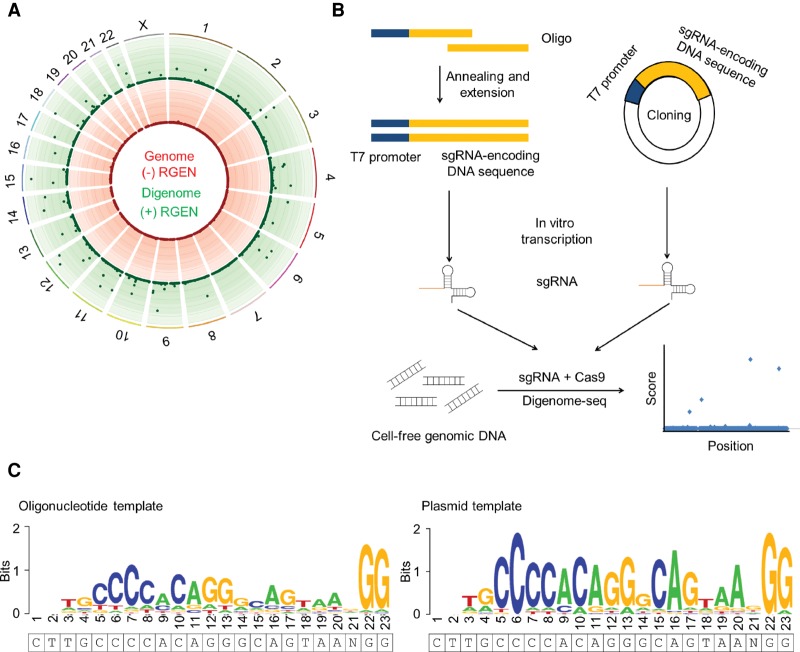
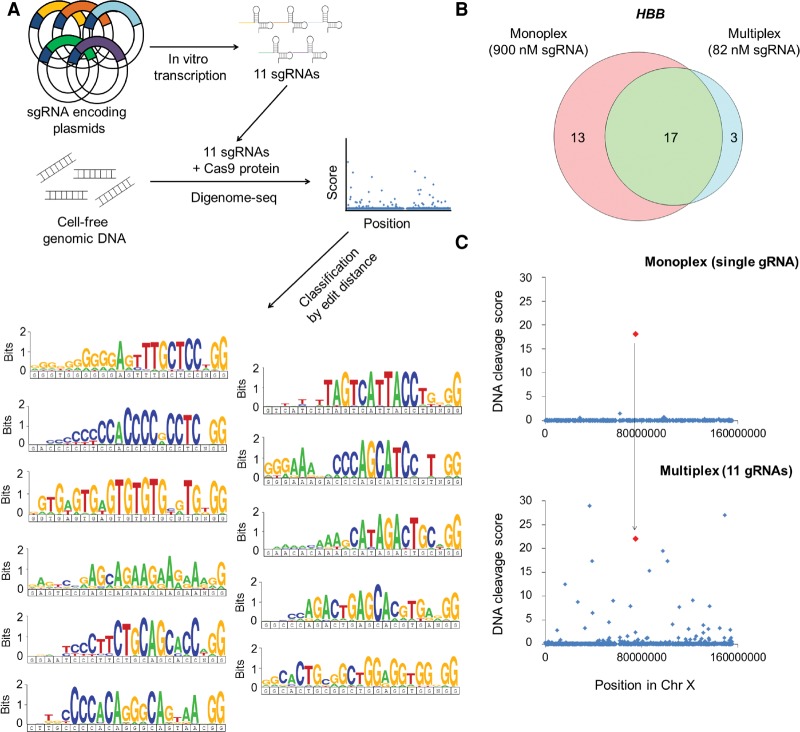
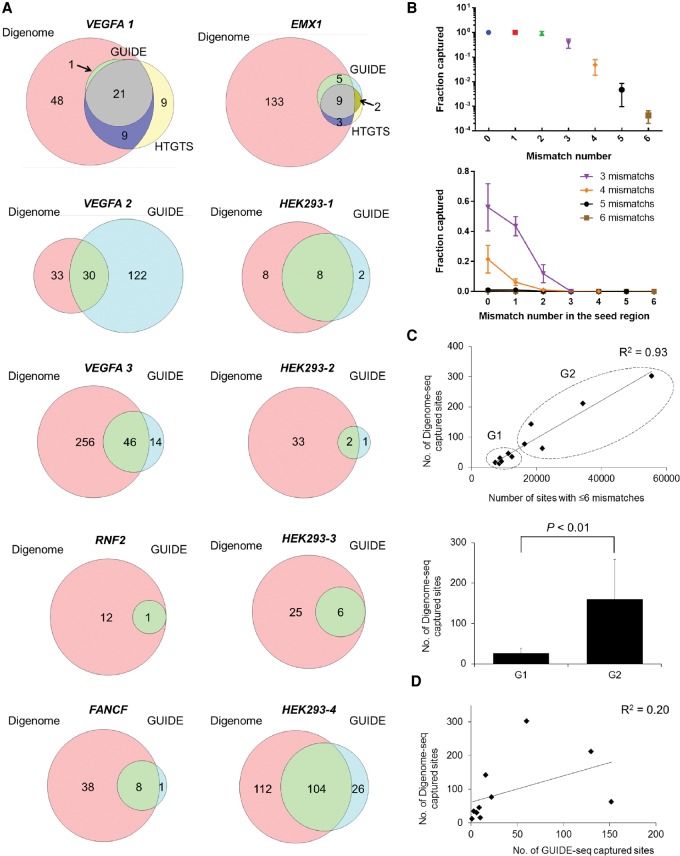
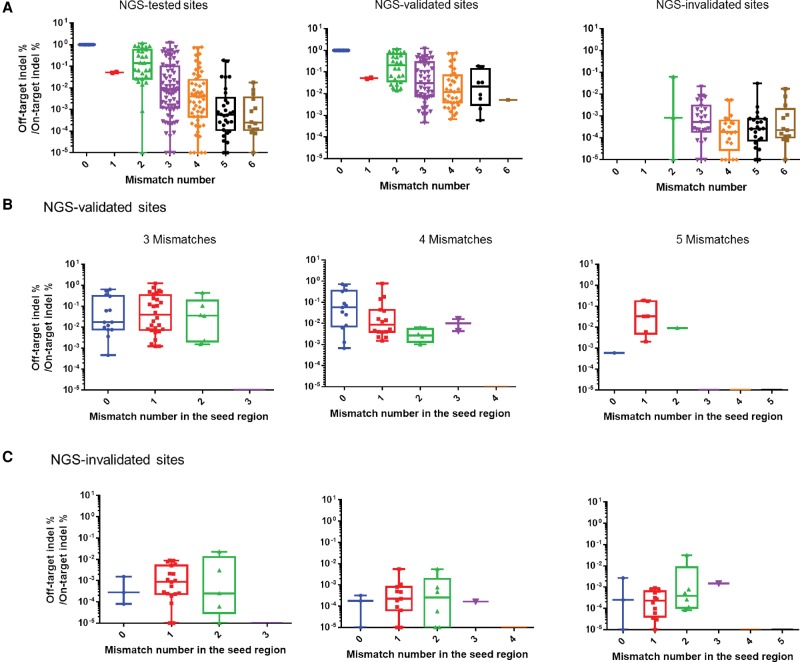
We present multiplex Digenome-seq to profile genome-wide specificities of up to 11 CRISPR-Cas9 nucleases simultaneously, saving time and reducing cost. Cell-free human genomic DNA was digested using multiple sgRNAs combined with the Cas9 protein and then subjected to whole-genome sequencing. In vitro cleavage patterns, characteristic of on- and off-target sites, were computationally identified across the genome using a new DNA cleavage scoring system. We found that many false-positive, bulge-type off-target sites were cleaved by sgRNAs transcribed from an oligonucleotide duplex but not by those transcribed from a plasmid template. Multiplex Digenome-seq captured many bona fide off-target sites, missed by other genome-wide methods, at which indels were induced at frequencies <0.1%. After analyzing 964 sites cleaved in vitro by these sgRNAs and measuring indel frequencies at hundreds of off-target sites in cells, we propose a guideline for the choice of target sites for minimizing CRISPR-Cas9 off-target effects in the human genome.
Overview
The claims and statistics of this paper haven’t been checked yet.
Run the check — free, no account needed. It reads the open-access text and checks the sources it cites.
Integrity signals
Registry
Cites
Statistics
Figures
Verification
Claims the paper makes
The claims and statistics of this paper haven’t been checked yet.
Run the check — free, no account needed. It reads the open-access text and checks the sources it cites.
Claims other papers make about this one
Each is checked against this paper’s own text: does it say what the citing paper says it does?
The source backs part of the claim, not all of it — or backs it for a different population, condition or comparison.
In the citing paper
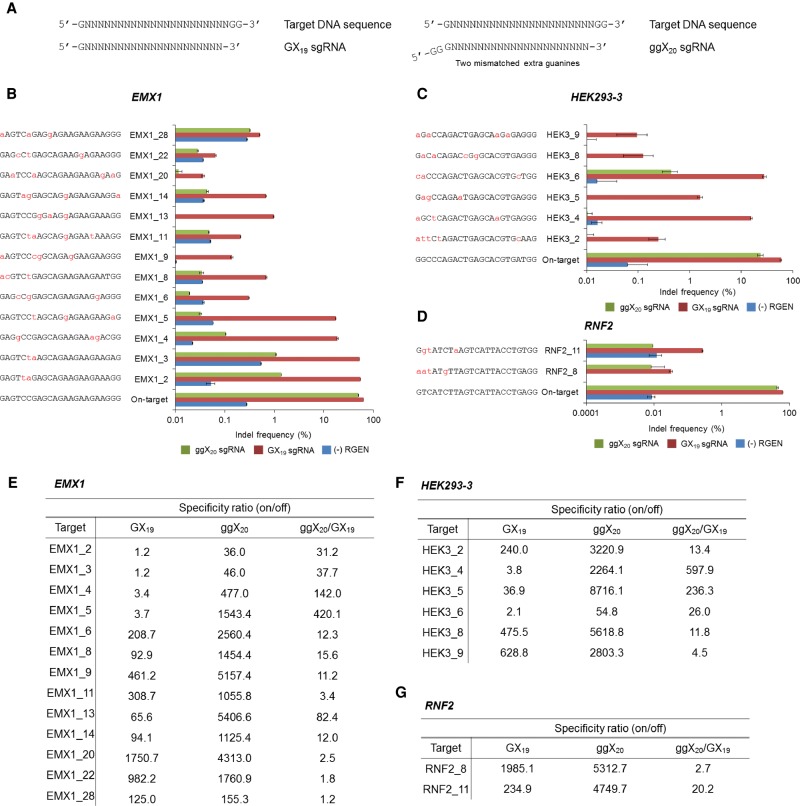
“accumulative evidence showed that the specificity of Cas9 activity can be enhanced by extending or truncating sgRNAs”
From Off-target effects in CRISPR/Cas9 gene editing (2023) · cites this paper as Kim et al., 2016
Experimental — accuracy not yet measured
Self-check
Percentages, sums and reported differences re-computed from the paper’s own numbers.
The self-check needs the paper’s full text.
Citations
Cites
A Programmable Dual-RNA–Guided DNA Endonuclease in Adaptive Bacterial Immunity
Jinek, M., Chylinski, K., Fonfara, I., Hauer, M., Doudna, J. A., & Charpentier, E. (2012) · Science · doi:10.1126/science.1225829 · Cited by 17,116
Multiplex Genome Engineering Using CRISPR/Cas Systems
Cong, L., Ran, F. A., Cox, D., Lin, S., Barretto, R., Habib, N., Hsu, P. D., Wu, X., Jiang, W., Marraffini, L. A., et al. (2013) · Science · doi:10.1126/science.1231143 · Cited by 15,339
RNA-Guided Human Genome Engineering via Cas9
Mali, P., Yang, L., Esvelt, K. M., Aach, J., Guell, M., DiCarlo, J. E., Norville, J. E., & Church, G. M. (2013) · Science · doi:10.1126/science.1232033 · Cited by 9,210
DNA targeting specificity of RNA-guided Cas9 nucleases
Hsu, P. D., Scott, D. A., Weinstein, J. A., Ran, F. A., Konermann, S., Agarwala, V., Li, Y., Fine, E. J., Wu, X., Shalem, O., et al. (2013) · Nature Biotechnology · doi:10.1038/nbt.2647 · Cited by 4,741
Double nicking by RNA-guided CRISPR Cas9 for enhanced genome editing specificity
Ran, F. A., Hsu, P. D., Lin, C.-Y., Gootenberg, J. S., Konermann, S., Trevino, A. E., Scott, D. A., Inoue, A., Matoba, S., Zhang, Y., et al. (2013) · Cell · doi:10.1016/j.cell.2013.08.021 · Cited by 3,299
High-Frequency off-Target Mutagenesis Induced by CRISPR-Cas Nucleases in Human Cells
Fu, Y., Foden, J. A., Khayter, C., Maeder, M. L., Reyon, D., Joung, J. K., & Sander, J. D. (2013) · Nature Biotechnology · doi:10.1038/nbt.2623 · Cited by 3,292
Efficient genome editing in zebrafish using a CRISPR-Cas system
Hwang, W. Y., Fu, Y., Reyon, D., Maeder, M. L., Tsai, S. Q., Sander, J. D., Peterson, R. T., Yeh, J.-R. J., & Joung, J. K. (2013) · Nature Biotechnology · doi:10.1038/nbt.2501 · Cited by 2,937
In vivo genome editing using Staphylococcus aureus Cas9
Ran, F. A., Cong, L., Yan, W. X., Scott, D. A., Gootenberg, J. S., Kriz, A. J., Zetsche, B., Shalem, O., Wu, X., Makarova, K. S., et al. (2015) · Nature · doi:10.1038/nature14299 · Cited by 2,687
RNA-guided editing of bacterial genomes using CRISPR-Cas systems
Jiang, W., Bikard, D., Cox, D., Zhang, F., & Marraffini, L. A. (2013) · Nature Biotechnology · doi:10.1038/nbt.2508 · Cited by 2,429
Bae, S., Park, J., & Kim, J.-S. (2014) · Bioinformatics · doi:10.1093/bioinformatics/btu048 · Cited by 2,339
Self-citationGUIDE-seq enables genome-wide profiling of off-target cleavage by CRISPR-Cas nucleases
Tsai, S. Q., Zheng, Z., Nguyen, N. T., Liebers, M., Topkar, V. V., Thapar, V., Wyvekens, N., Khayter, C., Iafrate, A. J., Le, L. P., et al. (2015) · Nature Biotechnology · doi:10.1038/nbt.3117 · Cited by 2,268
RNA-programmed genome editing in human cells
Jinek, M., East, A., Cheng, A., Lin, S., Ma, E., & Doudna, J. (2013) · eLife · doi:10.7554/elife.00471 · Cited by 2,098
Improving CRISPR-Cas nuclease specificity using truncated guide RNAs
Fu, Y., Sander, J. D., Reyon, D., Cascio, V. M., & Joung, J. K. (2014) · Nature Biotechnology · doi:10.1038/nbt.2808 · Cited by 1,993 · cited 2×
“2015), and modified guide RNAs(Cho et al. 2014; Fu et al. 2014).”
BackgroundTargeted genome engineering in human cells with the Cas9 RNA-guided endonuclease
Cho, S. W., Kim, S., Kim, J. M., & Kim, J.-S. (2013) · Nature Biotechnology · doi:10.1038/nbt.2507 · Cited by 1,863
Self-citationKim, S., Kim, D., Cho, S. W., Kim, J., & Kim, J.-S. (2014) · Genome Research · doi:10.1101/gr.171322.113 · Cited by 1,856
Self-citationMali, P., Aach, J., Stranges, P. B., Esvelt, K. M., Moosburner, M., Kosuri, S., Yang, L., & Church, G. M. (2013) · Nature Biotechnology · doi:10.1038/nbt.2675 · Cited by 1,752 · cited 3×
“To minimize or avoid RGEN off-target effects, we and others have proposed various methods, which include dimeric Cas9 systems (paired Cas9 nickases [Mali et al. 2013a; Ran et al. 2013; Cho et al. 2014] and dCas9-FokI [Guilinger et al. 2014; Tsai et al. 2014]), delivery of RGEN ribonucleoproteins…”
BackgroundMethodPattanayak, V., Lin, S., Guilinger, J. P., Ma, E., Doudna, J. A., & Liu, D. R. (2013) · Nature Biotechnology · doi:10.1038/nbt.2673 · Cited by 1,487 · cited 3×
“www.genome.org 10-nt “seed” region (Jinek et al. 2012; Cong et al. 2013; Pattanayak et al. 2013).”
BackgroundZuris, J. A., Thompson, D. B., Shu, Y., Guilinger, J. P., Bessen, J. L., Hu, J. H., Maeder, M. L., Joung, J. K., Chen, Z.-Y., & Liu, D. R. (2015) · Nature Biotechnology · doi:10.1038/nbt.3081 · Cited by 1,460
Analysis of off-target effects of CRISPR/Cas-derived RNA-guided endonucleases and nickases
Cho, S. W., Kim, S., Kim, Y., Kweon, J., Kim, H. S., Bae, S., & Kim, J.-S. (2014) · Genome Research · doi:10.1101/gr.162339.113 · Cited by 1,356
Self-citationEbola virus entry requires the cholesterol transporter Niemann–Pick C1
Carette, J. E., Raaben, M., Wong, A., Herbert, A. S., Obernosterer, G., Mulherkar, N., Kuehne, A. I., Kranzusch, P. J., Griffin, A. M., Ruthel, G. T., et al. (2011) · Nature · doi:10.1038/nature10348 · Cited by 1,327
A guide to genome engineering with programmable nucleases
Kim, S., & Kim, J. (2014) · Nature Reviews Genetics · doi:10.1038/nrg3686 · Cited by 1,216
Self-citationCunningham, F., Amode, M. R., Barrell, D., Beal, K., Billis, K., Brent, S., Carvalho-Silva, D., Clapham, P., Coates, G., Fitzgerald, S., et al. (2015) · Nucleic Acids Research · doi:10.1093/nar/gku1010 · Cited by 1,115
Digenome-seq: Genome-wide profiling of CRISPR-cas9 off-target effects in human cells
Kim, D., Bae, S., Park, J., Kim, E., Kim, S., Yu, H. R., Hwang, J., Kim, J.-I., & Kim, J.-S. (2015) · Nature Methods · doi:10.1038/nmeth.3284 · Cited by 992
Self-citationDimeric CRISPR RNA-guided FokI nucleases for highly specific genome editing
Tsai, S. Q., Wyvekens, N., Khayter, C., Foden, J. A., Thapar, V., Reyon, D., Goodwin, M. J., Aryee, M. J., & Joung, J. K. (2014) · Nature Biotechnology · doi:10.1038/nbt.2908 · Cited by 952
Guilinger, J. P., Thompson, D. B., & Liu, D. R. (2014) · Nature Biotechnology · doi:10.1038/nbt.2909 · Cited by 836
Genome-wide analysis reveals characteristics of off-target sites bound by the Cas9 endonuclease
Kuscu, C., Arslan, S., Singh, R., Thorpe, J., & Adli, M. (2014) · Nature Biotechnology · doi:10.1038/nbt.2916 · Cited by 777
Genome-wide detection of DNA double-stranded breaks induced by engineered nucleases
Frock, R. L., Hu, J., Meyers, R. M., Ho, Y.-J., Kii, E., & Alt, F. W. (2015) · Nature Biotechnology · doi:10.1038/nbt.3101 · Cited by 673
Gene disruption by cell-penetrating peptide-mediated delivery of Cas9 protein and guide RNA
Ramakrishna, S., Kwaku Dad, A.-B., Beloor, J., Gopalappa, R., Lee, S.-K., & Kim, H. (2014) · Genome Research · doi:10.1101/gr.171264.113 · Cited by 655
Self-citationLin, Y., Cradick, T. J., Brown, M. T., Deshmukh, H., Ranjan, P., Sarode, N., Wile, B. M., Vertino, P. M., Stewart, F. J., & Bao, G. (2014) · Nucleic Acids Research · doi:10.1093/nar/gku402 · Cited by 634
CRISPR/Cas9 systems targeting β-globin and CCR5 genes have substantial off-target activity
Cradick, T. J., Fine, E. J., Antico, C. J., & Bao, G. (2013) · Nucleic Acids Research · doi:10.1093/nar/gkt714 · Cited by 590
Chiarle, R., Zhang, Y., Frock, R. L., Lewis, S. M., Molinié, B., Ho, Y.-J., Myers, D. R., Choi, V. W., Compagno, M., Malkin, D. J., et al. (2011) · Cell · doi:10.1016/j.cell.2011.07.049 · Cited by 498
Nucleotide-resolution DNA double-strand break mapping by next-generation sequencing
Crosetto, N., Mitra, A., Silva, M. J., Bienko, M., Dojer, N., Wang, Q., Karaca, E., Chiarle, R., Skrzypczak, M., Ginalski, K., et al. (2013) · Nature Methods · doi:10.1038/nmeth.2408 · Cited by 465
Wang, X., Wang, Y., Wu, X., Wang, J., Wang, Y., Qiu, Z., Chang, T., Huang, H., Lin, R.-J., & Yee, J.-K. (2015) · Nature Biotechnology · doi:10.1038/nbt.3127 · Cited by 442
Isaac: ultra-fast whole-genome secondary analysis on Illumina sequencing platforms
Raczy, C., Petrovski, R., Saunders, C. T., Chorny, I., Kruglyak, S., Margulies, E. H., Chuang, H., Källberg, M., Kumar, S. A., Liao, A. K., et al. (2013) · Bioinformatics · doi:10.1093/bioinformatics/btt314 · Cited by 333
Cho, S. W., Lee, J., Carroll, D., Kim, J., & Lee, J. (2013) · Genetics · doi:10.1534/genetics.113.155853 · Cited by 259
Self-citationStarcode: sequence clustering based on all-pairs search
Zorita, E. V., Cuscó, P., & Filion, G. J. P. (2015) · Bioinformatics · doi:10.1093/bioinformatics/btv053 · Cited by 241
Mapping the precision of genome editing
Gabriel, R., Kalle, C. V., & Schmidt, M. (2015) · Nature Biotechnology · doi:10.1038/nbt.3142 · Cited by 40
Cited by
Sorted by citations
Haeussler, M., Schönig, K., Eckert, H., Eschstruth, A., Mianné, J., Renaud, J.-B., Schneider-Maunoury, S., Shkumatava, A., Teboul, L., Kent, J., et al. (2016) · Genome biology · doi:10.1186/s13059-016-1012-2 · Cited by 1,756
Correction of a pathogenic gene mutation in human embryos
Ma, H., Marti-Gutierrez, N., Park, S.-W., Wu, J., Lee, Y., Suzuki, K., Koski, A., Ji, D., Hayama, T., Ahmed, R., et al. (2017) · Nature · doi:10.1038/nature23305 · Cited by 992
Self-citationGenome editing in maize directed by CRISPR–Cas9 ribonucleoprotein complexes
Svitashev, S. K., Schwartz, C., Lenderts, B., Young, J. K., & Cigan, A. M. (2016) · Nature Communications · doi:10.1038/ncomms13274 · Cited by 841
CIRCLE-Seq: A highly sensitive in vitro screen for genome-wide CRISPR-cas9 nuclease off-targets
Tsai, S. Q., Nguyen, N. T., Malagon-Lopez, J., Topkar, V. V., Aryee, M. J., & Joung, J. K. (2017) · Nature Methods · doi:10.1038/nmeth.4278 · Cited by 814
Cytosine base editor generates substantial off-target single-nucleotide variants in mouse embryos
Zuo, E., Sun, Y., Wei, W., Yuan, T., Ying, W., Sun, H., Yuan, L., Steinmetz, L. M., Li, Y., & Yang, H. (2019) · Science · doi:10.1126/science.aav9973 · Cited by 782
Metadata
- Authors
- Kim, D., Kim, S., Kim, S., Park, J., & Kim, J.-S.
- Affiliations
- Seoul National University (KR)
- Hanyang University (KR)
- Venue
- Genome Research
- Publisher
- Cold Spring Harbor Laboratory
- Published
- 2016-01-19
- Volume
- 26
- Issue
- 3
- Pages
- 406-415
- ISSN
- 1088-9051 (ISSN-L)
- 1549-5469
- PMC
- PMC4772022
- OpenAlex
- W2273244674
- Cited by
- 208
- References
- 37
- Citations by year
- 2026: 8 · 2025: 15 · 2024: 13 · 2023: 12 · 2022: 17 · 2021: 23 · 2020: 29 · 2019: 22 · 2018: 26 · 2017: 21 · 2016: 22
- Type
- posted content
- Language
- en
- Open access
- bronze
- doi.org
- Locations
- Genome Research (publishedVersion)
- PubMed Central (publishedVersion, cc-by-nc)
- PubMed (publishedVersion)
- HighWire Press Open Archive (submittedVersion)
- Seoul National University Open Repository (Seoul National University) (submittedVersion)
- Funders
- IBS (IBS-R021-D1)
- Topics
- Life Sciences › Biochemistry, Genetics and Molecular Biology › Molecular Biology › CRISPR and Genetic Engineering
- Life Sciences › Biochemistry, Genetics and Molecular Biology › Molecular Biology › RNA regulation and disease
- Life Sciences › Biochemistry, Genetics and Molecular Biology › Molecular Biology › RNA Interference and Gene Delivery
- Keywords
- CRISPR/Cas9, off-target effects, single guide RNA, indel frequency, target site selection, genome editing
- MeSH terms
- Binding Sites, Humans, Protein Binding, Reproducibility of Results, Genome, Human, Gene Targeting, Genomics, INDEL Mutation, Position-Specific Scoring Matrices, High-Throughput Nucleotide Sequencing, Nucleotide Motifs, Mutation Rate, CRISPR-Cas Systems
About these checks
Registry, retraction, Cites and statistics results are computed, not judged, with one exception: a printed reference that no index lists is read once by a model before it counts as a citation error. Claims are extracted by a model and kept only when their quote appears verbatim in the text; each cited source is then checked, with a model’s help, for whether it says what the claim relies on. Those verdicts can be wrong — read the claim’s quote and the cited source before relying on one.
Statistics and arithmetic are recomputed, not judged.
Confidence bands are shown only for fields calibrated on our annotated test set. None is calibrated yet, so no band is shown.
What counts as a claim ›How we measure confidence ›How we check this ›
Are you an author, or do you see a problem with this page? Request a review
