

The DOI matches its Crossref record; 37 of the 37 references it cites were found in a registry or an index.
Genome-wide target specificities of CRISPR-Cas9 nucleases revealed by multiplex Digenome-seq
Open accessAbstract
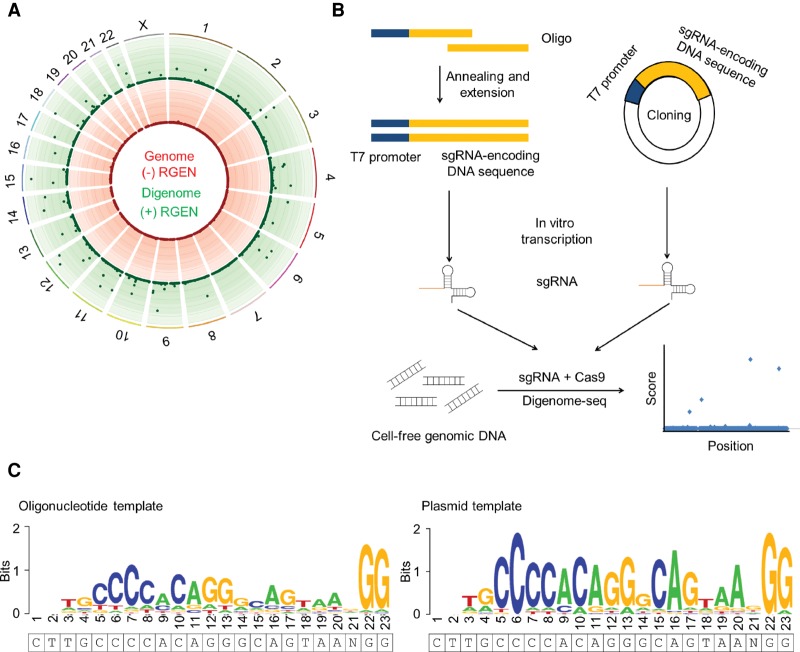
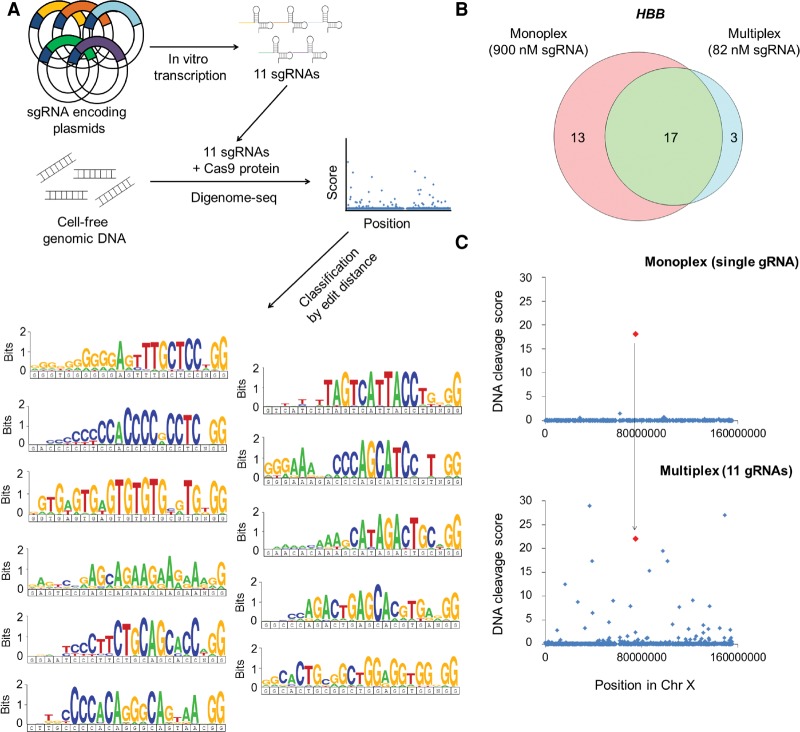
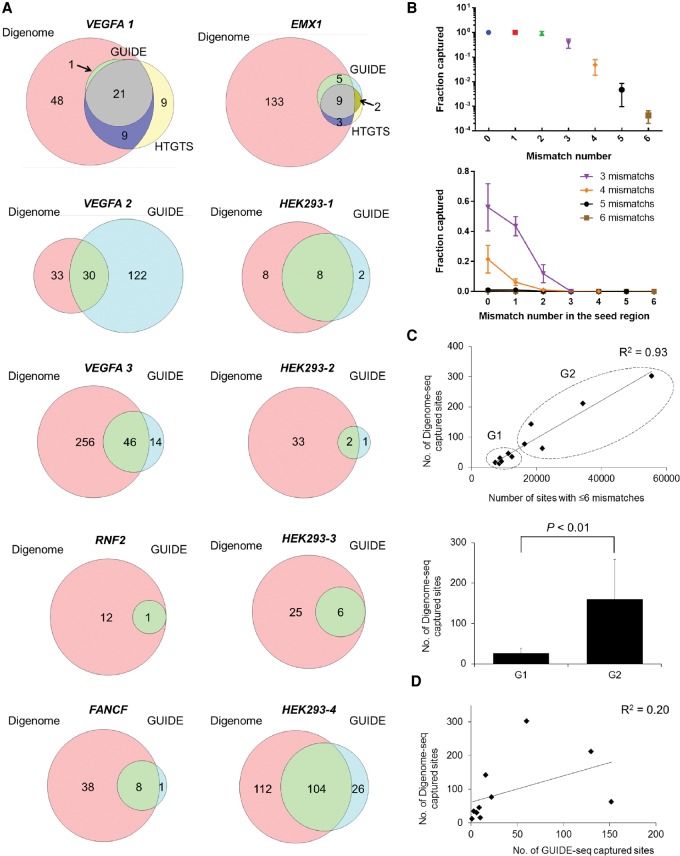
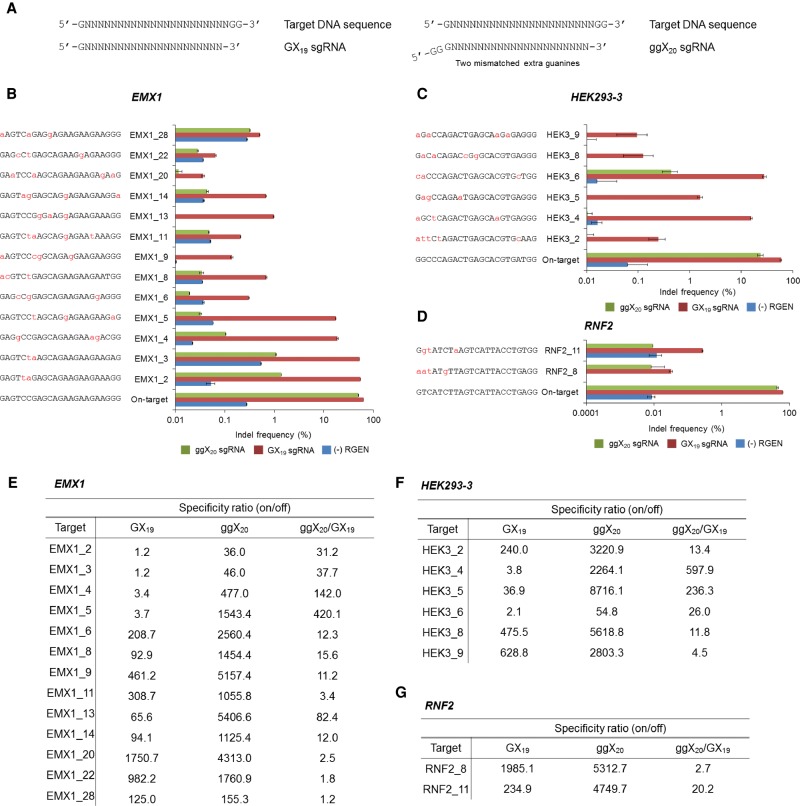
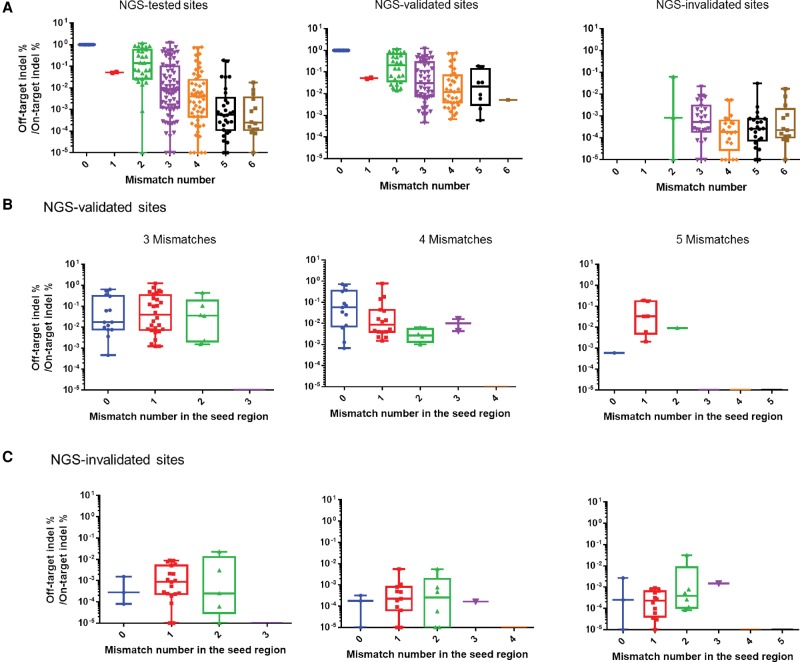
We present multiplex Digenome-seq to profile genome-wide specificities of up to 11 CRISPR-Cas9 nucleases simultaneously, saving time and reducing cost. Cell-free human genomic DNA was digested using multiple sgRNAs combined with the Cas9 protein and then subjected to whole-genome sequencing. In vitro cleavage patterns, characteristic of on- and off-target sites, were computationally identified across the genome using a new DNA cleavage scoring system. We found that many false-positive, bulge-type off-target sites were cleaved by sgRNAs transcribed from an oligonucleotide duplex but not by those transcribed from a plasmid template. Multiplex Digenome-seq captured many bona fide off-target sites, missed by other genome-wide methods, at which indels were induced at frequencies <0.1%. After analyzing 964 sites cleaved in vitro by these sgRNAs and measuring indel frequencies at hundreds of off-target sites in cells, we propose a guideline for the choice of target sites for minimizing CRISPR-Cas9 off-target effects in the human genome.
Overview
The claims and statistics of this paper haven’t been checked yet.
Run the check — free, no account needed. It reads the open-access text and checks the sources it cites.
Integrity signals
Registry
Cites
Statistics
Figures
Verification
Claims the paper makes
The claims and statistics of this paper haven’t been checked yet.
Run the check — free, no account needed. It reads the open-access text and checks the sources it cites.
Claims other papers make about this one
Each is checked against this paper’s own text: does it say what the citing paper says it does?
The source backs part of the claim, not all of it — or backs it for a different population, condition or comparison.
In the citing paper
“accumulative evidence showed that the specificity of Cas9 activity can be enhanced by extending or truncating sgRNAs”
From Off-target effects in CRISPR/Cas9 gene editing (2023) · cites this paper as Kim et al., 2016
Experimental — accuracy not yet measured
Self-check
Percentages, sums and reported differences re-computed from the paper’s own numbers.
The self-check needs the paper’s full text.
Citations
Cites
A Programmable Dual-RNA–Guided DNA Endonuclease in Adaptive Bacterial Immunity
Jinek, M., Chylinski, K., Fonfara, I., Hauer, M., Doudna, J. A., & Charpentier, E. (2012) · Science · doi:10.1126/science.1225829 · Cited by 17,116
Multiplex Genome Engineering Using CRISPR/Cas Systems
Cong, L., Ran, F. A., Cox, D., Lin, S., Barretto, R., Habib, N., Hsu, P. D., Wu, X., Jiang, W., Marraffini, L. A., et al. (2013) · Science · doi:10.1126/science.1231143 · Cited by 15,339
RNA-Guided Human Genome Engineering via Cas9
Mali, P., Yang, L., Esvelt, K. M., Aach, J., Guell, M., DiCarlo, J. E., Norville, J. E., & Church, G. M. (2013) · Science · doi:10.1126/science.1232033 · Cited by 9,210
DNA targeting specificity of RNA-guided Cas9 nucleases
Hsu, P. D., Scott, D. A., Weinstein, J. A., Ran, F. A., Konermann, S., Agarwala, V., Li, Y., Fine, E. J., Wu, X., Shalem, O., et al. (2013) · Nature Biotechnology · doi:10.1038/nbt.2647 · Cited by 4,741
Double nicking by RNA-guided CRISPR Cas9 for enhanced genome editing specificity
Ran, F. A., Hsu, P. D., Lin, C.-Y., Gootenberg, J. S., Konermann, S., Trevino, A. E., Scott, D. A., Inoue, A., Matoba, S., Zhang, Y., et al. (2013) · Cell · doi:10.1016/j.cell.2013.08.021 · Cited by 3,299
High-Frequency off-Target Mutagenesis Induced by CRISPR-Cas Nucleases in Human Cells
Fu, Y., Foden, J. A., Khayter, C., Maeder, M. L., Reyon, D., Joung, J. K., & Sander, J. D. (2013) · Nature Biotechnology · doi:10.1038/nbt.2623 · Cited by 3,292
Efficient genome editing in zebrafish using a CRISPR-Cas system
Hwang, W. Y., Fu, Y., Reyon, D., Maeder, M. L., Tsai, S. Q., Sander, J. D., Peterson, R. T., Yeh, J.-R. J., & Joung, J. K. (2013) · Nature Biotechnology · doi:10.1038/nbt.2501 · Cited by 2,937
In vivo genome editing using Staphylococcus aureus Cas9
Ran, F. A., Cong, L., Yan, W. X., Scott, D. A., Gootenberg, J. S., Kriz, A. J., Zetsche, B., Shalem, O., Wu, X., Makarova, K. S., et al. (2015) · Nature · doi:10.1038/nature14299 · Cited by 2,687
RNA-guided editing of bacterial genomes using CRISPR-Cas systems
Jiang, W., Bikard, D., Cox, D., Zhang, F., & Marraffini, L. A. (2013) · Nature Biotechnology · doi:10.1038/nbt.2508 · Cited by 2,429
Bae, S., Park, J., & Kim, J.-S. (2014) · Bioinformatics · doi:10.1093/bioinformatics/btu048 · Cited by 2,339
Self-citation
Cited by
Sorted by citations
Haeussler, M., Schönig, K., Eckert, H., Eschstruth, A., Mianné, J., Renaud, J.-B., Schneider-Maunoury, S., Shkumatava, A., Teboul, L., Kent, J., et al. (2016) · Genome biology · doi:10.1186/s13059-016-1012-2 · Cited by 1,756
Correction of a pathogenic gene mutation in human embryos
Ma, H., Marti-Gutierrez, N., Park, S.-W., Wu, J., Lee, Y., Suzuki, K., Koski, A., Ji, D., Hayama, T., Ahmed, R., et al. (2017) · Nature · doi:10.1038/nature23305 · Cited by 992
Self-citationGenome editing in maize directed by CRISPR–Cas9 ribonucleoprotein complexes
Svitashev, S. K., Schwartz, C., Lenderts, B., Young, J. K., & Cigan, A. M. (2016) · Nature Communications · doi:10.1038/ncomms13274 · Cited by 841
CIRCLE-Seq: A highly sensitive in vitro screen for genome-wide CRISPR-cas9 nuclease off-targets
Tsai, S. Q., Nguyen, N. T., Malagon-Lopez, J., Topkar, V. V., Aryee, M. J., & Joung, J. K. (2017) · Nature Methods · doi:10.1038/nmeth.4278 · Cited by 814
Cytosine base editor generates substantial off-target single-nucleotide variants in mouse embryos
Zuo, E., Sun, Y., Wei, W., Yuan, T., Ying, W., Sun, H., Yuan, L., Steinmetz, L. M., Li, Y., & Yang, H. (2019) · Science · doi:10.1126/science.aav9973 · Cited by 782
Genome-wide analysis reveals specificities of Cpf1 endonucleases in human cells
Kim, D., Kim, J., Hur, J. K., Been, K. W., Yoon, S.-H., & Kim, J.-S. (2016) · Nature Biotechnology · doi:10.1038/nbt.3609 · Cited by 731
Self-citationDeepCRISPR: Optimized CRISPR guide RNA design by deep learning
Chuai, G., Ma, H., Yan, J., Chen, M., Hong, N., Xue, D., Zhou, C., Zhu, C., Chen, K., Duan, B., et al. (2018) · Genome biology · doi:10.1186/s13059-018-1459-4 · Cited by 641
Off-target effects in CRISPR/Cas9 gene editing
Guo, C., Ma, X., Gao, F., & Guo, Y. (2023) · Frontiers in Bioengineering and Biotechnology · doi:10.3389/fbioe.2023.1143157 · Cited by 704
“Apart from the impact of sgRNA sequences, accumulative evidence showed that the specificity of Cas9 activity can be enhanced by extending or truncating sgRNAs (Cho et al., 2014; Fu et al., 2014; Kim et al., 2016; Kim et al., 2017; Liang et al., 2019).”
BackgroundMethodEnhancing the accuracy of next-generation sequencing for detecting rare and subclonal mutations
Salk, J. J., Schmitt, M. W., & Loeb, L. A. (2018) · Nature Reviews Genetics · doi:10.1038/nrg.2017.117 · Cited by 551
Directed evolution of CRISPR-Cas9 to increase its specificity
Lee, J. K., Jeong, E., Lee, J., Jung, M., Shin, E., Kim, Y.-H., Lee, K., Jung, I., Kim, D., Kim, S., et al. (2018) · Nature Communications · doi:10.1038/s41467-018-05477-x · Cited by 525
Self-citationDefining and improving the genome-wide specificities of CRISPR–Cas9 nucleases
Tsai, S. Q., & Joung, J. K. (2016) · Nature Reviews Genetics · doi:10.1038/nrg.2016.28 · Cited by 523
A highly specific SpCas9 variant is identified by in vivo screening in yeast
Casini, A., Olivieri, M., Petris, G., Montagna, C., Reginato, G., Maule, G., Lorenzin, F., Prandi, D., Romanel, A., Demichelis, F., et al. (2018) · Nature Biotechnology · doi:10.1038/nbt.4066 · Cited by 493
Mapping the genomic landscape of CRISPR-Cas9 cleavage
Cameron, P., Fuller, C. K., Donohoue, P. D., Jones, B. N., Thompson, M. S., Carter, M. M., Gradia, S., Vidal, B., Garner, E., Slorach, E. M., et al. (2017) · Nature Methods · doi:10.1038/nmeth.4284 · Cited by 443
Genome editing reveals a role for OCT4 in human embryogenesis
Fogarty, N. M. E., McCarthy, A., Snijders, K. E., Powell, B. E., Kubikova, N., Blakeley, P., Lea, R., Elder, K., Wamaitha, S. E., Kim, D., et al. (2017) · Nature · doi:10.1038/nature24033 · Cited by 392
Self-citationManghwar, H., Li, B., Ding, X., Hussain, A., Lindsey, K., Zhang, X., & Jin, S. (2020) · Advanced Science · doi:10.1002/advs.201902312 · Cited by 347
Genome-scale measurement of off-target activity using Cas9 toxicity in high-throughput screens
Morgens, D. W., Wainberg, M., Boyle, E. A., Ursu, O., Araya, C. L., Tsui, C. K., Haney, M. S., Hess, G. T., Han, K., Jeng, E. E., et al. (2017) · Nature Communications · doi:10.1038/ncomms15178 · Cited by 362
Increasing the specificity of CRISPR systems with engineered RNA secondary structures
Kocak, D. D., Josephs, E. A., Bhandarkar, V., Adkar, S. S., Kwon, J. B., & Gersbach, C. A. (2019) · Nature Biotechnology · doi:10.1038/s41587-019-0095-1 · Cited by 351
Prediction of off-target activities for the end-to-end design of CRISPR guide RNAs
Listgarten, J., Weinstein, M., Kleinstiver, B. P., Sousa, A. A., Joung, J. K., Crawford, J., Gao, K., Hoang, L., Elibol, M., Doench, J. G., et al. (2018) · Nature Biomedical Engineering · doi:10.1038/s41551-017-0178-6 · Cited by 336
Zischewski, J., Fischer, R., & Bortesi, L. (2017) · Biotechnology Advances · doi:10.1016/j.biotechadv.2016.12.003 · Cited by 323
Methods for Optimizing CRISPR-Cas9 Genome Editing Specificity
Tycko, J., Myer, V. E., & Hsu, P. D. (2016) · Molecular Cell · doi:10.1016/j.molcel.2016.07.004 · Cited by 315
Applying CRISPR/Cas for genome engineering in plants: the best is yet to come
Puchta, H. (2016) · Current Opinion in Plant Biology · doi:10.1016/j.pbi.2016.11.011 · Cited by 305
In Vivo Excision of HIV-1 Provirus by saCas9 and Multiplex Single-Guide RNAs in Animal Models
Yin, C., Zhang, T., Qu, X., Zhang, Y., Putatunda, R., Xiao, X., Li, F., Xiao, W., Zhao, H., Dai, S., et al. (2017) · Molecular Therapy · doi:10.1016/j.ymthe.2017.03.012 · Cited by 273
Genome-wide target specificities of CRISPR RNA-guided programmable deaminases
Kim, D., Lim, K., Kim, S., Yoon, S.-H., Kim, K., Ryu, S.-M., & Kim, J. (2017) · Nature Biotechnology · doi:10.1038/nbt.3852 · Cited by 281
Self-citationAbadi, S., Yan, W. X., Amar, D., & Mayrose, I. (2017) · PLoS Computational Biology · doi:10.1371/journal.pcbi.1005807 · Cited by 208
Genome-wide target specificity of CRISPR RNA-guided adenine base editors
Kim, D., Kim, D.-E., Lee, G., Cho, S.-I., & Kim, J. (2019) · Nature Biotechnology · doi:10.1038/s41587-019-0050-1 · Cited by 192
Self-citationIncorporation of bridged nucleic acids into CRISPR RNAs improves Cas9 endonuclease specificity
Cromwell, C. R., Sung, K., Park, J., Krysler, A. R., Jovel, J., Kim, S. K., & Hubbard, B. P. (2018) · Nature Communications · doi:10.1038/s41467-018-03927-0 · Cited by 190
Self-citationHöijer, I., Emmanouilidou, A., Östlund, R., van Schendel, R., Bozorgpana, S., Tijsterman, M., Feuk, L., Gyllensten, U. B., den Hoed, M., & Ameur, A. (2022) · Nature Communications · doi:10.1038/s41467-022-28244-5 · Cited by 205
Dual-AAV delivering split prime editor system for in vivo genome editing
Zhi, S., Chen, Y., Wu, G., Wen, J., Wu, J., Liu, Q., Li, Y., Kang, R., Hu, S., Wang, J., et al. (2022) · Molecular Therapy · doi:10.1016/j.ymthe.2021.07.011 · Cited by 174
CRISPR-Cas9D10A nickase-based genotypic and phenotypic screening to enhance genome editing
Chiang, T.-W. W., le Sage, C., Larrieu, D., Demir, M., & Jackson, S. P. (2016) · Scientific Reports · doi:10.1038/srep24356 · Cited by 171
CRISPR-Cas9 off-targeting assessment with nucleic acid duplex energy parameters
Alkan, F., Wenzel, A., Anthon, C., Havgaard, J. H., & Gorodkin, J. (2018) · Genome biology · doi:10.1186/s13059-018-1534-x · Cited by 174
Evaluating and enhancing target specificity of gene-editing nucleases and deaminases
Kim, D., Luk, K., Wolfe, S. A., & Kim, J.-S. (2019) · Annual Review of Biochemistry · doi:10.1146/annurev-biochem-013118-111730 · Cited by 171
Self-citationLau, C.-H., & Suh, Y. (2017) · F1000Research · doi:10.12688/f1000research.11243.1 · Cited by 161
Genome surgery using Cas9 ribonucleoproteins for the treatment of age-related macular degenerationPreprint
Kim, K., Park, S. W., Kim, J. H., Lee, S. H., Kim, D., Koo, T., Kim, K.-E., Kim, J. H., & Kim, J. (2017) · Genome Research · doi:10.1101/gr.219089.116 · Cited by 170
Self-citationUnbiased investigation of specificities of prime editing systems in human cells
Kim, D. Y., Moon, S. B., Ko, J., Kim, Y.-S., & Kim, D. (2020) · Nucleic Acids Research · doi:10.1093/nar/gkaa764 · Cited by 162
Self-citationGenome-wide profiling of adenine base editor specificity by EndoV-seq
Liang, P., Xie, X., Zhi, S., Sun, H., Zhang, X., Chen, Y., Chen, Y., Xiong, Y., Ma, W., Liu, D., et al. (2019) · Nature Communications · doi:10.1038/s41467-018-07988-z · Cited by 148
Long Terminal Repeat CRISPR-CAR-Coupled “Universal” T Cells Mediate Potent Anti-leukemic Effects
Georgiadis, C., Preece, R., Nickolay, L. E., Etuk, A., Petrova, A., Ładoń, D., Danyi, A., Humphryes-Kirilov, N., Ajetunmobi, A., Kim, D., et al. (2018) · Molecular Therapy · doi:10.1016/j.ymthe.2018.02.025 · Cited by 140
Self-citationIn Silico Meets In Vivo : Towards Computational CRISPR-Based sgRNA Design
Chuai, G., Wang, Q., & Liu, Q. (2016) · Trends in biotechnology · doi:10.1016/j.tibtech.2016.06.008 · Cited by 134
CRISPR/Cas9 Genome-Editing System in Human Stem Cells: Current Status and Future Prospects
Zhang, Z., Zhang, Y., Gao, F., Han, S., Cheah, K. S. E., Tse, H., & Lian, Q. (2017) · Molecular Therapy — Nucleic Acids · doi:10.1016/j.omtn.2017.09.009 · Cited by 122
Sherkatghanad, Z., Abdar, M., Charlier, J., & Makarenkov, V. (2023) · Briefings in Bioinformatics · doi:10.1093/bib/bbad131 · Cited by 123
CRISPR guide RNA design for research applications
Mohr, S. E., Hu, Y., Ewen‐Campen, B., Housden, B. E., Viswanatha, R., & Perrimon, N. (2016) · FEBS Journal · doi:10.1111/febs.13777 · Cited by 112
Bressan, R. B., Dewari, P. S., Kalantzaki, M., Gangoso, E., Matjusaitis, M., Garcia-Diaz, C., Blin, C., Grant, V., Bulstrode, H. J. C. J., Gogolok, S., et al. (2017) · Development · doi:10.1242/dev.140855 · Cited by 110
DIG-Seq: A genome-wide CRISPR off-target profiling method using chromatin DNA
Kim, D., & Kim, J.-S. (2018) · Genome Research · doi:10.1101/gr.236620.118 · Cited by 108
Self-citationTools for experimental and computational analyses of off-target editing by programmable nucleases
Bao, X. R., Pan, Y., Lee, C. M., Davis, T. H., & Bao, G. (2021) · Nature Protocols · doi:10.1038/s41596-020-00431-y · Cited by 106
An overview and metanalysis of machine and deep learning-based CRISPR gRNA design tools
Wang, J., Zhang, X., Cheng, L., & Luo, Y. (2019) · RNA Biology · doi:10.1080/15476286.2019.1669406 · Cited by 106
Jo, D. H., Song, D. W., Cho, C. S., Kim, U. G., Lee, K. J., Lee, K., Park, S. W., Kim, J., Kim, J. H., Kim, J., et al. (2019) · Science Advances · doi:10.1126/sciadv.aax1210 · Cited by 101
Self-citationPrime editing with genuine Cas9 nickases minimizes unwanted indels
Lee, J., Lim, K., Kim, A., Mok, Y. G., Chung, E., Cho, S.-I., Lee, J. M., & Kim, J. (2023) · Nature Communications · doi:10.1038/s41467-023-37507-8 · Cited by 103
Self-citationKoo, T., Park, S. W., Jo, D. H., Kim, D., Kim, J. H., Cho, H.-Y., Kim, J. H., Kim, J. H., & Kim, J. (2018) · Nature Communications · doi:10.1038/s41467-018-04175-y · Cited by 96
Self-citationEpigenome engineering: new technologies for precision medicine
Sgro, A., & Blancafort, P. (2020) · Nucleic Acids Research · doi:10.1093/nar/gkaa1000 · Cited by 96
CRISPR/Cas9 Landscape: Current State and Future Perspectives
Tyumentsev, A. I., Tyumentsev, A. I., & Акимкин, В. Г. (2023) · International Journal of Molecular Sciences · doi:10.3390/ijms242216077 · Cited by 98
Efficient genome engineering approaches for the short-lived African turquoise killifish
Harel, I., Valenzano, D. R., & Brunet, A. (2016) · Nature Protocols · doi:10.1038/nprot.2016.103 · Cited by 89
Wang, Y., Liu, K. I., Sutrisnoh, N.-A. B., Srinivasan, H., Zhang, J., Li, J., Zhang, F., Richard, J. L. C., Xing, H., Shanmugam, R., et al. (2018) · Genome biology · doi:10.1186/s13059-018-1445-x · Cited by 91
Frequency and mechanisms of LINE-1 retrotransposon insertions at CRISPR/Cas9 sites
Tao, J., Wang, Q., Mendez‐Dorantes, C., Burns, K. H., & Chiarle, R. (2022) · Nature Communications · doi:10.1038/s41467-022-31322-3 · Cited by 91
Koo, T., Lu‐Nguyen, N., Malerba, A., Kim, E., Kim, D., Cappellari, O., Cho, H., Dickson, G., Popplewell, L. J., & Kim, J. (2018) · Molecular Therapy · doi:10.1016/j.ymthe.2018.03.018 · Cited by 84
Self-citationLopes, R., & Prasad, M. K. (2024) · Frontiers in Bioengineering and Biotechnology · doi:10.3389/fbioe.2023.1339189 · Cited by 82
New traits in crops produced by genome editing techniques based on deletions
van de Wiel, C. C. M., Schaart, J. G., Lotz, L. A. P., & Smulders, M. J. M. (2017) · Plant Biotechnology Reports · doi:10.1007/s11816-017-0425-z · Cited by 80
Risk associated with off-target plant genome editing and methods for its limitation
Zhao, H., & Wolt, J. D. (2017) · Emerging Topics in Life Sciences · doi:10.1042/etls20170037 · Cited by 79
CRISPR–Cas9 a boon or bane: the bumpy road ahead to cancer therapeutics
Ghosh, D., Venkataramani, P., Nandi, S., & Bhattacharjee, S. (2019) · Cancer Cell International · doi:10.1186/s12935-019-0726-0 · Cited by 83
Cas9-nickase–mediated genome editing corrects hereditary tyrosinemia in rats
Shao, Y., Wang, L., Guo, N., Wang, S., Yang, L., Li, Y., Wang, M., Yin, S., Han, H., Zeng, L., et al. (2018) · Journal of Biological Chemistry · doi:10.1074/jbc.ra117.000347 · Cited by 78
Atkins, A., Chung, C.-H., Allen, A. G., Dampier, W., Gurrola, T. E., Sariyer, I. K., Nonnemacher, M. R., & Wigdahl, B. L. (2021) · Frontiers in Genome Editing · doi:10.3389/fgeed.2021.673022 · Cited by 78
CRISPR-Cas9 genome engineering: Treating inherited retinal degeneration
Burnight, E. R., Giacalone, J. C., Cooke, J. A., Thompson, J. R., Bohrer, L. R., Chirco, K. R., Drack, A. V., Fingert, J. H., Worthington, K. S., Wiley, L. A., et al. (2018) · Progress in Retinal and Eye Research · doi:10.1016/j.preteyeres.2018.03.003 · Cited by 79
Principles of and strategies for germline gene therapy
Wolf, D. P., Mitalipov, P. A., & Mitalipov, S. M. (2019) · Nature Medicine · doi:10.1038/s41591-019-0473-8 · Cited by 75
Gene therapies that restore dystrophin expression for the treatment of Duchenne muscular dystrophy
Robinson-Hamm, J. N., & Gersbach, C. A. (2016) · Human Genetics · doi:10.1007/s00439-016-1725-z · Cited by 72
Hasanzadeh, A., Hamblin, M. R., Kiani, J., Noori, H., Hardie, J. M., Karimi, M., & Shafiee, H. (2022) · Nano Today · doi:10.1016/j.nantod.2022.101665 · Cited by 73
Fine-Tuning Next-Generation Genome Editing Tools
Kanchiswamy, C. N., Maffei, M. E., Malnoy, M., Velasco, R., & Kim, J. (2016) · Trends in biotechnology · doi:10.1016/j.tibtech.2016.03.007 · Cited by 70
Self-citationControl of gene editing by manipulation of DNA repair mechanisms
Danner, E. W., Bashir, S., Yumlu, S., Wurst, W., Wefers, B., & Kühn, R. (2017) · Mammalian Genome · doi:10.1007/s00335-017-9688-5 · Cited by 73
Hwang, G., Lee, S., Oh, M., Kim, S., Habib, O., Jang, H., Kim, H. S., Kim, Y., Kim, C. H., Kim, S., et al. (2024) · Nature Biomedical Engineering · doi:10.1038/s41551-024-01277-5 · Cited by 83
Self-citationRecent Advances in Improving Gene-Editing Specificity through CRISPR–Cas9 Nuclease Engineering
Huang, X., Yang, D., Zhang, J., Xu, J., & Chen, Y. E. (2022) · Cells · doi:10.3390/cells11142186 · Cited by 68
Uemura, T., Mori, T., Kurihara, T., Kawase, S., Koike, R., Satoga, M., Cao, X., Li, X., Yanagawa, T., Sakurai, T., et al. (2016) · Scientific Reports · doi:10.1038/srep35861 · Cited by 65
Amplification-free long-read sequencing reveals unforeseen CRISPR-Cas9 off-target activity
Höijer, I., Johansson, J., Gudmundsson, S., Chin, C.-S., Bunikis, I., Häggqvist, S., Emmanouilidou, A., Wilbe, M., den Hoed, M., Bondeson, M.-L., et al. (2020) · Genome biology · doi:10.1186/s13059-020-02206-w · Cited by 65
Gene Editing and Genotoxicity: Targeting the Off-Targets
Blattner, G., Cavazza, A., Thrasher, A. J., & Turchiano, G. (2020) · Frontiers in Genome Editing · doi:10.3389/fgeed.2020.613252 · Cited by 64
Genome Editing with CRISPR-Cas9: Can It Get Any Better?
Haeussler, M., & Concordet, J. (2016) · Journal of genetics and genomics/Journal of Genetics and Genomics · doi:10.1016/j.jgg.2016.04.008 · Cited by 65
CRISPR system: Discovery, development and off-target detection
Chen, S., Yao, Y., Zhang, Y., & Fan, G. (2020) · Cellular Signalling · doi:10.1016/j.cellsig.2020.109577 · Cited by 60
Tracking-seq reveals the heterogeneity of off-target effects in CRISPR–Cas9-mediated genome editing
Zhu, M., Xu, R., Yuan, J., Wang, J., Ren, X., Cong, T., You, Y., Ju, A., Xu, L., Wang, H., et al. (2024) · Nature Biotechnology · doi:10.1038/s41587-024-02307-y · Cited by 62
Kujoth, G. C., Sullivan, T. D., Merkhofer, R. M., Lee, T.-J., Wang, H., Brandhorst, T. T., Wüthrich, M., & Klein, B. S. (2018) · mBio · doi:10.1128/mbio.00412-18 · Cited by 58
Zhang, G., Zeng, T., Dai, Z., & Dai, X. (2021) · Computational and Structural Biotechnology Journal · doi:10.1016/j.csbj.2021.03.001 · Cited by 64
The Conspicuity of CRISPR-Cpf1 System as a Significant Breakthrough in Genome Editing
Bayat, H., Modarressi, M. H., & Rahimpour, A. (2017) · Current Microbiology · doi:10.1007/s00284-017-1406-8 · Cited by 56
Charlier, J., Nadon, R., & Makarenkov, V. (2021) · Bioinformatics · doi:10.1093/bioinformatics/btab112 · Cited by 59
CRISPR-DIPOFF: an interpretable deep learning approach for CRISPR Cas-9 off-target prediction
Toufikuzzaman, M., Samee, M. A. H., & Rahman, M. S. (2024) · Briefings in Bioinformatics · doi:10.1093/bib/bbad530 · Cited by 60
Abbasi, A. F., Asim, M. N., & Dengel, A. (2025) · Journal of Translational Medicine · doi:10.1186/s12967-024-06013-w · Cited by 60
Peng, H., Zheng, Y., Zhao, Z., Liu, T., & Li, J. (2018) · Bioinformatics · doi:10.1093/bioinformatics/bty558 · Cited by 57
CRISPR therapeutic tools for complex genetic disorders and cancer (Review)
Baliou, S., Adamaki, M., Kyriakopoulos, A. M., Spandidos, D. A., Panayiotidis, M. I., Christodoulou, I., & Zoumpourlis, V. C. (2018) · International Journal of Oncology · doi:10.3892/ijo.2018.4434 · Cited by 55
Recent advances in genome editing of stem cells for drug discovery and therapeutic application
Lee, J., Bayarsaikhan, D., Bayarsaikhan, G., Kim, J., Schwarzbach, E., & Lee, B. (2020) · Pharmacology & Therapeutics · doi:10.1016/j.pharmthera.2020.107501 · Cited by 48
Self-citationAllosteric regulation of CRISPR-Cas9 for DNA-targeting and cleavage
Zuo, Z., & Liu, J. (2020) · Current Opinion in Structural Biology · doi:10.1016/j.sbi.2020.01.013 · Cited by 51
ABE8e adenine base editor precisely and efficiently corrects a recurrent COL7A1 nonsense mutation
Sheriff, A., Guri, I., Żebrowska-Różańska, P., Llopis-Hernández, V., Brooks, I. R., Tekkela, S., Subramaniam, K. S., Gebrezgabher, R., Naso, G., Petrova, A., et al. (2022) · Scientific Reports · doi:10.1038/s41598-022-24184-8 · Cited by 49
Technologies and Computational Analysis Strategies for CRISPR Applications
Clement, K., Hsu, J. Y., Canver, M. C., Joung, J. K., & Pinello, L. (2020) · Molecular Cell · doi:10.1016/j.molcel.2020.06.012 · Cited by 45
Genome editing and the next generation of antiviral therapy
Stone, D., Niyonzima, N., & Jerome, K. R. (2016) · Human Genetics · doi:10.1007/s00439-016-1686-2 · Cited by 44
Making ends meet: targeted integration of DNA fragments by genome editing
Yamamoto, Y., & Gerbi, S. A. (2018) · Chromosoma · doi:10.1007/s00412-018-0677-6 · Cited by 49
Fortin, J., Tan, J., Gascoigne, K. E., Haverty, P. M., Forrest, W. F., Costa, M. R., & Martin, S. E. (2019) · Genome biology · doi:10.1186/s13059-019-1621-7 · Cited by 42
Digenome-seq web tool for profiling CRISPR specificity
Park, J., Childs, L. H., Kim, D., Hwang, G., Kim, S., Kim, S., Kim, J., & Bae, S. (2017) · Nature Methods · doi:10.1038/nmeth.4262 · Cited by 42
Self-citationPetri, K., Kim, D. Y., Sasaki, K. E., Canver, M. C., Wang, X., Shah, H., Lee, H., Horng, J. E., Clement, K., Iyer, S., et al. (2021) · bioRxiv (Cold Spring Harbor Laboratory) · doi:10.1101/2021.04.05.438458 · Cited by 44
Self-citationGene editing of the multi-copy H2A.B gene and its importance for fertility
Anuar, N. D., Kurscheid, S., Field, M. A., Zhang, L., Rebar, E. J., Gregory, P. D., Buchou, T., Bowles, J., Koopman, P. A., Tremethick, D. J., et al. (2019) · Genome biology · doi:10.1186/s13059-019-1633-3 · Cited by 49
CRISPRoffT: comprehensive database of CRISPR/Cas off-targets
Wang, G., Liu, X., Wang, A., Wen, J., Kim, P., Song, Q., Liu, X., & Zhou, X. (2024) · Nucleic Acids Research · doi:10.1093/nar/gkae1025 · Cited by 42
Kim, D., Kang, B., & Kim, J. (2021) · Nature Protocols · doi:10.1038/s41596-020-00453-6 · Cited by 44
Self-citationEslami-Mossallam, B., Klein, M., van der Smagt, C. P., van der Sanden, K., Jones, S. K., Hawkins, J. A., Finkelstein, I. J., & Depken, M. (2022) · Nature Communications · doi:10.1038/s41467-022-28994-2 · Cited by 40
Tycko, J., Barrera, L. A., Huston, N. C., Friedland, A. E., Wu, X., Gootenberg, J. S., Abudayyeh, O. O., Myer, V. E., Wilson, C. J., & Hsu, P. D. (2018) · Nature Communications · doi:10.1038/s41467-018-05391-2 · Cited by 38
Diving into marine genomics with CRISPR/Cas9 systems
Momose, T., & Concordet, J. (2016) · Marine Genomics · doi:10.1016/j.margen.2016.10.003 · Cited by 40
crisprSQL: a novel database platform for CRISPR/Cas off-target cleavage assays
Störtz, F., & Minary, P. (2021) · Nucleic Acids Research · doi:10.1093/nar/gkaa885 · Cited by 37
Effective and precise adenine base editing in mouse zygotes
Liang, P., Sun, H., Zhang, X., Xie, X., Zhang, J., Bai, Y., Ouyang, X., Zhi, S., Xiong, Y., Ma, W., et al. (2018) · Protein & Cell · doi:10.1007/s13238-018-0566-z · Cited by 37
Zhang, C., Li, N., Rao, L., Li, J., Liu, Q., & Tian, C. (2022) · Microbiology Spectrum · doi:10.1128/spectrum.02321-21 · Cited by 42
AcrIIA5 Suppresses Base Editors and Reduces Their Off-Target Effects
Liang, M., Sui, T., Liu, Z., Chen, M., Liu, H., Shan, H., Lai, L., & Li, Z. (2020) · Cells · doi:10.3390/cells9081786 · Cited by 33
Metadata
- Authors
- Kim, D., Kim, S., Kim, S., Park, J., & Kim, J.-S.
- Affiliations
- Seoul National University (KR)
- Hanyang University (KR)
- Venue
- Genome Research
- Publisher
- Cold Spring Harbor Laboratory
- Published
- 2016-01-19
- Volume
- 26
- Issue
- 3
- Pages
- 406-415
- ISSN
- 1088-9051 (ISSN-L)
- 1549-5469
- PMC
- PMC4772022
- OpenAlex
- W2273244674
- Cited by
- 208
- References
- 37
- Citations by year
- 2026: 8 · 2025: 15 · 2024: 13 · 2023: 12 · 2022: 17 · 2021: 23 · 2020: 29 · 2019: 22 · 2018: 26 · 2017: 21 · 2016: 22
- Type
- posted content
- Language
- en
- Open access
- bronze
- doi.org
- Locations
- Genome Research (publishedVersion)
- PubMed Central (publishedVersion, cc-by-nc)
- PubMed (publishedVersion)
- HighWire Press Open Archive (submittedVersion)
- Seoul National University Open Repository (Seoul National University) (submittedVersion)
- Funders
- IBS (IBS-R021-D1)
- Topics
- Life Sciences › Biochemistry, Genetics and Molecular Biology › Molecular Biology › CRISPR and Genetic Engineering
- Life Sciences › Biochemistry, Genetics and Molecular Biology › Molecular Biology › RNA regulation and disease
- Life Sciences › Biochemistry, Genetics and Molecular Biology › Molecular Biology › RNA Interference and Gene Delivery
- Keywords
- CRISPR/Cas9, off-target effects, single guide RNA, indel frequency, target site selection, genome editing
- MeSH terms
- Binding Sites, Humans, Protein Binding, Reproducibility of Results, Genome, Human, Gene Targeting, Genomics, INDEL Mutation, Position-Specific Scoring Matrices, High-Throughput Nucleotide Sequencing, Nucleotide Motifs, Mutation Rate, CRISPR-Cas Systems
About these checks
Registry, retraction, Cites and statistics results are computed, not judged, with one exception: a printed reference that no index lists is read once by a model before it counts as a citation error. Claims are extracted by a model and kept only when their quote appears verbatim in the text; each cited source is then checked, with a model’s help, for whether it says what the claim relies on. Those verdicts can be wrong — read the claim’s quote and the cited source before relying on one.
Statistics and arithmetic are recomputed, not judged.
Confidence bands are shown only for fields calibrated on our annotated test set. None is calibrated yet, so no band is shown.
What counts as a claim ›How we measure confidence ›How we check this ›
Are you an author, or do you see a problem with this page? Request a review
