

Large-Area Soft e-Skin: The Challenges Beyond Sensor Designs
Open accessThe DOI matches its Crossref record; 181 of the 185 references it cites were found in a registry or an index.
Abstract
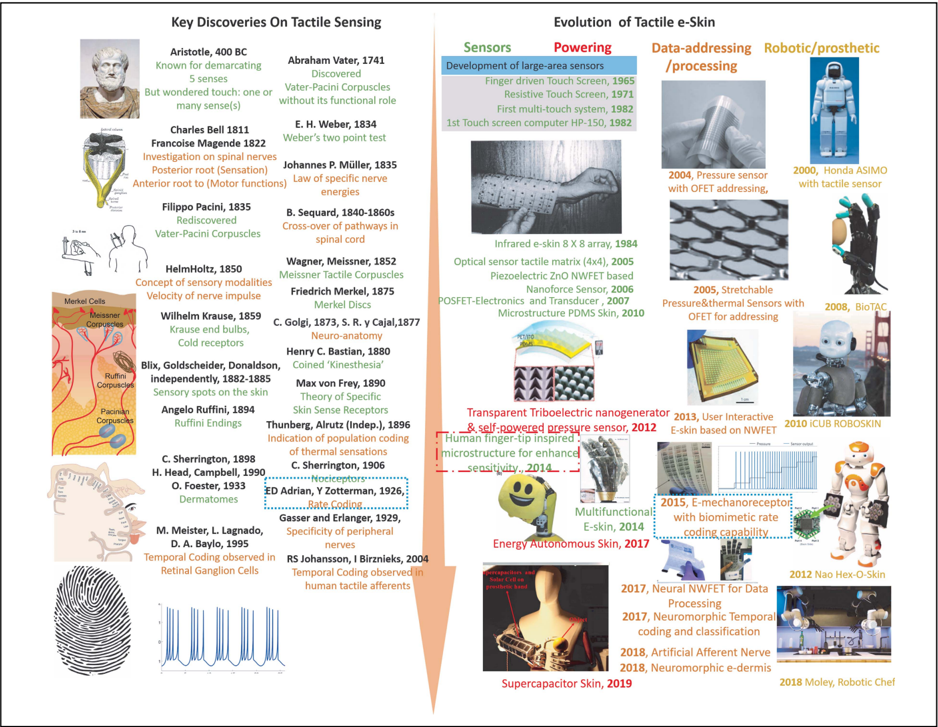
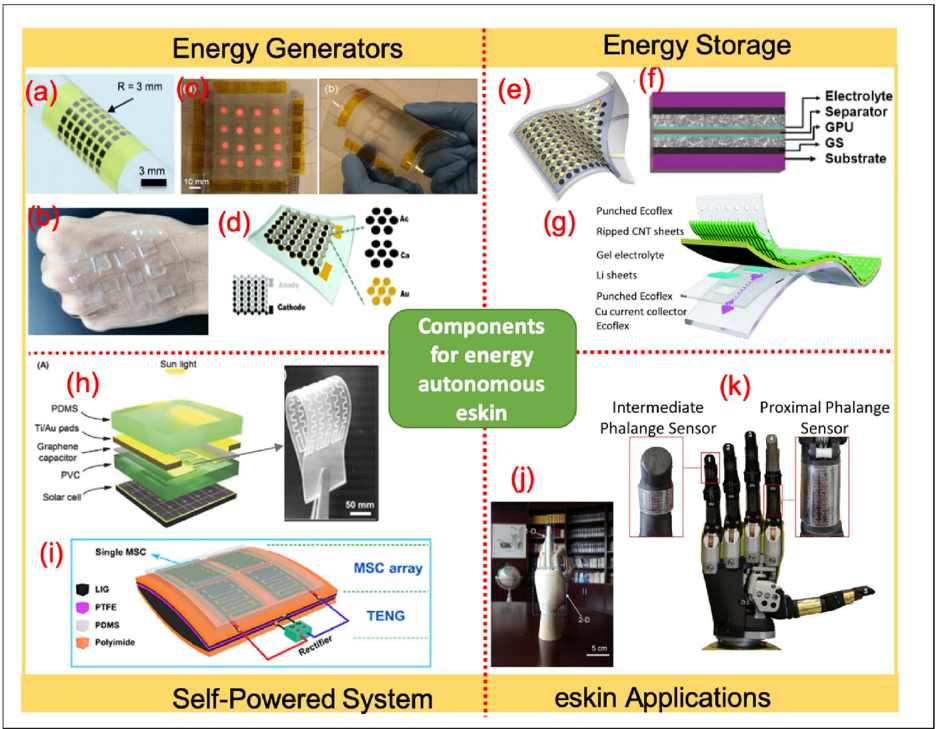
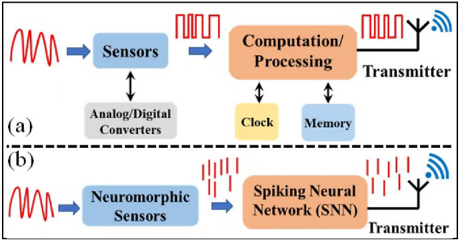
Sensory feedback from touch is critical for many tasks carried out by robots and humans, such as grasping objects or identifying materials. Electronic skin (e-skin) is a crucial technology for these purposes. Artificial tactile skin that can play the roles of human skin remains a distant possibility because of hard issues in resilience, manufacturing, mechanics, sensorics, electronics, energetics, information processing, and transport. Taken together, these issues make it difficult to bestow robots, or prosthetic devices, with effective tactile skins. Nonetheless, progress over the past few years in relation with the above issues has been encouraging, and we have achieved close to providing some of the abilities of biological skin with the advent of deformable sensors and flexible electronics. The naive imitation of skin morphology and sensing an impoverished set of mechanical and thermal quantities are not sufficient. There is a need to find more efficient ways to extract tactile information from mechanical contact than those previously available. Renewed interest in neuromorphic tactile skin is expected to bring some fresh ideas in this field. This article reviews these new developments, particularly related to the handling of tactile data, energy autonomy, and large-area manufacturing. The challenges in relation with these advances for tactile sensing and haptics in robotics and prosthetics are discussed along with potential solutions.
Overview
The claims and statistics of this paper haven’t been checked yet.
Free: it reads the open-access text and checks the first 5 claims that cite a source we can check. Create a free account to check every claim.
Integrity signals
Registry
Cites
Statistics
Figures












Verification
Claims the paper makes
The claims and statistics of this paper haven’t been checked yet.
Free: it reads the open-access text and checks the first 5 claims that cite a source we can check. Create a free account to check every claim.
Claims other papers make about this one
Each is checked against this paper’s own text: does it say what the citing paper says it does?
The source backs part of the claim, not all of it — or backs it for a different population, condition or comparison.
In the citing paper
“In particular, when e-skin tactile sensing communicates harmful external stimuli to the user, soft robotics can utilize its flexibility and high degree of freedom to efficiently move away and adapt to the scenario.[19,36]”
From Flexible Electronics and Devices as Human–Machine Interfaces for Medical Robotics (2022) · cites this paper as [36]
Experimental — accuracy not yet measured
Self-check
Percentages, sums and reported differences re-computed from the paper’s own numbers.
The self-check needs the paper’s full text.
Citations
Cites
Kim, D.-H., Lu, N., Ma, R., Kim, Y.-S., Kim, R.-H., Wang, S., Wu, J., Won, S. M., Tao, H., Islam, A., et al. (2011) · Science · doi:10.1126/science.1206157 · Cited by 4,836 · cited 1×
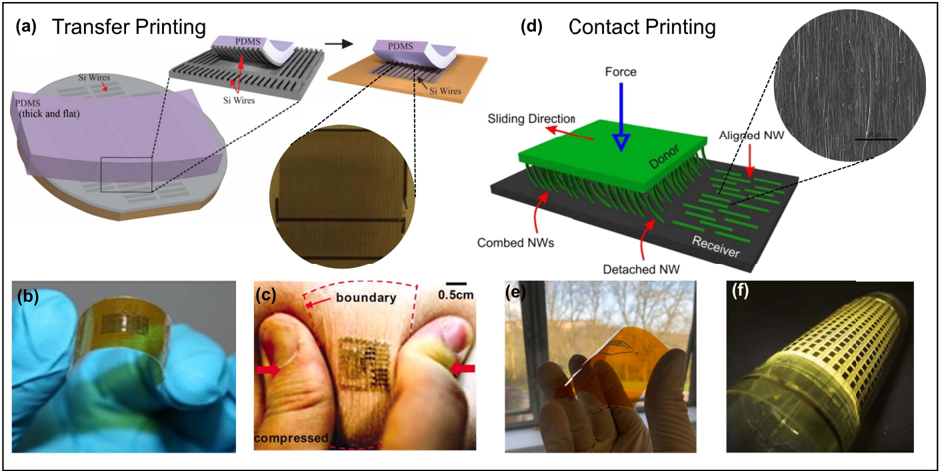
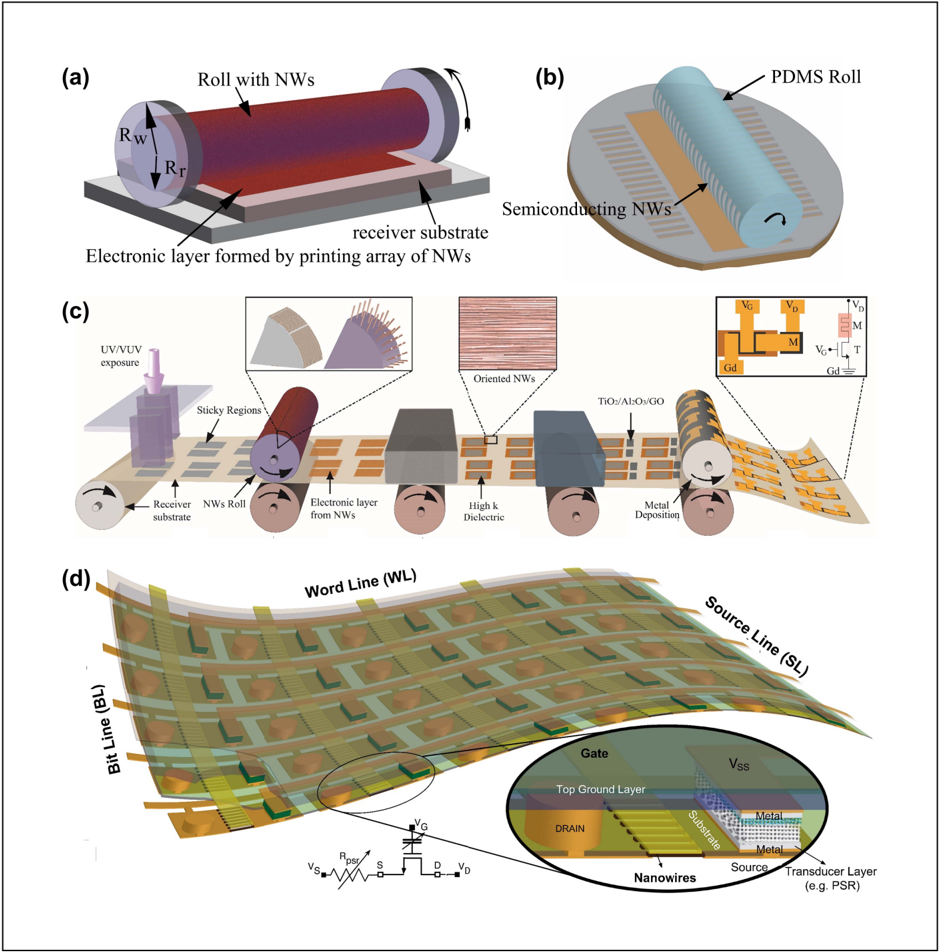
“The transfer printing of multiple types of materials opens interesting avenues for hybrid integrated systems, which is an ideal testbed for e-skin [30], [148], [160].”
Nanoscale Memristor Device as Synapse in Neuromorphic Systems
Jo, S. H., Chang, T., Ebong, I., Bhadviya, B. B., Mazumder, P., & Lu, W. (2010) · Nano Letters · doi:10.1021/nl904092h · Cited by 4,174 · cited 1×
“…hardware neuromorphic architecture implementations reported in the literature are based on devices such as memristor [90], spin logic [91], [92], memristor [93], neuron MOSFET [88], [94], analog circuit-based neurons [95], field-programmable gate array (FPGA) [75], and software-programmed NNs [96].”
WIDROW, B., & HOFF, M. E. (1960) · doi:10.21236/ad0241531 · Cited by 4,009
Memristive devices for computing
Yang, J. J., Strukov, D. B., & Stewart, D. R. (2013) · Nature Nanotechnology · doi:10.1038/nnano.2012.240 · Cited by 3,885 · cited 1×
“Recently, two-terminal memristive devices have gained attention as the state of their internal resistance could indicate the history of the voltage across and/or current through them [97]–[99].”
Highly sensitive flexible pressure sensors with microstructured rubber dielectric layers
Mannsfeld, S. C. B., Tee, B. C.-K., Stoltenberg, R. M., Chen, C. V. H.-H., Barman, S., Muir, B. V. O., Sokolov, A. N., Reese, C., & Bao, Z. (2010) · Nature Materials · doi:10.1038/nmat2834 · Cited by 3,291 · cited 2×
“[39] S.”
Skin-like pressure and strain sensors based on transparent elastic films of carbon nanotubes
Lipomi, D. J., Vosgueritchian, M., Tee, B. C.-K., Hellstrom, S. L., Lee, J. A., Fox, C. H., & Bao, Z. (2011) · Nature Nanotechnology · doi:10.1038/nnano.2011.184 · Cited by 3,188 · cited 2×
“The transfer printing approach has also been used for nonsilicon material such as carbon-based low-dimensional material [graphene and carbon nanotube (CNT)] [153]–[155], transition metal dichalcogenide monolayer (MoS2, WS2, etc.”
An ultra-lightweight design for imperceptible plastic electronics
Kaltenbrunner, M., Sekitani, T., Reeder, J., Yokota, T., Kuribara, K., Tokuhara, T., Drack, M., Schwödiauer, R., Graz, I., Bauer-Gogonea, S., et al. (2013) · Nature · doi:10.1038/nature12314 · Cited by 2,485 · cited 1×
“[173] M.”
Multiplexed electrical detection of cancer markers with nanowire sensor arrays
Zheng, G., Patolsky, F., Cui, Y., Wang, W. U., & Lieber, C. M. (2005) · Nature Biotechnology · doi:10.1038/nbt1138 · Cited by 2,436
Hammock, M. L., Chortos, A., Tee, B. C. ‐., Tok, J. B. ‐., & Bao, Z. (2013) · Advanced Materials · doi:10.1002/adma.201302240 · Cited by 2,396 · cited 4×
“There have been other surveys that discussed various types of tactile sensors and some of the issues related to the effective utilization of tactile sensing [9]–[11].”
InfluentialInkjet Printing—Process and Its Applications
Singh, M., Haverinen, H. M., Dhagat, P., & Jabbour, G. E. (2010) · Advanced Materials · doi:10.1002/adma.200901141 · Cited by 2,375
Research works printed but not linked: 2
- standring, 2015, Gray’s anatomy e-book the anatomical basis of clinical practice
- 10.1063/1.3184579 · DOI · Paper page
Cited by
Electronic skins and machine learning for intelligent soft robots
Shih, B., Shah, D., Li, J., Thuruthel, T. G., Park, Y.-L., Iida, F., Bao, Z., Kramer-Bottiglio, R., & Tolley, M. T. (2020) · Science Robotics · doi:10.1126/scirobotics.aaz9239 · Cited by 715
A Review on Soft Sensors for Monitoring, Control, and Optimization of Industrial Processes
Jiang, Y., Yin, S., Dong, J., & Kaynak, O. (2021) · IEEE Sensors Journal · doi:10.1109/jsen.2020.3033153 · Cited by 667
Pyo, S., Lee, J., Bae, K., Sim, S., & Kim, J. (2021) · Advanced Materials · doi:10.1002/adma.202005902 · Cited by 631
Flexible and Stretchable Capacitive Sensors with Different Microstructures
Qin, J., Yin, L., Hao, Y., Zhong, S., Zhang, D., Bi, K., Zhang, Y., Zhao, Y., & Dang, Z. (2021) · Advanced Materials · doi:10.1002/adma.202008267 · Cited by 616
Flexible Electronics and Devices as Human–Machine Interfaces for Medical Robotics
Heng, W., Solomon, S., & Gao, W. (2022) · Advanced Materials · doi:10.1002/adma.202107902 · Cited by 609
A Survey on Wearable Technology: History, State-of-the-Art and Current Challenges
Ometov, A., Shubina, V., Klus, L., Skibińska, J., Saafi, S., Pascacio, P., Flueratoru, L., Gaibor, D. Q., Chukhno, N., Chukhno, O., et al. (2021) · Computer Networks · doi:10.1016/j.comnet.2021.108074 · Cited by 506
A Wearable Supercapacitor Based on Conductive PEDOT:PSS‐Coated Cloth and a Sweat Electrolyte
Manjakkal, L., Pullanchiyodan, A., Yogeswaran, N., Hosseini, E. S., & Dahiya, R. (2020) · Advanced Materials · doi:10.1002/adma.201907254 · Cited by 463
Self-citationSkin-inspired soft bioelectronic materials, devices and systems
Zhao, C., Park, J., Root, S. E., & Bao, Z. (2024) · Nature Reviews Bioengineering · doi:10.1038/s44222-024-00194-1 · Cited by 408
Biodegradable Materials for Sustainable Health Monitoring Devices
Hosseini, E. S., Dervin, S., Ganguly, P., & Dahiya, R. (2021) · ACS Applied Bio Materials · doi:10.1021/acsabm.0c01139 · Cited by 326
Self-citationNeuro-inspired electronic skin for robots
Liu, F., Deswal, S., Christou, A., Sandamirskaya, Y., Kaboli, M., & Dahiya, R. (2022) · Science Robotics · doi:10.1126/scirobotics.abl7344 · Cited by 300
Self-citationConstruction of Bio‐Piezoelectric Platforms: From Structures and Synthesis to Applications
Xu, Q., Gao, X., Zhao, S., Liu, Y., Zhang, D., Zhou, K., Khanbareh, H., Chen, W., Zhang, Y., & Bowen, C. (2021) · Advanced Materials · doi:10.1002/adma.202008452 · Cited by 298
High‐Performance Flexible Pressure Sensor with a Self‐Healing Function for Tactile Feedback
Yang, M., Cheng, Y., Yue, Y., Chen, Y., Gao, H., Li, L., Cai, B., Liu, W., Wang, Z., Guo, H., et al. (2022) · Advanced Science · doi:10.1002/advs.202200507 · Cited by 294
Su, Y., Ma, C., Chen, J., Wu, H., Luo, W., Peng, Y., Luo, Z., Li, L., Tan, Y., Omisore, O. M., et al. (2020) · Nanoscale Research Letters · doi:10.1186/s11671-020-03428-4 · Cited by 287
Smart Tactile Gloves for Haptic Interaction, Communication, and Rehabilitation
Ozioko, O., & Dahiya, R. (2022) · Advanced Intelligent Systems · doi:10.1002/aisy.202100091 · Cited by 233
Self-citationFlexible potentiometric pH sensors for wearable systems
Manjakkal, L., Dervin, S., & Dahiya, R. (2020) · RSC Advances · doi:10.1039/d0ra00016g · Cited by 223
Self-citationIntelligent In‐Vehicle Interaction Technologies
Murali, P. K., Kaboli, M., & Dahiya, R. (2022) · Advanced Intelligent Systems · doi:10.1002/aisy.202100122 · Cited by 197
Self-citationMassari, L., Fransvea, G., D’Abbraccio, J., Filosa, M., Terruso, G., Aliperta, A., D’Alesio, G., Zaltieri, M., Schena, E., Palermo, E., et al. (2022) · Nature Machine Intelligence · doi:10.1038/s42256-022-00487-3 · Cited by 194
Printed Temperature Sensor Based on PEDOT: PSS-Graphene Oxide Composite
Soni, M., Bhattacharjee, M., Ntagios, M., & Dahiya, R. (2020) · IEEE Sensors Journal · doi:10.1109/jsen.2020.2969667 · Cited by 192
Self-citationRecent progress in self‐powered multifunctional e‐skin for advanced applications
Chen, Y., Gao, Z., Zhang, F., Wen, Z., & Sun, X. (2022) · Exploration · doi:10.1002/exp.20210112 · Cited by 186
Stretchable, compressible, and conductive hydrogel for sensitive wearable soft sensors
Peng, X., Wang, W., Yang, W., Chen, J., Peng, Q., Wang, T., Yang, D., Wang, J., Zhang, H., & Zeng, H. (2022) · Journal of Colloid and Interface Science · doi:10.1016/j.jcis.2022.03.037 · Cited by 172
Energy Autonomous Sweat‐Based Wearable Systems
Manjakkal, L., Yin, L., Nathan, A., Wang, J., & Dahiya, R. (2021) · Advanced Materials · doi:10.1002/adma.202100899 · Cited by 170
Self-citationBio-inspired, intelligent flexible sensing skin for multifunctional flying perception
Xiong, W., Zhu, C., Guo, D., Hou, C., Yang, Z., Xu, Z., Qiu, L., Yang, H., Li, K., & Huang, Y. (2021) · Nano Energy · doi:10.1016/j.nanoen.2021.106550 · Cited by 162
Origin of the contact force-dependent response of triboelectric nanogenerators
Min, G., Xu, Y., Cochran, P., Gadegaard, N., Mulvihill, D. M., & Dahiya, R. (2021) · Nano Energy · doi:10.1016/j.nanoen.2021.105829 · Cited by 159
Self-citationPrinted synaptic transistor–based electronic skin for robots to feel and learn
Liu, F., Deswal, S., Christou, A., Baghini, M. S., Chirila, R., Shakthivel, D., Chakraborty, M., & Dahiya, R. (2022) · Science Robotics · doi:10.1126/scirobotics.abl7286 · Cited by 161
Self-citationPEDOT:PSS Microchannel‐Based Highly Sensitive Stretchable Strain Sensor
Bhattacharjee, M., Soni, M., Escobedo, P., & Dahiya, R. (2020) · Advanced Electronic Materials · doi:10.1002/aelm.202000445 · Cited by 149
Self-citationSelf‐Powered Active Sensing Based on Triboelectric Generators
Khandelwal, G., & Dahiya, R. (2022) · Advanced Materials · doi:10.1002/adma.202200724 · Cited by 148
Self-citationSelf-powered sensing systems with learning capability
Alagumalai, A., Shou, W., Mahian, O., Aghbashlo, M., Tabatabaei, M., Wongwises, S., Liu, Y., Zhan, J., Torralba, A. B., Chen, J., et al. (2022) · Joule · doi:10.1016/j.joule.2022.06.001 · Cited by 149
Tactile Near‐Sensor Analogue Computing for Ultrafast Responsive Artificial Skin
Wang, M., Tu, J., Huang, Z., Wang, T., Liu, Z., Zhang, F., Li, W., He, K., Pan, L., Zhang, X., et al. (2022) · Advanced Materials · doi:10.1002/adma.202201962 · Cited by 144
Toward immersive communications in 6G
Shen, X. (., Gao, J., Li, M., Zhou, C., Hu, S., He, M., & Zhuang, W. (2023) · Frontiers in Computer Science · doi:10.3389/fcomp.2022.1068478 · Cited by 124
Ji, B., Zhou, Q., Wu, J., Gao, Y., Wen, W., & Zhou, B. (2020) · ACS Applied Materials & Interfaces · doi:10.1021/acsami.0c08910 · Cited by 122
Xu, Y., Min, G., Gadegaard, N., Dahiya, R., & Mulvihill, D. M. (2020) · Nano Energy · doi:10.1016/j.nanoen.2020.105067 · Cited by 133
Self-citationElectronic Waste Reduction Through Devices and Printed Circuit Boards Designed for Circularity
Chakraborty, M., Kettle, J., & Dahiya, R. (2022) · IEEE Journal on Flexible Electronics · doi:10.1109/jflex.2022.3159258 · Cited by 131
Self-citationA Snakeskin‐Inspired, Soft‐Hinge Kirigami Metamaterial for Self‐Adaptive Conformal Electronic Armor
Jiang, S., Liu, J., Xiong, W., Yang, Z., Yin, L., Li, K., & Huang, Y. (2022) · Advanced Materials · doi:10.1002/adma.202204091 · Cited by 127
Printed Chipless Antenna as Flexible Temperature Sensor
Bhattacharjee, M., Nikbakhtnasrabadi, F., & Dahiya, R. (2021) · IEEE Internet of Things Journal · doi:10.1109/jiot.2021.3051467 · Cited by 117
Self-citationHigh-performance printed electronics based on inorganic semiconducting nano to chip scale structures
Dahiya, A. S., Shakthivel, D., Kumaresan, Y., Zumeit, A., Christou, A., & Dahiya, R. (2020) · Nano Convergence · doi:10.1186/s40580-020-00243-6 · Cited by 113
Self-citationFlexible Strain and Temperature Sensing NFC Tag for Smart Food Packaging Applications
Escobedo, P., Bhattacharjee, M., Nikbakhtnasrabadi, F., & Dahiya, R. (2021) · IEEE Sensors Journal · doi:10.1109/jsen.2021.3100876 · Cited by 114
Self-citationSkin‐Inspired Thermoreceptors‐Based Electronic Skin for Biomimicking Thermal Pain Reflexes
Neto, J., Chirila, R., Dahiya, A. S., Christou, A., Shakthivel, D., & Dahiya, R. (2022) · Advanced Science · doi:10.1002/advs.202201525 · Cited by 116
Self-citationFlexible Electronic Skin: From Humanoids to Humans [Scanning the Issue]
Dahiya, R., Akinwande, D., & Chang, J. S. (2019) · Proceedings of the IEEE · doi:10.1109/jproc.2019.2941665 · Cited by 106
Self-citationWearable Assistive Tactile Communication Interface Based on Integrated Touch Sensors and Actuators
Ozioko, O., Karipoth, P., Hersh, M., & Dahiya, R. (2020) · IEEE Transactions on Neural Systems and Rehabilitation Engineering · doi:10.1109/tnsre.2020.2986222 · Cited by 103
Self-citationYogeswaran, N., Hosseini, E. S., & Dahiya, R. (2020) · ACS Applied Materials & Interfaces · doi:10.1021/acsami.0c13637 · Cited by 101
Self-citationPang, G., Yang, G., & Pang, Z. (2021) · IEEE Transactions on Medical Robotics and Bionics · doi:10.1109/tmrb.2021.3097252 · Cited by 111
Soft eSkin: distributed touch sensing with harmonized energy and computing
Soni, M., & Dahiya, R. (2019) · Philosophical Transactions of the Royal Society A Mathematical Physical and Engineering Sciences · doi:10.1098/rsta.2019.0156 · Cited by 107
Self-citationSensAct: The Soft and Squishy Tactile Sensor with Integrated Flexible Actuator
Ozioko, O., Karipoth, P., Escobedo, P., Ntagios, M., Pullanchiyodan, A., & Dahiya, R. (2021) · Advanced Intelligent Systems · doi:10.1002/aisy.201900145 · Cited by 95
Self-citationYin, F., Guo, Y., Qiu, Z., Niu, H., Wang, W., Li, Y., Kim, E., & Kim, N. (2022) · Nano Energy · doi:10.1016/j.nanoen.2022.107541 · Cited by 94
Energy Generating Electronic Skin With Intrinsic Tactile Sensing Without Touch Sensors
Escobedo, P., Ntagios, M., Shakthivel, D., Navaraj, W. T., & Dahiya, R. (2020) · IEEE Transactions on Robotics · doi:10.1109/tro.2020.3031264 · Cited by 94
Self-citationMultimodal Sensors and ML‐Based Data Fusion for Advanced Robots
Duan, S., Shi, Q., & Wu, J. L. (2022) · Advanced Intelligent Systems · doi:10.1002/aisy.202200213 · Cited by 110
Roadmap on measurement technologies for next generation structural health monitoring systems
Laflamme, S., Ubertini, F., Matteo, A. D., Pirrotta, A., Perry, M., Fu, Y., Li, J., Wang, H., Hoang, T., Glišić, B., et al. (2023) · Measurement Science and Technology · doi:10.1088/1361-6501/acd135 · Cited by 95
Magnetosensitive E‐Skins for Interactive Devices
Bermúdez, G. S. C., & Makarov, D. (2021) · Advanced Functional Materials · doi:10.1002/adfm.202007788 · Cited by 85
Silver Nanowire Synthesis and Strategies for Fabricating Transparent Conducting Electrodes
Kumar, A., Shaikh, M. O., & Chuang, C. (2021) · Nanomaterials · doi:10.3390/nano11030693 · Cited by 90
Wearable Body Sensor Networks: State-of-the-Art and Research Directions
Gravina, R., & Fortino, G. (2020) · IEEE Sensors Journal · doi:10.1109/jsen.2020.3044447 · Cited by 90
Direct roll transfer printed silicon nanoribbon arrays based high-performance flexible electronics
Zumeit, A., Dahiya, A. S., Christou, A., Shakthivel, D., & Dahiya, R. (2021) · npj Flexible Electronics · doi:10.1038/s41528-021-00116-w · Cited by 85
Self-citationNikbakhtnasrabadi, F., Hosseini, E. S., Dervin, S., Shakthivel, D., & Dahiya, R. (2022) · Advanced Electronic Materials · doi:10.1002/aelm.202101348 · Cited by 80
Self-citationTextile-Based Stretchable Microstrip Antenna with Intrinsic Strain Sensing
Nikbakhtnasrabadi, F., Matbouly, H. E., Ntagios, M., & Dahiya, R. (2021) · ACS Applied Electronic Materials · doi:10.1021/acsaelm.1c00179 · Cited by 81
Self-citationSoft Actuator Materials for Electrically Driven Haptic Interfaces
Ankit, A., Ho, T. Y. K., Nirmal, A., Kulkarni, M. R., Accoto, D., & Mathews, N. (2021) · Advanced Intelligent Systems · doi:10.1002/aisy.202100061 · Cited by 82
Ya, M. L., & Soin, N. B. (2022) · IEEE Sensors Journal · doi:10.1109/jsen.2022.3142328 · Cited by 86
Bioinspired Inchworm‐ and Earthworm‐like Soft Robots with Intrinsic Strain Sensing
Karipoth, P., Christou, A., Pullanchiyodan, A., & Dahiya, R. (2021) · Advanced Intelligent Systems · doi:10.1002/aisy.202100092 · Cited by 82
Self-citationA facile strategy for fabricating multifunctional ionogel based electronic skin
Sun, J., Li, R., Lu, G., Yuan, Y., Zhu, X., & Nie, J. (2020) · Journal of Materials Chemistry C · doi:10.1039/d0tc01057j · Cited by 75
Natural Jute Fibre‐Based Supercapacitors and Sensors for Eco‐Friendly Energy Autonomous Systems
Manjakkal, L., Franco, F. F., Pullanchiyodan, A., González‐Jiménez, M., & Dahiya, R. (2021) · Advanced Sustainable Systems · doi:10.1002/adsu.202000286 · Cited by 75
Self-citationMemristor-based adaptive neuromorphic perception in unstructured environments
Wang, S., Gao, S., Tang, C., Occhipinti, E., Li, C., Wang, S., Wang, J., Zhao, H., Hu, G., Nathan, A., et al. (2024) · Nature Communications · doi:10.1038/s41467-024-48908-8 · Cited by 103
Self-citationTacsac: A Wearable Haptic Device with Capacitive Touch-Sensing Capability for Tactile Display
Ozioko, O., Navaraj, W. T., Hersh, M. A., & Dahiya, R. (2020) · Sensors · doi:10.3390/s20174780 · Cited by 70
Self-citationZhao, X., Zhao, S., Zhang, X., & Su, Z. (2023) · Nanoscale · doi:10.1039/d2nr06084a · Cited by 66
Pullanchiyodan, A., Manjakkal, L., Dervin, S., Shakthivel, D., & Dahiya, R. (2020) · Advanced Materials Technologies · doi:10.1002/admt.201901107 · Cited by 64
Self-citationFused Deposition Modeling‐Based 3D‐Printed Electrical Interconnects and Circuits
Nassar, H., & Dahiya, R. (2021) · Advanced Intelligent Systems · doi:10.1002/aisy.202100102 · Cited by 63
Self-citationLarge-Area and Low-Cost Force/Tactile Capacitive Sensor for Soft Robotic Applications
Pagoli, A., Chapelle, F., Ramón, J. A. C., Mezouar, Y., & Lapusta, Y. N. (2022) · Sensors · doi:10.3390/s22114083 · Cited by 70
Scalable Paper Supercapacitors for Printed Wearable Electronics
Say, M. G., Brett, C. J., Edberg, J., Roth, S. V., Söderberg, D., Engquist, I., & Magnus Berggren, A. (2022) · ACS Applied Materials & Interfaces · doi:10.1021/acsami.2c15514 · Cited by 56
Tian, S.-R., Wang, Y., Deng, H., Wang, Y., & Zhang, X. (2023) · Soft Science · doi:10.20517/ss.2023.21 · Cited by 59
RFID-Based Dual-Chip Epidermal Sensing Platform for Human Skin Monitoring
Occhiuzzi, C., Parrella, S., Camera, F., Nappi, S., & Marrocco, G. (2020) · IEEE Sensors Journal · doi:10.1109/jsen.2020.3031664 · Cited by 54
Advanced Interfacial Design for Electronic Skins with Customizable Functionalities and Wearability
Tan, D., & Xu, B. (2023) · Advanced Functional Materials · doi:10.1002/adfm.202306793 · Cited by 58
Soft Capacitive Pressure Sensor With Enhanced Sensitivity Assisted by ZnO NW Interlayers and Airgap
Kumaresan, Y., Ma, S., Ozioko, O., & Dahiya, R. (2022) · IEEE Sensors Journal · doi:10.1109/jsen.2022.3143030 · Cited by 57
Self-citationIon‐Gated Transistor: An Enabler for Sensing and Computing Integration
Bu, X., Xu, H., Shang, D., Li, Y., Lv, H., & Liu, Q. (2020) · Advanced Intelligent Systems · doi:10.1002/aisy.202000156 · Cited by 56
Murali, P. K., Dutta, A., Gentner, M., Burdet, E., Dahiya, R., & Kaboli, M. (2022) · IEEE Robotics and Automation Letters · doi:10.1109/lra.2022.3150045 · Cited by 56
Self-citationA review of fiber-based supercapacitors and sensors for energy-autonomous systems
Tawiah, B., Seidu, R. K., Asinyo, B. K., & Fei, B. (2024) · Journal of Power Sources · doi:10.1016/j.jpowsour.2024.234069 · Cited by 53
Bioinspired Distributed Energy in Robotics and Enabling Technologies
Mukherjee, R., Ganguly, P., & Dahiya, R. (2021) · Advanced Intelligent Systems · doi:10.1002/aisy.202100036 · Cited by 57
Self-citationA skin-beyond tactile sensor as interfaces between the prosthetics and biological systems
Duan, S., Yang, H., Hong, J., Li, Y., Lin, Y., Zhu, D., Lei, W., & Wu, J. (2022) · Nano Energy · doi:10.1016/j.nanoen.2022.107665 · Cited by 50
Ultrathin Ion-Sensitive Field-Effect Transistor Chips with Bending-Induced Performance Enhancement
Vilouras, A., Christou, A., Manjakkal, L., & Dahiya, R. (2020) · ACS Applied Electronic Materials · doi:10.1021/acsaelm.0c00489 · Cited by 53
Self-citation3D Printed Interdigitated Capacitor Based Tilt Sensor
Ozioko, O., Nassar, H., & Dahiya, R. (2021) · IEEE Sensors Journal · doi:10.1109/jsen.2021.3058949 · Cited by 49
Self-citationTacSuit: A Wearable Large-Area, Bioinspired Multimodal Tactile Skin for Collaborative Robots
Zhou, Y., Jiangang, Z., Lu, P., Wang, Z., & He, B. (2023) · IEEE Transactions on Industrial Electronics · doi:10.1109/tie.2023.3253921 · Cited by 58
Neuromorphic devices for electronic skin applications
Patil, C. S., Ghode, S. B., Kim, J., Kamble, G. U., Kundale, S. S., Mannan, A., Ko, Y., Noman, M. A., Saqib, Q. M., Patil, S. R., et al. (2025) · Materials Horizons · doi:10.1039/d4mh01848f · Cited by 58
Liang, Y., Xiao, P., Ni, F., Zhang, L., Zhang, T., Wang, S., Zhou, W., Lü, W., Kuo, S., & Chen, T. (2020) · Nano Energy · doi:10.1016/j.nanoen.2020.105617 · Cited by 49
Kirigami and Mogul‐Patterned Ultra‐Stretchable High‐Performance ZnO Nanowires‐Based Photodetector
Kumaresan, Y., Min, G., Dahiya, A. S., Ejaz, A., Shakthivel, D., & Dahiya, R. (2021) · Advanced Materials Technologies · doi:10.1002/admt.202100804 · Cited by 50
Self-citationDahiya, A. S., Gil, T., Thireau, J., Azémard, N., Lacampagne, A., Charlot, B., & Todri‐Sanial, A. (2020) · Advanced Electronic Materials · doi:10.1002/aelm.202000547 · Cited by 46
A spiking and adapting tactile sensor for neuromorphic applications
Birkoben, T., Winterfeld, H., Fichtner, S., Petraru, A., & Kohlstedt, H. (2020) · Scientific Reports · doi:10.1038/s41598-020-74219-1 · Cited by 49
E-skin – Based advanced wearable technology for Health Management
Chugh, V., Basu, A., Kaushik, A. K., & Basu, A. K. (2023) · Current Research in Biotechnology · doi:10.1016/j.crbiot.2023.100129 · Cited by 47
Omnidirectional Stretchable Inorganic‐Material‐Based Electronics with Enhanced Performance
Kumaresan, Y., Kim, H., Pak, Y., Poola, P. K., Lee, R., Lim, N., Ko, H. C., Jung, G. Y., & Dahiya, R. (2020) · Advanced Electronic Materials · doi:10.1002/aelm.202000058 · Cited by 43
Self-citationNanoribbon‐Based Flexible High‐Performance Transistors Fabricated at Room Temperature
Zumeit, A., Navaraj, W. T., Shakthivel, D., & Dahiya, R. (2020) · Advanced Electronic Materials · doi:10.1002/aelm.201901023 · Cited by 43
Self-citationXiong, W., Feng, H., Liwang, H., Li, D., Yao, W., Duolikun, D., Zhou, Y., & Huang, Y. (2022) · IEEE Sensors Journal · doi:10.1109/jsen.2022.3162914 · Cited by 44
Palaniappan, V., Panahi, M. S., Maddipatla, D., Zhang, X., Masihi, S., Emani, H. R. K. M., Narakathu, B. B., Bazuin, B. J., & Atashbar, M. Z. (2021) · IEEE Sensors Journal · doi:10.1109/jsen.2021.3064451 · Cited by 40
High‐Performance n‐Channel Printed Transistors on Biodegradable Substrate for Transient Electronics
Dahiya, A. S., Zumeit, A., Christou, A., & Dahiya, R. (2022) · Advanced Electronic Materials · doi:10.1002/aelm.202200098 · Cited by 39
Self-citationKumar, V., Parvin, N., Joo, S. W., Mandal, T. K., & Park, S. (2025) · Nano Energy · doi:10.1016/j.nanoen.2025.110805 · Cited by 42
Karipoth, P., Pullanchiyodan, A., Christou, A., & Dahiya, R. (2021) · ACS Applied Materials & Interfaces · doi:10.1021/acsami.1c14228 · Cited by 40
Self-citationBrain-inspired computing systems: a systematic literature review
Zolfagharinejad, M., Alegre-Ibarra, U., Chen, T., Kinge, S., & van der Wiel, W. G. (2024) · The European Physical Journal B · doi:10.1140/epjb/s10051-024-00703-6 · Cited by 39
Saxena, A. M., & Patra, K. (2023) · Polymers for Advanced Technologies · doi:10.1002/pat.6251 · Cited by 43
Tang, C., Chang, X., Wang, J., Peng, Y., Wu, H., & Wang, H. (2023) · IEEE Transactions on Instrumentation and Measurement · doi:10.1109/tim.2023.3343795 · Cited by 38
Monolayer MoSe₂-Based Tunneling Field Effect Transistor for Ultrasensitive Strain Sensing
Dubey, P. K., Yogeswaran, N., Liu, F., Vilouras, A., Kaushik, B. K., & Dahiya, R. (2020) · IEEE Transactions on Electron Devices · doi:10.1109/ted.2020.2982732 · Cited by 35
Self-citationJingjing, G., Liu, X., Sun, Z., Zheng, X., Sung, H., Yao, Z., Li, Y., & Li, Y. (2024) · Materials & Design · doi:10.1016/j.matdes.2024.112640 · Cited by 38
Transparent and Transient Flexible Electronics
Nair, N. M., Zumeit, A., & Dahiya, R. (2025) · Advanced Science · doi:10.1002/advs.202505133 · Cited by 34
Self-citationOzioko, O., Kumaresan, Y., & Dahiya, R. (2020) · IEEE International Conference on Flexible and Printable Sensors and Systems (FLEPS) · doi:10.1109/fleps49123.2020.9239431 · Cited by 34
Self-citationSystem‐Engineered Miniaturized Robots: From Structure to Intelligence
Bandari, V. K., & Schmidt, O. G. (2021) · Advanced Intelligent Systems · doi:10.1002/aisy.202000284 · Cited by 39
A Survey on Robotic Prosthetics: Neuroprosthetics, Soft Actuators, and Control Strategies
Jyothish, K. J., & Mishra, S. (2024) · ACM Computing Surveys · doi:10.1145/3648355 · Cited by 37
Gilday, K., Hughes, J., & Fumiya Iida, A. (2022) · Soft Robotics · doi:10.1089/soro.2021.0077 · Cited by 32
Metadata
- Authors
- Dahiya, R., Yogeswaran, N., Liu, F., Manjakkal, L., Burdet, E., Hayward, V., & Jörntell, H.
- Affiliations
- University of Glasgow (GB)
- Imperial College London (GB)
- Institute of Intelligent Systems and Robotics, Sorbonne University, Paris, France
- Lund University (SE)
- Venue
- Proceedings of the IEEE
- Published
- 2019-10
- Volume
- 107
- Issue
- 10
- Pages
- 2016-2033
- ISSN
- 0018-9219 (ISSN-L)
- 1558-2256
- OpenAlex
- W2977568232
- Cited by
- 309
- References
- 185
- Citations by year
- 2026: 25 · 2025: 26 · 2024: 48 · 2023: 37 · 2022: 50 · 2021: 64 · 2020: 55 · 2019: 4
- FWCI
- 15.27
- Type
- journal article
- Language
- en
- Open access
- hybrid
- doi.org
- Locations
- Proceedings of the IEEE (publishedVersion, cc-by)
- ENLIGHTEN (Jurnal Bimbingan dan Konseling Islam) (acceptedVersion, cc-by-sa)
- HAL (submittedVersion, other-oa)
- HAL (submittedVersion)
- Edinburgh Napier Research Repository (Edinburgh Napier University) (submittedVersion, other-oa)
- Funders
- Engineering and Physical Sciences Research Council (EP/M002527/1, EP/R029644/1)
- H2020 Future and Emerging Technologies (H2020-FETOPEN-2018-829186)
- Topics
- Physical Sciences › Engineering › Biomedical Engineering › Advanced Sensor and Energy Harvesting Materials
- Physical Sciences › Engineering › Biomedical Engineering › Soft Robotics and Applications
- Life Sciences › Neuroscience › Cognitive Neuroscience › Tactile and Sensory Interactions
- Keywords
- electronic skin, soft robotics, tactile sensing, haptics, large-area manufacturing, energy self-sufficiency, flexible electronics, prosthetics
About these checks
Registry, retraction, Cites and statistics results are computed, not judged, with one exception: a printed reference that no index lists is read once by a model before it counts as a citation error. Claims are extracted by a model and kept only when their quote appears verbatim in the text; each cited source is then checked, with a model’s help, for whether it says what the claim relies on. Those verdicts can be wrong — read the claim’s quote and the cited source before relying on one.
Statistics and arithmetic are recomputed, not judged.
Confidence bands are shown only for fields calibrated on our annotated test set. None is calibrated yet, so no band is shown.
What counts as a claim ›How we measure confidence ›How we check this ›
Are you an author, or do you see a problem with this page? Request a review
Data sources
Bibliographic data: Semantic Scholar, OpenAlex, Crossref.
Contains information from the Semantic Scholar Academic Graph Datasets, made available under the ODC Attribution License (ODC-BY 1.0).
Semantic Scholar’s data is described in: Kinney, R., et al. (2023). The Semantic Scholar Open Data Platform. arXiv:2301.10140.
