

Large-Area Soft e-Skin: The Challenges Beyond Sensor Designs
Open accessThe DOI matches its Crossref record; 181 of the 185 references it cites were found in a registry or an index.
Abstract
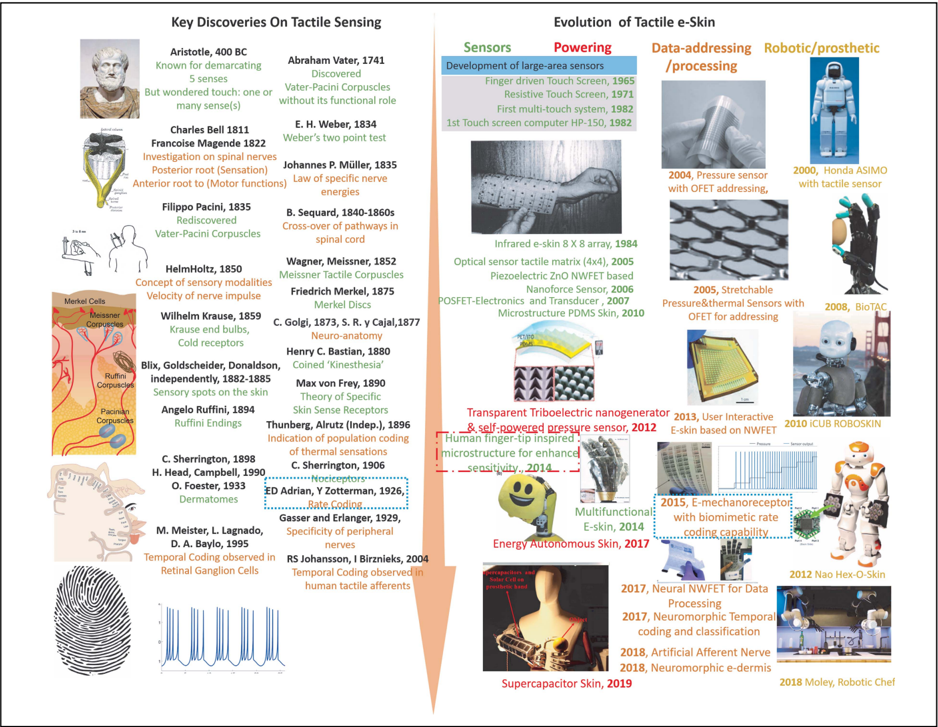
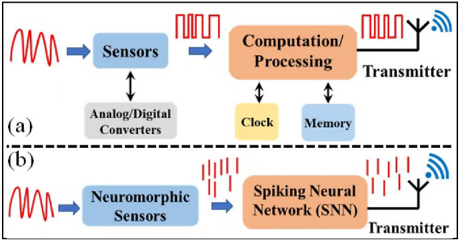
Sensory feedback from touch is critical for many tasks carried out by robots and humans, such as grasping objects or identifying materials. Electronic skin (e-skin) is a crucial technology for these purposes. Artificial tactile skin that can play the roles of human skin remains a distant possibility because of hard issues in resilience, manufacturing, mechanics, sensorics, electronics, energetics, information processing, and transport. Taken together, these issues make it difficult to bestow robots, or prosthetic devices, with effective tactile skins. Nonetheless, progress over the past few years in relation with the above issues has been encouraging, and we have achieved close to providing some of the abilities of biological skin with the advent of deformable sensors and flexible electronics. The naive imitation of skin morphology and sensing an impoverished set of mechanical and thermal quantities are not sufficient. There is a need to find more efficient ways to extract tactile information from mechanical contact than those previously available. Renewed interest in neuromorphic tactile skin is expected to bring some fresh ideas in this field. This article reviews these new developments, particularly related to the handling of tactile data, energy autonomy, and large-area manufacturing. The challenges in relation with these advances for tactile sensing and haptics in robotics and prosthetics are discussed along with potential solutions.
Overview
The claims and statistics of this paper haven’t been checked yet.
Free: it reads the open-access text and checks the first 5 claims that cite a source we can check. Create a free account to check every claim.
Integrity signals
Registry
Cites
Statistics
Figures












Verification
Claims the paper makes
The claims and statistics of this paper haven’t been checked yet.
Free: it reads the open-access text and checks the first 5 claims that cite a source we can check. Create a free account to check every claim.
Claims other papers make about this one
Each is checked against this paper’s own text: does it say what the citing paper says it does?
The source backs part of the claim, not all of it — or backs it for a different population, condition or comparison.
In the citing paper
“In particular, when e-skin tactile sensing communicates harmful external stimuli to the user, soft robotics can utilize its flexibility and high degree of freedom to efficiently move away and adapt to the scenario.[19,36]”
From Flexible Electronics and Devices as Human–Machine Interfaces for Medical Robotics (2022) · cites this paper as [36]
Experimental — accuracy not yet measured
Self-check
Percentages, sums and reported differences re-computed from the paper’s own numbers.
The self-check needs the paper’s full text.
Citations
Cites
Kim, D.-H., Lu, N., Ma, R., Kim, Y.-S., Kim, R.-H., Wang, S., Wu, J., Won, S. M., Tao, H., Islam, A., et al. (2011) · Science · doi:10.1126/science.1206157 · Cited by 4,836 · cited 1×
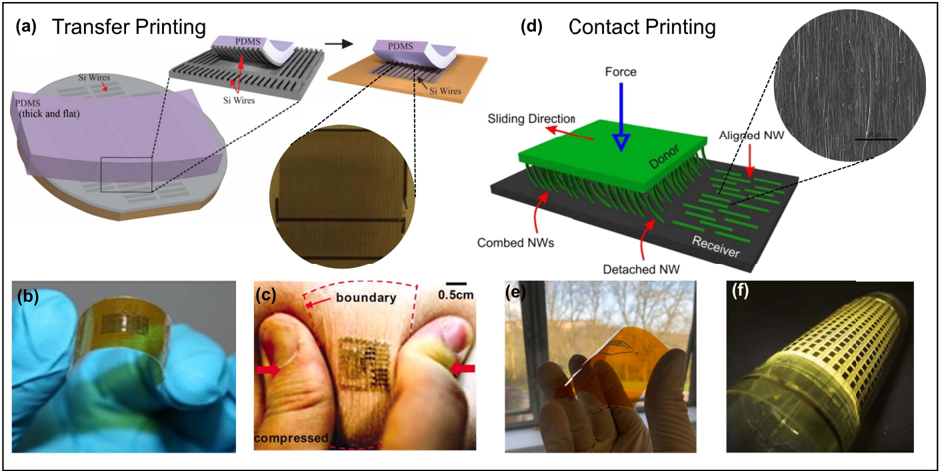
“The transfer printing of multiple types of materials opens interesting avenues for hybrid integrated systems, which is an ideal testbed for e-skin [30], [148], [160].”
Nanoscale Memristor Device as Synapse in Neuromorphic Systems
Jo, S. H., Chang, T., Ebong, I., Bhadviya, B. B., Mazumder, P., & Lu, W. (2010) · Nano Letters · doi:10.1021/nl904092h · Cited by 4,174 · cited 1×
“…hardware neuromorphic architecture implementations reported in the literature are based on devices such as memristor [90], spin logic [91], [92], memristor [93], neuron MOSFET [88], [94], analog circuit-based neurons [95], field-programmable gate array (FPGA) [75], and software-programmed NNs [96].”
WIDROW, B., & HOFF, M. E. (1960) · doi:10.21236/ad0241531 · Cited by 4,009
Memristive devices for computing
Yang, J. J., Strukov, D. B., & Stewart, D. R. (2013) · Nature Nanotechnology · doi:10.1038/nnano.2012.240 · Cited by 3,885 · cited 1×
“Recently, two-terminal memristive devices have gained attention as the state of their internal resistance could indicate the history of the voltage across and/or current through them [97]–[99].”
Highly sensitive flexible pressure sensors with microstructured rubber dielectric layers
Mannsfeld, S. C. B., Tee, B. C.-K., Stoltenberg, R. M., Chen, C. V. H.-H., Barman, S., Muir, B. V. O., Sokolov, A. N., Reese, C., & Bao, Z. (2010) · Nature Materials · doi:10.1038/nmat2834 · Cited by 3,291 · cited 2×
“[39] S.”
Skin-like pressure and strain sensors based on transparent elastic films of carbon nanotubes
Lipomi, D. J., Vosgueritchian, M., Tee, B. C.-K., Hellstrom, S. L., Lee, J. A., Fox, C. H., & Bao, Z. (2011) · Nature Nanotechnology · doi:10.1038/nnano.2011.184 · Cited by 3,188
An ultra-lightweight design for imperceptible plastic electronics
Kaltenbrunner, M., Sekitani, T., Reeder, J., Yokota, T., Kuribara, K., Tokuhara, T., Drack, M., Schwödiauer, R., Graz, I., Bauer-Gogonea, S., et al. (2013) · Nature · doi:10.1038/nature12314 · Cited by 2,485 · cited 1×
“[173] M.”
Multiplexed electrical detection of cancer markers with nanowire sensor arrays
Zheng, G., Patolsky, F., Cui, Y., Wang, W. U., & Lieber, C. M. (2005) · Nature Biotechnology · doi:10.1038/nbt1138 · Cited by 2,436
Hammock, M. L., Chortos, A., Tee, B. C. ‐., Tok, J. B. ‐., & Bao, Z. (2013) · Advanced Materials · doi:10.1002/adma.201302240 · Cited by 2,396 · cited 4×
“There have been other surveys that discussed various types of tactile sensors and some of the issues related to the effective utilization of tactile sensing [9]–[11].”
InfluentialInkjet Printing—Process and Its Applications
Singh, M., Haverinen, H. M., Dhagat, P., & Jabbour, G. E. (2010) · Advanced Materials · doi:10.1002/adma.200901141 · Cited by 2,375
High Performance Silicon Nanowire Field Effect Transistors
Cui, Y., Zhong, Z., Wang, D., Wang, W. U., & Lieber, C. M. (2003) · Nano Letters · doi:10.1021/nl025875l · Cited by 2,169
Schwartz, G., Tee, B. C.-K., Mei, J., Appleton, A. L., Kim, D. H., Wang, H., & Bao, Z. (2013) · Nature Communications · doi:10.1038/ncomms2832 · Cited by 2,042 · cited 1×
“To imitate the elasticity of human skin, touch sensors are sometime developed together with elastomers having microstructures [36], [39], [40].”
Someya, T., Sekitani, T., Iba, S., Kato, Y., Kawaguchi, H., & Sakurai, T. (2004) · Proceedings of the National Academy of Sciences · doi:10.1073/pnas.0401918101 · Cited by 1,921
Tactile Sensing—From Humans to Humanoids
Dahiya, R. S., Metta, G., Valle, M., & Sandini, G. (2010) · IEEE Transactions on Robotics · doi:10.1109/tro.2009.2033627 · Cited by 1,851
Self-citationLab-on-Skin: A Review of Flexible and Stretchable Electronics for Wearable Health Monitoring
Liu, Y., Pharr, M., & Salvatore, G. A. (2017) · ACS Nano · doi:10.1021/acsnano.7b04898 · Cited by 1,725 · cited 3×
“The progress related to other materials can be found in several reviews on flexible electronics [11], [41], [43], [120], [121].”
A flexible and highly sensitive strain-gauge sensor using reversible interlocking of nanofibres
Pang, C., Lee, G.-Y., Kim, T.-I., Kim, S. M., Kim, H. N., Ahn, S.-H., & Suh, K.-Y. (2012) · Nature Materials · doi:10.1038/nmat3380 · Cited by 1,695
Analog VLSI Implementation of Neural Systems
(1989) · The Kluwer International Series in Engineering and Computer Science · doi:10.1007/978-1-4613-1639-8 · Cited by 1,680
Transfer printing by kinetic control of adhesion to an elastomeric stamp
Meitl, M. A., Zhu, Z.-T., Kumar, V., Lee, K. J., Feng, X., Huang, Y. Y., Adesida, I., Nuzzo, R. G., & Rogers, J. A. (2006) · Nature Materials · doi:10.1038/nmat1532 · Cited by 1,548
Pan, L., Chortos, A., Yu, G., Wang, Y., Isaacson, S., Allen, R., Shi, Y., Dauskardt, R., & Bao, Z. (2014) · Nature Communications · doi:10.1038/ncomms4002 · Cited by 1,519
Ge/Si nanowire heterostructures as high-performance field-effect transistors
Xiang, J., Lu, W., Hu, Y., Wu, Y., Yan, H., & Lieber, C. M. (2006) · Nature · doi:10.1038/nature04796 · Cited by 1,450
Stretchable silicon nanoribbon electronics for skin prosthesis
Kim, J., Lee, M., Shim, H. J., Ghaffari, R., Cho, H. R., Son, D., Jung, Y. H., Soh, M., Choi, C., Jung, S., et al. (2014) · Nature Communications · doi:10.1038/ncomms6747 · Cited by 1,435 · cited 1×
“[170] J.”
Tee, B. C.-K., Wang, C., Allen, R., & Bao, Z. (2012) · Nature Nanotechnology · doi:10.1038/nnano.2012.192 · Cited by 1,419
Xu, S., Zhang, Y., Cho, J., Lee, J., Huang, X., Jia, L., Fan, J. A., Su, Y., Su, J., Zhang, H., et al. (2013) · Nature Communications · doi:10.1038/ncomms2553 · Cited by 1,404
Someya, T., Kato, Y., Sekitani, T., Iba, S., Noguchi, Y., Murase, Y., Kawaguchi, H., & Sakurai, T. (2005) · Proceedings of the National Academy of Sciences · doi:10.1073/pnas.0502392102 · Cited by 1,389
A Rubberlike Stretchable Active Matrix Using Elastic Conductors
Sekitani, T., Noguchi, Y., Hata, K., Fukushima, T., Aida, T., & Someya, T. (2008) · Science · doi:10.1126/science.1160309 · Cited by 1,366
A hemispherical electronic eye camera based on compressible silicon optoelectronics
Ko, H. C., Stoykovich, M. P., Song, J., Malyarchuk, V., Choi, W. M., Yu, C.-J., Geddes III, J. B., Xiao, J., Wang, S., Huang, Y., et al. (2008) · Nature · doi:10.1038/nature07113 · Cited by 1,352
Johansson, R. S., & Vallbo, A. B. (1979) · The Journal of Physiology · doi:10.1113/jphysiol.1979.sp012619 · Cited by 1,291
Nanowire active-matrix circuitry for low-voltage macroscale artificial skin
Takei, K., Takahashi, T., Ho, J. C., Ko, H., Gillies, A. G., Leu, P. W., Fearing, R. S., & Javey, A. (2010) · Nature Materials · doi:10.1038/nmat2835 · Cited by 1,274
Advances of flexible pressure sensors toward artificial intelligence and health care applications
Zang, Y., Zhang, F., Di, C.-A., & Zhu, D. (2015) · Materials Horizons · doi:10.1039/c4mh00147h · Cited by 1,272
Technologies for Printing Sensors and Electronics Over Large Flexible Substrates: A Review
Khan, S., Lorenzelli, L., & Dahiya, R. S. (2015) · IEEE Sensors Journal · doi:10.1109/jsen.2014.2375203 · Cited by 1,225
Self-citationPu, X., Liu, M., Chen, X., Sun, J., Du, C., Zhang, Y., Zhai, J., Hu, W., & Wang, Z. L. (2017) · Science Advances · doi:10.1126/sciadv.1700015 · Cited by 1,218
User-interactive electronic skin for instantaneous pressure visualization
Wang, C., Hwang, D., Yu, Z., Takei, K., Park, J., Chen, T., Ma, B., & Javey, A. (2013) · Nature Materials · doi:10.1038/nmat3711 · Cited by 1,182
Diameter-controlled synthesis of single-crystal silicon nanowires
Cui, Y., Lauhon, L. J., Gudiksen, M. S., Wang, J., & Lieber, C. M. (2001) · Applied Physics Letters · doi:10.1063/1.1363692 · Cited by 1,156
Lederman, S. J., & Klatzky, R. L. (2009) · Attention, Perception & Psychophysics · doi:10.3758/app.71.7.1439 · Cited by 1,108 · cited 1×
“As a result, there is an increased focus on developing artificial skins with tactile capabilities [26], [27] and safe physical contact [14], [28].”
Lee, G.-H., Yu, Y.-J., Cui, X., Petrone, N., Lee, C.-H., Choi, M. S., Lee, D.-Y., Lee, C., Yoo, W. J., Watanabe, K., et al. (2013) · ACS Nano · doi:10.1021/nn402954e · Cited by 1,095
(2013) · Practical Psychology · doi:10.4324/9781315009810-7 · Cited by 1,066
Restoring natural sensory feedback in real-time bidirectional hand prostheses
Raspopovic, S., Capogrosso, M., Petrini, F. M., Bonizzato, M., Rigosa, J., Di Pino, G., Carpaneto, J., Controzzi, M., Boretius, T., Fernandez, E., et al. (2014) · Science Translational Medicine · doi:10.1126/scitranslmed.3006820 · Cited by 1,001 · cited 1×
“In recent years, emulating the sensory ability of human skin has become an area of growing interest due to its applications in the field of the prosthesis [19], robotics [20], [21], health monitoring [22], and human– machine interaction [22].”
Recent Progress in Electronic Skin
Wang, X., Dong, L., Zhang, H., Yu, R., Pan, C., & Wang, Z. L. (2015) · Advanced Science · doi:10.1002/advs.201500169 · Cited by 976 · cited 1×
“[42] X.”
Controlled buckling of semiconductor nanoribbons for stretchable electronics
Sun, Y., Choi, W. M., Jiang, H., Huang, Y. Y., & Rogers, J. A. (2006) · Nature Nanotechnology · doi:10.1038/nnano.2006.131 · Cited by 933
Transfer Printing Techniques for Materials Assembly and Micro/Nanodevice Fabrication
Carlson, A., Bowen, A. M., Huang, Y., Nuzzo, R. G., & Rogers, J. A. (2012) · Advanced Materials · doi:10.1002/adma.201201386 · Cited by 917
A skin-inspired organic digital mechanoreceptor
Tee, B. C.-K., Chortos, A., Berndt, A., Nguyen, A. K., Tom, A., McGuire, A., Lin, Z. C., Tien, K., Bae, W.-G., Wang, H., et al. (2015) · Science · doi:10.1126/science.aaa9306 · Cited by 882 · cited 1×
“For example, flexible organic semiconductor-based devices have been developed to mimic the slow adapting mechanoreceptors [81].”
Printed Assemblies of Inorganic Light-Emitting Diodes for Deformable and Semitransparent Displays
Park, S.-I., Xiong, Y., Kim, R.-H., Elvikis, P., Meitl, M., Kim, D.-H., Wu, J., Yoon, J., Yu, C.-J., Liu, Z., et al. (2009) · Science · doi:10.1126/science.1175690 · Cited by 852
Yang, Y., Zhang, H., Lin, Z.-H., Zhou, Y. S., Jing, Q., Su, Y., Yang, J., Chen, J., Hu, C., & Wang, Z. L. (2013) · ACS Nano · doi:10.1021/nn403838y · Cited by 798 · cited 1×
“3(c)], are also suitable for robotics and human–machine interface applications [66].”
Semiconductor Nanowires: From Self‐Organization to Patterned Growth
Fan, H. J., Werner, P., & Zacharias, M. (2006) · Small · doi:10.1002/smll.200500495 · Cited by 759
Printable elastic conductors by in situ formation of silver nanoparticles from silver flakes
Matsuhisa, N., Inoue, D., Zalar, P., Jin, H., Matsuba, Y., Itoh, A., Yokota, T., Hashizume, D., & Someya, T. (2017) · Nature Materials · doi:10.1038/nmat4904 · Cited by 750
Kim, D.-H., Song, J., Choi, W. M., Kim, H.-S., Kim, R.-H., Liu, Z., Huang, Y. Y., Hwang, K.-C., Zhang, Y.-W., & Rogers, J. A. (2008) · Proceedings of the National Academy of Sciences · doi:10.1073/pnas.0807476105 · Cited by 737
A review of tactile sensing technologies with applications in biomedical engineering
Tiwana, M. I., Redmond, S. J., & Lovell, N. H. (2012) · Sensors and Actuators A: Physical · doi:10.1016/j.sna.2012.02.051 · Cited by 721
Synthesis, assembly and applications of semiconductor nanomembranes
Rogers, J. A., Lagally, M. G., & Nuzzo, R. G. (2011) · Nature · doi:10.1038/nature10381 · Cited by 715
Graphene‐Based Flexible and Stretchable Electronics
Jang, H., Park, Y. J., Chen, X., Das, T., Kim, M., & Ahn, J. (2016) · Advanced Materials · doi:10.1002/adma.201504245 · Cited by 704
Artificial neural networks in hardware: A survey of two decades of progress
Misra, J., & Saha, I. (2010) · Neurocomputing · doi:10.1016/j.neucom.2010.03.021 · Cited by 646
Singh, N., Agarwal, A., Bera, L. K., Liow, T. Y., Yang, R., Rustagi, S. C., Tung, C. H., Kumar, R., Lo, G. Q., Balasubramanian, N., et al. (2006) · IEEE Electron Device Letters · doi:10.1109/led.2006.873381 · Cited by 644
Controlled Synthesis and Transfer of Large-Area WS2 Sheets: From Single Layer to Few Layers
Elías, A. L., Perea-López, N., Castro-Beltrán, A., Berkdemir, A., Lv, R., Feng, S., Long, A. D., Hayashi, T., Kim, Y. A., Endo, M., et al. (2013) · ACS Nano · doi:10.1021/nn400971k · Cited by 617
A functional MOS transistor featuring gate-level weighted sum and threshold operations
Shibata, T., & Ohmi, T. (1992) · IEEE Transactions on Electron Devices · doi:10.1109/16.137325 · Cited by 615
Oxide‐Assisted Growth of Semiconducting Nanowires
Zhang, R. ‐., Lifshitz, Y., & Lee, S. ‐. (2003) · Advanced Materials · doi:10.1002/adma.200301641 · Cited by 589
Origins of neuroscience: a history of explorations into brain function
(1994) · Choice Reviews Online · doi:10.5860/choice.32-0292 · Cited by 584
Wafer-Scale Assembly of Highly Ordered Semiconductor Nanowire Arrays by Contact Printing
Fan, Z., Ho, J. C., Jacobson, Z. A., Yerushalmi, R., Alley, R. L., Razavi, H., & Javey, A. (2008) · Nano Letters · doi:10.1021/nl071626r · Cited by 582
Skin-inspired electronic devices
Chortos, A., & Bao, Z. (2014) · Materials Today · doi:10.1016/j.mattod.2014.05.006 · Cited by 571
Transparent and Flexible Carbon Nanotube Transistors
Artukovic, E., Kaempgen, M., Hecht, D. S., Roth, S., & Grüner, G. (2005) · Nano Letters · doi:10.1021/nl050254o · Cited by 549
Wireless Power Transfer Strategies for Implantable Bioelectronics
Agarwal, K., Jegadeesan, R., Guo, Y.-X., & Thakor, N. V. (2017) · IEEE Reviews in Biomedical Engineering · doi:10.1109/rbme.2017.2683520 · Cited by 540
Electronic Muscles and Skins: A Review of Soft Sensors and Actuators
Chen, D., & Pei, Q. (2017) · Chemical Reviews · doi:10.1021/acs.chemrev.7b00019 · Cited by 506
Self-Powered, Ultrasensitive, Flexible Tactile Sensors Based on Contact Electrification
Zhu, G., Yang, W. Q., Zhang, T., Jing, Q., Chen, J., Zhou, Y. S., Bai, P., & Wang, Z. L. (2014) · Nano Letters · doi:10.1021/nl5005652 · Cited by 464
Spintronic Nanodevices for Bioinspired Computing
Grollier, J., Querlioz, D., & Stiles, M. D. (2016) · Proceedings of the IEEE · doi:10.1109/jproc.2016.2597152 · Cited by 433
Lumelsky, V. J., Shur, M. S., & Wagner, S. (2001) · IEEE Sensors Journal · doi:10.1109/jsen.2001.923586 · Cited by 433
Haptics: The Present and Future of Artificial Touch Sensation
Culbertson, H., Schorr, S. B., & Okamura, A. M. (2018) · Annual Review of Control, Robotics, and Autonomous Systems · doi:10.1146/annurev-control-060117-105043 · Cited by 431
Wearable Textile Battery Rechargeable by Solar Energy
Lee, Y.-H., Kim, J.-S., Noh, J., Lee, I., Kim, H. J., Choi, S., Seo, J., Jeon, S., Kim, T.-S., Lee, J.-Y., et al. (2013) · Nano Letters · doi:10.1021/nl403860k · Cited by 430
Directions Toward Effective Utilization of Tactile Skin: A Review
Dahiya, R. S., Mittendorfer, P., Valle, M., Cheng, G., & Lumelsky, V. J. (2013) · IEEE Sensors Journal · doi:10.1109/jsen.2013.2279056 · Cited by 428
Self-citationRobotic tactile perception of object properties: A review
Luo, S., Bimbo, J., Dahiya, R., & Liu, H. (2017) · Mechatronics · doi:10.1016/j.mechatronics.2017.11.002 · Cited by 425
Self-citationMethods and Technologies for the Implementation of Large-Scale Robot Tactile Sensors
Schmitz, A., Maiolino, P., Maggiali, M., Natale, L., Cannata, G., & Metta, G. (2011) · IEEE Transactions on Robotics · doi:10.1109/tro.2011.2132930 · Cited by 418
Bandodkar, A. J., You, J.-M., Kim, N.-H., Gu, Y., Kumar, R., Mohan, A. M. V., Kurniawan, J., Imani, S., Nakagawa, T., Parish, B., et al. (2017) · Energy & Environmental Science · doi:10.1039/c7ee00865a · Cited by 412
Competing Fracture in Kinetically Controlled Transfer Printing
Feng, X., Meitl, M. A., Bowen, A. M., Huang, Y., Nuzzo, R. G., & Rogers, J. A. (2007) · Langmuir · doi:10.1021/la701555n · Cited by 411
Finding a roadmap to achieve large neuromorphic hardware systems
Hasler, J., & Marr, B. (2013) · Frontiers in Neuroscience · doi:10.3389/fnins.2013.00118 · Cited by 392
Lumelsky, V., Shur, M. S., & Wagner, S. (2000) · Cited by 382
Ultra-thin chips for high-performance flexible electronics
Gupta, S., Navaraj, W. T., Lorenzelli, L., & Dahiya, R. (2018) · npj Flexible Electronics · doi:10.1038/s41528-018-0021-5 · Cited by 363
Self-citationActive Matrix Electronic Skin Strain Sensor Based on Piezopotential‐Powered Graphene Transistors
Sun, Q., Seung, W., Kim, B. J., Seo, S., Kim, S., & Cho, J. H. (2015) · Advanced Materials · doi:10.1002/adma.201500582 · Cited by 342
Oddo, C. M., Raspopovic, S., Artoni, F., Mazzoni, A., Spigler, G., Petrini, F., Giambattistelli, F., Vecchio, F., Miraglia, F., Zollo, L., et al. (2016) · eLife · doi:10.7554/elife.09148 · Cited by 332
Energy autonomous electronic skin
García Núñez, C., Manjakkal, L., & Dahiya, R. (2019) · npj Flexible Electronics · doi:10.1038/s41528-018-0045-x · Cited by 332 · cited 7×
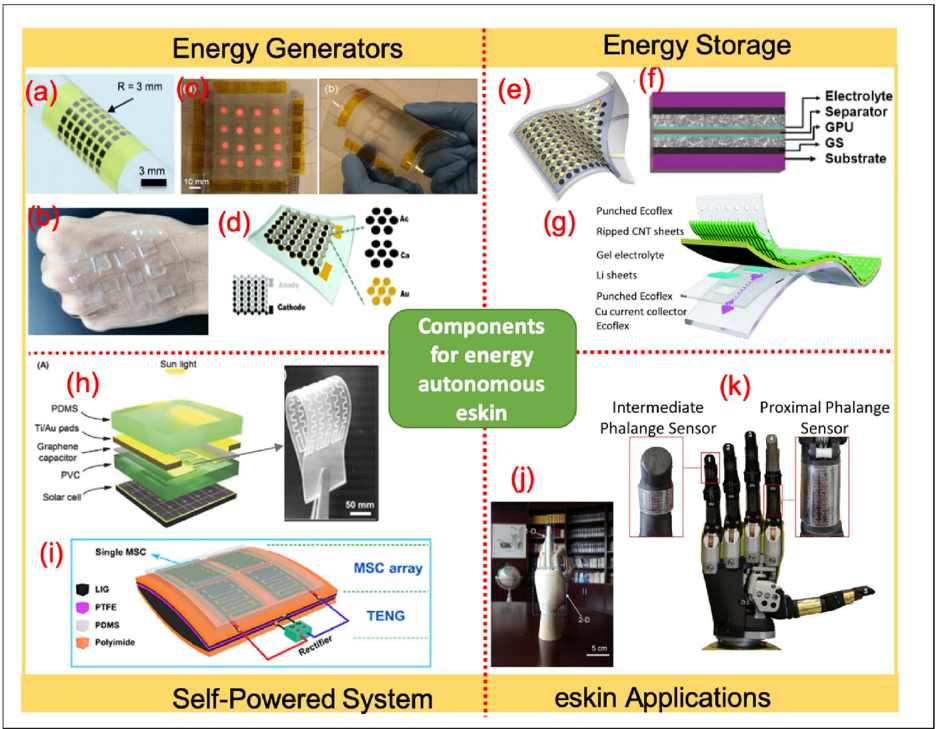
“4(a)] [55]) present over the whole body of a robot or prosthetic limb, it may be possible to generate suf-ficient power to operate the e-skin as well as other devices.”
InfluentialSelf-citationWhole‐body mapping of spatial acuity for pain and touch
Mancini, F., Bauleo, A., Cole, J., Lui, F., Porro, C. A., Haggard, P., & Iannetti, G. D. (2014) · Annals of Neurology · doi:10.1002/ana.24179 · Cited by 330
Stretchable wireless system for sweat pH monitoring
Dang, W., Manjakkal, L., Navaraj, W. T., Lorenzelli, L., Vinciguerra, V., & Dahiya, R. (2018) · Biosensors and Bioelectronics · doi:10.1016/j.bios.2018.02.025 · Cited by 326 · cited 1×
“Cutaneous skinlike devices have also found applications in wearable systems as the second skin or tattoolike skin to measure various physiological parameters to monitor health condition [1], [29]–[31].”
Self-citationOrigins of neuroscience: A history of explorations into brain function
Hanson, J. (1995) · Journal of the Neurological Sciences · doi:10.1016/0022-510x(95)90079-9 · Cited by 322
A neuro-inspired artificial peripheral nervous system for scalable electronic skins
Lee, W. W., Tan, Y. J., Yao, H., Li, S., See, H. H., Hon, M., Ng, K. A., Xiong, B., Ho, J. S., & Tee, B. C. K. (2019) · Science Robotics · doi:10.1126/scirobotics.aax2198 · Cited by 318
Fukuda, K., & Someya, T. (2017) · Advanced Materials · doi:10.1002/adma.201602736 · Cited by 317
Energy‐Autonomous, Flexible, and Transparent Tactile Skin
Núñez, C. G., Navaraj, W. T., Polat, E. O., & Dahiya, R. (2017) · Advanced Functional Materials · doi:10.1002/adfm.201606287 · Cited by 312
Self-citationPrinted subthreshold organic transistors operating at high gain and ultralow power
Jiang, C., Choi, H. W., Cheng, X., Ma, H., Hasko, D., & Nathan, A. (2019) · Science · doi:10.1126/science.aav7057 · Cited by 308
A nanoscale combing technique for the large-scale assembly of highly aligned nanowires
Yao, J., Yan, H., & Lieber, C. M. (2013) · Nature Nanotechnology · doi:10.1038/nnano.2013.55 · Cited by 298
Carbon Nanotube Active-Matrix Backplanes for Conformal Electronics and Sensors
Takahashi, T., Takei, K., Gillies, A. G., Fearing, R. S., & Javey, A. (2011) · Nano Letters · doi:10.1021/nl203117h · Cited by 284
The cat is out of the bag: cortical simulations with 10 9 neurons, 10 13 synapses
Ananthanarayanan, R., Esser, S. K., Simon, H. D., & Modha, D. S. (2009) · Proceedings of the Conference on High Performance Computing Networking, Storage and Analysis · doi:10.1145/1654059.1654124 · Cited by 263
Silicon nanowires as chemical sensors
Zhou, X. T., Hu, J. Q., Li, C. P., Ma, D. D. D., Lee, C. S., & Lee, S. T. (2003) · Chemical Physics Letters · doi:10.1016/s0009-2614(02)02008-0 · Cited by 258
Flow-enhanced solution printing of all-polymer solar cells
Diao, Y., Zhou, Y., Kurosawa, T., Shaw, L., Wang, C., Park, S., Guo, Y., Reinspach, J. A., Gu, K., Gu, X., et al. (2015) · Nature Communications · doi:10.1038/ncomms8955 · Cited by 254
Gu, X., Zhou, Y., Gu, K., Kurosawa, T., Guo, Y., Li, Y., Lin, H., Schroeder, B. C., Yan, H., Molina‐Lopez, F., et al. (2017) · Advanced Energy Materials · doi:10.1002/aenm.201602742 · Cited by 248
Bauer, S. (2013) · Nature Materials · doi:10.1038/nmat3759 · Cited by 233
Flexible self-charging supercapacitor based on graphene-Ag-3D graphene foam electrodes
Manjakkal, L., Núñez, C. G., Dang, W., & Dahiya, R. (2018) · Nano Energy · doi:10.1016/j.nanoen.2018.06.072 · Cited by 230
Self-citationNela, L., Tang, J., Cao, Q., Tulevski, G., & Han, S.-J. (2018) · Nano Letters · doi:10.1021/acs.nanolett.8b00063 · Cited by 221
Application of 3D Printing for Smart Objects with Embedded Electronic Sensors and Systems
Ota, H., Emaminejad, S., Gao, Y., Zhao, A., Wu, E., Challa, S., Chen, K., Fahad, H. M., Jha, A. K., Kiriya, D., et al. (2016) · Advanced Materials Technologies · doi:10.1002/admt.201600013 · Cited by 212
Flexible active-matrix organic light-emitting diode display enabled by MoS 2 thin-film transistor
Choi, M., Park, Y. J., Sharma, B. K., Bae, S.-R., Kim, S. Y., & Ahn, J.-H. (2018) · Science Advances · doi:10.1126/sciadv.aas8721 · Cited by 211
Transparent, Low‐Power Pressure Sensor Matrix Based on Coplanar‐Gate Graphene Transistors
Sun, Q., Kim, D. H., Park, S. S., Lee, N. Y., Zhang, Y., Lee, J. H., Cho, K., & Cho, J. H. (2014) · Advanced Materials · doi:10.1002/adma.201400918 · Cited by 210
Controlled Synthesis of Millimeter-Long Silicon Nanowires with Uniform Electronic Properties
Park, W. I., Zheng, G., Jiang, X., Tian, B., & Lieber, C. M. (2008) · Nano Letters · doi:10.1021/nl802063q · Cited by 201
Flexible Tactile Sensors Using Screen-Printed P(VDF-TrFE) and MWCNT/PDMS Composites
Khan, S., Tinku, S., Lorenzelli, L., & Dahiya, R. S. (2015) · IEEE Sensors Journal · doi:10.1109/jsen.2014.2368989 · Cited by 198
Self-citationChen, X., Shao, J., An, N., Li, X., Tian, H., Xu, C., & Ding, Y. (2015) · J. Mater. Chem. C · doi:10.1039/c5tc02173a · Cited by 197
Luo, J., Fan, F. R., Jiang, T., Wang, Z., Tang, W., Zhang, C., Liu, M., Cao, G., & Wang, Z. L. (2015) · Nano Research · doi:10.1007/s12274-015-0894-8 · Cited by 192
Extremely Flexible Nanoscale Ultrathin Body Silicon Integrated Circuits on Plastic
Shahrjerdi, D., & Bedell, S. W. (2013) · Nano Letters · doi:10.1021/nl304310x · Cited by 192
New materials and advances in making electronic skin for interactive robots
Yogeswaran, N., Dang, W., Navaraj, W. T., Shakthivel, D., Khan, S., Polat, E. O., Gupta, S., Heidari, H., Kaboli, M., Lorenzelli, L., et al. (2015) · Advanced Robotics · doi:10.1080/01691864.2015.1095653 · Cited by 183
Self-citationE-Skin: From Humanoids to Humans [Point of View]
Dahiya, R. (2019) · Proceedings of the IEEE · doi:10.1109/jproc.2018.2890729 · Cited by 180
Self-citationEfficient Wireless Power Transfer System Integrating With Metasurface for Biological Applications
Li, L., Liu, H., Zhang, H., & Xue, W. (2018) · IEEE Transactions on Industrial Electronics · doi:10.1109/tie.2017.2756580 · Cited by 177
Self-Powered Analogue Smart Skin
Shi, M., Zhang, J., Chen, H., Han, M., Shankaregowda, S. A., Su, Z., Meng, B., Cheng, X., & Zhang, H. (2016) · ACS Nano · doi:10.1021/acsnano.5b07074 · Cited by 171
Piezoelectric oxide semiconductor field effect transistor touch sensing devices
Dahiya, R. S., Metta, G., Valle, M., Adami, A., & Lorenzelli, L. (2009) · Applied Physics Letters · doi:10.1063/1.3184579 · Cited by 168
Self-citationTextile-Based Potentiometric Electrochemical pH Sensor for Wearable Applications
Manjakkal, L., Dang, W., Yogeswaran, N., & Dahiya, R. (2019) · Biosensors · doi:10.3390/bios9010014 · Cited by 168
Self-citationIndiveri, G., & Douglas, R. (2000) · Science · doi:10.1126/science.288.5469.1189 · Cited by 167
Within touch of artificial skin
Boland, J. J. (2010) · Nature Materials · doi:10.1038/nmat2861 · Cited by 165
Navaraj, W., & Dahiya, R. (2019) · Advanced Intelligent Systems · doi:10.1002/aisy.201900051 · Cited by 161
Self-citationPrintable stretchable interconnects
Dang, W., Vinciguerra, V., Lorenzelli, L., & Dahiya, R. (2017) · Flexible and Printed Electronics · doi:10.1088/2058-8585/aa5ab2 · Cited by 159
Self-citationLarge scale, highly ordered assembly of nanowire parallel arrays by differential roll printing
Yerushalmi, R., Jacobson, Z. A., Ho, J. C., Fan, Z., & Javey, A. (2007) · Applied Physics Letters · doi:10.1063/1.2813618 · Cited by 157
Polymer‐Waveguide‐Based Flexible Tactile Sensor Array for Dynamic Response
Yun, S., Park, S., Park, B., Kim, Y., Park, S. K., Nam, S., & Kyung, K. (2014) · Advanced Materials · doi:10.1002/adma.201305850 · Cited by 156
Synthesizing cognition in neuromorphic electronic systems
Neftci, E., Binas, J., Rutishauser, U., Chicca, E., Indiveri, G., & Douglas, R. J. (2013) · Proceedings of the National Academy of Sciences · doi:10.1073/pnas.1212083110 · Cited by 146
Challenges hindering memristive neuromorphic hardware from going mainstream
Adam, G. C., Khiat, A., & Prodromakis, T. (2018) · Nature Communications · doi:10.1038/s41467-018-07565-4 · Cited by 136
Mittendorfer, P., Yoshida, E., & Cheng, G. (2015) · Advanced Robotics · doi:10.1080/01691864.2014.952493 · Cited by 130
Nanowire FET Based Neural Element for Robotic Tactile Sensing Skin
Taube Navaraj, W., García Núñez, C., Shakthivel, D., Vinciguerra, V., Labeau, F., Gregory, D. H., & Dahiya, R. (2017) · Frontiers in Neuroscience · doi:10.3389/fnins.2017.00501 · Cited by 127 · cited 7×
“The low-power sensors based on materials such as indium tin oxide ( ∼ 100 μ W/cm 2 ) [48] and graphene ( ∼ 20 nW/cm 2 ) [14] have alleviated the issue to some extent.”
InfluentialSelf-citationBoahen, K. A. (2005) · Scientific American · doi:10.1038/scientificamerican0505-56 · Cited by 127
Segregation of Tactile Input Features in Neurons of the Cuneate Nucleus
Jörntell, H., Bengtsson, F., Geborek, P., Spanne, A., Terekhov, A. V., & Hayward, V. (2014) · Neuron · doi:10.1016/j.neuron.2014.07.038 · Cited by 126
Self-citationAn Extreme Learning Machine-Based Neuromorphic Tactile Sensing System for Texture Recognition
Rasouli, M., Yi, C., Basu, A., Kukreja, S. L., & Thakor, N. V. (2018) · IEEE Transactions on Biomedical Circuits and Systems · doi:10.1109/tbcas.2018.2805721 · Cited by 123
Kinetically controlled, adhesiveless transfer printing using microstructured stamps
Kim, T. H., Carlson, A., Ahn, J., Won, S. M., Wang, S., Huang, Y. Y., & Rogers, J. A. (2009) · Applied Physics Letters · doi:10.1063/1.3099052 · Cited by 114
Diameter-dependent dopant location in silicon and germanium nanowires
Xie, P., Hu, Y., Fang, Y. Z., Huang, J., & Lieber, C. M. (2009) · Proceedings of the National Academy of Sciences · doi:10.1073/pnas.0906943106 · Cited by 111
Piezoelectric graphene field effect transistor pressure sensors for tactile sensing
Yogeswaran, N., Navaraj, W. T., Gupta, S., Liu, F., Vinciguerra, V., Lorenzelli, L., & Dahiya, R. (2018) · Applied Physics Letters · doi:10.1063/1.5030545 · Cited by 109
Self-citationGraphene–Graphite Polyurethane Composite Based High‐Energy Density Flexible Supercapacitors
Manjakkal, L., Navaraj, W. T., García‐Núñez, C., & Dahiya, R. (2019) · Advanced Science · doi:10.1002/advs.201802251 · Cited by 105
Self-citationHighly sensitive tactile sensors integrated with organic transistors
Kim, J., Nga Ng, T., & Soo Kim, W. (2012) · Applied Physics Letters · doi:10.1063/1.4751354 · Cited by 103
Tactile-Data Classification of Contact Materials Using Computational Intelligence
Decherchi, S., Gastaldo, P., Dahiya, R. S., Valle, M., & Zunino, R. (2011) · IEEE Transactions on Robotics · doi:10.1109/tro.2011.2130030 · Cited by 100
Self-citationTrends in CMOS image sensor technology and design
Gamal, A. E. (2003) · doi:10.1109/iedm.2002.1175960 · Cited by 99
Large-Area Self-Assembly of Silica Microspheres/Nanospheres by Temperature-Assisted Dip-Coating
García‐Núñez, C., Navaraj, W. T., Liu, F., Shakthivel, D., & Dahiya, R. (2017) · ACS Applied Materials & Interfaces · doi:10.1021/acsami.7b15178 · Cited by 99
Self-citationPDMS residues-free micro/macrostructures on flexible substrates
Dahiya, R., Gottardi, G., & Laidani, N. B. (2015) · Microelectronic Engineering · doi:10.1016/j.mee.2015.04.037 · Cited by 98
Self-citationPint, C. L., Xu, Y.-Q., Moghazy, S., Cherukuri, T., Alvarez, N. T., Haroz, E. H., Mahzooni, S., Doorn, S. K., Kono, J., Pasquali, M., et al. (2010) · ACS Nano · doi:10.1021/nn9013356 · Cited by 96
A set of four ICs in CMOS technology for a programmable hearing aid
Callias, F., Salchli, F. H., & Girard, D. (1989) · IEEE Journal of Solid-State Circuits · doi:10.1109/4.18589 · Cited by 95
“Analog VLSI Implementation of Neural Systems”
(1990) · Integration · doi:10.1016/0167-9260(90)90024-u · Cited by 92
Stretchable lithium-air batteries for wearable electronics
Wang, L., Zhang, Y., Pan, J., & Peng, H. (2016) · Journal of Materials Chemistry A · doi:10.1039/c6ta05800k · Cited by 91
Spin orbit torque based electronic neuron
Sengupta, A., Choday, S. H., Kim, Y., & Roy, K. (2015) · Applied Physics Letters · doi:10.1063/1.4917011 · Cited by 91
Recent progress on tactile object recognition
Liu, H., Wu, Y., Sun, F., & Guo, D. (2017) · International Journal of Advanced Robotic Systems · doi:10.1177/1729881417717056 · Cited by 86
Núñez, C. G., Liu, F., Navaraj, W. T., Christou, A., Shakthivel, D., & Dahiya, R. (2018) · Microsystems & Nanoengineering · doi:10.1038/s41378-018-0021-6 · Cited by 84
Self-citationNavaraj, W. T., Gupta, S., Lorenzelli, L., & Dahiya, R. (2018) · Advanced Electronic Materials · doi:10.1002/aelm.201700277 · Cited by 82
Self-citationLiu, F., Navaraj, W. T., Yogeswaran, N., Gregory, D. H., & Dahiya, R. (2019) · ACS Nano · doi:10.1021/acsnano.8b09019 · Cited by 79
Self-citationIs there a ‘plenhaptic’ function?
Hayward, V. (2011) · Philosophical Transactions of the Royal Society B Biological Sciences · doi:10.1098/rstb.2011.0150 · Cited by 73
Self-citationThe touch dome in human skin is supplied by different types of nerve fibers
Reinisch, C. M., & Tschachler, E. (2005) · Annals of Neurology · doi:10.1002/ana.20527 · Cited by 70
Organic thin-film transistors fabricated by microcontact printing
Leufgen, M., Lebib, A., Muck, T., Bass, U., Wagner, V., Borzenko, T., Schmidt, G. C., Geurts, J., & Molenkamp, L. W. (2004) · Applied Physics Letters · doi:10.1063/1.1652233 · Cited by 66
The fabrication of ZnO nanowire field-effect transistors by roll-transfer printing
Chang, Y.-K., & Hong, F. C. (2009) · Nanotechnology · doi:10.1088/0957-4484/20/19/195302 · Cited by 66
Integration of Sensory Quanta in Cuneate Nucleus Neurons In Vivo
Bengtsson, F., Brasselet, R., Johansson, R. S., Arleo, A., & Jörntell, H. (2013) · PLoS ONE · doi:10.1371/journal.pone.0056630 · Cited by 65
Self-citationTrindade, A. J., Guilhabert, B., Massoubre, D., Zhu, D., Laurand, N., Gu, E., Watson, I. M., Humphreys, C. J., & Dawson, M. D. (2013) · Applied Physics Letters · doi:10.1063/1.4851875 · Cited by 64
POSFET tactile sensing arrays using CMOS technology
Dahiya, R., Adami, A., Collini, C., & Lorenzelli, L. (2013) · Sensors and Actuators A Physical · doi:10.1016/j.sna.2013.02.007 · Cited by 64
Self-citationDeveloping Electronic Skin with the Sense of Touch
Dahiya, R., Navaraj, W. T., Khan, S., & Polat, E. O. (2015) · Information Display · doi:10.1002/j.2637-496x.2015.tb00824.x · Cited by 63
Self-citationDahiya, R., Adami, A., Collini, C., & Lorenzelli, L. (2012) · Microelectronic Engineering · doi:10.1016/j.mee.2012.07.084 · Cited by 61
Self-citationGuilhabert, B., Hurtado, A., Jevtics, D., Gao, Q., Tan, H. H., Jagadish, C., & Dawson, M. D. (2016) · ACS Nano · doi:10.1021/acsnano.5b07752 · Cited by 61 · cited 1×
“The transfer printing of multiple types of materials opens interesting avenues for hybrid integrated systems, which is an ideal testbed for e-skin [30], [148], [160].”
Sensium: an ultra-low-power wireless body sensor network platform: Design & application challenges
Wong, A. C. W., McDonagh, D., Omeni, O., Nunn, C., Hernandez-Silveira, M., & Burdett, A. J. (2009) · 2009 Annual International Conference of the IEEE Engineering in Medicine and Biology Society · doi:10.1109/iembs.2009.5334001 · Cited by 58
Propagation of amorphous oxide nanowires via the VLS mechanism: growth kinetics
Shakthivel, D., Navaraj, W. T., Champet, S., Gregory, D. H., & Dahiya, R. (2019) · Nanoscale Advances · doi:10.1039/c9na00134d · Cited by 50
Self-citationTriboelectric Nanogenerator With Enhanced Performance via an Optimized Low Permittivity Substrate
Min, G., Manjakkal, L., Mulvihill, D. M., & Dahiya, R. (2019) · IEEE Sensors Journal · doi:10.1109/jsen.2019.2938605 · Cited by 50
Self-citationProportion of Skin Surface Area of Children and Young Adults from 2 to 18 Years Old
Boniol, M., Verriest, J.-P., Pedeux, R., & Doré, J. (2007) · Journal of Investigative Dermatology · doi:10.1038/sj.jid.5701032 · Cited by 46
Kim, J., Hwang, J., Song, K., Kim, N., Shin, J. C., & Lee, J. (2016) · Applied Physics Letters · doi:10.1063/1.4954039 · Cited by 45
Rongala, U. B., Spanne, A., Mazzoni, A., Bengtsson, F., Oddo, C. M., & Jörntell, H. (2018) · Frontiers in Cellular Neuroscience · doi:10.3389/fncel.2018.00210 · Cited by 45
Self-citationPOSFET tactile sensing chips using CMOS technology
Dahiya, R., Adami, A., Collini, C., Valle, M., & Lorenzelli, L. (2013) · Proceedings of IEEE Sensors/Proceedings of IEEE Sensors ... · doi:10.1109/icsens.2013.6688149 · Cited by 43
Self-citationClock-controlled neuron-MOS logic gates
Kotani, K., Shibata, T., Imai, M., & Ohmi, T. (1998) · IEEE Transactions on Circuits and Systems II Analog and Digital Signal Processing · doi:10.1109/82.663810 · Cited by 42
Solution phase synthesis of silicon and germanium nanowires
Geaney, H., Mullane, E., & Ryan, K. M. (2013) · Journal of Materials Chemistry C · doi:10.1039/c3tc31123f · Cited by 40
(2015) · Routledge eBooks · doi:10.4324/9781315677101-122 · Cited by 40
Integration Techniques for Micro/Nanostructure-Based Large-Area Electronics
García‐Núñez, C., Liu, F., Xu, S., & Dahiya, R. (2018) · Cambridge University Press eBooks · doi:10.1017/9781108691574 · Cited by 39
Self-citationIdentification of the Ruffini corpuscle in human hairy skin
Halata, Z., & Bl, M. (1981) · Cell and Tissue Research · doi:10.1007/bf00210162 · Cited by 38
One dimensional transport in silicon nanowire junction-less field effect transistors
Mirza, M., Schupp, F. J., Mol, J. A., MacLaren, D. A., Briggs, G. A. D., & Paul, D. J. (2017) · Scientific Reports · doi:10.1038/s41598-017-03138-5 · Cited by 37
Shakthivel, D., Ahmad, M. T., Alenezi, M. R., Dahiya, R., & Silva, S. R. P. (2019) · Cambridge University Press eBooks · doi:10.1017/9781108642002 · Cited by 37
Self-citationIntegrated Behavior of Artificial Skin
Stojiljković, Z., & Clot, J. (1977) · IEEE Transactions on Biomedical Engineering · doi:10.1109/tbme.1977.326152 · Cited by 36
Probing With and Into Fingerprints
Dahiya, R., & Gori, M. (2010) · Journal of Neurophysiology · doi:10.1152/jn.01007.2009 · Cited by 34
Self-citationGupta, S., Shakthivel, D., Lorenzelli, L., & Dahiya, R. (2018) · IEEE Sensors Journal · doi:10.1109/jsen.2018.2876678 · Cited by 32
Self-citationSpike generation estimated from stationary spike trains in a variety of neurons in vivo
Spanne, A., Geborek, P., Bengtsson, F., & Jörntell, H. (2014) · Frontiers in Cellular Neuroscience · doi:10.3389/fncel.2014.00199 · Cited by 31
Self-citationMirza, M., MacLaren, D. A., Samarelli, A., Holmes, B. M., Zhou, H., Thoms, S., MacIntyre, D. S., & Paul, D. J. (2014) · Nano Letters · doi:10.1021/nl5015298 · Cited by 27
Hardware-backpropagation learning of neuron MOS neural networks
Ishii, I., Shibata, Kosaka, & Ohmi (1992) · Technical digest - International Electron Devices Meeting/Technical digest · doi:10.1109/iedm.1992.307395 · Cited by 27
A Memristive Switching Uncertainty Model
Stathopoulos, S., Serb, A., Khiat, A., OGORZAŁEK, M. J., & Prodromakis, T. (2019) · IEEE Transactions on Electron Devices · doi:10.1109/ted.2019.2918102 · Cited by 26
́nez, J. ́. S.-M., Solis-Bustos, S. A., Salcedo-Suñer, J., ́ndez, R. R.-H., & Schellenberg, M. (1999) · Analog Integrated Circuits and Signal Processing · doi:10.1023/a:1008373824380 · Cited by 24
Khan, S., Yogeswaran, N., Navaraj, W. T., Lorenzelli, L., & Dahiya, R. (2015) · Journal of Micromechanics and Microengineering · doi:10.1088/0960-1317/25/12/125019 · Cited by 23
Self-citationAn intelligent power monitoring and analysis system for distributed smart plugs sensor networks
Lee, S., & Yang, C.-S. (2017) · International Journal of Distributed Sensor Networks · doi:10.1177/1550147717718462 · Cited by 21
Shakthivel, D., Ahmad, M. T., Alenezi, M. R., Dahiya, R., & Silva, S. R. P. (2019) · Cited by 18
Self-citationCompensation of Sensors Nonlinearity with Neural Networks
Cotton, N. J., & Wilamowski, B. M. (2010) · IEEE International Conference on Advanced Information Networking and Applications (AINA) · doi:10.1109/aina.2010.170 · Cited by 16
Dahiya, R., Oddo, C. M., Mazzoni, A., & Jörntell, H. (2015) · Elsevier eBooks · doi:10.1016/b978-0-08-100249-0.00004-5 · Cited by 15
Self-citationElectrical characteristics of lateral heterostructure organic field-effect bipolar transistors
Singh, S. P., Sonar, P. M., Sellinger, A., & Dodabalapur, A. (2009) · Applied Physics Letters · doi:10.1063/1.3064160 · Cited by 14
Can HPE’s "The Machine" deliver?
Courtland, R. E. (2015) · IEEE Spectrum · doi:10.1109/mspec.2016.7367460 · Cited by 8
Kabata, Y., Orime, M., Abe, R., & Ushiki, T. (2019) · Microscopy · doi:10.1093/jmicro/dfz001 · Cited by 8
Thermo-compressive transfer printing for facile alignment and robust device integration of nanowires
Lee, W. S., Won, S., Park, J., Lee, J., & Park, I. (2012) · Nanoscale · doi:10.1039/c2nr30392b · Cited by 6
Simulation study of junctionless silicon nanoribbon FET for high-performance printable electronics
Navaraj, W. T., Yogeswaran, N., Vinciguerra, V., & Dahiya, R. (2017) · European Conference on Circuit Theory and Design · doi:10.1109/ecctd.2017.8093289 · Cited by 5
Self-citationModelling of nanowire FETs based neural network for tactile pattern recognition in E-skin
Navaraj, W. T., Liu, F., Vilouras, A., Shaktivel, D., García‐Núñez, C., Heidari, H., Labeau, F., Gregory, D. H., & Dahiya, R. (2016) · IEEE Biomedical Circuits and Systems Conference (BioCAS) · doi:10.1109/biocas.2016.7833859 · Cited by 3
Self-citationOn the Conception of Intelligent Power Plants Based on Multiple Agent Systems
Garduno-Ramirez, R., & Borunda, M. (2017) · Lecture notes in computer science · doi:10.1007/978-3-319-62428-0_8 · Cited by 3
Research works printed but not linked: 2
- standring, 2015, Gray’s anatomy e-book the anatomical basis of clinical practice
- 10.1063/1.3184579 · DOI · Paper page
Cited by
Electronic skins and machine learning for intelligent soft robots
Shih, B., Shah, D., Li, J., Thuruthel, T. G., Park, Y.-L., Iida, F., Bao, Z., Kramer-Bottiglio, R., & Tolley, M. T. (2020) · Science Robotics · doi:10.1126/scirobotics.aaz9239 · Cited by 715
A Review on Soft Sensors for Monitoring, Control, and Optimization of Industrial Processes
Jiang, Y., Yin, S., Dong, J., & Kaynak, O. (2021) · IEEE Sensors Journal · doi:10.1109/jsen.2020.3033153 · Cited by 667
Pyo, S., Lee, J., Bae, K., Sim, S., & Kim, J. (2021) · Advanced Materials · doi:10.1002/adma.202005902 · Cited by 631
Flexible and Stretchable Capacitive Sensors with Different Microstructures
Qin, J., Yin, L., Hao, Y., Zhong, S., Zhang, D., Bi, K., Zhang, Y., Zhao, Y., & Dang, Z. (2021) · Advanced Materials · doi:10.1002/adma.202008267 · Cited by 616
Flexible Electronics and Devices as Human–Machine Interfaces for Medical Robotics
Heng, W., Solomon, S., & Gao, W. (2022) · Advanced Materials · doi:10.1002/adma.202107902 · Cited by 609
Metadata
- Authors
- Dahiya, R., Yogeswaran, N., Liu, F., Manjakkal, L., Burdet, E., Hayward, V., & Jörntell, H.
- Affiliations
- University of Glasgow (GB)
- Imperial College London (GB)
- Institute of Intelligent Systems and Robotics, Sorbonne University, Paris, France
- Lund University (SE)
- Venue
- Proceedings of the IEEE
- Published
- 2019-10
- Volume
- 107
- Issue
- 10
- Pages
- 2016-2033
- ISSN
- 0018-9219 (ISSN-L)
- 1558-2256
- OpenAlex
- W2977568232
- Cited by
- 309
- References
- 185
- Citations by year
- 2026: 25 · 2025: 26 · 2024: 48 · 2023: 37 · 2022: 50 · 2021: 64 · 2020: 55 · 2019: 4
- FWCI
- 15.27
- Type
- journal article
- Language
- en
- Open access
- hybrid
- doi.org
- Locations
- Proceedings of the IEEE (publishedVersion, cc-by)
- ENLIGHTEN (Jurnal Bimbingan dan Konseling Islam) (acceptedVersion, cc-by-sa)
- HAL (submittedVersion, other-oa)
- HAL (submittedVersion)
- Edinburgh Napier Research Repository (Edinburgh Napier University) (submittedVersion, other-oa)
- Funders
- Engineering and Physical Sciences Research Council (EP/M002527/1, EP/R029644/1)
- H2020 Future and Emerging Technologies (H2020-FETOPEN-2018-829186)
- Topics
- Physical Sciences › Engineering › Biomedical Engineering › Advanced Sensor and Energy Harvesting Materials
- Physical Sciences › Engineering › Biomedical Engineering › Soft Robotics and Applications
- Life Sciences › Neuroscience › Cognitive Neuroscience › Tactile and Sensory Interactions
- Keywords
- electronic skin, soft robotics, tactile sensing, haptics, large-area manufacturing, energy self-sufficiency, flexible electronics, prosthetics
About these checks
Registry, retraction, Cites and statistics results are computed, not judged, with one exception: a printed reference that no index lists is read once by a model before it counts as a citation error. Claims are extracted by a model and kept only when their quote appears verbatim in the text; each cited source is then checked, with a model’s help, for whether it says what the claim relies on. Those verdicts can be wrong — read the claim’s quote and the cited source before relying on one.
Statistics and arithmetic are recomputed, not judged.
Confidence bands are shown only for fields calibrated on our annotated test set. None is calibrated yet, so no band is shown.
What counts as a claim ›How we measure confidence ›How we check this ›
Are you an author, or do you see a problem with this page? Request a review
Data sources
Bibliographic data: Semantic Scholar, OpenAlex, Crossref.
Contains information from the Semantic Scholar Academic Graph Datasets, made available under the ODC Attribution License (ODC-BY 1.0).
Semantic Scholar’s data is described in: Kinney, R., et al. (2023). The Semantic Scholar Open Data Platform. arXiv:2301.10140.
