

Modular Multilevel Converters: Recent Achievements and Challenges
Open accessThe DOI matches its Crossref record; 167 of the 167 references it cites were found in a registry or an index; 6 of the 46 sources its claims cite were checked for support.
Abstract
The modular multilevel converter (MMC) is currently one of the power converter topologies which has attracted more research and development worldwide. Its features, such as high quality of voltages and currents, high modularity and high voltage rating, have made the MMC a very good option for several applications including high-voltage dc (HVdc) transmission, static compensators (STATCOMs), and motor drives. However, its unique features such as the large number of submodules, floating capacitor voltages, and circulating currents require a dedicated control system able to manage the terminal variables, as well as the internal variables with high dynamical performance. In this paper, a review of the research and development achieved during the last years on MMCs is shown, focusing on the challenges and proposed solutions for this power converter still faces in terms of modeling, control, reliability, power topologies, and new applications.
Overview
CoChat Summary
TL;DR
This review surveys recent research and development on modular multilevel converters (MMCs), covering modeling, design, control, modulation, fault tolerance, reliability, topologies, and applications. It identifies remaining challenges and prospective solutions, especially for HVdc, motor drives, MVdc grids, and emerging uses.
Key findings
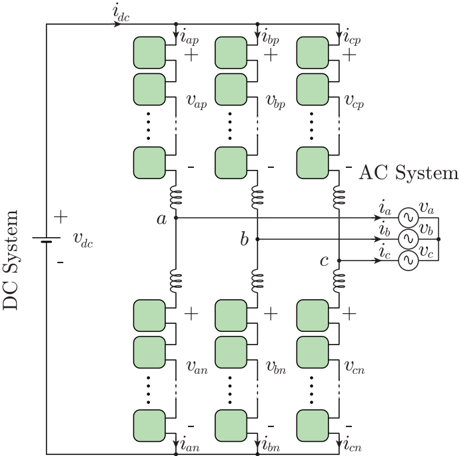
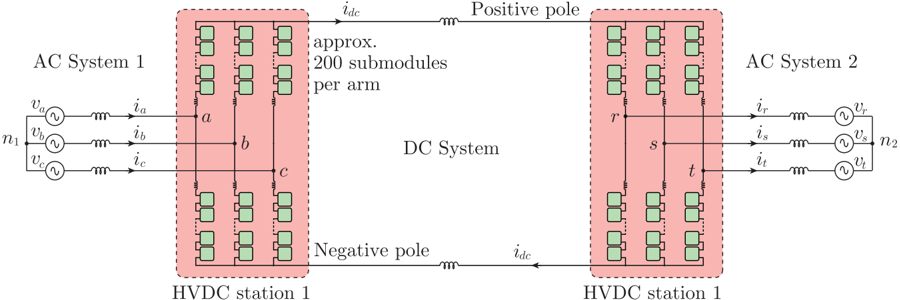
- The MMC has become an important HVdc alternative, with commercial products deployed in China, Europe, and the USA; actual HVdc systems commonly use more than 200 submodules per arm, and industrial MMCs for HVdc range from hundreds of MWs to a few GWs.
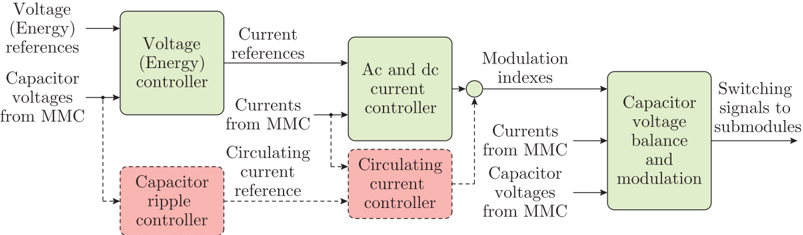
- The paper reviews advances in dynamic modeling, capacitor voltage balancing via sorting algorithms, current/energy control structures, and modulation such as nearest-level modulation combined with PWM; model predictive control is powerful but challenged by the large number of switching states, motivating grouping, clustering, and staged optimization.
- Fault-tolerant operation is a major theme: dc fault blocking can be achieved when the total voltage of connected submodules along the fault path exceeds the line-to-line ac voltage, with a 50% half-bridge and 50% full-bridge arm as the simplest hybrid example; ac faults can be managed by neutral-point shifting, and submodule failures by redundancy strategies.
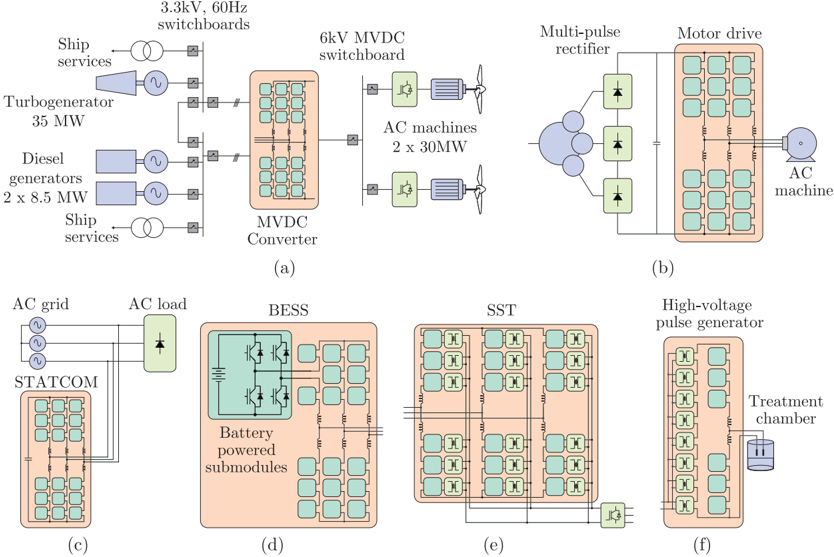
- Emerging applications include MVdc grids, dc-dc conversion, battery energy storage, solid-state transformers, and high-voltage pulse generators; capacitor voltage ripple reduction remains central, and the paper notes that approximately half of a submodule’s volume is the capacitor.
Methods
- Design: narrative review of recent MMC research and development, focusing on challenges and proposed solutions in modeling, control, reliability, power topologies, and new applications.
- Data/sample: published literature and prior studies; no original experimental data, prototype, or simulation dataset is reported.
- Main analysis: qualitative synthesis organized by topic, with comparison tables classifying faults (Table 1), MMC topologies (Table 2), and challenges with prospective solutions (Table 3).
Limitations
- The paper states that several MMC issues remain under research and have not been completely solved, including dc fault management, practical implementation of ac fault neutral-point shifting, and precise tuning of voltage observers.
- Evident from the text: as a narrative review, it does not report a systematic search or selection methodology, quantitative meta-analysis, or new experimental validation; its conclusions are qualitative and based on cited literature.
Model-written summary. Check it against the paper before relying on it.
Integrity signals
Registry
Cites
Statistics
Figures








Verification
Claims the paper makes
6 Valid · 2 Not valid · 27 Not checked · 17 Own results and interpretations
Every source the paper cites for this claim was checked and supports it.
In the paper
“By assigning a reduced nominal voltage to the series valve submodule upon IGBT module failure, the need to install redundant submodules is greatly reduced.”
What the sources say
- Supportedcites [137] [137] J. Guo, J. Liang, X. Zhang, P. D. Judge, X. Wang, and T. C. Green, 'Reliability analysis of MMCs considering submodule designs with individual or series-operated IGBTs,' IEEE Trans. Power Del. , vol. 32, no. 2, pp. 666-677, Apr. 2017. - source
The Series Valve Operation Modes section (p. 3) explains that a submodule can be assigned a lower voltage after enough IGBT modules fail. In the design comparison (p. 9), the series-valve design requires three redundant submodules per arm in normal mode but none with reduced-nominal-voltage operation for the same reliability target. (LLM, conf=0.94)
plainstates a cause- Asserted: passes — The authors put it forward as true.
- Checkable: passes — It can be checked against evidence.
- Load-bearing: passes — The paper’s conclusions depend on it.
- Based: passes — The paper gives a reason why it holds.
- Supported
Every source the paper cites for this claim was checked and supports it.
In the paper
“There is a trade-off between submodule redundancy and cost, which should be evaluated for each project to define redundancy design and operation strategy [139].”
What the sources say
- Supportedcites [139] [139] P. Tu, S. Yang, and P. Wang, 'Reliability- and cost-based redundancy design for modular multilevel converter,' IEEE Trans. Ind. Electron. , vol. 66, no. 3, pp. 2333-2342, Mar. 2019. - source
Section C states that more redundant cells increase reliability but also increase cost. Section D says the suitable design is application dependent and compares active and standby operation for applications with different requirements, supporting project-specific evaluation of design and operating strategy. (LLM, conf=0.94)
plainstates an association- Asserted: passes — The authors put it forward as true.
- Checkable: passes — It can be checked against evidence.
- Load-bearing: unclear — It is unclear whether the paper’s conclusions depend on it.
- Based: passes — The paper gives a reason why it holds.
- Supported
Every source the paper cites for this claim was checked and supports it.
In the paper
“These simulation times are not achievable if the model is based on switching devices [43].”
What the sources say
- Supportedcites [43] [43] U. N. Gnanarathna, A. M. Gole, and R. P. Jayasinghe, 'Efficient modeling of modular multilevel HVDC converters (MMC) on electromagnetic transient simulation programs,' IEEE Trans. Power Del. , vol. 26, no. 1, pp. 316-324, Jan. 2011. - source
Section 6.3.6 estimates that a five-second full-HVDC simulation using the traditional detailed model would take over five days, versus less than 1.5 minutes with the equivalent model. It calls full detailed simulation impractical for systems with roughly 100 or more submodules, supporting the claim about the cited simulation times. (LLM, conf=0.90)
plainstates a cause- Asserted: passes — The authors put it forward as true.
- Checkable: passes — It can be checked against evidence.
- Load-bearing: passes — The paper’s conclusions depend on it.
- Based: passes — The paper gives a reason why it holds.
- Supported
The cited sources support only part of this claim — read each source’s verdict below.
In the paper
“It is found that the reliability of the MMC with series-connected IGBTs is higher for the first few years but then decreases rapidly.”
What the sources say
- Partly supportedcites [137] [137] J. Guo, J. Liang, X. Zhang, P. D. Judge, X. Wang, and T. C. Green, 'Reliability analysis of MMCs considering submodule designs with individual or series-operated IGBTs,' IEEE Trans. Power Del. , vol. 32, no. 2, pp. 666-677, Apr. 2017. - sourceExperimental — accuracy not yet measured
The Conclusion (p. 10) says the series-valve design has higher available arm voltage for the first few years, but its voltage decline then accelerates. The claim calls this a rapid decrease in converter reliability; the Design Comparison (p. 10) instead says the series-valve converter’s failure rate rises more slowly than the individual-device converter’s after five years. (LLM, conf=0.86)
plainstates an association- Asserted: passes — The authors put it forward as true.
- Checkable: passes — It can be checked against evidence.
- Load-bearing: passes — The paper’s conclusions depend on it.
- Based: passes — The paper gives a reason why it holds.
- Partly supported
Every source the paper cites for this claim was checked and supports it.
In the paper
“A capacitor voltage measuring system with reduced number of sensors can be implemented, where the minimum number can be as low as two voltage sensors per arm [131].”
What the sources say
- Supportedcites [131] [131] R. Picas, J. Zaragoza, J. Pou, S. Ceballos, and J. Balcells, 'New measuring technique for reducing the number of voltage sensors in modular multilevel converters,' IEEE Trans. Power Electron. , vol. 31, no. 1, pp. 177-187, Jan. 2016. - source
The Introduction states that the proposed capacitor-voltage measuring technique uses fewer sensors and requires a minimum of two per arm. Section D, “Minimum Number of Sensors,” explains that two sensors per arm provide measurements across the converter’s full operating range; a one-sensor arrangement has a limited range. (LLM, conf=0.95)
plain- Asserted: passes — The authors put it forward as true.
- Checkable: passes — It can be checked against evidence.
- Load-bearing: unclear — It is unclear whether the paper’s conclusions depend on it.
- Based: passes — The paper gives a reason why it holds.
- Supported
17 more claims
Create a free account to see all 52 claims and to verify the 6 references still open.
- It may state two separate claims as one. 17
- Probably not a substantial claim. 17
Self-check
Percentages, sums and reported differences re-computed from the paper’s own numbers.
Each contradiction between two passages listed here was confirmed by an independent check.
Rated minor: it would not touch a result — a value no result rests on, a p-value that stays on the same side of the significance level, or a conflict that is clerical, resolved elsewhere in the paper, or outside its own findings.
In the paper
§ II. POWER TOPOLOGY AND OPERATING PRINCIPLE · p. 3
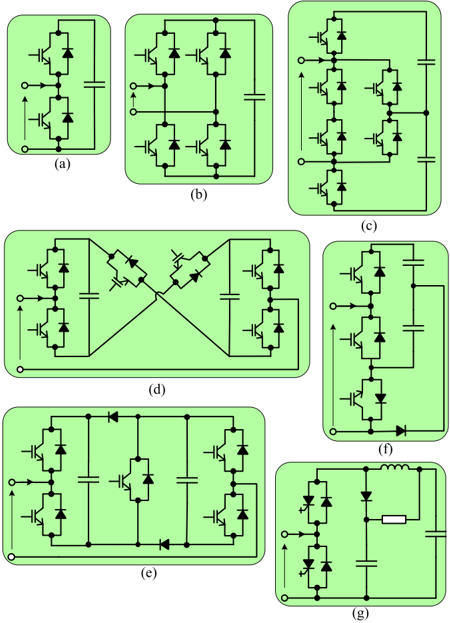
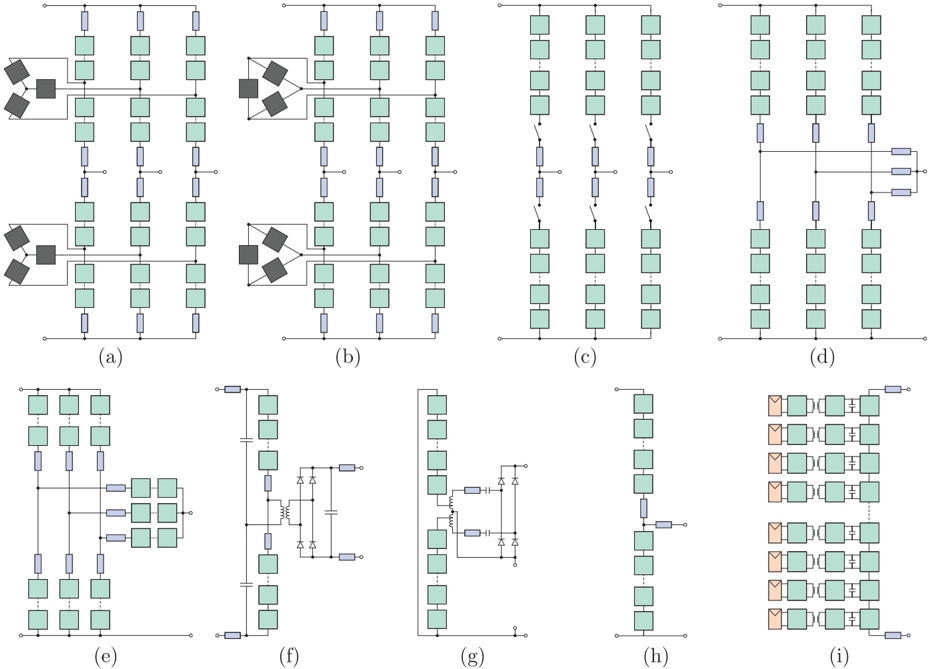
“the IGCT based submodule, shown in Fig. 1(g), features higher efficiency, voltage rating and reliability [24].”
§ II. POWER TOPOLOGY AND OPERATING PRINCIPLE · p. 2
“FIGURE 2. MMC submodules: (a) half-bridge submodule, (b) full-bridge submodule, (c) modified ANPC submodule, (d) cross-connected submodule (CCSM), (e) clamped double submodule (CDSM), (f) single-clamped submodule (SCSM), and (g) IGCT submodule.”
Citations
Cites
An innovative modular multilevel converter topology suitable for a wide power range
Lesnicar, A., & Marquardt, R. (2004) · 2003 IEEE Bologna Power Tech Conference Proceedings, · doi:10.1109/ptc.2003.1304403 · Cited by 2,908 · cited 1×
“To validate the proposed topology and its control, an experimental prototype was implemented and reported [5].”
MethodControl and Experiment of Pulsewidth-Modulated Modular Multilevel Converters
Hagiwara, M., & Akagi, H. (2009) · IEEE Transactions on Power Electronics · doi:10.1109/tpel.2009.2014236 · Cited by 1,565 · cited 1×
“4, has commonly been employed [57], [58].”
Tu, Q., Xu, Z., & Xu, L. (2011) · IEEE Transactions on Power Delivery · doi:10.1109/tpwrd.2011.2115258 · Cited by 1,387
Circuit Topologies, Modeling, Control Schemes, and Applications of Modular Multilevel Converters
Perez, M. A., Bernet, S., Rodriguez, J., Kouro, S., & Lizana, R. (2015) · IEEE Transactions on Power Electronics · doi:10.1109/tpel.2014.2310127 · Cited by 1,346 · cited 1×
“submodules per arm generating a nearly sinusoidal voltage waveform [6].”
BackgroundModular Multilevel Converters for HVDC Applications: Review on Converter Cells and Functionalities
Nami, A., Liang, J., Dijkhuizen, F., & Demetriades, G. D. (2015) · IEEE Transactions on Power Electronics · doi:10.1109/tpel.2014.2327641 · Cited by 1,042 · cited 2×
“Bipolar submodules such as the cross-connected submodule (CCSM) [19] and the clamped”
BackgroundOn dynamics and voltage control of the Modular Multilevel Converter
Antonopoulos, A., Ängquist, L., & Nee, H. (2009) · European Conference on Power Electronics and Applications · Cited by 831
Marquardt, R. (2010) · The 2010 International Power Electronics Conference - ECCE ASIA - · doi:10.1109/ipec.2010.5544594 · Cited by 773
A New AC/AC Multilevel Converter Family
Glinka, M., & Marquardt, R. (2005) · IEEE Transactions on Industrial Electronics · doi:10.1109/tie.2005.843973 · Cited by 772
Gnanarathna, U. N., Gole, A. M., & Jayasinghe, R. P. (2011) · IEEE Transactions on Power Delivery · doi:10.1109/tpwrd.2010.2060737 · Cited by 739
Dekka, A., Wu, B., Fuentes, R. L., Perez, M., & Zargari, N. R. (2017) · IEEE Journal of Emerging and Selected Topics in Power Electronics · doi:10.1109/jestpe.2017.2742938 · Cited by 576
Research works printed but not linked: 4
- [55] S. Allebrod, D. SchmiSchmitt, and R. Marquardt, 'Control structure for modular multilevel converters,' in Proc. Power Convers. Intell. Motion Eur. , 2009, pp. 12-14. -
- [8] M. Callavik, 'HVDC grid for integration of renewable power sources,' in Proc. EPRI HVDC FACTS Conf. , 2010. -
- [7] C. Junzheng and C. Jim, 'HVDC in China,' in Proc. EPRI HVDC FACTS Conf. , pp. 539-557, 2013. -
- [125] G. Li, J. Liang, F. Ma, C. E. Ugalde-Loo, and H. Liang, 'Analysis of single-phase-to-ground faults at the valve-side of HB-MMCs in HVDC systems,' IEEE Trans. Ind. Electron. , vol. 66, no. 3, pp. 2444-2453, Mar. 2019. -
Cited by
Choudhury, S., Bajaj, M., Dash, T., Kamel, S. M., & Jurado, F. (2021) · Energies · doi:10.3390/en14185773 · Cited by 179
“Different types of SM topologies are reported in the literature [99,100].”
BackgroundXiao, Q., Jin, Y., Jia, H., Tang, Y. K., Cupertino, A. F., Mu, Y., Teodorescu, R., Blaabjerg, F., & Pou, J. (2023) · IEEE Transactions on Power Electronics · doi:10.1109/tpel.2023.3283286 · Cited by 139
“A review of recent advances and achievements and future challenges of the MMC is conducted in [16].”
BackgroundSelf-citationA Review of Single-Stage Multiport Inverters for Multisource Applications
Huang, Z., Zhou, D., Wang, L., Shen, Z., & Li, Y. (2023) · IEEE Transactions on Power Electronics · doi:10.1109/tpel.2023.3234358 · Cited by 118
“and five-level cross-connected SMs [82], [83], provide certain mature structures to fulfill specific objectives of multisource integration [84], [85].”
BackgroundBeyond the MMC: Extended Modular Multilevel Converter Topologies and Applications
Sun, P., Tian, Y., Pou, J., & Konstantinou, G. S. (2022) · IEEE Open Journal of Power Electronics · doi:10.1109/ojpel.2022.3175714 · Cited by 108
Self-citationLiserre, M., Pérez, M. A., Langwasser, M., Rojas, C. A., & Zhou, Z. (2022) · Proceedings of the IEEE · doi:10.1109/jproc.2022.3157162 · Cited by 71
“A combination of NLM and PWM, in which only one submodule per arm is modulated, can reduce the low-frequency current distortion generated by NLM without increasing the modulation complexity [95].”
BackgroundSelf-citationZhang, M., Yuan, M., & Jiang, J. (2024) · IEEE Transactions on Transportation Electrification · doi:10.1109/tte.2024.3443926 · Cited by 74
Reduced Multisource Switched-Capacitor Multilevel Inverter Topologies
Hosseinzadeh, M. A., Sarebanzadeh, M., Garcia, C. F., Babaei, E., Rodríguez, J., & Kennel, R. M. (2022) · IEEE Transactions on Power Electronics · doi:10.1109/tpel.2022.3191013 · Cited by 59
“These features make it possible to achieve waveform with less total harmonic distortion (THD), lower voltage derivatives (dv/dt), and a smaller output filter size [2].”
BackgroundDesign and Control for High-Reliability Power Electronics: State-of-the-Art and Future Trends
Marquez, A., Buticchi, G., Chub, A., & Dalessandro, L. (2023) · IEEE Journal of Emerging and Selected Topics in Industrial Electronics · doi:10.1109/jestie.2023.3287513 · Cited by 60
“For instance, the MMC is composed of serial connection of hundreds of identical power modules to build the power converters used in HVdc transmission lines [97], [101].”
Tian, Y., Wickramasinghe, H. R., Li, Z., Pou, J., & Konstantinou, G. S. (2022) · Energies · doi:10.3390/en15061985 · Cited by 66
“To improve the system, the dynamic model is introduced to make the AC/DC current approach the reference value [10], and the average capacitance voltage control and capacitance voltage balance strategy are added [4].”
MethodSelf-citationModular Multilevel Converter-Based Microgrid: A Critical Review
Bashir, S. B., Ismail, A. A. A., Elnady, A., Farag, M. M., Hamid, A.-K., Bansal, R. C., & Abo-Khalil, A. G. (2023) · IEEE Access · doi:10.1109/access.2023.3289829 · Cited by 59
Azizi, A., Akhbari, M., Danyali, S., Tohidinejad, Z., & Shirkhani, M. (2025) · Heliyon · doi:10.1016/j.heliyon.2025.e42334 · Cited by 59
“For large-scale photovoltaic systems, implementing these control systems at scale may require specialized hardware and software, increasing both the complexity and cost [135].”
Albert, J. R., Ramasamy, K., Jerard, V. J. M., Rajani, B., Singaram, G., & Anbarasu, L. (2023) · Wireless Personal Communications · doi:10.1007/s11277-023-10372-w · Cited by 46
“3 Fifteen level modular multilevel converter [10]”
BackgroundInfluentialMVDC Railway Traction Power Systems; State-of-the Art, Opportunities, and Challenges
Simiyu, P., & Davidson, I. E. A. (2021) · Energies · doi:10.3390/en14144156 · Cited by 48
“From the analysis, some of the challenges include the unavailability of accurate and efficient SM/MMC models and limited insight into MMCs’ internal dynamics, reliability, and DC protection issues—research on which is still in progress [74,75,82].”
MethodA Novel Modular Multilevel Converter Based on Interleaved Half-Bridge Submodules
Viatkin, A., Ricco, M., Mandrioli, R., Kerekes, T., Teodorescu, R., & Grandi, G. (2022) · IEEE Transactions on Industrial Electronics · doi:10.1109/tie.2022.3146516 · Cited by 43
“Depending on the application, the structure of submodules (SMs) is mainly half-bridge (HB) or full-bridge while many other types of SMs have been reported in the literature [3].”
BackgroundLiu, J., & Dong, D. (2022) · IEEE Transactions on Industrial Electronics · doi:10.1109/tie.2022.3174284 · Cited by 39
“However, MMC still confronts some limitations compared to the classic two-level or multilevel voltage source converters (VSCs) [6].”
BackgroundPower electronics in wind generation systems
Blaabjerg, F., Chen, M., & Huang, L. (2024) · Nature Reviews Electrical Engineering · doi:10.1038/s44287-024-00032-x · Cited by 53
“In addition, the high voltage resolution of MMCs can reduce harmonic distortion and minimize electromagnetic interference 89 .”
Zhang, R., Wang, S., Ma, J., Jiang, Y., Wang, P., Liu, T., & Yang, Y. P. (2024) · IEEE Transactions on Power Electronics · doi:10.1109/tpel.2024.3510792 · Cited by 30
“However, the typical half-bridge submodule-based MMC (HB-MMC) has inherent limitations, including a large number of submodules (SMs), a high requirement of SM capacitance, and the need for dc circuit breakers, making it challenging to use HB-MMC in cost, weight, or space-sensitive applications [2].”
Poblete, P., Pizarro, G., Droguett, G., Núñez, F., Judge, P. D., & Pereda, J. E. (2022) · IEEE Transactions on Power Electronics · doi:10.1109/tpel.2022.3163395 · Cited by 29
Wald, F., Hrishikesan, V. M., Gomis‐Bellmunt, O., Ji, H., Davoudi, M., Bidram, A., Syed, M. H., Joševski, M., Brüske, S., Kumar, C., et al. (2025) · IEEE Transactions on Smart Grid · doi:10.1109/tsg.2025.3574007 · Cited by 44
“…different topologies, most commonly a Modular Multi-level Converter (MMC) is used, which requires complex modulation strategies as reviewed in [29], [30] and additional voltage balancing and common mode compensation controllers are mandatory to ensure stable operation [31], [32], [33], [34].”
Sakib, M. N., Azad, S. P., & Kazerani, M. (2022) · Energies · doi:10.3390/en15114176 · Cited by 31
Scaglione, G., Nevoloso, C., Schettino, G., Tommaso, A. O. D., & Miceli, R. (2024) · IEEE Journal of Emerging and Selected Topics in Power Electronics · doi:10.1109/jestpe.2024.3362404 · Cited by 27
“required switching devices, with respect to other MI topologies, and fault-tolerant capability [1], [2].”
BackgroundViatkin, A., Ricco, M., Mandrioli, R., Kerekes, T., Teodorescu, R., & Grandi, G. (2022) · IEEE Transactions on Industrial Electronics · doi:10.1109/tie.2022.3156035 · Cited by 27
“SMs are normally composed by half-bridge or full-bridge configuration while other structures are also possible [4], [6].”
BackgroundDC/DC Modular Multilevel Converters for HVDC Interconnection: A Comprehensive Review
Erat, A., & Vural, A. M. (2022) · International Transactions on Electrical Energy Systems · doi:10.1155/2022/2687243 · Cited by 27
“'e DC to three-phase converter construction with series-connected submodules (SM), together with the inductances in each arm and half- and full-bridge SMs, is depicted in this patent [177].”
BackgroundYang, J., Guenter, S., Buticchi, G., Gu, C., Liserre, M., & Wheeler, P. W. (2023) · IEEE Transactions on Power Electronics · doi:10.1109/tpel.2023.3270531 · Cited by 28
“With this consideration, the modular multilevel converter (MMC) was proposed, which has the series-connected submodules on the arms and has benefits of high-quality output voltage and current, high modularity and low stresses of switches [12].”
MMC Admittance Model Simplification Based on Signal-Flow Graph
Xu, Z., Li, B., Li, S., Wang, X., & Xu, D. (2021) · IEEE Transactions on Power Electronics · doi:10.1109/tpel.2021.3126870 · Cited by 25
“However, the access of high-power electronic converters is more likely to introduce instability to the power system, which makes the modeling and stability analysis of MMC attract widespread research attention [3].”
BackgroundFjellstedt, C., Ullah, M. I., Forslund, J., Jonasson, E., Temiz, I., & Thomas, K. (2022) · Energies · doi:10.3390/en15165816 · Cited by 28
Sun, P., Wang, Y., Khalid, M., Blasco-Giménez, R., & Konstantinou, G. S. (2022) · Electric Power Systems Research · doi:10.1016/j.epsr.2022.108798 · Cited by 22
Self-citationKumar, D., Shireen, W., & Ram, N. (2024) · Energies · doi:10.3390/en17215308 · Cited by 28
Shufian, A., Hannan, N., Kabir, S., & Fattah, S. A. (2024) · Smart Grids and Sustainable Energy · doi:10.1007/s40866-024-00226-0 · Cited by 23
A Generalized Derivation Method of Tree-Type Active Neutral-Point-Clamped Multilevel Topologies
Wang, K., Wu, M., Zheng, Z., Pou, J., Rodríguez, J., Li, Y., & Li, Y. (2024) · IEEE Transactions on Power Electronics · doi:10.1109/tpel.2024.3365571 · Cited by 25
“In recent years, the modular multilevel converter (MMC) has emerged as a promising topology due to its ease of extension and suitability for high-voltage applications [9], [10].”
BackgroundSelf-citationArias-Esquivel, Y., Cárdenas, R., Tarisciotti, L., Díaz, M., & Mora, A. (2023) · IEEE Transactions on Power Electronics · doi:10.1109/tpel.2023.3288490 · Cited by 25
“MODULAR multilevel converters (MMCs) have been widely used in medium/high-voltage applications due to their prominent features of modularity and scalability [1], [2], [3].”
BackgroundZhu, Y., Pou, J., & Konstantinou, G. S. (2022) · IEEE Transactions on Power Delivery · doi:10.1109/tpwrd.2022.3197177 · Cited by 19
“MODULAR multilevel converters (MMCs) are widely used in high-voltage dc (HVdc) transmission, static compensators (STATCOMs), and motor drives [1]–[3].”
BackgroundSelf-citationModular Multilevel Converters: Recent Applications [History]
Li, G., & Liang, J. (2022) · IEEE Electrification Magazine · doi:10.1109/mele.2022.3187886 · Cited by 20
Common-Mode-Voltage Regulation of Modular Multilevel Converters Through Model Predictive Control
Yin, J., Dai, N., Leon, J. I., Pérez, M. A., Vázquez, S., & Franquelo, L. G. (2024) · IEEE Transactions on Power Electronics · doi:10.1109/tpel.2024.3377203 · Cited by 25
“A S a relatively recent topology of multilevel voltage source converters (VSCs), the modular multilevel converter (MMC) [1] is gaining increasing applications in modern power grids with the ever-growing integration of renewable energy sources [2].”
BackgroundSelf-citationSyasegov, Y. Y., Farhangi, M., Barzegarkhoo, R., et al. (2023) · IEEE Open Journal of the Industrial Electronics Society · doi:10.1109/ojies.2023.3271637 · Cited by 19
“electric vehicles have been gaining more interest since the latest decade [3], [4], [5].”
BackgroundSelf-citationLong-Horizon Sequential FCS-MPC Approaches for Modular Multilevel Matrix Converters
Cuzmar, R. H., Mora, A., Pereda, J. E., Poblete, P., & Aguilera, R. P. (2023) · IEEE Transactions on Industrial Electronics · doi:10.1109/tie.2023.3286013 · Cited by 21
“M ODULAR multilevel cascaded converters (MMCCs) are an attractive technology for medium-voltage and high power applications due to its high modularity, performance, and capability to work directly at medium and high voltages [1], [2], [3], [4], [5].”
BackgroundSelf-citationArias-Esquivel, Y., Cárdenas, R., Díaz, M., & Tarisciotti, L. (2024) · IEEE Transactions on Industrial Electronics · doi:10.1109/tie.2024.3370982 · Cited by 20
“For instance, 1) [5]; 2)Thefiltersinthegrid-sideandgeneratorsideofthecon-verterscanbemuchreducedinsizeoreveneliminated[6]; 3)Faultredundancyintheconverterissimpletoachieve[7] andimportantforWECS[6]; 4)MMCshavehighefficiencyandlowharmonicdistor-tion[6],[7],[8].”
Cuzmar, R. H., Mora, A., Pereda, J. E., Aguilera, R. P., Poblete, P., & Neira, S. (2023) · IEEE Open Journal of the Industrial Electronics Society · doi:10.1109/ojies.2023.3347101 · Cited by 19
“Modular multilevel cascaded converters (MMCCs) are considered the next generation technology for medium and high power applications given by its high quality voltage waveform, modularity, and capability to directly connect at medium and high voltages [1], [2], [3], [4], [5].”
BackgroundSelf-citationReconfiguration of Bipolar HVDC System for Continuous Transmission Under DC Line Fault
Enomoto, M., Sano, K., Kanno, J., et al. (2024) · IEEE Transactions on Power Electronics · doi:10.1109/tpel.2024.3381218 · Cited by 18
“However, the method was not applicable to the HVDC system composed of the ac collection system and half-bridge MMCs, which have already been introduced worldwide [2].”
BackgroundMethodEmerging Technologies for Advanced Power Electronics and Machine Design in Electric Drives
Rihar, A., Nemec, M., Lavrič, H., Zajec, P., Vončina, D., Nedeljković, D., Ambroz̆ic̆, V., & Drobnič, K. (2024) · Applied Sciences · doi:10.3390/app142411559 · Cited by 19
Electric Arc Furnace Reactive Compensation System Using Zero Harmonic Distortion Converter
Brandão, D. A. D. L., Parreiras, T. M., Pires, I. A., et al. (2022) · IEEE Transactions on Industry Applications · doi:10.1109/tia.2022.3187392 · Cited by 17
“Such absence is provided due to the most common solutions for STATCOMs, which use multilevel converter topologies, such as the modular multilevel cascaded converter (MMCC) [21], [22], clamped diode multilevel converter, multilevel flying capacitor converter, and cascaded H-Bridge multilevel converter [24].”
MethodPires, V. F., Cordeiro, A., Foito, D., Silva, J. F., & Romero‐Cadaval, E. (2023) · IEEE Open Journal of the Industrial Electronics Society · doi:10.1109/ojies.2023.3309652 · Cited by 22
Enhanced Ride-Through Capability Under Rectifier-Side AC Fault for Series LCC-MMC Hybrid HVDC System
Li, X., Xu, Z. G., & Zhang, Z. (2021) · IEEE Access · doi:10.1109/access.2021.3127717 · Cited by 15
“As an alternative, MMC based HVDC has many attractive features, such as no commutation failure, high control flexibility, potentially smaller footprint [5].”
BackgroundA Review on Hybrid Modular Multilevel Converters for Medium Voltage Applications
Shahane, R. T., Karaka, N. R., & Shukla, A. (2022) · IEEE Energy Conversion Congress and Exposition (ECCE) · doi:10.1109/ecce50734.2022.9948019 · Cited by 18
“Nonetheless, the application of MMC have been adopted for various medium voltage applications such as electric motor drive, battery energy storage system, medium voltage dc-dc converter, power quality (STATCOM) and much more [12], [35].”
BackgroundDeng, F., Hou, J., Zhang, Y., Cheng, M., Hu, Y., & Vázquez, S. (2022) · IEEE Industrial Electronics Magazine · doi:10.1109/mie.2022.3218915 · Cited by 16
Hashemi-Zadeh, A., Ahmadi, S., Neyshabouri, Y., Asadi, E., Iman‐Eini, H., & Liserre, M. (2024) · IEEE Transactions on Power Electronics · doi:10.1109/tpel.2024.3365850 · Cited by 14
“Therefore, the use of MMC is rapidly growing across a wide range of high-power applications, such as high-voltage direct-current (HVDC) systems, microgrids, static synchronous compensators, and medium-voltage drives [3], [4], [5], [6].”
BackgroundFault-Tolerant Control Strategy for Sub-Modules Open-Circuit Fault of Modular Multilevel Converter
Jiang, Y., Shu, H., & Liao, M. (2023) · Electronics · doi:10.3390/electronics12051080 · Cited by 14
Multiport Smart Transformers: A Review of Architectures, Applications, and Future Trends
Sharida, A., Carreno, A., Bayındır, A. B., Alquennah, A. N., Karaki, A., Bayhan, S., Abu‐Rub, H., & Malinowski, M. (2025) · IEEE Industrial Electronics Magazine · doi:10.1109/mie.2025.3598405 · Cited by 18
“In MMCs, submodules are commonly implemented using half-or full-bridge converters, followed by internally isolated dc/dc stages [20].”
Mezouari, M., Megrini, M., & Gaga, A. (2025) · Control Engineering Practice · doi:10.1016/j.conengprac.2025.106371 · Cited by 18
Jabari, M., Ghoreishi, M., Bragatto, T., Santori, F., Cresta, M., Geri, A., & Maccioni, M. (2025) · Energies · doi:10.3390/en18236302 · Cited by 17
Cuzmar, R. H., Mora, A., Pereda, J. E., & Aguilera, R. P. (2024) · IEEE Transactions on Industrial Electronics · doi:10.1109/tie.2024.3423336 · Cited by 15
“M ODULAR multilevel converters are the next generation for medium/high voltage and high power applications [1], [2], [3].”
Self-citationKurtoğlu, M., & Vural, A. M. (2022) · International Transactions on Electrical Energy Systems · doi:10.1155/2022/2169357 · Cited by 19
Investigation of Three-level Dual Output T-type NPC for EV Application
Dwivedi, D., Roy, I., & Chinmaya, K. A. (2022) · International Conference on Smart Energy Systems and Technologies (SEST) · doi:10.1109/sest53650.2022.9898482 · Cited by 13
“The most common types of multilevel converters are; neutral point clamped (NPC) [4], flying capacitors (FCs) [6], cascaded Hbridge [7], and modular multilevel converters [8].”
BackgroundGui, Q., Fehr, H., & Gensior, A. (2024) · IEEE Transactions on Power Electronics · doi:10.1109/tpel.2024.3360000 · Cited by 14
“1109/TPEL.2024.3360000 As discussed in [11], a commonly employed MMC control structure is shown in Fig.”
BackgroundInfluentialRohner, G., Kolar, J. W., Bortis, D., & Schweizer, M. (2022) · International Conference on Electrical Machines and Systems (ICEMS) · doi:10.1109/icems56177.2022.9982999 · Cited by 11
“In the literature, various ML inverter typologies such as the Cascaded H-Bridge (CHB), Neutral-Point Clamped (NPC) and Flying Capacitor (FC) inverter have been studied considering 3L, 5L, 7L, 9L, 10L or even 13L arrangements and different applications [7], [8].”
BackgroundOn Carrier-to-Fundamental Phase Displacement in Phase-Shifted PWM for Modular Multilevel Converters
Yin, J., & Dai, N. (2024) · IEEE Transactions on Power Electronics · doi:10.1109/tpel.2024.3384412 · Cited by 9
“W ITH rapidly growing world energy demand and the necessity of large-scale renewable energy integration, the modular multilevel converter (MMC) has received increasing attention in recent years [1].”
BackgroundElectromagnetic Interference from Solar Photovoltaic Systems: A Review
Kane, M. M., Taylor, N., & Månsson, D. (2024) · Electronics · doi:10.3390/electronics14010031 · Cited by 17
Distributed Input Multiport MMC Based Power Converter for AC and DC Loads
Cano, T. C., Rodríguez, A., Castro, I., & Lamar, D. G. (2023) · IEEE Transactions on Power Electronics · doi:10.1109/tpel.2023.3260719 · Cited by 9
“reduction [4] and cooling size optimization [5].”
Yao, F., Yang, W., Shang, J., & An, Q. (2023) · Journal of Energy Storage · doi:10.1016/j.est.2023.108947 · Cited by 10
Virtual Arm Impedance Emulation and Stability Improvement in Modular Multilevel Converters
Zhu, Y., Jiang, S., Pou, J., & Konstantinou, G. S. (2024) · IEEE Transactions on Power Electronics · doi:10.1109/tpel.2024.3351890 · Cited by 9
“M ODULAR multilevel converters (MMCs) are widely used in power systems thanks to their salient features of high modularity, high efficiency, and high power quality [1], [2].”
BackgroundSelf-citationSpier, D. W., Rodriguez-Bernuz, J.-M., Prieto‐Araujo, E., López‐Mestre, J., Junyent‐Ferré, A., & Gomis‐Bellmunt, O. (2021) · IEEE Transactions on Power Delivery · doi:10.1109/tpwrd.2021.3119148 · Cited by 9
Interoperability of modular VSC topologies in Multi-converter multiterminal DC systems
Wickramasinghe, H. R., & Konstantinou, G. S. (2021) · Electric Power Systems Research · doi:10.1016/j.epsr.2021.107225 · Cited by 9
Self-citationRaj, R., Elmouatamid, A., Swain, A., & Pong, P. W. T. (2025) · Energy Reports · doi:10.1016/j.egyr.2025.07.017 · Cited by 12
Luna, B. E. D. O. B., Jacobina, C. B., & Oliveira, A. C. (2022) · IEEE Transactions on Industry Applications · doi:10.1109/tia.2022.3225122 · Cited by 8
“In [21], an alternative extra redundant cell has been added to each arm to compensate for cell voltage loss due to partial shading.”
BackgroundHashkavayi, M. B., Barakati, S. M., Haredasht, M. R., Barahouei, V., & Torabi, H. (2023) · Power Electronics, Drive Systems, and Technologies Conference (PEDSTC) · doi:10.1109/pedstc57673.2023.10087151 · Cited by 7
“Due to these problems, multilevel converters (MCs) are becoming more popular in HVDC applications [7].”
BackgroundFrequency-Adaptive Energy Control for Grid-Forming MMCs Under Unbalanced Conditions
Avdiaj, E., D’Arco, S., Piegari, L., & Suul, J. A. (2023) · IEEE Journal of Emerging and Selected Topics in Industrial Electronics · doi:10.1109/jestie.2023.3302707 · Cited by 12
Zhu, Y., Jiang, S., & Konstantinou, G. S. (2024) · IEEE Transactions on Power Delivery · doi:10.1109/tpwrd.2023.3349231 · Cited by 9
“Modular multilevel converters (MMCs) are widely used as the interfaces of IBRs in the energy conversion and transmission system, due to their salient features such as modularity and low harmonics [5], [6], [7].”
BackgroundSelf-citationMixed Redundancy Strategy for Modular Multilevel Converters in High-Power Applications
Ahmadi, M., Shekhar, A., & Bauer, P. (2024) · IEEE Open Journal of the Industrial Electronics Society · doi:10.1109/ojies.2024.3415007 · Cited by 11
Iqbal, H., & Sarwat, A. I. (2024) · Energies · doi:10.3390/en18010035 · Cited by 8
Darbas, C., Olivier, J.-C., Ginot, N., Poitiers, F., & Batard, C. (2021) · Energies · doi:10.3390/en14123589 · Cited by 8
“Its main applications are High Voltage Direct-Current (HVDC) links, and offshore wind farms [2,3].”
BackgroundEnergy Conversion Using Electronic Power Converters: Technologies and Applications
Musumeci, S. (2023) · Energies · doi:10.3390/en16083590 · Cited by 10
“…converter (MMC) topologies represent some attractive power converter topologies for energy storage and static synchronous compensator (ES-STATCOM) arrangement, providing a modular and scalable solution with high efficiency that manages high-power and high-voltage ratings in grid applications [26].”
BackgroundHybrid ANPC Grid-Tied Inverter Design with Passivity-Based Sliding Mode Control Strategy
Zhang, Y., Li, K., & Zhang, L. (2024) · Energies · doi:10.3390/en17153655 · Cited by 8
A Novel Open-Circuit Fault-Tolerant MMC with Multi-carrier PWM Techniques for Solar PV Applications
Madhuri, K. M., Latha, M., Rao, P. M., Venkataramana, C., Thrinath, B. V. S., & Bi, S. R. (2024) · International Journal of Electrical and Electronics Research · doi:10.37391/ijeer.120306 · Cited by 7
Review of Health Monitoring Techniques for Capacitors in Modular Multilevel Converters
Yu, Q., Deng, F., Tang, Y. K., Cai, X., Chen, Z., & Blaabjerg, F. (2025) · IEEE Transactions on Power Electronics · doi:10.1109/tpel.2025.3571897 · Cited by 8
“As one of the most promising topologies in the family of high-power converters, MMCs have advantages of modular structure, high flexibility and scalability, etc. [7], [8], [9].”
Control tuning methodology for modular multilevel converter‐based STATCOM
de Sousa, R. O., Cupertino, A. F., Pinto, J. H. D. G., Morais, L. M. F., Pereira, H. A., & Teodorescu, R. (2023) · International Journal of Circuit Theory and Applications · doi:10.1002/cta.3878 · Cited by 7
Shahparasti, M., Rajaei, A., Tarrasó, A., & Luna, Á. (2022) · Energy · doi:10.1016/j.energy.2022.123639 · Cited by 9
Yang, W., Yao, F., & Zhou, Y. (2022) · Electronics · doi:10.3390/electronics11142193 · Cited by 8
Three-Phase ZPUC-MMC Grid Connected Converter
Atanalian, S., Sebaaly, F., Arazm, S., Zgheib, R., Al‐Haddad, K., & Kanaan, H. Y. (2022) · Annual Conference of the IEEE Industrial Electronics Society (IECON) · doi:10.1109/iecon49645.2022.9968917 · Cited by 8
Yang, J., Guenter, S., Buticchi, G., Gu, C., Liserre, M., & Wheeler, P. W. (2025) · IEEE Transactions on Power Electronics · doi:10.1109/tpel.2025.3539774 · Cited by 6
“Inaddition,themodularityofpower electronicconvertersallowsustohandlethehigh-voltagepower transmissionwhileavoidhighcomponentvoltagestresses,e.g., throughmodularmultilevelorseries–paralleldc–dcconverter topologies[5],[6],[7],[8].”
Monolithic Data-Driven Condition Monitoring Strategy for MMC Considering $C$ and ESR
Ou, S., Hassanifar, M., Votava, M., Sangwongwanich, A., Sahoo, S., Langwasser, M., Liserre, M., & Blaabjerg, F. (2025) · IEEE Transactions on Power Electronics · doi:10.1109/tpel.2025.3549226 · Cited by 7
“M ODULAR multilevel converter (MMC) is a promising solution for medium voltage and high voltage applications such as HVDC and STATCOM due to its high modularity, low harmonic component, high efficiency, etc. [1], [2].”
A Modular Multi‐Port Hybrid Solid‐State Transformer for Large‐Scale Renewable Power Applications
Hossain, M. S., Islam, M. R., Sutanto, D., & Muttaqi, K. M. (2025) · IET Electric Power Applications · doi:10.1049/elp2.70021 · Cited by 7
Control Design and Fault Handling Performance of MMC for MMC-Based DC Distribution System
Muhammad, F., Rasheed, H., Spier, D. W., Prieto‐Araujo, E., & Gomis‐Bellmunt, O. (2022) · IEEE Access · doi:10.1109/access.2022.3224773 · Cited by 10
“losses, reconfigurable design and better efficiency [9], [10], [11], [12].”
BackgroundWang, Y., Shi, X., Chen, M., Lyu, J., Li, X., Zhang, Z., & Cai, X. (2023) · Electronics · doi:10.3390/electronics12071695 · Cited by 6
“Under the background of vigorous development of new energy, the development of the MMC-based HVDC system (MMC-HVDC) is flourishing [5–7].”
Rivero, S., Mora, A., Correa, M., & Pereda, J. E. (2025) · IEEE Transactions on Industrial Electronics · doi:10.1109/tie.2025.3528493 · Cited by 8
Alia, I., Merzouk, I., Rezaoui, M. M., Rezk, H., & Lashab, A. (2025) · Results in Engineering · doi:10.1016/j.rineng.2025.104280 · Cited by 11
Chethan, M., & Kuppan, R. (2025) · IEEE Access · doi:10.1109/access.2025.3547367 · Cited by 6
“While VSGs offer a promising solution for improving grid stability, careful design and tuning of the control parameters are crucial to ensure optimal performance and avoid potential instability issues [17].”
Tawfik, M. A., Irfan, M. S., Lee, C.-G., et al. (2022) · Journal of Power Electronics · doi:10.1007/s43236-022-00484-0 · Cited by 6
Guicharrousse, P., Ahmed, M. R., Wheeler, P. W., & Zanchetta, P. (2022) · Annual Conference of the IEEE Industrial Electronics Society (IECON) · doi:10.1109/iecon49645.2022.9968842 · Cited by 6
“A criterion widely used to classify SMs is based on the total switching and conduction losses of their semiconductor devices [1], [4], [5], [6], but this classification is done usually based on the number of devices each SM owns.”
BackgroundMethodTak, N., & Chattopadhyay, S. K. (2023) · IEEE IAS Global Conference on Renewable Energy and Hydrogen Technologies (GlobConHT) · doi:10.1109/globconht56829.2023.10087574 · Cited by 6
“In contrast to CHBMLI, modular multilevel converters provide greater flexibility and modularity in terms of system design [15].”
A new hybrid multilevel thyristor-based DC-DC converter
Abdelaziz, Y. N., Mansour, M. M., Alsokhiry, F., Ahmed, K. H., Abdel-Khalik, A. S., & Abdulwhab, A. (2023) · Alexandria Engineering Journal · doi:10.1016/j.aej.2023.11.029 · Cited by 8
“Voltage source converters (VSCs) are increasingly becoming the advanced technology to build HVDC grids specially with the recent advancement in modular multilevel converters (MMCs) [2].”
BackgroundPanuganti, K., Mishra, R., Figarado, S., & Agarwal, V. (2025) · IEEE Journal of Emerging and Selected Topics in Power Electronics · doi:10.1109/jestpe.2025.3621704 · Cited by 6
“Among them, the modular multilevel converter (MMC) o ff ers the most favorable characteristics and is gaining increasing prominence for various medium and high-power applications [1], [2].”
Gong, Z., Yang, C., Su, Y., & Zheng, C. (2025) · IEEE Transactions on Power Electronics · doi:10.1109/tpel.2025.3640673 · Cited by 7
“T HE modular multilevel converter (MMC) has garnered considerable attention for medium/high-voltage power conversion in the past decade [1], [2], [3], [4].”
An Improved Indirect Pulsewidth Modulation Technique for Modular Multilevel Converters
Yin, J., Dai, N., Vázquez, S., Marquez, A., Leon, J. I., Pérez, M. A., & Franquelo, L. G. (2023) · IEEE Transactions on Power Electronics · doi:10.1109/tpel.2023.3321759 · Cited by 6
“T HE modular multilevel converter (MMC) is an excellent option for medium-and high-voltage power conversion systems considering its modularity and scalability [1].”
BackgroundSelf-citationFang, Y., Liu, Y., Fu, A., Shi, S., & Zhang, Z. (2024) · Electronics · doi:10.3390/electronics13152899 · Cited by 5
“Consequently, as the number of sub-modules increases, the computational load grows geometrically [7,8].”
BackgroundYin, J., Dai, N., Vázquez, S., Pérez, M. A., Zhang, B., Leon, J. I., & Franquelo, L. G. (2024) · IEEE Transactions on Power Electronics · doi:10.1109/tpel.2024.3459052 · Cited by 5
“Typical applications include high-voltage direct current (HVDC) transmission, motor drive system, static synchronous compensator (STATCOM), among others [2].”
Self-citationZhang, L., Liu, Y., Zhang, J., & Li, Y. (2024) · IEEE Journal of Emerging and Selected Topics in Power Electronics · doi:10.1109/jestpe.2024.3485114 · Cited by 5
“…have been widely applied in industrial applications such as motor drives, high voltage direct current (HVdc) transmission systems, synchronic static compensators, and energy storage [1], [2], [3], [4] due to its modular structure, scalable voltage levels, and low harmonic content [5], [6], [7].”
Faraz, G., Li, Z., Zhang, M., & Zhang, Z. (2021) · IEEE International Conference on Predictive Control of Electrical Drives and Power Electronics (PRECEDE) · doi:10.1109/precede51386.2021.9680958 · Cited by 6
Full-Bridge Diode-Clamped Four-Level Symmetric Switching Converter
Song, M.-S., Kim, J., & Lee, J.-B. (2023) · IEEE Access · doi:10.1109/access.2023.3317432 · Cited by 8
“INTRODUCTION Multilevel converters are popular in high-voltage applications because of their advantages such as the use of low rated voltage switches, low harmonic distortion generation, and reduced electromagnetic interference (EMI) [1], [2], [3], [4], [5].”
BackgroundYousefi, N., Ebrahimi, J., & Bakhshai, A. (2023) · European Conference on Power Electronics and Applications · doi:10.23919/epe23ecceeurope58414.2023.10264657 · Cited by 6
“This reduces harmonic distortion and enhances the reliability of the power system [3].”
BackgroundOmar, F. A., & Pamuk, N. (2023) · Electronics · doi:10.3390/electronics12194114 · Cited by 5
Metadata
- Authors
- Perez, M. A., Ceballos, S., Konstantinou, G., Pou, J., & Aguilera, R. P.
- Affiliations
- Tecnalia (ES)
- UNSW Sydney (AU)
- Nanyang Technological University (SG)
- University of Technology Sydney (AU)
- Venue
- IEEE Open Journal of the Industrial Electronics Society
- Published
- 2021
- Volume
- 2
- Pages
- 224-239
- ISSN
- 2644-1284 (ISSN-L)
- OpenAlex
- W3132481093
- Cited by
- 327
- References
- 162
- Citations by year
- 2026: 42 · 2025: 89 · 2024: 70 · 2023: 63 · 2022: 46 · 2021: 17
- FWCI
- 14.39
- Type
- journal article
- Language
- en
- Open access
- gold
- doi.org
- Locations
- IEEE Open Journal of the Industrial Electronics Society (publishedVersion, cc-by)
- UNSWorks (University of New South Wales, Sydney, Australia) (submittedVersion, cc-by-nc-nd)
- DOAJ (DOAJ: Directory of Open Access Journals) (submittedVersion, cc-by-sa)
- DR-NTU (Nanyang Technological University) (submittedVersion)
- TECNALIA Publications (Fundación TECNALIA Research & Innovation) (submittedVersion, cc-by)
- Funders
- Fondecyt (1181839)
- Advanced Center for Electrical and Electronics Engineering AC3E (CONICYT/FB0008)
- SERC Chile (CONICYT/FONDAP/15 110 019)
- ARC DECRA (DE170010370)
- Office of Naval Research Global (N62909-19-1-2081)
- Australian Research Council (DP180100129)
- Spanish Centre for the Development of Industrial Technology (CER-20191002 ENERISLA)
- Topics
- Physical Sciences › Engineering › Electrical and Electronic Engineering › HVDC Systems and Fault Protection
- Physical Sciences › Engineering › Electrical and Electronic Engineering › Multilevel Inverters and Converters
- Physical Sciences › Engineering › Electrical and Electronic Engineering › Advanced DC-DC Converters
- Keywords
- modular multilevel converter, submodules, circulating current, converter control, converter modeling, converter reliability, converter topology, HVDC transmission, STATCOM, motor drives
About these checks
Registry, retraction, Cites and statistics results are computed, not judged, with one exception: a printed reference that no index lists is read once by a model before it counts as a citation error. Claims are extracted by a model and kept only when their quote appears verbatim in the text; each cited source is then checked, with a model’s help, for whether it says what the claim relies on. Those verdicts can be wrong — read the claim’s quote and the cited source before relying on one.
The claim verdicts this report counts are experimental: their accuracy is not yet measured.
A language model drew the claims from the paper on 2026-10-10, under version 3 of the claim definition (model deepseek-v4.1-flash, prompt extract-v3).
A second model labelled each claim on 2026-10-10 (model jev-1.13-20260917, definition revision gold-guideline-v0.2).
Cited sources are checked with a language model’s help (gpt-6-sol).
Statistics and arithmetic are recomputed, not judged.
Confidence bands are shown only for fields calibrated on our annotated test set. None is calibrated yet, so no band is shown.
What counts as a claim ›How we measure confidence ›How we check this ›
Are you an author, or do you see a problem with this page? Request a review
Data sources
Bibliographic data: Semantic Scholar, OpenAlex, Crossref.
Contains information from the Semantic Scholar Academic Graph Datasets, made available under the ODC Attribution License (ODC-BY 1.0).
Semantic Scholar’s data is described in: Kinney, R., et al. (2023). The Semantic Scholar Open Data Platform. arXiv:2301.10140.
