

Modular Multilevel Converters: Recent Achievements and Challenges
Open accessThe DOI matches its Crossref record; 167 of the 167 references it cites were found in a registry or an index; 6 of the 46 sources its claims cite were checked for support.
Abstract
The modular multilevel converter (MMC) is currently one of the power converter topologies which has attracted more research and development worldwide. Its features, such as high quality of voltages and currents, high modularity and high voltage rating, have made the MMC a very good option for several applications including high-voltage dc (HVdc) transmission, static compensators (STATCOMs), and motor drives. However, its unique features such as the large number of submodules, floating capacitor voltages, and circulating currents require a dedicated control system able to manage the terminal variables, as well as the internal variables with high dynamical performance. In this paper, a review of the research and development achieved during the last years on MMCs is shown, focusing on the challenges and proposed solutions for this power converter still faces in terms of modeling, control, reliability, power topologies, and new applications.
Overview
CoChat Summary
TL;DR
This review surveys recent research and development on modular multilevel converters (MMCs), covering modeling, design, control, modulation, fault tolerance, reliability, topologies, and applications. It identifies remaining challenges and prospective solutions, especially for HVdc, motor drives, MVdc grids, and emerging uses.
Key findings
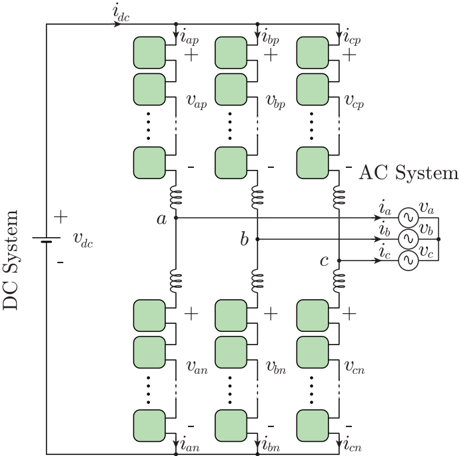
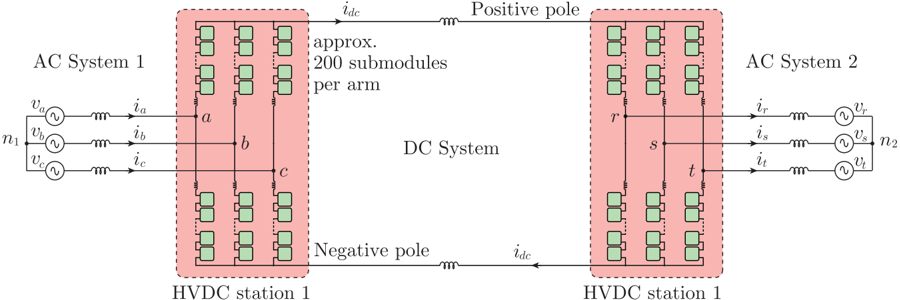
- The MMC has become an important HVdc alternative, with commercial products deployed in China, Europe, and the USA; actual HVdc systems commonly use more than 200 submodules per arm, and industrial MMCs for HVdc range from hundreds of MWs to a few GWs.
- The paper reviews advances in dynamic modeling, capacitor voltage balancing via sorting algorithms, current/energy control structures, and modulation such as nearest-level modulation combined with PWM; model predictive control is powerful but challenged by the large number of switching states, motivating grouping, clustering, and staged optimization.
- Fault-tolerant operation is a major theme: dc fault blocking can be achieved when the total voltage of connected submodules along the fault path exceeds the line-to-line ac voltage, with a 50% half-bridge and 50% full-bridge arm as the simplest hybrid example; ac faults can be managed by neutral-point shifting, and submodule failures by redundancy strategies.
- Emerging applications include MVdc grids, dc-dc conversion, battery energy storage, solid-state transformers, and high-voltage pulse generators; capacitor voltage ripple reduction remains central, and the paper notes that approximately half of a submodule’s volume is the capacitor.
Methods
- Design: narrative review of recent MMC research and development, focusing on challenges and proposed solutions in modeling, control, reliability, power topologies, and new applications.
- Data/sample: published literature and prior studies; no original experimental data, prototype, or simulation dataset is reported.
- Main analysis: qualitative synthesis organized by topic, with comparison tables classifying faults (Table 1), MMC topologies (Table 2), and challenges with prospective solutions (Table 3).
Limitations
- The paper states that several MMC issues remain under research and have not been completely solved, including dc fault management, practical implementation of ac fault neutral-point shifting, and precise tuning of voltage observers.
- Evident from the text: as a narrative review, it does not report a systematic search or selection methodology, quantitative meta-analysis, or new experimental validation; its conclusions are qualitative and based on cited literature.
Model-written summary. Check it against the paper before relying on it.
Integrity signals
Registry
Cites
Statistics
Figures








Verification
Claims the paper makes
6 Valid · 2 Not valid · 27 Not checked · 17 Own results and interpretations
Every source the paper cites for this claim was checked and supports it.
In the paper
“By assigning a reduced nominal voltage to the series valve submodule upon IGBT module failure, the need to install redundant submodules is greatly reduced.”
What the sources say
- Supportedcites [137] [137] J. Guo, J. Liang, X. Zhang, P. D. Judge, X. Wang, and T. C. Green, 'Reliability analysis of MMCs considering submodule designs with individual or series-operated IGBTs,' IEEE Trans. Power Del. , vol. 32, no. 2, pp. 666-677, Apr. 2017. - source
The Series Valve Operation Modes section (p. 3) explains that a submodule can be assigned a lower voltage after enough IGBT modules fail. In the design comparison (p. 9), the series-valve design requires three redundant submodules per arm in normal mode but none with reduced-nominal-voltage operation for the same reliability target. (LLM, conf=0.94)
plainstates a cause- Asserted: passes — The authors put it forward as true.
- Checkable: passes — It can be checked against evidence.
- Load-bearing: passes — The paper’s conclusions depend on it.
- Based: passes — The paper gives a reason why it holds.
- Supported
Every source the paper cites for this claim was checked and supports it.
In the paper
“There is a trade-off between submodule redundancy and cost, which should be evaluated for each project to define redundancy design and operation strategy [139].”
What the sources say
- Supportedcites [139] [139] P. Tu, S. Yang, and P. Wang, 'Reliability- and cost-based redundancy design for modular multilevel converter,' IEEE Trans. Ind. Electron. , vol. 66, no. 3, pp. 2333-2342, Mar. 2019. - source
Section C states that more redundant cells increase reliability but also increase cost. Section D says the suitable design is application dependent and compares active and standby operation for applications with different requirements, supporting project-specific evaluation of design and operating strategy. (LLM, conf=0.94)
plainstates an association- Asserted: passes — The authors put it forward as true.
- Checkable: passes — It can be checked against evidence.
- Load-bearing: unclear — It is unclear whether the paper’s conclusions depend on it.
- Based: passes — The paper gives a reason why it holds.
- Supported
Every source the paper cites for this claim was checked and supports it.
In the paper
“These simulation times are not achievable if the model is based on switching devices [43].”
What the sources say
- Supportedcites [43] [43] U. N. Gnanarathna, A. M. Gole, and R. P. Jayasinghe, 'Efficient modeling of modular multilevel HVDC converters (MMC) on electromagnetic transient simulation programs,' IEEE Trans. Power Del. , vol. 26, no. 1, pp. 316-324, Jan. 2011. - source
Section 6.3.6 estimates that a five-second full-HVDC simulation using the traditional detailed model would take over five days, versus less than 1.5 minutes with the equivalent model. It calls full detailed simulation impractical for systems with roughly 100 or more submodules, supporting the claim about the cited simulation times. (LLM, conf=0.90)
plainstates a cause- Asserted: passes — The authors put it forward as true.
- Checkable: passes — It can be checked against evidence.
- Load-bearing: passes — The paper’s conclusions depend on it.
- Based: passes — The paper gives a reason why it holds.
- Supported
The cited sources support only part of this claim — read each source’s verdict below.
In the paper
“It is found that the reliability of the MMC with series-connected IGBTs is higher for the first few years but then decreases rapidly.”
What the sources say
- Partly supportedcites [137] [137] J. Guo, J. Liang, X. Zhang, P. D. Judge, X. Wang, and T. C. Green, 'Reliability analysis of MMCs considering submodule designs with individual or series-operated IGBTs,' IEEE Trans. Power Del. , vol. 32, no. 2, pp. 666-677, Apr. 2017. - sourceExperimental — accuracy not yet measured
The Conclusion (p. 10) says the series-valve design has higher available arm voltage for the first few years, but its voltage decline then accelerates. The claim calls this a rapid decrease in converter reliability; the Design Comparison (p. 10) instead says the series-valve converter’s failure rate rises more slowly than the individual-device converter’s after five years. (LLM, conf=0.86)
plainstates an association- Asserted: passes — The authors put it forward as true.
- Checkable: passes — It can be checked against evidence.
- Load-bearing: passes — The paper’s conclusions depend on it.
- Based: passes — The paper gives a reason why it holds.
- Partly supported
Every source the paper cites for this claim was checked and supports it.
In the paper
“A capacitor voltage measuring system with reduced number of sensors can be implemented, where the minimum number can be as low as two voltage sensors per arm [131].”
What the sources say
- Supportedcites [131] [131] R. Picas, J. Zaragoza, J. Pou, S. Ceballos, and J. Balcells, 'New measuring technique for reducing the number of voltage sensors in modular multilevel converters,' IEEE Trans. Power Electron. , vol. 31, no. 1, pp. 177-187, Jan. 2016. - source
The Introduction states that the proposed capacitor-voltage measuring technique uses fewer sensors and requires a minimum of two per arm. Section D, “Minimum Number of Sensors,” explains that two sensors per arm provide measurements across the converter’s full operating range; a one-sensor arrangement has a limited range. (LLM, conf=0.95)
plain- Asserted: passes — The authors put it forward as true.
- Checkable: passes — It can be checked against evidence.
- Load-bearing: unclear — It is unclear whether the paper’s conclusions depend on it.
- Based: passes — The paper gives a reason why it holds.
- Supported
17 more claims
Create a free account to see all 52 claims and to verify the 6 references still open.
- It may state two separate claims as one. 17
- Probably not a substantial claim. 17
Self-check
Percentages, sums and reported differences re-computed from the paper’s own numbers.
Each contradiction between two passages listed here was confirmed by an independent check.
Rated minor: it would not touch a result — a value no result rests on, a p-value that stays on the same side of the significance level, or a conflict that is clerical, resolved elsewhere in the paper, or outside its own findings.
In the paper
§ II. POWER TOPOLOGY AND OPERATING PRINCIPLE · p. 3
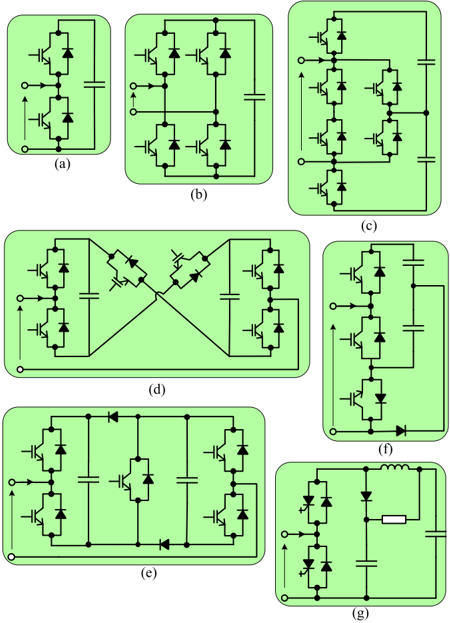
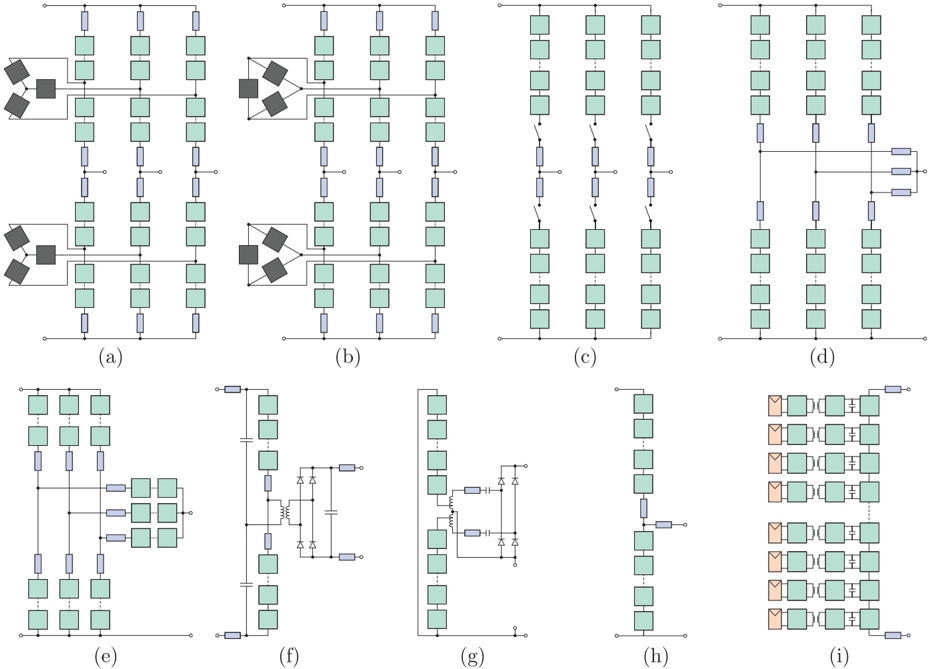
“the IGCT based submodule, shown in Fig. 1(g), features higher efficiency, voltage rating and reliability [24].”
§ II. POWER TOPOLOGY AND OPERATING PRINCIPLE · p. 2
“FIGURE 2. MMC submodules: (a) half-bridge submodule, (b) full-bridge submodule, (c) modified ANPC submodule, (d) cross-connected submodule (CCSM), (e) clamped double submodule (CDSM), (f) single-clamped submodule (SCSM), and (g) IGCT submodule.”
Citations
Cites
An innovative modular multilevel converter topology suitable for a wide power range
Lesnicar, A., & Marquardt, R. (2004) · 2003 IEEE Bologna Power Tech Conference Proceedings, · doi:10.1109/ptc.2003.1304403 · Cited by 2,908 · cited 1×
“To validate the proposed topology and its control, an experimental prototype was implemented and reported [5].”
MethodControl and Experiment of Pulsewidth-Modulated Modular Multilevel Converters
Hagiwara, M., & Akagi, H. (2009) · IEEE Transactions on Power Electronics · doi:10.1109/tpel.2009.2014236 · Cited by 1,565 · cited 1×
“4, has commonly been employed [57], [58].”
Tu, Q., Xu, Z., & Xu, L. (2011) · IEEE Transactions on Power Delivery · doi:10.1109/tpwrd.2011.2115258 · Cited by 1,387
Circuit Topologies, Modeling, Control Schemes, and Applications of Modular Multilevel Converters
Perez, M. A., Bernet, S., Rodriguez, J., Kouro, S., & Lizana, R. (2015) · IEEE Transactions on Power Electronics · doi:10.1109/tpel.2014.2310127 · Cited by 1,346 · cited 1×
“submodules per arm generating a nearly sinusoidal voltage waveform [6].”
BackgroundModular Multilevel Converters for HVDC Applications: Review on Converter Cells and Functionalities
Nami, A., Liang, J., Dijkhuizen, F., & Demetriades, G. D. (2015) · IEEE Transactions on Power Electronics · doi:10.1109/tpel.2014.2327641 · Cited by 1,042 · cited 2×
“Bipolar submodules such as the cross-connected submodule (CCSM) [19] and the clamped”
BackgroundOn dynamics and voltage control of the Modular Multilevel Converter
Antonopoulos, A., Ängquist, L., & Nee, H. (2009) · European Conference on Power Electronics and Applications · Cited by 831
Marquardt, R. (2010) · The 2010 International Power Electronics Conference - ECCE ASIA - · doi:10.1109/ipec.2010.5544594 · Cited by 773
A New AC/AC Multilevel Converter Family
Glinka, M., & Marquardt, R. (2005) · IEEE Transactions on Industrial Electronics · doi:10.1109/tie.2005.843973 · Cited by 772
Gnanarathna, U. N., Gole, A. M., & Jayasinghe, R. P. (2011) · IEEE Transactions on Power Delivery · doi:10.1109/tpwrd.2010.2060737 · Cited by 739
Dekka, A., Wu, B., Fuentes, R. L., Perez, M., & Zargari, N. R. (2017) · IEEE Journal of Emerging and Selected Topics in Power Electronics · doi:10.1109/jestpe.2017.2742938 · Cited by 576
Guan, M., & Xu, Z. (2012) · IEEE Transactions on Power Electronics · doi:10.1109/tpel.2012.2192752 · Cited by 549 · cited 1×
“decomposition was proposed to work with unbalanced grid conditions [31].”
BackgroundA new modular voltage source inverter topology
Marquardt, R. (2003) · Medical Entomology and Zoology · Cited by 503
Design and Operation of a Hybrid Modular Multilevel Converter
Zeng, R., Xu, L., Yao, L., & Williams, B. W. (2015) · IEEE Transactions on Power Electronics · doi:10.1109/tpel.2014.2320822 · Cited by 455 · cited 1×
“current path is greater than the line-to-line ac voltage [111].”
BackgroundPredictive Control of a Modular Multilevel Converter for a Back-to-Back HVDC System
Qin, J., & Saeedifard, M. (2012) · IEEE Transactions on Power Delivery · doi:10.1109/tpwrd.2012.2191577 · Cited by 428
Modular Multilevel Converter topologies with DC-Short circuit current limitation
Marquardt, R. (2011) · 8th International Conference on Power Electronics - ECCE Asia · doi:10.1109/icpe.2011.5944451 · Cited by 413 · cited 1×
“with the MMC itself, operating as a voltage source has been proposed to clear the dc fault [118].”
BackgroundPou, J., Ceballos, S., Konstantinou, G., Agelidis, V. G., Picas, R., & Zaragoza, J. (2015) · IEEE Transactions on Industrial Electronics · doi:10.1109/tie.2014.2336608 · Cited by 406 · cited 1×
“culating current strategies considering all the possible operating points of the converter [52].”
BackgroundSelf-citationHagiwara, M., Maeda, R., & Akagi, H. (2011) · IEEE Transactions on Power Electronics · doi:10.1109/tpel.2010.2089065 · Cited by 392
Lyu, J., Zhang, X., Cai, X., & Molinas, M. (2019) · IEEE Transactions on Power Electronics · doi:10.1109/tpel.2018.2842682 · Cited by 345 · cited 1×
“Alternatively, [38] and [39] use the harmonic”
Li, B., Shi, S., Wang, B., Wang, G., Wang, W., & Xu, D. (2016) · IEEE Transactions on Power Electronics · doi:10.1109/tpel.2015.2454534 · Cited by 329 · cited 1×
“faults without additional sensors have been previously proposed in the literature [133]–[135]; however these solutions”
BackgroundModular Multilevel Converter AC Motor Drives With Constant Torque From Zero to Nominal Speed
Antonopoulos, A., Angquist, L., Norrga, S., Ilves, K., Harnefors, L., & Nee, H.-P. (2014) · IEEE Transactions on Industry Applications · doi:10.1109/tia.2013.2286217 · Cited by 297 · cited 1×
“the motor speed [66] or controlling the ac and dc component of the arms independently using an unsymmetrical arm control [67].”
MethodSequence Impedance Modeling of Modular Multilevel Converters
Sun, J., & Liu, H. (2017) · IEEE Journal of Emerging and Selected Topics in Power Electronics · doi:10.1109/jestpe.2017.2762408 · Cited by 287
Frequency Domain Stability Analysis of MMC-Based HVdc for Wind Farm Integration
Lyu, J., Cai, X., & Molinas, M. (2016) · IEEE Journal of Emerging and Selected Topics in Power Electronics · doi:10.1109/jestpe.2015.2498182 · Cited by 267 · cited 1×
“[40] and [41] are two of the first attempts to develop impedance models of three-phase MMCs valid for power system stability studies.”
BackgroundPredictive Control of AC–AC Modular Multilevel Converters
Perez, M. A., Rodriguez, J., Fuentes, E. J., & Kammerer, F. (2012) · IEEE Transactions on Industrial Electronics · doi:10.1109/tie.2011.2159349 · Cited by 222 · cited 1×
“neously [69], and a back-to-back HVdc system [70].”
BackgroundSelf-citationReliability and Cost based Redundancy Design for Modular Multilevel Converter
Tu, P., Yang, S., & Wang, P. (2018) · IEEE Transactions on Industrial Electronics · doi:10.1109/tie.2018.2793263 · Cited by 199 · cited 1×
“submodule redundancy and cost, which should be evaluated for each project to define redundancy design and operation strategy [139].”
BackgroundSOH Balancing Control Method for the MMC Battery Energy Storage System
Li, N., Gao, F., Hao, T., Ma, Z., & Zhang, C. (2018) · IEEE Transactions on Industrial Electronics · doi:10.1109/tie.2017.2733462 · Cited by 186 · cited 1×
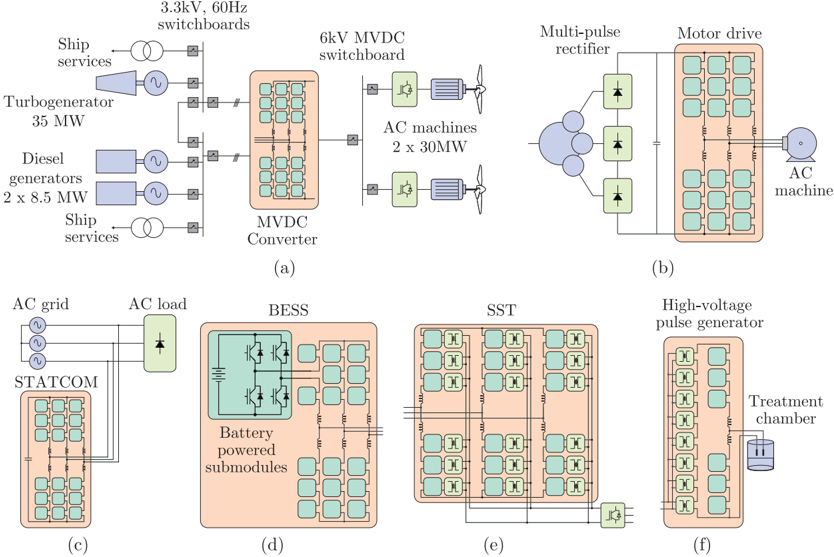
“distribution or transmission grid, and the modularity of the MMC can also be used to interconnect distributed energy storage [162], as shown in Fig.”
MethodVasiladiotis, M., Cherix, N., & Rufer, A. (2014) · IEEE Transactions on Power Electronics · doi:10.1109/tpel.2013.2286293 · Cited by 174 · cited 1×
“creases and impacts the performance of the whole control system [93].”
BackgroundBriz, F., Lopez, M., Rodriguez, A., & Arias, M. (2016) · IEEE Industrial Electronics Magazine · doi:10.1109/mie.2016.2611648 · Cited by 171 · cited 1×
“connected in series providing high voltage rating, and the secondary stages in parallel providing high current rating [168], mimicking the feature of a distribution transformer.”
BackgroundActive Redundant Submodule Configuration in Modular Multilevel Converters
Konstantinou, G., Pou, J., Ceballos, S., & Agelidis, V. G. (2013) · IEEE Transactions on Power Delivery · doi:10.1109/tpwrd.2013.2264950 · Cited by 152
Self-citationHuang, J., Yang, B., Guo, F., Wang, Z., Tong, X., Zhang, A., & Xiao, J. (2018) · IEEE Transactions on Industrial Electronics · doi:10.1109/tie.2017.2774725 · Cited by 152 · cited 1×
“Recent MPC algorithms proposed in the literature employ three different stages to control the grid side current, circulating current and voltage balancing [79].”
MethodA new AC/AC-multilevel converter family applied to a single-phase converter
Glinka, M., & Marquardt, R. (2004) · The Fifth International Conference on Power Electronics and Drive Systems, 2003. PEDS 2003. · doi:10.1109/peds.2003.1282669 · Cited by 150 · cited 1×
“Early publications introduced several topology variations, including a single-phase to single-phase MMC [2] and a”
BackgroundEfficiency Assessment of Modular Multilevel Converters for Battery Electric Vehicles
Quraan, M., Tricoli, P., D Arco, S., & Piegari, L. (2017) · IEEE Transactions on Power Electronics · doi:10.1109/tpel.2016.2557579 · Cited by 148 · cited 1×
“each storage module can be controlled independently in order to work at different operating points, increasing the overall efficiency [163].”
BackgroundMMC-Based SRM Drives With Decentralized Battery Energy Storage System for Hybrid Electric Vehicles
Gan, C., Sun, Q., Wu, J., Kong, W., Shi, C., & Hu, Y. (2019) · IEEE Transactions on Power Electronics · doi:10.1109/tpel.2018.2846622 · Cited by 147 · cited 1×
“by the MMC enables its use in distributed energy storage systems of electric vehicles, where electromagnetic interferences should be minimized [164].”
BackgroundZhou, D., Yang, S., & Tang, Y. (2018) · IEEE Transactions on Power Electronics · doi:10.1109/tpel.2018.2796584 · Cited by 143
Merlin, M. M. C., Soto-Sanchez, D., Judge, P. D., Chaffey, G., Clemow, P., Green, T. C., Trainer, D. R., & Dyke, K. J. (2018) · IEEE Transactions on Power Electronics · doi:10.1109/tpel.2017.2723948 · Cited by 142 · cited 1×
“losses, and capacitor voltage ripple [143].”
(2011) · European Conference on Power Electronics and Applications · Cited by 140
Modular Multilevel Converters: State of the Art and Future Progress
Marquardt, R. (2018) · IEEE Power Electronics Magazine · doi:10.1109/mpel.2018.2873496 · Cited by 139
Modular Multilevel Converter Design for VSC HVDC Applications
Oates, C. (2015) · IEEE Journal of Emerging and Selected Topics in Power Electronics · doi:10.1109/jestpe.2014.2348611 · Cited by 135
Reliable Modular Multilevel Converter Fault Detection With Redundant Voltage Sensor
Picas, R., Zaragoza, J., Pou, J., & Ceballos, S. (2017) · IEEE Transactions on Power Electronics · doi:10.1109/tpel.2016.2526684 · Cited by 134 · cited 1×
“The proposed measurement technique can also be used to detect submodule failures, including both, open- and shortcircuit semiconductor faults [132].”
MethodSelf-citationFault-Tolerant Control of MMC With Hot Reserved Submodules Based on Carrier Phase Shift Modulation
Li, K., Yuan, L., Zhao, Z., Lu, S., & Zhang, Y. (2017) · IEEE Transactions on Power Electronics · doi:10.1109/tpel.2016.2628762 · Cited by 133
Hu, P., Teodorescu, R., Wang, S., Li, S., & Guerrero, J. M. (2018) · IEEE Transactions on Power Electronics · doi:10.1109/tpel.2018.2850360 · Cited by 133
Zhang, Y., Wang, H., Wang, Z., Yang, Y., & Blaabjerg, F. (2019) · IEEE Transactions on Industrial Electronics · doi:10.1109/tie.2018.2823664 · Cited by 128 · cited 1×
“the simplified power loss model for analytic purposes, both at converter level [50] and at semiconductor level [51] using data from datasheet and linearized energy calculations.”
MethodModelling, simulation and analysis of a Modular Multilevel Converter for medium voltage applications
Rohner, S., Bernet, S., Hiller, M., & Sommer, R. (2010) · 2010 IEEE International Conference on Industrial Technology · doi:10.1109/icit.2010.5472634 · Cited by 127 · cited 1×
“The initial approach to model the MMC for control purposes uses a static model in which the ac and dc voltages and currents are modeled without dynamical components [25], gener-”
MethodGutierrez, B., & Kwak, S.-S. (2018) · IEEE Transactions on Power Electronics · doi:10.1109/tpel.2018.2789455 · Cited by 125
A Nearest Level PWM Method for the MMC in DC Distribution Grids
Wang, Y., Hu, C., Ding, R., Xu, L., Fu, C., & Yang, E. (2018) · IEEE Transactions on Power Electronics · doi:10.1109/tpel.2018.2792148 · Cited by 124 · cited 1×
“modulated, can reduce the low-frequency current distortion generated by NLM without increasing the modulation complexity [104].”
BackgroundThermal Analysis and Balancing for Modular Multilevel Converters in HVDC Applications
Hahn, F., Andresen, M., Buticchi, G., & Liserre, M. (2018) · IEEE Transactions on Power Electronics · doi:10.1109/tpel.2017.2691012 · Cited by 120
Modular Multilevel Converter DC Fault Protection
Cwikowski, O., Wickramasinghe, H. R., Konstantinou, G., Pou, J., Barnes, M., & Shuttleworth, R. (2018) · IEEE Transactions on Power Delivery · doi:10.1109/tpwrd.2017.2715833 · Cited by 118
Self-citationIlves, K., Antonopoulos, A., Harnefors, L., Norrga, S., Angquist, L., & Nee, H.-P. (2011) · IECON 2011 - 37th Annual Conference of the IEEE Industrial Electronics Society · doi:10.1109/iecon.2011.6120033 · Cited by 112 · cited 1×
“harmonics, can be implemented to reduce capacitor voltage ripples [99], [100].”
BackgroundDC–DC MMC for HVdc Grid Interface of Utility-Scale Photovoltaic Conversion Systems
Rojas, C. A., Kouro, S., Pérez, M. A., & Echeverria, J. (2017) · IEEE Transactions on Industrial Electronics · doi:10.1109/tie.2017.2714120 · Cited by 112
Self-citationCupertino, A. F., Farias, J. V. M., Pereira, H. A., Seleme, S. I., & Teodorescu, R. (2018) · IEEE Transactions on Industrial Electronics · doi:10.1109/tie.2018.2811361 · Cited by 112 · cited 1×
“and delta-connected MMC show better performance in terms of efficiency [161].”
BackgroundReview of Hybrid Multilevel Converter Topologies Utilizing Thyristors for HVDC Applications
Bakas, P., Okazaki, Y., Shukla, A., Patro, S. K., Ilves, K., Dijkhuizen, F., & Nami, A. (2021) · IEEE Transactions on Power Electronics · doi:10.1109/tpel.2020.2997961 · Cited by 112 · cited 1×
“MMCs can also be achieved through integration of thyristors in the submodules, or the arm design [117].”
BackgroundChen, Y., Li, Z., Zhao, S., Wei, X., & Kang, Y. (2017) · IEEE Journal of Emerging and Selected Topics in Power Electronics · doi:10.1109/jestpe.2016.2632858 · Cited by 111 · cited 1×
“Designing the on-board converter with redundant submodules, the converter reliability is improved [153].”
BackgroundAnalysis of Single-Phase-to-Ground Faults at the Valve-Side of HB-MMCs in HVDC Systems
Li, G., Liang, J., Ma, F., Ugalde‐Loo, C. E., & Liang, H. (2018) · IEEE Transactions on Industrial Electronics · doi:10.1109/tie.2018.2829666 · Cited by 111
Analysis and Injection Control of Circulating Current for Modular Multilevel Converters
Wang, J., Han, X., Ma, H., & Bai, Z. (2019) · IEEE Transactions on Industrial Electronics · doi:10.1109/tie.2018.2808901 · Cited by 109 · cited 1×
“injection of a specific circulating current can be used to reduce losses [91] and also capacitor voltage ripples [92].”
BackgroundGong, Z., Wu, X., Dai, P., & Zhu, R. (2019) · IEEE Transactions on Industrial Electronics · doi:10.1109/tie.2018.2844836 · Cited by 106
Reliability Modeling and Evaluation of MMCs Under Different Redundancy Schemes
Guo, J., Wang, X., Liang, J., Pang, H., & Goncalves, J. (2017) · IEEE Transactions on Power Delivery · doi:10.1109/tpwrd.2017.2715664 · Cited by 101 · cited 1×
“dependency on the control system reliability [126].”
Bergna-Diaz, G., Freytes, J., Guillaud, X., D'Arco, S., & Suul, J. A. (2018) · IEEE Journal of Emerging and Selected Topics in Power Electronics · doi:10.1109/jestpe.2018.2793159 · Cited by 100 · cited 1×
“[42] makes use of several dqtransformations at different frequencies to separate the multiple frequency components within the MMC.”
BackgroundLoss Optimization of MMC by Second-Order Harmonic Circulating Current Injection
Yang, L., Li, Y., Li, Z., Wang, P., Xu, S., & Gou, R. (2018) · IEEE Transactions on Power Electronics · doi:10.1109/tpel.2017.2751068 · Cited by 97 · cited 1×
“injection of a specific circulating current can be used to reduce losses [91] and also capacitor voltage ripples [92].”
BackgroundKumar, Y. S., & Poddar, G. (2017) · IEEE Transactions on Industrial Electronics · doi:10.1109/tie.2017.2721927 · Cited by 96 · cited 1×
“MMC structure implementing a control strategy to provide a controllable current source in the grid converter, allows to drive the machine at very low frequencies [159].”
BackgroundAn enhanced MMC topology with DC fault ride-through capability
Li, X., Liu, W., Song, Q., Rao, H., & Xu, S. (2013) · IECON 2013 - 39th Annual Conference of the IEEE Industrial Electronics Society · doi:10.1109/iecon.2013.6700152 · Cited by 92
Reliability Model of MMC Considering Periodic Preventive Maintenance
Wang, B., Wang, X., Bie, Z., Judge, P. D., Wang, X., & Green, T. C. (2016) · IEEE Transactions on Power Delivery · doi:10.1109/tpwrd.2016.2602888 · Cited by 92 · cited 1×
“A reliability model assuming periodic preventive maintenance is proposed in [136].”
BackgroundOn the Redundancy Strategies of Modular Multilevel Converters
Farias, J. V. M., Cupertino, A. F., Pereira, H. A., Seleme, S. I., & Teodorescu, R. (2017) · IEEE Transactions on Power Delivery · doi:10.1109/tpwrd.2017.2713394 · Cited by 90
Sliding Mode Control of the Modular Multilevel Converter
Yang, Q., Saeedifard, M., & Perez, M. A. (2019) · IEEE Transactions on Industrial Electronics · doi:10.1109/tie.2018.2818657 · Cited by 89
Zhou, D., Yang, S., & Tang, Y. (2019) · IEEE Transactions on Industrial Electronics · doi:10.1109/tie.2018.2863181 · Cited by 88 · cited 7×
“To overcome this problem, several alternatives have been proposed such as modulated MPC, in which a continuous optimization is employed and the resulting modulation index is then modulated with phase-shifted pulse-width modulation (PWM) [71].”
MethodInfluentialDecoupled Current Model and Control of Modular Multilevel Converters
Lizana, R., Perez, M. A., Arancibia, D., Espinoza, J. R., & Rodriguez, J. (2015) · IEEE Transactions on Industrial Electronics · doi:10.1109/tie.2015.2405900 · Cited by 87
Self-citationNew Efficient Submodule for a Modular Multilevel Converter in Multiterminal HVDC Networks
Adam, G. P., Abdelsalam, I., Fletcher, J. E., Burt, G. M., Holliday, D., & Finney, S. J. (2017) · IEEE Transactions on Power Electronics · doi:10.1109/tpel.2016.2603180 · Cited by 84 · cited 1×
“lower loss submodule option in applications where unipolar voltage output is sufficient [20].”
BackgroundA Novel STATCOM Based on Diode-Clamped Modular Multilevel Converters
Liu, X., Lv, J., Gao, C., Chen, Z., & Chen, S. (2016) · IEEE Transactions on Power Electronics · doi:10.1109/tpel.2016.2616495 · Cited by 84 · cited 1×
“Recent investigations have determined that negative sequence compensation capability is a key performance indicator for STATCOM devices; hence the diode-clamped [160]”
BackgroundModulated Model Predictive Control of Modular Multilevel Converters in VSC-HVDC Systems
Mahmoudi, H., Aleenejad, M., & Ahmadi, R. (2017) · IEEE Transactions on Power Delivery · doi:10.1109/tpwrd.2017.2727478 · Cited by 83 · cited 1×
“sequence can be used to reduce the circulating current [73]and pulse-pattern control in order to reduce the harmonic content on the currents [74].”
BackgroundArm Current Control Strategy for MMC-HVDC Under Unbalanced Conditions
Liang, Y., Liu, J., Zhang, T., & Yang, Q. (2017) · IEEE Transactions on Power Delivery · doi:10.1109/tpwrd.2016.2554620 · Cited by 81 · cited 1×
“positive and negative sequences in the model to work with unbalanced voltages [61].”
BackgroundReliability Analysis of MMCs Considering Submodule Designs with Individual or Series-Operated IGBTs
Guo, J., Liang, J., Zhang, X., Judge, P. D., Wang, X., & Green, T. C. (2017) · IEEE Transactions on Power Delivery · doi:10.1109/tpwrd.2016.2572061 · Cited by 79 · cited 1×
“constructed using the two-submodule configurations [137].”
Reduced-Order Small-Signal Models of Modular Multilevel Converter and MMC-Based HVdc Grid
Hao, Q., Li, Z., Gao, F., & Zhang, J. (2019) · IEEE Transactions on Industrial Electronics · doi:10.1109/tie.2018.2869358 · Cited by 79 · cited 1×
“tion [45], and a reduced-order small-signal model that simplifies the model and enhances simulation efficiency [46].”
BackgroundA Compact Modular Multilevel DC–DC Converter for High Step-Ratio MV and HV Use
Xiang, X., Zhang, X., Luth, T., Merlin, M., & Green, T. C. (2018) · IEEE Transactions on Industrial Electronics · doi:10.1109/tie.2018.2793249 · Cited by 76 · cited 1×
“able HV and MV grids interconnection is achieved [149].”
BackgroundModular Multilevel Converter Based Variable Speed Drive With Reduced Capacitor Ripple Voltage
Sau, S., & Fernandes, B. G. (2018) · IEEE Transactions on Industrial Electronics · doi:10.1109/tie.2018.2860542 · Cited by 75 · cited 1×
“reducing, at the same time, the capacitor voltage ripple [96].”
BackgroundWang, J., Liu, X., Xiao, Q., Zhou, D., Qiu, H., & Tang, Y. (2020) · IEEE Transactions on Power Electronics · doi:10.1109/tpel.2020.2969688 · Cited by 74 · cited 1×
“ing the processing time, the modulated MPC approach also reduces the steady-state error [72].”
BackgroundSteady-State Modeling of Modular Multilevel Converter Under Unbalanced Grid Conditions
Shi, X., Wang, Z., Liu, B., Li, Y., Tolbert, L. M., & Wang, F. (2017) · IEEE Transactions on Power Electronics · doi:10.1109/tpel.2016.2629472 · Cited by 73
Wang, K., Deng, Y., Hao, P., Chen, G., Li, G., & He, X. (2018) · IEEE Transactions on Industrial Electronics · doi:10.1109/tie.2018.2813963 · Cited by 73 · cited 1×
“to force the insertion of submodules improving the balance of capacitor voltages [106].”
BackgroundA Simplified Analytical Calculation Model of Average Power Loss for Modular Multilevel Converter
Yang, L., Li, Y., Li, Z., Wang, P., Xu, S., & Gou, R. (2017) · IEEE Transactions on Industrial Electronics · doi:10.1109/tie.2017.2779417 · Cited by 72 · cited 1×
“the simplified power loss model for analytic purposes, both at converter level [50] and at semiconductor level [51] using data from datasheet and linearized energy calculations.”
MethodWang, Y., Song, Q., Zhao, B., Li, J., Sun, Q., & Liu, W. (2018) · IEEE Transactions on Power Electronics · doi:10.1109/tpel.2017.2772833 · Cited by 71 · cited 1×
“power distribution in which the MMC becomes and essential element [146].”
BackgroundControl of arm capacitor voltages in modular multilevel converters
Lizana, R., Perez, M. A., Bernet, S., Espinoza, J. R., & Rodriguez, J. (2016) · IEEE Transactions on Power Electronics · doi:10.1109/tpel.2015.2426183 · Cited by 70 · cited 1×
“The outermost control loop is usually focused on regulating the average arm capacitor voltages [63], or energies [64].”
BackgroundMo, R., Li, H., & Shi, Y. (2019) · IEEE Transactions on Power Electronics · doi:10.1109/tpel.2018.2885278 · Cited by 70 · cited 1×
“voltage ripple can be reduced by using a square-wave modulation for some submodules of the arm, and phase-shifted for the remaining [108].”
BackgroundNami, A., Liang, J., Dijkhuizen, F., & Lundberg, P. (2015) · European Conference on Power Electronics and Applications · doi:10.1109/epe.2015.7309391 · Cited by 69
A Postfault Strategy to Control the Modular Multilevel Converter Under Submodule Failure
Yang, Q., Qin, J., & Saeedifard, M. (2016) · IEEE Transactions on Power Delivery · doi:10.1109/tpwrd.2015.2449875 · Cited by 69 · cited 1×
“with suppressing the circulating current to mitigate the double frequency current that appears in the arms [121].”
BackgroundZhou, W., Sheng, J., Luo, H., Li, W., & He, X. (2018) · IEEE Transactions on Power Electronics · doi:10.1109/tpel.2018.2849441 · Cited by 69 · cited 1×
“faults without additional sensors have been previously proposed in the literature [133]–[135]; however these solutions”
BackgroundA SiC MOSFET and Si IGBT Hybrid Modular Multilevel Converter With Specialized Modulation Scheme
Yin, T., Xu, C., Lin, L., & Jing, K. (2020) · IEEE Transactions on Power Electronics · doi:10.1109/tpel.2020.2993366 · Cited by 67
Zeng, R., Zhao, B., Wei, T., Xu, C., Chen, Z., Liu, J., Zhou, W., Song, Q., & Yu, Z. (2019) · IEEE Industrial Electronics Magazine · doi:10.1109/mie.2019.2906952 · Cited by 65 · cited 1×
“1(g), features higher efficiency, voltage rating and reliability [24].”
BackgroundNew Measuring Technique for Reducing the Number of Voltage Sensors in Modular Multilevel Converters
Picas, R., Zaragoza, J., Pou, J., Ceballos, S., & Balcells, J. (2016) · IEEE Transactions on Power Electronics · doi:10.1109/tpel.2015.2412658 · Cited by 62
Self-citationAnalysis of voltage balancing limits in modular multilevel converters
Ceballos, S., Pou, J., Choi, S., Saeedifard, M., & Agelidis, V. (2011) · IECON 2011 - 37th Annual Conference of the IEEE Industrial Electronics Society · doi:10.1109/iecon.2011.6120032 · Cited by 61 · cited 1×
“A mathematical model of the MMC, including the capacitor voltage dynamics and balancing algorithm was introduced later [27].”
MethodSelf-citationFarzamkia, S., Iman‐Eini, H., Noushak, M., & Hadizadeh, A. (2018) · IEEE Transactions on Industrial Electronics · doi:10.1109/tie.2018.2823659 · Cited by 61
An Isolated Modular Multilevel Converter (I-M2C) Topology Based on High-Frequency Link (HFL) Concept
Liu, C., Liu, C., Cai, G., Ying, H., Zhang, Z., Shan, R., Pei, Z., & Song, X. (2019) · IEEE Transactions on Power Electronics · doi:10.1109/tpel.2019.2923355 · Cited by 61 · cited 1×
“possible to operate each submodule to provide power transfer independently, and hence, improving the reliability [167].”
BackgroundHagiwara, M., Maeda, R., & Akagi, H. (2010) · The 2010 International Power Electronics Conference - ECCE ASIA - · doi:10.1109/ipec.2010.5543517 · Cited by 60 · cited 1×
“ating the ac and dc modulating indices directly [26].”
BackgroundMo, R., & Li, H. (2017) · IEEE Journal of Emerging and Selected Topics in Power Electronics · doi:10.1109/jestpe.2016.2642831 · Cited by 59 · cited 1×
“can be used in combination with energy storage and active filtering functionalities in order to improve the availability of the complete on-board system [154].”
MethodLin, N., & Dinavahi, V. (2017) · IEEE Transactions on Power Delivery · doi:10.1109/tpwrd.2017.2774806 · Cited by 58 · cited 1×
“operating curve of insulated-gate bipolar transistors (IGBTs) to avoid the lengthy nonlinear solving [44], a model based on dynamic phasors to directly obtain the steady-state opera-”
MethodLi, B., Xu, Z., Ding, J., & Xu, D. (2018) · IEEE Access · doi:10.1109/access.2018.2811904 · Cited by 57 · cited 1×
“On the other hand, phase-shifted PWM (PS-PWM), can also be used with the same purpose, but it requires carrier rearrangements [129] or rotative carrier selec-”
BackgroundFrequency support from modular multilevel converter based multi-terminal HVDC schemes
Adeuyi, O. D., Cheah-Mane, M., Liang, J., Jenkins, N., Wu, Y., Li, C., & Wu, X. (2015) · 2015 IEEE Power & Energy Society General Meeting · doi:10.1109/pesgm.2015.7286086 · Cited by 56 · cited 1×
“frequency control in grids with high penetration of power converters, several grid-forming control algorithms have been adapted to operate together with MMCs [82], [83].”
MethodDu, S., Wu, B., & Zargari, N. R. (2018) · IEEE Transactions on Power Electronics · doi:10.1109/tpel.2017.2740782 · Cited by 56 · cited 1×
“ing the common-mode voltage to extend the machine lifetime by using a flying capacitor submodule [156].”
Mora, A., Urrutia, M., Cardenas, R., Angulo, A., Espinoza, M., Diaz, M., & Lezana, P. (2019) · IEEE Transactions on Industrial Electronics · doi:10.1109/tie.2018.2844842 · Cited by 56 · cited 2×
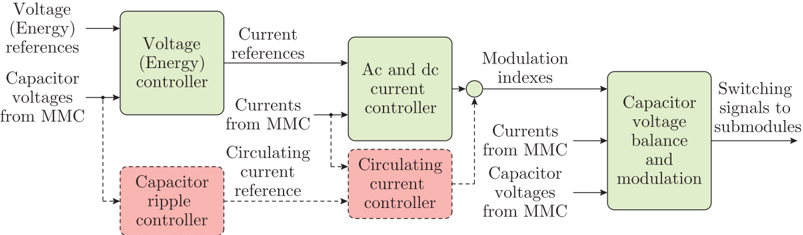
“nate the circulating currents in PWM-based MMCs obtaining the circulating current reference from a control loop based on PI controllers [77], [88], using a current controller based”
BackgroundMethodA Novel Two-Stage Model Predictive Control for Modular Multilevel Converter With Reduced Computation
Guo, P., He, Z., Yue, Y., Xu, Q., Huang, X., Chen, Y., & Luo, A. (2019) · IEEE Transactions on Industrial Electronics · doi:10.1109/tie.2018.2868312 · Cited by 56 · cited 1×
“process into two stages: one to calculate the insertion index, and a different stage to calculate the inserted submodules [78].”
MethodA Transformerless Hybrid Modular Multilevel DC–DC Converter With DC Fault Ride-Through Capability
Zhang, F., Li, W., & Joós, G. (2018) · IEEE Transactions on Industrial Electronics · doi:10.1109/tie.2018.2869355 · Cited by 56
Wu, H., Wang, X., Kocewiak, Ł., & Harnefors, L. (2018) · IEEE ... Workshop on Control and Modeling for Power Electronics · doi:10.1109/compel.2018.8459952 · Cited by 55 · cited 1×
“Alternatively, [38] and [39] use the harmonic”
Picas, R., Zaragoza, J., Pou, J., Ceballos, S., Konstantinou, G., & Capella, G. J. (2019) · IEEE Transactions on Industrial Electronics · doi:10.1109/tie.2018.2847621 · Cited by 54 · cited 2×
“These disadvantages have recently been addressed by several researchers using for example discontinuous modulation to reduce the capacitor voltage ripples [98], or eliminat-”
BackgroundSelf-citationGeneralized modeling and simulation of a modular multilevel converter
Perez, M. A., & Rodriguez, J. (2011) · 2011 IEEE International Symposium on Industrial Electronics · doi:10.1109/isie.2011.5984441 · Cited by 53 · cited 1×
“troduced in [30] completing a mathematical model with six degrees of freedom corresponding to the six controlled arm voltages.”
BackgroundReliability Modeling of MMCs Considering Correlations of the Requisite and Redundant Submodules
Xu, J., Jing, H., & Zhao, C. (2018) · IEEE Transactions on Power Delivery · doi:10.1109/tpwrd.2017.2757607 · Cited by 53 · cited 1×
“designing the number of redundant submodules and defining management schedules [138].”
BackgroundGuo, C., Yang, J., & Zhao, C. (2019) · IEEE Transactions on Industrial Electronics · doi:10.1109/tie.2018.2831193 · Cited by 53 · cited 1×
“This model has been recently improved using small-signal dynamics [32] and obtaining a steady-state”
MethodSun, Y., Teixeira, C. A., Holmes, D. G., McGrath, B. P., & Zhao, J. (2017) · IEEE Transactions on Power Electronics · doi:10.1109/tpel.2017.2670369 · Cited by 52
Yang, H., Saeedifard, M., & Yazdani, A. (2019) · IEEE Transactions on Industrial Electronics · doi:10.1109/tie.2018.2850035 · Cited by 52 · cited 1×
“generate a controllable dc output voltage, while a circulating current is forced to circulate among the arms in order to balance the capacitor voltages [147].”
BackgroundAlternate Arm Converters-Based HVDC Model Compatible With the CIGRE B4 DC Grid Test System
Wickramasinghe, H. R., Konstantinou, G. S., Li, Z., & Pou, J. (2018) · IEEE Transactions on Power Delivery · doi:10.1109/tpwrd.2018.2850933 · Cited by 52 · cited 1×
“verter (AAC), have also been modeled in order to make it compatible with multi-terminal dc (MTdc) simulation [47].”
MethodSelf-citationLi, B., Xu, Z., Shi, S., Xu, D., & Wang, W. (2018) · IEEE Transactions on Power Electronics · doi:10.1109/tpel.2017.2737541 · Cited by 51 · cited 1×
“on double-frequency rotational synchronous frame [89].”
Elgenedy, M. A., Massoud, A. M., Ahmed, S., & Williams, B. W. (2018) · IEEE Journal of Emerging and Selected Topics in Power Electronics · doi:10.1109/jestpe.2017.2750244 · Cited by 50 · cited 1×
“Due to the high voltage capability of the MMC it can be used as a high voltage pulse generator for water disinfection [169], as shown in Fig.”
MethodLi, J., Konstantinou, G., Wickramasinghe, H. R., Pou, J., Wu, X., & Jin, X. (2018) · IEEE Transactions on Power Delivery · doi:10.1109/tpwrd.2017.2747079 · Cited by 49 · cited 1×
“amplitude of the capacitor voltage ripple [102].”
Self-citationModeling and current control of modular multilevel converters considering actuator and sensor delays
Munch, P., Liu, S., & Dommaschk, M. (2009) · 2009 35th Annual Conference of IEEE Industrial Electronics · doi:10.1109/iecon.2009.5414756 · Cited by 48
Ruffing, P., Collath, N., Brantl, C., & Schnettler, A. (2019) · IEEE Transactions on Power Delivery · doi:10.1109/tpwrd.2018.2883861 · Cited by 48 · cited 1×
“submodules in the MMC the fault current can be drastically reduced [119].”
BackgroundTai, B., Gao, C., Liu, X., & Chen, Z. (2017) · IEEE Transactions on Power Electronics · doi:10.1109/tpel.2016.2535463 · Cited by 46 · cited 1×
“the motor speed [66] or controlling the ac and dc component of the arms independently using an unsymmetrical arm control [67].”
MethodAn Integrated Converter and Machine Control System for MMC-Based High-Power Drives
Espinoza, M., Cárdenas, R., Clare, J., Soto, D., Díaz, M., Espina, E., & Hackl, C. M. (2018) · IEEE Transactions on Industrial Electronics · doi:10.1109/tie.2018.2801839 · Cited by 46 · cited 1×
“incorporation of the machine model into the control system and using vector control to manage both, the converter and the machine at the same time [158].”
MethodHuang, M. D., Zou, J., Ma, X., Li, Y., & Han, M. (2018) · IEEE Transactions on Industrial Electronics · doi:10.1109/tie.2018.2840484 · Cited by 46 · cited 1×
“power capability [95], or using a multipulse diode bridge to change the dc voltage when the drive operates at low speed”
BackgroundDu, S., Wu, B., & Zargari, N. R. (2017) · IEEE Transactions on Power Electronics · doi:10.1109/tpel.2017.2701905 · Cited by 45 · cited 1×
“The main drawback of these topologies is the large number of submodules [141], [142].”
BackgroundKim, S.-M., Jeong, M.-G., Kim, J., & Lee, K.-B. (2019) · IEEE Transactions on Power Electronics · doi:10.1109/tpel.2018.2848620 · Cited by 44 · cited 1×
“voltages, which can be balanced again using a rotation strategy in order to periodically change the modulated submodule [105].”
MethodEnhancing the Reliability of Modular Multilevel Converters Using Neutral Shift
Kucka, J., Karwatzki, D., & Mertens, A. (2017) · IEEE Transactions on Power Electronics · doi:10.1109/tpel.2017.2695327 · Cited by 43 · cited 1×
“power feedforward, can be applied to already implemented MMCs without requiring any additional hardware [122].”
BackgroundImpedance modeling and analysis of modular multilevel converters
Sun, J., & Liu, H. (2016) · IEEE ... Workshop on Control and Modeling for Power Electronics · doi:10.1109/compel.2016.7556781 · Cited by 43
Gradient-Based Energy Balancing and Current Control for Alternate Arm Converters
Wickramasinghe, H. R., Konstantinou, G. S., & Pou, J. (2017) · IEEE Transactions on Power Delivery · doi:10.1109/tpwrd.2017.2785386 · Cited by 42
Self-citationLiu, S., Saeedifard, M., & Wang, X. (2018) · IEEE Transactions on Industrial Electronics · doi:10.1109/tie.2018.2813962 · Cited by 41 · cited 1×
“It is also possible to inject circulating current to achieve zero current switching in the high-voltage switch reducing the losses [145].”
BackgroundDong, Y., Yang, H., Li, W., & He, X. (2019) · IEEE Transactions on Industrial Electronics · doi:10.1109/tie.2018.2833019 · Cited by 39 · cited 1×
“generate different thermal stress among phases, which can be avoided using the neutral-point shifting with minimal impact on the circulating currents [123].”
BackgroundExperiment on DC-fault Ride Through of MMC Using a Half-Voltage Clamp Submodule
Li, X., Song, Q., Liu, W., Zhu, Z., & Xu, S. (2018) · IEEE Journal of Emerging and Selected Topics in Power Electronics · doi:10.1109/jestpe.2018.2813329 · Cited by 38 · cited 1×
“the complexity and cost of the protection system [110].”
BackgroundZhou, S., Li, B., Guan, M., Zhang, X., Xu, Z., & Xu, D. (2019) · IEEE Transactions on Power Electronics · doi:10.1109/tpel.2018.2833503 · Cited by 38 · cited 1×
“operating capacitor voltage also reduces the voltage ripple allowing to reduce the capacitance [157].”
BackgroundModel Predictive Pulse Pattern Control for Modular Multilevel Converters
Vasiladiotis, M., Christe, A., & Geyer, T. (2018) · IEEE Transactions on Industrial Electronics · doi:10.1109/tie.2018.2868294 · Cited by 38 · cited 1×
“sequence can be used to reduce the circulating current [73]and pulse-pattern control in order to reduce the harmonic content on the currents [74].”
BackgroundYang, R., Li, B., Wang, G., Cecati, C., Zhou, S., & Xu, D. (2017) · IEEE Transactions on Power Electronics · doi:10.1109/tpel.2016.2600762 · Cited by 37 · cited 1×
“half a period, reducing the current through the capacitor and consequently the voltage ripple [97].”
BackgroundDarwish, A., Elgenedy, M. A., Finney, S. J., Williams, B. W., & McDonald, J. R. (2019) · IEEE Transactions on Industrial Electronics · doi:10.1109/tie.2017.2772189 · Cited by 37
Optimized Design and Control for Hybrid MMC With Reduced Capacitance Requirements
Dong, P., Lyu, J., & Cai, X. (2018) · IEEE Access · doi:10.1109/access.2018.2869400 · Cited by 37
Rashwan, A., Sayed, M. A., Mobarak, Y. A., Shabib, G., & Senjyu, T. S. (2016) · IEEE Transactions on Power Delivery · doi:10.1109/tpwrd.2016.2639529 · Cited by 34 · cited 1×
“It is possible to reduce the universe of possible switching states by preselecting the available states [75], or grouping them depending on the operation conditions [76].”
BackgroundDecentralized Control Method for Modular Multilevel Converters
Xia, B. Y., Li, Y., Li, Z., Konstantinou, G. S., Xu, F., Gao, F., & Wang, P. (2018) · IEEE Transactions on Power Electronics · doi:10.1109/tpel.2018.2866258 · Cited by 34 · cited 1×
“hardware design, which include capacitor grouping and intergroup balancing on top of all other balancing and control structures [65].”
BackgroundSelf-citationYang, H., Li, W., Lin, L., & He, X. (2018) · IEEE Transactions on Power Delivery · doi:10.1109/tpwrd.2017.2721961 · Cited by 33 · cited 1×
“improving the dynamic performance [62].”
A Dynamic Phasor Model of an MMC With Extended Frequency Range for EMT Simulations
Rupasinghe, J., Filizadeh, S., & Wang, L. (2019) · IEEE Journal of Emerging and Selected Topics in Power Electronics · doi:10.1109/jestpe.2018.2886698 · Cited by 33 · cited 1×
“tion [45], and a reduced-order small-signal model that simplifies the model and enhances simulation efficiency [46].”
BackgroundXu, S., Song, Q., Zhou, Y., Meng, J., Yang, W., Zhao, B., & Zeng, R. (2020) · IEEE Transactions on Power Electronics · doi:10.1109/tpel.2019.2958495 · Cited by 33 · cited 1×
“A key consideration for the fault clearance process is the number of commutations that may occur and need to be accounted [116].”
BackgroundWang, J., & Wang, P. (2019) · IEEE Transactions on Industrial Electronics · doi:10.1109/tie.2018.2870352 · Cited by 32 · cited 1×
“proposed to improve the overall stability of distributed energy storage units [165].”
BackgroundZhao, C., Lei, M., Hu, Y., Li, Z., Gao, F., Wang, P., & Li, Y. (2019) · IEEE Transactions on Industrial Electronics · doi:10.1109/tie.2018.2877088 · Cited by 32 · cited 1×
“be achieved by injection of zero sequence harmonics [113], nested operation of low and high switching frequency submodules [114], or even integration of Si and SiC devices in”
Operation of a Modular Multilevel Converter Controlled as a Virtual Synchronous Machine
DrArco, S., Guidi, G., & Suul, J. A. (2018) · International Power Electronics Conference (IPEC) · doi:10.23919/ipec.2018.8508009 · Cited by 32 · cited 1×
“synchronous machine control technique for MMCs with inertia response has been introduced later [84].”
Voltage-Balancing Approach With Improved Harmonic Performance for Modular Multilevel Converters
Dekka, A., Wu, B., Fuentes, R. L., Pérez, M. A., & Zargari, N. R. (2017) · IEEE Transactions on Power Electronics · doi:10.1109/tpel.2017.2661245 · Cited by 31
Self-citationHuang, M. D., Zou, J., & Ma, X. (2017) · IEEE Transactions on Power Electronics · doi:10.1109/tpel.2017.2755763 · Cited by 31 · cited 1×
“modifying the circuit topology by using half- and full-bridge submodules to redistribute the power among submodules [94].”
MethodImpedance modeling of modular multilevel converters
Lyu, J., Cai, X., & Molinas, M. (2015) · Annual Conference of the IEEE Industrial Electronics Society (IECON) · doi:10.1109/iecon.2015.7392096 · Cited by 27 · cited 1×
“[40] and [41] are two of the first attempts to develop impedance models of three-phase MMCs valid for power system stability studies.”
BackgroundLin, N., Liu, P., & Dinavahi, V. (2021) · IEEE Transactions on Industrial Electronics · doi:10.1109/tie.2020.2967687 · Cited by 27 · cited 1×
“former (SST) using a single transformer and employing the MMC to generate the high-voltage at the primary side [166].”
MethodAnalysis and Reduction of the Output Voltage Error of PWM for Modular Multilevel Converters
Fuchs, S., Beck, S., & Biela, J. (2019) · IEEE Transactions on Industrial Electronics · doi:10.1109/tie.2018.2844821 · Cited by 25 · cited 1×
“The voltage drop in the power devices and parasitic resistances can also be considered [107].”
BackgroundBhesaniya, M. M., & Shukla, A. (2016) · IEEE Transactions on Power Delivery · doi:10.1109/tpwrd.2016.2590569 · Cited by 24 · cited 1×
“alent to study a back-to-back system, can also be found in the technical literature [48].”
BackgroundCapacitor Voltage Reduction in Modular Multilevel Converters Under Grid Voltages Unbalances
Li, J., Konstantinou, G., Wickramasinghe, H. R., Townsend, C. D., & Pou, J. (2020) · IEEE Transactions on Power Delivery · doi:10.1109/tpwrd.2019.2919788 · Cited by 24 · cited 1×
“In this condition it is possible to use zero-sequence voltage injection to reduce the ripple amplitude [103].”
MethodSelf-citationRonanki, D., & Williamson, S. S. (2019) · IEEE Journal of Emerging and Selected Topics in Power Electronics · doi:10.1109/jestpe.2019.2922206 · Cited by 24 · cited 1×
“ically located in the circuit hence the cooling design can be optimized [140].”
BackgroundGrid support functionalities based on modular multilevel converters with synchronous power control
Verdugo, C., Candela, J. I., & Rodriguez, P. (2016) · 2016 IEEE International Conference on Renewable Energy Research and Applications (ICRERA) · doi:10.1109/icrera.2016.7884399 · Cited by 23 · cited 12×
“[40] and [41] are two of the first attempts to develop impedance models of three-phase MMCs valid for power system stability studies.”
MethodInfluentialZhao, F., Xiao, G., & Zhao, T. (2018) · IEEE Transactions on Power Delivery · doi:10.1109/tpwrd.2017.2764950 · Cited by 23 · cited 1×
“state mathematical model which relates harmonics in the arms and line currents [35], and a simplified approach based on harmonic linearization to facilitate the analysis of the MMC”
MethodEnhanced Modular Multilevel Converter With Reduced Number of Cells and Harmonic Content
Vozikis, D., Adam, G. P., Rault, P., Despouys, O., Holliday, D., & Finney, S. J. (2020) · IEEE Journal of Emerging and Selected Topics in Power Electronics · doi:10.1109/jestpe.2019.2904205 · Cited by 23
Fault Scenarios in DC Ship Grids: The advantages and disadvantages of modular multilevel converters
Staudt, V., Bartelt, R., & Heising, C. (2015) · IEEE Electrification Magazine · doi:10.1109/mele.2015.2413436 · Cited by 22 · cited 1×
“MMC and implementing a proper control strategy to operate the converter itself during the fault [155].”
BackgroundPeng, C., & Li, R. (2019) · IEEE Transactions on Circuits & Systems II Express Briefs · doi:10.1109/tcsii.2019.2932329 · Cited by 21
Impedance modeling of modular multilevel converters by harmonic linearization
Lyu, J., Chen, Q., & Cai, X. (2016) · 2016 IEEE 17th Workshop on Control and Modeling for Power Electronics (COMPEL) · doi:10.1109/compel.2016.7556719 · Cited by 20 · cited 1×
“Harmonic linearization theory is used to develop an ac-side impedance model of the MMC [37].”
MethodA Push–Pull Modular-Multilevel-Converter-Based Low Step-Up Ratio DC Transformer
Zhang, X., Xiang, X., Green, T. C., Yang, X., & Wang, F. (2018) · IEEE Transactions on Industrial Electronics · doi:10.1109/tie.2018.2823665 · Cited by 20 · cited 1×
“5(g), provides a low step-up ratio dc-dc conversion [150].”
BackgroundGrid-Forming Droop Control of a Modular Multilevel Converter in Laboratory
Henninger, S., Schroeder, M., & Jaeger, J. (2018) · 2018 IEEE Power & Energy Society General Meeting (PESGM) · doi:10.1109/pesgm.2018.8586205 · Cited by 20 · cited 1×
“MMC performs active power support as well as parallel operation with other voltage sources and islanding operation [86].”
BackgroundImpact of grid-forming control on the internal energy of a modular multilevel converter
Rokrok, E., Qoria, T., Bruyere, A., Francois, B., Zhang, H., Belhaouane, M., & Guillaud, X. (2020) · 2020 22nd European Conference on Power Electronics and Applications (EPE'20 ECCE Europe) · doi:10.23919/epe20ecceeurope43536.2020.9215646 · Cited by 19 · cited 1×
“the MMC impacts the dynamic behavior while operated with grid-forming control [87].”
BackgroundFehr, H., & Gensior, A. (2018) · IEEE Transactions on Power Electronics · doi:10.1109/tpel.2018.2805103 · Cited by 17 · cited 1×
“The outermost control loop is usually focused on regulating the average arm capacitor voltages [63], or energies [64].”
BackgroundTownsend, C. D., Goodwin, G. C., Konstantinou, G., Petranovic, N., Mirzaeva, G., Farivar, G., & Pou, J. (2021) · IEEE Transactions on Industrial Electronics · doi:10.1109/tie.2020.2965504 · Cited by 17
Self-citationLimitations and Accuracy of a Continuous Reduced-Order Model for Modular Multilevel Converters
Lopez, A., Quevedo, D. E., Aguilera, R. P., Geyer, T., & Οικονόμου, Ν. (2017) · IEEE Transactions on Power Electronics · doi:10.1109/tpel.2017.2743006 · Cited by 15 · cited 1×
“improved results when using a low number of submodules per arm are obtained [34].”
BackgroundSelf-citationXing, Z., Ruan, X., & Xie, H. (2017) · IEEE Transactions on Power Electronics · doi:10.1109/tpel.2017.2724240 · Cited by 14
A Delta-Channel Modular Multilevel Converter for Zero/Low-Fundamental-Frequency Operation
Du, S., Wu, B., & Zargari, N. R. (2017) · IEEE Transactions on Industrial Electronics · doi:10.1109/tie.2017.2756582 · Cited by 14 · cited 1×
“The main drawback of these topologies is the large number of submodules [141], [142].”
BackgroundThe Predictive Closed-Loop Averaging Control of MMC Phase-Unit Losses Under Unbalanced Conditions
Xu, J., Yu, Y., & Zhao, C. (2019) · IEEE Transactions on Power Delivery · doi:10.1109/tpwrd.2018.2868772 · Cited by 14 · cited 1×
“with MPC using a per-phase approach in which each phase is controlled separately [80], or using a three-phase approach that requires more calculations but improves the converter”
MethodHagiwara, M., Maeda, R., & Akagi, H. (2011) · IEEJ Transactions on Industry Applications · doi:10.1541/ieejias.131.84 · Cited by 13
Evaluation of Virtual Inertia Control Strategies for MMC-based HVDC Terminals by P-HiL Experiments
D'Arco, S., Nguyen, T. T., & Suul, J. A. (2019) · IECON 2019 - 45th Annual Conference of the IEEE Industrial Electronics Society · doi:10.1109/iecon.2019.8927704 · Cited by 12 · cited 1×
“emulation strategies for an MMC-based HVdc transmission link have been evaluated taking into consideration the energy stored in the submodule capacitances [85].”
MethodSliding mode control of the modular multilevel converter
Yang, Q., & Saeedifard, M. (2018) · Conference proceedings/Conference proceedings - IEEE Applied Power Electronics Conference and Exposition · doi:10.1109/apec.2018.8341143 · Cited by 7
Fault tolerant control of MMC with redundant submodules based on carrier phase shift modulation
Li, K., Zhao, Z., Yuan, L., Lu, S., Pan, B., & Lu, Z. (2016) · Conference proceedings/Conference proceedings - IEEE Applied Power Electronics Conference and Exposition · doi:10.1109/apec.2016.7468233 · Cited by 7
Pou, J., Perez, M. A., & Aguilera, R. P. (2019) · IEEE Transactions on Industrial Electronics · doi:10.1109/tie.2018.2872631 · Cited by 6
Self-citationLopez, A. M., Quevedo, D. E., Aguilera, R., Geyer, T., & Oikonomou, N. (2015) · 2015 17th European Conference on Power Electronics and Applications (EPE'15 ECCE-Europe) · doi:10.1109/epe.2015.7309192 · Cited by 5
Self-citationPeng, C., & Li, R. (2020) · 2020 IEEE Applied Power Electronics Conference and Exposition (APEC) · doi:10.1109/apec39645.2020.9124395 · Cited by 4 · cited 1×
“[23] while the IGCT based submodule, shown in Fig.”
MethodSteady-state analysis of modular multilevel converter (MMC) under unbalanced grid conditions
Shi, X., Li, Y., Wang, Z., Liu, B., Tolbert, L. M., & Wang, F. (2016) · Conference proceedings/Conference proceedings - IEEE Applied Power Electronics Conference and Exposition · doi:10.1109/apec.2016.7468236 · Cited by 4
Zhao, F., Xiao, G., Liu, M., Su, S., Yang, D., & Li, F. (2017) · Conference proceedings/Conference proceedings - IEEE Applied Power Electronics Conference and Exposition · doi:10.1109/apec.2017.7931197 · Cited by 2
Control of the AC-AC modular multilevel converter under submodule failure
Yang, Q., & Saeedifard, M. (2016) · IEEE Energy Conversion Congress and Exposition (ECCE) · doi:10.1109/ecce.2016.7854968 · Cited by 1
Research works printed but not linked: 4
- [55] S. Allebrod, D. SchmiSchmitt, and R. Marquardt, 'Control structure for modular multilevel converters,' in Proc. Power Convers. Intell. Motion Eur. , 2009, pp. 12-14. -
- [8] M. Callavik, 'HVDC grid for integration of renewable power sources,' in Proc. EPRI HVDC FACTS Conf. , 2010. -
- [7] C. Junzheng and C. Jim, 'HVDC in China,' in Proc. EPRI HVDC FACTS Conf. , pp. 539-557, 2013. -
- [125] G. Li, J. Liang, F. Ma, C. E. Ugalde-Loo, and H. Liang, 'Analysis of single-phase-to-ground faults at the valve-side of HB-MMCs in HVDC systems,' IEEE Trans. Ind. Electron. , vol. 66, no. 3, pp. 2444-2453, Mar. 2019. -
Cited by
Choudhury, S., Bajaj, M., Dash, T., Kamel, S. M., & Jurado, F. (2021) · Energies · doi:10.3390/en14185773 · Cited by 179
“Different types of SM topologies are reported in the literature [99,100].”
BackgroundXiao, Q., Jin, Y., Jia, H., Tang, Y. K., Cupertino, A. F., Mu, Y., Teodorescu, R., Blaabjerg, F., & Pou, J. (2023) · IEEE Transactions on Power Electronics · doi:10.1109/tpel.2023.3283286 · Cited by 139
“A review of recent advances and achievements and future challenges of the MMC is conducted in [16].”
BackgroundSelf-citationA Review of Single-Stage Multiport Inverters for Multisource Applications
Huang, Z., Zhou, D., Wang, L., Shen, Z., & Li, Y. (2023) · IEEE Transactions on Power Electronics · doi:10.1109/tpel.2023.3234358 · Cited by 118
“and five-level cross-connected SMs [82], [83], provide certain mature structures to fulfill specific objectives of multisource integration [84], [85].”
BackgroundBeyond the MMC: Extended Modular Multilevel Converter Topologies and Applications
Sun, P., Tian, Y., Pou, J., & Konstantinou, G. S. (2022) · IEEE Open Journal of Power Electronics · doi:10.1109/ojpel.2022.3175714 · Cited by 108
Self-citationLiserre, M., Pérez, M. A., Langwasser, M., Rojas, C. A., & Zhou, Z. (2022) · Proceedings of the IEEE · doi:10.1109/jproc.2022.3157162 · Cited by 71
“A combination of NLM and PWM, in which only one submodule per arm is modulated, can reduce the low-frequency current distortion generated by NLM without increasing the modulation complexity [95].”
BackgroundSelf-citation
Metadata
- Authors
- Perez, M. A., Ceballos, S., Konstantinou, G., Pou, J., & Aguilera, R. P.
- Affiliations
- Tecnalia (ES)
- UNSW Sydney (AU)
- Nanyang Technological University (SG)
- University of Technology Sydney (AU)
- Venue
- IEEE Open Journal of the Industrial Electronics Society
- Published
- 2021
- Volume
- 2
- Pages
- 224-239
- ISSN
- 2644-1284 (ISSN-L)
- OpenAlex
- W3132481093
- Cited by
- 327
- References
- 162
- Citations by year
- 2026: 42 · 2025: 89 · 2024: 70 · 2023: 63 · 2022: 46 · 2021: 17
- FWCI
- 14.39
- Type
- journal article
- Language
- en
- Open access
- gold
- doi.org
- Locations
- IEEE Open Journal of the Industrial Electronics Society (publishedVersion, cc-by)
- UNSWorks (University of New South Wales, Sydney, Australia) (submittedVersion, cc-by-nc-nd)
- DOAJ (DOAJ: Directory of Open Access Journals) (submittedVersion, cc-by-sa)
- DR-NTU (Nanyang Technological University) (submittedVersion)
- TECNALIA Publications (Fundación TECNALIA Research & Innovation) (submittedVersion, cc-by)
- Funders
- Fondecyt (1181839)
- Advanced Center for Electrical and Electronics Engineering AC3E (CONICYT/FB0008)
- SERC Chile (CONICYT/FONDAP/15 110 019)
- ARC DECRA (DE170010370)
- Office of Naval Research Global (N62909-19-1-2081)
- Australian Research Council (DP180100129)
- Spanish Centre for the Development of Industrial Technology (CER-20191002 ENERISLA)
- Topics
- Physical Sciences › Engineering › Electrical and Electronic Engineering › HVDC Systems and Fault Protection
- Physical Sciences › Engineering › Electrical and Electronic Engineering › Multilevel Inverters and Converters
- Physical Sciences › Engineering › Electrical and Electronic Engineering › Advanced DC-DC Converters
- Keywords
- modular multilevel converter, submodules, circulating current, converter control, converter modeling, converter reliability, converter topology, HVDC transmission, STATCOM, motor drives
About these checks
Registry, retraction, Cites and statistics results are computed, not judged, with one exception: a printed reference that no index lists is read once by a model before it counts as a citation error. Claims are extracted by a model and kept only when their quote appears verbatim in the text; each cited source is then checked, with a model’s help, for whether it says what the claim relies on. Those verdicts can be wrong — read the claim’s quote and the cited source before relying on one.
The claim verdicts this report counts are experimental: their accuracy is not yet measured.
A language model drew the claims from the paper on 2026-10-10, under version 3 of the claim definition (model deepseek-v4.1-flash, prompt extract-v3).
A second model labelled each claim on 2026-10-10 (model jev-1.13-20260917, definition revision gold-guideline-v0.2).
Cited sources are checked with a language model’s help (gpt-6-sol).
Statistics and arithmetic are recomputed, not judged.
Confidence bands are shown only for fields calibrated on our annotated test set. None is calibrated yet, so no band is shown.
What counts as a claim ›How we measure confidence ›How we check this ›
Are you an author, or do you see a problem with this page? Request a review
Data sources
Bibliographic data: Semantic Scholar, OpenAlex, Crossref.
Contains information from the Semantic Scholar Academic Graph Datasets, made available under the ODC Attribution License (ODC-BY 1.0).
Semantic Scholar’s data is described in: Kinney, R., et al. (2023). The Semantic Scholar Open Data Platform. arXiv:2301.10140.
