

A Review of Multilevel Inverter Topologies in Electric Vehicles: Current Status and Future Trends
Open accessThe DOI matches its Crossref record; 90 of the 90 references it cites were found in a registry or an index; 9 of the 90 sources its claims cite were checked for support.
Abstract
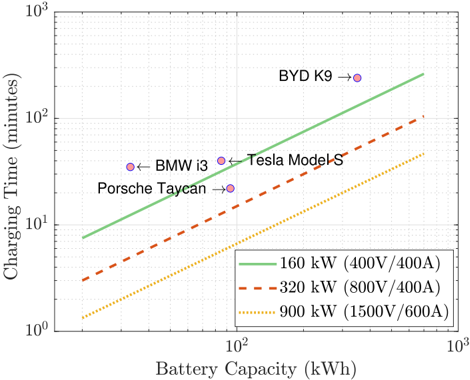
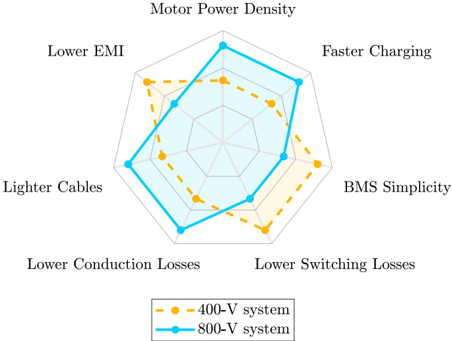
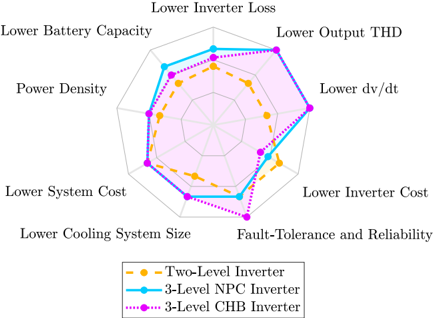
Traction inverter, as a critical component in electrified transportation, has been the subject of many research projects in terms of topologies, modulation, and control schemes. Recently, some of the well-known electric vehicle manufacturers have utilized higher-voltage batteries to benefit from lower current, higher power density, and faster charging times. With the ongoing trend toward higher DC-link voltage in electric vehicles, some multilevel structures have been investigated as a feasible and efficient option for replacing the two-level inverters. Higher efficiency, higher power density, better waveform quality, and inherent fault-tolerance are the foremost advantages of multilevel inverters which make them an attractive solution for this application. This paper presents an investigation of the advantages and disadvantages of higher DC-link voltage in traction inverters, as well as a review of the recent research on multilevel inverter topologies for electrified transportation applications. A comparison of multilevel inverters with their two-level counterpart is conducted in terms of efficiency, cost, power density, power quality, reliability, and fault tolerance. Additionally, a comprehensive comparison of different topologies of multilevel inverters is conducted based on the most important criteria in transportation electrification. Future trends and possible research areas are also discussed.
Overview
CoChat Summary
TL;DR
This review examines multilevel inverter topologies for electric vehicle traction drives as DC-link voltages rise toward 800 V and above, comparing them with conventional two-level inverters. It finds multilevel inverters can improve efficiency, power quality, and fault tolerance, but face cost, capacitor, control, and reliability trade-offs.
Key findings
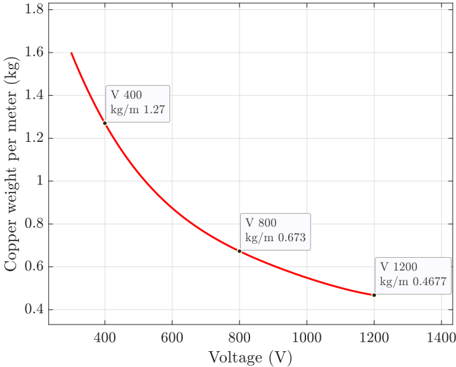
- Moving from 400 V to 1.2 kV in a 150 kW system can reduce copper weight per meter by 63% by lowering current from 375 A to 125 A; Porsche reports a 30 kg reduction in electrical harness weight from doubling battery voltage.
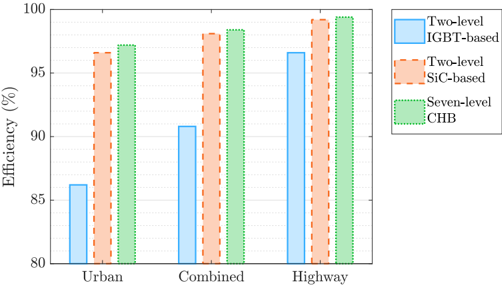
- A Si MOSFET CHB multilevel inverter raised minimum low-speed efficiency from 70% for an IGBT-based two-level inverter to 92%; at higher speeds it remained 2%–3% better, and in urban driving cycles efficiency improved by approximately 10%. An MMC showed 3%–5% efficiency improvement in the constant torque region at 20 kHz maximum switching frequency.
- Cost comparisons show a two-level inverter at 6500.5 versus a 7-level CHB at 6433.3 when battery savings are included, and a two-level inverter at 1726 versus a three-level NPC at 1678, a 3% lower system cost due mainly to reduced filter cost.
- A three-level multilevel inverter can reduce output voltage THD by a factor of 2–3, and a 5-level NPC reduces maximum dv/dt and common-mode voltage by four times at constant switching speed; with one fault-tolerant capability, the reliability gap between two-, three-, and five-level inverters remains below 0.2 for 0–25,000 hours, and multiple fault-tolerant capabilities can make multilevel reliability surpass two-level.
Methods
- Review and comparative study of multilevel inverter topologies for electrified transportation, focusing on traction drives in electric vehicles, buses, trucks, trains, ships, and aircraft.
- Synthesizes literature and market data, including tables of commercial EV battery voltages, traction inverter structures, and comparisons of well-known and new multilevel topologies.
- Compares multilevel versus two-level inverters across efficiency, cost, power density, power quality, reliability, fault tolerance, and cooling, drawing on cited simulation and experimental studies rather than presenting new primary experiments.
Limitations
- The paper states that there are not many studies comparing different aspects of multilevel and two-level inverters specifically for traction applications, and that new multilevel topologies are not mature enough in control, modulation, voltage balancing, fault tolerance, and reliability and have not been implemented and tested for traction.
- The paper states that a comprehensive comparison of different numbers of levels, from 3 to 23, is still required in terms of efficiency, cost, power density, and reliability.
- Evident from the text: as a review, its quantitative comparisons depend on cited studies and their assumptions, and it does not provide a new experimental validation of its own.
Model-written summary. Check it against the paper before relying on it.
Integrity signals
Registry
Cites
Statistics
Figures





Verification
Claims the paper makes
8 Valid · 12 Not valid · 66 Not checked · 67 Own results and interpretations
Every source the paper cites for this claim was checked and supports it.
In the paper
“Besides, employing higher-voltage batteries allows for a reduction in size and weight of the required cables for transferring a certain amount of power [6].”
What the sources say
- Supportedcites [6] [6] H. Tu, H. Feng, S. Srdic, and S. Lukic, 'Extreme fast charging of electric vehicles: A technology overview,' IEEE Trans. Transp. Electrific. , vol. 5, no. 4, pp. 861-878, Dec. 2019. - source
Section II states that high charging current requires larger-diameter cables and that transferring power at higher voltage is one way to reduce cable weight while delivering more power. This supports the claim that higher-voltage batteries can permit smaller, lighter charging cables for a given power transfer. (LLM, conf=0.94)
plainstates a cause- Asserted: passes — The authors put it forward as true.
- Checkable: passes — It can be checked against evidence.
- Load-bearing: unclear — It is unclear whether the paper’s conclusions depend on it.
- Based: passes — The paper gives a reason why it holds.
- Supported
Every source the paper cites for this claim was checked and supports it.
In the paper
“High current in a battery pack can impact pack hardware, busbars, fuses, disconnect switches, and tabs which results in increasing battery pack cost and weight [36].”
What the sources say
- Supportedcites [36] [36] S. Ahmed et al. , 'Enabling fast charging-a battery technology gap assessment,' J. Power Sour. , vol. 367, pp. 250-262, 2017. - source
Section 3.1, “Pack design” (p. 26), says higher current requires more robust pack hardware, including bus bars, tabs, fuses, and disconnect switches, resulting in increased pack weight and cost. This directly supports the attributed claim. (LLM, conf=0.95)
plainstates a cause- Asserted: passes — The authors put it forward as true.
- Checkable: passes — It can be checked against evidence.
- Load-bearing: unclear — It is unclear whether the paper’s conclusions depend on it.
- Based: passes — The paper gives a reason why it holds.
- Supported
Every source the paper cites for this claim was checked and supports it.
In the paper
“Electrolytic capacitors and supercapacitors can effectively reduce the battery RMS losses in this case [73].”
What the sources say
- Supportedcites [73] [73] A. Kersten, O. Theliander, E. A. Grunditz, T. Thiringer, and M. Bongiorno, 'Battery loss and stress mitigation in a cascaded h-bridge multilevel inverter for vehicle traction applications by filter capacitors,' IEEE Trans. Transp. Electrific. , vol. 5, no. 3, pp. 659-671, Sept. 2019. - source
The Drive Cycle Operation section (p. V-A) reports 'With configurations 4 and 8 a reduction of the battery losses by about 40 % is achieved' — configuration 4 being the large electrolytic capacitor and 8 the large supercapacitor — and the Conclusion states that placing the capacitors at the H-bridge inputs 'relieves the battery stress and reduces the battery losses to a great extent'. The Frequency Analysis (Table X) likewise shows both capacitor types cutting the battery current harmonics/RMS stress, with supercapacitors better at the low-speed operating point 1 and electrolytics better at high-frequency operating point 6. The citing phrase 'battery RMS losses' blends the paper's two quantities (drawn battery RMS current and ohmic battery losses), but both reductions are stated for both chemistries in the paper's cascaded H-bridge traction-inverter case, so the paraphrase is supported. (LLM, conf=0.85)
plainstates a cause- Asserted: passes — The authors put it forward as true.
- Checkable: passes — It can be checked against evidence.
- Load-bearing: unclear — It is unclear whether the paper’s conclusions depend on it.
- Based: passes — The paper gives a reason why it holds.
- Supported
Every source the paper cites for this claim was checked and supports it.
In the paper
“A comparison of reliability has been conducted in [80] between FC, NPC, and CHB structures. The large number of capacitors has resulted in the highest failure rate for FC structure, while CHB has the highest reliability between the three.”
What the sources say
- Supportedcites [80] [80] O. Alavi, A. Hooshmand Viki, and S. Shamlou, 'A comparative reliability study of three fundamental multilevel inverters using two different approaches,' Electronics , vol. 5, no. 2, 2016, Art. no. 18. - source
The Conclusions state that CHB is the best choice for reliability among the three inverters studied. Table 7 reports the highest mean time to failure for CHB (65,451 hours), compared with NPC (50,036) and FC (42,245), under the study's conditions. (LLM, conf=0.94)
plain- Asserted: passes — The authors put it forward as true.
- Checkable: passes — It can be checked against evidence.
- Load-bearing: unclear — It is unclear whether the paper’s conclusions depend on it.
- Based: passes — The paper gives a reason why it holds.
- Supported
Every source the paper cites for this claim was checked and supports it.
In the paper
“Generally, the input current of multilevel inverters can have lower current distortion compared to two-level structures [72].”
What the sources say
- Supportedcites [72] [72] R. A. Rana et al. , 'Review of multilevel voltage source inverter topologies and analysis of harmonics distortions in FC-MLI, ' Electron. , vol. 8, no. 11, 2019, Art. no. 1329. - source
Section 2, “Topologies of Multilevel Inverter,” introduces advantages of multilevel inverters over two-level inverters and lists small input current distortion among them. This supports the citing sentence’s qualified comparison. (LLM, conf=0.88)
plainstates a possible cause- Asserted: passes — The authors put it forward as true.
- Checkable: passes — It can be checked against evidence.
- Load-bearing: unclear — It is unclear whether the paper’s conclusions depend on it.
- Based: passes — The paper gives a reason why it holds.
- Supported
62 more claims · 2 with their cited sources checked
Create a free account to see all 153 claims and to verify the 10 references still open.
- Probably not a substantial claim. 55
- It may state two separate claims as one. 54
Self-check
Percentages, sums and reported differences re-computed from the paper’s own numbers.
Rated major: it would touch a result — a value a result rests on, reported and recomputed p-values on opposite sides of the significance level, two passages that conflict with no sign which is right, or a cited work retracted before this paper was published.
In the paper
“| Sum | 1726 | 1678 |”
Reported 1726 · recomputed 1826
Rated major: it would touch a result — a value a result rests on, reported and recomputed p-values on opposite sides of the significance level, two passages that conflict with no sign which is right, or a cited work retracted before this paper was published.
In the paper
“| Sum | 1726 | 1678 |”
Reported 1678 · recomputed 1928
Citations
Cites
Recent Advances and Industrial Applications of Multilevel Converters
Kouro, S., Malinowski, M., Gopakumar, K., Pou, J., Franquelo, L. G., Wu, B., Rodriguez, J., Pérez, M. A., & Leon, J. I. (2010) · IEEE Transactions on Industrial Electronics · doi:10.1109/tie.2010.2049719 · Cited by 3,872 · cited 1×
“propulsion system due to high efficiency and low size, suffer from poor input current quality which will disturb the onboard ship power system [60].”
BackgroundLithium-ion battery fast charging: A review
Tomaszewska, A., Chu, Z., Feng, X., O'Kane, S., Liu, X., Chen, J., Ji, C., Endler, E., Li, R., Liu, L., et al. (2019) · eTransportation · doi:10.1016/j.etran.2019.100011 · Cited by 1,592 · cited 1×
“the biggest challenges which are impeding the fast growth of transportation electrification [3].”
BackgroundHigh‐Power Converters and AC Drives
Wu, B., & Narimani, M. (2017) · doi:10.1002/9781119156079 · Cited by 1,571
Self-citationSchweizer, M., & Kolar, J. W. (2013) · IEEE Transactions on Power Electronics · doi:10.1109/tpel.2012.2203151 · Cited by 1,006
Extreme Fast Charging of Electric Vehicles: A Technology Overview
Tu, H., Feng, H., Srdic, S., & Lukic, S. (2019) · IEEE Transactions on Transportation Electrification · doi:10.1109/tte.2019.2958709 · Cited by 898 · cited 1×
“Besides, employing higher-voltage batteries allows for a reduction in size and weight of the required cables for transferring a certain amount of power [6].”
BackgroundElectrical Motor Drivelines in Commercial All-Electric Vehicles: A Review
de Santiago, J., Bernhoff, H., Ekergård, B., Eriksson, S., Ferhatovic, S., Waters, R., & Leijon, M. (2012) · IEEE Transactions on Vehicular Technology · doi:10.1109/tvt.2011.2177873 · Cited by 669
Teichmann, R., & Bernet, S. (2005) · IEEE Transactions on Industry Applications · doi:10.1109/tia.2005.847285 · Cited by 578 · cited 4×
“Another comparison has been made in [97] between a conventional two-level inverter with a three-level NPC inverter.”
BackgroundInfluentialBabaei, E., Laali, S., & Bayat, Z. (2015) · IEEE Transactions on Industrial Electronics · doi:10.1109/tie.2014.2336601 · Cited by 523
Vidal, C., Malysz, P., Kollmeyer, P., & Emadi, A. (2020) · IEEE Access · doi:10.1109/access.2020.2980961 · Cited by 512
Self-citationHybrid Multilevel Inverter Using Switched Capacitor Units
Babaei, E., & Gowgani, S. S. (2014) · IEEE Transactions on Industrial Electronics · doi:10.1109/tie.2013.2290769 · Cited by 498
Research works printed but not linked: 5
- [33] [K. Wand, 'High performance 800v e-motor for automotive application,' AVL Trimerics GmbH , Nov. 10, 2016. [Online]. Available: https://www.profemag.ch/de/downloads/category/35-awt2016?download=513:2016](https://www.profemag.ch/de/downloads/category/35-awt-2016%7B?}download$=$513) -
- [35] V. Reber, 'New possibilities with 800-volt charging,' Porsche Eng. Mag. , vol. 1, pp. 10-15, 2016. -
- [26] ['Newsroom,' Sep. 2019. [Online]. Available: https://www.delphi. com/newsroom/press-release/delphi-technologies-new-industryleading-800-volt-sic-inverter-cut-ev](https://www.delphi.com/newsroom/press-release/delphi-technologies-new-industry-leading-800-volt-sic-inverter-cut-ev) -
- [42] T. Urban, 'Functional safety-relevant wireless communication in automotive battery management systems,' Texas Instrum. , 2021. [Online]. Available: https://www.ti.com/lit/ug/sluucf5/sluucf5.pdf -
- [41] [T. Vogt, 'Wired vs. wireless communications in EV battery management,' Texas Instrum. , Oct. 2020. [Online]. Available: https://www.ti. com/lit/pdf/SLYY197.](https://www.ti.com/lit/pdf/SLYY197) -
Cited by
Items 301–400 of 415
Moritz, R. M. B., Batschauer, A. L., & Silva, M. C. D. (2023) · Eletrônica de Potência · doi:10.18618/rep.2023.4.0017
Vishwanath, B. R., & Puttaswamy, P. S. (2023) · SSRN Electronic Journal · doi:10.2139/ssrn.4664205
Comparative Study of Induction Motor Drive in Electric Vehicle Integration: A Simulation Approach
Rajkumar, G. A., & Murali, S. (2024) · Journal of Electrical Engineering and Automation · doi:10.36548/jeea.2023.4.006
Aging-Related Reliability Evaluation for Low-Voltage Cable Based on Multi-Source Data Fusion Method
Bai, H., Liu, X., Li, W., et al. (2023) · IEEE Sustainable Power and Energy Conference (iSPEC) · doi:10.1109/ispec58282.2023.10402955
“This shows that the quantitative evaluation of the aging condition and refined modeling of aging-related reliability using non-intrusive data for LV cables are lacking in previous studies [12].”
MethodControl Oriented Modeling of a Three-Phase Interleaved T-Type Converter
Albuquerque, Í. D. A., Lazzarin, T. B., Abarca, M. E. R., et al. (2023) · doi:10.1109/spec56436.2023.10407884
“The 3LT² converter has become popular for low-voltage applications requiring high efficiency and power factor correction, such as photo-voltaic inverters, motor drivers, and electric vehicle chargers, for its high power density with fewer switching elements [1, 2].”
BackgroundSabzevari, S. I. H., Ebrahimian, A., & Weise, N. D. (2023) · IEEE Workshop on Wide Bandgap Power Devices and Applications · doi:10.1109/wipda58524.2023.10382210 · Cited by 3
“Multilevelconverters are gaining an increasing interest in industry and academia and many researchers reported implementation of multilevel converters in EV applications [6]–[13].”
BackgroundControl Strategies and Converter Configurationsin EV application
Yalasatti, A., Patil, V. M., Aspalli, M. S., Patil, J., & Chippalkatti, S. S. (2023) · International Conference on Integrated Intelligence and Communication Systems (ICIICS) · doi:10.1109/iciics59993.2023.10421112
“A recent study found that 24% of global carbon dioxide emissions are related to transportation [5].”
BackgroundA Novel Topology of a Three-Phase Five-Level Reduced Switch Reduced Component Multilevel Inverter
Mohanty, S., Parida, J., Parida, S. M., Rout, P. K., & Samanta, I. S. (2023) · IEEE International Conference on Smart Technologies for Power, Energy and Control (STPEC) · doi:10.1109/stpec59253.2023.10431151
Single DC Source Based Asymmetric Multilevel Inverter : Principle, Modulation And Control
Sharma, R. K., Tak, N., & Chatopadhyay, S. K. (2023) · IEEE Industrial Electronics Society Annual On-Line Conference (ONCON) · doi:10.1109/oncon60463.2023.10430562
“Compared to two-level inverters, multilevel inverters (MLI) provide a number of benefits, including less electromagnetic interference, improved power quality, and less dv/dt across semiconductor devices [4].”
BackgroundPour, A. A. D., Younis, E. A., Shaikh, S., et al. (2024) · Preprints.org · doi:10.20944/preprints202407.0212.v1
Self-citationHayakawa, T., Maeda, Y., Matsumori, H., Kosaka, T., Matsui, N., Miyoshi, Y., Koga, K., & Saha, S. (2024) · IEEE Transactions on Industry Applications · doi:10.1109/tia.2024.3427053
“However, the recent introduction of 800 V battery system for premium class EV’s has raised the interest for multi-level inverter fed traction motor drive systems in the automotive industry [13].”
BackgroundTimilsina, L., Badr, P. R., Arsalan, A., et al. (2024) · IEEE Transportation Electrification Conference and Expo · doi:10.1109/itec60657.2024.10599034
“2) Space vector modulation: The inverter type is assumed to be three-phase neutral-point-clamped (NPC) which are proven to offer better overall performance in traction motors [22].”
BackgroundPower electronics technologies for vehicle electrification in modern power grids
Rech, C., Salvatti, G. A., Vieira, R. P., & Silva, E. C. (2024) · Elsevier eBooks · doi:10.1016/b978-0-443-13969-7.00006-0
A Reduced Switch Count, Self-Balanced, N-Level Inverter Based on a Dual T-Type Configuration
Foti, S., Scimone, T., Cacciato, M., Testa, A., Khan, H. H., & Caro, S. D. (2024) · International Symposium on Power Electronics, Electrical Drives, Automation and Motion (SPEEDAM) · doi:10.1109/speedam61530.2024.10609049 · Cited by 1
Wang, Q., Li, C., Tong, N., Kumar, A., Bansal, R. C., Li, W., Ma, H., & He, X. (2024) · IEEE Journal of Emerging and Selected Topics in Power Electronics · doi:10.1109/jestpe.2024.3449640
“High-power VSCs with a higher dc-link voltage are preferred to meet practical requirements such as fast charging of electric vehicles [6].”
Shyara, N. D., Mansoori, N. N., Dhola, M. L., et al. (2024) · IEEE International Conference on Electrical Power and Energy Systems (ICEPES) · doi:10.1109/icepes60647.2024.10653494
Power System Stability Improvement Through PV Integration and Unified Power Flow Control
Haval, A. M., & Afzal, M. (2024) · E3S Web of Conferences · doi:10.1051/e3sconf/202456405018
A Fully Fault Tolerant NPC-Based MLI for Emergency Load Applications
Kumar, B., Peddapati, S., & Vaidyanadhan, S. V. (2024) · IEEE International Conference on Sustainable Energy and Future Electric Transportation (SEFET) · doi:10.1109/sefet61574.2024.10718208
“This surge in interest is fueled by its number of benefits, such as minimized electromagnetic interference, reduced harmonic distortion, lower switching losses, diminished filter requirements, and heightened efficiency [1].”
BackgroundFeedback Quantizer Improved With Simplified Discrete Space Vector Modulation for Power Converters
Espinosa, E. E., Veillón, M., Rojas, C. A., Hernández, J. C., Melín, P., Mirzaeva, G., Baier, C. R., Ramírez, R. O., Serra, F. M., & Arenas, M. (2024) · IEEE Access · doi:10.1109/access.2024.3491635
“To suit the requirements of each application, researchers have developed a variety of converter topologies and control techniques [1], [2], [3], [4], [5].”
MethodNimitti, F. G., Andrade, A. M. S. S., & Hollweg, G. V. (2024) · Seminar on Power Electronics and Control (SEPOC) · doi:10.1109/sepoc63090.2024.10747438
Häring, J., Bakran, M., Hepp, M., et al. (2024) · doi:10.1109/ecceeurope62508.2024.10752082
“Particularly tough requirements are imposed on the electric drive train [1]–[3].”
Jafarian, Y., Salari, O., Youssef, M. Z., Bakhshai, A., & Jain, P. K. (2024) · Energy Conversion Congress and Expo Europe (ECCE Europe) · doi:10.1109/ecceeurope62508.2024.10751902
Yusuf, M. F. R. H., Samman, F. A., & Anshar, M. (2024) · International Conference on Information Technology, Computer, and Electrical Engineering · doi:10.1109/icitacee62763.2024.10762815
“Therefore, voltage balancing needs to be considered for each DC source, due to will increase in the complexity and cost of the battery management system [11].”
Comprehensive Review of Switched-Capacitor Multilevel Inverter
Omre, S. K., Thakur, R., & Panda, K. P. (2024) · Lecture notes in electrical engineering · doi:10.1007/978-981-97-6976-6_25
Operation and Control of a Five-Level ANPC Inverter
El-Alami, A., Majdoul, R., & Elmahjoub, A. A. (2024) · Communications in computer and information science · doi:10.1007/978-3-031-77043-2_19
Castellanos, D. G., Gateau, G., Cousineau, M., Bachouch, L., & Santiago, E. (2024) · IEEE International Conference on Electrical Systems for Aircraft, Railway, Ship Propulsion and Road Vehicles & International Transportation Electrification Conference (ESARS-ITEC) · doi:10.1109/esars-itec60450.2024.10819817
“…case of electric vehicles (EVs), there is a trend in increasing the voltage of the high-voltage (HV) battery, going from the classic 350V or 400V to up to even 800V or 900V, most notably because in doing so the volume and weight of wires are reduced and Extreme Fast Charging can be achieved [2].”
Novel Pulse Generator for Advanced TMS Applications: A Multilevel Converter Approach
Lohse, B., Högerl, T., Sorokina, N., Kuder, M., & Weyh, T. (2024) · International Conference on Communications, Information, Electronic and Energy Systems (CIEES) · doi:10.1109/ciees62939.2024.10811377
“In contrast, the novel pulse generator described in this paper utilizes a multilevel converter topology [10], offering significant advantages over previous approaches [11]–[14].”
Hussein, T. A., & Ishak, D. (2024) · International Conference on Electrical, Control and Instrumentation Engineering (ICECIE) · doi:10.1109/icecie63774.2024.10815654
An electronic gear concept for optimized efficiency operation of automotive converters
Thekemuriyil, T., Rahimo, M. T. A., Mastellone, S., Minamisawa, R. A., & Soeiro, T. B. (2025) · Power Electronic Devices and Components · doi:10.1016/j.pedc.2025.100081 · Cited by 3
Impact of Open-Switch Fault in Five-Phase Three-Level NPC Inverters
Vancini, L., Mengoni, M., Rizzoli, G., et al. (2024) · IEEE Energy Conversion Congress and Exposition (ECCE) · doi:10.1109/ecce55643.2024.10861807
Vancini, L., Boico, G., Mengoni, M., et al. (2024) · IEEE Energy Conversion Congress and Exposition (ECCE) · doi:10.1109/ecce55643.2024.10860850
Prajapati, D., Dekka, A., Ronanki, D., & Rodríguez, J. (2024) · IEEE Energy Conversion Congress and Exposition (ECCE) · doi:10.1109/ecce55643.2024.10861599
Model Predictive Current Control of a 4-Level Negev Rectifier
Juarez-Leon, F. A., Chakkalakkal, S., & Narimani, M. (2024) · IEEE Energy Conversion Congress and Exposition (ECCE) · doi:10.1109/ecce55643.2024.10861414
“…attractive configurations due to their high-voltage ratings, low device stresses, low total harmonic distortion (THD), better output power quality, among other features [2], [3]; but at the same time, they generally require a large number of semiconductor devices and multilevel DC power supply [4].”
Self-citationAn Improved Sequential FCS-MPC for Four-Level Nested Neutral-Point Clamped (NNPC) Inverters
Wang, Y., Ling, L., Ma, T., Wang, Z., Chen, Y., & Tao, J. (2024) · Asia Power and Electrical Technology Conference (APET) · doi:10.1109/apet63768.2024.10882688
Algarny, K. S. A., Vilathgamuwa, D. M., Sheir, A., et al. (2025) · IEEE Journal of Emerging and Selected Topics in Industrial Electronics · doi:10.1109/jestie.2025.3544377
“Various studies have proposed innovative topologies to address this issue by reducing the component count while maintaining or improving performance [23], [24], [25].”
2-Level BDC for Grid-to-Vehicle (G2V) and Vehicle-to-Grid (V2G) Power Transfer
Keerthana, G., Majumder, D., Sutradhar, D., Das, B., Chakrabarti, A., & Kasari, P. R. (2024) · IEEE Silchar Subsection Conference (SILCON) · doi:10.1109/silcon63976.2024.10910574
Reduction of THD Using Controlled Inverter for EV Motors
Yankanchi, A. C., Karchi, N., & Tapaskar, R. P. (2025) · doi:10.1109/areev64307.2025.10925178
“[4]was modeled using SPWM as the base modulation technique.”
Yuan, J., Oghorada, O., & Zhang, L. (2025) · Future Batteries · doi:10.1016/j.fub.2025.100066 · Cited by 2
Sea, Y. W., Chew, W. T., Ong, S. L., et al. (2025) · Journal of Electrical Engineering · doi:10.2478/jee-2025-0013
Theresa, A. A., & Malathi, S. (2025) · International Conference on Power, Control and Computing Technologies (ICPC2T) · doi:10.1109/icpc2t63847.2025.10958668
Sensorless Control and Large Signal Stability Analysis of Microgrids
Algarny, K. S. A. (2025) · Queensland University of Technology · doi:10.5204/thesis.eprints.258287
Han, Z., Han, K. O. N. G., Han, X., et al. (2025) · IEICE Transactions on Electronics · doi:10.1587/transele.2025ecp5016
Reduced Switch Multilevel Inverter Topology for Electric Vehicle Powertrains
Murshid, S., Sundararajan, P., Sahani, M., et al. (2025) · doi:10.1109/pectea61788.2025.11076190
Suyal, S., & Yadav, A. K. (2025) · IEEE Transactions on Industrial Electronics · doi:10.1109/tie.2025.3587098
“There are two possible ways to effectively use low-voltage devices for high-voltage applications, either using multilevel topologies [7], [8] or connecting devices in series to form an effective higher voltage switch [9], [10], [11], [12], [13], [14], [15], [16], [17], [18], [19], [20], [21], [22],…”
Conducted EMI Signature Analysis and Verification of SiC-Based Three-Level ANPC Inverter System
Wang, Y., Wang, D., An, J., et al. (2025) · doi:10.1109/itec63604.2025.11098115
“Wide-bandgap (WBG) power semiconductor devices such as silicon carbide (SiC) and gallium nitride (GaN), with their superior characteristics over silicon (Si) counterparts, stand as essential drivers fueling the prosperous advancement of the transportation electrification [1].”
Self-citationWang, D., Zhou, L., An, J., et al. (2025) · doi:10.1109/itec63604.2025.11097955
“…two-level inverters with IGBTs, three-level inverters with wide bandgap switching devices such as silicon carbide (SiC) are emerging as promising candidates for next-generation electric vehicle and aircraft motor drives, for their higher efficiency, power density, and power quality [1], [2].”
Self-citationHybrid Si/SiC NPL.H Three-Level Inverter for Cost-Effective Electric Propulsion System
Halawa, A., Moon, J., & Lee, W. (2025) · IEEE Transportation Electrification Conference and Expo · doi:10.1109/itec63604.2025.11098126
“Another approach is the use of multilevel inverter (MLI) topologies, which improve efficiency, reduce harmonic distortion, and minimize EMI [3], [4], [5], [6].”
Medina, C., Maidana, P., Romero, R., et al. (2025) · doi:10.1109/itec63604.2025.11098021
“These benefits make them particularly suitable for demanding medium-to high-power applications [6].”
Toscani, N., Grandi, M., Benvenuti, M., Dezza, F. C., Amatruda, M., & Agnetta, V. (2025) · Virtual Community of Pathological Anatomy (University of Castilla La Mancha) · doi:10.1109/aeithvdc66044.2025.11079479
“Although they exploit a high number of switches working at low f sw , they ensure good sinusoidal approximations for voltage and current waveforms [5]–[8].”
Iyer, V. G., Missula, J. V., Chandra, C. S., et al. (2025) · doi:10.1109/ecce-asia63110.2025.11112359
“In this article, the five-level active neutral point clamped inverter (5L-ANPCI) [1]–[3], as shown in Fig.”
Patil, V. J., & Aldar, H. B. (2025) · INTERANTIONAL JOURNAL OF SCIENTIFIC RESEARCH IN ENGINEERING AND MANAGEMENT · doi:10.55041/ijsrem51872
Multi-level Converter and Active Noise Filter Based High Density AC-DC Converter
Dwari, S. (2025) · Springer eBooks · doi:10.1007/978-3-031-78631-0_7
Elmasry, I., Keklik, Y., & Chanfreut, P. (2025) · IFAC-PapersOnLine · doi:10.1016/j.ifacol.2025.09.522
Babypriya, B., Shyamalagowri, M., Pradeep, R., et al. (2025) · doi:10.1109/icngcs64900.2025.11182738
“This insight of a reduction of about 40% in torque variations shows that the MPDTC is significant in lowering the torque ripples, which is important for enhancing driving comfort, machine stress, and overall energy consumption in electric vehicles [13].”
Deep Reinforcing Learning for Effective Reference Tracking in Power Electronics Applications
Rajamallaiah, A., Thakkar, N., Arasteh, H., et al. (2025) · doi:10.1109/zpec67225.2025.11213445
“From motor drives to power supplies, these control techniques ensure smooth operation and synchronization of interconnected systems, enhancing overall system performance and reliability [8].”
Hassen, N., Mamo, M., & Teklu, A. (2025) · International Journal of Electronics · doi:10.1080/00207217.2025.2582212
“It has become a preferred choice for a wide array of applications (Perez et al., 2021), including vehicle traction (Glinka & Marquardt, 2004; Poorfakhraei et al., 2021; Winkelnkemper et al., 2010), renewable energy integration (Karasani et al., 2016) and High Voltage Direct Current (HVDC)…”
Shirodkar, A. S., Banavath, S. N., Mandrioli, R., Carne, G. D., & Sitbon, M. (2025) · Annual Conference of the IEEE Industrial Electronics Society (IECON) · doi:10.1109/iecon58223.2025.11221120 · Cited by 1
“Due to the ever-increasing advancements and high popularity of AC technology [4], [5], it can be observed that a majority of research regarding fault tolerant solutions have evolved around inverter based power converter topologies [6], [7].”
Impact of DC-Link Voltage Imbalance on Modulation Accuracy in Dual Inverter Systems
Baum, F., Kucera, J., & Bauer, J. (2025) · International Conference on Electrical Drives and Power Electronics (EDPE) · doi:10.1109/edpe66853.2025.11224079
“MIs offer enhanced waveform quality, lower electromagnetic interference, and improved fault tolerance compared to traditional two-level inverters [1], [2].”
Kucera, J., Baum, F., & Bauer, J. (2025) · Proceedings of the Annual Conference of the IEEE Industrial Electronics Society · doi:10.1109/iecon58223.2025.11221563
“In contrast, multilevel inverters are commonly used in high-voltage applications due to their superior waveform quality, reduced electromagnetic interference (EMI), and enhanced fault tolerance compared to two-level VSIs [1].”
Pham, K. D., & Nguyen, N.-V. (2025) · IEEE International Symposium on Electronics and the Environment (ISEE) · doi:10.1109/isee68370.2025.11223442
ANN Controller Based on MPC for a Current Regulation in a Three-Level NPC Inverter
Ramírez-Hernández, J., Bote-Vazquez, M. Y., Hernández-González, L., et al. (2025) · doi:10.1109/ecce-europe62795.2025.11238854
“Multilevel inverters are widely used in different industrial applications such as photovoltaic systems [1], motor drives [2], wind generation systems [3], and automotive traction in electric and hybrid vehicles [4].”
Tran, Q.-H., & Nguyen, H.-N. (2025) · IEEE Student Conference on Electric Machines and Systems (SCEMS) · doi:10.1109/scems67400.2025.11267302
Maier, J., Czerwenka, P., Hennig, E., et al. (2025) · doi:10.1109/ecce58356.2025.11259712
Osman, I., Torres, R. A., Lee, W., Sankaran, D., Luo, T., Alam, K., Anwar, M., & Duhon, T. (2025) · IEEE Energy Conversion Congress and Exposition (ECCE) · doi:10.1109/ecce58356.2025.11260370
Predictive Control with Reduced Computational Burden in Cascaded H-Bridge Motor Drives
Gemma, F., Tresca, G., Volpini, A., Mohammadzadeh, B., & Zanchetta, P. (2025) · IEEE Energy Conversion Congress and Exposition (ECCE) · doi:10.1109/ecce58356.2025.11259717 · Cited by 2
“In this context, multilevel converters have emerged as an effective solution for PMSM drives [4], particularly in medium-and high-power applications, due to their ability to generate output voltages with lower harmonic distortion, reduced voltage stress on power devices, and improved efficiency [5].”
Bidirectional Multilevel Boost DC-DC Converter Based on a Switched-Capacitor Architecture
Horn, T., Blackhorse-Hull, D., & Horsfall, A. B. (2025) · doi:10.1109/ecce58356.2025.11259743
“MBCs provide a method of power conversion with multiple outputs, which can be directly interfaced with a multilevel inverter in order to produce an AC output with significantly lower total harmonic distortion than a conventional two-level inverter [7].”
A Comparative Analysis of Two Level, Three Level and Multilevel H-Bridge Inverter Topologies
Ramtekkar, P., & Chaudhari, J. (2025) · Asian Conference on Innovation in Technology (ASIANCON) · doi:10.1109/asiancon66527.2025.11281044
“[2],[3] Moreover, the filters typically involve large inductors, which contribute to increased inverter size and complexity.”
Study of Level Switching Method in Inverters for EV
Satake, S., Maekawa, S., Sato, K., Yano, S., & Emori, K. (2025) · IEEE International Future Energy Electronics Conference (IFEEC) · doi:10.1109/ifeec65025.2025.11301449
“In addition to improving electricity costs, the current trend is to increase the power supply voltage and shorten the charging time with higher power [2].”
Characterization of Switch Voltage Unbalance Issue in WBG-Based Diode Clamped Multilevel Inverters
Halawa, A., Lee, K., Benson, M., Moon, J., & Lee, W. (2025) · IEEE Transactions on Power Electronics · doi:10.1109/tpel.2025.3649480 · Cited by 1
“In electric propulsion systems, MLIs offer distinct advantages, including improved output voltage quality, enhanced efficiency, and reduced electro-magnetic interference (EMI) [1], [2], [3], [4].”
Dewangan, N. K., D., J. N., Gurjar, V., Jena, K., & Kumar, D. (2025) · Green energy and technology · doi:10.1007/978-3-032-03589-9_9 · Cited by 1
Benson, M., Lee, K., Dong, X., Yi, L., Moon, J., & Lee, W. (2026) · IEEE Transactions on Power Electronics · doi:10.1109/tpel.2026.3650901
“They improve voltage quality, reduce switching losses, and mitigate electromagnetic interference compared to conventional two-level inverters [1], [2], [3], [4], [5].”
Zhang, B., Wang, Z., Zou, Z., Wang, K., Chen, W. Q., & Shen, J. (2026) · IEEE Transactions on Industrial Electronics · doi:10.1109/tie.2026.3651396 · Cited by 1
“O VER the past decades, inverter-fed ac motors have been widely used in industrial applications owing to their high performance in variable-speed operations [1], [2].”
Zhou, M., Wang, L., Wei, N., Zhu, B., Li, H., & Diao, L. (2026) · IEEE Transactions on Power Electronics · doi:10.1109/tpel.2026.3660672 · Cited by 1
INVESTIGATION AND DEVELOPMENT OF A MULTILEVEL INVERTER WITH A 29-LEVEL REDUCED SWITCH COUNT
Manivel, M., Suganya, N., Subramani, S., Namboothiri, K., Bharani Prakash, T., SARATHKUMAR, D., Anand, K., & Balambigai, S. (2026) · Kufa Journal of Engineering · doi:10.30572/2018/kje/170126
A Review of Inverter Drives for Hybrid Variable Flux Machines
Gnudi, L., & Masisi, L. (2025) · IEEE Annual Southern Power Electronics Conference · doi:10.1109/spec64875.2025.11376682
Maier, J., Czerwenka, P., Hennig, E., et al. (2025) · IEEE Annual Southern Power Electronics Conference · doi:10.1109/spec64875.2025.11376698
“Multilevel converters are gaining attention in many medium to high-power, high-voltage applications [1].”
Ranjbarizad, V., Babaei, E., & Salahshour, S. (2026) · Scientific Reports · doi:10.1038/s41598-026-40820-z
“Today, inverters play a critical role in industrial applications such as motor drives [1], power supplies [2], distributed power systems [3], electric vehicles [4], etc.”
Ren, B., Sun, X., Ma, J., et al. (2025) · IEEE International Power Electronics and Application Symposium (PEAS) · doi:10.1109/peas66638.2025.11403731
“The topology research for the output-stage three-level inverter is relatively mature [1].”
Li, J., Su, F., Lv, J., et al. (2025) · International Conference on Power and Energy Engineering (ICPEE) · doi:10.1109/icpee67608.2025.11422206
“Existing VSC-HVDC converters have limited capacity, struggling to meet these demands, making capacity expansion an inevitable trend for VSC-HVDC technology [4-5].”
Machine learning-based switch fault localization in multilevel inverter
D., J. N., Dewangan, N. K., Karthik, M., Gupta, K. K., Khanna, A., & Routray, A. (2026) · Energy Reports · doi:10.1016/j.egyr.2026.109253 · Cited by 2
Power electronics in electric vehicles
Ahmad, H., Gulzar, M. M., Ahmed, M. M. R., Sharaf, A. M., Ahmed, I., & Khalid, M. (2026) · Elsevier eBooks · doi:10.1016/b978-0-323-95045-9.00013-5
Mantis Search Algorithm Based SHEPWM for Five-Phase Multilevel Inverter
Leong, J. H., Wong, Q. M., Chew, W. T., et al. (2026) · Journal of Engineering Technology and Applied Physics · doi:10.33093/jetap.2026.8.1.5
Srinivas, G., Chaitanya, B., Sri, S. J., Vani, G. A., Kumar, M. U., & Vishnu, K. (2025) · International Conference on Recent Trends in Electrical, Electronics and Computing Technologies (ICRTEECT) · doi:10.1109/icrteect67512.2025.11448652
Varesi, K., Akbari, M., Hosseini, S. A., et al. (2026) · IEEE Transactions on Power Electronics · doi:10.1109/tpel.2026.3678727
“These features make MLIs suitable for a broad range of applications, including renewable energy integration, electric vehicle drives, high-voltage direct current transmission, and uninterruptible power supplies (UPS) [2], [3].”
Hossain, S., Biswas, S. P., Mondal, S., et al. (2026) · IEEE Open Journal of Power Electronics · doi:10.1109/ojpel.2026.3681568
“Based on circuit configuration, MLIs are typically classified into three major categories: cascaded H-bridge (CHB), flying capacitor (FC), and neutral-point-clamped (NPC) inverters [4], [5], [6], [7].”
A High-Precision Modulation Strategy for Six-Level Hybrid Inverter-Based OW-PMSM Drives
Wang, X., Ma, D., Jin, K., He, Y., Zhou, Y., Wang, Y., & Wang, Z. (2026) · IEEE Journal of Emerging and Selected Topics in Power Electronics · doi:10.1109/jestpe.2026.3682286
“To improve the charging speed and the power conversion e ffi ciency, the voltage level of DC links in EVs is getting toward 800 V [4], [5].”
A Modular Coupled Inductor-Based Regenerative Cascaded Multicell Converter for Medium Voltage Drive
Jha, S., & Sau, S. (2026) · IEEE Transactions on Industrial Electronics · doi:10.1109/tie.2026.3677612
“While various MLC topologies have been investigated for MV high power drives [3], [4], [5], [6], modular converters such as cascaded multicell converter (CMC) and modular multilevel converter (MMC) are generally preferred over monolithic designs due to their scalability and reliability [7], [8].”
Dewangan, N. K., D., J. N., Gupta, K. K., Routray, A., & Vahedi, H. (2026) · Energy Science & Engineering · doi:10.1002/ese3.70534
Reyes-Severiano, Y., Ponce‐Silva, M., Carrillo-Santos, L. M., Aldaco, S. E. D. L., Aguayo, J., & Castillo-Pineda, B. (2026) · Eng—Advances in Engineering · doi:10.3390/eng7040185 · Cited by 1
Hybrid Single-DC Source Coupled Inductor Flying Capacitor Multilevel Inverter
Koc, S., Kanakehi, B., & Vahedi, H. (2026) · IEEE Access · doi:10.1109/access.2026.3683624 · Cited by 1
Design analysis of multilevel inverters: Implications for sustainable energy transition
Bhardwaj, S., & Adlakha, R. (2026) · AIP conference proceedings · doi:10.1063/5.0330870
A Seven Level Inverter Topology with Reduced Switch Count for Electric Vehicle Applications
Krishna, B. H., Kishan, D., & Yaragatti, U. R. (2025) · IEEE International Conference on Power Electronics, Smart Grid, and Renewable Energy (PESGRE) · doi:10.1109/pesgre65581.2025.11521184
“Despite the additional intricacy, the benefits of employing electronic control circuits in electric vehicles surpass the related difficulties [2], [3].”
High-Performance FCS-MPC for a New Five-Level Voltage Source Inverter
Bizaki, A. A., Dekka, A., & Ronanki, D. (2025) · IEEE International Conference on Power Electronics, Smart Grid, and Renewable Energy (PESGRE) · doi:10.1109/pesgre65581.2025.11521506
“In the literature, numerous power electronic converter topologies with five-level operation have been developed using a combination of flying capacitors (FCs), clamping diodes, and active switches [4], [5].”
MMC-Based Grid-PV Integrated Electrolyser System for Green Hydrogen Production
Прасад, Т., Kurm, S., & Kumar, S. (2025) · IEEE International Conference on Power Electronics, Smart Grid, and Renewable Energy (PESGRE) · doi:10.1109/pesgre65581.2025.11521369
Sa, S., Zaman, M. S., & Trescases, O. (2026) · IEEE Applied Power Electronics Conference and Exposition (APEC) · doi:10.1109/apec51134.2026.11516814
Zou, A., Al‐Barashi, M., Mahmoud, A. M., & Sadek, S. M. (2026) · Energies · doi:10.3390/en19112524
BOUHAMOU, E., Belkasmi, M., Watil, A., et al. (2026) · Engineering Research Express · doi:10.1088/2631-8695/ae7301
“Over the past five years, a new trend has emerged, especially in high-performance EVs: the increasing adoption of high-voltage DC-link architectures, primarily to enhance efficiency, power density, driving range, and ultra-fast charging capability [2].”
Introduction to power electronics in electric vehicles
Selvamathi, R., Amuthan, N., Kothaiandal, C., & Indragandhi, V. (2026) · Elsevier eBooks · doi:10.1016/b978-0-443-40304-0.00006-9
Passenger Car Powertrain for Voltages above 800V
Schernus, C., Nada, S., Neuhaus, C., et al. (2026) · SAE technical papers on CD-ROM/SAE technical paper series · doi:10.4271/2026-37-0020
Theresa, A. A., & Malathi, S. (2026) · AIP conference proceedings · doi:10.1063/5.0330937
Metadata
- Authors
- Poorfakhraei, A., Narimani, M., & Emadi, A.
- Affiliations
- McMaster University (CA)
- Venue
- IEEE Open Journal of Power Electronics
- Published
- 2021
- Volume
- 2
- Pages
- 155-170
- ISSN
- 2644-1314 (ISSN-L)
- OpenAlex
- W3134222763
- Cited by
- 424
- References
- 84
- Citations by year
- 2026: 54 · 2025: 102 · 2024: 104 · 2023: 93 · 2022: 53 · 2021: 18
- FWCI
- 19.67
- Type
- journal article
- Language
- en
- Open access
- gold
- doi.org
- Locations
- IEEE Open Journal of Power Electronics (publishedVersion, cc-by)
- DOAJ (DOAJ: Directory of Open Access Journals) (submittedVersion, cc-by-sa)
- Topics
- Physical Sciences › Engineering › Electrical and Electronic Engineering › Multilevel Inverters and Converters
- Physical Sciences › Engineering › Automotive Engineering › Electric and Hybrid Vehicle Technologies
- Physical Sciences › Engineering › Electrical and Electronic Engineering › Electric Motor Design and Analysis
- Keywords
- multilevel inverter, electric vehicle traction inverter, inverter topology, DC bus voltage, two-level inverter, power density, fault tolerance, power quality, inverter efficiency, electric mobility
About these checks
Registry, retraction, Cites and statistics results are computed, not judged, with one exception: a printed reference that no index lists is read once by a model before it counts as a citation error. Claims are extracted by a model and kept only when their quote appears verbatim in the text; each cited source is then checked, with a model’s help, for whether it says what the claim relies on. Those verdicts can be wrong — read the claim’s quote and the cited source before relying on one.
The claim verdicts this report counts are experimental: their accuracy is not yet measured.
A language model drew the claims from the paper on 2026-10-10, under version 3 of the claim definition (model deepseek-v4.1-flash, prompt extract-v3).
A second model labelled each claim on 2026-10-10 (model jev-1.13-20260917, definition revision gold-guideline-v0.2).
Cited sources are checked with a language model’s help (gpt-6-sol and qwen3.8-omni-flash).
Statistics and arithmetic are recomputed, not judged.
Confidence bands are shown only for fields calibrated on our annotated test set. None is calibrated yet, so no band is shown.
What counts as a claim ›How we measure confidence ›How we check this ›
Are you an author, or do you see a problem with this page? Request a review
Data sources
Bibliographic data: Semantic Scholar, OpenAlex, Crossref.
Contains information from the Semantic Scholar Academic Graph Datasets, made available under the ODC Attribution License (ODC-BY 1.0).
Semantic Scholar’s data is described in: Kinney, R., et al. (2023). The Semantic Scholar Open Data Platform. arXiv:2301.10140.
