

A Review of Multilevel Inverter Topologies in Electric Vehicles: Current Status and Future Trends
Open accessThe DOI matches its Crossref record; 90 of the 90 references it cites were found in a registry or an index; 9 of the 90 sources its claims cite were checked for support.
Abstract
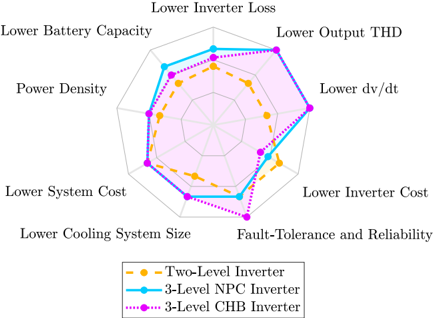
Traction inverter, as a critical component in electrified transportation, has been the subject of many research projects in terms of topologies, modulation, and control schemes. Recently, some of the well-known electric vehicle manufacturers have utilized higher-voltage batteries to benefit from lower current, higher power density, and faster charging times. With the ongoing trend toward higher DC-link voltage in electric vehicles, some multilevel structures have been investigated as a feasible and efficient option for replacing the two-level inverters. Higher efficiency, higher power density, better waveform quality, and inherent fault-tolerance are the foremost advantages of multilevel inverters which make them an attractive solution for this application. This paper presents an investigation of the advantages and disadvantages of higher DC-link voltage in traction inverters, as well as a review of the recent research on multilevel inverter topologies for electrified transportation applications. A comparison of multilevel inverters with their two-level counterpart is conducted in terms of efficiency, cost, power density, power quality, reliability, and fault tolerance. Additionally, a comprehensive comparison of different topologies of multilevel inverters is conducted based on the most important criteria in transportation electrification. Future trends and possible research areas are also discussed.
Overview
CoChat Summary
TL;DR
This review examines multilevel inverter topologies for electric vehicle traction drives as DC-link voltages rise toward 800 V and above, comparing them with conventional two-level inverters. It finds multilevel inverters can improve efficiency, power quality, and fault tolerance, but face cost, capacitor, control, and reliability trade-offs.
Key findings
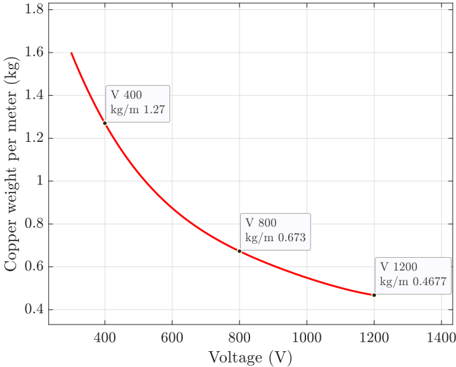
- Moving from 400 V to 1.2 kV in a 150 kW system can reduce copper weight per meter by 63% by lowering current from 375 A to 125 A; Porsche reports a 30 kg reduction in electrical harness weight from doubling battery voltage.
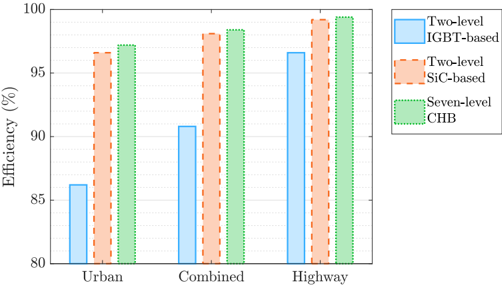
- A Si MOSFET CHB multilevel inverter raised minimum low-speed efficiency from 70% for an IGBT-based two-level inverter to 92%; at higher speeds it remained 2%–3% better, and in urban driving cycles efficiency improved by approximately 10%. An MMC showed 3%–5% efficiency improvement in the constant torque region at 20 kHz maximum switching frequency.
- Cost comparisons show a two-level inverter at 6500.5 versus a 7-level CHB at 6433.3 when battery savings are included, and a two-level inverter at 1726 versus a three-level NPC at 1678, a 3% lower system cost due mainly to reduced filter cost.
- A three-level multilevel inverter can reduce output voltage THD by a factor of 2–3, and a 5-level NPC reduces maximum dv/dt and common-mode voltage by four times at constant switching speed; with one fault-tolerant capability, the reliability gap between two-, three-, and five-level inverters remains below 0.2 for 0–25,000 hours, and multiple fault-tolerant capabilities can make multilevel reliability surpass two-level.
Methods
- Review and comparative study of multilevel inverter topologies for electrified transportation, focusing on traction drives in electric vehicles, buses, trucks, trains, ships, and aircraft.
- Synthesizes literature and market data, including tables of commercial EV battery voltages, traction inverter structures, and comparisons of well-known and new multilevel topologies.
- Compares multilevel versus two-level inverters across efficiency, cost, power density, power quality, reliability, fault tolerance, and cooling, drawing on cited simulation and experimental studies rather than presenting new primary experiments.
Limitations
- The paper states that there are not many studies comparing different aspects of multilevel and two-level inverters specifically for traction applications, and that new multilevel topologies are not mature enough in control, modulation, voltage balancing, fault tolerance, and reliability and have not been implemented and tested for traction.
- The paper states that a comprehensive comparison of different numbers of levels, from 3 to 23, is still required in terms of efficiency, cost, power density, and reliability.
- Evident from the text: as a review, its quantitative comparisons depend on cited studies and their assumptions, and it does not provide a new experimental validation of its own.
Model-written summary. Check it against the paper before relying on it.
Integrity signals
Registry
Cites
Statistics
Figures





Verification
Claims the paper makes
8 Valid · 12 Not valid · 66 Not checked · 67 Own results and interpretations
Every source the paper cites for this claim was checked and supports it.
In the paper
“Besides, employing higher-voltage batteries allows for a reduction in size and weight of the required cables for transferring a certain amount of power [6].”
What the sources say
- Supportedcites [6] [6] H. Tu, H. Feng, S. Srdic, and S. Lukic, 'Extreme fast charging of electric vehicles: A technology overview,' IEEE Trans. Transp. Electrific. , vol. 5, no. 4, pp. 861-878, Dec. 2019. - source
Section II states that high charging current requires larger-diameter cables and that transferring power at higher voltage is one way to reduce cable weight while delivering more power. This supports the claim that higher-voltage batteries can permit smaller, lighter charging cables for a given power transfer. (LLM, conf=0.94)
plainstates a cause- Asserted: passes — The authors put it forward as true.
- Checkable: passes — It can be checked against evidence.
- Load-bearing: unclear — It is unclear whether the paper’s conclusions depend on it.
- Based: passes — The paper gives a reason why it holds.
- Supported
Every source the paper cites for this claim was checked and supports it.
In the paper
“High current in a battery pack can impact pack hardware, busbars, fuses, disconnect switches, and tabs which results in increasing battery pack cost and weight [36].”
What the sources say
- Supportedcites [36] [36] S. Ahmed et al. , 'Enabling fast charging-a battery technology gap assessment,' J. Power Sour. , vol. 367, pp. 250-262, 2017. - source
Section 3.1, “Pack design” (p. 26), says higher current requires more robust pack hardware, including bus bars, tabs, fuses, and disconnect switches, resulting in increased pack weight and cost. This directly supports the attributed claim. (LLM, conf=0.95)
plainstates a cause- Asserted: passes — The authors put it forward as true.
- Checkable: passes — It can be checked against evidence.
- Load-bearing: unclear — It is unclear whether the paper’s conclusions depend on it.
- Based: passes — The paper gives a reason why it holds.
- Supported
Every source the paper cites for this claim was checked and supports it.
In the paper
“Electrolytic capacitors and supercapacitors can effectively reduce the battery RMS losses in this case [73].”
What the sources say
- Supportedcites [73] [73] A. Kersten, O. Theliander, E. A. Grunditz, T. Thiringer, and M. Bongiorno, 'Battery loss and stress mitigation in a cascaded h-bridge multilevel inverter for vehicle traction applications by filter capacitors,' IEEE Trans. Transp. Electrific. , vol. 5, no. 3, pp. 659-671, Sept. 2019. - source
The Drive Cycle Operation section (p. V-A) reports 'With configurations 4 and 8 a reduction of the battery losses by about 40 % is achieved' — configuration 4 being the large electrolytic capacitor and 8 the large supercapacitor — and the Conclusion states that placing the capacitors at the H-bridge inputs 'relieves the battery stress and reduces the battery losses to a great extent'. The Frequency Analysis (Table X) likewise shows both capacitor types cutting the battery current harmonics/RMS stress, with supercapacitors better at the low-speed operating point 1 and electrolytics better at high-frequency operating point 6. The citing phrase 'battery RMS losses' blends the paper's two quantities (drawn battery RMS current and ohmic battery losses), but both reductions are stated for both chemistries in the paper's cascaded H-bridge traction-inverter case, so the paraphrase is supported. (LLM, conf=0.85)
plainstates a cause- Asserted: passes — The authors put it forward as true.
- Checkable: passes — It can be checked against evidence.
- Load-bearing: unclear — It is unclear whether the paper’s conclusions depend on it.
- Based: passes — The paper gives a reason why it holds.
- Supported
Every source the paper cites for this claim was checked and supports it.
In the paper
“A comparison of reliability has been conducted in [80] between FC, NPC, and CHB structures. The large number of capacitors has resulted in the highest failure rate for FC structure, while CHB has the highest reliability between the three.”
What the sources say
- Supportedcites [80] [80] O. Alavi, A. Hooshmand Viki, and S. Shamlou, 'A comparative reliability study of three fundamental multilevel inverters using two different approaches,' Electronics , vol. 5, no. 2, 2016, Art. no. 18. - source
The Conclusions state that CHB is the best choice for reliability among the three inverters studied. Table 7 reports the highest mean time to failure for CHB (65,451 hours), compared with NPC (50,036) and FC (42,245), under the study's conditions. (LLM, conf=0.94)
plain- Asserted: passes — The authors put it forward as true.
- Checkable: passes — It can be checked against evidence.
- Load-bearing: unclear — It is unclear whether the paper’s conclusions depend on it.
- Based: passes — The paper gives a reason why it holds.
- Supported
Every source the paper cites for this claim was checked and supports it.
In the paper
“Generally, the input current of multilevel inverters can have lower current distortion compared to two-level structures [72].”
What the sources say
- Supportedcites [72] [72] R. A. Rana et al. , 'Review of multilevel voltage source inverter topologies and analysis of harmonics distortions in FC-MLI, ' Electron. , vol. 8, no. 11, 2019, Art. no. 1329. - source
Section 2, “Topologies of Multilevel Inverter,” introduces advantages of multilevel inverters over two-level inverters and lists small input current distortion among them. This supports the citing sentence’s qualified comparison. (LLM, conf=0.88)
plainstates a possible cause- Asserted: passes — The authors put it forward as true.
- Checkable: passes — It can be checked against evidence.
- Load-bearing: unclear — It is unclear whether the paper’s conclusions depend on it.
- Based: passes — The paper gives a reason why it holds.
- Supported
62 more claims · 2 with their cited sources checked
Create a free account to see all 153 claims and to verify the 10 references still open.
- Probably not a substantial claim. 55
- It may state two separate claims as one. 54
Self-check
Percentages, sums and reported differences re-computed from the paper’s own numbers.
Rated major: it would touch a result — a value a result rests on, reported and recomputed p-values on opposite sides of the significance level, two passages that conflict with no sign which is right, or a cited work retracted before this paper was published.
In the paper
“| Sum | 1726 | 1678 |”
Reported 1726 · recomputed 1826
Rated major: it would touch a result — a value a result rests on, reported and recomputed p-values on opposite sides of the significance level, two passages that conflict with no sign which is right, or a cited work retracted before this paper was published.
In the paper
“| Sum | 1726 | 1678 |”
Reported 1678 · recomputed 1928
Citations
Cites
Recent Advances and Industrial Applications of Multilevel Converters
Kouro, S., Malinowski, M., Gopakumar, K., Pou, J., Franquelo, L. G., Wu, B., Rodriguez, J., Pérez, M. A., & Leon, J. I. (2010) · IEEE Transactions on Industrial Electronics · doi:10.1109/tie.2010.2049719 · Cited by 3,872 · cited 1×
“propulsion system due to high efficiency and low size, suffer from poor input current quality which will disturb the onboard ship power system [60].”
BackgroundLithium-ion battery fast charging: A review
Tomaszewska, A., Chu, Z., Feng, X., O'Kane, S., Liu, X., Chen, J., Ji, C., Endler, E., Li, R., Liu, L., et al. (2019) · eTransportation · doi:10.1016/j.etran.2019.100011 · Cited by 1,592 · cited 1×
“the biggest challenges which are impeding the fast growth of transportation electrification [3].”
BackgroundHigh‐Power Converters and AC Drives
Wu, B., & Narimani, M. (2017) · doi:10.1002/9781119156079 · Cited by 1,571
Self-citationSchweizer, M., & Kolar, J. W. (2013) · IEEE Transactions on Power Electronics · doi:10.1109/tpel.2012.2203151 · Cited by 1,006
Extreme Fast Charging of Electric Vehicles: A Technology Overview
Tu, H., Feng, H., Srdic, S., & Lukic, S. (2019) · IEEE Transactions on Transportation Electrification · doi:10.1109/tte.2019.2958709 · Cited by 898 · cited 1×
“Besides, employing higher-voltage batteries allows for a reduction in size and weight of the required cables for transferring a certain amount of power [6].”
BackgroundElectrical Motor Drivelines in Commercial All-Electric Vehicles: A Review
de Santiago, J., Bernhoff, H., Ekergård, B., Eriksson, S., Ferhatovic, S., Waters, R., & Leijon, M. (2012) · IEEE Transactions on Vehicular Technology · doi:10.1109/tvt.2011.2177873 · Cited by 669
Teichmann, R., & Bernet, S. (2005) · IEEE Transactions on Industry Applications · doi:10.1109/tia.2005.847285 · Cited by 578 · cited 4×
“Another comparison has been made in [97] between a conventional two-level inverter with a three-level NPC inverter.”
BackgroundInfluentialBabaei, E., Laali, S., & Bayat, Z. (2015) · IEEE Transactions on Industrial Electronics · doi:10.1109/tie.2014.2336601 · Cited by 523
Vidal, C., Malysz, P., Kollmeyer, P., & Emadi, A. (2020) · IEEE Access · doi:10.1109/access.2020.2980961 · Cited by 512
Self-citationHybrid Multilevel Inverter Using Switched Capacitor Units
Babaei, E., & Gowgani, S. S. (2014) · IEEE Transactions on Industrial Electronics · doi:10.1109/tie.2013.2290769 · Cited by 498
Enabling fast charging – A battery technology gap assessment
Ahmed, S., Bloom, I., Jansen, A. N., Tanim, T., Dufek, E. J., Pesaran, A., Burnham, A., Carlson, R. B., Dias, F., Hardy, K., et al. (2017) · Journal of Power Sources · doi:10.1016/j.jpowsour.2017.06.055 · Cited by 498 · cited 1×
“disconnect switches, and tabs which results in increasing battery pack cost and weight [36].”
BackgroundLeon, J. I., Vazquez, S., & Franquelo, L. G. (2017) · Proceedings of the IEEE · doi:10.1109/jproc.2017.2726583 · Cited by 481
A Self-Balanced Step-Up Multilevel Inverter Based on Switched-Capacitor Structure
Taghvaie, A., Adabi, J., & Rezanejad, M. (2018) · IEEE Transactions on Power Electronics · doi:10.1109/tpel.2017.2669377 · Cited by 475
Multilevel inverter modulation schemes to eliminate common-mode voltages
Wang, F., Wallace, A. K., Dai, S., Von Jouanne, A., & Zhang, H. (2000) · IEEE Transactions on Industry Applications · doi:10.1109/28.887217 · Cited by 474 · cited 1×
“Multilevel inverters can decrease dv/dt and reduce or eliminate common-mode (CM) voltages on the motor side which results in reduced EMI, increased motor lifetime, and eliminating the need to use different types of filters [100].”
BackgroundWide Bandgap Devices in AC Electric Drives: Opportunities and Challenges
Morya, A. K., Gardner, M. C., Anvari, B., Liu, L., Yepes, A. G., Doval-Gandoy, J., & Toliyat, H. A. (2019) · IEEE Transactions on Transportation Electrification · doi:10.1109/tte.2019.2892807 · Cited by 444 · cited 1×
“While dv/dt filters can be used to reduce the destroying effects of fast transitions on the motor side, these transitions also affects other electrical devices and circuits, like the gate drivers [47].”
BackgroundSurvey of fault-tolerance techniques for three-phase voltage source inverters
Mirafzal, B. (2014) · IEEE Transactions on Industrial Electronics · doi:10.1109/tie.2014.2301712 · Cited by 440 · cited 1×
“inherent fault-tolerance due to higher number of semiconductor devices and redundant switching states for voltage space vectors [101].”
BackgroundLow output frequency operation of the Modular Multi-Level Converter
Korn, A. J., Winkelnkemper, M., & Steimer, P. (2010) · 2010 IEEE Energy Conversion Congress and Exposition · doi:10.1109/ecce.2010.5617802 · Cited by 426 · cited 1×
“In [65], a method is presented to allow low frequency output currents in an MMC inverter, with low capacitor voltage ripple.”
MethodCharge balance control schemes for cascade multilevel converter in hybrid electric vehicles
Tolbert, L. M., Peng, F. Z., Cunnyngham, T., & Chiasson, J. N. (2002) · IEEE Transactions on Industrial Electronics · doi:10.1109/tie.2002.803213 · Cited by 381 · cited 1×
“able choice because of the large number of battery cells [78].”
BackgroundAutomotive Traction Inverters: Current Status and Future Trends
Reimers, J., Dorn-Gomba, L., Mak, C., & Emadi, A. (2019) · IEEE Transactions on Vehicular Technology · doi:10.1109/tvt.2019.2897899 · Cited by 375 · cited 7×
“A detailed investigation of the inverter structures in some of the well-known EVs is presented in [22].”
BackgroundMethodSelf-citationModular Multilevel Converters for Transportation Electrification: Challenges and Opportunities
Ronanki, D., & Williamson, S. S. (2018) · IEEE Transactions on Transportation Electrification · doi:10.1109/tte.2018.2792330 · Cited by 345 · cited 5×
“issues, medium-voltage DC power system has become more attractive for ship application [49].”
BackgroundInfluentialOmariba, Z. B., Zhang, L., & Sun, D. (2019) · IEEE Access · doi:10.1109/access.2019.2940090 · Cited by 333
Enabling fast charging – Battery thermal considerations
Keyser, M., Pesaran, A., Li, Q., Santhanagopalan, S., Smith, K., Wood, E., Ahmed, S., Bloom, I., Dufek, E., Shirk, M., et al. (2017) · Journal of Power Sources · doi:10.1016/j.jpowsour.2017.07.009 · Cited by 326 · cited 9×
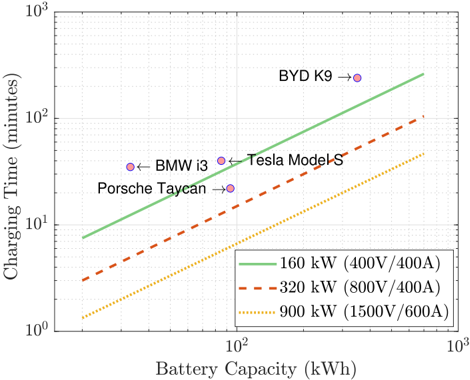
“With the conventional 400 V system, or even with an 800 V system, the cable’s weight for an XFC exceeds the safety limit for 350 kW chargers.”
BackgroundInfluentialJung, C. (2017) · IEEE Electrification Magazine · doi:10.1109/mele.2016.2644560 · Cited by 312 · cited 2×
“However, the configuration of series and parallel cells changes [29].”
BackgroundA Review on Multiphase Drives for Automotive Traction Applications
Salem, A., & Narimani, M. (2019) · IEEE Transactions on Transportation Electrification · doi:10.1109/tte.2019.2956355 · Cited by 311
Self-citationFault Diagnosis and Reconfiguration for Multilevel Inverter Drive Using AI-Based Techniques
Khomfoi, S., & Tolbert, L. M. (2007) · IEEE Transactions on Industrial Electronics · doi:10.1109/tie.2007.906994 · Cited by 284 · cited 1×
“A fault diagnosis technique, capable of detecting and locating the short-circuit and open-circuit faults is proposed for CHB inverter in [102].”
MethodA Review on Reduced Switch Count Multilevel Inverter Topologies
Omer, P., Kumar, J., & Surjan, B. S. (2020) · IEEE Access · doi:10.1109/access.2020.2969551 · Cited by 226
(2000) · Medical Entomology and Zoology · Cited by 221
Current Status and Future Trends of GaN HEMTs in Electrified Transportation
Keshmiri, N., Wang, D., Agrawal, B., Hou, R., & Emadi, A. (2020) · IEEE Access · doi:10.1109/access.2020.2986972 · Cited by 219
Self-citationDiscussion on Electric Power Supply Systems for All Electric Aircraft
Schefer, H., Fauth, L., Kopp, T. H., Mallwitz, R., Friebe, J., & Kurrat, M. (2020) · IEEE Access · doi:10.1109/access.2020.2991804 · Cited by 217 · cited 1×
“For example, in future all-electric aircrafts DC voltages of up to 3 kV will be utilized to supply the high-power electric motors [16].”
BackgroundReliability Calculation of Multilevel Converters: Theory and Applications
Richardeau, F., & Pham, T. T. L. (2013) · IEEE Transactions on Industrial Electronics · doi:10.1109/tie.2012.2211315 · Cited by 212 · cited 2×
“However, intrinsic fault tolerance in some multilevel topologies increases the reliability of these inverters [51].”
BackgroundLi, J., Huang, A. Q., Liang, Z., & Bhattacharya, S. (2012) · IEEE Transactions on Power Electronics · doi:10.1109/tpel.2011.2143430 · Cited by 211
Design and Control of Modular Multilevel Converters for Battery Electric Vehicles
Quraan, M., Yeo, T., & Tricoli, P. (2016) · IEEE Transactions on Power Electronics · doi:10.1109/tpel.2015.2408435 · Cited by 204 · cited 1×
“In [63], MMC inverter is recommended for EV in order to eliminate the need for BMS.”
BackgroundMultilevel inverters for electric vehicle applications
Tolbert, L. M., Peng, F. Z., & Habetler, T. G. (2002) · Power Electronics in Transportation (Cat. No.98TH8349) · doi:10.1109/pet.1998.731062 · Cited by 204 · cited 1×
“and heavy-duty trucks, since they facilitate using higher voltage motors with low-voltage switching devices [62].”
BackgroundExtreme Fast Charging Technology—Prospects to Enhance Sustainable Electric Transportation
Ronanki, D., Kelkar, A., & Williamson, S. S. (2019) · Energies · doi:10.3390/en12193721 · Cited by 201 · cited 1×
“fast chargers (XFCs), with the output voltage of at least 800 V DC, is a possible solution to this issue [5].”
BackgroundBenbouzid, M. E. H., Diallo, D., & Zeraoulia, M. (2007) · IEEE Transactions on Vehicular Technology · doi:10.1109/tvt.2006.889579 · Cited by 198 · cited 1×
“continuity of operation is of great importance [79].”
BackgroundEnabling fast charging – Infrastructure and economic considerations
Burnham, A., Dufek, E. J., Stephens, T., Francfort, J., Michelbacher, C., Carlson, R. B., Zhang, J., Vijayagopal, R., Dias, F., Mohanpurkar, M., et al. (2017) · Journal of Power Sources · doi:10.1016/j.jpowsour.2017.06.079 · Cited by 194 · cited 1×
“Utilizing 1 kV DC-bus voltage ensures that the charging cable’s weight remains within the standards [31].”
BackgroundEnabling fast charging – Vehicle considerations
Meintz, A., Zhang, J., Vijayagopal, R., Kreutzer, C., Ahmed, S., Bloom, I., Burnham, A., Carlson, R. B., Dias, F., Dufek, E. J., et al. (2017) · Journal of Power Sources · doi:10.1016/j.jpowsour.2017.07.093 · Cited by 190 · cited 2×
“Higher-power charging mostly benefits long-distance travels and public transportation [4], [10].”
BackgroundA New Nested Neutral Point-Clamped (NNPC) Converter for Medium-Voltage (MV) Power Conversion
Narimani, M., Wu, B., Cheng, Z., & Zargari, N. R. (2014) · IEEE Transactions on Power Electronics · doi:10.1109/tpel.2014.2306191 · Cited by 189
Self-citationA Unique Fault-Tolerant Design for Flying Capacitor Multilevel Inverter
Kou, X., Corzine, K. A., & Familiant, Y. L. (2004) · IEEE Transactions on Power Electronics · doi:10.1109/tpel.2004.830037 · Cited by 185
Dorn-Gomba, L., Ramoul, J., Reimers, J., & Emadi, A. (2020) · IEEE Transactions on Transportation Electrification · doi:10.1109/tte.2020.3006045 · Cited by 185 · cited 1×
“The use of multilevel structures at aircrafts with high DC bus voltage can reduce partial discharge occurance [59].”
BackgroundSelf-citationDesign and implementation of an inverter output LC filter used for dv/dt reduction
Habetler, T. G., Naik, R., & Nondahl, T. A. (2002) · IEEE Transactions on Power Electronics · doi:10.1109/tpel.2002.1004240 · Cited by 181
A Review of Modulation and Control Techniques for Multilevel Inverters in Traction Applications
Poorfakhraei, A., Narimani, M., & Emadi, A. (2021) · IEEE Access · doi:10.1109/access.2021.3056612 · Cited by 179 · cited 1×
“While this paper deals with comparison of topologies, [74] presents a comparative investigation of modulation and control techniques for multilevel traction drives.”
BackgroundSelf-citationReviews on multilevel converter and modulation techniques
Hasan, N. S., Rosmin, N., Osman, D. A. A., & Musta’amal@Jamal, A. H. (2017) · Renewable and Sustainable Energy Reviews · doi:10.1016/j.rser.2017.05.163 · Cited by 178 · cited 1×
“lating currents, and reduced reliability due to higher number of devices and capacitors are the challenges that need to be addressed when approaching multilevel inverters [50]–[52].”
BackgroundFast and Ultra-Fast Charging for Battery Electric Vehicles – A Review
Suarez, C., & Martinez, W. (2019) · 2019 IEEE Energy Conversion Congress and Exposition (ECCE) · doi:10.1109/ecce.2019.8912594 · Cited by 164 · cited 3×
“Higher-power charging mostly benefits long-distance travels and public transportation [4], [10].”
BackgroundReduced switch count pulse width modulated multilevel inverter
Jayabalan, M., Jeevaratthinam, B., & Thamizharasan, S. (2017) · IET Power Electronics · doi:10.1049/iet-pel.2015.0720 · Cited by 149
Efficiency Assessment of Modular Multilevel Converters for Battery Electric Vehicles
Quraan, M., Tricoli, P., D Arco, S., & Piegari, L. (2017) · IEEE Transactions on Power Electronics · doi:10.1109/tpel.2016.2557579 · Cited by 148 · cited 1×
“In another research, MMC inverter for EVs is evaluated from the efficiency point of view [95].”
BackgroundJain, S., & Sonti, V. (2016) · IEEE Transactions on Industrial Electronics · doi:10.1109/tie.2016.2633537 · Cited by 148
Strategies of fault tolerant operation for three-level PWM inverters
Li, S., & Xu, L. (2006) · IEEE Transactions on Power Electronics · doi:10.1109/tpel.2006.876867 · Cited by 147 · cited 15×
“Utilization of multilevel inverters in traction drives was first proposed in 1988, where a three-level GTO-based neutral point clamped (NPC) was proposed as an efficient substitute for two-level inverters of locomotives’ induction motors [53].”
BackgroundInfluentialChoudhury, A., Pillay, P., & Williamson, S. S. (2014) · IEEE Journal of Emerging and Selected Topics in Power Electronics · doi:10.1109/jestpe.2014.2310140 · Cited by 135 · cited 1×
“ing, increased number of semiconductors and capacitors, and more complex control are the most important challenges in multilevel inverters [19].”
BackgroundHybrid topology of symmetrical multilevel inverter using less number of devices
Gautam, S. P., Kumar, L., & Gupta, S. (2015) · IET Power Electronics · doi:10.1049/iet-pel.2015.0037 · Cited by 126
Oskuee, M. R. J., Karimi, M., Ravadanegh, S. N., & Gharehpetian, G. B. (2015) · IEEE Transactions on Industrial Electronics · doi:10.1109/tie.2015.2438059 · Cited by 125
Performance Evaluation of Fault-Tolerant Neutral-Point-Clamped Converters
Ceballos, S., Pou, J., Robles, E., Zaragoza, J., & Martín, J. L. (2010) · IEEE Transactions on Industrial Electronics · doi:10.1109/tie.2009.2026710 · Cited by 124 · cited 1×
“Special modulation schemes for fault-tolerant FC [103], NPC [104]–[106], and MMC [107]”
BackgroundA Dual Three-Level T-NPC Inverter for High-Power Traction Applications
Bhattacharya, S., Mascarella, D., Joos, G., Cyr, J.-M., & Xu, J. (2016) · IEEE Journal of Emerging and Selected Topics in Power Electronics · doi:10.1109/jestpe.2016.2517819 · Cited by 116 · cited 1×
“In [64] a dual PMSM motor is driven using a dual T-type NPC (TNPC) converter which resulted in over 90% current reduction in DC-link capacitors.”
MethodChang, F., Ilina, O., Lienkamp, M., & Voss, L. (2019) · IEEE Transactions on Power Electronics · doi:10.1109/tpel.2018.2854756 · Cited by 111 · cited 4×
“It should be noted that the SiC two-level inverter has similar conduction loss with Si multilevel inverter, while the switching loss is slightly more in the former [93].”
BackgroundMethodInfluentialSamsami, H., Taheri, A., & Samanbakhsh, R. (2017) · IET Power Electronics · doi:10.1049/iet-pel.2016.0956 · Cited by 110
A New Nested Neutral Point-Clamped (NNPC) Converter for Medium-Voltage (MV) Power Conversion
Balu, V., & Natarajan, S. K. (2016) · Cited by 107
Ronanki, D., & Williamson, S. S. (2019) · IEEE Transactions on Transportation Electrification · doi:10.1109/tte.2018.2884610 · Cited by 106
Multilevel inverter for interfacing renewable energy sources with low/medium‐ and high‐voltage grids
Agrawal, R., & Jain, S. (2017) · IET Renewable Power Generation · doi:10.1049/iet-rpg.2016.1034 · Cited by 105
On the Concept of the Multi-Source Inverter for Hybrid Electric Vehicle Powertrains
Dorn-Gomba, L., Magne, P., Danen, B., & Emadi, A. (2018) · IEEE Transactions on Power Electronics · doi:10.1109/tpel.2017.2765247 · Cited by 102 · cited 1×
“A multi-source inverter topology based on three-level NPC and T-type inverters is proposed in [69] for hybrid and plug-in”
MethodSelf-citationRana, R. A., Patel, S. A., Muthusamy, A., Lee, C. W., & Kim, H.-J. (2019) · Electronics · doi:10.3390/electronics8111329 · Cited by 102 · cited 1×
“Generally, the input current of multilevel inverters can have lower current distortion compared to two-level structures [72].”
BackgroundEMC issues in cars with electric drives
Guttowski, S., Weber, S., Hoene, E., John, W., & Reichl, H. (2003) · IEEE International Symposium on Electromagnetic Compatibility · doi:10.1109/isemc.2003.1236706 · Cited by 98
Youssef, M. Z., Woronowicz, K., Aditya, K., Azeez, N. A., & Williamson, S. S. (2016) · IEEE Transactions on Power Electronics · doi:10.1109/tpel.2015.2448353 · Cited by 98 · cited 1×
“It is shown that the efficiency of the implemented inverter has increased by at least 5% comparing to the conventional inverters [55].”
BackgroundControl strategy for a three phase AC traction drive with three-level GTO PWM inverter
Steinke, J. K. (2003) · PESC '88 Record., 19th Annual IEEE Power Electronics Specialists Conference · doi:10.1109/pesc.1988.18164 · Cited by 97 · cited 1×
“Utilization of multilevel inverters in traction drives was first proposed in 1988, where a three-level GTO-based neutral point clamped (NPC) was proposed as an efficient substitute for two-level inverters of locomotives’ induction motors [53].”
BackgroundTopology for cascaded multilevel inverter
Odeh, C. I., Emeka, S., & Ojo, O. (2016) · IET Power Electronics · doi:10.1049/iet-pel.2015.0375 · Cited by 95
Lu, S., Corzine, K. A., & Ferdowsi, M. (2007) · IEEE Transactions on Vehicular Technology · doi:10.1109/tvt.2007.896970 · Cited by 93
23-Level Inverter for Electric Vehicles Using a Single Battery Pack and Series Active Filters
Pereda, J. E., & Dixon, J. (2012) · IEEE Transactions on Vehicular Technology · doi:10.1109/tvt.2012.2186599 · Cited by 91 · cited 1×
“A 23level asymmetrical CHB (ACHB) using only one DC source is presented in [66], where a high-frequency transformer is used in order to provide isolated voltage sources.”
MethodA Novel Advanced Traction Power Supply System Based on Modular Multilevel Converter
He, X., Peng, J., Han, P., Zi, L., Gao, S., & Wang, P. (2019) · IEEE Access · doi:10.1109/access.2019.2949099 · Cited by 88 · cited 1×
“In [57], an MMCbased railway power supply system is proposed.”
BackgroundPallo, N., Foulkes, T., Modeer, T., Coday, S., & Pilawa-Podgurski, R. (2018) · 2018 IEEE Applied Power Electronics Conference and Exposition (APEC) · doi:10.1109/apec.2018.8341239 · Cited by 79 · cited 1×
“In ellectric aircraft application, a high efficiency 9-level interleaved flying capacitor (FC) multilevel inverter utilizing GaN switches is proposed in [58].”
MethodE-Mobility — Advancements and Challenges
Adib, A., Shadmand, M. B., Shamsi, P., Afridi, K. K., Amirabadi, M., Fateh, F., Ferdowsi, M., Lehman, B., Lewis, L. H., Mirafzal, B., et al. (2019) · IEEE Access · doi:10.1109/access.2019.2953021 · Cited by 79
Modular Multilevel Converter for propulsion system of electric ships
Spichartz, M., Staudt, V., & Steimel, A. (2013) · 2013 IEEE Electric Ship Technologies Symposium (ESTS) · doi:10.1109/ests.2013.6523740 · Cited by 74 · cited 1×
“In comparison to other solutions in ships, multilevel inverters offer higher power quality, lower insulation stress, and lower over-voltage on motor terminals [61].”
BackgroundA modulation reconfiguration based fault-tolerant control scheme for modular multilevel converters
Shen, K., Xiao, B., Mei, J., Tolbert, L. M., Wang, J., Cai, X., & Ji, Y. (2013) · 2013 Twenty-Eighth Annual IEEE Applied Power Electronics Conference and Exposition (APEC) · doi:10.1109/apec.2013.6520766 · Cited by 58 · cited 14×
“Topologies with a large number of floating capacitors, like FC and MMC, are discouraging since capacitors are bulky, unreliable, and add complexity to the control circuit.”
BackgroundInfluentialA New Breed of Optimized Symmetrical and Asymmetrical Cascaded Multilevel Power Converters
Khoshkbar Sadigh, A., Abarzadeh, M., Corzine, K. A., & Dargahi, V. (2015) · IEEE Journal of Emerging and Selected Topics in Power Electronics · doi:10.1109/jestpe.2015.2459011 · Cited by 55
Capacitor Voltage Estimation Scheme With Reduced Number of Sensors for Modular Multilevel Converters
Abushafa, O. S. M., Gadoue, S. M., Dahidah, M. S. A., Atkinson, D. J., & Missailidis, P. (2018) · IEEE Journal of Emerging and Selected Topics in Power Electronics · doi:10.1109/jestpe.2018.2797245 · Cited by 53 · cited 1×
“The voltage balancing of these capacitors requires plenty of isolated voltage sensors and complex control [77].”
BackgroundAlavi, O., Hooshmand Viki, A., & Shamlou, S. (2016) · Electronics · doi:10.3390/electronics5020018 · Cited by 52 · cited 1×
“conducted in [80] between FC, NPC, and CHB structures.”
BackgroundKersten, A., Theliander, O., Grunditz, E. A., Thiringer, T., & Bongiorno, M. (2019) · IEEE Transactions on Transportation Electrification · doi:10.1109/tte.2019.2921852 · Cited by 51 · cited 3×
“As an example, fundamental selective harmonic elimination (SHE), reduces the input RMS current [73] at the cost of larger”
BackgroundInfluentialSpace Vector Based Capacitor Voltage Balancing for a Three-Level NPC Traction Inverter Drive
Choudhury, A., & Pillay, P. (2020) · IEEE Journal of Emerging and Selected Topics in Power Electronics · doi:10.1109/jestpe.2019.2953183 · Cited by 43 · cited 1×
“lating currents, and reduced reliability due to higher number of devices and capacitors are the challenges that need to be addressed when approaching multilevel inverters [50]–[52].”
BackgroundBusquets-Monge, S., Filba-Martinez, A., Alepuz, S., Nicolas-Apruzzese, J., Luque, A., Conesa-Roca, A., & Bordonau, J. (2020) · IEEE Transactions on Industrial Electronics · doi:10.1109/tie.2019.2896176 · Cited by 32 · cited 1×
“In [70], an NPC inverter with multi-battery input is proposed which is capable of balancing the state of charge (SOC) of the battery packs by controlling the flow of energy from the batteries to the load.”
BackgroundExperimental Validation of Design Concepts for Future EV-Traction Inverters
Bubert, A., Oberdieck, K., Xu, H., & De Doncker, R. W. (2018) · 2018 IEEE Transportation Electrification Conference and Expo (ITEC) · doi:10.1109/itec.2018.8450253 · Cited by 31 · cited 2×
“Although reducing current results in lower conduction loss, higher voltage increases switching losses which usually reduce total efficiency if the same inverter technology is used [18].”
BackgroundA new nested neutral point clamped (NNPC) converter for medium-voltage (MV) power conversion
Narimani, M., Wu, B., Cheng, G., & Zargari, N. (2014) · 2014 IEEE Applied Power Electronics Conference and Exposition - APEC 2014 · doi:10.1109/apec.2014.6803635 · Cited by 24 · cited 1×
“In an effort to reduce the number of components in multilevel inverters, a new topology, called nested neutral point clamped (NNPC), was proposed in [67].”
BackgroundSelf-citationThree-level topologies for low voltage power converters in drives, traction and utility applications
Teichmann, R., & Bernet, S. (2004) · IEEE Industry Applications Society Annual Meeting (IAS) · doi:10.1109/ias.2003.1257498 · Cited by 23
Ciccarelli, F., Clemente, G., & Iannuzzi, D. (2013) · 2013 International Conference on Clean Electrical Power (ICCEP) · doi:10.1109/iccep.2013.6586985 · Cited by 19 · cited 1×
“In [75], supercapacitor modules are connected to cells of a MMC inverter and have resulted in the reduction of battery RMS currents.”
Adopting MOSFET multilevel inverters to improve the partial load efficiency of electric vehicles
Chang, F., Ilina, O., Hegazi, O., Voss, L., & Lienkamp, M. (2017) · European Conference on Power Electronics and Applications · doi:10.23919/epe17ecceeurope.2017.8099071 · Cited by 18 · cited 11×
“Therefore, the designer’s options are limited to discrete switches, especially when WBG MOSFETs are going to be used.”
BackgroundInfluentialLi, H., & Klontz, K. W. (2017) · 2017 IEEE International Electric Machines and Drives Conference (IEMDC) · doi:10.1109/iemdc.2017.8002201 · Cited by 13 · cited 1×
“Additionally, due to lower output current THD with multilevel inverters, motor efficiency also benefits from this structure [94], leading to increased system efficiency.”
BackgroundDevelopment of compact power control unit for HEVs
Yano, S., Nakayama, Y., Kobayashi, H., Hiramatsu, S., Yoshida, M., Onda, K., HAYASHI, K., & Yamazaki, K. (2017) · IEEE Energy Conversion Congress and Exposition (ECCE) · doi:10.1109/ecce.2017.8095836 · Cited by 13 · cited 1×
“Moreover, Toyota and Mitsubishi Electric have SiC-based two-level inverters under development with increased efficiency and power density [110], [111].”
BackgroundAdvanced static power converter and control components for TRANSRAPID maglev system
Henning, U., Hoffmann, R., & Hochleitner, J. (2003) · Proceedings of the Power Conversion Conference-Osaka 2002 (Cat. No.02TH8579) · doi:10.1109/pcc.2002.998116 · Cited by 12 · cited 1×
“This topology has been implemented in a back-to-back structure and tested successfully by Siemens AG for the TRANSRAPID propulsion system in Emsland [54].”
MethodMukherjee, N., & Tricoli, P. (2015) · European Conference on Power Electronics and Applications · doi:10.1109/epe.2015.7309217 · Cited by 10
Corrections to "Multilevel inverter modulation schemes to eliminate common-mode voltages"
Zhang, H., von Jouanne, A., Dai, S., Wallace, A. K., & Wang, F. (2001) · IEEE Transactions on Industry Applications · doi:10.1109/tia.2001.903118 · Cited by 3
D701 ADVANCED CONVERTER AND CONTROL COMPONENTS OF THE TRANSRAPID PROPULSION SYSTEM
Henning, U. (2003) · The Proceedings of International Symposium on Seed-up and Service Technology for Railway and Maglev Systems STECH · doi:10.1299/jsmestech.2003.577
Advanced Traction Power Supply System Based on Modular Multilevel Converters
He, X., Han, P., Zhu, M., Gao, S., He, X., Gao, S., & Peng, W. (2018) · 2018 Asian Conference on Energy, Power and Transportation Electrification (ACEPT) · doi:10.1109/acept.2018.8610818
A unique fault-tolerant design for flying capacitor multilevel inverters
Kou, X., Corzine, K. A., & Familiant, Y. (n.d.) · IEEE International Electric Machines and Drives Conference, 2003. IEMDC'03. · doi:10.1109/iemdc.2003.1211314
Research works printed but not linked: 5
- [33] [K. Wand, 'High performance 800v e-motor for automotive application,' AVL Trimerics GmbH , Nov. 10, 2016. [Online]. Available: https://www.profemag.ch/de/downloads/category/35-awt2016?download=513:2016](https://www.profemag.ch/de/downloads/category/35-awt-2016%7B?}download$=$513) -
- [35] V. Reber, 'New possibilities with 800-volt charging,' Porsche Eng. Mag. , vol. 1, pp. 10-15, 2016. -
- [26] ['Newsroom,' Sep. 2019. [Online]. Available: https://www.delphi. com/newsroom/press-release/delphi-technologies-new-industryleading-800-volt-sic-inverter-cut-ev](https://www.delphi.com/newsroom/press-release/delphi-technologies-new-industry-leading-800-volt-sic-inverter-cut-ev) -
- [42] T. Urban, 'Functional safety-relevant wireless communication in automotive battery management systems,' Texas Instrum. , 2021. [Online]. Available: https://www.ti.com/lit/ug/sluucf5/sluucf5.pdf -
- [41] [T. Vogt, 'Wired vs. wireless communications in EV battery management,' Texas Instrum. , Oct. 2020. [Online]. Available: https://www.ti. com/lit/pdf/SLYY197.](https://www.ti.com/lit/pdf/SLYY197) -
Cited by
Ali, A., H. H. Mousa, H., F. Shaaban, M., A. Azzouz, M., & S. A. Awad, A. (2024) · Journal of Modern Power Systems and Clean Energy · doi:10.35833/mpce.2023.000107 · Cited by 162
“Several review research works have investigated the most prominent challenges and the future research trends for PECs utilized in EV applications in [2], [3], [4] - [7], [8], [12], [13], [15], [23]-[25], [29], [31], [33], [38]-[41], [48], [72], [73], [80], [97], [98].”
Choudhury, S., Bajaj, M., Dash, T., Kamel, S. M., & Jurado, F. (2021) · Energies · doi:10.3390/en14185773 · Cited by 179
Carne, G. D., Maroufi, S. M., Beiranvand, H., Angelis, V. D., D’Arco, S., Gevorgian, V., Waczowicz, S., Mather, B. A., Liserre, M., & Hagenmeyer, V. (2024) · Electric Power Systems Research · doi:10.1016/j.epsr.2024.110963 · Cited by 184
On-Board Chargers for High-Voltage Electric Vehicle Powertrains: Future Trends and Challenges
Pradhan, R., Keshmiri, N., & Emadi, A. (2023) · IEEE Open Journal of Power Electronics · doi:10.1109/ojpel.2023.3251992 · Cited by 145
“as lower voltage total harmonic distortion (THD), electromagnetic interference (EMI), and higher efficiency at higher voltages [60], [61].”
BackgroundSelf-citationZhang, Q., Yan, J., Gao, H. O., & You, F. (2023) · Advances in Applied Energy · doi:10.1016/j.adapen.2023.100147 · Cited by 118
Metadata
- Authors
- Poorfakhraei, A., Narimani, M., & Emadi, A.
- Affiliations
- McMaster University (CA)
- Venue
- IEEE Open Journal of Power Electronics
- Published
- 2021
- Volume
- 2
- Pages
- 155-170
- ISSN
- 2644-1314 (ISSN-L)
- OpenAlex
- W3134222763
- Cited by
- 424
- References
- 84
- Citations by year
- 2026: 54 · 2025: 102 · 2024: 104 · 2023: 93 · 2022: 53 · 2021: 18
- FWCI
- 19.67
- Type
- journal article
- Language
- en
- Open access
- gold
- doi.org
- Locations
- IEEE Open Journal of Power Electronics (publishedVersion, cc-by)
- DOAJ (DOAJ: Directory of Open Access Journals) (submittedVersion, cc-by-sa)
- Topics
- Physical Sciences › Engineering › Electrical and Electronic Engineering › Multilevel Inverters and Converters
- Physical Sciences › Engineering › Automotive Engineering › Electric and Hybrid Vehicle Technologies
- Physical Sciences › Engineering › Electrical and Electronic Engineering › Electric Motor Design and Analysis
- Keywords
- multilevel inverter, electric vehicle traction inverter, inverter topology, DC bus voltage, two-level inverter, power density, fault tolerance, power quality, inverter efficiency, electric mobility
About these checks
Registry, retraction, Cites and statistics results are computed, not judged, with one exception: a printed reference that no index lists is read once by a model before it counts as a citation error. Claims are extracted by a model and kept only when their quote appears verbatim in the text; each cited source is then checked, with a model’s help, for whether it says what the claim relies on. Those verdicts can be wrong — read the claim’s quote and the cited source before relying on one.
The claim verdicts this report counts are experimental: their accuracy is not yet measured.
A language model drew the claims from the paper on 2026-10-10, under version 3 of the claim definition (model deepseek-v4.1-flash, prompt extract-v3).
A second model labelled each claim on 2026-10-10 (model jev-1.13-20260917, definition revision gold-guideline-v0.2).
Cited sources are checked with a language model’s help (gpt-6-sol and qwen3.8-omni-flash).
Statistics and arithmetic are recomputed, not judged.
Confidence bands are shown only for fields calibrated on our annotated test set. None is calibrated yet, so no band is shown.
What counts as a claim ›How we measure confidence ›How we check this ›
Are you an author, or do you see a problem with this page? Request a review
Data sources
Bibliographic data: Semantic Scholar, OpenAlex, Crossref.
Contains information from the Semantic Scholar Academic Graph Datasets, made available under the ODC Attribution License (ODC-BY 1.0).
Semantic Scholar’s data is described in: Kinney, R., et al. (2023). The Semantic Scholar Open Data Platform. arXiv:2301.10140.
