

Artificial Neural Networks for Space and Safety-Critical Applications: Reliability Issues and Potential Solutions
Open accessThe DOI matches its Crossref record; 165 of the 165 references it cites were found in a registry or an index.
Abstract
Machine Learning is among the greatest advancements in computer science and engineering and is today used to classify or detect objects, a key feature in autonomous vehicles. Since neural networks are heavily used in safety-critical applications, such as automotive and aerospace, their reliability must be paramount. However, the reliability evaluation of neural network systems is extremely challenging due to the complexity of the software, which is composed of hundreds of layers, and of the underlying hardware, typically a parallel device or an embedded accelerator. This paper reviews fundamental concepts of Artificial Intelligence, Deep Neural Network, and parallel computing device reliability. Then, the reliability studies that consider the radiation effects in the hardware, their propagation through the computing architecture, and their final impact on the software output are summarized. A detailed survey of the available strategies to measure the sensitivity of neural network frameworks and to observe fault propagation is given, together with a summary of the data obtained so far. Finally, a discussion on how to use the experimental evaluation to design effective and efficient hardening solutions for Artificial Neural Networks is provided. The available hardening solutions are critically reviewed, highlighting their benefits and drawbacks.
Overview
The claims and statistics of this paper haven’t been checked yet.
Free: it reads the open-access text and checks the first 5 claims that cite a source we can check. Create a free account to check every claim.
Integrity signals
Registry
Cites
Statistics
Figures

Verification
Claims the paper makes
The claims and statistics of this paper haven’t been checked yet.
Free: it reads the open-access text and checks the first 5 claims that cite a source we can check. Create a free account to check every claim.
Claims other papers make about this one
Each is checked against this paper’s own text: does it say what the citing paper says it does?
The source backs part of the claim, not all of it — or backs it for a different population, condition or comparison.
In the citing paper
“For safety-critical systems, explainability is not enough for a system to be trustworthy.Various requirements such as robustness, reliability, traceability, data quality, and other factors must be demonstrated [25,43,62,63].”
From A requirements model for AI algorithms in functional safety-critical systems with an explainable self-enforcing network from a developer perspective (2024) · cites this paper as [62]
Experimental — accuracy not yet measuredIn the citing paper
“As pointed out in previous works [11], [12], when radiation affected only the GPU, it usually only produced SDCs in the inference result of the image being processed but did not modify the result for the next image processed.”
From Reliability of Vision Transformers and CNNs on Edge AI Systems Under Neutron Radiation (2025) · cites this paper as [11]
In the citing paper
“Finally, as noted in studies like [11], DNNs are highly complex systems, and evaluating their reliability is a significant challenge.”
From Reliability of Vision Transformers and CNNs on Edge AI Systems Under Neutron Radiation (2025) · cites this paper as [11]
In the citing paper
“Therefore, how they are affected by the radiation and how the errors propagate through the different layers to the output is very dependent on the model design, implementation, and the hardware used [11].”
From Reliability of Vision Transformers and CNNs on Edge AI Systems Under Neutron Radiation (2025) · cites this paper as [11]
Self-check
Percentages, sums and reported differences re-computed from the paper’s own numbers.
The self-check needs the paper’s full text.
Citations
Cites
MobileNetV2: Inverted Residuals and Linear Bottlenecks
Sandler, M., Howard, A., Zhu, M., Zhmoginov, A., & Chen, L.-C. (2018) · 2018 IEEE/CVF Conference on Computer Vision and Pattern Recognition · doi:10.1109/cvpr.2018.00474 · Cited by 28,755 · cited 1×
“Building upon this function, several other ReLU-like activations have been developed, e.g., the scaled exponential linear unit (SELU) [27], the Gaussian error linear unit (GELU) [28], and ReLU6 [29].”
BackgroundAn introduction to ROC analysis
Fawcett, T. (2006) · Pattern Recognition Letters · doi:10.1016/j.patrec.2005.10.010 · Cited by 21,879 · cited 2×
“To evaluate error criticality for detection, it is necessary to consider the BB’s area, adopting the methodology used in the image processing community [61].”
MethodLarge-Scale Machine Learning with Stochastic Gradient Descent
Bottou, L. (2010) · Proceedings of COMPSTAT'2010 · doi:10.1007/978-3-7908-2604-3_16 · Cited by 5,795 · cited 1×
“Given the gradients, an optimizer, e.g., stochastic gradient descent [23], updates the weights in order to minimize the loss function.”
MethodBasic concepts and taxonomy of dependable and secure computing
Avizienis, A., Laprie, J.-C., Randell, B., & Landwehr, C. (2004) · IEEE Transactions on Dependable and Secure Computing · doi:10.1109/tdsc.2004.2 · Cited by 5,223 · cited 1×
“In this work, we will use the taxonomy defined by Avizienis et al. [60].”
MethodBackpropagation through time: what it does and how to do it
Werbos, P. J. (1990) · Proceedings of the IEEE · doi:10.1109/5.58337 · Cited by 4,879 · cited 1×
“ANNs are universal function approximators that, thanks to Backpropagation (short for backward propagation of errors) training [20], [21], [22] and sufficient network complexity, enable the solution of a variety of tasks, e.g., classification, detection, and regression.”
BackgroundGaussian Error Linear Units (GELUs)
Hendrycks, D., & Gimpel, K. (2016) · arXiv · doi:10.48550/arxiv.1606.08415 · Cited by 3,537 · cited 1×
“Building upon this function, several other ReLU-like activations have been developed, e.g., the scaled exponential linear unit (SELU) [27], the Gaussian error linear unit (GELU) [28], and ReLU6 [29].”
BackgroundDeep Learning using Rectified Linear Units (ReLU)
Agarap, A. F. (2018) · arXiv (Cornell University) · doi:10.48550/arxiv.1803.08375 · Cited by 2,399 · cited 1×
“…most computationally demanding and, thus, vulnerable to radiation), activation functions are used for ensuring a nonlinear input–output relationship in DNNs and are very often implemented through rectified linear units (ReLUs) [25] ReLU ( x ) = max ( 0 , x ), where x stands for the input tensor.”
MethodSelf-Normalizing Neural Networks
Klambauer, G., Unterthiner, T., Mayr, A., & Hochreiter, S. (2017) · arXiv · doi:10.48550/arxiv.1706.02515 · Cited by 2,267 · cited 1×
“Building upon this function, several other ReLU-like activations have been developed, e.g., the scaled exponential linear unit (SELU) [27], the Gaussian error linear unit (GELU) [28], and ReLU6 [29].”
BackgroundNVIDIA Tesla: A Unified Graphics and Computing Architecture
Lindholm, E., Nickolls, J., Oberman, S., & Montrym, J. (2008) · IEEE Micro · doi:10.1109/mm.2008.31 · Cited by 1,362 · cited 1×
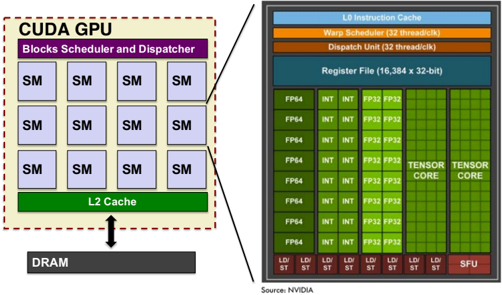
“Each basic computing unit (named CUDA core in NVIDIA devices) in the SM executes one thread with dedicated registers, avoiding complex resource sharing or the need for long pipelines [37] [see Fig.”
BackgroundPattern Recognition and Machine Learning
Maindonald, J. (2007) · Journal of Statistical Software · doi:10.18637/jss.v017.b05 · Cited by 1,349
Opportunities for neuromorphic computing algorithms and applications
Schuman, C. D., Kulkarni, S. R., Parsa, M., Mitchell, J. P., Date, P., & Kay, B. (2022) · Nature Computational Science · doi:10.1038/s43588-021-00184-y · Cited by 1,117 · cited 2×
“Moreover, analog devices that resemble the human brain, as known as neuromorphic chips, have lately been tested with exciting results in terms of performance and efficiency [6].”
BackgroundHow Does Batch Normalization Help Optimization?
Santurkar, S., Tsipras, D., Ilyas, A., & Madry, A. (2018) · arXiv · doi:10.48550/arxiv.1805.11604 · Cited by 1,092 · cited 1×
“Normalization layers play a role in the stabilization of neural architecture training by smoothing the optimization landscape [30] and preventing the weight and gradient explosion.”
BackgroundKung, H. T., & Leiserson, C. E. (1978) · Defense Technical Information Center (DTIC) · Cited by 833
Soft Errors in Advanced Computer Systems
Baumann, R. (2005) · IEEE Design and Test of Computers · doi:10.1109/mdt.2005.69 · Cited by 831 · cited 6×
“For more detail about specific radiation effects, we suggest referring to the vast literature in this field [52], [53].”
BackgroundInfluentialMukherjee, S. S., Weaver, C., Emer, J., Reinhardt, S. K., & Austin, T. (2004) · 22nd Digital Avionics Systems Conference. Proceedings (Cat. No.03CH37449) · doi:10.1109/micro.2003.1253181 · Cited by 656 · cited 1×
“12) is called architectural vulnerability factor (AVF) [117].”
BackgroundScarselli, F., & Chung Tsoi, A. (1998) · Neural Networks · doi:10.1016/s0893-6080(97)00097-x · Cited by 571 · cited 1×
“ANNs are universal function approximators that, thanks to Backpropagation (short for backward propagation of errors) training [20], [21], [22] and sufficient network complexity, enable the solution of a variety of tasks, e.g., classification, detection, and regression.”
BackgroundIntroduction to Machine Learning
Baştanlar, Y., & Özuysal, M. (2014) · Methods in Molecular Biology · doi:10.1007/978-1-62703-748-8_7 · Cited by 505
Understanding error propagation in deep learning neural network (DNN) accelerators and applications
Li, G., Hari, S. K. S., Sullivan, M., Tsai, T., Pattabiraman, K., Emer, J., & Keckler, S. W. (2017) · Proceedings of the International Conference for High Performance Computing, Networking, Storage and Analysis · doi:10.1145/3126908.3126964 · Cited by 492 · cited 2×
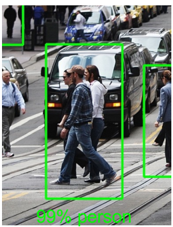
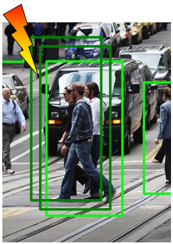
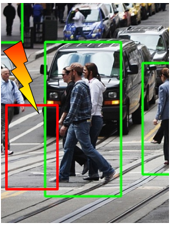
“Some studies also show that transient faults can result in a correct detection (the BB area and position are correct) but in a wrong classification [62], as depicted in Fig.”
Background(2006) · Cited by 490
Soft errors in advanced semiconductor devices-part I: the three radiation sources
Baumann, R. C. (2001) · IEEE Transactions on Device and Materials Reliability · doi:10.1109/7298.946456 · Cited by 414 · cited 1×
“Nonionizing radiation (neutrons) does not deposit any charge but, instead, hits the silicon lattice, generating secondary particles on the silicon as it passes through the device, creating charged particles (e.g., alphas) that then lead to state changes [57].”
BackgroundRadiation effects on microelectronics in space
Srour, J. R., & McGarrity, J. M. (1988) · Proceedings of the IEEE · doi:10.1109/5.90114 · Cited by 290 · cited 1×
“If the particle hit deposits enough charge, it can force a transistor state to change from ON to OFF (or the other way around) [56].”
BackgroundFurano, G., Meoni, G., Dunne, A., Moloney, D., Ferlet-Cavrois, V., Tavoularis, A., Byrne, J., Buckley, L., Psarakis, M., Voss, K.-O., et al. (2020) · IEEE Aerospace and Electronic Systems Magazine · doi:10.1109/maes.2020.3008468 · Cited by 259 · cited 1×
“An overview of the reliability and power/performance of various commercial devices for space application attests sufficiently positive results, paving a path toward low Earth orbit trials and the complete life cycle for space-based AI classifiers on orbital platforms and spacecraft [148].”
BackgroundComparison of error rates in combinational and sequential logic
Buchner, S., Baze, M., Brown, D., McMorrow, D., & Melinger, J. (1997) · IEEE Transactions on Nuclear Science · doi:10.1109/23.659037 · Cited by 244 · cited 1×
“A particle strike that perturbs a transistor’s state can generate bit flips in memory, activating the inverter loop, or current spikes in logic circuits that, if latched, lead to an error [58], [59].”
BackgroundMemory Errors in Modern Systems: The Good, The Bad, and The Ugly
Sridharan, V., DeBardeleben, N., Blanchard, S., Ferreira, K. B., Stearley, J., Shalf, J., & Gurumurthi, S. (2015) · Proceedings of the Twentieth International Conference on Architectural Support for Programming Languages and Operating Systems · doi:10.1145/2694344.2694348 · Cited by 237 · cited 1×
“…probably the most accurate and realistic way to measure the sensitivity of a device, they have to be based on statistically significant amounts of data and, thus, require a huge number of devices and, obviously, are very time-consuming (because the natural error rate is very low) [63], [64], [65].”
BackgroundAnalyzing and Increasing the Reliability of Convolutional Neural Networks on GPUs
Santos, F. F. D., Pimenta, P. F., Lunardi, C., Draghetti, L., Carro, L., Kaeli, D., & Rech, P. (2019) · IEEE Transactions on Reliability · doi:10.1109/tr.2018.2878387 · Cited by 226 · cited 8×
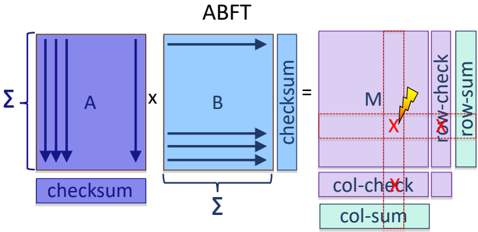
“When adapted to CNNs, ABFT has been shown to outperform ECC or even duplication [11].”
BackgroundMethodResultInfluentialSelf-citationQuantitative evaluation of soft error injection techniques for robust system design
Cho, H., Mirkhani, S., Cher, C.-Y., Abraham, J. A., & Mitra, S. (2013) · Proceedings of the 50th Annual Design Automation Conference · doi:10.1145/2463209.2488859 · Cited by 215
Evolution of Total Ionizing Dose Effects in MOS Devices With Moore’s Law Scaling
Fleetwood, D. M. (2018) · IEEE Transactions on Nuclear Science · doi:10.1109/tns.2017.2786140 · Cited by 210 · cited 2×
“As mentioned earlier, in this article, we will mainly focus on single-event effects since the TID response does not depend on the executed code or the device architecture but mainly on the device technology [55].”
BackgroundThe rosetta experiment: atmospheric soft error rate testing in differing technology FPGAs
Lesea, A., Drimer, S., Fabula, J. J., Carmichael, C., & Alfke, P. (2005) · IEEE Transactions on Device and Materials Reliability · doi:10.1109/tdmr.2005.854207 · Cited by 202 · cited 1×
“…probably the most accurate and realistic way to measure the sensitivity of a device, they have to be based on statistically significant amounts of data and, thus, require a huge number of devices and, obviously, are very time-consuming (because the natural error rate is very low) [63], [64], [65].”
BackgroundPiecewise linear approximation applied to nonlinear function of a neural network
Amin, H., Curtis, K. M., & Hayes-Gill, B. R. (1997) · IEE Proceedings - Circuits, Devices and Systems · doi:10.1049/ip-cds:19971587 · Cited by 199 · cited 1×
“The most adopted solution is to discretize the sigmoid, as in [45] and [46].”
MethodA comprehensive review of Binary Neural Network
Yuan, C., & Agaian, S. С. (2023) · Artificial Intelligence Review · doi:10.1007/s10462-023-10464-w · Cited by 197 · cited 1×
“These are called binary neural networks (BNNs) [49], where both the filters in the convolutional layers and the neurons in the fully connected layers use weights constrained to { − 1, 1}.”
BackgroundImpact of deep submicron technology on dependability of VLSI circuits
Constantinescu, C. (2003) · Proceedings International Conference on Dependable Systems and Networks · doi:10.1109/dsn.2002.1028901 · Cited by 192
Quantifying the Accuracy of High-Level Fault Injection Techniques for Hardware Faults
Wei, J., Thomas, A., Li, G., & Pattabiraman, K. (2014) · 2014 44th Annual IEEE/IFIP International Conference on Dependable Systems and Networks · doi:10.1109/dsn.2014.2 · Cited by 182 · cited 2×
“The ease of use and efficiency of software fault injection makes it popular among research groups evaluating the reliability of neural networks [62], [69], [70], [100], [160], [161], [162].”
BackgroundEliminating microarchitectural dependency from Architectural Vulnerability
Sridharan, V., & Kaeli, D. R. (2009) · 2009 IEEE 15th International Symposium on High Performance Computer Architecture · doi:10.1109/hpca.2009.4798243 · Cited by 182 · cited 1×
“When a code is running, the probability for an error to affect the output is the program vulnerability factor (PVF) [118].”
BackgroundSASSIFI: An architecture-level fault injection tool for GPU application resilience evaluation
Hari, S. K. S., Tsai, T., Stephenson, M., Keckler, S. W., & Emer, J. (2017) · 2017 IEEE International Symposium on Performance Analysis of Systems and Software (ISPASS) · doi:10.1109/ispass.2017.7975296 · Cited by 181 · cited 1×
“Software fault injection is performed at the highest level of abstraction, and it was proven efficient in identifying those code portions that, once corrupted, are more likely to affect computation [68], [69], [70], [71], [72], [73].”
BackgroundTiwari, D., Gupta, S., Rogers, J., Maxwell, D., Rech, P., Vazhkudai, S., Oliveira, D., Londo, D., DeBardeleben, N., Navaux, P., et al. (2015) · 2015 IEEE 21st International Symposium on High Performance Computer Architecture (HPCA) · doi:10.1109/hpca.2015.7056044 · Cited by 179 · cited 1×
“…probably the most accurate and realistic way to measure the sensitivity of a device, they have to be based on statistically significant amounts of data and, thus, require a huge number of devices and, obviously, are very time-consuming (because the natural error rate is very low) [63], [64], [65].”
BackgroundSelf-citationImpact of scaling on soft-error rates in commercial microprocessors
Seifert, N., Zhu, X., & Massengill, L. W. (2002) · IEEE Transactions on Nuclear Science · doi:10.1109/tns.2002.805402 · Cited by 166 · cited 1×
“Accelerated particle beams reduce the cost and time of field tests taking advantage of a high particle flux intensity [53], [66], [67].”
BackgroundParallel Multi Channel convolution using General Matrix Multiplication
Vasudevan, A., Anderson, A., & Gregg, D. (2017) · IEEE International Conference on Application-specific Systems, Architectures and Processors (ASAP) · doi:10.1109/asap.2017.7995254 · Cited by 159
Comparison of Combinational and Sequential Error Rates for a Deep Submicron Process
Mahatme, N. N., Jagannathan, S., Loveless, T. D., Massengill, L. W., Bhuva, B. L., Wen, S.-J., & Wong, R. (2011) · IEEE Transactions on Nuclear Science · doi:10.1109/tns.2011.2171993 · Cited by 149 · cited 1×
“A particle strike that perturbs a transistor’s state can generate bit flips in memory, activating the inverter loop, or current spikes in logic circuits that, if latched, lead to an error [58], [59].”
BackgroundSelective Hardening for Neural Networks in FPGAs
Libano, F., Wilson, B., Anderson, J., Wirthlin, M. J., Cazzaniga, C., Frost, C., & Rech, P. (2019) · IEEE Transactions on Nuclear Science · doi:10.1109/tns.2018.2884460 · Cited by 145 · cited 2×
“Several beam experiments have been documented, characterizing the radiation response to high-energy and thermal neutrons, heavy ions, and protons of AI accelerators [11], [12], [13], [14].”
BackgroundSelf-citationGPU-Qin: A methodology for evaluating the error resilience of GPGPU applications
Fang, B., Pattabiraman, K., Ripeanu, M., & Gurumurthi, S. (2014) · 2014 IEEE International Symposium on Performance Analysis of Systems and Software (ISPASS) · doi:10.1109/ispass.2014.6844486 · Cited by 142 · cited 2×
“The ease of use and efficiency of software fault injection makes it popular among research groups evaluating the reliability of neural networks [62], [69], [70], [100], [160], [161], [162].”
BackgroundDesign and Evaluation of Hybrid Fault-Detection Systems
Reis, G. A., Chang, J., Vachharajani, N., Rangan, R., August, D. I., & Mukherjee, S. S. (2005) · Proceedings - International Symposium on Computer Architecture/Proceedings · doi:10.1109/isca.2005.21 · Cited by 137 · cited 1×
“To combine error rate and performance, the mean instructions, executions, or work between failure metrics (MIBF, MEBF, and MWBF) were introduced [7], [119], [120].”
MethodTotal-Ionizing-Dose Effects, Border Traps, and 1/ f Noise in Emerging MOS Technologies
Fleetwood, D. M. (2020) · IEEE Transactions on Nuclear Science · doi:10.1109/tns.2020.2971861 · Cited by 132 · cited 1×
“A charge can also be generated in the semiconductor material, which influences border traps [54].”
BackgroundChip-level soft error estimation method
Nguyen, H. T., Yagil, Y., Seifert, N., & Reitsma, M. J. (2005) · IEEE Transactions on Device and Materials Reliability · doi:10.1109/tdmr.2005.858334 · Cited by 121
Techniques to reduce the soft error rate of a high-performance microprocessor
Weaver, C. T., Emer, J., Mukherjee, S. S., & Reinhardt, S. K. (2004) · Proceedings - International Symposium on Computer Architecture/Proceedings · doi:10.1109/isca.2004.1310780 · Cited by 110
Sparse Matrix Proceedings 1978
Duff, I., & Stewart, G. W. (1979) · Medical Entomology and Zoology · Cited by 105
Soft errors in DNN accelerators: A comprehensive review
Ibrahim, Y., Wang, H., Liu, J., Wei, J., Chen, L., Rech, P., Adam, K., & Guo, G. (2020) · Microelectronics Reliability · doi:10.1016/j.microrel.2020.113969 · Cited by 102 · cited 3×
“Some excellent and complete surveys of the available reliability studies have already been published [9], [10], [19].”
BackgroundSelf-citationEvaluation and Mitigation of Radiation-Induced Soft Errors in Graphics Processing Units
de Oliveira, D. A. G., Pilla, L. L., Santini, T., & Rech, P. (2016) · IEEE Transactions on Computers · doi:10.1109/tc.2015.2444855 · Cited by 101 · cited 2×
“What is clear is that due to the large area and the high amount of (critical) resources available, the radiation-induced error rate of the available commercial off-the-shelf (COTS) products for AI is far from being negligible [15], [16].”
BackgroundMethodSelf-citationImpact of GPUs Parallelism Management on Safety-Critical and HPC Applications Reliability
Rech, P., Pilla, L. L., Navaux, P. O. A., & Carro, L. (2014) · International Conference on Dependable Systems & Networks/Proceedings · doi:10.1109/dsn.2014.49 · Cited by 99 · cited 5×
“To combine error rate and performance, the mean instructions, executions, or work between failure metrics (MIBF, MEBF, and MWBF) were introduced [7], [119], [120].”
BackgroundMethodInfluentialSelf-citationTestability and Dependability of AI Hardware: Survey, Trends, Challenges, and Perspectives
Su, F., Liu, C., & Stratigopoulos, H. (2023) · IEEE Design and Test · doi:10.1109/mdat.2023.3241116 · Cited by 97 · cited 3×
“Some excellent and complete surveys of the available reliability studies have already been published [9], [10], [19].”
BackgroundThe new MPPT algorithm using ANN-based PV
Dzung, P. Q., Khoa, L. D., Lee, H. H., Phuong, L. M., & Vu, N. T. D. (2010) · International Forum on Strategic Technology · doi:10.1109/ifost.2010.5668004 · Cited by 96 · cited 1×
“Due to their intrinsically high level of parallelism and number of connections, ANNs map efficiently also on FPGAs [40], [41], [42].”
BackgroundBinFI: an efficient fault injector for safety-critical machine learning systems
Chen, Z., Li, G., Pattabiraman, K., & DeBardeleben, N. (2019) · Proceedings of the International Conference for High Performance Computing, Networking, Storage and Analysis · doi:10.1145/3295500.3356177 · Cited by 91 · cited 1×
“The ease of use and efficiency of software fault injection makes it popular among research groups evaluating the reliability of neural networks [62], [69], [70], [100], [160], [161], [162].”
BackgroundDifferential Fault Injection on Microarchitectural Simulators
Kaliorakis, M., Tselonis, S., Chatzidimitriou, A., Foutris, N., & Gizopoulos, D. (2015) · IEEE International Symposium on Workload Characterization · doi:10.1109/iiswc.2015.28 · Cited by 85
Assessing Convolutional Neural Networks Reliability through Statistical Fault Injections
Ruospo, A., Gavarini, G., de Sio, C., Guerrero-Balaguera, J.-D., Sterpone, L., Reorda, M. S., Sánchez, E., Mariani, R., Aribido, J., & Athavale, J. (2023) · Design, Automation, and Test in Europe · doi:10.23919/date56975.2023.10136998 · Cited by 85 · cited 1×
“In addition, it is fundamental to perform a sufficiently high number of injections to guarantee good accuracy [71], [155].”
BackgroundFIdelity: Efficient Resilience Analysis Framework for Deep Learning Accelerators
He, Y., Balaprakash, P., & Li, Y. (2020) · 2020 53rd Annual IEEE/ACM International Symposium on Microarchitecture (MICRO) · doi:10.1109/micro50266.2020.00033 · Cited by 83 · cited 1×
“A fault-injection framework dedicated to ML models executed on the NVDLA accelerator is publicly available [158].”
MethodLibano, F., Wilson, B., Wirthlin, M., Rech, P., & Brunhaver, J. S. (2020) · IEEE Transactions on Nuclear Science · doi:10.1109/tns.2020.2983662 · Cited by 82 · cited 2×
“In addition, reducing data precision and simplifying the sigmoid function (2) reduce the neural network error rate [132], [133].”
BackgroundResultSelf-citationMaking Convolutions Resilient Via Algorithm-Based Error Detection Techniques
Hari, S. K. S., Sullivan, M. B., Tsai, T., & Keckler, S. W. (2022) · IEEE Transactions on Dependable and Secure Computing · doi:10.1109/tdsc.2021.3063083 · Cited by 79
Chatzidimitriou, A., Bodmann, P. R., Papadimitriou, G., Gizopoulos, D., & Rech, P. (2019) · International Conference on Dependable Systems & Networks/Proceedings · doi:10.1109/dsn.2019.00018 · Cited by 75 · cited 3×
“Lately, an effort has been carried out to evaluate how close the error rate prediction based on microarchitectural fault injection is to that measured with beam experiments [76], [114].”
BackgroundSelf-citationDemystifying the System Vulnerability Stack: Transient Fault Effects Across the Layers
Papadimitriou, G., & Gizopoulos, D. (2021) · 2021 ACM/IEEE 48th Annual International Symposium on Computer Architecture (ISCA) · doi:10.1109/isca52012.2021.00075 · Cited by 74 · cited 2×
“Depending on the abstraction level at which the fault injection is performed, the limitations can be more or less critical [151].”
BackgroundSoft Error Resilience of Deep Residual Networks for Object Recognition
Ibrahim, Y., Wang, H., Bai, M., Liu, Z., Wang, J., Yang, Z., & Chen, Z. (2020) · IEEE Access · doi:10.1109/access.2020.2968129 · Cited by 72 · cited 1×
“What is clear is that due to the large area and the high amount of (critical) resources available, the radiation-induced error rate of the available commercial off-the-shelf (COTS) products for AI is far from being negligible [15], [16].”
BackgroundFlexGripPlus: An improved GPGPU model to support reliability analysis
Condia, J. E. R., Du, B., Reorda, M. S., & Sterpone, L. (2020) · Microelectronics Reliability · doi:10.1016/j.microrel.2020.113660 · Cited by 70 · cited 3×
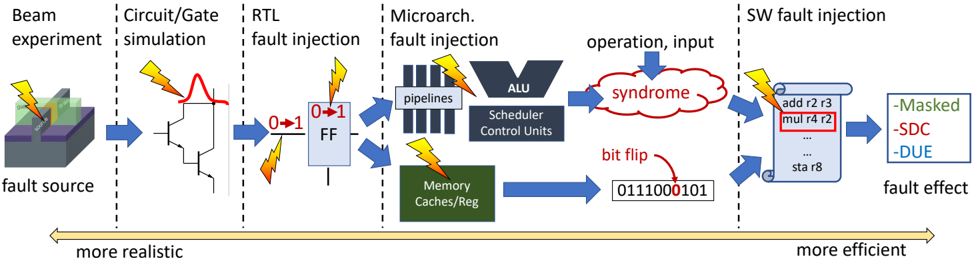
“Register-transfer level (RTL) fault injection accesses all resources (flip-flops and signals) and provides a more realistic fault model, given the proximity of the RTL description with the actual implementation of the final hardware [74], [77], [78].”
BackgroundSoft Error Effects on Arm Microprocessors: Early Estimations versus Chip Measurements
Bodmann, P. R., Papadimitriou, G., Rech, R. L., Gizopoulos, D., & Rech, P. (2021) · IEEE Transactions on Computers · doi:10.1109/tc.2021.3128501 · Cited by 67 · cited 3×
“Nonetheless, some preliminary studies showed that the fault injection at the microarchitecture level of ARM devices can predict the radiation-induced error rate of a code, given some information about the technology sensitivity [114].”
BackgroundSelf-citationInvestigating data representation for efficient and reliable Convolutional Neural Networks
Ruospo, A., Sánchez, E., Traiola, M., O’Connor, I., & Bosio, A. (2021) · Microprocessors and Microsystems · doi:10.1016/j.micpro.2021.104318 · Cited by 66 · cited 2×
“The flexibility of software fault injection also allows us to understand the effect of data precision on the reliability of neural networks [136], [161].”
BackgroundProgramming Massively Parallel Processors
Hwu, W.-M. W., Kirk, D., & El Hajj, I. (2022) · Elsevier eBooks · doi:10.1016/c2020-0-02969-5 · Cited by 66
Rech, P., Aguiar, C., Frost, C., & Carro, L. (2013) · IEEE Transactions on Nuclear Science · doi:10.1109/tns.2013.2252625 · Cited by 63 · cited 2×
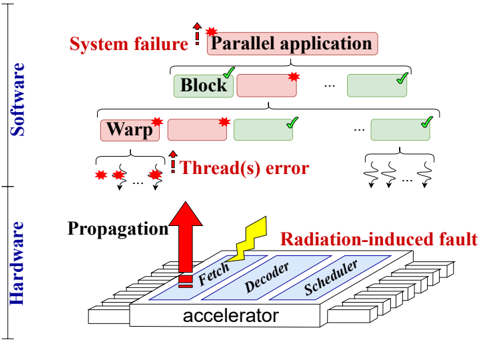
“It has been shown that the corruption of shared resources (like caches) or the scheduler affects the execution of multiple parallel processes [124], [125].”
BackgroundSelf-citationExperimental and analytical study of Xeon Phi reliability
Oliveira, D., Pilla, L. L., DeBardeleben, N., Blanchard, S. P., Quinn, H., Koren, I., Navaux, P. O. A., & Rech, P. (2017) · International Conference for High Performance Computing, Networking, Storage and Analysis (SC) · doi:10.1145/3126908.3126960 · Cited by 63 · cited 2×
“Accelerated particle beams reduce the cost and time of field tests taking advantage of a high particle flux intensity [53], [66], [67].”
BackgroundSelf-citationCharacterizing and Mitigating Soft Errors in GPU DRAM
Sullivan, M. B., Saxena, N. R., O’Connor, M., Lee, D., Racunas, P., Hukerikar, S., Tsai, T. K., Hari, S. K. S., & Keckler, S. W. (2021) · IEEE/ACM International Symposium on Microarchitecture (MICRO) · doi:10.1145/3466752.3480111 · Cited by 62 · cited 1×
“Several beam experiments have been documented, characterizing the radiation response to high-energy and thermal neutrons, heavy ions, and protons of AI accelerators [11], [12], [13], [14].”
BackgroundInstruction-Level Impact Analysis of Low-Level Faults in a Modern Microprocessor Controller
Maniatakos, M., Karimi, N., Tirumurti, C., Jas, A., & Makris, Y. (2011) · IEEE Transactions on Computers · doi:10.1109/tc.2010.60 · Cited by 61
GUFI: A framework for GPUs reliability assessment
Tselonis, S., & Gizopoulos, D. (2016) · 2016 IEEE International Symposium on Performance Analysis of Systems and Software (ISPASS) · doi:10.1109/ispass.2016.7482077 · Cited by 58 · cited 2×
“This latter aspect is particularly critical when only behavioral models are available, as in the case of GPUs [68].”
BackgroundFault Site Pruning for Practical Reliability Analysis of GPGPU Applications
Nie, B., Yang, L., Jog, A., & Smirni, E. (2018) · IEEE/ACM International Symposium on Microarchitecture (MICRO) · doi:10.1109/micro.2018.00066 · Cited by 57 · cited 1×
“Software fault injection is performed at the highest level of abstraction, and it was proven efficient in identifying those code portions that, once corrupted, are more likely to affect computation [68], [69], [70], [71], [72], [73].”
BackgroundExamining ACE analysis reliability estimates using fault-injection
Wang, N. J., Mahesri, A. A., & Patel, S. J. (2007) · ACM SIGARCH Computer Architecture News · doi:10.1145/1273440.1250719 · Cited by 54
A fast and scalable fault injection framework to evaluate multi/many-core soft error reliability
Rosa, F., Kastensmidt, F. L., Reis, R. A. L., & Ost, L. C. (2015) · Proceedings · doi:10.1109/dft.2015.7315164 · Cited by 51
Revealing GPUs Vulnerabilities by Combining Register-Transfer and Software-Level Fault Injection
dos Santos, F. F., Condia, J. E. R., Carro, L., Reorda, M. S., & Rech, P. (2021) · International Conference on Dependable Systems & Networks/Proceedings · doi:10.1109/dsn48987.2021.00042 · Cited by 51 · cited 5×
“These multiple corruptions are then the ones more likely to induce a misclassification in CNNs [154].”
BackgroundMethodInfluentialSelf-citationA novel SoC architecture on FPGA for ultra fast face detection
He, C., Papakonstantinou, A., & Chen, D. (2009) · IEEE International Conference on Computer Design: VLSI in Computers and Processors (ICCD) · doi:10.1109/iccd.2009.5413122 · Cited by 50
On the Reliability of Convolutional Neural Network Implementation on SRAM-based FPGA
Du, B., Azimi, S., Sio, C. D., Bozzoli, L., & Sterpone, L. (2019) · Proceedings · doi:10.1109/dft.2019.8875362 · Cited by 48 · cited 1×
“Restrictions apply. resources of the device, in FPGAs, fault injection can draw accurate evaluations [152], [153] and is highly suggested for ML applications.”
BackgroundImpact of Tensor Cores and Mixed Precision on the Reliability of Matrix Multiplication in GPUs
Basso, P. M., dos Santos, F. F., & Rech, P. (2020) · IEEE Transactions on Nuclear Science · doi:10.1109/tns.2020.2977583 · Cited by 45 · cited 2×
“These results confirmed data obtained previously with beam experiments [11], [128], [129], [133], adding more details and configurations.”
BackgroundResultSelf-citationHigh Energy and Thermal Neutron Sensitivity of Google Tensor Processing Units
Rech, R. L., Malde, S., Cazzaniga, C., Kastriotou, M., Létiche, M., Frost, C. D., & Rech, P. (2022) · IEEE Transactions on Nuclear Science · doi:10.1109/tns.2022.3142092 · Cited by 45 · cited 2×
“EdgeAI accelerators, such as the NeuroShield or Google’s TPU, have been tested [13], [134].”
BackgroundMethodSelf-citationTransient-Fault-Aware Design and Training to Enhance DNNs Reliability with Zero-Overhead
Cavagnero, N., dos Santos, F. F., Ciccone, M., Averta, G., Tommasi, T., & Rech, P. (2022) · IEEE International On-Line Testing Symposium (IOLTS) · doi:10.1109/iolts56730.2022.9897813 · Cited by 45 · cited 1×
“This solution has been introduced for quantized DNNs [180] and extended to complex CNNs executed on GPUs [178].”
MethodSelf-citationModern GPUs Radiation Sensitivity Evaluation and Mitigation Through Duplication With Comparison
Oliveira, D. A. G., Rech, P., Quinn, H. M., Fairbanks, T. D., Monroe, L., Michalak, S. E., Anderson-Cook, C., Navaux, P. O. A., & Carro, L. (2014) · IEEE Transactions on Nuclear Science · doi:10.1109/tns.2014.2362014 · Cited by 44 · cited 1×
“Full duplication has been shown to be effective but highly costly [168], [169].”
BackgroundSelf-citationSoft error vulnerability assessment of the real-time safety-related ARM Cortex-R5 CPU
Iturbe, X., Venu, B., & Özer, E. (2016) · Proceedings · doi:10.1109/dft.2016.7684076 · Cited by 44
Radiation-Induced Error Criticality in Modern HPC Parallel Accelerators
Oliveira, D., Pilla, L. L., Hanzich, M., Netto, V. F., dos Santos, F. F., Lunardi, C., María, J., Navaux, P. O. A., Carro, L., & Rech, P. (2017) · IEEE International Symposium on High-Performance Computer Architecture (HPCA) · doi:10.1109/hpca.2017.41 · Cited by 44 · cited 1×
“Interestingly, the number of parallel processes that can be corrupted and the impact of the corruption (how different the corrupted value is from the expected one) depends both on the parallel architecture and the executed algorithm [67], [126], [127].”
BackgroundSelf-citationReliability Evaluation of Mixed-Precision Architectures
Fernandes dos Santos, F., Lunardi, C., Oliveira, D., Libano, F., & Rech, P. (2019) · 2019 IEEE International Symposium on High Performance Computer Architecture (HPCA) · doi:10.1109/hpca.2019.00041 · Cited by 44 · cited 2×
“These results confirmed data obtained previously with beam experiments [11], [128], [129], [133], adding more details and configurations.”
BackgroundResultSelf-citationCode-Dependent and Architecture-Dependent Reliability Behaviors
Fratin, V., Oliveira, D., Lunardi, C., Santos, F., Rodrigues, G., & Rech, P. (2018) · 2018 48th Annual IEEE/IFIP International Conference on Dependable Systems and Networks (DSN) · doi:10.1109/dsn.2018.00015 · Cited by 43 · cited 2×
“The comparison of beam data in GPUs, FPGAs, and CPUs executing different algorithms highlights that DUEs have a strong component that is independent of the executed code and is, then, related just to the hardware [127].”
BackgroundSelf-citationGPU Devices for Safety-Critical Systems: A Survey
Perez-Cerrolaza, J., Abella, J., Kosmidis, L., Calderon, A. J., Cazorla, F., & Flores, J. L. (2023) · ACM Computing Surveys · doi:10.1145/3549526 · Cited by 43 · cited 1×
“Some excellent and complete surveys of the available reliability studies have already been published [9], [10], [19].”
BackgroundSelective Hardening of Critical Neurons in Deep Neural Networks
Ruospo, A., Gavarini, G., Bragaglia, I., Traiola, M., Bosio, A., & Sánchez, E. (2022) · IEEE International Symposium on Design and Diagnostics of Electronic Circuits & Systems (DDECS) · doi:10.1109/ddecs54261.2022.9770168 · Cited by 41 · cited 1×
“Some works have proposed selective replication in order to save overhead by protecting only the most critical layers or portion of the neural network [12], [170], [171], [172].”
BackgroundA Multi-level Approach to Evaluate the Impact of GPU Permanent Faults on CNN's Reliability
Condia, J. E. R., Guerrero-Balaguera, J.-D., dos Santos, F. F., Reorda, M. S., & Rech, P. (2022) · IEEE International Test Conference (ITC) · doi:10.1109/itc50671.2022.00036 · Cited by 41 · cited 3×
“A single fault injection can take hours , depending on the complexity of the hardware and the executed application [8], [78].”
BackgroundSelf-citationA hybrid fault injection approach based on simulation and emulation co-operation
Ejlali, A., Miremadi, S. G., Zarandi, H. R., Asadi, H., & Bayat-Sarmadi, S. (2004) · International Conference on Dependable Systems & Networks/Proceedings · doi:10.1109/dsn.2003.1209958 · Cited by 40 · cited 2×
“Register-transfer level (RTL) fault injection accesses all resources (flip-flops and signals) and provides a more realistic fault model, given the proximity of the RTL description with the actual implementation of the final hardware [74], [77], [78].”
BackgroundAnatomy of microarchitecture-level reliability assessment: Throughput and accuracy
Chatzidimitriou, A., & Gizopoulos, D. (2016) · IEEE International Symposium on Performance Analysis of Systems and Software (ISPASS) · doi:10.1109/ispass.2016.7482075 · Cited by 40
FPGA-Based Implementation of a Robust IEEE-754 Exponential Unit
Doss, C. C., & Riley, R. L. (2004) · IEEE International Symposium on Field-Programmable Custom Computing Machines (FCCM) · doi:10.1109/fccm.2004.38 · Cited by 38 · cited 1×
“A few solutions have been proposed to efficiently implement the exponential function in hardware [43], [44].”
MethodSoftware-Based Hardening Strategies for Neutron Sensitive FFT Algorithms on GPUs
Pilla, L. L., Rech, P., Silvestri, F., Frost, C. D., Navaux, P. O. A., Reorda, M. S., & Carro, L. (2014) · IEEE Transactions on Nuclear Science · doi:10.1109/tns.2014.2301768 · Cited by 38 · cited 1×
“It has been shown that the corruption of shared resources (like caches) or the scheduler affects the execution of multiple parallel processes [124], [125].”
BackgroundSelf-citationEfficient Error Detection for Matrix Multiplication With Systolic Arrays on FPGAs
Libano, F., Rech, P., & Brunhaver, J. S. (2023) · IEEE Transactions on Computers · doi:10.1109/tc.2023.3248282 · Cited by 37 · cited 2×
“Lately, smart light-ABFT solutions have been introduced to further reduce the overhead of the mitigation solutions for GPUs [173] and FPGAs [150].”
BackgroundMethodSelf-citationEstimating Vulnerability of All Model Parameters in DNN with a Small Number of Fault Injections
Zhang, Y., Itsuji, H., Uezono, T., Toba, T., & Hashimoto, M. (2022) · Design, Automation, and Test in Europe · doi:10.23919/date54114.2022.9774569 · Cited by 34 · cited 1×
“The ease of use and efficiency of software fault injection makes it popular among research groups evaluating the reliability of neural networks [62], [69], [70], [100], [160], [161], [162].”
BackgroundSoft error injection methodology based on QEMU software platform
Geissler, F. D. A., Kastensmidt, F. L., & Souza, J. E. P. (2014) · IEEE Latin American Test Symposium (LATS) · doi:10.1109/latw.2014.6841910 · Cited by 33
Libano, F., Rech, P., Tambara, L. A., Tonfat, J., & Kastensmidt, F. L. (2017) · IEEE Transactions on Nuclear Science · doi:10.1109/tns.2017.2784367 · Cited by 32 · cited 1×
“In addition, reducing data precision and simplifying the sigmoid function (2) reduce the neural network error rate [132], [133].”
BackgroundSelf-citationdos Santos, F. F., Hari, S. K. S., Basso, P. M., Carro, L., & Rech, P. (2021) · IEEE International Parallel and Distributed Processing Symposium (IPDPS) · doi:10.1109/ipdps49936.2021.00037 · Cited by 32 · cited 4×
“1) Beam and Software Fault Injection [104]: Beam experiments are used to measure the fault probability of basic GPU instructions.”
BackgroundMethodInfluentialSelf-citationAnalyzing DUE Errors on GPUs With Neutron Irradiation Test and Fault Injection to Control Flow
Ito, K., Zhang, Y., Itsuji, H., Uezono, T., Toba, T., & Hashimoto, M. (2021) · IEEE Transactions on Nuclear Science · doi:10.1109/tns.2021.3098845 · Cited by 32 · cited 1×
“A more detailed analysis, on GPUs, presented in [130], categorizes the DUE by analyzing the Syslog that records GPU errors combining beam experiments and fault injection experiments that disturb the control flow.”
MethodMahlke, S. A. (2005) · IEEE/ACM International Symposium on Microarchitecture (MICRO) · Cited by 32
Reliability of Google's Tensor Processing Units for Embedded Applications
Rech, R. L., & Rech, P. (2022) · Design, Automation, and Test in Europe · doi:10.23919/date54114.2022.9774600 · Cited by 32 · cited 2×
“A preliminary study focused on reducing the number of object classes to be classified by the model [179].”
BackgroundSelf-citationUnderstanding the Effects of Permanent Faults in GPU's Parallelism Management and Control Units
Guerrero-Balaguera, J.-D., Condia, J. E. R., dos Santos, F. F., Reorda, M. S., & Rech, P. (2023) · International Conference for High Performance Computing, Networking, Storage and Analysis (SC) · doi:10.1145/3581784.3607086 · Cited by 32 · cited 2×
“2) Low Level and Software Fault Injection [154], [163], [164]: Similar to the previous hybrid approach, the RTL fault injection or low-level fault simulation is used only to characterize the fault effect at the output of basic machine instructions.”
BackgroundSelf-citationA Pipelined Multi-Level Fault Injector for Deep Neural Networks
Ruospo, A., Balaara, A., Bosio, A., & Sánchez, E. (2020) · Proceedings · doi:10.1109/dft50435.2020.9250866 · Cited by 31 · cited 1×
“Some strategies to reduce the characterization time have been proposed [154], [159], dividing the layers of the network and composing the propagation in a later stage, for instance.”
MethodA Virtual Fault Injection Framework for Reliability-Aware Software Development
Höller, A., Macher, G., Rauter, T., Iber, J., & Kreiner, C. (2015) · International Conference on Dependable Systems and Networks workshops · doi:10.1109/dsn-w.2015.16 · Cited by 30
(2020) · Advances in intelligent systems and computing · doi:10.1007/978-981-15-1816-4 · Cited by 30
XEMU: an efficient QEMU based binary mutation testing framework for embedded software
Becker, M., Baldin, D., Kuznik, C., Joy, M. M., Xie, T., & Müller, W. (2012) · ACM International Conference on Embedded Software (EMSOFT) · doi:10.1145/2380356.2380368 · Cited by 29
Threads Distribution Effects on Graphics Processing Units Neutron Sensitivity
Rech, P., Fairbanks, T. D., Quinn, H., & Carro, L. (2013) · IEEE Transactions on Nuclear Science · doi:10.1109/tns.2013.2286970 · Cited by 29 · cited 1×
“In [7] and [123], neutron beam experiments demonstrate that increasing the number of parallel processes imposes a higher scheduler strain that increases the GPU error rate.”
BackgroundSelf-citationSIFI: AMD southern islands GPU microarchitectural level fault injector
Vallero, A., Gizopoulos, D., & Carlo, S. D. (2017) · IEEE International On-Line Testing Symposium (IOLTS) · doi:10.1109/iolts.2017.8046209 · Cited by 29 · cited 1×
“A preliminary work, based on Multi2Sim, presented microarchitectural fault injection data on GPUs, but the analysis is limited to just memories [75].”
BackgroundA Neural Network Based Fault Management Scheme for Reliable Image Processing
Biasielli, M., Bolchini, C., Cassano, L., Koyuncu, E., & Miele, A. (2020) · IEEE Transactions on Computers · doi:10.1109/tc.2020.2965518 · Cited by 28 · cited 1×
“A similar approach has been later applied to image processing pipelines [176], [177] with similar performances.”
MethodCheng, Q., Huang, M., Man, C., Shen, A., Dai, L., Yu, H., & Hashimoto, M. (2023) · IEEE Transactions on Circuits and Systems I Regular Papers · doi:10.1109/tcsi.2023.3300899 · Cited by 28 · cited 2×
“The flexibility of software fault injection also allows us to understand the effect of data precision on the reliability of neural networks [136], [161].”
BackgroundMethodNeutron-Induced Soft Errors in Graphic Processing Units
Rech, P., Aguiar, C. M. C., Ferreira, R. R., Silvestri, M., Griffoni, A., Frost, C. D., & Carro, L. (2012) · IEEE Radiation Effects Data Workshop (REDW) · doi:10.1109/redw.2012.6353714 · Cited by 27 · cited 1×
“1) Neutrons: GPUs have been tested extensively since 2012 when the first Radiation Effect Data Workshop paper appeared [122].”
BackgroundSelf-citationOn the evaluation of soft-errors detection techniques for GPGPUs
Sabena, D., Reorda, M. S., Sterpone, L., Rech, P., & Carro, L. (2013) · International Design and Test Workshop (IDT) · doi:10.1109/idt.2013.6727092 · Cited by 27 · cited 1×
“Full duplication has been shown to be effective but highly costly [168], [169].”
BackgroundSelf-citationRT Level vs. Microarchitecture-Level Reliability Assessment: Case Study on ARM(R) Cortex(R)-A9 CPU
Chatzidimitriou, A., Kaliorakis, M., Gizopoulos, D., Iacaruso, M., Pipponzi, M., Mariani, R., & Carlo, S. D. (2017) · International Conference on Dependable Systems and Networks workshops · doi:10.1109/dsn-w.2017.16 · Cited by 26
FIMSIM: A fault injection infrastructure for microarchitectural simulators
Yalçın, G., Ünsal, O., Cristal, A., & Valero, M. (2011) · IEEE International Conference on Computer Design: VLSI in Computers and Processors (ICCD) · doi:10.1109/iccd.2011.6081435 · Cited by 25
Ferraretto, D., & Pravadelli, G. (2016) · Journal of Electronic Testing · doi:10.1007/s10836-015-5555-z · Cited by 25
Testing permanent faults in pipeline registers of GPGPUs: A multi-kernel approach
Condia, J. E. R., & Reorda, M. S. (2019) · IEEE International On-Line Testing Symposium (IOLTS) · doi:10.1109/iolts.2019.8854463 · Cited by 25 · cited 1×
“Most available RTL descriptions are either obsolete (based on G80 NVIDIA chip) or lack significant details [156].”
BackgroundReliability Analysis of a Spiking Neural Network Hardware Accelerator
Spyrou, T., El-Sayed, S. A., Afacan, E., Camuñas-Mesa, L. A., Linares-Barranco, B., & Stratigopoulos, H. (2022) · Design, Automation, and Test in Europe · doi:10.23919/date54114.2022.9774711 · Cited by 25 · cited 1×
“While this novel technology is not detailed in this article, interesting reliability data [single event upset (SEU) and total ionizing dose (TID)] on neuromorphic devices are reported in [31], [32], [33], and [34].”
BackgroundDesign and synthesis of an IEEE-754 exponential function
Bui, H., & Tahar, S. (2003) · Conference proceedings - Canadian Conference on Electrical and Computer Engineering · doi:10.1109/ccece.1999.807240 · Cited by 24 · cited 1×
“A few solutions have been proposed to efficiently implement the exponential function in hardware [43], [44].”
MethodDetecting Errors in Convolutional Neural Networks Using Inter Frame Spatio-Temporal Correlation
Draghetti, L. K., dos Santos, F. F., Carro, L., & Rech, P. (2019) · IEEE International On-Line Testing Symposium (IOLTS) · doi:10.1109/iolts.2019.8854431 · Cited by 24 · cited 1×
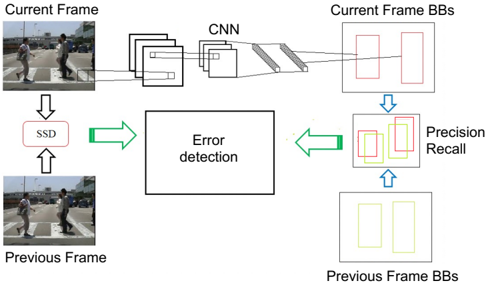
“This correlation has been shown to detect about 70% of critical errors while incurring some false positives [167].”
BackgroundSelf-citationEvaluating and Mitigating Neutrons Effects on COTS EdgeAI Accelerators
Blower, S., Rech, P., Cazzaniga, C., Kastriotou, M., & Frost, C. D. (2021) · IEEE Transactions on Nuclear Science · doi:10.1109/tns.2021.3086686 · Cited by 24 · cited 1×
“EdgeAI accelerators, such as the NeuroShield or Google’s TPU, have been tested [13], [134].”
MethodSelf-citationVarEMU: An emulation testbed for variability-aware software
Wanner, L., Elmalaki, S., Lai, L., Gupta, P., & Srivastava, M. B. (2013) · International Conference on Hardware/Software Codesign and System Synthesis · doi:10.1109/codes-isss.2013.6659014 · Cited by 24
Understanding soft errors in uncore components
Cho, H., Cher, C.-Y., Shepherd, T., & Mitra, S. (2015) · ACM/IEEE Design Automation Conference (DAC) · doi:10.1145/2744769.2744923 · Cited by 23 · cited 1×
“Cho et al. [103] used high-level simulation (not using real hardware) triggering an RTL model when the fault needs to be injected.”
BackgroundSEE Test Results for the Snapdragon 820
Guertin, S. M., & Cui, M. (2017) · IEEE Radiation Effects Data Workshop (REDW) · doi:10.1109/nsrec.2017.8115452 · Cited by 23
GPGPUs ECC efficiency and efficacy
Oliveira, D., Rech, P., Pilla, L. L., Navaux, P. O. A., & Carro, L. (2014) · Proceedings · doi:10.1109/dft.2014.6962085 · Cited by 22 · cited 1×
“Interestingly, embedded solutions such as SECDED ECC have been shown to be less effective for neural networks compared to traditional HPC algorithms [11], [16], [166].”
MethodSelf-citationReduced Precision DWC: An Efficient Hardening Strategy for Mixed-Precision Architectures
dos Santos, F. F., Brandalero, M., Sullivan, M. B., Basso, P. M., Hübner, M., Carro, L., & Rech, P. (2021) · IEEE Transactions on Computers · doi:10.1109/tc.2021.3058872 · Cited by 21 · cited 2×
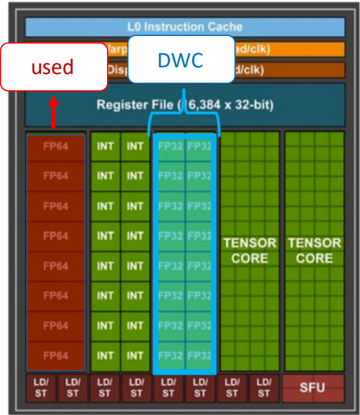
“Reduced precision duplication with comparison (RP-DWC) has been implemented and experimentally validated in GPUs [175], showing promising error detection capabilities (75%, on average) and exiting overhead (less than 20%).”
MethodSelf-citationApproximation-based Fault Tolerance in Image Processing Applications
Biasielli, M., Bolchini, C., Cassano, L., Mazzeo, A., & Miele, A. (2021) · IEEE Transactions on Emerging Topics in Computing · doi:10.1109/tetc.2021.3100623 · Cited by 21 · cited 1×
“A similar approach has been later applied to image processing pipelines [176], [177] with similar performances.”
MethodBadía, J. M., León, G., Belloch, J. A., Lindoso, A., García-Valderas, M., Morilla, Y., & Entrena, L. (2022) · IEEE Transactions on Nuclear Science · doi:10.1109/tns.2022.3155820 · Cited by 21 · cited 2×
“Results show that more intensive use of the resources of the GPU increases the cross section [138].”
BackgroundMethodSelective Hardening of CNNs based on Layer Vulnerability Estimation
Bolchini, C., Cassano, L., Miele, A., & Nazzari, A. (2022) · Proceedings · doi:10.1109/dft56152.2022.9962339 · Cited by 21 · cited 1×
“Some works have proposed selective replication in order to save overhead by protecting only the most critical layers or portion of the neural network [12], [170], [171], [172].”
BackgroundSystematic Reliability Evaluation of FPGA Implemented CNN Accelerators
Gao, Z., Gao, S., Yao, Y., Liu, Q., Zeng, S., Ge, G., Wang, Y., Ullah, A., & Reviriego, P. (2023) · IEEE Transactions on Device and Materials Reliability · doi:10.1109/tdmr.2023.3235767 · Cited by 21 · cited 1×
“Restrictions apply. resources of the device, in FPGAs, fault injection can draw accurate evaluations [152], [153] and is highly suggested for ML applications.”
BackgroundEfficient Simulation of Structural Faults for the Reliability Evaluation at System-Level
Kochte, M. A., Zoellin, C. G., Baranowski, R., Imhof, M. E., Wunderlich, H.-J., Hatami, N., Carlo, S. D., & Prinetto, P. (2010) · Proceedings - Asian Test Symposium/Proceedings · doi:10.1109/ats.2010.10 · Cited by 20 · cited 2×
“…required to perform this analysis on AI accelerators: 1) a circuit-or gate-level description of the device is not publicly available and 2) even if it was, the time required to evaluate the whole circuit would definitely be excessive (the characterization of a small circuit takes weeks [79]).”
BackgroundMethodRadiation Test and in Orbit Performance of MpSoC AI Accelerator
Buckley, L., Dunne, A. K., Furano, G., & Tali, M. (2022) · IEEE Aerospace Conference (AERO) · doi:10.1109/aero53065.2022.9843440 · Cited by 18 · cited 2×
“The vision processing unit (VPU) embedded in the Myriad SoC has also been exposed to heavy ions [144], [145].”
MethodThe Use of High-Energy X-Ray Generators for TID Testing of Electronic Devices
Girones, V., Boch, J., Carapelle, A., Chapon, A., Maraine, T., Labau, T., Saigné, F., & Alía, R. G. (2023) · IEEE Transactions on Nuclear Science · doi:10.1109/tns.2023.3279626 · Cited by 18 · cited 1×
“For TID studies, following the European Space Agency test standard [106], the device should be exposed to Cobalt-60 sources or, eventually, X-rays [107].”
MethodRecent SEE Results for Snapdragon Processors
Guertin, S. M., Parker, W. P., Daniel, A. C., & Adell, P. C. (2019) · IEEE Radiation Effects Data Workshop (REDW) · doi:10.1109/redw.2019.8906649 · Cited by 17
Badía, J. M., León, G., Belloch, J. A., García-Valderas, M., Lindoso, A., & Entrena, L. (2021) · IEEE Transactions on Nuclear Science · doi:10.1109/tns.2021.3128722 · Cited by 17 · cited 2×
“2) Protons: GPUs have also been tested with protons, showing similar trends and behavior as neutron tests [137], [138], [139].”
BackgroundMethodTopper, A. D., Wyrwas, E. J., Ryder, K. L., LaBel, K. A., Pellish, J. A., Majewicz, P. J., Cochran, D. J., O'Bryan, M. V., Casey, M. C., Lauenstein, J., et al. (2019) · IEEE Radiation Effects Data Workshop (REDW) · doi:10.1109/redw.2019.8906647 · Cited by 16 · cited 1×
“The first choice to make regards the sample preparation [109], [110], [111].”
BackgroundOn-Line Testing of Neuromorphic Hardware
Spyrou, T., & Stratigopoulos, H. (2023) · IEEE European Test Symposium (ETS) · doi:10.1109/ets56758.2023.10174077 · Cited by 16 · cited 1×
“While this novel technology is not detailed in this article, interesting reliability data [single event upset (SEU) and total ionizing dose (TID)] on neuromorphic devices are reported in [31], [32], [33], and [34].”
BackgroundAre Current SEE Test Procedures Adequate for Modern Devices and Electronics Technologies
LaBel, K. A., Cohn, L. M., & Ladbury, R. L. (2008) · NASA Technical Reports Server (NASA) · Cited by 15
An efficient pruning and weight sharing method for neural network
Kim, J.-K., Lee, M.-Y., Kim, J., Kim, B.-J., & Lee, J. (2016) · IEEE International Conference on Consumer Electronics-Asia (ICCE-Asia) · doi:10.1109/icce-asia.2016.7804738 · Cited by 15 · cited 1×
“In order to achieve lower execution times and, thus, higher throughput, a number of techniques have been developed, such as weight trimming [47] and weight quantization [48].”
MethodA Fault Injection Approach to Evaluate Soft-Error Dependability of System Calls
Amarnath, R., Bhat, S. N., Munk, P., & Thaden, E. (2018) · IEEE International Symposium on Software Reliability Engineering Workshops (ISSREW) · doi:10.1109/issrew.2018.00-28 · Cited by 15
A fast and accurate hybrid fault injection platform for transient and permanent faults
Sartor, A. L., Becker, P. H. E., & Beck, A. C. S. (2018) · Design Automation for Embedded Systems · doi:10.1007/s10617-018-9217-0 · Cited by 15 · cited 1×
“Some works have proposed to use a detailed RTL fault injection in specific portions of the circuit and a fast fault simulation in others [77], [101].”
BackgroundBallan, O., Maillard, P., Arver, J., Smith, C., Petersson, R., Griessing, A., & Venini, F. (2020) · Microelectronics Reliability · doi:10.1016/j.microrel.2020.113601 · Cited by 15 · cited 1×
“Other metrics, derived from the automotive and safety-critical domains and their evaluation, are discussed in [115].”
BackgroundIonizing Radiation Effects in SONOS-Based Neuromorphic Inference Accelerators
Xiao, T. P., Bennett, C. H., Agarwal, S., Hughart, D. R., Barnaby, H., Puchner, H., Prabhakar, V., Talin, A. A., & Marinella, M. J. (2021) · IEEE Transactions on Nuclear Science · doi:10.1109/tns.2021.3058548 · Cited by 15
Experimental Findings on the Sources of Detected Unrecoverable Errors in GPUs
dos Santos, F. F., Malde, S., Cazzaniga, C., Frost, C. D., Carro, L., & Rech, P. (2022) · IEEE Transactions on Nuclear Science · doi:10.1109/tns.2022.3141341 · Cited by 14
Self-citationMaillard, P., Chen, Y. P., Barton, J., & Voogel, M. L. (2021) · IEEE Nuclear and Space Radiation Effects Conference (NSREC) · doi:10.1109/nsrec45046.2021.9679343 · Cited by 14
Accelerated Radiation Test on Quantized Neural Networks trained with Fault Aware Training
Gambardella, G., Fraser, N. J., Zahid, U., Furano, G., & Blott, M. (2022) · IEEE Aerospace Conference (AERO) · doi:10.1109/aero53065.2022.9843614 · Cited by 14 · cited 1×
“This solution has been introduced for quantized DNNs [180] and extended to complex CNNs executed on GPUs [178].”
MethodError injection-based study of soft error propagation in AMD Bulldozer microprocessor module
Constantinescu, C. S., Butler, M., & Weller, C. (2012) · International Conference on Dependable Systems & Networks/Proceedings · doi:10.1109/dsn.2012.6263922 · Cited by 13
On the evaluation of SEU effects in GPGPUs
Du, B., Condia, J. E. R., Reorda, M. S., & Sterpone, L. (2019) · IEEE Latin American Test Symposium (LATS) · doi:10.1109/latw.2019.8704643 · Cited by 13 · cited 1×
“In fact, an RTL description of a GPU core exists [113] but is based on an old NVIDIA architecture (G80).”
MethodEvaluating the soft error sensitivity of a GPU-based SoC for matrix multiplication
León, G., Badía, J. M., Belloch, J. A., Lindoso, A., & Entrena, L. (2020) · Microelectronics Reliability · doi:10.1016/j.microrel.2020.113856 · Cited by 13 · cited 2×
“A detailed analysis of the distribution of errors in matrix multiplication (essential operation in DNNs) has been performed in [160].”
BackgroundTesting and Reliability of Spiking Neural Networks: A Review of the State-of-the-Art
Stratigopoulos, H., Spyrou, T., & Raptis, S. (2023) · Proceedings · doi:10.1109/dft59622.2023.10313541 · Cited by 11 · cited 1×
“While this novel technology is not detailed in this article, interesting reliability data [single event upset (SEU) and total ionizing dose (TID)] on neuromorphic devices are reported in [31], [32], [33], and [34].”
BackgroundDaniel, A. C., & Allen, G. R. (2018) · IEEE Nuclear and Space Radiation Effects Conference (NSREC) · doi:10.1109/nsrec.2018.8584272 · Cited by 10 · cited 1×
“The first choice to make regards the sample preparation [109], [110], [111].”
BackgroundFPGA implementation of an ANN for detection of anthelmintics resistant nematodes in sheep flocks
Rahnamaei, A., Pariz, N., & Akbarimajd, A. (2009) · IEEE Conference on Industrial Electronics and Applications (ICIEA) · doi:10.1109/iciea.2009.5138533 · Cited by 9 · cited 1×
“Due to their intrinsically high level of parallelism and number of connections, ANNs map efficiently also on FPGAs [40], [41], [42].”
BackgroundSoft error analysis at sequential and parallel applications in ARM Cortex-A9 dual-core
Rodrigues, G. S., & Kastensmidt, F. L. (2016) · IEEE Latin American Test Symposium (LATS) · doi:10.1109/latw.2016.7483359 · Cited by 9
Kernel vulnerability factor and efficient hardening for histogram of oriented gradients
Weigel, L., dos Santos, F. F., Navaux, P. O. A., & Rech, P. (2017) · Proceedings · doi:10.1109/dft.2017.8244439 · Cited by 8 · cited 1×
“Some works have proposed selective replication in order to save overhead by protecting only the most critical layers or portion of the neural network [12], [170], [171], [172].”
BackgroundSelf-citationMaillard, P., Chen, Y. P., Arver, J., Merugu, V., Shui, A., & Voogel, M. L. (2022) · IEEE Radiation Effects Data Workshop (REDW) · doi:10.1109/redw56037.2022.9921497 · Cited by 8
Towards Reliable AI Applications via Algorithm-Based Fault Tolerance on NVDLA
Saniç, M. T., Guo, C., Leng, J., Guo, M., & Ma, W. (2022) · International Conference on Mobility, Sensing and Networking (MSN) · doi:10.1109/msn57253.2022.00120 · Cited by 8 · cited 1×
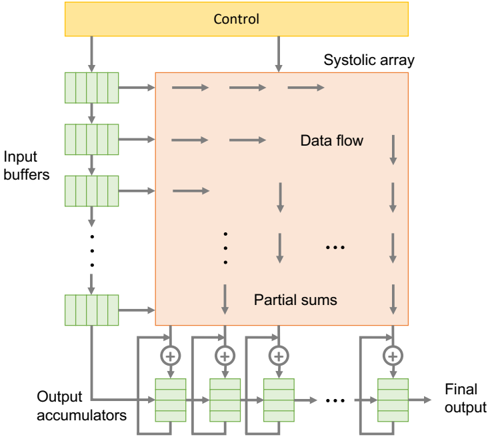
“RTL descriptions are available also for systolic-array-like accelerators, such as the NVIDIA DL Accelerator (NVDLA) [157].”
BackgroundSubasi, O., Chang, C.-K., Erez, M., & Krishnamoorthy, S. (2018) · Proceedings of the International Conference on Parallel Processing · doi:10.1145/3225058.3225089 · Cited by 7
Nimară, S., Amaricăi, A., Boncalo, O., & Popa, M. F. (2016) · Advances in Electrical and Computer Engineering · doi:10.4316/aece.2016.01013 · Cited by 6 · cited 1×
“Recent works combined an extremely detailed gate-level fault injection in tandem with a faster (but still impracticable for complex devices) RTL evaluation [79], [102].”
BackgroundLow complexity artificial neural network unit for sugar content detection in microwave sensor system
Leekul, P., Soontornwong, P., & Chivapreecha, S. (2014) · Asia-Pacific Signal and Information Processing Association Annual Summit and Conference (APSIPA ASC) · doi:10.1109/apsipa.2014.7041806 · Cited by 5 · cited 1×
“The most adopted solution is to discretize the sigmoid, as in [45] and [46].”
MethodHeavy-Ion and Proton Evaluation of AMD 7nm Versal™ Multicore Scalar Processing System (PS)
Maillard, P., Chen, Y. P., Arver, J., Merugu, V., Shui, A., Dhavlle, A., & Voogel, M. L. (2023) · IEEE Radiation Effects Data Workshop (REDW) · doi:10.1109/redw61050.2023.10265824 · Cited by 4
Combined x-ray and gamma ray testing to investigate the TID tolerance of flip-chip FPGAs
Rezzak, N., Wang, J.-J., Nguyen, V., & Dsilva, D. (2017) · European Conference on Radiation and Its Effects on Components and Systems · doi:10.1109/radecs.2017.8696120 · Cited by 3 · cited 1×
“In the latter case, it is essential to ensure that the energy deposition of the X-rays actually occurs in the active region of the device [108].”
BackgroundAccurate FIT Rate Estimation Through High-Level Software Fault Injection
Bodmann, P. R., Oliveira, D., & Rech, P. (2022) · IEEE Transactions on Nuclear Science · doi:10.1109/tns.2022.3195068 · Cited by 3 · cited 3×
“A tentative comparison between software fault injection and beam experiments has been proposed for ARM processors [105].”
BackgroundSelf-citationCLEoPATRA: contemporaneous lensing parallax and autonomous transient assay
Barry, R., Olmschenk, G., Ravizza, F. L., Bond, I. A., Cervantes, B., Silva, S. I., Korde-Patel, A., Rattenbury, N. J., Rao, G., Sumi, T., et al. (2022) · Space Telescopes and Instrumentation: Optical, Infrared, and Millimeter Wave · doi:10.1117/12.2620310 · Cited by 3 · cited 1×
“3) Heavy Ions: Heavy ion experiments have been performed on AI accelerators to evaluate at which level they can be used as part of a space mission [142], [143].”
BackgroundA New Approach to System-Level Single Event Survivability Prediction
Berg, M. D., LaBel, K. A., Campola, M. J., & Xapsos, M. A. (2018) · NASA Technical Reports Server (NASA) · Cited by 2
Lightweight Fault Detection and Management for Image Restoration
Bolchini, C., Cassano, L., Miele, A., & Biasielli, M. (2020) · Proceedings · doi:10.1109/dft50435.2020.9250844 · Cited by 2 · cited 1×
“Other light-weighted solutions have also been proposed for generic image processing applications [174].”
BackgroundStandardizing Microprocessor and GPU Radiation Test Approaches
Wyrwas, E. J. (2019) · NASA Technical Reports Server (NASA) · Cited by 2
Neutron-induced stuck error bits and their recovery in DRAMs on GPU cards
Hashimoto, M., Zhang, Y., & Ito, K. (2022) · International Conference on Solid State Devices and Materials (SSDM) · doi:10.7567/ssdm.2022.k-5-03 · Cited by 2 · cited 1×
“Unfortunately, shrinking DDR technology is prone to experience permanent or intermittent failures [131].”
BackgroundFast and Accurate Error Simulation for CNNs Against Soft Errors
Bolchini, C., Cassano, L., Miele, A., & Toschi, A. (2023) · IEEE Transactions on Computers · doi:10.1109/tc.2022.3184274 · Cited by 1 · cited 1×
“2) Low Level and Software Fault Injection [154], [163], [164]: Similar to the previous hybrid approach, the RTL fault injection or low-level fault simulation is used only to characterize the fault effect at the output of basic machine instructions.”
MethodMulti chips heavy ions SEE testing of the COTS Myriad-2 vision processing unit
de Oliveira, Á. B., Lexell, O., & Sturesson, F. (2021) · European Conference on Radiation and Its Effects on Components and Systems · doi:10.1109/radecs53308.2021.9954502 · Cited by 1 · cited 1×
“The vision processing unit (VPU) embedded in the Myriad SoC has also been exposed to heavy ions [144], [145].”
Quantized Neural Networks: Training Neural Networks with Low Precision Weights and Activations
Hubara, I., Courbariaux, M., Soudry, D., El-Yaniv, R., & Bengio, Y. (2016) · arXiv · doi:10.48550/arxiv.1609.07061 · cited 1×
“In order to achieve lower execution times and, thus, higher throughput, a number of techniques have been developed, such as weight trimming [47] and weight quantization [48].”
Method
Research works printed but not linked: 8
- NVIDIA, "NVIDIA Ampere GPU Whitepa- per." https://www.nvidia.com/content/PDF/ nvidia-ampere-ga-102-gpu-architecture-whitepaper-v2.pdf, 2023. Accessed: 2023-10-21.
- Q-engineering, "Google Coral Edge TPU explained in depth." https: //qengineering.eu/google-corals-tpu-explained.html. Accessed: 2023- 08-27.
- Y. Bengio, I. Goodfellow, and A. Courville, Deep learning, vol. 1. MIT press Cambridge, MA, USA, 2017.
- Xilinx, "Zynq-7000 all programmable soc." https://www.xilinx.com/ products/silicon-devices/soc/zynq-7000.html. Accessed: 2022-09-11.
- JEDEC, "Measurement and Reporting of Alpha Particle and Terrestrial Cosmic Ray-Induced Soft Errors in Semiconductor Devices," Tech. Rep. JESD89A, JEDEC Standard, 2006.
- J. F. Ziegler and H. Puchner, SER-history, Trends and Challenges: A Guide for Designing with Memory ICs. Cypress, 2004.
- ESA, "ESCC Basic Specification No. 22900." http://escies.org/escc- specs/published/22900.pdf, 2016. Accessed: 2022-09-11.
- E. J. Wyrwas and T. Wilcox, "Radiation Effects and Anal- ysis Lessons: a Scientist's Field Instruction to Explain Ra- diation Testing." "https://nepp.nasa.gov/workshops/etw2022/talks/16- JUN-THU/1600-Wyrwas-20220002512.pdf". Accessed: 2022-09-11.
Cited by
Friha, O., Amine Ferrag, M., Kantarci, B., Cakmak, B., Ozgun, A., & Ghoualmi-Zine, N. (2024) · IEEE Open Journal of the Communications Society · doi:10.1109/ojcoms.2024.3456549 · Cited by 189
Diana, L., & Dini, P. (2024) · Remote Sensing · doi:10.3390/rs16213957 · Cited by 57
Key Considerations for Real-Time Object Recognition on Edge Computing Devices
Surantha, N., & Sutisna, N. (2025) · Applied Sciences · doi:10.3390/app15137533 · Cited by 64
AdAM: Adaptive Approximate Multiplier for Fault Tolerance in DNN Accelerators
Taheri, M., Cherezova, N., Nazari, S., Azarpeyvand, A., Ghasempouri, T., Daneshtalab, M., Raik, J., & Jenihhin, M. (2024) · IEEE Transactions on Device and Materials Reliability · doi:10.1109/tdmr.2024.3523386 · Cited by 25
Reliability of Vision Transformers and CNNs on Edge AI Systems Under Neutron Radiation
Badia, J. M., Martin-Salinas, I., Leon, G., Amor-Martin, A., Frias-Dominguez, L., Belloch, J. A., Garcia-Valderas, M., Lindoso, A., Cazzaniga, C., & Entrena, L. (2025) · IEEE Transactions on Nuclear Science · doi:10.1109/tns.2025.3536519 · Cited by 11
“Several surveys summarize, analyze, and categorize many of these works [8], [11], [23], [24], [25], [26].”
Influential
Metadata
- Authors
- Rech, P.
- Affiliations
- University of Trento (IT)
- Corresponding author
- Rech, Paolo
- ORCID
- Rech, Paolo
- Venue
- IEEE Transactions on Nuclear Science
- Published
- 2024-04
- Volume
- 71
- Issue
- 4
- Pages
- 377-404
- ISSN
- 0018-9499 (ISSN-L)
- 1558-1578
- OpenAlex
- W4390576801
- Cited by
- 75
- References
- 165
- Citations by year
- 2026: 33 · 2025: 29 · 2024: 12
- FWCI
- 7.65
- Type
- journal article
- Language
- en
- Open access
- hybrid
- doi.org
- Licence
- Locations
- IEEE Transactions on Nuclear Science (publishedVersion, cc-by-nc-nd)
- Institutional Research Information System (Università degli Studi di Trento) (submittedVersion)
- ePubs (Science and Technology Facilities Council, Research Councils UK) (submittedVersion, cc-by-nc-nd)
- Funders
- U.S. Department of Energy
- Università degli Studi di Trento
- Universidade Federal do Rio Grande do Sul
- Los Alamos National Laboratory
- Topics
- Physical Sciences › Engineering › Electrical and Electronic Engineering › Radiation Effects in Electronics
- Physical Sciences › Computer Science › Software › Software Reliability and Analysis Research
- Physical Sciences › Computer Science › Hardware and Architecture › VLSI and Analog Circuit Testing
- Keywords
- artificial neural networks, deep neural network, reliability, safety-critical systems, space applications, radiation effects, fault propagation, fault tolerance, hardware reliability, fault sensitivity analysis, autonomous vehicles, aerospace
About these checks
Registry, retraction, Cites and statistics results are computed, not judged, with one exception: a printed reference that no index lists is read once by a model before it counts as a citation error. Claims are extracted by a model and kept only when their quote appears verbatim in the text; each cited source is then checked, with a model’s help, for whether it says what the claim relies on. Those verdicts can be wrong — read the claim’s quote and the cited source before relying on one.
Statistics and arithmetic are recomputed, not judged.
Confidence bands are shown only for fields calibrated on our annotated test set. None is calibrated yet, so no band is shown.
What counts as a claim ›How we measure confidence ›How we check this ›
Are you an author, or do you see a problem with this page? Request a review
Data sources
Bibliographic data: Semantic Scholar, OpenAlex, Crossref.
Contains information from the Semantic Scholar Academic Graph Datasets, made available under the ODC Attribution License (ODC-BY 1.0).
Semantic Scholar’s data is described in: Kinney, R., et al. (2023). The Semantic Scholar Open Data Platform. arXiv:2301.10140.
