

Faster R-CNN: Towards Real-Time Object Detection with Region Proposal Networks
Open accessThe DOI matches its Crossref record; 56 of the 60 references it cites were found in a registry or an index; 15 of the 27 sources its claims cite were checked for support.
Abstract
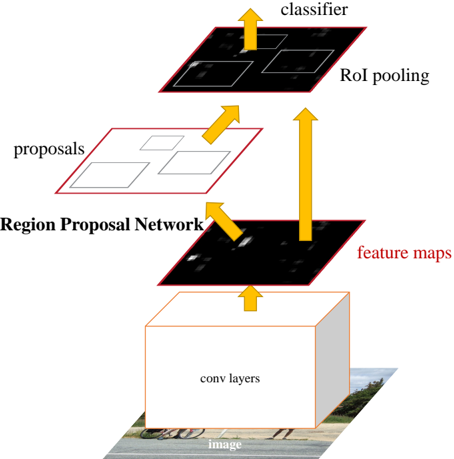
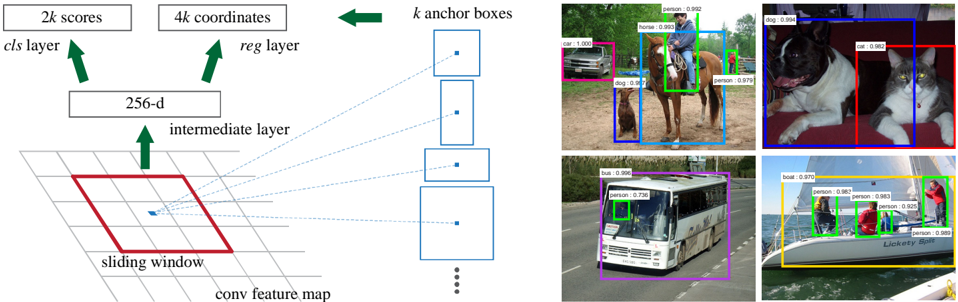
State-of-the-art object detection networks depend on region proposal algorithms to hypothesize object locations. Advances like SPPnet [1] and Fast R-CNN [2] have reduced the running time of these detection networks, exposing region proposal computation as a bottleneck. In this work, we introduce a Region Proposal Network (RPN) that shares full-image convolutional features with the detection network, thus enabling nearly cost-free region proposals. An RPN is a fully convolutional network that simultaneously predicts object bounds and objectness scores at each position. The RPN is trained end-to-end to generate high-quality region proposals, which are used by Fast R-CNN for detection. We further merge RPN and Fast R-CNN into a single network by sharing their convolutional features-using the recently popular terminology of neural networks with 'attention' mechanisms, the RPN component tells the unified network where to look. For the very deep VGG-16 model [3] , our detection system has a frame rate of 5 fps (including all steps) on a GPU, while achieving state-of-the-art object detection accuracy on PASCAL VOC 2007, 2012, and MS COCO datasets with only 300 proposals per image. In ILSVRC and COCO 2015 competitions, Faster R-CNN and RPN are the foundations of the 1st-place winning entries in several tracks. Code has been made publicly available.
Overview
CoChat Summary
TL;DR
Faster R-CNN introduces a Region Proposal Network (RPN) that shares convolutional features with Fast R-CNN, making region proposals nearly cost-free and enabling a unified object detection system. It achieves near real-time detection with state-of-the-art accuracy on PASCAL VOC and MS COCO.
Key findings
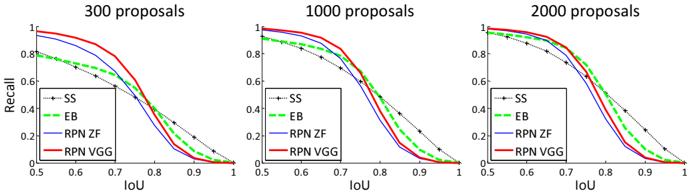
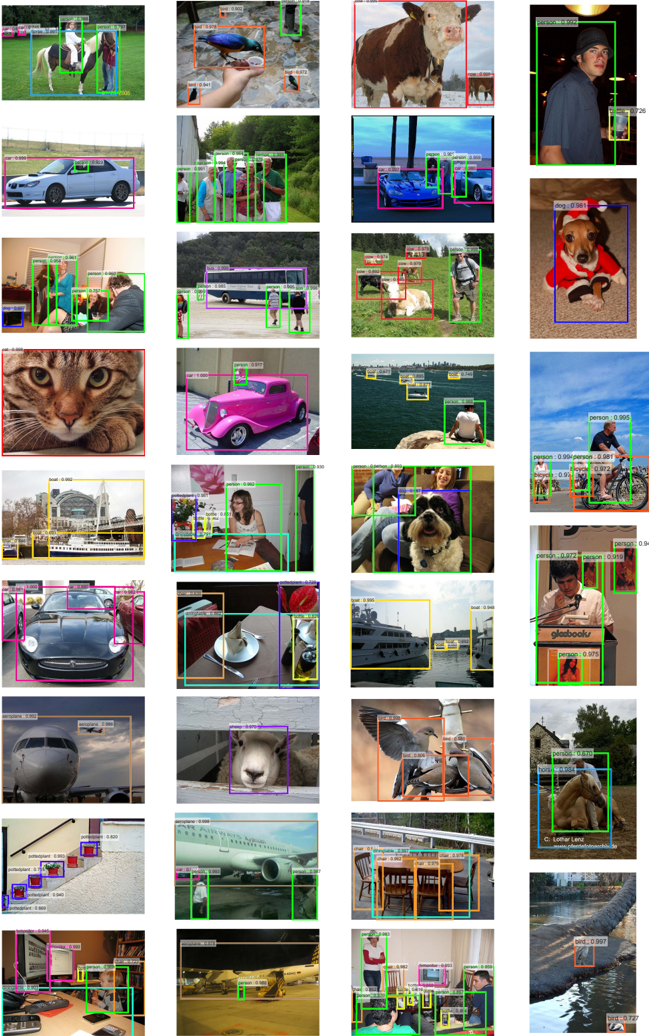
- With VGG-16 and shared features, Faster R-CNN reaches 69.9% mAP on PASCAL VOC 2007 test using 300 proposals, 73.2% with VOC07+12 training, 70.4% on VOC 2012 with 07++12, and 78.8% on VOC 2007 with COCO+07+12.
- Runtime: VGG-16 RPN + Fast R-CNN takes 198 ms total (5 fps), with RPN proposals costing 10 ms; ZF runs at 59 ms total (17 fps), versus SS + Fast R-CNN at 1830 ms (0.5 fps).
- Ablations: sharing features improves ZF mAP from 58.7% (unshared) to 59.9%; removing the reg layer drops mAP to 52.1%, and removing cls with 100 proposals drops it to 44.6%.
- On MS COCO test-dev, Faster R-CNN with VGG-16 and COCO train reaches 42.1% mAP@0.5 and 21.5% mAP@[.5,.95]; with COCO trainval it reaches 42.7% and 21.9%.
Methods
- The RPN is a fully convolutional network that slides a 3×3 window over shared conv features and predicts objectness scores and box regressions relative to anchors; default anchors use 3 scales (128², 256², 512²) and 3 aspect ratios (1:1, 1:2, 2:1), giving k = 9 anchors per position.
- Training uses a 4-step alternating scheme with ImageNet-pretrained ZF or VGG-16, SGD, single-scale images (shorter side s = 600), NMS at IoU 0.7, and 300 proposals at test time; evaluation is on PASCAL VOC 2007/2012 and MS COCO.
- Main metrics are detection mAP on PASCAL VOC and mAP@0.5 / mAP@[.5,.95] on MS COCO, with timing measured on a K40 GPU.
Limitations
- Stated in the paper: non-approximate joint training would require a differentiable RoI pooling/warping layer and is beyond the paper’s scope; the approximate joint training ignores gradients with respect to proposal box coordinates.
- Stated in the paper: cross-boundary anchors are ignored during training, and multi-scale feature extraction may improve accuracy but does not offer a good speed-accuracy trade-off.
- Evident from the text: the main experiments focus on PASCAL VOC and MS COCO with ZF/VGG-16 backbones, so generalization to other datasets, backbones, or detection regimes is not extensively characterized.
Model-written summary. Check it against the paper before relying on it.
Integrity signals
Registry
Cites
Statistics
Figures

Verification
Claims the paper makes
12 Valid · 5 Not valid · 8 Not checked · 83 Own results and interpretations
Every source the paper cites for this claim was checked and supports it.
In the paper
“Only by replacing VGG-16 with a 101layer residual net (ResNet-101) [18], the Faster R-CNN system increases the mAP from 41.5%/21.2% (VGG16) to 48.4%/27.2% (ResNet-101) on the COCO val set.”
What the sources say
- Supportedcites [18] [18] K. He, X. Zhang, S. Ren, and J. Sun, 'Deep residual learning for image recognition,' arXiv:1512.03385 , 2015. - source
Table 8 (p. 8) reports the exact COCO validation-set mAP values for baseline Faster R-CNN with VGG-16 and ResNet-101. Section 4.3 (p. 8) says the detection implementation was the same for both models and attributes the gain to replacing VGG-16 with ResNet-101. (LLM, conf=0.95)
plainstates a cause- Asserted: passes — The authors put it forward as true.
- Checkable: passes — It can be checked against evidence.
- Load-bearing: passes — The paper’s conclusions depend on it.
- Based: passes — The paper gives a reason why it holds.
- Supported
Every source the paper cites for this claim was checked and supports it.
In the paper
“This observation is still valid even when one increases the depth substantially to over 100 layers [18].”
What the sources say
- Supportedcites [18] [18] K. He, X. Zhang, S. Ren, and J. Sun, 'Deep residual learning for image recognition,' arXiv:1512.03385 , 2015. - source
In ImageNet Classification (p. 7), the paper reports that 101- and 152-layer ResNets outperform the 34-layer model, with no observed degradation. Its CIFAR-10 analysis (p. 7) also reports that a 110-layer ResNet converges well. These results support the stated extension to over 100 layers, although the isolated sentence does not specify what “this observation” refers to. (LLM, conf=0.87)
plain- Asserted: passes — The authors put it forward as true.
- Checkable: passes — It can be checked against evidence.
- Load-bearing: unclear — It is unclear whether the paper’s conclusions depend on it.
- Based: passes — The paper gives a reason why it holds.
- Supported
The cited sources support only part of this claim — read each source’s verdict below.
In the paper
“In ILSVRC and COCO 2015 competitions, Faster R-CNN and RPN are the basis of several 1st-place entries [18] in the tracks of ImageNet detection, ImageNet localization, COCO detection, and COCO segmentation.”
What the sources say
- Partly supportedcites [18] [18] K. He, X. Zhang, S. Ren, and J. Sun, 'Deep residual learning for image recognition,' arXiv:1512.03385 , 2015. - sourceExperimental — accuracy not yet measured
Section 4.3 (p. 8) lists first-place finishes in all four tracks, and the Object Detection Baselines (p. 10) describe a Faster R-CNN system using an RPN. The ImageNet Localization section (p. 12) also identifies its RPN-based method. But the copy attributes the entries collectively to deep residual nets; it does not establish that Faster R-CNN and RPN underpinned the COCO segmentation entry. (LLM, conf=0.86)
plainstates a cause- Asserted: passes — The authors put it forward as true.
- Checkable: passes — It can be checked against evidence.
- Load-bearing: unclear — It is unclear whether the paper’s conclusions depend on it.
- Based: passes — The paper gives a reason why it holds.
- Partly supported
The cited sources that could be checked couldn’t confirm or dispute this claim.
In the paper
“Yet when compared to efficient detection networks [2], Selective Search is an order of magnitude slower, at 2 seconds per image in a CPU implementation.”
What the sources say
- Could not verifycites [4] [4] J. R. Uijlings, K. E. van de Sande, T. Gevers, and A. W. Smeulders, 'Selective search for object recognition,' International Journal of Computer Vision (IJCV) , 2013. - sourceExperimental — accuracy not yet measured
The computational discussion in §5.3 (pp. 12–13) gives timings for complete object-recognition pipelines, not a two-second CPU runtime for Selective Search. The comparisons in §5.2.1 (p. 11) concern other object-location methods, not efficient detection networks. Searches for a two-second per-image runtime and a network comparison found neither claim in our copy. (LLM, conf=0.73)
- Not checked — no full text of the sourcecites [2] [2] R. Girshick, 'Fast R-CNN,' in IEEE International Conference on Computer Vision (ICCV) , 2015. - source
plainstates an association- Asserted: passes — The authors put it forward as true.
- Checkable: passes — It can be checked against evidence.
- Load-bearing: passes — The paper’s conclusions depend on it.
- Based: passes — The paper gives a reason why it holds.
- Could not verify
Every source the paper cites for this claim was checked and supports it.
In the paper
“We comprehensively evaluate our method on the PASCAL VOC detection benchmarks [11] where RPNs with Fast R-CNNs produce detection accuracy better than the strong baseline of Selective Search with Fast R-CNNs.”
What the sources say
- Supportedcites [11] [11] M. Everingham, L. Van Gool, C. K. I. Williams, J. Winn, and A. Zisserman, 'The PASCAL Visual Object Classes Challenge 2007 (VOC2007) Results,' 2007. - source
The citation is attached to “PASCAL VOC detection benchmarks,” not to the citing authors’ comparison of RPNs and Selective Search. Sections 5.2 and 6.2 describe the VOC detection task, its submitted methods, and its results, confirming the benchmark identification. (LLM, conf=0.92)
plainstates a cause- Asserted: passes — The authors put it forward as true.
- Checkable: passes — It can be checked against evidence.
- Load-bearing: passes — The paper’s conclusions depend on it.
- Based: passes — The paper gives a reason why it holds.
- Rests on an assumption not shown here.
- Supported
56 more claims
Create a free account to see all 108 claims and to verify the 2 references still open.
- Probably not a substantial claim. 11
- It may state two separate claims as one. 40
- The quote only partly states this claim. 1
Claims other papers make about this one
Each is checked against this paper’s own text: does it say what the citing paper says it does?
The source backs part of the claim, not all of it — or backs it for a different population, condition or comparison.
In the citing paper
“Unlike the original paper [19] that adopted stage-wise training regarding RPN, we use an improved implementation with end-to-end joint training similar to [37], which leads to higher baselines than [19].”
From Non-local Neural Networks (2018) · cites this paper as [37]
Experimental — accuracy not yet measuredThe source backs part of the claim, not all of it — or backs it for a different population, condition or comparison.
In the citing paper
“Faster RCNN is the first near-realtime deep learning detector (COCO mAP@.5=42.7%, VOC07 mAP=73.2%, 17fps with ZF-Net [48]).”
From Object Detection in 20 Years: A Survey (2023) · cites this paper as [19]
Experimental — accuracy not yet measuredThe source backs part of the claim, not all of it — or backs it for a different population, condition or comparison.
In the citing paper
“Faster RCNN is the first near-realtime deep learning detector (COCO mAP@.5=42.7%, VOC07 mAP=73.2%, 17fps with ZF-Net [48]).”
From Object Detection in 20 Years: A Survey (2023) · cites this paper as [47]
Experimental — accuracy not yet measuredThe source backs part of the claim, not all of it — or backs it for a different population, condition or comparison.
In the citing paper
“In the deep learning era, due to the increase of computing power, bootstrap was shortly discarded in object detection during 2014-2016 [16-20].”
From Object Detection in 20 Years: A Survey (2023) · cites this paper as [19]
Experimental — accuracy not yet measuredThe source backs part of the claim, not all of it — or backs it for a different population, condition or comparison.
In the citing paper
“The most commonly used idea to reduce the feature computational redundancy is to compute the feature map of the whole image only once [18, 19, 124], which have achieved tens or even hundreds of times of acceleration.”
From Object Detection in 20 Years: A Survey (2023) · cites this paper as [19]
Experimental — accuracy not yet measured
21 more claims about this paper
Create a free account to see every claim other papers make about this one.
Citations
Cites
Deep Residual Learning for Image Recognition
He, K., Zhang, X., Ren, S., & Sun, J. (2016) · 2016 IEEE Conference on Computer Vision and Pattern Recognition (CVPR) · doi:10.1109/cvpr.2016.90 · Cited by 235,474 · cited 7×
“to propose regions from data, and thus can easily benefit from deeper and more expressive features (such as the 101layer residual nets adopted in [18]).”
BackgroundInfluentialSelf-citationVery Deep Convolutional Networks for Large-Scale Image Recognition
Simonyan, K., & Zisserman, A. (2014) · arXiv · doi:10.48550/arxiv.1409.1556 · Cited by 114,148
ImageNet classification with deep convolutional neural networks
Krizhevsky, A., Sutskever, I., & Hinton, G. E. (2017) · Communications of the ACM · doi:10.1145/3065386 · Cited by 112,155 · cited 1×
“For the regression loss, we use L where R is the robust loss function (smooth L 1 ) defined in [5].”
MethodGoing deeper with convolutions
Szegedy, C., Liu, W., Jia, Y., Sermanet, P., Reed, S., Anguelov, D., Erhan, D., Vanhoucke, V., & Rabinovich, A. (2015) · 2015 IEEE Conference on Computer Vision and Pattern Recognition (CVPR) · doi:10.1109/cvpr.2015.7298594 · Cited by 48,562 · cited 1×
“1× 10(6) parameters (1536 × (4 + 1) × 800 for GoogleNet [34] in MultiBox [27]).”
Microsoft COCO: Common Objects in Context
Lin, T.-Y., Maire, M., Belongie, S., Hays, J., Perona, P., Ramanan, D., Dollár, P., & Zitnick, C. L. (2014) · Lecture Notes in Computer Science · doi:10.1007/978-3-319-10602-1_48 · Cited by 45,460 · cited 1×
“Region proposal methods typically rely on inexpensive features and economical inference schemes.”
MethodImageNet Large Scale Visual Recognition Challenge
Russakovsky, O., Deng, J., Su, H., Krause, J., Satheesh, S., Ma, S., Huang, Z., Karpathy, A., Khosla, A., Bernstein, M., et al. (2015) · International Journal of Computer Vision · doi:10.1007/s11263-015-0816-y · Cited by 39,380 · cited 1×
“, the shared convolutional layers) are initialized by pre-training a model for ImageNet classification [36], as is standard practice [5].”
MethodFully convolutional networks for semantic segmentation
Long, J., Shelhamer, E., & Darrell, T. (2015) · 2015 IEEE Conference on Computer Vision and Pattern Recognition (CVPR) · doi:10.1109/cvpr.2015.7298965 · Cited by 38,834 · cited 5×
“Our RPNs are thus a kind of fully-convolutional network (FCN) [14] and they can be trained end-to-end specifically for the task for generating detection proposals.”
BackgroundMethodInfluentialRich Feature Hierarchies for Accurate Object Detection and Semantic Segmentation
Girshick, R., Donahue, J., Darrell, T., & Malik, J. (2014) · 2014 IEEE Conference on Computer Vision and Pattern Recognition · doi:10.1109/cvpr.2014.81 · Cited by 32,684 · cited 7×
“, Selective Search [4] object detectors, RCNN [5], and Fast R-CNN [2]).”
BackgroundMethodInfluentialSelf-citationGirshick, R. (2015) · 2015 IEEE International Conference on Computer Vision (ICCV) · doi:10.1109/iccv.2015.169 · Cited by 28,105
Self-citationThe pascal visual object classes (VOC) challenge
Everingham, M., Van Gool, L., Williams, C. K. I., Winn, J., & Zisserman, A. (2010) · International Journal of Computer Vision · doi:10.1007/s11263-009-0275-4 · Cited by 19,599
Research works printed but not linked: 1
- [10] S. Ren, K. He, R. Girshick, and J. Sun, 'Faster R-CNN: Towards real-time object detection with region proposal networks,' in Neural Information Processing Systems (NIPS) , 2015. -
Cited by
Items 801–900 of 56,405
Involution: Inverting the Inherence of Convolution for Visual Recognition
Li, D., Hu, J., Wang, C., Li, X., She, Q., Zhu, L., Zhang, T., & Chen, Q. (2021) · 2021 IEEE/CVF Conference on Computer Vision and Pattern Recognition (CVPR) · doi:10.1109/cvpr46437.2021.01214 · Cited by 416
Deep Cocktail Network: Multi-source Unsupervised Domain Adaptation with Category Shift
Xu, R., Chen, Z., Zuo, W., Yan, J., & Lin, L. (2018) · 2018 IEEE/CVF Conference on Computer Vision and Pattern Recognition · doi:10.1109/cvpr.2018.00417 · Cited by 415
Efficient Interactive Annotation of Segmentation Datasets with Polygon-RNN++
Acuna, D., Ling, H., Kar, A., & Fidler, S. (2018) · 2018 IEEE/CVF Conference on Computer Vision and Pattern Recognition · doi:10.1109/cvpr.2018.00096 · Cited by 414
A Metric Learning Reality Check
Musgrave, K., Belongie, S., & Lim, S.-N. (2020) · Lecture Notes in Computer Science · doi:10.1007/978-3-030-58595-2_41 · Cited by 414
ActBERT: Learning Global-Local Video-Text Representations
Zhu, L., & Yang, Y. (2020) · 2020 IEEE/CVF Conference on Computer Vision and Pattern Recognition (CVPR) · doi:10.1109/cvpr42600.2020.00877 · Cited by 405
Instance-Sensitive Fully Convolutional Networks
Dai, J., He, K., Li, Y., Ren, S., & Sun, J. (2016) · Lecture Notes in Computer Science · doi:10.1007/978-3-319-46466-4_32 · Cited by 413
Self-citationBadgujar, C. M., Poulose, A., & Gan, H. (2024) · Computers and Electronics in Agriculture · doi:10.1016/j.compag.2024.109090 · Cited by 411
Paraphrasing Complex Network: Network Compression via Factor Transfer
Kim, J., Park, S., & Kwak, N. (2018) · arXiv · doi:10.48550/arxiv.1802.04977 · Cited by 411
Modeling Relationships in Referential Expressions with Compositional Modular Networks
Hu, R., Rohrbach, M., Andreas, J., Darrell, T., & Saenko, K. (2017) · 2017 IEEE Conference on Computer Vision and Pattern Recognition (CVPR) · doi:10.1109/cvpr.2017.470 · Cited by 375
Single-Shot Multi-person 3D Pose Estimation from Monocular RGB
Mehta, D., Sotnychenko, O., Mueller, F., Xu, W., Sridhar, S., Pons-Moll, G., & Theobalt, C. (2018) · 2018 International Conference on 3D Vision (3DV) · doi:10.1109/3dv.2018.00024 · Cited by 391
Schaffter, T., Buist, D. S. M., Lee, C. I., Nikulin, Y., Ribli, D., Guan, Y., Lotter, W., Jie, Z., Du, H., Wang, S., et al. (2020) · JAMA Network Open · doi:10.1001/jamanetworkopen.2020.0265 · Cited by 409
STAT: Spatial-Temporal Attention Mechanism for Video Captioning
Yan, C., Tu, Y., Wang, X., Zhang, Y., Hao, X., Zhang, Y., & Dai, Q. (2020) · IEEE Transactions on Multimedia · doi:10.1109/tmm.2019.2924576 · Cited by 399
Liu, X., Liu, Y., Chen, J., & Liu, X. (2022) · IEEE Transactions on Circuits and Systems for Video Technology · doi:10.1109/tcsvt.2022.3189545 · Cited by 417
Boosting Few-Shot Visual Learning With Self-Supervision
Gidaris, S., Bursuc, A., Komodakis, N., Perez, P. P., & Cord, M. (2019) · 2019 IEEE/CVF International Conference on Computer Vision (ICCV) · doi:10.1109/iccv.2019.00815 · Cited by 409
Cheng, G., Han, J., Zhou, P., & Xu, D. (2019) · IEEE Transactions on Image Processing · doi:10.1109/tip.2018.2867198 · Cited by 408
“To further reduce the computational costs of R-CNN [1], [2] and Fast R-CNN [3], Faster R-CNN [4] was proposed.”
InfluentialFFCA-YOLO for Small Object Detection in Remote Sensing Images
Zhang, Y., Ye, M., Zhu, G., Liu, Y., Guo, P., & Yan, J. (2024) · IEEE Transactions on Geoscience and Remote Sensing · doi:10.1109/tgrs.2024.3363057 · Cited by 410
Conditional Positional Encodings for Vision Transformers
Chu, X., Tian, Z., Zhang, B., Wang, X., & Shen, C. (2021) · arXiv · doi:10.48550/arxiv.2102.10882 · Cited by 489
DenseBox: Unifying Landmark Localization with End to End Object Detection
Huang, L., Yang, Y., Deng, Y., & Yu, Y. (2015) · arXiv · doi:10.48550/arxiv.1509.04874 · Cited by 407
PCL: Proposal Cluster Learning for Weakly Supervised Object Detection
Tang, P., Wang, X., Bai, S., Shen, W., Bai, X., Liu, W., & Yuille, A. (2020) · IEEE Transactions on Pattern Analysis and Machine Intelligence · doi:10.1109/tpami.2018.2876304 · Cited by 406
“Recently, due to the development of Convolutional Neural Network (CNN) [1], [2] and the availability of large scale datasets with detailed boundingbox-level annotations [3], [4], [5], there have been great leap forwards in object detection [6], [7], [8], [9], [10], [11].”
BackgroundAdaptive NMS: Refining Pedestrian Detection in a Crowd
Liu, S., Huang, D., & Wang, Y. (2019) · 2019 IEEE/CVF Conference on Computer Vision and Pattern Recognition (CVPR) · doi:10.1109/cvpr.2019.00662 · Cited by 413
“For better demonstration, we compare the results of Faster R-CNN with greedy-NMS, soft-NMS (“linear”) as well as adaptive-NMS on these sub-sets.”
BackgroundMethodInfluentialMimicking Very Efficient Network for Object Detection
Li, Q., Jin, S., & Yan, J. (2017) · 2017 IEEE Conference on Computer Vision and Pattern Recognition (CVPR) · doi:10.1109/cvpr.2017.776 · Cited by 379
MaskLab: Instance Segmentation by Refining Object Detection with Semantic and Direction Features
Chen, L.-C., Hermans, A., Papandreou, G., Schroff, F., Wang, P., & Adam, H. (2018) · 2018 IEEE/CVF Conference on Computer Vision and Pattern Recognition · doi:10.1109/cvpr.2018.00422 · Cited by 373
Chen, H., Wang, Y., Sun, X., Peng, Y., & Xiao, L. (2020) · Chemosphere · doi:10.1016/j.chemosphere.2019.125271 · Cited by 400
Local Aggregation for Unsupervised Learning of Visual Embeddings
Zhuang, C., Zhai, A., & Yamins, D. (2019) · 2019 IEEE/CVF International Conference on Computer Vision (ICCV) · doi:10.1109/iccv.2019.00610 · Cited by 417
From Patches to Pictures (PaQ-2-PiQ): Mapping the Perceptual Space of Picture Quality
Ying, Z., Niu, H., Gupta, P., Mahajan, D., Ghadiyaram, D., & Bovik, A. (2020) · 2020 IEEE/CVF Conference on Computer Vision and Pattern Recognition (CVPR) · doi:10.1109/cvpr42600.2020.00363 · Cited by 406
Tiny Object Detection in Aerial Images
Wang, J., Yang, W., Guo, H., Zhang, R., & Xia, G.-S. (2021) · 2020 25th International Conference on Pattern Recognition (ICPR) · doi:10.1109/icpr48806.2021.9413340 · Cited by 406
Liang, X. (2019) · Computer-Aided Civil and Infrastructure Engineering · doi:10.1111/mice.12425 · Cited by 398
Pavement distress detection and classification based on YOLO network
Du, Y., Pan, N., Xu, Z., Deng, F., Shen, Y., & Kang, H. (2021) · International Journal of Pavement Engineering · doi:10.1080/10298436.2020.1714047 · Cited by 404
Deep and machine learning techniques for medical imaging-based breast cancer: A comprehensive review
Houssein, E. H., Emam, M. M., Ali, A. A., & Suganthan, P. N. (2021) · Expert Systems with Applications · doi:10.1016/j.eswa.2020.114161 · Cited by 404
Facial Landmark Detection: A Literature Survey
Wu, Y., & Ji, Q. (2019) · International Journal of Computer Vision · doi:10.1007/s11263-018-1097-z · Cited by 404
Sun, Y., Xu, Q., Li, Y., Zhang, C., Li, Y., Wang, S., & Sun, J. (2019) · 2019 IEEE/CVF Conference on Computer Vision and Pattern Recognition (CVPR) · doi:10.1109/cvpr.2019.00048 · Cited by 388
Self-citationReal-Time Polyp Detection, Localization and Segmentation in Colonoscopy Using Deep Learning
Jha, D., Ali, S., Tomar, N. K., Johansen, H. D., Johansen, D., Rittscher, J., Riegler, M. A., & Halvorsen, P. (2021) · IEEE Access · doi:10.1109/access.2021.3063716 · Cited by 399
Track to Detect and Segment: An Online Multi-Object Tracker
Wu, J., Cao, J., Song, L., Wang, Y., Yang, M., & Yuan, J. (2021) · 2021 IEEE/CVF Conference on Computer Vision and Pattern Recognition (CVPR) · doi:10.1109/cvpr46437.2021.01217 · Cited by 406
Deep learning in bioinformatics: Introduction, application, and perspective in the big data era
Li, Y., Huang, C., Ding, L., Li, Z., Pan, Y., & Gao, X. (2019) · Methods · doi:10.1016/j.ymeth.2019.04.008 · Cited by 401
Unbiased Mean Teacher for Cross-domain Object Detection
Deng, J., Li, W., Chen, Y., & Duan, L. (2021) · 2021 IEEE/CVF Conference on Computer Vision and Pattern Recognition (CVPR) · doi:10.1109/cvpr46437.2021.00408 · Cited by 401
Dynamic Fusion With Intra- and Inter-Modality Attention Flow for Visual Question Answering
Gao, P., Jiang, Z., You, H., Lu, P., Hoi, S. C. H., Wang, X., & Li, H. (2019) · 2019 IEEE/CVF Conference on Computer Vision and Pattern Recognition (CVPR) · doi:10.1109/cvpr.2019.00680 · Cited by 381
Scale Match for Tiny Person Detection
Yu, X., Gong, Y., Jiang, N., Ye, Q., & Han, Z. (2020) · 2020 IEEE Winter Conference on Applications of Computer Vision (WACV) · doi:10.1109/wacv45572.2020.9093394 · Cited by 402
DAPs: Deep Action Proposals for Action Understanding
Escorcia, V., Caba Heilbron, F., Niebles, J. C., & Ghanem, B. (2016) · Lecture Notes in Computer Science · doi:10.1007/978-3-319-46487-9_47 · Cited by 400
Zhu, Y., Zhuang, F., & Wang, D. (2019) · Proceedings of the AAAI Conference on Artificial Intelligence · doi:10.1609/aaai.v33i01.33015989 · Cited by 387
DeepSqueak: a deep learning-based system for detection and analysis of ultrasonic vocalizations
Coffey, K. R., Marx, R. E., & Neumaier, J. F. (2019) · Neuropsychopharmacology · doi:10.1038/s41386-018-0303-6 · Cited by 389
Deep Learning for Intelligent Transportation Systems: A Survey of Emerging Trends
Veres, M., & Moussa, M. (2020) · IEEE Transactions on Intelligent Transportation Systems · doi:10.1109/tits.2019.2929020 · Cited by 394
Early Detection of Parkinson’s Disease Using Deep Learning and Machine Learning
Wang, W., Lee, J., Harrou, F., & Sun, Y. (2020) · IEEE Access · doi:10.1109/access.2020.3016062 · Cited by 397
CABNet: Category Attention Block for Imbalanced Diabetic Retinopathy Grading
He, A., Li, T., Li, N., Wang, K., & Fu, H. (2021) · IEEE Transactions on Medical Imaging · doi:10.1109/tmi.2020.3023463 · Cited by 395
DilateFormer: Multi-Scale Dilated Transformer for Visual Recognition
Jiao, J., Tang, Y.-M., Lin, K.-Y., Gao, Y., Ma, A. J., Wang, Y., & Zheng, W.-S. (2023) · IEEE Transactions on Multimedia · doi:10.1109/tmm.2023.3243616 · Cited by 398
Bouwmans, T., Javed, S., Sultana, M., & Jung, S. K. (2019) · Neural Networks · doi:10.1016/j.neunet.2019.04.024 · Cited by 396
TANet: Robust 3D Object Detection from Point Clouds with Triple Attention
Liu, Z., Zhao, X., Huang, T., Hu, R., Zhou, Y., & Bai, X. (2020) · Proceedings of the AAAI Conference on Artificial Intelligence · doi:10.1609/aaai.v34i07.6837 · Cited by 392
Multi-oriented Scene Text Detection via Corner Localization and Region Segmentation
Lyu, P., Yao, C., Wu, W., Yan, S., & Bai, X. (2018) · 2018 IEEE/CVF Conference on Computer Vision and Pattern Recognition · doi:10.1109/cvpr.2018.00788 · Cited by 389
Real-time monitoring of construction sites: Sensors, methods, and applications
Rao, A. S., Radanovic, M., Liu, Y., Hu, S., Fang, Y., Khoshelham, K., Palaniswami, M., & Ngo, T. (2022) · Automation in Construction · doi:10.1016/j.autcon.2021.104099 · Cited by 393
Complex-YOLO: An Euler-Region-Proposal for Real-Time 3D Object Detection on Point Clouds
Simon, M., Milz, S., Amende, K., & Gross, H.-M. (2019) · Lecture Notes in Computer Science · doi:10.1007/978-3-030-11009-3_11 · Cited by 394
Scale-Transferrable Object Detection
Zhou, P., Ni, B., Geng, C., Hu, J., & Xu, Y. (2018) · 2018 IEEE/CVF Conference on Computer Vision and Pattern Recognition · doi:10.1109/cvpr.2018.00062 · Cited by 373
R-CNN for Small Object Detection
Chen, C., Liu, M.-Y., Tuzel, O., & Xiao, J. (2017) · Lecture Notes in Computer Science · doi:10.1007/978-3-319-54193-8_14 · Cited by 392
6-DoF object pose from semantic keypoints
Pavlakos, G., Zhou, X., Chan, A., Derpanis, K. G., & Daniilidis, K. (2017) · 2017 IEEE International Conference on Robotics and Automation (ICRA) · doi:10.1109/icra.2017.7989233 · Cited by 366
DeepDeSRT: Deep Learning for Detection and Structure Recognition of Tables in Document Images
Schreiber, S., Agne, S., Wolf, I., Dengel, A., & Ahmed, S. (2017) · 2017 14th IAPR International Conference on Document Analysis and Recognition (ICDAR) · doi:10.1109/icdar.2017.192 · Cited by 378
Universally Slimmable Networks and Improved Training Techniques
Yu, J., & Huang, T. (2019) · 2019 IEEE/CVF International Conference on Computer Vision (ICCV) · doi:10.1109/iccv.2019.00189 · Cited by 361
RetinaFace: Single-stage Dense Face Localisation in the Wild
Deng, J., Guo, J., Zhou, Y., Yu, J., Kotsia, I., & Zafeiriou, S. P. (2019) · arXiv (Cornell University) · doi:10.48550/arxiv.1905.00641 · Cited by 391
TensorMask: A Foundation for Dense Object Segmentation
Chen, X., Girshick, R., He, K., & Dollar, P. (2019) · 2019 IEEE/CVF International Conference on Computer Vision (ICCV) · doi:10.1109/iccv.2019.00215 · Cited by 382
Self-citationDeep Image Deblurring: A Survey
Zhang, K., Ren, W., Luo, W., Lai, W.-S., Stenger, B., Yang, M.-H., & Li, H. (2022) · International Journal of Computer Vision · doi:10.1007/s11263-022-01633-5 · Cited by 390
Finding Task-Relevant Features for Few-Shot Learning by Category Traversal
Li, H., Eigen, D., Dodge, S., Zeiler, M., & Wang, X. (2019) · 2019 IEEE/CVF Conference on Computer Vision and Pattern Recognition (CVPR) · doi:10.1109/cvpr.2019.00009 · Cited by 400
Akcay, S., Kundegorski, M. E., Willcocks, C. G., & Breckon, T. P. (2018) · IEEE Transactions on Information Forensics and Security · doi:10.1109/tifs.2018.2812196 · Cited by 384
Salvi, M., Acharya, U. R., Molinari, F., & Meiburger, K. M. (2021) · Computers in Biology and Medicine · doi:10.1016/j.compbiomed.2020.104129 · Cited by 386
Machine-learning methods for ligand–protein molecular docking
Crampon, K., Giorkallos, A., Deldossi, M., Baud, S., & Steffenel, L. A. (2022) · Drug Discovery Today · doi:10.1016/j.drudis.2021.09.007 · Cited by 388
SuperYOLO: Super Resolution Assisted Object Detection in Multimodal Remote Sensing Imagery
Zhang, J., Lei, J., Xie, W., Fang, Z., Li, Y., & Du, Q. (2023) · IEEE Transactions on Geoscience and Remote Sensing · doi:10.1109/tgrs.2023.3258666 · Cited by 388
Adapting Object Detectors via Selective Cross-Domain Alignment
Zhu, X., Pang, J., Yang, C., Shi, J., & Lin, D. (2019) · 2019 IEEE/CVF Conference on Computer Vision and Pattern Recognition (CVPR) · doi:10.1109/cvpr.2019.00078 · Cited by 387
Zhao, M., Tian, Y., Zhao, H., Alsheikh, M. A., Li, T., Hristov, R., Kabelac, Z., Katabi, D., & Torralba, A. (2018) · Proceedings of the 2018 Conference of the ACM Special Interest Group on Data Communication · doi:10.1145/3230543.3230579 · Cited by 379
Hu, L., Bell, D., Antani, S., Xue, Z., Yu, K., Horning, M. P., Gachuhi, N., Wilson, B., Jaiswal, M. S., Befano, B., et al. (2019) · JNCI: Journal of the National Cancer Institute · doi:10.1093/jnci/djy225 · Cited by 387
Individual Tree-Crown Detection in RGB Imagery Using Semi-Supervised Deep Learning Neural Networks
Weinstein, B. G., Marconi, S., Bohlman, S., Zare, A., & White, E. (2019) · Remote Sensing · doi:10.3390/rs11111309 · Cited by 382
RDD-YOLO: A modified YOLO for detection of steel surface defects
Zhao, C., Shu, X., Yan, X., Zuo, X., & Zhu, F. (2023) · Measurement · doi:10.1016/j.measurement.2023.112776 · Cited by 386
ECA-Net: Efficient Channel Attention for Deep Convolutional Neural NetworksPreprint
Wang, Q., Wu, B., Zhu, P., et al. (2019) · arXiv (Cornell University) · doi:10.48550/arxiv.1910.03151 · Cited by 386
Object Detection from Video Tubelets with Convolutional Neural Networks
Kang, K., Ouyang, W., Li, H., & Wang, X. (2016) · 2016 IEEE Conference on Computer Vision and Pattern Recognition (CVPR) · doi:10.1109/cvpr.2016.95 · Cited by 386
“In the Faster R-CNN pipeline [28], the bounding box proposals were generated by a Region Proposal Network (RPN), and the overall framework can thus be trained in an end-to-end manner.”
MethodA Hierarchical Approach for Generating Descriptive Image Paragraphs
Krause, J., Johnson, J., Krishna, R., & Fei-Fei, L. (2017) · 2017 IEEE Conference on Computer Vision and Pattern Recognition (CVPR) · doi:10.1109/cvpr.2017.356 · Cited by 364
Review: Deep Learning on 3D Point Clouds
Bello, S. A., Yu, S., Wang, C., Adam, J. M., & Li, J. (2020) · Remote Sensing · doi:10.3390/rs12111729 · Cited by 387
Automated pavement crack detection and segmentation based on two‐step convolutional neural network
Liu, J., Yang, X., Lau, S., Wang, X., Luo, S., Lee, V. C., & Ding, L. (2020) · Computer-Aided Civil and Infrastructure Engineering · doi:10.1111/mice.12622 · Cited by 384
Ding, J., Li, A., Hu, Z., & Wang, L. (2017) · Lecture Notes in Computer Science · doi:10.1007/978-3-319-66179-7_64 · Cited by 385
“The detailed definitions of classification loss Lc and regression loss Lr are the same as the corresponding definitions in the literature [5].”
BackgroundMethodResultInfluentialLearning to Quantize Deep Networks by Optimizing Quantization Intervals With Task Loss
Jung, S., Son, C., Lee, S., Son, J., Han, J.-J., Kwak, Y., Hwang, S. J., & Choi, C. (2019) · 2019 IEEE/CVF Conference on Computer Vision and Pattern Recognition (CVPR) · doi:10.1109/cvpr.2019.00448 · Cited by 385
“d ImageNet. 1 Introduction Deep Convolutional Neural Networks (DCNNs) have achieved a great improvement in various computer-vision applications such as image classification [1; 2; 3], object detection [4; 5; 6] and semantic segmentation [7]. As DCNNs deepen and broaden, the expressive power increases and the performanc…”
BackgroundKang, D., & Cha, Y. (2018) · Computer-Aided Civil and Infrastructure Engineering · doi:10.1111/mice.12375 · Cited by 384
FastDepth: Fast Monocular Depth Estimation on Embedded Systems
Wofk, D., Ma, F., Yang, T.-J., Karaman, S., & Sze, V. (2019) · 2019 International Conference on Robotics and Automation (ICRA) · doi:10.1109/icra.2019.8794182 · Cited by 384
Ali, M. L., & Zhang, Z. (2024) · Computers · doi:10.3390/computers13120336 · Cited by 383
DC-SPP-YOLO: Dense connection and spatial pyramid pooling based YOLO for object detection
Huang, Z., Wang, J., Fu, X., Yu, T., Guo, Y., & Wang, R. (2020) · Information Sciences · doi:10.1016/j.ins.2020.02.067 · Cited by 379
GS3D: An Efficient 3D Object Detection Framework for Autonomous Driving
Li, B., Ouyang, W., Sheng, L., Zeng, X., & Wang, X. (2019) · 2019 IEEE/CVF Conference on Computer Vision and Pattern Recognition (CVPR) · doi:10.1109/cvpr.2019.00111 · Cited by 361
Progressive Domain Adaptation for Object Detection
Hsu, H.-K., Yao, C.-H., Tsai, Y.-H., Hung, W.-C., Tseng, H.-Y., Singh, M., & Yang, M.-H. (2020) · 2020 IEEE Winter Conference on Applications of Computer Vision (WACV) · doi:10.1109/wacv45572.2020.9093358 · Cited by 382
“Recent advancement in neural networks has brought significant improvement to the performance of object detection [9, 24, 21, 22, 23, 17].”
BackgroundMethodInfluentialSqueeze and Excitation Rank Faster R-CNN for Ship Detection in SAR Images
Lin, Z., Ji, K., Leng, X., & Kuang, G. (2019) · IEEE Geoscience and Remote Sensing Letters · doi:10.1109/lgrs.2018.2882551 · Cited by 378
Relation-Aware Graph Attention Network for Visual Question Answering
Li, L., Gan, Z., Cheng, Y., & Liu, J. (2019) · 2019 IEEE/CVF International Conference on Computer Vision (ICCV) · doi:10.1109/iccv.2019.01041 · Cited by 379
AdaBelief Optimizer: Adapting Stepsizes by the Belief in Observed Gradients
Zhuang, J., Tang, T., Ding, Y., Tatikonda, S., Dvornek, N., Papademetris, X., & Duncan, J. S. (2020) · arXiv · doi:10.48550/arxiv.2010.07468 · Cited by 382
Exploring Simple Siamese Representation Learning
Chen, X., & He, K. (2020) · arXiv · doi:10.48550/arxiv.2011.10566 · Cited by 381
Self-citationGaussian Temporal Awareness Networks for Action Localization
Long, F., Yao, T., Qiu, Z., Tian, X., Luo, J., & Mei, T. (2019) · 2019 IEEE/CVF Conference on Computer Vision and Pattern Recognition (CVPR) · doi:10.1109/cvpr.2019.00043 · Cited by 380
“One natural way of temporal action localization is to extend image object detection frameworks, e.g., SSD [23] or Faster R-CNN [29], for producing spatial bounding boxes in a 2D image to temporal localization of an action in a 1D sequence [4, 19].”
BackgroundLarge language models (LLMs): survey, technical frameworks, and future challenges
Kumar, P. (2024) · Artificial Intelligence Review · doi:10.1007/s10462-024-10888-y · Cited by 395
VerSe: A Vertebrae labelling and segmentation benchmark for multi-detector CT images
Sekuboyina, A., Husseini, M. E., Bayat, A., Löffler, M., Liebl, H., Li, H., Tetteh, G., Kukačka, J., Payer, C., Štern, D., et al. (2021) · Medical Image Analysis · doi:10.1016/j.media.2021.102166 · Cited by 372
Focal and Global Knowledge Distillation for Detectors
Yang, Z., Li, Z., Jiang, X., Gong, Y., Yuan, Z., Zhao, D., & Yuan, C. (2022) · 2022 IEEE/CVF Conference on Computer Vision and Pattern Recognition (CVPR) · doi:10.1109/cvpr52688.2022.00460 · Cited by 380
Online Multi-Object Tracking with Dual Matching Attention Networks
Zhu, J., Yang, H., Liu, N., Kim, M., Zhang, W., & Yang, M.-H. (2018) · Lecture Notes in Computer Science · doi:10.1007/978-3-030-01228-1_23 · Cited by 377
“The MOT17 dataset contains the same video sequences as the MOT16 dataset while additionally providing three sets of detections (DPM [19], Faster-RCNN [40], and SDP [56]) for more comprehensive evaluation of the tracking algorithms.”
MethodIntelligent metasurface imager and recognizer
Li, L., Shuang, Y., Ma, Q., Li, H., Zhao, H., Wei, M., Liu, C., Hao, C., Qiu, C.-W., & Cui, T. J. (2019) · Light: Science & Applications · doi:10.1038/s41377-019-0209-z · Cited by 376
Welikala, R. A., Remagnino, P., Lim, J. H., Chan, C. S., Rajendran, S., Kallarakkal, T. G., Zain, R. B., Jayasinghe, R. D., Rimal, J., Kerr, A. R., et al. (2020) · IEEE Access · doi:10.1109/access.2020.3010180 · Cited by 372
LaserNet: An Efficient Probabilistic 3D Object Detector for Autonomous Driving
Meyer, G. P., Laddha, A., Kee, E., Vallespi-Gonzalez, C., & Wellington, C. K. (2019) · 2019 IEEE/CVF Conference on Computer Vision and Pattern Recognition (CVPR) · doi:10.1109/cvpr.2019.01296 · Cited by 374
“Most of the state-of-the-art 2D [24, 19] and 3D [5, 15, 27, 17] object detection methods produce a single box with a probability score for each detection.”
BackgroundMethodCheng, J. C. P., & Wang, M. (2018) · Automation in Construction · doi:10.1016/j.autcon.2018.08.006 · Cited by 374
Zhao, Z., Liu, Q., & Wang, S. (2021) · IEEE Transactions on Image Processing · doi:10.1109/tip.2021.3093397 · Cited by 375
MOTChallenge: A Benchmark for Single-Camera Multiple Target Tracking
Dendorfer, P., Os̆ep, A., Milan, A., Schindler, K., Cremers, D., Reid, I., Roth, S., & Leal-Taixé, L. (2021) · International Journal of Computer Vision · doi:10.1007/s11263-020-01393-0 · Cited by 374
“Instead, it simply re-purposes the regression head of the Faster R-CNN (Ren et al. 2015) detector, which is interpreted as the target regressor.”
MethodDeep Snake for Real-Time Instance Segmentation
Peng, S., Jiang, W., Pi, H., Li, X., Bao, H., & Zhou, X. (2020) · 2020 IEEE/CVF Conference on Computer Vision and Pattern Recognition (CVPR) · doi:10.1109/cvpr42600.2020.00856 · Cited by 374
Data-Free Learning of Student Networks
Chen, H., Wang, Y., Xu, C., Yang, Z., Liu, C., Shi, B., Xu, C., Xu, C., & Tian, Q. (2019) · 2019 IEEE/CVF International Conference on Computer Vision (ICCV) · doi:10.1109/iccv.2019.00361 · Cited by 346
Hyper-YOLO: When Visual Object Detection Meets Hypergraph Computation
Feng, Y., Huang, J., Du, S., Ying, S., Yong, J.-H., Li, Y., Ding, G., Ji, R., & Gao, Y. (2025) · IEEE Transactions on Pattern Analysis and Machine Intelligence · doi:10.1109/tpami.2024.3524377 · Cited by 383
From Show to Tell: A Survey on Deep Learning-Based Image Captioning
Stefanini, M., Cornia, M., Baraldi, L., Cascianelli, S., Fiameni, G., & Cucchiara, R. (2023) · IEEE Transactions on Pattern Analysis and Machine Intelligence · doi:10.1109/tpami.2022.3148210 · Cited by 373
FUNSD: A Dataset for Form Understanding in Noisy Scanned Documents
Jaume, G., Kemal Ekenel, H., & Thiran, J.-P. (2019) · 2019 International Conference on Document Analysis and Recognition Workshops (ICDARW) · doi:10.1109/icdarw.2019.10029 · Cited by 367
Metadata
- Authors
- Ren, S., He, K., Girshick, R., & Sun, J.
- Affiliations
- University of Science and Technology of China (CN)
- Visual Computing Group, Microsoft Research, Beijing, China
- Meta (United States) (US)
- ORCID
- Venue
- IEEE Transactions on Pattern Analysis and Machine Intelligence
- Published
- 2017-06-01
- Volume
- 39
- Issue
- 6
- Pages
- 1137-1149
- ISSN
- 0162-8828 (ISSN-L)
- 2160-9292
- 1939-3539
- OpenAlex
- W639708223
- Cited by
- 73,472
- References
- 60
- Citations by year
- 2026: 5632 · 2025: 9233 · 2024: 9699 · 2023: 9795 · 2022: 9251 · 2021: 9857 · 2020: 7617 · 2019: 6376 · 2018: 3729 · 2017: 1740
- FWCI
- 2215.09
- Type
- journal article
- Language
- en
- Open access
- green
- arxiv.org
- Licence
- Locations
- IEEE Transactions on Pattern Analysis and Machine Intelligence (publishedVersion)
- PubMed (publishedVersion)
- arXiv (Cornell University) (submittedVersion)
- arXiv (Cornell University)
- neural information processing systems
- Funders
- Microsoft Research
- Topics
- Physical Sciences › Computer Science › Computer Vision and Pattern Recognition › Advanced Neural Network Applications
- Physical Sciences › Computer Science › Computer Vision and Pattern Recognition › Visual Attention and Saliency Detection
- Physical Sciences › Computer Science › Computer Vision and Pattern Recognition › Advanced Image and Video Retrieval Techniques
- Keywords
- Faster R-CNN, region proposal network, real-time object detection, Fast R-CNN, bounding box regression, VGG16, attention mechanism, end-to-end learning, Pascal VOC, MS COCO
About these checks
Registry, retraction, Cites and statistics results are computed, not judged, with one exception: a printed reference that no index lists is read once by a model before it counts as a citation error. Claims are extracted by a model and kept only when their quote appears verbatim in the text; each cited source is then checked, with a model’s help, for whether it says what the claim relies on. Those verdicts can be wrong — read the claim’s quote and the cited source before relying on one.
The claim verdicts this report counts are experimental: their accuracy is not yet measured.
A language model drew the claims from the paper on 2026-10-10, under version 3 of the claim definition (model deepseek-v4.1-flash, prompt extract-v3).
A second model labelled each claim on 2026-10-10 (model jev-1.13-20260917, definition revision gold-guideline-v0.2).
Cited sources are checked with a language model’s help (gpt-6-sol).
Statistics and arithmetic are recomputed, not judged.
Confidence bands are shown only for fields calibrated on our annotated test set. None is calibrated yet, so no band is shown.
What counts as a claim ›How we measure confidence ›How we check this ›
Are you an author, or do you see a problem with this page? Request a review
Data sources
Bibliographic data: Semantic Scholar, OpenAlex, Crossref.
Contains information from the Semantic Scholar Academic Graph Datasets, made available under the ODC Attribution License (ODC-BY 1.0).
Semantic Scholar’s data is described in: Kinney, R., et al. (2023). The Semantic Scholar Open Data Platform. arXiv:2301.10140.
