

The DOI matches its Crossref record; 94 of the 100 references it cites were found in a registry or an index; none of the 31 sources its claims cite is checked for support yet.
A Re-Evaluation of Random-Effects Meta-Analysis
Open accessAbstract
Summary: Meta-analysis in the presence of unexplained heterogeneity is frequently undertaken by using a random-effects model, in which the effects underlying different studies are assumed to be drawn from a normal distribution. Here we discuss the justification and interpretation of such models, by addressing in turn the aims of estimation, prediction and hypothesis testing. A particular issue that we consider is the distinction between inference on the mean of the random-effects distribution and inference on the whole distribution. We suggest that random-effects meta-analyses as currently conducted often fail to provide the key results, and we investigate the extent to which distribution-free, classical and Bayesian approaches can provide satisfactory methods. We conclude that the Bayesian approach has the advantage of naturally allowing for full uncertainty, especially for prediction. However, it is not without problems, including computational intensity and sensitivity to a priori judgements. We propose a simple prediction interval for classical meta-analysis and offer extensions to standard practice of Bayesian meta-analysis, making use of an example of studies of ‘set shifting’ ability in people with eating disorders.
Overview
AI snapshot
Written from the paper’s full text.
TL;DR
This paper re-evaluates random-effects meta-analysis, arguing that inference should address the whole distribution of effects—especially prediction—rather than only the mean effect. It proposes a simple classical prediction interval and illustrates the issues with 14 studies of set-shifting ability in eating disorders.
Key findings
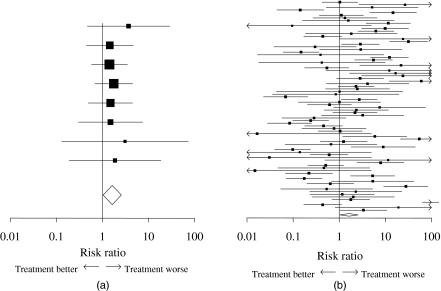
- Focusing only on the mean of the random-effects distribution is insufficient: two meta-analytic data sets can produce identical mean estimates and standard errors while differing greatly in heterogeneity, so τ² and the whole distribution matter.
- Distribution-free classical methods can estimate μ and τ² but cannot satisfactorily address prediction; the paper proposes an approximate prediction interval using a t-distribution with k−2 degrees of freedom.
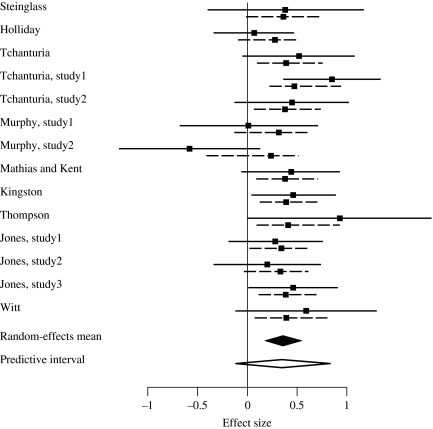
- In the 14-study set-shifting example, heterogeneity was Q=16.73, df=13, P=0.02, I²=22%, and τ²=0.022; the classical random-effects interval was 0.19–0.53, while the approximate prediction interval for a new study ranged from −0.01 to 0.74.
- Bayesian normal random-effects analysis gave μ median 0.36 (95% credible interval 0.18–0.55), θ_new median 0.36 (−0.12–0.84), P(θ_new<0)=0.950, and τ² median 0.023 (0.000024–0.196); Bayesian credible intervals were wider because uncertainty in τ² was properly accounted for.
Methods
- The paper is a methodological re-evaluation structured around estimation, prediction, and hypothesis testing, comparing distribution-free, classical parametric, Bayesian, and non-normal/flexible random-effects approaches.
- The example uses 14 comparative studies of set-shifting ability in people with eating disorders versus healthy controls, taken from Roberts et al. (2007), with effect sizes as standardized differences in means and their standard errors.
- Analyses include classical inverse-variance random-effects meta-analysis with a moment estimate of between-study variance, and Bayesian normal random-effects meta-analysis via MCMC in WinBUGS with a uniform prior for τ (>0) and a vague N(0,10³) prior for μ; sensitivity analyses used a t-distribution with 4 degrees of freedom, an inverse gamma prior, and a shrinkage prior.
Limitations
- Stated: the Bayesian approach has problems including computational intensity and sensitivity to a priori judgements; prior choice can substantially affect results; model uncertainty is not accounted for; the normal random-effects assumption is strong and usually made without convincing evidence; few studies make τ² and μ imprecise; separating diversity from bias is difficult; and caution is warranted with funnel plot asymmetry.
- Stated: the example data were available only as effect sizes and confidence intervals, from which standard errors were calculated; more detailed data should be explicitly modelled when available.
- Evident: the example has only 14 studies and some large within-study standard errors; the paper notes that meta-analyses with very small numbers of studies (2–4) pose particular problems, and prediction intervals depend on the number of studies and within-study standard errors.
Model-written summary. Check it against the paper before relying on it.
Integrity signals
Registry
Cites
Statistics
Figures
Verification
Claims the paper makes
52 Own interpretation · 22 Not checked yet · 12 No basis given · 7 Own result
The paper states this without a source or data behind it here, so there is nothing to check it against. The quote shows it is in the paper.
In the paper
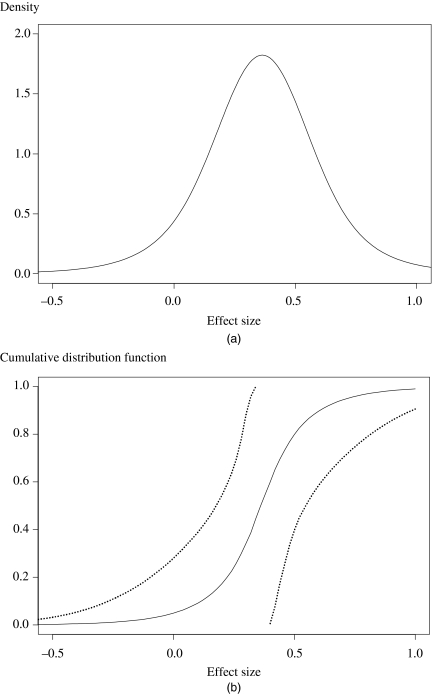
“The approximate prediction interval (12) for the true effect in a new study, however, ranges from −0.01 to 0.74, which is slightly less convincing.”
§ A re-evaluation of random-effects meta-analysis > 7 Example
plain- Asserted: passes — The authors put it forward as true.
- Checkable: passes — It can be checked against evidence.
- Load-bearing: passes — The paper’s conclusions depend on it.
- Based: passes — The paper gives a reason why it holds.
- The authors state this as an assumption: The random effects in the meta-analysis are normally distributed.
In the paper
“Alternatively using an inverse gamma distribution for τ2 with parameters 0.001 and 0.001 (Smith et al., 1995) produces a prediction interval from −0.008 to 0.73 (P(θnew<0)=0.973)”
§ A re-evaluation of random-effects meta-analysis > 7 Example
What the sources say
- Not checked yetcites Smith et al., 1995 source
plaindirect- Asserted: passes — The authors put it forward as true.
- Checkable: passes — It can be checked against evidence.
- Load-bearing: unclear — It is unclear whether the paper’s conclusions depend on it.
- Based: passes — The paper gives a reason why it holds.
A result the paper reports from its own data — it cites no other source for it, so there is none to check. The quote shows it is in the paper.
In the paper
“| τ2 | 0.023 | (0.000024, 0.196) | — |”
§ A re-evaluation of random-effects meta-analysis > 7 Example
plain- Asserted: passes — The authors put it forward as true.
- Checkable: passes — It can be checked against evidence.
- Load-bearing: unclear — It is unclear whether the paper’s conclusions depend on it.
- Based: passes — The paper gives a reason why it holds.
- The authors state this as an assumption: The random effects in the meta-analysis are normally distributed.
In the paper
“There is some heterogeneity between the effect sizes, accounting for 22% of the variation in point estimates by using the statistic I2 (Higgins and Thompson, 2002).”
§ A re-evaluation of random-effects meta-analysis > 7 Example
What the sources say
- Not checked yetcites Higgins and Thompson, 2002
plaincorrelational- Asserted: passes — The authors put it forward as true.
- Checkable: passes — It can be checked against evidence.
- Load-bearing: unclear — It is unclear whether the paper’s conclusions depend on it.
- Based: passes — The paper gives a reason why it holds.
- The authors state this as an assumption: The random effects in the meta-analysis are normally distributed.
The paper states this without a source or data behind it here, so there is nothing to check it against. The quote shows it is in the paper.
In the paper
“A random-effects meta-analysis reveals a statistically significant benefit on average, based on the inference in equation (13) regarding μ alone.”
§ A re-evaluation of random-effects meta-analysis > 7 Example
plaincorrelational- Asserted: passes — The authors put it forward as true.
- Checkable: passes — It can be checked against evidence.
- Load-bearing: passes — The paper’s conclusions depend on it.
- Based: passes — The paper gives a reason why it holds.
- The authors state this as an assumption: The random effects in the meta-analysis are normally distributed.
A result the paper reports from its own data — it cites no other source for it, so there is none to check. The quote shows it is in the paper.
In the paper
“It is evident from Table 1, as well as from the estimated effect sizes, plotted with 95% confidence intervals in Fig. 2, that the majority of trials indicate greater set shifting deficiency in people with eating disorders.”
§ A re-evaluation of random-effects meta-analysis > 7 Example
boostedcorrelational- Asserted: passes — The authors put it forward as true.
- Checkable: passes — It can be checked against evidence.
- Load-bearing: unclear — It is unclear whether the paper’s conclusions depend on it.
- Based: passes — The paper gives a reason why it holds.
- The authors state this as an assumption: The random effects in the meta-analysis are normally distributed.
In the paper
“Correspondingly, the test for qualitative interaction (9) produces a statistically non-significant test statistic Q*=2.56, compared with a critical value of 14.15 for a significance level of 5% (Gail and Simon, 1985).”
§ A re-evaluation of random-effects meta-analysis > 7 Example
What the sources say
- Not checked yetcites Gail and Simon, 1985 source
plain- Asserted: passes — The authors put it forward as true.
- Checkable: passes — It can be checked against evidence.
- Load-bearing: unclear — It is unclear whether the paper’s conclusions depend on it.
- Based: passes — The paper gives a reason why it holds.
- The authors state this as an assumption: The random effects in the meta-analysis are normally distributed.
A conclusion the paper draws from its own results — it cites no other source for it, so there is none to check. The quote shows it is in the paper.
In the paper
“However, such an assumption of homogeneity can seldom be made for studies in the biomedical and social sciences.”
§ A re-evaluation of random-effects meta-analysis > 1 Introduction
plain- Asserted: passes — The authors put it forward as true.
- Checkable: unclear — It is unclear whether it could be checked against evidence.
- Load-bearing: passes — The paper’s conclusions depend on it.
- Based: passes — The paper gives a reason why it holds.
A conclusion the paper draws from its own results — it cites no other source for it, so there is none to check. The quote shows it is in the paper.
In the paper
“This property is shared with the conventional test from a random-effects meta-analysis, i.e. of hypothesis (2) against”
§ A re-evaluation of random-effects meta-analysis > 2 Important questions to address in a random-effects meta-analysis > 2.3 Statistical tests in the presence of heterogeneity
plain- Asserted: passes — The authors put it forward as true.
- Checkable: passes — It can be checked against evidence.
- Load-bearing: passes — The paper’s conclusions depend on it.
- Based: passes — The paper gives a reason why it holds.
A conclusion the paper draws from its own results — it cites no other source for it, so there is none to check. The quote shows it is in the paper.
In the paper
“Estimation of τ2 is just as important.”
§ A re-evaluation of random-effects meta-analysis > 2 Important questions to address in a random-effects meta-analysis > 2.1 Estimation in random-effects meta-analysis
plain- Asserted: passes — The authors put it forward as true.
- Checkable: unclear — It is unclear whether it could be checked against evidence.
- Load-bearing: passes — The paper’s conclusions depend on it.
- Based: passes — The paper gives a reason why it holds.
- It may state two separate claims as one. 25
- Probably not a substantial claim. 29
A result the paper reports from its own data — it cites no other source for it, so there is none to check. The quote shows it is in the paper.
In the paper
“Various sensitivity analyses have small effects on the results, though they do not materially affect the conclusions from the Bayesian meta-analysis.”
§ A re-evaluation of random-effects meta-analysis > 7 Example
plain- Asserted: passes — The authors put it forward as true.
- Checkable: passes — It can be checked against evidence.
- Load-bearing: unclear — It is unclear whether the paper’s conclusions depend on it.
- Based: passes — The paper gives a reason why it holds.
It may state two separate claims as one.
In the paper
“using the shrinkage prior that was advocated by DuMouchel and Normand (2000) produces a prediction interval from −0.009 to 0.72 (P(θnew<0)=0.973)”
§ A re-evaluation of random-effects meta-analysis > 7 Example
What the sources say
- Not checked yetcites DuMouchel and Normand (2000)
plaindirect- Asserted: passes — The authors put it forward as true.
- Checkable: passes — It can be checked against evidence.
- Load-bearing: fails — The paper’s conclusions may not depend on it.
- Based: passes — The paper gives a reason why it holds.
Probably not a substantial claim. The paper’s conclusions may not depend on it.
A result the paper reports from its own data — it cites no other source for it, so there is none to check. The quote shows it is in the paper.
In the paper
“The estimate of the heterogeneity variance is 0.022 and the test for heterogeneity is statistically significant at conventional levels of significance.”
§ A re-evaluation of random-effects meta-analysis > 7 Example
plain- Asserted: passes — The authors put it forward as true.
- Checkable: passes — It can be checked against evidence.
- Load-bearing: passes — The paper’s conclusions depend on it.
- Based: passes — The paper gives a reason why it holds.
It may state two separate claims as one.
- The authors state this as an assumption: The random effects in the meta-analysis are normally distributed.
The paper states this without a source or data behind it here, so there is nothing to check it against. The quote shows it is in the paper.
In the paper
“Using a t-distribution with 4 degrees of freedom for the random effects yields a prediction interval from −0.16 to 0.89 (P(θnew<0)=0.947).”
§ A re-evaluation of random-effects meta-analysis > 7 Example
plaindirect- Asserted: passes — The authors put it forward as true.
- Checkable: passes — It can be checked against evidence.
- Load-bearing: unclear — It is unclear whether the paper’s conclusions depend on it.
- Based: passes — The paper gives a reason why it holds.
It may state two separate claims as one.
A result the paper reports from its own data — it cites no other source for it, so there is none to check. The quote shows it is in the paper.
In the paper
“Results for μ and θnew are comparable with the classical results, with credible intervals being wider because the Bayesian analyses properly account for uncertainty in the estimation of τ2.”
§ A re-evaluation of random-effects meta-analysis > 7 Example
plaindirect- Asserted: passes — The authors put it forward as true.
- Checkable: passes — It can be checked against evidence.
- Load-bearing: unclear — It is unclear whether the paper’s conclusions depend on it.
- Based: passes — The paper gives a reason why it holds.
It may state two separate claims as one.
- The authors state this as an assumption: The random effects in the meta-analysis are normally distributed.
A result the paper reports from its own data — it cites no other source for it, so there is none to check. The quote shows it is in the paper.
In the paper
“| μ | 0.36 | (0.18, 0.55) | 0.999 |”
§ A re-evaluation of random-effects meta-analysis > 7 Example
plain- Asserted: passes — The authors put it forward as true.
- Checkable: passes — It can be checked against evidence.
- Load-bearing: unclear — It is unclear whether the paper’s conclusions depend on it.
- Based: passes — The paper gives a reason why it holds.
It may state two separate claims as one.
- The authors state this as an assumption: The random effects in the meta-analysis are normally distributed.
A result the paper reports from its own data — it cites no other source for it, so there is none to check. The quote shows it is in the paper.
In the paper
“| θnew | 0.36 | (−0.12, 0.84) | 0.950 |”
§ A re-evaluation of random-effects meta-analysis > 7 Example
plain- Asserted: passes — The authors put it forward as true.
- Checkable: passes — It can be checked against evidence.
- Load-bearing: unclear — It is unclear whether the paper’s conclusions depend on it.
- Based: passes — The paper gives a reason why it holds.
It may state two separate claims as one.
- The authors state this as an assumption: The random effects in the meta-analysis are normally distributed.
None of the sources cited for this claim have been checked yet.
In the paper
“Although sources of heterogeneity should ideally be investigated (Thompson, 1994), selection of covariates to explain heterogeneity can be difficult, both practically (Higgins et al., 2002) and theoretically (Thompson and Higgins, 2002).”
§ A re-evaluation of random-effects meta-analysis > 1 Introduction
What the sources say
plain- Asserted: passes — The authors put it forward as true.
- Checkable: passes — It can be checked against evidence.
- Load-bearing: passes — The paper’s conclusions depend on it.
- Based: passes — The paper gives a reason why it holds.
Probably not a substantial claim. It may state two separate claims as one.
A conclusion the paper draws from its own results — it cites no other source for it, so there is none to check. The quote shows it is in the paper.
In the paper
“Realistic interpretation of predictions from a random-effects model can, however, be difficult.”
§ A re-evaluation of random-effects meta-analysis > 2 Important questions to address in a random-effects meta-analysis > 2.2 Prediction using random-effects meta-analysis
plain- Asserted: passes — The authors put it forward as true.
- Checkable: fails — It may be too vague to check against evidence.
- Load-bearing: passes — The paper’s conclusions depend on it.
- Based: passes — The paper gives a reason why it holds.
Probably not a substantial claim. It may be too vague to check against evidence.
A conclusion the paper draws from its own results — it cites no other source for it, so there is none to check. The quote shows it is in the paper.
In the paper
“This variance explicitly describes the extent of the heterogeneity and has a crucial role in assessing the degree of consistency of effects across studies, which is an element of random-effects meta-analysis that often receives too little attention.”
§ A re-evaluation of random-effects meta-analysis > 2 Important questions to address in a random-effects meta-analysis > 2.1 Estimation in random-effects meta-analysis
plaincorrelational- Asserted: passes — The authors put it forward as true.
- Checkable: passes — It can be checked against evidence.
- Load-bearing: passes — The paper’s conclusions depend on it.
- Based: passes — The paper gives a reason why it holds.
Probably not a substantial claim. It may state two separate claims as one.
In the paper
“However, a single parameter cannot adequately summarize heterogeneous effects (Raudenbush and Bryk, 1985) and so focusing on μ alone is usually insufficient.”
§ A re-evaluation of random-effects meta-analysis > 2 Important questions to address in a random-effects meta-analysis > 2.1 Estimation in random-effects meta-analysis
What the sources say
- Not checked yetcites Raudenbush and Bryk, 1985 source
plain- Asserted: passes — The authors put it forward as true.
- Checkable: passes — It can be checked against evidence.
- Load-bearing: passes — The paper’s conclusions depend on it.
- Based: passes — The paper gives a reason why it holds.
It may state two separate claims as one.
A conclusion the paper draws from its own results — it cites no other source for it, so there is none to check. The quote shows it is in the paper.
In the paper
“Although often useful, the test may be misleading if there is heterogeneity and in particular will not reject hypothesis (1) if effects are variable and centred on 0.”
§ A re-evaluation of random-effects meta-analysis > 2 Important questions to address in a random-effects meta-analysis > 2.3 Statistical tests in the presence of heterogeneity
hedgedconditional- Asserted: passes — The authors put it forward as true.
- Checkable: passes — It can be checked against evidence.
- Load-bearing: passes — The paper’s conclusions depend on it.
- Based: passes — The paper gives a reason why it holds.
It may state two separate claims as one.
In the paper
“Meta-analyses are often built on an assumption that directions of effect are consistent across studies (Peto, 1987), yet formal tests of this important supposition are not routinely undertaken.”
§ A re-evaluation of random-effects meta-analysis > 2 Important questions to address in a random-effects meta-analysis > 2.3 Statistical tests in the presence of heterogeneity
What the sources say
- Not checked yetcites Peto, 1987 source
plain- Asserted: passes — The authors put it forward as true.
- Checkable: passes — It can be checked against evidence.
- Load-bearing: passes — The paper’s conclusions depend on it.
- Based: passes — The paper gives a reason why it holds.
It may state two separate claims as one.
The paper states this without a source or data behind it here, so there is nothing to check it against. The quote shows it is in the paper.
In the paper
“An important rationale for meta-analyses is the possibility of increased power, compared with the individual studies, to detect moderate effects.”
§ A re-evaluation of random-effects meta-analysis > 2 Important questions to address in a random-effects meta-analysis > 2.3 Statistical tests in the presence of heterogeneity
hedgedconditional- Asserted: passes — The authors put it forward as true.
- Checkable: passes — It can be checked against evidence.
- Load-bearing: fails — The paper’s conclusions may not depend on it.
- Based: fails — The paper may give no reason why it holds.
Probably not a substantial claim. The paper’s conclusions may not depend on it. The paper may give no reason why it holds.
In the paper
“We have argued that such a null hypothesis is typically untenable and have discouraged the use of homogeneity tests in favour of quantifying the extent of heterogeneity (Higgins and Thompson, 2002).”
§ A re-evaluation of random-effects meta-analysis > 2 Important questions to address in a random-effects meta-analysis > 2.3 Statistical tests in the presence of heterogeneity
What the sources say
- Not checked yetcites Higgins and Thompson, 2002
plain- Asserted: passes — The authors put it forward as true.
- Checkable: fails — It may be too vague to check against evidence.
- Load-bearing: passes — The paper’s conclusions depend on it.
- Based: passes — The paper gives a reason why it holds.
Probably not a substantial claim. It may be too vague to check against evidence. It may state two separate claims as one.
A conclusion the paper draws from its own results — it cites no other source for it, so there is none to check. The quote shows it is in the paper.
In the paper
“Point estimation of μ and τ2 poses no problem, although confidence intervals rely on approximating distributions, sometimes based on the central limit theorem, which may not be realistic when there are few studies.”
§ A re-evaluation of random-effects meta-analysis > 3 Meeting the important objectives with no distributional assumption for the random effects > 3.6 Summarizing remarks
hedgedconditional- Asserted: passes — The authors put it forward as true.
- Checkable: passes — It can be checked against evidence.
- Load-bearing: passes — The paper’s conclusions depend on it.
- Based: passes — The paper gives a reason why it holds.
It may state two separate claims as one.
- The authors state this as an assumption: The available effect estimates are unbiased for the study-specific effects θi.
- The authors state this as an assumption: The estimated variances may be used in place of the true variances.
In the paper
“However, NPML has been noted to be unstable (Van Houwelingen et al., 1993) and has not been widely adopted.”
§ A re-evaluation of random-effects meta-analysis > 6 Non-normal and flexible assumptions for the random effects
What the sources say
- Not checked yetcites Van Houwelingen et al., 1993 source
plain- Asserted: passes — The authors put it forward as true.
- Checkable: passes — It can be checked against evidence.
- Load-bearing: unclear — It is unclear whether the paper’s conclusions depend on it.
- Based: passes — The paper gives a reason why it holds.
It may state two separate claims as one.
None of the sources cited for this claim have been checked yet.
In the paper
“NPML procedures provide a discrete distribution that is based on a finite number of mass points (Laird, 1978; Böhning, 2005).”
§ A re-evaluation of random-effects meta-analysis > 6 Non-normal and flexible assumptions for the random effects
What the sources say
plain- Asserted: passes — The authors put it forward as true.
- Checkable: passes — It can be checked against evidence.
- Load-bearing: passes — The paper’s conclusions depend on it.
- Based: passes — The paper gives a reason why it holds.
Probably not a substantial claim.
A conclusion the paper draws from its own results — it cites no other source for it, so there is none to check. The quote shows it is in the paper.
In the paper
“The assumption of a normal distribution for the random-effects distribution allows the calculation of confidence intervals and prediction intervals.”
§ A re-evaluation of random-effects meta-analysis > 5 Meeting the important objectives with a normal assumption for the random effects > 5.6 Summarizing remarks
plaindirect- Asserted: passes — The authors put it forward as true.
- Checkable: passes — It can be checked against evidence.
- Load-bearing: passes — The paper’s conclusions depend on it.
- Based: fails — The paper may give no reason why it holds.
Probably not a substantial claim. The paper may give no reason why it holds.
- The authors state this as an assumption: The random-effects distribution is normal.
A conclusion the paper draws from its own results — it cites no other source for it, so there is none to check. The quote shows it is in the paper.
In the paper
“A second potential advantage of a Bayesian approach is the intuitive interpretation of posterior distributions in terms of probability, including the ready availability of probabilities that effects exceed specified levels.”
§ A re-evaluation of random-effects meta-analysis > 5 Meeting the important objectives with a normal assumption for the random effects > 5.6 Summarizing remarks
hedgeddirect- Asserted: passes — The authors put it forward as true.
- Checkable: passes — It can be checked against evidence.
- Load-bearing: fails — The paper’s conclusions may not depend on it.
- Based: fails — The paper may give no reason why it holds.
Probably not a substantial claim. The paper’s conclusions may not depend on it. The paper may give no reason why it holds. It may state two separate claims as one.
The paper states this without a source or data behind it here, so there is nothing to check it against. The quote shows it is in the paper.
In the paper
“A particular advantage of the NPML approach is its ability to detect and incorporate outliers.”
§ A re-evaluation of random-effects meta-analysis > 6 Non-normal and flexible assumptions for the random effects
plaindirect- Asserted: passes — The authors put it forward as true.
- Checkable: passes — It can be checked against evidence.
- Load-bearing: fails — The paper’s conclusions may not depend on it.
- Based: passes — The paper gives a reason why it holds.
Probably not a substantial claim. The paper’s conclusions may not depend on it.
A conclusion the paper draws from its own results — it cites no other source for it, so there is none to check. The quote shows it is in the paper.
In the paper
“Bayesian probabilities can address a variety of questions more readily than classical hypothesis tests.”
§ A re-evaluation of random-effects meta-analysis > 5 Meeting the important objectives with a normal assumption for the random effects > 5.5 Testing
plaindirect- Asserted: passes — The authors put it forward as true.
- Checkable: fails — It may be too vague to check against evidence.
- Load-bearing: fails — The paper’s conclusions may not depend on it.
- Based: passes — The paper gives a reason why it holds.
Probably not a substantial claim. It may be too vague to check against evidence. The paper’s conclusions may not depend on it.
A conclusion the paper draws from its own results — it cites no other source for it, so there is none to check. The quote shows it is in the paper.
In the paper
“Whatever the reason for it, an asymmetric funnel plot leads necessarily to a difference in point estimates between common effect and random-effects meta-analyses (using standard inverse variance methods), because random-effects methods give relatively more weight to less precise studies.”
§ A re-evaluation of random-effects meta-analysis > 8 Some special considerations in random-effects meta-analysis > 8.2 Reporting biases and small study effects
boosteddirect- Asserted: passes — The authors put it forward as true.
- Checkable: passes — It can be checked against evidence.
- Load-bearing: unclear — It is unclear whether the paper’s conclusions depend on it.
- Based: passes — The paper gives a reason why it holds.
It may state two separate claims as one.
A conclusion the paper draws from its own results — it cites no other source for it, so there is none to check. The quote shows it is in the paper.
In the paper
“Meta-analyses of a large number of large studies lend themselves to relatively complex models, since there may be strong evidence against a normal distribution assumption for the random effect.”
§ A re-evaluation of random-effects meta-analysis > 6 Non-normal and flexible assumptions for the random effects
hedgedconditional- Asserted: passes — The authors put it forward as true.
- Checkable: passes — It can be checked against evidence.
- Load-bearing: passes — The paper’s conclusions depend on it.
- Based: fails — The paper may give no reason why it holds.
Probably not a substantial claim. The paper may give no reason why it holds.
A conclusion the paper draws from its own results — it cites no other source for it, so there is none to check. The quote shows it is in the paper.
In the paper
“The posterior distribution for the underlying mean μ is readily available from a Bayesian meta-analysis.”
§ A re-evaluation of random-effects meta-analysis > 5 Meeting the important objectives with a normal assumption for the random effects > 5.2 Mean effect
plain- Asserted: passes — The authors put it forward as true.
- Checkable: passes — It can be checked against evidence.
- Load-bearing: fails — The paper’s conclusions may not depend on it.
- Based: fails — The paper may give no reason why it holds.
Probably not a substantial claim. The paper’s conclusions may not depend on it. The paper may give no reason why it holds.
A conclusion the paper draws from its own results — it cites no other source for it, so there is none to check. The quote shows it is in the paper.
In the paper
“In practice, it can be difficult to separate diversity from bias, and it is partly this lack of identifiability that often necessitates the use of the conventional random-effects model.”
§ A re-evaluation of random-effects meta-analysis > 8 Some special considerations in random-effects meta-analysis > 8.1 Diversity and bias
plainconditional- Asserted: passes — The authors put it forward as true.
- Checkable: passes — It can be checked against evidence.
- Load-bearing: passes — The paper’s conclusions depend on it.
- Based: passes — The paper gives a reason why it holds.
It may state two separate claims as one.
- The authors state this as an assumption: The true (unbiased) effects Φi follow a normal distribution across studies.
- The authors state this as an assumption: The study-specific bias components βi follow a normal distribution.
- The authors state this as an assumption: The diversity and bias components are uncorrelated.
- The authors state this as an assumption: The effect being evaluated in the ith study is the sum of the true effect and bias: θi=Φi+βi.
A conclusion the paper draws from its own results — it cites no other source for it, so there is none to check. The quote shows it is in the paper.
In the paper
“The posterior distributions for the study-specific effects θi are readily available from a Bayesian analysis. These provide fully Bayesian shrunken estimates, in which inference for each particular study is performed by ‘borrowing strength’ from the other studies.”
§ A re-evaluation of random-effects meta-analysis > 5 Meeting the important objectives with a normal assumption for the random effects > 5.3 Study effects
plaindirect- Asserted: passes — The authors put it forward as true.
- Checkable: passes — It can be checked against evidence.
- Load-bearing: fails — The paper’s conclusions may not depend on it.
- Based: passes — The paper gives a reason why it holds.
Probably not a substantial claim. The paper’s conclusions may not depend on it. It may state two separate claims as one.
None of the sources cited for this claim have been checked yet.
In the paper
“An important distinction to make when considering heterogeneity of effect sizes is between the effects of diversity (variation in populations, interventions, exposures, outcome measures etc.) and bias (variation in the quality of the design and conduct of the studies) (Glasziou and Sanders, 2002; Greenland and O'Rourke, 2001).”
§ A re-evaluation of random-effects meta-analysis > 8 Some special considerations in random-effects meta-analysis > 8.1 Diversity and bias
What the sources say
- Not checked yetcites Glasziou and Sanders, 2002
- Not checked yetcites Greenland and O'Rourke, 2001
plain- Asserted: passes — The authors put it forward as true.
- Checkable: passes — It can be checked against evidence.
- Load-bearing: passes — The paper’s conclusions depend on it.
- Based: passes — The paper gives a reason why it holds.
Probably not a substantial claim.
A conclusion the paper draws from its own results — it cites no other source for it, so there is none to check. The quote shows it is in the paper.
In the paper
“No model for the random-effects distribution will be ‘true’, and we might seek a parsimonious model that adequately fits the observed data.”
§ A re-evaluation of random-effects meta-analysis > 5 Meeting the important objectives with a normal assumption for the random effects
plain- Asserted: passes — The authors put it forward as true.
- Checkable: fails — It may be too vague to check against evidence.
- Load-bearing: passes — The paper’s conclusions depend on it.
- Based: fails — The paper may give no reason why it holds.
Probably not a substantial claim. It may be too vague to check against evidence. The paper may give no reason why it holds.
A conclusion the paper draws from its own results — it cites no other source for it, so there is none to check. The quote shows it is in the paper.
In the paper
“However, this uncertainty does not extend to the choice of model for the random effects, which is more difficult to defend empirically when there are few studies.”
§ A re-evaluation of random-effects meta-analysis > 5 Meeting the important objectives with a normal assumption for the random effects > 5.6 Summarizing remarks
plain- Asserted: passes — The authors put it forward as true.
- Checkable: passes — It can be checked against evidence.
- Load-bearing: passes — The paper’s conclusions depend on it.
- Based: passes — The paper gives a reason why it holds.
It may state two separate claims as one.
- The authors state this as an assumption: The random-effects distribution is normal.
The paper states this without a source or data behind it here, so there is nothing to check it against. The quote shows it is in the paper.
In the paper
“Tests for heterogeneity have low power when there are few studies, and heterogeneity may be just as likely for small numbers of studies as it is for large numbers of studies.”
§ A re-evaluation of random-effects meta-analysis > 8 Some special considerations in random-effects meta-analysis > 8.3 Small numbers of studies
hedged- Asserted: passes — The authors put it forward as true.
- Checkable: passes — It can be checked against evidence.
- Load-bearing: passes — The paper’s conclusions depend on it.
- Based: passes — The paper gives a reason why it holds.
It may state two separate claims as one.
None of the sources cited for this claim have been checked yet.
In the paper
“For example, when 2×2 contingency tables are available for binary outcomes, meta-analyses are appropriately performed by using binomial likelihoods (Smith et al., 1995; Warn et al., 2002).”
§ A re-evaluation of random-effects meta-analysis > 7 Example
What the sources say
plain- Asserted: passes — The authors put it forward as true.
- Checkable: passes — It can be checked against evidence.
- Load-bearing: fails — The paper’s conclusions may not depend on it.
- Based: passes — The paper gives a reason why it holds.
Probably not a substantial claim. The paper’s conclusions may not depend on it.
A conclusion the paper draws from its own results — it cites no other source for it, so there is none to check. The quote shows it is in the paper.
In the paper
“Bayesian posterior probabilities in particular can depend heavily on the distribution of the assumed likelihood and prior specification.”
§ A re-evaluation of random-effects meta-analysis > 5 Meeting the important objectives with a normal assumption for the random effects > 5.6 Summarizing remarks
plaincorrelational- Asserted: passes — The authors put it forward as true.
- Checkable: passes — It can be checked against evidence.
- Load-bearing: passes — The paper’s conclusions depend on it.
- Based: fails — The paper may give no reason why it holds.
Probably not a substantial claim. The paper may give no reason why it holds.
- The authors state this as an assumption: The prior distributions of μ and τ2 are independent.
The paper states this without a source or data behind it here, so there is nothing to check it against. The quote shows it is in the paper.
In the paper
“The derivation of the predictive distributions for the effect θnew in a future study has received little methodological attention in a frequentist context.”
§ A re-evaluation of random-effects meta-analysis > 5 Meeting the important objectives with a normal assumption for the random effects > 5.4 Prediction
plain- Asserted: passes — The authors put it forward as true.
- Checkable: passes — It can be checked against evidence.
- Load-bearing: passes — The paper’s conclusions depend on it.
- Based: fails — The paper may give no reason why it holds.
Probably not a substantial claim. The paper may give no reason why it holds.
In the paper
“However, it is unclear how prior distributions should be specified, which is an important limitation since Bayes factors can be very sensitive to them (Kass and Raftery, 1995).”
§ A re-evaluation of random-effects meta-analysis > 5 Meeting the important objectives with a normal assumption for the random effects > 5.5 Testing
What the sources say
- Not checked yetcites Kass and Raftery, 1995 source
plaincorrelational- Asserted: passes — The authors put it forward as true.
- Checkable: passes — It can be checked against evidence.
- Load-bearing: unclear — It is unclear whether the paper’s conclusions depend on it.
- Based: passes — The paper gives a reason why it holds.
It may state two separate claims as one.
A conclusion the paper draws from its own results — it cites no other source for it, so there is none to check. The quote shows it is in the paper.
In the paper
“Such an infinite population does not in reality exist, although the construct does allow inference about treatment effects to be extended to a broader population than the studies at hand.”
§ A re-evaluation of random-effects meta-analysis > 4 Classical parametric and Bayesian approaches to random-effects meta-analysis
plain- Asserted: passes — The authors put it forward as true.
- Checkable: fails — It may be too vague to check against evidence.
- Load-bearing: fails — The paper’s conclusions may not depend on it.
- Based: passes — The paper gives a reason why it holds.
Probably not a substantial claim. It may be too vague to check against evidence. The paper’s conclusions may not depend on it. It may state two separate claims as one.
A conclusion the paper draws from its own results — it cites no other source for it, so there is none to check. The quote shows it is in the paper.
In the paper
“The true predictive distribution is a complex function of the degree of heterogeneity, the number of studies and the within-study standard errors.”
§ A re-evaluation of random-effects meta-analysis > 5 Meeting the important objectives with a normal assumption for the random effects > 5.6 Summarizing remarks
plaincorrelational- Asserted: passes — The authors put it forward as true.
- Checkable: passes — It can be checked against evidence.
- Load-bearing: passes — The paper’s conclusions depend on it.
- Based: fails — The paper may give no reason why it holds.
Probably not a substantial claim. The paper may give no reason why it holds.
A conclusion the paper draws from its own results — it cites no other source for it, so there is none to check. The quote shows it is in the paper.
In the paper
“A particular advantage is that they may be used to provide evidence specifically in favour of a null hypothesis.”
§ A re-evaluation of random-effects meta-analysis > 5 Meeting the important objectives with a normal assumption for the random effects > 5.5 Testing
hedgedconditional- Asserted: passes — The authors put it forward as true.
- Checkable: passes — It can be checked against evidence.
- Load-bearing: fails — The paper’s conclusions may not depend on it.
- Based: passes — The paper gives a reason why it holds.
Probably not a substantial claim. The paper’s conclusions may not depend on it.
The paper states this without a source or data behind it here, so there is nothing to check it against. The quote shows it is in the paper.
In the paper
“From a classical point of view, interpretation of parametric random-effects meta-analysis is formally in the context of an imaginary ‘universe’, or ‘population’ of similar effects from which the effects in the observed studies are independently and identically sampled.”
§ A re-evaluation of random-effects meta-analysis > 4 Classical parametric and Bayesian approaches to random-effects meta-analysis
plain- Asserted: passes — The authors put it forward as true.
- Checkable: passes — It can be checked against evidence.
- Load-bearing: passes — The paper’s conclusions depend on it.
- Based: passes — The paper gives a reason why it holds.
Probably not a substantial claim.
A conclusion the paper draws from its own results — it cites no other source for it, so there is none to check. The quote shows it is in the paper.
In the paper
“A realistic predictive distribution must recognize, however, that τ2 is estimated, usually from a small number of studies, and imprecision in affects both terms in the variance of θnew.”
§ A re-evaluation of random-effects meta-analysis > 5 Meeting the important objectives with a normal assumption for the random effects > 5.4 Prediction
plaindirect- Asserted: passes — The authors put it forward as true.
- Checkable: passes — It can be checked against evidence.
- Load-bearing: passes — The paper’s conclusions depend on it.
- Based: passes — The paper gives a reason why it holds.
It may state two separate claims as one.
- The authors state this as an assumption: Approximately, the predictive distribution of θnew follows a t-distribution with k−2 degrees of freedom.
A conclusion the paper draws from its own results — it cites no other source for it, so there is none to check. The quote shows it is in the paper.
In the paper
“Requiring only two parameters for its full specification, the most parsimonious choice is also the conventional choice, where f(Φ) is chosen to be a normal distribution: (10)”
§ A re-evaluation of random-effects meta-analysis > 5 Meeting the important objectives with a normal assumption for the random effects
plain- Asserted: passes — The authors put it forward as true.
- Checkable: passes — It can be checked against evidence.
- Load-bearing: passes — The paper’s conclusions depend on it.
- Based: passes — The paper gives a reason why it holds.
Probably not a substantial claim.
The paper states this without a source or data behind it here, so there is nothing to check it against. The quote shows it is in the paper.
In the paper
“Flexible distributions such as Bayesian semiparametric models are available, although it remains difficult to implement non-normal distributions outside an MCMC approach to the analysis.”
§ A re-evaluation of random-effects meta-analysis > 9 Discussion
plain- Asserted: passes — The authors put it forward as true.
- Checkable: passes — It can be checked against evidence.
- Load-bearing: fails — The paper’s conclusions may not depend on it.
- Based: fails — The paper may give no reason why it holds.
Probably not a substantial claim. The paper’s conclusions may not depend on it. The paper may give no reason why it holds.
A conclusion the paper draws from its own results — it cites no other source for it, so there is none to check. The quote shows it is in the paper.
In the paper
“A Bayesian approach has the additional advantages of flexibility, allowing incorporation of full uncertainty in all parameters (but not uncertainty in the model) and of yielding more readily interpretable inferences.”
§ A re-evaluation of random-effects meta-analysis > 9 Discussion
plaindirect- Asserted: passes — The authors put it forward as true.
- Checkable: fails — It may be too vague to check against evidence.
- Load-bearing: fails — The paper’s conclusions may not depend on it.
- Based: fails — The paper may give no reason why it holds.
Probably not a substantial claim. It may be too vague to check against evidence. The paper’s conclusions may not depend on it. The paper may give no reason why it holds. It may state two separate claims as one.
A conclusion the paper draws from its own results — it cites no other source for it, so there is none to check. The quote shows it is in the paper.
In the paper
“In many situations this is the most feasible assumption given the limited number of studies and the lack of strong evidence for or against the assumption.”
§ A re-evaluation of random-effects meta-analysis > 9 Discussion
plain- Asserted: passes — The authors put it forward as true.
- Checkable: fails — It may be too vague to check against evidence.
- Load-bearing: passes — The paper’s conclusions depend on it.
- Based: passes — The paper gives a reason why it holds.
Probably not a substantial claim. It may be too vague to check against evidence.
A conclusion the paper draws from its own results — it cites no other source for it, so there is none to check. The quote shows it is in the paper.
In the paper
“Thus the rationale is not strong for opting for a common effect model in this situation.”
§ A re-evaluation of random-effects meta-analysis > 8 Some special considerations in random-effects meta-analysis > 8.3 Small numbers of studies
plain- Asserted: passes — The authors put it forward as true.
- Checkable: passes — It can be checked against evidence.
- Load-bearing: passes — The paper’s conclusions depend on it.
- Based: passes — The paper gives a reason why it holds.
Probably not a substantial claim.
A conclusion the paper draws from its own results — it cites no other source for it, so there is none to check. The quote shows it is in the paper.
In the paper
“Meta-analyses of very few studies need not ‘default’ to a common effect model, since informative prior distributions for the extent of heterogeneity can be incorporated in a simple Bayesian approach.”
§ A re-evaluation of random-effects meta-analysis > 9 Discussion
plaindirect- Asserted: passes — The authors put it forward as true.
- Checkable: passes — It can be checked against evidence.
- Load-bearing: passes — The paper’s conclusions depend on it.
- Based: passes — The paper gives a reason why it holds.
Probably not a substantial claim.
In the paper
“Furthermore, certain common effect approaches have practical advantages over random-effects methods. For example, they are easier to implement, and the one-step ‘Peto’ method has been observed to have desirable properties when binary events are rare (Bradburn et al., 2006).”
§ A re-evaluation of random-effects meta-analysis > 9 Discussion
What the sources say
- Not checked yetcites Bradburn et al., 2006 source
plain- Asserted: passes — The authors put it forward as true.
- Checkable: passes — It can be checked against evidence.
- Load-bearing: unclear — It is unclear whether the paper’s conclusions depend on it.
- Based: passes — The paper gives a reason why it holds.
It may state two separate claims as one.
The authors state this as an assumption.
If an effect exists then heterogeneity exists, although it may be negligible.
“We assume a priori that if an effect exists then heterogeneity exists, although it may be negligible.”
The authors state this as an assumption.
The available effect estimates are unbiased for the study-specific effects θi.
“For generality, the situation that we address assumes only the availability of effect estimates that are unbiased for θi (i =1,…,k), with sampling variance (i.e. squared standard error) .”
The authors state this as an assumption.
The estimated variances may be used in place of the true variances.
“We shall follow the conventional assumption that estimates (which are independent of ) may be used in place of the true variances, and we use the two interchangeably.”
The authors state this as an assumption.
The effect estimates from each study are normally distributed.
“We are willing to assume normality of the effect estimates from each study, so(6)”
The authors state this as an assumption.
The prior distributions of μ and τ2 are independent.
“It is standard to assume prior independence of μ and τ2.”
The authors state this as an assumption.
Approximately, the predictive distribution of θnew follows a t-distribution with k−2 degrees of freedom.
“Again taking a t-distribution with k−2 degrees of freedom, we assume that, approximately, (11)”
The authors state this as an assumption.
The between-study variance is common to each study.
“The assumption of a common between-study variance for each study is a strong one that we return to in Section 8.1.”
The authors state this as an assumption.
The underlying effects are exchangeable.
“Fundamental to a Bayesian approach to random-effects meta-analysis is the concept of exchangeability. Exchangeability represents a judgement that the treatment effects may be non-identical but their magnitudes cannot be differentiated a priori (Skene and Wakefield, 1990; Gelman et al., 1995).”
The authors state this as an assumption.
The random-effects distribution is normal.
“Requiring only two parameters for its full specification, the most parsimonious choice is also the conventional choice, where f(Φ) is chosen to be a normal distribution: (10)”
The authors state this as an assumption.
The random effects in the meta-analysis are normally distributed.
“by assuming a normal distribution for the random effects”
“Using a normal distribution for the underlying effects in different studies is a strong assumption”
The authors state this as an assumption.
The true (unbiased) effects Φi follow a normal distribution across studies.
“we represent this by using a normal distribution across the ‘true’ (unbiased) effects”
The authors state this as an assumption.
The study-specific bias components βi follow a normal distribution.
“Suppose that the study-specific bias components follow a normal distribution such that .”
The authors state this as an assumption.
The diversity and bias components are uncorrelated.
“assuming that the diversity and bias components are uncorrelated”
The authors state this as an assumption.
The effect being evaluated in the ith study is the sum of the true effect and bias: θi=Φi+βi.
“The effect being evaluated in the ith study, θi, is the sum of the true effect and bias: θi=Φi+βi.”
Claims other papers make about this one
Each is checked against this paper’s own text: does it say what the citing paper says it does?
The cited source says what the claim attributes to it.
In the citing paper
“In addition to the pooled 95% CI, a 95% prediction interval (PI) was calculated to reflect the expected dispersion of true effects in future clinical settings (20,21).”
From Comparison of point‑of‑care HbA1c devices with laboratory HPLC methods: A systematic review and meta‑analysis (2026) · cites this paper as [21]
The cited source says what the claim attributes to it.
In the citing paper
“a 95% prediction interval (PI) was calculated to reflect the expected dispersion of true effects in future clinical settings (20,21).”
From Comparison of point‑of‑care HbA1c devices with laboratory HPLC methods: A systematic review and meta‑analysis (2026) · cites this paper as [21]
In the citing paper
“This is particularly relevant when confronting sparse data, multiple comparisons, collinearity, or non-identification, and for deriving PI.51”
From A framework for meta-analysis of prediction model studies with binary and time-to-event outcomes (2019) · cites this paper as [51]
Self-check
Percentages, sums and reported differences re-computed from the paper’s own numbers.
Each contradiction between two passages listed here was confirmed by an independent check.
Rated minor: it would not touch a result — a value no result rests on, a p-value that stays on the same side of the significance level, or a conflict that is clerical, resolved elsewhere in the paper, or outside its own findings.
In the paper
§ A re-evaluation of random-effects meta-analysis > 7 Example
“Note that P(θnew<0)=0.950 in Table 2 corresponds to the point at which the full curve in Fig. 3(b) crosses the vertical axis (at approximately 5% probability)”
§ A re-evaluation of random-effects meta-analysis > 7 Example
“| Parameter | Median | 95% credible interval | P(parameter > 0) | | --- | --- | --- | --- | | μ | 0.36 | (0.18, 0.55) | 0.999 | | θnew | 0.36 | (−0.12, 0.84) | 0.950 |”
Rated minor: it would not touch a result — a value no result rests on, a p-value that stays on the same side of the significance level, or a conflict that is clerical, resolved elsewhere in the paper, or outside its own findings.
In the paper
§ A re-evaluation of random-effects meta-analysis > 7 Example
“Random-effects meta-analysis: standardized mean difference (95% credible interval 0.19–0.53); U*=4.23 (P =2×10⁻⁵); .”
§ A re-evaluation of random-effects meta-analysis > 7 Example
“Classical normal random-effects meta-analysis results as traditionally presented appear at the bottom of Table 1.”
Citations
Cites
Bias in meta-analysis detected by a simple, graphical test
Egger, M., Smith, G. D., Schneider, M., & Minder, C. (1997) · BMJ · doi:10.1136/bmj.315.7109.629 · Cited by 56,722 · cited 1×
“This may reflect publication bias, or correlation between study size and another important covariate such as quality of study (Egger et al., 1997).”
BackgroundMeta-analysis in clinical trials
DerSimonian, R., & Laird, N. (1986) · Controlled Clinical Trials · doi:10.1016/0197-2456(86)90046-2 · Cited by 39,552 · cited 6×
“Heterogeneity Several estimators of the heterogeneity variance τ2 are available that are based on normal likelihoods, including iterative maximum likelihood and restricted maximum likelihood estimates (DerSimonian and Laird, 1986; DerSimonian and Kacker, 2007).”
MethodInfluentialQuantifying heterogeneity in a meta‐analysis
Higgins, J. P. T., & Thompson, S. G. (2002) · Statistics in Medicine · doi:10.1002/sim.1186 · Cited by 36,763 · cited 10×
“Confidence intervals for measures of inconsistency can be calculated (Higgins and Thompson, 2002).”
BackgroundMethodInfluentialSelf-citationGelman, A., Carlin, J. B., Stern, H. S., & Rubin, D. B. (2003) · doi:10.1201/9780429258480 · Cited by 27,276
Kass, R. E., & Raftery, A. E. (1995) · Journal of the American Statistical Association · doi:10.1080/01621459.1995.10476572 · Cited by 12,558
Wasserman, S. S., Hedges, L. V., & Olkin, I. (1988) · Journal of Educational Statistics · doi:10.2307/1164953 · Cited by 10,377
Statistical Methods for Meta-Analysis
Rosenbaum, P. R., Hedges, L., & Olkin, I. (1987) · Journal of the American Statistical Association · doi:10.2307/2289186 · Cited by 6,027 · cited 1×
“A common misinterpretation of the random-effects assumption is that the studies themselves are sampled from a population of studies (Hedges, 1987; Anello and Fleiss, 1995; Colditz et al., 1995).”
BackgroundStatistical Methods for Meta-Analysis.
Freeman, P. R., Hedges, L. V., & Olkin, I. (1986) · Biometrics · doi:10.2307/2531069 · Cited by 4,840
Gelman, A. (2006) · Bayesian Analysis · doi:10.1214/06-ba117a · Cited by 4,050 · cited 1×
“It has been suggested that a prior distribution on τ might comprise the positive part of a symmetric distribution around 0, say Cauchy or normal (Gelman, 2006).”
BackgroundAssessing the quality of controlled clinical trials
Jüni, P., Altman, D. G., & Egger, M. (2001) · BMJ · doi:10.1136/bmj.323.7303.42 · Cited by 3,309 · cited 1×
“There are strong arguments against the former (Greenland and O’Rourke, 2001) and an item-based approach to dealing with quality is to be preferred (Jüni et al., 2001).”
Background
Research works printed but not linked: 3
- DuMouchel, 1994, Hierarchical Bayes linear models for meta-analysis
- Morris, 1992, Hierachical models for combining information and for meta-analysis, Bayes. Statist., 4, 321
- Stein, 1956, Proc. 3rd Berkeley Symp, 197
Cited by
Sorted by citations
Items 401–500 of 1,013
Lázaro, E., Makowski, D., & Civera, A. V. (2021) · Communications Earth & Environment · doi:10.1038/s43247-021-00291-8 · Cited by 91
Ni, X., Shergis, J. L., Guo, X., Zhang, A. L., Li, Y., Lu, C., & Xue, C. C. (2015) · Sleep Medicine · doi:10.1016/j.sleep.2015.08.012 · Cited by 89
“This solution to heterogeneity was based on the assumption that effect being estimated in different CHM treatments may not be identical, but it follows some distribution [135,136].”
BackgroundEfficacy of Pregabalin in Acute Postoperative Pain Under Different Surgical Categories
Lam, D. M. H., Choi, S. W., Wong, S. S. C., Irwin, M. G., & Cheung, C. (2015) · Medicine · doi:10.1097/md.0000000000001944 · Cited by 89
Conde‐Agudelo, A., Romero, R. J., & Nicolaides, K. H. (2020) · American Journal of Obstetrics and Gynecology · doi:10.1016/j.ajog.2019.12.266 · Cited by 99
Accounting for correlation in network meta‐analysis with multi‐arm trials
Franchini, A., Dias, S., Ades, A. E., Jansen, J. P., & Welton, N. J. (2012) · Research Synthesis Methods · doi:10.1002/jrsm.1049 · Cited by 89
“This is preferable for small sample sizes (Higgins et al., 2009).”
BackgroundLangan, D., Higgins, J. P. T., Gregory, W. M., & Sutton, A. J. (2012) · Journal of Clinical Epidemiology · doi:10.1016/j.jclinepi.2011.10.009 · Cited by 91
Self-citationLow- or High-Dose Radioiodine Remnant Ablation for Differentiated Thyroid Carcinoma: A Meta-Analysis
Cheng, W., Ma, C., Fu, H., Li, J., Chen, S., Wu, S., & Wang, H. (2013) · The Journal of Clinical Endocrinology & Metabolism · doi:10.1210/jc.2012-3682 · Cited by 88
Epidemiology of nonalcoholic fatty liver disease in Europe: a systematic review and meta-analysis
Cholongitas, Ε. (2021) · Annals of Gastroenterology · doi:10.20524/aog.2021.0604 · Cited by 87
“A prediction interval (PI) for the treatment effect of a new study was also calculated as proposed by Higgins [16,17].”
Evaluation of Economic and Health Outcomes Associated With Food Taxes and Subsidies
Andreyeva, T., Marple, K., Moore, T. E., & Powell, L. M. (2022) · JAMA Network Open · doi:10.1001/jamanetworkopen.2022.14371 · Cited by 95
Schwarzer, G. (2022) · Wiley eBooks · doi:10.1002/9781119099369.ch26 · Cited by 91
Schwarzer, G., & Rücker, G. (2022) · Methods in Molecular Biology · doi:10.1007/978-1-0716-1566-9_10 · Cited by 90
Moreno, S. G., Sutton, A. J., Thompson, J. R., Ades, A. E., Abrams, K. R., & Cooper, N. J. (2012) · Statistics in Medicine · doi:10.1002/sim.4488 · Cited by 90
da Costa, B. R., Saadat, P., Basciani, R., Agarwal, A., Johnston, B. C., & Jüni, P. (2020) · Osteoarthritis and Cartilage · doi:10.1016/j.joca.2020.10.004 · Cited by 88
Orientation and mobility training for adults with low vision
Virgili, G., & Rubin, G. S. (2010) · Cochrane Database of Systematic Reviews · doi:10.1002/14651858.cd003925.pub3 · Cited by 94
Ramai, D., Singh, J. K., Lester, J., Khan, S. R., Chandan, S., Tartaglia, N., Ambrosi, A., Serviddio, G., & Facciorusso, A. (2021) · Alimentary Pharmacology & Therapeutics · doi:10.1111/apt.16335 · Cited by 88
Papageorgiou, S. N., Gölz, L., Jäger, A., Eliades, T., & Bourauel, C. P. (2016) · European Journal Of Oral Sciences · doi:10.1111/eos.12250 · Cited by 86
“In particular, assessment of the quality of evidence using the Grading of Recommendations Assessment, Development and Evaluation (GRADE) approach (13) and their translation in future clinical settings (14) could aid in drawing robust conclusions.”
BackgroundMethodCauses of chest pain in primary care – a systematic review and meta-analysis
Haasenritter, J., Biroga, T., Keunecke, C., Becker, A., Donner‐Banzhoff, N., Dornieden, K., Stadje, R., Viniol, A., & Bösner, S. (2015) · Croatian Medical Journal · doi:10.3325/cmj.2015.56.422 · Cited by 85
Wu, Q., Sun, H. J., Wen, Z.-Y., Zhang, M., Wang, H.-Y., He, X., Jiang, Y., & Zhao, Y. (2021) · Journal of Clinical Sleep Medicine · doi:10.5664/jcsm.9642 · Cited by 110
Whitten, T., Tzoumakis, S., Green, M. J., & Dean, K. (2023) · Trauma Violence & Abuse · doi:10.1177/15248380231179133 · Cited by 97
“In proportional meta-analyses, confidence intervals reflect the expected average prevalence of all possible studies, whereas prediction intervals estimate the true prevalence anticipated in future studies across different settings (Higgins et al., 2009).”
BackgroundThe relationship between stress and delay discounting
Fields, S. A., Lange, K. L., Ramos, A. M., Thamotharan, S., & Rassu, F. S. (2014) · Behavioural Pharmacology · doi:10.1097/fbp.0000000000000044 · Cited by 88
Smolak, A., Rowley, J. T., Nagelkerke, N. J. D., Kassebaum, N. J., Chico, R. M., Korenromp, E. L., & Abu-Raddad, L. J. (2017) · Clinical Infectious Diseases · doi:10.1093/cid/cix975 · Cited by 84
“The prediction interval was estimated to assess the distribution of true effects around the estimated mean [19, 23].”
MethodGenetics of autism spectrum disorder: an umbrella review of systematic reviews and meta-analyses
Qiu, S., Qiu, Y., Li, Y., & Cong, X. (2022) · Translational Psychiatry · doi:10.1038/s41398-022-02009-6 · Cited by 98
“We also calculated the 95% prediction interval (PI) to explain the between-study heterogeneity and to assess the uncertainty of a new study [18, 19].”
MethodZhang, M., Dong, X., Huang, Z., Li, X., Zhao, Y., Wang, Y., Zhu, H., Fang, A., & Giovannucci, E. L. (2023) · Advances in Nutrition · doi:10.1016/j.advnut.2023.06.007 · Cited by 87
“uncertainty in the mean effect and the heterogeneity from the random-effects model [22,23].”
BackgroundWartenberg, G., Aldrup, K., Grund, S., & Klusmann, U. (2023) · Educational Psychology Review · doi:10.1007/s10648-023-09831-4 · Cited by 180
“Following the preparation of effect sizes, we conducted univariate meta-analyses for each performance outcome for which at least five primary studies were available (Higgins et al., 2009).”
MethodRisk factors for preterm birth: an umbrella review of meta-analyses of observational studies
Mitrogiannis, I., Εvangelou, Ε., Efthymiou, A., Kanavos, T., Birbas, E., Makrydimas, G., & Papatheodorou, S. (2023) · BMC Medicine · doi:10.1186/s12916-023-03171-4 · Cited by 111
“95% prediction intervals (PI) were also computed for the summary random-effects estimates, which further account for between-study heterogeneity indicating the uncertainty for the effect that would be expected in a new study examining the same association [17, 18].”
MethodIneichen, B. V., Furrer, E., Grüninger, S., Zürrer, W. E., & Macleod, M. R. (2024) · PLoS Biology · doi:10.1371/journal.pbio.3002667 · Cited by 117
Benić, G. I., Wolleb, K., Sancho‐Puchades, M., & Hämmerle, C. H. F. (2012) · Journal Of Clinical Periodontology · doi:10.1111/j.1600-051x.2011.01840.x · Cited by 84
Influence of blood pressure reduction on composite cardiovascular endpoints in clinical trials
Verdecchia, P., Gentile, G., Angeli, F., Mazzotta, G., Mancia, G., & Reboldi, G. (2010) · Journal of Hypertension · doi:10.1097/hjh.0b013e328338e2bb · Cited by 87
Efficacy of Interventions Promoting Blood Donation: A Systematic Review
Godin, G., Vézina‐Im, L., Bélanger‐Gravel, A., & Amireault, S. (2012) · Transfusion Medicine Reviews · doi:10.1016/j.tmrv.2011.10.001 · Cited by 84
“The computation of PIs is recommended when confronted with a randomeffect meta-analysis that has a low number of studies and high heterogeneity [21].”
Buck, L. M., Dalci, O., Darendeliler, M. A., Papageorgiou, S. N., & Papadopoulou, A. K. (2016) · European Journal of Orthodontics · doi:10.1093/ejo/cjw048 · Cited by 90
“Ninety-five per cent predictive intervals were calculated for meta-analyses of three trials or more, as they incorporate existing heterogeneity and provide a range of possible effects for a future clinical setting, which makes them crucial for the interpretation of random-effects meta-analyses (47).”
MethodArntz, F., Markov, A., Behm, D. G., Behrens, M., Negra, Y., Nakamura, M., Moran, J., & Chaabene, H. (2023) · Sports Medicine · doi:10.1007/s40279-022-01806-9 · Cited by 82
“In addition to the cluster robust models’ point estimates and 95% CIs, we calculated 95% prediction intervals (PIs) to account for the uncertainty of the effects expected in future similar studies [42–44].”
MethodInsan, N., Weke, A., Forrest, S., & Rankin, J. M. (2022) · PLoS ONE · doi:10.1371/journal.pone.0263760 · Cited by 85
“For determinants where pooling of the ORs were appropriate, meta-analyses were performed using the random-effects model [25], regardless of the heterogeneity.”
MethodTriglyceride-glucose index and obstructive sleep apnea: a systematic review and meta-analysis
Behnoush, A. H., Khalaji, A., Ghondaghsaz, E., Masrour, M., Varniab, Z. S., Khalaji, S., & Cannavò, A. (2024) · Lipids in Health and Disease · doi:10.1186/s12944-024-02005-3 · Cited by 86
“This analysis provides a pooled AUC and corresponding confidence interval (CI) for the sum of the studies [23].”
MethodJackson, D. (2013) · Research Synthesis Methods · doi:10.1002/jrsm.1081 · Cited by 83
Individual participant data meta-analysis of prognostic factor studies: state of the art?
Abo-Zaid, G., Sauerbrei, W., & Riley, R. D. (2012) · BMC Medical Research Methodology · doi:10.1186/1471-2288-12-56 · Cited by 83
“However, due to the heterogeneity, the prognostic effect may be very different to the average effect in a particular population, and this can be quantified by the prediction interval [69].”
BackgroundHubner, R. A., Riley, R. D., Billingham, L. J., & Popat, S. (2011) · PLoS ONE · doi:10.1371/journal.pone.0025164 · Cited by 80
Confidence intervals for a random‐effects meta‐analysis based on Bartlett‐type corrections
Noma, H. (2011) · Statistics in Medicine · doi:10.1002/sim.4350 · Cited by 81
“This fact might be a limitation with regard to adopting the random-effects model in meta-analyses, as discussed in [2].”
BackgroundMethodPapageorgiou, S. N., Reichert, C., Jäger, A., & Deschner, J. (2015) · Journal Of Clinical Periodontology · doi:10.1111/jcpe.12365 · Cited by 84
“For meta-analyses with ≥3 trials, 95% prediction intervals (PI) (Higgins et al. 2009, Graham & Moran 2012) were calculated to predict treatment effects in a future trial setting, incorporating existing heterogeneity.”
MethodA comparison of arm‐based and contrast‐based models for network meta‐analysis
White, I. R., Turner, R., Karahalios, A., & Salanti, G. (2019) · Statistics in Medicine · doi:10.1002/sim.8360 · Cited by 82
“Model 3 modifies model 2 by making them random effects, so that, alongside Equations (3) and (4), we have 𝛼ai1 ∼ N ( 𝜇a1 , 𝜎 a2) , (7) where we call 𝜎a2 the arm heterogeneity variance for the reference treatment; again, a is a superscript and 2 is a power.”
BackgroundMethodInfluentialA Primer on Bayesian Model-Averaged Meta-Analysis
Gronau, Q. F., Heck, D. W., Berkhout, S. W., Haaf, J. M., & Wagenmakers, E. (2021) · Advances in Methods and Practices in Psychological Science · doi:10.1177/25152459211031256 · Cited by 86
“In Bayesian meta-analysis (e.g., Higgins et al., 2009; Rouder & Morey, 2011; T. C. Smith et al., 1995; Sutton & Abrams, 2001), the most common approach is to use a random-effects model.”
Meta-analysis for orthodontists: Part I – How to choose effect measure and statistical model
Papageorgiou, S. N. (2014) · Journal of Orthodontics · doi:10.1179/1465313314y.0000000111 · Cited by 83
“Additionally, 95% predictive intervals should always be calculated for random-effects meta-analyses (Higgins et al., 2009).”
BackgroundCariolou, M., Cupp, M. A., Εvangelou, Ε., Tzoulaki, I., & Berlanga‐Taylor, A. J. (2019) · BMJ Open · doi:10.1136/bmjopen-2018-027666 · Cited by 81
“32 35 For prevalence we also calculated median and IQR for comparisons with pooled prevalence estimates.”
MethodMeta‐analysis prediction intervals are under reported in sport and exercise medicine
Borg, D. N., Impellizzeri, F. M., Borg, S. J., Hutchins, K. P., Stewart, I. B., Jones, T., Baguley, B. J., Orssatto, L. B. R., Bach, A. J. E., Osborne, J. O., et al. (2024) · Scandinavian Journal of Medicine and Science in Sports · doi:10.1111/sms.14603 · Cited by 86
“7 This, however, assumes that practice in the real world is the same as practice in the study, which may not be the case.”
BackgroundExpressing findings from meta‐analyses of continuous outcomes in terms of risks
Anzures‐Cabrera, J., Sarpatwari, A., & Higgins, J. P. T. (2011) · Statistics in Medicine · doi:10.1002/sim.4298 · Cited by 81
“Alternatively, approximations from classical meta-analyses have been proposed [15].”
BackgroundSelf-citationRota, M., Bellocco, R., Scotti, L., Tramacere, I., Jenab, M., Corrao, G., Vecchia, C. L., Boffetta, P., & Bagnardi, V. (2010) · Statistics in Medicine · doi:10.1002/sim.4041 · Cited by 80
“In order to predict dose-dependent log(R R)s in a new study, the 95 per cent prediction intervals [13] are calculated as u′X±1.”
MethodEvidence Synthesis for Decision Making 5
Dias, S., Welton, N. J., Sutton, A. J., & Ades, A. E. (2013) · Medical Decision Making · doi:10.1177/0272989x13485155 · Cited by 83
“It is, however, important to ensure that the uncertainty conveyed by the predictive distribution reflects genuine uncertainty in the baseline.(18) Therefore, we reiterate the need for careful evaluation of what studies should be used to inform the baseline model and whether the exchangeability assumption between the b…”
BackgroundNutritional support in children and young people with cancer undergoing chemotherapy
Ward, E., Henry, L. M., Friend, A. J., Wilkins, S., & Phillips, R. S. (2015) · Cochrane Database of Systematic Reviews · doi:10.1002/14651858.cd003298.pub3 · Cited by 83
Walsh, K. A., O'Riordan, D., Kearney, P. M., Timmons, S., & Byrne, S. (2016) · Age and Ageing · doi:10.1093/ageing/afv190 · Cited by 80
Bias from historical control groups used in orthodontic research: a meta-epidemiological study
Papageorgiou, S. N., Koretsi, V., & Jäger, A. (2016) · European Journal of Orthodontics · doi:10.1093/ejo/cjw035 · Cited by 80
“95% predictive intervals were calculated for the ΔSMD, which incorporate existing heterogeneity and provide a range of possible effects for a future meta-analysis (19).”
MethodGajic‐Veljanoski, O., Phua, C. W. W., Shah, P. S., & Cheung, A. M. (2016) · Journal of General Internal Medicine · doi:10.1007/s11606-016-3603-8 · Cited by 80
Percutaneous Coronary Interventions for the Treatment of Stenoses in Small Coronary Arteries
Siontis, G. C. M., Piccolo, R., Praz, F., Valgimigli, M., Räber, L., Mavridis, D., Jüni, P., & Windecker, S. (2016) · JACC: Cardiovascular Interventions · doi:10.1016/j.jcin.2016.03.025 · Cited by 79
“0 61 9; 61 10 160 (64); 175 (71) 43 (17); 39 (16) 105 (42); 108 (44) 148 (59); 150 (61) 78 (31); 64 (26) 80 (32); 79 (32) 195 (78); 185 (75)”
MethodThyroid surgery for Graves’ disease and Graves’ ophthalmopathy
Liu, Z. W., Masterson, L. M., Fish, B. M., Jani, P., & Chatterjee, K. (2015) · Cochrane Database of Systematic Reviews · doi:10.1002/14651858.cd010576.pub2 · Cited by 83
Witowski, J. S., Rubinkiewicz, M., Mizera, M., Wysocki, M., Gajewska, N., Sitkowski, M., Małczak, P., Major, P., Budzynski, A. Z., & Pędziwiatr, M. (2018) · Surgical Endoscopy · doi:10.1007/s00464-018-6431-6 · Cited by 81
Selenium for preventing cancer
Dennert, G., Zwahlen, M., Brinkman, M. T., Vinceti, M., Zeegers, M. P., & Horneber, M. (2011) · Cochrane Database of Systematic Reviews · doi:10.1002/14651858.cd005195.pub2 · Cited by 110
Chiossi, G., Pedroza, C., Costantine, M. M., Truong, V. T. T., Gargano, G., & Saade, G. R. (2016) · Ultrasound in Obstetrics and Gynecology · doi:10.1002/uog.17381 · Cited by 78
Hassan, H., Rompola, M., Glaser, A., Kinsey, S. E., & Phillips, B. (2018) · Supportive Care in Cancer · doi:10.1007/s00520-018-4216-z · Cited by 79
“Prediction intervals demonstrate the certainty or uncertainty of findings in future studies taking into account the observed heterogeneity [15].”
Marbach, J. A., Stone, S., Schwartz, B., Pahuja, M., Thayer, K. L., Faugno, A. J., Chweich, H., Rabinowitz, J. B., & Kapur, N. K. (2021) · Journal of Cardiac Failure · doi:10.1016/j.cardfail.2021.08.012 · Cited by 81
Sleep duration and breast cancer risk: A meta‐analysis of observational studies
Qin, Y., Zhou, Y., Zhang, X., Wei, X., & He, J. (2013) · International Journal of Cancer · doi:10.1002/ijc.28452 · Cited by 79
“Furthermore, in the random-effects model, we added the prediction interval (PI) to illustrate the degree of heterogeneity in forests plots, which could also provide a predicted range for the true treatment effect in an individual study.(17,18) Compared with the reference category of sleep, the pooled OR and 95% CI of…”
MethodWolfrum, M., Fröhlich, G., Knapp, G., Casaubon, L. K., DiNicolantonio, J. J., Lansky, A. J., & Meier, P. (2013) · Heart · doi:10.1136/heartjnl-2013-304394 · Cited by 77
“6 Table 1 shows the baseline characteristics of the included studies.”
BackgroundSekercioglu, N., Thabane, L., Martinez, J. P. D., NESRALLAH, G. E., Longo, C. J., Busse, J. W., Akhtar‐Danesh, N., Agarwal, A., Khalifah, R. A. A., Iorio, A., et al. (2016) · PLoS ONE · doi:10.1371/journal.pone.0156891 · Cited by 80
Toward Causally Interpretable Meta-analysis
Dahabreh, I. J., Petito, L. C., Robertson, S. E., Hernán, M. Á., & Steingrimsson, J. A. (2020) · Epidemiology · doi:10.1097/ede.0000000000001177 · Cited by 77
Chantler, S., Griffiths, A., Matu, J., Davison, G., Jones, B. L., & Deighton, K. (2020) · Sports Medicine · doi:10.1007/s40279-020-01348-y · Cited by 80
“A random effects model was employed for all analyses based on the assumption that heterogeneity would exist between included studies due to the variability in study design [27].”
MethodSteps in undertaking meta-analysis and addressing heterogeneity in meta-analysis
Gandhi, A. P., Shamim, M. A., & Padhi, B. K. (2023) · The Evidence · doi:10.61505/evidence.2023.1.1.7 · Cited by 76
Kelley, G. A., Kelley, K. S., & Pate, R. R. (2014) · BMC Pediatrics · doi:10.1186/1471-2431-14-225 · Cited by 89
“However, these values should not be confused with CI since PI are based on a random mean effect while CI are not [57].”
BackgroundMethodTotura, C. M. W., Fields, S. A., & Karver, M. S. (2018) · Psychiatric Services · doi:10.1176/appi.ps.201700114 · Cited by 76
Lou, S., Du, F., Song, W., Xia, Y., Yue, X., Yang, D., Cui, B., Liu, Y., & Han, P. (2023) · EClinicalMedicine · doi:10.1016/j.eclinm.2023.102341 · Cited by 83
“43,44 48 Meta-regression and subgroup analyses were performed to investigate potential sources of heterogeneity.”
MethodSteinmann, M., Lampe, D., Grosser, J., Schmidt, J., Hohoff, M. L., Fischer, A., & Greiner, W. (2024) · Infection · doi:10.1007/s15010-023-02156-y · Cited by 97
“Considering the substantial heterogeneity and diverse findings, Bayesian meta-analysis presents an alternative approach [128, 129].”
User Manual for Meta-Essentials: Workbooks for Meta-AnalysisPreprint
van Rhee, H., Suurmond, R., & Hak, T. (2018) · SSRN Electronic Journal · doi:10.2139/ssrn.3241355 · Cited by 76
Amato, A., Sinagra, E., Celsa, C., Enea, M., Buda, A., Vieceli, F., Scaramella, L., Belletrutti, P. J., Fugazza, A., Cammà, C., et al. (2020) · Endoscopy · doi:10.1055/a-1324-7919 · Cited by 75
Adoption of community monitoring improves common pool resource management across contexts
Slough, T. L., Rubenson, D. L., Levy, R., Alpízar, F., Carpio, M. B. D., Buntaine, M. T., Christensen, D., Cooperman, A. D., Eisenbarth, S., Ferraro, P. J., et al. (2021) · Proceedings of the National Academy of Sciences · doi:10.1073/pnas.2015367118 · Cited by 75
Høye, A. K. (2016) · Accident Analysis & Prevention · doi:10.1016/j.aap.2015.12.022 · Cited by 74
Approaches for synthesising complex mental health interventions in meta-analysis
Caldwell, D. M., & Welton, N. J. (2016) · Evidence-Based Mental Health · doi:10.1136/eb-2015-102275 · Cited by 79
“Indeed, heterogeneity might be considered inevitable [4].”
New metrics for meta‐analyses of heterogeneous effects
Mathur, M. B., & VanderWeele, T. J. (2018) · Statistics in Medicine · doi:10.1002/sim.8057 · Cited by 70
“85)), then we would simply switch the two equations, using Equation (2) to estimate the proportion of effects below a threshold (eg, a log-OR of log(0.”
InfluentialSnell, K. I. E., Hua, H., Debray, T. P. A., Ensor, J., Look, M. P., Moons, K. G. M., & Riley, R. D. (2015) · Journal of Clinical Epidemiology · doi:10.1016/j.jclinepi.2015.05.009 · Cited by 77
Johnson, K. O., Shannon, O. M., Matu, J., Holliday, A., Ispoglou, T., & Deighton, K. (2019) · Aging Clinical and Experimental Research · doi:10.1007/s40520-019-01292-6 · Cited by 75
Resveratrol for adults with type 2 diabetes mellitus
Jeyaraman, M. M., Al‐Yousif, N., Mann, A. S., Dolinsky, V. W., Rabbani, R., Zarychanski, R., & Abou-Setta, A. M. (2020) · Cochrane Database of Systematic Reviews · doi:10.1002/14651858.cd011919.pub2 · Cited by 79
“Higgins 2009 Higgins JP, Thompson SG, Spiegelhalter DJ.”
MethodKunutsor, S. K., Isiozor, N. M., Khan, H., & Laukkanen, J. A. (2020) · Diabetes/Metabolism Research and Reviews · doi:10.1002/dmrr.3365 · Cited by 82
“To determine the degree of heterogeneity, we also estimated 95% prediction intervals which provide a region in which about 95% of the true effects of a new study are expected to be found.(38,39) Pre-specified study-level characteristics such as geographical location, sex, average age at baseline, average duration of f…”
BackgroundHoward, M. C., & Zandt, E. C. V. (2020) · Journal of Research in Personality · doi:10.1016/j.jrp.2020.103982 · Cited by 85
Utero-placental Doppler ultrasound for improving pregnancy outcome
Stampalija, T., Gyte, G. M., & Alfirević, Ž. (2010) · Cochrane Database of Systematic Reviews · doi:10.1002/14651858.cd008363.pub2 · Cited by 73
Cirocchi, R., Trastulli, S., Randolph, J., Guarino, S., Rocco, G. D., Arezzo, A., D’Andrea, V., Santoro, A., Barczyński, M., & Avenia, N. (2015) · Cochrane Database of Systematic Reviews · doi:10.1002/14651858.cd010370.pub2 · Cited by 74
Yang, J., Fan, L., Miao, X., Mao, B., Li, M.-H., Lü, H., Liang, S., & Xu, J. (2015) · Clinical Microbiology and Infection · doi:10.1016/j.cmi.2015.06.022 · Cited by 73
Kelley, G. A., Kelley, K. S., & Pate, R. R. (2019) · BMJ Open · doi:10.1136/bmjopen-2019-031220 · Cited by 82
Zhang, F., Saeed, N., & Sadeghian, P. (2023) · Energy and AI · doi:10.1016/j.egyai.2023.100235 · Cited by 75
Handedness in preterm born children: A systematic review and a meta-analysis
Domellöf, E., Johansson, A., & Rönnqvist, L. (2011) · Neuropsychologia · doi:10.1016/j.neuropsychologia.2011.04.033 · Cited by 72
Meta-analysis supports GWAS-implicated link between GRM3 and schizophrenia risk
Saini, S. M., Mancuso, S. G., Mostaid, M. S., Liu, C., Pantelis, C., Everall, I., & Bousman, C. (2017) · Translational Psychiatry · doi:10.1038/tp.2017.172 · Cited by 73
Kelley, G. A., & Kelley, K. S. (2009) · Preventive Medicine · doi:10.1016/j.ypmed.2009.09.018 · Cited by 72
“Since the time that our work was completed, a prediction intervals (PIs) approach has been developed and recommended for determining how treatment effects from new individual trials are distributed about the mean in a random-effects metaanalysis (Higgins et al., 2009).”
BackgroundMethodInfluentialBayesian estimation in random effects meta‐analysis using a non‐informative prior
Bodnar, O., Link, A., Arendacká, B., Possolo, A., & Elster, C. (2017) · Statistics in Medicine · doi:10.1002/sim.7156 · Cited by 73
Yu, C. Y., Saeed, O., Goldberg, A. S., Farooq, S., Fazelzad, R., Goldstein, D. P., Tsang, R. W. C., Brierley, J. D., Ezzat, S., Thabane, L., et al. (2018) · Thyroid · doi:10.1089/thy.2018.0244 · Cited by 72
“A potential limitation is that prediction intervals were not presented (31,32).”
Lin, L., Shi, L., Chu, H., & Murad, M. H. (2019) · BMJ Evidence-Based Medicine · doi:10.1136/bmjebm-2019-111191 · Cited by 74
“…rate ratios) because it was impossible to transform them into a common type of effect size using the available data from the CDSR. Finally, it was difficult to justify small-study effects in meta-analyses with few studies, 16 23 so we only considered meta-analyses with at least five studies.”
Exercise and bone mineral density in men: A meta-analysis of randomized controlled trials
Kelley, G. A., Kelley, K. S., & Kohrt, W. M. (2012) · Bone · doi:10.1016/j.bone.2012.11.031 · Cited by 75
Sprague, S., Petrisor, B. A., Scott, T., Devji, T., Phillips, M., Spurr, H., Bhandari, M., & Slobogean, G. P. (2015) · Journal of Orthopaedic Trauma · doi:10.1097/bot.0000000000000455 · Cited by 72
Iacovelli, R., Pietrantonio, F., Farcomeni, A., Maggi, C., Palazzo, A., Ricchini, F., de Braud, F., & Bartolomeo, M. D. (2014) · PLoS ONE · doi:10.1371/journal.pone.0108940 · Cited by 70
“Summary HR for OS was calculated using a hierarchical Bayesian model [14], where logarithm of study HR was assumed to be normally distributed [15], each study effect was assumed to arise from a Gaussian centered on a study-specific logHR and the extracted standard error, inflated by 25% to obtain a conservative statem…”
MethodEndoscopic full-thickness resection of colorectal lesions: a systematic review and meta-analysis
Dolan, R. D., Bazarbashi, A. N., McCarty, T. R., Thompson, C. C., & Aihara, H. (2021) · Gastrointestinal Endoscopy · doi:10.1016/j.gie.2021.09.039 · Cited by 71
The risk factors associated with placenta previa: An umbrella review
Jenabi, E., Salimi, Z., Bashirian, S., Khazaei, S., & Ayubi, E. (2021) · Placenta · doi:10.1016/j.placenta.2021.10.009 · Cited by 74
Association of Hormonal Contraceptive Use With Adverse Health Outcomes
Brabaharan, S., Veettil, S. K., Kaiser, J. E., Rao, V. R. R., Wattanayingcharoenchai, R., Maharajan, M. K., Insin, P., Talungchit, P., Anothaisintawee, T., Thakkinstian, A., et al. (2022) · JAMA Network Open · doi:10.1001/jamanetworkopen.2021.43730 · Cited by 77
Subcutaneous rapid-acting insulin analogues for diabetic ketoacidosis
Andrade-Castellanos, C. A., Colunga‐Lozano, L. E., Delgado-Figueroa, N., & González‐Padilla, D. A. (2016) · Cochrane Database of Systematic Reviews · doi:10.1002/14651858.cd011281.pub2 · Cited by 74
Maternal Mortality Among Migrants in Western Europe: A Meta-Analysis
Pedersen, G. S., Grøntved, A., Mortensen, L. H., Andersen, A. N., & Rich-Edwards, J. W. (2013) · Maternal and Child Health Journal · doi:10.1007/s10995-013-1403-x · Cited by 72
“Also, a higher frequency of unwanted or unplanned pregnancies [52], unassisted births and home deliveries may explain part of the found differences [12, 30].”
BackgroundMeta-analyses: with confidence or prediction intervals?
Chioléro, A., Santschi, V., Burnand, B., Platt, R. W., & Paradis, G. (2012) · European Journal of Epidemiology · doi:10.1007/s10654-012-9738-y · Cited by 72
Smit, Y., Huibers, M. J. H., Ioannidis, J. P. A., van Dyck, R., van Tilburg, W., & Arntz, A. R. (2011) · Clinical Psychology Review · doi:10.1016/j.cpr.2011.11.003 · Cited by 72
Papageorgiou, S. N., Konstantinidis, I., Papadopoulou, K., Jäger, A., & Bourauel, C. P. (2013) · European Journal of Orthodontics · doi:10.1093/ejo/cjt064 · Cited by 72
Metadata
- Authors
- Higgins, J. P. T., Thompson, S. G., & Spiegelhalter, D. J.
- Affiliations
- MRC Biostatistics Unit (GB)
- Corresponding author
- Higgins, Julian P. T.
- Venue
- Journal of the Royal Statistical Society Series A: Statistics in Society
- Publisher
- Oxford University Press (OUP)
- Published
- 2008-07-24
- Volume
- 172
- Issue
- 1
- Pages
- 137-159
- ISSN
- 0964-1998 (ISSN-L)
- 1467-985X
- PMC
- PMC2667312
- OpenAlex
- W2108116635
- Semantic Scholar
- b42717775886e436d97964fca187c3248684112e
- Cited by
- 2,569
- References
- 100
- Citations by year
- 2026: 222 · 2025: 197 · 2024: 219 · 2023: 186 · 2022: 208 · 2021: 246 · 2020: 224 · 2019: 160 · 2018: 153 · 2017: 124 · 2016: 128 · 2015: 117 · 2014: 93 · 2013: 96 · 2012: 89
- FWCI
- 38.18
- Type
- journal article
- Language
- en
- Open access
- green
- www.ncbi.nlm.nih.gov
- Licence
- academic.oup.com/journals/pages/open_access/funder_policies/chorus/standard_publication_model (vor)
- Locations
- Journal of the Royal Statistical Society Series A (Statistics in Society) (publishedVersion)
- PubMed Central (publishedVersion)
- PubMed (publishedVersion)
- Explore Bristol Research (publishedVersion)
- Bristol Research (University of Bristol) (submittedVersion)
- Funders
- UK Medical Research Council (U.1052.00.011, U.1052.00.001, U.1052.00.005)
- Topics
- Social Sciences › Decision Sciences › Statistics, Probability and Uncertainty › Meta-analysis and systematic reviews
- Physical Sciences › Mathematics › Statistics and Probability › Statistical Methods and Bayesian Inference
- Physical Sciences › Mathematics › Statistics and Probability › Statistical Methods in Epidemiology
- Keywords
- random-effects meta-analysis, heterogeneity, Bayesian meta-analysis, prediction intervals, nonparametric inference, hypothesis testing, set-shifting, eating disorders, prior sensitivity
About these checks
Registry, retraction, Cites and statistics results are computed, not judged, with one exception: a printed reference that no index lists is read once by a model before it counts as a citation error. Claims are extracted by a model and kept only when their quote appears verbatim in the text; each cited source is then checked, with a model’s help, for whether it says what the claim relies on. Those verdicts can be wrong — read the claim’s quote and the cited source before relying on one.
A language model drew the claims from the paper on 2026-10-09, under version 3 of the claim definition (model deepseek-v4.1-flash, prompt extract-v3).
A second model labelled each claim on 2026-10-09 (model jev-1.13-20260917, definition revision gold-guideline-v0.2).
Statistics and arithmetic are recomputed, not judged.
Confidence bands are shown only for fields calibrated on our annotated test set. None is calibrated yet, so no band is shown.
What counts as a claim ›How we measure confidence ›How we check this ›
Are you an author, or do you see a problem with this page? Request a review
