

The DOI matches its Crossref record; 56 of the 56 references it cites were found in a registry or an index.
ARGOS 8 variants generated by CRISPR ‐Cas9 improve maize grain yield under field drought stress conditions
Open accessAbstract
Maize ARGOS8 is a negative regulator of ethylene responses. A previous study has shown that transgenic plants constitutively overexpressing ARGOS8 have reduced ethylene sensitivity and improved grain yield under drought stress conditions. To explore the targeted use of ARGOS8 native expression variation in drought-tolerant breeding, a diverse set of over 400 maize inbreds was examined for ARGOS8 mRNA expression, but the expression levels in all lines were less than that created in the original ARGOS8 transgenic events. We then employed a CRISPR-Cas-enabled advanced breeding technology to generate novel variants of ARGOS8. The native maize GOS2 promoter, which confers a moderate level of constitutive expression, was inserted into the 5'-untranslated region of the native ARGOS8 gene or was used to replace the native promoter of ARGOS8. Precise genomic DNA modification at the ARGOS8 locus was verified by PCR and sequencing. The ARGOS8 variants had elevated levels of ARGOS8 transcripts relative to the native allele and these transcripts were detectable in all the tissues tested, which was the expected results using the GOS2 promoter. A field study showed that compared to the WT, the ARGOS8 variants increased grain yield by five bushels per acre under flowering stress conditions and had no yield loss under well-watered conditions. These results demonstrate the utility of the CRISPR-Cas9 system in generating novel allelic variation for breeding drought-tolerant crops.
Overview
The claims and statistics of this paper haven’t been checked yet.
Run the check — free, no account needed. It reads the open-access text and checks the sources it cites.
Integrity signals
Registry
Cites
Statistics
Figures
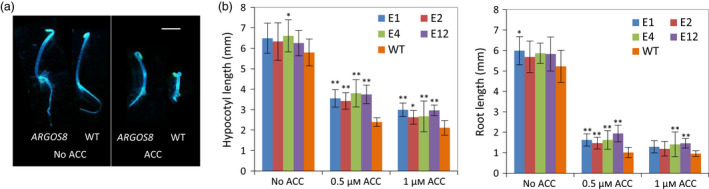
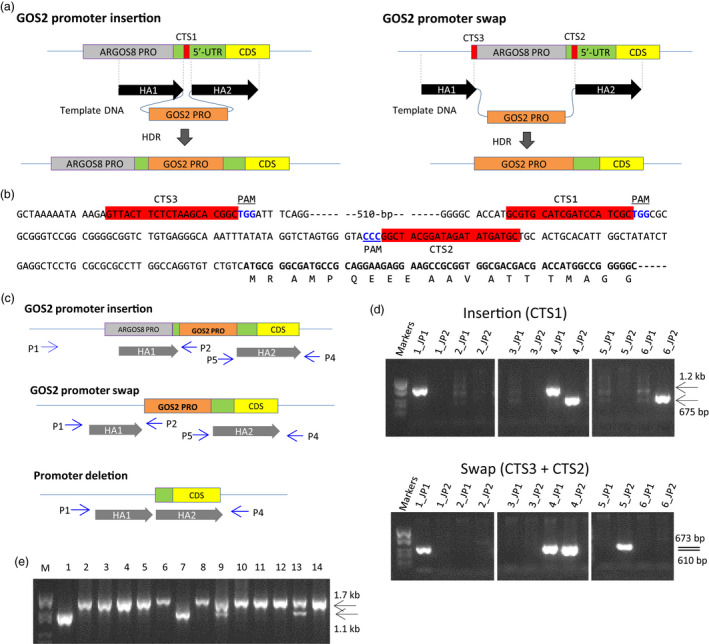
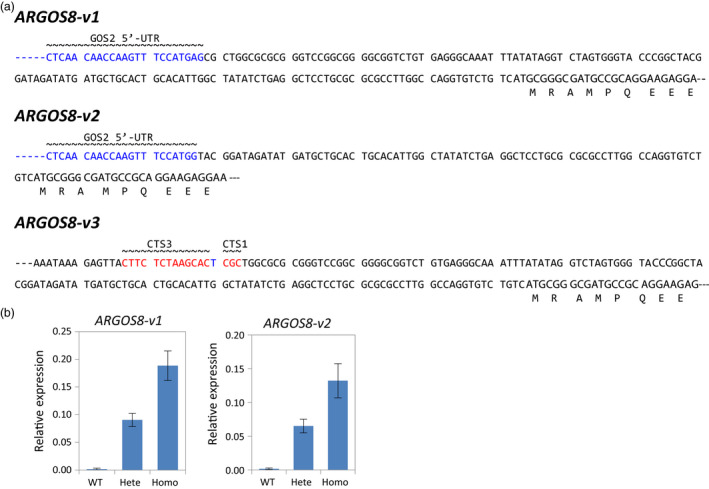
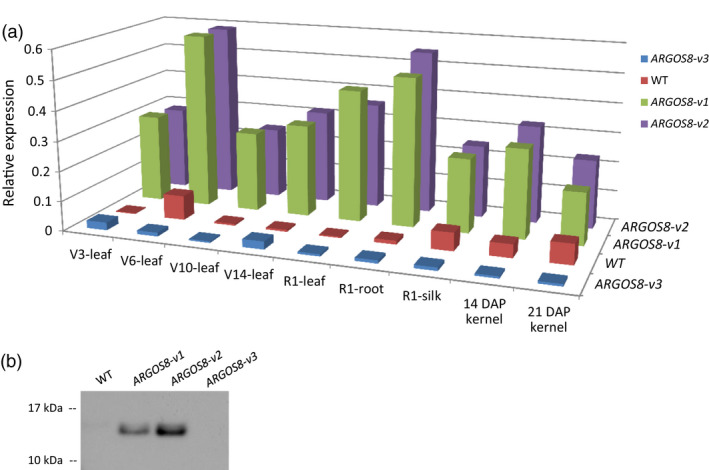
Verification
Claims the paper makes
The claims and statistics of this paper haven’t been checked yet.
Run the check — free, no account needed. It reads the open-access text and checks the sources it cites.
Claims other papers make about this one
Each is checked against this paper’s own text: does it say what the citing paper says it does?
The cited source says what the claim attributes to it.
In the citing paper
“improving the yield of maize crops under drought stress [181]”
From CRISPR-Cas: Converting A Bacterial Defence Mechanism into A State-of-the-Art Genetic Manipulation Tool (2019) · cites this paper as [181]
In the citing paper
“The technique has already been successfully applied to crop plants to alter agriculturally important traits such as disease resistance (Wang et al., 2014) and drought tolerance (Shi et al., 2017).”
From Genetically engineered crops help support conservation biological control (2019) · cites this paper as Shi et al., 2017
Self-check
Percentages, sums and reported differences re-computed from the paper’s own numbers.
The self-check needs the paper’s full text.
Citations
Cites
Molecular Cloning: A Laboratory Manual
Sambrook, J., Fritsch, E., & Maniatis, T. (1989) · UCLA - Biblioteca de Ciencias de la Salud · Cited by 133,589
Molecular cloning: A laboratory manual
Deininger, P. L. (1990) · Analytical Biochemistry · doi:10.1016/0003-2697(90)90595-z · Cited by 84,684
RNA-Guided Human Genome Engineering via Cas9
Mali, P., Yang, L., Esvelt, K. M., Aach, J., Guell, M., DiCarlo, J. E., Norville, J. E., & Church, G. M. (2013) · Science · doi:10.1126/science.1232033 · Cited by 9,210
The B73 Maize Genome: Complexity, Diversity, and Dynamics
Schnable, P. S., Ware, D., Fulton, R. S., Stein, J. C., Wei, F., Pasternak, S., Liang, C., Zhang, J., Fulton, L., Graves, T., et al. (2009) · Science · doi:10.1126/science.1178534 · Cited by 4,096
Wang, Y., Cheng, X., Shan, Q., Zhang, Y., Liu, J., Gao, C., & Qiu, J.-L. (2014) · Nature Biotechnology · doi:10.1038/nbt.2969 · Cited by 2,072
Li, J., Norville, J. E., Aach, J., McCormack, M., Zhang, D., Bush, J., Church, G. M., & Sheen, J. (2013) · Nature Biotechnology · doi:10.1038/nbt.2654 · Cited by 1,533
Plant Breeding for Stress Environments
Blum, A. (2018) · doi:10.1201/9781351075718 · Cited by 1,309
Jiang, W., Zhou, H., Bi, H., Fromm, M., Yang, B., & Weeks, D. P. (2013) · Nucleic Acids Research · doi:10.1093/nar/gkt780 · Cited by 1,282
High-efficiency TALEN-based gene editing produces disease-resistant rice
Li, T., Liu, B., Spalding, M. H., Weeks, D. P., & Yang, B. (2012) · Nature Biotechnology · doi:10.1038/nbt.2199 · Cited by 1,149
Insensitivity to Ethylene Conferred by a Dominant Mutation in Arabidopsis thaliana
Bleecker, A. B., Estelle, M. A., Somerville, C. R., & Kende, H. (1988) · Science · doi:10.1126/science.241.4869.1086 · Cited by 1,014
Cited by
Sorted by citations
CRISPR/Cas Genome Editing and Precision Plant Breeding in Agriculture
Chen, K., Wang, Y., Zhang, R., Zhang, H., & Gao, C. (2019) · Annual Review of Plant Biology · doi:10.1146/annurev-arplant-050718-100049 · Cited by 1,696
The Pivotal Role of Ethylene in Plant Growth
Dubois, M., den Broeck, L. V., & Inzé, D. (2018) · Trends in Plant Science · doi:10.1016/j.tplants.2018.01.003 · Cited by 842
Translating High-Throughput Phenotyping into Genetic Gain
Araus, J. L., Kefauver, S. C., Zaman‐Allah, M., Olsen, M. S., & Cairns, J. E. (2018) · Trends in Plant Science · doi:10.1016/j.tplants.2018.02.001 · Cited by 805
Heat and Drought Stresses in Crops and Approaches for Their Mitigation
Lamaoui, M., Jemo, M., Datla, R. S. S., & Bekkaoui, F. (2018) · Frontiers in Chemistry · doi:10.3389/fchem.2018.00026 · Cited by 752
CRISPR for Crop Improvement: An Update Review
Jaganathan, D., Ramasamy, K., Sellamuthu, G., Jayabalan, S., & Venkataraman, G. (2018) · Frontiers in Plant Science · doi:10.3389/fpls.2018.00985 · Cited by 619
Metadata
- Authors
- Shi, J., Gao, H., Wang, H., Lafitte, H. R., Archibald, R. L., Yang, M., Hakimi, S. M., Mo, H., & Habben, J. E.
- Affiliations
- Pioneer Hi-Bred (US)
- Corresponding author
- Shi, Jinrui
- ORCID
- Venue
- Plant Biotechnology Journal
- Publisher
- Wiley
- Published
- 2016-08-17
- Volume
- 15
- Issue
- 2
- Pages
- 207-216
- ISSN
- 1467-7644 (ISSN-L)
- 1467-7652
- PMC
- PMC5258859
- OpenAlex
- W2488393959
- Cited by
- 1,029
- References
- 56
- Citations by year
- 2026: 97 · 2025: 119 · 2024: 99 · 2023: 127 · 2022: 157 · 2021: 145 · 2020: 109 · 2019: 85 · 2018: 47 · 2017: 40 · 2016: 3
- FWCI
- 30.33
- Type
- journal article
- Language
- en
- Open access
- gold
- doi.org
- Licence
- Locations
- Plant Biotechnology Journal (publishedVersion, cc-by)
- Europe PMC (PubMed Central) (publishedVersion, cc-by)
- PubMed Central (publishedVersion, cc-by)
- PubMed (publishedVersion)
- Funders
- National Institutes of Health
- Topics
- Life Sciences › Biochemistry, Genetics and Molecular Biology › Molecular Biology › CRISPR and Genetic Engineering
- Life Sciences › Agricultural and Biological Sciences › Plant Science › Plant Stress Responses and Tolerance
- Life Sciences › Agricultural and Biological Sciences › Plant Science › Genetically Modified Organisms Research
- Keywords
- maize, drought stress, grain yield, CRISPR/Cas9, ethylene response, promoter replacement, allelic variation, drought tolerance breeding, gene expression
- MeSH terms
- Gene Editing, Base Sequence, Edible Grain, Zea mays, Ethylenes, Plant Proteins, Promoter Regions, Genetic, RNA, Messenger, Stress, Physiological, Polymerase Chain Reaction, Gene Expression Regulation, Plant, Crops, Agricultural, Plants, Genetically Modified, Biodiversity, Droughts, CRISPR-Cas Systems, CRISPR-Associated Proteins
About these checks
Registry, retraction, Cites and statistics results are computed, not judged, with one exception: a printed reference that no index lists is read once by a model before it counts as a citation error. Claims are extracted by a model and kept only when their quote appears verbatim in the text; each cited source is then checked, with a model’s help, for whether it says what the claim relies on. Those verdicts can be wrong — read the claim’s quote and the cited source before relying on one.
Statistics and arithmetic are recomputed, not judged.
Confidence bands are shown only for fields calibrated on our annotated test set. None is calibrated yet, so no band is shown.
What counts as a claim ›How we measure confidence ›How we check this ›
Are you an author, or do you see a problem with this page? Request a review
