

Climate models predict increasing temperature variability in poor countries
Open accessThe DOI matches its Crossref record; 56 of the 56 references it cites were found in a registry or an index.
Abstract
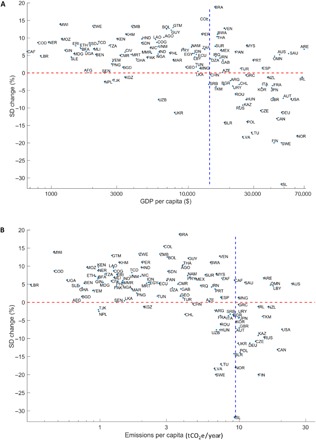
Temperature variability will increase in poor countries and decrease in rich countries, creating a new climate injustice.
Overview
The claims and statistics of this paper haven’t been checked yet.
Free: it reads the open-access text and checks the first 5 claims that cite a source we can check. Create a free account to check every claim.
Integrity signals
Registry
Cites
Statistics
Figures
Verification
Claims the paper makes
The claims and statistics of this paper haven’t been checked yet.
Free: it reads the open-access text and checks the first 5 claims that cite a source we can check. Create a free account to check every claim.
Claims other papers make about this one
Each is checked against this paper’s own text: does it say what the citing paper says it does?
The cited source says what the claim attributes to it.
In the citing paper
“This is clearly seen in poor countries, which are more vulnerable to weather and climate fluctuation than wealthier countries (95).”
From The Impact of Climate Change on Mental Health: A Systematic Descriptive Review (2020) · cites this paper as [95]
Self-check
Percentages, sums and reported differences re-computed from the paper’s own numbers.
The self-check needs the paper’s full text.
Citations
Cites
The ERA‐Interim reanalysis: configuration and performance of the data assimilation system
Dee, D. P., Uppala, S. M., Simmons, A. J., Berrisford, P., Poli, P., Kobayashi, S., Andrae, U., Balmaseda, M. A., Balsamo, G., Bauer, P., et al. (2011) · Quarterly Journal of the Royal Meteorological Society · doi:10.1002/qj.828 · Cited by 24,480
An Overview of CMIP5 and the Experiment Design
Taylor, K. E., Stouffer, R. J., & Meehl, G. A. (2012) · Bulletin of the American Meteorological Society · doi:10.1175/bams-d-11-00094.1 · Cited by 14,052
The Modern-Era Retrospective Analysis for Research and Applications, Version 2 (MERRA-2)
Gelaro, R., McCarty, W., Suárez, M. J., Todling, R., Molod, A., Takacs, L., Randles, C. A., Darmenov, A., Bosilovich, M. G., Reichle, R., et al. (2017) · Journal of Climate · doi:10.1175/jcli-d-16-0758.1 · Cited by 9,010
NCEP–DOE AMIP-II reanalysis (R-2)
Kanamitsu, M., Ebisuzaki, W., Woollen, J., Yang, S.-K., Hnilo, J. J., Fiorino, M., & Potter, G. L. (2002) · Bulletin of the American Meteorological Society · doi:10.1175/bams-83-11-1631 · Cited by 5,771
Investigating soil moisture–climate interactions in a changing climate: A review
Seneviratne, S. I., Corti, T., Davin, E. L., Hirschi, M., Jaeger, E. B., Lehner, I., Orlowsky, B., & Teuling, A. J. (2010) · Earth-Science Reviews · doi:10.1016/j.earscirev.2010.02.004 · Cited by 5,638
Climate Extremes: Observations, Modeling, and Impacts
Easterling, D. R., Meehl, G. A., Parmesan, C., Changnon, S. A., Karl, T. R., & Mearns, L. O. (2000) · Science · doi:10.1126/science.289.5487.2068 · Cited by 4,867
Tipping elements in the Earth’s climate system
Lenton, T. M., Held, H., Kriegler, E., Hall, J. W., Lucht, W., Rahmstorf, S., & Schellnhuber, H. J. (2008) · Proceedings of the National Academy of Sciences · doi:10.1073/pnas.0705414105 · Cited by 3,982
Self-citationThe RCP greenhouse gas concentrations and their extensions from 1765 to 2300
Meinshausen, M., Smith, S. J., Calvin, K., Daniel, J. S., Kainuma, M. L. T., Lamarque, J.-F., Matsumoto, K., Montzka, S. A., Raper, S. C. B., Riahi, K., et al. (2011) · Climatic Change · doi:10.1007/s10584-011-0156-z · Cited by 3,584
The Twentieth Century Reanalysis Project
Compo, G. P., Whitaker, J. S., Sardeshmukh, P. D., Matsui, N., Allan, R. J., Yin, X., Gleason, B. E., Vose, R. S., Rutledge, G., Bessemoulin, P., et al. (2011) · Quarterly Journal of the Royal Meteorological Society · doi:10.1002/qj.776 · Cited by 3,518
Global surface temperature change
Hansen, J., Ruedy, R., Sato, M., & Lo, K. (2010) · Reviews of Geophysics · doi:10.1029/2010rg000345 · Cited by 3,081
Research works printed but not linked: 1
- 10.1175/1520-0442(2002)015 · doi:10.1175/1520-0442(2002)015
Cited by
Items 201–300 of 491
Xu, Y. Q., Liao, Z., Liu, J., Liu, C., & Li, Y. (2024) · Urban forestry & urban greening · doi:10.1016/j.ufug.2024.128554 · Cited by 17
Gascoigne, S. J. L., Kajin, M., Tuljapurkar, S. D., Santos, G. S., Compagnoni, A., Steiner, U. K., Vinton, A. C., Jaggi, H., Sepil, I., & Salguero‐Gómez, R. (2025) · Ecology Letters · doi:10.1111/ele.70066 · Cited by 16
“For example, periods of extreme variation in temperature and precipitation are expected to increase in the tropics and sub-tropics which host the highest biodiversity (temperature: Bathiany et al. 2018; precipitation: Trenberth 2011).”
Wei, D., Castro, L. G., Chhatre, A., Tuninetti, M., & Davis, K. F. (2025) · Nature Communications · doi:10.1038/s41467-025-57420-6 · Cited by 20
“With episodes of extreme climate expected to become more frequent 13 , a large body of research has recognized the urgent need to understand and address the critical challenge of enhancing the climate resilience of agriculture and has focused in particular on interrogating the relationship between…”
Climate justice: The contribution of higher education institutions
Filho, W. L., Kim, E., Palau-Salvador, G., Aránguiz, P., Oyedeji, S., Molera, L., Semitiel-García, M., de Maya, S. R., Moradi, A., & Trevisan, L. V. (2025) · Discover Sustainability · doi:10.1007/s43621-025-01090-3 · Cited by 18
Bastidas, G. A., & Hernández, R. (2019) · Revista CUIDARTE · doi:10.15649/cuidarte.v10i3.664 · Cited by 16
Climate change and global warming: Impacts on crop production
(2020) · Elsevier eBooks · doi:10.1016/b978-0-12-818564-3.09991-1 · Cited by 16
Bhatt, U. S., Carreras, B. A., Reynolds-Barredo, J.-M., Newman, D. E., Colet, P., & Gomila, D. (2022) · Land · doi:10.3390/land11081275 · Cited by 17
Analysing differences between scenarios
Hendry, D. F., & Pretis, F. (2020) · International Journal of Forecasting · doi:10.1016/j.ijforecast.2022.02.004 · Cited by 16
Wegmann, M., & Jaume-Santero, F. (2023) · Communications Earth & Environment · doi:10.1038/s43247-023-00872-9 · Cited by 17
Adaptation to fluctuating temperatures across life stages in endotherms
Schou, M. F., & Cornwallis, C. K. (2024) · Trends in Ecology & Evolution · doi:10.1016/j.tree.2024.05.012 · Cited by 15
Schwarz, L., Chen, C., Quiñones, J. E. C., Aguilar-Dodier, L. C., Hansen, K., Sanchez, J. R., González, D. J. X., McCord, G. C., & Benmarhnia, T. (2024) · Environment International · doi:10.1016/j.envint.2024.109231 · Cited by 15
“Countries that contribute the least to anthropogenic climate change will be the most affected by its impacts (Bathiany et al. 2018; Gasparrini et al. 2017); yet there is substantially less evidence coming from many of these regions (Green et al. 2019).”
Genetic Elucidation for Response of Flowering Time to Ambient Temperatures in Asian Rice Cultivars
Hori, K., Saisho, D., Nagata, K., Nonoue, Y., Uehara‐Yamaguchi, Y., Kanatani, A., Shu, K., Hirayama, T., Yonemaru, J., Fukuoka, S., et al. (2021) · International Journal of Molecular Sciences · doi:10.3390/ijms22031024 · Cited by 15
“Global warming is causing climate change with large temperature fluctuations, in addition to variations in solar irradiation, precipitation and soil moisture, in rice-growing regions [1,4].”
BackgroundKheiri, M., Kambouzia, J., Deihimfard, R., Yaghoubian, I., & Moghaddam, S. M. (2021) · International Journal of Plant Production · doi:10.1007/s42106-021-00153-5 · Cited by 16
A Simple Model for Interpreting Temperature Variability and Its Higher-Order Changes
Tamarin‐Brodsky, T., Hodges, K. I., Hoskins, B. J., & Shepherd, T. G. (2021) · Journal of Climate · doi:10.1175/jcli-d-21-0310.1 · Cited by 15
“…and temperature variance response to climate change (Sch ä r et al. 2004; Screen 2014; Fischer and Sch ä r 2009; Volodin and Yurova 2013; Parey et al. 2013; Kodra and Ganguly 2014; Schneider et al. 2015; Gao et al. 2015; Holmes et al. 2016; Bathiany et al. 2018; Dai and Deng 2021; Xu et al. 2020).”
BackgroundProjected changes in the interannual variability of surface air temperature using CMIP6 simulations
Shi, J., Tian, Z., Lang, X., & Jiang, D. (2023) · Climate Dynamics · doi:10.1007/s00382-023-06923-3 · Cited by 20
“…from no change (Thompson et al. 2015) to a decrease (Brown et al. 2017; Huntingford et al. 2013; Lenton et al. 2017; Olonscheck and Notz 2017) to an increase (Bathiany et al. 2018; Hansen et al. 2012; Holmes et al. 2016) on interannual to multidecadal time-scales using early model generations.”
Kheyruri, Y., Sharafati, A., Neshat, A., Hameed, A. S., & Rahman, A. (2024) · Physics and Chemistry of the Earth Parts A/B/C · doi:10.1016/j.pce.2024.103630 · Cited by 14
Zou, C., Tang, X., Tan, Q., Feng, H., Guo, H., & Mei, J. (2024) · Sustainability · doi:10.3390/su16135559 · Cited by 14
“…source sites of cities and wetlands by studying the ecosystem function supply and demand services [33], with particle size backpropagation, principal component analysis [34], the ecological network study method of landscape pa tt ern analysis [35], and other comprehensive analysis methods.”
What drives adaptive behaviours during heatwaves? A systematic review with a meta-analysis
Soto, M. B., & Guillon, M. (2024) · Climate Policy · doi:10.1080/14693062.2024.2388225 · Cited by 15
“The lack of literature in these regions is all the more worrying given that they will be heavily a ff ected by the increasing frequency and intensity of heatwaves (Bathiany et al., 2018).”
The Shifting Distribution of Arctic Daily Temperatures Under Global Warming
Gieße, C., Notz, D., & Baehr, J. (2024) · Earth s Future · doi:10.1029/2024ef004961 · Cited by 14
“…a reduced and shifted seasonal temperature cycle (Chen et al., 2019; Dwyer et al., 2012; Polyakov et al., 2024), decreasing temperature variability (Bathiany et al., 2018; Borodina et al., 2017; Chen et al., 2019; Dai & Deng, 2021; Holmes et al., 2016; Olonscheck et al., 2021; Ylhäisi & Räisänen,…”
Xiao, S., Peng, J., Hu, T., & Tang, H. (2024) · Landscape Ecology · doi:10.1007/s10980-024-02010-y · Cited by 14
“The landscape fragmentation and biodiversity loss in the context of rapid urbanization and population growth posed a serious threat to ecosystem function, which could negatively affect sustainable development (Butchart et al. 2010; Newbold et al. 2015; Bathiany et al. 2018).”
Berghuis, P. M. J., Mayor, Á. G., Rietkerk, M., & Baudena, M. (2020) · Journal of Arid Environments · doi:10.1016/j.jaridenv.2020.104282 · Cited by 14
Day‐to‐Day Temperature Variability in China During Last 60 Years Relative to Arctic Oscillation
Wang, X., Wu, G., & Qin, Y. (2022) · Earth and Space Science · doi:10.1029/2022ea002587 · Cited by 14
“The standard deviation of the monthly temperature anomalies has also been used to calculate the temperature variability and to analyze regions with large variations and physical mechanisms (Bathiany et al., 2018).”
BackgroundMethodFeeding rate and efficiency in an apex soil predator exposed to short-term temperature changes
Ramachandran, D., Lindo, Z., & Meehan, M. L. (2020) · Basic and Applied Ecology · doi:10.1016/j.baae.2020.11.006 · Cited by 15
D’Agata, S. (2022) · Nature Climate Change · doi:10.1038/s41558-021-01256-7 · Cited by 14
The value of forecasts: Experimental evidence from India
Burlig, F., Jina, A., Kelley, E., Lane, G., & Sahai, H. (2024) · National Bureau of Economic Research · doi:10.3386/w32173 · Cited by 15
Optimal forest management under climate change variability
Rosa, R., Simas, C., Ataíde, R. A., Soares, P., & Tomé, M. (2024) · Ecological Economics · doi:10.1016/j.ecolecon.2024.108322 · Cited by 13
Assembly Graph as the Rosetta Stone of Ecological Assembly
Song, C. (2025) · Environmental Microbiology · doi:10.1111/1462-2920.70030 · Cited by 16
Increasing trends of land and coastal heatwaves under global warming
Zhang, B., He, Y., & Guan, X. (2025) · Atmospheric Research · doi:10.1016/j.atmosres.2025.108007 · Cited by 13
Waichman, I., Requate, T., Karde, M., & Milinski, M. (2021) · Journal of Environmental Economics and Management · doi:10.1016/j.jeem.2021.102502 · Cited by 13
Preston, J. C., Wooliver, R. C., Driscoll, H. E., Coughlin, A. O., & Sheth, S. N. (2021) · Molecular Ecology · doi:10.1111/mec.16300 · Cited by 14
“…rate, with increases in mean temperatures set to be particularly prevalent in the Arctic, Europe and North America, and extreme weather events and greater temperature fluctuations becoming increasingly common (Bathiany et al., 2018; Liu, 2017; Smith et al., 2015; Vasseur et al., 2014).”
BackgroundJirinec, V., Rutt, C. L., Elizondo, E. C., Rodrigues, P. F., & Stouffer, P. C. (2022) · Journal of Avian Biology · doi:10.1111/jav.02946 · Cited by 13
Ngoma, R. G. T. M., Tsoni, C. G. A. M., Meng, X., & Danwana, S. B. (2023) · Sustainability · doi:10.3390/su15021691 · Cited by 13
Estimated Impacts of Climate Change on Eddy Meridional Moisture Transport in the Atmosphere
Soldatenko, S. A. (2019) · Applied Sciences · doi:10.3390/app9234992 · Cited by 13
Temperature variability and birthweight: Epidemiological evidence from Africa
Pin, W., O’Donnell, K. J., Warren, J. L., Dubrow, R., & Chen, K. (2023) · Environment International · doi:10.1016/j.envint.2023.107792 · Cited by 12
Decadal Changes in Global Oceanic Primary Productivity and Its Drivers
Maishal, S. (2024) · Ocean-Land-Atmosphere Research · doi:10.34133/olar.0066 · Cited by 12
Sajjad, M., Rajapaksha, I., Rijal, H. B., & Siriwardana, C. (2024) · Building and Environment · doi:10.1016/j.buildenv.2024.112480 · Cited by 13
Future climate change and the distributional shift of the common vampire bat, Desmodus rotundus
de Vuurst, P. V., Gohlke, J. M., & Escobar, L. E. (2025) · Scientific Reports · doi:10.1038/s41598-025-87977-7 · Cited by 16
“borne emerging diseases due to compounding risk factors 29,30 .”
The effect of environmental change on out-migration in the Brazilian Amazon rainforest
Maia, A. G., & Schons, S. Z. (2020) · Population and Environment · doi:10.1007/s11111-020-00358-2 · Cited by 14
Assessing the response of dryland barley yield to climate variability in semi-arid regions, Iran
Kheiri, M., Kambouzia, J., Deihimfard, R., Moghaddam, S. M., & Anvari, S. (2021) · Journal of Arid Land · doi:10.1007/s40333-021-0017-1 · Cited by 12
“According to the latest reports, these climate changes significantly caused negative effects on crop productions (Chen et al., 2016; Bathiany et al., 2018; Bisbis et al., 2018).”
BackgroundThomas, T. S., Schlosser, C. A., Strzepek, K. M., Robertson, R., & Arndt, C. (2022) · Frontiers in Climate · doi:10.3389/fclim.2022.787721 · Cited by 12
“Unrelated to the manner in which the variation deltas are drawn, it would also be of interest to investigate the impact of increases in the variability of precipitation, given that several authors have argued for the likelihood of experiencing increased weather variability under climate change (Pendergrass et al., 201…”
BackgroundThermoregulation of understory birds in lowland Amazonia
Jirinec, V. (2024) · Oikos · doi:10.1111/oik.10554 · Cited by 11
The impact of energy sector pollution on human development and inequality amidst climate change
Rauner, S., Piontek, F., Soergel, B., & Luderer, G. (2024) · Environmental Research Letters · doi:10.1088/1748-9326/ad6b39 · Cited by 11
“Climate change further complicates achieving the SDGs and amplify inequality by disproportionately affecting poorer countries (Mendelsohn et al 2006, Bathiany et al 2018).”
Foucault’s error: The power of not knowing
Offer, K., Rahwan, Z., & Hertwig, R. (2024) · European Review of Social Psychology · doi:10.1080/10463283.2024.2383085 · Cited by 27
“As a prime example, it is widely recognised that climate change will disproportionately affect poorer countries (e.g., Bathiany et al., 2018; Jafino et al., 2020; Mendelsohn et al., 2006).”
Kunze, C., Petchey, O. L., Ghosh, S., & Hillebrand, H. (2025) · Ecology Letters · doi:10.1111/ele.70299 · Cited by 12
“Given the increasing importance of extreme events with proceeding climate change (Bathiany et al. 2018; Harris et al. 2018), we see a pressing need to further explore the role of response diversity for disturbances besides fluctuating environments.”
León‐Quinto, T., Fimia, A., Madrigal, R. F., & Serna, A. (2020) · Journal of Thermal Biology · doi:10.1016/j.jtherbio.2020.102748 · Cited by 11
How the environment is conceptualised and represented globally in social work codes of ethics
Liu, K., & Flynn, C. A. (2021) · International Social Work · doi:10.1177/00208728211020071 · Cited by 11
Gulzar, S., Goenaga, B., & Underwood, B. S. (2021) · Journal of Infrastructure Systems · doi:10.1061/(asce)is.1943-555x.0000669 · Cited by 11
Foreign yield shocks and domestic price variability: the case of maize in developing countries
Chen, B., & Villoria, N. B. (2022) · Environmental Research Letters · doi:10.1088/1748-9326/aca7d5 · Cited by 11
“Such possibility is exacerbated by the prospects of increased crop yield variability caused by a warmer, more unstable climate (e.g. Bathiany et al 2018), under which the historical distributions of maize yields likely shift to the left in major producing regions (Jägermeyr et al 2021).”
BackgroundMinimal shift of eastern wild turkey nesting phenology associated with projected climate change
Boone, W. W., Moorman, C. E., Terando, A. J., Moscicki, D. J., Collier, B. A., Chamberlain, M. J., & Pacifici, K. (2023) · Climate Change Ecology · doi:10.1016/j.ecochg.2023.100075 · Cited by 11
Wu, M., Long, R., Chen, H., & Wang, M. (2023) · Journal of Cleaner Production · doi:10.1016/j.jclepro.2023.138435 · Cited by 11
Microbial symbionts buffer hosts from the demographic costs of environmental stochasticity
Fowler, J. C., Ziegler, S. M., Whitney, K. D., Rudgers, J. A., & Miller, T. E. X. (2024) · Ecology Letters · doi:10.1111/ele.14438 · Cited by 11
Afroz, M. D., Li, R., Muhammed, K., Anandhi, A., & Chen, G. (2021) · Air Soil and Water Research · doi:10.1177/1178622121991789 · Cited by 12
“Source: Air, Soil and Water Research, 14(1)”
Substitution of social sustainability concerns under the Covid-19 pandemic
Blanco, E., Baier, A., Holzmeister, F., Jaber-López, T., & Struwe, N. (2021) · Ecological Economics · doi:10.1016/j.ecolecon.2021.107259 · Cited by 12
OSIRIS: A model for integrating the effects of multiple stressors on marine ecosystems
Bailey, R. M., & van der Grient, J. (2020) · Journal of Theoretical Biology · doi:10.1016/j.jtbi.2020.110211 · Cited by 12
Mathieson, T., Close, P. G., Helden, B. E. V., Speldewinde, P., & Comer, S. J. (2020) · Austral Ecology · doi:10.1111/aec.12874 · Cited by 10
EU policy must change to reflect the potential of gene editing for addressing climate change
Garland, S. (2021) · Global Food Security · doi:10.1016/j.gfs.2021.100496 · Cited by 10
Hammill, E., & Dart, R. (2022) · Ecology and Evolution · doi:10.1002/ece3.8665 · Cited by 10
“These variations in temporal variation may occur in either direction, leading to reduced variation (i.e., increased autocorrelation (Di Cecco & Gouhier, 2018)), or higher levels of variation with more extreme climatic events (Baker et al., 2018; Bathiany et al., 2018).”
BackgroundClimate attribution of interpersonal violence: International evidence
Li, J., Feng, C. Q., & Yang, J. (2023) · Environmental Research · doi:10.1016/j.envres.2023.116836 · Cited by 23
Increasing Long-Term Memory as an Early Warning Signal for a Critical Transition
Mei, Y., He, W., Xie, X., Wan, S., & Gu, B. (2023) · Journal of Climate · doi:10.1175/jcli-d-22-0263.1 · Cited by 10
Liu, Y., Huang, Y., Yuan, J., Xie, Y., & Zhou, C. (2024) · Journal of Geophysical Research Atmospheres · doi:10.1029/2023jd039495 · Cited by 11
“…temperature focus on its climatology and long‐term changes, the variability of land surface temperature at shorter time scales is also important to the human society due to its link with extreme events (Bathiany et al., 2018; Stouffer & Wetherald, 2007; Vasseur et al., 2014; Wei et al., 2021).”
BackgroundBarkhordarian, A. (2024) · Environmental Research Letters · doi:10.1088/1748-9326/ad715a · Cited by 11
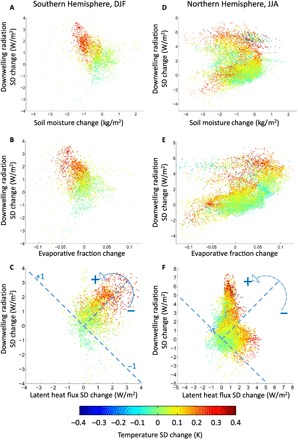
“The lack of the most efficient surface cooling flux [61] further amplifies the warming and drying conditions [62], consequently leading to greater temperature variability [42].”
Mahecha, M. D., Guha‐Sapir, D., Smits, J. P. J. M., Gans, F., & Kraemer, G. (2019) · Elsevier eBooks · doi:10.1016/b978-0-12-814895-2.00013-6 · Cited by 10
Estupiñán-Suárez, L. M., Gans, F., Brenning, A., Gutiérrez-Vélez, V. H., Londoño, M. C., Pabon‐Moreno, D. E., Poveda, G., Reichstein, M., Reu, B., Sierra, C. A., et al. (2021) · Frontiers in Earth Science · doi:10.3389/feart.2021.613395 · Cited by 12
Interrogating the Links between Climate Change, Food Crises and Social Stability
Köpke, S. (2022) · Earth · doi:10.3390/earth3020034 · Cited by 11
Panda, D. K., Pradhan, S., & AghaKouchak, A. (2022) · Climate Dynamics · doi:10.1007/s00382-022-06536-2 · Cited by 10
Coincidence of increasingly volatile winters in China with Arctic sea-ice loss during 1980–2018
Chen, Y., Liao, Z., & Zhai, P. (2019) · Environmental Research Letters · doi:10.1088/1748-9326/ab5c99 · Cited by 10
“…of changes in winter temperature variance at the Northernmid-latitudes remain highly uncertain, due to great sensitivity of quantifications to temporal-spatial scales, analysis periods, seasonality and datasets (Fischer and Knutti 2014, Screen et al 2014, Bathiany et al 2018, Ma et al 2018).”
BackgroundClimatic change and climatic variability: An objective decomposition
Grove, M. L. (2021) · Quaternary Science Reviews · doi:10.1016/j.quascirev.2021.107196 · Cited by 9
Ventura, F., Stanworth, A. J., Crofts, S., Kuepfer, A., & Catry, P. (2023) · Biology Letters · doi:10.1098/rsbl.2022.0408 · Cited by 11
Assessment and the regulation of adaptive phenotypic plasticity
Hill, K. A. P., Pfennig, K. S., & Pfennig, D. W. (2024) · Development · doi:10.1242/dev.203101 · Cited by 11
dos Santos, Y. C., & Pessoa, Z. S. (2025) · Climate Risk Management · doi:10.1016/j.crm.2025.100696 · Cited by 9
Effects of temperature exposures on early childhood cognitive development and home environment
Wu, W., Yang, Z., Kim, J. H., & Yue, A. (2025) · Journal of Environmental Economics and Management · doi:10.1016/j.jeem.2025.103162 · Cited by 10
The impact of weather shocks on crop yields: Evidence from India
Manohar, P. (2022) · Agricultural and Resource Economics Review · doi:10.1017/age.2022.20 · Cited by 9
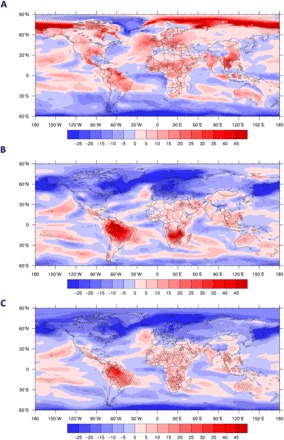
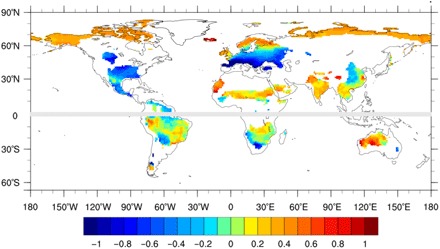
“On the other hand, Bathiany et al. (2018) show that climate models consistently predict that temperature variability will increase in the coming decades, particularly in tropical countries, and that this is driven by large increases in the time-evolving standard deviation over tropical land in the…”
Ehsan, M. A. (2020) · Atmospheric Research · doi:10.1016/j.atmosres.2020.104974 · Cited by 10
Astronomy in a Low-Carbon FuturePreprint
Matzner, C. D., Cowan, N. B., Doyon, R., Hénault-Brunet, V., Lafrenère, D., Lokken, M., Martin, P. G., Morsink, S. M., Normandeau, M., Ouellette, N. N.-Q., et al. (2019) · arXiv (Cornell University) · doi:10.48550/arxiv.1910.01272 · Cited by 11
Climate damage projections beyond annual temperaturePreprint
Waidelich, P., Batıbeniz, F., Rising, J., Kikstra, J., & Seneviratne, S. I. (2023) · Research Square · doi:10.21203/rs.3.rs-3198712/v1 · Cited by 9
Education in a Changing Climate: A Systematic Review for Low and Middle‐Income Countries ( LMICs )
Ghannam, R., Bhatti, S., & Ameer, A. (2025) · Sustainable Development · doi:10.1002/sd.70490 · Cited by 9
“…disproportionate impacts from climate-related disruptions, such as extreme weather events (Brzezinska and Jasper 2024; Headey and Venkat 2024), fluctuating energy availability (Chawla et al. 2018), and rising temperatures (Bathiany et al. 2018), all of which severely affect the educational sector.”
Revisiting two indices measuring high‐frequency daily variability
Liu, Q., Fu, C., & Xu, Z. (2024) · International Journal of Climatology · doi:10.1002/joc.8481 · Cited by 8
“Notably, the impacts of HFDV on temperature are much more severe in developing countries than in developed countries (Bathiany et al., 2018).”
BackgroundEarly growing season temperature variation and fertilizer use among smallholder farmers
Ahmed, M. H. (2025) · Food Policy · doi:10.1016/j.foodpol.2024.102793 · Cited by 9
Ortega, S., Rodríguez, C., & Drummond, H. M. (2022) · Oecologia · doi:10.1007/s00442-022-05219-3 · Cited by 8
Hasnawati, S., Usman, M., Faisol, A., & Elfaki, F. A. M. (2023) · International Journal of Energy Economics and Policy · doi:10.32479/ijeep.14069 · Cited by 8
Predicting adaptation and evolution of plasticity from temporal environmental change
Gallegos, C., Chevin, L., Hodgins, K. A., & Monro, K. (2024) · Methods in Ecology and Evolution · doi:10.1111/2041-210x.14462 · Cited by 8
“…most components in complex ways—for example, by accelerating temperature trends and making fluctuations around trends more extreme or unpredictable (Bathiany et al., 2018; Di Cecco & Gouhier, 2018 ; Garcia et al., 2014 )—few theoretical models explore how these components jointly affect…”
Barbani, S. M. (2025) · Journal of Public Health · doi:10.1007/s10389-025-02513-1 · Cited by 10
de Araújo, G. P. (2021) · Cadernos de Campo Revista de Ciências Sociais · doi:10.47284/2359-2419.2021.31.121139 · Cited by 7
The intrinsic and extrinsic drivers of extinction risk in lemurs (Lemuroidea)
Brandon, C. J., Pearse, W. D., & Herrera, J. P. (2024) · Biological Conservation · doi:10.1016/j.biocon.2023.110408 · Cited by 7
Climate resilient rice production system: Natural resources management approach
Shahid, M., Munda, S., Khanam, R., Chatterjee, D., Kumar, U., Satapathy, B., Mohanty, S., Bhaduri, D., Tripathi, R., Nayak, P., et al. (2021) · ORYZA- An International Journal on Rice · doi:10.35709/ory.2021.58.spl.6 · Cited by 7
Barcikowska, M. J., Muñoz, Á. G., Weaver, S. J., Russo, S., & Wehner, M. F. (2019) · Environmental Research Letters · doi:10.1088/1748-9326/ab4dea · Cited by 7
“Bathiany et al (2018), have shown that the southern mid-latitudes feature a large inter-model spread and insignificant changes, being a transition zone between the decreased standard deviation to the north and the increased values to the south, in the March–”
BackgroundFuture Snow Changes over the Columbia Mountains, Canada, using a Distributed Snow Model
Mortezapour, M., Menounos, B., Jackson, P. L., & Erler, A. R. (2022) · Climatic Change · doi:10.1007/s10584-022-03360-9 · Cited by 8
Skillful Decadal Prediction of Droughts Over Large‐Scale River Basins Across the Globe
Zhu, E., Yuan, X., & Wu, P. (2020) · Geophysical Research Letters · doi:10.1029/2020gl089738 · Cited by 7
“Climate change is likely to make drought more frequent and intensive with increasingly severe impacts, which are particularly bad for developing countries where there are limited efforts for adaption (Bathiany et al., 2018; Cook et al., 2015; Yuan et al., 2019).”
BackgroundDynamical and thermodynamical drivers of variability in European summer heat extremes
Suarez‐Gutierrez, L., Li, C., Müller, W. A., & Marotzke, J. (2021) · EGU General Assembly Conference Abstracts · doi:10.5194/egusphere-egu21-11842 · Cited by 7
Green Innovation and Income Inequality: A Complex System AnalysisPreprint
Napolitano, L., Sbardella, A., Consoli, D., barbieri, N., & Perruchas, F. (2020) · SSRN Electronic Journal · doi:10.2139/ssrn.3663871 · Cited by 7
Forecasting trait responses in novel environments to aid seed provenancing under climate change
Putra, A. R., Yen, J. D. L., & Fournier‐Level, A. (2023) · Molecular Ecology Resources · doi:10.1111/1755-0998.13728 · Cited by 7
“Moreover, long- term averages cannot account for the effects of climate change on temperature variability (Bathiany et al., 2018; Schär et al., 2004; Screen, 2014) and the distinct responses of plants to changes in mean temperature and temperature variability (Burghardt et al., 2016; Scheepens et…”
BackgroundStamper, A. R., Mahmud, A. S., Nuzzo, J. B., & Baker, R. E. (2025) · GeoHealth · doi:10.1029/2024gh001138 · Cited by 6
“Climate change is expected to alter patterns in weather variability in the coming years (Bathiany et al., 2018; Field et al., 2012; Intergovernmental Panel On Climate Change, 2022; Johnson et al., 2018), which may have implications for the timing and magnitude of seasonal influenza outbreaks.”
Mango, L., Mapolisa, A., Mudzonga, C., Makarichi, L., Okpara, K., Techato, K., Muzvidzani, M., & Magenge, M. M. (2025) · African Journal of Climate Change and Resource Sustainability · doi:10.37284/ajccrs.4.1.2914 · Cited by 6
Yang, X., Zhang, Y., Tang, H., Huang, P., Ling, X., Peng, S., & Xiong, D. (2025) · International Journal of Climatology · doi:10.1002/joc.8880 · Cited by 6
“For example, the Arctic amplification reduces the meridional temperature gradient, which in turn weakens large-scale circulation patterns, leading to decreased temperature variability in mid-latitudes (Screen 2014; Bathiany et al. 2018; Dai and Deng 2021).”
Zhi, L., Li, R., Zhang, B., Zhang, Y., Pei, J., & Zong, S. (2025) · Insects · doi:10.3390/insects16080864 · Cited by 6
Day‐to‐Day Temperature Variability in Meteorological Observations and Reanalysis Data Over China
Wang, X., Wang, K., Mao, Y., & Wu, G. (2025) · Earth and Space Science · doi:10.1029/2025ea004573 · Cited by 6
“Rising near‐surface temperatures has far‐reaching impacts on species distribution, agricultural yields and economic development, receiving a lot of attention in the context of climate change (Asseng et al., 2011; Bathiany et al., 2018; Murali et al., 2023; Vasseur et al., 2014).”
Suarez‐Gutierrez, L., & Maher, N. (2025) · Nature Communications · doi:10.1038/s41467-025-67005-y · Cited by 8
“The change in variability itself in both ensembles is typically positive in sign except for most of the northern hemisphere extratropical and higher latitude land masses and parts of the ocean in DJF in agreement with previous work 1,2,12,14 – 21 .”
Akhtar, R., Hussain, J., Li, L., Cuong, T., & Tao, C. (2024) · Journal of Poverty · doi:10.1080/10875549.2024.2338146 · Cited by 6
Romero-Silva, R., Marsillac, E. L., & de Leeuw, S. (2025) · Research Policy · doi:10.1016/j.respol.2025.105193 · Cited by 6
Morozov, A. Y., Ageel, A., Bates, A., & Galyov, E. E. (2025) · Scientific Reports · doi:10.1038/s41598-025-89307-3 · Cited by 6
“Models of climate change predict amplification of emergence of short-term anomalies of environmental conditions, i.e. they predict not only a future increase in the mean temperature/UV index values, but also augmentation of their variance 40,41 .”
Metadata
- Authors
- Bathiany, S., Dakos, V., Scheffer, M., & Lenton, T. M.
- Affiliations
- Wageningen University & Research (NL)
- Centre National de la Recherche Scientifique (FR)
- University of Exeter (GB)
- Corresponding author
- Bathiany, Sebastian
- Venue
- Science Advances
- Published
- 2018-05-04
- Volume
- 4
- Issue
- 5
- Pages
- eaar5809-eaar5809
- ISSN
- 2375-2548 (ISSN-L)
- PMC
- PMC5931768
- OpenAlex
- W2799499225
- Cited by
- 479
- References
- 56
- Citations by year
- 2026: 26 · 2025: 64 · 2024: 72 · 2023: 64 · 2022: 80 · 2021: 63 · 2020: 55 · 2019: 44 · 2018: 11
- FWCI
- 25.35
- Type
- journal article
- Language
- en
- Open access
- gold
- doi.org
- Licence
- cc-by-nc
- Locations
- Science Advances (publishedVersion, cc-by-nc)
- Europe PMC (PubMed Central) (publishedVersion, cc-by-nc)
- PubMed Central (publishedVersion, cc-by-nc)
- PubMed (publishedVersion)
- Socio-Environmental Systems Modeling (acceptedVersion, cc-by-nc)
- HAL (submittedVersion, cc-by-nc)
- Figshare (submittedVersion, cc-by-nc)
- Open Research Exeter (University of Exeter) (submittedVersion, cc-by-nc)
- Data Archiving and Networked Services (DANS) (submittedVersion, cc-by-nc)
- Funders
- Netherlands Organisation for Scientific Research (Zwaartekracht project NESSC)
- Topics
- Physical Sciences › Environmental Science › Global and Planetary Change › Climate variability and models
- Physical Sciences › Environmental Science › Global and Planetary Change › Climate Change and Environmental Impact
- Life Sciences › Agricultural and Biological Sciences › Agronomy and Crop Science › Climate change impacts on agriculture
- Keywords
- temperature variability, climate change projections, climate models, developing countries, climate inequality, Sahel, India, Southeast Asia, soil drying, atmospheric structure, meridional temperature gradient, sea ice decline, extreme weather events, climate change vulnerability
About these checks
Registry, retraction, Cites and statistics results are computed, not judged, with one exception: a printed reference that no index lists is read once by a model before it counts as a citation error. Claims are extracted by a model and kept only when their quote appears verbatim in the text; each cited source is then checked, with a model’s help, for whether it says what the claim relies on. Those verdicts can be wrong — read the claim’s quote and the cited source before relying on one.
Statistics and arithmetic are recomputed, not judged.
Confidence bands are shown only for fields calibrated on our annotated test set. None is calibrated yet, so no band is shown.
What counts as a claim ›How we measure confidence ›How we check this ›
Are you an author, or do you see a problem with this page? Request a review
Data sources
Bibliographic data: Semantic Scholar, OpenAlex, Crossref.
Contains information from the Semantic Scholar Academic Graph Datasets, made available under the ODC Attribution License (ODC-BY 1.0).
Semantic Scholar’s data is described in: Kinney, R., et al. (2023). The Semantic Scholar Open Data Platform. arXiv:2301.10140.
