

Climate models predict increasing temperature variability in poor countries
Open accessThe DOI matches its Crossref record; 56 of the 56 references it cites were found in a registry or an index.
Abstract
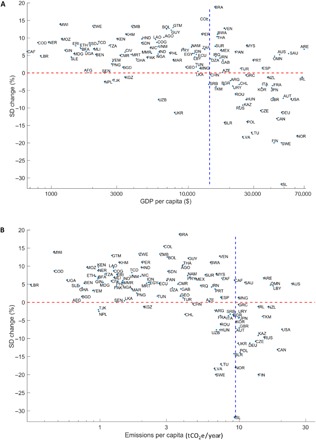
Temperature variability will increase in poor countries and decrease in rich countries, creating a new climate injustice.
Overview
The claims and statistics of this paper haven’t been checked yet.
Free: it reads the open-access text and checks the first 5 claims that cite a source we can check. Create a free account to check every claim.
Integrity signals
Registry
Cites
Statistics
Figures
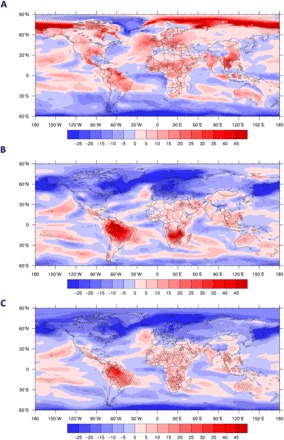
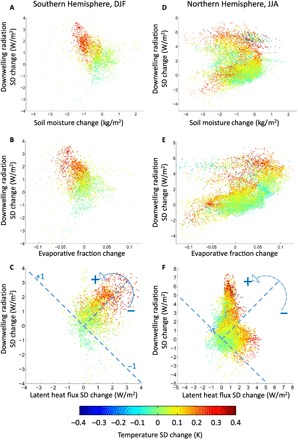
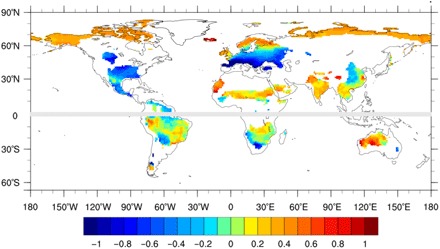
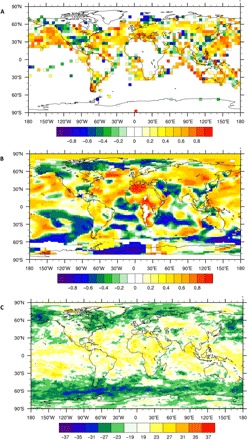
Verification
Claims the paper makes
The claims and statistics of this paper haven’t been checked yet.
Free: it reads the open-access text and checks the first 5 claims that cite a source we can check. Create a free account to check every claim.
Claims other papers make about this one
Each is checked against this paper’s own text: does it say what the citing paper says it does?
The cited source says what the claim attributes to it.
In the citing paper
“This is clearly seen in poor countries, which are more vulnerable to weather and climate fluctuation than wealthier countries (95).”
From The Impact of Climate Change on Mental Health: A Systematic Descriptive Review (2020) · cites this paper as [95]
Self-check
Percentages, sums and reported differences re-computed from the paper’s own numbers.
The self-check needs the paper’s full text.
Citations
Cites
The ERA‐Interim reanalysis: configuration and performance of the data assimilation system
Dee, D. P., Uppala, S. M., Simmons, A. J., Berrisford, P., Poli, P., Kobayashi, S., Andrae, U., Balmaseda, M. A., Balsamo, G., Bauer, P., et al. (2011) · Quarterly Journal of the Royal Meteorological Society · doi:10.1002/qj.828 · Cited by 24,480
An Overview of CMIP5 and the Experiment Design
Taylor, K. E., Stouffer, R. J., & Meehl, G. A. (2012) · Bulletin of the American Meteorological Society · doi:10.1175/bams-d-11-00094.1 · Cited by 14,052
The Modern-Era Retrospective Analysis for Research and Applications, Version 2 (MERRA-2)
Gelaro, R., McCarty, W., Suárez, M. J., Todling, R., Molod, A., Takacs, L., Randles, C. A., Darmenov, A., Bosilovich, M. G., Reichle, R., et al. (2017) · Journal of Climate · doi:10.1175/jcli-d-16-0758.1 · Cited by 9,010
NCEP–DOE AMIP-II reanalysis (R-2)
Kanamitsu, M., Ebisuzaki, W., Woollen, J., Yang, S.-K., Hnilo, J. J., Fiorino, M., & Potter, G. L. (2002) · Bulletin of the American Meteorological Society · doi:10.1175/bams-83-11-1631 · Cited by 5,771
Investigating soil moisture–climate interactions in a changing climate: A review
Seneviratne, S. I., Corti, T., Davin, E. L., Hirschi, M., Jaeger, E. B., Lehner, I., Orlowsky, B., & Teuling, A. J. (2010) · Earth-Science Reviews · doi:10.1016/j.earscirev.2010.02.004 · Cited by 5,638
Climate Extremes: Observations, Modeling, and Impacts
Easterling, D. R., Meehl, G. A., Parmesan, C., Changnon, S. A., Karl, T. R., & Mearns, L. O. (2000) · Science · doi:10.1126/science.289.5487.2068 · Cited by 4,867
Tipping elements in the Earth’s climate system
Lenton, T. M., Held, H., Kriegler, E., Hall, J. W., Lucht, W., Rahmstorf, S., & Schellnhuber, H. J. (2008) · Proceedings of the National Academy of Sciences · doi:10.1073/pnas.0705414105 · Cited by 3,982
Self-citationThe RCP greenhouse gas concentrations and their extensions from 1765 to 2300
Meinshausen, M., Smith, S. J., Calvin, K., Daniel, J. S., Kainuma, M. L. T., Lamarque, J.-F., Matsumoto, K., Montzka, S. A., Raper, S. C. B., Riahi, K., et al. (2011) · Climatic Change · doi:10.1007/s10584-011-0156-z · Cited by 3,584
The Twentieth Century Reanalysis Project
Compo, G. P., Whitaker, J. S., Sardeshmukh, P. D., Matsui, N., Allan, R. J., Yin, X., Gleason, B. E., Vose, R. S., Rutledge, G., Bessemoulin, P., et al. (2011) · Quarterly Journal of the Royal Meteorological Society · doi:10.1002/qj.776 · Cited by 3,518
Global surface temperature change
Hansen, J., Ruedy, R., Sato, M., & Lo, K. (2010) · Reviews of Geophysics · doi:10.1029/2010rg000345 · Cited by 3,081
Research works printed but not linked: 1
- 10.1175/1520-0442(2002)015 · doi:10.1175/1520-0442(2002)015
Cited by
Items 301–400 of 491
Evolution of Heat Extremes Under Net‐Zero CO 2 Emissions
Cassidy, L. J., King, A. D., Brown, J. R., Ziehn, T., & Borowiak, A. R. (2025) · Earth s Future · doi:10.1029/2024ef005399 · Cited by 6
“Previous research shows that regional temperature extremes are commonly moderated or amplified in midlatitude regions, such as the Mediterranean, by regional feedbacks including soil moisture content (Bathiany et al., 2018; Miralles et al., 2019; Seneviratne et al., 2016).”
A conservation organisation’s approach to COVID-19: Lessons learned from Madagascar
Leeney, R. H., Raveloson, H., Antion, P., & Mohan, V. (2022) · Jàmbá Journal of Disaster Risk Studies · doi:10.4102/jamba.v14i1.1285 · Cited by 6
“Shocks such as pandemics and the impacts of climate breakdown are only likely to increase in frequency and severity in the future (e.g. Bathiany et al. 2018:1–10).”
BackgroundReconfiguration of Amazon’s connectivity in the climate system
Giammarese, A., Brown, J., & Malik, N. (2024) · Chaos An Interdisciplinary Journal of Nonlinear Science · doi:10.1063/5.0165861 · Cited by 6
Blake, N. J., Parlin, A. F., Cumming, I., Gibbs, J. P., Tattersall, G. J., Warren, D. E., Cabrera, F., Haro, J., Norys, J., James, R., et al. (2021) · Elsevier eBooks · doi:10.1016/b978-0-12-817554-5.00015-0 · Cited by 6
Zhang, M., Zhou, Z., Zhang, R., Tan, Y., & Wen, M. (2022) · Climate Dynamics · doi:10.1007/s00382-022-06470-3 · Cited by 6
La incertidumbre climática y el dilema energético colombiano
Montes, C. (2018) · Revista de la Academia Colombiana de Ciencias Exactas Físicas y Naturales · doi:10.18257/raccefyn.664 · Cited by 13
Breaking Consensus, Transforming Metabolisms
Rosa, S. P. D. (2022) · Social Text · doi:10.1215/01642472-9495160 · Cited by 9
Liu, X., Yang, J., Zhang, Q., Zhou, Y., Jia, X., & Song, H. (2025) · Chemical Engineering Journal · doi:10.1016/j.cej.2025.164566 · Cited by 5
Risk of rice production failure in India under climate change
Bowden, C., Foster, T., & Parkes, B. (2025) · Environmental Research Letters · doi:10.1088/1748-9326/adf459 · Cited by 4
“Identifying monsoon drivers of rice failures is especially important due to projected increases in weather extremes under climate change (Bathiany et al 2018).”
Beck, S. V., Kess, T., Nugent, C. M., Dempson, J. B., Chaput, G., Arno, H. E., Duffy, S., Smith, N. C. P., Bentzen, P., Kent, M., et al. (2025) · Evolutionary Applications · doi:10.1111/eva.70148 · Cited by 5
“Predictions also suggest changes in the frequency, duration, and intensity of climate extremes (Bathiany et al. 2018; Calvin et al. 2023; Ridder et al. 2022; Seneviratne et al. 2012).”
Akhtar, T. N., Maiorano, N., Cosma, A. P., & Hadfield, K. (2025) · Perspectives in Public Health · doi:10.1177/17579139251371589 · Cited by 5
Liu, S., Wang, Y., & Ren, C. (2025) · Environmental Impact Assessment Review · doi:10.1016/j.eiar.2025.108311 · Cited by 5
Geostatistical surfaces of climatological normals of mean air temperature in Minas Gerais
Alves, M. D. C., Sanches, L., & de Carvalho, L. G. (2022) · Environmental Monitoring and Assessment · doi:10.1007/s10661-022-10162-0 · Cited by 5
“Furthermore, climate models predicted increase of temperature variability in poor countries, amplifying the inequality associated with the impacts of a changing climate (Bathiany et al., 2018).”
BackgroundInfluentialChoi, M. P., Rubin, A. M., & Wada, H. (2022) · Frontiers in Ecology and Evolution · doi:10.3389/fevo.2022.901303 · Cited by 5
Goritz, A., & Kolleck, N. (2024) · Environmental Education Research · doi:10.1080/13504622.2024.2340504 · Cited by 5
“Due to their historically small contribution to climate change and their vulnerability to climate change impacts (Bathiany et al. 2018), developing countries demand support from industrialized countries.”
Lewkiewicz, S. M., Seibold, B., & Helmus, M. R. (2023) · Ecological Modelling · doi:10.1016/j.ecolmodel.2024.110841 · Cited by 6
Stroke risk associated with cold spells occurring during the warm season
He, C., Breitner, S., Zhang, S., Naumann, M. K., Traidl‐Hoffmann, C., Hammel, G., Peters, A., Ertl, M., & Schneider, A. E. (2025) · Environment International · doi:10.1016/j.envint.2025.109514 · Cited by 5
Intelligent Monitoring of Air Temperature by the DATA of Satellites and Meteorological Stations
Talakh, M., Holub, S., Лучшев, П. О., & Turkin, I. B. (2022) · International Journal of Computing · doi:10.47839/ijc.21.1.2525 · Cited by 5
Gallup, S. M., Baker, I., Gallup, J. L., Restrepo‐Coupé, N., Haynes, K., Geyer, N. M., & Denning, S. (2021) · Journal of Advances in Modeling Earth Systems · doi:10.1029/2021ms002555 · Cited by 6
Kreitmair, U. W., & Bower‐Bir, J. S. (2021) · Ecological Economics · doi:10.1016/j.ecolecon.2021.106998 · Cited by 6
Crop Modeling Under Climate Change
Butt, A. A., & Ahmed, Z. (2025) · Springer eBooks · doi:10.1007/978-981-96-4499-5_5 · Cited by 4
Hansen, F., Belušić, D., Wyser, K., & Koenigk, T. (2023) · Climate Dynamics · doi:10.1007/s00382-023-06704-y · Cited by 4
Responses in the breeding parameters of the collared flycatcher to the changing climate
Laczi, M., Sarkadi, F., Herényi, M., Nagy, G., Hegyi, G., Jablonszky, M., Könczey, R., Krenhardt, K., Markó, G., Rosivall, B., et al. (2024) · The Science of The Total Environment · doi:10.1016/j.scitotenv.2024.171945 · Cited by 5
Brzezinska, I., & Jasper, P. (2024) · Economics of Disasters and Climate Change · doi:10.1007/s41885-024-00160-6 · Cited by 4
“Recent climate models show that low-and middle-income countries (LMICs) are located in ‘hot-spot’ areas, where increases in temperature variability due to climate change are projected to be the greatest (Bathiany et al. 2018).”
InfluentialClimate change’s impact on the nervous system: A review study
Sadeghi, M. R., Ghannadi, P., Lotfi, A., & Ashayeri, H. (2024) · Health Promotion Perspectives · doi:10.34172/hpp.43089 · Cited by 4
Ziegler, E., Weitzel, N., Baudouin, J., Kapsch, M., Mikolajewicz, U., Gregoire, L., Ivanovic, R., Valdes, P. J., Wirths, C., & Rehfeld, K. (2025) · Climate of the past · doi:10.5194/cp-21-627-2025 · Cited by 5
“For sea ice, a decreasing extent has been shown to reduce the seasonal to interannual standard deviation of temperature, likely due to polar amplification and the sea ice–albedo feed-back (Screen, 2014; Huntingford et al., 2013; Screen and Simmonds, 2010; Bathiany et al., 2018).”
Disagreement in Detected Heatwave Trends Resulting From Diagnostic Methods
Zhang, B., He, Y., Wang, Z., Huang, B., Xie, Y., Guan, X., & Huang, J. (2025) · Geophysical Research Letters · doi:10.1029/2024gl114398 · Cited by 6
“Summer is defined as June to August in the Northern Hemisphere and December to February in the Southern Hemisphere (Bathiany et al., 2018; Vogt et al., 2022).”
Amin, S. (2025) · Sustainable Development · doi:10.1002/sd.3489 · Cited by 5
Climate change and health in planetary perspectives: challenges for the health sector
Ha, M. (2025) · Environmental Analysis Health and Toxicology · doi:10.5620/eaht.2025s06 · Cited by 4
“This means that the countries that have contributed the least to climate change but are the most vulnerable to climate variability will experience the greatest temperature fluctuations and the most extreme weather conditions [12].”
Duan, L., Freese, L. M., Bala, G., & Caldeira, K. (2025) · Communications Earth & Environment · doi:10.1038/s43247-025-02579-5 · Cited by 5
“Extreme events also increase global inequalities, and impose additional stress on relatively vulnerable populations in low-latitude regions 6 – 8 .”
Li, P., Wu, J., Xue, T., & Zhu, T. (2025) · Communications Medicine · doi:10.1038/s43856-025-01101-4 · Cited by 6
“…studies focus on developed countries, such as the United States 4 and Australia 12 , and the region of New England 10 , whereas low-and middle-income countries (LMICs) are disproportionately impacted by climate change and experience the most pronounced temperature anomalies 13 .”
Meehan, M. L., Caruso, T., & Lindo, Z. (2021) · Pedobiologia · doi:10.1016/j.pedobi.2021.150742 · Cited by 6
Rastetter, E. B., Griffin, K. L., Kwiatkowski, B. L., & Kling, G. W. (2023) · Global Change Biology · doi:10.1111/gcb.16926 · Cited by 4
Malikah, S., Avila, S., Garcia, G., & Lakhankar, T. (2024) · Climate · doi:10.3390/cli12030032 · Cited by 4
Chan, R. L., Hodgson, M. J., & Schwanz, L. E. (2024) · Functional Ecology · doi:10.1111/1365-2435.14596 · Cited by 6
Avaliação e correção das simulações do modelo Eta/CPTEC – HADCM3 para o estado do Rio de Janeiro
da Silva, J. G., Wanderley, H. S., dos Santos, E. O., & Lyra, G. B. (2020) · Revista Brasileira de Geografia Física · doi:10.26848/rbgf.v13.1.p350-363 · Cited by 4
Major Challenges That Climate Change Will Bring to Hydrologists
Jain, S. K., & Singh, P. K. (2020) · Journal of Hydrologic Engineering · doi:10.1061/(asce)he.1943-5584.0001989 · Cited by 4
A Risk Management Perspective on Climate Change: Lessons Learned from the Nuclear Industry
McKinley, I. G., West, J. M., & Hardie, S. M. L. (2022) · Environmental Management · doi:10.1007/s00267-022-01594-y · Cited by 5
Macroeconomic-Financial Policies and Climate Change Nexus: Theory & Practices
Azam, M., Hunjra, A. I., & Taşkın, D. (2022) · Springer eBooks · doi:10.1007/978-981-19-3296-0_3 · Cited by 4
Secor, M., Sun, J., Yang, F., Zou, X., & Wu, Z. (2023) · Atmosphere · doi:10.3390/atmos14060979 · Cited by 4
“Previous studies have chronicled future changes in temperature variability in a multitude of ways, from calculating the standard deviation of monthly temperature anomalies [14] to feature tracking algorithms [15].”
BackgroundAgriculture and Food Security in the Era of Climate Change
Gasparini, K., Rafael, D. D., Peres, L. E. P., Ribeiro, D. M., & Zsögön, A. (2024) · Springer eBooks · doi:10.1007/978-3-031-43548-5_2 · Cited by 4
Coquereau, A., Sévellec, F., Huck, T., Hirschi, J., & Hochet, A. (2024) · Journal of Climate · doi:10.1175/jcli-d-23-0606.1 · Cited by 5
Wu, E., Su, R., Tang, T., Li, J., Mijiti, M., Li, Y., Zhang, G., Lian, M., Zhang, Y., Zhu, G., et al. (2025) · Frontiers in Public Health · doi:10.3389/fpubh.2025.1599541 · Cited by 5
Xing, K., Yang, Y., Peng, D., Su, Y., & Xiao, F. (2026) · China Finance Review International · doi:10.1108/cfri-06-2025-0404 · Cited by 3
Reduced extremes of sub‐daily temperature swings during the boreal summer in the Northern Hemisphere
Zhang, W., Villarini, G., & Scoccimarro, E. (2019) · International Journal of Climatology · doi:10.1002/joc.6222 · Cited by 3
“Moreover, climate models have projected increasing temperature variability in developing countries (Bathiany et al., 2018), while the magnitude of low-frequency surface air temperature variability is likely to decrease in a warm climate (Brown et al., 2017).”
BackgroundImpact of Climate Change On Agricultural Production Decisions
Serhatli, U., Calmon, A. D. P., & Yücesan, E. (2019) · Winter Simulation Conference · doi:10.1109/wsc40007.2019.9004788 · Cited by 3
En quoi les pays africains sont-ils structurellement vulnérables au changement climatique ?
Feindouno, S. (2023) · Revue d économie du développement · doi:10.3917/edd.363.0019 · Cited by 3
Udemba, E. N., Alola, A. A., & Zhang, D. (2024) · Environment Development and Sustainability · doi:10.1007/s10668-023-04185-x · Cited by 3
“…development and preservation of the climate under climate actions, reduction of social and income inequality among people and nations, and developing a roadmap that will enforce continuous and balanced economic development are among the actions (Bathiany et al., 2018; Romanello et al., 2021).”
Capital as an anchor of agricultural employment: Evidence from the 1975 frost
Barsanetti, B. (2024) · Regional Science and Urban Economics · doi:10.1016/j.regsciurbeco.2024.104041 · Cited by 3
Effective detection of early warning signal with power spectrum in climate change system
Chen, Z., Fan, P., Hou, X., Feng, G., & Qian, Z. (2024) · Chaos Solitons & Fractals · doi:10.1016/j.chaos.2024.115409 · Cited by 3
Kirkpatrick, W. H., Sauer, E. L., Carroll, R., Cohen, J. M., Davis, C. A., Fuhlendorf, S. D., & DuRant, S. E. (2025) · Journal of Thermal Biology · doi:10.1016/j.jtherbio.2025.104054 · Cited by 3
Enhanced risk of hot extremes revealed by observation-constrained model projections
Simolo, C., & Corti, S. (2025) · Communications Earth & Environment · doi:10.1038/s43247-025-02133-3 · Cited by 4
Coexistence of Tropical Forest Tree Species Along the Demographic Buffering Spectrum
Yang, X., Angert, A. L., Zuidema, P. A., Santos, G. S., Lyu, S., Bialic‐Murphy, L., & Zhang, J. (2025) · Global Change Biology · doi:10.1111/gcb.70310 · Cited by 4
“…dimension is crucial for understanding the forces that drive species coexistence and for predicting community assembly under future climate scenarios, which project increasing climate variability and more frequent extreme events in regions hosting the highest biodiversity (Bathiany et al. 2018).”
Lemos, R. P. M., MATIELO, C. B. D., Marques, A. D. S., dos Santos, M. G., da Rosa, V. G., Sarzi, D. S., Rosa, J. V. S., & Stefenon, V. M. (2019) · Anais da Academia Brasileira de Ciências · doi:10.1590/0001-3765201920181047 · Cited by 3
Weslati, O., Bouaziz, S., & Serbaji, M. M. (2022) · IntechOpen eBooks · doi:10.5772/intechopen.102726 · Cited by 3
Making Room for Our Forthcoming Rivers
Nardini, A. (2022) · Water · doi:10.3390/w14081220 · Cited by 4
Os efeitos das mudanças climáticas nas condições de conforto térmico urbano
LUGÃO, L. R., Santos, J. S. A., Fraga, A. A., Nico-Rodrigues, E. A., & de Alvarez, C. E. (2022) · PARC Pesquisa em Arquitetura e Construção · doi:10.20396/parc.v13i00.8665827 · Cited by 4
“Particularly in developing countries, this thermal trend sets tropical cities to a worsening imbalance between social, economic and environmental aspects (BATHIANY et al., 2018; FERON et al., 2019).”
BackgroundSartowska, B., Starosta, W., Chmielewska-Śmietanko, D., Miśkiewicz, A., Zakrzewska-Kołtuniewicz, G., Nqombolo, A., Mpupa, A., Walczak, R., Zuba, I., Fuks, L., et al. (2022) · UJ Press eBooks · doi:10.36615/9781776419463 · Cited by 4
Decadal trend of synoptic temperature variability over the Northern Hemisphere in winter
Cui, Z., & He, C. (2023) · Theoretical and Applied Climatology · doi:10.1007/s00704-023-04423-2 · Cited by 3
Hall, G., & Tudball, L. (2023) · Human Rights Education Review · doi:10.7577/hrer.5016 · Cited by 3
“In addition, the developing countries which have contributed the least to the crisis in terms of burning fossil fuels may be the most affected by it (Bathiany, Dakos, Scheffer & Lenton, 2018).”
BackgroundZhou, Y., Zheng, M., Yan, Z.-L., Liu, H., Liu, X., Jin, J.-Q., Wu, J., & Ou, C. (2023) · Frontiers of Environmental Science & Engineering · doi:10.1007/s11783-024-1787-4 · Cited by 3
“Considering the possible future increase in TV, it is crucial to better understand the role of TV in human health and well-being, especially for CVD, and its heavy disease burden (Bathiany et al., 2018).”
BackgroundEquations to Predict Carbon Monoxide Emissions from Amazon Rainforest Fires
Gallup, S. M., Ford, B., Naus, S., Gallup, J. L., & Pierce, J. R. (2024) · Fire · doi:10.3390/fire7120477 · Cited by 3
Padukone, A., & Sheldon, K. S. (2025) · Journal of Thermal Biology · doi:10.1016/j.jtherbio.2025.104266 · Cited by 3
Wilcox, C. (2019) · theses.fr (ABES) · doi:10.70675/734eb6b2z7344z4c34zb2fczfb31bc774e21 · Cited by 5
“The region has a particularly high regional sensitivity to global warming (Bathiany et al., 2018; Nyong and Niang-Diop, 2006) coupled with high vulnerability to climate change (Vincent, 2004) and limited adaptation capacity on average compared to countries in other regions (Shi et al.”
BackgroundTropical High-Altitude Insects Show Limited Capacity to Handle High TemperaturesPreprint
Mayekar, H. V., Solanki, P. S., Arya, H., Aradhya, R., Suravajhala, P., Loeschcke, V., & Rajpurohit, S. (2022) · SSRN Electronic Journal · doi:10.1101/2022.09.10.507406 · Cited by 3
A Global High-Resolution Comprehensive Heat Indices Dataset from 1950 to 2024
Malik, A., Sateesh, M., Shaikh, M. A., Kong, Q., Usman, M., Dasari, H. P., & Hoteit, I. (2026) · Scientific Data · doi:10.1038/s41597-025-06519-y · Cited by 5
“Moreover, the impacts of global warming are profoundly felt and projected in poor and low-income countries 36 , particularly in the tropics and subtropics 12,37 .”
Wang, Z., Tao, L., Chen, T., Han, C., Batdelger, O., & Serdyanjiv, N. (2025) · Journal of Hydrology · doi:10.1016/j.jhydrol.2025.134627 · Cited by 2
Tang, Z., Zhou, S., Ma, X., Wu, L., Cai, W., Jing, Z., Chen, Z., & Gan, B. (2025) · Communications Earth & Environment · doi:10.1038/s43247-025-02929-3 · Cited by 2
“…to the spatial variability of baseline temperature variability, we examine latent heat fl ux (LH), sensible heat fl ux (SH), and downwelling radiation (RD), all of which in fl uence the surface energy balance that drives land surface temperature and, consequently, temperature variability 10,43 .”
How will climate change influence phosphorus systems? An expert elicitation approach
Negri, C., Ezzati, G., Haygarth, P. M., Macrae, M. L., Mellander, P., Spears, B. M., Trojahn, S., Wandel, J., & Stutter, M. I. (2026) · Journal of Environmental Quality · doi:10.1002/jeq2.70167 · Cited by 2
“…will be affected disproportionately, likely facing the greatest consequences of climate change (“The impacts of climate change will be felt first by the most vulnerable communities,” “Access to adaptation and mitigation technology not consistent across the globe”) (Bathiany et al., 2018).”
Global Agricultural Output Under Climate Shocks: Evidence From 160 Economies
Panthi, P., Timilsina, R. R., & Rahut, D. B. (2026) · Review of Development Economics · doi:10.1111/rode.70145 · Cited by 2
Respuestas juveniles al cambio climático desde los campus de Climántica
Luna, F. S., Méndez, A. A., & García-Vinuesa, A. (2019) · Innovación educativa · doi:10.15304/ie.29.6341 · Cited by 2
Performing extinction stories: exploring creative responses to bee decline
Portus, R. (2022) · Text and Performance Quarterly · doi:10.1080/10462937.2022.2134583 · Cited by 2
Spatiotemporal thermal variation drives diversity trends in experimental landscapes
Wolfe, E., Cerini, F., Besson, M., O’Brien, D. A., & Clements, C. F. (2022) · Journal of Animal Ecology · doi:10.1111/1365-2656.13867 · Cited by 2
Sajjad, M., Rajapaksha, I., & Siriwardana, C. (2023) · Moratuwa Engineering Research Conference (MERCon) · doi:10.1109/mercon60487.2023.10355507 · Cited by 2
“Increased variability in temperature predominantly affects developing countries and intensifies the vulnerabilities of people living in economically disadvantaged countries to weather and climate-related risks [2].”
BackgroundReporting Climate Change: Factors Affecting Media Coverage of Climate Change in Pakistan
Khan, S., Aslam, M. J., Safdar, A., & Tariq, M. (2024) · Qlantic journal of social sciences. · doi:10.55737/qjss.319795411 · Cited by 2
Experimental evidence of a Neotropical pest insect moderately tolerant to complete freezing
León‐Quinto, T., Antón-Ruiz, N., Madrigal, R. F., & Serna, A. (2024) · Journal of Thermal Biology · doi:10.1016/j.jtherbio.2024.103939 · Cited by 2
Quản lý rủi ro biến đổi khí hậu trong hoạt động tín dụng tại các ngân hàng thương mại Việt Nam
Tuyết, T. P. T., & Hồng, V. N. T. (2024) · Tạp chí Kinh tế và Phát triển · doi:10.33301/jed.vi.2014 · Cited by 2
Loving and Healing a Hurt City: Planning a Green Monterrey Metropolitan Area
Roggema, R., Cisneros, I. I. R., López, R. J., Leal, P. R., Suarez, M. R., & Díaz, M. O. (2025) · Land · doi:10.3390/land14010164 · Cited by 2
Shi, J., Tian, Z., Lang, X., & Jiang, D. (2025) · Global and Planetary Change · doi:10.1016/j.gloplacha.2025.104787 · Cited by 2
Zhang, X., Sun, J., & Yu, S. (2025) · Journal of Climate · doi:10.1175/jcli-d-24-0308.1 · Cited by 3
First Report of Peridiscaceae for the Vascular Flora of Colombia
C., G. A. A., & Arellano-Peña, H. (2018) · Harvard Papers in Botany · doi:10.3100/hpib.v23iss1.2018.n12 · Cited by 2
Ouda, S. A. H., & Zohry, A. E. (2022) · Springer eBooks · doi:10.1007/978-3-030-93111-7_5 · Cited by 3
Disasters classification in a compound event perspective: insights from existing databases
Michele, C. D., Banfi, F., & Russomando, M. P. (2025) · Environmental Research Letters · doi:10.1088/1748-9326/ade72d · Cited by 2
“The situation is particularly critical for climate zones that overlap with low-income regions, which are projected to experience disproportionate impacts [4].”
Optimal Agricultural Supply Planning Under Climate Change: The Impact of Extreme EventsPreprint
Serhatli, U., Calmon, A. D. P., & Yücesan, E. (2018) · SSRN Electronic Journal · doi:10.2139/ssrn.3218879 · Cited by 2
Relational World-Building as a Vocation
Beausoleil, E. (2023) · Australasian Philosophical Review · doi:10.1080/24740500.2023.2438219 · Cited by 2
“Like-wise, not all of us feel the effects equally; there is a perversely inverse relationship between nations largely causing and nations largely experiencing the effects of climate change (Bathiany, Dakos et al. 2018).”
Diatta, S., Diakhaté, S., Founoune-Mboup, H., Alster, C. J., Diouf, D., Dick, R. P., Chapuis‐Lardy, L., Cournac, L., & Badiane-Ndour, N. Y. (2019) · Open Journal of Soil Science · doi:10.4236/ojss.2019.912018 · Cited by 1
“912018 286 Open Journal of Soil Science moisture fluctuation and elevation of temperature will increase with climate change in the Sahel and is of particular concern when this stress event occurs during the growing season [22].”
BackgroundResponsibility for Climate Harms
Obst, A. R. (2023) · Handbooks in philosophy · doi:10.1007/978-3-031-07002-0_49 · Cited by 1
Weather shocks and firm exports in developing countries
Nedoncelle, C., & Wolfersberger, J. (2024) · Review of World Economics · doi:10.1007/s10290-024-00563-3 · Cited by 2
“Low and middle income countries (LMIC) are particularly exposed to the adverse effects of climate change and this vulnerability is expected to worsen in the coming decades (Bathiany et al., 2018; Hoegh-Guldberg et al., 2018; Carleton et al., 2022).”
Mkuhlani, S., Rusere, F., Zinyengere, N., & Crespo, O. (2024) · South African Journal of Plant and Soil · doi:10.1080/02571862.2024.2420239 · Cited by 1
“As climate variability is projected to increase (Bathiany et al. 2018), previously rare scenarios may become more common.”
Liu, M., Bell‐Roberts, L., Botero, C. A., Cornwallis, C. K., & West, S. A. (2025) · Global Ecology and Biogeography · doi:10.1111/geb.70108 · Cited by 1
Overview of Sustainable Development Goals and Their Health Significance
Saroj, A., Moharana, K. C., Kar, S. K., & Kabir, R. (2026) · Springer eBooks · doi:10.1007/978-981-95-2684-0_1 · Cited by 1
Demographic buffering in natural populations: A multi‐level perspective
Santos, G. S., Gascoigne, S. J. L., Dias, A. T. C., Kajin, M., & Salguero‐Gómez, R. (2026) · Journal of Animal Ecology · doi:10.1111/1365-2656.70226 · Cited by 1
“Nonetheless, how organisms will cope with the changing varia - tion in environmental conditions (Bathiany et al., 2018 ; Boyce et al., 2006 ; Morris et al., 2008 ) remains an intriguing ecological and evolutionary question (Sutherland et al., 2013 ).”
Physical processes leading to extreme day-to-day temperature change – Part 2: Future climate change
Hamal, K., & Pfahl, S. (2026) · Weather and Climate Dynamics · doi:10.5194/wcd-7-1009-2026 · Cited by 1
Justice et limites planétaires. Quelles leçons peut-on tirer de l’échec de la justice climatique ?
André, P. (2019) · La Pensée écologique · doi:10.3917/lpe.003.0038 · Cited by 1
INFORMATION TECHNOLOGY OF CLIMATE MONITORING
Talakh, M., Holub, S., & Turkin, I. B. (2021) · Radio Electronics Computer Science Control · doi:10.15588/1607-3274-2021-2-16 · Cited by 1
“Temperature as one of the fundamental climatic markers of the region is utilized to dissect environmental change and establish climate models of various levels [4].”
BackgroundNewman, D. E., Carreras, B. A., Reynolds, J.-M., Bhatt, U. S., Collet, P., & Gomila, D. (2022) · Hawaii International Conference on System Sciences (HICSS) · doi:10.24251/hicss.2022.415 · Cited by 1
Ibilewa, D., Alalu, U. O., Ishaya, S. K., Aliyu, M., & Magaji, J. I. (2021) · World Journal of Innovative Research · doi:10.31871/wjir.11.1.51 · Cited by 1
Abraham, L. D., & Garza, R. R. G. (2022) · Globalisation, comparative education and policy research · doi:10.1007/978-3-030-92774-5_10 · Cited by 1
On the emergence of a predicted climate change signal: When and where it could appear over Pakistan
Ahmad, B., Wazir, M. A., Bukhari, S. A. A., Haider, S., & Karori, M. A. (2022) · European Journal of Sustainable Development Research · doi:10.29333/ejosdr/12561 · Cited by 1
“In another instance, Bathiany et al. (2018) identified regional hotspots based on sole inclusion of monthly temperature attributes at a local scale.”
BackgroundResponsibility for Climate Harms
Obst, A. R. (2023) · Handbooks in philosophy · doi:10.1007/978-3-030-16960-2_49-1 · Cited by 1
Metadata
- Authors
- Bathiany, S., Dakos, V., Scheffer, M., & Lenton, T. M.
- Affiliations
- Wageningen University & Research (NL)
- Centre National de la Recherche Scientifique (FR)
- University of Exeter (GB)
- Corresponding author
- Bathiany, Sebastian
- Venue
- Science Advances
- Published
- 2018-05-04
- Volume
- 4
- Issue
- 5
- Pages
- eaar5809-eaar5809
- ISSN
- 2375-2548 (ISSN-L)
- PMC
- PMC5931768
- OpenAlex
- W2799499225
- Cited by
- 479
- References
- 56
- Citations by year
- 2026: 26 · 2025: 64 · 2024: 72 · 2023: 64 · 2022: 80 · 2021: 63 · 2020: 55 · 2019: 44 · 2018: 11
- FWCI
- 25.35
- Type
- journal article
- Language
- en
- Open access
- gold
- doi.org
- Licence
- cc-by-nc
- Locations
- Science Advances (publishedVersion, cc-by-nc)
- Europe PMC (PubMed Central) (publishedVersion, cc-by-nc)
- PubMed Central (publishedVersion, cc-by-nc)
- PubMed (publishedVersion)
- Socio-Environmental Systems Modeling (acceptedVersion, cc-by-nc)
- HAL (submittedVersion, cc-by-nc)
- Figshare (submittedVersion, cc-by-nc)
- Open Research Exeter (University of Exeter) (submittedVersion, cc-by-nc)
- Data Archiving and Networked Services (DANS) (submittedVersion, cc-by-nc)
- Funders
- Netherlands Organisation for Scientific Research (Zwaartekracht project NESSC)
- Topics
- Physical Sciences › Environmental Science › Global and Planetary Change › Climate variability and models
- Physical Sciences › Environmental Science › Global and Planetary Change › Climate Change and Environmental Impact
- Life Sciences › Agricultural and Biological Sciences › Agronomy and Crop Science › Climate change impacts on agriculture
- Keywords
- temperature variability, climate change projections, climate models, developing countries, climate inequality, Sahel, India, Southeast Asia, soil drying, atmospheric structure, meridional temperature gradient, sea ice decline, extreme weather events, climate change vulnerability
About these checks
Registry, retraction, Cites and statistics results are computed, not judged, with one exception: a printed reference that no index lists is read once by a model before it counts as a citation error. Claims are extracted by a model and kept only when their quote appears verbatim in the text; each cited source is then checked, with a model’s help, for whether it says what the claim relies on. Those verdicts can be wrong — read the claim’s quote and the cited source before relying on one.
Statistics and arithmetic are recomputed, not judged.
Confidence bands are shown only for fields calibrated on our annotated test set. None is calibrated yet, so no band is shown.
What counts as a claim ›How we measure confidence ›How we check this ›
Are you an author, or do you see a problem with this page? Request a review
Data sources
Bibliographic data: Semantic Scholar, OpenAlex, Crossref.
Contains information from the Semantic Scholar Academic Graph Datasets, made available under the ODC Attribution License (ODC-BY 1.0).
Semantic Scholar’s data is described in: Kinney, R., et al. (2023). The Semantic Scholar Open Data Platform. arXiv:2301.10140.
