

Microfibers in oceanic surface waters: A global characterization
Open accessThe DOI matches its Crossref record; 57 of the 57 references it cites were found in a registry or an index.
Abstract
Contrary to global production, most fibers floating in the ocean are not synthetic but natural fibers of animal or plant origin.
Overview
The claims and statistics of this paper haven’t been checked yet.
Free: it reads the open-access text and checks the first 5 claims that cite a source we can check. Create a free account to check every claim.
Integrity signals
Registry
Cites
Statistics
Figures



Verification
Claims the paper makes
The claims and statistics of this paper haven’t been checked yet.
Free: it reads the open-access text and checks the first 5 claims that cite a source we can check. Create a free account to check every claim.
Self-check
Percentages, sums and reported differences re-computed from the paper’s own numbers.
The self-check needs the paper’s full text.
Citations
Cites
Production, use, and fate of all plastics ever made
Geyer, R., Jambeck, J. R., & Law, K. L. (2017) · Science Advances · doi:10.1126/sciadv.1700782 · Cited by 18,606
Human Consumption of Microplastics
Cox, K. D., Covernton, G. A., Davies, H. L., Dower, J. F., Juanes, F., & Dudas, S. E. (2019) · Environmental Science & Technology · doi:10.1021/acs.est.9b01517 · Cited by 2,745 · cited 2×
“Given their abundance, it is not surprising that fibers have been detected in food (18), drinking water (28), and human lungs (29), as well as in the digestive tracts of many aquatic (30, 31) and terrestrial organisms (32).”
BackgroundAtmospheric transport and deposition of microplastics in a remote mountain catchment
Allen, S., Allen, D., Phoenix, V. R., Le Roux, G., Durántez Jiménez, P., Simonneau, A., Binet, S., & Galop, D. (2019) · Nature Geoscience · doi:10.1038/s41561-019-0335-5 · Cited by 2,319 · cited 5×
“Alternatively, smaller fibers may be most easily advected by long-range aerial transport, thus reaching the most remote areas of the planet (15).”
BackgroundResultInfluentialThe deep sea is a major sink for microplastic debris
Woodall, L. C., Sanchez-Vidal, A., Canals, M., Paterson, G. L. J., Coppock, R., Sleight, V., Calafat, A., Rogers, A. D., Narayanaswamy, B. E., & Thompson, R. C. (2014) · Royal Society Open Science · doi:10.1098/rsos.140317 · Cited by 1,946 · cited 4×
“This is in agreement with recent studies showing that cellulosic fibers account for more than 60–80% of all fibers in seafloor sediments (23, 24), marine organisms (30, 31), wastewater (38), fresh water (26, 27), ice cores (22), and airborne fiber populations (14, 39).”
BackgroundResultInfluentialA global inventory of small floating plastic debris
van Sebille, E., Wilcox, C., Lebreton, L., Maximenko, N., Hardesty, B. D., van Franeker, J. A., Eriksen, M., Siegel, D., Galgani, F., & Law, K. L. (2015) · Environmental Research Letters · doi:10.1088/1748-9326/10/12/124006 · Cited by 1,713
Napper, I. E., & Thompson, R. C. (2016) · Marine Pollution Bulletin · doi:10.1016/j.marpolbul.2016.09.025 · Cited by 1,679 · cited 3×
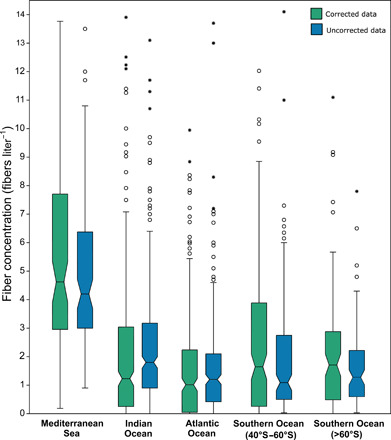
“Nevertheless, the longest fibers were found in the Mediterranean Sea, probably indicating recent inputs into the basin, being closer to pollution sources and more similar to the length of cotton and rayon fibers freshly released by laundering (10, 11).”
BackgroundResultA first overview of textile fibers, including microplastics, in indoor and outdoor environments
Dris, R., Gasperi, J., Mirande, C., Mandin, C., Guerrouache, M., Langlois, V., & Tassin, B. (2017) · Environmental Pollution · doi:10.1016/j.envpol.2016.12.013 · Cited by 1,604
Anthropogenic contamination of tap water, beer, and sea salt
Kosuth, M., Mason, S. A., & Wattenberg, E. V. (2018) · PLOS ONE · doi:10.1371/journal.pone.0194970 · Cited by 1,244 · cited 1×
“Given their abundance, it is not surprising that fibers have been detected in food (18), drinking water (28), and human lungs (29), as well as in the digestive tracts of many aquatic (30, 31) and terrestrial organisms (32).”
BackgroundGlobal warming releases microplastic legacy frozen in Arctic Sea ice
Obbard, R. W., Sadri, S., Wong, Y. Q., Khitun, A. A., Baker, I., & Thompson, R. C. (2014) · Earth's Future · doi:10.1002/2014ef000240 · Cited by 1,092 · cited 3×
“This is in agreement with recent studies showing that cellulosic fibers account for more than 60–80% of all fibers in seafloor sediments (23, 24), marine organisms (30, 31), wastewater (38), fresh water (26, 27), ice cores (22), and airborne fiber populations (14, 39).”
BackgroundResultPrimary microplastics in the oceans: A global evaluation of sources
Boucher, J., & Friot, D. (2017) · doi:10.2305/iucn.ch.2017.01.en · Cited by 1,023 · cited 3×
“Synthetic fibers, however, are generally smoother and brighter than cellulosic ones (55), and therefore, the bias should have been directed toward a preferential selection of synthetic fibers, rather than cellulosic ones.”
Background
Cited by
Items 201–300 of 544
Enzymatic depolymerization of polyamides (nylons): current challenges and future directions
Sun, S. (2025) · Polymer Degradation and Stability · doi:10.1016/j.polymdegradstab.2025.111341 · Cited by 24
Effects of polypropylene nanofibers on soft corals
Isa, V., Becchi, A., Napper, I. E., Ubaldi, P. G., Saliu, F., Lavorano, S., & Galli, P. (2023) · Chemosphere · doi:10.1016/j.chemosphere.2023.138509 · Cited by 23
Suaria, G., Cappa, P., Perold, V., Aliani, S., & Ryan, P. G. (2023) · Marine Pollution Bulletin · doi:10.1016/j.marpolbul.2023.115109 · Cited by 24
Self-citationLiquidlike, Low‐Friction Polymer Brushes for Microfibre Release Prevention from Textiles
Lahiri, S. K., Dijvejin, Z. A., Gholamreza, F., Shabanian, S., Khatir, B., Wotherspoon, L., & Golovin, K. B. (2024) · Small · doi:10.1002/smll.202400580 · Cited by 23
Kelly, N. E. (2024) · The Science of The Total Environment · doi:10.1016/j.scitotenv.2024.174324 · Cited by 24
Carreras-Colom, E., Cartes, J. E., Constenla, M., Welden, N. A. C., Soler‐Membrives, A., & Carrassón, M. (2021) · The Science of The Total Environment · doi:10.1016/j.scitotenv.2021.152264 · Cited by 24
Transitioning to Microplastic-Free Seed Coatings: Challenges and Solutions
Langlet, R., Valentin, R., Morard, M., & Raynaud, C. D. (2024) · Polymers · doi:10.3390/polym16141969 · Cited by 23
“In 2024, several articles [99,100] focused on the detection of several polymers in wastewater corresponding to this definition, without qualifying them as “microplastics”.”
BackgroundJiang, S., He, L., Cao, L., Sun, R., Dai, Z., Liang, Y., Ren, L., Sun, S., & Li, C. (2025) · Journal of Hazardous Materials · doi:10.1016/j.jhazmat.2025.137823 · Cited by 23
Belontz, S. L., & Corcoran, P. L. (2021) · Environments · doi:10.3390/environments8090089 · Cited by 23
Pizzurro, F., Recchi, S., Nerone, E., Salini, R., & Barile, N. B. (2022) · Microplastics · doi:10.3390/microplastics1020022 · Cited by 26
Recabarren, T., Ronda, A. C., Sala, L. L., Sanhueza, C., Díaz, L. I., Pirani, L. S. R., Picone, A. L., Romano, R. M., Petracci, P. F., & Arias, A. H. (2023) · Marine Pollution Bulletin · doi:10.1016/j.marpolbul.2023.114628 · Cited by 22
Prevalence and characterisation of microfibres along the Kenyan and Tanzanian coast
KeChi-Okafor, C., Khan, F. R., Al-Naimi, U., Béguerie, V., Bowen, L., Gallidabino, M. D., Scott-Harden, S., & Sheridan, K. J. (2023) · Frontiers in Ecology and Evolution · doi:10.3389/fevo.2023.1020919 · Cited by 22
“In the present study, samples from 37 different locations were collected from 24th January 2019 through to 6th February 2019 during the Flipflopi’s sailing expedition across 500 km of the Indian Ocean from Lamu to Zanzibar (Figure 1).”
BackgroundResultInfluentialDetection of anthropogenic fibres in marine organisms: Knowledge gaps and methodological issues
Concato, M., Panti, C., Baini, M., Galli, M., Giani, D., & Fossi, M. C. (2023) · Marine Pollution Bulletin · doi:10.1016/j.marpolbul.2023.114949 · Cited by 22
“Recent studies have shown that not all anthropogenic fibres found in the marine environment and organisms are synthetic: fibres of natural origin have also been observed (Compa et al., 2018; Suaria et al., 2020).”
Tang, C. N., Kuwahara, V. S., Leong, S. C. Y., Moh, P. Y., & Yoshida, T. (2023) · Marine Pollution Bulletin · doi:10.1016/j.marpolbul.2023.115182 · Cited by 22
Diel Pattern of Microplastic Residues in Zebrafish
Ma, C., Chen, Q., Gao, Z., Yang, Y. T., Cheng, J., & Shi, H. (2023) · Environmental Science & Technology · doi:10.1021/acs.est.3c04018 · Cited by 22
Honorato‐Zimmer, D., Escobar-Sánchez, G., Deakin, K., Veer, D. D., Galloway, T. S., Guevara-Torrejón, V., Howard, J., Jones, J., Lewis, C. N., Ribeiro, F., et al. (2024) · Marine Pollution Bulletin · doi:10.1016/j.marpolbul.2024.116440 · Cited by 24
The Occurrence and Removal of Microplastics from Stormwater Using Green Infrastructure
Kwarciak–Kozłowska, A., & Madeła, M. (2025) · Water · doi:10.3390/w17142089 · Cited by 23
The Issues of Micro‐Nanoplastics in the Oyster and Mussel Aquaculture Sector
Huvet, A., Gall, M. L., Gilante, H., & Paul-Pont, I. (2025) · Reviews in Aquaculture · doi:10.1111/raq.70047 · Cited by 23
Spatial Distribution and Composition of Surface Microplastics in the Southwestern South China Sea
Yu, J. M., Tang, D., Wang, S., He, L., & Arachchilage, K. R. L. P. (2022) · Frontiers in Marine Science · doi:10.3389/fmars.2022.830318 · Cited by 26
Plastic impact on marine benthic organisms and food webs
Pitacco, V., Orlando‐Bonaca, M., & Avio, C. G. (2022) · Elsevier eBooks · doi:10.1016/b978-0-12-822471-7.00007-9 · Cited by 28
Marine Litter Sources and Distribution Pathways
Chitaka, T. Y., Onianwa, P. C., & Nel, H. (2022) · Springer eBooks · doi:10.1007/978-3-031-08626-7_2 · Cited by 27
Approaches for Sampling and Sample Preparation for Microplastic Analysis in Laundry Effluents
Vojnović, B., Mihovilović, P., & Dimitrov, N. (2024) · Sustainability · doi:10.3390/su16083401 · Cited by 21
Bawa, S. A., Chan, A., Wrobel-Tobiszewska, A., Hardie, M. A., & Towns, C. (2024) · The Science of The Total Environment · doi:10.1016/j.scitotenv.2024.177360 · Cited by 25
Closing the PET plastic recycling loop: A sustainable transformation from plastic to fiber
Massoud, T., & Dsilva, J. (2024) · Next Sustainability · doi:10.1016/j.nxsust.2024.100095 · Cited by 27
The “Journey” of Microplastics across the Marine Food Web in China’s Largest Fishing Ground
Jiang, R., Deng, Z., Li, J., Xiao, Y., Xu, Y., Wang, J., Li, T., & Zhang, C. (2023) · Water · doi:10.3390/w15030445 · Cited by 21
Contribution of household dishwashing to microplastic pollution
Sol, D., Menéndez-Manjón, A., Carrasco, S., Crisóstomo-Miranda, J., Laca, A., Laca, A., & Díaz, M. (2023) · Environmental Science and Pollution Research · doi:10.1007/s11356-023-25433-7 · Cited by 20
“MPs have been detected at household level in items of clothing and furnishing (Suaria et al. 2020).”
BackgroundVillanova-Solano, C., Díaz-Peña, F. J., Hernández-Sánchez, C., González‐Sálamo, J., Edo, C., Vega-Moreno, D., Fernández-Martín, S., Fraile‐Nuez, E., Machín, F., & Hernández‐Borges, J. (2023) · Journal of Hazardous Materials · doi:10.1016/j.jhazmat.2023.133128 · Cited by 23
“Nowadays, it is well known that textile fibers are among the anthropogenic particles mostly distributed in the marine environment, especially in the water column and sediments [33,34].”
BackgroundMagesh, N. S., & Ajith, K. V. (2024) · Environmental Research · doi:10.1016/j.envres.2024.119711 · Cited by 24
Low microplastic abundance in Siganus spp. from the Tañon Strait, Central Philippines
Paler, M. K. O., Leistenschneider, C., Migo, V. P., & Burkhardt‐Holm, P. (2021) · Environmental Pollution · doi:10.1016/j.envpol.2021.117166 · Cited by 20
Nanocellulose enhances the dispersion and toxicity of ZnO NPs to green algae Eremosphaera viridis
Yin, J., Huang, G., An, C., & Feng, R. (2021) · Environmental Science Nano · doi:10.1039/d1en00881a · Cited by 20
Santonicola, S., Volgare, M., Olivieri, F., Cocca, M., & Colavita, G. (2025) · Foods · doi:10.3390/foods14071237 · Cited by 19
“Moreover, considering that the median microfiber length detected in Mediterranean seawater was 1.33 mm [9], the fiber size distribution, detected in the current study and in previous surveys [28,43], in M. barbatus and M. merluccius inhabiting this area confirms their role as bioindicators of…”
InfluentialCarpanez, T. G., Castro, L. M. C., Amaral, M. C. S., & Moreira, V. R. (2025) · The Science of The Total Environment · doi:10.1016/j.scitotenv.2025.179538 · Cited by 21
Microplastics in jellifying algae in the Bay of Biscay. Implications for consumers' health
Bilbao-Kareaga, A., Menéndez, D., Peón, P., Ardura, A., & García‐Vázquez, E. (2023) · Algal Research · doi:10.1016/j.algal.2023.103080 · Cited by 20
Monitoring microplastic pollution: The potential and limitations of Nephrops norvegicus
Joyce, H., Nash, R., Frias, J. P. G. L., White, J., Cau, A., Carreras-Colom, E., & Kavanagh, F. (2023) · Ecological Indicators · doi:10.1016/j.ecolind.2023.110441 · Cited by 21
“…in the marine environment (Stanton et al. 2019), however, they should be reported and monitored along with other MP pollution due to their potential to contain chemical pollutants (Ladewig et 80% of the microfibers retrieved from surface waters were identified as cellulosic (Suaria et al. 2020).”
Compa, M., Perelló, E., Box, A., Colomar, V., Pinya, S., & Sureda, A. (2023) · Environmental Science and Pollution Research · doi:10.1007/s11356-023-30333-x · Cited by 19
“Then, all spectra were evaluated against both custom and JPI Oceans project BASEMAN (Primpke et al. 2019; Suaria et al. 2020) spectral databases.”
MethodMalloggi, C., Nalbone, L., Bartalena, S., Guidi, M., Corradini, C., Foti, A., Gucciardi, P. G., Giarratana, F., Susini, F., & Armani, A. (2024) · Animals · doi:10.3390/ani14040618 · Cited by 20
Balestra, V., Galbiati, M., Lapadula, S., Barzaghi, B., Manenti, R., Ficetola, G. F., & Bellopede, R. (2024) · Chemosphere · doi:10.1016/j.chemosphere.2024.142811 · Cited by 19
Rossi, M., Vergara, A., Capozzi, F., Giordano, S., Spagnuolo, V., Troisi, R., Vedi, V., de Magistris, F. A., Fiaschini, N., Tommasi, T., et al. (2024) · Journal of Hazardous Materials · doi:10.1016/j.jhazmat.2024.135272 · Cited by 19
Distribution of Microplastics in the Marine Environment
Strafella, P., Correa, M. L., Pyko, I., Teichert, S., & Gomiero, A. (2020) · Springer eBooks · doi:10.1007/978-3-030-10618-8_43-1 · Cited by 26
Micro- and Nanosized Substances Cause Different Autophagy-Related Responses
Wang, Y., Zheng, C., Lee, Y., Cheng, Y., Lin, Y., & Chiu, H. (2021) · International Journal of Molecular Sciences · doi:10.3390/ijms22094787 · Cited by 19
Biodegradation of various forms of cellulose and chitin in natural waters with different salinity
Miyaji, K., Zhou, C., Maeda, A., Kobayashi, K., Kusumi, R., & Wada, M. (2023) · Polymer Degradation and Stability · doi:10.1016/j.polymdegradstab.2023.110423 · Cited by 19
Liu, P., Liao, H., Zhang, W., Deng, Y., Pan, C., Sun, D., Ke, Z., Zhou, A., & Tang, H. (2022) · Journal of Marine Science and Engineering · doi:10.3390/jmse11071465 · Cited by 18
Salomone, V. N., Passucci, V., & Areco, M. M. (2023) · Regional Studies in Marine Science · doi:10.1016/j.rsma.2023.103270 · Cited by 23
Marczak, D., Lejcuś, K., Grzybowska‐Pietras, J., Biniaś, W., & Tamma, A. A. (2024) · Journal of Cleaner Production · doi:10.1016/j.jclepro.2024.144093 · Cited by 18
Muns‐Pujadas, L., Dallarés, S., Constenla, M., Padrós, F., Carreras-Colom, E., Grelaud, M., Carrassón, M., & Soler‐Membrives, A. (2023) · Marine Environmental Research · doi:10.1016/j.marenvres.2023.105921 · Cited by 18
Wang, S., Egan, J., & Salmon, S. (2023) · Cellulose · doi:10.1007/s10570-023-05527-8 · Cited by 17
“…dyes, especially the bi-functional reactive dye, inhibited cotton degradation, which could at least partially explain why colored cellulosic fibers (natural and manufactured grouped together) have been detected in seawater samples during microfiber quantification studies (Suaria et al. 2020).”
BackgroundFernandes, A. N., Lara, L. Z., Falco, F. D., Turner, A., & Thompson, R. C. (2024) · Environmental Pollution · doi:10.1016/j.envpol.2024.123806 · Cited by 17
“…2021; Sørensen et al., 2021), being released from garments in higher proportion than artificial and synthetic fibres (Zambrano et al., 2019), consequently can be found in greater abundance in the environment (Barrows et al., 2018; Miller et al., 2017; Stanton et al., 2019; Suaria et al., 2020).”
Photodegradation Processes and Weathering Products of Microfibers in Aquatic Environments
Kteeba, S. M., & Guo, L. (2024) · Environmental Science & Technology · doi:10.1021/acs.est.4c03667 · Cited by 17
Bermúdez, R., Métian, M., Swarzenski, P. W., Bank, M. S., Bjorøy, Ø., Cajas, J., Bucheli, R., González-Muñoz, R., Lynch, J., Piguave-Tarira, E. J., et al. (2025) · Marine Pollution Bulletin · doi:10.1016/j.marpolbul.2025.118437 · Cited by 18
Bunge, A., Kammann, U., & Scharsack, J. P. (2021) · Microplastics and Nanoplastics · doi:10.1186/s43591-021-00015-x · Cited by 17
Cossi, P. F., Ojeda, M., Chiesa, I. L., Rimondino, G. N., Fraysse, C. P., Calcagno, J. A., & Pérez, A. F. (2021) · Polar Biology · doi:10.1007/s00300-021-02959-5 · Cited by 20
Pittura, L., Garaventa, F., Costa, E., Minetti, R., Nardi, A., Ventura, L., Morgana, S., Capello, M., Ungherese, G., Regoli, F., et al. (2022) · Marine Pollution Bulletin · doi:10.1016/j.marpolbul.2022.113916 · Cited by 20
The coastal waters of the south-east Bay of Biscay a dead-end for neustonic plastics
Basurko, O. C., Ruiz, I., Rubio, A., Beldarrain, B., Kukul, D., Cózar, A., Galli, M., Destang, T., & Larreta, J. (2022) · Marine Pollution Bulletin · doi:10.1016/j.marpolbul.2022.113881 · Cited by 19
Honorato‐Zimmer, D., Weideman, E. A., Ryan, P. G., & Thiel, M. (2022) · CRC Press eBooks · doi:10.1201/9781003288602-11 · Cited by 23
Self-citationCharacteristics, sources and potential ecological risk of atmospheric microplastics in Lhasa city
Guo, Z., Chen, J., Yu, H., Zhang, Q., Bu, D., & Cui, X. (2024) · Environmental Geochemistry and Health · doi:10.1007/s10653-024-02125-w · Cited by 16
“…efforts have been made to investigate microplastic pollution in aquatic (Besseling et al., 2017; Fu et al., 2019; Gillibert et al., 2019; Li et al., 2018; Suaria et al., 2020; Zhang et al., 2018; Bhat et al., 2024c) and terrestrial environments (Du et al., 2020; He et al., 2018; Ren et al., 2021).”
BackgroundLao, A., Zhang, S., Huang, X., Feng, D., Xiong, Y., Du, Z., Zheng, Z., & Wu, H. (2024) · Journal of Hazardous Materials · doi:10.1016/j.jhazmat.2024.135890 · Cited by 19
Pierdomenico, M., Morgana, S., & Chiocci, F. L. (2024) · Environmental Pollution · doi:10.1016/j.envpol.2024.124962 · Cited by 16
Stefanelli-Silva, G., Tavares, P. V. F., de Moraes, B. R., Ando, R. A., Campos, L. S., Petti, M. A. V., Smith, C. R., & Sumida, P. Y. G. (2024) · Environmental Science & Technology · doi:10.1021/acs.est.4c09487 · Cited by 17
Long-Term Changes in the Abundance, Size, and Morphotype of Marine Plastics in the North Pacific
Miyazono, K., Tadokoro, K., Thushari, G. G. N., Miyamoto, H., Takasuka, A., Watai, M., Yasuda, T., Sato, T., Yamashita, R., Kodama, T., et al. (2025) · Environmental Science & Technology · doi:10.1021/acs.est.4c09706 · Cited by 17
Tracing Footprint and Risk of Microplastics and Microfibers in the Lakes across China
Tao, Y., Liang, H., Wang, S., Bao, K., Feng, M., Zhang, Y., Wang, R., Li, Y., & Zeng, Q. (2025) · Environmental Science & Technology · doi:10.1021/acs.est.5c09837 · Cited by 15
Rusconi, T., Riva, L., Punta, C., Solé, M., & Corsi, I. (2023) · Environmental Science Nano · doi:10.1039/d3en00135k · Cited by 30
Do Antarctic bivalves present microdebris? The case of Livingston Island
Gonzalez-Pineda, M., Salvado, H. H., & Àvila, C. (2024) · Environmental Pollution · doi:10.1016/j.envpol.2024.124086 · Cited by 15
Balestra, V., Trunfio, F., Akyıldız, S. H., Marini, P., & Bellopede, R. (2024) · Environmental Monitoring and Assessment · doi:10.1007/s10661-024-13159-z · Cited by 18
“Unfortunately, the environment is not only contaminated by MPs. Pollution through anthropogenic fibers of cellulosic or animal origin is greatly underrep-resented in the literature (Hasenmueller et al., 2023; Stanton et al., 2019; Suaria et al., 2020a, 2020b).”
BackgroundInvisible Peril: Assessing microplastic pollution in Ghanaian mangroves
Gonçalves, G. R. L., Koomson, A. K., Aggrey‐Fynn, J., Nyarko, B. K., & Narayanaswamy, B. E. (2024) · Marine Pollution Bulletin · doi:10.1016/j.marpolbul.2024.117361 · Cited by 15
Microplastics in the first-year sea ice of the Novik Bay, Sea of Japan
Chubarenko, I., Lazaryuk, A. Y., Orlova, T. Y., Lobchuk, O., Raguso, C., Юрьевич, З. А., Lasagni, M., & Saliu, F. (2022) · Marine Pollution Bulletin · doi:10.1016/j.marpolbul.2022.114236 · Cited by 15
Matos, D. M., Ramos, J. A., Bessa, F., da Silva, V. M. M., Rodrigues, I., Antunes, S., dos Santos, I., Coentro, J., Brandão, A. L., de Carvalho, L. A. E. B., et al. (2023) · The Science of The Total Environment · doi:10.1016/j.scitotenv.2023.165437 · Cited by 17
Rivera-Garibay, O., Méndez-López, M. E., Tórres-Irineo, E., Rivas, M., Santillo, D. J., & Álvarez‐Filip, L. (2024) · Marine Biology · doi:10.1007/s00227-024-04399-1 · Cited by 16
“Nonetheless, the lack of familiarity with, and of information relating to, the prevalence, fate, and impact of artificial cellulosic microparticles often leads to an imbalance in primary concerns towards plastic polymers only (Suaria et al. 2020).”
Impact of Synthetic Microfibers and Their Toxicity on the Environment
Yadav, M., Negi, V., & Verma, H. (2024) · Springer eBooks · doi:10.1007/978-3-031-62600-5_8 · Cited by 19
Meyers, N., Everaert, G., Hostens, K., Schmidt, N., Herzke, D., Fuda, J., Janssen, C., & Witte, B. D. (2024) · Marine Pollution Bulletin · doi:10.1016/j.marpolbul.2024.116804 · Cited by 16
Yenney, E., Okoffo, E. D., Tscharke, B. J., Grinham, A. R., Bostock, H., & Thomas, K. V. (2024) · ACS ES&T Water · doi:10.1021/acsestwater.4c00536 · Cited by 14
Are Microfibers a Threat to Marine Invertebrates? A Sea Urchin Toxicity Assessment
dos Santos, J. B., Choueri, R. B., dos Santos, F. E. M., Santos, L. A. D. O., da Silva, L. F., Nobre, C. R., Cardoso, M. A., Mari, R. D. B., Simões, F. R., DelValls, T. Á., et al. (2024) · Toxics · doi:10.3390/toxics12100753 · Cited by 18
“…scale, as studies have already demonstrated their ubiquity across various environmental compartments, such as wastewater, stormwater runoff, rivers, lakes, estuaries, marine waters, and wildlife [4–10], with synthetic fibers being the predominant form of plastic found in marine ecosystems [11,12].”
BackgroundRossi, M., Vergara, A., Troisi, R., Alberico, M., Carraturo, F., Salamone, M., Giordano, S., Capozzi, F., Spagnuolo, V., de Magistris, F. A., et al. (2025) · Journal of Hazardous Materials · doi:10.1016/j.jhazmat.2025.137468 · Cited by 14
Bour, A., Leoni, D., Sundh, H., & Almroth, B. C. (2022) · Marine Pollution Bulletin · doi:10.1016/j.marpolbul.2022.113755 · Cited by 14
Unraveling Plastic Pollution in Protected Terrestrial Raptors Using Regurgitated Pellets
Wayman, C. H., Fernández‐Piñas, F., López, I., Fernández-Valeriano, R., Iglesias‐Lebrija, J. J., González, F., Rosal, R., & González-Pleiter, M. (2024) · Microplastics · doi:10.3390/microplastics3040041 · Cited by 13
“Often overlooked and understudied, additional polymer types, such as modified celluloses, can also be released and dispersed within ecosystems and be ingested by wildlife, complicating the issue [13,14].”
Basu, A. G., Paul, R. S., Wang, F., & Roy, S. (2024) · Chemosphere · doi:10.1016/j.chemosphere.2024.143983 · Cited by 15
Ding, X., Zhang, B., Shen, C., Wang, R., Yin, S., Li, F., & Xu, C. (2025) · Water Research · doi:10.1016/j.watres.2025.123568 · Cited by 14
Secco, S., Cesarini, G., Gallitelli, L., Suaria, G., Paluselli, A., Gioacchino, M. D., Sodo, A., & Scalici, M. (2025) · Environmental Pollution · doi:10.1016/j.envpol.2025.126318 · Cited by 13
Self-citationMicroplastic pollution in Larimichthys polyactis in the coastal area of Jiangsu, China
Yuan, F., Ding, Y., Wang, Y., Yu, W., Zou, X., Chen, H., Fu, G., Ding, D., Tang, J., Tang, X., et al. (2021) · Marine Pollution Bulletin · doi:10.1016/j.marpolbul.2021.113050 · Cited by 13
Logan, M. K., Irvin, S. D., Enfrin, M., Arafat, H. A., Dumée, L. F., & Gibert, Y. (2023) · Journal of environmental chemical engineering · doi:10.1016/j.jece.2023.110727 · Cited by 13
Monràs-Riera, P., Angulo‐Preckler, C., & Àvila, C. (2023) · Marine Pollution Bulletin · doi:10.1016/j.marpolbul.2023.115516 · Cited by 13
First evidence of microplastic ingestion by crescent perch (Terapon jarbua) in Malaysia
Lim, K. P., Ding, J., Loh, K., Sun, C., Yusoff, S. B., Chanthran, S. S. D., & Goh, P.-T. (2023) · Regional Studies in Marine Science · doi:10.1016/j.rsma.2023.103202 · Cited by 16
Monnanni, A., Rimondi, V., Morelli, G., Nannoni, A., Cincinelli, A., Martellini, T., Chelazzi, D., Laurati, M., Sforzi, L., Ciani, F., et al. (2024) · The Science of The Total Environment · doi:10.1016/j.scitotenv.2024.177113 · Cited by 12
Andrade, C., Sepúlveda, T., Pinto, B., Rivera, C. N., Aldea, C., & Urbina, M. A. (2025) · Environmental Science and Pollution Research · doi:10.1007/s11356-025-36144-6 · Cited by 12
“The world’s surface oceans are estimated to contain between 90,000 and 380,000 metric tons of MPs (Suaria et al. 2020).”
My, T. T. A., Dat, N. D., Hung, N. Q., Thuy, T. T. T., Hang, P. T. T., & Luu, N. D. (2025) · Marine Pollution Bulletin · doi:10.1016/j.marpolbul.2025.117937 · Cited by 12
Bue, G. L., Musa, M., Marchini, A., Riccardi, M. P., Dubois, S., Lisco, S. N., Moretti, M., de Luca, A., & Mancin, N. (2025) · Marine Pollution Bulletin · doi:10.1016/j.marpolbul.2025.118132 · Cited by 13
Ojeda, M., Rimondino, G. N., Fraysse, C. P., Cossi, P. F., Boy, C. C., & Pérez, A. F. (2023) · Aquatic Toxicology · doi:10.1016/j.aquatox.2023.106827 · Cited by 12
The hyperbenthic environment: A forgotten habitat for plastic pollution
Fagiano, V., Compa, M., Alomar, C., Morató, M., & Deudero, S. (2023) · Marine Pollution Bulletin · doi:10.1016/j.marpolbul.2023.115291 · Cited by 11
Tremolada, P., Saliu, F., Winkler, A., Carniti, C. P., Castelli, M., Lasagni, M., Andò, S., Léandri‐Breton, D., Gatt, M. C., Ferrer, J., et al. (2024) · Marine Pollution Bulletin · doi:10.1016/j.marpolbul.2024.116401 · Cited by 11
Hernán, G., Rodríguez, E., & Tomás, F. (2024) · The Science of The Total Environment · doi:10.1016/j.scitotenv.2024.175985 · Cited by 11
Barrick, A., Boardwine, A. J., Nguyen, N. H. A., Ševců, A., Novotná, J., & Hoang, T. C. (2025) · The Science of The Total Environment · doi:10.1016/j.scitotenv.2025.178751 · Cited by 11
El-Alfy, M. A.-H., El-Hamid, H. T. A., Keshta, A. E., Elnaggar, A., Darwish, D. H., Basiony, A. I., Alzeny, A. M., Hadied, M. M. A., Toubar, M. M., Shalby, A., et al. (2025) · Scientific Reports · doi:10.1038/s41598-025-93329-2 · Cited by 13
“It has been estimated that a significant quantity of fibers, ranging from 1,800 to 52,000 metric tons, enters the oceans annually from various sources 58 .”
A global comprehensive review on cultured seafood
Borriello, A., & Pierucci, A. (2025) · npj Science of Food · doi:10.1038/s41538-025-00461-4 · Cited by 11
“…eliminate many of the environmental pollution risks of common seafood, such as heavy metals (mercury, lead, chromium, cadmium, and arsenic), microplastics, micro fi bers 61 , nano-plastics and many others by creating a product free from environmental contaminants and pathogenic microorganisms 36 .”
Self-citationAghadadashi, V., Mehdinia, A., Rezaei, M., Molaei, S., Hashtroudi, M. S., Ahmadian, F., Hamzehpour, A., & Rahnama, R. (2024) · The Science of The Total Environment · doi:10.1016/j.scitotenv.2024.171950 · Cited by 11
Meyer, M. F., Ozersky, T., Woo, K., Shchapov, K., Galloway, A. W. E., Schram, J. B., Rosi, E. J., Snow, D. D., Timofeyev, M. A., Karnaukhov, D. Y., et al. (2022) · Limnology and Oceanography · doi:10.1002/lno.12228 · Cited by 11
“In our study, periphyton δ15N values may be explained by periphyton’s typically high cell turnover rates (e.g., days; Swamikannu and Hoagland 1989) that dampened isotopic patterns, δ15N-accumulating algal taxa being grazed more readily by macroinvertebrates (Rosenberger et al. 2008), or…”
BackgroundAlmeida, J. M., Singdahl-Larsen, C., Buenaventura, N., Gomes, L., Morgado, V., Olsen, M., da Silva, R. J. N. B., & Palma, C. (2023) · Environmental Science & Technology · doi:10.1021/acs.est.3c00657 · Cited by 11
Cui, T., Shi, W., Wang, H., & An, L. (2022) · The Science of The Total Environment · doi:10.1016/j.scitotenv.2022.154323 · Cited by 11
Bacchetta, R., Pica, A., Santo, N., Tremolada, P., & Sugni, M. (2024) · Aquatic Toxicology · doi:10.1016/j.aquatox.2024.106975 · Cited by 10
Lefebvre, C., Cormier, B., Bihanic, F. L., Magalhães, G. R., Morin, B., Lecomte, S., & Cachot, J. (2024) · Environmental Pollution · doi:10.1016/j.envpol.2024.124440 · Cited by 10
Lu, H., Ni, Z., Ou, Y., Zhao, M., & Wang, Y. (2025) · Journal of Environmental Management · doi:10.1016/j.jenvman.2025.124736 · Cited by 11
Isa, V., Saliu, F., Becchi, A., Spadaccino, G., Quinto, M., Veronelli, M., Lasagni, M., Galli, P., & Lavorano, S. (2025) · The Science of The Total Environment · doi:10.1016/j.scitotenv.2025.179239 · Cited by 10
Metadata
- Authors
- Suaria, G., Achtypi, A., Perold, V., Lee, J. R., Pierucci, A., Bornman, T. G., Aliani, S., & Ryan, P. G.
- Affiliations
- Istituto di Scienze Marine del Consiglio Nazionale delle Ricerche (IT)
- University of Cape Town (ZA)
- Monash University (AU)
- University of Cagliari (IT)
- South African Environmental Observation Network (ZA)
- Corresponding author
- Suaria, Giuseppe
- ORCID
- Venue
- Science Advances
- Published
- 2020-06-05
- Volume
- 6
- Issue
- 23
- Pages
- eaay8493-eaay8493
- ISSN
- 2375-2548 (ISSN-L)
- PMC
- PMC7274779
- OpenAlex
- W3033279253
- Cited by
- 528
- References
- 57
- Citations by year
- 2026: 79 · 2025: 100 · 2024: 101 · 2023: 79 · 2022: 83 · 2021: 74 · 2020: 12
- FWCI
- 15.32
- Type
- journal article
- Language
- en
- Open access
- gold
- doi.org
- Licence
- cc-by-nc
- Locations
- Science Advances (publishedVersion, cc-by-nc)
- PubMed Central (publishedVersion, cc-by-nc)
- PubMed (publishedVersion)
- Nelson Mandela University Research Repository (submittedVersion, cc-by-nc)
- HAL (submittedVersion)
- Funders
- Swiss Polar Institute
- Topics
- Physical Sciences › Environmental Science › Pollution › Microplastics and Plastic Pollution
- Physical Sciences › Environmental Science › Pollution › Pharmaceutical and Antibiotic Environmental Impacts
- Physical Sciences › Environmental Science › Pollution › Oil Spill Detection and Mitigation
- Keywords
- microfibers, marine surface waters, natural polymers, cellulose fibers, synthetic fibers, microplastics, fiber composition, marine plastic pollution
About these checks
Registry, retraction, Cites and statistics results are computed, not judged, with one exception: a printed reference that no index lists is read once by a model before it counts as a citation error. Claims are extracted by a model and kept only when their quote appears verbatim in the text; each cited source is then checked, with a model’s help, for whether it says what the claim relies on. Those verdicts can be wrong — read the claim’s quote and the cited source before relying on one.
Statistics and arithmetic are recomputed, not judged.
Confidence bands are shown only for fields calibrated on our annotated test set. None is calibrated yet, so no band is shown.
What counts as a claim ›How we measure confidence ›How we check this ›
Are you an author, or do you see a problem with this page? Request a review
Data sources
Bibliographic data: Semantic Scholar, OpenAlex, Crossref.
Contains information from the Semantic Scholar Academic Graph Datasets, made available under the ODC Attribution License (ODC-BY 1.0).
Semantic Scholar’s data is described in: Kinney, R., et al. (2023). The Semantic Scholar Open Data Platform. arXiv:2301.10140.
