

Microfibers in oceanic surface waters: A global characterization
Open accessThe DOI matches its Crossref record; 57 of the 57 references it cites were found in a registry or an index.
Abstract
Contrary to global production, most fibers floating in the ocean are not synthetic but natural fibers of animal or plant origin.
Overview
The claims and statistics of this paper haven’t been checked yet.
Free: it reads the open-access text and checks the first 5 claims that cite a source we can check. Create a free account to check every claim.
Integrity signals
Registry
Cites
Statistics
Figures



Verification
Claims the paper makes
The claims and statistics of this paper haven’t been checked yet.
Free: it reads the open-access text and checks the first 5 claims that cite a source we can check. Create a free account to check every claim.
Self-check
Percentages, sums and reported differences re-computed from the paper’s own numbers.
The self-check needs the paper’s full text.
Citations
Cites
Production, use, and fate of all plastics ever made
Geyer, R., Jambeck, J. R., & Law, K. L. (2017) · Science Advances · doi:10.1126/sciadv.1700782 · Cited by 18,606
Human Consumption of Microplastics
Cox, K. D., Covernton, G. A., Davies, H. L., Dower, J. F., Juanes, F., & Dudas, S. E. (2019) · Environmental Science & Technology · doi:10.1021/acs.est.9b01517 · Cited by 2,745 · cited 2×
“Given their abundance, it is not surprising that fibers have been detected in food (18), drinking water (28), and human lungs (29), as well as in the digestive tracts of many aquatic (30, 31) and terrestrial organisms (32).”
BackgroundAtmospheric transport and deposition of microplastics in a remote mountain catchment
Allen, S., Allen, D., Phoenix, V. R., Le Roux, G., Durántez Jiménez, P., Simonneau, A., Binet, S., & Galop, D. (2019) · Nature Geoscience · doi:10.1038/s41561-019-0335-5 · Cited by 2,319 · cited 5×
“Alternatively, smaller fibers may be most easily advected by long-range aerial transport, thus reaching the most remote areas of the planet (15).”
BackgroundResultInfluentialThe deep sea is a major sink for microplastic debris
Woodall, L. C., Sanchez-Vidal, A., Canals, M., Paterson, G. L. J., Coppock, R., Sleight, V., Calafat, A., Rogers, A. D., Narayanaswamy, B. E., & Thompson, R. C. (2014) · Royal Society Open Science · doi:10.1098/rsos.140317 · Cited by 1,946 · cited 4×
“This is in agreement with recent studies showing that cellulosic fibers account for more than 60–80% of all fibers in seafloor sediments (23, 24), marine organisms (30, 31), wastewater (38), fresh water (26, 27), ice cores (22), and airborne fiber populations (14, 39).”
BackgroundResultInfluentialA global inventory of small floating plastic debris
van Sebille, E., Wilcox, C., Lebreton, L., Maximenko, N., Hardesty, B. D., van Franeker, J. A., Eriksen, M., Siegel, D., Galgani, F., & Law, K. L. (2015) · Environmental Research Letters · doi:10.1088/1748-9326/10/12/124006 · Cited by 1,713
Napper, I. E., & Thompson, R. C. (2016) · Marine Pollution Bulletin · doi:10.1016/j.marpolbul.2016.09.025 · Cited by 1,679 · cited 3×
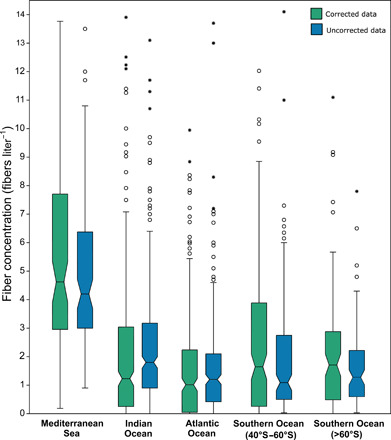
“Nevertheless, the longest fibers were found in the Mediterranean Sea, probably indicating recent inputs into the basin, being closer to pollution sources and more similar to the length of cotton and rayon fibers freshly released by laundering (10, 11).”
BackgroundResultA first overview of textile fibers, including microplastics, in indoor and outdoor environments
Dris, R., Gasperi, J., Mirande, C., Mandin, C., Guerrouache, M., Langlois, V., & Tassin, B. (2017) · Environmental Pollution · doi:10.1016/j.envpol.2016.12.013 · Cited by 1,604
Anthropogenic contamination of tap water, beer, and sea salt
Kosuth, M., Mason, S. A., & Wattenberg, E. V. (2018) · PLOS ONE · doi:10.1371/journal.pone.0194970 · Cited by 1,244 · cited 1×
“Given their abundance, it is not surprising that fibers have been detected in food (18), drinking water (28), and human lungs (29), as well as in the digestive tracts of many aquatic (30, 31) and terrestrial organisms (32).”
BackgroundGlobal warming releases microplastic legacy frozen in Arctic Sea ice
Obbard, R. W., Sadri, S., Wong, Y. Q., Khitun, A. A., Baker, I., & Thompson, R. C. (2014) · Earth's Future · doi:10.1002/2014ef000240 · Cited by 1,092 · cited 3×
“This is in agreement with recent studies showing that cellulosic fibers account for more than 60–80% of all fibers in seafloor sediments (23, 24), marine organisms (30, 31), wastewater (38), fresh water (26, 27), ice cores (22), and airborne fiber populations (14, 39).”
BackgroundResultPrimary microplastics in the oceans: A global evaluation of sources
Boucher, J., & Friot, D. (2017) · doi:10.2305/iucn.ch.2017.01.en · Cited by 1,023 · cited 3×
“Synthetic fibers, however, are generally smoother and brighter than cellulosic ones (55), and therefore, the bias should have been directed toward a preferential selection of synthetic fibers, rather than cellulosic ones.”
Background
Cited by
Items 401–500 of 544
Villabona-González, S. L., Puerta, M. Q., Ríos-Pulgarín, M. I., Zapata-Vahos, I. C., Ossa-Yepes, M., & Barletta, M. (2024) · Inland Waters · doi:10.1080/20442041.2025.2502261 · Cited by 3
“These natural particles, industrially modified, are considered contaminants comparable to plastic polymers that can cause mechanical obstruction, lead to poor nutrition, and serve as vectors for other contaminants in aquatic biota (Suaria et al. 2020).”
Barros, Y., Soares, M. D. O., Ayala, A. P., Neto, V. S., Giarrizzo, T., & Cavalcante, R. M. (2025) · Discover Oceans · doi:10.1007/s44289-025-00059-4 · Cited by 3
“These fibers primarily originate from clothing and enter the marine environment through wastewater effluents during washing [44, 48].”
Wood-based textiles & modern wood buildings
Orfanidou, T., Hassegawa, M., Leskinen, P., Sixta, H., Oinas, P., & Cardellini, G. (2023) · doi:10.36333/k2a06 · Cited by 4
Balestra, V. (2026) · PORTO@Iris · doi:10.13121/polito/porto/3006971 · Cited by 4
Felice, B. D., Gazzotti, S., Ortenzi, M. A., & Parolini, M. (2025) · Environmental Toxicology and Chemistry · doi:10.1093/etojnl/vgaf120 · Cited by 2
Microplastics in vulnerable catfish: baseline data from northern Patagonia’s Genidens barbus
Ardusso, M. G., Funes, A. I., Tombari, A. D., Severini, M. D. F., Buzzi, N. S., Malanca, F. E., & Rimondino, G. N. (2025) · Regional Studies in Marine Science · doi:10.1016/j.rsma.2025.104310 · Cited by 2
Al-Amin, M., Tahir, M., Talukder, A., Mamun, A. A., Hossain, M. T., & Sultana, N. (2025) · Journal of Economy Business and Management · doi:10.7596/jebm.1636662 · Cited by 2
Mauro, R. P. D., Alves, N. M., Rodriguez, J. L., Sobrero, L., Chiesa, I. L., Hozbor, C., Allega, L., Antacli, J. C., Díaz, M. V., & Schiariti, A. (2025) · Environmental Science and Pollution Research · doi:10.1007/s11356-025-36964-6 · Cited by 3
“Although knowledge about anthropogenic microfiber (AMF) distribution in the Southwestern Atlantic Ocean remains limited, recent studies have demonstrated the wide-spread presence of microfibers across oceanic surface waters, including the Southern Atlantic and the Antarctic Circumpolar Current (Suaria et al. 2020).”
InfluentialRathinamoorthy, R., Balasaraswathi, S. R., & Abhinaya, V. (2025) · Cellulose · doi:10.1007/s10570-025-06793-4 · Cited by 3
“Several studies have found that the number of natural and regenerated fibers in the environment is much higher than the number of synthetic fibers (Stanton et al. 2019; Suaria et al. 2020; Villanova-Solano et al. 2022; Zhang et al. 2022; Mikavica et al. 2023).”
Microplastics in Air, Drinking Water and Food: Impacts on Human Health
Mamun, A. A. (2025) · Springer eBooks · doi:10.1007/978-3-031-99774-7_2 · Cited by 4
The Science of Laundering and Wear: Understanding Fiber Fragmentation from Secondhand Cotton Denim
Thompson, A. J. (2025) · Fibers · doi:10.3390/fib13120166 · Cited by 2
“Even with an item as durable as denim, fiber fragments, which are released during the home laundering process, have been found in environments as remote as the Canadian Arctic Archipelago, serving as indicators of anthropogenic pollution from garment use [25,26].”
Marillac, V., Jourand, P., Stenger, P., Fustemberg, G., Gindrey, J., & Thibault, M. (2025) · Deep Sea Research Part II Topical Studies in Oceanography · doi:10.1016/j.dsr2.2025.105556 · Cited by 3
“Plastic debris is still a major problem, on land (Chen et al., 2021), in the air (Liu et al., 2019), and in the ocean (Fujieda et al., 2008; Jambeck et al., 2015; Maes et al., 2018; Suaria et al., 2020).”
Shrestha, S., Subedi, A., Angove, M. J., Rijal, K. P., Poudel, P., & Paudel, S. R. (2025) · iScience · doi:10.1016/j.isci.2025.114595 · Cited by 2
“MPs are found across diverse environmental matrices, ranging from surface waters in oceanic basins 14 to remote, snow-covered trails near Mt. Everest.”
Lu, R., Lin, Z., Dong, J., Nan, H., Wu, Y., & Wu, Y. (2026) · Applied Optics · doi:10.1364/ao.586839 · Cited by 2
Santos, L. A. D. O., da Silva, L. F., Lopes, B., Marinsek, G. P., Duz, J. L., Cardoso, M. A., Gusso‐Choueri, P. K., Simões, F. R., Semensatto, D., Nobre, C. R., et al. (2026) · Marine Pollution Bulletin · doi:10.1016/j.marpolbul.2026.119562 · Cited by 2
Sea-surface retention effect shapes ocean microplastic fibers
Mazzino, A., & Suaria, G. (2026) · Physical Review Research · doi:10.1103/6k8w-c56g · Cited by 2
Self-citationA PLETHORA OF MICROPLASTIC POLLUTION STUDIES: THE NEED FOR A FORENSIC APPROACH
Marrone, A., & Pellegrino, D. (2022) · Detritus · doi:10.31025/2611-4135/2022.15164 · Cited by 2
Analysis of bamboo fibres and their associated dye on a freshwater fish host-parasite system
MacAulay, S., Masud, N., & Cable, J. (2024) · Environmental Science and Pollution Research · doi:10.1007/s11356-024-34626-7 · Cited by 3
“…to break down into substrates usable for microbial aerobic or anaerobic metabolism), synthetic origin (i.e. produced via chemical synthesis) and petroleum-based polymers (i.e. polymers derived from hydrocarbons) such as nylon, spandex and polyester (Boucher and Friot 2017; Suaria et al. 2020).”
BackgroundAlberts, J., Glink, E., & Classen, E. (2024) · Communications in development and assembling of textile products · doi:10.25367/cdatp.2024.5.p255-265 · Cited by 2
Li, D. W., Asensio, M., Russo, N., Cocca, M., Brandt, S., Rabe, M., & Holden, P. A. (2025) · Cleaner Materials · doi:10.1016/j.clema.2025.100303 · Cited by 2
Deoniziak, K., Winiewicz, A., Nartowicz, M., Mierzejewska, W., Niedźwiecki, S., Pol, W., & Dubis, A. T. (2025) · Scientific Reports · doi:10.1038/s41598-025-01608-9 · Cited by 2
Akyıldız, S. H., Balestra, V., Drudi, L., Marini, P., & Bellopede, R. (2025) · Journal of Hazardous Materials Advances · doi:10.1016/j.hazadv.2025.100791 · Cited by 5
Towards robust and repeatable methods for studying interactions between jellyfish and microplastics.
Sucharitakul, P., & Pitt, K. (2022) · Marine Environmental Research · doi:10.1016/j.marenvres.2022.105774 · Cited by 2
Shruti, V. C., Kutralam-Muniasamy, G., Pérez‐Guevara, F., Roy, P. D., & Elizalde, I. (2024) · Environmental Pollution · doi:10.1016/j.envpol.2024.124699 · Cited by 2
Plastic in textiles: potentials for circularity and reduced environmental and climate impacts
Manshoven, S., A, S., M, A., & Mortensen, L. F. (2021) · Zenodo (CERN European Organization for Nuclear Research) · doi:10.5281/zenodo.4475339 · Cited by 30
Lott, C., Berning, A., Eckerle, V. A. M., Rupp, A.-S., Rau, J., Suaria, G., Borghini, M., Miserocchi, S., de Mendoza, F. P., Giglio, F., et al. (2025) · bioRxiv (Cold Spring Harbor Laboratory) · doi:10.64898/2025.12.24.696393 · Cited by 3
Self-citationAn overview of technical organic and inorganic fibres from natural resources
Esmaeili, A., & Mondal, M. I. H. (2024) · Elsevier eBooks · doi:10.1016/b978-0-443-15459-1.00009-7 · Cited by 1
Lefebvre, C., Bihanic, F. L., Chassaigne–Viscaïno, L., Combes, Y., Loisel, T., Llech, C., Morin, B., Cachot, J., & Lecomte, S. (2025) · Water Air & Soil Pollution · doi:10.1007/s11270-025-07959-3 · Cited by 1
“As such, cellulosic fibers and rubbers were considered as they are more and more reported in MP contamination studies (e.g. Arias et al., 2022; Mishra et al., 2019; Suaria et al., 2020).”
(Bio-)Degradation of Plastic in the Environment
Lott, C., Kabasci, S., Merrettig‐Bruns, U., & Weber, M. (2025) · Springer handbooks · doi:10.1007/978-3-031-66209-6_39 · Cited by 1
Morgana, S., Pierdomenico, M., Casalbore, D., Montarsolo, A., Gaglianone, G., & Chiocci, F. L. (2025) · Marine Pollution Bulletin · doi:10.1016/j.marpolbul.2025.118364 · Cited by 1
Introduction to Microplastics in the Environment
De-la-Torre, G. E. (2025) · The handbook of environmental chemistry · doi:10.1007/698_2025_1229 · Cited by 1
Páez‐Osuna, F., Valencia-Castañeda, G., Ibarra, L. D. A., Arreguin-Rebolledo, U., & Frías-Espericueta, M. G. (2025) · Regional Studies in Marine Science · doi:10.1016/j.rsma.2025.104568 · Cited by 4
Villanova-Solano, C., Sevillano-González, M., Hernández‐Borges, J., & Hernández-Sánchez, C. (2025) · Regional Studies in Marine Science · doi:10.1016/j.rsma.2025.104571 · Cited by 2
Redón-Morte, M. A., Carreras-Colom, E., Chiacchio, L., Cau, A., Rodríguez-Romeu, O., & Soler‐Membrives, A. (2025) · Environmental Pollution · doi:10.1016/j.envpol.2025.127337 · Cited by 1
Nicholls, H., Sanders, C. H., Ryves, D. B., Baynes, E. R. C., Sheridan, K. J., & Stanton, T. H. (2025) · ACS ES&T Water · doi:10.1021/acsestwater.5c00998 · Cited by 1
Bothma, F., Uren, R. C., van der Lingen, C. D., Simon-Sánchez, L., Iordachescu, L., & Bouwman, H. (2026) · Continental Shelf Research · doi:10.1016/j.csr.2026.105650 · Cited by 1
Moriam, K., Owens, C. E., Kroo, L., Ghann, W., Uddin, J., Pitkänen, L., Hummel, M., & McKinley, G. H. (2026) · Biomacromolecules · doi:10.1021/acs.biomac.5c02370 · Cited by 2
Polyester Microfiber Dynamics in an Estuarine Semi‐Enclosed Basin
Valenti-Muelas, J., Allen, S. E., & Waugh, L.-J. C. (2026) · Journal of Geophysical Research Oceans · doi:10.1029/2025jc023366 · Cited by 1
Zhu, J.-C., Xiong, Z.-Y., Dai, Z.-Q., Sun, R.-K., & Li, C.-Y. (2026) · Journal of Physical Chemistry B · doi:10.1021/acs.jpcb.5c08566 · Cited by 1
Akyıldız, S. H., Sevgi, B. A., Mossotti, R., D’Angelo, D., & Bellopede, R. (2026) · Environmental Pollution · doi:10.1016/j.envpol.2026.128515 · Cited by 1
Balestra, V., Esteso, C. O., Lerma-García, M. J., Bellopede, R., & Carrasco‐Correa, E. J. (2026) · Environmental Research · doi:10.1016/j.envres.2026.125007 · Cited by 1
Li, X., Xu, S., Qian, J., Li, B., Li, L., Zhang, C., Zhang, F., Hu, M., Sharifinia, M., Singh, N., et al. (2026) · Environmental Pollution · doi:10.1016/j.envpol.2026.128665 · Cited by 1
Self-citationIntermittency-driven subcritical fiber breakage in turbulence
Mazzino, A. (2026) · Physical Review Research · doi:10.1103/l55b-x6jy · Cited by 1
Estimating Microplastics in Deep Water
Courtene‐Jones, W., Liu, K., & Li, D. (2022) · Wiley eBooks · doi:10.1002/9781119768432.ch5 · Cited by 2
Echeverria, C. A., Pahlevani, F., & Sahajwalla, V. (2022) · Journal of Cleaner Production · doi:10.1016/j.jclepro.2022.134883 · Cited by 1
Lestrade, O., & Hernandez, F. J. (2023) · Gulf and Caribbean Research · doi:10.18785/gcr.3401.05 · Cited by 1
Saliu, F., Becchi, A., Montalbetti, E., Isa, V., Gatti, T., Riseri, D., Lasagni, M., Galli, P., & Seveso, D. (2024) · Marine Pollution Bulletin · doi:10.1016/j.marpolbul.2024.116867 · Cited by 1
“…the last decades, the observation of massive tarball strandings in coastal environments and of garbage patches in oceanic gyres (Saliu et al., 2023; Suaria et al., 2020), and the discovery of the accumulation of persistent organic pollutants (POPs) in seawater, sediments, and marine organisms…”
The entrainment of polyester microfibers modifies the structure and function of periphytic biofilms
Liddick, M. J., & Rier, S. T. (2024) · Hydrobiologia · doi:10.1007/s10750-024-05678-0 · Cited by 1
“These findings are likely attributed to the widespread global use of tex-tiles in conjunction with polyester’s dominant share of synthetic fiber production (Suaria et al., 2020).”
Lifecycle Assessment: Measuring Sustainability in Textiles and Fashion Production
Tawiah, B., Ofori, E. A., Seidu, R. K., & Fei, B. (2025) · SDGs and textiles · doi:10.1007/978-981-95-0469-5_12 · Cited by 1
Land-Ocean Export of Microplastic in Central Chile: The Contribution of the Biobío BasinPreprint
Pozo, K., Ahrendt, C., Torres, M., Jacobsen, C., Pozo, K., Novoa, V., Gironés, L., Arias, A. H., Urrutia, R., Ye, G., et al. (2024) · SSRN Electronic Journal · doi:10.2139/ssrn.4747919 · Cited by 1
Gonzalez, Z., & Coromoto, M. (2020) · NCSU Libraries Repository (North Carolina State University Libraries) · Cited by 4
Thaysen, C. (2021) · TSpace (University of Toronto)
Fluffy Rivers: How Our Clothes Can Harm Rivers and The Oceans
Stanton, T. H., Johnson, M. F., Gomes, R. L., Nathanail, C. P., MacNaughtan, W., & Kay, P. (2022) · Frontiers for Young Minds · doi:10.3389/frym.2022.743943
Ebrahim, A., & Leclerc, M. (2022) · American Journal of Undergraduate Research · doi:10.33697/ajur.2022.066
Olarinmoye, O. M., Badmos, L. A., & Alex, U. O. (2024) · Asian Journal of Biological Sciences · doi:10.3923/ajbs.2024.185.191
Silva, G. S. (2024) · Digital Library of Theses and Dissertations (Universidade de São Paulo) · doi:10.11606/t.21.2024.tde-01042024-110419
Combatting Plastic Contamination: Strategies for Removing Microplastic from Water Resources
Thankachan, A., Chellaiah, G., Sivan, P. P., Surendran, U. P., Chellaiah, M., Ayyamperumal, R., Sunilkumar, A., & Jayaseelan, D. (2024) · Water resources development and management · doi:10.1007/978-981-99-8639-2_8
Christopoulos, T. P., Duleba, W., Ribeiro, F. N. D., Moretto, E. M., & Colombo, R. (2024) · Editora Blucher eBooks · doi:10.5151/9786555503487
Poluição por microplásticos e sua relação com as roupas que lavamos
Sacchi, M. C. G. P., & Duleba, W. (2024) · Editora Blucher eBooks · doi:10.5151/9786555503487-09
Chen, Z., Carter, L., Banwart, S. A., & Kay, P. (2024) · SSRN Electronic Journal · doi:10.2139/ssrn.5002609
Pandemic Legacy: Medical Facemasks as a Potential Source of Microplastics in Placentia Bay?Preprint
Passow, U., Dillon, O., Benner, I., Zaliznyak, T., Cisternas‐Novoa, C., Reineccius, J., & Taylor, G. T. (2025) · SSRN Electronic Journal · doi:10.2139/ssrn.5229643
(2025) · Elsevier eBooks · doi:10.1016/b978-0-12-824365-7.10000-6
Environmental problems from the local to global scale: Motivation for why we need to build better
Carrico, C. M. (2025) · Elsevier eBooks · doi:10.1016/b978-0-12-824365-7.00013-2
Emergence of Microplastics in the Aquatic Ecosystems: Sources and Their Characteristics
Arias, A. H., Villafañe, A. B., Mora, G. A., Valdivia, A. E. L., & Malafaia, G. (2025) · The handbook of environmental chemistry · doi:10.1007/698_2025_1222
Nessi, A., Balestrieri, A., Bassi, E., Scarpa, F., Saliu, F., Lasagni, M., Mercogliano, A., Roverselli, A., & Tremolada, P. (2025) · Environmental Science and Pollution Research · doi:10.1007/s11356-025-36786-6
“Therefore, following Suaria et al. (2020), results were blank corrected by excluding one black fibre (whenever present) per sample.”
Alarcón-Ortega, L. C., Ramírez‐Álvarez, N., Hernández-Guzmán, F. A., & Lozano-Hernández, E. A. (2025) · Continental Shelf Research · doi:10.1016/j.csr.2025.105562
Arbaugh, H., Gray, S. C., & Deheyn, D. D. (2025) · Digital USD (University of San Diego) · doi:10.22371/02.2025.010
Pandemic Legacy: Medical Facemasks as a Potential Source of Marine Microplastic?Preprint
Dillon, O., Benner, I., Zaliznyak, T., Cisternas‐Novoa, C., Reineccius, J., Taylor, G. T., & Passow, U. (2025) · bioRxiv (Cold Spring Harbor Laboratory) · doi:10.1101/2025.10.13.682204
Ojeda, M., Bianconi, P., Rimondino, G. N., Fraysse, C. P., Boy, C. C., & Pérez, A. F. (2025) · Marine and Fishery Sciences (MAFIS) · doi:10.47193/mafis.3912026010102
“Microfibers (MFs; 0.001-5 mm) are the most abundant APs and are currently one of the main marine pollution issues (Gago et al. 2018; Suaria et al. 2020; Di Mauro et al. 2022).”
InfluentialNegru, I., Gheorghe, F.-D., Matei, M., Deák, G., Bugeac, L., & Maria, S. (2025) · E3S Web of Conferences · doi:10.1051/e3sconf/202565905006
Gürkan, M., Gürkan, S. E., Güneş, B., & Sarıtunç, V. (2025) · Marine Pollution Bulletin · doi:10.1016/j.marpolbul.2025.118987
Costa, A., Pisoni, J. P., Tomba, J. P., Formigo, E. C. T., & Hernández-Moresino, R. D. (2025) · Environmental Monitoring and Assessment · doi:10.1007/s10661-025-14864-z
“The polymeric composition suggests that a substantial portion of the contamination comes from textile products since they are the materials usually used in this industry (Suaria et al., 2020).”
Are microfibres a problem for aquatic ecosystems? What we don’t know about textile pollution
Gallidabino, M. D., Sheridan, K. J., Stanton, T. H., James, A. M., & Ginting, J. J. (2023) · Research Portal (King's College London) · doi:10.18742/pub01-148
Waves in the Southern Ocean and Antarctic Marginal Ice Zone: Observations and modelling
Hajiarab Derkani, M. (2021) · Minerva Access (University of Melbourne)
Rodríguez-Romeu, O. (2022) · Dipòsit Digital de Documents de la UAB (Universitat Autònoma de Barcelona)
Barsen, S., & Barsen, S. (2021) · Summit (Simon Fraser University) · Cited by 4
Phthalates as plastic tracers in a pelagic food web from an open oceanic environment
Sambolino, A. (2024) · Portuguese National Funding Agency for Science, Research and Technology (RCAAP Project by FCT)
Microplastics in aquaculture: the impact on fish welfare and food safety
Matias, R. S. (2025) · Portuguese National Funding Agency for Science, Research and Technology (RCAAP Project by FCT)
Graphene-Related Materials and 2D Materials: A new strategy in contemporary muralism conservation
Guarnieri, N., Tsakonas, C., Gorgolis, G., Carbone, M. G. P., Paterakis, G., Galiotis, C., Goidanich, S., & Toniolo, L. (2025) · Virtual Community of Pathological Anatomy (University of Castilla La Mancha)
Corviseri, M. C., Polidoro, A., Poli, M. D., Stevanin, C., Pasti, L., & Franchina, F. A. (2025) · Institutional Research Information System University of Ferrara (University of Ferrara)
Marrucci, A., & Dasmi, C. (2026) · Springer eBooks · doi:10.1007/978-3-032-11149-4_1
Marrucci, A., & Dasmi, C. (2026) · Springer eBooks · doi:10.1007/978-3-032-11149-4_4
Erdle, L. M., Watson-Leung, T. L., Parto, D. N., & Rochman, C. M. (2026) · Environmental Toxicology and Chemistry · doi:10.1093/etojnl/vgaf299
Preliminary study of textile structures regarding their photonic radiative cooling propertiesPreprint
Lejeune, J., Mulot--Hauriez, M., & Vroman, P. (2026) · Research Square · doi:10.21203/rs.3.rs-7992868/v1
Chen, R., Zhao, X., & Wu, X. (2026) · Emerging Contaminants and Environmental Health · doi:10.20517/eceh.2025.008
Dowling, P., Xiao, L., & Frias, J. P. G. L. (2026) · Regional Studies in Marine Science · doi:10.1016/j.rsma.2026.104827
Sahoo, M. M., & Swain, J. B. (2026) · Gondwana Research · doi:10.1016/j.gr.2026.01.023
Sources and distribution of microlitter in the tropical and temperate Atlantic Ocean
Birnstiel, S., Grelaud, M., Teixeira, C. E. P., Guilherme, A., Lorenz, C., Vollertsen, J., Sobral, P., Langer, G., & Ziveri, P. (2026) · Environmental Pollution · doi:10.1016/j.envpol.2026.127941
Ciaralli, L., Valente, T., Monfardini, E., Berto, D., Rampazzo, F., Libralato, G., Manfra, L., Piermarini, R., Silvestri, C., Radicioli, M., et al. (2026) · Marine Pollution Bulletin · doi:10.1016/j.marpolbul.2026.119532
Large prevalence of cellulosic fibers in the first-year sea ice from Amur Bay, Sea of Japan
Riseri, D., Chubarenko, I., Lazaryuk, A. Y., Lasagni, M., Collina, E. M., & Saliu, F. (2026) · Marine Pollution Bulletin · doi:10.1016/j.marpolbul.2026.119590
Monràs-Riera, P., Gonzalez-Pineda, M., Llobet, M. D., & Àvila, C. (2026) · Regional Studies in Marine Science · doi:10.1016/j.rsma.2026.104939 · Cited by 2
Microplastic and Microfibre Pollution in Greenland Surface Ice: A Preliminary Study
Balestra, V., Akyıldız, S. H., Wadhams, P., & Bellopede, R. (2026) · Water · doi:10.3390/w18070848
“As MPs, MFs are ubiquitously distributed across a range of environmental compartments [20,21,23,27,41], as well as in numerous organisms [9,37,38,42,43].”
Ardusso, M. G., Buzzi, N. S., Álvarez, M., & Severini, M. D. F. (2026) · Marine Pollution Bulletin · doi:10.1016/j.marpolbul.2026.119708
Sampling Strategies and Pre-treatment Techniques for Microplastics
Hatvate, N. T., Akolkar, H. N., & Haghi, A. K. (2026) · World sustainability series · doi:10.1007/978-3-032-17952-4_4
Microfibres and bivalves: A review of their occurrence and analysis
Gago, J., Villoria-Calvo, S., Fajar, N. M., Blanco, G., Filgueiras, A. V., Otero, P., & Viñas, L. (2026) · Marine Environmental Research · doi:10.1016/j.marenvres.2026.108066
From fashion to the marine environments: Adverse effects of textile microfibers on crassostrea gasar
Santos, L. A. D. O., da Silva, L. F., Gonçalves, A. R. N., Duz, J. L., Cardoso, M. A., de Camargo, T. F. T., Moreno, B. B., Gusso‐Choueri, P. K., Choueri, R. B., Simões, F. R., et al. (2026) · Environmental Toxicology and Chemistry · doi:10.1093/etojnl/vgag109
Borges, C. V. A. (2023) · Institutional Repository of the Federal Technological University of Paraná (RIUT) (Federal University of Technology – Paraná)
Vainberg, A., Nizamutdinov, T. I., Abakumov, E. V., & Pokhodnya, E. I. (2026) · Ecologica Montenegrina · doi:10.37828/em.2026.97.16
Metadata
- Authors
- Suaria, G., Achtypi, A., Perold, V., Lee, J. R., Pierucci, A., Bornman, T. G., Aliani, S., & Ryan, P. G.
- Affiliations
- Istituto di Scienze Marine del Consiglio Nazionale delle Ricerche (IT)
- University of Cape Town (ZA)
- Monash University (AU)
- University of Cagliari (IT)
- South African Environmental Observation Network (ZA)
- Corresponding author
- Suaria, Giuseppe
- ORCID
- Venue
- Science Advances
- Published
- 2020-06-05
- Volume
- 6
- Issue
- 23
- Pages
- eaay8493-eaay8493
- ISSN
- 2375-2548 (ISSN-L)
- PMC
- PMC7274779
- OpenAlex
- W3033279253
- Cited by
- 528
- References
- 57
- Citations by year
- 2026: 79 · 2025: 100 · 2024: 101 · 2023: 79 · 2022: 83 · 2021: 74 · 2020: 12
- FWCI
- 15.32
- Type
- journal article
- Language
- en
- Open access
- gold
- doi.org
- Licence
- cc-by-nc
- Locations
- Science Advances (publishedVersion, cc-by-nc)
- PubMed Central (publishedVersion, cc-by-nc)
- PubMed (publishedVersion)
- Nelson Mandela University Research Repository (submittedVersion, cc-by-nc)
- HAL (submittedVersion)
- Funders
- Swiss Polar Institute
- Topics
- Physical Sciences › Environmental Science › Pollution › Microplastics and Plastic Pollution
- Physical Sciences › Environmental Science › Pollution › Pharmaceutical and Antibiotic Environmental Impacts
- Physical Sciences › Environmental Science › Pollution › Oil Spill Detection and Mitigation
- Keywords
- microfibers, marine surface waters, natural polymers, cellulose fibers, synthetic fibers, microplastics, fiber composition, marine plastic pollution
About these checks
Registry, retraction, Cites and statistics results are computed, not judged, with one exception: a printed reference that no index lists is read once by a model before it counts as a citation error. Claims are extracted by a model and kept only when their quote appears verbatim in the text; each cited source is then checked, with a model’s help, for whether it says what the claim relies on. Those verdicts can be wrong — read the claim’s quote and the cited source before relying on one.
Statistics and arithmetic are recomputed, not judged.
Confidence bands are shown only for fields calibrated on our annotated test set. None is calibrated yet, so no band is shown.
What counts as a claim ›How we measure confidence ›How we check this ›
Are you an author, or do you see a problem with this page? Request a review
Data sources
Bibliographic data: Semantic Scholar, OpenAlex, Crossref.
Contains information from the Semantic Scholar Academic Graph Datasets, made available under the ODC Attribution License (ODC-BY 1.0).
Semantic Scholar’s data is described in: Kinney, R., et al. (2023). The Semantic Scholar Open Data Platform. arXiv:2301.10140.
