

Haptic-feedback smart glove as a creative human-machine interface (HMI) for virtual/augmented reality applications
Open accessThe DOI matches its Crossref record; 40 of the 40 references it cites were found in a registry or an index.
Abstract
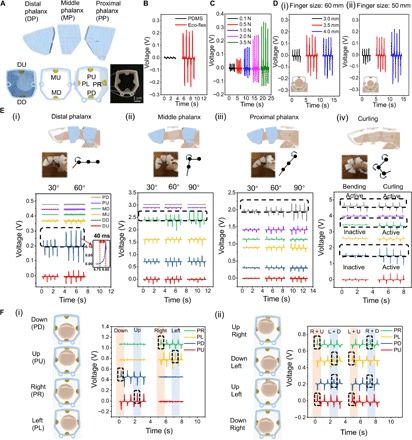
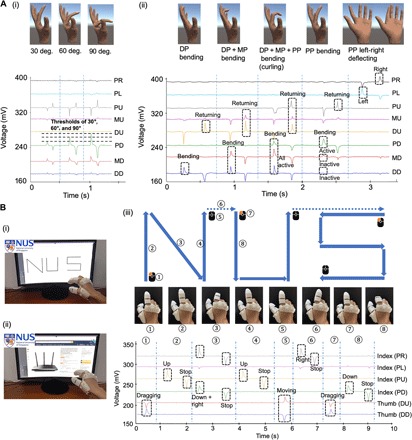
A haptic-feedback glove with triboelectric sensors and piezoelectric stimulators is developed for interaction in virtual space.
Overview
The claims and statistics of this paper haven’t been checked yet.
Free: it reads the open-access text and checks the first 5 claims that cite a source we can check. Create a free account to check every claim.
Integrity signals
Registry
Cites
Statistics
Figures



Verification
Claims the paper makes
The claims and statistics of this paper haven’t been checked yet.
Free: it reads the open-access text and checks the first 5 claims that cite a source we can check. Create a free account to check every claim.
Claims other papers make about this one
Each is checked against this paper’s own text: does it say what the citing paper says it does?
The check wasn’t confident either way, so it gives no verdict — never disputed.
In the citing paper
“Compared with the simulated feelings of sight, hearing, and smell, virtual tactile sense is much more difficult to be realized because it requires a fast-response, high-resolution, bio-friendly, and large-sized tactile stimulation technique”
From Self-powered electro-tactile system for virtual tactile experiences (2021) · cites this paper as [4]
Experimental — accuracy not yet measured
Self-check
Percentages, sums and reported differences re-computed from the paper’s own numbers.
The self-check needs the paper’s full text.
Citations
Cites
Skin-like pressure and strain sensors based on transparent elastic films of carbon nanotubes
Lipomi, D. J., Vosgueritchian, M., Tee, B. C.-K., Hellstrom, S. L., Lee, J. A., Fox, C. H., & Bao, Z. (2011) · Nature Nanotechnology · doi:10.1038/nnano.2011.184 · Cited by 3,188 · cited 1×
“In addition to conformability, different sensing mechanisms have also been studied widely, such as transistor-based (12), resistive-based (13), and capacitivebased (14) sensors for detecting strain, static force, and dynamic force, or even the slippery motions with high sensitivities (15).”
Skin-inspired highly stretchable and conformable matrix networks for multifunctional sensing
Hua, Q., Sun, J., Liu, H., Bao, R., Yu, R., Zhai, J., Pan, C., & Wang, Z. L. (2018) · Nature Communications · doi:10.1038/s41467-017-02685-9 · Cited by 1,413
Self-citationLearning the signatures of the human grasp using a scalable tactile glove
Sundaram, S., Kellnhofer, P., Li, Y., Zhu, J.-Y., Torralba, A., & Matusik, W. (2019) · Nature · doi:10.1038/s41586-019-1234-z · Cited by 1,162
Skin-integrated wireless haptic interfaces for virtual and augmented reality
Yu, X., Xie, Z., Yu, Y., Lee, J., Vazquez-Guardado, A., Luan, H., Ruban, J., Ning, X., Akhtar, A., Li, D., et al. (2019) · Nature · doi:10.1038/s41586-019-1687-0 · Cited by 1,025
Self-citationBoutry, C. M., Negre, M., Jorda, M., Vardoulis, O., Chortos, A., Khatib, O., & Bao, Z. (2018) · Science Robotics · doi:10.1126/scirobotics.aau6914 · Cited by 921
A transparent bending-insensitive pressure sensor
Lee, S., Reuveny, A., Reeder, J., Lee, S., Jin, H., Liu, Q., Yokota, T., Sekitani, T., Isoyama, T., Abe, Y., et al. (2016) · Nature Nanotechnology · doi:10.1038/nnano.2015.324 · Cited by 833
Noninvasive Brain-Actuated Control of a Mobile Robot by Human EEG
del R. Millan, J., Renkens, F., Mourino, J., & Gerstner, W. (2004) · IEEE Transactions on Biomedical Engineering · doi:10.1109/tbme.2004.827086 · Cited by 740 · cited 1×
“Furthermore, wrist bands containing electromyographic electrodes can record hand gestures ( 3 ), and electroencephalogram (EEG) electrodes are even able to detect human intentions directly, i.e., by detecting brain wave ( 4 ).”
Soft robot perception using embedded soft sensors and recurrent neural networks
Thuruthel, T. G., Shih, B., Laschi, C., & Tolley, M. T. (2019) · Science Robotics · doi:10.1126/scirobotics.aav1488 · Cited by 678 · cited 1×
“By leveraging the proper learning model for specific sensing application, more comprehensive information can be extracted for those simply designed sensors, such as motion sequences, touch forces, and slip-ping ( 30 ).”
Wearable Microfluidic Diaphragm Pressure Sensor for Health and Tactile Touch Monitoring
Gao, Y., Ota, H., Schaler, E. W., Chen, K., Zhao, A., Gao, W., Fahad, H. M., Leng, Y., Zheng, A., Xiong, F., et al. (2017) · Advanced Materials · doi:10.1002/adma.201701985 · Cited by 614
Tee, B. C. ‐., Chortos, A., Dunn, R. R., Schwartz, G., Eason, E., & Bao, Z. (2014) · Advanced Functional Materials · doi:10.1002/adfm.201400712 · Cited by 538
Cited by
Wearable Sensors‐Enabled Human–Machine Interaction Systems: From Design to Application
Yin, R., Wang, D., Zhao, S., Lou, Z., & Shen, G. (2021) · Advanced Functional Materials · doi:10.1002/adfm.202008936 · Cited by 769
Triboelectric nanogenerator sensors for soft robotics aiming at digital twin applications
Jin, T., Sun, Z., Li, L., Zhang, Q., Zhu, M., Zhang, Z., Yuan, G., Chen, T., Tian, Y., Hou, X., et al. (2020) · Nature Communications · doi:10.1038/s41467-020-19059-3 · Cited by 695
Self-citationPyo, S., Lee, J., Bae, K., Sim, S., & Kim, J. (2021) · Advanced Materials · doi:10.1002/adma.202005902 · Cited by 631
Flexible Electronics and Devices as Human–Machine Interfaces for Medical Robotics
Heng, W., Solomon, S., & Gao, W. (2022) · Advanced Materials · doi:10.1002/adma.202107902 · Cited by 609
The Triboelectric Nanogenerator as an Innovative Technology toward Intelligent Sports
Luo, J., Gao, W., & Wang, Z. L. (2021) · Advanced Materials · doi:10.1002/adma.202004178 · Cited by 537
Sun, Z., Zhu, M., Shan, X., & Lee, C. (2022) · Nature Communications · doi:10.1038/s41467-022-32745-8 · Cited by 532
Self-citationA Survey on Wearable Technology: History, State-of-the-Art and Current Challenges
Ometov, A., Shubina, V., Klus, L., Skibińska, J., Saafi, S., Pascacio, P., Flueratoru, L., Gaibor, D. Q., Chukhno, N., Chukhno, O., et al. (2021) · Computer Networks · doi:10.1016/j.comnet.2021.108074 · Cited by 506
Wen, F., Zhang, Z., He, T., & Lee, C. (2021) · Nature Communications · doi:10.1038/s41467-021-25637-w · Cited by 494
“The integration of AI with the TENG glove may shed light on more diversi fi ed and complex gesture monitoring that is rarely achievable using the conventional manual feature extraction 52 .”
MethodSelf-citationZhang, Z., Wen, F., Sun, Z., Guo, X., He, T., & Lee, C. (2022) · Advanced Intelligent Systems · doi:10.1002/aisy.202100228 · Cited by 464
Self-citationRecent progress of triboelectric nanogenerators: From fundamental theory to practical applications
Luo, J., & Wang, Z. L. (2020) · EcoMat · doi:10.1002/eom2.12059 · Cited by 451
Piezoelectric nanogenerators for personalized healthcare
Deng, W., Zhou, Y., Libanori, A., Chen, G., Yang, W., & Chen, J. (2022) · Chemical Society Reviews · doi:10.1039/d1cs00858g · Cited by 434
Deep learning-enabled triboelectric smart socks for IoT-based gait analysis and VR applications
Zhang, Z., He, T., Zhu, M., Sun, Z., Shi, Q., Zhu, J., Dong, B., Yuce, M. R., & Lee, C. (2020) · npj Flexible Electronics · doi:10.1038/s41528-020-00092-7 · Cited by 413
Self-citationLiu, L., Guo, X., & Lee, C. (2021) · Nano Energy · doi:10.1016/j.nanoen.2021.106304 · Cited by 402
“(k) Haptic-feedback smart glove for virtual/augmented reality applications [367].”
BackgroundSelf-citationZhang, Q., Jin, T., Cai, J., Xu, L., He, T., Wang, T., Tian, Y., Li, L., Peng, Y., & Lee, C. (2022) · Advanced Science · doi:10.1002/advs.202103694 · Cited by 386
Self-citationProgress in TENG technology—A journey from energy harvesting to nanoenergy and nanosystem
Zhu, J., Zhu, M., Shi, Q., Wen, F., Liu, L., Dong, B., Haroun, A., Yang, Y., Vachon, P., Guo, X., et al. (2020) · EcoMat · doi:10.1002/eom2.12058 · Cited by 370
“of things (IoT) and the fifth-generation wireless networks (5G), various self-powered electronics are considered as the building blocks for the foundation of the coming industrial revolution toward a smart world.(22-25) This wide distribution of self-powered electronics cover spheres of application ranging from indust…”
BackgroundMethodSelf-citationZarei, M., Lee, G., Lee, S. G., & Cho, K. (2023) · Advanced Materials · doi:10.1002/adma.202203193 · Cited by 345
Hierarchically Microstructure-Bioinspired Flexible Piezoresistive Bioelectronics
Yang, T., Deng, W., Chu, X., Wang, X., Hu, Y., Fan, X., Song, J., Gao, Y., Zhang, B., Tian, G., et al. (2021) · ACS Nano · doi:10.1021/acsnano.1c01606 · Cited by 342
Yang, Y., Guo, X., Zhu, M., Sun, Z., Zhang, Z., He, T., & Lee, C. (2023) · Advanced Energy Materials · doi:10.1002/aenm.202203040 · Cited by 337
Self-citationTao, K., Chen, Z., Yu, J., Zeng, H., Wu, J., Wu, Z., Jia, Q., Li, P., Fu, Y., Chang, H., et al. (2022) · Advanced Science · doi:10.1002/advs.202104168 · Cited by 330
Technology evolution from self-powered sensors to AIoT enabled smart homes
Dong, B., Shi, Q., Yang, Y., Wen, F., Zhang, Z., & Lee, C. (2021) · Nano Energy · doi:10.1016/j.nanoen.2020.105414 · Cited by 313
“9(c) [248].”
Self-citationElectronic skin as wireless human-machine interfaces for robotic VR
Liu, Y., Yiu, C., Song, Z., Huang, Y., Yao, K., Wong, T., Zhou, J., Zhao, L., Huang, X., Nejad, S. K., et al. (2022) · Science Advances · doi:10.1126/sciadv.abl6700 · Cited by 304
“INTRODUCTION Human-machine interfaces (HMIs) in teleoperated robots have attracted great attention due to their great potential in many application areas, such as immersive games (1, 2), prosthesis or exoskeleton control (3–5), and extreme environment operation (6).”
BackgroundZhu, M., Yi, Z., Yang, B., & Lee, C. (2021) · Nano Today · doi:10.1016/j.nantod.2020.101016 · Cited by 295
Self-citationZhu, M., He, T., & Lee, C. (2020) · Applied Physics Reviews · doi:10.1063/5.0016485 · Cited by 287
Self-citationSoft Sensors and Actuators for Wearable Human–Machine Interfaces
Park, J., Lee, Y., Cho, S., Choe, A., Yeom, J., Ro, Y. G., Kim, J., Kang, D.-H., Lee, S., & Ko, H. (2024) · Chemical Reviews · doi:10.1021/acs.chemrev.3c00356 · Cited by 272
Sun, Z., Zhu, M., Zhang, Z., Chen, Z., Shi, Q., Shan, X., Yeow, R. C. H., & Lee, C. (2021) · Advanced Science · doi:10.1002/advs.202100230 · Cited by 270
Self-citationRecent advancements for improving the performance of triboelectric nanogenerator devices
Lone, S. A., Lim, K. C., Kaswan, K., Chatterjee, S., Fan, K.-P., Choi, D., Lee, S., Zhang, H., Cheng, J., & Lin, Z.-H. (2022) · Nano Energy · doi:10.1016/j.nanoen.2022.107318 · Cited by 270
A wireless haptic interface for programmable patterns of touch across large areas of the skin
Jung, Y. H., Yoo, J.-Y., Vázquez-Guardado, A., Kim, J.-H., Kim, J.-T., Luan, H., Park, M., Lim, J., Shin, H.-S., Su, C.-J., et al. (2022) · Nature Electronics · doi:10.1038/s41928-022-00765-3 · Cited by 263
Li, S., Wang, H., Ma, W., Qiu, L., Xia, K., Zhang, Y., Lu, H., Zhu, M., Liang, X., Wu, X.-E., et al. (2023) · Science Advances · doi:10.1126/sciadv.adh0615 · Cited by 252
Self-citationSelf-powered electro-tactile system for virtual tactile experiences
Shi, Y., Wang, F., Tian, J., Li, S., Fu, E., Nie, J., Lei, R., Ding, Y., Chen, X., & Wang, Z. L. (2021) · Science Advances · doi:10.1126/sciadv.abe2943 · Cited by 251
Self-powered and self-sensing devices based on human motion
Lai, Z., Xu, J., Bowen, C. R., & Zhou, S. (2022) · Joule · doi:10.1016/j.joule.2022.06.013 · Cited by 244
Zhong, M., Zhang, L., Liu, X., Zhou, Y., Zhang, M., Wang, Y., Yang, L., & Wei, D. (2021) · Chemical Engineering Journal · doi:10.1016/j.cej.2021.128649 · Cited by 246
Shi, J., Dai, Y., Cheng, Y., Xie, S., Li, G., Liu, Y., Wang, J., Zhang, R., Bai, N., Cai, M., et al. (2023) · Science Advances · doi:10.1126/sciadv.adf8831 · Cited by 243
“Deep learning has been proven to be effective to automatically learn the features of data from pressure sensors ( 35 – 37 ).”
Self-citationFunctionalized Fiber-Based Strain Sensors: Pathway to Next-Generation Wearable Electronics
Liu, Z., Zhu, T., Wang, J., Zheng, Z., Li, Y., Li, J., & Lai, Y. (2022) · Nano-Micro Letters · doi:10.1007/s40820-022-00806-8 · Cited by 243
Wei, X., Li, H., Yue, W., Gao, S., Chen, Z., Li, Y., & Shen, G. (2022) · Matter · doi:10.1016/j.matt.2022.02.016 · Cited by 243
Smart Tactile Gloves for Haptic Interaction, Communication, and Rehabilitation
Ozioko, O., & Dahiya, R. (2022) · Advanced Intelligent Systems · doi:10.1002/aisy.202100091 · Cited by 233
Li, Y., Luo, Y., Deng, H., Shi, S., Tian, S., Wu, H., Tang, J., Zhang, C., Zhang, X., Zha, J., et al. (2024) · Advanced Materials · doi:10.1002/adma.202314380 · Cited by 225
Augmented reality is eating the real-world! The substitution of physical products by holograms
Rauschnabel, P. A. (2021) · International Journal of Information Management · doi:10.1016/j.ijinfomgt.2020.102279 · Cited by 225
Wearable triboelectric sensors for biomedical monitoring and human-machine interface
Pu, X., An, S., Tang, Q., Guo, H., & Hu, C. (2021) · iScience · doi:10.1016/j.isci.2020.102027 · Cited by 218
Creep-free polyelectrolyte elastomer for drift-free iontronic sensing
He, Y., Cheng, Y., Yang, C., & Guo, C. F. (2024) · Nature Materials · doi:10.1038/s41563-024-01848-6 · Cited by 219
Peng, S., Yu, Y., Wu, S., & Wang, C.-H. (2021) · ACS Applied Materials & Interfaces · doi:10.1021/acsami.1c15014 · Cited by 216
Encoding of tactile information in hand via skin-integrated wireless haptic interface
Yao, K., Zhou, J., Huang, Q., Wu, M., Yiu, C. K., Li, J., Huang, X., Li, D., Su, J., Hou, S., et al. (2022) · Nature Machine Intelligence · doi:10.1038/s42256-022-00543-y · Cited by 215
Advance on flexible pressure sensors based on metal and carbonaceous nanomaterial
Liu, M.-Y., Hang, C.-Z., Zhao, X.-F., Zhu, L.-Y., Ma, R.-G., Wang, J.-C., Lu, H.-L., & Zhang, D. W. (2021) · Nano Energy · doi:10.1016/j.nanoen.2021.106181 · Cited by 204
Zhu, M., Sun, Z., Chen, T., & Lee, C. (2021) · Nature Communications · doi:10.1038/s41467-021-23020-3 · Cited by 200
Self-citationLiu, L., Guo, X., Liu, W., & Lee, C. (2021) · Nanomaterials · doi:10.3390/nano11112975 · Cited by 198
“prototypes can be clothes [226–228]; footwear such as socks [152,229], insoles [151,230] and shoes [231,232]; accessories such as glasses [156], wristbands [233,234], gloves [149,215,235], and patches [131,236,237].”
BackgroundSelf-citationZhang, H., Liu, D., Lee, J.-H., Chen, H., Kim, E., Shen, X., Zheng, Q., Yang, J., & Kim, J.-K. (2021) · Nano-Micro Letters · doi:10.1007/s40820-021-00615-5 · Cited by 199
Yang, P., Shi, Y., Li, S., Tao, X., Liu, Z., Wang, X., Wang, Z. L., & Chen, X. (2022) · ACS Nano · doi:10.1021/acsnano.1c11321 · Cited by 195
An Open‐Environment Tactile Sensing System: Toward Simple and Efficient Material Identification
Wei, X., Wang, B., Wu, Z., & Wang, Z. L. (2022) · Advanced Materials · doi:10.1002/adma.202203073 · Cited by 194
Virtual reality technology in construction safety training: Extended technology acceptance model
Zhang, M., Shu, L., Luo, X., Yuan, M., & Zheng, X. (2022) · Automation in Construction · doi:10.1016/j.autcon.2021.104113 · Cited by 188
Ultrathin, soft, radiative cooling interfaces for advanced thermal management in skin electronics
Li, J., Fu, Y., Zhou, J., Yao, K., Ma, X., Gao, S., Wang, Z., Dai, J.-G., Lei, D., & Yu, X. (2023) · Science Advances · doi:10.1126/sciadv.adg1837 · Cited by 174
Triboelectric nanogenerator based on degradable materials
Chao, S., Ouyang, H., Jiang, D., Fan, Y., & Li, Z. (2021) · EcoMat · doi:10.1002/eom2.12072 · Cited by 185
Yang, T., Kim, J. R., Jin, H., Gil, H., Koo, J., & Kim, H. J. (2021) · Advanced Functional Materials · doi:10.1002/adfm.202008831 · Cited by 178
Wearable and Implantable Soft Robots
Yin, S., Yao, D. R., Song, Y., Heng, W., Ma, X., Han, H., & Gao, W. (2024) · Chemical Reviews · doi:10.1021/acs.chemrev.4c00513 · Cited by 173
Chen, S., Fan, S., Qiao, Z., Wu, Z., Lin, B., Li, Z., Riegler, M. A., Wong, M. Y. H., Opheim, A., Korostynska, O., et al. (2025) · Advanced Materials · doi:10.1002/adma.202500412 · Cited by 164
Wearable Triboelectric–Human–Machine Interface (THMI) Using Robust Nanophotonic Readout
Dong, B., Yang, Y., Shi, Q., Xu, S., Sun, Z., Zhu, S., Zhang, Z., Kwong, D.-L., Zhou, G., Ang, K.-W., et al. (2020) · ACS Nano · doi:10.1021/acsnano.0c03728 · Cited by 176
Self-citationArtificial Intelligence of Things (AIoT) Enabled Floor Monitoring System for Smart Home Applications
Shi, Q., Zhang, Z., Yang, Y., Shan, X., Salam, B., & Lee, C. (2021) · ACS Nano · doi:10.1021/acsnano.1c07579 · Cited by 176
Self-citationToward an AI Era: Advances in Electronic Skins
Fu, X., Cheng, W., Wan, G., Yang, Z., & Tee, B. C. K. (2024) · Chemical Reviews · doi:10.1021/acs.chemrev.4c00049 · Cited by 172
Advanced designs for output improvement of triboelectric nanogenerator system
Liu, W., Wang, Z., & Hu, C. (2021) · Materials Today · doi:10.1016/j.mattod.2020.11.012 · Cited by 171
Wang, W., Yu, A., Zhai, J., & Wang, Z. L. (2021) · Advanced Fiber Materials · doi:10.1007/s42765-021-00077-9 · Cited by 170
“7d, a haptic-feedback smart glove was proposed [99].”
BackgroundZhang, H., Zhang, D., Mao, R., Zhou, L., Yang, C., Wu, Y., Liu, Y., & Ji, Y. (2024) · Nano Energy · doi:10.1016/j.nanoen.2024.109753 · Cited by 168
Luo, Y., Wang, Z., Wang, J., Xiao, X., Li, Q., Ding, W., & Fu, H. Y. (2021) · Nano Energy · doi:10.1016/j.nanoen.2021.106330 · Cited by 167
Advances in flexible sensors for intelligent perception system enhanced by artificial intelligence
Niu, H., Yin, F., Kim, E., Wang, W., Yoon, D., Wang, C., Liang, J., Li, Y., & Kim, N. (2023) · InfoMat · doi:10.1002/inf2.12412 · Cited by 165
Duan, S., Shi, Q., Hong, J., Zhu, D., Lin, Y., Li, Y., Lei, W., Lee, C., & Wu, J. (2023) · ACS Nano · doi:10.1021/acsnano.2c09851 · Cited by 161
Self-citationKim, H., Kwon, Y., Lim, H., Kim, J., Kim, Y., & Yeo, W. (2021) · Advanced Functional Materials · doi:10.1002/adfm.202005692 · Cited by 159
Zhi, C., Shi, S., Si, Y., Fei, B., Huang, H., & Hu, J. (2023) · Advanced Materials Technologies · doi:10.1002/admt.202201161 · Cited by 159
Gao, S., He, T., Zhang, Z., Ao, H., Jiang, H., & Lee, C. (2021) · Advanced Science · doi:10.1002/advs.202101834 · Cited by 167
Self-citationA Personalized Acoustic Interface for Wearable Human–Machine Interaction
Lin, Z., Zhang, G., Xiao, X., Au, C., Zhou, Y., Sun, C., Zhou, Z., Yan, R. G., Fan, E., Si, S., et al. (2021) · Advanced Functional Materials · doi:10.1002/adfm.202109430 · Cited by 178
Zhu, M., Sun, Z., & Lee, C. (2022) · ACS Nano · doi:10.1021/acsnano.2c04043 · Cited by 167
Self-citationXiong, Y., Luo, L., Yang, J., Han, J., Liu, Y., Jiao, H., Wu, S., Cheng, L., Feng, Z., Sun, J., et al. (2022) · Nano Energy · doi:10.1016/j.nanoen.2022.108137 · Cited by 156
Pyun, K. R., Kwon, K., Yoo, M. J., Kim, K. K., Gong, D., Yeo, W., Han, S., & Ko, S. H. (2023) · National Science Review · doi:10.1093/nsr/nwad298 · Cited by 179
“10 f) [23 ].”
Flexible Hybrid Sensor Systems with Feedback Functions
Xu, K., Lu, Y., & Takei, K. (2020) · Advanced Functional Materials · doi:10.1002/adfm.202007436 · Cited by 160
Triboelectric Nanogenerators and Hybridized Systems for Enabling Next-Generation IoT Applications
Shi, Q., Sun, Z., Zhang, Z., & Lee, C. (2021) · Research · doi:10.34133/2021/6849171 · Cited by 162
Self-citationHassani, F. A., Shi, Q., Wen, F., He, T., Haroun, A., Yang, Y., Feng, Y., & Lee, C. (2020) · Smart Materials in Medicine · doi:10.1016/j.smaim.2020.07.005 · Cited by 159
Self-citationBioinspired soft electroreceptors for artificial precontact somatosensation
Guo, Z. H., Wang, H. L., Shao, J., Shao, Y., Jia, L., Li, L., Pu, X., & Wang, Z. L. (2022) · Science Advances · doi:10.1126/sciadv.abo5201 · Cited by 147
“Nevertheless, haptic sensors operate only when they are physically touched or invaded ( 17 ) but fail to respond to precontact stimuli.”
Cao, K., Wu, M., Bai, J., Wen, Z., Zhang, J., Wang, T., Peng, M., Liu, T., Jia, Z., Liang, Z., et al. (2022) · Advanced Functional Materials · doi:10.1002/adfm.202202360 · Cited by 142
Zhou, H., Xu, L., Ren, Z., Zhu, J., & Lee, C. (2022) · Nanoscale Advances · doi:10.1039/d2na00608a · Cited by 152
Self-citationMagnetic Array Assisted Triboelectric Nanogenerator Sensor for Real-Time Gesture Interaction
Qin, K., Chen, C., Pu, X., Tang, Q., He, W., Liu, Y., Zeng, Q., Liu, G., Guo, H., & Hu, C. (2021) · Nano-Micro Letters · doi:10.1007/s40820-020-00575-2 · Cited by 150
Adaptive tactile interaction transfer via digitally embroidered smart gloves
Luo, Y., Liu, C., Lee, Y. J., DelPreto, J., Wu, K., Foshey, M., Rus, D. L., Palacios, T., Li, Y., Torralba, A. B., et al. (2024) · Nature Communications · doi:10.1038/s41467-024-45059-8 · Cited by 206
“haptic feedback, a variety oftechniques have been explored, including electrical 23 – 25 , pneumatic 26,27 , piezoelectric 28 , ultrasonic 29 – 31 , and electromagnetic systems 32 – 34 , for human motor skill learning 35 – 37 , immersive VR/AR interactions 25,38 , and autonomous assistance 39 .”
BackgroundTouch IoT enabled by wireless self-sensing and haptic-reproducing electronic skin
Li, D., Zhou, J., Yao, K., Liu, S., He, J., Su, J., Qu, Q., Gao, Y., Song, Z. F., Yiu, C. K., et al. (2022) · Science Advances · doi:10.1126/sciadv.ade2450 · Cited by 155
Self-citationRecent advances in multi-mode haptic feedback technologies towards wearable interfaces
Huang, Y., Yao, K., Li, J., Li, D., Jia, H., Liu, Y., Yiu, C. K., Park, W., & Yu, X. (2021) · Materials Today Physics · doi:10.1016/j.mtphys.2021.100602 · Cited by 157
Skin‐Integrated Vibrohaptic Interfaces for Virtual and Augmented Reality
Jung, Y. H., Kim, J., & Rogers, J. A. (2020) · Advanced Functional Materials · doi:10.1002/adfm.202008805 · Cited by 147
Chen, B., Tang, W., & Wang, Z. L. (2021) · Materials Today · doi:10.1016/j.mattod.2021.05.017 · Cited by 143
Kim, T., Shin, Y., Kang, K., Kim, K., Kim, G., Byeon, Y., Kim, H., Gao, Y., Lee, J. R., Son, G., et al. (2022) · Nature Communications · doi:10.1038/s41467-022-33457-9 · Cited by 157
Wang, Y., Wang, L., & Siau, K. L. (2024) · International Journal of Human-Computer Interaction · doi:10.1080/10447318.2024.2316376 · Cited by 185
“For instance, Zhu et al. (2020) proposed a tactile feed-back smart glove that can detect multi-directional bending and sliding events in virtual space by using the triboelectric signals of human hands with different degrees of freedom.”
Fibres—threads of intelligence—enable a new generation of wearable systems
Dang, C., Wang, Z., Hughes‐Riley, T., Dias, T., Qian, S., Wang, Z., Wang, X., Liu, M., Yu, S., Liu, R., et al. (2024) · Chemical Society Reviews · doi:10.1039/d4cs00286e · Cited by 143
Self-citationPark, J., Kang, D.-H., Chae, H. Y., Ghosh, S. K., Jeong, C., Park, Y., Cho, S., Lee, Y., Kim, J., Ko, Y., et al. (2022) · Science Advances · doi:10.1126/sciadv.abj9220 · Cited by 137
“In addition, TESs recognize multiple physical touch (9), motion (10, 11), fine texture (12), and displacement of objects (13), demonstrating great potential for dynamic HMI applications (14).”
BackgroundYang, J. C., Lee, S., Ma, B. S., Kim, J., Song, M., Kim, S. Y., Kim, D. W., Kim, T., & Park, S. (2022) · Science Advances · doi:10.1126/sciadv.abn3863 · Cited by 150
Durable superhydrophobic surface in wearable sensors: From nature to application
Dai, Z., Lei, M., Ding, S., Zhou, Q., Ji, B., Wang, M., & Zhou, B. (2023) · Exploration · doi:10.1002/exp.20230046 · Cited by 140
Recent Progress in Silicon‐Based Photonic Integrated Circuits and Emerging Applications
Xiao, Z., Liu, W., Xu, S., Zhou, J., Ren, Z., & Lee, C. (2023) · Advanced Optical Materials · doi:10.1002/adom.202301028 · Cited by 139
Self-citationToward Healthcare Diagnoses by Machine-Learning-Enabled Volatile Organic Compound Identification
Zhu, J., Ren, Z., & Lee, C. (2020) · ACS Nano · doi:10.1021/acsnano.0c07464 · Cited by 132
Self-citationZhang, J., He, Y., Boyer, C. A., Kalantar‐Zadeh, K., Peng, S., Chu, D., & Wang, C. (2021) · Nanoscale Advances · doi:10.1039/d1na00501d · Cited by 138
Self‐Powered Interactive Fiber Electronics with Visual–Digital Synergies
Yang, W., Gong, W., Gu, W., Liu, Z., Hou, C., Li, Y., Zhang, Q., & Wang, H. (2021) · Advanced Materials · doi:10.1002/adma.202104681 · Cited by 137
Soft, miniaturized, wireless olfactory interface for virtual reality
Liu, Y., Yiu, C. K., Zhao, Z., Park, W., Shi, R., Huang, X., Zeng, Y., Wang, K., Wong, T. H., Jia, S., et al. (2023) · Nature Communications · doi:10.1038/s41467-023-37678-4 · Cited by 151
Zhang, W., Deng, L., Yang, L., Yang, P., Diao, D., Wang, P., & Wang, Z. L. (2020) · Nano Energy · doi:10.1016/j.nanoen.2020.105174 · Cited by 132
“Lee et al. demonstrated that Combining TENG based self-powered sensor with machining learning method, low-cost and advanced human-machine interaction could be achieved [37], and highly accurate virtual reality/augmented reality (VR/AR) controls could come true [38].”
BackgroundFlexible Ti3C2Tx MXene/PANI/Bacterial Cellulose Aerogel for e-Skins and Gas Sensing
Zhi, H., Zhang, X., Wang, F., Wan, P., & Feng, L. (2021) · ACS Applied Materials & Interfaces · doi:10.1021/acsami.1c12991 · Cited by 126
Le, X., Shi, Q., Vachon, P., Ng, E. J., & Lee, C. (2021) · Journal of Micromechanics and Microengineering · doi:10.1088/1361-6439/ac3ab9 · Cited by 138
Self-citationEnergy Harvesting in Implantable and Wearable Medical Devices for Enduring Precision Healthcare
Shuvo, M. M. H., Titirsha, T., Amin, N., & ISLAM, S. K. (2022) · Energies · doi:10.3390/en15207495 · Cited by 147
“Another smart glove was designed in [298], which uses ML and haptic feedback for object recognition and control in a game and surgical training.”
Multimodal Sensors Enabled Autonomous Soft Robotic System with Self-Adaptive Manipulation
Wang, T., Jin, T., Lin, W., Lin, Y., Liu, H., Yue, T., Tian, Y., Li, L., Zhang, Q., & Lee, C. (2024) · ACS Nano · doi:10.1021/acsnano.3c11281 · Cited by 137
Self-citationSharma, S., Pradhan, G. B., Jeong, S., Zhang, S., Song, H., & Park, J. Y. (2023) · ACS Nano · doi:10.1021/acsnano.2c12784 · Cited by 129
Toward immersive communications in 6G
Shen, X. (., Gao, J., Li, M., Zhou, C., Hu, S., He, M., & Zhuang, W. (2023) · Frontiers in Computer Science · doi:10.3389/fcomp.2022.1068478 · Cited by 124
“…procedure, and the network requirements Teleconference [28], [75] Tele-operation [54], [68] E-heath [64], [87] E-commerce [88], [89] Smart home [90], [91] Manufacturing [92], [93] Tourism and travel [94], [95] Metaverse [9], [45], [77], [96] for each of the three forms, we aim to sketch an…”
BackgroundProgress in micro/nano sensors and nanoenergy for future AIoT-based smart home applications
Haroun, A., Le, X., Gao, S., Dong, B., He, T., Zhang, Z., Wen, F., Xu, S., & Lee, C. (2021) · Nano Express · doi:10.1088/2632-959x/abf3d4 · Cited by 131
Self-citation
Metadata
- Authors
- Zhu, M., Sun, Z., Zhang, Z., Shi, Q., He, T., Liu, H., Chen, T., & Lee, C.
- Affiliations
- National University of Singapore (SG)
- Soochow University (CN)
- Corresponding author
- Chen, Tao
- Lee, Chengkuo
- ORCID
- Venue
- Science Advances
- Published
- 2020-05-08
- Volume
- 6
- Issue
- 19
- Pages
- eaaz8693-eaaz8693
- ISSN
- 2375-2548 (ISSN-L)
- PMC
- PMC7209995
- OpenAlex
- W3022965290
- Cited by
- 784
- References
- 40
- Citations by year
- 2026: 96 · 2025: 132 · 2024: 154 · 2023: 144 · 2022: 136 · 2021: 99 · 2020: 23
- FWCI
- 31.58
- Type
- journal article
- Language
- en
- Open access
- gold
- doi.org
- Licence
- cc-by-nc
- Locations
- Science Advances (publishedVersion, cc-by-nc)
- PubMed Central (publishedVersion, cc-by-nc)
- PubMed (publishedVersion)
- National University of Singapore (submittedVersion)
- Funders
- HIFES Seed Funding (R-263-501-012-133)
- Agency for Science, Technology and Research (A*STAR), Singapore and Narodowe Centrum Badańi Rozwoju (NCBR), Poland Joint Grant (R-263-000-C91-305)
- National Research Funding - Competitive Research Programme (R-719-000-001-281)
- Topics
- Physical Sciences › Engineering › Biomedical Engineering › Advanced Sensor and Energy Harvesting Materials
- Life Sciences › Neuroscience › Cognitive Neuroscience › Tactile and Sensory Interactions
- Physical Sciences › Computer Science › Human-Computer Interaction › Hand Gesture Recognition Systems
- Keywords
- haptic feedback, smart glove, human-machine interaction, triboelectric sensors, finger bending detection, piezoelectric actuators, haptic stimulation, object recognition, virtual reality, augmented reality, low-cost wearable sensing, hand gesture recognition
About these checks
Registry, retraction, Cites and statistics results are computed, not judged, with one exception: a printed reference that no index lists is read once by a model before it counts as a citation error. Claims are extracted by a model and kept only when their quote appears verbatim in the text; each cited source is then checked, with a model’s help, for whether it says what the claim relies on. Those verdicts can be wrong — read the claim’s quote and the cited source before relying on one.
Statistics and arithmetic are recomputed, not judged.
Confidence bands are shown only for fields calibrated on our annotated test set. None is calibrated yet, so no band is shown.
What counts as a claim ›How we measure confidence ›How we check this ›
Are you an author, or do you see a problem with this page? Request a review
Data sources
Bibliographic data: Semantic Scholar, OpenAlex, Crossref.
Contains information from the Semantic Scholar Academic Graph Datasets, made available under the ODC Attribution License (ODC-BY 1.0).
Semantic Scholar’s data is described in: Kinney, R., et al. (2023). The Semantic Scholar Open Data Platform. arXiv:2301.10140.
