

Staphylococcus aureus Transporters Hts, Sir, and Sst Capture Iron Liberated from Human Transferrin by Staphyloferrin A, Staphyloferrin B, and Catecholamine Stress Hormones, Respectively, and Contribute to Virulence
Open accessThe DOI matches its Crossref record; 69 of the 69 references it cites were found in a registry or an index; 6 of the 56 sources its claims cite were checked for support.
Abstract
Staphylococcus aureus is a frequent cause of bloodstream, respiratory tract, and skin and soft tissue infections. In the bloodstream, the iron-binding glycoprotein transferrin circulates to provide iron to cells throughout the body, but its iron-binding properties make it an important component of innate immunity. It is well established that siderophores, with their high affinity for iron, in many instances can remove iron from transferrin as a means to promote proliferation of bacterial pathogens. It is also established that catecholamine hormones can interfere with the iron-binding properties of transferrin, thus allowing infectious bacteria access to this iron pool. The present study demonstrates that S. aureus can use either of two carboxylate-type siderophores, staphyloferrin A and staphyloferrin B, via the transporters Hts and Sir, respectively, to access the transferrin iron pool. Growth of staphyloferrin-producing S. aureus in serum or in the presence of holotransferrin was not enhanced in the presence of catecholamines. However, catecholamines significantly enhanced the growth of staphyloferrin-deficient S. aureus in human serum or in the presence of human holotransferrin. It was further demonstrated that the Sst transporter was essential for this activity as well as for the utilization of bacterial catechol siderophores. The substrate binding protein SstD was shown to interact with ferrated catecholamines and catechol siderophores, with low to submicromolar affinities. Experiments involving mice challenged intravenously with wild-type S. aureus and isogenic mutants demonstrated that the combination of Hts, Sir, and Sst transport systems was required for full virulence of S. aureus.
Overview
CoChat Summary
TL;DR
Staphylococcus aureus uses the staphyloferrin A transporter Hts and staphyloferrin B transporter Sir to acquire iron from human transferrin, while the Sst transporter captures iron liberated from transferrin by catecholamine stress hormones. Combined loss of Hts, Sir, and Sst reduces virulence in a murine systemic infection model.
Key findings
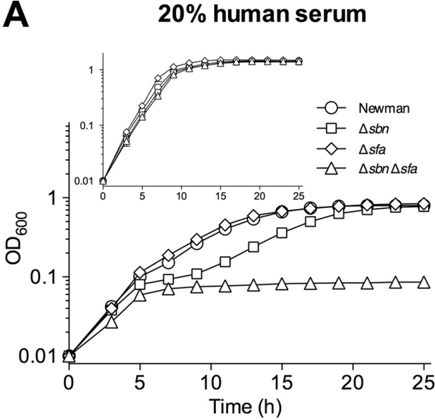
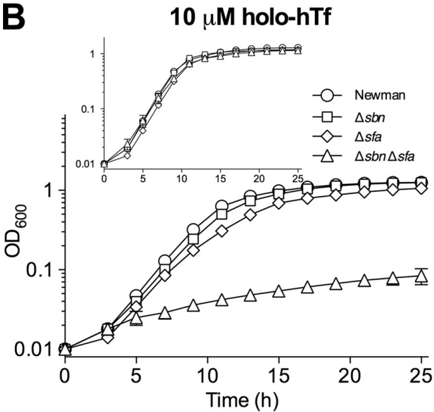
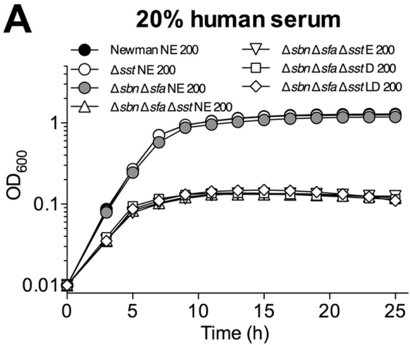
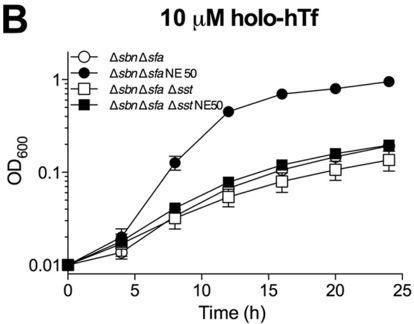
- Staphyloferrin-producing S. aureus grew in human serum or with human holotransferrin; a staphyloferrin-deficient sfa sbn mutant was severely restricted, and FeCl3 compensated for the defect.
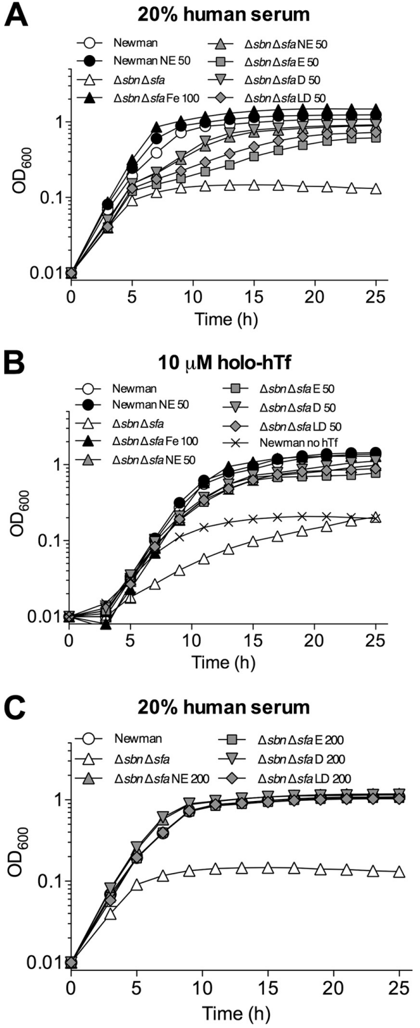
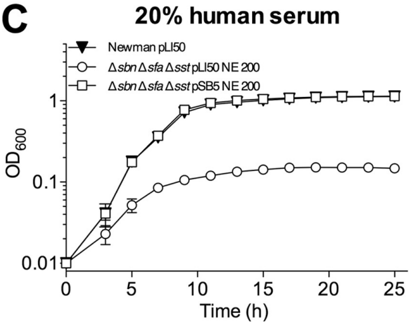
- Catecholamines (norepinephrine, epinephrine, dopamine, l-DOPA) at 50 μM did not enhance wild-type S. aureus growth but enhanced staphyloferrin-deficient S. aureus in human serum or holotransferrin; 200 μM catecholamine gave growth promotion equivalent to staphyloferrin production in serum. Sst was required, and the phenotype was complemented by wild-type sstABCD in trans.
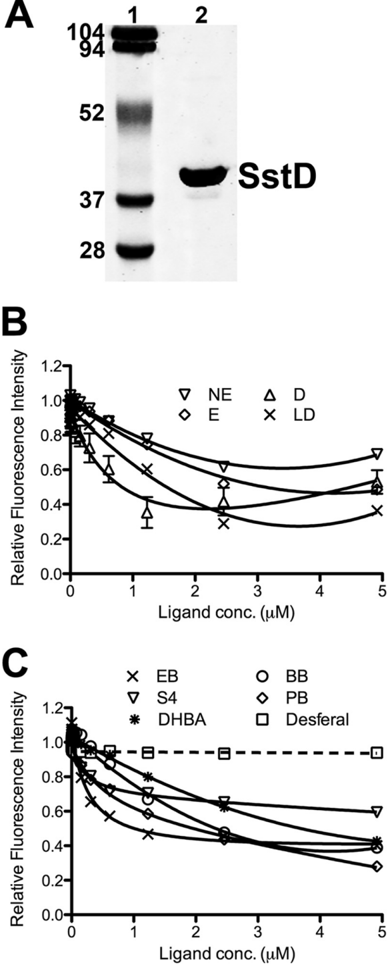
- Purified SstD bound ferrated catecholamines and catechol siderophores with Kd values of 1.07 μM (norepinephrine), 1.65 μM (epinephrine), 0.49 μM (dopamine), 1.44 μM (l-DOPA), 0.29 μM (enterobactin), 0.35 μM (salmochelin), 1.21 μM (bacillibactin), 1.62 μM (2,3-DHBA), and 1.62 μM (petrobactin); iron-free ligands and ferrated deferoxamine did not quench SstD fluorescence.
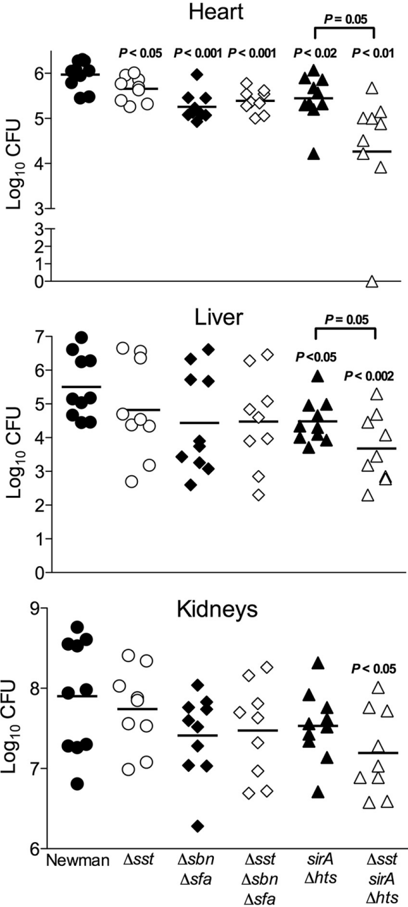
- In mice infected intravenously with 5 × 10^6 to 7 × 10^6 CFU, single sfa/sbn or hts/sir deletions did not significantly reduce organ counts, but sst alone, sfa-sbn, or hts-sir reduced heart colonization; sst plus sfa-sbn decreased heart and liver colonization, and sst plus sirA hts gave the largest drop in heart and liver and the lowest kidney burden among mutants tested.
Methods
- In vitro growth curves used S. aureus strains in TMS, chelated TMS, or 80:20 C-TMS–human serum, amended with human holotransferrin, catecholamines, or FeCl3; plate bioassays tested siderophore/catechol growth promotion, and CAS assays measured siderophore output.
- The sstABCD operon was deleted and replaced with an erythromycin cassette, combined with sfa/sbn or sirA/hts mutations, and complemented with pSB5; SstD was purified as a GST fusion, cleaved, and tested by intrinsic tryptophan fluorescence quenching.
- Murine systemic infection used 7-week-old female immunocompetent BALB/c mice, tail vein injection, and organ CFU enumeration at 96 h; a separate experiment used surgically implanted epinephrine pumps. Statistics used Student’s unpaired t test with P < 0.05.
Limitations
- The paper states that catecholamine concentrations tested (50 to 200 μM) are unlikely to occur in bulk plasma, even after gastric surgery, and that the epinephrine pump experiment did not identify any further difference between wild-type Newman and its sst mutant.
- The paper notes that single-locus staphyloferrin biosynthesis or uptake deletions did not significantly reduce bacterial counts in any organ, and that in vivo iron acquisition is complex and multifactorial.
- Evident from the text: most virulence data come from one murine intravenous model, some results are described as “data not shown,” and residual petrobactin/salmochelin S4 utilization in the sst mutant is attributed to other unknown transporters.
Model-written summary. Check it against the paper before relying on it.
Integrity signals
Registry
Cites
Statistics
Figures
Verification
Claims the paper makes
5 Valid · 2 Not valid · 30 Not checked · 68 Own results and interpretations
The cited sources support only part of this claim — read each source’s verdict below.
In the paper
“inactivating components of heme uptake reduces fitness only partially in virulence assays (37, 65)”
What the sources say
- Partly supportedcites [37] 37. Mason W. J., Skaar E. P. 2009. Assessing the contribution of heme-iron acquisition to Staphylococcus aureus pneumonia using computed tomography. PLoS One 4:e6668. [DOI] [PMC free article] [PubMed] [Google Scholar] sourceExperimental — accuracy not yet measured
The Results section supports the attenuated-virulence half of the paraphrase: retroorbital infection with the heme-transport-deficient ΔhtsAΔisdE gave 'a statistically significant decrease in the bacterial burden in the lung, heart and kidney ... as compared to wild type (Figure 2C)', and the Introduction states that 'both the Hts and Isd systems are individually required for full virulence in systemic models' — i.e. reduction, not abolition. What our copy does not support is the generalization to 'virulence assays': the paper's central finding is that in the intranasal pneumonia model ΔisdBH and ΔhtsAΔisdE showed no statistically significant difference in mortality or bacterial burden ('dispensable in a murine model of pneumonia'; Abstract Methodology/Principal Findings; Discussion: 'the heme-iron acquisition systems Isd and Hts had little influence on the development or pathogenesis of pneumonia'). Moreover, in the systemic assay the paper characterizes the defect as 'pronounced'/'severely decreased', not as merely partial, so the 'only partially' framing understates the source's own conclusion there while overextending it across assays. (LLM, conf=0.72)
- Supportedcites [65] 65. Torres V. J., Pishchany G., Humayun M., Schneewind O., Skaar E. P. 2006. Staphylococcus aureus IsdB is a hemoglobin receptor required for heme iron utilization. J. Bacteriol. 188:8421–8429 [DOI] [PMC free article] [PubMed] [Google Scholar] source
In RESULTS (mouse systemic abscess model), isdB inactivation caused only a 1-log reduction in splenic and renal bacterial load, explicitly contrasted with the 3-log virulence decrease of srtA mutants, and isdH inactivation gave a small, non-significant reduction — i.e., loss of these heme-uptake components attenuates, but does not abolish, fitness in vivo. The same RESULTS section states that, given residual hemoglobin binding and detectable growth of isdB mutants on hemoglobin, 'it is likely that S. aureus possesses additional mechanisms of access to hemoglobin-derived iron during infection,' and the DISCUSSION frames IsdB as required for 'full virulence' rather than virulence per se. Together these support the paraphrase that inactivating heme-uptake components reduces fitness only partially in virulence assays. (LLM, conf=0.85)
plainstates a cause- Asserted: passes — The authors put it forward as true.
- Checkable: passes — It can be checked against evidence.
- Load-bearing: passes — The paper’s conclusions depend on it.
- Based: passes — The paper gives a reason why it holds.
- Partly supported
Every source the paper cites for this claim was checked and supports it.
In the paper
“The S. aureus sst operon (NWMN_0702_0705) is iron regulated in vitro and in vivo and encodes a membrane-tethered lipoprotein, SstD (44).”
What the sources say
- Supportedcites [44] 44. Morrissey J. A., Cockayne A., Hill P. J., Williams P. 2000. Molecular cloning and analysis of a putative siderophore ABC transporter from Staphylococcus aureus. Infect. Immun. 68:6281–6288 [DOI] [PMC free article] [PubMed] [Google Scholar] source
The abstract states the cloned sst operon 'encodes four genes designated sstA, -B, -C, and D ... and a membrane-bound 38-kDa lipoprotein (sstD)', and the Results (p. on Fig. 2) add that SstD partitions in Triton X-114 and sits in the membrane fraction, i.e. a membrane-tethered lipoprotein. The same sections and the Discussion confirm iron regulation both in vitro (partial repression by ferric iron) and in vivo (expression detected in S. aureus recovered from the rat intraperitoneal chamber model). Only the locus-tag designation NWMN_0702_0705 is absent from our copy, but that is the citing authors' own genome annotation rather than content attributed to this source. (LLM, conf=0.90)
plain- Asserted: passes — The authors put it forward as true.
- Checkable: passes — It can be checked against evidence.
- Load-bearing: unclear — It is unclear whether the paper’s conclusions depend on it.
- Based: passes — The paper gives a reason why it holds.
- Supported
The cited sources support only part of this claim — read each source’s verdict below.
In the paper
“when strains were grown in unchelated TMS broth (i.e., no exogenous chelator added), growth defects were noted for mutants lacking both staphyloferrin transporters (sir hts) or the ATPase required to energize both transporters (fhuC) (3, 62).”
What the sources say
- Not checked — no full text of the sourcecites [3] 3. Beasley F. C., et al. 2009. Characterization of staphyloferrin A biosynthetic and transport mutants in Staphylococcus aureus. Mol. Microbiol. 72:947–963 [DOI] [PubMed] [Google Scholar] source
- Partly supportedcites [62] 62. Speziali C. D., Dale S. E., Henderson J. A., Vines E. D., Heinrichs D. E. 2006. Requirement of Staphylococcus aureus ATP-binding cassette-ATPase FhuC for iron-restricted growth and evidence that it functions with more than one iron transporter. J. Bacteriol. 188:2048–2055 [DOI] [PMC free article] [PubMed] [Google Scholar] sourceExperimental — accuracy not yet measured
Our copy supports the fhuC half of the claim: in iron-restricted (unchelated) TMS, the RN6390 ΔfhuCBG::ermC strain H1071 was 'significantly retarded compared to the growth of wild-type strain RN6390' (RESULTS, Fig. 1A), and the paper's own heading states 'The iron-restricted growth defect of S. aureus fhuCBG is more severe than that of S. aureus sirA or sirB mutants' (RESULTS), implying a lesser sirA/sirB defect under low-iron conditions — though in TMS + 50 μM 2,2′-dipyridyl H306 (sirA::Km) growth 'was not affected compared with the growth of parent strain RN6390'. What this source does not support is the 'both staphyloferrin transporters (sir hts)' framing: the hts/staphyloferrin B transporter is never mentioned, FhuC is established only as the ATPase for SirABC (staphyloferrin A/staphylobactin) and FhuBG (hydroxamates), and its involvement with a second siderophore uptake system is left as a hypothesis — 'In future studies we will examine the possibility that FhuC is required for transport of this additional siderophore' and 'fhuC may be involved in the transport of an additional iron chelate via another ABC transporter' (DISCUSSION). (LLM, conf=0.82)
plainstates a cause- Asserted: passes — The authors put it forward as true.
- Checkable: passes — It can be checked against evidence.
- Load-bearing: passes — The paper’s conclusions depend on it.
- Based: passes — The paper gives a reason why it holds.
The cited sources support only part of this claim — read each source’s verdict below.
In the paper
“The Kd values of SstD for its ligands, in the micromolar range, contrast with the Kd values in the nanomolar range that were determined for HtsA and SirA for their cognate ligands, staphyloferrin A and staphyloferrin B (24, 25).”
What the sources say
- Supportedcites [24] 24. Grigg J. C., Cheung J., Heinrichs D. E., Murphy M. E. 2010. Specificity of staphyloferrin B recognition by the SirA receptor from Staphylococcus aureus. J. Biol. Chem. 285:34579–34588 [DOI] [PMC free article] [PubMed] [Google Scholar] source
The RESULTS section ('FeSB-SirA Binding') states that titrations of HPLC-purified FeSB with recombinant SirA 'revealed a dissociation constant (Kd) that is in the low nanomolar range', and the DISCUSSION summary attributes SirA's 'low nanomolar dissociation constant' to loop enclosure of FeSB. The DISCUSSION also groups both receptors: 'The highly specific HtsA and SirA receptors bind ligands with low nanomolar affinities' (with the HtsA figure credited to its ref. 27 and the EXPERIMENTAL PROCEDURES confirming a fluorescence-titration Kd determination). One caveat the citing sentence drops: this paper could report only an upper limit for the SirA Kd ('we are unable to report an accurate Kd value other than an upper limit'), but the nanomolar magnitude it asserts is intact; the micromolar SstD comparison is the citing paper's own data, not attributed here. (LLM, conf=0.85)
- Not matchedcites [25] 25. Grigg J. C., Cooper J. D., Cheung J., Heinrichs D. E., Murphy M. E. 2010. The Staphylococcus aureus siderophore receptor HtsA undergoes localized conformational changes to enclose staphyloferrin A in an arginine-rich binding pocket. J. Biol. Chem. 285:11162–11171 [DOI] [PMC free article] [PubMed] [Google Scholar]
More than one paper fits this citation.
plainstates an association- Asserted: passes — The authors put it forward as true.
- Checkable: passes — It can be checked against evidence.
- Load-bearing: passes — The paper’s conclusions depend on it.
- Based: passes — The paper gives a reason why it holds.
- Supported
The cited sources support only part of this claim — read each source’s verdict below.
In the paper
“Catecholamine iron uptake was subsequently shown to be mediated by a distinct transporter, SstABCD, previously implicated in the S. aureus adaptive response to low-iron environments (44).”
What the sources say
- Partly supportedcites [44] 44. Morrissey J. A., Cockayne A., Hill P. J., Williams P. 2000. Molecular cloning and analysis of a putative siderophore ABC transporter from Staphylococcus aureus. Infect. Immun. 68:6281–6288 [DOI] [PMC free article] [PubMed] [Google Scholar] sourceExperimental — accuracy not yet measured
Our copy supports the 'previously implicated in the S. aureus adaptive response to low-iron environments' half: the DISCUSSION reports a Fur box consensus upstream of sstABCD, SstD expression partially repressed by ferric iron and induced in vivo in a highly iron-restricted environment, and the Introduction frames it as one of three iron-regulated staphylococcal ABC transporters. It does not support catecholamine iron uptake being mediated by SstABCD: the paper's own plate bioassays with the antisense SstD construct 'proved inconclusive', no consistent difference in utilization of a range of siderophores or siderophore precursors was observed, and the Introduction states that in each of these transporters 'the transported solute has not been identified'. The only catechol-related evidence is a homology inference in the RESULTS — SstD shows strong homology with the enterobactin transporters of C. jejuni and Neisseria gonorrhoeae — and the authors conclude only that sstABCD is 'likely to encode a third staphylococcal siderophore transporter', so the claim asserts as established mediation what this source presents as a sequence-based prediction. (LLM, conf=0.80)
plainstates a cause- Asserted: passes — The authors put it forward as true.
- Checkable: passes — It can be checked against evidence.
- Load-bearing: passes — The paper’s conclusions depend on it.
- Based: passes — The paper gives a reason why it holds.
- Partly supported
73 more claims
Create a free account to see all 105 claims and to verify the 44 references still open.
- It may state two separate claims as one. 12
- Probably not a substantial claim. 17
Claims other papers make about this one
Each is checked against this paper’s own text: does it say what the citing paper says it does?
The source backs part of the claim, not all of it — or backs it for a different population, condition or comparison.
In the citing paper
“previous studies have shown that catecholamines can promote the growth of various pathogenic bacteria, including Staphylococcus aureus, Listeria monocytogenes, Escherichia coli, Yersinia enterocolitica, and Salmonella enterica (21–23).”
From Dopamine Is a Siderophore-Like Iron Chelator That Promotes Salmonella enterica Serovar Typhimurium Virulence in Mice (2019) · cites this paper as [21]
Experimental — accuracy not yet measuredThe source backs part of the claim, not all of it — or backs it for a different population, condition or comparison.
In the citing paper
“Recent work has demonstrated heterogeneous production of specific siderophores during infection, suggesting that either bacteria experience distinct Fe levels within host tissue or additional, as yet unidentified, regulatory strategies for siderophore production or secretion exist 51-56 .”
From Nutritional immunity: the battle for nutrient metals at the host–pathogen interface (2022) · cites this paper as [52]
Experimental — accuracy not yet measuredThe cited source says what the claim attributes to it.
In the citing paper
“S. aureus also has the capability to utilize mammalian catecholamine hormones as an iron source.”
From Metal ion acquisition in Staphylococcus aureus: overcoming nutritional immunity (2012) · cites this paper as [60]
The cited source says what the claim attributes to it.
In the citing paper
“Inactivation of either the catecholamine transporter (Sst) alone, both siderophore operons (sfa and sbn), or both siderophore transporters (Hts and Sir) yields a reduction in colony recovery from the hearts of systemically infected mice.”
From Metal ion acquisition in Staphylococcus aureus: overcoming nutritional immunity (2012) · cites this paper as [60]
The cited source says what the claim attributes to it.
In the citing paper
“Staphylococcus aureus is an opportunistic pathogen that utilizes siderophores for Fe acquisition, and siderophore production is required for maximum virulence (5, 7).”
From Staphylococcus aureus exhibits heterogeneous siderophore production within the vertebrate host (2019) · cites this paper as [7]
8 more claims about this paper
Create a free account to see every claim other papers make about this one.
Citations
Cites
Molecular Cloning: A Laboratory Manual
Sambrook, J., Fritsch, E., & Maniatis, T. (1989) · UCLA - Biblioteca de Ciencias de la Salud · Cited by 133,589
Molecular cloning: A laboratory manual
Deininger, P. (1990) · Analytical Biochemistry · doi:10.1016/0003-2697(90)90595-z · Cited by 84,682
Universal chemical assay for the detection and determination of siderophores
Schwyn, B., & Neilands, J. B. (1987) · Analytical Biochemistry · doi:10.1016/0003-2697(87)90612-9 · Cited by 6,549 · cited 1×
“using a chrome azurol S (CAS) shuttle solution (55) as described previously (3);”
MethodGuzman, L. M., Belin, D., Carson, M. J., & Beckwith, J. (1995) · Journal of Bacteriology · doi:10.1128/jb.177.14.4121-4130.1995 · Cited by 4,935
Culture Medium for Enterobacteria
Neidhardt, F. C., Bloch, P. L., & Smith, D. F. (1974) · Journal of Bacteriology · doi:10.1128/jb.119.3.736-747.1974 · Cited by 2,958 · cited 1×
“was grown in enterobacterial minimal culture medium (47), with previously”
MethodIron Metabolism in Pathogenic Bacteria
Ratledge, C., & Dover, L. G. (2000) · Annual Review of Microbiology · doi:10.1146/annurev.micro.54.1.881 · Cited by 1,539 · cited 1×
“In aerobic environments, the metal exists predominantly as Fe(III), which at neutral pH has a solubility of approximately 1 10 9 M (52).”
BackgroundThe toxic shock syndrome exotoxin structural gene is not detectably transmitted by a prophage
Kreiswirth, B. N., Löfdahl, S., Betley, M. J., O'Reilly, M., Schlievert, P. M., Bergdoll, M. S., & Novick, R. P. (1983) · Nature · doi:10.1038/305709a0 · Cited by 1,326
Staphylococcus aureus Endocarditis: A Consequence of Medical Progress
Fowler, V. G., Miro, J. M., Hoen, B., Cabell, C. H., Abrutyn, E., Rubinstein, E., Corey, G. R., Spelman, D., Bradley, S. F., Barsic, B., et al. (2005) · JAMA · doi:10.1001/jama.293.24.3012 · Cited by 1,174 · cited 1×
“aureus is a leading cause of infective endocarditis (17).”
BackgroundStaphylococcal Coagulase: Mode of Action and Antigenicity
DUTHIE, E. S., & LORENZ, L. L. (1952) · Microbiology · doi:10.1099/00221287-6-1-2-95 · Cited by 622
Stoichiometric and site characteristics of the binding of iron to human transferrin
Aisen, P., Leibman, A., & Zweier, J. (1978) · Journal of Biological Chemistry · doi:10.1016/s0021-9258(19)62337-9 · Cited by 601 · cited 1×
“The primary iron sequestration factor in vertebrate serum is transferrin, a glycoprotein featuring two Fe(III) binding domains with high affinities for Fe(III) (Kd [dissociation constant], approximately 10 22 M) (1).”
Background
Research works printed but not linked: 1
- 23. Griffiths E., Williams P. 1999. The iron-uptake systems of pathogenic bacteria, fungi and protozoa, p. 87–212 In Bullen J. J., Griffiths E. (ed.), Iron and infection, 2nd ed. John Wiley and Sons, Ltd., New York, NY [Google Scholar]
Cited by
Microbial siderophores and their potential applications: a review
Saha, M., Sarkar, S., Sarkar, B., Sharma, B. K., Bhattacharjee, S., & Tribedi, P. (2016) · Environmental Science and Pollution Research · doi:10.1007/s11356-015-4294-0 · Cited by 819
“…meloti Drechsel et al. 1995 Staphyloferrin A Staphylococcus hyicus Meiwes et al. 1990 Staphyloferrin A, Staphyloferrin B Staphylococcus aureus Beasley et al. 2011 Unknown Halococcus saccharolyticus Dave et al. 2006 Unknown Halorubrum saccharovorum Dave et al. 2006 Unknown Haloterrigena…”
BackgroundNutritional immunity: the battle for nutrient metals at the host–pathogen interface
Murdoch, C. C., & Skaar, E. P. (2022) · Nature Reviews Microbiology · doi:10.1038/s41579-022-00745-6 · Cited by 701
Microbial siderophores: a mini review
Saha, R., Saha, N., Donofrio, R. S., & Bestervelt, L. L. (2013) · Journal of Basic Microbiology · doi:10.1002/jobm.201100552 · Cited by 440
“aureus utilize its siderophores staphyloferrin A and staphyloferrin B to remove iron from blood transferrin, to augment its proliferation in the host [102].”
BackgroundPortune, K. J., Beaumont, M., Davila, A.-M., Tomé, D., Blachier, F., & Sanz, Y. (2016) · Trends in Food Science & Technology · doi:10.1016/j.tifs.2016.08.011 · Cited by 356
The Role of Macrophages in Staphylococcus aureus Infection
Pidwill, G. R., Gibson, J. F., Cole, J., Renshaw, S. A., & Foster, S. J. (2021) · Frontiers in Immunology · doi:10.3389/fimmu.2020.620339 · Cited by 341
Control of Phagocytosis by Microbial Pathogens
Uribe-Querol, E., & Rosales, C. (2017) · Frontiers in Immunology · doi:10.3389/fimmu.2017.01368 · Cited by 306
“One strategy to acquire Fe2+ relies on the production of siderophores, which are low-molecular weight Fe2+-binding molecules of extremely high affinity, that remove Fe2+ from host proteins, such as hemoglobin, and transferrin (233).”
BackgroundShared and distinct mechanisms of iron acquisition by bacterial and fungal pathogens of humans
Caza, M., & Kronstad, J. W. (2013) · Frontiers in Cellular and Infection Microbiology · doi:10.3389/fcimb.2013.00080 · Cited by 306
“HtsA and SirA are receptors exposed on cell surface while HtsBC and SirBC are components in the membrane responsible for the transport into the cell (Beasley et al., 2011).”
BackgroundInfluentialRecent developments in understanding the iron acquisition strategies of gram positive pathogens
Sheldon, J. R., & Heinrichs, D. E. (2015) · FEMS Microbiology Reviews · doi:10.1093/femsre/fuv009 · Cited by 272
Self-citationStaphylococcal response to oxidative stress
Gaupp, R., Ledala, N., & Somerville, G. A. (2012) · Frontiers in Cellular and Infection Microbiology · doi:10.3389/fcimb.2012.00033 · Cited by 253
Bacterial siderophores: diversity, uptake pathways and applications
Schalk, I. J. (2025) · Nature Reviews Microbiology · doi:10.1038/s41579-024-01090-6 · Cited by 227
“…Listeria and Bacillus genera can utilize exogenous catecholate siderophores via the Sst uptake system, and these bacterial species can also import iron through this uptake pathway using catecholamine stress hormones such as adrenaline, noradrenaline and dopamine 191,193–198 . iron-uptake pathways.”
Iron acquisition strategies of bacterial pathogens
Sheldon, J. R., Laakso, H. A., & Heinrichs, D. E. (2016) · Microbiology Spectrum · doi:10.1128/microbiolspec.vmbf-0010-2015 · Cited by 219
“Staphylococcus spp. and Bacillus spp. are additionally capable of utilizing catecholate-type siderophores, as well as ferrated catecholamine stress hormones, such as epinephrine, norepinephrine, and/or dopamine as “ pseu-dosiderophores ” using the staphylococcal siderophore transporter, SstABCD (213), and FeuABCD (214…”
BackgroundSelf-citationAntimicrobial Mechanisms of Macrophages and the Immune Evasion Strategies of Staphylococcus aureus
Flannagan, R., Heit, B., & Heinrichs, D. (2015) · Pathogens · doi:10.3390/pathogens4040826 · Cited by 193
“aureus is capable of utilizing siderophores produced by other bacteria (xenosiderophores) and host-derived hormones such as norepinephrine that can also bind iron [206,273].”
BackgroundSelf-citationRusu, I. G., Suharoschi, R., Vodnar, D. C., Pop, C. R., Socaci, S. A., Vulturar, R., Istrati, M., Moroșan, I., Fărcaș, A. C., Kerezsi, A. D., et al. (2020) · Nutrients · doi:10.3390/nu12071993 · Cited by 185
Immunopathogenesis of Staphylococcus aureus pulmonary infection
Parker, D., & Prince, A. (2012) · Seminars in Immunopathology · doi:10.1007/s00281-011-0291-7 · Cited by 165
Venkateswaran, P., Vasudevan, S., David, H., Shaktivel, A., Shanmugam, K., Neelakantan, P., & Solomon, A. P. (2023) · Frontiers in Cellular and Infection Microbiology · doi:10.3389/fcimb.2023.1159798 · Cited by 162
“Hts, Sir transporters Staphyloferrin uptake sirA hts (Beasley et al., 2011)”
BackgroundMicrobial siderophore – A boon to agricultural sciences
Ghosh, S. K., Bera, T., & Chakrabarty, A. M. (2020) · Biological Control · doi:10.1016/j.biocontrol.2020.104214 · Cited by 161
Metal ion acquisition in Staphylococcus aureus: overcoming nutritional immunity
Cassat, J. E., & Skaar, E. P. (2012) · Seminars in Immunopathology · doi:10.1007/s00281-011-0294-4 · Cited by 155
“aureus possessing mutations in either sirA, hts, sbn, sfa, sst, or combinations thereof [60].”
BackgroundInfluentialMini-review: Lactoferrin: a bioinspired, anti-biofilm therapeutic
Ammons, M. C., & Copié, V. (2013) · Biofouling · doi:10.1080/08927014.2013.773317 · Cited by 141
“Staphylococcus aureus utilizes an ABC transporter for exportation of siderophores (Poole et al. 1993; Vettoretti et al. 2009; Grigg et al. 2010; Beasley et al. 2011).”
Okumura, C. Y. M., Hollands, A., Tran, D. N., Olson, J., Dahesh, S., von Köckritz-Blickwede, M., Thienphrapa, W., Corle, C., Jeung, S. N., Kotsakis, A., et al. (2012) · Journal of Molecular Medicine · doi:10.1007/s00109-012-0882-3 · Cited by 115
“aureus is important for full virulence of the pathogen and resistance to neutrophil killing [47, 48].”
BackgroundCrosby, H. A., Tiwari, N., Kwiecinski, J. M., Xu, Z., Dykstra, A., Jenul, C., Fuentes, E. J., & Horswill, A. R. (2020) · Molecular Microbiology · doi:10.1111/mmi.14404 · Cited by 108
Host-Pathogen Interactions in Gram-Positive Bacterial Pneumonia
Grousd, J. A., Rich, H. E. A., & Alcorn, J. F. (2019) · Clinical Microbiology Reviews · doi:10.1128/cmr.00107-18 · Cited by 107
“These are all involved in iron acquisition and play a role in virulence, which is expected as the nares are a low-iron environment (44, 45).”
BackgroundMarchetti, M., De Bei, O., Bettati, S., Campanini, B., Kovachka, S., Gianquinto, E., Spyrakis, F., & Ronda, L. (2020) · International Journal of Molecular Sciences · doi:10.3390/ijms21062145 · Cited by 97
Staphylococcus aureus exhibits heterogeneous siderophore production within the vertebrate host
Perry, W. J., Spraggins, J. M., Sheldon, J. R., Grunenwald, C. M., Heinrichs, D. E., Cassat, J. E., Skaar, E. P., & Caprioli, R. M. (2019) · Proceedings of the National Academy of Sciences · doi:10.1073/pnas.1913991116 · Cited by 84
“In addition to Fe, glucose represses SA production, and heme affects SB production (7, 22, 23).”
BackgroundSelf-citationThe impact of metal availability on immune function during infection
Monteith, A. J., & Skaar, E. P. (2021) · Trends in Endocrinology & Metabolism · doi:10.1016/j.tem.2021.08.004 · Cited by 83
Synthesis of L-2,3-Diaminopropionic Acid, a Siderophore and Antibiotic Precursor
Kobylarz, M. J., Grigg, J. C., Takayama, S.-I. J., Rai, D. K., Heinrichs, D. E., & Murphy, M. E. P. (2014) · Chemistry & Biology · doi:10.1016/j.chembiol.2013.12.011 · Cited by 91
Self-citationStaphylococcus aureus heme and siderophore-iron acquisition pathways
Conroy, B. S., Grigg, J. C., Kolesnikov, M., Morales, L. D., & Murphy, M. E. P. (2019) · BioMetals · doi:10.1007/s10534-019-00188-2 · Cited by 73
Haemophore functions revisited
Wandersman, C., & Delepelaire, P. (2012) · Molecular Microbiology · doi:10.1111/j.1365-2958.2012.08136.x · Cited by 70
“They usually bind iron with very high affinity (with the calculated affinity constant being above 10(30) M-1), enabling them to extract iron from iron carrier proteins such as transferrin inside living organisms (Beasley et al., 2011).”
BackgroundBacterial Siderophore as a Plant Growth Promoter
Pahari, A., Pradhan, A. K., Nayak, S. K., & Mishra, B. (2017) · Springer eBooks · doi:10.1007/978-981-10-6847-8_7 · Cited by 84
Ghssein, G., & Ezzeddine, Z. (2022) · Biology · doi:10.3390/biology11101525 · Cited by 66
“SstC is an ATP-binding homodimeric protein, and SstD is the lipid-anchored substrate-binding proteins (SBP) [72,73].”
BackgroundInfluentialSheldon, J. R., Marolda, C. L., & Heinrichs, D. E. (2014) · Molecular Microbiology · doi:10.1111/mmi.12593 · Cited by 62
Self-citationCharacterization of Electrogenic Gut Bacteria
Tahernia, M., Plotkin-Kaye, E., Mohammadifar, M., Gao, Y., Oefelein, M. R., Cook, L. C., & Choi, S. (2020) · ACS Omega · doi:10.1021/acsomega.0c04362 · Cited by 70
Identification of Key Determinants of Staphylococcus aureus Vaginal Colonization
Deng, L., Schilcher, K., Burcham, L. R., Kwiecinski, J. M., Johsnon, P. M., Head, S. R., Heinrichs, D. E., Horswill, A. R., & Doran, K. S. (2019) · mBio · doi:10.1128/mbio.02321-19 · Cited by 79
Self-citationIron acquisition in the cystic fibrosis lung and potential for novel therapeutic strategies
Tyrrell, J., & Callaghan, M. (2016) · Microbiology · doi:10.1099/mic.0.000220 · Cited by 56
“, 2003, 2004), and catecholate xenosiderophores through the highly conserved staphylococcal siderophore ATP-binding cassette (ABC) transporter SstABCD (Beasley et al., 2011).”
BackgroundInfluentialGenetic modification of iron metabolism in mice affects the gut microbiota
Buhnik-Rosenblau, K., Moshe-Belizowski, S., Danin-Poleg, Y., & Meyron-Holtz, E. G. (2012) · BioMetals · doi:10.1007/s10534-012-9555-5 · Cited by 53
Madsen, J. L. H., Johnstone, T. C., & Nolan, E. M. (2015) · Journal of the American Chemical Society · doi:10.1021/jacs.5b04557 · Cited by 50
Dichtl, S., Demetz, E., Haschka, D., Tymoszuk, P., Petzer, V., Nairz, M., Seifert, M., Hoffmann, A., Brigo, N., Würzner, R., et al. (2019) · mBio · doi:10.1128/mbio.02624-18 · Cited by 50
“This is of interest because previous studies have shown that catecholamines can promote the growth of various pathogenic bacteria, including Staphylococcus aureus , Listeria monocytogenes , Escherichia coli , Yersinia enterocolitica , and Salmonella enterica (21–23).”
Staphylococcus epidermidis is largely dependent on iron availability to form biofilms
Oliveira, F., França, Â., & Cerca, N. (2017) · International Journal of Medical Microbiology · doi:10.1016/j.ijmm.2017.08.009 · Cited by 61
“18 internalized by the SirABC transporter (Beasley et al., 2011; Beasley and Heinrichs, 2010).”
BackgroundBeasley, F. C., Cheung, J., & Heinrichs, D. E. (2011) · BMC Microbiology · doi:10.1186/1471-2180-11-199 · Cited by 46
“As we have previously demonstrated, both siderophores play a vital role in acquisition of iron from human holotransferrin [23].”
BackgroundMethodResultInfluentialSelf-citationThe iron-regulated staphylococcal lipoproteins
Sheldon, J. R., & Heinrichs, D. E. (2012) · Frontiers in Cellular and Infection Microbiology · doi:10.3389/fcimb.2012.00041 · Cited by 45
“Adjacent to each of these biosynthetic loci, but transcribed separately, are operons encoding the requisite ABC-transporters for uptake of Fe-SA and Fe-SB complexes (Dale et al., 2004a,b; Beasley et al., 2009, 2011; Beasley and Heinrichs, 2010).”
BackgroundInfluentialSelf-citationZhou, Y.-J., Liu, M.-S., Rugaie, O. A., Kong, X., Alsam, S., Battah, S., Xie, Y.-Y., Hider, R. C., & Zhou, T. (2015) · European Journal of Medicinal Chemistry · doi:10.1016/j.ejmech.2015.02.050 · Cited by 45
Independent and cooperative regulation of staphylopine biosynthesis and trafficking by Fur and Zur
Fojcik, C., Arnoux, P., Ouerdane, L., Aigle, M., Alfonsi, L., & Borezée‐Durant, E. (2018) · Molecular Microbiology · doi:10.1111/mmi.13927 · Cited by 44
“A link was established between metal acquisition and efficient dissemination and virulence potential, in particular for iron, manganese and nickel (Corbin et al., 2008; Hiron et al., 2010; Beasley et al., 2011; Hammer and Skaar, 2012; Kehl-Fie et al., 2013; Remy et al., 2013).”
BackgroundIron acquisition through the bacterial transferrin receptor
Pogoutse, A. K., & Moraes, T. F. (2017) · Critical Reviews in Biochemistry and Molecular Biology · doi:10.1080/10409238.2017.1293606 · Cited by 41
“Siderophores have also been implicated in stealing iron from transferrin, in particular the Staphylococcus aureus siderophores staphyloferrin A and staphyloferrin B (Beasley et al., 2011; Ford et al., 1988; Park et al., 2005).”
Staphylococcus aureus: an introduction
Myles, I. A., & Datta, S. K. (2012) · Seminars in Immunopathology · doi:10.1007/s00281-011-0301-9 · Cited by 63
“mechanisms [52, 60–62] as well as factors that aid in adhesion such as collagen-binding protein [63] and clumping factors A”
BackgroundThe impact of metal sequestration on Staphylococcus aureus metabolism
Hammer, N. D., & Skaar, E. P. (2012) · Current Opinion in Microbiology · doi:10.1016/j.mib.2011.11.004 · Cited by 39
“aureus strains unable to produce or utilize either staphyloferrin A or staphyloferrin B are attenuated in their ability to cause disease [29 ,30].”
BackgroundLyte, M. (2013) · PharmaNutrition · doi:10.1016/j.phanu.2012.11.002 · Cited by 46
Discovery of an iron-regulated citrate synthase in Staphylococcus aureus
Cheung, J., Murphy, M. E. P., & Heinrichs, D. E. (2012) · Chemistry & Biology · doi:10.1016/j.chembiol.2012.10.003 · Cited by 39
Self-citationDialog between skin and its microbiota: Emergence of “Cutaneous Bacterial Endocrinology”
Racine, P., Janvier, X., Clabaut, M., Catovic, C., Souak, D., Boukerb, A. M., Groboillot, A., Konto‐Ghiorghi, Y., Poc, C. D., Lesouhaitier, O., et al. (2020) · Experimental Dermatology · doi:10.1111/exd.14158 · Cited by 40
Exploring Staphylococcus aureus pathways to disease for vaccine development
DeDent, A. C., Kim, H. K., Missiakas, D. M., & Schneewind, O. (2011) · Seminars in Immunopathology · doi:10.1007/s00281-011-0299-z · Cited by 41
Armstrong, S. K., Brickman, T. J., & Suhadolc, R. J. (2012) · Molecular Microbiology · doi:10.1111/j.1365-2958.2012.08032.x · Cited by 37
“A recent study described Staphylococcus aureus siderophore mutants that could use catecholamines to obtain growth-promoting iron from TF, and showed that the Sst cytoplasmic membrane transporter for catechol siderophores was involved in this process (Beasley et al., 2011).”
BackgroundStructural Basis for Xenosiderophore Utilization by the Human Pathogen Staphylococcus aureus
Endicott, N. P., Lee, E., & Wencewicz, T. A. (2017) · ACS Infectious Diseases · doi:10.1021/acsinfecdis.7b00036 · Cited by 39
Hammerstad, M., & Hersleth, H.-P. (2021) · Archives of Biochemistry and Biophysics · doi:10.1016/j.abb.2021.108826 · Cited by 34
Brozyna, J. R., Sheldon, J. R., & Heinrichs, D. E. (2014) · MicrobiologyOpen · doi:10.1002/mbo3.162 · Cited by 30
Self-citationKobylarz, M. J., Grigg, J. C., Liu, Y., Lee, M. S. F., Heinrichs, D. E., & Murphy, M. E. P. (2016) · Biochemistry · doi:10.1021/acs.biochem.5b01045 · Cited by 30
“A subset of SbnA homologues predicted to be involved L -Dap biosynthesis were chosen from sequence alignments previously performed by Beasley et al. 2011.”
Self-citationIron Acquisition by Bacterial Pathogens: Beyond Tris‐Catecholate Complexes
Zhang, Y., Sen, S., & Giedroc, D. P. (2020) · ChemBioChem · doi:10.1002/cbic.201900778 · Cited by 30
Zhang, M., Zhu, C., Zhou, Y., Kong, X., Hider, R. C., & Zhou, T. (2014) · Chemical Biology & Drug Design · doi:10.1111/cbdd.12358 · Cited by 29
“loferrin A, and staphyloferrin B, via the transporters Hts and Sir, respectively, to access the transferrin iron pool (4,5).”
BackgroundEndicott, N. P., Rivera, G. S. M., Yang, J. P., & Wencewicz, T. A. (2020) · ACS Central Science · doi:10.1021/acscentsci.9b01257 · Cited by 29
Harnessing microbial iron chelators to develop innovative therapeutic agents
Ribeiro, M., Sousa, C. A., & Simões, M. V. (2021) · Journal of Advanced Research · doi:10.1016/j.jare.2021.10.010 · Cited by 37
Fighting Staphylococcus epidermidis Biofilm-Associated Infections: Can Iron Be the Key to Success?
Oliveira, F., Rohde, H., Vilanova, M., & Cerca, N. (2021) · Frontiers in Cellular and Infection Microbiology · doi:10.3389/fcimb.2021.798563 · Cited by 39
Nasal commensals reduce Staphylococcus aureus proliferation by restricting siderophore availability
Zhao, Y., Bitzer, A., Power, J. J., Belikova, D., Salazar, B. O. T., Adolf, L. A., Gerlach, D., Krismer, B., & Heilbronner, S. (2024) · The ISME Journal · doi:10.1093/ismejo/wrae123 · Cited by 30
“The catecholate acquisition system SstABC of S. aureus is independent of FhuC [48].”
Zhang, Y., Edmonds, K. A., Raines, D. J., Murphy, B. A., Wu, H., Guo, C., Nolan, E. M., VanNieuwenhze, M. S., Duhme‐Klair, A., & Giedroc, D. P. (2020) · Journal of Molecular Biology · doi:10.1016/j.jmb.2020.08.005 · Cited by 29
“These complexes include the macrocyclic, hexadentate catecholate enterobactin (Ent), to tetradentate bis-catecholates diDHBS and the artificial tetradentate catecholate siderophore mimic 4-LICAM, to the bidentate monomeric catechols, DHBS and NE (Fig.”
BackgroundResultInfluentialCationic polymer mediated bacterial clustering: Cell-adhesive properties of homo- and copolymers
Louzao, I., Sui, C., Winzer, K., Fernández‐Trillo, F., & Alexander, C. (2015) · European Journal of Pharmaceutics and Biopharmaceutics · doi:10.1016/j.ejpb.2015.05.026 · Cited by 35
How Severe Anaemia Might Influence the Risk of Invasive Bacterial Infections in African Children
Abuga, K. M., Muriuki, J. M., Williams, T., & Atkinson, S. H. (2020) · International Journal of Molecular Sciences · doi:10.3390/ijms21186976 · Cited by 33
Identification of immunological expressed sequence tags in the mealworm beetle Tenebrio molitor
Dobson, A. J., Johnston, P. R., Vilcinskas, A., & Rolff, J. (2012) · Journal of Insect Physiology · doi:10.1016/j.jinsphys.2012.09.009 · Cited by 27
“These enzymes scavenge iron (Beasley et al., 2011), thereby impairing microbial metabolism and increasing stress (Hammer and Skaar, 2011).”
BackgroundIron Acquisition Strategies of Bacterial Pathogens
Sheldon, J. R., Laakso, H. A., & Heinrichs, D. E. (2016) · Virulence Mechanisms of Bacterial Pathogens · doi:10.1128/9781555819286.ch3 · Cited by 25
Self-citationSiderophore in Plant Nutritional Management: Role of Endophytic Bacteria
Garg, G., Kumar, S., & Bhati, S. (2021) · Sustainable development and biodiversity · doi:10.1007/978-3-030-65447-4_14 · Cited by 33
Zhou, Y.-J., Kong, X., Li, J.-P., Ma, Y.-M., Hider, R. C., & Zhou, T. (2015) · MedChemComm · doi:10.1039/c5md00264h · Cited by 25
Understanding mechanisms of virulence in MRSA: implications for antivirulence treatment strategies
Hsieh, R. C., Liu, R., Burgin, D. J., & Otto, M. J. (2023) · Expert Review of Anti-infective Therapy · doi:10.1080/14787210.2023.2242585 · Cited by 26
“On the other hand, staphyloferrin may impact virulence, as in mouse infection models, the absence of one or more of Hts, Sir, and Sst import systems decreased bacterial organ burden [212].”
BackgroundSmall molecule natural products in human nasal/oral microbiota
Barber, C. C., & Zhang, W. (2021) · Journal of Industrial Microbiology & Biotechnology · doi:10.1093/jimb/kuab010 · Cited by 26
Flannagan, R. S., Brozyna, J. R., Kumar, B., Adolf, L. A., Power, J. J., Heilbronner, S., & Heinrichs, D. E. (2022) · Journal of Biological Chemistry · doi:10.1016/j.jbc.2022.101823 · Cited by 23
“The bacteria were grown in RPMI with 1% (v/v) casamino acids and 0.05% (v/v) heat inactivated horse serum.”
BackgroundMethodResultInfluentialSelf-citationVerstraete, M. M., Morales, L. D., Kobylarz, M. J., Loutet, S. A., Laakso, H. A., Pinter, T. B., Stillman, M. J., Heinrichs, D. E., & Murphy, M. E. P. (2019) · Journal of Biological Chemistry · doi:10.1074/jbc.ra119.007757 · Cited by 23
“Siderophores are low molecular weight molecules that can chelate ferric iron from host iron-binding proteins like lactoferrin and transferrin and courier it back to the bacterial cell (19).”
BackgroundSelf-citationAn ECF-type transporter scavenges heme to overcome iron-limitation in Staphylococcus lugdunensis
Jochim, A., Adolf, L. A., Belikova, D., Schilling, N. A., Setyawati, I., Chin, D., Meyers, S., Verhamme, P. B., Heinrichs, D. E., Slotboom, D. J., et al. (2020) · eLife · doi:10.7554/elife.57322 · Cited by 25
Self-citationMular, A., Shanzer, A., Kozłowski, H., Hubmann, I., Misslinger, M., Krzywik, J., Decristoforo, C., & Gumienna‐Kontecka, E. (2021) · Inorganic Chemistry · doi:10.1021/acs.inorgchem.1c02453 · Cited by 27
“39,40 Recognition and utilization of xenosiderophores (siderophores that are not self-origin) is one of the mechanisms applied by bacteria and fungi during niche competition for iron.”
Kobylarz, M. J., Heieis, G. A., Loutet, S. A., & Murphy, M. E. P. (2017) · ACS Chemical Biology · doi:10.1021/acschembio.7b00203 · Cited by 21
Zhu, C., Qiu, D.-H., Kong, X., Hider, R. C., & Zhou, T. (2013) · Journal of Pharmacy and Pharmacology · doi:10.1111/jphp.12013 · Cited by 22
“There is no report relating to the siderophores produced by Providencia stuartii, whereas Staphylococcus aureus has been demonstrated to use two hydroxycarboxylate-type siderophores, staphyloferrin A and staphyloferrin B, via the transporters Hts and Sir, respectively, to access the transferrin iron pool.([4,5]) Such…”
BackgroundSbnI is a free serine kinase that generates -phospho-l-serine for staphyloferrin B biosynthesis in
Verstraete, M. M., Perez-Borrajero, C., Brown, K. L., Heinrichs, D. E., & Murphy, M. E. P. (2018) · Journal of Biological Chemistry · doi:10.1074/jbc.ra118.001875 · Cited by 19
“Iron-bound siderophores are selectively imported by dedicated surface receptors and cognate ABC transporters, HtsABC and SirABC, for SA and SB, respectively (12).”
BackgroundSelf-citationBatko, I. Z., Flannagan, R. S., Guariglia-Oropeza, V., Sheldon, J. R., & Heinrichs, D. E. (2021) · Journal of Bacteriology · doi:10.1128/jb.00458-21 · Cited by 19
“fitness during infection (62, 80), however, siderophore expression can be heterogenous and influenced by the niche occupied by the bacteria (81).”
BackgroundInfluentialSelf-citationDuarte, M., Pedrosa, S. S., Khusial, P. R., & Madureira, A. R. (2024) · Mechanisms of Ageing and Development · doi:10.1016/j.mad.2024.111956 · Cited by 24
“In fact, Neal et al. (2001) report the non-growth of S. aureus in the presence of norepinephrine, whereas Beasley et al. (2011) demonstrated a positive effect of catecholamines by significantly inducing the growth of staphyloferrin-deficient S. aureus in human serum or in the presence of human…”
The Tricky Ways Bacteria Cope with Iron Limitation
Braun, V., & Hantke, K. (2013) · Springer briefs in molecular science · doi:10.1007/978-94-007-6088-2_2 · Cited by 23
“Staphyloferrin iron is taken up via the HtsABC and SirABC systems, whereas catecholate iron is taken up by the newly identified SstABCD transport system (Beasley et al. 2011).”
BackgroundInvolvement of reductases Iru O and Ntr A in iron acquisition by Staphylococcus aureus
Hannauer, M., Arifin, A. J., & Heinrichs, D. E. (2015) · Molecular Microbiology · doi:10.1111/mmi.13000 · Cited by 19
“and catechols and catecholamines such as enterobactin, 2,3-dihydroxybenzoic acid, dopamine, epinephrine and norepinephrine (Beasley et al., 2011) to satisfy its need for iron.”
BackgroundMethodSelf-citationCoordinated adaptation of Staphylococcus aureus to calprotectin-dependent metal sequestration
Ruiz, V. M. R., Freiberg, J. A., Weiss, A., Green, E. R., Jobson, M.-E., Felton, E. A., Shaw, L. N., Chazin, W., & Skaar, E. P. (2024) · mBio · doi:10.1128/mbio.01389-24 · Cited by 24
Adolf, L. A., Müller-Jochim, A., Kricks, L., Puls, J.-S., Lopez, D., Grein, F., & Heilbronner, S. (2023) · eLife · doi:10.7554/elife.85304 · Cited by 18
Staphylococcus aureus metal acquisition in the mastitic mammary gland
Killpack, S., Erickson, D. L., & Wilson, E. (2020) · Microbial Pathogenesis · doi:10.1016/j.micpath.2020.104179 · Cited by 12
Altered immune proteome of Staphylococcus aureus under iron‐restricted growth conditions
Stentzel, S., Vu, C. H., Weyrich, A. M., Jehmlich, N., Schmidt, F., Salazar, M. G., Steil, L., Völker, U., & Bröker, B. M. (2014) · PROTEOMICS · doi:10.1002/pmic.201300512 · Cited by 19
“aureus called SstD (A6QF45_STAAE), which has a high affinity to the enteric siderophores enterobactin and salmochelin S4 [58].”
BackgroundHuman host-defense peptide LL-37 targets stealth siderophores
Zsila, F., & Beke‐Somfai, T. (2020) · Biochemical and Biophysical Research Communications · doi:10.1016/j.bbrc.2020.03.162 · Cited by 20
Norepinephrine potentiates proinflammatory responses of human vaginal epithelial cells
Brosnahan, A. J., Vulchanova, L., Witta, S. R., Dai, Y., Jones, B. J., & Brown, D. R. (2013) · Journal of Neuroimmunology · doi:10.1016/j.jneuroim.2013.03.005 · Cited by 17
Zhang, Y., Martin, J. E., Edmonds, K. A., Winkler, M. E., & Giedroc, D. P. (2022) · Journal of Biological Chemistry · doi:10.1016/j.jbc.2022.102046 · Cited by 16
“aureus, this contributes to its bacterial virulence (29).”
BackgroundNobre, L. S., & Saraiva, L. M. (2014) · Current Microbiology · doi:10.1007/s00284-014-0567-y · Cited by 20
“aureus mutant lacking sir-hts gene clusters yielded a significant reduction of the bacterial counts in heart and liver mice upon colonization [3].”
BackgroundAdaptive immune response to lipoproteins of Staphylococcus aureus in healthy subjects
Vu, C. H., Kolata, J., Stentzel, S., Beyer, A., Salazar, M. G., Steil, L., Pané‐Farré, J., Rühmling, V., Engelmann, S., Götz, F., et al. (2016) · PROTEOMICS · doi:10.1002/pmic.201600151 · Cited by 14
“SstD has been shown to interact with ferric catecholamine and catechol siderophores [39].”
BackgroundOliveira, F., Lima, T., Correia, A., Silva, A. M., Soares, C., Morais, S., Weißelberg, S., Vilanova, M., Rohde, H., & Cerca, N. (2022) · Microbiology Spectrum · doi:10.1128/spectrum.02168-21 · Cited by 14
Armstrong, S. K. (2015) · Microbiology Spectrum · doi:10.1128/microbiolspec.mbp-0007-2014 · Cited by 19
“Staphylococcus species (55), Pseudomonas aeruginosa (56, 57), and Escherichia coli (41, 51) each can produce multiple siderophores that could be used by other bacterial species, and have been identi fi ed as respiratory microbiota.”
BackgroundDahyot, S., Oxaran, V., Niepceron, M., Dupart, E., Legris, S., Destruel, L., Didi, J., Clamens, T., Lesouhaitier, O., Zerdoumi, Y., et al. (2020) · Frontiers in Microbiology · doi:10.3389/fmicb.2020.00039 · Cited by 20
Inbaraj, S., Sejian, V., & Ramasamy, S. (2019) · Biological Rhythm Research · doi:10.1080/09291016.2019.1695084 · Cited by 20
“…as in the case of E.coli O157:H7 (Freestone et al. 2003), Salmonella enterica (Methner et al. 2008) or independent which was depicted in Staphylococcus aureus (Beasley et al. 2011), Bordetella bronchiseptica (Anderson and Armstrong 2008) and Bacillus subtilis (Miethke and Skerra 2010) (Table 1).”
BackgroundMaldonado-Hernández, J., Román‐Ponce, B., Arroyo-Herrera, I., Guevara-Luna, J., Ramos-Garza, J., Embarcadero-Jiménez, S., Santos, P. E. L., Wang, E. T., & Vásquez-Murrieta, M. S. (2022) · Archives of Microbiology · doi:10.1007/s00203-022-02780-6 · Cited by 15
“2009; Biver and Shotyk 2012; Schenkeveld et al.”
Iron biofortification of crop food by symbiosis with beneficial microorganisms
Liu, C., Ye, Y., Liu, J., Pu, Y., & Wu, C. L. (2021) · Journal of Plant Nutrition · doi:10.1080/01904167.2021.1927089 · Cited by 12
Artini, M., Scoarughi, G. L., Cellini, A., Papa, R., Barbato, G., & Selan, L. (2012) · BioMetals · doi:10.1007/s10534-011-9514-6 · Cited by 10
“aureus has developed a very complex mechanism to access iron, kidnapping it directly from Tf (Beasley et al. 2011).”
BackgroundStructural Biology of Bacterial Haemophores
Ascenzi, P., di Masi, A., Leboffe, L., Frangipani, E., Nardini, M., Verde, C., & Visca, P. (2015) · Advances in microbial physiology/Advances in Microbial Physiology · doi:10.1016/bs.ampbs.2015.09.002 · Cited by 10
Dynamic Relay of Protein-Bound Lipoic Acid in Staphylococcus aureus
Teoh, W. P., Resko, Z. J., Flury, S., & Alonzo, F. (2019) · Journal of Bacteriology · doi:10.1128/jb.00446-19 · Cited by 10
Enterobactin and salmochelin S4 inhibit the growth of Staphylococcus aureus
Davidov, Y., Tejman-Yarden, N., Robinson, A., Rahav, G., & Nissan, I. (2025) · Frontiers in Cellular and Infection Microbiology · doi:10.3389/fcimb.2025.1456046 · Cited by 10
Naclerio, G. A., Onyedibe, K. I., Karanja, C. W., Aryal, U. K., & Sintim, H. O. (2022) · ACS Infectious Diseases · doi:10.1021/acsinfecdis.1c00613 · Cited by 7
Karavolos, M. H., & Khan, C. M. A. (2014) · Advances in experimental medicine and biology · doi:10.1007/978-1-4939-0897-4_11 · Cited by 8
“Although NE stress hormones improve the growth of coagulase-negative Staphylococci, the hormones do not have a significant impact on the growth of the important pathogen Staphylococcus aureus [51, 52].”
Background
Metadata
- Authors
- Beasley, F. C., Marolda, C. L., Cheung, J., Buac, S., & Heinrichs, D. E.
- Affiliations
- Western University (CA)
- Corresponding author
- Heinrichs, David E.
- Venue
- Infection and Immunity
- Publisher
- American Society for Microbiology
- Published
- 2011-06
- Volume
- 79
- Issue
- 6
- Pages
- 2345-2355
- ISSN
- 0019-9567 (ISSN-L)
- 1098-5522
- PMC
- PMC3125851
- OpenAlex
- W2168593917
- Semantic Scholar
- 16f9f992a070ab6f26be1a6a3dab9982cc2d9c1c
- Cited by
- 151
- References
- 69
- Citations by year
- 2026: 12 · 2025: 10 · 2024: 7 · 2023: 5 · 2022: 11 · 2021: 16 · 2020: 13 · 2019: 12 · 2018: 4 · 2017: 7 · 2016: 7 · 2015: 13 · 2014: 9 · 2013: 7 · 2012: 12
- FWCI
- 6.78
- Type
- journal article
- Language
- en
- Open access
- green
- www.ncbi.nlm.nih.gov
- Licence
- journals.asm.org/non-commercial-tdm-license (tdm)
- Locations
- Infection and Immunity (publishedVersion)
- PubMed Central (publishedVersion)
- PubMed (publishedVersion)
- Funders
- Canadian Institutes of Health Research (MOP-38002)
- Topics
- Life Sciences › Biochemistry, Genetics and Molecular Biology › Genetics › Bacterial Genetics and Biotechnology
- Health Sciences › Medicine › Infectious Diseases › Antimicrobial Resistance in Staphylococcus
- Health Sciences › Medicine › Hematology › Iron Metabolism and Disorders
- Keywords
- Staphylococcus aureus, iron acquisition, transferrin, siderophore transporters, virulence, serum iron, bacterial iron metabolism
- MeSH terms
- Animals, Citrates, Epinephrine, Female, Genes, Bacterial, Humans, Iron, Mice, Inbred BALB C, Norepinephrine, Ornithine, Staphylococcal Infections, Staphylococcus aureus, Transferrin, Blotting, Western, Siderophores, Mice
About these checks
Registry, retraction, Cites and statistics results are computed, not judged, with one exception: a printed reference that no index lists is read once by a model before it counts as a citation error. Claims are extracted by a model and kept only when their quote appears verbatim in the text; each cited source is then checked, with a model’s help, for whether it says what the claim relies on. Those verdicts can be wrong — read the claim’s quote and the cited source before relying on one.
The claim verdicts this report counts are experimental: their accuracy is not yet measured.
A language model drew the claims from the paper on 2026-11-14, under version 3 of the claim definition (model deepseek-v4.1-flash, prompt extract-v3).
A second model labelled each claim on 2026-11-14 (model jev-1.13-20260917, definition revision gold-guideline-v0.2).
Cited sources are checked with a language model’s help (qwen3.8-omni-flash).
Statistics and arithmetic are recomputed, not judged.
Confidence bands are shown only for fields calibrated on our annotated test set. None is calibrated yet, so no band is shown.
What counts as a claim ›How we measure confidence ›How we check this ›
Are you an author, or do you see a problem with this page? Request a review
Data sources
Bibliographic data: Semantic Scholar, OpenAlex, Crossref.
Contains information from the Semantic Scholar Academic Graph Datasets, made available under the ODC Attribution License (ODC-BY 1.0).
Semantic Scholar’s data is described in: Kinney, R., et al. (2023). The Semantic Scholar Open Data Platform. arXiv:2301.10140.
