

Candida albicans-Induced Epithelial Damage Mediates Translocation through Intestinal Barriers
Open accessThe DOI matches its Crossref record; 83 of the 85 references it cites were found in a registry or an index.
Abstract
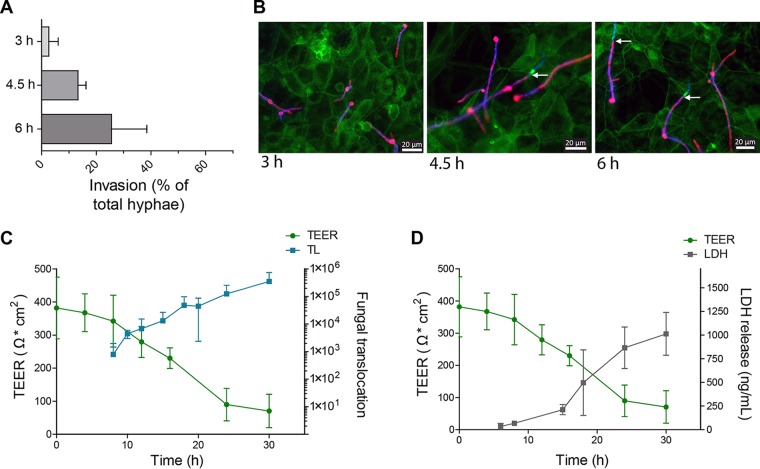
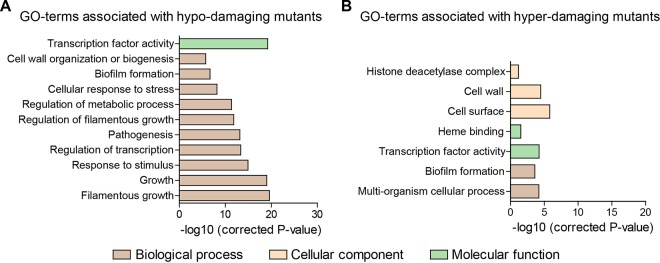
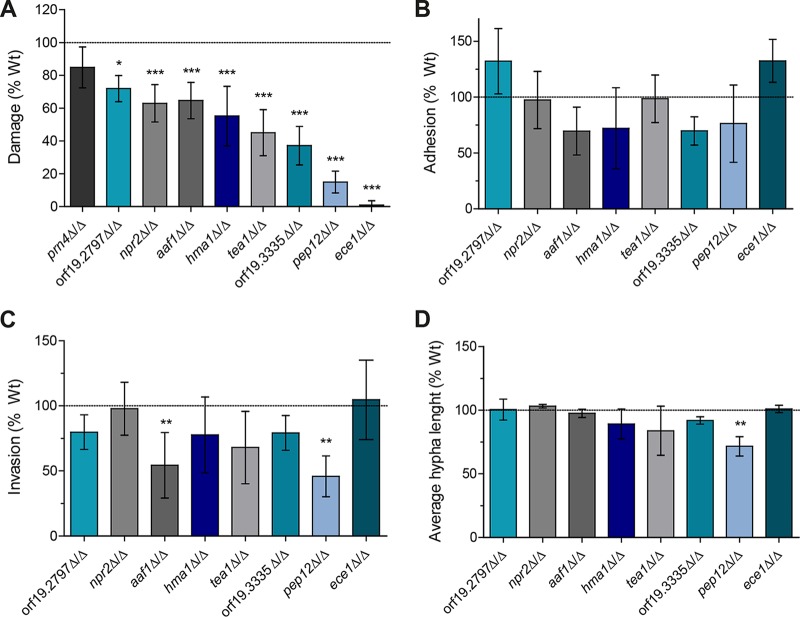
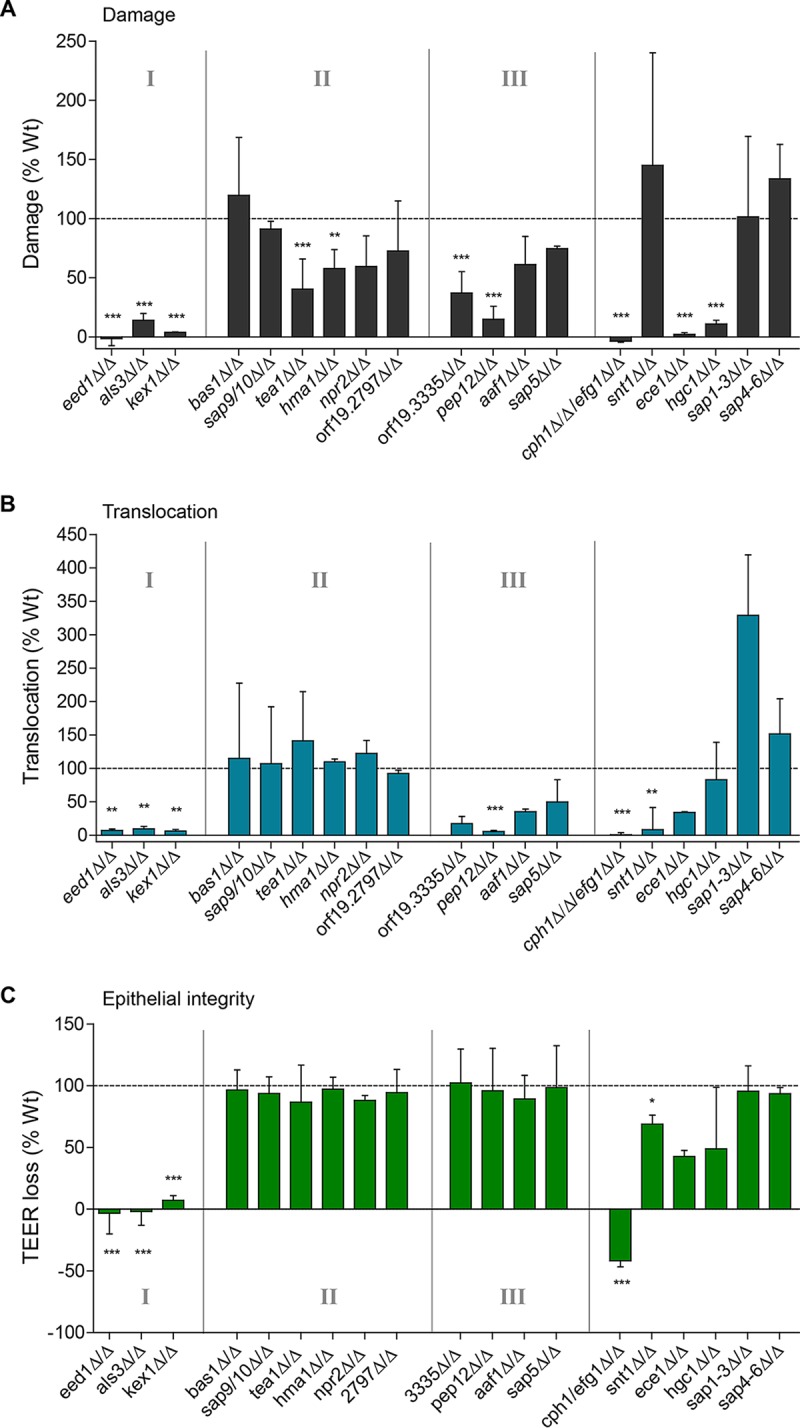
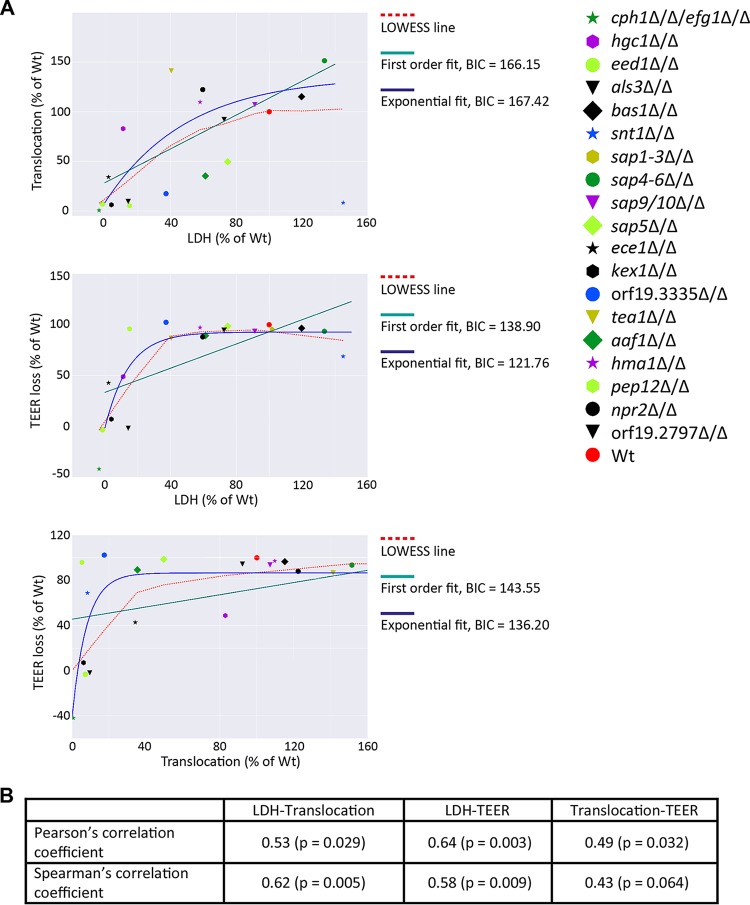
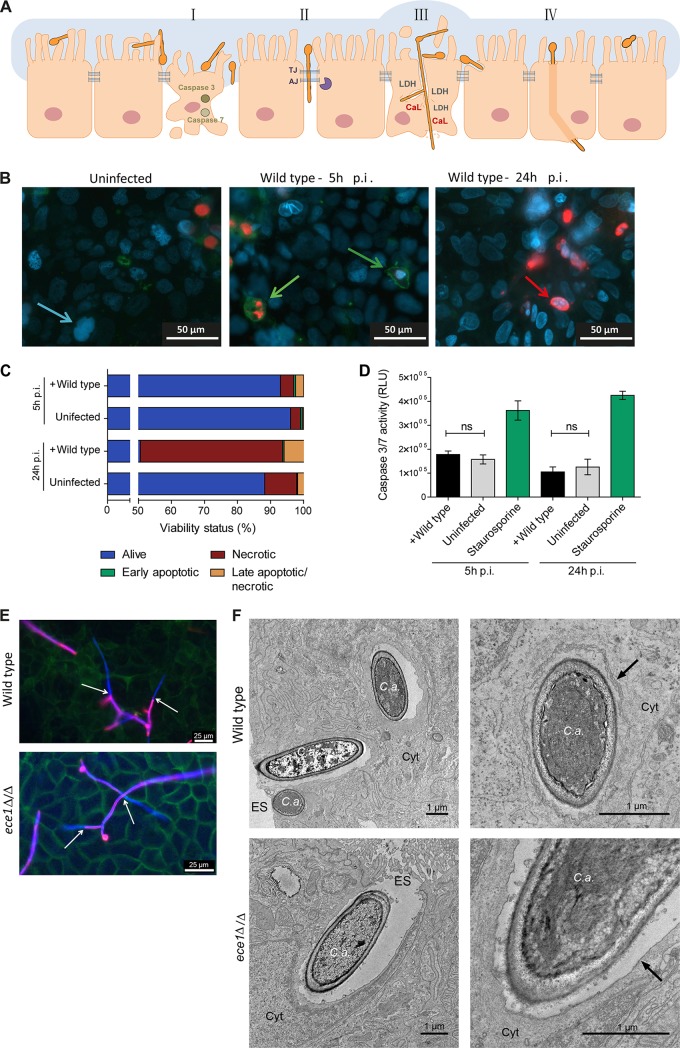
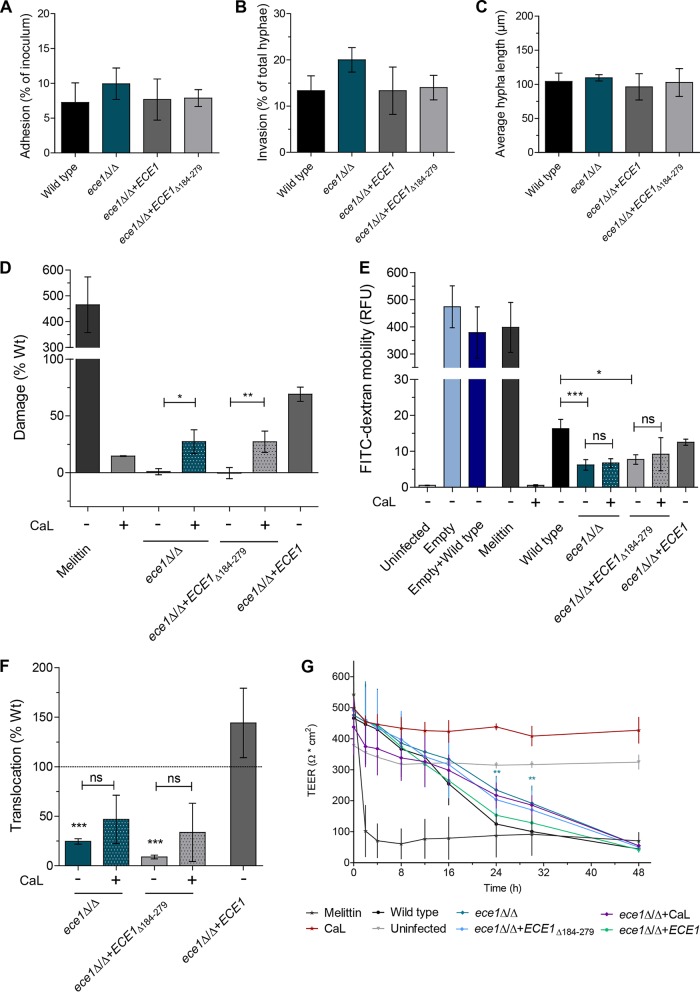
Life-threatening systemic infections often occur due to the translocation of pathogens across the gut barrier and into the bloodstream. While the microbial and host mechanisms permitting bacterial gut translocation are well characterized, these mechanisms are still unclear for fungal pathogens such as Candida albicans , a leading cause of nosocomial fungal bloodstream infections. In this study, we dissected the cellular mechanisms of translocation of C. albicans across intestinal epithelia in vitro and identified fungal genes associated with this process. We show that fungal translocation is a dynamic process initiated by invasion and followed by cellular damage and loss of epithelial integrity. A screen of >2,000 C. albicans deletion mutants identified genes required for cellular damage of and translocation across enterocytes. Correlation analysis suggests that hypha formation, barrier damage above a minimum threshold level, and a decreased epithelial integrity are required for efficient fungal translocation. Translocation occurs predominantly via a transcellular route, which is associated with fungus-induced necrotic epithelial damage, but not apoptotic cell death. The cytolytic peptide toxin of C. albicans , candidalysin, was found to be essential for damage of enterocytes and was a key factor in subsequent fungal translocation, suggesting that transcellular translocation of C. albicans through intestinal layers is mediated by candidalysin. However, fungal invasion and low-level translocation can also occur via non-transcellular routes in a candidalysin-independent manner. This is the first study showing translocation of a human-pathogenic fungus across the intestinal barrier being mediated by a peptide toxin. IMPORTANCE Candida albicans , usually a harmless fungus colonizing human mucosae, can cause lethal bloodstream infections when it manages to translocate across the intestinal epithelium. This can result from antibiotic treatment, immune dysfunction, or intestinal damage (e.g., during surgery). However, fungal processes may also contribute. In this study, we investigated the translocation process of C. albicans using in vitro cell culture models. Translocation occurs as a stepwise process starting with invasion, followed by epithelial damage and loss of epithelial integrity. The ability to secrete candidalysin, a peptide toxin deriving from the hyphal protein Ece1, is key: C. albicans hyphae, secreting candidalysin, take advantage of a necrotic weakened epithelium to translocate through the intestinal layer.
Overview
The claims and statistics of this paper haven’t been checked yet.
Free: it reads the open-access text and checks the first 5 claims that cite a source we can check. Create a free account to check every claim.
Integrity signals
Registry
Cites
Statistics
Figures
Verification
Claims the paper makes
The claims and statistics of this paper haven’t been checked yet.
Free: it reads the open-access text and checks the first 5 claims that cite a source we can check. Create a free account to check every claim.
Claims other papers make about this one
Each is checked against this paper’s own text: does it say what the citing paper says it does?
In the citing paper
“These organisms can cause lethal bloodstream infections (candidemia) and lead to invasive disease when they manage to cross the intestinal epithelium [193].”
From Mechanisms of fungal dissemination (2021) · cites this paper as [193]
In the citing paper
“While a considerable proportion of C. albicans infections arise from indwelling medical devices [192], studies have identified the intestinal population of C. albicans as the main source of endogenous infection, especially following immunosuppression [193].”
From Mechanisms of fungal dissemination (2021) · cites this paper as [193]
In the citing paper
“The cytolytic peptide toxin candidalysin, was also found to be essential for C. albicans to damage host enterocytes [193].”
From Mechanisms of fungal dissemination (2021) · cites this paper as [193]
Self-check
Percentages, sums and reported differences re-computed from the paper’s own numbers.
The self-check needs the paper’s full text.
Citations
Cites
Scikit-learn: Machine Learning in Python
Pedregosa, F., Varoquaux, G., Gramfort, A., Michel, V., Thirion, B., Grisel, O., Blondel, M., Müller, A., Nothman, J., Louppe, G., et al. (2012) · arXiv · doi:10.48550/arxiv.1201.0490 · Cited by 71,016 · cited 1×
“Clusters were identified in Python using the scikit-learn library (81) applying the densitybased spatial clustering of applications with noise (DBSCAN) algorithm (49).”
MethodThe Elements of Statistical Learning
Hastie, T., Tibshirani, R., & Friedman, J. (2009) · Springer Series in Statistics · doi:10.1007/978-0-387-84858-7 · Cited by 25,970
(1996) · Cited by 20,179
The Elements of Statistical Learning: Data Mining, Inference, and Prediction
John Lu, Z. Q. (2010) · Journal of the Royal Statistical Society Series A: Statistics in Society · doi:10.1111/j.1467-985x.2010.00646_6.x · Cited by 12,390
Robust Locally Weighted Regression and Smoothing Scatterplots
Cleveland, W. S. (1979) · Journal of the American Statistical Association · doi:10.1080/01621459.1979.10481038 · Cited by 11,594 · cited 2×
“We plotted the fitted polynomials and the LOWESS line (51) (i.”
MethodLocally Weighted Regression: An Approach to Regression Analysis by Local Fitting
Cleveland, W. S., & Devlin, S. J. (1988) · Journal of the American Statistical Association · doi:10.1080/01621459.1988.10478639 · Cited by 5,742 · cited 1×
“To visualize overall trends, the locally weighted scatterplot smoothing (LOWESS) line was used (51, 80).”
MethodHidden Killers: Human Fungal Infections
Brown, G. D., Denning, D. W., Gow, N. A. R., Levitz, S. M., Netea, M. G., & White, T. C. (2012) · Science Translational Medicine · doi:10.1126/scitranslmed.3004404 · Cited by 4,284
Epidemiology of Invasive Candidiasis: a Persistent Public Health Problem
Pfaller, M. A., & Diekema, D. J. (2007) · Clinical Microbiology Reviews · doi:10.1128/cmr.00029-06 · Cited by 4,174 · cited 1×
“, due to chemotherapy or immunosuppressive therapy), or damage of epithelial barrier functions by iatrogenic impairment, for instance due to cytostatic treatment, surgery, or trauma (17, 18).”
BackgroundIsogenic strain construction and gene mapping in Candida albicans.
Fonzi, W. A., & Irwin, M. Y. (1993) · Genetics · doi:10.1093/genetics/134.3.717 · Cited by 1,687
Characterization of the oral fungal microbiome (mycobiome) in healthy individuals
Ghannoum, M. A., Jurevic, R. J., Mukherjee, P. K., Cui, F., Sikaroodi, M., Naqvi, A., & Gillevet, P. M. (2010) · PLoS Pathogens · doi:10.1371/journal.ppat.1000713 · Cited by 1,150 · cited 1×
“Candida albicans is one of the predominant fungal species that colonizes the mucosal surfaces of most humans as a harmless member of the normal microbiota (1, 2).”
Background
Cited by
Items 101–200 of 218
Lee, S., Tsavou, A., Żarnowski, R., Pforte, R., Allert, S., Krüger, T., Kniemeyer, O., Brakhage, A. A., Bui, T. T. T., Andes, D. R., et al. (2025) · Infection and Immunity · doi:10.1128/iai.00404-24 · Cited by 17
Self-citationFungi, immunosenescence and cancer
Xu, B., Luo, Z., Niu, X., Li, Z., Lu, Y., & Li, J. (2025) · Seminars in Cancer Biology · doi:10.1016/j.semcancer.2025.01.002 · Cited by 20
Microbiota changes in a pediatric acute lymphocytic leukemia mouse model
Song, Y., & Gyarmati, P. (2019) · MicrobiologyOpen · doi:10.1002/mbo3.982 · Cited by 18
“Possibly this change of fungal diversity is due to an increased intestinal permeability (Allert et al., 2018; Song & Gyarmati, 2019) in ALL.”
BackgroundCandida albicans in celiac disease: A wolf in sheep’s clothing
Lerner, A., & Matthias, T. (2020) · Autoimmunity Reviews · doi:10.1016/j.autrev.2020.102621 · Cited by 17
A new perspective in sepsis treatment: could RGD-dependent integrins be novel targets?
Nader, D., Curley, G. F., & Kerrigan, S. W. (2020) · Drug Discovery Today · doi:10.1016/j.drudis.2020.09.038 · Cited by 18
Liu, Y., Wang, R., Liu, J., Fan, M., Ye, Z., Hao, Y., Xie, F., Wang, T., Jiang, Y., Liu, N., et al. (2024) · Nature Communications · doi:10.1038/s41467-024-48525-5 · Cited by 16
“Overcoming the mechanical force of the host cell membrane is critical for C. albicans penetration of the host cell and immune escape.”
BackgroundCandida Infections in Immunocompetent Hosts: Pathogenesis and Diagnosis
Rudramurthy, S. M., & Singh, S. (2020) · Current Fungal Infection Reports · doi:10.1007/s12281-020-00392-5 · Cited by 21
The microbial and host factors that govern Candida gastrointestinal colonization and dissemination
Mishra, A. A., & Koh, A. Y. (2021) · Current Opinion in Microbiology · doi:10.1016/j.mib.2021.05.012 · Cited by 19
Block, J. (2019) · Medical Hypotheses · doi:10.1016/j.mehy.2019.02.044 · Cited by 16
“Organisms such as Chlamydia, HPV, and various commensals facilitate the invasiveness of Candida by interfering with normal epithelial integrity, by causing direct damage to epithelial cells, or by altering host immunity and host metabolism in ways which facilitate formation of hyphae [43].”
BackgroundA CO 2 sensing module modulates β-1,3-glucan exposure in Candida albicans
Avelar, G. M., Pradhan, A., Ma, Q., Hickey, E., Leaves, I., Liddle, C., Rodriguez Rondon, A. V., Kaune, A.-K., Shaw, S., Maufrais, C., et al. (2024) · mBio · doi:10.1128/mbio.01898-23 · Cited by 15
“For example, C. albicans induces the expression of the pore-forming toxin candidalysin during hyphal development (69, 70), which is thought to anticipate nutrient limitation within the invasion pocket during tissue invasion (8, 13, 71).”
BackgroundWronowska, E., Guevara-Lora, I., Brankiewicz, A., Braś, G., Zawrotniak, M., Satała, D., Karkowska‐Kuleta, J., Budziaszek, J., Kozieł, J., & Rąpała‐Kozik, M. (2025) · Frontiers in Cellular and Infection Microbiology · doi:10.3389/fcimb.2025.1552395 · Cited by 15
ElFeky, D. S., Awad, A. R., ShamsEldeen, A. M., Mowafy, H. L., & Hosny, S. A. (2023) · Frontiers in Microbiology · doi:10.3389/fmicb.2023.1222503 · Cited by 16
Polystyrene Microplastics Exacerbate Candida albicans Infection Ability In Vitro and In Vivo
Maione, A., Norcia, M., Sinoca, M., Galdiero, M., Maselli, V., Feola, A., Carotenuto, R., Cuomo, P., Capparelli, R., Guida, M., et al. (2023) · International Journal of Molecular Sciences · doi:10.3390/ijms25010012 · Cited by 15
“For screening the fungal strains’ infection ability, cells monolayers were infected with the two different Candida strains at a MOI (multiplicity of infection) of 1:1; 1:5, and 5:1 for 3 and 6 h [38] at 37 ◦ C.”
MethodAlvarez-Rueda, N., Rouges, C., Touahri, A., Misme‐Aucouturier, B., Albassier, M., & Pape, P. L. (2020) · Scientific Reports · doi:10.1038/s41598-020-63344-6 · Cited by 17
Variations in candidalysin amino acid sequence influence toxicity and host responses
Wickramasinghe, D. N., Lyon, C. M., Lee, S., Hepworth, O. W., Priest, E. L., Maufrais, C., Ryan, A. P., Permal, E., Sullivan, D. J., McManus, B. A., et al. (2024) · mBio · doi:10.1128/mbio.03351-23 · Cited by 16
“Candidalysin is a secreted cytolysin that damages plasma membranes, mediates nutrient acquisition (31), promotes translocation (24”
BackgroundMethodSelf-citationCandida gut commensalism and inflammatory disease
Gu, Z.-Q., Tseng, K.-Y., & Tsai, Y.-H. (2020) · Medicine in Microecology · doi:10.1016/j.medmic.2020.100008 · Cited by 15
Pan, C.-H., Lo, H., Yan, J.-Y., Hsiao, Y.-J., Hsueh, J.-W., Lin, D.-W., Lin, T.-H., Wu, S.-H., & Chen, Y. (2021) · Frontiers in Microbiology · doi:10.3389/fmicb.2020.619878 · Cited by 15
“C. albicans hyphae can efficiently break mucosal barriers via different mechanisms, including activation of NLRP3-dependent inflammation by candidalysin to cause epithelial damage (Allert et al., 2018).”
BackgroundAugmented Enterocyte Damage During Candida albicans and Proteus mirabilis Coinfection
Niemiec, M. J., Kapitan, M., Himmel, M., Döll, K., Krüger, T., Köllner, T. G., Auge, I., Kage, F., Alteri, C. J., Mobley, H. L. T., et al. (2022) · Frontiers in Cellular and Infection Microbiology · doi:10.3389/fcimb.2022.866416 · Cited by 17
Self-citationReappraisal of intra-abdominal candidiasis: insights from peritoneal fluid analysis
Novy, E., Esposito, M., Birckener, J., Germain, A., Losser, M.-R., Machouart, M., & Guerci, P. (2023) · Intensive Care Medicine Experimental · doi:10.1186/s40635-023-00552-0 · Cited by 14
“ECE1 is essential for the synthesis of candidalysin, a cytolytic peptide toxin that directly damages host epithelial membranes [33].”
BackgroundInnovative engineering approaches to model host-microbiome interactions in vitro
Azamar, K. M. M., Sudi, S. D., Mohammadalizadeh, Z., Coffin, C., Parker, I., & Porras, A. M. (2025) · Advanced Drug Delivery Reviews · doi:10.1016/j.addr.2025.115677 · Cited by 15
Xu, Z., Li, Y., Xu, A., Xue, L., Soteyome, T., Yuan, L., Ma, Q., Seneviratne, G., Hong, W., Mao, Y., et al. (2024) · Microbiology Spectrum · doi:10.1128/spectrum.00353-24 · Cited by 13
“In C. albicans pathogenesis, adhesion to host cells is followed by hyphae formation, which is accompanied by the expression of hypha-associated proteins with known damage and immune activation capabilities (64–66).”
BackgroundAlings, F., Scharmann, K., Eggers, C., Böttcher, B., Sokołowski, M., Shvetsova, E., Sharma, P., Roth, J., Rashiti, L., Glatt, S., et al. (2023) · Nucleic Acids Research · doi:10.1093/nar/gkad564 · Cited by 12
Gut dysbiosis may be associated with hyperemesis gravidarum
Balcı, S., Tohma, Y. A., Esin, S., Önalan, G., Tekindal, M. A., & Zeyneloğlu, H. B. (2020) · The Journal of Maternal-Fetal & Neonatal Medicine · doi:10.1080/14767058.2020.1777268 · Cited by 13
The Role of Glycoside Hydrolases in S. gordonii and C. albicans Interactions
Zhou, Z., Ren, B., Li, J., Zhou, X., Xu, X., & Zhou, Y. (2022) · Applied and Environmental Microbiology · doi:10.1128/aem.00116-22 · Cited by 11
Padmavathi, A. R., Reddy, G. K. K., Murthy, P. S., & Nancharaiah, Y. V. (2024) · Microbial Pathogenesis · doi:10.1016/j.micpath.2024.106800 · Cited by 13
Fungal Als proteins hijack host death effector domains to promote inflammasome signaling
Zhou, T., Solis, N. V., Marshall, M. E., Yao, Q., Pearlman, E. M., Filler, S. G., & Liu, H. (2025) · Nature Communications · doi:10.1038/s41467-025-56657-5 · Cited by 10
Mauk, K. E., Miramón, P., Lorenz, M. C., Lortal, L., Naglik, J. R., Hube, B., Bimler, L. H., Kheradmand, F., & Corry, D. B. (2025) · Microbiology Spectrum · doi:10.1128/spectrum.00567-25 · Cited by 11
“While the virulence-attenuating properties of mucus may not prevent C. albicans from colonizing the mucus layer, they likely play a role in preventing C. albicans from interacting with the underlying epithelial cells via hyphal virulence factors for attach ment and invasion (62, 63, 66).”
Self-citationWilson, A. P., Bogie, B., Chaaban, H., & Burge, K. Y. (2023) · Microorganisms · doi:10.3390/microorganisms11040909 · Cited by 10
“If innate immune defense is insufficient, fungi can become invasive, actively penetrating host tissue with hyphae [83], inducing large secretions of IL-8 [142], and transcellularly crossing the intestinal barrier through necrotic tissue [143].”
BackgroundFungal Influences on Cancer Initiation, Progression, and Response to Treatment
Bilal, H., Khan, M. N., Khan, S., Shafiq, M., Fang, W., Zeng, Y., Guo, Y., Li, X., Zhao, B., Lv, Q., et al. (2024) · Cancer Research · doi:10.1158/0008-5472.can-24-1609 · Cited by 11
Essential role of hepcidin in host resistance to disseminated candidiasis
(2025) · doi:10.1016/j.celrep.2025.115649 · Cited by 9
“Prior work has shown that candidalysin is essential for epithelial damage, 9,84,85 inflammatory response, 86 and renal neutrophil recruitment 69 during C. albicans infections in vitro and in vivo.”
Self-citationA highly conserved tRNA modification contributes to C. albicans filamentation and virulence
Böttcher, B., Kienast, S. D., Leufken, J., Eggers, C., Sharma, P., Leufken, C. M., Morgner, B., Drexler, H. C. A., Schulz, D., Allert, S., et al. (2024) · Microbiology Spectrum · doi:10.1128/spectrum.04255-22 · Cited by 9
“Recently , C. albicans Hma1 appeared as a candidate in a large phenotypic screening for damage factors of intestinal epithelia cells (109).”
BackgroundSelf-citationRamírez‐Amador, V., Patton, L. L., Naglik, J. R., & Nittayananta, W. (2020) · Oral Diseases · doi:10.1111/odi.13391 · Cited by 11
Self-citationZubair, A., Alkahtani, A. M., Shahani, M. Y., & Afghan, N. (2026) · Gut Pathogens · doi:10.1186/s13099-026-00800-0 · Cited by 9
“As an example, Bifi-dobacteria, which are normal inhabitants of the intes-tines, have been demonstrated to shield the mucosal integrity: they are capable of inhibiting the development of epithelial defects and translocation of microbes [38].”
Rebai, Y., Wagner, L., Gnaien, M., Hammer, M. L., Kapitan, M., Niemiec, M. J., Mami, W., Mosbah, A., Messadi, E., Mardassi, H., et al. (2023) · Microorganisms · doi:10.3390/microorganisms11081929 · Cited by 8
“This process is dynamic, initiated by invasion and followed by cellular damage and loss of epithelial integrity [9].”
BackgroundSelf-citation[Research progress of Candida albicans on malignant transformation of oral mucosal diseases].
Liao, M., Cheng, L., Zhou, X., & Ren, B. (2020) · PubMed Central · doi:10.7518/hxkq.2020.04.014 · Cited by 10
Parker, A., James, S. A., Purse, C., Brion, A., Goldson, A. J., Telatin, A., Baker, D., & Carding, S. R. (2022) · Frontiers in Aging Neuroscience · doi:10.3389/fnagi.2022.828429 · Cited by 9
Abramov, V. M., Kosarev, I. V., Валериевич, М. А., Priputnevich, T. V., Deryusheva, E. I., Панин, А. Н., Chikileva, I. O., Abashina, T. N., Melnikov, V. G., Сузина, Н. Е., et al. (2023) · Biomolecules · doi:10.3390/biom13121740 · Cited by 9
“…microbiota leads to the development of low-level inflammation, which contributes to increased fungal adhesion and colonization, with the latter leading to the subsequent development of inflammation and stimulation of the production of proinflammatory cytokines IL-23 and IL-17 in the GIT [16,24].”
BackgroundZambom, C. R., da Fonseca, F. H., & Garrido, S. S. (2020) · Microorganisms · doi:10.3390/microorganisms8071024 · Cited by 9
“It is a combination of the mechanical tension caused by the elongation of hyphal tips and the action of secreted hydrolytic enzymes and cytolytic peptides, which facilitate extension of the hyphae through or between epithelial cells [29,30].”
BackgroundCandida albicans: Virulence factors, pathogenesis, and ways to diagnose and control its infection
Silva, K. G. D. S., do Nascimento, G. O., da Silva, E. E. M., Cabral, L. H. V., Faria, T. M. R., & de Oliveira, J. R. (2024) · Research Society and Development · doi:10.33448/rsd-v13i1.44781 · Cited by 8
Lange, T., Sprague, J. L., Vij, R., Alonso‐Román, R., Jablonowski, N., Radosa, S., Krüger, T., Kniemeyer, O., Hillmann, F., Brakhage, A. A., et al. (2025) · PLoS Pathogens · doi:10.1371/journal.ppat.1013542 · Cited by 8
“Higher damage capacity and increased filamentous growth are often associated with an increased ability for translocation through the intestinal epithelium [53,54].”
Self-citationCombined effects of host genetics and diet on porcine intestinal fungi and their pathogenic genes
Wang, T., Liu, J., Luo, Y., Yu, B., Kong, X., Zheng, P., Huang, Z., Mao, X., Yu, J., Luo, J., et al. (2023) · Frontiers in Microbiology · doi:10.3389/fmicb.2023.1192288 · Cited by 8
“For example, Candida albicans invades host tissues through its secreted peptide toxin, which crosses the epithelial barrier, causing cellular damage through Candida lysins (Moyes et al., 2016; Allert et al., 2018; Naglik et al., 2019).”
BackgroundPropeptide genesis by Kex2-dependent cleavage of yeast wall protein 1 (Ywp1) of Candida albicans
Granger, B. L. (2018) · PLoS ONE · doi:10.1371/journal.pone.0207955 · Cited by 6
Virulence and pathogenicity of secondary fungal infections
Murugavel, A., & Ramakrishnan, J. (2025) · Critical Reviews in Microbiology · doi:10.1080/1040841x.2025.2537423 · Cited by 6
Day, A. W., Hayes, E., Perez-Lozada, J., DiLeo, A., Blandino, K. L., Maguire, J. L., & Kumamoto, C. A. (2025) · mBio · doi:10.1128/mbio.02239-25 · Cited by 5
Systems biology of host-Candida interactions: understanding how we shape each other
Hodgins-Davis, A., & O’Meara, T. R. (2020) · Current Opinion in Microbiology · doi:10.1016/j.mib.2020.04.001 · Cited by 5
Nishikawa, Y., Tomotake, Y., Kawano, H., Naruishi, K., Kido, J., Hiroshima, Y., Murakami, A., Ichikawa, T., & Yumoto, H. (2023) · International Journal of Molecular Sciences · doi:10.3390/ijms24043256 · Cited by 5
“It has also been reported that Clys is essential for the translocation of Ca via the intestine and causes systemic infections [14].”
BackgroundJawale, C. V., Li, D., Ramani, K., Lin, L., Li, K., Methé, B. A., & Biswas, P. S. (2021) · ImmunoHorizons · doi:10.4049/immunohorizons.2000114 · Cited by 7
“albicans can translocate by causing damage to GI epithelial cells, as proposed by others (35).”
BackgroundSprague, J. L., Schille, T. B., Lange, T., Sonnberger, J., Allert, S., Schönert, J., Kasper, L., & Hube, B. (2025) · microLife · doi:10.1093/femsml/uqaf026 · Cited by 5
“…efficient intestinal translocation in vitro , many patients susceptible to systemic candidiasis already have predisposing factors that result in damage to the intestinal epithelium (Eggimann and Pittet 2014 , Eggimann et al. 2015 , Allert et al. 2018 , Davidson et al. 2018 , Sprague et al. 2024 ).”
InfluentialSelf-citationThe role and possible mechanism of intestinal fungi in the progression of chronic liver diseases
Hu, Y. H., Yang, Y., Wang, S., & Chu, H. (2026) · npj Biofilms and Microbiomes · doi:10.1038/s41522-026-00961-5 · Cited by 4
“Conversely, knocking out the gene ECE1 that only encodes candidalysin results in a sharp decline in IECs damage, barrier disruption and penetration ability 112 .”
Schmidt, S., Schwerk, C., Schroten, H., Ishikawa, H., Schubert, R., Lehrnbecher, T., & Rudolph, H. (2025) · Fluids and Barriers of the CNS · doi:10.1186/s12987-025-00644-x · Cited by 4
“In vitro models of the gut epithelial barrier demonstrated that tight and adherens junction proteins also play a role in fungal translocation [28].”
Models for Studying Fungal Pathogenesis
Curtis, A., Oladimeji, F., & Kavanagh, K. A. (2025) · Current Clinical Microbiology Reports · doi:10.1007/s40588-025-00249-w · Cited by 6
“…plate systems have been utilized to study dendritic cell maturation [64 ] and the effects of mycotoxins including candidalysin produced by C. albicans on epithelial barrier translocation [65] and the role of gliotoxin produced by A. fumigatus in disruption of the blood brain barrier integrity [66].”
Ergin, M., Budin, M., Canbaz, S. B., Çiloğlu, O., Salber, J., Gehrke, T. A., & Çıtak, M. (2024) · The Journal of Arthroplasty · doi:10.1016/j.arth.2024.08.030 · Cited by 4
Naik, S., & Mohammed, A. (2023) · International Journal of Molecular Sciences · doi:10.3390/ijms241411748 · Cited by 4
“albicans invasion [16] and secrete antimicrobial peptides [17], such as defensins and cathelicidins, which can directly kill C.”
BackgroundCritical parameters of fungal pathogenicity at the epithelial interphase
Möslinger, A., Allert, S., Vylkova, S., & Hube, B. (2026) · microLife · doi:10.1093/femsml/uqag001 · Cited by 3
“…antimicrobial agents—including antimicrobial peptides such as LL37, β - defensins, and cathelicidins—and releasing cytokines (Wasylnka et al. 2005 , Naglik and Moyes 2011 , Wächtler et al. 2012 , Gao et al. 2015 , Allert et al. 2018 , Cortez and Schultz-Cherry 2021 , Row-ley et al. 2021 ).”
Self-citationShining a light on Candida -induced epithelial damage with a luciferase reporter
Tesfamariam, M., Vij, R., Trümper, V., Hube, B., & Brunke, S. (2024) · mSphere · doi:10.1128/msphere.00509-24 · Cited by 4
“Methods like detection of LDH release (6, 7), release of radiolabeled chromium ( 51 Cr) (8, 9), and fluorescence microscopy of propidium iodide (PI)-stained nuclei of dying cells (10), have all been used in the past with great success, for example, in the discovery of the fungal peptide toxin…”
Self-citationOlivier, C. E. (2022) · European Journal of Clinical Medicine · doi:10.24018/clinicmed.2022.3.3.207 · Cited by 8
In Vitro Biophysical Characterization of Candidalysin: A Fungal Peptide Toxin
Lee, S., Kichik, N., Hepworth, O. W., Richardson, J. P., & Naglik, J. R. (2022) · Methods in molecular biology · doi:10.1007/978-1-0716-2549-1_12 · Cited by 3
Self-citationde Kroon, R. R., Kreulen, I. A. M., Davids, M., van Thiel, I. A. M., Admiraal, I., Verdoes, X., van Weissenbruch, M. M., Niemarkt, H. J., de Jonge, W. J., de Meij, T. G. J., et al. (2025) · The Journal of Infectious Diseases · doi:10.1093/infdis/jiaf524 · Cited by 3
Bègue, H., Ducreux, A., Paradis, T., Loiselet, A., Mourer, T., Lucchi, G., Kieffer‐Jaquinod, S., Couté, Y., Hube, B., Theodorou, I., et al. (2025) · Gut Microbes · doi:10.1080/19490976.2025.2573038 · Cited by 2
“12,13 Whereas both trans-and para-cellular translocation routes have been reported, 12,14 transcellular crossing remains the main mechanism associated with epithelial cell damage.”
Self-citationSze, J. L. J., Chen, X., Orihara, K., & Kajiwara, S. (2026) · Journal of Fungi · doi:10.3390/jof12010038 · Cited by 2
“However, transepithelial electrical resistance (TEER) measurements have shown that the deletion of one or a few hyphae-associated factors, such as secreted aspartyl protease (SAP) and candidalysin [33,34], cannot completely prevent barrier damage, but inhibiting hyphae formation can [33–35].”
Gut–liver axis molecular mechanisms in alcohol-associated liver disease
Jiang, Y., & Llorente, C. (2026) · Alcohol · doi:10.1016/j.alcohol.2026.04.001 · Cited by 2
Hu, Y., Yu, X.-L., Zhang, X., & Ma, L. (2026) · Frontiers in Microbiology · doi:10.3389/fmicb.2026.1798439 · Cited by 3
Ahmad, S., Usman, M., Bibi, M., Aftab, M. N., & Aslam, M. S. (2026) · International Immunopharmacology · doi:10.1016/j.intimp.2026.116968 · Cited by 2
Doan, H. T., Chiu, Y.-L., Cheng, L.-C., Coad, R. A., & Chiang, H.-S. (2025) · Journal of physiological investigation. · doi:10.4103/ejpi.ejpi-d-24-00090 · Cited by 3
Variations in oral health outcomes and mycobiome composition among COVID-19 convalescents
Talaga-Ćwiertnia, K., Sroka-Oleksiak, A., Brzychczy-Sroka, B., Gurgul, A., Zarzecka-Francica, E., Krawczyk, A., Gosiewski, T., Ostrowski, W., Kąkol, J., Zarzecka, J., et al. (2025) · Scientific Reports · doi:10.1038/s41598-025-05078-x · Cited by 2
“Genus Candida may destroying immune cells and promote inflammation itself having virulence factors such as production of phospholipases, proteases, hemolysin, candidalysin, and biofilm formation responsible for adherence and invasion 37 .”
Candidalysin: From Mechanism of Action to Biomarker Development and Therapeutic Response
Chen, Y., Li, Q., Zhang, T., & Liu, N. (2020) · Innovations in Digital Health Diagnostics and Biomarkers · doi:10.36401/iddb-20-02 · Cited by 2
Liu, X., Xu, F., Zhang, Y., Zhong, L., & Yang, L. (2026) · Frontiers in Cellular and Infection Microbiology · doi:10.3389/fcimb.2025.1730185 · Cited by 1
Influence of fungi on epithelial homeostasis and role in inflammatory diseases
Peterson, L. F., Wang, J., Gow, N. A. R., LeibundGut‐Landmann, S., & Brewer, M. G. (2026) · Clinical Microbiology Reviews · doi:10.1128/cmr.00319-25 · Cited by 1
Yeasts in the gastrointestinal tract
Mueller, K. D., & Lee, S. C. (2026) · FEMS Yeast Research · doi:10.1093/femsyr/foag029 · Cited by 1
“Candidalysin production by the hyphal form of this fungus induces necrotic epithelial damage in vitro , allowing for transcellular growth across the epithelial barrier (Allert et al. 2018 ).”
Tissue-type plasminogen activator protects against kidney damage in invasive fungal infection
Choi, W., Peroumal, D., McLaughlin, C. T., Shiomitsu, K. P., Moschetta, G. A., Biswas, K., Kumariduraivan, D., Dicesare, E., & Biswas, P. S. (2026) · The Journal of Experimental Medicine · doi:10.1084/jem.20260530 · Cited by 1
Möslinger, A., Weiner, A., Schäuble, S., Ramírez-Zavala, B., Jablonowski, N., Cseresnyés, Z., Schille, T. B., Figge, M. T., Panagiotou, G., Morschhäuser, J., et al. (2026) · mBio · doi:10.1128/mbio.01764-26 · Cited by 1
“These results confirm the previously proposed importance of C. albicans hyphae formation in damaging the epithelial layer (14, 15).”
InfluentialSelf-citationCan Candida Albicans Induce Oral Cancer Development and Progression?
Gupta, K., Mohanty, L., & Babu, C. N. (2023) · Scholars Journal of Dental Sciences · doi:10.36347/sjds.2023.v10i09.003 · Cited by 1
Vaginal microflora: a determinant of women’s health and disease
Pawar, K. (2018) · MOJ Women s Health · doi:10.15406/mojwh.2018.07.00197
Prevalence of Candida in Blood Cultures from in patients at a Teaching Hospital in Brazil
de Macedo, V. S. O., Oliveira, S. C. D. S., Rodrigues, M. R. P., Coelho, C. G. V., & Barbosa, F. C. B. (2019) · International Journal of Current Microbiology and Applied Sciences · doi:10.20546/ijcmas.2019.812.244
Intermittent micafungin for prophylaxis in a rat model of chronic Candida albicans gut colonization
Warn, P. A., Thommes, P. A., Sharp, J., Sattar, A., Undre, N. A., Palacios, J., & Karas, A. (2020) · Journal of Antimicrobial Chemotherapy · doi:10.1093/jac/dkaa243
The Candida albicans factor MNN9 modulates cytokine production in distinct epithelial cell types
Pawlik, T. (2020) · Common Library Network (Der Gemeinsame Bibliotheksverbund) · doi:10.22032/dbt.47478
Self-citationCandida-Associated Gastric Ulcer Revisited
Sasaki, K. (2021) · Journal of Bacteriology and Mycology · doi:10.26420/jbacteriolmycol.2021.1165
“It is candidalysin that induces necrotic cellular damage but not apototic death of the IEC, as it causes damage to the oral [29] and vaginal [24] mucosa, and subsequent translocation of the fungus [49].”
BackgroundInfluentialHe, Y., Duan, Z., Chen, X., & Li, M. (2022) · International Journal of Dermatology and Venereology · doi:10.1097/jd9.0000000000000230
“albicans has emerged as a crucial public health problem in parallel with the increased population of individuals with immune suppression.(1)C.”
BackgroundBassilana, M. (2019) · Faculty Opinions – Post-Publication Peer Review of the Biomedical Literature · doi:10.3410/f.733394828.793559882
Toit, A. D. (2018) · Nature Reviews Microbiology · doi:10.1038/s41579-018-0043-y
Macrophage depletion enhances gut dysbiosis and severity in sepsis mouse model
Hiengrach, P. (2022) · Chula Digiverse · doi:10.58837/chula.the.2022.234
Lipid transporters in the morphogenesis of the opportunistic human fungal pathogen Candida albicans
Basante-Bedoya, M. A. (2021) · theses.fr (ABES) · doi:10.70675/13975c9cz5147z4363z8a66z2f914c962072
Emerging Saccharomycotina yeast pathogens: Detection and susceptibility profiles
Stavrou, A. A. (2021) · UvA-DARE (University of Amsterdam) · doi:10.5281/zenodo.5558633
Skripka, M. V., Kolych, N. B., & Дмитренко, Н. І. (2024) · Ukrainian journal of veterinary sciences · doi:10.31548/veterinary3.2024.136
Pathogenicity Strategies of Candida Species During Interactions with Epithelial Cells
Pekmezovic, M. G., Hube, B., & Gresnigt, M. S. (2024) · The mycota · doi:10.1007/978-3-031-64853-3_2
Self-citationMarthe, L., Conan, N., Shekoory, A., Latour‐Lambert, P., Franetich, J., Pioche‐Durieu, C., Borgne, R. L., Verbavatz, J., Larsen, M., & Weiner, A. (2025) · bioRxiv (Cold Spring Harbor Laboratory) · doi:10.1101/2025.05.13.653632
“…results in significantly less damage compared to that observed during C. albicans hyphal invasion (unless extremely high peptide concentrations are used), it is thought that both candidalysin secretion and hyphal invasion are required for C. albicans to induce its full damage potential[6,7,11].”
InfluentialChronic Cholecystitis with Synchronized Candida Infection – A Rare Case from Rural India
Dayal, S. (2025) · Acta Medica Bulgarica · doi:10.2478/amb-2025-0024
“Thereafter, endothelial penetration initiates colonization and disseminated disease [8, 9].”
Lim, S. J., Noor, N. D. M., Sabri, S., Ali, M. S. M., Kumari, P., Kumari, S., Gaur, N. A., Salleh, A. B., & Oslan, S. N. (2025) · Microbial Pathogenesis · doi:10.1016/j.micpath.2025.107937
Hamamah, S., Teskey, G., Chow, W., Wilder, E., Reddy, L., & Hai, F. (2025) · Cureus · doi:10.7759/cureus.88115
“Following invasion and transcellular translocation, fungal-mediated necrotic epithelial damage may be mediated by peptide toxins derived from hyphal protein Ece1 called candidalysin [29].”
The Cytotoxic Effect of Candidalysin on Primary Human Gingival Fibroblasts: An In Vitro Study
Alsahafi, E., & Youssef, A. (2025) · Galician Medical Journal · doi:10.21802/e-gmj2025-a17
Dubois, V., Marcet‐Houben, M., Fuentes, D., Księżopolska, E., Gliosca, L., & Gabaldón, T. (2025) · bioRxiv (Cold Spring Harbor Laboratory) · doi:10.1101/2025.10.23.684142
Candida albicans promotes self-adhesion and tumor cell progression of colorectal cancer cellsPreprint
Staab, J. F., Paulin, O. K. A., Naglik, J. R., & Zachos, N. C. (2026) · bioRxiv (Cold Spring Harbor Laboratory) · doi:10.64898/2026.09.09.750446
Self-citationNovy, E., Esposito, M., Birckener, J., Germain, A., Losser, M.-R., Machouart, M., & Guerci, P. (2024) · Figshare · doi:10.6084/m9.figshare.26621389
Towards improved quantitative live-cell imaging
Dasgupta, A. (2024) · Common Library Network (Der Gemeinsame Bibliotheksverbund) · doi:10.22032/dbt.64118
(2022) · ThinkTech (Texas Tech University)
Peptide YY reduces cytotoxicity of Candida albicans in alcohol-associated liver disease
Kreimeyer, H., Fondevila, M. F., Harberts, A., Tonetti, F. R., Schöler, D., Münte, E., Hartmann, P., Llorente, C., Hube, B., LeibundGut‐Landmann, S., et al. (2025) · JHEP Reports · doi:10.1016/j.jhepr.2025.101718 · Cited by 1
“8,9,13,14 The hyphal form of the fungus invades human epithelial cells through two distinct mechanisms: induced endocytosis and active penetration.”
Self-citationDetection of Fungal Translocation in Patients With Alcohol Use Disorder Using a Real‐Time PCR Assay
Pansu, N., Drakulovski, P., Krasteva, D., Bellet, V., Lavigne, J., Dunyach‐Remy, C., Salipante, F., Yahiaoui-Martinez, A., Donnadieu‐Rigole, H., & Bertout, S. (2026) · Apmis · doi:10.1111/apm.70181
“Candida yeasts also exhibit a rich enzymatic arsenal that may promote leakage across an otherwise intact gastrointestinal barrier [61–63].”
腸内細菌叢構成細菌および免疫機能の変化とCandida albicansの腸管内への定着との関係性
森下, 貴., 玉井, 利., & 清浦, 有. (2020) · 奥羽大学歯学誌
Role of macrophages in colon homeostasis
Chikina, A. S. (2020) · theses.fr (ABES) · doi:10.70675/914bf102zc92ez4351zb4dbz1945d4116eea
Loiselet, A. (2019) · theses.fr (ABES) · doi:10.70675/8960b3ecz4598z4c60za01cz9399c6404ab8
Metadata
- Authors
- Allert, S., Förster, T. M., Svensson, C.-M., Richardson, J. P., Pawlik, T., Hebecker, B., Rudolphi, S., Juraschitz, M., Schaller, M., Blagojevic, M., Morschhäuser, J., Figge, M. T., Jacobsen, I. D., Naglik, J. R., Kasper, L., Mogavero, S., & Hube, B.
- Affiliations
- Leibniz-Institut für Naturstoff-Forschung und Infektionsbiologie e. V. - Hans-Knöll-Institut (HKI) (DE)
- King's College London (GB)
- University of Aberdeen (GB)
- Universitätsklinikum Tübingen (DE)
- University of Würzburg (DE)
- Corresponding author
- Hube, Bernhard
- ORCID
- Venue
- mBio
- Publisher
- American Society for Microbiology
- Published
- 2018-07-05
- Volume
- 9
- Issue
- 3
- ISSN
- 2150-7511 (ISSN-L)
- 2161-2129
- PMC
- PMC5989070
- OpenAlex
- W2806470471
- Cited by
- 208
- References
- 85
- Citations by year
- 2026: 23 · 2025: 29 · 2024: 23 · 2023: 25 · 2022: 29 · 2021: 23 · 2020: 31 · 2019: 20 · 2018: 5
- FWCI
- 14.94
- Type
- journal article
- Language
- en
- Open access
- gold
- doi.org
- Licence
- cc-by
- creativecommons.org/licenses/by/4.0/ (vor)
- journals.asm.org/non-commercial-tdm-license (tdm)
- Locations
- mBio (publishedVersion, cc-by)
- Europe PMC (PubMed Central) (publishedVersion, cc-by)
- PubMed Central (publishedVersion, cc-by)
- PubMed (publishedVersion)
- DOAJ (DOAJ: Directory of Open Access Journals) (submittedVersion)
- DOAJ (DOAJ: Directory of Open Access Journals) (submittedVersion, cc-by-sa)
- Research Portal (King's College London) (submittedVersion, cc-by)
- Online Publication Service of Würzburg University (Würzburg University) (submittedVersion, cc-by)
- Funders
- EU FP7-PEOPLE-2013 Initial Training Network (606786)
- NIH Research at Guys
- King's College London Biomedical Research Centre (IS-BRC-1215-20006)
- Deutsche Forschungsgemeinschaft Research Fellowship (GZ:HE7565/1-1)
- Biotechnology & Biological Sciences Research Council (BB/N014677/1)
- Deutsche Forschungsgemeinschaft Collaborative Research Center/Transregio 124 FungiNet (DFG CRC/TR 124)
- St. Thomas's NHS Foundation Trust
- HHS | National Institutes of Health (R37-DE022550)
- Rosetrees Trust (M680)
- RCUK | Medical Research Council (MR/M011372/1)
- King's Health Partners (R170501)
- Topics
- Health Sciences › Medicine › Infectious Diseases › Antifungal resistance and susceptibility
- Life Sciences › Biochemistry, Genetics and Molecular Biology › Molecular Biology › Fungal and yeast genetics research
- Health Sciences › Medicine › Infectious Diseases › Fungal Infections and Studies
- Keywords
- Candida albicans, fungal translocation, intestinal epithelial barrier, candidalysin, endothelin-converting enzyme-1, hyphal invasion, necrosis, epithelial damage, candidiasis, bloodstream infection, peptide toxins, enterocytes, fungal virulence genes
- MeSH terms
- Candida albicans, Candidiasis, Epithelial Cells, Humans, Intestinal Mucosa, Intestines, Apoptosis, Enterocytes, Host-Pathogen Interactions
About these checks
Registry, retraction, Cites and statistics results are computed, not judged, with one exception: a printed reference that no index lists is read once by a model before it counts as a citation error. Claims are extracted by a model and kept only when their quote appears verbatim in the text; each cited source is then checked, with a model’s help, for whether it says what the claim relies on. Those verdicts can be wrong — read the claim’s quote and the cited source before relying on one.
Statistics and arithmetic are recomputed, not judged.
Confidence bands are shown only for fields calibrated on our annotated test set. None is calibrated yet, so no band is shown.
What counts as a claim ›How we measure confidence ›How we check this ›
Are you an author, or do you see a problem with this page? Request a review
Data sources
Bibliographic data: Semantic Scholar, OpenAlex, Crossref.
Contains information from the Semantic Scholar Academic Graph Datasets, made available under the ODC Attribution License (ODC-BY 1.0).
Semantic Scholar’s data is described in: Kinney, R., et al. (2023). The Semantic Scholar Open Data Platform. arXiv:2301.10140.
