

NADPH Oxidase and Guanylate Binding Protein 5 Restrict Survival of Avirulent Type III Strains of Toxoplasma gondii in Naive Macrophages
Open accessThe DOI matches its Crossref record; 77 of the 77 references it cites were found in a registry or an index.
Abstract
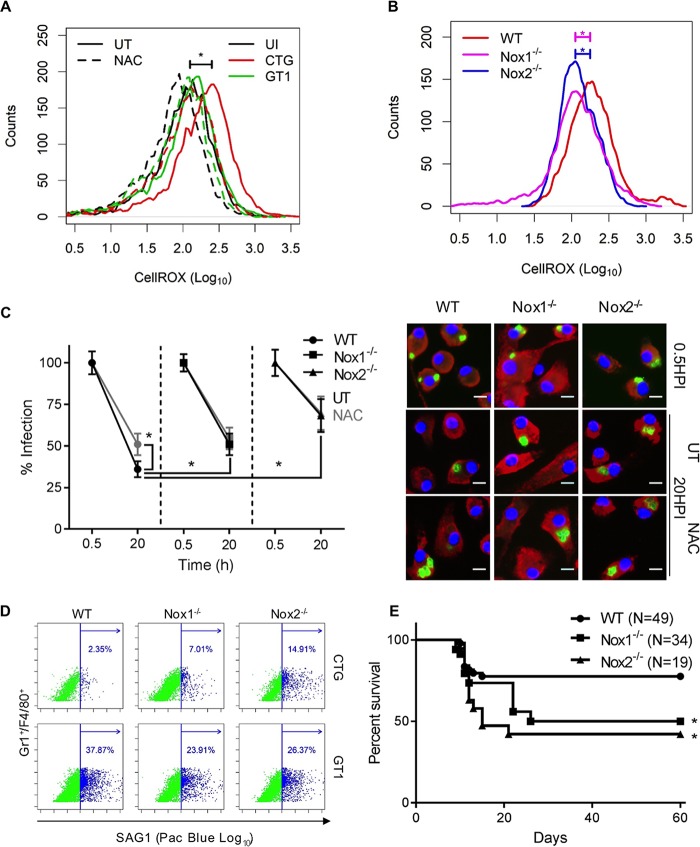
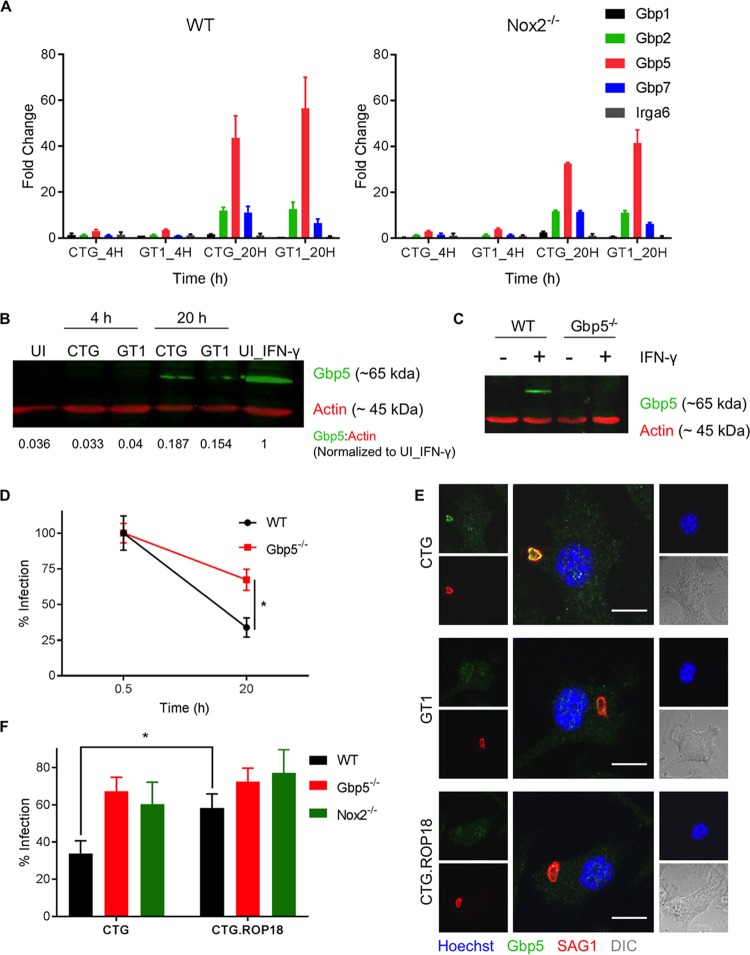
Toxoplasma infections in humans and other mammals are largely controlled by IFN-γ produced by the activated adaptive immune system. However, we still do not completely understand the role of cell-intrinsic functions in controlling Toxoplasma or other apicomplexan infections. The present work identifies intrinsic activities in naive macrophages in counteracting T. gondii infection. Using an avirulent strain of T. gondii, we highlight the importance of Nox complexes in conferring protection against parasite infection both in vitro and in vivo. We also identify Gbp5 as a novel macrophage factor involved in limiting intracellular infection by avirulent strains of T. gondii. The rarity of human infections caused by type III strains suggests that these mechanisms may also be important in controlling human toxoplasmosis. These findings further extend our understanding of host responses and defense mechanisms that act to control parasitic infections at the cellular level.
Overview
The claims and statistics of this paper haven’t been checked yet.
Free: it reads the open-access text and checks the first 5 claims that cite a source we can check. Create a free account to check every claim.
Integrity signals
Registry
Cites
Statistics
Figures
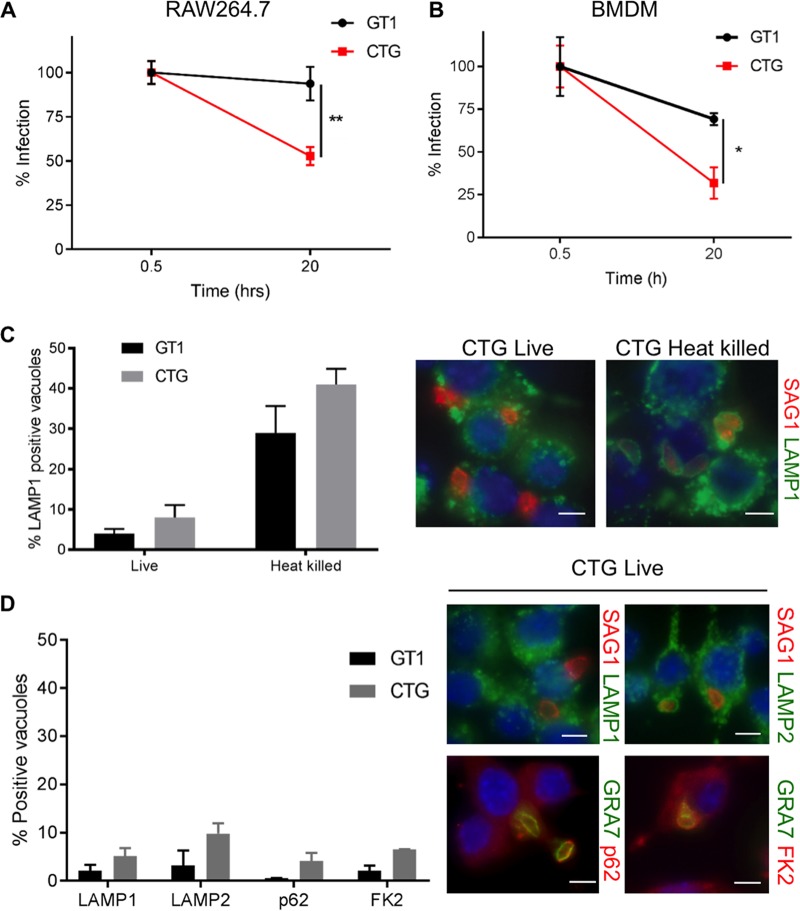
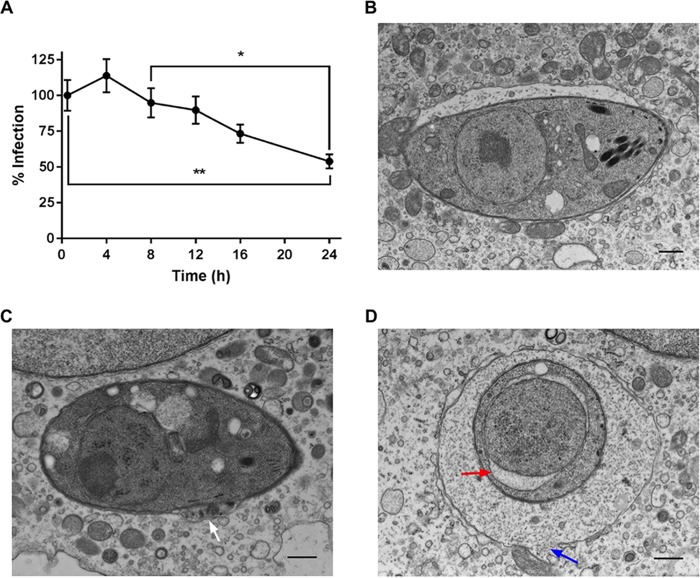
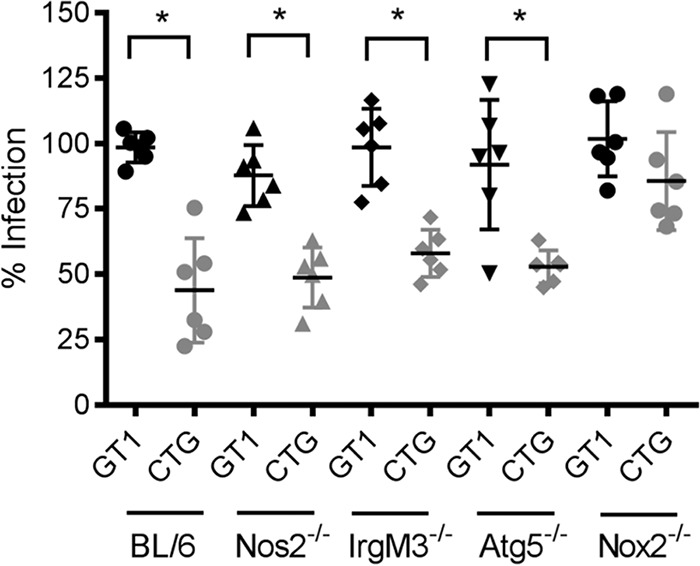
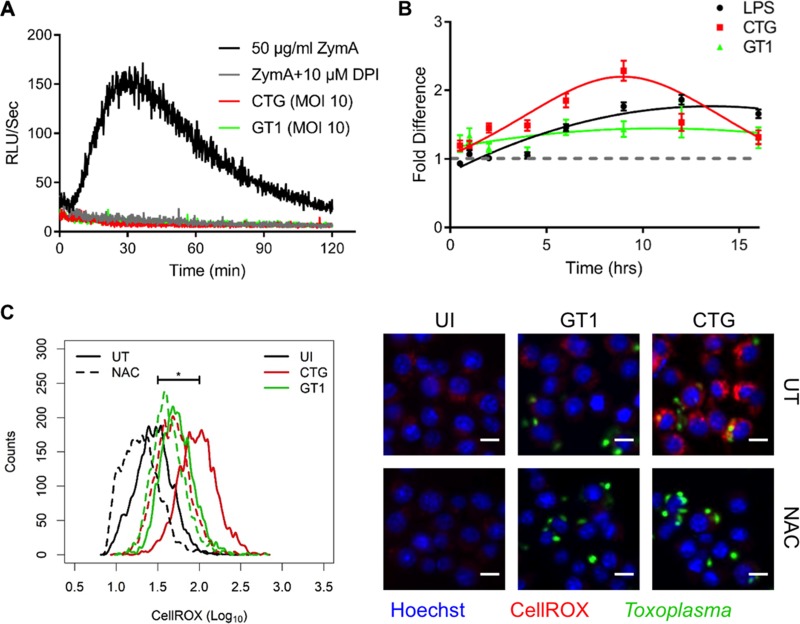
Verification
Claims the paper makes
The claims and statistics of this paper haven’t been checked yet.
Free: it reads the open-access text and checks the first 5 claims that cite a source we can check. Create a free account to check every claim.
Claims other papers make about this one
Each is checked against this paper’s own text: does it say what the citing paper says it does?
In the citing paper
“An in vivo role for ROS production by Nox1 and Nox2 was suggested because Nox1- or Nox2-deficient mice infected with T.g. showed an increased parasitic burden [279].”
From Functions of ROS in Macrophages and Antimicrobial Immunity (2021) · cites this paper as [279]
Self-check
Percentages, sums and reported differences re-computed from the paper’s own numbers.
The self-check needs the paper’s full text.
Citations
Cites
The NOX Family of ROS-Generating NADPH Oxidases: Physiology and Pathophysiology
Bedard, K., & Krause, K.-H. (2007) · Physiological Reviews · doi:10.1152/physrev.00044.2005 · Cited by 6,989 · cited 2×
“Although the Nox complex is expressed in almost every mammalian tissue, its function of producing reactive oxygen species (ROS) in host defense against pathogens is more pronounced in phagocytes, where the Nox2 isoform predominates (41).”
BackgroundCellProfiler: image analysis software for identifying and quantifying cell phenotypes
Carpenter, A. E., Jones, T. R., Lamprecht, M. R., Clarke, C., Kang, I. H., Friman, O., Guertin, D. A., Chang, J. H., Lindquist, R. A., Moffat, J., et al. (2006) · Genome Biology · doi:10.1186/gb-2006-7-10-r100 · Cited by 5,157
Autophagy and Viruses: Adversaries or Allies?
Dong, X., & Levine, B. (2013) · Journal of Innate Immunity · doi:10.1159/000346388 · Cited by 4,430
Suppression of basal autophagy in neural cells causes neurodegenerative disease in mice
Hara, T., Nakamura, K., Matsui, M., Yamamoto, A., Nakahara, Y., Suzuki-Migishima, R., Yokoyama, M., Mishima, K., Saito, I., Okano, H., et al. (2006) · Nature · doi:10.1038/nature04724 · Cited by 3,882 · cited 1×
“Atg5f/f mice were crossed with LysMCre mice and genotyped as described previously (73, 74).”
MethodNOX enzymes and the biology of reactive oxygen
Lambeth, J. D. (2004) · Nature Reviews Immunology · doi:10.1038/nri1312 · Cited by 3,125 · cited 1×
“ROS induction in naive macrophages is associated with production of a respiratory burst, which is a rapid and elevated increase in production of superoxide free radicals and H2O2 upon activation of NADPH oxidases in response to early recognition of pathogens (58).”
BackgroundMechanism and Regulation of NLRP3 Inflammasome Activation
He, Y., Hara, H., & Núñez, G. (2016) · Trends in Biochemical Sciences · doi:10.1016/j.tibs.2016.09.002 · Cited by 2,759 · cited 3×
“However, infection with type I (GT1) or type III (CTG) strain parasites was able to induce IL-1 release from LPS-treated cells, indicating that infection can activate the NLRP3 inflammasome in cells that have previously been primed (52).”
BackgroundResultToxoplasmosis of Animals and Humans
Dubey, J. P. (2016) · CRC Press eBooks · doi:10.1201/9781420092370 · Cited by 2,071
NLRP3 inflammasome activation: the convergence of multiple signalling pathways on ROS production?
Tschopp, J., & Schroder, K. (2010) · Nature Reviews Immunology · doi:10.1038/nri2725 · Cited by 1,850 · cited 3×
“in the NLRP3 inflammasome activation (50), although the NADPH oxidase complex is”
BackgroundResultHowe, D. K., & Sibley, L. D. (1995) · Journal of Infectious Diseases · doi:10.1093/infdis/172.6.1561 · Cited by 1,445 · cited 3×
“Type II strains exhibit intermediate virulence in mice and yet are capable of causing significant disease in humans (13) (14) (15) .”
BackgroundSelf-citationInterferon-γ: the Major Mediator of Resistance Against Toxoplasma gondii
Suzuki, Y., Orellana, M. A., Schreiber, R. D., & Remington, J. S. (1988) · Science · doi:10.1126/science.3128869 · Cited by 1,173
Cited by
Functions of ROS in Macrophages and Antimicrobial Immunity
Herb, M., & Schramm, M. (2021) · Antioxidants · doi:10.3390/antiox10020313 · Cited by 633
“showed an increased parasitic burden [279].”
Interferon-induced guanylate-binding proteins: Guardians of host defense in health and disease
Tretina, K., Park, E.-S., Maminska, A., & MacMicking, J. D. (2019) · Journal of Experimental Medicine · doi:10.1084/jem.20182031 · Cited by 334
“…(zGBP3, zGBP4) encode caspase activation and recruitment domains (CARDs) like those found within the human inflammasome-associated proteins, ASC (apoptosis-associated speck-like protein containing a CARD), NLRP1, and caspase-4 (Shenoy et al., 2012; Kim et al., 2016; Meunier and Broz, 2017; Fig.”
BackgroundSelf-citationToxoplasma gondii infection and its implications within the central nervous system
Matta, S. K., Rinkenberger, N., Dunay, I. R., & Sibley, L. D. (2021) · Nature Reviews Microbiology · doi:10.1038/s41579-021-00518-7 · Cited by 261
Self-citationMechanisms of Human Innate Immune Evasion by Toxoplasma gondii
Lima, T. S., & Lodoen, M. B. (2019) · Frontiers in Cellular and Infection Microbiology · doi:10.3389/fcimb.2019.00103 · Cited by 195
“gondii relies on NADPH activity, increased ROS production, and induction of GBP5, suggesting that virulent strainsmay block ROS production, enabling parasite survival (Matta et al., 2018).”
BackgroundThe pathogenicity and virulence of Toxoplasma gondii
Sanchez, S. G., & Besteiro, S. (2021) · Virulence · doi:10.1080/21505594.2021.2012346 · Cited by 191
“For instance, in IFN-γ-stimulated murine macrophages, nitric oxide (NO) limits the replication of T. gondii [148], while other reactive oxygen species can be used for the clearance of some of the less virulent parasite strains, even by non-stimulated macrophages [149].”
Toxoplasma gondii effector TgIST blocks type I interferon signaling to promote infection
Matta, S. K., Olias, P., Huang, Z., Wang, Q., Park, E., Yokoyama, W. M., & Sibley, L. D. (2019) · Proceedings of the National Academy of Sciences · doi:10.1073/pnas.1904637116 · Cited by 84
“Mice were killed 3 and 6 d postinfection with PRU KO, followed by isolation of the peritoneal cells as described previously (68).”
MethodSelf-citationSzewczyk‐Golec, K., Pawłowska, M., Wesołowski, R., Wróblewski, M., & Mila-Kierzenkowska, C. (2021) · International Journal of Molecular Sciences · doi:10.3390/ijms22115705 · Cited by 81
Strategies Developed by Toxoplasma gondii to Survive in the Host
Zhu, W., Li, J., Pappoe, F., Shen, J.-L., & Yu, L. (2019) · Frontiers in Microbiology · doi:10.3389/fmicb.2019.00899 · Cited by 58
GBP5 Is an Interferon-Induced Inhibitor of Respiratory Syncytial Virus
Li, Z., Qu, X., Liu, X., Huan, C., Wang, H., Zhao, Z., Yang, X., Hua, S., & Zhang, W. (2020) · Journal of Virology · doi:10.1128/jvi.01407-20 · Cited by 56
“Brucella abortus (34), Francisella novicida (35), and Toxoplasma gondii (36).”
BackgroundThe role of macrophages in protective and pathological responses to Toxoplasma gondii
Park, J., & Hunter, C. A. (2020) · Parasite Immunology · doi:10.1111/pim.12712 · Cited by 54
Cell-autonomous immunity by IFN-induced GBPs in animals and plants
Huang, S., Meng, Q., Mamińska, A., & MacMicking, J. D. (2019) · Current Opinion in Immunology · doi:10.1016/j.coi.2019.04.017 · Cited by 52
Self-citationThe vacuolar iron transporter mediates iron detoxification in Toxoplasma gondii
Aghabi, D., Sloan, M. A., Gill, G., Hartmann, E., Antipova, O. A., Dou, Z., Guerra, A. J., Carruthers, V. B., & Harding, C. R. (2023) · Nature Communications · doi:10.1038/s41467-023-39436-y · Cited by 46
The Proinflammatory Role of Guanylate-Binding Protein 5 in Inflammatory Bowel Diseases
Li, Y., Lin, X., Gao, S., Wang, W., Cheng, S., Wang, W., Huang, Y., 邹一丰, Zhu, R., Jia, K., et al. (2022) · Frontiers in Microbiology · doi:10.3389/fmicb.2022.926915 · Cited by 37
Cheng, S.-W., Chen, P.-C., Lin, M.-H., Ger, T.-R., Chiu, H., & Lin, Y. (2021) · Biomedicines · doi:10.3390/biomedicines9040371 · Cited by 33
Interactions of Autophagy and the Immune System in Health and Diseases
Pant, A., Yao, X., Lavedrine, A., Viret, C., Dockterman, J., Chauhan, S. C., Shi, C.-S., Manjithaya, R. R., Cadwell, K., Kufer, T. A., et al. (2022) · Autophagy Reports · doi:10.1080/27694127.2022.2119743 · Cited by 32
Self-citationToxoplasma -proximal and distal control by GBPs in human macrophages
Fisch, D., Clough, B., Khan, R. T., Healy, L. E., & Frickel, E. (2021) · Pathogens and Disease · doi:10.1093/femspd/ftab058 · Cited by 28
Zhuang, H., Yao, C., Zhao, X. F., Chen, X., Yang, Y., Huang, S., Pan, L., Du, A., & Yang, Y. (2020) · Parasites & Vectors · doi:10.1186/s13071-020-04324-7 · Cited by 28
“Immuno uorescence microscopy was carried out as described [10].”
Li, Y., Wang, W., Liu, Y., Li, S., Wang, J., & Hou, L. (2024) · Biomolecules · doi:10.3390/biom14070873 · Cited by 26
Rinkenberger, N., Abrams, M. E., Matta, S. K., Schoggins, J. W., Alto, N. M., & Sibley, L. D. (2021) · eLife · doi:10.7554/elife.73137 · Cited by 25
Self-citationROP39 is an Irgb10-specific parasite effector that modulates acute Toxoplasma gondii virulence
Singh, S., Murillo-Léon, M., Endres, N., Arenas, A. F., Gómez‐Marín, J. E., Melbert, F., Kanneganti, T., Yamamoto, M., Campos, C., Howard, J. C., et al. (2023) · PLoS Pathogens · doi:10.1371/journal.ppat.1011003 · Cited by 23
“Although no data demonstrating the molecular details of such an interplay of both families of GTPases are available, this would explain reduction of GBP protein accumulation in context T . gondii ROP18 [59,63–65].”
Metabolic changes in Toxoplasma gondii -infected host cells measured by autofluorescence imaging
Gallego-López, G. M., Guzman, E. C., Desa, D. E., Knoll, L. J., & Skala, M. C. (2024) · mBio · doi:10.1128/mbio.00727-24 · Cited by 20
“We did not identify the host NADPH–oxidase complex, another NAD(P)H-dependent enzyme that plays an important role in T. gondii infection (69–71).”
BackgroundKochanowsky, J. A., Thomas, K. K., & Koshy, A. A. (2021) · mBio · doi:10.1128/mbio.03305-20 · Cited by 19
“(27), we sought to determine if ROP16 was influencing host cell ROS production in”
BackgroundInfluentialCheng, S.-W., Chen, P.-C., Ger, T.-R., Chiu, H., & Lin, Y. (2021) · Journal of Personalized Medicine · doi:10.3390/jpm11030197 · Cited by 21
Decoding Toxoplasma gondii virulence: the mechanisms of IRG protein inactivation
Murillo-Léon, M., Bastidas-Quintero, A. M., & Steinfeldt, T. (2024) · Trends in Parasitology · doi:10.1016/j.pt.2024.07.009 · Cited by 17
Marques-da-Silva, C., Schmidt-Silva, C., Bowers, C., Charles-Chess, N. A. E., Samuel, C., Shiau, J. C., Park, E., Yuan, Z., Kim, B.-H., Kyle, D. E., et al. (2025) · Cell Host & Microbe · doi:10.1016/j.chom.2025.03.008 · Cited by 17
Self-citationSanfelice, R. A., Silva, T. F., Tomiotto‐Pellissier, F., Bortoleti, B. T. D. S., Lazarin‐Bidóia, D., Scandorieiro, S., Nakazato, G., de Barros, L. D., Garcia, J. L., Verri, W. A., Jr., et al. (2022) · Microbes and Infection · doi:10.1016/j.micinf.2022.104971 · Cited by 14
IFN-induced cell-autonomous immune mechanisms in the control of intracellular protozoa
Skariah, S., Sultan, A. A., & Mordue, D. G. (2022) · Parasitology Research · doi:10.1007/s00436-022-07514-7 · Cited by 11
Toxoplasma Gondii Infection Supports the Infiltration of T Cells into Brain Tumors
Nguyen, Y. T. M., Sibley, L. A., Przanowski, P., Zhao, X., Kovacs, M. A., Wang, S., Jones, M., Cowan, M. N., Liu, W., Merchak, A. R., et al. (2024) · Journal of Neuroimmunology · doi:10.1016/j.jneuroim.2024.578402 · Cited by 8
Self-citationGuanylate-binding protein 5: a promising biomarker and therapeutic target
Lu, J., & Wang, W. (2025) · Infection and Immunity · doi:10.1128/iai.00026-25 · Cited by 8
“Localiza tion to the Golgi apparatus via isoprenylation further restricts parasite survival (100– 102).”
Rinkenberger, N., Rosenberg, A., Radke, J. B., Bhushan, J., Tomita, T., Weiss, L. M., & Sibley, L. D. (2023) · mBio · doi:10.1128/mbio.02595-23 · Cited by 7
Self-citationSTAT1 mediates the pro-inflammatory role of GBP5 in colitis
Li, Y., Wang, W., Zhu, R., Zhu, X., Sun, M., Huang, Y., Chen, W., Gao, S., Jiao, N., Lin, X., et al. (2025) · Communications Biology · doi:10.1038/s42003-025-07843-0 · Cited by 7
“Previous research on GBP5 mainly concern infectious immunity and has demonstrated a role for GBP5 in clearing intracellular pathogens, including Francisella novicida 6 , Toxoplasma gondii 21 , in fl uenza A virus 22 , HIV-1 virus 23,24 , respiratory syncytial virus 25 , Zika and measles virus 26 .”
Yu, Z., Zhou, T., Luo, Y., Dong, L., Li, C., Liu, J., Luo, J., Yan, R., Xu, L., Song, X., et al. (2020) · Vaccines · doi:10.3390/vaccines8040731 · Cited by 7
Therapeutic potential of oral alginate nanoparticles against experimental toxoplasmosis
Rashed, H. A., Abdel-Bary, A., & Elmorsy, E. A. (2024) · Parasitology Research · doi:10.1007/s00436-024-08307-w · Cited by 6
“Most of the biological effects of INF-γ are mediated through STAT1, which in turn activates apoptosis (Matta et al. 2018).”
BackgroundSun, X., Jin, G., Zhou, H., Wang, Y., Dai, F., & Zhou, G. (2025) · Inflammopharmacology · doi:10.1007/s10787-025-01727-9 · Cited by 7
“Clearance of Avirulent Type III Strains of Toxoplasma is impaired in macrophages lacking GBP5, suggesting that GBP5 plays a key role in limiting parasite survival (Matta et al. 2018).”
Nie, L.-B., Liang, Q., Wang, M., Du, R., Zhang, M., Elsheikha, H. M., & Zhu, X. (2022) · PLoS neglected tropical diseases · doi:10.1371/journal.pntd.0010431 · Cited by 6
González-Magallanes, B., Magaña‐Guerrero, F. S., Lucio, V. M. B., Hernández-Gómez, J. G., Salas-Lais, Á. G., & Hernández‐Sánchez, H. (2023) · Microorganisms · doi:10.3390/microorganisms11071644 · Cited by 8
“For this reason, the macrophages, bacteria and supernatants were suspended in a 98 μL final volume [26,27].”
MethodUmeda, K., Goto, Y., Watanabe, K., Ushio, N., Fereig, R. M., Ihara, F., Tanaka, S., Suzuki, Y., & Nishikawa, Y. (2021) · Microorganisms · doi:10.3390/microorganisms9112340 · Cited by 6
“To confirm the expression patterns shown by RNA-seq, seven and nine genes were selected from the top-ranking genes shown in Figure 3 for astrocytes (Dusp15, Gadd45b, Gbp5, Nos2, Tlr2, Spib, and Ube2ql1) and microglia (Cd83, Cyb5r1, Cxcl1, Il6, Il12b, Ptgs2, Ppfibp2, Tnfs15, and Vnn3), respectively, along with genes en…”
BackgroundInfluentialSingh, S., Murillo-Léon, M., Bastidas-Quintero, A. M., Melbert, F., Pfeffer, K., Degrandi, D., & Steinfeldt, T. (2025) · Frontiers in Immunology · doi:10.3389/fimmu.2025.1593785 · Cited by 4
Innate immunity to Toxoplasma gondii
Mordue, D. G., & Hunter, C. A. (2020) · Elsevier eBooks · doi:10.1016/b978-0-12-815041-2.00025-6 · Cited by 4
Schanz, M. L., Zhao, F., Zadeii, K. E., Chen, L., & López-Yglesias, A. H. (2025) · ImmunoHorizons · doi:10.1093/immhor/vlaf037 · Cited by 3
IFN-λ is protective against lethal oral Toxoplasma gondii infectionPreprint
Murillo-Léon, M., Bastidas-Quintero, A. M., Endres, N., Schnepf, D., Betancourt, E. D., Ohnemus, A., Taylor, G. A., Schwemmle, M., Staeheli, P., & Steinfeldt, T. (2023) · bioRxiv (Cold Spring Harbor Laboratory) · doi:10.1101/2023.02.24.529861 · Cited by 4
Asadi, M., Babaei, Z., Afgar, A., Banabazi, M. H., Ziaali, N., Daryani, A., Aghajani, E., Mahdavi, M., Attari, M., & Zarrinkar, F. (2024) · Veterinary Research Communications · doi:10.1007/s11259-023-10241-8 · Cited by 2
“Ubiquitin-specific peptidase 18 (Usp18) is a key negative regulator of Type I interferons (IFNs) signaling so inhibition of the usp 18 gene leads to increased type I IFN signaling (Matta et al. 2018).”
Teixeira, S. C., Fernandes, T. A. D. M., de Souza, G., Rosini, A. M., Martínez, A. F. F., Gomes, A. D. O., Alves, R. N., Lopes, D. S., da Silva, M. V., Beraldo-Neto, E., et al. (2025) · Chemico-Biological Interactions · doi:10.1016/j.cbi.2025.111417 · Cited by 2
From Defense to Disease: NADPH Oxidase in Cellular Function and Dysregulation
Prasad, A., Kushwaha, R., Alugoju, P., Pospíšil, P., & Rathi, D. (2026) · Journal of Immunology Research · doi:10.1155/jimr/2847417 · Cited by 1
Dual role of Toxoplasma gondii ROP5 and ROP18 for NLRP3 inhibitionPreprint
Murillo-Léon, M., Bastidas-Quintero, A. M., Singh, S., Mueller, X., Gorka, O., Saller, B. S., Arenas, A. F., Campos, C., Gómez‐Marín, J. E., Groß, O., et al. (2023) · bioRxiv (Cold Spring Harbor Laboratory) · doi:10.1101/2023.09.17.558105 · Cited by 2
Loh, F. K. (2020) · Nottingham ePrints (University of Nottingham)
Zhuang, H., Yao, C., Zhao, X., Chen, X., Yang, Y., Huang, S., Pan, L., Du, A., & Yang, Y. (2020) · Figshare · doi:10.6084/m9.figshare.13018188
Zhao, X.-Y., Holness, N. K., Lempke, S. L., Pernas, L. F., Newman, L. E., & Ewald, S. E. (2026) · The Journal of Immunology · doi:10.1093/jimmun/vkaf360
Fry, L., Adhvaryu, H., Roys, H., Bowlin, A. K., Venugopal, G., Bird, J. T., Washam, C. L., Yamamoto, M., Coers, J., Byrum, S., et al. (2026) · mBio · doi:10.1128/mbio.02825-25
“Gbps also aid in the recruitment of antimicrobial effectors to pathogen-containing vacuoles, like NADPH oxidase subunits, and they facilitate the capture of intracellular microbes in autophagolysosomes (22–24).”
Metadata
- Authors
- Matta, S. K., Patten, K., Wang, Q., Kim, B.-H., MacMicking, J. D., & Sibley, L. D.
- Affiliations
- Washington University in St. Louis (US)
- Howard Hughes Medical Institute (US)
- Corresponding author
- Sibley, L. David
- Venue
- mBio
- Publisher
- American Society for Microbiology
- Published
- 2018-09-05
- Volume
- 9
- Issue
- 4
- ISSN
- 2150-7511 (ISSN-L)
- 2161-2129
- PMC
- PMC6113620
- OpenAlex
- W2889504847
- Cited by
- 52
- References
- 77
- Citations by year
- 2026: 3 · 2025: 7 · 2024: 8 · 2023: 6 · 2022: 5 · 2021: 12 · 2020: 6 · 2019: 5
- FWCI
- 4.65
- Type
- journal article
- Language
- en
- Open access
- gold
- doi.org
- Licence
- cc-by
- creativecommons.org/licenses/by/4.0/ (vor)
- journals.asm.org/non-commercial-tdm-license (tdm)
- Locations
- mBio (publishedVersion, cc-by)
- Europe PMC (PubMed Central) (publishedVersion, cc-by)
- PubMed Central (publishedVersion, cc-by)
- PubMed (publishedVersion)
- Digital Commons@Becker (Washington University School of Medicine) (submittedVersion)
- DOAJ (DOAJ: Directory of Open Access Journals) (submittedVersion, cc-by-sa)
- DOAJ (DOAJ: Directory of Open Access Journals) (submittedVersion)
- Funders
- HHS | NIH | National Institute of Allergy and Infectious Diseases (AI118426)
- Topics
- Life Sciences › Immunology and Microbiology › Parasitology › Toxoplasma gondii Research Studies
- Life Sciences › Immunology and Microbiology › Immunology › Immune Response and Inflammation
- Health Sciences › Medicine › Public Health, Environmental and Occupational Health › Malaria Research and Control
- Keywords
- Toxoplasma gondii, avirulent strains, NADPH oxidase, GBP5, intracellular infection, toxoplasmosis, cell-intrinsic immunity
- MeSH terms
- RAW 264.7 Cells, NADPH Oxidase 1, NADPH Oxidase 2, Animals, Cells, Cultured, Immunity, Innate, Interferons, Macrophages, Mice, Inbred C57BL, Toxoplasma, Toxoplasmosis, Virulence, Reactive Oxygen Species, Mice, Knockout, GTP-Binding Proteins, Mice
About these checks
Registry, retraction, Cites and statistics results are computed, not judged, with one exception: a printed reference that no index lists is read once by a model before it counts as a citation error. Claims are extracted by a model and kept only when their quote appears verbatim in the text; each cited source is then checked, with a model’s help, for whether it says what the claim relies on. Those verdicts can be wrong — read the claim’s quote and the cited source before relying on one.
Statistics and arithmetic are recomputed, not judged.
Confidence bands are shown only for fields calibrated on our annotated test set. None is calibrated yet, so no band is shown.
What counts as a claim ›How we measure confidence ›How we check this ›
Are you an author, or do you see a problem with this page? Request a review
Data sources
Bibliographic data: Semantic Scholar, OpenAlex, Crossref.
Contains information from the Semantic Scholar Academic Graph Datasets, made available under the ODC Attribution License (ODC-BY 1.0).
Semantic Scholar’s data is described in: Kinney, R., et al. (2023). The Semantic Scholar Open Data Platform. arXiv:2301.10140.
