

Corynebacterium accolens Releases Antipneumococcal Free Fatty Acids from Human Nostril and Skin Surface Triacylglycerols
Open accessThe DOI matches its Crossref record; 101 of the 102 references it cites were found in a registry or an index.
Abstract
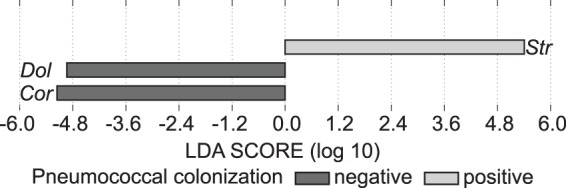
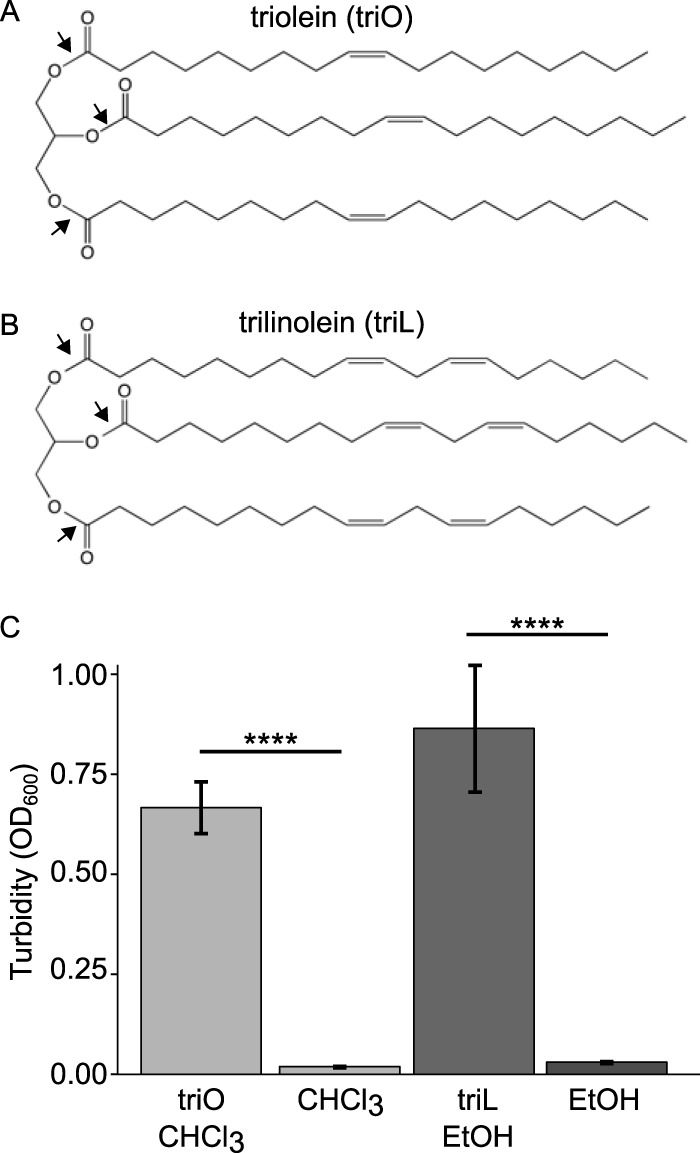
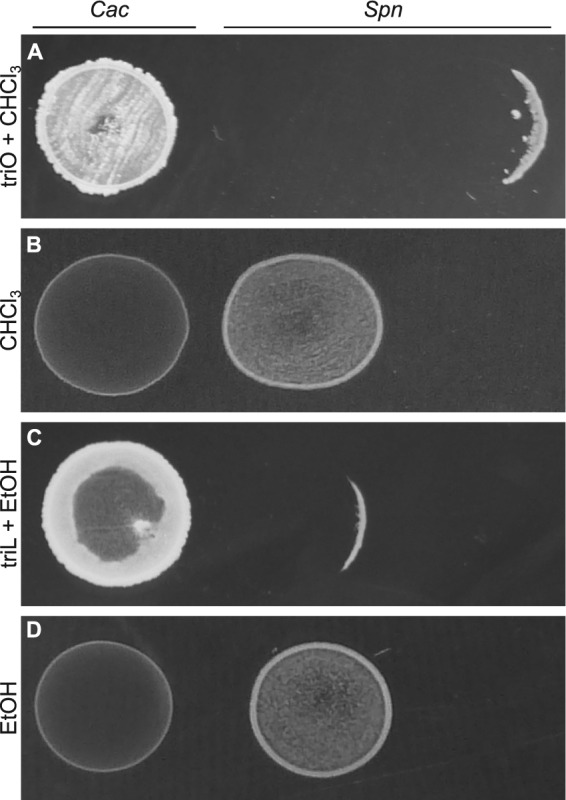
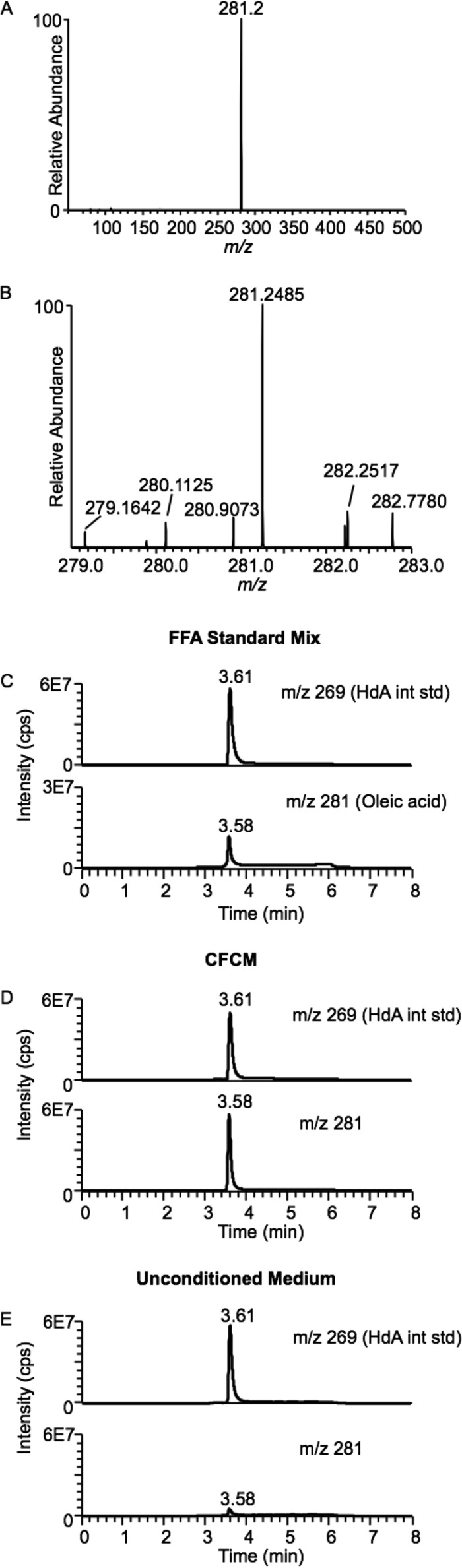
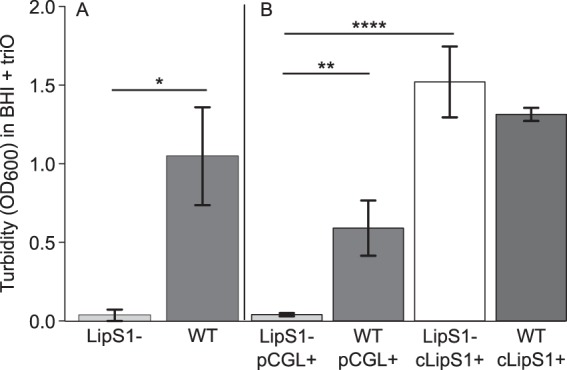
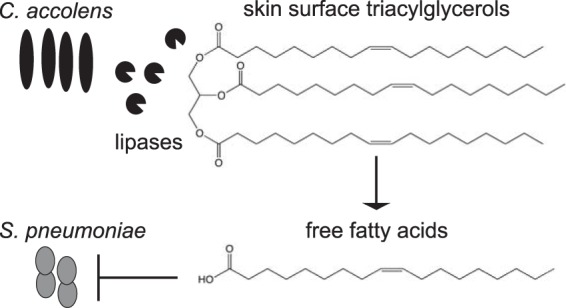
Bacterial interspecies interactions play clinically important roles in shaping microbial community composition. We observed that Corynebacterium spp. are overrepresented in children free of Streptococcus pneumoniae (pneumococcus), a common pediatric nasal colonizer and an important infectious agent. Corynebacterium accolens , a benign lipid-requiring species, inhibits pneumococcal growth during in vitro cocultivation on medium supplemented with human skin surface triacylglycerols (TAGs) that are likely present in the nostrils. This inhibition depends on LipS1, a TAG lipase necessary for C. accolens growth on TAGs such as triolein. We determined that C. accolens hydrolysis of triolein releases oleic acid, which inhibits pneumococcus, as do other free fatty acids (FFAs) that might be released by LipS1 from human skin surface TAGs. Our results support a model in which C. accolens hydrolyzes skin surface TAGS in vivo releasing antipneumococcal FFAs. These data indicate that C. accolens may play a beneficial role in sculpting the human microbiome. IMPORTANCE Little is known about how harmless Corynebacterium species that colonize the human nose and skin might impact pathogen colonization and proliferation at these sites . We show that Corynebacterium accolens , a common benign nasal bacterium, modifies its local habitat in vitro as it inhibits growth of Streptococcus pneumoniae by releasing antibacterial free fatty acids from host skin surface triacylglycerols. We further identify the primary C. accolens lipase required for this activity. We postulate a model in which higher numbers of C. accolens cells deter/limit S. pneumoniae nostril colonization, which might partly explain why children without S. pneumoniae colonization have higher levels of nasal Corynebacterium . This work narrows the gap between descriptive studies and the needed in-depth understanding of the molecular mechanisms of microbe-microbe interactions that help shape the human microbiome. It also lays the foundation for future in vivo studies to determine whether habitat modification by C. accolens could be promoted to control pathogen colonization.
Overview
The claims and statistics of this paper haven’t been checked yet.
Free: it reads the open-access text and checks the first 5 claims that cite a source we can check. Create a free account to check every claim.
Integrity signals
Registry
Cites
Statistics
Figures
Verification
Claims the paper makes
The claims and statistics of this paper haven’t been checked yet.
Free: it reads the open-access text and checks the first 5 claims that cite a source we can check. Create a free account to check every claim.
Claims other papers make about this one
Each is checked against this paper’s own text: does it say what the citing paper says it does?
The source backs part of the claim, not all of it — or backs it for a different population, condition or comparison.
In the citing paper
“Potential keystone species in the URT microbiota are Dolosigranulum spp. and Corynebacterium spp., as they have been strongly associated with respiratory health and the exclusion of potential pathogens, most notably Streptococcus pneumoniae, in several epidemiological and mechanistic studies21,29,68,69.”
From The microbiota of the respiratory tract: gatekeeper to respiratory health (2017) · cites this paper as [68]
Experimental — accuracy not yet measuredThe cited source says what the claim attributes to it.
In the citing paper
“C. accolens, which converts host triacylglycerols into free fatty acids (FFAs) that, in turn, limit pneumococcal growth68.”
From The microbiota of the respiratory tract: gatekeeper to respiratory health (2017) · cites this paper as [68]
Self-check
Percentages, sums and reported differences re-computed from the paper’s own numbers.
The self-check needs the paper’s full text.
Citations
Cites
Basic local alignment search tool
Altschul, S. F., Gish, W., Miller, W., Myers, E. W., & Lipman, D. J. (1990) · Journal of Molecular Biology · doi:10.1006/jmbi.1990.9999 · Cited by 98,669
QIIME allows analysis of high-throughput community sequencing data
Caporaso, J. G., Kuczynski, J., Stombaugh, J., Bittinger, K., Bushman, F. D., Costello, E. K., Fierer, N., Peña, A. G., Goodrich, J. K., Gordon, J. I., et al. (2010) · Nature Methods · doi:10.1038/nmeth.f.303 · Cited by 34,887 · cited 3×
“After filtering in QIIME (93) (using the MacQIIME 1.4 package), first to remove samples with 1,000 sequences and second, to remove OTU sequences that were not present more than once in one sample, sequences were subsampled to the minimum of 1,503 reads/sample.”
MethodInfluentialMetagenomic biomarker discovery and explanation
Segata, N., Izard, J., Waldron, L., Gevers, D., Miropolsky, L., Garrett, W. S., & Huttenhower, C. (2011) · Genome Biology · doi:10.1186/gb-2011-12-6-r60 · Cited by 16,192 · cited 2×
“Data were analyzed using linear discriminant analysis effect size (LEfSe) (40) to compare the microbiota composition of children positive and negative for culture-proven S.”
BackgroundMethodStructure, function and diversity of the healthy human microbiome
The Human Microbiome Project Consortium (2012) · Nature · doi:10.1038/nature11234 · Cited by 11,726
Enzymatic assembly of DNA molecules up to several hundred kilobases
Gibson, D. G., Young, L., Chuang, R.-Y., Venter, J. C., Hutchison, C. A., & Smith, H. O. (2009) · Nature Methods · doi:10.1038/nmeth.1318 · Cited by 9,996 · cited 1×
“assembly (95), and then transformed into NEB 5-alpha competent E.”
BackgroundSignalP 4.0: discriminating signal peptides from transmembrane regions
Petersen, T. N., Brunak, S., von Heijne, G., & Nielsen, H. (2011) · Nature Methods · doi:10.1038/nmeth.1701 · Cited by 8,847 · cited 1×
“1) (71) of the two protein sequences predicted that only WP_03 is secreted via the general secretion pathway, similar to other skin-associated bacterial TAG lipases (66–68).”
BackgroundBacterial Community Variation in Human Body Habitats Across Space and Time
Costello, E. K., Lauber, C. L., Hamady, M., Fierer, N., Gordon, J. I., & Knight, R. (2009) · Science · doi:10.1126/science.1177486 · Cited by 3,231
CDD: a Conserved Domain Database for the functional annotation of proteins
Marchler-Bauer, A., Lu, S., Anderson, J. B., Chitsaz, F., Derbyshire, M. K., DeWeese-Scott, C., Fong, J. H., Geer, L. Y., Geer, R. C., Gonzales, N. R., et al. (2011) · Nucleic Acids Research · doi:10.1093/nar/gkq1189 · Cited by 3,159 · cited 4×
“accolens KPL1818 (RefSeq accession NZ_AXMA00000000) against the Conserved Domain Database (CDD) of NCBI (65).”
BackgroundInfluentialTopographical and Temporal Diversity of the Human Skin Microbiome
Grice, E. A., Kong, H. H., Conlan, S., Deming, C. B., Davis, J., Young, A. C., Program, N. C. S., Bouffard, G. G., Blakesley, R. W., Murray, P. R., et al. (2009) · Science · doi:10.1126/science.1171700 · Cited by 2,953
A microbial symbiosis factor prevents intestinal inflammatory disease
Mazmanian, S. K., Round, J. L., & Kasper, D. L. (2008) · Nature · doi:10.1038/nature07008 · Cited by 2,340 · cited 1×
“pneumoniae can be part of the healthy microbiota without causing disease, it is considered a pathobiont—a commensal bacterium that is also a pathogen (7).”
Background
Cited by
Items 301–380 of 380
Coughlin, C. C., & McCoy, W. H. (2019) · Wiley eBooks · doi:10.1002/9781119142812.ch3
Skin-Gut-Breast Microbiota Axes
Drago, L. (2021) · MDPI eBooks · doi:10.3390/books978-3-0365-0899-3
Nasrun, N. E., Fujita, K., Chieda, K., Abiko, Y., Shimo, T., & Akizuki, K. (2022) · International Journal of Surgery Case Reports · doi:10.1016/j.ijscr.2022.107745
Babišová, K., Krumpolec, P., Hadžega, D., Sabaka, P., Jackuliak, P., Minárik, G., & Hýblová, M. (2023) · Acta Virologica · doi:10.3389/av.2023.11664
“Corynebacterium accolens can inhibit the growth of Staphylococcus aureus and Staphylococcus pneumoniae (Bomar et al., 2016).”
BackgroundAnalysis of nasopharyngeal microbiome patterns in Zambian infants with fatal acute febrile illnessPreprint
Odom-Mabey, A. R., McClintock, J., Gill, C. J., Pieciak, R. C., Ismail, A., MacLeod, W., Johnson, W. E., & Lapidot, R. (2023) · bioRxiv (Cold Spring Harbor Laboratory) · doi:10.1101/2023.09.27.559805
Actualités sur le microbiome de la peau et son rôle dans les maladies cutanées
Dunyach‐Remy, C., Pouget, C., & Lavigne, J.-P. (2024) · Revue Francophone des Laboratoires · doi:10.1016/s1773-035x(24)76118-8
The Impact of the Microbiome in Chronic Rhinosinusitis with Nasal Polyps
Jimenez, J. E., Ramaswamy, U., Patel, V. A., & Lee, S. E. (2024) · Springer eBooks · doi:10.1007/978-3-031-33199-2_13
Udayan, S., & Naik, A. S. (2024) · Elsevier eBooks · doi:10.1016/b978-0-323-90144-4.00004-5
Antibiofilm Activities of Bacteria from the Skin Microbiome Against Staphylococcus epidermis
Omar, N. H. M., Aazmi, M. S., Aziz, A. A., & Abdullah, M. F. F. (2024) · Advances in biological sciences research/Advances in Biological Sciences Research · doi:10.2991/978-94-6463-536-2_15
Yaqin, M. A., Singgih, E. L., Utama, R., Irmayanti, E., Khanza, S. M., Intan, N. S., Pramono, A. K., Puspitasari, I., Rahardjo, S. B., Farhanah, N., et al. (2024) · Research Square · doi:10.21203/rs.3.rs-5402370/v1
Interactions that are Important to Our Practice
Avramov, T. (2024) · Otolaryngology Open Access Journal · doi:10.23880/ooaj-16000294
Rao, M. V., Messina, J. A., & Surana, N. K. (2023) · Wiley eBooks · doi:10.1002/9781683670438.mcm0017
Ali, A., & Mousa, W. K. (2025) · Springer eBooks · doi:10.1007/978-981-96-1305-2_15
Respiratory microbiome and respiratory infections
Zou, X., Mu, Y., Ni, Y., & Cao, B. (2025) · Chinese Science Bulletin (Chinese Version) · doi:10.1360/tb-2024-0689
“脂质依赖性的拥挤棒状杆菌 ( Corynebacterium accolens ) 通过将皮肤表面的三酰甘 油水解为游离脂肪酸 , 从而对肺炎链球菌产生杀菌作 用 [80] .”
Where is our Place in Interspecial Interactions and the Holobiont
Avramov, T. (2025) · Otolaryngology Open Access Journal · doi:10.23880/ooaj-16000301
Skin Homeostasis Through AHR-Mediated Interactions Between Host and Microbiome
Smits, J. P. H., Casado, C. G., van den Bogaard, E. H. J., & Homey, B. (2025) · Springer eBooks · doi:10.1007/978-3-031-82689-4_10
Microecological aspects of relationship between skin microbiota and psoriasis
Arsenyeva, A. A., Lyamin, A. V., Migacheva, N. B., Orlov, E. V., & Alekseev, D. V. (2024) · Clinical Microbiology and Antimicrobial Chemotherapy · doi:10.36488/cmac.2024.4.426-438
The Impact of Synbiotics on the Bacterial Flora During the Course of Chronic Sinusitis
Goroszkiewicz, K., Lisowska, G., Stryjewska‐Makuch, G., Karłowska-Bijak, O., & Misiołek, M. (2025) · Medicina · doi:10.3390/medicina61071306
“The latter has been shown to inhibit pathogenic Streptococcus through the production of fatty acids [4,5].”
Gut microbiota and mental issues in humans
Singh, J., Mistry, C. R., Sharma, A., Baiju, A., Kumar, B., Maji, A., Sharma, M., Singh, A., Prasad, V., Lalbiaktluangi, C., et al. (2025) · Elsevier eBooks · doi:10.1016/b978-0-443-29932-2.00013-x
Avramov, T. (2025) · Otolaryngology Open Access Journal · doi:10.23880/ooaj-16000306
(2019) · Microbiology Australia · doi:10.1071/mav40n4
Nasal Corynebacterium depletion is associated with polysensitization to inhalant allergens in adults
Koyama, K., Kidoguchi, M., Adachi, N., Ii, R., Nakamura, T. K., Yoshida, K., Tsutsumiuchi, T., Kimura, Y., Kato, Y., Ogi, K., et al. (2026) · Allergology International · doi:10.1016/j.alit.2026.08.001
Jensen, M. G., Svraka, L., Baez, E., Lund, M., Poehlein, A., & Brüggemann, H. (2024) · Figshare · doi:10.6084/m9.figshare.24656124
Jensen, M. G., Svraka, L., Baez, E., Lund, M., Poehlein, A., & Brüggemann, H. (2024) · Figshare · doi:10.6084/m9.figshare.26646298
Quinn-Bohmann, N., Freixas-Coutin, J. A., Seo, J., Simmons, R., Diener, C., & Gibbons, S. M. (2024) · Figshare · doi:10.6084/m9.figshare.25678761
Paulo, A. C., Lança, J., Almeida, S. T., Hilty, M., & Sá‐Leão, R. (2024) · Figshare · doi:10.6084/m9.figshare.26614456
Jensen, M. G., Svraka, L., Baez, E., Lund, M., Poehlein, A., & Brüggemann, H. (2023) · Figshare · doi:10.6084/m9.figshare.24655772
Zheng, H., Na, H., Yao, J., Su, S., Han, F., Li, X., & Chen, X. (2024) · Figshare · doi:10.6084/m9.figshare.25522668
Jensen, M. G., Svraka, L., Baez, E., Lund, M., Poehlein, A., & Brüggemann, H. (2024) · Figshare · doi:10.6084/m9.figshare.26646295
IL-33 Controls IL-22-Dependent Antibacterial Defense by Modulating the Microbiota
Röwekamp, I. (2024) · Refubium (Universitätsbibliothek der Freien Universität Berlin) · doi:10.17169/refubium-44415
Jensen, M. G., Svraka, L., Baez, E., Lund, M., Poehlein, A., & Brüggemann, H. (2024) · Figshare · doi:10.6084/m9.figshare.26646289
Jensen, M. G., Svraka, L., Baez, E., Lund, M., Poehlein, A., & Brüggemann, H. (2024) · Figshare · doi:10.6084/m9.figshare.26646283
Quinn-Bohmann, N., Freixas-Coutin, J. A., Seo, J., Simmons, R., Diener, C., & Gibbons, S. M. (2024) · Figshare · doi:10.6084/m9.figshare.25678510
Jensen, M. G., Svraka, L., Baez, E., Lund, M., Poehlein, A., & Brüggemann, H. (2024) · Figshare · doi:10.6084/m9.figshare.26646280
Zheng, H., Na, H., Yao, J., Su, S., Han, F., Li, X., & Chen, X. (2024) · Figshare · doi:10.6084/m9.figshare.25522777
Jensen, M. G., Svraka, L., Baez, E., Lund, M., Poehlein, A., & Brüggemann, H. (2024) · Figshare · doi:10.6084/m9.figshare.26646286
Jensen, M. G., Svraka, L., Baez, E., Lund, M., Poehlein, A., & Brüggemann, H. (2024) · Figshare · doi:10.6084/m9.figshare.26646292
Understanding the intersection between the hospital and patient microbiome
Ashokan, A. (2021) · Adelaide Research & Scholarship (AR&S) (University of Adelaide)
Corticosteroids and the Sinonasal Microbime
Cherian, L. M. (2019) · Adelaide Research & Scholarship (AR&S) (University of Adelaide)
Geng, M. (2019) · OakTrust (Texas A&M University Libraries)
Lorenz, B. P. (2023) · CU Scholar (University of Colorado Boulder)
König, J. A. (2025) · Electronic Theses of LMU Munich (Ludwig-Maximilians-Universität München) · doi:10.5282/edoc.35852
The roles of Staphylococcus and Corynebacterium in human malodour formation
Herman, R. (2025) · White Rose eTheses Online (University of Leeds, The University of Sheffield, University of York)
Burnside, M., Helliwell, E. E., Treerat, P., Rozendal, T., Merritt, J., Baker, J. L., & Kreth, J. (2025) · Microbiology Spectrum · doi:10.1128/spectrum.02973-25
Blood protein thwarts deadly fungal disease
Mar, K. B., & Hohl, T. M. (2026) · Nature · doi:10.1038/d41586-025-03985-7
Human skin microbiome: structure, functions, perspectives
Gergova, I., & Badarov, T. (2025) · Journal of Endourology and Minimally Invasive Surgery · doi:10.57045/jemis/1310925.pp34-43
A consortium of human commensals protects against middle ear colonization by otopathogensPreprint
Dewan, K. K., Callender, M., Masters, J., Gilbertson, E. A., Hurst, J. H., & Harvill, E. T. (2026) · bioRxiv (Cold Spring Harbor Laboratory) · doi:10.64898/2026.01.26.701666
Patel, E. A., Engen, P. A., D’Souza, G. E., Khalifé, S., Moore, D., Kret, L. N., Escobedo, P. D., Green, S. J., Naqib, A. D., Filip, P., et al. (2026) · International Forum of Allergy & Rhinology · doi:10.1002/alr.70123
“In vitro studies have shown that Corynebacterium produces free fatty acids that inhibit pathogen growth, while Cutibacterium may modulate local immune responses [ 43, 44 ].”
Mikrobielle Besiedlung der Nasenschleimhaut von Patienten mit postviraler Riechstörung
Hollemann, E. (2025) · Qucosa (Saxon State and University Library Dresden)
Вячеславовна, Г. И., Ivaschenko, E. V., Filonchikova, E. S., Shchuplova, E. A., & Sv, C. (2026) · Journal of microbiology epidemiology immunobiology · doi:10.36233/0372-9311-708
Starikova, V. A., Konstantinov, D. Y., & Константинова, Е. А. (2026) · Journal of microbiology epidemiology immunobiology · doi:10.36233/0372-9311-753
“Известно, что именно высокая плотность колонизации повышает риск пе-редачи пневмококка и развития инвазивных форм инфекции [25].”
Investigation of diabetes-induced changes in the lung microbiome
Vasiljevs, S. (2022) · City Research Online (City University London)
Baek, S. B., Seo, J. Y., Yang, H. G., Sim, M. S., Lee, J. K., Choi, Y. J., Kim, H. J., & Bae, S. (2026) · Asian Journal of Beauty and Cosmetology · doi:10.20402/ajbc.2025.0105
Cherrak, Y. (2020) · theses.fr (ABES) · doi:10.70675/50fe6f7bz2852z46e8z8c69z34c04bfce736
Mansouri, D. (2024) · theses.fr (ABES) · doi:10.70675/ee1f44fdz12c9z4b23z8d41z952f3724fafd
Interactions hôte / papillomavirus : caractériser le virome de la peau et comprendre ses fonctions
Dominguez-Lafage, C. (2024) · theses.fr (ABES) · doi:10.70675/d7e42a8cza168z4ca1zb8c0zf86efa10f7cc
Saloi, D., Zaman, A., Saha, D., Mehta, P., Das, T., & Das, B. K. (2026) · Tissue and Cell · doi:10.1016/j.tice.2026.103534
Heckel, A., Ovat, B., Reichinger, J., Hanenkamp, N., & Burkovski, A. (2026) · Applied Microbiology · doi:10.3390/applmicrobiol6050060
ABPs: diffusible antibacterial toxins secreted by and active against diverse gram-positive bacteria
Colautti, J., Mwangi, D. W., Woodward, J. J., & Whitney, J. C. C. (2026) · Infection and Immunity · doi:10.1128/iai.00297-26
Barrera-Suarez, M. A., Gupta, V. K., Zhao, X., Koller, A. L., Zhao, C., Suh, G. A., Karnatovskaia, L. V., O’Brien, E. K., Kronzer, V. L., & Sung, J. (2026) · bioRxiv (Cold Spring Harbor Laboratory) · doi:10.64898/2026.07.19.739383
Lin, H., Shang, L., & Lu, Y. (2026) · Frontiers in Immunology · doi:10.3389/fimmu.2026.1889314
Rice, O. H., & Miller, L. A. (2026) · Pediatric Pulmonology · doi:10.1002/ppul.71798
“…lugdunensis produces the antibiotic lugdunin that suppresses S. aureus nasal colonization, Corynebacterium accolens releases anti‐pneumococcal fatty acids that inhibit S. pneumoniae ; and nasal Staphylococcus epidermidis amplifies IFNλ–dependent protection against influenza [63, 73, 74].”
Kim, S., Mun, S., Kim, M., Kim, M.-J., Lee, D., Kang, S., Jo, H., & Han, K. (2026) · bioRxiv (Cold Spring Harbor Laboratory) · doi:10.64898/2026.09.02.748710
Pathogen-specific and non-leaching antibacterial coatings for textiles
Herrmann, N., Simons, C., Strauß, H., Boes, A., Heine, E., Jakob, F., & Schwaneberg, U. (2026) · Materials & Design · doi:10.1016/j.matdes.2026.117013
Manoharan, S. (2025) · Journal of chemical health risks
Burdon, I. A., Psaltis, J. P., Vrodos, N. C., Sung, J., Durr, L., Barry, E. F., Cooksley, C. M., Vreugde, S., Wormald, P. J., & Psaltis, A. J. (2026) · bioRxiv (Cold Spring Harbor Laboratory) · doi:10.64898/2026.10.13.758830
Викторовна, М. Н. (2025) · Бюллетень Оренбургского научного центра УрО РАН
From Chronic Infection to Microbial Imbalance: Rethinking Chronic Rhinosinusitis
Łabaz, J. P., Guth, M., Kaleta, J. S., Kaczmarek, J., Kinczel, M., Kornak, K., Kaczor, M., Leszczyszyn, A., Dorobisz, K., & Pazdro-Zastawny, K. (2026) · International Journal of Molecular Sciences · doi:10.3390/ijms27209170
“Another typical sinonasal colonizer, Corynebacterium accolens , has exhibited antimicrobial properties in in vitro studies against both S. aureus [75,76] and S. pneumoniae [77].”
Dezzaki, Z. S., Hematian, M., Panah, A. K., Boroujeni, M. R. G., Rahmati, R., & Alipourfard, I. (2026) · Folia Microbiologica · doi:10.1007/s12223-026-01614-y
Otto, M., Camus, L., Busche, T., Bünte, J., Hütten, A., Persicke, M., Klages, L. J., Kalinowski, J., Heilbronner, S., & Rückert, C. (2026) · INTERNATIONAL JOURNAL OF SYSTEMATIC AND EVOLUTIONARY MICROBIOLOGY · doi:10.1099/ijsem.0.007292
Čebatorienė, D., Bruzaite, A., Vilkevičiūtė, A., Žaliūnienė, D., Lukoševičius, R., Skiecevičienė, J., Kupčinskas, J., & Liutkevičienė, R. (2026) · International Journal of Molecular Sciences · doi:10.3390/ijms27219673
Reznichenko, G. I., Reznichenko, N., Mun, A. V., Кабаченко, О. В., Treschak, І. І., & Kokaylo, O. (2026) · SANAMED · doi:10.5937/sanamed0-69399
Shi, Z., Li, X., Wang, X., Zhang, L., Li, L., Fu, X., Sun, Z., Li, Z., Zhang, X., & Zhang, M. (2021) · doi:10.3389/fcimb.2021.686595.s006
Shamsuzzaman, M., Dahal, R. H., Kim, S., & Kim, J. (2023) · doi:10.3389/fmicb.2023.1225282.s001
Xiang, G., Xu, K., Jian, Y., He, L., Shen, Z., Li, M., & Liu, Q. (2023) · doi:10.3389/fimmu.2023.1266941.s003
Barber, J. M., Bouras, G., Robinson, G. S., & Robinson, S. R. (2024) · doi:10.3389/frhs.2024.1196499.s001
Huang, S., Hon, K., Bennett, C., Hu, H., Menberu, M., Wormald, P.-J., Zhao, Y., Vreugde, S., & Liu, S. (2022) · doi:10.3389/fmicb.2022.984741.s003
Shilts, M. H., Rosas-Salazar, C., Strickland, B. A., Kimura, K. S., Asad, M., Sehanobish, E., Freeman, M. H., Wessinger, B. C., Gupta, V., Brown, H. M., et al. (2022) · doi:10.3389/fcimb.2021.781968.s007
Metadata
- Authors
- Bomar, L., Brugger, S. D., Yost, B. H., Davies, S. S., & Lemon, K. P.
- Affiliations
- Harvard University (US)
- The Forsyth Institute (US)
- Vanderbilt University (US)
- Boston Children's Hospital (US)
- Corresponding author
- Lemon, Katherine P.
- Venue
- mBio
- Publisher
- American Society for Microbiology
- Published
- 2016-03-02
- Volume
- 7
- Issue
- 1
- Pages
- e01725-15
- ISSN
- 2150-7511 (ISSN-L)
- 2161-2129
- PMC
- PMC4725001
- OpenAlex
- W2223503000
- Cited by
- 332
- References
- 102
- Citations by year
- 2026: 22 · 2025: 49 · 2024: 50 · 2023: 34 · 2022: 36 · 2021: 36 · 2020: 32 · 2019: 28 · 2018: 17 · 2017: 20 · 2016: 8
- FWCI
- 24.87
- Type
- journal article
- Language
- en
- Open access
- gold
- doi.org
- Licence
- cc-by-nc-sa
- creativecommons.org/licenses/by-nc-sa/3.0/ (vor)
- journals.asm.org/non-commercial-tdm-license (tdm)
- Locations
- mBio (publishedVersion, cc-by-nc-sa)
- PubMed Central (publishedVersion, cc-by-nc-sa)
- PubMed (publishedVersion)
- Digital Access to Scholarship at Harvard (DASH) (Harvard University) (submittedVersion, cc-by)
- DOAJ (DOAJ: Directory of Open Access Journals) (submittedVersion, cc-by-sa)
- DOAJ (DOAJ: Directory of Open Access Journals) (submittedVersion)
- Funders
- Swiss Society for Microbiology Encouragement Award
- The Swiss National Science Foundation and Swiss Foundation for Grants in Biology and Medicine (P3SMP3_155315)
- Boston Children's Hospital Career Development Grant
- HHS | NIH | National Institute of Allergy and Infectious Diseases (AI101018)
- HHS | NIH | National Institute of Dental and Craniofacial Research (DE007327, DE020751)
- HHS | NIH | National Center for Complementary and Integrative Health (AT007830)
- Topics
- Life Sciences › Immunology and Microbiology › Microbiology › Microbial infections and disease research
- Life Sciences › Biochemistry, Genetics and Molecular Biology › Molecular Biology › Bacterial biofilms and quorum sensing
- Life Sciences › Immunology and Microbiology › Microbiology › Bacterial Infections and Vaccines
- Keywords
- Corynebacterium accolens, Streptococcus pneumoniae, free fatty acids, oleic acid, triacylglycerol lipase, triolein hydrolysis, nasal microbiota, skin surface lipids, host-pathogen interaction, human microbiome
- MeSH terms
- Antibiosis, Anti-Bacterial Agents, Carrier State, Child, Child, Preschool, Corynebacterium, Fatty Acids, Nonesterified, Humans, Hydrolysis, Infant, Nasal Cavity, Pneumococcal Infections, Skin, Streptococcus pneumoniae, Triglycerides, Triolein, Microbiota
About these checks
Registry, retraction, Cites and statistics results are computed, not judged, with one exception: a printed reference that no index lists is read once by a model before it counts as a citation error. Claims are extracted by a model and kept only when their quote appears verbatim in the text; each cited source is then checked, with a model’s help, for whether it says what the claim relies on. Those verdicts can be wrong — read the claim’s quote and the cited source before relying on one.
Statistics and arithmetic are recomputed, not judged.
Confidence bands are shown only for fields calibrated on our annotated test set. None is calibrated yet, so no band is shown.
What counts as a claim ›How we measure confidence ›How we check this ›
Are you an author, or do you see a problem with this page? Request a review
Data sources
Bibliographic data: Semantic Scholar, OpenAlex, Crossref.
Contains information from the Semantic Scholar Academic Graph Datasets, made available under the ODC Attribution License (ODC-BY 1.0).
Semantic Scholar’s data is described in: Kinney, R., et al. (2023). The Semantic Scholar Open Data Platform. arXiv:2301.10140.
