

Review of health information technology usability study methodologies
Open accessThe DOI matches its Crossref record; 77 of the 78 references it cites were found in a registry or an index.
Abstract
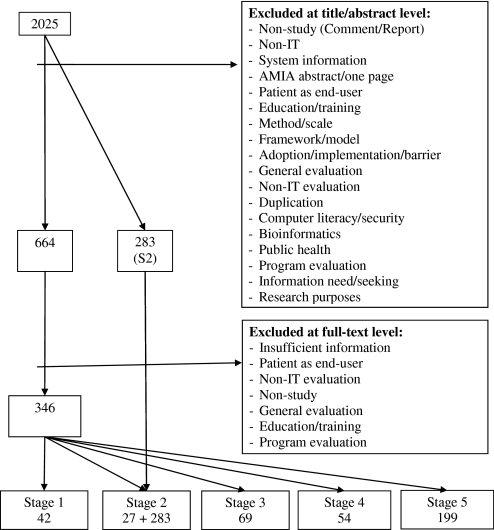
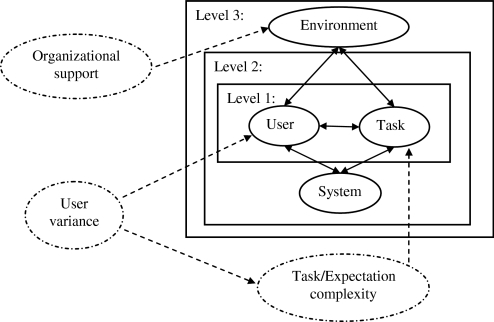
Usability factors are a major obstacle to health information technology (IT) adoption. The purpose of this paper is to review and categorize health IT usability study methods and to provide practical guidance on health IT usability evaluation. 2025 references were initially retrieved from the Medline database from 2003 to 2009 that evaluated health IT used by clinicians. Titles and abstracts were first reviewed for inclusion. Full-text articles were then examined to identify final eligibility studies. 629 studies were categorized into the five stages of an integrated usability specification and evaluation framework that was based on a usability model and the system development life cycle (SDLC)-associated stages of evaluation. Theoretical and methodological aspects of 319 studies were extracted in greater detail and studies that focused on system validation (SDLC stage 2) were not assessed further. The number of studies by stage was: stage 1, task-based or user-task interaction, n=42; stage 2, system-task interaction, n=310; stage 3, user-task-system interaction, n=69; stage 4, user-task-system-environment interaction, n=54; and stage 5, user-task-system-environment interaction in routine use, n=199. The studies applied a variety of quantitative and qualitative approaches. Methodological issues included lack of theoretical framework/model, lack of details regarding qualitative study approaches, single evaluation focus, environmental factors not evaluated in the early stages, and guideline adherence as the primary outcome for decision support system evaluations. Based on the findings, a three-level stratified view of health IT usability evaluation is proposed and methodological guidance is offered based upon the type of interaction that is of primary interest in the evaluation.
Overview
The claims and statistics of this paper haven’t been checked yet.
Free: it reads the open-access text and checks the first 5 claims that cite a source we can check. Create a free account to check every claim.
Integrity signals
Registry
Cites
Statistics
Figures
Verification
Claims the paper makes
The claims and statistics of this paper haven’t been checked yet.
Free: it reads the open-access text and checks the first 5 claims that cite a source we can check. Create a free account to check every claim.
Claims other papers make about this one
Each is checked against this paper’s own text: does it say what the citing paper says it does?
The cited source says what the claim attributes to it.
In the citing paper
“Usability challenges present a major barrier to health information technology adoption 29”
From A chatbot for hypertension self-management support: user-centered design, development, and usability testing (2023) · cites this paper as [29]
Self-check
Percentages, sums and reported differences re-computed from the paper’s own numbers.
The self-check needs the paper’s full text.
Citations
Cites
Perceived usefulness, perceived ease of use, and user acceptance of information technology
Davis, F. D. (1989) · MIS Quarterly · doi:10.2307/249008 · Cited by 68,483
(1993) · Cited by 9,879
Nielsen, J. (1995) · Conference companion on Human factors in computing systems - CHI '95 · doi:10.1145/223355.223730 · Cited by 2,620
IBM computer usability satisfaction questionnaires: Psychometric evaluation and instructions for use
Lewis, J. R. (1995) · International Journal of Human-Computer Interaction · doi:10.1080/10447319509526110 · Cited by 2,429
Development of an instrument measuring user satisfaction of the human-computer interface
Chin, J. P., Diehl, V. A., & Norman, L. K. (1988) · Proceedings of the SIGCHI conference on Human factors in computing systems - CHI '88 · doi:10.1145/57167.57203 · Cited by 1,609
Participatory Design: Principles and Practices
(2017) · CRC Press eBooks · doi:10.1201/9780203744338 · Cited by 1,500 · cited 1×
“Although we found only one theoretical framework and one method not covered in our review, approaches such as participatory design and ethnography provide overall frameworks that link sets of methods together in a manner that is greater than the sum of their parts.(79) Therefore, a review that included searches of add…”
MethodA Practical Guide to Usability Testing
Dumas, J. F., & Redish, J. C. (1993) · Cited by 1,335
Poissant, L. (2005) · Journal of the American Medical Informatics Association · doi:10.1197/jamia.m1700 · Cited by 901 · cited 4×
“Rahimi and Vimar-lund 10 reviewed general methods used to evaluate health IT.”
MethodInfluentialBiomedical Informatics: Computer Applications in Health Care and Biomedicine
(2024) · Biomedical Informatics: Computer Applications in Health Care and Biomedicine · doi:10.33029/9704-8204-9-bin-2024-1-744 · Cited by 777
Cognitive and usability engineering methods for the evaluation of clinical information systems.
Kushniruk, A. W., & Patel, V. L. (2004) · Journal of Biomedical Informatics · doi:10.1016/j.jbi.2004.01.003 · Cited by 760 · cited 1×
“Kushniruk and Patel 8 provided a methodological review for cognitive and usability engineering methods.”
Research works printed but not linked: 3
- Rubin J Handbook Of Usability Testing. New York: John Wiley & Sons, 1993
- Hyun S Johnson SB Bakken S User-centered approaches for eliciting functional requirements and designing user interfaces: a nursing documentation case study. J Biomed Inform 2008; In press.
- Lewis C Using the “Think Aloud” Method in Cognitive Interface Design. New York: IBM, 1982
Cited by
Items 201–300 of 457
Bhat, S., Derington, C. G., & Trinkley, K. E. (2020) · Applied Clinical Informatics · doi:10.1055/s-0040-1712467 · Cited by 11
Review of Qualitative Research Methods in Health Information System Studies
Park, K. J., & Moon, W. (2024) · Healthcare Informatics Research · doi:10.4258/hir.2024.30.1.16 · Cited by 10
mHealth Tool for Alcohol Use Disorders Among Latinos in Emergency Department
Abujarad, F., & Vaca, F. E. (2015) · Proceedings of the International Symposium on Human Factors and Ergonomics in Health Care · doi:10.1177/2327857915041005 · Cited by 10
“(Baylis, Kushniruk, & Borycki, 2012; Yen & Bakken, 2012) Users can provide early and valuable feedback.”
BackgroundAsan, O., Holden, R. J., Flynn, K. E., Murkowski, K., & Scanlon, M. C. (2018) · JAMIA Open · doi:10.1093/jamiaopen/ooy020 · Cited by 10
“These technical and usability issues might impact providers’ use frequency of LCIM negatively, as found in past studies of other HIT.(35,36) Additional negative perceptions reflected providers’ misperceptions or lack of familiarity with the LCIM.”
ResultQualitative study measuring the usability of the International Cardiac Rehabilitation Registry
Abukhadijah, H. J., Turk-Adawi, K. I., Dewart, N., & Grace, S. L. (2022) · BMJ Open · doi:10.1136/bmjopen-2022-064255 · Cited by 10
Burningham, Z. R., Lagha, R. R., Duford-Hutchinson, B., Callaway‐Lane, C., Sauer, B. C., Halwani, A. S., Bell, J., Huynh, T., Douglas, J. R., & Kramer, B. J. (2022) · Applied Clinical Informatics · doi:10.1055/s-0042-1757553 · Cited by 10
A continuous usability evaluation of an electronic medication administration record application
Oliveros, N. V., Gramage, T., Menéndez-Conde, C. P., Álvarez‐Díaz, A. M., Martín‐Aragón, S., Vicedo, T. B., & Silveira, E. D. (2017) · Journal of Evaluation in Clinical Practice · doi:10.1111/jep.12808 · Cited by 10
“On the one hand, usability evaluations are one way to ensure that eMAR applications fit nurses0 cognitive and behavioural requirements and, on the other hand, are efficient, effective, and positively impact patient safety.(20,21) The purpose of this study was to evaluate the usability of an eMAR application during its…”
BackgroundLulejian, A., & Cantor, M. N. (2018) · Journal of Healthcare Management · doi:10.1097/jhm-d-16-00027 · Cited by 10
Jabali, M. S., Nabovati, E., Farzandipour, M., Farrahi, R., & Abbasi, R. (2019) · Research Information System of Ardabil University of Medical Sciences (Ardabil University of Medical Sciences) · Cited by 10
Validação de aplicativos no contexto da saúde: revisão integrativa
Oliveira, E. N., Melo, B. T., Carvalho, A. G., Melo, F. V. D., Costa, J. B. C., Lima, G. F., Aragão, H. L., Prado, F. A., Ribeiro, L. M., da Silva, M. D. L. B., et al. (2021) · Research Society and Development · doi:10.33448/rsd-v10i15.22847 · Cited by 10
Weltermann, B., & Kersting, C. (2016) · Pilot and Feasibility Studies · doi:10.1186/s40814-016-0057-z · Cited by 11
“Following recommendations on health information technology usability evaluation and the framework for the development of complex interventions, the software will be developed in three steps [13, 14]:”
MethodPollack, A. H., Tweedy, C. G., Blondon, K., & Pratt, W. (2014) · PubMed · Cited by 10
Ye, Q., Boren, S. A., Khan, U., & Kim, M. S. (2017) · Lecture notes in computer science · doi:10.1007/978-3-319-58466-9_11 · Cited by 10
Guo, R., Zheng, Z., Yang, F., & Wu, Y. X. (2025) · Journal of Medical Internet Research · doi:10.2196/67948 · Cited by 9
“Derived from the health information technology usability evaluation model, a theoretical framework to guide usability evaluations of digital health technologies [21], the Health-ITUES has recently been increasingly used to accurately assess the usability of digital health apps [18,19].”
An Evaluation Framework for a Novel Process to Codevelop Written and Computable Guidelines
Tailor, A., Robinson, S. J., Matson-Koffman, D. M., Michaels, M., Burton, M. M., Lubin, I. M., & Process, O. B. O. T. W. O. E. O. T. I. (2023) · American Journal of Medical Quality · doi:10.1097/jmq.0000000000000140 · Cited by 9
Machine Learning Models as Early Warning Systems for Neonatal Infection
Sullivan, B. A., & Grundmeier, R. W. (2024) · Clinics in Perinatology · doi:10.1016/j.clp.2024.10.011 · Cited by 9
Home safety evaluation – getting it right
Pickens, N. D., Mendonca, R. J., Burns, S. P., & Smith, R. O. (2020) · Disability and Rehabilitation Assistive Technology · doi:10.1080/17483107.2020.1805033 · Cited by 9
Stanimirović, D. (2015) · International Journal of Engineering Business Management · doi:10.5772/60992 · Cited by 9
“Further‐ more, the data received are often not helpful for healthcare management decision-making because they are incom‐ plete, untimely, and unrelated to the priority tasks of healthcare professionals [28-30].”
BackgroundDevelopment of safety and usability guideline for clinical information system
Lee, Y., Bahn, S., Shin, G. W., Jung, M.-Y., Park, T., Cho, I., & Lee, J.-H. (2021) · Medicine · doi:10.1097/md.0000000000025276 · Cited by 9
“[22] Thus, it is necessary to have an in-depth review of usability and clinical work fl ow to apply the existing usability theories to CISs.”
BackgroundSchnall, R., Jianfang, L., Mohr, D. C., Henry, S. B., Hirshfield, S., Siegel, K., Stonbraker, S., Cho, H., Iribarren, S., & Voss, J. G. (2019) · Studies in health technology and informatics · doi:10.3233/shti190446 · Cited by 9
Optimizing Clinical Monitoring Tools to Enhance Patient Review by Pharmacists
Schreier, D. J., & Lovely, J. K. (2021) · Applied Clinical Informatics · doi:10.1055/s-0041-1731341 · Cited by 9
Stakeholder consensus on the purpose of clinical evaluation of electronic health records is required
Ericson, L., Hammar, T., Schönström, N., & Petersson, G. (2017) · Health Policy and Technology · doi:10.1016/j.hlpt.2017.02.005 · Cited by 9
Tao, D., Or, C. K. L., & Li, K. (2014) · Proceedings of the International Symposium on Human Factors and Ergonomics in Health Care · doi:10.1177/2327857914031008 · Cited by 8
“…et al., 2008), poorly designed CHITs create many system usability problems that can lead to adverse use performance, frustrated users, technology abandonment, inefficient care management processes and a higher likelihood of error (Middleton et al., 2013; Or & Tao, 2012; Yen & Bakken, 2012).”
BackgroundHeitkemper, E., Hulse, S. T., Bekemeier, B., Schultz, M., Whitman, G., & Turner, A. M. (2024) · JMIR Human Factors · doi:10.2196/51666 · Cited by 8
“In a review of usability study methodologies of health information technology by Yen and Bakken [30], the authors outline the importance of conducting multiple usability evaluations that align with the 5 stages of the SDLC.”
BackgroundMethodInfluentialRana, R., Ibrahim, B., Huri, H. Z., Wahab, I. A., Govindaraju, K., Shukeri, M. S. M., Ng, C. K., & Ong, S. C. (2024) · Research in Social and Administrative Pharmacy · doi:10.1016/j.sapharm.2024.07.004 · Cited by 8
An Evaluation Instrument (Q-U) for Measuring the usability of Business Intelligence Application
Mousa, A. H., Raheem, H. A., & Mohammed, N. T. (2018) · International Journal of Engineering & Technology · doi:10.14419/ijet.v7i4.19.28008 · Cited by 8
“A total of 20 evaluation works were reviewedin a systematic manner to elicitation Q-U instrument attributes[11, 14, 25-32].”
BackgroundExpert Review on Mobile Augmented Reality Applications for Language Learning
Suwadi, N. A., Majid, N. A. A., Lam, M. C., Jalaluddin, N. H., Kasdan, J. B., Abdullah, A. A., Hussain, A. H., Ahmad, A., & Ma’arof, D. Z. (2021) · International Journal of Advanced Computer Science and Applications · doi:10.14569/ijacsa.2021.0121037 · Cited by 8
“This approach examines real issues faced by end-users as well as the factors causing those problems, offering insight into usability deficiencies [22, 29].”
BackgroundFareed, N., Swoboda, C. M., Wang, Y., Strouse, R., Hoseus, J., Baker, C., Joseph, J. J., & Venkatesh, K. K. (2023) · JMIR Diabetes · doi:10.2196/46654 · Cited by 8
“The think-aloud sessions facilitate the identification of informational elements necessary to support effective implementation of technology systems [74,75] and those that preclude user-friendly design [76].”
BackgroundWannheden, C., Forsberg, H. H., Eftimovska, E., Westling, K., & Ellenius, J. (2017) · Methods of Information in Medicine · doi:10.3414/me16-02-0030 · Cited by 8
“User satisfaction evaluations are relevant in the development stage where system components are combined such that interaction between the user, task and system can be tested [26], as was done in this study.”
BackgroundThe Use of Gaming in Healthcare
Pakarinen, A., & Salanterä, S. (2020) · Springer eBooks · doi:10.1007/978-3-030-60697-8_9 · Cited by 8
Mueller, E. L., Cochrane, A. R., Moore, C. M., Miller, A., & Wiehe, S. E. (2020) · PubMed Central · Cited by 8
Development and Patient User Experience Evaluation of an mHealth Informational App for Osteoporosis
Kirkscey, R. (2021) · International Journal of Human-Computer Interaction · doi:10.1080/10447318.2021.1965773 · Cited by 8
“Previous health information technology scholarship on usability testing and UX evaluation of older adults often suffered from poorly designed studies, a lack of theoretical frameworks and vague qualitative methods (Maramba et al., 2019; Py & Bakken, 2011).”
BackgroundEsfandiari, E., Miller, W. C., & King, S. (2022) · Prosthetics and Orthotics International · doi:10.1097/pxr.0000000000000152 · Cited by 8
“Usability is defined as “the extent to which a product can be used by specific users to achieve specific goals with effectiveness, efficiency, and satisfaction”.(17) The aim of this study was to assess the usability of SMART among individuals’ with LLL.”
BackgroundOgundipe, A., Sim, T. F., & Emmerton, L. (2023) · Exploratory Research in Clinical and Social Pharmacy · doi:10.1016/j.rcsop.2023.100252 · Cited by 8
Pilot testing of the International Council of Cardiovascular Prevention and Rehabilitation Registry
Grace, S. L., Elashie, S., Sadeghi, M., Papasavvas, T., Hashmi, F. A., Ghisi, G. L. D. M., Vargas, J. L., Alhashemi, M., & Turk-Adawi, K. I. (2023) · International Journal for Quality in Health Care · doi:10.1093/intqhc/mzad050 · Cited by 8
Lee, L., Cresswell, K. M., Slee, A., Slight, S. P., Coleman, J. J., & Sheikh, A. (2014) · JRSM Open · doi:10.1177/2054270414551658 · Cited by 8
Health Information Technology and Implementation Science: Partners in Progress in the VHA
Hynes, D. M., Whittier, E., & Owens, A. (2013) · Medical Care · doi:10.1097/mlr.0b013e3182884509 · Cited by 8
“They relied on 3 basic strategies: (1) working with national software support offices, (2) working with local IT staff, and (3) being flexible to work with previously developed software and systems.”
BackgroundMethodA micro-analytic approach to understanding electronic health record navigation paths
Duncan, B. J., Kaufman, D. R., Zheng, L., Grando, A., Furniss, S. K., Poterack, K. A., Miksch, T. A., Helmers, R. A., & Doebbeling, B. N. (2020) · Journal of Biomedical Informatics · doi:10.1016/j.jbi.2020.103566 · Cited by 8
The Impact of Electronic Health Records on Healthcare Service Delivery, Patient Safety, and Quality
Trout, K. E. (2016) · DigitalCommons@UNMC · Cited by 7
van de Graaf, D. L., Smeets, T., van der Lee, M. L., Trompetter, H. R., Baars-Seebregts, A., Børøsund, E., Nes, L. S., Schreurs, K. M. G., & Mols, F. (2023) · Acta Oncologica · doi:10.1080/0284186x.2023.2187260 · Cited by 7
Proulx, C. E., Higgins, J., Vincent, C., Vaughan, T., Hewko, M. D., & Gagnon, D. H. (2023) · Journal of Rehabilitation and Assistive Technologies Engineering · doi:10.1177/20556683231166574 · Cited by 7
“9 In other words, technological developments are ideal when driven not only by ef fi cacy and ef fi ciency, but also by the adequacy between the technology and the nature of its user.”
BackgroundHughes, S. F., Kassianos, A. P., Everitt, H., Stuart, B. L., & Band, R. J. (2022) · Pilot and Feasibility Studies · doi:10.1186/s40814-022-01124-x · Cited by 7
Evaluation of an Online Decision Aid for Selection of Contraceptive Methods
Redman, M., Brian, J., & Wang, D. (2022) · Applied Clinical Informatics · doi:10.1055/a-2004-2304 · Cited by 7
Marraccini, M. E., Anonick, R., Delgaty, L. E., Middleton, T. J., Toole, E. N., Ying, J., & Hubal, R. C. (2025) · Psychological Services · doi:10.1037/ser0000874 · Cited by 7
Web-Based Structured Education for Type 2 Diabetes: Interdisciplinary User-Centered Design Approach
Poduval, S., Ross, J., Pal, K., Newhouse, N., Hamilton, F. L., & Murray, E. (2022) · JMIR Human Factors · doi:10.2196/31567 · Cited by 8
“There is a wide range of techniques used in usability testing, including questionnaires, think-aloud observation, and interview-based techniques [37].”
Scoping review of health information technology usability methods leveraged in Africa
Dougherty, K., Hobensack, M., & Henry, S. B. (2022) · Journal of the American Medical Informatics Association · doi:10.1093/jamia/ocac236 · Cited by 7
Stanimirović, D., & Vintar, M. (2015) · Health Information Management Journal · doi:10.1177/183335831504400203 · Cited by 7
“The dominant research approaches in the field have emerged from different theoretical paradigms (Hedman & Kalling 2003; Yen & Bakken 2012) and heterogonous environments, often yielding contextually diverse classifications of fundamental BM components.”
BackgroundVargas, G. F. (2015) · Gredos (University of Salamanca) · doi:10.14201/gredos.129759 · Cited by 7
A Speech-to-Text Interface for MammoClass
Rocha, R. S., Ferreira, P., Dutra, I., Correia, R., Salvini, R., & Burnside, E. (2016) · 2016 IEEE 29th International Symposium on Computer-Based Medical Systems (CBMS) · doi:10.1109/cbms.2016.25 · Cited by 6
“They are much less suitable in noisy public spaces, where performance is poor and the confidentiality of patient health information is threatened [3].”
BackgroundSilva, A. G., Martins, A. I., Caravau, H., Almeida, A. M., Silva, T., Ribeiro, Ó. M., Santinha, G. A. D. S., & Rocha, N. P. (2020) · International Conference on Software Development and Technologies for Enhancing Accessibility and Fighting Info-exclusion (DSAI) · doi:10.1145/3439231.3439238 · Cited by 6
“[31] Mobile banking application Not reported Not reported Lim et al. [32] Mobile augmented reality Not reported Not reported Yen & Bakken [33] Health information technology Not reported Not reported Great confusion was also apparent in the use of the term "expert", as in some reviews this term refers to the profession…”
BackgroundMorken, I. M., Wathne, H. B., Karlsen, B., Storm, M., Nordfonn, O. K., Gjeilo, K. H., Urstad, K. H., Søreide, J. A., & Husebø, A. M. L. (2023) · BMJ Open · doi:10.1136/bmjopen-2022-069599 · Cited by 6
Martínez‐García, L., Fadrique‐Jiménez, A., -Galán, V.-F., Flors, C. R., & Osma, J. (2024) · BMC Medical Informatics and Decision Making · doi:10.1186/s12911-024-02679-w · Cited by 6
“Although qualitative methods may be an optimal way to collect details about user experiences and behaviors that cannot be captured with quantitative ones, findings indicate that not enough detailed information is obtained with these techniques [77].”
BackgroundTopaz, M., Ronquillo, C., Pruinelli, L., Ramos, S. R., Peltonen, L., Siirala, E., Atique, S., Hamann, G. M., & Badger, M. K. (2015) · CIN Computers Informatics Nursing · doi:10.1097/cin.0000000000000139 · Cited by 6
Saparova, D. R., Basic, J., Lu, Y., Kibaru, F., Ma, Y., & Yadamsuren, B. (2013) · Lecture notes in computer science · doi:10.1007/978-3-642-39173-6_33 · Cited by 6
“A substantial body of research has been reported on the usability problems of HIS [6–8] and the most suitable methodologies for revealing them [9, 10].”
BackgroundRossetti, S. C., Yen, P., Dykes, P. C., Schnock, K. O., & Cato, K. (2019) · Health informatics · doi:10.1007/978-3-030-16916-9_8 · Cited by 6
Self-citationTsimicalis, A., Stinson, J., Thorstad, K., Rauch, F., Hamdy, R. C., Chougui, K., Addab, S., Palomo, T., Bernstein, M., Dahan‐Oliel, N., et al. (2023) · JMIR Research Protocols · doi:10.2196/47524 · Cited by 6
Overby, C. L., Chung, W. K., Hripcsak, G. M., & Kukafka, R. (2013) · Journal of Personalized Medicine · doi:10.3390/jpm3030238 · Cited by 6
“Needs assessments are commonly conducted to identify user needs that inform software system design and establish system components [13].”
BackgroundWang, J., & Zhang, J. (2015) · Iproceedings · doi:10.2196/iproc.4477 · Cited by 6
“A review in health care information technology usability studies also pointed out that a theoretical framework to guide usability evaluation is essential [4].”
BackgroundPatient-Oriented Workflow Approach
Ozkaynak, M., Ponnala, S., & Werner, N. E. (2019) · Health informatics · doi:10.1007/978-3-030-16916-9_9 · Cited by 6
Health Information Systems Evaluation
Eivazzadeh, S. (2015) · DiVA (Digitala Vetenskapliga Arkivet) · Cited by 6
Health technology assessment of medical devices during development
Markiewicz, K. (2017) · doi:10.3990/1.9789036543712 · Cited by 6
Aguila, I. P.-D., Robles, M. V. G., Escobedo, J., & López, L. V. (2023) · Journal of Consumer Health on the Internet · doi:10.1080/15398285.2023.2266543 · Cited by 5
“In this sense, even when there is evidence of the benefit of the use of HIT, one of the main limitations of the studies is the lack of usability measurement (Jimison et al. 2008; Yen and Bakken 2012; Sevilla-Gonzalez et al. 2022).”
BackgroundHoffmann, C., AVERY, K. N. L., Macefield, R. C., Dvořák, T., Snelgrove, V., Blazeby, J. M., Hopkins, D., Hickey, S., Gibbison, B., Rooshenas, L., et al. (2024) · JMIR Human Factors · doi:10.2196/46698 · Cited by 5
“Instead, we included a range of methods to assess usability to triangulate the data sources [75].”
MethodTesting the Unknown – Value of Usability Testing for Complex Professional Systems Development
Tarkkanen, K., Harkke, V., & Reijonen, P. (2015) · Lecture notes in computer science · doi:10.1007/978-3-319-22668-2_24 · Cited by 5
“The context-sensitiveness of usability work is frequently ignored in the complex health care domain too [34], where end-users’ lack abilities to contribute to system devel‐ opment and the wide range of IT tools in the clinical context is overlooked [35].”
BackgroundKersting, C., & Weltermann, B. (2019) · JMIR Human Factors · doi:10.2196/12695 · Cited by 5
“Following the recommendation for the development of health IT [19], eCare*Seniors was developed using a user-oriented, stepwise approach.”
Desain Antarmuka Sistem Informasi Sensus Harian Rawat Inap di Rs Krakatau Medika Cilegon
Diniah, T., & Pratiwi, R. D. (2020) · Jurnal Kesehatan Vokasional · doi:10.22146/jkesvo.45447 · Cited by 5
Campbell, J. L. (2020) · Knowledge Management & E-Learning An International Journal · doi:10.34105/j.kmel.2020.12.028 · Cited by 5
“Given that current HIT usability design and research lacks in consistency or standardization (Ellsworth, 2017; Yen & Bakken, 2011), understanding the various factors that affect the usability of HIT is a challenging undertaking.”
BackgroundUsefulness Design Goals of Occupational mHealth Apps for Healthcare Workers.
Yingta, N., Abdelnour-Nocera, J., Brew, O., & Rehman, I. U. (2021) · Electronic workshops in computing · doi:10.14236/ewic/hci2021-dc.2 · Cited by 5
Pre- and Post-Redesign Usability Assessment of a Telemedicine Interface Based on Subjective Metrics
Campbell, J. L., & Monkman, H. (2022) · Studies in health technology and informatics · doi:10.3233/shti220204 · Cited by 5
A Systematic Review of Usefulness Design Goals of Occupational mHealth Apps for Healthcare Workers.
Yingta, N., Nocera, J. A., Rehman, I. U., & Brew, O. (2021) · Electronic Workshops in Computing · doi:10.14236/ewic/hci2021.22 · Cited by 4
“The proposed framework and goals address these aspects are contributions to the literature on mHealth by advancing knowledge on the usercentred design of this genre of apps, focusing on healthcare workers (Yen and Bakken, 2012; Torous et al., 2018).”
BackgroundVogel, C., Pryss, R. C., Heuschmann, P. U., Rücker, V., & Winter, M. R. (2025) · BMJ Open · doi:10.1136/bmjopen-2025-099744 · Cited by 4
Hendriksen, H. M. A., de Rijke, T. J., van Gils, A. M., de Beer, M. H., Bouwman, F. H., Diaz, A., Fluitman, T., Hempenius, L., van Maurik, I. S., Pel‐Littel, R. E., et al. (2025) · Alzheimer s Research & Therapy · doi:10.1186/s13195-025-01847-y · Cited by 4
“…(i) think-aloud sessions to gain in-depth understanding of the thoughts and observations of users whilst interacting with ADappt in a controlled setting [19] and (ii) a feasibility study to obtain insight on the use and facilitators and barriers for implementation in clinical practice [20, 21].”
Semonella, M., Marchesi, G., Castelnuovo, G., Andersson, G., & Pietrabissa, G. (2024) · Digital Health · doi:10.1177/20552076241258419 · Cited by 3
“65,86 Therefore, this study provides an effective method to identify elements that require modi fi cation for solutions delivered through the Internet.”
Yingta, N., Saadati, P., Abdelnour-Nocera, J., Brew, O., & Rehman, I. U. (2023) · Electronic workshops in computing · doi:10.14236/ewic/bcshci2023.30 · Cited by 4
de Melo, L. D. R., Ribeiro, A. L. P., Oliveira, J. A. D. Q., Maia, J. X., de Sá, T. Q. V., Pinto, V. S. D. O. E. A., Lima, M. M. O., Enlich, P. W., Ribeiro, L. B., Cimini, C. C. R., et al. (2024) · International Journal of Cardiovascular Sciences · doi:10.36660/ijcs.20230085 · Cited by 4
Development of an Online Contraceptive Decision Aid for College Women.
Redman, M., Brian, J. D., & Wang, D. (2021) · PubMed · Cited by 4
Sowan, A. K., Leibas, M., Tarriela, A., & Reed, C. C. (2018) · JMIR Human Factors · doi:10.2196/11846 · Cited by 4
“Nurse Perception of the Usability of the KBC Solution Questionnaire was developed after extensive review of usability literature and IT issues identified in critical care settings [1-7,24-33] and was guided by the Davis Technology Acceptance Model [34], Nielsen usability heuristics [35], and Zhang and Walji usability…”
BackgroundMethodBrown, E. L., Ruggiano, N., Roberts, L., Clarke, P., Davis, D. L., Agronin, M., Geldmacher, D., Hough, M. S., Muñoz, M. H., Framil, C. V., et al. (2021) · Research in Gerontological Nursing · doi:10.3928/19404921-20210825-02 · Cited by 4
Evaluating Technology-Mediated Collaborative Workflows for Telehealth
Bondy, C., Chen, L., Grover, P., Hanson, V., Li, R., & Shi, P. (2021) · IEEE Journal of Biomedical and Health Informatics · doi:10.1109/jbhi.2021.3119458 · Cited by 4
“This approach will allow patients to gain additional relative advantage by adding in additional telehealth capability into a familiar framework that they are already comfortable with [8], [46], [47], [48].”
Backgroundda Costa, M. P., & Groups, P. P. A. (2022) · JMIR Formative Research · doi:10.2196/35086 · Cited by 4
“Intervention developers routinely elicit the views of target users in a variety of ways [11,12].”
BackgroundUsability of Electronic Health Records from Nurses' Perspectives: A Systematic Review
Park, S., Marquard, J. L., Austin, R. R., Pieczkiewicz, D. S., & Delaney, C. W. (2022) · IEEE International Conference on Healthcare Informatics (ICHI) · doi:10.1109/ichi54592.2022.00091 · Cited by 4
“Recent reviews identified and categorized usability measurements of information technology, including EHRs [6], [7], but encompassed broad healthcare professionals or health information technology.”
BackgroundDavies, E. (2015) · Nottingham ePrints (University of Nottingham) · Cited by 4
Usability evaluation of mHealth Apps for the elderly: A scoping reviewPreprint
Wang, Q., Zhou, L., Liu, J., Tian, J., Chen, X., Zhang, W., Wang, H., Zhou, W., & Gao, Y. (2022) · Research Square · doi:10.21203/rs.3.rs-1515149/v1 · Cited by 4
Promoting acceptance of diverse appearances in primary school-aged children
Parnell, J. (2021) · UWE Research Repository (UWE Bristol) · Cited by 4
Arini, M., Islami, M. Z., Fathiya, A. H., Puspitosari, W. A., Nurchayati, N., Pribadi, F., & Setyonugroho, W. (2025) · Media Publikasi Promosi Kesehatan Indonesia (MPPKI) · doi:10.56338/mppki.v8i10.7891 · Cited by 3
Rajic, A., Olanka, S. K., Generelli, M., Davidson, J., Lin, Y., Kang, R., Kim, K., Rebours, P.-L., Ibrahim, M., Duncan, D., et al. (2026) · JMIR Human Factors · doi:10.2196/78736 · Cited by 3
“The evaluation framework focused on interactions between the user, the task, and the system, intentionally excluding the user’s actual clinical environment from the assessment [31].”
Valenzuela-Beltrán, M., Andrade, Á. G., Stawarz, K., & Rodríguez, M. D. (2022) · Healthcare · doi:10.3390/healthcare10071238 · Cited by 3
Yazdipour, A. B., Ayyoubzadeh, S. M., Nazary‐Moghadam, S., Shahmoradi, L., & Kimiafar, K. (2025) · BMC Musculoskeletal Disorders · doi:10.1186/s12891-025-08569-0 · Cited by 3
“Evaluating and receiving feedback from end users is crucial following the development and implementation of registries and other information systems to enhance management and quality, reduce costs, and increase efficiency, effectiveness, and user satisfaction [10, 33].”
Piazza, K. M., Pascal, C., Patel, S. R., Sefcik, C., Schapira, M. M., Madrigal, C. B., Ritchey, K. C., Yip, L., Naik, A. D., & Burke, R. E. (2025) · INQUIRY The Journal of Health Care Organization Provision and Financing · doi:10.1177/00469580251332131 · Cited by 3
“22 This study was determined to be exempt under the Common Rule by each site’s Institutional Review Board (IRB).”
An Evidence-Based Evaluation of Medication Barcode Scanning Acceptance in a Community Hospital
VanderKooi, M. M. (2014) · Language arts journal of Michigan · Cited by 3
Wills, J., & Hurley, K. F. (2012) · Conference proceedings - Canadian Conference on Electrical and Computer Engineering · doi:10.1109/ccece.2012.6334950 · Cited by 3
“The objective of this systematic review is to determine if usability testing during the implementation of health information systems in hospitals is associated with improved task efficiency.”
BackgroundImproving Medical Decision-Making Using Electronic Health Record Systems
Ben‐Assuli, O., Shabtai, I., Leshno, M., & Hill, S. (2013) · International Conference on Information Systems · Cited by 3
Mendes-Santos, C. (2021) · Linköping studies in arts and science · doi:10.3384/9789179291143 · Cited by 3
Coats, H., Shive, N., Adrian, B., Boyd, A. D., Doorenbos, A. Z., & Schmiege, S. J. (2023) · JMIR Research Protocols · doi:10.2196/41787 · Cited by 3
“This user-task-system-environment framework of process measures [61] will be incorporated into our usability testing to determine barriers and facilitators from the clinician’s perspective, and to help determine the essential requirements for integrating the narrative intervention into the EHR by…”
Thompson, S., Williams, H., Rzewnicki, D. I., Orenstein, E. W., Carter, A. B., Rollins, M. R., Rogers, B. B., & Kandaswamy, S. (2024) · Applied Clinical Informatics · doi:10.1055/a-2351-9642 · Cited by 3
“14,17 Although not all design errors could be removed due to technical limitations, understanding the existing challenges prior to implementation allows for a proactive approach for education regarding the updates.”
Security Issues in Electronic Health Record
Rahim, F. A., Ismail, Z., & Samy, G. N. (2013) · Open International Journal of Informatics · Cited by 3
Hughes, P. (2015) · European Society of Radiology · doi:10.1594/ecr2015/b-1192 · Cited by 3
Faure, C. (2019) · Corpus Université Laval (Université Laval) · Cited by 3
Carbonnel, F. (2017) · theses.fr (ABES) · doi:10.70675/2f2a48fezf0e0z4613z82d8zd4f2ab4a05d9 · Cited by 3
Metadata
- Authors
- Yen, P.-Y., & Bakken, S.
- Affiliations
- The Ohio State University (US)
- Corresponding author
- Yen, Po-Yin
- ORCID
- Yen, Po-Yin
- Venue
- Journal of the American Medical Informatics Association
- Publisher
- Oxford University Press (OUP)
- Published
- 2011-08-09
- Volume
- 19
- Issue
- 3
- Pages
- 413-422
- ISSN
- 1067-5027 (ISSN-L)
- 1527-974X
- PMC
- PMC3341772
- OpenAlex
- W2121431887
- Semantic Scholar
- 9e355b8a884bed1c649b029c0ca2e6fdbeb6f0b6
- Cited by
- 390
- References
- 78
- Citations by year
- 2026: 17 · 2025: 29 · 2024: 26 · 2023: 31 · 2022: 31 · 2021: 36 · 2020: 40 · 2019: 23 · 2018: 35 · 2017: 32 · 2016: 16 · 2015: 29 · 2014: 17 · 2013: 22 · 2012: 2
- FWCI
- 2.03
- Type
- journal article
- Language
- en
- Open access
- hybrid
- doi.org
- Licence
- cc-by-nc-nd
- Locations
- Journal of the American Medical Informatics Association (publishedVersion, cc-by-nc-nd)
- Europe PMC (PubMed Central) (publishedVersion, cc-by-nc)
- PubMed Central (publishedVersion, cc-by-nc)
- PubMed (publishedVersion)
- Funders
- National Institute of Nursing Research (P30NR010677)
- Topics
- Health Sciences › Health Professions › Health Information Management › Electronic Health Records Systems
- Physical Sciences › Computer Science › Human-Computer Interaction › Usability and User Interface Design
- Social Sciences › Decision Sciences › Information Systems and Management › Technology Adoption and User Behaviour
- Keywords
- health information technology, usability evaluation, usability model, system development life cycle, task-based assessment, decision support system, methodological recommendations
- MeSH terms
- Humans, Medical Informatics, Models, Theoretical, Research Design, Technology Assessment, Biomedical, User-Computer Interface
About these checks
Registry, retraction, Cites and statistics results are computed, not judged, with one exception: a printed reference that no index lists is read once by a model before it counts as a citation error. Claims are extracted by a model and kept only when their quote appears verbatim in the text; each cited source is then checked, with a model’s help, for whether it says what the claim relies on. Those verdicts can be wrong — read the claim’s quote and the cited source before relying on one.
Statistics and arithmetic are recomputed, not judged.
Confidence bands are shown only for fields calibrated on our annotated test set. None is calibrated yet, so no band is shown.
What counts as a claim ›How we measure confidence ›How we check this ›
Are you an author, or do you see a problem with this page? Request a review
Data sources
Bibliographic data: Semantic Scholar, OpenAlex, Crossref.
Contains information from the Semantic Scholar Academic Graph Datasets, made available under the ODC Attribution License (ODC-BY 1.0).
Semantic Scholar’s data is described in: Kinney, R., et al. (2023). The Semantic Scholar Open Data Platform. arXiv:2301.10140.
