

Review of health information technology usability study methodologies
Open accessThe DOI matches its Crossref record; 77 of the 78 references it cites were found in a registry or an index.
Abstract
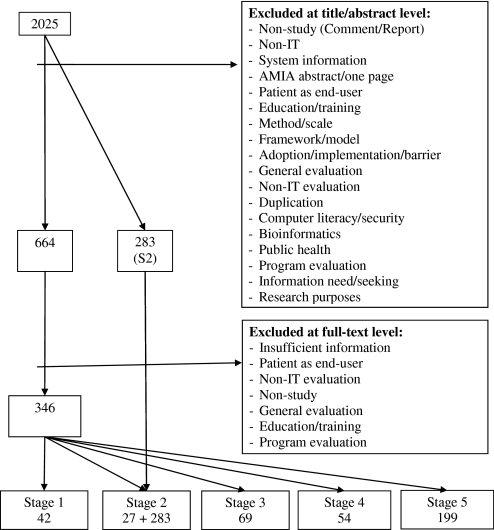
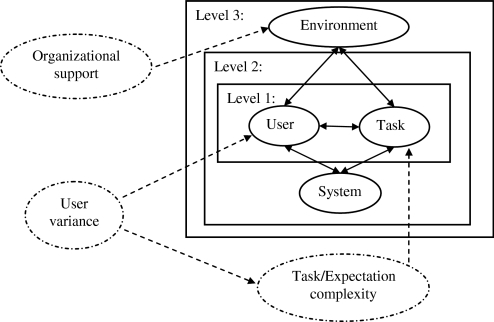
Usability factors are a major obstacle to health information technology (IT) adoption. The purpose of this paper is to review and categorize health IT usability study methods and to provide practical guidance on health IT usability evaluation. 2025 references were initially retrieved from the Medline database from 2003 to 2009 that evaluated health IT used by clinicians. Titles and abstracts were first reviewed for inclusion. Full-text articles were then examined to identify final eligibility studies. 629 studies were categorized into the five stages of an integrated usability specification and evaluation framework that was based on a usability model and the system development life cycle (SDLC)-associated stages of evaluation. Theoretical and methodological aspects of 319 studies were extracted in greater detail and studies that focused on system validation (SDLC stage 2) were not assessed further. The number of studies by stage was: stage 1, task-based or user-task interaction, n=42; stage 2, system-task interaction, n=310; stage 3, user-task-system interaction, n=69; stage 4, user-task-system-environment interaction, n=54; and stage 5, user-task-system-environment interaction in routine use, n=199. The studies applied a variety of quantitative and qualitative approaches. Methodological issues included lack of theoretical framework/model, lack of details regarding qualitative study approaches, single evaluation focus, environmental factors not evaluated in the early stages, and guideline adherence as the primary outcome for decision support system evaluations. Based on the findings, a three-level stratified view of health IT usability evaluation is proposed and methodological guidance is offered based upon the type of interaction that is of primary interest in the evaluation.
Overview
The claims and statistics of this paper haven’t been checked yet.
Free: it reads the open-access text and checks the first 5 claims that cite a source we can check. Create a free account to check every claim.
Integrity signals
Registry
Cites
Statistics
Figures
Verification
Claims the paper makes
The claims and statistics of this paper haven’t been checked yet.
Free: it reads the open-access text and checks the first 5 claims that cite a source we can check. Create a free account to check every claim.
Claims other papers make about this one
Each is checked against this paper’s own text: does it say what the citing paper says it does?
The cited source says what the claim attributes to it.
In the citing paper
“Usability challenges present a major barrier to health information technology adoption 29”
From A chatbot for hypertension self-management support: user-centered design, development, and usability testing (2023) · cites this paper as [29]
Self-check
Percentages, sums and reported differences re-computed from the paper’s own numbers.
The self-check needs the paper’s full text.
Citations
Cites
Perceived usefulness, perceived ease of use, and user acceptance of information technology
Davis, F. D. (1989) · MIS Quarterly · doi:10.2307/249008 · Cited by 68,483
(1993) · Cited by 9,879
Nielsen, J. (1995) · Conference companion on Human factors in computing systems - CHI '95 · doi:10.1145/223355.223730 · Cited by 2,620
IBM computer usability satisfaction questionnaires: Psychometric evaluation and instructions for use
Lewis, J. R. (1995) · International Journal of Human-Computer Interaction · doi:10.1080/10447319509526110 · Cited by 2,429
Development of an instrument measuring user satisfaction of the human-computer interface
Chin, J. P., Diehl, V. A., & Norman, L. K. (1988) · Proceedings of the SIGCHI conference on Human factors in computing systems - CHI '88 · doi:10.1145/57167.57203 · Cited by 1,609
Participatory Design: Principles and Practices
(2017) · CRC Press eBooks · doi:10.1201/9780203744338 · Cited by 1,500 · cited 1×
“Although we found only one theoretical framework and one method not covered in our review, approaches such as participatory design and ethnography provide overall frameworks that link sets of methods together in a manner that is greater than the sum of their parts.(79) Therefore, a review that included searches of add…”
MethodA Practical Guide to Usability Testing
Dumas, J. F., & Redish, J. C. (1993) · Cited by 1,335
Poissant, L. (2005) · Journal of the American Medical Informatics Association · doi:10.1197/jamia.m1700 · Cited by 901 · cited 4×
“Rahimi and Vimar-lund 10 reviewed general methods used to evaluate health IT.”
MethodInfluentialBiomedical Informatics: Computer Applications in Health Care and Biomedicine
(2024) · Biomedical Informatics: Computer Applications in Health Care and Biomedicine · doi:10.33029/9704-8204-9-bin-2024-1-744 · Cited by 777
Cognitive and usability engineering methods for the evaluation of clinical information systems.
Kushniruk, A. W., & Patel, V. L. (2004) · Journal of Biomedical Informatics · doi:10.1016/j.jbi.2004.01.003 · Cited by 760 · cited 1×
“Kushniruk and Patel 8 provided a methodological review for cognitive and usability engineering methods.”
Research works printed but not linked: 3
- Rubin J Handbook Of Usability Testing. New York: John Wiley & Sons, 1993
- Hyun S Johnson SB Bakken S User-centered approaches for eliciting functional requirements and designing user interfaces: a nursing documentation case study. J Biomed Inform 2008; In press.
- Lewis C Using the “Think Aloud” Method in Cognitive Interface Design. New York: IBM, 1982
Cited by
Yardley, L., Morrison, L., Bradbury, K., & Muller, I. (2015) · Journal of Medical Internet Research · doi:10.2196/jmir.4055 · Cited by 1,442
“…expert intervention developers to fully anticipate the priorities and needs of users [5], and so intervention developers already routinely elicit the views of target users in a variety of ways [6,7], but there is surprisingly little debate and detailed guidance concerning how best to do this [8].”
BackgroundMiddleton, B., Bloomrosen, M., Dente, M. A., Hashmat, B., Koppel, R., Overhage, J. M., Payne, T. H., Rosenbloom, S. T., Weaver, C., & Zhang, J. (2013) · Journal of the American Medical Informatics Association · doi:10.1136/amiajnl-2012-001458 · Cited by 618
Mohr, D. C., Schueller, S. M., Montague, E., Burns, M. N., & Rashidi, P. (2014) · Journal of Medical Internet Research · doi:10.2196/jmir.3077 · Cited by 510
Mohr, D. C., Lyon, A. R., Lattie, E. G., Reddy, M., & Schueller, S. M. (2017) · Journal of Medical Internet Research · doi:10.2196/jmir.7725 · Cited by 432
“Technology objectives typically include markers of usability including satisfaction, usefulness, ease of use, and absence of errors [72].”
BackgroundZahabi, M., Kaber, D. B., & Swangnetr, M. (2015) · Human Factors: The Journal of the Human Factors and Ergonomics Society · doi:10.1177/0018720815576827 · Cited by 240
“Furthermore, the Yen and Bakken (2012) review focused on identification of usability study methodologies with application to health information technology and not usability issues in existing designs of EMRs.”
BackgroundSchnall, R., Cho, H., & Liu, J. (2018) · JMIR mHealth and uHealth · doi:10.2196/mhealth.8851 · Cited by 239
“The model was developed in response to the current gaps in the extant usability literature [20].”
Baker, T. B., Gustafson, D. H., & Shah, D. (2014) · Journal of Medical Internet Research · doi:10.2196/jmir.2925 · Cited by 221
“It is also possible, though, that theory that is more applied in nature could also reveal universal principles (eg, theories of general system design and others, such as Dansky [32] and Yen & Bakken [33]).”
BackgroundInfluentialReeder, B., Meyer, E., Lazar, A., Chaudhuri, S., Thompson, H. J., & Demiris, G. (2013) · International Journal of Medical Informatics · doi:10.1016/j.ijmedinf.2013.03.007 · Cited by 182
Use of health information technology to reduce diagnostic errors
El-Kareh, R., Hasan, O., & Schiff, G. D. (2013) · BMJ Quality & Safety · doi:10.1136/bmjqs-2013-001884 · Cited by 159
A systematic review of the impact of health information technology on nurses’ time
Moore, E. C., Tolley, C. L., Bates, D. W., & Slight, S. P. (2020) · Journal of the American Medical Informatics Association · doi:10.1093/jamia/ocz231 · Cited by 125
Usability evaluation of mHealth apps for elderly individuals: a scoping review
Wang, Q., Liu, J., Zhou, L., Tian, J., Chen, X., Zhang, W., Wang, H., Zhou, W., & Gao, Y. (2022) · BMC Medical Informatics and Decision Making · doi:10.1186/s12911-022-02064-5 · Cited by 142
“…goal of testing the usability of the system in the absence of researcher influence and fixing usability problems; typically based on small studies [30, 32] Stage three: Routine use This stage was routine use of a complete or near-complete system in a realistic condition that could be used to…”
BackgroundInfluentialCresswell, K. M., Williams, R., & Sheikh, A. (2020) · Journal of Medical Internet Research · doi:10.2196/15068 · Cited by 138
“However, although acknowledging the complexity of the process, these nuanced frameworks tend to concentrate on one particular local and situated aspect of technology implementation, thereby neglecting the role of wider structuring conditions in shaping developments [16,34-37].”
User-centered design to improve clinical decision support in primary care
Brunner, J., Chuang, E., Goldzweig, C., Cain, C. L., Sugar, C., & Yano, E. M. (2017) · International Journal of Medical Informatics · doi:10.1016/j.ijmedinf.2017.05.004 · Cited by 117
“But qualitative research on health IT implementation supports the notion that a good way to assess whether a health IT system is functioning well is to ask a person who depends on that system [2].”
BackgroundInfluentialOudbier, S. J., Souget-Ruff, S. P., Chen, B. S. J., Ziesemer, K. A., Meij, H. J., & Smets, E. M. A. (2024) · BMJ Open · doi:10.1136/bmjopen-2023-075833 · Cited by 132
An appraisal of published usability evaluations of electronic health records via systematic review
Ellsworth, M. A., Dziadzko, M., O'Horo, J. C., Farrell, A. M., Zhang, J., & Herasevich, V. (2017) · Journal of the American Medical Informatics Association · doi:10.1093/jamia/ocw046 · Cited by 107
“As with the survey-based studies, we found that studies using other, sometimes more complicated, usability analysis methods also often neglected to provide a clear, detailed description of their study design.(2,138) For example, a significant number of the heuristic evaluation reports we reviewed did not describe what…”
ResultA Systematic Literature Review of Agents Applied in Healthcare
Isern, D., & Moreno, A. (2015) · Journal of Medical Systems · doi:10.1007/s10916-015-0376-2 · Cited by 123
Coiera, E., Aarts, J., & Kulikowski, C. (2012) · Journal of the American Medical Informatics Association · doi:10.1136/amiajnl-2011-000674 · Cited by 106
“Ensuring such usability requires system designers to engage, using different methods, at multiple stages in the software life cycle, 21 underscoring the ,task,informationsystemandenvironment.”
MethodTowards Usable E-Health: A Systematic Review of Usability Questionnaires
de Sousa, V. E. C., & Lopez, K. D. (2017) · Applied Clinical Informatics · doi:10.4338/aci-2016-10-r-0170 · Cited by 120
Usability Study of a Computer-Based Self-Management System for Older Adults with Chronic Diseases
Or, C., & Tao, D. (2012) · JMIR Research Protocols · doi:10.2196/resprot.2184 · Cited by 100
“Third, one of the main criticisms of previous studies on health IT usability has been the lack of a theoretical basis for the development of the study methodology [50].”
Cahill, M. R., Cleary, B., & Cullinan, S. (2025) · BMC Health Services Research · doi:10.1186/s12913-024-12060-2 · Cited by 110
Older Cancer Patients’ User Experiences With Web-Based Health Information Tools: A Think-Aloud Study
Bolle, S., Romijn, G., Smets, E. M. A., Loos, E. F., Kunneman, M., & van Weert, J. C. M. (2016) · Journal of Medical Internet Research · doi:10.2196/jmir.5618 · Cited by 107
“Many studies consider usability, that is, “the extent to which a product can be used by specified users to achieve specified goals with effectiveness, efficiency, and satisfaction,” as the main outcome to evaluate Web-based health information tools [18].”
Macroergonomics in Health Care Quality and Patient Safety
Carayon, P., Karsh, B., Gürses, A. P., Holden, R. J., Hoonakker, P., Hundt, A. S., Montague, E. N. H., Rodriguez, A. J., & Wetterneck, T. B. (2013) · Reviews of Human Factors and Ergonomics · doi:10.1177/1557234x13492976 · Cited by 105
“…of a health IT and assessing its impact on workflow assessment, usability should be incorporated in every step of the design life cycle (Yen & Bakken, 2012): • from identifying and describing system requirements, • to procurement (Ginsburg, 2005), • throughout the system development…”
Abraham, C. M., Zheng, K., & Poghosyan, L. (2020) · Medical Care Research and Review · doi:10.1177/1077558719888427 · Cited by 99
Wearables for Stress Management: A Scoping Review
González-Ramírez, M. L., Garćıa-Vázquez, J. P., Rodríguez, M. D., Padilla-López, A., Galindo-Aldana, G., & Cuevas-González, D. (2023) · Healthcare · doi:10.3390/healthcare11172369 · Cited by 97
“The type of studies included in the review are those presenting evaluations associated with the development life cycle of interactive health systems, as explained by Yen and Bakken [30].”
BackgroundMethodRazmak, J., & Bélanger, C. H. (2018) · Information Technology and People · doi:10.1108/itp-07-2016-0160 · Cited by 97
(2016) · PubMed Central · Cited by 92
Pickover, C. A. (1986) · The Journal of the Acoustical Society of America · doi:10.1121/1.393918 · Cited by 92
Catalani, C., Green, E. P., Owiti, P., Keny, A., Diero, L. O., Yeung, A., Israelski, D. M., & Biondich, P. (2014) · PLoS ONE · doi:10.1371/journal.pone.0103205 · Cited by 95
The impact of EHR and HIE on reducing avoidable admissions: controlling main differential diagnoses
Ben-Assuli, O., Shabtai, I., & Leshno, M. (2013) · BMC Medical Informatics and Decision Making · doi:10.1186/1472-6947-13-49 · Cited by 81
“See [8] for a review on health IT usability study methodologies.”
BackgroundMEDICAL DEVICES EARLY ASSESSMENT METHODS: SYSTEMATIC LITERATURE REVIEW
Markiewicz, K., van Til, J. A., & IJzerman, M. J. (2014) · International Journal of Technology Assessment in Health Care · doi:10.1017/s0266462314000026 · Cited by 87
“To include stakeholder perspectives in further development of a medical device [44] [45]; [46] [47]; [48] [49]; [50]; [51]; [52]; [53]; [54]; [55]; [56]; [57]; [58]; [59] [60] [61]”
Using technology to engage hospitalised patients in their care: a realist review
Roberts, S., Chaboyer, W. P., Crespo, R. A. G., & Marshall, A. P. (2017) · BMC Health Services Research · doi:10.1186/s12913-017-2314-0 · Cited by 89
“There are several steps in user-centred design of HIT, known as the ‘system development life cycle’, which include: assessment of user needs and setting/context of use; development of system components; testing system and tasks with users; testing system and tasks with users within context/setting; and routine use [34…”
BackgroundA multi-level usability evaluation of mobile health applications: A case study
Cho, H., Yen, P., Dowding, D., Merrill, J. A., & Schnall, R. (2018) · Journal of Biomedical Informatics · doi:10.1016/j.jbi.2018.08.012 · Cited by 87
“[16,17,19] To overcome this challenge, we used several usability evaluation methodologies at each stage of the development process to operationalize the Stratified View of Health IT Usability Evaluation Framework.”
BackgroundMethodInfluentialSelf-citationGolz, C., Peter, K. A., Zwakhalen, S. M. G., & Hahn, S. (2021) · Informatics for Health and Social Care · doi:10.1080/17538157.2021.1872579 · Cited by 86
“HIT is “the application of information processing involving both computer hardware and software that deals with the storage, retrieval, sharing, and use of healthcare information, data, and knowledge for communication and decision making,” such as decision support systems, hospital information systems, or electronic h…”
BackgroundLyles, C. R., Sarkar, U., & Osborn, C. Y. (2014) · Current Diabetes Reports · doi:10.1007/s11892-014-0534-9 · Cited by 84
Turner, A. M., Reeder, B., & Ramey, J. (2013) · Journal of Biomedical Informatics · doi:10.1016/j.jbi.2013.04.006 · Cited by 66
“…that the majority of studies failed to report an explicit qualitative design approach, focused only on a single aspect of the work environment, and rarely used task and/or workflow analysis to contextualize the fit of users, tasks, systems and work environments in the early stages of design [10].”
Assessing the Usability of a Clinical Decision Support System: Heuristic Evaluation
Cho, H., Keenan, G. M., Madandola, O. O., Santos, F. C. D., Macieira, T. G. R., Bjarnadóttir, R. I., Priola, K., & Lopez, K. D. (2022) · JMIR Human Factors · doi:10.2196/31758 · Cited by 80
“In contrast, user-based evaluations focus on a user’s experience and interaction with a given system (eg, think-aloud method, interviews, focus groups, questionnaires) [14,15,20,21].”
BackgroundInfluentialMartikainen, S., Viitanen, J., & Lääveri, T. (2020) · International Journal of Medical Informatics · doi:10.1016/j.ijmedinf.2020.104117 · Cited by 78
“To help end users participate in HIS design and evaluation, various quantitative and qualitative approaches have been used [20,21].”
MethodPatient Portal Adoption Rates: A Systematic Literature Review and Meta-Analysis
Fraccaro, P., Vigo, M., Balatsoukas, P., Buchan, I. E., Peek, N. B., & van der Veer, S. N. (2017) · Studies in health technology and informatics · doi:10.3233/978-1-61499-830-3-79 · Cited by 77
“We built a data abstraction form on the basis of previous systematic reviews on patient portals [17, 29] and health information systems evaluations [19, 30, 31], and pilot-tested it among the authors (PF, SvdV, MV, NP).”
MethodSystematic AI Support for Decision-Making in the Healthcare Sector: Obstacles and Success Factors
Bertl, M., Ross, P., & Draheim, D. (2023) · Health Policy and Technology · doi:10.1016/j.hlpt.2023.100748 · Cited by 72
AI Applications for Chronic Condition Self-Management: Scoping Review
Hwang, M., Zheng, Y., Cho, Y., & Jiang, Y. (2025) · Journal of Medical Internet Research · doi:10.2196/59632 · Cited by 72
“Next, we applied the evaluation framework provided by Yen and Bakken [28], which is proposed based on the system developmental life cycle (Table 1) [29].”
Ni, Y., Bermudez, M., Kennebeck, S., Liddy-Hicks, S., & Dexheimer, J. (2019) · JMIR Medical Informatics · doi:10.2196/14185 · Cited by 61
“It is one of the most important factors that impact users’ adoption and meaningful use of health information technologies [47].”
Asan, O., & Yang, Y. (2015) · JMIR Human Factors · doi:10.2196/humanfactors.4062 · Cited by 66
“To address usability issues and improve the design of HIT, usability evaluation research is necessary and becoming more prevalent [8,9].”
BackgroundResultTsopra, R., Jaïs, J., Venot, A., & Duclos, C. (2014) · Journal of the American Medical Informatics Association · doi:10.1136/amiajnl-2013-002042 · Cited by 65
“46 This factor would have to be taken into account to con fi rm our results in clinical practice, because implementation in a real environment may generate results different from those obtained in a laboratory setting.”
BackgroundMethodResultInfluentialThonon, F., Perrot, S., Yergolkar, A. V., Rousset‐Torrente, O., Griffith, J. W., Chassany, O., & Duracinský, M. (2021) · Journal of Medical Internet Research · doi:10.2196/25131 · Cited by 61
“Usability studies are studies that aim to explore usability requirements, discover usability problems, and design solutions [16].”
Cnossen, I. C., van Uden‐Kraan, C. F., Eerenstein, S. E. J., Jansen, F., Lissenberg-Witte, B. I., Lacko, M., Hardillo, J. A., Honings, J., Halmos, G. B., Goedhart-Schwandt, N. L. Q., et al. (2015) · Supportive Care in Cancer · doi:10.1007/s00520-015-2896-1 · Cited by 57
“, the outpatient clinic, at home) [18].”
BackgroundMoradian, S., Krzyzanowska, M. K., Maguire, R., Morita, P. P., Kukreti, V., Avery, J., Liu, G., Cafazzo, J., & Howell, D. (2018) · JMIR Cancer · doi:10.2196/10932 · Cited by 56
“Data collection combined user-based testing using a think-aloud technique, semistructured qualitative interviews based on a qualitative descriptive methodology [24], and short answer quantitative questionnaires; all these methods have been used widely for usability testing [25].”
MethodGhorayeb, A., Darbyshire, J. L., Wronikowska, M. W., & Watkinson, P. (2023) · BMJ Open · doi:10.1136/bmjopen-2022-065323 · Cited by 57
Exploring nurses’ confirmed expectations regarding health IT: A phenomenological study
Zadvinskis, I. M., Chipps, E. M., & Yen, P. (2013) · International Journal of Medical Informatics · doi:10.1016/j.ijmedinf.2013.11.001 · Cited by 56
Self-citationValta, M. (2013) · UEF eRepo (University of Eastern Finland) · Cited by 57
Usability evaluation of a commercial inpatient portal
Yen, P., Walker, D. M., Smith, J. G., Zhou, M. P., Menser, T. L., & McAlearney, A. S. (2017) · International Journal of Medical Informatics · doi:10.1016/j.ijmedinf.2017.11.007 · Cited by 55
Self-citationAn empirical evaluation of a hands-free computer interaction for users with motor disabilities
Šumak, B., Špindler, M., Debeljak, M., Heričko, M., & Pušnik, M. (2019) · Journal of Biomedical Informatics · doi:10.1016/j.jbi.2019.103249 · Cited by 54
Breakey, V. R., Warias, A. V., Ignas, D. M., White, M., Blanchette, V. S., & Stinson, J. N. (2013) · BMC Medical Informatics and Decision Making · doi:10.1186/1472-6947-13-113 · Cited by 47
“Recent medical literature reviews and compares usability testing methods used to assess health technologies [8,10].”
BackgroundPigini, L., Bovi, G., Panzarino, C., Gower, V., Ferratini, M., Andreoni, G., Sassi, R., Rivolta, M. W., & Ferrarin, M. (2017) · Gerontology · doi:10.1159/000455168 · Cited by 54
Li, L. C., Adam, P. M., Townsend, A. F., Lacaille, D., Yousefi, C., Stacey, D., Gromala, D., Shaw, C. D., Tugwell, P., & Backman, C. L. (2013) · BMC Medical Informatics and Decision Making · doi:10.1186/1472-6947-13-131 · Cited by 49
“Yen and Bakken recommend three levels of usability evaluation [43].”
BackgroundChang, C.-H., Yeh, C., Chang, C.-C., & Lin, Y. (2022) · JMIR Serious Games · doi:10.2196/38465 · Cited by 51
Abujarad, F., Peduzzi, P. N., Mun, S., Carlson, K., Edwards, C., Dziura, J. D., Brandt, C., Alfano, S. L., & Chupp, G. L. (2021) · JMIR Formative Research · doi:10.2196/20458 · Cited by 48
“Previous systematic reviews have suggested that enhanced consent forms and extended discussions are most effective in improving participant understanding, and our findings confirm this claim [3,28-32].”
Usability Testing of the BRANCH Smartphone App Designed to Reduce Harmful Drinking in Young Adults
Milward, J., Deluca, P., Drummond, C., Watson, R., Dunne, J., & Kimergård, A. (2017) · JMIR mhealth and uhealth · doi:10.2196/mhealth.7836 · Cited by 50
“A range of methods for usability testing exist including questionnaires [12,13], think-aloud observation, and interview-based techniques [14].”
BackgroundGriffin, A. C., Khairat, S., Bailey, S. C., & Chung, A. E. (2023) · JAMIA Open · doi:10.1093/jamiaopen/ooad073 · Cited by 46
Exploring Patients’ Use Intention of Personal Health Record Systems: Implications for Design
Ozok, A. A., Wu, H., & Gürses, A. P. (2017) · International Journal of Human-Computer Interaction · doi:10.1080/10447318.2016.1277637 · Cited by 46
“A little above 10% of the 192 participants in our sample were PHR users, which is consistent with what is reported in the literature on PHR use among the general population around the time this study was conducted (Yen & Bakken, 2012).”
BackgroundMethodResultBoland, M. R., Rusanov, A., So, Y. S., Lopez-Jimenez, C., Busacca, L., Steinman, R. C., Henry, S. B., Bigger, J. T., & Weng, C. (2013) · Journal of Biomedical Informatics · doi:10.1016/j.jbi.2013.12.004 · Cited by 48
“Five levels of usability evaluation have been described in the literature: task-based, user-task, system-task, user-task-system, and user-task-system-environment [5].”
BackgroundInfluentialA Review of Usability Evaluation Methods and Their Use for Testing eHealth HIV Interventions
Davis, R., Gardner, J., & Schnall, R. (2020) · Current HIV/AIDS Reports · doi:10.1007/s11904-020-00493-3 · Cited by 45
Silva, A. G., Caravau, H., Martins, A. I., Almeida, A. M., Silva, T., Ribeiro, Ó. M., Santinha, G. A. D. S., & Rocha, N. P. (2021) · JMIR Human Factors · doi:10.2196/22774 · Cited by 43
“— — ✓ ✓ ✓ ✓ ✓ — Yen and Bakken (2012) [48]”
BackgroundMarco-Ruiz, L., Bønes, E., de la Asunción, E., Gabarrón, E., Solis, J. C. A., Lee, E., Traver, V., Sato, K., & Bellika, J. G. (2017) · Journal of Biomedical Informatics · doi:10.1016/j.jbi.2017.09.002 · Cited by 42
A Mobile App (BEDSide Mobility) to Support Nurses’ Tasks at the Patient's Bedside: Usability Study
Ehrler, F., Weinhold, T., Joe, J., Lovis, C., & Blondon, K. (2018) · JMIR mhealth and uhealth · doi:10.2196/mhealth.9079 · Cited by 43
“It consisted of the completion of 10 goal-oriented tasks by targeted end users [29].”
BackgroundShorten, A., Fagerlin, A., Illuzzi, J., Kennedy, H. P., Lakehomer, H., Pettker, C. M., Saran, A., Witteman, H., & Whittemore, R. (2015) · Journal of Midwifery & Women's Health · doi:10.1111/jmwh.12298 · Cited by 39
Akhloufi, H., Verhaegh, S. J. C., Jaspers, M., Melles∗, D. C., van der Sijs, H., & Verbon, A. (2019) · PLoS ONE · doi:10.1371/journal.pone.0223073 · Cited by 42
“For ultimate system usability, iterative usability evaluation during the development and implementation of CDSS are important [28, 40, 41].”
BackgroundMethodEHR-based Visualization Tool: Adoption Rates, Satisfaction, and Patient Outcomes
Foraker, R. E., Kite, B., Kelley, M. M., Lai, A. M., Roth, C., Lopetegui, M. A., Shoben, A. B., Langan, M., Rutledge, N., & Payne, P. (2015) · eGEMs (Generating Evidence & Methods to improve patient outcomes) · doi:10.13063/2327-9214.1159 · Cited by 41
Comparing usability testing outcomes and functions of six electronic nursing record systems
Cho, I., Kim, E., Choi, W. H., & Staggers, N. (2016) · International Journal of Medical Informatics · doi:10.1016/j.ijmedinf.2016.01.007 · Cited by 41
Poncette, A.-S., Mosch, L. K., Stablo, L., Spies, C., Schieler, M., Weber‐Carstens, S., Feufel, M. A., & Balzer, F. (2022) · JMIR Human Factors · doi:10.2196/30655 · Cited by 40
“Moreover, as was the case in our study, the design and implementation of health technologies are often separate processes, making it difficult to apply an HCD approach across all development and implementation phases [22,73].”
BackgroundMethodCnossen, I. C., van Uden‐Kraan, C. F., Eerenstein, S. E. J., Rinkel, R. N. P. M., Aalders, I. J., van den Berg, K., de Goede, C. J. T., van Stijgeren, A. J., Cruijff-Bijl, Y., de Bree, R., et al. (2015) · Folia Phoniatrica et Logopaedica · doi:10.1159/000441251 · Cited by 39
“Expert and end user usability testing is essential to ensure that patients’ needs are met and that patients are able to navigate the website appropriately and efficiently [14,15].”
BackgroundWozney, L., Baxter, P., & Newton, A. S. (2015) · BMC Pediatrics · doi:10.1186/s12887-015-0534-1 · Cited by 38
“affect program/intervention performance or user satisfaction [28–30].”
Reeder, B., Hills, R., Turner, A. M., & Demiris, G. (2013) · Public Health Nursing · doi:10.1111/phn.12081 · Cited by 38
Capturing the patients’ voices: Planning for patient-centered electronic health record use
Asan, O., Tyszka, J. T., & Fletcher, K. E. (2016) · International Journal of Medical Informatics · doi:10.1016/j.ijmedinf.2016.08.002 · Cited by 38
Wray, T. B., Chan, P. A., Simpanen, E. M., & Operario, D. (2017) · JMIR mhealth and uhealth · doi:10.2196/mhealth.6491 · Cited by 37
“Market research suggests that up to 68% of the adult population in the United States currently own smartphones [31], and this figure is likely to grow exponentially in the future. iOS and Android users comprise 95.3% of these smartphones [32].”
InfluentialWautelet, Y., Kolp, M., Heng, S., & Poelmans, S. (2017) · Telematics and Informatics · doi:10.1016/j.tele.2017.12.013 · Cited by 36
Towards implementing SNOMED CT in nursing practice: A scoping review
Kim, J., Macieira, T. G. R., Meyer, S. L., Ansell, M., Bjarnadóttir, R. I., Smith, M. B., Citty, S. W., Schentrup, D. M., Nealis, R. M., & Keenan, G. M. (2019) · International Journal of Medical Informatics · doi:10.1016/j.ijmedinf.2019.104035 · Cited by 36
Evaluating the agreement of users with usability problems identified by heuristic evaluation
Khajouei, R., Ameri, A., & Jahani, Y. (2018) · International Journal of Medical Informatics · doi:10.1016/j.ijmedinf.2018.05.012 · Cited by 35
Fraccaro, P., Vigo, M., Balatsoukas, P., Buchan, I. E., Peek, N. B., & van der Veer, S. N. (2018) · International Journal of Medical Informatics · doi:10.1016/j.ijmedinf.2017.12.028 · Cited by 35
“systems [34] and current practice in usability studies [33] that found that usability effectiveness and efficiency were infrequently evaluated.”
BackgroundMethodCarbonnel, F., & Ninot, G. (2019) · Journal of Medical Internet Research · doi:10.2196/13606 · Cited by 33
“Engineering is focused on technicity (ie, release criteria, ergonomics, user experience, and data security), which leads to uncertainties about these technologies’ health contributions and turns them into entertainment products or gadgets [80].”
Effect of Prior Health Knowledge on the Usability of Two Home Medical Devices: Usability Study
Chaniaud, N., Métayer, N., Mégalakaki, O., & Loup‐Escande, É. (2020) · JMIR mhealth and uhealth · doi:10.2196/17983 · Cited by 34
“Systematic analyses over the past 10 years have consistently raised an alarm [16-21] by reporting a lack of a framework and a standardized method in usability studies.”
Qualitative review of usability problems in health information systems for radiology
Dias, C. R., Pereira, M. R., & Freire, A. P. (2017) · Journal of Biomedical Informatics · doi:10.1016/j.jbi.2017.10.004 · Cited by 35
Monteiro-Guerra, F., Signorelli, G. R., Tadas, S., Zubiete, E. D., Rivera-Romero, O., Fernández-Luque, L., & Caulfield, B. (2020) · JMIR mhealth and uhealth · doi:10.2196/17552 · Cited by 33
“In this study, a mixed methods approach was followed for usability testing [47,48].”
Rochat, J., Ehrler, F., Siebert, J. N., Ricci, A., Ruiz, V. G., & Lovis, C. (2022) · JMIR Pediatrics and Parenting · doi:10.2196/25540 · Cited by 32
Schoen, M. W., Basch, E., Hudson, L. L., Chung, A. E., Mendoza, T. R., Mitchell, S. A., Germain, D. S., Baumgartner, P., Sit, L., Rogak, L. J., et al. (2018) · JMIR Human Factors · doi:10.2196/10070 · Cited by 33
“The usability investigative team (represented by the authors) analyzed the PRO-CTCAE software core functionalities and identified key tasks for testing [18].”
MethodTowards the Design of Usable Privacy by Design Methodologies
Pattakou, A., Mavroeidi, A., Diamantopoulou, V., Kalloniatis, C., & Gritzalis, S. (2018) · IEEE International Workshop on Evolving Security & Privacy Requirements Engineering (ESPRE) · doi:10.1109/espre.2018.00007 · Cited by 33
Exploring Healthcare Professionals’ Perspectives on Electronic Medical Records: A Qualitative Study
Torkman, R., Ghapanchi, A. H., & Ghanbarzadeh, R. (2025) · Information · doi:10.3390/info16030236 · Cited by 31
Arthurs, N., Tully, L., O’Malley, G., & Browne, S. (2022) · International Journal of Environmental Research and Public Health · doi:10.3390/ijerph19031453 · Cited by 31
“spite this, the majority of research findings convey that insufficient detail is gathered from these techniques [48]; highlighting the benefits of a mixed-methods approach using both qualitative and quantitative processes.”
BackgroundMethodMann, D. M., Chokshi, S. K., & Kushniruk, A. W. (2018) · JMIR Human Factors · doi:10.2196/10721 · Cited by 31
“Usability testing has emerged as an important methodology in health informatics [5-8].”
MethodDownie, A., Hancock, M. J., Shaheed, C. A., McLachlan, A. J., Kocaballi, A. B., Williams, C. M., Michaleff, Z. A., & Maher, C. G. (2020) · JMIR Medical Informatics · doi:10.2196/17203 · Cited by 31
“After the completion of the internal testing, the next phase of usability was based on the recommendations of Yen and Bakken [34], where the community pharmacist interacted with the CDSS through a series of 5 case vignettes (system-user-task).”
BackgroundMethodInfluentialStagg, B. C., Stein, J. D., Medeiros, F. A., Wirostko, B. M., Crandall, A. S., Hartnett, M. E., Cummins, M. R., Morris, A. H., Hess, R., & Kawamoto, K. (2020) · Ophthalmology Glaucoma · doi:10.1016/j.ogla.2020.08.006 · Cited by 32
Clarke, M. A., Belden, J. L., & Kim, M. S. (2014) · Journal of Evaluation in Clinical Practice · doi:10.1111/jep.12277 · Cited by 30
Validação e utilização de novas tecnologias na saúde e educação: uma revisão integrativa
Penha, J. R. L., Fernandes, F. A., de Oliveira, C. C., de Oliveira, R. D., & Barros, E. F. (2018) · Revista Interdisciplinar de Promoção da Saúde · doi:10.17058/rips.v1i3.12580 · Cited by 31
Wohlgemut, J. M., Pisirir, E., Kyrimi, E., Stoner, R. S., Marsh, W., Perkins, Z., & Tai, N. R. M. (2023) · JAMIA Open · doi:10.1093/jamiaopen/ooad051 · Cited by 31
“However, like quantitative approaches, a plethora of methodological approaches to qualitative analysis exist for the evaluation of usability of CDSS, which makes between-study comparison challenging.(74) Identifying consistent and shared themes across studies would be more achievable if description and approach of qua…”
BackgroundLyon, A. R., Lewis, C. C., Melvin, A., Boyd, M. R., Nicodimos, S., Liu, F. F., & Jungbluth, N. J. (2015) · Implementation Science · doi:10.1186/s13012-016-0495-2 · Cited by 30
Pollack, A. H., Miller, A., Mishra, S. R., & Pratt, W. (2016) · PubMed Central · Cited by 29
Mitchell, K. M., Holtz, B., & McCarroll, A. M. (2019) · Telemedicine Journal and e-Health · doi:10.1089/tmj.2018.0236 · Cited by 29
Designing an over-the-counter consumer decision-making tool for older adults
Martin-Hammond, A. M., Abegaz, T. T., & Gilbert, J. E. (2015) · Journal of Biomedical Informatics · doi:10.1016/j.jbi.2015.07.006 · Cited by 29
“Usability evaluation is therefore recognized as an important step in HIT evaluation and is recommended throughout the HIT development lifecycle [50,21].”
BackgroundJones, W. E., Drake, C., Mack, D. C., Reeder, B., Trautner, B. W., & Wald, H. L. (2017) · Applied Clinical Informatics · doi:10.4338/aci-2016-12-ra-0209 · Cited by 29
Pruitt, Z. M., Kazi, S., Weir, C. R., Taft, T., Busog, D.-N. C., Ratwani, R. M., & Hettinger, A. Z. (2023) · Applied Clinical Informatics · doi:10.1055/s-0043-1761435 · Cited by 28
Nursing Informatics Year in Review
Carrington, J. M., & Tiase, V. L. (2013) · Nursing Administration Quarterly · doi:10.1097/naq.0b013e3182869deb · Cited by 28
Metadata
- Authors
- Yen, P.-Y., & Bakken, S.
- Affiliations
- The Ohio State University (US)
- Corresponding author
- Yen, Po-Yin
- ORCID
- Yen, Po-Yin
- Venue
- Journal of the American Medical Informatics Association
- Publisher
- Oxford University Press (OUP)
- Published
- 2011-08-09
- Volume
- 19
- Issue
- 3
- Pages
- 413-422
- ISSN
- 1067-5027 (ISSN-L)
- 1527-974X
- PMC
- PMC3341772
- OpenAlex
- W2121431887
- Semantic Scholar
- 9e355b8a884bed1c649b029c0ca2e6fdbeb6f0b6
- Cited by
- 390
- References
- 78
- Citations by year
- 2026: 17 · 2025: 29 · 2024: 26 · 2023: 31 · 2022: 31 · 2021: 36 · 2020: 40 · 2019: 23 · 2018: 35 · 2017: 32 · 2016: 16 · 2015: 29 · 2014: 17 · 2013: 22 · 2012: 2
- FWCI
- 2.03
- Type
- journal article
- Language
- en
- Open access
- hybrid
- doi.org
- Licence
- cc-by-nc-nd
- Locations
- Journal of the American Medical Informatics Association (publishedVersion, cc-by-nc-nd)
- Europe PMC (PubMed Central) (publishedVersion, cc-by-nc)
- PubMed Central (publishedVersion, cc-by-nc)
- PubMed (publishedVersion)
- Funders
- National Institute of Nursing Research (P30NR010677)
- Topics
- Health Sciences › Health Professions › Health Information Management › Electronic Health Records Systems
- Physical Sciences › Computer Science › Human-Computer Interaction › Usability and User Interface Design
- Social Sciences › Decision Sciences › Information Systems and Management › Technology Adoption and User Behaviour
- Keywords
- health information technology, usability evaluation, usability model, system development life cycle, task-based assessment, decision support system, methodological recommendations
- MeSH terms
- Humans, Medical Informatics, Models, Theoretical, Research Design, Technology Assessment, Biomedical, User-Computer Interface
About these checks
Registry, retraction, Cites and statistics results are computed, not judged, with one exception: a printed reference that no index lists is read once by a model before it counts as a citation error. Claims are extracted by a model and kept only when their quote appears verbatim in the text; each cited source is then checked, with a model’s help, for whether it says what the claim relies on. Those verdicts can be wrong — read the claim’s quote and the cited source before relying on one.
Statistics and arithmetic are recomputed, not judged.
Confidence bands are shown only for fields calibrated on our annotated test set. None is calibrated yet, so no band is shown.
What counts as a claim ›How we measure confidence ›How we check this ›
Are you an author, or do you see a problem with this page? Request a review
Data sources
Bibliographic data: Semantic Scholar, OpenAlex, Crossref.
Contains information from the Semantic Scholar Academic Graph Datasets, made available under the ODC Attribution License (ODC-BY 1.0).
Semantic Scholar’s data is described in: Kinney, R., et al. (2023). The Semantic Scholar Open Data Platform. arXiv:2301.10140.
