

Review of health information technology usability study methodologies
Open accessThe DOI matches its Crossref record; 77 of the 78 references it cites were found in a registry or an index.
Abstract
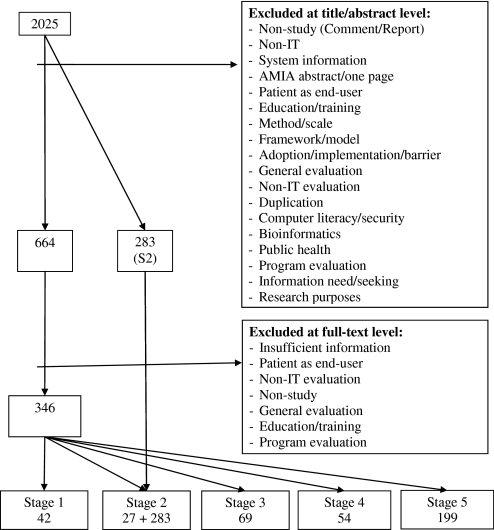
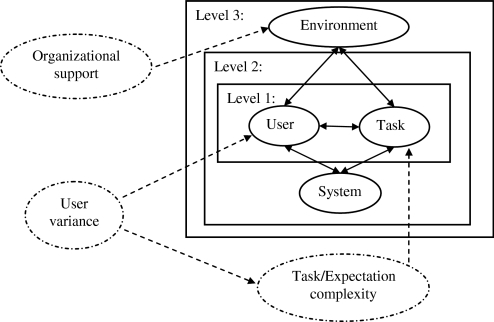
Usability factors are a major obstacle to health information technology (IT) adoption. The purpose of this paper is to review and categorize health IT usability study methods and to provide practical guidance on health IT usability evaluation. 2025 references were initially retrieved from the Medline database from 2003 to 2009 that evaluated health IT used by clinicians. Titles and abstracts were first reviewed for inclusion. Full-text articles were then examined to identify final eligibility studies. 629 studies were categorized into the five stages of an integrated usability specification and evaluation framework that was based on a usability model and the system development life cycle (SDLC)-associated stages of evaluation. Theoretical and methodological aspects of 319 studies were extracted in greater detail and studies that focused on system validation (SDLC stage 2) were not assessed further. The number of studies by stage was: stage 1, task-based or user-task interaction, n=42; stage 2, system-task interaction, n=310; stage 3, user-task-system interaction, n=69; stage 4, user-task-system-environment interaction, n=54; and stage 5, user-task-system-environment interaction in routine use, n=199. The studies applied a variety of quantitative and qualitative approaches. Methodological issues included lack of theoretical framework/model, lack of details regarding qualitative study approaches, single evaluation focus, environmental factors not evaluated in the early stages, and guideline adherence as the primary outcome for decision support system evaluations. Based on the findings, a three-level stratified view of health IT usability evaluation is proposed and methodological guidance is offered based upon the type of interaction that is of primary interest in the evaluation.
Overview
The claims and statistics of this paper haven’t been checked yet.
Free: it reads the open-access text and checks the first 5 claims that cite a source we can check. Create a free account to check every claim.
Integrity signals
Registry
Cites
Statistics
Figures
Verification
Claims the paper makes
The claims and statistics of this paper haven’t been checked yet.
Free: it reads the open-access text and checks the first 5 claims that cite a source we can check. Create a free account to check every claim.
Claims other papers make about this one
Each is checked against this paper’s own text: does it say what the citing paper says it does?
The cited source says what the claim attributes to it.
In the citing paper
“Usability challenges present a major barrier to health information technology adoption 29”
From A chatbot for hypertension self-management support: user-centered design, development, and usability testing (2023) · cites this paper as [29]
Self-check
Percentages, sums and reported differences re-computed from the paper’s own numbers.
The self-check needs the paper’s full text.
Citations
Cites
Perceived usefulness, perceived ease of use, and user acceptance of information technology
Davis, F. D. (1989) · MIS Quarterly · doi:10.2307/249008 · Cited by 68,483
(1993) · Cited by 9,879
Nielsen, J. (1995) · Conference companion on Human factors in computing systems - CHI '95 · doi:10.1145/223355.223730 · Cited by 2,620
IBM computer usability satisfaction questionnaires: Psychometric evaluation and instructions for use
Lewis, J. R. (1995) · International Journal of Human-Computer Interaction · doi:10.1080/10447319509526110 · Cited by 2,429
Development of an instrument measuring user satisfaction of the human-computer interface
Chin, J. P., Diehl, V. A., & Norman, L. K. (1988) · Proceedings of the SIGCHI conference on Human factors in computing systems - CHI '88 · doi:10.1145/57167.57203 · Cited by 1,609
Participatory Design: Principles and Practices
(2017) · CRC Press eBooks · doi:10.1201/9780203744338 · Cited by 1,500 · cited 1×
“Although we found only one theoretical framework and one method not covered in our review, approaches such as participatory design and ethnography provide overall frameworks that link sets of methods together in a manner that is greater than the sum of their parts.(79) Therefore, a review that included searches of add…”
MethodA Practical Guide to Usability Testing
Dumas, J. F., & Redish, J. C. (1993) · Cited by 1,335
Poissant, L. (2005) · Journal of the American Medical Informatics Association · doi:10.1197/jamia.m1700 · Cited by 901 · cited 4×
“Rahimi and Vimar-lund 10 reviewed general methods used to evaluate health IT.”
MethodInfluentialBiomedical Informatics: Computer Applications in Health Care and Biomedicine
(2024) · Biomedical Informatics: Computer Applications in Health Care and Biomedicine · doi:10.33029/9704-8204-9-bin-2024-1-744 · Cited by 777
Cognitive and usability engineering methods for the evaluation of clinical information systems.
Kushniruk, A. W., & Patel, V. L. (2004) · Journal of Biomedical Informatics · doi:10.1016/j.jbi.2004.01.003 · Cited by 760 · cited 1×
“Kushniruk and Patel 8 provided a methodological review for cognitive and usability engineering methods.”
Research works printed but not linked: 3
- Rubin J Handbook Of Usability Testing. New York: John Wiley & Sons, 1993
- Hyun S Johnson SB Bakken S User-centered approaches for eliciting functional requirements and designing user interfaces: a nursing documentation case study. J Biomed Inform 2008; In press.
- Lewis C Using the “Think Aloud” Method in Cognitive Interface Design. New York: IBM, 1982
Cited by
Items 101–200 of 457
Ogundipe, A., Sim, T. F., & Emmerton, L. (2022) · Research in Social and Administrative Pharmacy · doi:10.1016/j.sapharm.2022.09.010 · Cited by 27
From Usability Engineering to Evidence-based Usability in Health IT
Romaric, M., Peute, L., & Beuscart-Zéphir, M.-C. (2016) · Studies in health technology and informatics · doi:10.3233/978-1-61499-635-4-126 · Cited by 27
Co-designing social marketing programs with “bottom of the pyramid” citizens
Schmidtke, D. J., Rundle-Thiele, S. R., Kubacki, K., & Burns, G. L. (2020) · International Journal of Market Research · doi:10.1177/1470785320968029 · Cited by 27
Chaniaud, N., Mégalakaki, O., Capo, S., & Loup‐Escande, É. (2021) · JMIR Human Factors · doi:10.2196/24846 · Cited by 27
“There are 2 arguments in the literature that may explain this finding: (1) the lack of a standardized framework and method in usability studies [11-15], and (2) a lack of knowledge of the impact of the use context [16,17] on usability, in particular, user characteristics.”
Broderick, M., O'Shea, R., Burridge, J. H., Demain, S. H., Johnson, L., & Bentley, P. (2023) · JMIR Rehabilitation and Assistive Technologies · doi:10.2196/45993 · Cited by 26
“Usability is also central in the design of rehabilitation technologies; however, usability outcomes are rarely reported in clinical trials [45].”
BackgroundMatson-Koffman, D. M., Robinson, S. J., Jakhmola, P., Fochtmann, L. J., Willett, D. L., Lubin, I. M., Burton, M. M., Tailor, A., Pitts, D. L., Casey, D. E., et al. (2023) · American Journal of Medical Quality · doi:10.1097/jmq.0000000000000137 · Cited by 26
Farzandipour, M., Meidani, Z., Riazi, H., & Jabali, M. S. (2017) · Informatics for Health and Social Care · doi:10.1080/17538157.2017.1290639 · Cited by 26
Ozkaynak, M., Valdez, R. S., Holden, R. J., & Weiss, J. (2017) · Health Systems · doi:10.1080/20476965.2017.1390060 · Cited by 26
“Workflow models can help explain patient interactions (Unertl, Weinger, Johnson, & Lorenzi, 2009) and reveal design directions for technology supporting user performance (Yen & Bakken, 2012).”
BackgroundRoberts, S., Hopper, Z., Chaboyer, W. P., González, R., Banks, M., Desbrow, B., & Marshall, A. P. (2020) · BMC Health Services Research · doi:10.1186/s12913-020-5017-x · Cited by 26
“We then undertook usability testing with patients [24], which involved patients navigating completing each task while using the ‘Think Aloud’ technique [47], which is often used in HIT usability testing [40].”
MethodInfluentialJi, M., Yu, G., Xi, H., Xu, T., & Qin, Y. (2020) · Health Policy and Technology · doi:10.1016/j.hlpt.2020.11.001 · Cited by 26
A novel multimodal tool for telemonitoring patients with COPD
Sánchez-Morillo, D., Crespo, M., León, A., & Crespo Foix, L. F. (2015) · Informatics for Health and Social Care · doi:10.3109/17538157.2013.872114 · Cited by 25
“Designers are not taking into account either acceptance of older users or their needs and priorities although there is scientific consensus on that the usability of health technologies is critical to improve healthcare (44).”
BackgroundRoberts, S., Marshall, A. P., Gonzalez, R., & Chaboyer, W. P. (2017) · Journal of Human Nutrition and Dietetics · doi:10.1111/jhn.12467 · Cited by 25
Teckie, S., Solomon, J., Kadapa, K., Sanchez, K., Orner, D., Kraus, D. H., Kamdar, D., Pereira, L., Frank, D. K., & Diefenbach, M. A. (2021) · JMIR Formative Research · doi:10.2196/24667 · Cited by 25
“The LogPAL app was developed using an iterative user-centered design approach [22,23], which systematically engaged end users to identify requirements and app core functionality to enhance the effectiveness, efficiency, and usability [24,25].”
MethodLewis, M., Palmer, V. J., Kotevski, A., Densley, K., O'Donnell, M. L., Johnson, C., Wohlgezogen, F., Gray, K. M., Robins–Browne, K., & Burchill, L. J. (2021) · JMIR Research Protocols · doi:10.2196/26168 · Cited by 25
“Think aloud interviews are commonly used to test new products and technologies, as simulated situations, and to enable a user to express their thoughts and feelings out loud as they use the app in real time [28].”
BackgroundThe STEP database through the end-users eyes—USABILITY STUDY
Salunke, S., & Tuleu, C. (2015) · International Journal of Pharmaceutics · doi:10.1016/j.ijpharm.2015.06.016 · Cited by 26
Investigation of the Usability of Computerized Critical Care Information Systems in Germany
von Dincklage, F., Suchodolski, K., Lichtner, G., Friesdorf, W., Podtschaske, B. V., & Ragaller, M. (2017) · Journal of Intensive Care Medicine · doi:10.1177/0885066617696848 · Cited by 25
Roberts, S., Marshall, A. P., & Chaboyer, W. P. (2017) · BMC Medical Informatics and Decision Making · doi:10.1186/s12911-017-0495-4 · Cited by 25
Usability study of clinical exome analysis software: Top lessons learned and recommendations
Shyr, C., Kushniruk, A. W., & Wasserman, W. W. (2014) · Journal of Biomedical Informatics · doi:10.1016/j.jbi.2014.05.004 · Cited by 25
“Such systems are likely to be abandoned [11,12].”
BackgroundCao, H., Zhang, Z., Evans, R. D., Dai, W., Bi, Q., Zhu, Z., Xu, J., & Shen, L. (2021) · IEEE Transactions on Engineering Management · doi:10.1109/tem.2021.3066564 · Cited by 24
“Yen and Bakken [14] analyzed 629 usability studies to produce a five-stage evaluation framework from user-task interaction to user-task– system-environment interaction.”
BackgroundJoshi, A., Wilhelm, S. L., Aguirre, T. M., Trout, K. E., & Amadi, C. (2013) · JMIR Research Protocols · doi:10.2196/resprot.2872 · Cited by 24
“Consequences may include frustrated users, decreased efficiency coupled with increased cost, disruptions in workflow, and increases in health care errors [36].”
BackgroundUsability of the Virtual Supermarket Test for Older Adults with and without Cognitive Impairment
Zygouris, S., Segkouli, S., Triantafyllidis, A. K., Giakoumis, D., Tsolaki, M., Votis, K., & Tzovaras, D. K. (2022) · Journal of Alzheimer s Disease Reports · doi:10.3233/adr-210064 · Cited by 23
“The present study conducts a preliminary assessment of the VST’s usability, considering the importance of usability in technology adoption [12].”
A Nursing Focus on EMR Usability Enhancing Documentation of Patient Outcomes
Page, C. A. K., & Schadler, A. D. (2014) · Nursing Clinics of North America · doi:10.1016/j.cnur.2013.11.010 · Cited by 23
Hodgson, T., Magrabi, F., & Coiera, E. W. (2018) · International Journal of Medical Informatics · doi:10.1016/j.ijmedinf.2018.02.011 · Cited by 23
Rezaei‐Hachesu, P., Samad‐Soltani, T., Yaghoubi, S., Ghazisaeedi, M., Mirnia, K., Masoumi-Asl, H., & Safdari, R. (2018) · International Journal of Medical Informatics · doi:10.1016/j.ijmedinf.2018.04.007 · Cited by 23
Co-created Technological Solutions for Caregivers in Health Care: Systematic Review
Merchán-Baeza, J. A., Borralleras, C., Minobes‐Molina, E., Grau, S., Romero-Mas, M., & Ramon‐Aribau, A. (2023) · Journal of Medical Internet Research · doi:10.2196/41260 · Cited by 22
“In the other study [33], the protocol included a usability and user satisfaction study through a think-aloud method [40] and the IBM usability questionnaire [41,42] with 5 caregivers and 5 community workers, but this study was not completed.”
MethodTea, F., Groh, A. M. R., Lacey, C., & Fakolade, A. O. (2024) · npj Digital Medicine · doi:10.1038/s41746-024-01162-0 · Cited by 22
“Indeed,itiswellestablishedthatthe ’ needs and adopted long-term 11 – 13 .”
Clarke, M. A., Belden, J. L., & Kim, M. S. (2016) · JMIR Human Factors · doi:10.2196/humanfactors.4601 · Cited by 22
“Current best practices promote the use of cognitive approaches to examine human-computer interactions in EHR systems [2,48-50].”
Longaray, A. A., & Castelli, T. M. (2020) · Ciência & Saúde Coletiva · doi:10.1590/1413-812320202511.26342018 · Cited by 22
Shah, M. H., & Peikari, H. R. (2015) · Telemedicine Journal and e-Health · doi:10.1089/tmj.2014.0246 · Cited by 23
Framework for Evaluating and Implementing Inpatient Portals: a Multi-stakeholder Perspective
Walker, D. M., Hefner, J. L., Sieck, C. J., Huerta, T. R., & McAlearney, A. S. (2018) · Journal of Medical Systems · doi:10.1007/s10916-018-1009-3 · Cited by 22
Tsopra, R., Sedki, K., Courtine, M., Falcoff, H., Beco, A. D., Madar, R., Mechai, F., & Lamy, J.-B. (2019) · Journal of the American Medical Informatics Association · doi:10.1093/jamia/ocz057 · Cited by 24
“Further evaluations will be conducted in real clinical practice conditions to determine the impact of AntibioHelp R on these 4 aspects.(45,46) However, AntibioHelp R would have a greater impact if disseminated as part of multi-faceted interventions (eg, education, training) at different levels (eg, health care profess…”
BackgroundPugoy, R. A., Habito, C. D. L., & Figueroa, R. B., Jr. (2016) · AAOU Journal/AAOU journal · doi:10.1108/aaouj-09-2016-0030 · Cited by 21
“ISO 9126 also defines usability as the capability of a particular software to be understood, learned, and appealing to users when used under certain conditions (Yen and Bakken, 2012).”
BackgroundZárate-Bravo, E., García-Vázquez, J.-P., Torres-Cervantes, E., Ponce, G., Andrade, Á. G., Valenzuela-Beltrán, M., & Rodríguez, M. D. (2020) · JMIR mHealth and uHealth · doi:10.2196/14680 · Cited by 20
“For medical information systems to be more specific to the needs of users, an iterative approach must be followed, which consists of different usability studies [34].”
Leite, D. R. A., Silva, A. D. O., Sampaio, G. B., da Costa, L. J., Bonan, P. R. F., & Mélo, C. B. (2018) · Revista InterScientia · doi:10.26843/interscientia.v6i2.859 · Cited by 20
Pollack, A. H., Simon, T. D., Snyder, J., & Pratt, W. (2019) · Journal of Biomedical Informatics · doi:10.1016/j.jbi.2019.103201 · Cited by 20
“Yet, this rapid adoption has not been problem free, a consequence of not following good human-centered design principles [2,3].”
BackgroundFeasibility of Tablet-Based Patient-Reported Symptom Data Collection Among Hemodialysis Patients
Flythe, J. E., Tugman, M. J., Narendra, J. H., Dorough, A., Hilbert, J., Assimon, M. M., & DeWalt, D. A. (2020) · Kidney International Reports · doi:10.1016/j.ekir.2020.04.021 · Cited by 20
“Usability testing, a component of agile methodology, evaluates how an individual responds to, understands, and navigates application questions, while capturing problems with the application interface, navigation prompts, question wording, and/or difficulties in question completion.(27) First, we completed a series of…”
BackgroundMethodDabliz, R., Poon, S. K.-S., Ritchie, A., Burke, R. A., & Penm, J. H.-D. (2021) · BMC Medical Informatics and Decision Making · doi:10.1186/s12911-020-01348-y · Cited by 23
Palermo, E. H., Young, A. V., Deswert, S., Brown, A., Goldberg, M., Sultanik, E. A., Tan, J., Mazefsky, C. A., Brookman-Frazee, L. I., McPartland, J. C., et al. (2023) · JMIR Research Protocols · doi:10.2196/45852 · Cited by 21
“We have also gathered data showing high usability, feasibility, acceptability, and appropriateness of the KeepCalm app and data from associated HR trackers and accelerometry devices to examine in the context of regulatory and ethical educational frameworks [50].”
The impacts of second generation e-prescribing usability on community pharmacists outcomes
Peikari, H. R., Shah, M. H., Zakaria, M. S., Yasin, N. M., & Elhissi, A. M. A. (2014) · Research in Social and Administrative Pharmacy · doi:10.1016/j.sapharm.2014.08.011 · Cited by 21
Stellefson, M., Chaney, B. H., Chaney, D. J., Paige, S. R., Payne-Purvis, C., Tennant, B., Walsh-Childers, K., Sriram, P., & Alber, J. M. (2015) · JMIR Research Protocols · doi:10.2196/resprot.3959 · Cited by 20
“Even though describing system features, functions, and interfaces from the user perspective is essential to ensure the design of usable systems, perspectives from a limited sample of potential users may not be generalizable to larger patient populations [72,73].”
BackgroundAssisting older adults with medication reminders through an audio-based activity recognition system
Rodríguez, M. D., Beltrán, J., Valenzuela-Beltrán, M., Sandoval, D. C., & Favela, J. (2020) · Personal and Ubiquitous Computing · doi:10.1007/s00779-020-01420-4 · Cited by 19
Davis, T. L., DiClemente, R. J., & Prietula, M. J. (2020) · JMIR Formative Research · doi:10.2196/22485 · Cited by 19
de León-Sigg, M., Vázquez-Reyes, S., & Cisneros, J. L. V. (2017) · RISTI - Revista Ibérica de Sistemas e Tecnologias de Informação · doi:10.17013/risti.22.20-36 · Cited by 20
Srikesavan, C. S., Williamson, E., Eldridge, L., Heine, P., Adams, J., Cranston, T., & Lamb, S. E. (2017) · Journal of Medical Internet Research · doi:10.2196/jmir.8424 · Cited by 18
“This phase involved building iSARAH (preliminary version) and evaluating its usability, usefulness, and ease of use and user confidence [25,26].”
BackgroundUsability evaluation methods for hospital information systems: a systematic review
Mahmoodabadi, A. D., Dehghan, H., Kimiafar, K., Karami, M., Baigi, S. F. M., & Mehrabadi, M. F. (2025) · BMC Health Services Research · doi:10.1186/s12913-025-13745-y · Cited by 18
“Although HIS implementation has demonstrated significant benefits in terms of process efficiency and error reduction, persistent challenges remain concerning usability, interface complexity, and end-user satisfaction [4, 5].”
Obigbesan, O., Graham, K. P., & Benzies, K. (2024) · JMIR Nursing · doi:10.2196/56585 · Cited by 18
“Cho et al [7] used the 3-level stratified view of health IT usability evaluation [13].”
BackgroundMethodAlquran, H., Banitaan, S., Bari, T., Chavarkar, Y., & Bellamy, A. (2024) · Telematics and Informatics Reports · doi:10.1016/j.teler.2024.100159 · Cited by 18
Rosen, B. L., Bishop, J. M., McDonald, S., Kahn, J. A., & Kreps, G. L. (2018) · JMIR Cancer · doi:10.2196/cancer.9114 · Cited by 18
“The theory and models indicator was assessed by examining whether there was an explicit statement that a theory or model was used to develop the intervention (score ranging from 0-1) [54-56].”
MethodHamari, L., Parisod, H., Pakarinen, A., Skogberg, M., Aromaa, M., Leppänen, V. (. J., & Salanterä, S. (2020) · Hoitotiede · Cited by 18
Ahmad, F. A., Payne, P., Lackey, I. T., Komeshak, R., Kenney, K., Magnusen, B., Metts, C. L., & Bailey, T. C. (2019) · Journal of the American Medical Informatics Association · doi:10.1093/jamia/ocz182 · Cited by 17
Barr, P. J., Haslett, W. R., Dannenberg, M. D., Oh, L., Elwyn, G. J., Hassanpour, S., Bonasia, K., Finora, J. C., Schoonmaker, J. A., Onsando, W. M., et al. (2021) · Journal of Medical Internet Research · doi:10.2196/25512 · Cited by 17
“We followed the usability specification and evaluation framework developed by Yen and Bakken [46], which consisting of 5 stages: (1) system requirements, (2) system component development, (3) usability evaluation in controlled settings, (4) pilot field testing, and (5) large-scale field testing.”
Cuadra, A., Baek, H., Estrin, D., Jung, M., & Dell, N. (2022) · International Conference on Information & Communication Technologies and Development 2022 · doi:10.1145/3572334.3572371 · Cited by 16
Kandaswamy, S., Williams, H., Thompson, S., Dawson, T. E., Muthu, N., & Orenstein, E. W. (2024) · Applied Clinical Informatics · doi:10.1055/a-2404-2129 · Cited by 16
Human Factors and Organizational Issues in Health Informatics: Innovations and Opportunities
Marquard, J. L. (2021) · Yearbook of Medical Informatics · doi:10.1055/s-0041-1726511 · Cited by 16
“Other manuscripts synthesize how user perspectives and needs can be integrated into various stages of a health informatics-focused versions of the systems development life cycle (SDLC), including project planning, analysis (Understand), design of the system (Create), implementation (Create + Evaluate), and system supp…”
BackgroundLee, J., & Schnall, R. (2021) · JMIR Medical Informatics · doi:10.2196/28621 · Cited by 16
“Because the Health-ITUEM, which is the basis of the Health-ITUES, was developed based on several usability models with strong reliability and validity, including the technology acceptance model (TAM) and ISO9241-11 [46-48].”
MethodSnyder, L. E., Phan, D. F., Williams, K. C., Piqueiras, E., Connor, S. E., George, S., Kwan, L. C., Villatoro, J., Tandel, M. D., Frencher, S. K., et al. (2022) · Journal of the American Medical Informatics Association · doi:10.1093/jamia/ocac148 · Cited by 16
Golz, C., Aarts, S., Hacking, C., Hahn, S., & Zwakhalen, S. M. G. (2022) · BMC Health Services Research · doi:10.1186/s12913-022-08823-4 · Cited by 16
“For this endeavour, they should involve health professionals early in the development and implementation process [41] and learn from their point of view towards the technologies at hand.”
BackgroundInfluentialGhaben, S. J., Ludin, A. F. M., Ali, N. M., Gan, K. B., & Singh, D. K. A. (2023) · Digital Health · doi:10.1177/20552076231191014 · Cited by 16
Spooner, A. J., Aitken, L. M., & Chaboyer, W. P. (2017) · Australian Critical Care · doi:10.1016/j.aucc.2017.09.001 · Cited by 16
Murray-Torres, T. M., Wallace, F., Bollini, M. L., Avidan, M. S., & Politi, M. C. (2018) · Pilot and Feasibility Studies · doi:10.1186/s40814-018-0233-4 · Cited by 16
“Usability testing throughout the lifecycle of a given technology is a crucial component of the successful implementation of such technologies [36, 43], and the results of our iterative analyses will inform and refine the development of our intervention, particularly the AW Tower Mode platform.”
MethodResolving design issues in developing a nutrition app: A case study using formative research
Evans, S. H., & Clarke, P. (2018) · Evaluation and Program Planning · doi:10.1016/j.evalprogplan.2018.10.010 · Cited by 16
The use and role of digital technology in learning health systems: A scoping review
Coates, A., Chung, A. Q. H., Lessard, L., Grudniewicz, A., Espadero, C., Gheidar, Y., Bemgal, S., Silva, E. D., Sauré, A., KING, J. F., et al. (2023) · International Journal of Medical Informatics · doi:10.1016/j.ijmedinf.2023.105196 · Cited by 15
Lee, Y., Jung, M.-Y., Shin, G. W., Bahn, S., Park, T., Cho, I., & Lee, J. (2018) · Healthcare Informatics Research · doi:10.4258/hir.2018.24.3.157 · Cited by 15
“We conducted this study to help establish guidelines to improve the safety and usability of CIS through a systematic review and to analyze how the clinical workflow and usability principles are reflected differently in existing articles [12,19,20].”
BackgroundMethodUse of multifunctional electronic health records and burnout among primary care nurse practitioners
Abraham, C. M., Zheng, K., Norful, A. A., Ghaffari, A., Liu, J., Topaz, M., & Poghosyan, L. (2021) · Journal of the American Association of Nurse Practitioners · doi:10.1097/jxx.0000000000000533 · Cited by 15
“Researchers have found that these variables can influence provider satisfaction with the EHR (Yen & Bakken, 2012), thus omitting them may bias our results.”
BackgroundLucero, R. J., Yoon, S., Suero-Tejeda, N. M., Arcia, A., Iribarren, S., Mittelman, M. S., Luchsinger, J. A., & Henry, S. B. (2022) · JAMIA Open · doi:10.1093/jamiaopen/ooab114 · Cited by 15
Sanpablo, A. I. P., Armenta-Garcia, J. A., Muñiz, A. F., Peñaloza, A. M., Mendoza-Arguilés, A., & Rodríguez, M. D. (2022) · Journal of Biomedical Informatics · doi:10.1016/j.jbi.2022.104130 · Cited by 15
Moradian, S., Ghasemi, S., Boutorabi, B., Sharifian, Z., Dastjerdi, F. M., Buick, C. J., Lee, C., Mayo, S. J., Morita, P. P., & Howell, D. (2023) · Cancer Informatics · doi:10.1177/11769351231178587 · Cited by 15
Ben‐Assuli, O., & Leshno, M. (2016) · Health Informatics Journal · doi:10.1177/1460458215584203 · Cited by 15
“The simulated cases were developed by a panel of six senior physicians in conjunction with the MSR. 76 An example of the simulated medical case can be found in online Appendix 1 (Section 1.1: Case 1).”
MethodInfluentialExtended reality technology for emergency medical service training: systematic review
Zhang, Z., Meybodi, M. M., Ingale, A., Karimova, L., & Vinnikov, M. (2025) · Frontiers in Disaster and Emergency Medicine · doi:10.3389/femer.2025.1630167 · Cited by 14
Gomis‐Pastor, M., Mirabet, S., Roig, E. S., López, L., Brossa, V., Tugas, E. G., Rodriguez-Murphy, E., Feliu, A., Ontiveros, G., Cuyàs, F. G., et al. (2020) · JMIR Cardio · doi:10.2196/19065 · Cited by 15
“Several expert reports on the efficacy of internet-based interventions and system engagement were also reviewed [35,43,45-47,59-61].”
BackgroundBozan, K., & Berger, A. (2018) · Hawaii International Conference on System Sciences (HICSS) · doi:10.24251/hicss.2018.384 · Cited by 14
Niazkhani, Z., Fereidoni, M., Khazaee, P. R., Shiva, A., Makhdoomi, K., Georgiou, A., & Pirnejad, H. (2020) · BMC Medical Informatics and Decision Making · doi:10.1186/s12911-020-01196-w · Cited by 14
García, R. M., Serrano, E. T., Segrelles, J. D., Espert, I. B., Martí‐Bonmatí, L., & Cubells, D. A. (2014) · Journal of Imaging Informatics in Medicine · doi:10.1007/s10278-014-9728-6 · Cited by 14
“Usability evaluates whether users perform tasks in an effective manner through a tool in a specific environment [24].”
BackgroundA Collaborative Usability Evaluation (CUE) Model for Health IT Design and Implementation
Hundt, A. S., Adams, J. A., & Carayon, P. (2016) · International Journal of Human-Computer Interaction · doi:10.1080/10447318.2016.1263430 · Cited by 14
“Assessing the usability of electronic health records (EHRs) and other electronic media design has been widely recognized as a critical step in health IT implementation (Carayon et al., 2005; Yen & Bakken, 2012).”
BackgroundMartikainen, S. (2015) · UEF eRepo (University of Eastern Finland) · Cited by 14
User Experience Research and Usability of Health Information Technology
Campbell, J. L. (2023) · Auerbach Publications eBooks · doi:10.1201/9781003460886 · Cited by 13
Farzandipour, M., Riazi, H., & Jabali, M. S. (2018) · Acta Informatica Medica · doi:10.5455/aim.2018.26.29-34 · Cited by 13
“In physicians’ point of view, usability problems result in increased education time and decreased productivity while working with medical electronic record (5); therefore, it is necessary to pay much attention to system usability in order to reach the highest level of productivity in information technology (12).”
BackgroundLatulippe, K., Guay, M., Éthier, S., Sévigny, A., Dubé, V., Provencher, V., Poulin, V., Giguere, A. M. C., Tremblay, M., Carignan, M., et al. (2019) · JMIR Research Protocols · doi:10.2196/11634 · Cited by 13
“The standardized questionnaires used most often are those for user interaction satisfaction, the modified technology acceptance model questionnaire, and the International Business Machines Corporation (IBM) usability questionnaire [39].”
MethodInfluentialFarias, N., Rose‐Davis, B., Hong, P., & Wozney, L. (2020) · JMIR Perioperative Medicine · doi:10.2196/14601 · Cited by 13
“Testing the usability and feasibility of interventions prior to full-scale testing and implementation can help to identify problems with acceptability and compliance and inform a full implementation strategy [4].”
BackgroundA Mixed-methods Approach to Evaluating the Usability of Telemedicine Communications
Campbell, J. L. (2020) · ACM International Conference on Design of Communication (SIGDOC) · doi:10.1145/3380851.3416755 · Cited by 13
Wozney, L. M., Baxter, P. E., Fast, H., Cleghorn, L., Hundert, A. S., & Newton, A. S. (2016) · JMIR Human Factors · doi:10.2196/humanfactors.4602 · Cited by 14
“These test situations typically involve in-person, lab-based, or field sessions [1-3].”
BackgroundRoss, M. K., Friedman, S. R., Radparvar, I., & Ryan, G. W. (2021) · Pediatric Pulmonology · doi:10.1002/ppul.25735 · Cited by 12
Touchless Interfaces in the Operating Room: A Study in Gesture Preferences
Madapana, N., Chanci, D., Gonzalez, G., Zhang, L., & Wachs, J. P. (2022) · International Journal of Human-Computer Interaction · doi:10.1080/10447318.2022.2041896 · Cited by 12
“These metrics include but not limited to task execution time, error-rate and ease-of-use (Bhuiyan & Picking, 2011; Farhadi-Niaki, Etermad, et al., 2013; Yen & Bakken, 2012).”
BackgroundYuan, M., Powell, G. A., Lavigne, M., Okhmatovskaia, A., & Buckeridge, D. L. (2017) · PubMed · Cited by 12
Cordoba, E., Idnay, B., Garofalo, R., Kuhns, L. M., Pearson, C. R., Bruce, J., Batey, D. S., Radix, A., Belkind, U., Hidalgo, M. A., et al. (2021) · International Journal of Medical Informatics · doi:10.1016/j.ijmedinf.2021.104529 · Cited by 12
Manning, J. B., BLANDFORD, A. E., & Edbrooke-Childs, J. H. (2022) · JMIR Formative Research · doi:10.2196/32312 · Cited by 12
“This reflected insight into the influence of context to design as described in both usability study methodologies [101] and the person-based approach [20].”
MethodMedical Device Usability Analyses: An Integrative Review
Campoe, K. R. (2013) · Proceedings of the International Symposium on Human Factors and Ergonomics in Health Care · doi:10.1177/2327857913021024 · Cited by 12
“Related reviews narrowly focus on device or system type (e.g., physiologic displays, health information technology) or methods (Gorges & Staggers, 2008; Yen & Bakken, 2012).”
BackgroundShyr, C., Kushniruk, A. W., van Karnebeek, C., & Wasserman, W. W. (2015) · Journal of the American Medical Informatics Association · doi:10.1093/jamia/ocv053 · Cited by 12
“Many of the early WES/WGS software packages placed greater emphasis on the computationally oriented users, as clinical use was rare.(17,18) In a previous study of a cohort of clinical geneticists, we evaluated the usability of exome analysis software based on thinkaloud protocols in a study where participants were pre…”
MethodAlbadri, A. H. M. (2017) · UUM Electronic Theses and Dissertation [eTheses] (Northern University of Malaysia) · Cited by 12
Palojoki, S. (2017) · UEF eRepo (University of Eastern Finland) · Cited by 12
Feroz, I., & Ahmad, N. (2024) · Blockchain in Healthcare Today · doi:10.30953/bhty.v7.357 · Cited by 11
“63,64 Wildenbos et al. in 2018 developed the MOLD-US framework, which identified four aging barriers, such as cognition, less motivation, perception, and physical abilities.”
An Examination of the Mediating Role for a Nursing Information System
Nguyen, L., & Wickramasinghe, N. S. (2017) · AJIS. Australasian journal of information systems/AJIS. Australian journal of information systems/Australian journal of information systems · doi:10.3127/ajis.v21i0.1387 · Cited by 11
Greenberg, J. K., Otun, A., Ghogawala, Z., Yen, P., Molina, C. A., Limbrick, D. D., Foraker, R. E., Kelly, M. P., & Ray, W. Z. (2021) · Global Spine Journal · doi:10.1177/21925682211008424 · Cited by 12
“After an initial HIT prototype is developed based on user-specified requirements,(98) formal usability and usefulness testing should be completed in a simulated environment prior to clinical implementation.(100) A number of mixed methods approaches can be employed to assess usability, such as the think-aloud technique…”
MethodSelf-citationGreenberg, J. K., Otun, A., Kyaw, P. T., Carpenter, C. R., Brownson, R. C., Kuppermann, N., Limbrick, D. D., Foraker, R. E., & Yen, P. (2022) · Applied Clinical Informatics · doi:10.1055/s-0042-1745829 · Cited by 11
Self-citationChoi, K., Chan, S.-H., Ho, C.-L., & Matejak, M. (2022) · Digital Health · doi:10.1177/20552076221109083 · Cited by 11
Altamimi, A. M., Qattous, H., Barakat, D., & Hazaimeh, L. (2024) · Interdisciplinary Journal of Information Knowledge and Management · doi:10.28945/5287 · Cited by 11
“Usability in this study refers to how easy and efficient it is for healthcare professionals to interact with the blockchain - based healthcare system (Yen & Bakken, 2012).”
BackgroundJoshi, A., Perin, D. M. P., Amadi, C., & Trout, K. E. (2015) · Journal of Innovation in Health Informatics · doi:10.14236/jhi.v22i2.71 · Cited by 11
Sparidaens, E. M., Hermens, R., Braat, D. D. M., Nelen, W. L. D. M., & Fleischer, K. (2021) · Journal of Medical Internet Research · doi:10.2196/25389 · Cited by 11
“All 3 phases were carried out in collaboration with patients and medical and technical professionals, which is important for successful eHealth development and implementation [20].”
BackgroundNeame, M. T., Reilly, D., Puthiyaveetil, A., McCann, L. J., Mahmood, K., Almeida, B., Pain, C. E., Furfie, V., & Cleary, A. G. (2022) · Rheumatology Advances in Practice · doi:10.1093/rap/rkac065 · Cited by 11
Chung, J., Chaudhuri, S., Le, T., Chi, N., Thompson, H. J., & Demiris, G. (2015) · Educational Gerontology · doi:10.1080/03601277.2015.1071586 · Cited by 12
“Lack of usability evaluation may lead to failures in system effectiveness, efficiency, and user satisfaction (Yen & Bakken, 2012).”
Background
Metadata
- Authors
- Yen, P.-Y., & Bakken, S.
- Affiliations
- The Ohio State University (US)
- Corresponding author
- Yen, Po-Yin
- ORCID
- Yen, Po-Yin
- Venue
- Journal of the American Medical Informatics Association
- Publisher
- Oxford University Press (OUP)
- Published
- 2011-08-09
- Volume
- 19
- Issue
- 3
- Pages
- 413-422
- ISSN
- 1067-5027 (ISSN-L)
- 1527-974X
- PMC
- PMC3341772
- OpenAlex
- W2121431887
- Semantic Scholar
- 9e355b8a884bed1c649b029c0ca2e6fdbeb6f0b6
- Cited by
- 390
- References
- 78
- Citations by year
- 2026: 17 · 2025: 29 · 2024: 26 · 2023: 31 · 2022: 31 · 2021: 36 · 2020: 40 · 2019: 23 · 2018: 35 · 2017: 32 · 2016: 16 · 2015: 29 · 2014: 17 · 2013: 22 · 2012: 2
- FWCI
- 2.03
- Type
- journal article
- Language
- en
- Open access
- hybrid
- doi.org
- Licence
- cc-by-nc-nd
- Locations
- Journal of the American Medical Informatics Association (publishedVersion, cc-by-nc-nd)
- Europe PMC (PubMed Central) (publishedVersion, cc-by-nc)
- PubMed Central (publishedVersion, cc-by-nc)
- PubMed (publishedVersion)
- Funders
- National Institute of Nursing Research (P30NR010677)
- Topics
- Health Sciences › Health Professions › Health Information Management › Electronic Health Records Systems
- Physical Sciences › Computer Science › Human-Computer Interaction › Usability and User Interface Design
- Social Sciences › Decision Sciences › Information Systems and Management › Technology Adoption and User Behaviour
- Keywords
- health information technology, usability evaluation, usability model, system development life cycle, task-based assessment, decision support system, methodological recommendations
- MeSH terms
- Humans, Medical Informatics, Models, Theoretical, Research Design, Technology Assessment, Biomedical, User-Computer Interface
About these checks
Registry, retraction, Cites and statistics results are computed, not judged, with one exception: a printed reference that no index lists is read once by a model before it counts as a citation error. Claims are extracted by a model and kept only when their quote appears verbatim in the text; each cited source is then checked, with a model’s help, for whether it says what the claim relies on. Those verdicts can be wrong — read the claim’s quote and the cited source before relying on one.
Statistics and arithmetic are recomputed, not judged.
Confidence bands are shown only for fields calibrated on our annotated test set. None is calibrated yet, so no band is shown.
What counts as a claim ›How we measure confidence ›How we check this ›
Are you an author, or do you see a problem with this page? Request a review
Data sources
Bibliographic data: Semantic Scholar, OpenAlex, Crossref.
Contains information from the Semantic Scholar Academic Graph Datasets, made available under the ODC Attribution License (ODC-BY 1.0).
Semantic Scholar’s data is described in: Kinney, R., et al. (2023). The Semantic Scholar Open Data Platform. arXiv:2301.10140.
