

The DOI matches its Crossref record; 70 of the 70 references it cites were found in a registry or an index.
Occurrence of mental health symptoms and disorders in current and former elite athletes: a systematic review and meta-analysis
Open accessAbstract
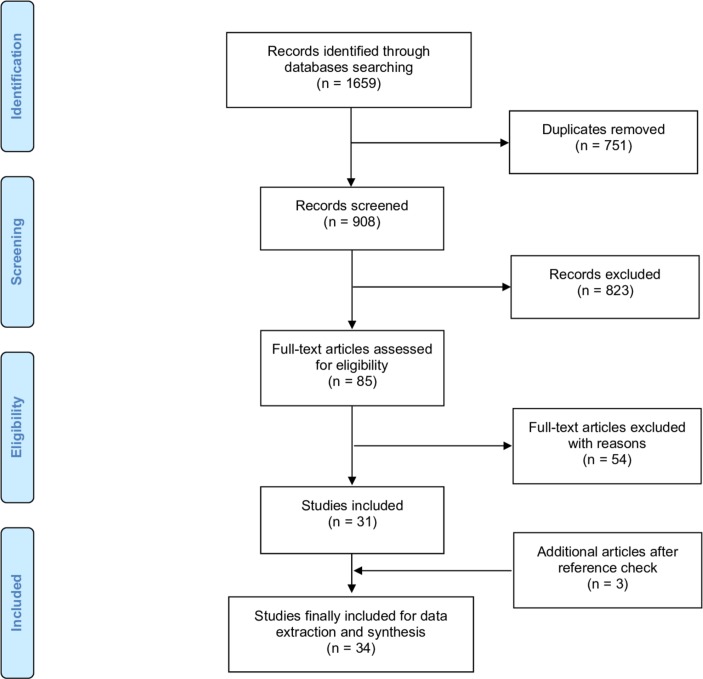
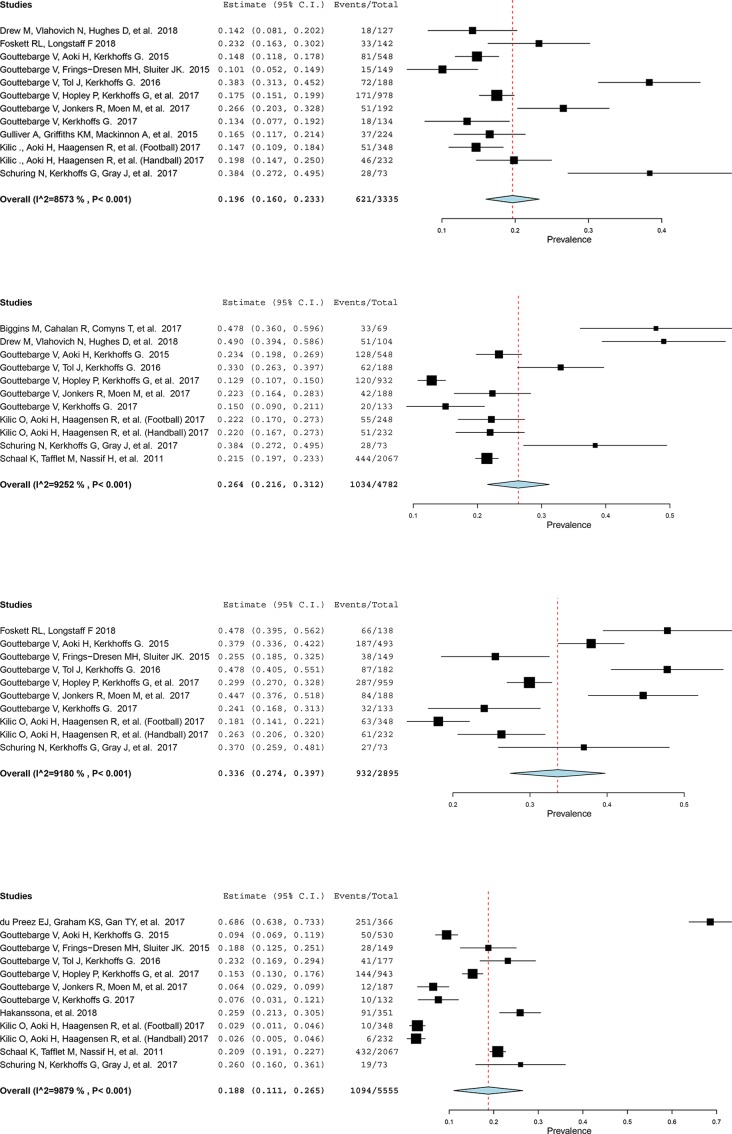
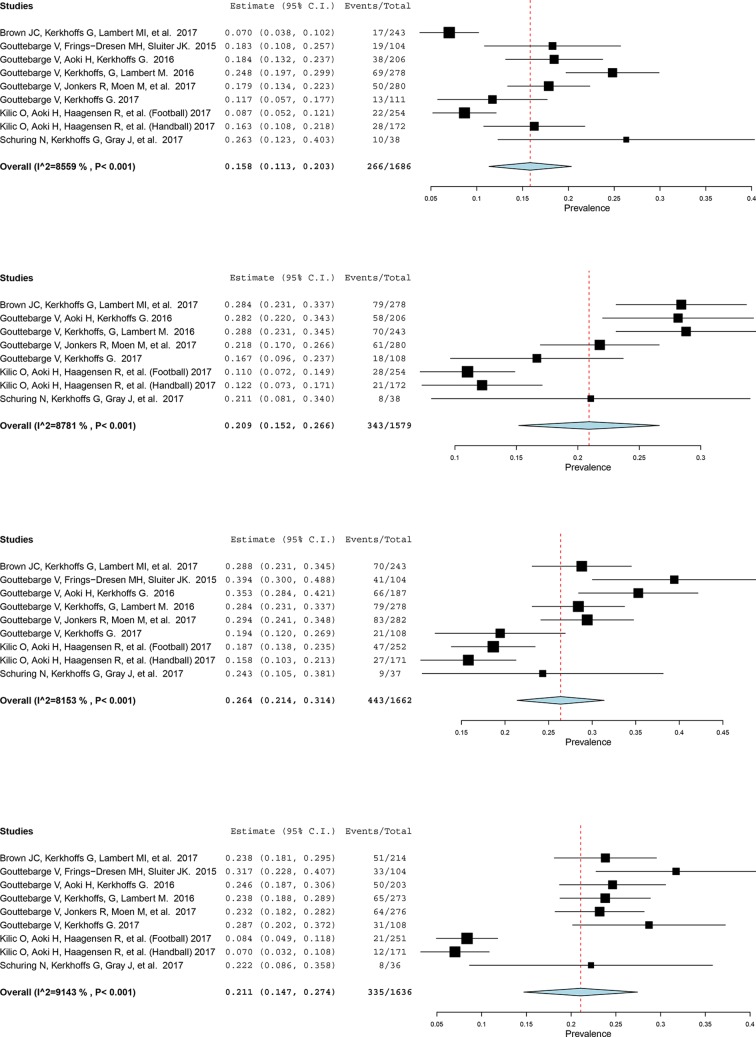
Objectives: To present an overview of the existing epidemiological evidence regarding the occurrence of mental health symptoms and disorders among current and former elite athletes. Design: Systematic review and meta-analysis. Data sources: Five electronic databases were searched from inception to November 2018: PubMed (MEDLINE), SportDiscus via EBSCO, PSycINFO via ProQuest, Scopus and Cochrane. Eligibility criteria for selecting studies: We included original quantitative studies that were written in English, were conducted exclusively among current or former elite athletes, and presented incidence or prevalence rates of symptoms of mental disorders. Results: Twenty-two relevant original studies about mental health symptoms and disorders among current elite athletes were included: they presented data especially on symptoms of distress, sleep disturbance, anxiety/depression and alcohol misuse. Meta-analyses comprising 2895 to 5555 current elite athletes showed that the prevalence of mental health symptoms and disorders ranged from 19% for alcohol misuse to 34% for anxiety/depression. Fifteen relevant original studies about mental health symptoms and disorders among former elite athletes were included: they similarly presented data especially about symptoms of distress, sleep disturbance, anxiety/depression and alcohol misuse. Meta-analyses comprising 1579 to 1686 former elite athletes showed that the prevalence of mental health symptoms and disorders ranged from 16% for distress to 26% for anxiety/depression. Conclusions: Our meta-analyses showed that the prevalence of mental health symptoms and disorders ranged from 19% for alcohol misuse to 34% for anxiety/depression for current elite athletes, and from 16% for distress to 26% for anxiety/depression for former elite athletes.
Overview
The claims and statistics of this paper haven’t been checked yet.
Run the check — free, no account needed. It reads the open-access text and checks the sources it cites.
Integrity signals
Registry
Cites
Statistics
Figures
Verification
Claims the paper makes
The claims and statistics of this paper haven’t been checked yet.
Run the check — free, no account needed. It reads the open-access text and checks the sources it cites.
Claims other papers make about this one
Each is checked against this paper’s own text: does it say what the citing paper says it does?
The cited source says what the claim attributes to it.
In the citing paper
“To date, research has primarily examined the mental health outcomes of elite athletes [15–18], with comparatively less research focusing on understanding these psychological experiences among coaches [19].”
From The Mental Health of Elite-Level Coaches: A Systematic Scoping Review (2024) · cites this paper as [15]
Self-check
Percentages, sums and reported differences re-computed from the paper’s own numbers.
The self-check needs the paper’s full text.
Citations
Cites
Diagnostic and Statistical Manual of Mental Disorders
American Psychiatric Association (2013) · doi:10.1176/appi.books.9780890425596 · Cited by 116,369
Preferred Reporting Items for Systematic Reviews and Meta-Analyses: the PRISMA statement
Moher, D., Liberati, A., Tetzlaff, J., Altman, D. G., & for the PRISMA Group (2009) · BMJ · doi:10.1136/bmj.b2535 · Cited by 83,823
Preferred reporting items for systematic reviews and meta-analyses: the PRISMA Statement.
(2009) · PubMed Central · Cited by 44,859
Meta-analysis in clinical trials
DerSimonian, R., & Laird, N. (1986) · Controlled Clinical Trials · doi:10.1016/0197-2456(86)90046-2 · Cited by 39,552
The Need for a New Medical Model: A Challenge for Biomedicine
Engel, G. L. (1977) · Science · doi:10.1126/science.847460 · Cited by 12,887
Diagnostic and Statistical Manual of Mental Disorders(DSM)
Leong, F. T. L. (2008) · Sage eBooks · doi:10.4135/9781412963978.n182 · Cited by 10,861
The global prevalence of common mental disorders: a systematic review and meta-analysis 1980–2013
Steel, Z., Marnane, C., Iranpour, C., Chey, T., Jackson, J. W., Patel, V., & Silove, D. (2014) · International Journal of Epidemiology · doi:10.1093/ije/dyu038 · Cited by 2,846 · cited 2×
“A recent systematic review and meta-analysis study performed across 155 general populations in 59 countries indicated that 20% experienced a mental disorder within a 12-month period.(4) In other studies, prevalence of anxiety/depression was found to range from 13% to 19% in Australia (general population), from 17% to…”
BackgroundMethodHoy, D., Brooks, P., Woolf, A., Blyth, F., March, L., Bain, C., Baker, P., Smith, E., & Buchbinder, R. (2012) · Journal of Clinical Epidemiology · doi:10.1016/j.jclinepi.2011.11.014 · Cited by 2,555
Guskiewicz, K. M., Marshall, S. W., Bailes, J. E., McCrea, M., Cantu, R. C., RANDOLPH, C. C., & Jordan, B. D. (2005) · Neurosurgery · doi:10.1093/neurosurgery/57.4.719 · Cited by 1,226
The Mental Health of Elite Athletes: A Narrative Systematic Review
Rice, S. M., Purcell, R., De Silva, S., Mawren, D., McGorry, P. D., & Parker, A. G. (2016) · Sports Medicine · doi:10.1007/s40279-016-0492-2 · Cited by 1,205 · cited 1×
“Single studies show that the prevalence of mental health symptoms and disorders among both current and former elite athletes seems substantial and similar to the prevalence in the general population.(5) A professional or elite sport career is characterised by more than 640 distinct stressors that could induce mental h…”
BackgroundSelf-citation
Cited by
Sorted by citations
Items 201–300 of 603
A Protocol for International Mental Health Guidelines for Esports
Poulus, D., & Sharpe, B. T. (2025) · Journal of Electronic Gaming and Esports · doi:10.1123/jege.2024-0066 · Cited by 8
Zhang, Y., Haslam, S. A., Haslam, C., & Steffens, N. K. (2025) · British Journal of Social Psychology · doi:10.1111/bjso.70005 · Cited by 8
“Disturbingly, a comprehensive meta-analysis by Gouttebarge et al. (2019) found that after elite athletes retire, over a quarter of them experience symptoms of anxiety and depression.”
Schmid, M. J., Küttel, A., Charbonnet, B., Rivero, T., Schmid, J., Ronkainen, N. J., & Conzelmann, A. (2026) · International Review of Sport and Exercise Psychology · doi:10.1080/1750984x.2025.2610947 · Cited by 8
Hägglund, K., Kenttä, G., Bentzen, M., Thelwell, R. C., & Wagstaff, C. (2024) · Journal of Applied Sport Psychology · doi:10.1080/10413200.2024.2353288 · Cited by 9
“…largely neglected (Stebbings & Taylor, 2017) in contrast to the substantial research attention dedicated to mental health and well-being of athletes in elite sport over the last decade (see, for reviews and position statements, Gouttebarge et al., 2019; Poucher et al., 2021; Vella et al., 2021).”
de Subijana, C. L., Pons, J., & Mallett, C. J. (2024) · Journal of Sports Sciences · doi:10.1080/02640414.2024.2425908 · Cited by 9
Balcombe, L., & Leo, D. D. (2021) · IntechOpen eBooks · doi:10.5772/intechopen.97799 · Cited by 8
The prevalence of common mental health problems and associated psychosocial issues in elite swimmers
Howarth, H., Evans, G., Krüger, P., Dilkes, E., Bell, G., & Kipps, C. (2023) · Sports Psychiatry · doi:10.1024/2674-0052/a000035 · Cited by 9
Oftadeh-Moghadam, S., Weston, N. J. V., & Gorczynski, P. F. (2023) · The Sport Psychologist · doi:10.1123/tsp.2022-0142 · Cited by 7
Self-citationSport Management Faculty Members’ Mentorship of Student-Athletes
Warner, S. M., Stokowski, S. E., Fridley, A., & Kim, K. (2022) · Sport Management Education Journal · doi:10.1123/smej.2021-0009 · Cited by 7
Identeg, F., Nigicser, I., Edlund, B., Forsberg, N., Sansone, M., Tranæus, U., & Hedelin, H. (2024) · BMC Sports Science Medicine and Rehabilitation · doi:10.1186/s13102-024-00826-4 · Cited by 8
“Musculoskeletal injury has been closely associated to mood disorders, and the possible relation between these among rock-climbing athletes need further mapping [8, 22].”
BackgroundInfluentialAthletic retirement: factors contributing to sleep and mental health problems
Montero, A., Baranoff, J. A., Adams, R., & Drummond, M. (2024) · Frontiers in Psychology · doi:10.3389/fpsyg.2024.1350925 · Cited by 6
Mental preparation of karateka for sports competition in kata
Piepiora, P. A., Jurczyk, J. B., & Vveinhardt, J. (2025) · Frontiers in Sports and Active Living · doi:10.3389/fspor.2024.1525853 · Cited by 6
Reardon, C. L., Claussen, M. C., Creado, S., Currie, A., & Edwards, C. D. (2025) · The Physician and Sportsmedicine · doi:10.1080/00913847.2025.2495545 · Cited by 7
Self-citationAn examination of how voluntary international netball officials view and experience well-being
Barrow, C., Westbury, T., Cunningham, I., & Mascarenhas, D. R. D. (2024) · Managing Sport and Leisure · doi:10.1080/23750472.2024.2326704 · Cited by 6
“(Gouttebarge et al., 2019).”
Consensus recommendations to inform an update of the NCAA Mental Health Best Practices
Kroshus, E., Wheelhouse, C., Houle, J. L. W., Bartley, J. D., Gruttadaro, D., Pick, C. J., Rao, A. L., Fine, A., Merrill, J., Casiero, D. C., et al. (2025) · British Journal of Sports Medicine · doi:10.1136/bjsports-2024-109183 · Cited by 9
Self-citationHoare, E., Couston, N., & Hall, K. (2022) · Frontiers in Psychology · doi:10.3389/fpsyg.2022.856241 · Cited by 9
“, depression and anxiety) between athletes and the general population (Gouttebarge et al., 2019).”
BackgroundLundqvist, C., & Kristiansen, E. (2022) · Frontiers in Sports and Active Living · doi:10.3389/fspor.2022.918825 · Cited by 6
Krause, F., Chan, H. F., Schmidt, S. L., Schreyer, D., & Torgler, B. (2022) · Journal of Vocational Behavior · doi:10.1016/j.jvb.2022.103767 · Cited by 7
McLoughlin, E., Arnold, R., Moore, L. J., Slavich, G. M., & Fletcher, D. (2023) · Anxiety Stress & Coping · doi:10.1080/10615806.2023.2246023 · Cited by 6
“As a result, there is compelling evidence to suggest that stressors are a salient feature of sport performers ’ lives, which may degrade their health, well-being, and performance (Arnold & Fletcher, 2021; Giles et al., 2020; Gouttebarge et al., 2019; Lundqvist, 2021).”
Andersson, M. J., Kenttä, G., Claesdotter‐Knutsson, E., & Håkansson, A. (2024) · BMC Sports Science Medicine and Rehabilitation · doi:10.1186/s13102-024-00989-0 · Cited by 7
“Despite the demonstrated protective effects of sports participation and exercise against adverse mental health symptoms like depression [1, 2], some studies indicate that elite athletes are just as susceptible to developing various mental health issues as the general population [3].”
BackgroundResultAdvancing elite athlete mental health treatment with psychedelic-assisted psychotherapy
Walton, C. C., & Liknaitzky, P. (2020) · Journal of Applied Sport Psychology · doi:10.1080/10413200.2020.1848941 · Cited by 6
“Current evidence indicates similar rates of mental health problems in athletes compared with the general population (Gouttebarge et al., 2019; Reardon et al., 2019; Rice et al., 2016).”
BackgroundA Survey of the Mental Health of UK Olympic and Paralympic Sport Athletes
Leyland, S., Currie, A., Elizabeth Board, Mistry, A., Jaques, R., & Ranson, C. (2022) · Journal of Athlete Development and Experience · doi:10.25035/jade.04.02.03 · Cited by 7
“A recent meta-analysis, representing a range of sports and nationalities, revealed a 34% prevalence of anxious and depressive symptoms and significant distress in 20% of current and former elite athletes (Gouttebarge et al., 2019).”
BackgroundThe mental health of elite athletes in developing nations of the greater Oceania region
Neumann, D. L., Piatkowski, T. M., Moffitt, R. L., & MINAHAN, C. L. (2022) · Australian Psychologist · doi:10.1080/00050067.2022.2130027 · Cited by 8
“Notably, however, more recent evidence suggests that current athletes are experiencing more severe symptoms of psychological distress, anxiety, and depression when compared to their former counterparts (Gouttebarge et al., 2019).”
BackgroundWaffo, B. T., & Hauw, D. (2024) · Comprehensive Psychiatry · doi:10.1016/j.comppsych.2024.152519 · Cited by 7
Lundqvist, C., & Meyer, T. (2025) · Journal of science and medicine in sport · doi:10.1016/j.jsams.2025.02.004 · Cited by 13
McKeen, M., & Stevinson, C. D. (2025) · Sports Medicine · doi:10.1007/s40279-025-02216-3 · Cited by 7
Zhang, X. R., Zhao, S., Ng, S., Liu, Y., Liang, T., Lao, C. I., & Ning, Z. (2025) · Frontiers in Psychology · doi:10.3389/fpsyg.2025.1618617 · Cited by 7
Frost, J., Walton, C. C., Rice, S. M., Davey, C., & Purcell, R. (2025) · International Journal of Sport and Exercise Psychology · doi:10.1080/1612197x.2025.2547365 · Cited by 4
“In addition, while this study reported rates and correlates of mental health symptoms from the largest sample of elite coaches to date, such research should also target larger sample sizes comparable to studies with elite athletes (Gouttebarge et al., 2019).”
InfluentialSelf-citationWaleriańczyk, W., Krzywański, J., Wójcik, K., Lisek, G., Konopka, K., Krysztofiak, H., Maleszka, P., Sławińska, M., & Poczwardowski, A. (2025) · Journal of Human Kinetics · doi:10.5114/jhk/204828 · Cited by 6
“…has lately become the central feature of many research articles (Anderson et al., 2023; Rice et al., 2020; Waleria ń czyk et al., 2025), systematic reviews (Gouttebarge et al., 2019; Pichler et al., 2023), and position stands (Gouttebarge et al., 2021; Moesch et al., 2018; Schinke et al., 2024).”
Waleriańczyk, W., WÓJCIK, K., Konopka, K., Lisek, G., Iwaszkiewicz, E., Krysztofiak, H., Krzywański, J., & Zawadzki, B. (2026) · British Journal of Sports Medicine · doi:10.1136/bjsports-2025-110881 · Cited by 7
Wang, X., Liang, W., Liu, J., Zhang, C., Duan, Y., Si, G., Bu, D., & Zhao, D. (2022) · International Journal of Environmental Research and Public Health · doi:10.3390/ijerph191912620 · Cited by 6
Hooper, N. R., Reiber, C., & Cheatham, S. A. (2023) · The Journal of Sports Medicine and Physical Fitness · doi:10.23736/s0022-4707.23.14565-8 · Cited by 5
Geiger, S., Esser, A. J., Marsall, M., Muehlbauer, T., Skoda, E., Teufel, M., & Bäuerle, A. (2024) · BMC Sports Science Medicine and Rehabilitation · doi:10.1186/s13102-024-00902-9 · Cited by 6
“Further challenges include performance and competition pressure, financial issues, a lack of social support [6], and the potential for involuntary retirement due to injuries [7].”
BackgroundRohlfs, I. C. P. D. M., Noce, F., Wilke, C. F., Terry, V. R., Parsons-Smith, R. L., & Terry, P. C. (2024) · Sports · doi:10.3390/sports12070195 · Cited by 6
Pilkington, V., Walton, C. C., Gwyther, K., Rice, S., Butterworth, M., Burattin, N., Boland, S., Cross, G., & Purcell, R. (2025) · Journal of Applied Sport Psychology · doi:10.1080/10413200.2025.2467267 · Cited by 7
“According to a 2019 meta-analysis, 1 in 3 elite athletes report experiencing significant anxiety and/or depression symptoms at a given timepoint (Gouttebarge et al., 2019).”
Self-citationLi, C., Kee, Y. H., Zhang, C., & Fan, R. (2021) · Sustainability · doi:10.3390/su13116027 · Cited by 5
“For example, many risk and protective factors of mental health such as symptoms of attention deficit hyperactivity disorder (ADHD), feelings of autonomy, and sports injuries have been identified [1,3,4].”
BackgroundCase Studies in Sports Psychiatry
Runswick, O. R. (2020) · Cambridge University Press eBooks · doi:10.1017/9781108767187 · Cited by 5
Lesbian, Gay, Bisexual, Trans, and Queer Mental Health in Elite Sport: A Review
Gorczynski, P. F., Reardon, C. L., & Aron, C. M. (2022) · Advances in Psychiatry and Behavioral Health · doi:10.1016/j.ypsc.2022.03.002 · Cited by 7
Self-citationMcLellan, M., Heffernan, C., Xu, J., Billimek, J., & Kim, B. Y. (2022) · Cureus · doi:10.7759/cureus.29836 · Cited by 5
“This was unexpected in light of reports of increased substance use, particularly alcohol, in the general adult population during the pandemic [15,16].”
BackgroundZandonai, T., Peiró, A. M., Fusina, F., Lugoboni, F., & Zamboni, L. (2022) · Frontiers in Psychiatry · doi:10.3389/fpsyt.2022.1066330 · Cited by 5
“Indeed, a recent meta-analysis on current elite athletes showed that 34% of them had symptoms of anxiety/depression (7).”
BackgroundKader, M., Pasternak, B., Lim, C.-E., Neovius, M., Forssblad, M. L., Svanström, H., Ludvigsson, J. F., & Ueda, P. (2023) · British Journal of Sports Medicine · doi:10.1136/bjsports-2023-107286 · Cited by 7
Lundqvist, C., Wig, J., & Schary, D. P. (2024) · BMJ Open Sport & Exercise Medicine · doi:10.1136/bmjsem-2024-002044 · Cited by 10
“…or anything [Participant 4] Central to this theme, and recurrently emphasised in the interviews, was the psychologist/psychotherapist’s ability to express empathy, validate the athlete’s experience and normalise without being judgemental, dismissive or negatively question the athlete’s experiences.”
BackgroundInfluentialTan, C., Yin, J., An, Y., Wang, J., & Qiu, J. (2024) · BMC Psychiatry · doi:10.1186/s12888-024-06092-5 · Cited by 6
“Although elite athletes are considered a high-risk group for mental health issues [44, 45], the Inverted “Everest” profile, which is closely associated with mental health risks, was not identified.”
BackgroundHOOPER, N. R., REIBER, C., & CHEATHAM, S. A. (2022) · The Journal of Sports Medicine and Physical Fitness · doi:10.23736/s0022-4707.21.12206-6 · Cited by 5
No time to waste: necessary health support for retired professional rugby players
Gouttebarge, V., van Rensburg, D. C. J., & Kerkhoffs, G. M. M. J. (2021) · South African Journal of Sports Medicine · doi:10.17159/2078-516x/2021/v33i1a10651 · Cited by 5
“slightly higher than those found among the general population.[3,4] Players forced to retire (e.”
BackgroundSelf-citationA Systematic Review of the Prevalence of Mental Health Symptoms and Disorders in Rugby Players
Oftadeh-Moghadam, S., & Gorczynski, P. F. (2022) · Journal of Clinical Sport Psychology · doi:10.1123/jcsp.2021-0027 · Cited by 5
Self-citationKaski, S., Arvinen‐Barrow, M., Kinnunen, U. M., & Parkkari, J. P. (2022) · Journal of Clinical Sport Psychology · doi:10.1123/jcsp.2021-0083 · Cited by 10
Major Depressive Disorder and Depressive Symptoms
Gorczynski, P. F. (2022) · Springer eBooks · doi:10.1007/978-3-031-08364-8_6 · Cited by 5
Self-citationPrevalence and Factors Associated with Mental Health Complaints in Japanese Collegiate Athletes
Kimura, T., Mącznik, A. K., Kinoda, A., Yamada, Y., Muramoto, Y., Katsumata, Y., & Sato, K. (2024) · Sports · doi:10.3390/sports12090240 · Cited by 7
“Indeed, mental health symptoms and disorders (defined as those involving distress, anxiety, depression, or substance misuse among others) have been reported previously to affect approximately 30% of athletes at some point in their sporting career [4,5].”
BackgroundInfluentialMcCluskey, T., Stevens, M. R., Cruwys, T., Murray, K., & Freeman, H. (2025) · International Review of Sport and Exercise Psychology · doi:10.1080/1750984x.2025.2556389 · Cited by 4
The Mental Health of Sporting Officials: A Systematic Review and Meta-analysis
Lindsay, R. S., Walton, C. C., Kittel, A. B., McNeil, D. G., Larkin, P., Spittle, M., & Cosh, S. (2025) · Sports Medicine · doi:10.1007/s40279-025-02315-1 · Cited by 10
Coach mental health literacy: a scoping review
Worley, J. T., Sullivan, L., Ferguson, E., Anderson‐Butcher, D., Mack, S., Houle, J. L. W., & Ault, K. J. (2025) · International Review of Sport and Exercise Psychology · doi:10.1080/1750984x.2025.2575494 · Cited by 4
Küttel, A., Henriksen, K., Oblinger-Peters, V., Book, R. T., & Storm, L. K. (2025) · Performance Enhancement & Health · doi:10.1016/j.peh.2025.100403 · Cited by 4
Adams, W. M., Anderson, T., Post, E. G., Christopher, S. M., McKay, A. K. A., Donaldson, A. T., Galán-López, N., Finnoff, J. T., Carter, S., & Taylor, L. K. (2025) · International Journal of Sports Physiology and Performance · doi:10.1123/ijspp.2024-0461 · Cited by 5
International Validity of the Athlete Psychological Strain Questionnaire (APSQ): A Scoping Review
Drăgoiu, T. S., Furtunescu, F., Caramoci, A., & Runswick, O. R. (2026) · Diagnostics · doi:10.3390/diagnostics16030486 · Cited by 4
“Some may experience somatic symptoms or engage in harmful external coping practices, such as increased alcohol consumption [1,23].”
Gouttebarge, V., Bindra, A., Blauwet, C. A., Currie, A., Hainline, B. W., Kroshus, E., Mcduff, D. R., Purcell, R., Putukian, M., Reardon, C. L., et al. (2026) · British Journal of Sports Medicine · doi:10.1136/bjsports-2025-111408 · Cited by 5
Self-citationThe Psychology of Golf Performance under Pressure
Hill, D. M., Barker, J. B., & Steptoe, K. (2023) · Routledge eBooks · doi:10.4324/9781003299042 · Cited by 4
Elite Ice Hockey Players’ Well-Being: A Scoping Review
Veillette, P.-L., Girard, S., D’Amours, J., Pelletier, V. H., & Miquelon, P. (2025) · Sports · doi:10.3390/sports13070225 · Cited by 4
“A study by Gouttebarge et al. [5] indicated high levels of anxiety and depression among elite athletes, with retired players experiencing more severe symptoms than the general population.”
Scope of the Problem of Mental Health Symptoms and Disorders in Elite Athletes
Rice, S., Walton, C. C., OLIVE, L. S., Reardon, C. L., & Purcell, R. (2022) · Springer eBooks · doi:10.1007/978-3-031-08364-8_1 · Cited by 4
Self-citationMontero, A., Baranoff, J. A., Adams, R., & Drummond, M. (2024) · Australian Psychologist · doi:10.1080/00050067.2024.2357283 · Cited by 5
“Although most of the present sample are current or former amateur athletes, prevalence estimates align with wider research in elite athletic populations using screening tools to screen for symptomology of sleep and mental health issues (Gouttebarge et al., 2019).”
BackgroundResultSleep, nutrition, and supplements: Implications for athletes
Charest, J., & Grandner, M. A. (2024) · Elsevier eBooks · doi:10.1016/b978-0-12-822969-9.00002-x · Cited by 5
Geiger, S., Aufderlandwehr, J., Esser, A. J., Schadendorf, T., Muehlbauer, T., Skoda, E., Teufel, M., & Bäuerle, A. (2024) · Frontiers in Sports and Active Living · doi:10.3389/fspor.2024.1416045 · Cited by 6
Beebe, K. E., & Petrie, T. A. (2025) · Journal of Applied Sport Psychology · doi:10.1080/10413200.2025.2463590 · Cited by 4
“…high demand conditions), academic (e.g., maintaining academic eligibility to be able to compete), physical (e.g., training load, risk of injury), and athletic (e.g., pressure/expectation to always perform at the highest level; Arnold & Fletcher, 2012; Gouttebarge et al., 2019; Rice et al., 2016).”
InfluentialNoguri, R., Kawata, Y., Yamaguchi, S., Shibata, N., & Ota, T. (2022) · Frontiers in Psychology · doi:10.3389/fpsyg.2022.841271 · Cited by 4
Burnout Syndrome in Selectable Athletes for the Brazilian Handball Team—Children Category
Afonso, M. D. S., Lourenção, L. G., Afonso, M. D. S., Saes, M. D. O., dos Santos, F. B., Penha, J. G. M., Galvão, D. M., Neto, F. R. G. X., Sasaki, N. S. G. M. D. S., Santos, M. D. L. S. G., et al. (2023) · International Journal of Environmental Research and Public Health · doi:10.3390/ijerph20043692 · Cited by 4
Stable or Fluid? An Investigation Into Female Student Athlete Basketball Players’ Well-Being
Columbus, A., Mack, D. E., Wilson, P. M., & Chimera, N. J. (2023) · Case Studies in Sport and Exercise Psychology · doi:10.1123/cssep.2022-0023 · Cited by 7
Skating on thin ice? Mental health and well-being in women’s ice hockey
Johansson, H., Malmborg, J. S., Ekengren, J., Lind, J. C., & Ivarsson, A. (2023) · BMJ Open Sport & Exercise Medicine · doi:10.1136/bmjsem-2023-001746 · Cited by 10
Saúde e transtorno mental no atleta de alto rendimento
Colagrai, A. C., Barreira, J., Nascimento, F. T., & Fernandes, P. T. (2022) · Movimento (Porto Alegre) · doi:10.22456/1982-8918.118845 · Cited by 10
Global Representation in Mental Health and Elite Sport and Parasport Research
Gorczynski, P. F., Aron, C. M., Baron, D. A., Moore, M. A., & Reardon, C. L. (2025) · Advances in Psychiatry and Behavioral Health · doi:10.1016/j.ypsc.2025.02.009 · Cited by 3
Self-citationDzieciątkowska, M., Horwat, P., Pierudzka, W., Szymanska, A., & Mariowska, A. (2025) · Journal of Education Health and Sport · doi:10.12775/jehs.2025.81.59996 · Cited by 7
Patterns of reasons for retirement in Olympic athletes from Switzerland: a person-oriented study
Schmid, M. J., Crom, L. D., Conzelmann, A., & Schmid, J. (2025) · International Journal of Sport and Exercise Psychology · doi:10.1080/1612197x.2025.2510248 · Cited by 3
“Even years after retirement, athletes who were forced to end their careers due to injury often suffer from impaired physical and mental health (Carmody et al., 2022; Filbay et al., 2019; Furie et al., 2023; Gouttebarge et al., 2019; Koch et al., 2021).”
Golub, N., & Steinfeldt, J. A. (2025) · Frontiers in Sports and Active Living · doi:10.3389/fspor.2025.1583467 · Cited by 3
Palmer, D., Soligard, T., Fernandes, G., Collins, D. J., Elliott, N., Kelly, P., Murray, I. R., & Engebretsen, L. (2025) · BMJ Open Sport & Exercise Medicine · doi:10.1136/bmjsem-2025-002545 · Cited by 3
Ekelund, R., Holmström, S., & Stenling, A. (2025) · International Journal of Sport and Exercise Psychology · doi:10.1080/1612197x.2025.2563323 · Cited by 5
Lyon-Monk, O., Arnold, R., Williams, S., Cleave, L. J., Cumming, S., Currie, A., Wass, J., & Moore, L. J. (2025) · Journal of science and medicine in sport · doi:10.1016/j.jsams.2025.10.002 · Cited by 5
Kalpana, K., Saifi, A., Khanna, G. L., Rao, D. B., Rakhra, G., & Tanwar, E. (2025) · Discover Mental Health · doi:10.1007/s44192-025-00224-3 · Cited by 3
“The athletic population is particularly vulnerable to mental health disorders such as anxiety, depression, posttraumatic stress, sleep and eating disorders due to the intense pressures of training and competition [4].”
Liu, Y., Huang, Z., Xu, Y., & Wang, J. W. (2026) · Frontiers in Psychology · doi:10.3389/fpsyg.2026.1776657 · Cited by 3
“A meta-analysis across 22 studies reported a pooled prevalence of mental health disorder of 34.0% among athletes (Gouttebarge et al., 2019).”
InfluentialKegelaers, J. J., Wylleman, P., Brevers, D., Pankow, K., & Kenttä, G. (2026) · Psychology of sport and exercise · doi:10.1016/j.psychsport.2026.103146 · Cited by 4
Goderecci, R., Dominicis, S. D., Necozione, S., Ciriello, V., Angelozzi, M., Calvisi, V., & Logroscino, G. (2022) · Acta bio-medica dell'Ateneo parmense/Acta biomedica · doi:10.23750/abm.v93i3.12562 · Cited by 3
Mental Health in First- and Second-Division Soccer Players: A Cross-Sectional Study
Bonet, L., Benito, A., Usó, H., Peraire, M., Haro, G., & Almodóvar-Fernández, I. (2024) · Sports · doi:10.3390/sports12040106 · Cited by 4
“It has adequate reliability and validity, takes less time than other diagnostic interviews [14] and has been used in athletes [27,28].”
BackgroundInfluentialPerceptions of athletes with mental health conditions and sponsor responses: a consumer perspective
Kwak, D. H., & Jang, N. (2024) · Sport Management Review · doi:10.1080/14413523.2024.2360253 · Cited by 3
“Thirdly, the present study centered on anxiety and depression, which are the most frequently reported issues among current and former athletes (Gouttebarge et al., 2019).”
InfluentialGrebner, K., Michel‐Kröhler, A., Werner, T., Berti, S., & Wessa, M. (2024) · Scientific Reports · doi:10.1038/s41598-024-74908-1 · Cited by 8
“injuries, performance setbacks, end of career) that might increase their vulnerability for athletic burnout and psychological impairments 8 .”
BackgroundAnsiedade e Perturbação de Ansiedade Generalizada em Atletas de Elite
Pires, L., Gomes, S., & Freitas, P. (2024) · Acta Médica Portuguesa · doi:10.20344/amp.21600 · Cited by 4
Non-modifiable and modifiable factors affecting anxiety and depressive symptoms in young athletes
Vieira, M. M., Neves, L. M., Felisberto, P., Fernandes, R. A., Xavier, R. L. D. S., Rossi, P. A. Q., Juday, V., Deslandes, A. C., Lastella, M., & Rossi, F. E. (2025) · The Physician and Sportsmedicine · doi:10.1080/00913847.2025.2466415 · Cited by 3
“Anxiety symptoms are prevalent in roughly 23% of Olympic athletes, while both anxiety and depressive symptoms affect approximately 35% of the top athletes [3].”
Síntomas psicopatológicos en árbitras de fútbol: un estudio piloto
Durán-Andrada, J., Khudhair, M. A., & Arbinaga, F. (2025) · Revista de Psicología Aplicada al Deporte y el Ejercicio Físico · doi:10.5093/rpadef2025a5 · Cited by 3
Gil-Caselles, L., Barquín, R. R., Giménez‐Egido, J. M., García-Naveira, A., & Zafra, A. O. (2025) · Healthcare · doi:10.3390/healthcare13141657 · Cited by 4
Perfectionism and depression in sport. Are we as clear as in clinical practice? A systematic review
Hernández, J. G., Sarries, S., Raimundi, M. J., Flett, G. L., & Hewitt, P. L. (2025) · Current Psychology · doi:10.1007/s12144-025-08134-x · Cited by 5
“Gouttebarge et al. (2019) performed two meta-analyses to study mental health disorders among elite and former athletes.”
InfluentialMental Well-Being and Risk of Depression in Amateur Soccer Players
Zepp, C., Belz, J., & Kleinert, J. (2021) · Zeitschrift für Sportpsychologie · doi:10.1026/1612-5010/a000333 · Cited by 3
Mental illness in elite weightlifters
Pitt, A., McCabe, T., Lambert, J. D., & Arnold, R. (2022) · Sports Psychiatry · doi:10.1024/2674-0052/a000021 · Cited by 3
Professional Athletes’ Well-Being: New Challenges in Post-COVID-19 Times
Assa, R., & Reizer, A. (2023) · Behavioral Sciences · doi:10.3390/bs13100831 · Cited by 3
“Up until now, the majority of mental health research within the realm of elite athletes has been primarily focused on male athletes at the professional level [17,74].”
BackgroundPhysical Activity and Engagement Coping: A Key for Stress-Recovery in Mexican University Students
Barradas, E. Y. F., Marván, M. L., Llanderal, T. C., Reynoso-Sánchez, F., & Meza, S. H. (2024) · Journal of Clinical Sport Psychology · doi:10.1123/jcsp.2022-0070 · Cited by 3
“…nding could be related to two conditions, the fi rst one is the amount of physical activity of university students not being part of the HPUA group, and second, both groups perceived stress levels (Gouttebarge et al., 2019; Rice et al., 2019), generating a similar level of stress to the RPAUS group.”
Kalogeratos, G., Anastasopoulou, E. E., Tseremegklis, C., & Avramidi, E. (2024) · Technium Education and Humanities · doi:10.47577/teh.v8i.10711 · Cited by 3
“Extensive research has been conducted on the occurrence of mental disorders in various populations, including elite athletes, adolescents, and postpartum women (Gouttebarge et al., 2019; Meltzer‐Brody et al., 2018; Kessler et al., 1996).”
BackgroundRemote work arrangement: a blessing in disguise for socially anxious individuals
Khan, K., e-Habiba, U., Aziz, S., Sabeen, Z., Zeeshan, A., Naz, Z., & Waseem, M. (2024) · Frontiers in Psychology · doi:10.3389/fpsyg.2023.1152499 · Cited by 9
Ruffault, A., Valverde, S., Régnauld, C., Podlog, L. W., & Hamonnière, T. (2024) · Psychology of sport and exercise · doi:10.1016/j.psychsport.2024.102727 · Cited by 3
The paradox of mental health versus mental disease in elite athletes: a scoping review
Colagrai, A. C., Barreira, J., Nascimento, F. T., & Fernandes, P. T. (2022) · Motriz Revista de Educação Física · doi:10.1590/s1980-6574202200001722 · Cited by 6
“…seeking help 14 , stigma 15 , mental health services 16 , common mental disorders (depression, anxiety, sleep disorder, and alcohol use, together) 2 , anxiety 7 , depression 5,17-19 , suicide 20 , eating disorders 21 , sleep disorders 22 , bipolar and psychotic disorder 23 , as well as consensus…”
Engage, Enthuse, Empower: A Framework for Promoting Self-Sufficiency in Athletes
Maloney, S. J. (2022) · Strength and conditioning journal · doi:10.1519/ssc.0000000000000754 · Cited by 2
“In a recent meta-analysis, pooled estimates noted anxiety and depressive symptoms in 34% of current and 26% of former elite athletes (29).”
BackgroundColangelo, J., Smith, A. J., Keay, N., Buadze, A., & Liebrenz, M. (2024) · Frontiers in Sports and Active Living · doi:10.3389/fspor.2024.1480574 · Cited by 2
Personal Crisis in Athletes: Injuries and Retirement
Ivarsson, A., & Gledhill, A. (2024) · Springer eBooks · doi:10.1007/978-3-031-69328-1_11 · Cited by 3
Purcell, R., & Currie, A. (2024) · Springer eBooks · doi:10.1007/978-3-031-69328-1_12 · Cited by 2
Griffin, S. A., Sheriff, R. S., Dane, K., Myall, K., Simpson, K., Lewis, H., Yeomans, C., Patricios, J., Kemp, S. P. T., Khan, K., et al. (2024) · BMJ Open Sport & Exercise Medicine · doi:10.1136/bmjsem-2024-002164 · Cited by 2
“This somewhat limits the applicability of the results to these rugby-playing cohorts.”
Metadata
- Authors
- Gouttebarge, V., Castaldelli-Maia, J. M., Gorczynski, P., Hainline, B., Hitchcock, M. E., Kerkhoffs, G. M., Rice, S. M., & Reardon, C. L.
- Affiliations
- Amsterdam University Medical Centers (NL)
- University of Portsmouth (GB)
- National Collegiate Athletic Association (US)
- University of Wisconsin–Madison (US)
- Amsterdam UMC Location University of Amsterdam (NL)
- The University of Melbourne (AU)
- University of Wisconsin System (US)
- Corresponding author
- Gouttebarge, Vincent
- ORCID
- Venue
- British Journal of Sports Medicine
- Publisher
- BMJ
- Published
- 2019-05-16
- Volume
- 53
- Issue
- 11
- Pages
- 700-706
- ISSN
- 0306-3674 (ISSN-L)
- 1473-0480
- PMC
- PMC6579497
- OpenAlex
- W2944177380
- Cited by
- 604
- References
- 68
- Citations by year
- 2026: 119 · 2025: 107 · 2024: 111 · 2023: 77 · 2022: 80 · 2021: 58 · 2020: 44 · 2019: 7
- FWCI
- 10.09
- Type
- journal article
- Language
- en
- Open access
- hybrid
- doi.org
- Licence
- cc-by
- Locations
- British Journal of Sports Medicine (publishedVersion, cc-by)
- Europe PMC (PubMed Central) (publishedVersion, cc-by-nc)
- PubMed Central (publishedVersion, cc-by-nc)
- PubMed (publishedVersion)
- Pure Amsterdam UMC (publishedVersion, cc-by)
- Amsterdam UMC (VU Amsterdam) - Institutional Repository (publishedVersion, other-oa)
- Minerva Access (University of Melbourne) (submittedVersion, cc-by-nc)
- Data Archiving and Networked Services (DANS) (submittedVersion, other-oa)
- HighWire Press Open Archive (submittedVersion)
- Data Archiving and Networked Services (DANS) (submittedVersion, cc-by-nc)
- Funders
- International Olympic Committee
- Topics
- Social Sciences › Psychology › Developmental and Educational Psychology › Sport Psychology and Performance
- Social Sciences › Psychology › Clinical Psychology › Psychological Treatments and Assessments
- Health Sciences › Medicine › Psychiatry and Mental health › Mental Health Treatment and Access
- Keywords
- mental health, elite athletes, former athletes, anxiety, depression, alcohol abuse, sleep disorders, psychological distress, prevalence, mental illness
- MeSH terms
- Anxiety, Mental Disorders, Depression, Humans, Sleep Wake Disorders, Incidence, Prevalence, Alcohol-Related Disorders, Athletes
About these checks
Registry, retraction, Cites and statistics results are computed, not judged, with one exception: a printed reference that no index lists is read once by a model before it counts as a citation error. Claims are extracted by a model and kept only when their quote appears verbatim in the text; each cited source is then checked, with a model’s help, for whether it says what the claim relies on. Those verdicts can be wrong — read the claim’s quote and the cited source before relying on one.
Statistics and arithmetic are recomputed, not judged.
Confidence bands are shown only for fields calibrated on our annotated test set. None is calibrated yet, so no band is shown.
What counts as a claim ›How we measure confidence ›How we check this ›
Are you an author, or do you see a problem with this page? Request a review
