

The DOI matches its Crossref record; 70 of the 70 references it cites were found in a registry or an index.
Occurrence of mental health symptoms and disorders in current and former elite athletes: a systematic review and meta-analysis
Open accessAbstract
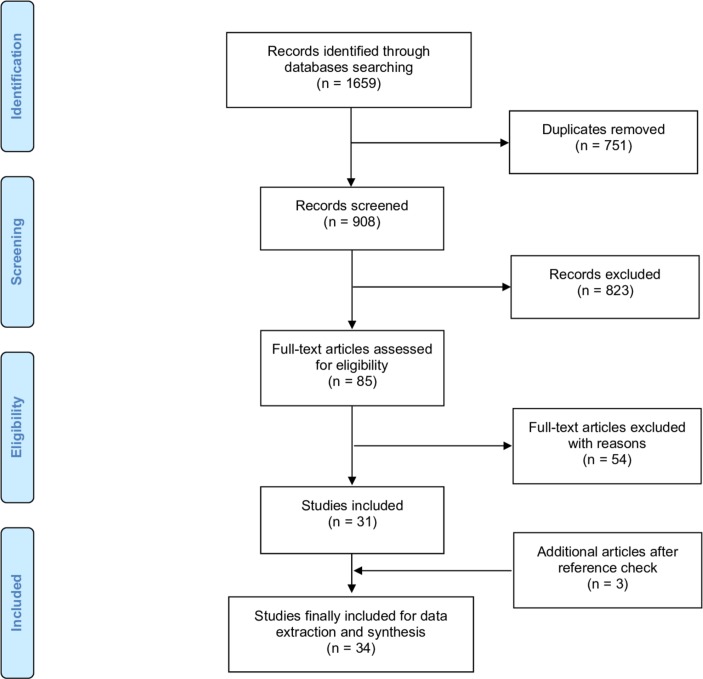
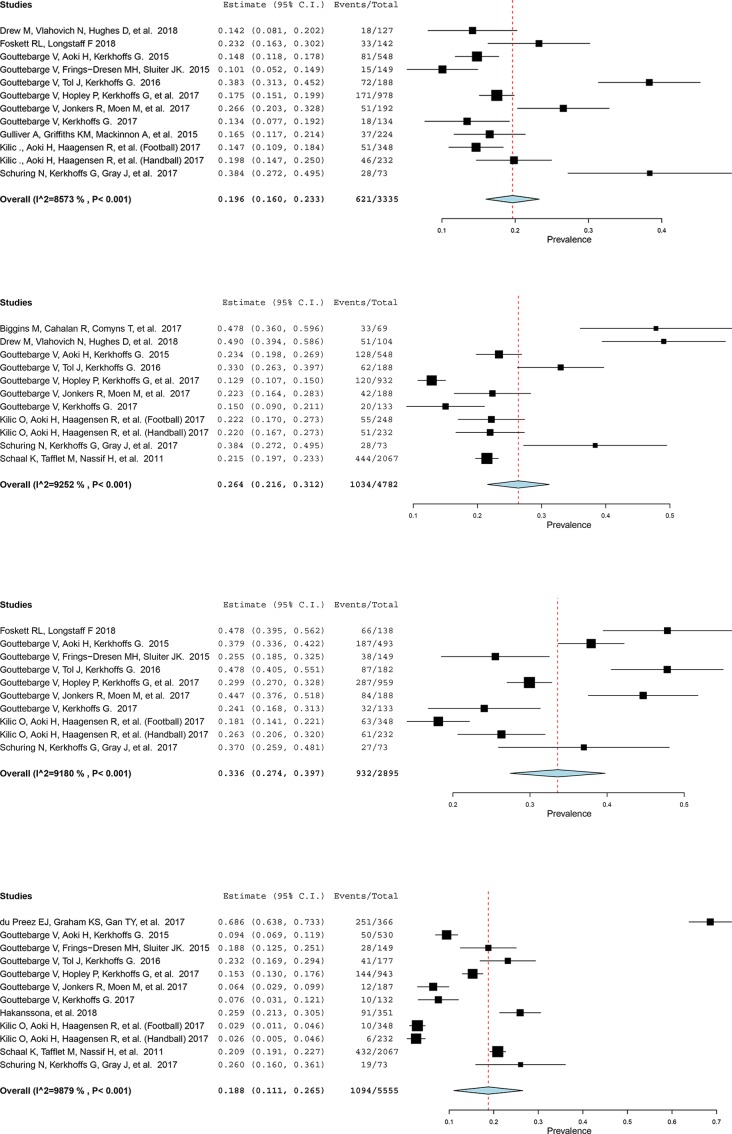
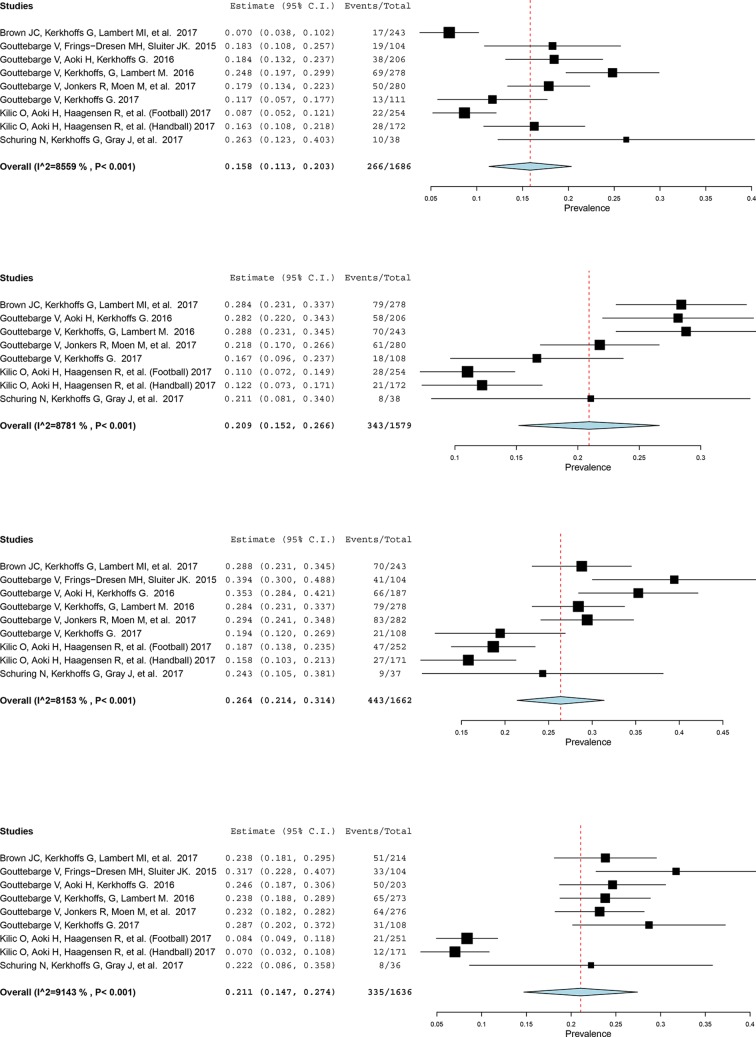
Objectives: To present an overview of the existing epidemiological evidence regarding the occurrence of mental health symptoms and disorders among current and former elite athletes. Design: Systematic review and meta-analysis. Data sources: Five electronic databases were searched from inception to November 2018: PubMed (MEDLINE), SportDiscus via EBSCO, PSycINFO via ProQuest, Scopus and Cochrane. Eligibility criteria for selecting studies: We included original quantitative studies that were written in English, were conducted exclusively among current or former elite athletes, and presented incidence or prevalence rates of symptoms of mental disorders. Results: Twenty-two relevant original studies about mental health symptoms and disorders among current elite athletes were included: they presented data especially on symptoms of distress, sleep disturbance, anxiety/depression and alcohol misuse. Meta-analyses comprising 2895 to 5555 current elite athletes showed that the prevalence of mental health symptoms and disorders ranged from 19% for alcohol misuse to 34% for anxiety/depression. Fifteen relevant original studies about mental health symptoms and disorders among former elite athletes were included: they similarly presented data especially about symptoms of distress, sleep disturbance, anxiety/depression and alcohol misuse. Meta-analyses comprising 1579 to 1686 former elite athletes showed that the prevalence of mental health symptoms and disorders ranged from 16% for distress to 26% for anxiety/depression. Conclusions: Our meta-analyses showed that the prevalence of mental health symptoms and disorders ranged from 19% for alcohol misuse to 34% for anxiety/depression for current elite athletes, and from 16% for distress to 26% for anxiety/depression for former elite athletes.
Overview
The claims and statistics of this paper haven’t been checked yet.
Run the check — free, no account needed. It reads the open-access text and checks the sources it cites.
Integrity signals
Registry
Cites
Statistics
Figures
Verification
Claims the paper makes
The claims and statistics of this paper haven’t been checked yet.
Run the check — free, no account needed. It reads the open-access text and checks the sources it cites.
Claims other papers make about this one
Each is checked against this paper’s own text: does it say what the citing paper says it does?
The cited source says what the claim attributes to it.
In the citing paper
“To date, research has primarily examined the mental health outcomes of elite athletes [15–18], with comparatively less research focusing on understanding these psychological experiences among coaches [19].”
From The Mental Health of Elite-Level Coaches: A Systematic Scoping Review (2024) · cites this paper as [15]
Self-check
Percentages, sums and reported differences re-computed from the paper’s own numbers.
The self-check needs the paper’s full text.
Citations
Cites
Diagnostic and Statistical Manual of Mental Disorders
American Psychiatric Association (2013) · doi:10.1176/appi.books.9780890425596 · Cited by 116,369
Preferred Reporting Items for Systematic Reviews and Meta-Analyses: the PRISMA statement
Moher, D., Liberati, A., Tetzlaff, J., Altman, D. G., & for the PRISMA Group (2009) · BMJ · doi:10.1136/bmj.b2535 · Cited by 83,823
Preferred reporting items for systematic reviews and meta-analyses: the PRISMA Statement.
(2009) · PubMed Central · Cited by 44,859
Meta-analysis in clinical trials
DerSimonian, R., & Laird, N. (1986) · Controlled Clinical Trials · doi:10.1016/0197-2456(86)90046-2 · Cited by 39,552
The Need for a New Medical Model: A Challenge for Biomedicine
Engel, G. L. (1977) · Science · doi:10.1126/science.847460 · Cited by 12,887
Diagnostic and Statistical Manual of Mental Disorders(DSM)
Leong, F. T. L. (2008) · Sage eBooks · doi:10.4135/9781412963978.n182 · Cited by 10,861
The global prevalence of common mental disorders: a systematic review and meta-analysis 1980–2013
Steel, Z., Marnane, C., Iranpour, C., Chey, T., Jackson, J. W., Patel, V., & Silove, D. (2014) · International Journal of Epidemiology · doi:10.1093/ije/dyu038 · Cited by 2,846 · cited 2×
“A recent systematic review and meta-analysis study performed across 155 general populations in 59 countries indicated that 20% experienced a mental disorder within a 12-month period.(4) In other studies, prevalence of anxiety/depression was found to range from 13% to 19% in Australia (general population), from 17% to…”
BackgroundMethodHoy, D., Brooks, P., Woolf, A., Blyth, F., March, L., Bain, C., Baker, P., Smith, E., & Buchbinder, R. (2012) · Journal of Clinical Epidemiology · doi:10.1016/j.jclinepi.2011.11.014 · Cited by 2,555
Guskiewicz, K. M., Marshall, S. W., Bailes, J. E., McCrea, M., Cantu, R. C., RANDOLPH, C. C., & Jordan, B. D. (2005) · Neurosurgery · doi:10.1093/neurosurgery/57.4.719 · Cited by 1,226
The Mental Health of Elite Athletes: A Narrative Systematic Review
Rice, S. M., Purcell, R., De Silva, S., Mawren, D., McGorry, P. D., & Parker, A. G. (2016) · Sports Medicine · doi:10.1007/s40279-016-0492-2 · Cited by 1,205 · cited 1×
“Single studies show that the prevalence of mental health symptoms and disorders among both current and former elite athletes seems substantial and similar to the prevalence in the general population.(5) A professional or elite sport career is characterised by more than 640 distinct stressors that could induce mental h…”
BackgroundSelf-citation
Cited by
Sorted by citations
Mountjoy, M., Ackerman, K. E., Bailey, D. M., Burke, L. M., Constantini, N., Hackney, A. C., Heikura, I. A., Melin, A., Pensgaard, A. M., Stellingwerff, T., et al. (2023) · British Journal of Sports Medicine · doi:10.1136/bjsports-2023-106994 · Cited by 724
“The sports community has prioritised the mental health of elite-level athletes as evidenced by a sharp rise in consensus statements 60–62 and prevalence studies 63–65 on this theme.”
BackgroundSleep and the athlete: narrative review and 2021 expert consensus recommendations
Walsh, N. P., Halson, S. L., Sargent, C., Roach, G. D., Nédélec, M., Gupta, L., Leeder, J., Fullagar, H. H. K., Coutts, A. J., Edwards, B., et al. (2020) · British Journal of Sports Medicine · doi:10.1136/bjsports-2020-102025 · Cited by 711
Ardern, C. L., Büttner, F., Andrade, R., Weir, A., Ashe, M. C., Holden, S., Impellizzeri, F. M., Delahunt, E., Dijkstra, H. P., Mathieson, S., et al. (2022) · British Journal of Sports Medicine · doi:10.1136/bjsports-2021-103987 · Cited by 458
Purcell, R., Gwyther, K., & Rice, S. M. (2019) · Sports Medicine - Open · doi:10.1186/s40798-019-0220-1 · Cited by 394
Self-citationGouttebarge, V., Bindra, A., Blauwet, C. A., Campriani, N., Currie, A., Engebretsen, L., Hainline, B. W., Kroshus, E., Mcduff, D. R., Mountjoy, M. L., et al. (2020) · British Journal of Sports Medicine · doi:10.1136/bjsports-2020-102411 · Cited by 393
Self-citationThe prevalence of mental health problems in elite athletes
Åkesdotter, C., Kenttä, G., Eloranta, S., & Franck, J. (2019) · Journal of science and medicine in sport · doi:10.1016/j.jsams.2019.10.022 · Cited by 243
An Evidence-Informed Framework to Promote Mental Wellbeing in Elite Sport
Purcell, R., Pilkington, V., Carberry, S., Reid, D., Gwyther, K., Hall, K., Deacon, A., Manon, R., Walton, C. C., & Rice, S. (2022) · Frontiers in Psychology · doi:10.3389/fpsyg.2022.780359 · Cited by 156
Self-citationDeveloping mental health literacy and cultural competence in elite sport
Gorczynski, P. F., Currie, A., Gibson, K., Gouttebarge, V., Hainline, B. W., Castaldelli-Maia, J. M., Mountjoy, M. L., Purcell, R., Reardon, C. L., Rice, S., et al. (2020) · Journal of Applied Sport Psychology · doi:10.1080/10413200.2020.1720045 · Cited by 142
Self-citationThe mental health of student-athletes: a systematic scoping review
Kegelaers, J. J., Wylleman, P., Defruyt, S., Praet, L., Stambulova, N. B., Torregrossa, M., Kenttä, G., & Brandt, K. D. (2022) · International Review of Sport and Exercise Psychology · doi:10.1080/1750984x.2022.2095657 · Cited by 149
“Several reviews focused exclusively on elite athletes and, therefore, excluded student-athlete samples (e.g. Gouttebarge et al., 2019; Kuettel & Larsen, 2020).”
InfluentialPurcell, R., Rice, S., Butterworth, M., & Clements, M. (2020) · Sports Medicine · doi:10.1007/s40279-020-01266-z · Cited by 100
Self-citationRice, S., OLIVE, L. S., Gouttebarge, V., Parker, A. G., Clifton, P., Harcourt, P. R., Llyod, M., Kountouris, A., Smith, B., Busch, B., et al. (2020) · BMJ Open Sport & Exercise Medicine · doi:10.1136/bmjsem-2019-000712 · Cited by 98
Self-citationSleep and Performance in Professional Athletes
Cook, J. D., & Charest, J. (2023) · Current Sleep Medicine Reports · doi:10.1007/s40675-022-00243-4 · Cited by 103
Lundqvist, C., & Andersson, G. (2021) · Frontiers in Psychology · doi:10.3389/fpsyg.2021.700829 · Cited by 110
“…variations in reported prevalence levels can nevertheless be found in research conducted to date, with a wide range of screening tools being used to estimate various mental health symptoms and disorders among elite athletes (e.g., Gouttebarge et al., 2019; Reardon et al., 2019; Rice et al., 2019).”
BackgroundResultInfluentialMountjoy, M. L., Junge, A., Bindra, A., Blauwet, C. A., Budgett, R., Currie, A., Engebretsen, L., Hainline, B. W., Mcduff, D. R., Purcell, R., et al. (2023) · British Journal of Sports Medicine · doi:10.1136/bjsports-2022-106687 · Cited by 92
Self-citationPilkington, V., Rice, S. M., Walton, C. C., Gwyther, K., Olive, L., Butterworth, M., Clements, M., Cross, G., & Purcell, R. (2022) · Sports Medicine - Open · doi:10.1186/s40798-022-00479-y · Cited by 77
“Coaches that are contemplating or recently experiencing retirement report even higher rates of mental health symptomatology [13, 16], which is consistent with a pattern observed in retired or former elite athletes [2].”
BackgroundResultSelf-citationPsychological Safety for Mental Health in Elite Sport: A Theoretically Informed Model
Walton, C. C., Purcell, R., Pilkington, V., Hall, K., Kenttä, G., Vella, S. A., & Rice, S. (2023) · Sports Medicine · doi:10.1007/s40279-023-01912-2 · Cited by 99
“It is now clear that athletes in elite sports experience mental ill-health at similar rates to the general population [3, 4], with coaches and support staff also increasingly recognised as at risk [5, 6].”
BackgroundSelf-citationMental and physical health outcomes of burnout in athletes: a systematic review and meta-analysis
Glandorf, H. L., Madigan, D. J., Kavanagh, O. V., & Mallinson‐Howard, S. H. (2023) · International Review of Sport and Exercise Psychology · doi:10.1080/1750984x.2023.2225187 · Cited by 76
“Furthermore, in recent years, scholars have highlighted that some mental health difficulties appear to be more prevalent in athletes than in the general population (e.g. depressive symptoms; Gouttebarge et al., 2019).”
Kegelaers, J., Wylleman, P., van Bree, I. (. N. A., Wessels, F., & Oudejans, R. R. D. (2021) · International Sport Coaching Journal · doi:10.1123/iscj.2020-0066 · Cited by 71
Madigan, D. J., Olsson, L. F., Hill, A. P., & Curran, T. (2022) · Journal of Sport and Exercise Psychology · doi:10.1123/jsep.2020-0291 · Cited by 93
Myall, K., Montero‐Marín, J., Gorczynski, P. F., Kajee, N., Sheriff, R. S., Bernard, R. M., Harriss, E., & Kuyken, W. (2022) · British Journal of Sports Medicine · doi:10.1136/bjsports-2022-105596 · Cited by 98
Self-citationSocial identity leadership in sport and exercise: Current status and future directions
Stevens, M. R., Rees, T., & Cruwys, T. (2021) · Psychology of sport and exercise · doi:10.1016/j.psychsport.2021.101931 · Cited by 74
Rice, S., Walton, C. C., Pilkington, V., Gwyther, K., OLIVE, L. S., Lloyd, M., Kountouris, A., Butterworth, M., Clements, M., & Purcell, R. (2022) · BMJ Open Sport & Exercise Medicine · doi:10.1136/bmjsem-2021-001251 · Cited by 71
Self-citationThe Mental Health of Elite-Level Coaches: A Systematic Scoping Review
Frost, J., Walton, C. C., Purcell, R., Fisher, K., Gwyther, K., Kocherginsky, M., & Rice, S. M. (2024) · Sports Medicine - Open · doi:10.1186/s40798-023-00655-8 · Cited by 59
“To date, research has primarily examined the mental health outcomes of elite athletes [15–18], with comparatively less research focusing on understanding these psychological experiences among coaches [19].”
BackgroundSelf-citationAthlete Mental Health & Psychological Impact of Sport Injury
Haugen, E. N. J. (2022) · Operative Techniques in Sports Medicine · doi:10.1016/j.otsm.2022.150898 · Cited by 75
International society of sport psychology position stand: elite athlete mental health revisited
Schinke, R. J., Henriksen, K., Moore, Z. E., Stambulova, N. B., Bartley, J. D., Cosh, S., Wagstaff, C. R. D., Quartiroli, A., Wylleman, P., Maher, C. A., et al. (2024) · International Journal of Sport and Exercise Psychology · doi:10.1080/1612197x.2024.2359872 · Cited by 76
Antero, J., Tanaka, H., Larochelambert, Q. D., Perme, M. P., & Toussaint, J. (2020) · British Journal of Sports Medicine · doi:10.1136/bjsports-2019-101696 · Cited by 57
Voorheis, P., Silver, M. P., & Consonni, J. (2023) · PLoS ONE · doi:10.1371/journal.pone.0291683 · Cited by 66
“Another review suggested that preparation for retirement and health exams were protective factors for retired athletes experiencing significant negative cognitive and mental health outcomes [42].”
BackgroundBalcombe, L., & Leo, D. D. (2020) · JMIR Formative Research · doi:10.2196/22755 · Cited by 60
“More specifically, there are comparable rates of depression [4,30,33] as well as anxiety, posttraumatic stress, and sleep disorder [4,30].”
BackgroundResultInfluentialHåkansson, A., Moesch, K., Jönsson, C., & Kenttä, G. (2020) · International Journal of Environmental Research and Public Health · doi:10.3390/ijerph18010002 · Cited by 51
Mental health and suicide in former professional soccer players
Russell, E., McCabe, T., Mackay, D., Stewart, K., MacLean, J. A., Pell, J. P., & Stewart, W. B., Jr. (2020) · Journal of Neurology Neurosurgery & Psychiatry · doi:10.1136/jnnp-2020-323315 · Cited by 56
Gouttebarge, V., Ahmad, I., Mountjoy, M. L., Rice, S., & Kerkhoffs, G. M. M. J. (2020) · Clinical Journal of Sport Medicine · doi:10.1097/jsm.0000000000000886 · Cited by 53
“Sample size calculation indicated that at least 384 participants per group were needed to reach a power of 80% [confidence interval (CI) of 95% and absolute precision of 3%] under the assumption of an anticipated population proportion (prevalence) of 10%.(2,13) Considering (1) the lower number of female players availa…”
BackgroundSelf-citationDepression, anxiety and stress among female student-athletes: a systematic review and meta-analysis
Beisecker, L., Harrison, P. R., Josephson, M., & DeFreese, J. D. (2024) · British Journal of Sports Medicine · doi:10.1136/bjsports-2023-107328 · Cited by 53
Prevalence of mental health symptoms among male and female Australian professional footballers
Kiliç, Ö., Carmody, S., Upmeijer, J., Kerkhoffs, G. M. M. J., Purcell, R., Rice, S., & Gouttebarge, V. (2021) · BMJ Open Sport & Exercise Medicine · doi:10.1136/bmjsem-2021-001043 · Cited by 51
Self-citationPromoting mental health in esports
Kegelaers, J. J., Trotter, M. G., Watson, M., Pedraza-Ramirez, I., Bonilla, I., Wylleman, P., Maîresse, O., & Heel, M. V. (2024) · Frontiers in Psychology · doi:10.3389/fpsyg.2024.1342220 · Cited by 46
Mental health and well-being of elite youth athletes: a scoping review
Gwyther, K., Pilkington, V., Bailey, A. P., Mountjoy, M. L., Bergeron, M. F., Rice, S., & Purcell, R. (2024) · British Journal of Sports Medicine · doi:10.1136/bjsports-2024-108244 · Cited by 56
“The full search strategy can be found in online supplemental file 2.”
Self-citationWang, W., Schweickle, M. J., Arnold, E. R., & Vella, S. A. (2025) · Sports Medicine · doi:10.1007/s40279-024-02173-3 · Cited by 75
“Recent meta-analyses indicated that the prevalence of mental disorders in elite athletes ranged from 19% (alcohol misuse) to 34% (anxiety/depression) [19]; that is, the majority of elite athletes are not mentally ill.”
Experience and Construction of Mental Health Among English Female Football Match Officials
Webb, T., Gorczynski, P. F., Oftadeh-Moghadam, S., & Grubb, L. (2021) · The Sport Psychologist · doi:10.1123/tsp.2020-0086 · Cited by 55
“Systematic reviews and meta-analyses have shown that both current and retired athletes are at risk of various mental health symptoms and disorders (Gouttebarge et al., 2019), and that females are twice as likely as males to experience poor mental health (Gorczynski, Coyle, & Gibson 2017; Rice et…”
BackgroundSelf-citationMood Profiling for Sustainable Mental Health among Athletes
Terry, P. C., & Parsons-Smith, R. L. (2021) · Sustainability · doi:10.3390/su13116116 · Cited by 47
Athlete mental health: future directions
Currie, A., Blauwet, C. A., Bindra, A., Budgett, R., Campriani, N., Hainline, B. W., Mcduff, D. R., Mountjoy, M. L., Purcell, R., Putukian, M., et al. (2021) · British Journal of Sports Medicine · doi:10.1136/bjsports-2021-104443 · Cited by 48
Self-citationAnxiety and Depression Symptoms and Suicidal Ideation in Japan Rugby Top League Players
Ojio, Y., Matsunaga, A., Hatakeyama, K., Kawamura, S., Horiguchi, M., Yoshitani, G., Kanie, A., Horikoshi, M., & Fujii, C. (2021) · International Journal of Environmental Research and Public Health · doi:10.3390/ijerph18031205 · Cited by 44
“6% prevalence of anxiety and depressive symptoms in current and former elite athletes [17].”
BackgroundThe Prevalence of Mental Ill Health in Elite Counter-Strike Athletes
Birch, P. D. J., Smith, M. J., Arumuham, A., de Gortari, A. B. O., & Sharpe, B. T. (2024) · Journal of Electronic Gaming and Esports · doi:10.1123/jege.2024-0006 · Cited by 40
Sun, G., Zhao, J., Tian, S., Zhang, L., & Jia, C.-X. (2020) · International Journal of Environmental Research and Public Health · doi:10.3390/ijerph17218087 · Cited by 47
“Research on the mental health of athletes has grown rapidly in recent years [1,2].”
BackgroundMountjoy, M., Junge, A., Magnusson, C., Shahpar, F. M., Ortiz Lizcano, E. I., Varvodic, J., Wang, X., Cherif, M. Y., Hill, L., & Miller, J. (2022) · Clinical Journal of Sport Medicine · doi:10.1097/jsm.0000000000000971 · Cited by 40
“4% sleep disturbance, 9% for alcohol misuse, and 1%–28% for eating disorders.(5) There is a well-established correlation between mental health symptomatology and experience with harassment/abuse both inside and outside of sport.”
BackgroundKim, S. S. Y., Hamiliton, B., Beable, S., Cavadino, A., & Fulcher, M. L. (2020) · BMJ Open Sport & Exercise Medicine · doi:10.1136/bmjsem-2019-000719 · Cited by 40
Sex Differences in Mental Health Symptoms in Elite Athletes: A Systematic Review and Meta-analysis
Kew, M. E., Dave, U., Marmor, W. A., Olsen, R. J., Jivanelli, B., Tsai, S. H. L., Kuo, L., & Ling, D. I. (2024) · Sports Health A Multidisciplinary Approach · doi:10.1177/19417381241264491 · Cited by 49
“25 We included both current and retired athletes.”
Gwyther, K., Rice, S., Purcell, R., Pilkington, V., Santesteban‐Echarri, O., Bailey, A. P., & Walton, C. C. (2021) · Psychology of sport and exercise · doi:10.1016/j.psychsport.2021.102094 · Cited by 47
Self-citationMakdissi, M., Critchley, M. L., Cantu, R. C., Caron, J. G., Davis, G. A., Echemendía, R. J., Frémont, P., Hayden, A., Herring, S. A., Hinds, S. R., et al. (2023) · British Journal of Sports Medicine · doi:10.1136/bjsports-2023-106815 · Cited by 44
Mental health symptoms in electronic football players
Pereira, A. M., Teques, P., Verhagen, E. A. L. M., Gouttebarge, V., Figueiredo, P., & Brito, J. (2021) · BMJ Open Sport & Exercise Medicine · doi:10.1136/bmjsem-2021-001149 · Cited by 40
Self-citationOLIVE, L. S., Rice, S., Butterworth, M., Clements, M., & Purcell, R. (2021) · Sports Medicine - Open · doi:10.1186/s40798-021-00352-4 · Cited by 45
“To date, meta-analyses that estimate the prevalence of mental health symptoms in elite athletes, ranging from 19% for general psychological distress and/or alcohol misuse, through to 34% for anxiety/ depression [2, 3], have mostly involved athletes from non-para-sports (e.”
BackgroundSelf-citationHelp-Seeking for Mental Health Issues in Professional Rugby League Players
Kola, S., Lewis, K., Rodriguez, A., & Kola-Palmer, D. (2020) · Frontiers in Psychology · doi:10.3389/fpsyg.2020.570690 · Cited by 44
Mental Health in Athletes: Where Are the Treatment Studies?
Ekelund, R., Holmström, S., & Stenling, A. (2022) · Frontiers in Psychology · doi:10.3389/fpsyg.2022.781177 · Cited by 44
Mental Health in Ultra-Endurance Runners: A Systematic Review
Thuany, M., Viljoen, C. T., Gomes, T. N., Knechtle, B., & Scheer, V. (2023) · Sports Medicine · doi:10.1007/s40279-023-01890-5 · Cited by 41
“4%) [3], as well as a higher prevalence among women (26%) compared with men athletes (10.”
BackgroundInfluentialUnderstanding and Improving Athlete Mental Health: A Social Identity Approach
Stevens, M. R., Cruwys, T., OLIVE, L. S., & Rice, S. (2024) · Sports Medicine · doi:10.1007/s40279-024-01996-4 · Cited by 51
“A recent meta-analysis estimated that 34% of current elite athletes experience depression or anxiety, 26% experience sleep disturbance and 20% experience psychological distress [8]—prevalence rates that are at least comparable to those in the general population (see also [5, 9, 10]).”
BackgroundSelf-citationMental health and psychological well-being among professional rugby league players from the UK
Nicholls, A. R., Madigan, D. J., Fairs, L. R. W., & Bailey, R. P. (2020) · BMJ Open Sport & Exercise Medicine · doi:10.1136/bmjsem-2019-000711 · Cited by 43
Elite female footballers in England: an exploration of mental ill-health and help-seeking intentions
Perry, C., Chauntry, A. J., & Champ, F. M. (2022) · Science and Medicine in Football · doi:10.1080/24733938.2022.2084149 · Cited by 41
“One recommendation that has emerged across recent reviews is for more research into mental health and elite female athletes (Gouttebarge et al. 2019; Kuettel et al. 2020; Perry et al. 2021; Poucher et al. 2021; Tahtinen et al. 2021).”
BackgroundInfluentialSports career-related concussion and mental health symptoms in former elite athletes
Gouttebarge, V., & Kerkhoffs, G. M. M. J. (2020) · Neurochirurgie · doi:10.1016/j.neuchi.2020.01.001 · Cited by 41
Self-citationRetirement of professional soccer players – A systematic review from social sciences perspectives
Barth, M., Güllich, A., Forstinger, C. A., Schlesinger, T., Schröder, F., & Emrich, E. (2020) · Journal of Sports Sciences · doi:10.1080/02640414.2020.1851449 · Cited by 33
“From an applied research and practical perspective, this is clearly an evolving field with several research (e.g., Gouttebarge et al., 2019a) and “dual career” support projects (e.g., B-WISER, n.d.)–however hitherto based on insufficient evidence regarding consequences of an elite/professional…”
BackgroundSleep and Mental Health Issues in Current and Former Athletes: A Mini Review
Montero, A., Stevens, D. J., Adams, R., & Drummond, M. (2022) · Frontiers in Psychology · doi:10.3389/fpsyg.2022.868614 · Cited by 41
Paget, L. D. A., Aoki, H., Kemp, S. P. T., Lambert, M., Readhead, C., Stokes, K., Viljoen, W., Reurink, G., Tol, J. L., Kerkhoffs, G. M. M. J., et al. (2020) · BMJ Open · doi:10.1136/bmjopen-2020-036775 · Cited by 31
Self-citationThe Psychological Burden of Retirement from Sport
Esopenko, C., Coury, J. R., Pieroth, E. M., Noble, J. M., Trofa, D. P., & Bottiglieri, T. S. (2020) · Current Sports Medicine Reports · doi:10.1249/jsr.0000000000000761 · Cited by 44
Küttel, A., Durand‐Bush, N., & Larsen, C. H. (2021) · Journal of Clinical Sport Psychology · doi:10.1123/jcsp.2021-0035 · Cited by 34
“However, mental health in elite sport has received increased attention in the 10 past years, both in terms of public and academic interest (Gouttebarge et al., 2019; Kuettel & Larsen, 2020; Reardon et al., 2019).”
BackgroundMaltreatment experiences and mental health indicators among elite athletes
Willson, E., Buono, S., Kerr, G. A., & Stirling, A. E. (2023) · Psychology of sport and exercise · doi:10.1016/j.psychsport.2023.102493 · Cited by 30
Åkesdotter, C., Kenttä, G., & Sparkes, A. C. (2023) · Journal of Applied Sport Psychology · doi:10.1080/10413200.2023.2185697 · Cited by 39
“A meta-analysis of anxiety/depressive symptoms in currently active elite athletes found a prevalence of 34% (Gouttebarge et al., 2019), and at least one anxiety disorder was diagnosed in 8.6% of French elite athletes (6-month prevalence) during yearly psychiatric evaluations (Schaal et al., 2011).”
BackgroundInfluentialNiering, M., Monsberger, T., Seifert, J., & Muehlbauer, T. (2023) · Behavioral Sciences · doi:10.3390/bs13110910 · Cited by 32
“Among individuals participating in professional sports or performing arts, the prevalence of anxiety-related disorders varies between 19.5% [2] and 34% [3].”
BackgroundInfluentialThe Negative Effects of Travel on Student Athletes Through Sleep and Circadian Disruption
Heller, H. C., Herzog, E. D., Brager, A. J., Poe, G. R., Allada, R., Scheer, F. A. J. L., Carskadon, M. A., de la Iglesia, H. O., Jang, R. S., Montero, A., et al. (2023) · Journal of Biological Rhythms · doi:10.1177/07487304231207330 · Cited by 30
“The incidence of mental health issues such as alcoholism and depression is high in current and former athletes (Gouttebarge et al., 2019), and may be precipitated by sleep and circadian deficits.”
BackgroundLi, C., Fan, R., Sun, J. M., & Li, G. (2021) · Frontiers in Public Health · doi:10.3389/fpubh.2021.607800 · Cited by 35
Mood Responses and Regulation Strategies Used During COVID-19 Among Boxers and Coaches
Roberts, R. J., & Lane, A. M. (2021) · Frontiers in Psychology · doi:10.3389/fpsyg.2021.624119 · Cited by 28
Posttraumatic Stress Disorder in Elite Athletes
Lynch, J. H. (2021) · Current Sports Medicine Reports · doi:10.1249/jsr.0000000000000918 · Cited by 30
Gaining perspectives: A scoping review of research assessing depressive symptoms in athletes
Tahtinen, R. E., Shelley, J., & Morris, R. (2021) · Psychology of sport and exercise · doi:10.1016/j.psychsport.2021.101905 · Cited by 35
Mental health symptoms in German elite athletes: a network analysis
Geiger, S., Jahre, L. M., Aufderlandwehr, J., Krakowczyk, J. B., Esser, A. J., Mühlbauer, T., Skoda, E., Teufel, M., & Bäuerle, A. (2023) · Frontiers in Psychology · doi:10.3389/fpsyg.2023.1243804 · Cited by 31
The Mental Health of Athletes: Recreational to Elite
Reardon, C. L. (2021) · Current Sports Medicine Reports · doi:10.1249/jsr.0000000000000916 · Cited by 30
Self-citationBeyond the medals: a cross-sectional study exploring retired elite female athletes’ health
Thornton, J. S., Rosen, C., Davenport, M. H., Mountjoy, M. L., Dorian, P., Gouttebarge, V., Breau, B., Pila, E., Reilly, K. C., Yuan, J., et al. (2023) · BMJ Open Sport & Exercise Medicine · doi:10.1136/bmjsem-2022-001479 · Cited by 32
“By doing so, athletes can make informed decisions about their reproductive health.”
Self-citationRisk and protective factors for mental ill-health in elite para- and non-para athletes
Olive, L. S., Rice, S. M., Gao, C., Pilkington, V., Walton, C. C., Butterworth, M., Abbott, L., Cross, G., Clements, M., & Purcell, R. (2022) · Frontiers in Psychology · doi:10.3389/fpsyg.2022.939087 · Cited by 26
“A recent systematic review suggested that approximately one third of currently competing athletes report experiencing symptoms of the common mental health disorders (e.g., depression and anxiety; Gouttebarge et al., 2019), a rate that is comparable (or elevated for general distress) to the general population (Purcell…”
BackgroundSelf-citationPrevalence of anxiety and depression in former elite athletes: a systematic review and meta-analysis
Runacres, A., & Marshall, Z. A. (2024) · BMJ Open Sport & Exercise Medicine · doi:10.1136/bmjsem-2023-001867 · Cited by 36
Interventions for improving mental health in athletes: a scoping review
Ekelund, R., Holmström, S., Gustafsson, H., Ivarsson, A., Lundqvist, C., & Stenling, A. (2023) · International Review of Sport and Exercise Psychology · doi:10.1080/1750984x.2023.2258383 · Cited by 33
“Moreover, the results of prevalence studies on mental health, mental health problems, and mental disorders in athlete populations in the past decade (e.g. Gouttebarge et al., 2019), have highlighted athletes ’ need for e ff ective mental health interventions.”
Lundqvist, C. (2020) · The Sport Psychologist · doi:10.1123/tsp.2019-0152 · Cited by 24
Psychological readiness to return to sports practice and risk of recurrence: Case studies
Gómez-Espejo, V., Zafra, A. O., Abenza‐Cano, L., García‐Mas, A., & Ortega, E. (2022) · Frontiers in Psychology · doi:10.3389/fpsyg.2022.905816 · Cited by 24
“However, knowledge about the relationship between psychological factors and sports injuries is still limited (Olmedilla et al., 2018b; Gouttebarge et al., 2019; Rice et al., 2019).”
BackgroundWang, L., Yang, M., & Meng, W. (2023) · Anesthesia & Analgesia · doi:10.1213/ane.0000000000006452 · Cited by 24
Measuring Psychological Load in Sport
Mellalieu, S. D., Jones, C., Wagstaff, C. R. D., Kemp, S. P. T., & Cross, M. J. (2021) · International Journal of Sports Medicine · doi:10.1055/a-1446-9642 · Cited by 23
“, retirement) of elite sports and those athletes classified as long-term injured [30, 39].”
BackgroundUrinary Incontinence in Elite Female Athletes
Gan, Z. S., & Smith, A. L. (2022) · Current Urology Reports · doi:10.1007/s11934-022-01133-6 · Cited by 23
Supporting The Mental Health Of Elite‐Level Coaches Through Early Intervention
Frost, J., Walton, C. C., Purcell, R., & Rice, S. (2023) · Arthroscopy Sports Medicine and Rehabilitation · doi:10.1016/j.asmr.2023.04.017 · Cited by 28
“, n >100),(26) these initial findings suggest that high-performance coaches may be at a greater risk of developing mental disorders when compared with elite athletes.(27)”
BackgroundSelf-citationBentzen, M., Kenttä, G., Karls, T., & Fagher, K. (2022) · Frontiers in Sports and Active Living · doi:10.3389/fspor.2022.945073 · Cited by 28
“4% for sleep disturbance, and 34% for anxiety/depression (8).”
BackgroundBiró, A., Cuesta‐Vargas, A., & Szilágyi, L. S. (2023) · Acta Universitatis Sapientiae Informatica · doi:10.2478/ausi-2023-0022 · Cited by 22
Lundqvist, C., Schary, D. P., Jacobsson, J., Korhonen, L., & Timpka, T. (2024) · Journal of science and medicine in sport · doi:10.1016/j.jsams.2024.05.001 · Cited by 27
Rice, S., Butterworth, M., Clements, M., Josifovski, D., Arnold, S., Schwab, C., Pennell, K., & Purcell, R. (2020) · Case Studies in Sport and Exercise Psychology · doi:10.1123/cssep.2019-0016 · Cited by 26
Self-citationOltmans, E., Confectioner, K., Jonkers, R., Kerkhoffs, G. M. M. J., Moen, M. H., Verhagen, E. A. L. M., Wylleman, P., & Gouttebarge, V. (2020) · The Physician and Sportsmedicine · doi:10.1080/00913847.2020.1868276 · Cited by 26
“disorders ranged from 19% for alcohol misuse to 34% for anxiety/depression [4].”
BackgroundSelf-citationWalton, C. C., Purcell, R., & Rice, S. (2019) · Early Intervention in Psychiatry · doi:10.1111/eip.12857 · Cited by 25
“…schedules, public scrutiny and post-career transition (especially when non-voluntary) to a non-athletic identity (Gorczynski, Coyle, & Gibson, 2017; Gouttebarge et al., 2019; Gouttebarge, FringsDresen, & Sluiter, 2015; Gulliver, Griffiths, Mackinnon, Batterham, & Stanimirovic, 2015; Henriksen et…”
Self-citationCall-to-action: the need for a mental health research agenda for sports match officials
Gorczynski, P. F., & Webb, T. (2020) · Managing Sport and Leisure · doi:10.1080/23750472.2020.1792803 · Cited by 22
“…prevalence rates for distress (6%), anxiety/ depression (undifferentiated) (12%), sleep disturbance (9%), and alcohol misuse (17%), were all lower than those reported in a recent metaanalysis that examined the same symptoms for elite athletes (Gouttebarge et al., 2017; Gouttebarge et al., 2019).”
ResultSelf-citationUnmasking mental health symptoms in female professional football players: a 12-month follow-up study
Bilgoe, S. C., van Rensburg, D. C. J., Goedhart, E. A., Orhant, E., Kerkhoffs, G. M. M. J., & Gouttebarge, V. (2024) · BMJ Open Sport & Exercise Medicine · doi:10.1136/bmjsem-2024-001922 · Cited by 23
“Therefore, sports medicine physicians and mental health professionals working in female football should provide standard care, which involves identifying, monitoring and implementing tailored interventions for mental health symptoms.”
BackgroundSelf-citationWaleriańczyk, W., Krzywański, J., Gorgol, J., Konopka, K., Kuśmierczyk, A., Lisek, G., Maleszka, P., Sławińska, M., Surała, O., Więcław, G., et al. (2024) · British Journal of Sports Medicine · doi:10.1136/bjsports-2024-108919 · Cited by 25
Şenel, E., Küttel, A., Adiloğulları, İ., & Jowett, S. (2025) · Psychology of sport and exercise · doi:10.1016/j.psychsport.2025.102850 · Cited by 27
Grasdalsmoen, M., Clarsen, B. M., & Sivertsen, B. (2022) · Frontiers in Sports and Active Living · doi:10.3389/fspor.2022.817757 · Cited by 22
Validity and reliability of the Turkish version of Athlete Psychological Strain Questionnaire (APSQ)
Lima, Y., ÖZ, N. D., Denerel, N., Özkaya, Ö., Şenışık, S., & Rice, S. (2022) · Turkish Journal of Sports Medicine · doi:10.47447/tjsm.0637 · Cited by 21
Self-citationHilpisch, C., Krüger, K., Raab, M., Wiese, L., Zentgraf, K., & Mutz, M. (2024) · International Review for the Sociology of Sport · doi:10.1177/10126902241248767 · Cited by 31
“…is limited and previous fi ndings have been mixed, recent evidence has suggested that athletes are at comparable or even higher risk of mental health problems than the general population (Frank et al., 2013; Gouttebarge et al., 2019; Reardon et al., 2019; Rice et al., 2016; Wolanin et al., 2015).”
Kelly, N., Stafford, J., Craig, C., Herring, M. P., & Campbell, M. J. (2022) · Psychology of sport and exercise · doi:10.1016/j.psychsport.2022.102244 · Cited by 19
Anonymous vs. non-anonymous administration of depression scales in elite athletes: a meta-analysis
Harenberg, S., Ouellet-Pizer, C. M., Nieto, M., Kuo, L., Vosloo, J., Keenan, L., & Wilson, S. E. (2022) · International Review of Sport and Exercise Psychology · doi:10.1080/1750984x.2022.2095658 · Cited by 19
“%) in depressive symptoms (Gouttebarge et al., 2019).”
Athletes are not at greater risk for death by suicide: A review
Pichler, E. M., Ewers, S. M., Ajdacic‐Gross, V., Deutschmann, M., Exner, J., Kawohl, W., Seifritz, E., & Claussen, M. C. (2023) · Scandinavian Journal of Medicine and Science in Sports · doi:10.1111/sms.14316 · Cited by 23
Mental Health Symptoms Related to Body Shape Idealization in Female Fitness Physique Athletes
Mathisen, T. F., & Sundgot-Borgen, J. K. (2019) · Sports · doi:10.3390/sports7110236 · Cited by 27
“A recent meta-analysis identified mental health symptoms and disorders as highly prevalent among elite athletes (34%) [6] and slightly higher compared to the frequency of mental health disorders in the general population (~20%) [11].”
BackgroundReaching out: help-seeking among professional male ice hockey athletes
Crawford, K. L., Wilson, B., Clarke, L. H., & Beauchamp, M. R. (2022) · Qualitative Research in Sport Exercise and Health · doi:10.1080/2159676x.2022.2111458 · Cited by 19
“Despite the prevalence of mental health concerns among elite athletes (Gouttebarge et al. 2019), when compared to their non-athlete counterparts, athletes are less likely to engage in help-seeking behaviours (Watson 2005).”
BackgroundOjio, Y., Kawamura, S., Horiguchi, M., & Gouttebarge, V. (2023) · Sports Psychiatry · doi:10.1024/2674-0052/a000059 · Cited by 20
Self-citation
Metadata
- Authors
- Gouttebarge, V., Castaldelli-Maia, J. M., Gorczynski, P., Hainline, B., Hitchcock, M. E., Kerkhoffs, G. M., Rice, S. M., & Reardon, C. L.
- Affiliations
- Amsterdam University Medical Centers (NL)
- University of Portsmouth (GB)
- National Collegiate Athletic Association (US)
- University of Wisconsin–Madison (US)
- Amsterdam UMC Location University of Amsterdam (NL)
- The University of Melbourne (AU)
- University of Wisconsin System (US)
- Corresponding author
- Gouttebarge, Vincent
- ORCID
- Venue
- British Journal of Sports Medicine
- Publisher
- BMJ
- Published
- 2019-05-16
- Volume
- 53
- Issue
- 11
- Pages
- 700-706
- ISSN
- 0306-3674 (ISSN-L)
- 1473-0480
- PMC
- PMC6579497
- OpenAlex
- W2944177380
- Cited by
- 604
- References
- 68
- Citations by year
- 2026: 119 · 2025: 107 · 2024: 111 · 2023: 77 · 2022: 80 · 2021: 58 · 2020: 44 · 2019: 7
- FWCI
- 10.09
- Type
- journal article
- Language
- en
- Open access
- hybrid
- doi.org
- Licence
- cc-by
- Locations
- British Journal of Sports Medicine (publishedVersion, cc-by)
- Europe PMC (PubMed Central) (publishedVersion, cc-by-nc)
- PubMed Central (publishedVersion, cc-by-nc)
- PubMed (publishedVersion)
- Pure Amsterdam UMC (publishedVersion, cc-by)
- Amsterdam UMC (VU Amsterdam) - Institutional Repository (publishedVersion, other-oa)
- Minerva Access (University of Melbourne) (submittedVersion, cc-by-nc)
- Data Archiving and Networked Services (DANS) (submittedVersion, other-oa)
- HighWire Press Open Archive (submittedVersion)
- Data Archiving and Networked Services (DANS) (submittedVersion, cc-by-nc)
- Funders
- International Olympic Committee
- Topics
- Social Sciences › Psychology › Developmental and Educational Psychology › Sport Psychology and Performance
- Social Sciences › Psychology › Clinical Psychology › Psychological Treatments and Assessments
- Health Sciences › Medicine › Psychiatry and Mental health › Mental Health Treatment and Access
- Keywords
- mental health, elite athletes, former athletes, anxiety, depression, alcohol abuse, sleep disorders, psychological distress, prevalence, mental illness
- MeSH terms
- Anxiety, Mental Disorders, Depression, Humans, Sleep Wake Disorders, Incidence, Prevalence, Alcohol-Related Disorders, Athletes
About these checks
Registry, retraction, Cites and statistics results are computed, not judged, with one exception: a printed reference that no index lists is read once by a model before it counts as a citation error. Claims are extracted by a model and kept only when their quote appears verbatim in the text; each cited source is then checked, with a model’s help, for whether it says what the claim relies on. Those verdicts can be wrong — read the claim’s quote and the cited source before relying on one.
Statistics and arithmetic are recomputed, not judged.
Confidence bands are shown only for fields calibrated on our annotated test set. None is calibrated yet, so no band is shown.
What counts as a claim ›How we measure confidence ›How we check this ›
Are you an author, or do you see a problem with this page? Request a review
