

The DOI matches its Crossref record; 70 of the 70 references it cites were found in a registry or an index.
Occurrence of mental health symptoms and disorders in current and former elite athletes: a systematic review and meta-analysis
Open accessAbstract
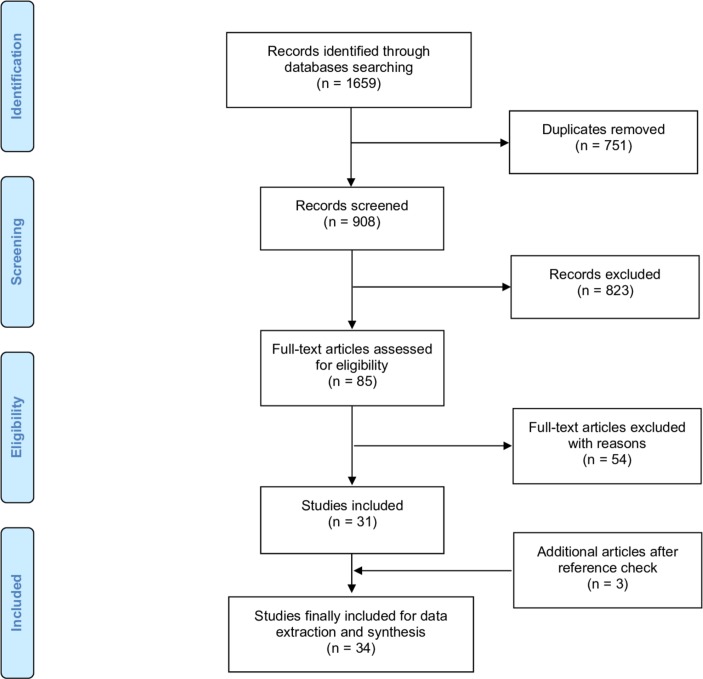
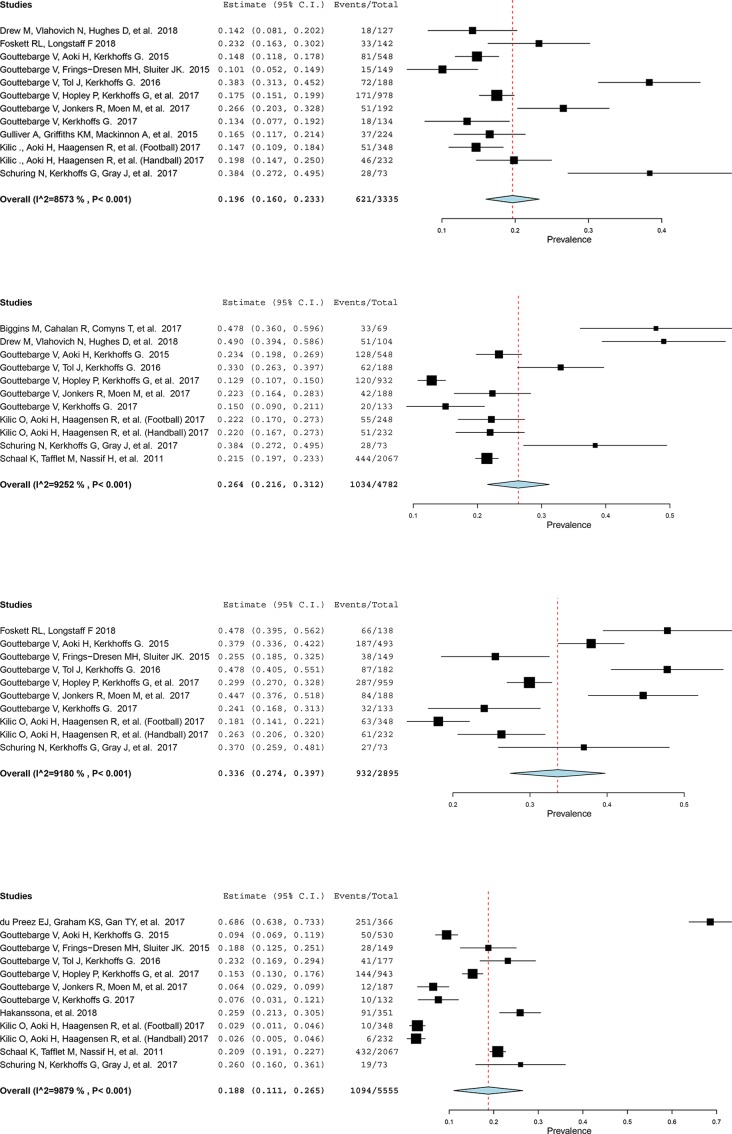
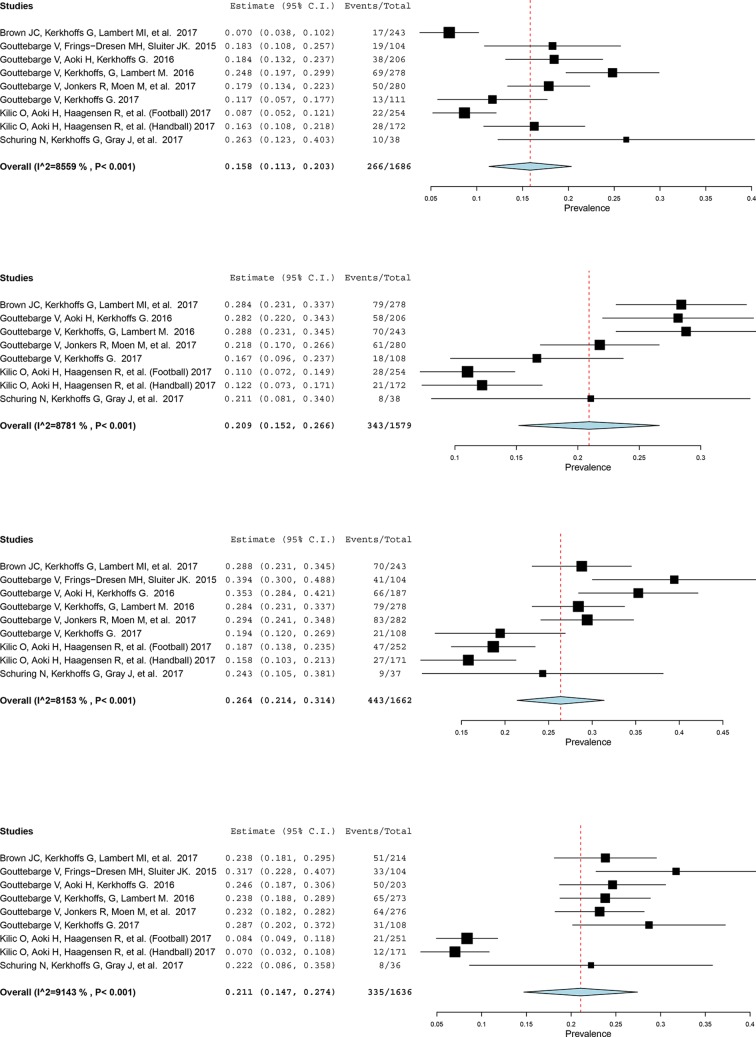
Objectives: To present an overview of the existing epidemiological evidence regarding the occurrence of mental health symptoms and disorders among current and former elite athletes. Design: Systematic review and meta-analysis. Data sources: Five electronic databases were searched from inception to November 2018: PubMed (MEDLINE), SportDiscus via EBSCO, PSycINFO via ProQuest, Scopus and Cochrane. Eligibility criteria for selecting studies: We included original quantitative studies that were written in English, were conducted exclusively among current or former elite athletes, and presented incidence or prevalence rates of symptoms of mental disorders. Results: Twenty-two relevant original studies about mental health symptoms and disorders among current elite athletes were included: they presented data especially on symptoms of distress, sleep disturbance, anxiety/depression and alcohol misuse. Meta-analyses comprising 2895 to 5555 current elite athletes showed that the prevalence of mental health symptoms and disorders ranged from 19% for alcohol misuse to 34% for anxiety/depression. Fifteen relevant original studies about mental health symptoms and disorders among former elite athletes were included: they similarly presented data especially about symptoms of distress, sleep disturbance, anxiety/depression and alcohol misuse. Meta-analyses comprising 1579 to 1686 former elite athletes showed that the prevalence of mental health symptoms and disorders ranged from 16% for distress to 26% for anxiety/depression. Conclusions: Our meta-analyses showed that the prevalence of mental health symptoms and disorders ranged from 19% for alcohol misuse to 34% for anxiety/depression for current elite athletes, and from 16% for distress to 26% for anxiety/depression for former elite athletes.
Overview
The claims and statistics of this paper haven’t been checked yet.
Run the check — free, no account needed. It reads the open-access text and checks the sources it cites.
Integrity signals
Registry
Cites
Statistics
Figures
Verification
Claims the paper makes
The claims and statistics of this paper haven’t been checked yet.
Run the check — free, no account needed. It reads the open-access text and checks the sources it cites.
Claims other papers make about this one
Each is checked against this paper’s own text: does it say what the citing paper says it does?
The cited source says what the claim attributes to it.
In the citing paper
“To date, research has primarily examined the mental health outcomes of elite athletes [15–18], with comparatively less research focusing on understanding these psychological experiences among coaches [19].”
From The Mental Health of Elite-Level Coaches: A Systematic Scoping Review (2024) · cites this paper as [15]
Self-check
Percentages, sums and reported differences re-computed from the paper’s own numbers.
The self-check needs the paper’s full text.
Citations
Cites
Diagnostic and Statistical Manual of Mental Disorders
American Psychiatric Association (2013) · doi:10.1176/appi.books.9780890425596 · Cited by 116,369
Preferred Reporting Items for Systematic Reviews and Meta-Analyses: the PRISMA statement
Moher, D., Liberati, A., Tetzlaff, J., Altman, D. G., & for the PRISMA Group (2009) · BMJ · doi:10.1136/bmj.b2535 · Cited by 83,823
Preferred reporting items for systematic reviews and meta-analyses: the PRISMA Statement.
(2009) · PubMed Central · Cited by 44,859
Meta-analysis in clinical trials
DerSimonian, R., & Laird, N. (1986) · Controlled Clinical Trials · doi:10.1016/0197-2456(86)90046-2 · Cited by 39,552
The Need for a New Medical Model: A Challenge for Biomedicine
Engel, G. L. (1977) · Science · doi:10.1126/science.847460 · Cited by 12,887
Diagnostic and Statistical Manual of Mental Disorders(DSM)
Leong, F. T. L. (2008) · Sage eBooks · doi:10.4135/9781412963978.n182 · Cited by 10,861
The global prevalence of common mental disorders: a systematic review and meta-analysis 1980–2013
Steel, Z., Marnane, C., Iranpour, C., Chey, T., Jackson, J. W., Patel, V., & Silove, D. (2014) · International Journal of Epidemiology · doi:10.1093/ije/dyu038 · Cited by 2,846 · cited 2×
“A recent systematic review and meta-analysis study performed across 155 general populations in 59 countries indicated that 20% experienced a mental disorder within a 12-month period.(4) In other studies, prevalence of anxiety/depression was found to range from 13% to 19% in Australia (general population), from 17% to…”
BackgroundMethodHoy, D., Brooks, P., Woolf, A., Blyth, F., March, L., Bain, C., Baker, P., Smith, E., & Buchbinder, R. (2012) · Journal of Clinical Epidemiology · doi:10.1016/j.jclinepi.2011.11.014 · Cited by 2,555
Guskiewicz, K. M., Marshall, S. W., Bailes, J. E., McCrea, M., Cantu, R. C., RANDOLPH, C. C., & Jordan, B. D. (2005) · Neurosurgery · doi:10.1093/neurosurgery/57.4.719 · Cited by 1,226
The Mental Health of Elite Athletes: A Narrative Systematic Review
Rice, S. M., Purcell, R., De Silva, S., Mawren, D., McGorry, P. D., & Parker, A. G. (2016) · Sports Medicine · doi:10.1007/s40279-016-0492-2 · Cited by 1,205 · cited 1×
“Single studies show that the prevalence of mental health symptoms and disorders among both current and former elite athletes seems substantial and similar to the prevalence in the general population.(5) A professional or elite sport career is characterised by more than 640 distinct stressors that could induce mental h…”
BackgroundSelf-citation
Cited by
Sorted by citations
Items 501–600 of 603
Daley, C., & Pickford, H. (2025) · British Journal of Sports Medicine · doi:10.1136/bjsports-2025-111248
Additional file 2 of The Mental Health of Elite-Level Coaches: A Systematic Scoping Review
Frost, J., Walton, C. C., Purcell, R., Fisher, K., Gwyther, K., Kocherginsky, M., & Rice, S. M. (2024) · Figshare · doi:10.6084/m9.figshare.25203736
Self-citationAdditional file 4 of The Mental Health of Elite-Level Coaches: A Systematic Scoping Review
Frost, J., Walton, C. C., Purcell, R., Fisher, K., Gwyther, K., Kocherginsky, M., & Rice, S. M. (2024) · Figshare · doi:10.6084/m9.figshare.26679632
Self-citationAnsiedade e Perturbação de Ansiedade Generalizada em Atletas de Elite
Pires, L. (2024) · Portuguese National Funding Agency for Science, Research and Technology (RCAAP Project by FCT) · doi:10.34626/s1jt-3d58
Geiger, S., Esser, A. J., Marsall, M., Muehlbauer, T., Skoda, E.-M., Teufel, M., & Bäuerle, A. (2024) · Figshare · doi:10.6084/m9.figshare.25902395
Additional file 6 of The Mental Health of Elite-Level Coaches: A Systematic Scoping Review
Frost, J., Walton, C. C., Purcell, R., Fisher, K., Gwyther, K., Kocherginsky, M., & Rice, S. M. (2024) · Figshare · doi:10.6084/m9.figshare.26679638
Self-citationAdditional file 1 of The Mental Health of Elite-Level Coaches: A Systematic Scoping Review
Frost, J., Walton, C. C., Purcell, R., Fisher, K., Gwyther, K., Kocherginsky, M., & Rice, S. M. (2024) · Figshare · doi:10.6084/m9.figshare.25203625
Self-citationAdditional file 3 of The Mental Health of Elite-Level Coaches: A Systematic Scoping Review
Frost, J., Walton, C. C., Purcell, R., Fisher, K., Gwyther, K., Kocherginsky, M., & Rice, S. M. (2024) · Figshare · doi:10.6084/m9.figshare.26679629
Self-citationGeiger, S., Esser, A. J., Marsall, M., Muehlbauer, T., Skoda, E.-M., Teufel, M., & Bäuerle, A. (2024) · Figshare · doi:10.6084/m9.figshare.25902282
Additional file 5 of The Mental Health of Elite-Level Coaches: A Systematic Scoping Review
Frost, J., Walton, C. C., Purcell, R., Fisher, K., Gwyther, K., Kocherginsky, M., & Rice, S. M. (2024) · Figshare · doi:10.6084/m9.figshare.26679635
Self-citationPilkington, V., Rice, S. M., Walton, C. C., Gwyther, K., OLIVE, L. S., Butterworth, M., Clements, M., Cross, G., & Purcell, R. (2022) · Figshare · doi:10.6084/m9.figshare.20250493
Self-citationAndersson, M. J., Kenttä, G., Claesdotter‐Knutsson, E., & Håkansson, A. (2024) · Figshare · doi:10.6084/m9.figshare.27093439
Limmer, M., Bichler, C. S., & Stürz, K. (2025) · Springer eBooks · doi:10.1007/978-3-662-70316-8_17
Focused Attention Meditation as a Pre-Exercise Strategy for Reducing Anxiety in Speed Skaters
Tomita, Y., Yokoo, M., Shimoda, K., Iizuka, T., Sakamoto, E., Irisawa, K., Tozato, F., & Tsuchiya, K. (2026) · Sensors · doi:10.3390/s26020475 · Cited by 1
“These challenges not only affect well-being but also impair athletic performance, particularly during high-stakes competitions or physically demanding training [4].”
Kroll, J., Oppitz, L., & Walter, N. (2026) · Mental Health & Prevention · doi:10.1016/j.mhp.2026.200480
The Marketing of Mental Health Services through Sport: A Point–Counterpoint Discussion
Beasley, L., & Cianfrone, B. A. (2026) · Journal of Sport and Social Issues · doi:10.1177/01937235251410854
“Indeed, a recent meta-analysis found prevalence rates between 19% for alcohol abuse to 34% for depression and anxiety in athlete populations (Gouttebarge et al., 2019).”
Shibukawa, K., Ota, T., Kawata, Y., & Murayama, N. (2026) · Journal of Japan Society of Sports Industry · doi:10.5997/sposun.36.1_11
Ostiguy, G., & Gagnon-Dolbec, A. (2026) · Journal de Traumatologie du Sport · doi:10.1016/j.jts.2025.12.005
Walsh, E., Leota, J., Huynh, D. M., Liddle, S. K., Drummond, S. P. A., & Facer‐Childs, E. R. (2026) · Sports Medicine · doi:10.1007/s40279-025-02387-z · Cited by 3
“Athletes experience mental ill-health at comparable rates to the general population [3, 4] with lifetime prevalence rates of mental health problems reaching up to 34% in elite athletes [3].”
Mental health promotion through soccer in high-risk communities: a narrative review
Нарзикулова, Д. Х., Kozokboeva, D., Gayupova, S., TOSHBOYEVA, B., Jonibek, K., Ostonov, O., qizi, H. B. H., & Egamberganova, D. (2026) · Discover Social Science and Health · doi:10.1007/s44155-026-00358-x
“Several studies report a prevalence of depressive symptoms among professional soccer players ranging from 16.7 to 39%, which is comparable to or exceeds that observed in the general population [15–17].”
InfluentialTHE IMPACT OF CULTURAL BARRIERS AND ATHLETIC IDENTITY ON HELP-SEEKING AMONG ELITE ATHLETES: A REVIEW
Wojtkiewicz, A. M., Piekarska, M., & Barańska, O. (2025) · International Journal of Innovative Technologies in Social Science · doi:10.31435/ijitss.4(48).2025.4530
Triplett, A. N., Anderson, T., Post, E. G., Bartley, J. D., Shilt, J. S., Dugan, E. L., Donaldson, A. T., Finnoff, J. T., & Adams, W. M. (2026) · BMJ Open Sport & Exercise Medicine · doi:10.1136/bmjsem-2025-002831
A Mental Well-Being Screening Process in an Elite Youth Football Academy
Harvey, S. A., Ong, C. W., Hardy, J., Callow, N., Wood, C., O’Malley, L., McGregor, P., Killilea, J., & Daley, C. (2026) · The Sport Psychologist · doi:10.1123/tsp.2024-0128
Jenssen, A. L., Coates, J. K., Plateau, C. R., & Barker, J. B. (2026) · The Sport Psychologist · doi:10.1123/tsp.2024-0153
Biopsychosocial correlates of psychoactive substance use among student athletes in Azerbaijan
Bunyatova, A., Taghi-zada, T., Ahmadova, L. A., Mursalbayova, L., & Suleymanova, A. (2026) · Discover Mental Health · doi:10.1007/s44192-026-00392-w
“Consistent with international research on athlete well-being (e.g., [4, 7]), psychological vulnerabilities—particularly emotional exhaustion—showed the strongest associations with substance-use behaviour scores, indicating that depletion of emotional and cognitive coping resources is statistically…”
Williams, H., Jones, E. S., Roberts, R., Woodman, T., & Peirce, N. S. (2026) · Psychology of sport and exercise · doi:10.1016/j.psychsport.2026.103090 · Cited by 1
Nolte, J., Thal, I., Büthe, E., Weber, S., Platen, P., & Legerlotz, K. (2026) · Sports Medicine - Open · doi:10.1186/s40798-026-01000-5
Cox, A. E., Coppus, T. A., & Delinsky, L. K. (2026) · Sport Management Education Journal · doi:10.1123/smej.2024-0006
Stavitz, J., Swan, K., Eckart, A. C., Koc, T. A., Jr., Tucker, J. N., Gentile, J. T., Ghimire, P. S., & Porcelli, R. (2026) · Sports · doi:10.3390/sports14030112
Make or break: psychotropic medications have off-label effects on neuromuscular performance
Henderson, T. T., Orssatto, L. B. R., & Thorstensen, J. R. (2026) · British Journal of Sports Medicine · doi:10.1136/bjsports-2025-110982
Psychedelics and Mental Health in Endurance Athletes: A Cross-Sectional Study in Brazil
Portes, M. A. M., & Bertoglio, L. J. (2026) · Journal of Psychoactive Drugs · doi:10.1080/02791072.2026.2644865
Fondacaro, D. V., Mansell, P. C., & Slater, M. J. (2026) · Discover Mental Health · doi:10.1007/s44192-026-00434-3
“A systematic review and meta-analysis [21] reported that 19.6% (CI: 16.0 to 23.3) of athletes reported symptoms of distress, 26.4% (CI: 21.6 to 31.2) reported sleep disturbance, 33.6% (CI: 27.4 to 39.7) reported anxiety/depression, and 18.8% (CI: 11.1 to 26.5) reported alcohol misuse, among others.”
InfluentialNew Zealand elite dual career athletes’ perceptions of their retirement transition
Lenton, A., & Bradbury, T. (2026) · International Journal of Sport and Exercise Psychology · doi:10.1080/1612197x.2026.2652860
Sport de haut niveau, performance et gestion des facteurs émotionnels
Lopes, C. P. (2022) · theses.fr (ABES) · doi:10.70675/14d89769z0a55z4117za08eze28fb5dde1e4
Terry, D. P., Iverson, G. L., & Kissinger-Knox, A. M. (2026) · Clinical Journal of Sport Medicine · doi:10.1097/jsm.0000000000001439
Kaiser, J., Pieper, J., Fesser, A., Münch, F. F., & Schmitz, J. (2026) · Frontiers in Sports and Active Living · doi:10.3389/fspor.2026.1807417
“However, most studies have focused on adult elite athletes, leaving younger populations comparatively understudied ( 11).”
Ronkainen, H., Kenttä, G., Lundgren, T., Ihalainen, J. K., Valtonen, M., & Lappalainen, R. I. (2026) · The Sport Psychologist · doi:10.1123/tsp.2025-0108
Kamiński, J., Pizzera, A., Schobersberger, W., Blank, C., Wolfarth, B., Bendau, A., & Ströhle, A. (2026) · International Journal of Sports Science & Coaching · doi:10.1177/17479541261443292
Relationship between athletic coping skills and depression, anxiety, stress among badminton players
Yadava, S., & Chanu, N. D. (2026) · Sustainability and Sports Science Journal · doi:10.55860/jykz1452
“…especially in high-pressure competitive environments (Martinent et al. 2020) Studies have also reported that the use of adaptive coping strategies is linked to lower psychological distress and greater resilience among competitive athletes (Gouttebarge et al., 2019; Purcell et al., 2019).”
InfluentialSport de haut niveau et scolarité : quels effets sur la santé ?
Guinot, M., Bres, C., & Kopf, É. (2026) · La Revue de Santé Scolaire et Universitaire · doi:10.1016/j.revssu.2026.03.005
McCluskey, T., Stevens, M. R., Murray, K., Cruwys, T., & Robertson, A. M. (2026) · Journal of Applied Sport Psychology · doi:10.1080/10413200.2026.2666094
Psychological Well-being in Athletes: A Systematic Review of Men-tal Health Strategies
Fadli, R. P., Neviyarni, N., Afdal, A., Zola, N., Ifdil, I., Zarya, F., & Oktaviani, N. (2026) · Balneo and PRM Research Journal · doi:10.12680/balneo.2026.994
Vaulet, A. A., & Preuss, M. G. (2026) · Psicología del desarrollo · doi:10.59471/psicologia2026219
Larrea, A., Naji, M., Gulak, M., Torrecilla, M., & Barreda‐Gómez, G. (2026) · Current Issues in Molecular Biology · doi:10.3390/cimb48050498
“Meta-analyses of active and retired elite athletes indicate that anxiety and depression affect between 19% and 34% of active competitors, and between 16% and 26% of retired athletes, figures that, in general, appear to exceed estimates for the general population [143,144].”
Psychological Recovery on Esports: Balancing Mental Load, Stress, and Performance
KAYĞUSUZ, Ş. (2026) · Springer eBooks · doi:10.1007/978-3-032-25090-2_6
Jbeily, N., & Hauw, D. (2026) · Lebanese Journal of Mental Health · doi:10.4103/ljmh.ljmh_30_25
Piepiora, P. A., Petre, L. M., & Vveinhardt, J. (2026) · Acta Psychologica · doi:10.1016/j.actpsy.2026.107142
Chen, K., & Xing, Y. (2026) · Frontiers in Psychology · doi:10.3389/fpsyg.2026.1832397
“Epidemiological syntheses indicate that anxiety and depression symptoms are common among current elite athletes, with pooled prevalence estimates around 34% (Gouttebarge et al., 2019).”
Wen, Z., Zhou, J., Liu, R., & He, B. (2026) · Research Square · doi:10.21203/rs.3.rs-9391307/v1
Mental Health Emergencies in Sports
Daubach, E. C., Darris, K. R., Kheradi, A. R., & Mueller, L. R. (2026) · Current Sports Medicine Reports · doi:10.1249/jsr.0000000000001341
Friedman, D. J., Hughes, D. C., Thornton, J. S., Saw, R., Girdwood, M., Wells, K. R., Bruder, A. M., Adler, S. J., Pila, E., & Crossley, K. M. (2026) · Journal of Sport Rehabilitation · doi:10.1123/jsr.2026-0031
Colvett, H., Reinagel, B., & Deeter, J. (2026) · Cureus · doi:10.7759/cureus.110533
“Retired-athlete studies more often address long-term depression, anxiety, or neurobehavioral symptoms, especially in former collision-sport athletes with extensive exposure histories [11,19,21].”
Wiśniewski, B., Pachnowska, D., Cholewiński, K., Badowska, N., Matuszek, I., Pluta, N., Nowak, K. A., Rutkowska-Nowosielska, A., Czekanow, O. N., Demkow, J., et al. (2026) · International Journal of Innovative Technologies in Social Science · doi:10.31435/ijitss.2(50).2026.5674
Redefining recovery: Closing the perinatal technology gap for athlete-mothers
Beisecker, L., Chandler, M. C., & DeFreese, J. (2026) · Psychology of sport and exercise · doi:10.1016/j.psychsport.2026.103189
Unseen vulnerability in elite sport: Insecure attachment is hidden behind psychological well-being
Kahofer, D., Jahnke‐Majorkovits, A., Raschner, C., Buchheim, A., de Punder, K., Karabatsiakis, A., & Gander, M. (2026) · Critical Public Health · doi:10.1080/09581596.2026.2684366
The Role of Artificial Intelligence and Wearable Technology in Athlete Mental Health
Bryant, B. R., Lowder, K., & Moley, J. (2026) · Advances in Psychiatry and Behavioral Health · doi:10.1016/j.ypsc.2026.04.004
Mental Health Challenges and Help Seeking Behavior Among Athletes
John, H., Pottengal, S., & Baikady, R. (2026) · Springer eBooks · doi:10.1007/978-3-030-68127-2_659-1
Mental health in tennis: a cross-organisational hybrid summit-Delphi consensus process
Kroshus, E., Capel-Davies, J., Ellenbecker, T. S., Gouttebarge, V., Martin, K., Miller, S., Mountjoy, M. L., Reardon, C. L., Stroia, K. A., & Hainline, B. W. (2026) · British Journal of Sports Medicine · doi:10.1136/bjsports-2025-111479
“21 Epidemiological data about symptoms of mental”
Self-citationSaborosa, G. P., Guilherme, L. Q., Scheer, V., Matos, J. P., Brandão, M. L. D. S., Martins, P., Knechtle, B., Kravchychyn, A. C. P., & Souza, H. D. S. (2026) · Journal of International Medical Research · doi:10.1177/03000605261463432
“1,47 Regarding PSQI-related associations, poorer sleep scores were moderately associated with higher levels of negative mood states, reinforcing the bidirectional relationship between sleep and mood regulation and strengthening the evidence supporting the study hypothesis.”
Spanish validation of the Baron Depression Screener for Athletes (BDSA) scale in Chilean athletes
Morales, A., Moreno, M., Marholz, P. F. O., Martínez‐Zelaya, G., Caviedes, P. F. S., Ducó, N., Urroz, F., & Baron, D. A. (2026) · Sports Psychiatry · doi:10.1024/2674-0052/a000133
Kuribayashi, C., Inoué, K., Noguchi, Y., Kinugasa, T., Lundqvist, C., Wylleman, P., & Kukidome, T. (2026) · Journal of Clinical Sport Psychology · doi:10.1123/jcsp.2025-0040
Gorczynski, P. F., Bilgoe, S. C., Gouttebarge, V., Hitchcock, M., & Currie, A. (2026) · British Journal of Sports Medicine · doi:10.1136/bjsports-2025-111429
Self-citationEating disorders and associated mental symptoms in Swedish elite athletes and a comparison group
Ejderstedt, F., Karlsson, M., Edlund, B., Ahlgren, M., Pojskić, H., & Melin, A. (2026) · Discover Mental Health · doi:10.1007/s44192-026-00547-9
“Previous research has shown that elite athletes experience mental health symptoms at rates comparable to or exceeding those of the general population [40, 41].”
Beliefs about emotions, emotion regulation, and mental health outcomes in athletes
Milne, M. J., Quinton, M. L., & Williams, S. E. (2026) · Psychology of sport and exercise · doi:10.1016/j.psychsport.2026.103222
Bee, W. W., Machtsiras, G., Junge, A., Mountjoy, M. L., Murray, A. D., Turner, A. P., Prossor, D., Glover, D., Hopley, G., & West, S. (2026) · International Journal of Golf Science · doi:10.64852/001c.163799
Mapping Mental Health Complexity in Esports: A Psychosocial Network ApproachPreprint
Ruysevelt, L. V., Heel, M. V., Trotter, M. G., Watson, M., Pedraza-Ramirez, I., Bonilla, I., Davis, P., Ragnarsson, J., Maîresse, O., & Kegelaers, J. J. (2026) · Research Square · doi:10.21203/rs.3.rs-10216609/v1
Pitacho, L. A., & Cordeiro, J. P. (2026) · Frontiers in Psychology · doi:10.3389/fpsyg.2026.1894992 · Cited by 1
Guilfoyle, L., Macpherson, A. C., Cooper, D. J., Crossley, K. M., Donaldson, A. T., Elliott, N., Engebretsen, L., Leclerc, S., Post, E. G., Ranson, C., et al. (2026) · Sports Medicine · doi:10.1007/s40279-026-02497-2
Esser, A. J., Nguyen, V. T. M., Geiger, S., Paslakis, G., Schweda, A., Dinse, H., Reinemann, E., Muehlbauer, T., Seitz, J., Gradl-Dietsch, G., et al. (2026) · Discover Mental Health · doi:10.1007/s44192-026-00544-y
“EDs are reported in 1% to 28% of elite athletes [3], a variability that likely reflects methodological heterogeneity, underreporting, and limited research focus [12].”
InfluentialLiu, B., Peng, H., & Yang, Q. (2026) · Frontiers in Psychology · doi:10.3389/fpsyg.2026.1904502
“Existing evidence indicates that approximately 19.6% of elite athletes report symptoms of psychological distress, while up to 34% experience anxiety and depressive symptoms (Gouttebarge et al., 2019).”
InfluentialNAIDOO, D., Chantler, J., Gouttebarge, V., van Rensburg, D. J., & MacMillan, C. (2026) · Journal of science and medicine in sport · doi:10.1016/j.jsams.2026.07.018
Self-citationYun, J., Park, S., Park, K., Kim, C., Mountjoy, M. L., Stuart, M. C., & Rhie, S. J. (2026) · International Journal of Clinical Pharmacy · doi:10.1007/s11096-026-02206-z
“A meta-analysis by Gouttebarge et al. (2019) reported symptoms of anxiety and/or depression in up to 34% of current elite athletes and 26% of former elite athletes [3].”
Promoting lifelong brain health: A review of risk factors and protective opportunities for athletes
Hughes, D., Partridge, E. M., Fortington, L., Lennon, M., Waddington, G. S., Sachdev, P. S., & Brodaty, H. (2026) · Journal of science and medicine in sport · doi:10.1016/j.jsams.2026.08.201
Assessment of depression and suicidal thoughts among female trail runners
Hill, C., Vigne, C., Basset, P., Baud, D., & Scheer, V. (2026) · Frontiers in Psychology · doi:10.3389/fpsyg.2026.1753949
“Studies have reported a higher prevalence of depression among elite athletes compared to the general population (Gouttebarge et al., 2019; Purcell et al., 2020).”
Chen, Z., Lian, L., & Zhong, S. (2026) · Frontiers in Psychology · doi:10.3389/fpsyg.2026.1842687
“Previous research has shown that the pooled prevalence of anxiety-or depression-related symptoms among elite athletes may be as high as 34% (Gouttebarge et al., 2019), underscoring the importance of mental health concerns in competitive sport populations.”
Wang, X., Liang, W., & Si, G. (2026) · Science & Sports · doi:10.1016/j.scispo.2026.04.001
Lim, J. J., de Cruz, N. P., Lim, H. B. T., & Slater, M. J. (2026) · International Journal of Sports Science & Coaching · doi:10.1177/17479541261474868
Niering, M., Richter, E., Riedel, J., Beurskens, R., & Seifert, J. (2026) · Frontiers in Public Health · doi:10.3389/fpubh.2026.1920866
Yotsuyaku, H., Murofushi, Y., Takanashi, Y., Kawata, Y., Fukao, K., Takazawa, Y., Nose‐Ogura, S., & Ota, T. (2026) · Women s Health · doi:10.1177/17455057261483477
GARCÍA, M. M., Perez, G., Ramírez, B. M., & Soto, N. Y. T. (2026) · ISEO Journal · doi:10.63344/t8qzvn77
Montenegro-Bonilla, A. D., Becerra-Patiño, B. A., Arancibia, J. E. O., Plaza‐Díaz, J., Rojas‐Valverde, D., Sepulveda, R. A. Y., & López‐Gil, J. F. (2026) · Sports · doi:10.3390/sports14090390
“Moreover, it has been suggested that elite sports environments may expose athletes to up to 640 distinct stressors, many of which are linked to the demands of high-level competition and contribute to mental health vulnerability [17,18].”
Huang, Z., Pan, L., Xu, Y., Li, X., & Deng, W. (2026) · Frontiers in Psychology · doi:10.3389/fpsyg.2026.1938720
“Epidemiological studies indicate that a substantial proportion of elite athletes experience depressive symptoms (Gouttebarge et al., 2019; Rice et al., 2019; Runacres and Marshall, 2024), with recent meta-analytic evidence reporting a pooled prevalence of 30.7% among female athletes (Beisecker et…”
InfluentialTRANSTORNO DE ANSIEDADE GENERALIZADA EM CORREDORES DE RUA DO MUNICÍPIO DE TUCURUÍ-PA
de Oliveira, W. C., Dias, C. I. F., Borges, R. C. D. S., & Thuany, M. (2026) · Revista Contemporânea · doi:10.56083/rcv6n9-007
Niering, M., Schraven, L., Beurskens, R., & Seifert, J. (2026) · Mental Health Science · doi:10.1002/mhs2.70058
XU, Y., Peng, J., Xu, Y., & Wen, N. (2026) · Orthopedic Reviews · doi:10.52965/001c.169720
Carleton-Schweitzer, L., Keller, J., Röthlin, P., & Steindorf, L. (2026) · Psychology of sport and exercise · doi:10.1016/j.psychsport.2026.103264
Zhang, R., Liu, H., & Yu, Y. (2026) · Frontiers in Psychology · doi:10.3389/fpsyg.2026.1926280
“Consensus and meta-analytic evidence therefore show that athlete mental health requires direct assessment rather than optimistic assumptions about sport as protection (Gouttebarge et al., 2019; Reardon et al., 2019).”
Morelló, E., Larruskain, J., Gil-Caselles, L., & Zafra, A. O. (2026) · Behavioral Sciences · doi:10.3390/bs16101738
Unlocking Performance: Pharmacogenomic Insights for Athletes
Potter, K., Beal-Stahl, J., Luaces, M., Chin, K., Ismail, A. F., & Guerra, C. (2026) · Sports Medicine International Open · doi:10.1055/a-2957-1103
ADİLOĞULLARI, G. E., Adiloğulları, İ., & Şenel, E. (2026) · International Journal of Sport and Exercise Psychology · doi:10.1080/1612197x.2026.2740797
Li, F., & Zhang, W. (2026) · Frontiers in Nutrition · doi:10.3389/fnut.2026.1934748
Tsalafos, A., Donohue, B. C., Kraus, S. W., Ullman, J., Mercer, J., Allen, D., & Goto, A. (2026) · Sport Social Work Journal · doi:10.33043/xgjkg7xwg4e
Mental Preparation in Professional Tennis: A Qualitative Study of Czech Players’ Experiences
Redlichová, V., Novotná, J., & Komarc, M. (2026) · Sports · doi:10.3390/sports14100429
“Consequently, elite athletes frequently report symptoms of psychological distress, including anxiety, depression, sleep disturbances, and other mental health difficulties [15,16].”
Nighttime Sweating-Related Sleep Disturbance in Swiss Elite Athletes
Kater, M., Erlacher, D., Schmid, M. J., & Vorster, A. (2026) · Sleep Epidemiology · doi:10.1016/j.sleepe.2026.100180
Psychometric properties of a Psychological Safety Scale for Competitive Sports (PSSCS)
MATSUBARA, A., & Takai, H. (2026) · International Journal of Sport and Exercise Psychology · doi:10.1080/1612197x.2026.2740795
Physical Activity and Associated Factors among Elderly People
Sajal, R. A., Rahman, A. M., & Mahi, N. M. A. (2025) · TAJ Journal of Teachers Association · doi:10.70818/taj.v38i04.0954
Mapping mental health complexity in esports: an exploratory psychosocial network approach
Ruysevelt, L. V., Heel, M. V., Trotter, M. G., Watson, M., Pedraza-Ramirez, I., Bonilla, I., Davis, P., Ragnarsson, J., Maîresse, O., & Kegelaers, J. J. (2026) · BMC Psychology · doi:10.1186/s40359-026-05800-y
“Its strongest model-fit connections were to anxiety and anhedonia, consistent with the well-known co-occurrence of these mental ill-health symptoms in general, traditional sports, and esports populations [8, 62, 63].”
Chu, T. L., DeMan, S., & Cheng, B. C.-Y. (2026) · Research Square · doi:10.21203/rs.3.rs-11087671/v1
Spolverato, L., Devoto-Araya, M., Wylleman, P., Brandt, K. D., Bertran-Gracia, L., Jordana, A., Kenttä, G., Papathomas, A., Ruffault, A., Blijlevens, S., et al. (2026) · International Journal of Sports Science & Coaching · doi:10.1177/17479541261499703
Metadata
- Authors
- Gouttebarge, V., Castaldelli-Maia, J. M., Gorczynski, P., Hainline, B., Hitchcock, M. E., Kerkhoffs, G. M., Rice, S. M., & Reardon, C. L.
- Affiliations
- Amsterdam University Medical Centers (NL)
- University of Portsmouth (GB)
- National Collegiate Athletic Association (US)
- University of Wisconsin–Madison (US)
- Amsterdam UMC Location University of Amsterdam (NL)
- The University of Melbourne (AU)
- University of Wisconsin System (US)
- Corresponding author
- Gouttebarge, Vincent
- ORCID
- Venue
- British Journal of Sports Medicine
- Publisher
- BMJ
- Published
- 2019-05-16
- Volume
- 53
- Issue
- 11
- Pages
- 700-706
- ISSN
- 0306-3674 (ISSN-L)
- 1473-0480
- PMC
- PMC6579497
- OpenAlex
- W2944177380
- Cited by
- 604
- References
- 68
- Citations by year
- 2026: 119 · 2025: 107 · 2024: 111 · 2023: 77 · 2022: 80 · 2021: 58 · 2020: 44 · 2019: 7
- FWCI
- 10.09
- Type
- journal article
- Language
- en
- Open access
- hybrid
- doi.org
- Licence
- cc-by
- Locations
- British Journal of Sports Medicine (publishedVersion, cc-by)
- Europe PMC (PubMed Central) (publishedVersion, cc-by-nc)
- PubMed Central (publishedVersion, cc-by-nc)
- PubMed (publishedVersion)
- Pure Amsterdam UMC (publishedVersion, cc-by)
- Amsterdam UMC (VU Amsterdam) - Institutional Repository (publishedVersion, other-oa)
- Minerva Access (University of Melbourne) (submittedVersion, cc-by-nc)
- Data Archiving and Networked Services (DANS) (submittedVersion, other-oa)
- HighWire Press Open Archive (submittedVersion)
- Data Archiving and Networked Services (DANS) (submittedVersion, cc-by-nc)
- Funders
- International Olympic Committee
- Topics
- Social Sciences › Psychology › Developmental and Educational Psychology › Sport Psychology and Performance
- Social Sciences › Psychology › Clinical Psychology › Psychological Treatments and Assessments
- Health Sciences › Medicine › Psychiatry and Mental health › Mental Health Treatment and Access
- Keywords
- mental health, elite athletes, former athletes, anxiety, depression, alcohol abuse, sleep disorders, psychological distress, prevalence, mental illness
- MeSH terms
- Anxiety, Mental Disorders, Depression, Humans, Sleep Wake Disorders, Incidence, Prevalence, Alcohol-Related Disorders, Athletes
About these checks
Registry, retraction, Cites and statistics results are computed, not judged, with one exception: a printed reference that no index lists is read once by a model before it counts as a citation error. Claims are extracted by a model and kept only when their quote appears verbatim in the text; each cited source is then checked, with a model’s help, for whether it says what the claim relies on. Those verdicts can be wrong — read the claim’s quote and the cited source before relying on one.
Statistics and arithmetic are recomputed, not judged.
Confidence bands are shown only for fields calibrated on our annotated test set. None is calibrated yet, so no band is shown.
What counts as a claim ›How we measure confidence ›How we check this ›
Are you an author, or do you see a problem with this page? Request a review
