

The DOI matches its Crossref record; 70 of the 70 references it cites were found in a registry or an index.
Occurrence of mental health symptoms and disorders in current and former elite athletes: a systematic review and meta-analysis
Open accessAbstract
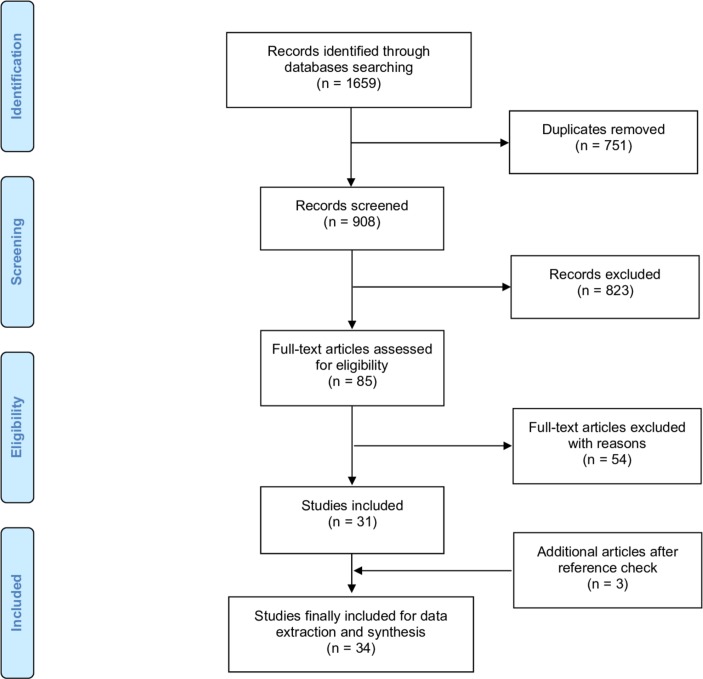
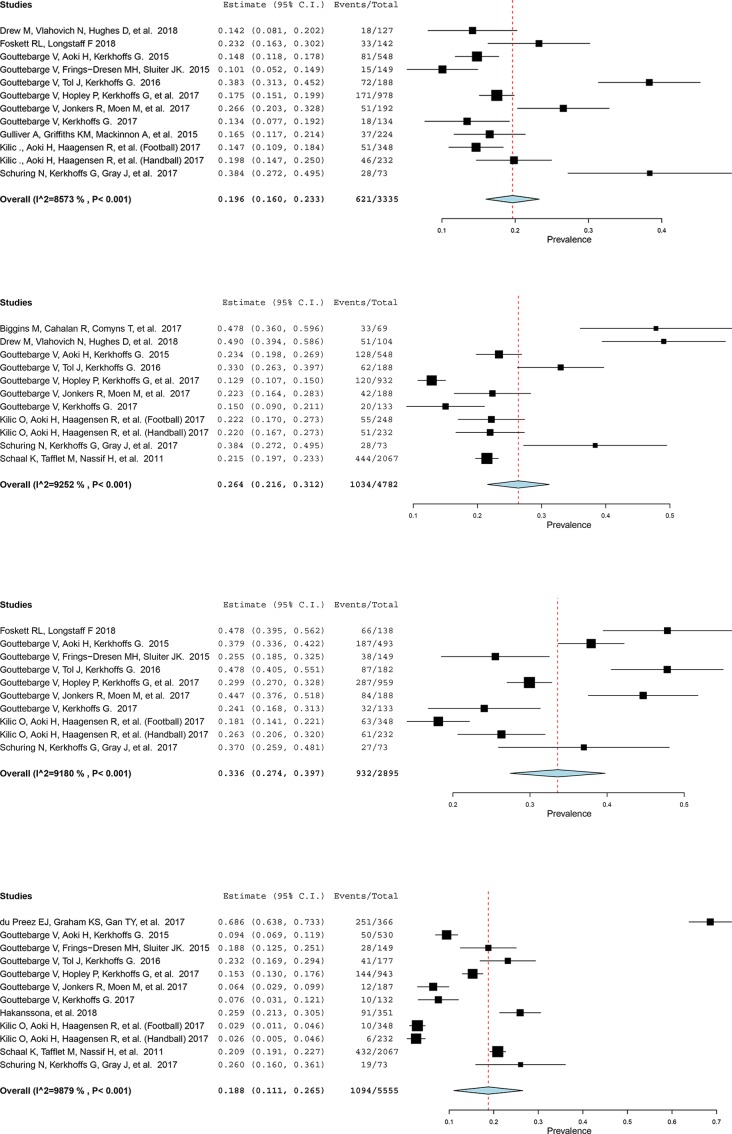
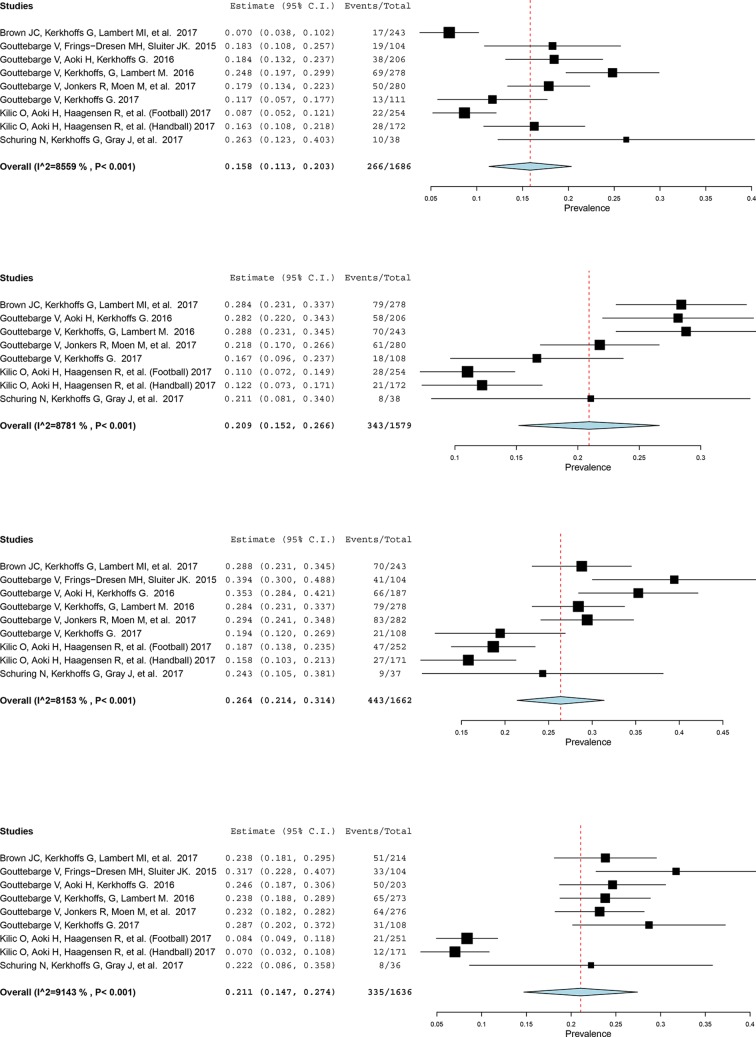
Objectives: To present an overview of the existing epidemiological evidence regarding the occurrence of mental health symptoms and disorders among current and former elite athletes. Design: Systematic review and meta-analysis. Data sources: Five electronic databases were searched from inception to November 2018: PubMed (MEDLINE), SportDiscus via EBSCO, PSycINFO via ProQuest, Scopus and Cochrane. Eligibility criteria for selecting studies: We included original quantitative studies that were written in English, were conducted exclusively among current or former elite athletes, and presented incidence or prevalence rates of symptoms of mental disorders. Results: Twenty-two relevant original studies about mental health symptoms and disorders among current elite athletes were included: they presented data especially on symptoms of distress, sleep disturbance, anxiety/depression and alcohol misuse. Meta-analyses comprising 2895 to 5555 current elite athletes showed that the prevalence of mental health symptoms and disorders ranged from 19% for alcohol misuse to 34% for anxiety/depression. Fifteen relevant original studies about mental health symptoms and disorders among former elite athletes were included: they similarly presented data especially about symptoms of distress, sleep disturbance, anxiety/depression and alcohol misuse. Meta-analyses comprising 1579 to 1686 former elite athletes showed that the prevalence of mental health symptoms and disorders ranged from 16% for distress to 26% for anxiety/depression. Conclusions: Our meta-analyses showed that the prevalence of mental health symptoms and disorders ranged from 19% for alcohol misuse to 34% for anxiety/depression for current elite athletes, and from 16% for distress to 26% for anxiety/depression for former elite athletes.
Overview
The claims and statistics of this paper haven’t been checked yet.
Run the check — free, no account needed. It reads the open-access text and checks the sources it cites.
Integrity signals
Registry
Cites
Statistics
Figures
Verification
Claims the paper makes
The claims and statistics of this paper haven’t been checked yet.
Run the check — free, no account needed. It reads the open-access text and checks the sources it cites.
Claims other papers make about this one
Each is checked against this paper’s own text: does it say what the citing paper says it does?
The cited source says what the claim attributes to it.
In the citing paper
“To date, research has primarily examined the mental health outcomes of elite athletes [15–18], with comparatively less research focusing on understanding these psychological experiences among coaches [19].”
From The Mental Health of Elite-Level Coaches: A Systematic Scoping Review (2024) · cites this paper as [15]
Self-check
Percentages, sums and reported differences re-computed from the paper’s own numbers.
The self-check needs the paper’s full text.
Citations
Cites
Diagnostic and Statistical Manual of Mental Disorders
American Psychiatric Association (2013) · doi:10.1176/appi.books.9780890425596 · Cited by 116,369
Preferred Reporting Items for Systematic Reviews and Meta-Analyses: the PRISMA statement
Moher, D., Liberati, A., Tetzlaff, J., Altman, D. G., & for the PRISMA Group (2009) · BMJ · doi:10.1136/bmj.b2535 · Cited by 83,823
Preferred reporting items for systematic reviews and meta-analyses: the PRISMA Statement.
(2009) · PubMed Central · Cited by 44,859
Meta-analysis in clinical trials
DerSimonian, R., & Laird, N. (1986) · Controlled Clinical Trials · doi:10.1016/0197-2456(86)90046-2 · Cited by 39,552
The Need for a New Medical Model: A Challenge for Biomedicine
Engel, G. L. (1977) · Science · doi:10.1126/science.847460 · Cited by 12,887
Diagnostic and Statistical Manual of Mental Disorders(DSM)
Leong, F. T. L. (2008) · Sage eBooks · doi:10.4135/9781412963978.n182 · Cited by 10,861
The global prevalence of common mental disorders: a systematic review and meta-analysis 1980–2013
Steel, Z., Marnane, C., Iranpour, C., Chey, T., Jackson, J. W., Patel, V., & Silove, D. (2014) · International Journal of Epidemiology · doi:10.1093/ije/dyu038 · Cited by 2,846 · cited 2×
“A recent systematic review and meta-analysis study performed across 155 general populations in 59 countries indicated that 20% experienced a mental disorder within a 12-month period.(4) In other studies, prevalence of anxiety/depression was found to range from 13% to 19% in Australia (general population), from 17% to…”
BackgroundMethodHoy, D., Brooks, P., Woolf, A., Blyth, F., March, L., Bain, C., Baker, P., Smith, E., & Buchbinder, R. (2012) · Journal of Clinical Epidemiology · doi:10.1016/j.jclinepi.2011.11.014 · Cited by 2,555
Guskiewicz, K. M., Marshall, S. W., Bailes, J. E., McCrea, M., Cantu, R. C., RANDOLPH, C. C., & Jordan, B. D. (2005) · Neurosurgery · doi:10.1093/neurosurgery/57.4.719 · Cited by 1,226
The Mental Health of Elite Athletes: A Narrative Systematic Review
Rice, S. M., Purcell, R., De Silva, S., Mawren, D., McGorry, P. D., & Parker, A. G. (2016) · Sports Medicine · doi:10.1007/s40279-016-0492-2 · Cited by 1,205 · cited 1×
“Single studies show that the prevalence of mental health symptoms and disorders among both current and former elite athletes seems substantial and similar to the prevalence in the general population.(5) A professional or elite sport career is characterised by more than 640 distinct stressors that could induce mental h…”
BackgroundSelf-citation
Cited by
Sorted by citations
Items 301–400 of 603
de Subijana, C. L., Wergin, V. V., Mallett, C. J., & Haslam, S. A. (2025) · International Journal of Sport and Exercise Psychology · doi:10.1080/1612197x.2025.2479715 · Cited by 2
“Over time, elite athletes are also more likely to experience injury, multiple surgeries, deselection due to poor performance, and social and financial pressure (Brand et al., 2013; Gouttebarge et al., 2019; Rice et al., 2016).”
Silvester, C., Hume, P. A., Clark, T., & Donkin, L. (2025) · International Journal of Sport and Exercise Psychology · doi:10.1080/1612197x.2025.2495673 · Cited by 3
“Section variables were based on previous research highlighting their associations with athlete MH (Gouttebarge et al., 2019; Rice et al., 2019; Rice et al., 2016).”
Esser, A. J., Geiger, S., Paslakis, G., Muehlbauer, T., Gradl-Dietsch, G., Seitz, J., Giel, K. E., Striegel, H., Bäuerle, A., & Teufel, M. (2025) · Zeitschrift für psychosomatische Medizin und Psychotherapie · doi:10.13109/zptm.2025.71.2.189 · Cited by 2
Dithurbide, L., Boudreault, V., Durand‐Bush, N., Delage, G., MacLeod, L., & Gauthier, V. (2025) · Frontiers in Psychology · doi:10.3389/fpsyg.2025.1540372 · Cited by 2
Mental health symptoms and disorders in elite athletes: A systematic review
Guszkowska, M. (2025) · Acta kinesiologica · doi:10.51371/issn.1840-2976.2025.19.s1.1 · Cited by 3
Vella, J. D., Facer‐Childs, E. R., Ogden, J., Liddle, S. K., Engelman, A., Volchek, I., & King, K. (2025) · British Journal of Sports Medicine · doi:10.1136/bjsports-2024-108953 · Cited by 4
Wegner, I., Schroeder, J., & Reer, R. (2025) · German Journal of Exercise and Sport Research · doi:10.1007/s12662-025-01063-8 · Cited by 3
“Approximately 40% of former football players suffer from depression and anxiety (Gouttebarge et al., 2019) due to loss of routine, lack of professional qualifications and limited social orientation.”
Niçaise, V., & Lienhart, N. (2025) · European Journal of Sport Science · doi:10.1002/ejsc.70034 · Cited by 2
Einarsdóttir, F. R., Arnardóttir, N. Ý., Kristjánsdóttir, H., Belz, J., Kenttä, G., Andersson, M. J., & Tahtinen, R. E. (2025) · Performance Enhancement & Health · doi:10.1016/j.peh.2025.100397 · Cited by 2
“Some evidence indicates that athletes exhibit at least similar rates of common mental health issues as non-athletes (Gorczynski et al., 2017; Gouttebarge et al., 2019).”
Bilgoe, S. C., Kerkhoffs, G. M. M. J., & Gouttebarge, V. (2025) · Discover Mental Health · doi:10.1007/s44192-025-00328-w · Cited by 3
“%) compared to previous literature among former elite athletes from various sport types [7].”
InfluentialSelf-citationModelling the effect of motivation on mental health components with fuzzy logic among elite athletes
Anapalı, A., ADİLOĞULLARI, G. E., & Şenel, E. (2026) · Scientific Reports · doi:10.1038/s41598-026-39718-7 · Cited by 4
“9, 10 and 11) further illustrate how medium levels of motivation do not necessarily confer protection when safety and well-being are diminished.”
Identifying behavioural addictions in endurance and ultra-endurance runners: a population at risk?
Scheer, V., Valero, D., Valero, E., Szabó, A., & Knechtle, B. (2026) · International Journal of Sport and Exercise Psychology · doi:10.1080/1612197x.2026.2628579 · Cited by 2
Mental health literacy in elite-level coaches: Recognition and management of depression and burnout
Frost, J., Purcell, R., Rice, S. M., Tamminen, K. A., Gouttebarge, V., Adams, W. M., & Walton, C. C. (2026) · Journal of Applied Sport Psychology · doi:10.1080/10413200.2025.2589723 · Cited by 2
“At present, meta-analyses estimate that approximately 34% of elite athletes experience symptoms of anxiety/depression, with 19% exhibiting symptoms of psychological distress and 16% engaging in risky alcohol consumption (Gouttebarge et al., 2019).”
Self-citationWang, Z., Song, P., Ren, J., & Zhang, J. (2026) · Frontiers in Psychology · doi:10.3389/fpsyg.2026.1780404 · Cited by 2
Schorb, A., Edwards, C. D., Aichhorn, W., & Schiepek, G. (2026) · Frontiers in Psychology · doi:10.3389/fpsyg.2026.1767962 · Cited by 2
The role of general health in predicting the social harms of elite athletes
Alamdarloo, G. H., Shahin, H. S., Gholami, M., Morovat, M., & Parsae, S. (2022) · Journal for the Study of Sports and Athletes in Education · doi:10.1080/19357397.2022.2060701 · Cited by 2
“Various findings suggest that elite athletes are at risk for public health problems (Foskett & Longstaff, 2018; Gouttebarge et al., 2019; Rice et al., 2016).”
Sleep and Mental Health in Athletes
Kim, K. N., Emert, S. E., Huskey, A., & Taylor, D. J. (2022) · Current Sleep Medicine Reports · doi:10.1007/s40675-022-00240-7 · Cited by 3
Getting psyched up: Developing the field of Sport and Exercise Psychiatry in South Africa
Burger, J. W., & Mafuze, B. (2023) · South African Journal of Sports Medicine · doi:10.17159/2078-516x/2023/v35i1a16352 · Cited by 3
“Mental health symptoms and disorders occur in former and current elite athletes at similar rates to that of the general population.[2] Mental health disorders are defined by the International Olympic Committee (IOC) consensus statement”
BackgroundRunciman, P., Eken, M. M., van der Hoven, H., Badenhorst, M., Blauwet, C. A., Gouttebarge, V., Swartz, L. M., & Derman, W. E. (2024) · British Journal of Sports Medicine · doi:10.1136/bjsports-2023-107406 · Cited by 5
Self-citationGorczynski, P. F., & McCabe, T. (2024) · Advances in Psychiatry and Behavioral Health · doi:10.1016/j.ypsc.2024.05.009 · Cited by 3
Self-citationThe parental dilemma of talented children
McQueen, P. (2024) · Journal of the Philosophy of Sport · doi:10.1080/00948705.2024.2369921 · Cited by 2
“Sportspeople can also experience significant issues after retirement (e.g. Gouttebarge et al. 2019; Haslam et al. 2021; Mannes et al. 2019), with a much higher percentage of them experiencing mental health issues compared with retirement from other forms areas of work.”
Li, T., & Liu, Y. (2024) · Scientific Reports · doi:10.1038/s41598-024-69952-w · Cited by 2
Hapig, M., Zurstiege, G., Mayer, J., Thiel, A., & John, J. M. (2024) · Frontiers in Sports and Active Living · doi:10.3389/fspor.2024.1446680 · Cited by 3
Curtis, C., Carling, C., Tooley, E., & Russell, M. A. (2024) · Nutrients · doi:10.3390/nu16203474 · Cited by 4
“In recent years there has been increased research and awareness of mental health and wellbeing in sport; however, the main focus of this research has been on athletes themselves [16,23].”
BackgroundKarababa, B. (2024) · Spor ve Performans Araştırmaları Dergisi · doi:10.17155/omuspd.1479558 · Cited by 2
Sawyer, J., McPherson, M., Reuter, M., & Cacolice, P. A. (2025) · Journal of Clinical Medicine · doi:10.3390/jcm14030853 · Cited by 2
“Experiencing an injury that prohibits participation in athletics further compounds this elevated risk [55].”
Assadourian, S., Daher, D., Leclerc, C., Lopes, A. B., & Saj̈, A. (2025) · Sports · doi:10.3390/sports13030061 · Cited by 2
“Mental health disorders such as burnout, ADHD, insomnia, chronic pain, depression, and anxiety are common in athletes and may occur more frequently than in the general population [2–5].”
Is there a place for psychedelics in sports practice?
Portes, M. A. M., Werle, I., & Bertoglio, L. J. (2025) · Acta Neuropsychiatrica · doi:10.1017/neu.2025.13 · Cited by 3
The Voice of Mental Health Literacy
Gorczynski, P. F. (2025) · Advances in Psychiatry and Behavioral Health · doi:10.1016/j.ypsc.2025.02.001 · Cited by 3
Self-citationOjio, Y., Yamada, K., Amemiya, R., Kawamura, S., Rice, S. M., & Purcell, R. (2025) · Sports Psychiatry · doi:10.1024/2674-0052/a000116 · Cited by 3
Self-citationArai, H., SUGIMOTO, T., MASUDA, M., KAMANO, S., & Tokuyasu, A. (2021) · Journal of Japan Society of Sports Industry · doi:10.5997/sposun.31.3_341 · Cited by 2
Khot, R., & Bujurke, A. (2021) · International Journal of Yogic Human Movement and Sports Sciences · doi:10.22271/yogic.2021.v6.i2a.1157 · Cited by 2
Psychological Aspects in Elite Athletes
Gouttebarge, V., & Kerkhoffs, G. M. M. J. (2020) · Springer eBooks · doi:10.1007/978-3-662-60752-7_51 · Cited by 4
Self-citationMental Health Concerns in Athletes
Rowan, M. R., Sarafin, S. R., Willoughby, K., & O’Brien, K. H. M. (2023) · Contemporary pediatric and adolescent sports medicine · doi:10.1007/978-3-031-25126-9_2 · Cited by 3
Martínez, J. B., López-Ubis, J. C., & Rodríguez-Hernández, A. F. (2024) · Retos · doi:10.47197/retos.v58.106531 · Cited by 2
Bartley, J. D., & Donaldson, A. T. (2023) · Springer eBooks · doi:10.1007/978-3-031-33867-0_21 · Cited by 2
Editorial: Sex differences in sport performance
Brocherie, F., Billaut, F., & Deldicque, L. (2023) · Frontiers in Sports and Active Living · doi:10.3389/fspor.2023.1230330 · Cited by 3
Ojio, Y., Yamada, K., Amemiya, R., Kawamura, S., Rice, S., & Purcell, R. (2024) · Research Square · doi:10.21203/rs.3.rs-5315778/v1 · Cited by 6
Self-citationMental health lead: towards a new role within the athlete support team?
Kegelaers, J. J., Wylleman, P., Torregrossa, M., Ruffault, A., Vitali, F., & Kenttä, G. (2026) · British Journal of Sports Medicine · doi:10.1136/bjsports-2025-110841 · Cited by 2
Cycling: Attention Deficit Hyperactivity Disorder and Anti-Doping
Dove, J., & Rowe, L. (2020) · Cambridge University Press eBooks · doi:10.1017/9781108767187.007 · Cited by 1
Swimming: Adolescent Athlete Training Commitments
Nahman, C., Plateau, C. R., & Moorhouse, A. (2020) · Cambridge University Press eBooks · doi:10.1017/9781108767187.011 · Cited by 1
Saúde mental no atleta de elite: revisão sistemática de estudos nacionais e internacionais
Colagrai, A. C., Nascimento, F. T., & Fernandes, P. T. (2022) · Revista Brasileira de Psicologia do Esporte · doi:10.31501/rbpe.v11i3.13503 · Cited by 2
The Emergence of the Pandemic: High-Performance Coach and Athlete Experiences
Dehghansai, N., Mazhar, A., Pinder, R. A., Baker, J. R., & Renshaw, I. (2022) · Adapted Physical Activity Quarterly · doi:10.1123/apaq.2022-0021 · Cited by 1
Psychological Response to Injury and Illness
Putukian, M. (2022) · Springer eBooks · doi:10.1007/978-3-031-08364-8_17 · Cited by 2
Disordered eating attitudes, depressive symptomatology and alcohol consumption in young athletes
Perko, U., & Černelič-Bizjak, M. (2023) · Annales Kinesiologiae · doi:10.35469/ak.2022.358 · Cited by 1
Traumatische Erfahrungen und Belastungen im Leistungssport
Allroggen, M. (2023) · Die Psychotherapie · doi:10.1007/s00278-023-00680-8 · Cited by 1
Häufige psychische Erkrankungen bei Leistungssportler:innen
Ströhle, A. (2023) · Springer eBooks · doi:10.1007/978-3-662-66208-3_17 · Cited by 1
¿Es posible compaginar fútbol profesional y estudios superiores a partir de los 18 años?
Ramos-Agost, N., Jordana, A., & Torregrossa, M. (2024) · Apunts Educación Física y Deportes · doi:10.5672/apunts.2014-0983.es.(2024/2).156.01 · Cited by 1
Psychiatric Disorders in Elite Athletes
Rungstrøm, K., Frisk, C. H., Hulgaard, D. R., & Lichtenstein, M. B. (2024) · Scandinavian Journal of Sport and Exercise Psychology · doi:10.7146/sjsep.v6i.140705 · Cited by 2
What did we learn about elite student-athlete mental health systems from the COVID-19 pandemic?
Simpson, K., Baker, G., Cameron-Blake, E., Palmer, D., Jarvie, G., & Kelly, P. (2024) · BMJ Open Sport & Exercise Medicine · doi:10.1136/bmjsem-2023-001733 · Cited by 1
“12 However, there is comparatively narrow epidemiological understanding of MH outcomes for the subpopulation of elite HE SAs, with existing studies significantly limited by variability in HE research and measurement practices.”
BackgroundRisk Factors for Suicide Among Professional Athletes
Wilson, G. A., Smith, J. M., & New, K. J. (2024) · Journal of Psychiatric Practice · doi:10.1097/pra.0000000000000806 · Cited by 2
“32 The psychology of athlete retirement is complex and multifaceted.”
L’EMDR au service des blocages en sport : théorie, pratique et étude de multiples cas cliniques
Hauw, D. (2024) · Pratiques Psychologiques · doi:10.1016/j.prps.2024.11.005 · Cited by 1
Browne, J. W., Paradis, K. F., Kirby, K., & Arnold, R. (2025) · The Sport Psychologist · doi:10.1123/tsp.2024-0007 · Cited by 1
Geiger, S., Aufderlandwehr, J., Esser, A. J., Reinemann, E., Muehlbauer, T., Viehweger, S., Skoda, E., Teufel, M., & Bäuerle, A. (2025) · Telemedicine Journal and e-Health · doi:10.1089/tmj.2024.0496 · Cited by 3
“7 Notably, elite athletes in individual sports seem to be more likely to report anxiety and depression compared with those in team sports.”
Ice Hockey Coaches’ Perceptions of Their Role in Supporting Athlete Mental Health
Henderson, S., Bloom, G. A., & Heath, N. L. (2025) · International Sport Coaching Journal · doi:10.1123/iscj.2024-0095 · Cited by 5
Health and lifestyle risk factors: a comparison between Brazilian athletes and non-athletes
Coelho‐Ravagnani, C. D. F., da Silva, M. S. V., de Almeida, J. A., Calvo, A. P. C., Ravagnani, F. C. D. P., Faria, S. I. G., & Nevill, A. M. (2025) · Revista Brasileira de Atividade Física & Saúde · doi:10.12820/rbafs.29e0373 · Cited by 1
The Association of Athletic Identity on an Athlete’s Self-Stigma for Seeking Psychological Help
Neal, T. (2025) · Sport Social Work Journal · doi:10.33043/bxa7r84z · Cited by 2
Stringer, J., Tasawar, A., Pearl, D. L., Lumley, M. N., & Papadopoulos, A. (2025) · Journal of Amateur Sport · doi:10.17161/jas.v11i1.22920 · Cited by 3
A Three‐Year Longitudinal Study of Athlete Mental Health: A Cricket Case Study
Ely, G., Woodman, T., Roberts, R., Jones, E. S., Williams, L., & Peirce, N. S. (2025) · Scandinavian Journal of Medicine and Science in Sports · doi:10.1111/sms.70125 · Cited by 1
Gulliver, A., Gulliver, K., Liddle, S. K., Bibb, J., English, P., & Banfield, M. (2025) · Media International Australia · doi:10.1177/1329878x251375137 · Cited by 1
Psychological Sustainability in Elite Sport: Implications for Olympic Preparation
Serpa, S. (2025) · Psychology International · doi:10.3390/psycholint7040082 · Cited by 3
“Musculoskeletal injuries have been linked to an increased risk of anxiety and depression (Kilic et al., 2017; Gouttebarge et al., 2019), as have chronic stress, negative stress–recovery states, and overtraining (Rice et al., 2019; Nixdorf et al., 2013).”
Fernandes, J. R., Aidar, F. J., de Brito, M. A., Roa-Gamboa, I. A., de Carvalho, P. H. B., Souissi, M. A., Aedo–Muñoz, E., Miarka, B., Brito, C. J., & Bădicu, G. (2025) · Journal of Bodywork and Movement Therapies · doi:10.1016/j.jbmt.2025.10.016 · Cited by 1
Valverde, S., Joncheray, H., Stambulova, N. B., & Ruffault, A. (2025) · International Journal of Sport and Exercise Psychology · doi:10.1080/1612197x.2025.2590492 · Cited by 1
Höök, M., Knight, C. J., & McGawley, K. (2025) · Journal of Sports Sciences · doi:10.1080/02640414.2025.2598171 · Cited by 3
“Studies have reported a prevalence of MH symptoms of 26–52% in former and current elite athletes (Åkesdotter et al., 2020; Gouttebarge et al., 2019).”
Nguyen, V. T. M., Esser, A. J., Lalgi, T. J., Geiger, S., Paslakis, G., Muehlbauer, T., Teufel, M., & Bäuerle, A. (2026) · Performance Enhancement & Health · doi:10.1016/j.peh.2025.100407 · Cited by 1
Niering, M., Engel, N., Beurskens, R., & Seifert, J. (2026) · Discover Mental Health · doi:10.1007/s44192-026-00378-8 · Cited by 6
“As part of these broader psychosocial and structural stressors, elevated training loads, financial insecurity and reduced social support have each been identified as key risk factors for anxiety and depression in elite athletes [22, 36].”
Montero, A., Drummond, M., Baranoff, J. A., & Adams, R. J. (2026) · Psychology of sport and exercise · doi:10.1016/j.psychsport.2026.103085 · Cited by 1
Mansell, P. C., Clark, K., Brookes, J., Wright, J., Westley, S., Sparks, K. V., & Slater, M. J. (2026) · Psychology International · doi:10.3390/psycholint8010009 · Cited by 1
“…are still prone to symptoms of mental ill health and mental illness (Rice et al., 2016), with an estimate of 34% of athletes experiencing anxiety or depression (Gouttebarge et al., 2019), while some studies report that these figures can be even higher (e.g., 46.4% in Gulliver et al., 2015).”
InfluentialBee, W. W., Machtsiras, G., Junge, A., Mountjoy, M. L., Murray, A., Palmer, D., Prossor, D., & West, S. (2026) · International Journal of Golf Science · doi:10.64852/001c.156272 · Cited by 1
“On an Island Alone”: The Mental Health and Well-Being of Swimming Coaches in the United Kingdom
McLoughlin, E., Healy, L. C., Johnston, J., & Stanford, J. R. (2026) · The Sport Psychologist · doi:10.1123/tsp.2025-0065 · Cited by 2
Ojio, Y., Izawa, S., Watanabe, Y. W., Oliffe, J. L., & Rice, S. M. (2026) · International Journal of Sport and Exercise Psychology · doi:10.1080/1612197x.2026.2620797 · Cited by 1
Self-citationThe characteristics of depression and sleep status among elite Chinese badminton athletes
Li, Q., Ma, H., Mu, Z., Yan, H., Imai, K., Hu, Y., Wu, W., Zeng, H., Zhou, X., & Wang, Z. (2026) · Acta Psychologica · doi:10.1016/j.actpsy.2026.106564 · Cited by 1
Wang, W., Schweickle, M. J., Hägglund, K., & Vella, S. A. (2026) · Journal of Sport and Exercise Psychology · doi:10.1123/jsep.2025-0077 · Cited by 1
Mei, Z., Cai, C., Lam, C., Wang, T., Jiang, H., & Luo, S. (2026) · BMC Psychology · doi:10.1186/s40359-026-04247-5 · Cited by 1
“Evidence suggests that mental health symptoms and disorders are prevalent among elite athletes, with prevalence rates ranging from 19% to 34% among current elite athletes and from 16% to 26% among former elite athletes [3].”
Khan, I., Dewan, Z. A., Akhtar, M., Sawaira, F., Rehman, H. U., Rao, T., Imran, F., Abbas, A., Malik, T., & Alokozay, E. (2026) · Annals of Medicine and Surgery · doi:10.1097/ms9.0000000000004809 · Cited by 3
“In team sports, its prevalence varies from 5 to 45% [ 11 , 12 ] ; at the same time, college athletes, who are in youth ages, have 10–25% for depression [11] .”
InfluentialSobrinho, G. M. R., Ferreira, H. G., Mcduff, D. R., & Filgueiras, A. (2026) · International Journal of Environmental Research and Public Health · doi:10.3390/ijerph23030362 · Cited by 1
“A review revealed that the prevalence of anxiety and depression among elite athletes ranges from 16% to 34%, with former athletes also exhibiting high rates of distress [7].”
InfluentialJing, S., Awang, M. M., Pa, W. A. M. W., Wei, Z., Pan, P., Chen, Y., & Wang, M. (2026) · International Journal of Sport and Exercise Psychology · doi:10.1080/1612197x.2026.2645205 · Cited by 1
Perfectionism and athletes’ mental health: The mediating role of self-compassion
Turakka, S., White, R. G., Robazza, C., Keinonen, K., & Ruiz, M. C. (2026) · Performance Enhancement & Health · doi:10.1016/j.peh.2026.100431 · Cited by 2
Mifsud, D., van Rensburg, D. C., Busch, B., Mankowska, R., Taylor, B., Kerkhoffs, G. M. M. J., & Gouttebarge, V. (2026) · BMC Sports Science Medicine and Rehabilitation · doi:10.1186/s13102-026-01664-2 · Cited by 1
“A systematic review and meta-analysis noted that the prevalence of mental health symptoms ranges from 19% for alcohol misuse to 34% for anxiety/depression in active elite athletes [6].”
InfluentialSelf-citationJewett, R., Durand‐Bush, N., Primeau, C., & Slingerland, K. J. V. (2026) · The Sport Psychologist · doi:10.1123/tsp.2025-0095 · Cited by 1
Mental health and professional women footballers: a scoping review
Perry, C., Vargas, M. L. F. P., Bowes, A., Culvin, A., Macbeth, J. L., & Spandler, H. (2026) · Soccer and Society · doi:10.1080/14660970.2026.2653926 · Cited by 1
Blessing, J., Hilpisch, C., Krüger, K., Raab, M., Wiese, L., Zentgraf, K., & Mutz, M. (2026) · International Journal of Sports Science & Coaching · doi:10.1177/17479541261438700 · Cited by 1
Fu, Y., Song, Y.-G., Liang, R., Wang, J., Zhao, J., Shangguan, Y., & Zhuang, T. (2026) · Frontiers in Psychology · doi:10.3389/fpsyg.2026.1845637 · Cited by 2
“Research has demonstrated that the prevalence of common mental health problems among athletes is comparable to or even higher than that observed in the general population (Gouttebarge et al., 2019).”
Sportpsychiatrie und Sportmedizin – interprofessionelle Zusammenarbeit im Leistungssport
Schorb, A., & Aichhorn, W. (2026) · psychopraxis neuropraxis · doi:10.1007/s00739-026-01178-z · Cited by 1
The Importance of Sport Psychology in Basketball
LaBode-Richman, V. M., & Groenewal, P. H. (2020) · Springer eBooks · doi:10.1007/978-3-662-61070-1_77 · Cited by 3
Understanding Mental Health and Wellbeing in Sport
Heaney, C. (2021) · Routledge eBooks · doi:10.4324/9781003153450-15 · Cited by 2
“Key stressors appear to include those linked to career transitions such as sport injury and retirement from sport (Gouttebarge et al., 2019).”
BackgroundMethodInfluentialSmith, C. (2021) · Emerald Group Publishing Limited eBooks · doi:10.1108/978-1-83982-936-920211010 · Cited by 1
Eagle, S. R. (2022) · JAMA Network Open · doi:10.1001/jamanetworkopen.2022.3305 · Cited by 1
The impact of home confinement by COVID-19 on mood state and adaptive behaviors in Spanish swimmers
Jaenes, J. C., Alarcón, D., Villalba, M. J. A., & Wilczyńska, D. M. (2023) · Baltic Journal of Health and Physical Activity · doi:10.29359/bjhpa.15.3.04 · Cited by 1
Oliveira, S., Cunha, M. I. V. A., Rosado, A. F. B., & Ferreira, C. (2023) · Australian Psychologist · doi:10.1080/00050067.2023.2234071 · Cited by 1
“…mental health, revealing symptoms of distress, sleep disturbance, anxiety, depression, and substance abuse as the most common problems (e.g., Gouttebarge et al., 2019) and compassion has demonstrated a protective role against these negative outcomes (Jansen, 2021; Jansen et al., 2021;…”
BackgroundAhmad, C. S., Hellwinkel, J. E., Ahmed, R., Alexander, F. J., Reynolds, A. W., Piasecki, D. P., Bottiglieri, T. S., Lynch, T. S., Popkin, C. A., Saltzman, B. M., et al. (2024) · Open Access Journal of Sports Medicine · doi:10.2147/oajsm.s392977 · Cited by 2
“9 Loss of identity is thought to be a substantial contributor to this transition.”
BackgroundClimbing anxiety scale (CAS-20): Preliminary development and validation
Ionel, M. S., Ion, A., Iliescu, D., & Visu‐Petra, L. (2024) · Psychology of sport and exercise · doi:10.1016/j.psychsport.2024.102635 · Cited by 1
Jiménez, L. (2023) · ITF Coaching & Sport Science Review · doi:10.52383/itfcoaching.v31i90.441 · Cited by 1
Inflexibility, Reactions to Retirement, and Mental Health in Elite Competitors: A Mediation Analysis
Zimmerman, J., Bounds, E. M., Daoust, N., Rowatt, W. C., & Schnitker, S. A. (2024) · Journal for Advancing Sport Psychology in Research · doi:10.55743/000023 · Cited by 2
Copeland, C., Reynolds, A. L., & Ackley, J. L. (2024) · Journal of Intercollegiate Sport · doi:10.17161/jis.v17i2.20761 · Cited by 1
Impacto das dietas restritas na saúde mental de atletas
de Souza, A. C. D., Silva, V. S., & Maynard, D. D. C. (2024) · Research Society and Development · doi:10.33448/rsd-v13i7.46192 · Cited by 1
Montero, A., Baranoff, J. A., Adams, R., & Drummond, M. (2024) · Sport & Exercise Psychology Review · doi:10.53841/bpssepr.2024.19.1.21 · Cited by 1
Alshaer, T., Battikhi, N. M., Amawi, A. T., Trabelsi, K., Jahrami, H., Bouedo, P., & Ghazzawi, H. (2025) · Frontiers in Aging · doi:10.3389/fragi.2025.1513936 · Cited by 5
Exploring professional cricketers’ well-being: Insights and influences
Ely, G., Roberts, R., Woodman, T., Jones, E. S., Evans, L., Cropper, M., & Peirce, N. S. (2025) · Journal of Applied Sport Psychology · doi:10.1080/10413200.2025.2500968 · Cited by 1
“For example, several consensus statements (e.g. Gorczynski et al., 2021; Reardon et al., 2019) and systematic reviews (Gouttebarge et al., 2019; Prior et al., 2024; Rice et al., 2016, 2019) have been published in the last decade.”
Titova, J., Davenport, M. H., Ames, K., & Hayman, M. (2025) · British Journal of Sports Medicine · doi:10.1136/bjsports-2024-109163 · Cited by 1
Metadata
- Authors
- Gouttebarge, V., Castaldelli-Maia, J. M., Gorczynski, P., Hainline, B., Hitchcock, M. E., Kerkhoffs, G. M., Rice, S. M., & Reardon, C. L.
- Affiliations
- Amsterdam University Medical Centers (NL)
- University of Portsmouth (GB)
- National Collegiate Athletic Association (US)
- University of Wisconsin–Madison (US)
- Amsterdam UMC Location University of Amsterdam (NL)
- The University of Melbourne (AU)
- University of Wisconsin System (US)
- Corresponding author
- Gouttebarge, Vincent
- ORCID
- Venue
- British Journal of Sports Medicine
- Publisher
- BMJ
- Published
- 2019-05-16
- Volume
- 53
- Issue
- 11
- Pages
- 700-706
- ISSN
- 0306-3674 (ISSN-L)
- 1473-0480
- PMC
- PMC6579497
- OpenAlex
- W2944177380
- Cited by
- 604
- References
- 68
- Citations by year
- 2026: 119 · 2025: 107 · 2024: 111 · 2023: 77 · 2022: 80 · 2021: 58 · 2020: 44 · 2019: 7
- FWCI
- 10.09
- Type
- journal article
- Language
- en
- Open access
- hybrid
- doi.org
- Licence
- cc-by
- Locations
- British Journal of Sports Medicine (publishedVersion, cc-by)
- Europe PMC (PubMed Central) (publishedVersion, cc-by-nc)
- PubMed Central (publishedVersion, cc-by-nc)
- PubMed (publishedVersion)
- Pure Amsterdam UMC (publishedVersion, cc-by)
- Amsterdam UMC (VU Amsterdam) - Institutional Repository (publishedVersion, other-oa)
- Minerva Access (University of Melbourne) (submittedVersion, cc-by-nc)
- Data Archiving and Networked Services (DANS) (submittedVersion, other-oa)
- HighWire Press Open Archive (submittedVersion)
- Data Archiving and Networked Services (DANS) (submittedVersion, cc-by-nc)
- Funders
- International Olympic Committee
- Topics
- Social Sciences › Psychology › Developmental and Educational Psychology › Sport Psychology and Performance
- Social Sciences › Psychology › Clinical Psychology › Psychological Treatments and Assessments
- Health Sciences › Medicine › Psychiatry and Mental health › Mental Health Treatment and Access
- Keywords
- mental health, elite athletes, former athletes, anxiety, depression, alcohol abuse, sleep disorders, psychological distress, prevalence, mental illness
- MeSH terms
- Anxiety, Mental Disorders, Depression, Humans, Sleep Wake Disorders, Incidence, Prevalence, Alcohol-Related Disorders, Athletes
About these checks
Registry, retraction, Cites and statistics results are computed, not judged, with one exception: a printed reference that no index lists is read once by a model before it counts as a citation error. Claims are extracted by a model and kept only when their quote appears verbatim in the text; each cited source is then checked, with a model’s help, for whether it says what the claim relies on. Those verdicts can be wrong — read the claim’s quote and the cited source before relying on one.
Statistics and arithmetic are recomputed, not judged.
Confidence bands are shown only for fields calibrated on our annotated test set. None is calibrated yet, so no band is shown.
What counts as a claim ›How we measure confidence ›How we check this ›
Are you an author, or do you see a problem with this page? Request a review
