

Systematic review and meta-analysis of dietary carbohydrate restriction in patients with type 2 diabetes
Open accessThe DOI matches its Crossref record; 30 of the 30 references it cites were found in a registry or an index.
Abstract
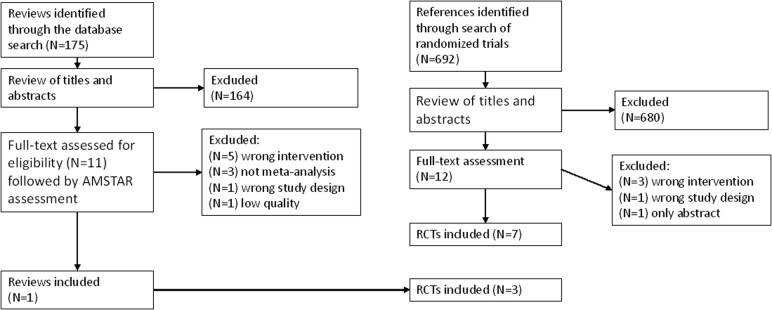
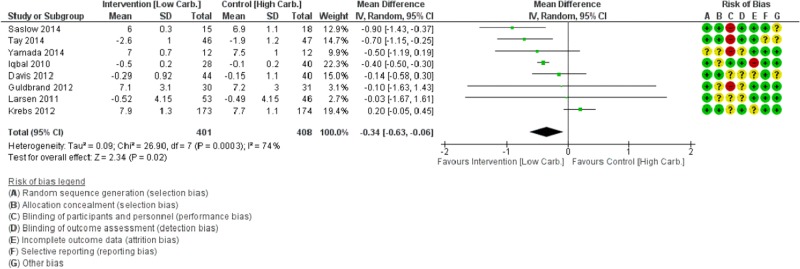
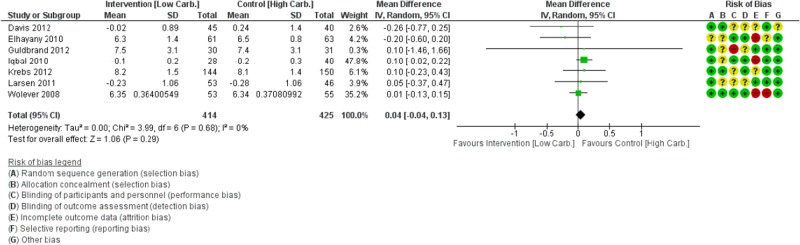
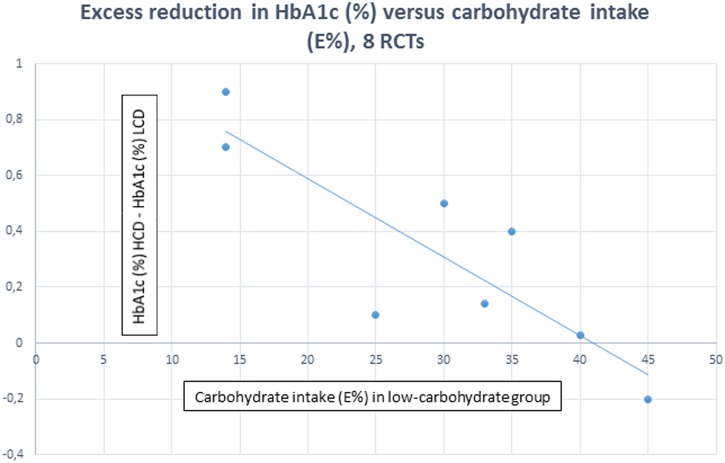
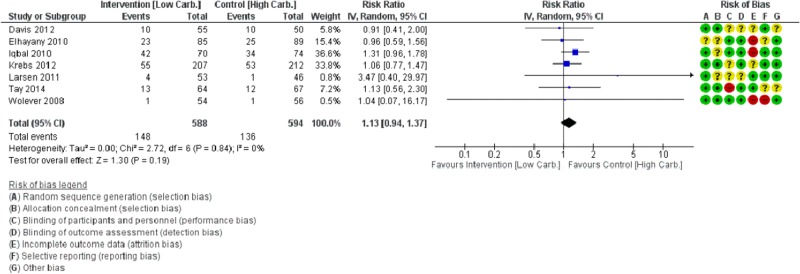
Objective: Nutrition therapy is an integral part of self-management education in patients with type 2 diabetes. Carbohydrates with a low glycemic index are recommended, but the ideal amount of carbohydrate in the diet is unclear. We performed a meta-analysis comparing diets containing low to moderate amounts of carbohydrate (LCD) (energy percentage below 45%) to diets containing high amounts of carbohydrate (HCD) in subjects with type 2 diabetes. Research design and methods: We systematically reviewed Cochrane library databases, EMBASE, and MEDLINE in the period 2004–2014 for guidelines, meta-analyses, and randomized trials assessing the outcomes HbA1c, BMI, weight, LDL cholesterol, quality of life (QoL), and attrition. Results: We identified 10 randomized trials comprising 1376 participants in total. In the first year of intervention, LCD was followed by a 0.34% lower HbA1c (3.7 mmol/mol) compared with HCD (95% CI 0.06 (0.7 mmol/mol), 0.63 (6.9 mmol/mol)). The greater the carbohydrate restriction, the greater the glucose-lowering effect (R=−0.85, p<0.01). At 1 year or later, however, HbA1c was similar in the 2 diet groups. The effect of the 2 types of diet on BMI/body weight, LDL cholesterol, QoL, and attrition rate was similar throughout interventions. Limitations: Glucose-lowering medication, the nutrition therapy, the amount of carbohydrate in the diet, glycemic index, fat and protein intake, baseline HbA1c, and adherence to the prescribed diets could all have affected the outcomes. Conclusions: Low to moderate carbohydrate diets have greater effect on glycemic control in type 2 diabetes compared with high-carbohydrate diets in the first year of intervention. The greater the carbohydrate restriction, the greater glucose lowering, a relationship that has not been demonstrated earlier. Apart from this lowering of HbA1c over the short term, there is no superiority of low-carbohydrate diets in terms of glycemic control, weight, or LDL cholesterol.
Overview
The claims and statistics of this paper haven’t been checked yet.
Free: it reads the open-access text and checks the first 5 claims that cite a source we can check. Create a free account to check every claim.
Integrity signals
Registry
Cites
Statistics
Figures
Verification
Claims the paper makes
The claims and statistics of this paper haven’t been checked yet.
Free: it reads the open-access text and checks the first 5 claims that cite a source we can check. Create a free account to check every claim.
Claims other papers make about this one
Each is checked against this paper’s own text: does it say what the citing paper says it does?
The source backs part of the claim, not all of it — or backs it for a different population, condition or comparison.
In the citing paper
“A net energy de fi cit that can be maintained is important for weight loss (5,6,22,72 -74).”
From Management of Hyperglycemia in Type 2 Diabetes, 2022. A Consensus Report by the American Diabetes Association (ADA) and the European Association for the Study of Diabetes (EASD) (2022) · cites this paper as [73]
Experimental — accuracy not yet measuredThe source backs part of the claim, not all of it — or backs it for a different population, condition or comparison.
In the citing paper
“For individuals with type 2 diabetes not meeting glycemic targets or for whom reducing glucose-lowering drugs is a priority, reducing overall carbohydrate intake with a low-or verylow-carbohydrate eating pattern is a viable option (137-139).”
From 5. Facilitating Positive Health Behaviors and Well-being to Improve Health Outcomes:Standards of Care in Diabetes—2023 (2023) · cites this paper as [139]
Experimental — accuracy not yet measuredThe source backs part of the claim, not all of it — or backs it for a different population, condition or comparison.
In the citing paper
“Low carbohydrate diets (LCD) have shown efficacy in managing clinical outcomes in type 2 diabetes (T2D).”
From mHealth low carbohydrate dietary intervention ameliorates glycaemic profile, blood pressure and weight status in people with type 2 diabetes (2025) · cites this paper as [5]
Experimental — accuracy not yet measuredThe source backs part of the claim, not all of it — or backs it for a different population, condition or comparison.
In the citing paper
“Research evidence shows that the prescription of a low carbohydrate diet (LCD) for management of T2D improves glycaemic control, reduces the need for medications, assists with weight loss, and may improve blood lipid concentrations5–9.”
From mHealth low carbohydrate dietary intervention ameliorates glycaemic profile, blood pressure and weight status in people with type 2 diabetes (2025) · cites this paper as [5]
Experimental — accuracy not yet measured
11 more claims about this paper
Create a free account to see every claim other papers make about this one.
Self-check
Percentages, sums and reported differences re-computed from the paper’s own numbers.
The self-check needs the paper’s full text.
Citations
Cites
Development of AMSTAR: A measurement tool to assess the methodological quality of systematic reviews
Shea, B. J., Grimshaw, J. M., Wells, G. A., Boers, M., Andersson, N., Hamel, C., Porter, A. C., Tugwell, P., Moher, D., & Bouter, L. M. (2007) · BMC Medical Research Methodology · doi:10.1186/1471-2288-7-10 · Cited by 4,374
AGREE II: advancing guideline development, reporting and evaluation in health care
Brouwers, M. C., Kho, M. E., Browman, G. P., Burgers, J. S., Cluzeau, F., Feder, G., Fervers, B., Graham, I. D., Grimshaw, J., Hanna, S. E., et al. (2010) · Canadian Medical Association Journal · doi:10.1503/cmaj.090449 · Cited by 3,790
Human gut microbes impact host serum metabolome and insulin sensitivity
Pedersen, H. K., Gudmundsdottir, V., Nielsen, H. B., Hyotylainen, T., Nielsen, T., Jensen, B. A. H., Forslund, K., Hildebrand, F., Prifti, E., Falony, G., et al. (2016) · Nature · doi:10.1038/nature18646 · Cited by 2,116 · cited 1×
“16 22 Apart from a lowering of the daily glycemic challenge, an initial hypoglycemic effect of LCD followed by an attenuation of the efficacy could also be due to changes in gut microbiota as a consequence of the altered carbohydrate intake followed by gradual adaptive mechanisms.(28) Our findings and recent trials su…”
BackgroundNutrition therapy recommendations for the management of adults with diabetes
Evert, A. B., Boucher, J. L., Cypress, M., Dunbar, S. A., Franz, M. J., Mayer-Davis, E. J., Neumiller, J. J., Nwankwo, R., Verdi, C. L., Urbanski, P., et al. (2013) · Diabetes Care · doi:10.2337/dc13-2042 · Cited by 1,129 · cited 1×
“▪ The greater the carbohydrate restriction, the greater glucose lowering.”
BackgroundFeinman, R. D., Pogozelski, W. K., Astrup, A., Bernstein, R. K., Fine, E. J., Westman, E. C., Accurso, A., Frassetto, L., Gower, B. A., McFarlane, S. I., et al. (2015) · Nutrition · doi:10.1016/j.nut.2014.06.011 · Cited by 912 · cited 2×
“▪ Apart from improvements in HbA1c over the short term, there is no superiority of low-carbohydrate diets in terms of glycemic control, weight, or LDL cholesterol.”
BackgroundSelf-citationAjala, O., English, P., & Pinkney, J. (2013) · The American Journal of Clinical Nutrition · doi:10.3945/ajcn.112.042457 · Cited by 821 · cited 2×
“The predefined criteria for entering the analysis and the issues we address were fulfilled in only one high-quality review.(6) Furthermore, only part of this review was relevant for the present analysis, so we entered data from individual studies rather than using estimates from the review.”
MethodBueno, N. B., de Melo, I. S. V., de Oliveira, S. L., & da Rocha Ataide, T. (2013) · British Journal of Nutrition · doi:10.1017/s0007114513000548 · Cited by 778
Nutrition therapy recommendations for the management of adults with diabetes
Evert, A. B., Boucher, J. L., Cypress, M., Dunbar, S. A., Franz, M. J., Mayer-Davis, E. J., Neumiller, J. J., Nwankwo, R., Verdi, C. L., Urbanski, P., et al. (2014) · Diabetes Care · doi:10.2337/dc14-s120 · Cited by 766
Westman, E. C., Yancy, W. S., Mavropoulos, J. C., Marquart, M., & McDuffie, J. R. (2008) · Nutrition & Metabolism · doi:10.1186/1743-7075-5-36 · Cited by 475 · cited 2×
“Dropout rates at longest follow-up were similar in the two groups ( fi gure 5).”
BackgroundComparison of low- and high-carbohydrate diets for type 2 diabetes management: a randomized trial
Tay, J., Luscombe-Marsh, N. D., Thompson, C. H., Noakes, M., Buckley, J. D., Wittert, G. A., Yancy, W. S., & Brinkworth, G. D. (2015) · The American Journal of Clinical Nutrition · doi:10.3945/ajcn.115.112581 · Cited by 341 · cited 1×
“However, this problem cannot be solved.”
Research works printed but not linked: 1
- Covidence. Covidence systematic review software, Veritas Health Innovation. Melbourne, Australia http://www.covidence.org
Cited by
Items 101–200 of 391
Benefits of low carbohydrate diets: a settled question or still controversial?
Landry, M. J., Crimarco, A., & Gardner, C. D. (2021) · Current Obesity Reports · doi:10.1007/s13679-021-00451-z · Cited by 31
Li, S., Ding, L., & Xiao, X. (2021) · International Journal of Endocrinology · doi:10.1155/2021/8521756 · Cited by 31
de Oliveira, B. F., Chang, C. R., Oetsch, K. M., Falkenhain, K., Crampton, K., Stork, M., Hoonjan, M., Elliott, T. G., François, M. E., & Little, J. P. (2023) · American Journal of Clinical Nutrition · doi:10.1016/j.ajcnut.2023.04.032 · Cited by 30
Unger, A. L., Astrup, A. V., Feeney, E. L., Holscher, H. D., Gerstein, D. E., Torres‐Gonzalez, M., & Brown, K. A. (2023) · Current Developments in Nutrition · doi:10.1016/j.cdnut.2023.100105 · Cited by 30
“In 2017, Astrup et al. [34] discussed a body of evidence indicating that normoglycemic participants lost more weight on a low-fat diet, whereas participants with T2D were more responsive to a low-carbohydrate diet.”
BackgroundInfluentialSelf-citationLow-Fat or Low Carb for Weight Loss? It Depends on Your Glucose Metabolism
Astrup, A., & Hjorth, M. F. (2017) · EBioMedicine · doi:10.1016/j.ebiom.2017.07.001 · Cited by 29
Self-citationJacobsen, S. S., Vistisen, D., Vilsbøll, T., Bruun, J. M., & Ewers, B. (2020) · Nutrition Journal · doi:10.1186/s12937-020-00645-6 · Cited by 29
Buchanan, A., & Villani, A. M. (2021) · Healthcare · doi:10.3390/healthcare9101255 · Cited by 28
Dietary carbohydrates, components of energy balance, and associated health outcomes
Smith, H., Gonzalez, J. T., Thompson, D., & Betts, J. A. (2017) · Nutrition Reviews · doi:10.1093/nutrit/nux045 · Cited by 27
Turton, J. L., Brinkworth, G. D., Field, R., Parker, H. M., & Rooney, K. B. (2019) · Diabetes Obesity and Metabolism · doi:10.1111/dom.13837 · Cited by 27
“Moreover, the HbA1c-lowering effects were greater when the level of dietary CHO prescribed was <26% total energy intake (TEI).(6,7) Despite strong clinical evidence and support for the use of low-CHO diets, there remains an absence of evidence-based practice guidelines to inform the development of safe and effective l…”
BackgroundSamkani, A., Skytte, M. J., Thomsen, M. N., Astrup, A., Deacon, C. F., Holst, J. J., Madsbad, S., Rehfeld, J. F., Krarup, T., & Haugaard, S. B. (2018) · Nutrients · doi:10.3390/nu10091285 · Cited by 19
Self-citationKloecker, D. E., Zaccardi, F., Baldry, E., Davies, M. J., Khunti, K., & Webb, D. R. (2019) · Diabetes, Obesity and Metabolism · doi:10.1111/dom.13727 · Cited by 25
“The mean (range) number of participants was 78 (6-2597) for arms reporting body weight and 25 (6-192) when excluding the UK Prospective Diabetes Study 7 (UKPDS7),(43) which had 2597 participants with information only for body weight (Table 1 and Figure S2); for BMI, it was 25 (5-192).”
BackgroundNicholas, A. P., Soto-Mota, A., Lambert, H., & Collins, A. L. (2021) · Journal of Nutritional Science · doi:10.1017/jns.2021.67 · Cited by 26
“This may have masked differences in effect size between interventions and led to an underestimation of the positive impact of carbohydrate restriction on glycaemic control((22,24,25,27,29)).”
BackgroundButala, M. A., Kukkupuni, S. K., Venkatasubramanian, P., & Vishnuprasad, C. N. (2018) · Starch - Stärke · doi:10.1002/star.201700182 · Cited by 27
Zinöcker, M. K., Svendsen, K., & Dankel, S. N. (2020) · American Journal of Clinical Nutrition · doi:10.1093/ajcn/nqaa322 · Cited by 25
Currenti, W., Losavio, F., Quiete, S., Alanazi, A. M., Messina, G., Polito, R., Ciolli, F., Zappalà, R. S., Galvano, F., & Cincione, R. I. (2023) · Nutrients · doi:10.3390/nu16010095 · Cited by 23
Mason, A. E., Saslow, L. R., Moran, P. J., Kim, S., Abousleiman, H., Hartman, A. R., Richler, R., Schleicher, S., Hartogensis, W., Epel, E. S., et al. (2019) · JMIR Research Protocols · doi:10.2196/11002 · Cited by 23
Tay, J., Thompson, C. H., Luscombe‐Marsh, N. D., Noakes, M., Buckley, J. D., Wittert, G., & Brinkworth, G. D. (2020) · Diabetes Research and Clinical Practice · doi:10.1016/j.diabres.2020.108501 · Cited by 23
Jauho, M., Pääkkönen, J., Isotalo, V., Pöyry, E., & Laaksonen, S.-M. (2021) · Food Culture & Society · doi:10.1080/15528014.2021.1971436 · Cited by 22
“Carbohydrate restriction has been incorporated into the treatment of drug-resistant epilepsy in children (e.g., Lord and Magrath 2010), and there is evidence that carbohydrate restriction has beneficial effects on diabetes control (McArdle et al. 2018; Snorgaard et al. 2017).”
BackgroundMethodMagnazi, M. B., Reshef, N., Zornitzki, T., Madar, Z., & Knobler, H. (2019) · European Journal of Nutrition · doi:10.1007/s00394-019-02043-z · Cited by 22
Yang, L., Guo, Z., Qi, S., Fang, T., Zhu, H., Santos, H. O., Khani, V., Wong, C. H., & Qiu, Z. (2020) · Complementary Therapies in Medicine · doi:10.1016/j.ctim.2020.102505 · Cited by 21
Hawley, C. N., Huber, C. M., Best, L. G., Howard, B. V., Umans, J. G., Beresford, S. A. A., McKnight, B., Hager, A., O’Leary, M. A., Thorndike, A. N., et al. (2021) · BMC Public Health · doi:10.1186/s12889-021-10308-8 · Cited by 20
“the effect of very-low carbohydrate diets in diabetes management [13-15]), but focusing on specific diets was beyond the scope of this study.”
BackgroundGribbin, S., Enticott, J., Hodge, A. M., Moran, L., Thong, E. P., Joham, A. E., & Zaman, S. J. (2021) · Heart · doi:10.1136/heartjnl-2021-319654 · Cited by 21
Buch, A., Eldor, R., Kis, O., Keinan‐Boker, L., Dunsky, A., Rubin, A., Lopez, A., Sofer, Y., Osher, E., Marcus, Y., et al. (2019) · BMC Geriatrics · doi:10.1186/s12877-019-1219-7 · Cited by 20
Newson, L., & Parody, F. H. (2022) · PLoS ONE · doi:10.1371/journal.pone.0273422 · Cited by 20
Dietary Approaches for Japanese Patients with Diabetes: A Systematic Review
Yamada, S., Kabeya, Y., & Noto, H. (2018) · Nutrients · doi:10.3390/nu10081080 · Cited by 19
“Furthermore, in recent years, emerging evidence has suggested that a restricted carbohydrate diet improves glycemic control [13], although it is not yet conclusive, especially in long term follow-ups [1,14].”
BackgroundDietary guidelines in type 2 diabetes: the Nordic diet or the ketogenic diet?
Magnúsdóttir, Ó. K., Gunnarsdóttir, I., & Birgisdóttir, B. E. (2017) · Current Opinion in Endocrinology Diabetes and Obesity · doi:10.1097/med.0000000000000361 · Cited by 19
Lin, Y., Huang, Y., Chen, H., Hsieh, S., Sun, J., Chen, S., & Lin, C.-H. (2019) · Diabetes Therapy · doi:10.1007/s13300-019-00707-x · Cited by 19
Astrup, A., & Hjorth, M. F. (2018) · European Journal of Clinical Nutrition · doi:10.1038/s41430-018-0227-6 · Cited by 18
Self-citationIntroduction to the dietary management of obesity in adults
Lee, V. (2023) · Clinical Medicine · doi:10.7861/clinmed.2023-0157 · Cited by 20
Doglikuu, B. D., Abubakari, A., Yaseri, M., Shakibazadeh, E., Djazayery, A., & Mirzaei, K. (2021) · BMC Public Health · doi:10.1186/s12889-021-10963-x · Cited by 18
“Diabetes Mellitus (DM) is a public health problem of which dietary recommendations forms integral part in its management[1].”
BackgroundDi, J., Fan, J., & Ma, F. (2025) · Frontiers in Endocrinology · doi:10.3389/fendo.2025.1512493 · Cited by 17
“…Snorgaard et al. found that low-carbohydrate diets were not as effective as low-glycemic index or Mediterranean-style diets in reducing pregnancy-related complications such as macrosomia and cesarean section rates, likely due to insuf fi cient fi ber intake and limited micronutrient diversity (64).”
Nutritional Aspects to Cardiovascular Diseases and Type 2 Diabetes Mellitus
Billingsley, H., Heiston, E. M., Bellissimo, M. P., Lavie, C. J., & Carbone, S. (2024) · Current Cardiology Reports · doi:10.1007/s11886-023-02018-x · Cited by 17
“However, these statistical differences compared to high-carbohydrate diets are often diminished after 12 months [30, 31].”
BackgroundReynolds, A. N., Lang, J., Brand, A., & Mann, J. (2024) · Obesity Reviews · doi:10.1111/obr.13837 · Cited by 17
“Despite the absence of evidence of long-term benefit of carbohydrate restriction 9 – 12 advice promoting low-carbohydrate diets has remained a fairly consistent feature of dietary guidelines for diabetes albeit with caveats to their use, 13,14 despite a lack of consensus on what a low-carbohydrate…”
Update on Nutrition in Diabetes Management
Reynolds, A. N., & Mann, J. I. (2022) · Medical Clinics of North America · doi:10.1016/j.mcna.2022.03.003 · Cited by 17
Niu, Y., Aierken, A., & Feng, L. (2023) · Heart & Lung · doi:10.1016/j.hrtlng.2023.09.012 · Cited by 17
Zhang, Z., Monro, J. A., & Venn, B. J. (2018) · Nutrients · doi:10.3390/nu10091225 · Cited by 20
“To what extent carbohydrate foods should be restricted by people with type 2 diabetes is questionable, as carbohydrate intake has not been associated with long-term glycaemic control [31].”
BackgroundMorris, E. M., Aveyard, P. N., Dyson, P. A., Noreik, M., Bailey, C., Fox, R. A., Hoffman, K., Tan, G. D., & Jebb, S. A. (2019) · BMJ Open · doi:10.1136/bmjopen-2018-026460 · Cited by 17
“This apparent diminution in the benefits may be due in part to a decline in dietary adherence over time; additionally, heterogeneity in reporting of medication changes and adjustment for reduction of these in meta-analyses has been suggested to contribute to an underestimation of effect on glycaemic control.(17) The a…”
BackgroundCipryan, L., Maffetone, P. B., Plews, D. J., & Laursen, P. B. (2020) · Nutrition and Health · doi:10.1177/0260106020903206 · Cited by 17
“…health benefits of lowcarbohydrate high-fat (LCHF) and very low-carbohydrate high-fat (VLCHF) diets continues (Feinman et al., 2015; Kearns et al., 2016; Mansoor et al., 2016; Noakes and Windt, 2017; Ramsden et al., 2016; Roberts et al., 2017; Salomón et al., 2017; Snorgaard et al., 2017).”
BackgroundInfluentialEid, S., O’Brien, P. D., Kretzler, K. H., Jang, D., Mendelson, F. E., Hayes, J. M., Carter, A., Zhang, H., Pennathur, S., Brosius, F. C., et al. (2023) · The FASEB Journal · doi:10.1096/fj.202300354r · Cited by 16
Skalkos, S., Moschonis, G., Thomas, C. J., McMillan, J., & Kouris‐Blazos, A. (2020) · Nutrients · doi:10.3390/nu12051239 · Cited by 16
Alzahrani, A. H., Skytte, M. J., Samkani, A., Thomsen, M. N., Astrup, A. V., Ritz, C., Frystyk, J., Holst, J. J., Madsbad, S., Haugaard, S. B., et al. (2021) · Nutrients · doi:10.3390/nu13051694 · Cited by 16
“Most of these results are in line with data from most [18,21,27] but not all [13] previous studies.”
ResultSelf-citationEffect of Low Carbohydrate Diet (LCD) for Diabetic Patients withHypertriglycemia
Ebe, K., Bando, H., Muneta, T., Bando, M., & Yonei, Y. (2017) · Institutional Repositories DataBase (IRDB) · Cited by 15
Aronica, L., Landry, M. J., Rigdon, J., & Gardner, C. D. (2023) · Frontiers in Nutrition · doi:10.3389/fnut.2023.1220020 · Cited by 15
Dyson, P. A., McArdle, P., Mellor, D. D., & Guess, N. D. (2018) · Diabetic Medicine · doi:10.1111/dme.13826 · Cited by 15
Jensen, N. J., Wodschow, H. Z., Skytte, M. J., Samkani, A., Astrup, A. V., Frystyk, J., Hartmann, B., Holst, J. J., Larsen, T. M., Madsbad, S., et al. (2022) · Clinical Nutrition · doi:10.1016/j.clnu.2022.05.005 · Cited by 15
“Evidence suggests that loss of excess body weight improves HRQoL in T2D [12,13], but whether restricting carbohydrate intake improves HRQoL beyond the effect of weight reduction [14] or causes harm, as suggested in recent metaanalyses [10,15], requires further investigation.”
BackgroundSelf-citationJooste, B. R., Kolivas, D., Brukner, P., & Moschonis, G. (2023) · Nutrients · doi:10.3390/nu15204362 · Cited by 14
Ross, L. J., Byrnes, A., Hay, R. L., Cawte, A., & Musial, J. E. (2021) · Nutrition & Dietetics · doi:10.1111/1747-0080.12649 · Cited by 14
Mphwanthe, G., Weatherspoon, D. D., Li, W., & Weatherspoon, L. (2020) · Journal of Community Health Nursing · doi:10.1080/07370016.2020.1809855 · Cited by 14
Alternative therapeutic strategies in diabetes management
Annicchiarico, A., Barile, B., Buccoliero, C., Nicchia, G. P., & Brunetti, G. (2024) · World Journal of Diabetes · doi:10.4239/wjd.v15.i6.1142 · Cited by 14
“T2D patients not meeting glycemic control should reduce their carbohydrate intake with a low-or very-low-carbohydrate diet[49-51].”
Feng, S., Liu, R., Colwell, B., Chung, S. Y., Barry, A. E., & Wang, H. (2025) · Clinical Nutrition · doi:10.1016/j.clnu.2025.09.005 · Cited by 189
Hu, M., Shi, Q., Sun, S., Hong, H. I., Zhang, H., Qi, F., Zou, L., & Nie, J. (2022) · Frontiers in Nutrition · doi:10.3389/fnut.2022.894916 · Cited by 14
Sukchaisong, N., Pichayapinyo, P., Lagampan, S., Saslow, L. R., & Aikens, J. E. (2022) · Pacific Rim International Journal of Nursing Research · Cited by 14
Weber, P., Thomsen, M. N., Skytte, M. J., Samkani, A., Carl, M. H., Astrup, A. V., Frystyk, J., Holst, J. J., Hartmann, B., Madsbad, S., et al. (2022) · Nutrients · doi:10.3390/nu14245244 · Cited by 14
“The low frequency of meetings with the research dietitian (once every other month) may also have resulted in macronutrient targets not being met [19,32] as dietitian counselling once weekly or every other week is suggested as an effective behavioral approach to achieve satisfactory adherence to a diet plan [34,35].”
BackgroundInfluentialSelf-citationOosterwijk, M. M., Navis, G. J., Bakker, S. J. L., & Laverman, G. D. (2022) · Journal of Personalized Medicine · doi:10.3390/jpm12020300 · Cited by 13
“In T2D, there is a general and strong focus on carbohydrate restriction [3,4].”
BackgroundLow-carbohydrate diets in type 2 diabetes
Tay, J., de Bock, M. I., & Mayer‐Davis, E. J. (2019) · The Lancet Diabetes & Endocrinology · doi:10.1016/s2213-8587(18)30368-1 · Cited by 13
Mongkolsucharitkul, P., Surawit, A., Pimsen, A., Winitchayothin, S., Pumeiam, S., Pinsawas, B., Ophakas, S., Suta, S., Pasookhush, P., & Mayurasakorn, K. (2025) · Diabetes Research and Clinical Practice · doi:10.1016/j.diabres.2025.112464 · Cited by 13
Mehta, R., Pichel, D., Chen-Ku, C. H., Raffaele, P. M., Durán, A. M., Padilla, F., Álvarez, J. J. A., Gil, J. E. C., Gómez‐Mesa, J. E., Giorgi, M. A., et al. (2020) · Diabetes Therapy · doi:10.1007/s13300-020-00961-4 · Cited by 13
Thomsen, M. N., Skytte, M. J., Samkani, A., Astrup, A. V., Fenger, M., Frystyk, J., Hartmann, B., Holst, J. J., Larsen, T. M., Madsbad, S., et al. (2022) · Frontiers in Nutrition · doi:10.3389/fnut.2022.933118 · Cited by 12
Self-citationJawharji, M. T., Alshammari, G. M., Binobead, M. A., Albanyan, N. M., Al‐Harbi, L. N., & Yahya, M. A. (2024) · Nutrients · doi:10.3390/nu16183074 · Cited by 12
Hironaka, J., Hamaguchi, M., Ichikawa, T., Nakajima, H., Okamura, T., Majima, S., Senmaru, T., Okada, H., Ushigome, E., Nakanishi, N., et al. (2024) · Journal of Diabetes Investigation · doi:10.1111/jdi.14326 · Cited by 12
“These studies have reported signi fi cant lowering of HbA1c levels in the carbohydrate-restricted group than in the control group (regular, high-carbohydrate, and low-fat diets) within 6 – 12 months but not after 12 – 24 months 3,8,11,13,18 .”
InfluentialUrinary C-Peptide Excretion for Diabetic Treatment in Low Carbohydrate Diet (LCD)
Bando, H., Ebe, K., Muneta, T., Bando, M., & Yonei, Y. (2018) · Journal of Obesity and Diabetes · doi:10.33805/2638-812x.103 · Cited by 12
Kirkpatrick, C. F., Liday, C., & Maki, K. C. (2020) · Current Atherosclerosis Reports · doi:10.1007/s11883-020-00838-8 · Cited by 13
Therapeutic effect of ketogenic diet treatment on type 2 diabetes
Li, F., Shen, Y., Chen, Q., Li, X., Yang, H., Zhang, C. Y., Lin, J., Du, Z., Jiang, C., Yang, C., et al. (2022) · Journal of Future Foods · doi:10.1016/j.jfutfo.2022.03.004 · Cited by 12
Hohberg, V., Kreppke, J.-N., Kohl, J., Seelig, E., Zahner, L., Streckmann, F., Gerber, M., König, D., & Faude, O. (2022) · BMJ Open · doi:10.1136/bmjopen-2021-057948 · Cited by 11
“Moreover, a meta- epidemiological analysis showed that physical activity interventions in patients with pre- diabetes are comparable to drug interventions in terms of mortality.(10) If the lifestyle of patients can be positively affected in relation to the aspects mentioned, the progression of T2D can be slowed down a…”
BackgroundSoyfoods, glycemic control and diabetes
Lecerf, J., Arnoldi, A., Rowland, I. R., Trabal, J., Widhalm, K., Aiking, H., & Messina, M. J. (2020) · Nutrition Clinique et Métabolisme · doi:10.1016/j.nupar.2020.02.437 · Cited by 11
Alzahrani, A. H., Skytte, M. J., Samkani, A., Thomsen, M. N., Astrup, A. V., Ritz, C., Chabanova, E., Frystyk, J., Holst, J. J., Thomsen, H. S., et al. (2021) · European Journal of Nutrition · doi:10.1007/s00394-021-02605-0 · Cited by 11
Self-citationDietary intake in people consuming a low‐carbohydrate diet in the UK Biobank
Shafique, M., Russell, S., Murdoch, S., Bell, J. D., & Guess, N. D. (2017) · Journal of Human Nutrition and Dietetics · doi:10.1111/jhn.12527 · Cited by 12
Dening, J., George, E. S., Ball, K., Mohebbi, M., & Islam, S. M. S. (2022) · BMJ Open · doi:10.1136/bmjopen-2021-054594 · Cited by 10
Association between low‐carbohydrate diets and continuous glucose monitoring‐derived time in ranges
Osugi, K., Kusunoki, Y., Ohigashi, M., Kusunoki, K., Inoue, C., Inoue, M., Takagi, A., Tsunoda, T., Kadoya, M., Konishi, K., et al. (2023) · Journal of Diabetes Investigation · doi:10.1111/jdi.13999 · Cited by 185
Practical strategies to manage obesity in type 2 diabetes
Rodbard, H. W., Barnard-Kelly, K. D., Pfeiffer, A. F. H., Mauersberger, C., Schnell, O., & Giorgino, F. (2024) · Diabetes Obesity and Metabolism · doi:10.1111/dom.15556 · Cited by 10
“157 Likewise, an umbrella review of current evidence confirmed that overall, low-carbohydrate diets were no better for weight loss than higher-carbohydrate/low-fat diets after 12 months in people with T2D.”
BackgroundShort-Term Zinc Supplementation Stimulates Visceral Adipose Catabolism and Inflammation in Mice
Huang, X., Jiang, D., Yingguo, Z., Fang, Z., & Feng, B. (2024) · Nutrients · doi:10.3390/nu16213719 · Cited by 10
“NEFA can be used for oxidation to meet the energy requirement of cells [38].”
BackgroundPaul, J., Jani, R., Thorning, S., Obucina, M., Davoren, P. M., & Knight-Agarwal, C. R. (2024) · Diabetology & Metabolic Syndrome · doi:10.1186/s13098-024-01496-5 · Cited by 11
“The adoption of VLCDs and LCDs have been investigated among people with type 2 diabetes (T2D) [6, 23].”
Kolivas, D., Fraser, L., Schweitzer, R., Brukner, P. D., & Moschonis, G. (2025) · Nutrients · doi:10.3390/nu17060937 · Cited by 10
Patrones de consumo de alimentos en España
Martos-Barrachina, F., Delgado-Antequera, L., Huelin, M. H., & Hidalgo, R. D. (2019) · Revista Electrónica de Comunicaciones y Trabajos de ASEPUMA · doi:10.24309/recta.2019.20.2.01 · Cited by 10
Very low carbohydrate ketogenic diets and diabetes
Dyson, P. A. (2020) · Practical Diabetes · doi:10.1002/pdi.2284 · Cited by 10
Gupta, B., Singh, R., Verma, N., Gupta, K., Datta, G., & Mittal, A. (2025) · National Journal of Community Medicine · doi:10.55489/njcm.161020255875 · Cited by 10
Beretta, M. V., Flores, C., Colameo, G. F., Echabe, L. W., & Busnello, F. M. (2024) · Nutrition Reviews · doi:10.1093/nutrit/nuae123 · Cited by 10
Fu, W., Yang, K., Tang, R., Wang, J., Liu, Y., Liu, G., Lu, R., Zhang, W., Zhuo, L., Yang, J., et al. (2025) · Clinical Nutrition · doi:10.1016/j.clnu.2025.08.002 · Cited by 9
Dietary patterns and type 2 diabetes—relationship to metabolic syndrome and inflammation
Bohn, T., Samouda, H., & Alkerwi, A. (2022) · Elsevier eBooks · doi:10.1016/b978-0-12-822130-3.00014-4 · Cited by 10
Maneesing, T.-U., Dawangpa, A., Chaivanit, P., Songsakul, S., Prasertsri, P., Noronha, N. Y., Watanabe, L. M., Nonino, C. B., Pratumvinit, B., & Sae‐Lee, C. (2023) · Frontiers in Nutrition · doi:10.3389/fnut.2023.1216753 · Cited by 9
López, A. A. P., Chávez-Negrete, A., Rodríguez-Lozano, A. L., Gómez-Alarcón, Á. J., Montaño-Velázquez, B. B., Hinojosa, C. A., Sánchez-Hernández, C., Pimentel-Hernández, C., Dehesa-López, E., Romero-Moreno, F., et al. (2026) · Revista Mexicana de Endocrinología Metabolismo y Nutrición · doi:10.24875/rme.m23000030 · Cited by 9
Fat, Sugar or Gut Microbiota in Reducing Cardiometabolic Risk: Does Diet Type Really Matter?
Nabrdalik, K., Krzyżak, K., Hajzler, W., Drożdż, K., Kwiendacz, H., Gumprecht, J., & Lip, G. Y. H. (2021) · Nutrients · doi:10.3390/nu13020639 · Cited by 9
“(2017) [134] Systemic review and meta-analysis 10/1376 1 year Adults with T2DM LCD vs.”
Dietary Approaches and Health Outcomes: An Evidence Analysis Center Scoping Review
Handu, D., & Piemonte, T. A. (2021) · Journal of the Academy of Nutrition and Dietetics · doi:10.1016/j.jand.2021.08.106 · Cited by 10
Al‐Ozairi, E., ABDUL-GHANI, M., Oliver, N. S., Whitcher, B. J., Awadi, R. A., Samad, A. E., Taghadom, E., Al-Kandari, J., & Guess, N. D. (2022) · Journal of Human Nutrition and Dietetics · doi:10.1111/jhn.13030 · Cited by 9
Hart, K. J., Kubilius, A., & Clark, M. (2023) · PLoS ONE · doi:10.1371/journal.pone.0294344 · Cited by 8
El-Deyarbi, M., Ahmed, L. A., King, J., Nuaimi, H. A., Juboori, A. A., Mansour, N. A., Jarab, A. S., Abdel‐Qader, D. H., & Aburuz, S. (2024) · Diabetes Research and Clinical Practice · doi:10.1016/j.diabres.2024.111754 · Cited by 8
Yan, Y., Asemani, S., Jamilian, P., & Yang, C. (2025) · Diabetology & Metabolic Syndrome · doi:10.1186/s13098-025-01890-7 · Cited by 8
“Importantly, interventions extending beyond 10 months, reinforced the potential of LCDs to manage T2DM effectively over extended periods [17, 18, 22–28, 32, 34, 36, 37, 40].”
Muhajiriansyah, M., & Binuko, R. S. D. (2023) · Health Information Jurnal Penelitian · Cited by 8
Dietary changes based on food purchase patterns following a type 2 diabetes diagnosis
Edenbrandt, A. K., Ewers, B., Storgaard, H., & Smed, S. (2022) · Public Health Nutrition · doi:10.1017/s1368980022001409 · Cited by 8
“Significant improvements in, for example, glycaemic control among individuals with T2D have been difficult to find after 12 months, possibly due to lack of long-term dietary adherence(51).”
BackgroundEffect of d ‐β‐Hydroxybutyrate‐(R)‐1,3 Butanediol on Appetite Regulation in People with Prediabetes
Liu, Y., Bharmal, S. H., Kimita, W., & Petrov, M. S. (2022) · Molecular Nutrition & Food Research · doi:10.1002/mnfr.202200615 · Cited by 8
Kolivas, D., Fraser, L., Schweitzer, R., Brukner, P., & Moschonis, G. (2025) · npj Metabolic Health and Disease · doi:10.1038/s44324-025-00053-6 · Cited by 7
Chestnut, C., Smelser, W., Dum, T. W., Bechtel, M. D., Hand, L. K., Michel, C., Bawajeeh, A. O., Zohreh, S., Liu, W., Anant, S., et al. (2019) · Nutrition and Cancer · doi:10.1080/01635581.2019.1672761 · Cited by 7
“Carbohydrate intake of less than 130 grams per day was the aim of this study, but meta-analysis has shown that reduction in long-term dietary carbohydrate intake corresponds with dose-dependent reduction in blood glucose measures (7).”
BackgroundDORANS, K. S., Bazzano, L., Qi, L., He, H., Appel, L. J., Samet, J. M., Chen, J., Mills, K. T., Nguyen, B. T., O’Brien, M. J., et al. (2021) · Trials · doi:10.1186/s13063-020-05001-x · Cited by 7
“glycemic control among people with T2DM [26], it is a high public health priority to study glycemic effects of such diets in people with elevated HbA1c who are not currently on glucose-lowering medications.”
BackgroundInfluentialGuess, N. D. (2022) · Diabetes Therapy · doi:10.1007/s13300-022-01220-4 · Cited by 7
“Despite the existence of multiple meta-analyses of trials investigating the effect of dietary carbohydrate restriction on glycaemia in T2D [53, 54], it is important to note that the heterogeneity of these trials makes them very difficult to compare.”
BackgroundHunt, L. C., Dashti, H. S., Chan, Q. M., Gibson, R., & Vetter, C. (2020) · Nutrients · doi:10.3390/nu12041170 · Cited by 7
“These findings are consistent with a recent meta-analysis of 10 different trials that found a 34% reduction in HbA1c in individuals after 1 year on a low carbohydrate diet [40].”
ResultPaul, J., Jani, R., Davoren, P. M., & Knight-Agarwal, C. R. (2021) · JMIR Research Protocols · doi:10.2196/25085 · Cited by 7
“This dietary management strategy has been thoroughly investigated in people living with type 2 diabetes mellitus (T2DM) [14,15].”
BackgroundInfluentialNavigating the Spectrum of 4 Evidence-Based Nutrition Options for Type 2 Diabetes Management
Baskin, R. G., & Karp, K. A. (2025) · The Journal of Clinical Endocrinology & Metabolism · doi:10.1210/clinem/dgae646 · Cited by 6
Low-Carb and Ketogenic Diets in Type 1 Diabetes: Efficacy and Safety Concerns
Korakas, E., Kountouri, A., Petrovski, G., & Lambadiari, V. (2025) · Nutrients · doi:10.3390/nu17122001 · Cited by 6
Liday, C., & Kirkpatrick, C. F. (2019) · Current Cardiology Reports · doi:10.1007/s11886-019-1232-7 · Cited by 6
Campos, L. P., & Lobo, L. M. D. C. (2020) · DEMETRA Alimentação Nutrição & Saúde · doi:10.12957/demetra.2020.43534 · Cited by 6
Metadata
- Authors
- Snorgaard, O., Poulsen, G. M., Andersen, H. K., & Astrup, A.
- Affiliations
- Hvidovre Hospital (DK)
- University of Copenhagen (DK)
- Bispebjerg Hospital (DK)
- Corresponding author
- Snorgaard, Ole
- ORCID
- Astrup, Arne
- Venue
- BMJ Open Diabetes Research & Care
- Publisher
- BMJ
- Published
- 2017-02
- Volume
- 5
- Issue
- 1
- Pages
- e000354
- ISSN
- 2052-4897 (ISSN-L)
- PMC
- PMC5337734
- OpenAlex
- W2589779601
- Semantic Scholar
- 9bb5ebd233cc8d34068bcecf8eed799f002961a8
- Cited by
- 351
- References
- 30
- Citations by year
- 2026: 17 · 2025: 26 · 2024: 28 · 2023: 32 · 2022: 46 · 2021: 45 · 2020: 46 · 2019: 55 · 2018: 41 · 2017: 14
- FWCI
- 5.24
- Type
- journal article
- Language
- en
- Open access
- gold
- doi.org
- Licence
- cc-by-nc
- Locations
- BMJ Open Diabetes Research & Care (publishedVersion, cc-by-nc)
- Europe PMC (PubMed Central) (publishedVersion, cc-by-nc)
- PubMed Central (publishedVersion, cc-by-nc)
- PubMed (publishedVersion)
- Research at the University of Copenhagen (University of Copenhagen) (publishedVersion, cc-by-nc)
- Topics
- Health Sciences › Medicine › Physiology (medical) › Diet and metabolism studies
- Health Sciences › Medicine › Physiology (medical) › Dietary Effects on Health
- Health Sciences › Medicine › Endocrinology, Diabetes and Metabolism › Diabetes Management and Research
- Keywords
- type 2 diabetes, carbohydrate restriction, low-carbohydrate diet, high-carbohydrate diet, glycemic control, HbA1c, weight, LDL cholesterol, quality of life, attrition, nutritional therapy
About these checks
Registry, retraction, Cites and statistics results are computed, not judged, with one exception: a printed reference that no index lists is read once by a model before it counts as a citation error. Claims are extracted by a model and kept only when their quote appears verbatim in the text; each cited source is then checked, with a model’s help, for whether it says what the claim relies on. Those verdicts can be wrong — read the claim’s quote and the cited source before relying on one.
Statistics and arithmetic are recomputed, not judged.
Confidence bands are shown only for fields calibrated on our annotated test set. None is calibrated yet, so no band is shown.
What counts as a claim ›How we measure confidence ›How we check this ›
Are you an author, or do you see a problem with this page? Request a review
Data sources
Bibliographic data: Semantic Scholar, OpenAlex, Crossref.
Contains information from the Semantic Scholar Academic Graph Datasets, made available under the ODC Attribution License (ODC-BY 1.0).
Semantic Scholar’s data is described in: Kinney, R., et al. (2023). The Semantic Scholar Open Data Platform. arXiv:2301.10140.
