

Systematic review and meta-analysis of dietary carbohydrate restriction in patients with type 2 diabetes
Open accessThe DOI matches its Crossref record; 30 of the 30 references it cites were found in a registry or an index.
Abstract
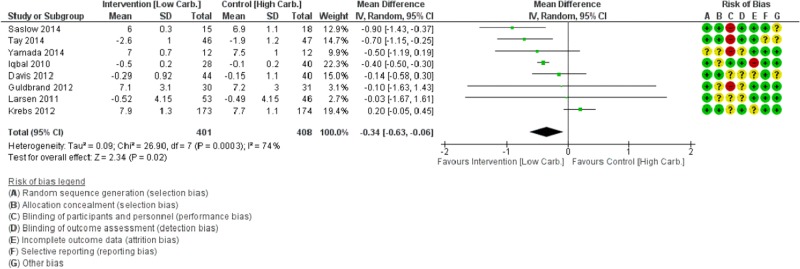
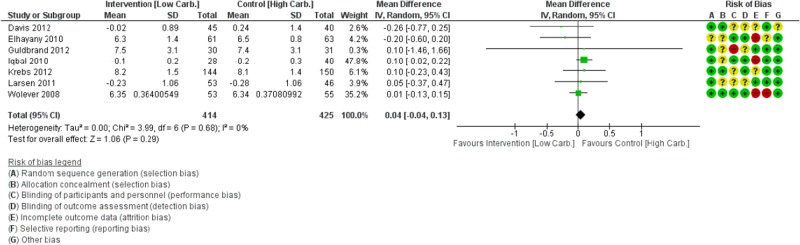
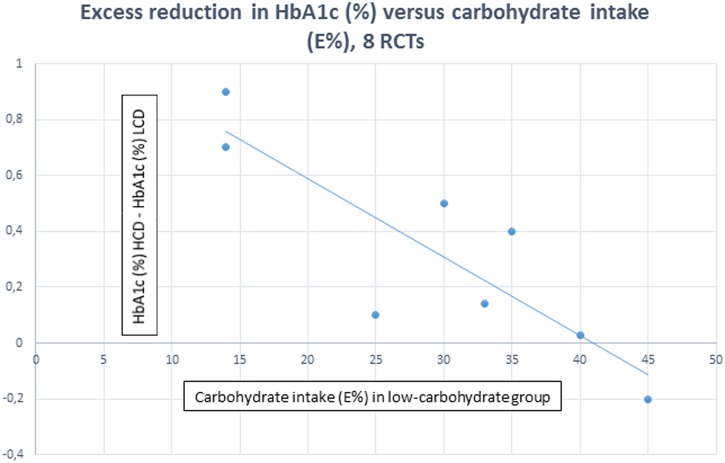
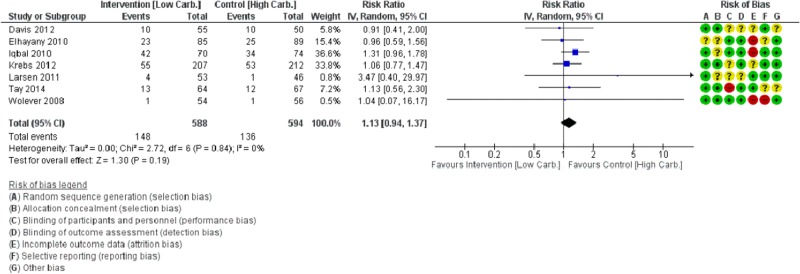
Objective: Nutrition therapy is an integral part of self-management education in patients with type 2 diabetes. Carbohydrates with a low glycemic index are recommended, but the ideal amount of carbohydrate in the diet is unclear. We performed a meta-analysis comparing diets containing low to moderate amounts of carbohydrate (LCD) (energy percentage below 45%) to diets containing high amounts of carbohydrate (HCD) in subjects with type 2 diabetes. Research design and methods: We systematically reviewed Cochrane library databases, EMBASE, and MEDLINE in the period 2004–2014 for guidelines, meta-analyses, and randomized trials assessing the outcomes HbA1c, BMI, weight, LDL cholesterol, quality of life (QoL), and attrition. Results: We identified 10 randomized trials comprising 1376 participants in total. In the first year of intervention, LCD was followed by a 0.34% lower HbA1c (3.7 mmol/mol) compared with HCD (95% CI 0.06 (0.7 mmol/mol), 0.63 (6.9 mmol/mol)). The greater the carbohydrate restriction, the greater the glucose-lowering effect (R=−0.85, p<0.01). At 1 year or later, however, HbA1c was similar in the 2 diet groups. The effect of the 2 types of diet on BMI/body weight, LDL cholesterol, QoL, and attrition rate was similar throughout interventions. Limitations: Glucose-lowering medication, the nutrition therapy, the amount of carbohydrate in the diet, glycemic index, fat and protein intake, baseline HbA1c, and adherence to the prescribed diets could all have affected the outcomes. Conclusions: Low to moderate carbohydrate diets have greater effect on glycemic control in type 2 diabetes compared with high-carbohydrate diets in the first year of intervention. The greater the carbohydrate restriction, the greater glucose lowering, a relationship that has not been demonstrated earlier. Apart from this lowering of HbA1c over the short term, there is no superiority of low-carbohydrate diets in terms of glycemic control, weight, or LDL cholesterol.
Overview
The claims and statistics of this paper haven’t been checked yet.
Free: it reads the open-access text and checks the first 5 claims that cite a source we can check. Create a free account to check every claim.
Integrity signals
Registry
Cites
Statistics
Figures
Verification
Claims the paper makes
The claims and statistics of this paper haven’t been checked yet.
Free: it reads the open-access text and checks the first 5 claims that cite a source we can check. Create a free account to check every claim.
Claims other papers make about this one
Each is checked against this paper’s own text: does it say what the citing paper says it does?
The source backs part of the claim, not all of it — or backs it for a different population, condition or comparison.
In the citing paper
“A net energy de fi cit that can be maintained is important for weight loss (5,6,22,72 -74).”
From Management of Hyperglycemia in Type 2 Diabetes, 2022. A Consensus Report by the American Diabetes Association (ADA) and the European Association for the Study of Diabetes (EASD) (2022) · cites this paper as [73]
Experimental — accuracy not yet measuredThe source backs part of the claim, not all of it — or backs it for a different population, condition or comparison.
In the citing paper
“For individuals with type 2 diabetes not meeting glycemic targets or for whom reducing glucose-lowering drugs is a priority, reducing overall carbohydrate intake with a low-or verylow-carbohydrate eating pattern is a viable option (137-139).”
From 5. Facilitating Positive Health Behaviors and Well-being to Improve Health Outcomes:Standards of Care in Diabetes—2023 (2023) · cites this paper as [139]
Experimental — accuracy not yet measuredThe source backs part of the claim, not all of it — or backs it for a different population, condition or comparison.
In the citing paper
“Low carbohydrate diets (LCD) have shown efficacy in managing clinical outcomes in type 2 diabetes (T2D).”
From mHealth low carbohydrate dietary intervention ameliorates glycaemic profile, blood pressure and weight status in people with type 2 diabetes (2025) · cites this paper as [5]
Experimental — accuracy not yet measuredThe source backs part of the claim, not all of it — or backs it for a different population, condition or comparison.
In the citing paper
“Research evidence shows that the prescription of a low carbohydrate diet (LCD) for management of T2D improves glycaemic control, reduces the need for medications, assists with weight loss, and may improve blood lipid concentrations5–9.”
From mHealth low carbohydrate dietary intervention ameliorates glycaemic profile, blood pressure and weight status in people with type 2 diabetes (2025) · cites this paper as [5]
Experimental — accuracy not yet measured
11 more claims about this paper
Create a free account to see every claim other papers make about this one.
Self-check
Percentages, sums and reported differences re-computed from the paper’s own numbers.
The self-check needs the paper’s full text.
Citations
Cites
Development of AMSTAR: A measurement tool to assess the methodological quality of systematic reviews
Shea, B. J., Grimshaw, J. M., Wells, G. A., Boers, M., Andersson, N., Hamel, C., Porter, A. C., Tugwell, P., Moher, D., & Bouter, L. M. (2007) · BMC Medical Research Methodology · doi:10.1186/1471-2288-7-10 · Cited by 4,374
AGREE II: advancing guideline development, reporting and evaluation in health care
Brouwers, M. C., Kho, M. E., Browman, G. P., Burgers, J. S., Cluzeau, F., Feder, G., Fervers, B., Graham, I. D., Grimshaw, J., Hanna, S. E., et al. (2010) · Canadian Medical Association Journal · doi:10.1503/cmaj.090449 · Cited by 3,790
Human gut microbes impact host serum metabolome and insulin sensitivity
Pedersen, H. K., Gudmundsdottir, V., Nielsen, H. B., Hyotylainen, T., Nielsen, T., Jensen, B. A. H., Forslund, K., Hildebrand, F., Prifti, E., Falony, G., et al. (2016) · Nature · doi:10.1038/nature18646 · Cited by 2,116 · cited 1×
“16 22 Apart from a lowering of the daily glycemic challenge, an initial hypoglycemic effect of LCD followed by an attenuation of the efficacy could also be due to changes in gut microbiota as a consequence of the altered carbohydrate intake followed by gradual adaptive mechanisms.(28) Our findings and recent trials su…”
BackgroundNutrition therapy recommendations for the management of adults with diabetes
Evert, A. B., Boucher, J. L., Cypress, M., Dunbar, S. A., Franz, M. J., Mayer-Davis, E. J., Neumiller, J. J., Nwankwo, R., Verdi, C. L., Urbanski, P., et al. (2013) · Diabetes Care · doi:10.2337/dc13-2042 · Cited by 1,129 · cited 1×
“▪ The greater the carbohydrate restriction, the greater glucose lowering.”
BackgroundFeinman, R. D., Pogozelski, W. K., Astrup, A., Bernstein, R. K., Fine, E. J., Westman, E. C., Accurso, A., Frassetto, L., Gower, B. A., McFarlane, S. I., et al. (2015) · Nutrition · doi:10.1016/j.nut.2014.06.011 · Cited by 912 · cited 2×
“▪ Apart from improvements in HbA1c over the short term, there is no superiority of low-carbohydrate diets in terms of glycemic control, weight, or LDL cholesterol.”
BackgroundSelf-citationAjala, O., English, P., & Pinkney, J. (2013) · The American Journal of Clinical Nutrition · doi:10.3945/ajcn.112.042457 · Cited by 821 · cited 2×
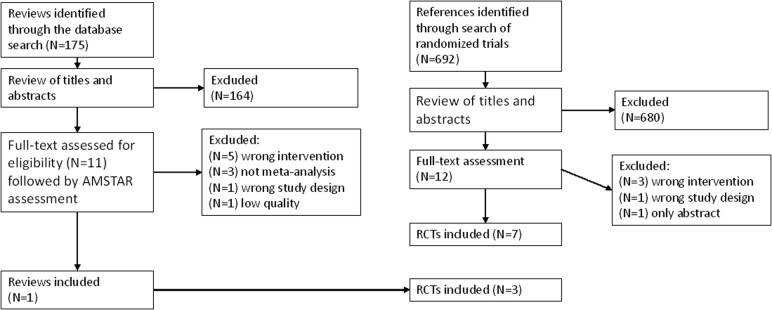
“The predefined criteria for entering the analysis and the issues we address were fulfilled in only one high-quality review.(6) Furthermore, only part of this review was relevant for the present analysis, so we entered data from individual studies rather than using estimates from the review.”
MethodBueno, N. B., de Melo, I. S. V., de Oliveira, S. L., & da Rocha Ataide, T. (2013) · British Journal of Nutrition · doi:10.1017/s0007114513000548 · Cited by 778
Nutrition therapy recommendations for the management of adults with diabetes
Evert, A. B., Boucher, J. L., Cypress, M., Dunbar, S. A., Franz, M. J., Mayer-Davis, E. J., Neumiller, J. J., Nwankwo, R., Verdi, C. L., Urbanski, P., et al. (2014) · Diabetes Care · doi:10.2337/dc14-s120 · Cited by 766
Westman, E. C., Yancy, W. S., Mavropoulos, J. C., Marquart, M., & McDuffie, J. R. (2008) · Nutrition & Metabolism · doi:10.1186/1743-7075-5-36 · Cited by 475 · cited 2×
“Dropout rates at longest follow-up were similar in the two groups ( fi gure 5).”
BackgroundComparison of low- and high-carbohydrate diets for type 2 diabetes management: a randomized trial
Tay, J., Luscombe-Marsh, N. D., Thompson, C. H., Noakes, M., Buckley, J. D., Wittert, G. A., Yancy, W. S., & Brinkworth, G. D. (2015) · The American Journal of Clinical Nutrition · doi:10.3945/ajcn.115.112581 · Cited by 341 · cited 1×
“However, this problem cannot be solved.”
Research works printed but not linked: 1
- Covidence. Covidence systematic review software, Veritas Health Innovation. Melbourne, Australia http://www.covidence.org
Cited by
Cosentino, F., Grant, P. J., Aboyans, V., Bailey, C. J., Ceriello, A., Delgado, V., Federici, M., Filippatos, G., Grobbee, D. E., Hansen, T. B., et al. (2020) · European Heart Journal · doi:10.1093/eurheartj/ehz486 · Cited by 4,763
Davies, M. J., D’Alessio, D. A., Fradkin, J., Kernan, W. N., Mathieu, C., Mingrone, G., Rossing, P., Tsapas, A., Wexler, D. J., & Buse, J. B. (2018) · Diabetes Care · doi:10.2337/dci18-0033 · Cited by 3,518
Davies, M. J., Aroda, V. R., Collins, B. S., Gabbay, R. A., Green, J., Maruthur, N. M., Rosas, S. E., Del Prato, S., Mathieu, C., Mingrone, G., et al. (2022) · Diabetes Care · doi:10.2337/dci22-0034 · Cited by 2,104
Nutrition Therapy for Adults With Diabetes or Prediabetes: A Consensus Report
Evert, A. B., Dennison, M., Gardner, C. D., Garvey, W. T., Lau, K. H. K., MacLeod, J., Mitri, J., Pereira, R. F., Rawlings, K., Robinson, S., et al. (2019) · Diabetes Care · doi:10.2337/dci19-0014 · Cited by 1,496
Davies, M. J., D’Alessio, D. A., Fradkin, J., Kernan, W. N., Mathieu, C., Mingrone, G., Rossing, P., Tsapas, A., Wexler, D. J., & Buse, J. B. (2018) · Diabetologia · doi:10.1007/s00125-018-4729-5 · Cited by 1,455
Davies, M. J., Aroda, V. R., Collins, B. S., Gabbay, R. A., Green, J., Maruthur, N. M., Rosas, S. E., Del Prato, S., Mathieu, C., Mingrone, G., et al. (2022) · Diabetologia · doi:10.1007/s00125-022-05787-2 · Cited by 1,048
5. Lifestyle Management:Standards of Medical Care in Diabetes—2019
American Diabetes Association (2019) · Diabetes Care · doi:10.2337/dc19-s005 · Cited by 700
“has been due to the wide range of definitions for a low-carbohydrate eating plan (85,86).”
BackgroundDietary fibre and whole grains in diabetes management: Systematic review and meta-analyses
Reynolds, A. N., Akerman, A. P., & Mann, J. (2020) · PLOS Medicine · doi:10.1371/journal.pmed.1003053 · Cited by 567
4. Lifestyle Management: Standards of Medical Care in Diabetes—2018
American Diabetes Association (2018) · Diabetes Care · doi:10.2337/dc18-s004 · Cited by 563
“Partof theconfusion isdue to thewide range of definitions for a low-carbohydrate diet (73,74).”
BackgroundBlonde, L., Umpierrez, G. E., Reddy, S. S., McGill, J. B., Berga, S. L., Bush, M., Chandrasekaran, S., DeFronzo, R. A., Einhorn, D., Galindo, R. J., et al. (2022) · Endocrine Practice · doi:10.1016/j.eprac.2022.08.002 · Cited by 507
Dietary and nutritional approaches for prevention and management of type 2 diabetes
Forouhi, N. G., Misra, A., Mohan, V., Taylor, R., & Yancy, W. (2018) · BMJ · doi:10.1136/bmj.k2234 · Cited by 472
Diet and exercise in the prevention and treatment of type 2 diabetes mellitus
Magkos, F., Hjorth, M. F., & Astrup, A. (2020) · Nature Reviews Endocrinology · doi:10.1038/s41574-020-0381-5 · Cited by 469
Self-citationAmerican Diabetes Association Professional Practice Committee (2022) · Diabetes Care · doi:10.2337/dc22-s005 · Cited by 445
Goldenberg, J. Z., Day, A., Brinkworth, G. D., Sato, J., Yamada, S., Jönsson, T., Beardsley, J., Johnson, J. A., Thabane, L., & Johnston, B. C. (2021) · BMJ · doi:10.1136/bmj.m4743 · Cited by 428
Kirkpatrick, C. F., Bolick, J. P., Kris-Etherton, P. M., Sikand, G., Aspry, K. E., Soffer, D. E., Willard, K.-E., & Maki, K. C. (2019) · Journal of Clinical Lipidology · doi:10.1016/j.jacl.2019.08.003 · Cited by 390
“In addition, Snorgaard et al.65 reported no difference in BMI and waist circumference in their meta-analysis.”
BackgroundElSayed, N. A., Aleppo, G., Aroda, V. R., Bannuru, R. R., Brown, F. M., Bruemmer, D., Collins, B. S., Hilliard, M. E., Isaacs, D., Johnson, E. L., et al. (2023) · Diabetes Care · doi:10.2337/dc23-s005 · Cited by 362
Cardio-Metabolic Benefits of Plant-Based Diets
Kahleova, H., Levin, S., & Barnard, N. (2017) · Nutrients · doi:10.3390/nu9080848 · Cited by 353
“However, a recent systematic review and meta-analysis of low-carbohydrate diets has not shown any superiority of these diets in the long term in terms of glycemic control, weight, or blood lipids [94].”
BackgroundAmerican Diabetes Association (2020) · Diabetes Care · doi:10.2337/dc20-s005 · Cited by 339
“Part of the challenge in interpreting low-carbohydrate research has been due to the wide range of definitions for a low-carbohydrate eating plan (65,100).”
BackgroundAmerican Diabetes Association (2021) · Diabetes Care · doi:10.2337/dc21-s005 · Cited by 299
“Part of the challenge in interpreting lowcarbohydrate research has been due to the wide range of definitions for a lowcarbohydrate eating plan (75,113).”
BackgroundAmerican Diabetes Association Professional Practice Committee, ElSayed, N. A., Aleppo, G., Bannuru, R. R., Beverly, E. A., Bruemmer, D., Collins, B. S., Darville, A., Ekhlaspour, L., Hassanein, M., et al. (2024) · Diabetes Care · doi:10.2337/dc24-s005 · Cited by 285
Schwingshackl, L., Chaimani, A., Hoffmann, G., Schwedhelm, C., & Boeing, H. (2018) · European Journal of Epidemiology · doi:10.1007/s10654-017-0352-x · Cited by 273
“In line with our observations, pairwise meta-analyses have shown that LC diets were more effective in HbA1c and body weight reduction in the short-term compared to other diets, whereas no superiority was observed in the long-term [105, 106].”
ResultSainsbury, E., Kizirian, N. V., Partridge, S. R., Gill, T., Colagiuri, S., & Gibson, A. A. (2018) · Diabetes Research and Clinical Practice · doi:10.1016/j.diabres.2018.02.026 · Cited by 268
Evidence-based European recommendations for the dietary management of diabetes
The Diabetes and Nutrition Study Group (DNSG) of the European Association for the Study of Diabetes (EASD), Aas, A.-M., Axelsen, M., Churuangsuk, C., Hermansen, K., Kendall, C. W. C., Kahleova, H., Khan, T., Lean, M. E. J., Mann, J. I., et al. (2023) · Diabetologia · doi:10.1007/s00125-023-05894-8 · Cited by 262
“…have shown that when nutrient-com-plete low-carbohydrate diets are compared head-to-head, they are equally effective as higher carbohydrate (low-fat) diets, without any clinically significant long-term differences in glycaemic levels, lipids, blood pressure or weight management [69, 93–95].”
Timpel, P., Oswald, S., Schwarz, P. E. H., & Harst, L. (2020) · Journal of Medical Internet Research · doi:10.2196/16791 · Cited by 243
Nutritional ketosis for weight management and reversal of metabolic syndrome
Gershuni, V. M., Yan, S. L., & Medici, V. (2018) · Current Nutrition Reports · doi:10.1007/s13668-018-0235-0 · Cited by 239
Overweight and diabetes prevention: Is a low-carbohydrate-high-fat diet recommendable?
Brouns, F. (2018) · European Journal of Nutrition · doi:10.1007/s00394-018-1636-y · Cited by 235
“[14, 76], the same author concluded as follows: “in addition to improvements in HbA1c in the short term,”
BackgroundTay, J., Thompson, C. H., Luscombe‐Marsh, N. D., Wycherley, T. P., Noakes, M., Buckley, J. D., Wittert, G. A., Yancy, W. S., & Brinkworth, G. D. (2018) · Diabetes, Obesity and Metabolism · doi:10.1111/dom.13164 · Cited by 215
“In Asians, the rising risk of T2D has been attributed to inadequate compensatory β-cell response to increasing insulin resistance.50 In African Americans, dietary glycaemic load has been shown to interact with insulin sensitivity to predict greater increases in adiposity.51 By reducing the glycaemic load to insulin-re…”
BackgroundInfluentialChuruangsuk, C., Hall, J., Reynolds, A., Griffin, S. J., Combet, E., & Lean, M. E. J. (2022) · Diabetologia · doi:10.1007/s00125-021-05577-2 · Cited by 204
“…[37] van Zuuren et al, 2018 [38] Sainsbury et al, 2018 [39] Naude et al, 2014 [40] McArdle et al, 2019 (1) [34] McArdle et al, 2019 (2) [34] Meng et al, 2017 [33] Snorgaard et al, 2017 [31] Fan et al, 2016 [27] Ajala et al, 2013 [26] LCD Noronha et al, 2019 [42] Formula meal…”
BackgroundInfluentialPapakonstantinou, E., Oikonomou, C., Nychas, G., & Dimitriadis, G. D. (2022) · Nutrients · doi:10.3390/nu14040823 · Cited by 199
Ben-Yacov, O., Godneva, A., Rein, M., Shilo, S., Kolobkov, D., Koren, N., Cohen Dolev, N., Travinsky Shmul, T., Wolf, B. C., Kosower, N., et al. (2021) · Diabetes Care · doi:10.2337/dc21-0162 · Cited by 153
“(15) demonstrated that low-carbohydrate diets had a similar long-term ($1-year) effect on HbA1c levels as high-carbohydrate diets.”
BackgroundPapamichou, D., Panagiotakos, D. B., & Itsiopoulos, C. (2019) · Nutrition, Metabolism and Cardiovascular Diseases · doi:10.1016/j.numecd.2019.02.004 · Cited by 182
Homeostasis of Glucose and Lipid in Non-Alcoholic Fatty Liver Disease
Chao, H.-W., Chao, S.-W., Lin, H., Ku, H.-C., & Cheng, C.-F. (2019) · International Journal of Molecular Sciences · doi:10.3390/ijms20020298 · Cited by 180
“Free fatty acids can be generated from several pathways including increased hepatic fatty acid synthesis (de novo lipogenesis), delivery of FFAs from adipose tissue lipolysis, delivery of dietary fat, and reduced FA oxidation [50].”
BackgroundRein, M., Ben-Yacov, O., Godneva, A., Shilo, S., Zmora, N., Kolobkov, D., Cohen-Dolev, N., Wolf, B.-C., Kosower, N., Lotan-Pompan, M., et al. (2022) · BMC Medicine · doi:10.1186/s12916-022-02254-y · Cited by 149
“Indeed, there is no consensus on the ideal amount of dietary carbohydrates in T2DM management, and low-carbohydrate diets are not proven superior to high-carbohydrate diets in their capacity to impact longterm glycemic control [12, 13].”
Backgroundvan Zuuren, E. J., Fedorowicz, Z., Kuijpers, T., & Pijl, H. (2018) · The American Journal of Clinical Nutrition · doi:10.1093/ajcn/nqy096 · Cited by 177
Reversing Type 2 Diabetes: A Narrative Review of the Evidence
Hallberg, S. J., Gershuni, V. M., Hazbun, T. L., & Athinarayanan, S. J. (2019) · Nutrients · doi:10.3390/nu11040766 · Cited by 170
“Based upon a recent systematic review of LC, it appears that the greatest improvements in glycemic control and greatest medication reductions have been associated with the lowest carbohydrate intake [109].”
BackgroundDinu, M., Pagliai, G., Angelino, D., Rosi, A., Dall'Asta, M., Bresciani, L., Ferraris, C., Guglielmetti, M., Godos, J., Del Bo', C., et al. (2020) · Advances in Nutrition · doi:10.1093/advances/nmaa006 · Cited by 164
Skytte, M. J., Samkani, A., Petersen, A. D., Thomsen, M. N., Astrup, A., Chabanova, E., Frystyk, J., Holst, J. J., Thomsen, H. S., Madsbad, S., et al. (2019) · Diabetologia · doi:10.1007/s00125-019-4956-4 · Cited by 158
Self-citationKhawandanah, J. (2019) · Nutrition and Diabetes · doi:10.1038/s41387-019-0101-1 · Cited by 154
Healthy Aging—Nutrition Matters: Start Early and Screen Often
Roberts, S. B., Silver, R. E., Das, S. K., Fielding, R. A., Gilhooly, C. H., Jacques, P. F., Kelly, J. M., Mason, J. B., McKeown, N. M., Reardon, M. A., et al. (2021) · Advances in Nutrition · doi:10.1093/advances/nmab032 · Cited by 154
A word of caution against excessive protein intake
Mittendorfer, B., Klein, S., & Fontana, L. (2019) · Nature Reviews Endocrinology · doi:10.1038/s41574-019-0274-7 · Cited by 141
Korsmo‐Haugen, H., Brurberg, K. G., Mann, J., & Aas, A. (2019) · Diabetes, Obesity and Metabolism · doi:10.1111/dom.13499 · Cited by 115
“However, three recent meta-analyses of trials undertaken in individuals with T2DM reached different conclusions regarding the merits of carbohydrate restriction in this patient group.(16,20,21) In order to provide information for an update of current European Guidelines for the management and prevention of diabetes, w…”
BackgroundHansen, C. D., Gram-Kampmann, E.-M., Hansen, J. K., Hugger, M. B., Madsen, B. S., Jensen, J. M., Olesen, S., Torp, N., Rasmussen, D. N., Kjærgaard, M., et al. (2023) · Annals of Internal Medicine · doi:10.7326/m22-1787 · Cited by 110
“Two meta-analyses have shown that greater carbohydrate restrictions result in greater glucose-lowering effects; however, the data frommost of these LCHF studies also aimed at weight loss (26, 27).”
BackgroundMa, H., Li, X., Zhou, T., Sun, D., Liang, Z., Li, Y., Heianza, Y., & Qi, L. (2020) · Diabetes Care · doi:10.2337/dc19-1836 · Cited by 104
Nutritional Strategies for the Management of Type 2 Diabetes Mellitus: A Narrative Review
Minari, T. P., Tácito, L. H. B., Yugar, L. B. T., Ferreira‐Melo, S. E., Manzano, C. F., Pires, A. C., Moreno, H., Vilela-Martin, J. F., Cosenso‐Martin, L. N., & Yugar‐Toledo, J. C. (2023) · Nutrients · doi:10.3390/nu15245096 · Cited by 104
“The results showed that the low-carb diet reduced HbA1C, triglycerides, blood pressure, and the use of hypoglycemic drugs, and increased HDL-C [171].”
BackgroundPan, B., Wu, Y., Yang, Q., Ge, L., Gao, C., Xun, Y., Tian, J., & Ding, G. (2019) · Journal of Evidence-Based Medicine · doi:10.1111/jebm.12312 · Cited by 99
Grammatikopoulou, M. G., Goulis, D. G., Gkiouras, K., Theodoridis, X., Gkouskou, K. K., Evangeliou, A., Dardiotis, E., & Bogdanos, D. P. (2020) · Advances in Nutrition · doi:10.1093/advances/nmaa073 · Cited by 75
Feeney, E. L., Barron, R., Dible, V., Hamilton, Z., Power, Y., Tanner, L., Flynn, C., Bouchier, P., Beresford, T., Noronha, N., et al. (2018) · The American Journal of Clinical Nutrition · doi:10.1093/ajcn/nqy146 · Cited by 91
Are excess carbohydrates the main link to diabetes & its complications in Asians?
Mohan, V., Unnikrishnan, R., Shobana, S., Malavika, M., Anjana, R. M., & Sudha, V. (2018) · Indian Journal of Medical Research · doi:10.4103/ijmr.ijmr_1698_18 · Cited by 78
Embracing complexity: making sense of diet, nutrition, obesity and type 2 diabetes
Forouhi, N. G. (2023) · Diabetologia · doi:10.1007/s00125-023-05873-z · Cited by 98
“Evidence from RCTs indicates that lower carbohydrate diets have benefits over higher carbohydrate diets in the short term up to 6 months, but these are not maintained over time [34, 36].”
Backgroundvan Ommen, B., Wopereis, S., van Empelen, P., van Keulen, H. M., Otten, W., Kasteleyn, M. J., Molema, J. J. W., de Hoogh, I. M., Chavannes, N. H., Numans, M. E., et al. (2018) · Frontiers in Endocrinology · doi:10.3389/fendo.2017.00381 · Cited by 96
“However, in the long run, the effects in terms of bodyweight, glucose control, and lipid profiles of low-carbohydrate diets do not appear to be superior to those of high-carbohydrate diets (72).”
Low-carbohydrate versus balanced-carbohydrate diets for reducing weight and cardiovascular risk
Naude, C. E., Brand, A., Schoonees, A., Nguyen, K. A., Chaplin, M., & Volmink, J. (2022) · Cochrane Database of Systematic Reviews · doi:10.1002/14651858.cd013334.pub2 · Cited by 91
Jayedi, A., Zeraattalab-Motlagh, S., Jabbarzadeh, B., Hosseini, Y., Jibril, A. T., Shahinfar, H., Mirrafiei, A., Hosseini, F., & Shab-Bidar, S. (2022) · The American Journal of Clinical Nutrition · doi:10.1093/ajcn/nqac066 · Cited by 85
Behavioral approaches to nutrition and eating patterns for managing type 2 diabetes: A review
Salvia, M. G., & Quatromoni, P. A. (2023) · American Journal of Medicine Open · doi:10.1016/j.ajmo.2023.100034 · Cited by 91
Rafiullah, M., Musambil, M., & David, S. K. (2022) · Nutrition Reviews · doi:10.1093/nutrit/nuab040 · Cited by 86
Carbohydrate restriction for diabetes: rediscovering centuries-old wisdom
Lennerz, B. S., Koutnik, A. P., Azova, S., Wolfsdorf, J. I., & Ludwig, D. S. (2021) · Journal of Clinical Investigation · doi:10.1172/jci142246 · Cited by 66
“5%) (141–147) and reduced usage of glucoselowering medications (142, 144, 145, 147), suggesting a clinical benefit greater than that reflected by HbA1c alone.”
BackgroundDietary strategies for remission of type 2 diabetes: A narrative review
Brown, A. C., McArdle, P., Taplin, J., Unwin, D., Unwin, J., Deakin, T., Wheatley, S. D., Murdoch, C., Malhotra, A., & Mellor, D. D. (2021) · Journal of Human Nutrition and Dietetics · doi:10.1111/jhn.12938 · Cited by 83
“…meta-analyses have reviewed the effect of carbohydrate restriction (usually compared with low-fat diets) on glucose homeostasis and weight loss, typically using fasting glucose or HbA1c as the primary outcome, although T2DM remission has not been the focus and has rarely been reported (52-55).”
BackgroundEffects of a Low-Carbohydrate Dietary Intervention on Hemoglobin A1c: A Randomized Clinical Trial
Dorans, K. S., Bazzano, L. A., Qi, L., He, H., Chen, J., Appel, L. J., Chen, C.-S., Hsieh, M.-H., Hu, F. B., Mills, K. T., et al. (2022) · JAMA Network Open · doi:10.1001/jamanetworkopen.2022.38645 · Cited by 58
“Added sugars, median (IQR), g 64 (28-80) 43 (24-80) 9 (4-18) 40 (23-59) 11 (5-31) 45 (22-66) Sugar-sweetened beverages, median (IQR), servings 0.”
Analysing Credibility of UK Social Media Influencers’ Weight-Management Blogs: A Pilot Study
Sabbagh, C., Boyland, E. J., Hankey, C., & Parrett, A. (2020) · International Journal of Environmental Research and Public Health · doi:10.3390/ijerph17239022 · Cited by 81
“Previous studies have reported a low-carbohydrate diet to be anywhere between 26% total daily energy from food (TE) [47] and <45%TE [48].”
BackgroundLennerz, B. S., Mey, J. T., Henn, O., & Ludwig, D. S. (2021) · Current Developments in Nutrition · doi:10.1093/cdn/nzab133 · Cited by 70
“In meta-analyses of trials for T2DM, low- compared with high-carbohydrate diets produced greater weight loss (40– 42), lower HbA1c (40–46), and reduction in usage of glucose-lowering medications (41, 43, 45, 46), consistent with our observations.”
Harvey, C. J. D. C., Schofield, G. M., Zinn, C., Thornley, S. J., Crofts, C., & Merien, F. L. R. (2019) · PeerJ · doi:10.7717/peerj.6273 · Cited by 55
“Systematic reviews show that despite greater weight- and fat-loss initially, over longer timeframes, when energy intake is restricted, there is little difference in outcomes for weight-loss, total and low density liproprotein cholesterol (LDL-c) concentrations between diets that are higher or lower in carbohydrate (He…”
BackgroundEffects of Bariatric Surgery on Cardiovascular Disease: A Concise Update of Recent Advances
Kuno, T., Tanimoto, E., Morita, S., & Shimada, Y. J. (2019) · Frontiers in Cardiovascular Medicine · doi:10.3389/fcvm.2019.00094 · Cited by 63
“In these populations, a relatively high amount of fat and protein intake was demonstrated to be beneficial for controlling weight and glycemic status (38).”
BackgroundGram-Kampmann, E.-M., Hansen, C. D., Hugger, M. B., Jensen, J. M., Brønd, J. C., Hermann, A. P., Krag, A. A., Olsen, M. H., Beck‐Nielsen, H., & Højlund, K. (2022) · Diabetes Obesity and Metabolism · doi:10.1111/dom.14633 · Cited by 62
“The mixed results reported are partly explained by the different degrees of carbohydrate restriction.(10,11) To better distinguish among different clinical trials, it was recently proposed to define an intake of less than 10 E% (percentage of total energy intake) carbohydrates as a very low-carbohydrate ketogenic diet…”
Pot, G. K., Battjes-Fries, M. C., Patijn, O. N., Pijl, H., Witkamp, R. F., de Visser, M., van der Zijl, N., de Vries, M., & Voshol, P. J. (2019) · BMJ Nutrition, Prevention & Health · doi:10.1136/bmjnph-2018-000012 · Cited by 51
“This is in contrast to a systematic review by Snorgaard et al who found no improvements in quality of life assessed in 2 out of the 10 included randomised controlled trial (RCTs) of their systematic review.(38) It should be noted that not all participants completed the”
ResultRöhling, M., Kempf, K., Banzer, W., Berg, A., Braumann, K.-M., Tan, S., Halle, M., McCarthy, D., Pinget, M., Predel, H.-G., et al. (2020) · Nutrients · doi:10.3390/nu12072022 · Cited by 55
“The present treatment regimen with a low‐carbohydrate meal replacement is comparable to the recommendations for diets in type 2 diabetes, as well as recently published reviews and meta‐analyses [25,26].”
MethodMcArdle, P. D., Greenfield, S. M., Rilstone, S. K., Narendran, P., Haque, M. S., & Gill, P. S. (2019) · Diabetic Medicine · doi:10.1111/dme.13862 · Cited by 60
“…2204 <20g to 45% energy unclear Favours restricted CHO No difference Meng, 2017 9 743 5% energy to 130g HC, ND Favours restricted CHO No difference Snorgaard, 2017 10 1376 14% to 45% energy LF, HC, HGI No difference No difference Sainsbury, 2018 25 2412 <20g to 45% energy LF, LGI, HC, MED, CR, ND…”
BackgroundPersonalized dietary management of overweight and obesity based on measures of insulin and glucose
Hjorth, M. F., Zohar, Y., Hill, J. O., & Astrup, A. (2018) · Annual Review of Nutrition · doi:10.1146/annurev-nutr-082117-051606 · Cited by 60
Self-citationDyńka, D., Kowalcze, K., Ambrożkiewicz, F., & Paziewska, A. (2023) · Nutrients · doi:10.3390/nu15030500 · Cited by 58
Dietary Management of Type 2 Diabetes in the MENA Region: A Review of the Evidence
Hwalla, N. C., Jaafar, Z. A., & Sawaya, S. (2021) · Nutrients · doi:10.3390/nu13041060 · Cited by 58
Efficacy of Dietary and Supplementation Interventions for Individuals with Type 2 Diabetes
Lewgood, J., Oliveira, B., Korzepa, M., Forbes, S. C., Little, J. P., Breen, L., Bailie, R., & Candow, D. G. (2021) · Nutrients · doi:10.3390/nu13072378 · Cited by 58
“This supposition is supported by two recent meta-analyses of low carbohydrate diets reporting that those studies with the lowest daily carbohydrate intake found the largest reduction in HbA1c [101,118].”
ResultLi, L., Li, R., Tian, Q., Luo, Y., Li, R., Lin, X., Ou, Y., Guo, T., Chen, X., Pan, A., et al. (2024) · Cell Reports Medicine · doi:10.1016/j.xcrm.2024.101801 · Cited by 57
Kempf, K., Röhling, M., Niedermeier, K., Gärtner, B., & Martin, S. (2018) · Nutrients · doi:10.3390/nu10081022 · Cited by 56
“Our approach of low-carbohydrate meal replacement is based on the recommendations for diets in type 2 diabetes, as well as recently published reviews and meta-analyses [21,22].”
MethodHallberg, S. J., Dockter, N. E., Kushner, J. A., & Athinarayanan, S. J. (2019) · Diabetes Obesity and Metabolism · doi:10.1111/dom.13736 · Cited by 56
“This approach was used in the metaanalysis by Snorgaard et al in 2017, which showed that the lower the actual percentage of daily calories consumed as carbohydrate (as reported by research participants), the greater the glycaemic control achieved.(79) One of the key limitations observed in most studies on low-carbohyd…”
MethodLow-carbohydrate diets for the treatment of obesity and type 2 diabetes
Hall, K. D., & Chung, S. T. (2018) · Current Opinion in Clinical Nutrition & Metabolic Care · doi:10.1097/mco.0000000000000470 · Cited by 46
Silverii, G. A., Botarelli, L., Dicembrini, I., Girolamo, V., Santagiuliana, F., Monami, M., & Mannucci, E. (2020) · Acta Diabetologica · doi:10.1007/s00592-020-01568-8 · Cited by 53
“Again, these results are in line with those of previous meta-analyses [12, 13, 32].”
ResultHamdy, O., Tasabehji, M. W., Elseaidy, T., Tomah, S., Ashrafzadeh, S., & Mottalib, A. (2018) · Current Diabetes Reports · doi:10.1007/s11892-018-1103-4 · Cited by 39
Kim, J., & Hur, M.-H. (2021) · International Journal of Environmental Research and Public Health · doi:10.3390/ijerph18168439 · Cited by 51
Adherence to Low-Carbohydrate Diets in Patients with Diabetes: A Narrative Review
Kumar, N. K., Merrill, J. D., Carlson, S., German, J., & Yancy, W. S., Jr. (2022) · Diabetes Metabolic Syndrome and Obesity · doi:10.2147/dmso.s292742 · Cited by 51
“LCDs are associated with greater reductions in the number and dose of diabetes medications compared to other diets.(45,46)”
ResultLow carbohydrate dietary approaches for people with type 2 diabetes-a narrative review
Wheatley, S. D., Deakin, T. A., Arjomandkhah, N. C., Hollinrake, P. B., & Reeves, T. E. (2021) · Frontiers in Nutrition · doi:10.3389/fnut.2021.687658 · Cited by 50
Parry‐Strong, A., Wright‐McNaughton, M., Weatherall, M., Hall, R. M., Coppell, K. J., Barthow, C., & Krebs, J. D. (2022) · Diabetes, Obesity and Metabolism · doi:10.1111/dom.14837 · Cited by 43
“Other confounding factors such as level of support, exercise prescriptions and change in medications are associated with outcome measures.(23) In addition to the actual nutritional composition, the ability to sustain a particular diet is critical when considering the effectiveness of dietary interventions, with multip…”
BackgroundResultDietary Energy Partition: The Central Role of Glucose
Remesar, X., & Alemany, M. (2020) · International Journal of Molecular Sciences · doi:10.3390/ijms21207729 · Cited by 51
Skytte, M. J., Samkani, A., Astrup, A. V., Frystyk, J., Rehfeld, J. F., Holst, J. J., Madsbad, S., Burling, K., Fenger, M., Thomsen, M. N., et al. (2020) · American Journal of Physiology-Endocrinology and Metabolism · doi:10.1152/ajpendo.00165.2020 · Cited by 218
Self-citationKakoschke, N., Zajac, I. T., Tay, J., Luscombe‐Marsh, N. D., Thompson, C. H., Noakes, M., Buckley, J. D., Wittert, G., & Brinkworth, G. D. (2021) · European Journal of Nutrition · doi:10.1007/s00394-021-02587-z · Cited by 48
“1 3 systematic reviews and meta-analyses of studies in adults with T2DM have shown that compared to traditional highcarbohydrate low-fat (HC) diets, LC diets produce greater reductions in glycated haemoglobin (HbA1c) [2–4], diabetes medications [2, 4, 5], and more favorable changes in cardiometabolic risk factors with…”
BackgroundEffects of a modestly lower carbohydrate diet in gestational diabetes: a randomized controlled trial
Mijatovic, J., Louie, J. C. Y., Buso, M. E., Atkinson, F. S., Ross, G. P., Markovic, T. P., & Brand-Miller, J. C. (2020) · The American Journal of Clinical Nutrition · doi:10.1093/ajcn/nqaa137 · Cited by 47
“This is in line with the findings of a recent systematic review of carbohydrate restriction in T2D, where HbA1c concentration was reduced with both moderate and high carbohydrate diets (35).”
ResultReversal and Remission of T2DM – An Update for Practitioners
Shibib, L., Al-Qaisi, M., Ahmed, A., Miras, A. D., Nott, D., Pelling, M., Greenwald, S. E., & Guess, N. D. (2022) · Vascular Health and Risk Management · doi:10.2147/vhrm.s345810 · Cited by 48
Mistry, S., & Eschler, D. C. (2021) · AACE Clinical Case Reports · doi:10.1016/j.aace.2020.11.009 · Cited by 46
Zaki, H. A., Iftikhar, H., Bashir, K., Gad, H., Fahmy, A. S., & Elmoheen, A. M. (2022) · Cureus · doi:10.7759/cureus.25528 · Cited by 45
“These results are similar to the review conducted by Kirk et al. [29], who reported no significant difference in weight loss after consuming low-carbohydrate diets compared with other diets.”
BackgroundResultInfluentialZheng, X., Zhang, W., Wan, X., Lv, X., Lin, P., Si, S., Xue, F., Wang, A., & Cao, Y. (2024) · BMC Nutrition · doi:10.1186/s40795-024-00836-y · Cited by 44
“Moreover, the research results of Snorgaard et al [41] showed that low-fed diets achieved higher rates of diabetes remission (defined as HbA1c 6.5”
ResultInfluentialHjorth, M. F., Bray, G. A., Zohar, Y., Urban, L., Miketinas, D. C., Williamson, D. A., Ryan, D. H., Rood, J., Champagne, C. M., Sacks, F. M., et al. (2019) · Nutrients · doi:10.3390/nu11030586 · Cited by 38
“Finally, in those with insulin resistance, FPG ≥ 126 mg/dL, and type 2 diabetes patients could benefit from increasing protein and fat intake at the expense of carbohydrates [14,17,20,30,31].”
BackgroundSelf-citationTian, W., Cao, S., Guan, Y., Zhang, Z., Liu, Q., Ju, J., Xi, R., & Bai, R. (2025) · Frontiers in Nutrition · doi:10.3389/fnut.2024.1516086 · Cited by 42
The relationship between family support and the level of self care in type 2 diabetes patients
Zeren, F. G., & Canbolat, Ö. (2023) · Primary care diabetes · doi:10.1016/j.pcd.2023.04.008 · Cited by 41
Ketone Bodies in Diabetes Mellitus: Friend or Foe?
Veneti, S., Grammatikopoulou, M. G., Kintiraki, E., Mintziori, G., & Goulis, D. G. (2023) · Nutrients · doi:10.3390/nu15204383 · Cited by 40
“Snorgaard [75] 10 RCTs In the first year of intervention, LCD was followed reduced HbA1c more compared with HCD.”
BackgroundInfluentialVascular changes in diabetic retinopathy—a longitudinal study in the Nile rat
Toh, H., Smolentsev, A., Bozadjian, R. V., Keeley, P. W., Lockwood, M. D., Sadjadi, R., Clegg, D., Blodi, B. A., Coffey, P. J., Reese, B. E., et al. (2019) · Laboratory Investigation · doi:10.1038/s41374-019-0264-3 · Cited by 39
“Type 2 diabetes is a complex disease with a poorly understood etiology, but it is associated with excess dietary carbohydrates [21, 22].”
BackgroundDetermining Dietary Patterns to Recommend for Type 2 Diabetes: An Umbrella Review
Whiteley, C., Benton, F., Matwiejczyk, L., & Luscombe‐Marsh, N. D. (2023) · Nutrients · doi:10.3390/nu15040861 · Cited by 38
Turton, J. L., Brinkworth, G. D., Parker, H. M., Lim, D. M., Lee, K., Rush, A., Johnson, R., & Rooney, K. B. (2023) · PLoS ONE · doi:10.1371/journal.pone.0288440 · Cited by 39
“Dose-response effects have been reported in T2D patients, showing lower HbA1c levels with greater carbohydrate restriction [18].”
Matsumoto, Y., Ishii, M., Hasegawa, S., & Sekimizu, K. (2019) · Communications Biology · doi:10.1038/s42003-019-0407-5 · Cited by 37
Kdekian, A., Alssema, M., van der Beek, E. M., Greyling, A., Vermeer, M. A., Mela, D. J., & Trautwein, E. A. (2019) · European Journal of Clinical Nutrition · doi:10.1038/s41430-019-0534-6 · Cited by 35
Churuangsuk, C., Lean, M. E. J., & Combet, E. (2020) · Proceedings of The Nutrition Society · doi:10.1017/s0029665120000105 · Cited by 37
“Notably, results from RCT with <6 months duration showed that a lower carbohydrate intake was associated with a greater extent HbA1c reduction (r −0⋅8, P< 0⋅01)((104)), this could be explained by a greater weight loss following LCD within 6 months duration((4,102,103)).”
BackgroundMcLaughlin, C. M., Sharkey, S. J., Harnedy‐Rothwell, P. A., Parthsarathy, V., Allsopp, P. J., McSorley, E. M., Fitzgerald, R. J., & O'Harte, F. P. M. (2020) · Journal of Functional Foods · doi:10.1016/j.jff.2020.104101 · Cited by 35
Identification of Education Models to Improve Health Outcomes in Arab Women with Pre-Diabetes
Al-Hamdan, R., Avery, A., Salter, A., Al-Disi, D., Al-Daghri, N. M., & McCullough, F. (2019) · Nutrients · doi:10.3390/nu11051113 · Cited by 30
“A recent meta-analysis has also demonstrated for the first time that the greater the carbohydrate restriction, the greater glucose lowering can be achieved, at least in the short term and independent of weight change [41].”
BackgroundDening, J., Mohebbi, M., Abbott, G., George, E. S., Ball, K., & Islam, S. M. S. (2023) · Nutrition & Diabetes · doi:10.1038/s41387-023-00240-8 · Cited by 31
Metadata
- Authors
- Snorgaard, O., Poulsen, G. M., Andersen, H. K., & Astrup, A.
- Affiliations
- Hvidovre Hospital (DK)
- University of Copenhagen (DK)
- Bispebjerg Hospital (DK)
- Corresponding author
- Snorgaard, Ole
- ORCID
- Astrup, Arne
- Venue
- BMJ Open Diabetes Research & Care
- Publisher
- BMJ
- Published
- 2017-02
- Volume
- 5
- Issue
- 1
- Pages
- e000354
- ISSN
- 2052-4897 (ISSN-L)
- PMC
- PMC5337734
- OpenAlex
- W2589779601
- Semantic Scholar
- 9bb5ebd233cc8d34068bcecf8eed799f002961a8
- Cited by
- 351
- References
- 30
- Citations by year
- 2026: 17 · 2025: 26 · 2024: 28 · 2023: 32 · 2022: 46 · 2021: 45 · 2020: 46 · 2019: 55 · 2018: 41 · 2017: 14
- FWCI
- 5.24
- Type
- journal article
- Language
- en
- Open access
- gold
- doi.org
- Licence
- cc-by-nc
- Locations
- BMJ Open Diabetes Research & Care (publishedVersion, cc-by-nc)
- Europe PMC (PubMed Central) (publishedVersion, cc-by-nc)
- PubMed Central (publishedVersion, cc-by-nc)
- PubMed (publishedVersion)
- Research at the University of Copenhagen (University of Copenhagen) (publishedVersion, cc-by-nc)
- Topics
- Health Sciences › Medicine › Physiology (medical) › Diet and metabolism studies
- Health Sciences › Medicine › Physiology (medical) › Dietary Effects on Health
- Health Sciences › Medicine › Endocrinology, Diabetes and Metabolism › Diabetes Management and Research
- Keywords
- type 2 diabetes, carbohydrate restriction, low-carbohydrate diet, high-carbohydrate diet, glycemic control, HbA1c, weight, LDL cholesterol, quality of life, attrition, nutritional therapy
About these checks
Registry, retraction, Cites and statistics results are computed, not judged, with one exception: a printed reference that no index lists is read once by a model before it counts as a citation error. Claims are extracted by a model and kept only when their quote appears verbatim in the text; each cited source is then checked, with a model’s help, for whether it says what the claim relies on. Those verdicts can be wrong — read the claim’s quote and the cited source before relying on one.
Statistics and arithmetic are recomputed, not judged.
Confidence bands are shown only for fields calibrated on our annotated test set. None is calibrated yet, so no band is shown.
What counts as a claim ›How we measure confidence ›How we check this ›
Are you an author, or do you see a problem with this page? Request a review
Data sources
Bibliographic data: Semantic Scholar, OpenAlex, Crossref.
Contains information from the Semantic Scholar Academic Graph Datasets, made available under the ODC Attribution License (ODC-BY 1.0).
Semantic Scholar’s data is described in: Kinney, R., et al. (2023). The Semantic Scholar Open Data Platform. arXiv:2301.10140.
