

What drives political commitment for nutrition? A review and framework synthesis to inform the United Nations Decade of Action on Nutrition
Open accessThe DOI matches its Crossref record; 104 of the 105 references it cites were found in a registry or an index, and 1 are not checked yet.
Abstract
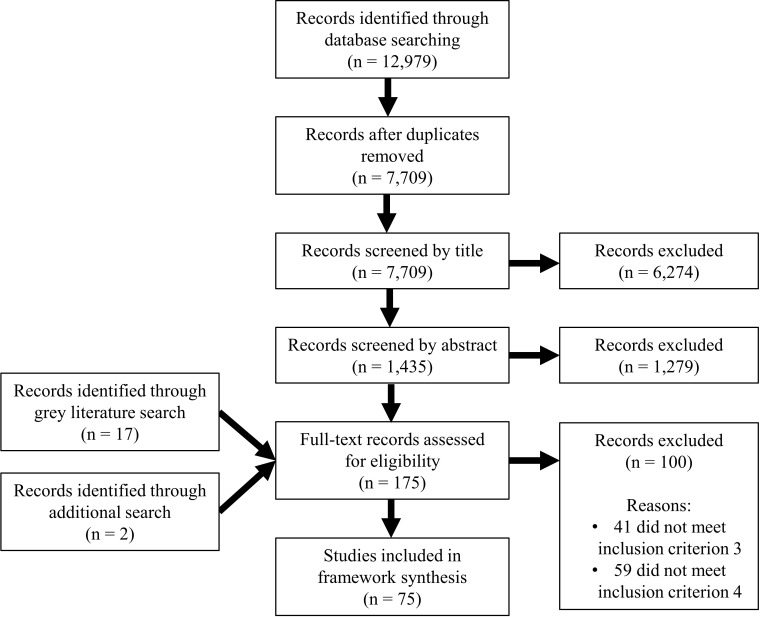
Introduction: Generating country-level political commitment will be critical to driving forward action throughout the United Nations Decade of Action on Nutrition (2016–2025). In this review of the empirical nutrition policy literature, we ask: what factors generate, sustain and constrain political commitment for nutrition, how and under what circumstances? Our aim is to inform strategic ‘commitment-building’ actions. Method: We adopted a framework synthesis method and realist review protocol. An initial framework was derived from relevant theory and then populated with empirical evidence to test and modify it. Five steps were undertaken: initial theoretical framework development; search for relevant empirical literature; study selection and quality appraisal; data extraction, analysis and synthesis and framework modification. Results: 75 studies were included. We identified 18 factors that drive commitment, organised into five categories: actors; institutions; political and societal contexts; knowledge, evidence and framing; and, capacities and resources. Irrespective of country-context, effective nutrition actor networks, strong leadership, civil society mobilisation, supportive political administrations, societal change and focusing events, cohesive and resonant framing, and robust data systems and available evidence were commitment drivers. Low-income and middle-income country studies also frequently reported international actors, empowered institutions, vertical coordination and capacities and resources. In upper-middle-income and high-income country studies, private sector interference frequently undermined commitment. Conclusion: Political commitment is not something that simply exists or emerges accidentally; it can be created and strengthened over time through strategic action. Successfully generating commitment will likely require a core set of actions with some context-dependent adaptations. Ultimately, it will necessitate strategic actions by cohesive, resourced and strongly led nutrition actor networks that are responsive to the multifactorial, multilevel and dynamic political systems in which they operate and attempt to influence. Accelerating the formation and effectiveness of such networks over the Nutrition Decade should be a core task for all actors involved.
Overview
The claims and statistics of this paper haven’t been checked yet.
Free: it reads the open-access text and checks the first 5 claims that cite a source we can check. Create a free account to check every claim.
Integrity signals
Registry
Cites
Statistics
Figures
Verification
Claims the paper makes
The claims and statistics of this paper haven’t been checked yet.
Free: it reads the open-access text and checks the first 5 claims that cite a source we can check. Create a free account to check every claim.
Claims other papers make about this one
Each is checked against this paper’s own text: does it say what the citing paper says it does?
The source backs part of the claim, not all of it — or backs it for a different population, condition or comparison.
In the citing paper
“Policy actions in many countries are informed by reductionist approaches, including nutrient-profiling models, to assess the healthiness of foods 198,199 .”
From Ultra‐processed foods and the nutrition transition: global, regional and national trends, food systems transformations and political economy drivers (2020) · cites this paper as [199]
Experimental — accuracy not yet measuredThe check wasn’t confident either way, so it gives no verdict — never disputed.
In the citing paper
“Foodbased dietary guidelines (FBDGs) adopted in most countries are a foundation for nutrition policy and guidance 199,204 .”
From Ultra‐processed foods and the nutrition transition: global, regional and national trends, food systems transformations and political economy drivers (2020) · cites this paper as [199]
Experimental — accuracy not yet measured
Self-check
Percentages, sums and reported differences re-computed from the paper’s own numbers.
The self-check needs the paper’s full text.
Citations
Cites
(1998) · Sage eBooks · Cited by 38,631
Basics of Qualitative Research (3rd ed.): Techniques and Procedures for Developing Grounded Theory
Corbin, J., & Strauss, A. (2008) · SAGE · doi:10.4135/9781452230153 · Cited by 24,827
(2005) · Cited by 9,479
Agendas, alternatives, and public policies
Kingdon, J. W. (1984) · Cited by 9,299
Qualitative research in health care: Analysing qualitative data
Pope, C. (2000) · BMJ · doi:10.1136/bmj.320.7227.114 · Cited by 8,131
Qualitative data analysis for applied policy research
(2002) · Analyzing Qualitative Data · doi:10.4324/9780203413081-14 · Cited by 4,964 · cited 1×
“Populating and modifying the framework The synthesised data corresponding to modified or new factors were populated into the thematic categories of the framework to generate the final version.(16) All authors reviewed iterations of the results and final tables.”
Qualitative data analysis for applied policy research
Ritchie, J., & Spencer, L. (2010) · Analyzing qualitative data · doi:10.4324/9780203413081_chapter_9 · Cited by 4,800
Realist review - a new method of systematic review designed for complex policy interventions
Pawson, R., Greenhalgh, T., Harvey, G., & Walshe, K. (2005) · Journal of Health Services Research & Policy · doi:10.1258/1355819054308530 · Cited by 3,190
Methods for the synthesis of qualitative research: a critical review
Barnett-Page, E., & Thomas, J. (2009) · BMC Medical Research Methodology · doi:10.1186/1471-2288-9-59 · Cited by 2,042
Research works printed but not linked: 3
- Food and Agricultural Organization of the United Nations, World Health organization. Second international conference on nutrition, conference outcome document: framework for action. Rome, Italy: Food and Agricultural Organization of the United Nations, World Health organization, 2014.
- World Health Organization. Global nutrition policy review: what does it take to scale up nutrition action? Geneva, Switzerland 2013.
- Meerman J Making nutrition a national priority - review of policy process in developing countries and case study on Malawi. Rome, Italy: Food and Agriculture Organization of the United Nations, 2008.
Cited by
Items 101–200 of 231
Heenan, M., Jan, S., Cullerton, K. B., & Shanthosh, J. (2022) · PLoS ONE · doi:10.1371/journal.pone.0274246 · Cited by 9
“In building our political economy analysis framework we draw extensively on the political economy literature [9–11, 33] as well as policy implementation [34, 35] policy coherence [7] and political commitment literature [4, 5].”
BackgroundMethodAdeyemi, O., Adesiyun, Y., Omenka, S., Ezekannagha, O., Adanlawo, A., Oyeleke, R., Umunna, L., Aminu, F., Onabolu, A., & Ajieroh, V. (2023) · Food and Nutrition Bulletin · doi:10.1177/03795721231179783 · Cited by 9
“Funding is an integral part of the enabling environment for nutrition and a fundamental measure of the extent of nutrition political commitment.(11,12,29) Government nutrition allocations are especially very important.”
BackgroundCountering commercial interests: building advocacy campaigns to protect children from food marketing
Watson, W. L., & Martin, J. E. (2019) · Public Health Research & Practice · doi:10.17061/phrp2931923 · Cited by 9
Reeve, E., Mason-D’Croz, D., & Thow, A. M. (2025) · Bulletin of the World Health Organization · doi:10.2471/blt.24.292201 · Cited by 8
Self-citationDhuria, P., Muir, S., Bird, A. G., Lawrence, W. T., Roe, E. J., Baird, J., & Vogel, C. (2025) · BMC Medicine · doi:10.1186/s12916-025-04484-2 · Cited by 9
“These stakeholders come from diverse backgrounds such as research, academia, and civil society organisations (CSOs), including non-government organisations (NGOs), charities, and advocacy groups, but hold a shared interest in improving public health [43, 44].”
Food System vs. Sustainability: An Incompatible Relationship in Mexico
Housni, F. E., & Lares-Michel, M. (2024) · Sustainability · doi:10.3390/su16072811 · Cited by 8
Shawar, Y. R., Meraj, S., Koon, A. D., & Shiffman, J. (2025) · Children and Youth Services Review · doi:10.1016/j.childyouth.2025.108377 · Cited by 8
Nutritionists as policy advocates: the case of obesity prevention in Quebec, Canada
Wassef, J., Champagne, F., & Farand, L. (2021) · Public Health Nutrition · doi:10.1017/s1368980021004997 · Cited by 8
Dry, T., & Baker, P. (2021) · International Journal of Health Policy and Management · doi:10.34172/ijhpm.2021.174 · Cited by 9
Self-citationMcKenzie, B. L., Waqa, G., Mounsey, S., Johnson, C., Woodward, M., Buse, K., Thow, A. M., McLean, R. M., & Webster, J. L. (2022) · International Journal for Equity in Health · doi:10.1186/s12939-022-01745-x · Cited by 8
“Ministry of Economy.”
BackgroundInfluentialSelf-citationHarnessing the power on our plates: sustainable dietary patterns for public and planetary health
Woodside, J. V., Lindberg, L., & Nugent, A. P. (2023) · Proceedings of The Nutrition Society · doi:10.1017/s0029665123004809 · Cited by 8
“…generating this commitment will require a core set of actions with some context-dependent adaptations and that cohesive, resourced and strongly led nutrition actor networks, responsive to the multifactorial, multilevel and dynamic political systems in which they operate, will be essential (94) .”
BackgroundInfluentialGenerating political priority for alcohol policy reform: A framework to guide advocacy and research
Gage, R., CONNOR, J. L., Jackson, N., McKerchar, C., & Signal, L. N. (2023) · Drug and Alcohol Review · doi:10.1111/dar.13782 · Cited by 8
Wahnschafft, S., Spiller, A., & Graciano, B. A. (2024) · Globalization and Health · doi:10.1186/s12992-024-01069-1 · Cited by 9
“Corporate political activity (CPA), referring to industry efforts to influence public policy, research and practice, plays a major role in preventing, weakening, or delaying regulatory approaches for improving food environments [25].”
BackgroundDamari, B., Abdollahi, Z., Pourghaderi, M., & Mohammadi‐Nasrabadi, F. (2020) · International Journal of Preventive Medicine · doi:10.4103/ijpvm.ijpvm_405_19 · Cited by 8
“It was concluded that the policy was timely and accessible, and provided a useful analytical framework for nutrition.[25]”
BackgroundFacilitating Factors and Opportunities for Local Food Purchases in School Meals in Spain
Soares, P., Suárez-Mercader, S., Comino, I., Martínez-Milán, M. A., Cavalli, S. B., & Davó-Blanes, M. C. (2021) · International Journal of Environmental Research and Public Health · doi:10.3390/ijerph18042009 · Cited by 9
“Similar to what has been found in prior studies [24,32,33] he capacity of key actors and civil society’s power to influence decision makers was considered relevant for the”
ResultLiu, X., Ng, S., Xing, Y. Y., Liu, X., Li, H. Y., Fung, M. H. Y., & Chan, C. (2021) · Asia Pacific Journal of Social Work and Development · doi:10.1080/02185385.2021.1923560 · Cited by 8
Pedroso, J., Kubo, S. E. D. A. C., Silva, P. O., de Castro, G. F., Pimentel, J. L., Pérez‐Escamilla, R., Gubert, M. B., & Buccini, G. (2021) · Maternal and Child Nutrition · doi:10.1111/mcn.13276 · Cited by 8
“To make the message clearer, researchers may use knowledge-brokers and other materials (e.g., country profile, maps) and avoid the use of technical language (Baker et al., 2018; Sarkies et al., 2017).”
BackgroundHawwash, D., Pinxten, W., Bonn, N. A., Verstraeten, R., Kolsteren, P. W., & Lachat, C. K. (2018) · Advances in Nutrition · doi:10.1093/advances/nmy039 · Cited by 10
Thow, A. M., Neves, D., Aidoo, R., Aduku, L. N. E., Moyo, B. H., Apprey, C., Kroll, F., & Annan, R. A. (2024) · Public Health Nutrition · doi:10.1017/s1368980024001356 · Cited by 9
Self-citationMilsom, P., Tomoaia‐Cotisel, A., Smith, R., Modisenyane, S. M., & Walls, H. (2023) · International Journal of Health Policy and Management · doi:10.34172/ijhpm.2023.7641 · Cited by 7
“As such, while a few countries have made progress on under-five obesity, the vast majority are off-track for meeting adult obesity and DR-NCD targets by 2025.(18,19) Corporate influence,”
BackgroundInfluentialSelf-citationWalls, H., Johnston, D., Vecchione, E., Adam, A. S., & Parkhurst, J. O. (2019) · Development Policy Review · doi:10.1111/dpr.12385 · Cited by 11
“(2018) have reviewed globally the drivers of political commitment for nutrition (Baker et al. 2018).”
BackgroundSelf-citationMicro-elimination: A Key Component of Global Hepatitis C Elimination
Lazarus, J. V., Pericàs, J. M., & Hetherington, K. L. (2021) · Springer eBooks · doi:10.1007/978-3-030-64649-3_14 · Cited by 7
Iacono, I. D., Piroscia, R., Colelli, E., Tomasin, R. P., Fiorini, J., Foglietti, F., Buglione, D., Cangelosi, G., Petrelli, F., Vanzi, V., et al. (2025) · Nutrition · doi:10.1016/j.nut.2025.112890 · Cited by 6
Comino, I., Soares, P., Martínez-Milán, M. A., Caballero, P., & Davó-Blanes, M. C. (2022) · Nutrients · doi:10.3390/nu14153069 · Cited by 6
“contribute to achieving common objectives [42,43].”
Johnson, E., Jusril, H., Pratiwi, L., Trisnasari, S., Thow, A. M., & Rachmi, C. N. (2025) · Public Health Nutrition · doi:10.1017/s1368980025100566 · Cited by 6
Self-citationMa, X., Zeng, H., Li, Y., & Yang, Y. (2025) · Gerodontology · doi:10.1111/ger.70006 · Cited by 6
Jesus, T. S., Kamalakannan, S., Bhattacharjya, S., Bettger, J. P., Jacobs, K., & Hoenig, H. (2023) · Work · doi:10.3233/wor-210745 · Cited by 7
“…a relevant a priori framework against which the reviewed information is coded and synthesized against), and has gained popularity in health services research, essentially due the theoretical soundness, feasibility, and the relative simplicity of the approach and its interpretation [40, 41, 44, 45].”
Constituent-driven health policy informed by policy advocacy literature
Figueroa, R., & Verma, R. (2023) · Translational Behavioral Medicine · doi:10.1093/tbm/ibac116 · Cited by 7
Madurawala, S., Kiringoda, K., Thow, A. M., & Arunatilake, N. K. (2023) · Global Health Action · doi:10.1080/16549716.2023.2280339 · Cited by 6
“…nutrition actor networks, strong leadership, civil society mobilisation, supportive political administrations, societal change and focusing events, cohesive and resonant framing, robust data systems and available evidence are key factors that drive and sustain a commitment to nutrition [49].”
BackgroundSelf-citationErzse, A., Karim, S. A., Thow, A. M., Gemma, A., Amukugo, H. J., Asiki, G., Gaogane, L., Mukanu, M. M., Ngoma, T. A., Ruhara, C. M., et al. (2021) · Global Health Action · doi:10.1080/16549716.2020.1871189 · Cited by 6
Self-citationOBJECT BASED IMAGE ANALYSIS AND TEXTURE FEATURES FOR PASTURE CLASSIFICATION IN BRAZILIAN SAVANNAH
Neto, C. D. G., Sato, L. Y., Sanches, I. D., Silva, I. C. O., Rocha, J., & Almeida, C. A. (2020) · ISPRS annals of the photogrammetry, remote sensing and spatial information sciences · doi:10.5194/isprs-annals-v-3-2020-453-2020 · Cited by 10
“On April 2016, United Nations (UN) proclaimed the Decade of Action and Nutrition (2016-2025) which aims to accomplish several goals in order to reduce hunger and poverty by 2030 (Baker et al., 2018).”
BackgroundBeyond paper realities : Fostering integrated nutrition governance in Uganda
Namugumya, B. S. (2021) · doi:10.18174/538348 · Cited by 9
The non-use of evidence in the adoption of a sugar-sweetened beverage tax in OECD countries
Hornung, J., & Sager, F. (2023) · European Journal of Public Health · doi:10.1093/eurpub/ckad098 · Cited by 6
Padigapati, V. N. S., Singh, A., Praveen, K. V., Anbukkani, P., & Ramalingam, S. (2024) · Agricultural Research · doi:10.1007/s40003-024-00757-z · Cited by 5
“To address this grave global health challenge, the United Nations declared the 2016–2025 period as the ‘‘Decade of Action on Nutrition’’ [11].”
Engaging family members in nutrition care during recovery from critical illness
Marshall, A. P., Ridley, E. J., & Chapple, L. S. (2024) · Current Opinion in Clinical Nutrition & Metabolic Care · doi:10.1097/mco.0000000000001100 · Cited by 5
“Future research should focus on the potential for family members to actively engage in nutrition care in hospital and support the patient in achieving nutrition goals after discharge home.”
Myeni, S., Coetzee, C., & Kruger, L. E. (2026) · Jàmbá Journal of Disaster Risk Studies · doi:10.4102/jamba.v18i1.1837 · Cited by 5
“Political commitment and leadership can be defined as the intentional buy-in and perpetual support by politically influential entities or individuals of activities that proactively address developmental problems facing a society (Baker et al. 2018:2).”
Walton, S., Hawkes, C., & Fanzo, J. (2023) · Global Food Security · doi:10.1016/j.gfs.2023.100687 · Cited by 6
Self-citationEzekannagha, O., Adeyemi, O., Ajieroh, V., & Onabolu, A. (2023) · Food and Nutrition Bulletin · doi:10.1177/03795721231179786 · Cited by 5
Global, regional and national burdens of nutritional deficiencies, from 1990 to 2019
Qing, X., Ji, Y., Yuan, C., Xie, K., & Wang, K. (2024) · British Journal Of Nutrition · doi:10.1017/s0007114524001272 · Cited by 7
“For instance, the United Nations Decade of Action on Nutrition 2016 – 2025 and the Sustainable Development Goal aimed at ‘ eliminating all forms of malnutrition ’ highlight the need for comprehensive efforts to combat ND (12 – 14) .”
Morse, S. M., Colombini, M., Lentz, E., Soriano, C. D., Morales, A. G. F., Díaz-Olavarrieta, C., & Rodríguez, D. (2025) · Health Policy and Planning · doi:10.1093/heapol/czaf012 · Cited by 5
“Political commitment has been used to analyze other public health issues (i.e. human immunodeficiency virus (HIV)/acquired immune deficiency syndrome, see Fox et al. 2011, Goldberg et al. 2012, and nutrition, see Baker et al. 2018), but it has yet to be applied to VAW.”
InfluentialNgqangashe, Y., Phulkerd, S., Schram, A., Collin, J., Schneider, C. H., Thow, A. M., & Friel, S. (2024) · International Journal of Health Policy and Management · doi:10.34172/ijhpm.2024.7405 · Cited by 6
Self-citationGordon, J. L., Adeyemi, O., Baker, P., Dewi, D., Fracassi, P., & Memon, R. (2025) · OpenDocs (Institute of Development Studies) · doi:10.19088/ids.2024.040 · Cited by 7
Self-citationGreen Public Procurement as a Tool for Sustainable and Secure Food Policy: Evidence from Poland
Zielińska-Chmielewska, A., Żukovskis, J., Wielicka-Regulska, A., Mruk-Tomczak, D., & Wojtaszek, H. (2023) · Journal of Security and Sustainability Issues · doi:10.47459/jssi.2023.13.8 · Cited by 4
Thow, A. M., Harris, P. J., & Lencucha, R. (2025) · Social Science & Medicine · doi:10.1016/j.socscimed.2025.117939 · Cited by 4
Self-citationBuilding relationships: Is this the answer to effective nutrition policy formulation?
Kapetanaki, A. B., Tzempelikos, N., & Halliday, S. V. (2021) · Journal of Consumer Affairs · doi:10.1111/joca.12396 · Cited by 4
Sengchaleun, V., Kounnavong, S., & Reinharz, D. (2023) · Tropical Medicine and Health · doi:10.1186/s41182-023-00532-w · Cited by 4
“Political leadership is key for garnering support for issues among different actors [38].”
BackgroundBertscher, A., Matthes, B. K., Nobles, J., Gilmore, A., Bondy, K., Akker, A. V. D., Dance, S., Bloomfield, M. J., & Zatonski, M. Z. (2024) · International Journal of Health Policy and Management · doi:10.34172/ijhpm.2024.8033 · Cited by 7
MARKET ACCESS FOR LOCAL GEOGRAPHICAL INDICATIONS AND MARKETING GI PRODUCTS: THE METRO EXAMPLE
Aslan, E. (2024) · Industrial Policy · doi:10.61192/indpol.1489696 · Cited by 4
Siekmans, K., Bose, S., Escobar-DeMarco, J. L., & Frongillo, E. A. (2024) · Maternal and Child Nutrition · doi:10.1111/mcn.13711 · Cited by 4
“While broad political commitment for nutrition and relevant nutrition policies were already in place, there was a need to convert this expressed commitment into institutional and operational forms of commitment for nutrition (Baker et al., 2018; Fracassi et al., 2020).”
Razak, A., Harpina, S., & Adrianto, R. (2020) · Medico-Legal Update · doi:10.37506/mlu.v20i4.2168 · Cited by 4
Vargas, C., Backholer, K., Bennett, R., Maganti, R., Lewis, M., Marshall, J., Sacks, G., Alston, L., Gupta, A., Needham, C., et al. (2025) · Proceedings of the Nutrition Society · doi:10.1017/s0029665125101225 · Cited by 3
“For example, how food and nutrition problems are framed in public and policy arenas can ultimately shape how they are addressed (114) .”
Corso, B., Awuviry‐Newton, K., Appiah, S. C. Y., Doh, D., Kowal, P. R., & Charlton, K. E. (2025) · Nutrition · doi:10.1016/j.nut.2025.112798 · Cited by 3
Food security systems change: a case study from rural, regional, and remote Australia
Godrich, S. L., Chiera, I., Doe, J., Herrington, S., Stoneham, M. J., Devine, A., & Humphreys, E. (2025) · Agriculture and Human Values · doi:10.1007/s10460-025-10795-0 · Cited by 3
“…for strategic engagement of poli - cymakers is the formation of advocacy groups, which can raise awareness, gather data, build capacity, propose solutions, and engage with decision-makers (Baker et al. 2018). approaches to identifying initiatives and alignment with cultural ways of knowing.”
Rossi, L., Carrano, E., Cosmi, V. D., Benedetto, R. D., Silano, M., & Agrimi, U. (2026) · Frontiers in Nutrition · doi:10.3389/fnut.2026.1821257 · Cited by 3
Wamahiu, M., Baker, P., & Dorlach, T. (2025) · Globalization and Health · doi:10.1186/s12992-025-01127-2 · Cited by 3
“Here we also draw on the literature on the determinants of political commitment and priority for nutrition [45, 46].”
Self-citationChiera, I., Doe, J., Stoneham, M. J., Herrington, S., Devine, A., Humphreys, E., & Godrich, S. L. (2025) · Health & Place · doi:10.1016/j.healthplace.2025.103543 · Cited by 3
Reducing waste in nutritional epidemiology: review and perspectives
Hawwash, D., Yang, C., & Lachat, C. K. (2019) · Proceedings of The Nutrition Society · doi:10.1017/s002966511900051x · Cited by 4
“In 2016, the United Nations General Assembly declared a Decade of Action on Nutrition, which provides an unprecedented momentum to drive concerted action and improve diets and malnutrition in all its forms((1)).”
Phulkerd, S., Schram, A., Collin, J., Thow, A. M., Ngqangashe, Y., Schneider, C. H., & Friel, S. (2022) · Globalization and Health · doi:10.1186/s12992-022-00888-4 · Cited by 4
“Without translation to more substantive politicial commitments, this rhetoric is limited in its capacity to achieve nutrition goals [34].”
BackgroundSelf-citationZhao, S., Shinde, S., Mastan, M., Fawzi, W. W., & Tang, K. (2024) · Frontiers in Public Health · doi:10.3389/fpubh.2024.1423860 · Cited by 3
“…actions among adolescents will be key to achieving the ambitions of the United Nations Decade of Action on Nutrition to end hunger, achieve food security and improved nutrition, and promote sustainable agriculture, and the Sustainable Development Goals to eliminate all forms of malnutrition (14).”
BackgroundThow, A. M., Phulkerd, S., Ngqangashe, Y., Ravuvu, A., Zaruba, L., Schneider, C. H., Collin, J., Schram, A., & Friel, S. (2023) · Health Promotion International · doi:10.1093/heapro/daad136 · Cited by 3
“Many of these factors reflect experiences in implementing nutrition policy measures more broadly (Resnick et al. , 2015; Cullerton et al. , 2016; Baker et al. , 2018).”
BackgroundSelf-citationAgbemafle, I., & Zotor, F. B. (2024) · Proceedings of The Nutrition Society · doi:10.1017/s0029665124007572 · Cited by 2
A one government approach for agroecology policy coordination in Zimbabwe
Marenya, P., Chiduwa, M. S., Ngoma, H., Chipindu, L., Nohayi, N., & Chimonyo, V. G. P. (2025) · Agroecology and Sustainable Food Systems · doi:10.1080/21683565.2025.2541375 · Cited by 2
Colón‐Ramos, U., Uccelli, N. G., Meléndez-Colón, O., Blanco, A. M. G., Santiago, C. O., Pérez, C. R., Gómez-Andújar, N. X., Tavárez, H. S., Poirier, L., Gittelsohn, J., et al. (2025) · Public Health Nutrition · doi:10.1017/s1368980025101080 · Cited by 2
Backman, B., Blake, M. R., Zorbas, C., Chung, A., Schulz, S., Brown, V., Mäki, P., & Yoong, S. (2025) · Social Science & Medicine · doi:10.1016/j.socscimed.2025.118876 · Cited by 2
Information Management and Accountability for Multisectoral Nutrition Implementation in Burkina-Faso
Diasso, D., Doudou, M. H., Tonnoir, F., Cruz, S., & Savadogo, A. (2020) · Science Journal of Public Health · doi:10.11648/j.sjph.20200805.11 · Cited by 3
“essential to set priorities and invest in the necessary data and the capacity to use it [1], because data gaps affect the ability to target resources, develop policy and monitor accountability [6, 8, 9].”
BackgroundMasit, J., Malenje, B., & Imboga, H. (2024) · International Journal of Data Science and Analysis · doi:10.11648/j.ijdsa.20241003.12 · Cited by 3
“The World Health Organization (WHO) has a goal to reduce the prevalence of stunting by 40% in 2025 [2].”
A Macropsychology Perspective on Food Systems
McVeigh, J. (2021) · Springer eBooks · doi:10.1007/978-3-030-50176-1_13 · Cited by 2
The UN Decade of Nutrition: WPHNA’s position at mid-term
World Public Health Nutrition Association (2021) · World Nutrition · doi:10.26596/wn.202112311-24 · Cited by 2
Ezekannagha, O., Drimie, S., von Fintel, D., Maziya-Dixon, B. B., & Mbhenyane, X. G. (2024) · International Journal of Environmental Research and Public Health · doi:10.3390/ijerph21020175 · Cited by 2
“As Baker et al. [4] state, a systemic approach to nutrition involves the participation of multiple sectors, including environmental health, water, sanitation, and hygiene (WASH), and education, at various levels and with multiple stakeholders.”
BackgroundInfluentialVoice, access, and ownership: enabling environments for nutrition advocacy in India and Nigeria
Resnick, D., Anigo, K. M., Anjorin, O. M., & Deshpande, S. (2024) · Food Security · doi:10.1007/s12571-024-01451-2 · Cited by 2
“These are equivalent to Baker et al.’s (2018) categories of “operational” commitment and “institutional” commitment, respectively.”
Visibly Invisible: Unpacking Contemporary Concerns and Challenges of Population Aging in India
Soletti, A. B. (2024) · Asian Perspectives on Public Health. · doi:10.1007/978-981-97-4449-7_1 · Cited by 1
Ares, G., Corona, C. G., Antúnez, L., & Thow, A. M. (2025) · Health Policy · doi:10.1016/j.healthpol.2025.105435 · Cited by 1
Self-citationZhu, L.-Y., Chen, B., Lu, X., Xia, J., & Sun, J. (2025) · Current Problems in Surgery · doi:10.1016/j.cpsurg.2025.101902 · Cited by 1
Thow, A. M., Patay, D., Baker, P., Farrell, P., & Reeve, E. (2025) · International Journal of Health Policy and Management · doi:10.34172/ijhpm.9052 · Cited by 3
“12,32 33-37 In particular, ongoing learning fosters reflexivity, which has been identified as critical for the development of a shared (across sectors) vision for nutrition.”
Self-citationBurden of Nutritional Deficiencies: A Systematic Analysis for the GBD 2021
Nong, S., Deng, R., & Zhang, X. (2026) · Health Science Reports · doi:10.1002/hsr2.72273 · Cited by 1
Learning from Latin America: toward stronger regulation of unhealthy food marketing
Théodore, F. L., Aragón-Gama, A. C., Durán, R., Rodríguez, L., & Tolentino‐Mayo, L. (2026) · Health Promotion International · doi:10.1093/heapro/daag054 · Cited by 1
“Our findings are consistent with the framework developed by Baker et al .”
Purnama, T. B., Arrazy, S., Nurhayati, Ashar, Y. K., & Wangge, G. (2026) · Jurnal Administrasi Kesehatan Indonesia · doi:10.20473/jaki.v14i1.2026.25-34 · Cited by 1
“Broader support, commitment, and effective use of available resources are therefore critical for accelerating the reduction (Baker et al .”
Minssen, T., & Gerke, S. (2021) · Springer eBooks · doi:10.1007/978-3-662-63530-8_12 · Cited by 1
Revising a right to food road map—perspectives of Australian key informants
Lindberg, R., Yii, V., Millen, E., & Godrich, S. L. (2024) · Australian and New Zealand Journal of Public Health · doi:10.1016/j.anzjph.2024.100189 · Cited by 1
Social Protection Pathways to Nutrition. Synthesis report
Nisbett, N., Salm, L., Roelen, K., Baldi, G., Mejia, C. D., Gonzalo Jaramillo Mejia, J., Paredes Cauna, F., Gelli, A., Olney, D. K., & Vooris, E. (2023) · Open Research Online - ORO (The Open University) · Cited by 1
Economic Policy and Food Security in Ethiopia
Johnston, D., & Walls, H. (2019) · Oxford University Press eBooks · doi:10.1093/oxfordhb/9780198814986.013.20 · Cited by 2
“Thus, Ethiopia is now beginning to experience what is referred to as the ‘double burden’ of malnutrition: the co-existence of underweight and micronutrient deficiencies, as well as overweight, obesity, and NCDs (Baker et al. 2018; Walls et al. 2016).”
BackgroundSelf-citationNutrition training for medical professionals: where do we begin?
Broadley, I., White, R., & Jaffee, A. (2022) · British Journal of Cardiology · doi:10.5837/bjc.2022.028 · Cited by 2
Malnutrición en el adulto mayor
Pinzón‐Espitia, O. L. (2023) · Revista Ciencias de la Salud · doi:10.12804/revistas.urosario.edu.co/revsalud/a.13492 · Cited by 1
Government policies to improve food environments: A population and equity lens
Djojosoeparto, S. K. (2023) · Utrecht University Repository (Utrecht University) · doi:10.33540/1897 · Cited by 2
The influence of livelihood projects on food security resilience levels in Zimbabwe
Ngwenya, S. (2021) · Boloka Institutional Repository (North-west University) · Cited by 8
Wong, Y. Y. (2020) · ANU Open Research (Australian National University) · doi:10.25911/5f58b055de288 · Cited by 1
Iruhiriye, E. (2020) · Scholar Commons (University of South Carolina)
Namara, R. (2020) · ResearchWorks at the University of Washington (University of Washington)
Вырожденные задачи синтеза систем управления линейными дискретными объектами
Львович, Б. А. (2009) · Проблемы управления · Cited by 1
Serpa, C. M. (2021) · Digital Library of Theses and Dissertations (Universidade de São Paulo) · doi:10.11606/t.89.2021.tde-17122021-170639 · Cited by 3
Namirembe, G., Shrestha, R., Houser, R. F., Ghosh, S. A., Baral, K. P., Davis, D., & Webb, P. (2019) · Research Square · doi:10.21203/rs.2.11618/v1
“”(10) Unfortunately, the study of governance (successes or failures) has been hampered by the lack of agreed metrics for empirically measuring the processes involved.”
BackgroundMoghaddam, Y. M., Saedi, A., & Ahang, F. (2022) · چشم انداز مدیریت دولتی · doi:10.52547/jpap.2021.222957.1086
Heenan, M., Jan, S., Ralph, M., Sacks, G., Swinburn, B. A., & Shanthosh, J. (2023) · Social Science & Medicine · doi:10.1016/j.socscimed.2023.116149
MENGUNGKAP KUALITAS PRODUKTIVITAS PENDUDUK INDONESIA: ERA PEMERINTAHAN JOKOWI
Fitriadi, F., Utomo, R. P., & Wahyuni, S. (2023) · EKOMBIS SAINS Jurnal Ekonomi Keuangan dan Bisnis · doi:10.24967/ekombis.v8i2.2438
“Menurut Baker et al .”
Doudou, M. H., Ouédraogo, O., Cruz, S., Diasso, D., & Levrac, M. (2024) · The International Journal of Health Planning and Management · doi:10.1002/hpm.3759
Meraj, S., & Nuraj, S. (2024) · The Columbia University Journal of Global Health · doi:10.52214/cujgh.v14i1.12398
“…to influence political priority include the following: “effective nutrition actor networks, strong leadership, civil society mobilization, supportive political administrations, societal change and focusing events, cohesive and resonant framing, and robust data systems and available evidence” [23].”
BackgroundDinesh Yadav, D. M., Tata, D. T., Jobarteh, M. L., Ndolo, R. N., Banjara, S. K., Augustine, L. F., Munikumar, M., Kulkarni, B., Diop, A., Tairou, F., et al. (2024) · BMJ Paediatrics Open · doi:10.1136/bmjpo-2023-002428
Lada, C. O., Lidia, K., Soegianto, S. D. P., Woda, R. R., Anggraini, T. A., Landutana, U. D., Hendrik, E. D. V., Lulan, A. J., Tiran, Y. O., & Waitau, B. A. (2024) · Jurnal Media Tropika. · doi:10.35508/mediatropika.v4i1.17872
Metadata
- Authors
- Baker, P., Hawkes, C., Wingrove, K., Demaio, A. R., Parkhurst, J., Thow, A. M., & Walls, H.
- Affiliations
- Deakin University (AU)
- City, University of London (GB)
- London School of Economics and Political Science (GB)
- The University of Sydney (AU)
- London School of Hygiene & Tropical Medicine (GB)
- Corresponding author
- Baker, Phillip
- ORCID
- Venue
- BMJ Global Health
- Publisher
- BMJ
- Published
- 2018-02
- Volume
- 3
- Issue
- 1
- Pages
- e000485
- ISSN
- 2059-7908 (ISSN-L)
- PMC
- PMC5841521
- OpenAlex
- W2783310319
- Cited by
- 204
- References
- 101
- Citations by year
- 2026: 11 · 2025: 22 · 2024: 26 · 2023: 26 · 2022: 20 · 2021: 45 · 2020: 26 · 2019: 22 · 2018: 5
- FWCI
- 40.50
- Type
- journal article
- Language
- en
- Open access
- gold
- doi.org
- Licence
- cc-by-nc
- Locations
- BMJ Global Health (publishedVersion, cc-by-nc)
- PubMed Central (publishedVersion, cc-by-nc)
- PubMed (publishedVersion)
- LSHTM Research Online (London School of Hygiene and Tropical Medicine) (acceptedVersion)
- London School of Economics and Political Science Research Online (London School of Economics and Political Science) (acceptedVersion)
- City Research Online (City University London) (acceptedVersion)
- London School of Economics and Political Science Theses Online (London School of Economics and Political Science) (submittedVersion)
- RePEc: Research Papers in Economics (submittedVersion)
- Own your potential (DEAKIN) (submittedVersion)
- Figshare (submittedVersion, cc-by-nc)
- Funders
- World Health Organization
- Topics
- Health Sciences › Medicine › Public Health, Environmental and Occupational Health › Global Public Health Policies and Epidemiology
- Life Sciences › Agricultural and Biological Sciences › Food Science › Nutrition, Health, and Society Studies
- Health Sciences › Medicine › Pediatrics, Perinatology and Child Health › Public Health and Nutrition
- Keywords
- political commitment, nutrition policy, actor networks, civil society mobilization, leadership, framing, institutional capacity, vertical coordination, low- and middle-income countries, high-income countries
About these checks
Registry, retraction, Cites and statistics results are computed, not judged, with one exception: a printed reference that no index lists is read once by a model before it counts as a citation error. Claims are extracted by a model and kept only when their quote appears verbatim in the text; each cited source is then checked, with a model’s help, for whether it says what the claim relies on. Those verdicts can be wrong — read the claim’s quote and the cited source before relying on one.
Statistics and arithmetic are recomputed, not judged.
Confidence bands are shown only for fields calibrated on our annotated test set. None is calibrated yet, so no band is shown.
What counts as a claim ›How we measure confidence ›How we check this ›
Are you an author, or do you see a problem with this page? Request a review
Data sources
Bibliographic data: Semantic Scholar, OpenAlex, Crossref.
Contains information from the Semantic Scholar Academic Graph Datasets, made available under the ODC Attribution License (ODC-BY 1.0).
Semantic Scholar’s data is described in: Kinney, R., et al. (2023). The Semantic Scholar Open Data Platform. arXiv:2301.10140.
