

What drives political commitment for nutrition? A review and framework synthesis to inform the United Nations Decade of Action on Nutrition
Open accessThe DOI matches its Crossref record; 104 of the 105 references it cites were found in a registry or an index, and 1 are not checked yet.
Abstract
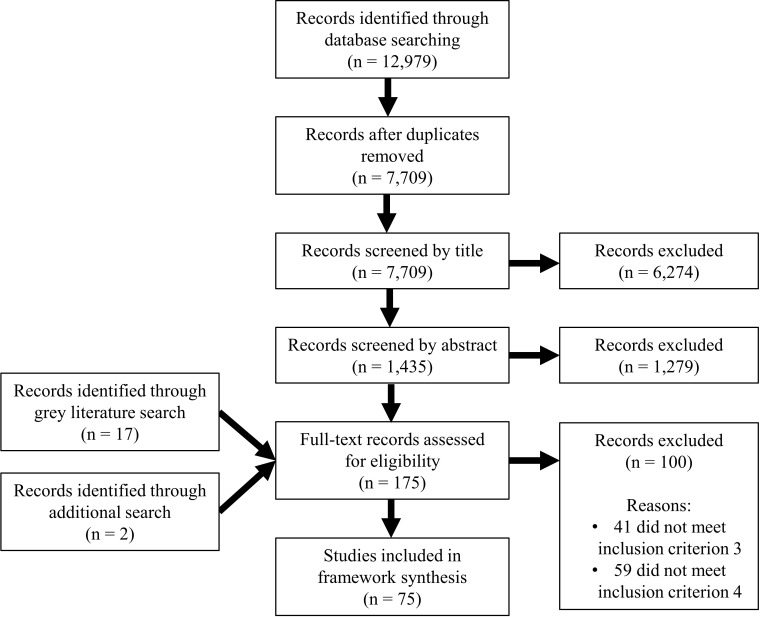
Introduction: Generating country-level political commitment will be critical to driving forward action throughout the United Nations Decade of Action on Nutrition (2016–2025). In this review of the empirical nutrition policy literature, we ask: what factors generate, sustain and constrain political commitment for nutrition, how and under what circumstances? Our aim is to inform strategic ‘commitment-building’ actions. Method: We adopted a framework synthesis method and realist review protocol. An initial framework was derived from relevant theory and then populated with empirical evidence to test and modify it. Five steps were undertaken: initial theoretical framework development; search for relevant empirical literature; study selection and quality appraisal; data extraction, analysis and synthesis and framework modification. Results: 75 studies were included. We identified 18 factors that drive commitment, organised into five categories: actors; institutions; political and societal contexts; knowledge, evidence and framing; and, capacities and resources. Irrespective of country-context, effective nutrition actor networks, strong leadership, civil society mobilisation, supportive political administrations, societal change and focusing events, cohesive and resonant framing, and robust data systems and available evidence were commitment drivers. Low-income and middle-income country studies also frequently reported international actors, empowered institutions, vertical coordination and capacities and resources. In upper-middle-income and high-income country studies, private sector interference frequently undermined commitment. Conclusion: Political commitment is not something that simply exists or emerges accidentally; it can be created and strengthened over time through strategic action. Successfully generating commitment will likely require a core set of actions with some context-dependent adaptations. Ultimately, it will necessitate strategic actions by cohesive, resourced and strongly led nutrition actor networks that are responsive to the multifactorial, multilevel and dynamic political systems in which they operate and attempt to influence. Accelerating the formation and effectiveness of such networks over the Nutrition Decade should be a core task for all actors involved.
Overview
The claims and statistics of this paper haven’t been checked yet.
Free: it reads the open-access text and checks the first 5 claims that cite a source we can check. Create a free account to check every claim.
Integrity signals
Registry
Cites
Statistics
Figures
Verification
Claims the paper makes
The claims and statistics of this paper haven’t been checked yet.
Free: it reads the open-access text and checks the first 5 claims that cite a source we can check. Create a free account to check every claim.
Claims other papers make about this one
Each is checked against this paper’s own text: does it say what the citing paper says it does?
The source backs part of the claim, not all of it — or backs it for a different population, condition or comparison.
In the citing paper
“Policy actions in many countries are informed by reductionist approaches, including nutrient-profiling models, to assess the healthiness of foods 198,199 .”
From Ultra‐processed foods and the nutrition transition: global, regional and national trends, food systems transformations and political economy drivers (2020) · cites this paper as [199]
Experimental — accuracy not yet measuredThe check wasn’t confident either way, so it gives no verdict — never disputed.
In the citing paper
“Foodbased dietary guidelines (FBDGs) adopted in most countries are a foundation for nutrition policy and guidance 199,204 .”
From Ultra‐processed foods and the nutrition transition: global, regional and national trends, food systems transformations and political economy drivers (2020) · cites this paper as [199]
Experimental — accuracy not yet measured
Self-check
Percentages, sums and reported differences re-computed from the paper’s own numbers.
The self-check needs the paper’s full text.
Citations
Cites
(1998) · Sage eBooks · Cited by 38,631
Basics of Qualitative Research (3rd ed.): Techniques and Procedures for Developing Grounded Theory
Corbin, J., & Strauss, A. (2008) · SAGE · doi:10.4135/9781452230153 · Cited by 12,136
(2005) · Cited by 9,479
Agendas, alternatives, and public policies
Kingdon, J. W. (1984) · Cited by 9,299
Qualitative research in health care: Analysing qualitative data
Pope, C. (2000) · BMJ · doi:10.1136/bmj.320.7227.114 · Cited by 8,131
Qualitative data analysis for applied policy research
(2002) · Analyzing Qualitative Data · doi:10.4324/9780203413081-14 · Cited by 4,964 · cited 1×
“Populating and modifying the framework The synthesised data corresponding to modified or new factors were populated into the thematic categories of the framework to generate the final version.(16) All authors reviewed iterations of the results and final tables.”
Qualitative data analysis for applied policy research
Ritchie, J., & Spencer, L. (2010) · Analyzing qualitative data · doi:10.4324/9780203413081_chapter_9 · Cited by 4,800
Realist review - a new method of systematic review designed for complex policy interventions
Pawson, R., Greenhalgh, T., Harvey, G., & Walshe, K. (2005) · Journal of Health Services Research & Policy · doi:10.1258/1355819054308530 · Cited by 3,190
Methods for the synthesis of qualitative research: a critical review
Barnett-Page, E., & Thomas, J. (2009) · BMC Medical Research Methodology · doi:10.1186/1471-2288-9-59 · Cited by 2,042
Research works printed but not linked: 3
- Food and Agricultural Organization of the United Nations, World Health organization. Second international conference on nutrition, conference outcome document: framework for action. Rome, Italy: Food and Agricultural Organization of the United Nations, World Health organization, 2014.
- World Health Organization. Global nutrition policy review: what does it take to scale up nutrition action? Geneva, Switzerland 2013.
- Meerman J Making nutrition a national priority - review of policy process in developing countries and case study on Malawi. Rome, Italy: Food and Agriculture Organization of the United Nations, 2008.
Cited by
Items 201–231 of 231
Martins, A. P. B., & Arantes, R. R. (2024) · Editora FIOCRUZ eBooks · doi:10.7476/9786557081891.0034
Taheem, R., Woods‐Townsend, K., Lawrence, W. T., Baird, J., Godfrey, K. M., Chase, D., & Hanson, M. A. (2024) · Health Promotion Practice · doi:10.1177/15248399241294231
“A semi-structured questionnaire and discussion guide were produced based on the five levels of political commitment conceptual framework (Table 1; Baker, Hawkes, et al., 2018).”
InfluentialWahnschafft, S. (2025) · eDiss (Georg-August-Universität Göttingen) · doi:10.53846/goediss-10919
Chung, A., McCann, J. R., Esdaile, E. K., Hull, N., Schmidtke, A., Mackay, S., Love, P., Laws, R., & Fleming, C. (2025) · Maternal and Child Nutrition · doi:10.1111/mcn.70013
“We are encouraged by the notion that when academics, clinicians and civil society work together as a coalition to reframe issues and mobilise resources, political will can be generated (Baker et al. 2018).”
How Can Fiji Address its Food Policy Paradox? A Structured Analysis of Vegetable PolicyPreprint
Harris, J., Kumar, S., Naika, A., Goh, E. V., Goudet, S. M., Manger, M. S., & Thow, A. M. (2025) · SSRN Electronic Journal · doi:10.2139/ssrn.5380602
Self-citationA Perspective on Evolution of Nutrition Policies
Sharma, D. (2025) · Global Journal of Health Science · doi:10.5539/gjhs.v17n5p25
Daly, M. P., McQuire, C., d’Apice, K., Burrows, A., Hulls, P. M., Lake, A. A., Boyland, E. J., Vamos, E. P., Cummins, S., & de Vocht, F. (2025) · Research Square · doi:10.21203/rs.3.rs-7808983/v2
Baker, P., Russ, K., Kang, M., Santos, T. M., Neves, P. A. R., Smith, J., Kingston, G., Mialon, M., Lawrence, M., Wood, B., et al. (2021) · Figshare · doi:10.6084/m9.figshare.14642944
Self-citationFisher, L., Dahal, M., Hawkes, S., Puri, M., & Buse, K. (2021) · Figshare · doi:10.6084/m9.figshare.14936484
Baker, P., Zambrano, P., Mathisen, R., Singh-Vergeire, M. R., Escober, A. E., Mialon, M., Lawrence, M., Sievert, K., Russell, C., & McCoy, D. (2021) · Figshare · doi:10.6084/m9.figshare.16880461
Self-citationFisher, L., Dahal, M., Hawkes, S., Puri, M., & Buse, K. (2021) · Figshare · doi:10.6084/m9.figshare.14936478
Fisher, L., Dahal, M., Hawkes, S., Puri, M., & Buse, K. (2021) · Figshare · doi:10.6084/m9.figshare.14936481
Mounsey, S., Waqa, G., McKenzie, B. L., Reeve, E., Webster, J., Bell, C., & Thow, A. M. (2022) · Figshare · doi:10.6084/m9.figshare.20786992
Self-citationHome environment influences on overweight and obesity among 2-5-year-old preschoolers in Ghana
Kwansa, A. L. (2023) · White Rose eTheses Online (University of Leeds, The University of Sheffield, University of York)
Dietary diversity and its associated factors among rural labourers in South India
Sravani, S., Lenin, V., Joshi, P. C., Satyapriya, Ray, M., Bishnoi, S., Wason, M., Punitha, P., Chowdary, K. R., Madhava, M. C., et al. (2026) · Frontiers in Nutrition · doi:10.3389/fnut.2025.1729962
Maleki, M., Pourasghari, H., Pashaei, M. R., & Alidoost, S. (2026) · World Medical & Health Policy · doi:10.1002/wmh3.70058
Rift Valley Fever: Resilient Surveillance and Control Measures
Ogwu, M. C., & Izah, S. C. (2026) · Health information science · doi:10.1007/978-3-032-07577-2_6
Bell, B. M., Egli, V., & Garton, K. (2026) · Kōtuitui New Zealand Journal of Social Sciences Online · doi:10.1002/kot2.70012
Integrating Gender Into Large-Scale Food Fortification for Greater Impact
Petrova, M., Dhillon, C. N., Nordhagen, S., Rahma, N. Y., Salim, A. I., Sumon, G. M. R., Weiligmann, B., & Woltering, K. (2026) · doi:10.36072/wp.64
S.A.V.E. FOOD SYSTEM: THE DYNAMIC ANTIDOTE FOR FUTURE HUNGER - REVIEW
BOLAJI, O. T., Abdussalaam, R. B., Adesina, B. S., & Ojo, T. I. (2026) · International Journal of Agricultural Research and Biotechnology · doi:10.70382/tijarbt.v11i1.031
Supporting Nutrition to Foster Staff Wellbeing: Workforce nutrition at Grupo Bimbo
Petrova, M., Alaniz-Salinas, N., Weiligmann, B., Dhillon, C. N., Rahma, N. Y., Woltering, K., & Nordhagen, S. (2026) · doi:10.36072/wp.69
Capacity Building and Digital Literacy in Local Governance
Oyenuga, M. O. (2026) · IGI Global eBooks · doi:10.4018/979-8-3373-5751-5.ch008
Lestari, L., Wahyuni, H., & Nugroho, W. S. (2026) · Journal of Developing Economies · doi:10.20473/jde.v11i1.63547
Political commitment and beneficiary attitudes on free nutritious meals program
W, R. Y. P., Winanta, R. A., Putri, W. E., & Safitri, B. V. (2026) · Jurnal Kajian Komunikasi · doi:10.24198/jkk.v14i1.69673
Antúnez, L., Gaites, M., Giacummo, S., Villalba, J., Varela, L., Machín, L., & Ares, G. (2026) · BMC Public Health · doi:10.1186/s12889-026-28815-x
“Public support has been identified as a key factor facilitating the adoption and sustainability of regulatory policies [55, 56].”
Anderson, A., Moyo, B. H., Núñez-González, E., Carriedo, Á., Harris, J., & Walls, H. (2026) · International Journal of Health Policy and Management · doi:10.34172/ijhpm.9144
“32 For instance, research on regulatory policies to restrict marketing of unhealthy food and beverages to children in seven countries demonstrated that coalitions of civil society and academics helped governments overcome many technical and political challenges through providing strategic advocacy.”
Self-citationSianturi, F. A., Darmanto, D., & Subiyakto, R. (2026) · Jurnal Public Policy · doi:10.35308/jpp.v12i3.14569
“Political commitment for nutrition depends on evidence, leadership, stakeholder coordination, and sustained accountability (Baker et al., 2018).”
Mahali, S., & Pradhan, J. (2026) · Australian Economic Papers · doi:10.1111/1467-8454.70041
Food systems and public health concerns
Angelovski, L., & Mojsova, S. (2026) · Elsevier eBooks · doi:10.1016/b978-0-443-29080-0.00012-x
LLango, M. A. Z., Cajamarca, Y. D. R. C., Guilcamaigua, E. G. P., Mejía, M. E. F., & Haro, H. D. P. (2026) · Polo del Conocimiento · doi:10.23857/pc.v11i10.12717
Ares, G., Vidal, L., Alcaire, F., Antúnez, L., Ana, G., Brunet, G., Girona, A., Natero, V., & Otterbing, T. (2026) · Research Square · doi:10.21203/rs.3.rs-11142877/v1
Metadata
- Authors
- Baker, P., Hawkes, C., Wingrove, K., Demaio, A. R., Parkhurst, J., Thow, A. M., & Walls, H.
- Affiliations
- Deakin University (AU)
- City, University of London (GB)
- London School of Economics and Political Science (GB)
- The University of Sydney (AU)
- London School of Hygiene & Tropical Medicine (GB)
- Corresponding author
- Baker, Phillip
- ORCID
- Venue
- BMJ Global Health
- Publisher
- BMJ
- Published
- 2018-02
- Volume
- 3
- Issue
- 1
- Pages
- e000485
- ISSN
- 2059-7908 (ISSN-L)
- PMC
- PMC5841521
- OpenAlex
- W2783310319
- Cited by
- 204
- References
- 101
- Citations by year
- 2026: 11 · 2025: 22 · 2024: 26 · 2023: 26 · 2022: 20 · 2021: 45 · 2020: 26 · 2019: 22 · 2018: 5
- FWCI
- 40.50
- Type
- journal article
- Language
- en
- Open access
- gold
- doi.org
- Licence
- cc-by-nc
- Locations
- BMJ Global Health (publishedVersion, cc-by-nc)
- PubMed Central (publishedVersion, cc-by-nc)
- PubMed (publishedVersion)
- LSHTM Research Online (London School of Hygiene and Tropical Medicine) (acceptedVersion)
- London School of Economics and Political Science Research Online (London School of Economics and Political Science) (acceptedVersion)
- City Research Online (City University London) (acceptedVersion)
- London School of Economics and Political Science Theses Online (London School of Economics and Political Science) (submittedVersion)
- RePEc: Research Papers in Economics (submittedVersion)
- Own your potential (DEAKIN) (submittedVersion)
- Figshare (submittedVersion, cc-by-nc)
- Funders
- World Health Organization
- Topics
- Health Sciences › Medicine › Public Health, Environmental and Occupational Health › Global Public Health Policies and Epidemiology
- Life Sciences › Agricultural and Biological Sciences › Food Science › Nutrition, Health, and Society Studies
- Health Sciences › Medicine › Pediatrics, Perinatology and Child Health › Public Health and Nutrition
- Keywords
- political commitment, nutrition policy, actor networks, civil society mobilization, leadership, framing, institutional capacity, vertical coordination, low- and middle-income countries, high-income countries
About these checks
Registry, retraction, Cites and statistics results are computed, not judged, with one exception: a printed reference that no index lists is read once by a model before it counts as a citation error. Claims are extracted by a model and kept only when their quote appears verbatim in the text; each cited source is then checked, with a model’s help, for whether it says what the claim relies on. Those verdicts can be wrong — read the claim’s quote and the cited source before relying on one.
Statistics and arithmetic are recomputed, not judged.
Confidence bands are shown only for fields calibrated on our annotated test set. None is calibrated yet, so no band is shown.
What counts as a claim ›How we measure confidence ›How we check this ›
Are you an author, or do you see a problem with this page? Request a review
Data sources
Bibliographic data: Semantic Scholar, OpenAlex, Crossref.
Contains information from the Semantic Scholar Academic Graph Datasets, made available under the ODC Attribution License (ODC-BY 1.0).
Semantic Scholar’s data is described in: Kinney, R., et al. (2023). The Semantic Scholar Open Data Platform. arXiv:2301.10140.
