

What drives political commitment for nutrition? A review and framework synthesis to inform the United Nations Decade of Action on Nutrition
Open accessThe DOI matches its Crossref record; 104 of the 105 references it cites were found in a registry or an index, and 1 are not checked yet.
Abstract
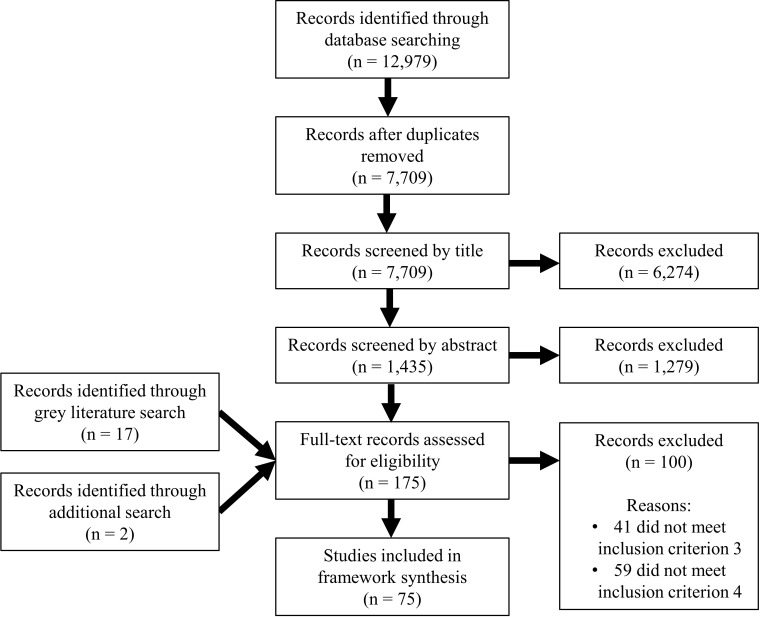
Introduction: Generating country-level political commitment will be critical to driving forward action throughout the United Nations Decade of Action on Nutrition (2016–2025). In this review of the empirical nutrition policy literature, we ask: what factors generate, sustain and constrain political commitment for nutrition, how and under what circumstances? Our aim is to inform strategic ‘commitment-building’ actions. Method: We adopted a framework synthesis method and realist review protocol. An initial framework was derived from relevant theory and then populated with empirical evidence to test and modify it. Five steps were undertaken: initial theoretical framework development; search for relevant empirical literature; study selection and quality appraisal; data extraction, analysis and synthesis and framework modification. Results: 75 studies were included. We identified 18 factors that drive commitment, organised into five categories: actors; institutions; political and societal contexts; knowledge, evidence and framing; and, capacities and resources. Irrespective of country-context, effective nutrition actor networks, strong leadership, civil society mobilisation, supportive political administrations, societal change and focusing events, cohesive and resonant framing, and robust data systems and available evidence were commitment drivers. Low-income and middle-income country studies also frequently reported international actors, empowered institutions, vertical coordination and capacities and resources. In upper-middle-income and high-income country studies, private sector interference frequently undermined commitment. Conclusion: Political commitment is not something that simply exists or emerges accidentally; it can be created and strengthened over time through strategic action. Successfully generating commitment will likely require a core set of actions with some context-dependent adaptations. Ultimately, it will necessitate strategic actions by cohesive, resourced and strongly led nutrition actor networks that are responsive to the multifactorial, multilevel and dynamic political systems in which they operate and attempt to influence. Accelerating the formation and effectiveness of such networks over the Nutrition Decade should be a core task for all actors involved.
Overview
The claims and statistics of this paper haven’t been checked yet.
Free: it reads the open-access text and checks the first 5 claims that cite a source we can check. Create a free account to check every claim.
Integrity signals
Registry
Cites
Statistics
Figures
Verification
Claims the paper makes
The claims and statistics of this paper haven’t been checked yet.
Free: it reads the open-access text and checks the first 5 claims that cite a source we can check. Create a free account to check every claim.
Claims other papers make about this one
Each is checked against this paper’s own text: does it say what the citing paper says it does?
The source backs part of the claim, not all of it — or backs it for a different population, condition or comparison.
In the citing paper
“Policy actions in many countries are informed by reductionist approaches, including nutrient-profiling models, to assess the healthiness of foods 198,199 .”
From Ultra‐processed foods and the nutrition transition: global, regional and national trends, food systems transformations and political economy drivers (2020) · cites this paper as [199]
Experimental — accuracy not yet measuredThe check wasn’t confident either way, so it gives no verdict — never disputed.
In the citing paper
“Foodbased dietary guidelines (FBDGs) adopted in most countries are a foundation for nutrition policy and guidance 199,204 .”
From Ultra‐processed foods and the nutrition transition: global, regional and national trends, food systems transformations and political economy drivers (2020) · cites this paper as [199]
Experimental — accuracy not yet measured
Self-check
Percentages, sums and reported differences re-computed from the paper’s own numbers.
The self-check needs the paper’s full text.
Citations
Cites
(1998) · Sage eBooks · Cited by 38,631
Basics of Qualitative Research (3rd ed.): Techniques and Procedures for Developing Grounded Theory
Corbin, J., & Strauss, A. (2008) · SAGE · doi:10.4135/9781452230153 · Cited by 12,136
(2005) · Cited by 9,479
Agendas, alternatives, and public policies
Kingdon, J. W. (1984) · Cited by 9,299
Qualitative research in health care: Analysing qualitative data
Pope, C. (2000) · BMJ · doi:10.1136/bmj.320.7227.114 · Cited by 8,131
Qualitative data analysis for applied policy research
(2002) · Analyzing Qualitative Data · doi:10.4324/9780203413081-14 · Cited by 4,964 · cited 1×
“Populating and modifying the framework The synthesised data corresponding to modified or new factors were populated into the thematic categories of the framework to generate the final version.(16) All authors reviewed iterations of the results and final tables.”
Qualitative data analysis for applied policy research
Ritchie, J., & Spencer, L. (2010) · Analyzing qualitative data · doi:10.4324/9780203413081_chapter_9 · Cited by 4,800
Realist review - a new method of systematic review designed for complex policy interventions
Pawson, R., Greenhalgh, T., Harvey, G., & Walshe, K. (2005) · Journal of Health Services Research & Policy · doi:10.1258/1355819054308530 · Cited by 3,190
Methods for the synthesis of qualitative research: a critical review
Barnett-Page, E., & Thomas, J. (2009) · BMC Medical Research Methodology · doi:10.1186/1471-2288-9-59 · Cited by 2,042
Computing inequality: have computers changed the labor market?
Autor, D. H., Katz, L. F., & Krueger, A. B. (1998) · The Quarterly Journal of Economics · doi:10.1162/003355398555874 · Cited by 1,830
Foreign direct investment as a catalyst for industrial development
Markusen, J. R., & Venables, A. J. (1999) · European Economic Review · doi:10.1016/s0014-2921(98)00048-8 · Cited by 1,563
The Eclectic (OLI) Paradigm of International Production: Past, Present and Future
Dunning, J. H. (2001) · International Journal of the Economics of Business · doi:10.1080/13571510110051441 · Cited by 1,560
Goos, M., Manning, A., & Salomons, A. (2009) · American Economic Review · doi:10.1257/aer.99.2.58 · Cited by 1,375
RAMESES publication standards: realist syntheses
Wong, G., Greenhalgh, T., Westhorp, G., Buckingham, J., & Pawson, R. (2013) · BMC Medicine · doi:10.1186/1741-7015-11-21 · Cited by 1,374
Wright, D., & Meadows, D. H. (2012) · Routledge eBooks · doi:10.4324/9781849773386 · Cited by 1,372
What’s in a mechanism? Development of a key concept in realist evaluation
Dalkin, S. M., Greenhalgh, J., Jones, D., Cunningham, B., & Lhussier, M. (2015) · Implementation Science · doi:10.1186/s13012-015-0237-x · Cited by 896
International Food Policy Research Institute
(1996) · The American Journal of Economics and Sociology · doi:10.1111/j.1536-7150.1996.tb02648.x · Cited by 810
Palombo, C., Morizzo, C., Baluci, M., Lucini, D., Ricci, S., Biolo, G., Tortoli, P., & Kozakova, M. (2015) · BioMed Research International · doi:10.1155/2015/342565 · Cited by 750
Shiffman, J., & Smith, S. (2007) · The Lancet · doi:10.1016/s0140-6736(07)61579-7 · Cited by 706
Hayashi, C., Krasevec, J., Kumapley, R., Mehra, de Onís, M., Borghi, E., Blössner, M., Mf, U., Eb, P., & Serajuddin, U. (2017) · Cited by 687
The politics of reducing malnutrition: building commitment and accelerating progress
Gillespie, S., Haddad, L., Mannar, V., Menon, P., & Nisbett, N. (2013) · The Lancet · doi:10.1016/s0140-6736(13)60842-9 · Cited by 460 · cited 2×
“Furthermore, commitment is not something that simply exists or emerges accidentally; it can be created and strengthened over time through strategic action.(9) Many of the divers of political commitment are similar irrespective of country-context or nutrition issue, but with some notable exceptions.”
RAMESES publication standards: realist syntheses
Wong, G., Greenhalgh, T., Westhorp, G., Buckingham, J., & Pawson, R. (2013) · Journal of Advanced Nursing · doi:10.1111/jan.12095 · Cited by 385
Insulin-Like Growth Factor System in Cancer: Novel Targeted Therapies
Brahmkhatri, V. P., Prasanna, C., & Atreya, H. S. (2015) · BioMed Research International · doi:10.1155/2015/538019 · Cited by 279
Morris, S. S., Cogill, B., & Uauy, R. (2008) · The Lancet · doi:10.1016/s0140-6736(07)61695-x · Cited by 249
McGuire, S. (2015) · Advances in Nutrition · doi:10.3945/an.115.008599 · Cited by 226
Pelletier, D. L., Frongillo, E. A., Gervais, S., Hoey, L., Menon, P., Ngo, T., Stoltzfus, R. J., Ahmed, A. M. S., & Ahmed, T. (2012) · Health Policy and Planning · doi:10.1093/heapol/czr011 · Cited by 221 · cited 11×
“43 44 48 53 They included multilateral organisations (eg, World Health Organization, Unicef, World Bank), donor agencies (eg, United States Agency for International Development, United Kingdom's Department for International Development) and global nutrition initiatives (eg, Scaling Up Nutrition).(15) 39 42–44 53 55 57…”
InfluentialReflexive governance for food security: The example of school feeding in Brazil
Sonnino, R., Torres, C. L., & Schneider, S. (2014) · Journal of Rural Studies · doi:10.1016/j.jrurstud.2014.06.003 · Cited by 155
Huicho, L., Segura, E. R., Huayanay-Espinoza, C. A., de Guzman, J. N., Restrepo-Méndez, M. C., Tam, Y., Barros, A. J. D., & Victora, C. G. (2016) · The Lancet Global Health · doi:10.1016/s2214-109x(16)00085-1 · Cited by 134
Why Worry About the Politics of Childhood Undernutrition?
Nisbett, N., Gillespie, S., Haddad, L., & Harris, J. (2014) · World Development · doi:10.1016/j.worlddev.2014.06.018 · Cited by 132 · cited 1×
“Important reviews of this literature exist, focusing on specific nutrition issues or country-contexts.(8) 9 11 12 With an aim of informing commitment-building actions over the Nutrition Decade, we extend this earlier work by reviewing and synthesising the literature relevant to all forms of malnutrition and country-co…”
The Nutrition Policy Process: The Role of Strategic Capacity in Advancing National Nutrition Agendas
Pelletier, D. L., Menon, P., Ngo, T., Frongillo, E. A., & Frongillo, D. (2011) · Food and Nutrition Bulletin · doi:10.1177/15648265110322s203 · Cited by 119 · cited 6×
“economic downturn and other crises when institutionalising food distribution responses that excluded nutrition.(31)”
InfluentialBaker, P., Gill, T., Friel, S., Carey, G., & Kay, A. (2017) · Social Science & Medicine · doi:10.1016/j.socscimed.2017.01.047 · Cited by 114 · cited 7×
“90 In some HIC studies, commitment for food regulations targeting obesity prevention was undermined by the election of, or congressional control by, more right-wing (eg, liberal-conservative) governments.(28) 35 36 58 Long-term changes in societal conditions and shortterm focusing events (factor 11) presented opportun…”
InfluentialSelf-citationTrade and food policy: Case studies from three Pacific Island countries
Thow, A. M., Swinburn, B., Colagiuri, S., Diligolevu, M., Quested, C., Vivili, P., & Leeder, S. (2010) · Food Policy · doi:10.1016/j.foodpol.2010.06.005 · Cited by 112
Self-citationAnalysis of the corporate political activity of major food industry actors in Fiji
Mialon, M., Swinburn, B., Wate, J., Tukana, I., & Sacks, G. (2016) · Globalization and Health · doi:10.1186/s12992-016-0158-8 · Cited by 111
Ulijaszek, S. J., & McLennan, A. K. (2016) · Obesity Reviews · doi:10.1111/obr.12386 · Cited by 106
The politics of success in the fight against malnutrition in Peru
Acosta, A. M., & Haddad, L. (2013) · Food Policy · doi:10.1016/j.foodpol.2013.10.009 · Cited by 102
Strengthening Country Commitment to Human Development: Lessons from Nutrition
Heaver, R. (2005) · World Bank, Washington, DC eBooks · doi:10.1596/0-8213-6037-x · Cited by 100
Aksnes, B., Sattamini, I. F., Leite, M. A., & Garduño‐Diaz, S. D. (2015) · World Nutrition · Cited by 99
Henderson, J., Coveney, J., Ward, P., & Taylor, A. W. (2009) · Journal of End-to-End-testing · doi:10.1016/j.socscimed.2009.08.025 · Cited by 91
Government regulation to promote healthy food environments – a view from inside state governments
Shill, J., Mavoa, H., Allender, S., Lawrence, M., Sacks, G., Peeters, A., Crammond, B., & Swinburn, B. (2012) · Obesity Reviews · doi:10.1111/j.1467-789x.2011.00937.x · Cited by 88 · cited 1×
“government including regulatory impact assessments (ie, assessing new regulatory proposals for costs to business) with stringent evidential requirements.(80) 81”
FOX, A. M., Balarajan, Y., Cheng, C., & Reich, M. R. (2014) · Health Policy and Planning · doi:10.1093/heapol/czu035 · Cited by 87
Clarke, B., Swinburn, B. A., & Sacks, G. (2016) · BMC Public Health · doi:10.1186/s12889-016-3639-z · Cited by 87
Preventing Childhood Obesity through State Policy: Qualitative Assessment of Enablers and Barriers
Dodson, E. A., Fleming, C., Boehmer, T. K., Haire-Joshu, D. L., Luke, D. A., & Brownson, R. C. (2009) · Journal of Public Health Policy · doi:10.1057/jphp.2008.57 · Cited by 85
Kennedy, E., Tessema, M., Hailu, T., Zerfu, D., Belay, A., Ayana, G., Kuche, D., Moges, T., Assefa, T., Samuel, A., et al. (2015) · Food and Nutrition Bulletin · doi:10.1177/0379572115611768 · Cited by 74
Public Health Professionals as Policy Entrepreneurs: Arkansas's Childhood Obesity Policy Experience
Craig, R. L., Felix, H. C., Walker, J. F., & Phillips, M. M. (2010) · American Journal of Public Health · doi:10.2105/ajph.2009.183939 · Cited by 74
Jou, J., Niederdeppe, J., Barry, C. L., & Gollust, S. E. (2014) · American Journal of Public Health · doi:10.2105/ajph.2013.301679 · Cited by 73
Gillespie, S., van den Bold, M., Hodge, J., & Herforth, A. (2015) · Food Security · doi:10.1007/s12571-015-0449-6 · Cited by 71 · cited 3×
“39 42–44 53 55 57 61 63 67 In some cases, policy and programming was almost entirely donordriven.(61) 63 72 The role of international actors was weakened when their actions were misaligned with government priorities,(24) 25 31 52 when the absence of coherent government policies, coordinating structures and accountabil…”
InfluentialAllender, S. E., Gleeson, E., Crammond, B. R., Swinburn, B., Lawrence, M. A., Peeters, A., Loff, B., & Sacks, G. (2009) · Australia and New Zealand Health Policy · doi:10.1071/hp090620 · Cited by 68
Acosta, A. M., & Fanzo, J. (2012) · Cited by 63
Nisbett, N., Wach, E., Haddad, L., & Arifeen, S. E. (2015) · Food Policy · doi:10.1016/j.foodpol.2015.04.001 · Cited by 62 · cited 3×
“27 29–32 45 46 52 53 62 66–69 Their activities included advocacy, awareness-raising and coalition-building, acting as an accountability mechanism (eg, by monitoring and reporting on government and other stakeholder activities), giving voice to the politically marginalised, delivering on-the-ground services and informi…”
InfluentialLapping, K., Frongillo, E. A., Studdert, L. J., Menon, P., Coates, J., & Webb, P. (2011) · Health Policy and Planning · doi:10.1093/heapol/czr013 · Cited by 58
Hodge, J., Herforth, A., Gillespie, S., Beyero, M., Wagah, M., & Semakula, R. (2015) · Food and Nutrition Bulletin · doi:10.1177/0379572115611289 · Cited by 58
Balarajan, Y., & Reich, M. R. (2016) · Food Policy · doi:10.1016/j.foodpol.2016.05.001 · Cited by 57 · cited 6×
“or indirectly by association with closely related issues.(27) 31 ↑ Famines, natural disasters, political upheavals and economic crises(15) 31 39 55 63 64 (91); ↑ highprofile and/or consistent media coverage(12) 27 36 41 55 63 68 69 73 75 (84); ↑↓ political developments”
InfluentialThe Role of Partnerships in U.S. Food Policy Council Policy Activities
Clayton, M. L., Frattaroli, S., Palmer, A., & Pollack, K. M. (2015) · PLoS ONE · doi:10.1371/journal.pone.0122870 · Cited by 56
Moise, N., Cifuentes, E., Orozco, E., & Willett, W. C. (2011) · Journal of Public Health Policy · doi:10.1057/jphp.2011.39 · Cited by 53
How much priority is given to nutrition and health in the EU Common Agricultural Policy?
Walls, H., Cornelsen, L., Lock, K., & Smith, R. (2016) · Food Policy · doi:10.1016/j.foodpol.2015.12.008 · Cited by 53 · cited 1×
“97 Similar themes have been found in global and supranational studies.(88) 98 We have, however, extended this work in two notable ways.”
Self-citationHoey, L., & Pelletier, D. L. (2011) · Food and Nutrition Bulletin · doi:10.1177/15648265110322s204 · Cited by 53 · cited 9×
“30 44 50 52 59–61 67 69 86–88 Coordinating agencies were typically located within suprasectoral agencies (eg, office of the prime minister) or line agencies (eg, ministry of health, agriculture),(27) 43 44 53 and embedded within wider multisector/ multilevel institutional systems with delineated roles and responsibili…”
Influentialvan den Bold, M., Kohli, N., Gillespie, S., Zuberi, S., Rajeesh, S., & Chakraborty, B. (2015) · Food and Nutrition Bulletin · doi:10.1177/0379572115587494 · Cited by 52
Using political science to progress public health nutrition: a systematic review
Cullerton, K. B., Donnet, T., Lee, A., & Gallegos, D. (2015) · Public Health Nutrition · doi:10.1017/s1368980015002712 · Cited by 50 · cited 1×
“Many of the identified factors have been described previously in the literature on nutrition’s political economy’ The results affirm the findings of reviews on undernutrition in low-income and middle-income countries,(8) 9 12 and on nutrition and obesity in middle-income and high-income countries.(11) 97 Similar theme…”
Hawkes, C., Brazil, B. G., Castro, I. R. R. D., & Jaime, P. C. (2016) · Revista de Saúde Pública · doi:10.1590/s1518-8787.2016050006506 · Cited by 48 · cited 4×
“50 77 83 95 ‘Hooking’ nutrition onto high priority non-nutrition issues (ie, frame expansion) was also found to successfully enable ‘nutrition success without nutrition commitment’ by sensitising broader policy agendas (eg, national development agendas, poverty reduction initiatives, school feeding programmes) to nutr…”
InfluentialSelf-citationMosier, S. L. (2013) · International Review of Public Administration · doi:10.1080/12294659.2013.10805242 · Cited by 47
Yeatman, H. R. (2003) · Critical Public Health · doi:10.1080/0958159031000097625 · Cited by 47
Stakeholder perspectives on national policy for regulating the school food environment in Mexico
Monterrosa, E. C., Campirano, F., Tolentino‐Mayo, L., Frongillo, E. A., Hernández‐Cordero, S., Kaufer‐Horwitz, M., & Rivera, J. Á. (2013) · Health Policy and Planning · doi:10.1093/heapol/czt094 · Cited by 47
Sodjinou, R., Bosu, W. K., Fanou, N., Déart, L., Kupka, R., Tchibindat, F., & Baker, S. K. (2014) · Global Health Action · doi:10.3402/gha.v7.24763 · Cited by 45
Political Economy Analysis for Food and Nutrition Security
Reich, M. R., & Balarajan, Y. (2012) · World Bank, Washington, DC eBooks · doi:10.1596/13569 · Cited by 42
Haddad, L., Nisbett, N., Barnett, I., & Valli, E. (2014) · CGSPace A Repository of Agricultural Research Outputs (Consultative Group for International Agricultural Research) · Cited by 41
An Australian childhood obesity summit: the role of data and evidence in 'public' policy making
Nathan, S., Zwi, A., Develin, E., & Grove, N. (2005) · Australia and New Zealand Health Policy · doi:10.1186/1743-8462-2-17 · Cited by 40
Ferrer, C. P., Lock, K., & Rivera, J. Á. (2009) · Health Policy and Planning · doi:10.1093/heapol/czp040 · Cited by 40
Lintelo, D. T., & Lakshman, R. W. D. (2015) · World Development · doi:10.1016/j.worlddev.2015.07.013 · Cited by 38
Menu-Labeling Policy in King County, Washington
Johnson, D. B., Payne, E. C., McNeese, M. A., & Allen, D. (2012) · American Journal of Preventive Medicine · doi:10.1016/j.amepre.2012.05.014 · Cited by 38
Crammond, B., Van, C., Allender, S., Peeters, A., Lawrence, M., Sacks, G., Mavoa, H., Swinburn, B. A., & Loff, B. (2013) · Obesity Reviews · doi:10.1111/obr.12004 · Cited by 37
Acosta, A. M., & Fanzo, J. (2012) · Cited by 34
Levitt, E., Pelletier, D. L., & Pell, A. N. (2008) · Food Policy · doi:10.1016/j.foodpol.2008.07.004 · Cited by 31
Colón‐Ramos, U., Lindsay, A. C., Monge‐Rojas, R., Greaney, M. L., Campos, H., & Peterson, K. E. (2007) · Health Policy and Planning · doi:10.1093/heapol/czm030 · Cited by 31 · cited 1×
“country profiles, short briefs, nutrition maps)(53) 69 and when authoritative bodies were commissioned to gather, integrate and report evidence.(33) 47 71 The perception that evidence was lacking, inconsistent or unconvincing was frequently reported.”
The Formulation of Consensus on Nutrition Policy: Policy Actors' Perspectives on Good Process
Hill, R. D., González, W., & Pelletier, D. L. (2011) · Food and Nutrition Bulletin · doi:10.1177/15648265110322s206 · Cited by 29
Young, I., Gropp, K., Pintar, K. D. M., Waddell, L. A., Marshall, B. J., Thomas, K. M., McEwen, S. A., & Rajić, A. (2014) · Zoonoses and Public Health · doi:10.1111/zph.12108 · Cited by 27
Carrots and Sticks : The Political Economy of Nutrition Policy Reforms
Natalicchio, M., Garrett, J., Mulder-Sibanda, M., Ndegwa, S., & Voorbraak, D. (2009) · World Bank, Washington, DC eBooks · doi:10.1596/13746 · Cited by 26 · cited 1×
“This was most evident in cases where competent nutrition professionals and administrative staff were lacking, especially at the local level,(24) 40 42 43 46 52 61 63 67 70 72 86 91 93 when there was a high turnover of ministers or administrative staff and/or disruptive administrative restructuring,(12) 24 42 44 61 69…”
Scaling up nutrition in fragile and conflict-affected states: The pivotal role of governance
Taylor, S. A. J., Ferrer, C. P., Griffiths, A., & Brunner, E. J. (2014) · Social Science & Medicine · doi:10.1016/j.socscimed.2014.12.016 · Cited by 26
Benson, T. (2007) · Food and Nutrition Bulletin · doi:10.1177/15648265070282s211 · Cited by 25
Hawkes, C., Ahern, A. L., & Jebb, S. A. (2014) · BMC Public Health · doi:10.1186/1471-2458-14-441 · Cited by 24
Self-citationPerspectives of Fijian Policymakers on the Obesity Prevention Policy Landscape
Hendriks, A.-M., Delai, M. Y., Thow, A. M., Gubbels, J. S., de Vries, N. K., Kremers, S., & Jansen, M. W. J. (2015) · BioMed Research International · doi:10.1155/2015/926159 · Cited by 23 · cited 1×
“35 36 73–80 This was enhanced in the context of a neoliberal ideology(28) 35 73 81–83 including a shift towards hybrid (ie, public-private) governance arrangements that expanded private-interest influence in public policy,(28) 35 73 79 82 84 the food industry’s ‘productivist power’ as suppliers of jobs and tax revenue…”
Self-citationHoey, L., & Pelletier, D. L. (2011) · Food and Nutrition Bulletin · doi:10.1177/15648265110322s205 · Cited by 23 · cited 1×
“25 29–31 40 43 46 55 59 69 71 This was more likely when NANs had established structures (eg, governance bodies, conferences, workshops, informal networking events) for sharing information, recruiting and socialising new members, building consensus and managing conflicts,(25) 29 37 43 48–50 52 55 71 leadership,(37) 44…”
Nutrition policy in whose interests? A New Zealand case study
Jenkin, G. L. S., Signal, L. N., & Thomson, G. (2011) · Public Health Nutrition · doi:10.1017/s1368980011003028 · Cited by 21
Nutrition Policy and Programs in Ghana
Ghartey, A. B. (2010) · World Bank, Washington, DC eBooks · doi:10.1596/27590 · Cited by 20
Chung, A., Shill, J., Swinburn, B. A., Mavoa, H., Lawrence, M. A., Loff, B., Crammond, B., Sacks, G., Allender, S. E., & Peeters, A. (2012) · BMC Public Health · doi:10.1186/1471-2458-12-1123 · Cited by 20
Hajeebhoy, N., Rigsby, A., McColl, A., Sanghvi, T. G., Abrha, T. H., Godana, A., Roy, S., Phan, L. T. H., Vu, H. T. T., Sather, M., et al. (2013) · Food and Nutrition Bulletin · doi:10.1177/15648265130343s205 · Cited by 19
It’s All in the Lens: Differences in Views on Obesity Prevention between Advocates and Policy Makers
Jones, E., Eyler, A. A., Nguyen, L., Kong, J., Brownson, R. C., & Bailey, J. H. (2012) · Childhood Obesity · doi:10.1089/chi.2011.0038 · Cited by 17
Participation, political economy and protection: food aid governance in Darfur, Sudan
Young, H., & Maxwell, D. (2013) · Disasters · doi:10.1111/disa.12023 · Cited by 16
Policies Without Politics: Analysing Nutrition Governance in India
Mohmand, S. K. (2012) · Cited by 15
Levitt, E., Pelletier, D. L., Dufour, C., & Pell, A. N. (2011) · Food Security · doi:10.1007/s12571-011-0135-2 · Cited by 15
Zaidi, S. A., Mohmand, S. K., Hayat, N., Acosta, A. M., & Bhutta, Z. A. (2013) · IDS Bulletin · doi:10.1111/1759-5436.12035 · Cited by 15 · cited 1×
“63 72 The role of international actors was weakened when their actions were misaligned with government priorities,(24) 25 31 52 when the absence of coherent government policies, coordinating structures and accountability mechanisms encouraged donors to ‘go it alone’(38) 70 and when recipient governments became overdep…”
Backward- and forward-looking responsibility for obesity: policies from WHO, the EU and England
Vallgårda, S., Nielsen, M. E. J., Hartlev, M., & Sandøe, P. (2015) · European Journal of Public Health · doi:10.1093/eurpub/ckv076 · Cited by 15
Food politics: perspectives on food security in Central Africa
Sneyd, A., Legwegoh, A. F., & Sneyd, L. Q. (2015) · Journal of Contemporary African Studies · doi:10.1080/02589001.2015.1021212 · Cited by 14
Wegener, J., Hanning, R. M., & Raine, K. D. (2012) · Journal of Hunger & Environmental Nutrition · doi:10.1080/19320248.2012.707115 · Cited by 14
Analysis of Interest Group Influence on Federal School Meals Regulations 1992 to 1996
Hobbs, S. H., Ricketts, T. C., Dodds, J. M., & Milio, N. (2004) · Journal of Nutrition Education and Behavior · doi:10.1016/s1499-4046(06)60139-5 · Cited by 14
Creating political priority for micronutrient deficiencies: a qualitative case study from Senegal
Balarajan, Y. (2014) · BMJ Open · doi:10.1136/bmjopen-2014-004784 · Cited by 14 · cited 1×
“reported in many studies,(26) 27 31 33 37 38 40 60 61 63 83 84 86 92 often resulting from the limited capacities, resources and incentives of nutrition actors to collect, analyse and disseminate data.(40) 42 52 61 69 72 93 Evidence demonstrating the causes and consequences of malnutrition and the efficacy and cost-eff…”
Understanding the process of establishing a food and nutrition policy: the case of Slovenia
Kugelberg, S., Jönsson, K., & Yngve, A. (2012) · Health Policy · doi:10.1016/j.healthpol.2012.06.005 · Cited by 13
Case Study on Nutrition Labelling Policy-making in Canada
Vogel, E., Burt, S. D., & Church, J. (2010) · Canadian Journal of Dietetic Practice and Research · doi:10.3148/71.2.2010.85 · Cited by 12
From Efficacy Research to Large-Scale Impact on Undernutrition: The Role of Organizational Cultures
Pelletier, D. L., & Pelto, G. H. (2013) · Advances in Nutrition · doi:10.3945/an.113.004622 · Cited by 11 · cited 5×
“Their effectiveness was enhanced in the context of high cohesion among members,(29) 30 32 40–47 strong leadership and when possessing strategic and organisational capacities.(25) 29 37 43 48–50 Conflict and fragmentation within NANs was, however, frequently reported resulting from many topics of disagreement.”
InfluentialConflict and Compromise in Public Health Policy
Dinour, L. M. (2015) · Health Education & Behavior · doi:10.1177/1090198114568303 · Cited by 10
How do Vested Interests Maintain Outdated Policy? The Case of Food Marketing to New Zealand Children
Gauld, R. D. C. (2011) · The Open Health Services and Policy Journal · doi:10.2174/1874924001104010030 · Cited by 8
Jeruszka-Bielak, M., Sicińska, E., de Wit, L. S., Ruprich, J., Řehůřková, I., Brown, K. A., Timotijević, L., Sonne, A., Haugaard, P., Guzzon, A., et al. (2015) · Polish Journal of Food and Nutrition Sciences · doi:10.1515/pjfns-2015-0039 · Cited by 8
Report of the procedure of voluntary interruption of pregnancy at a university hospital in Uruguay
Bentancor, A., Hernández, A. L., Godoy, Y., & Dapueto, J. J. (2016) · Revista de Saúde Pública · doi:10.1590/s1518-8787.2016050006001 · Cited by 3
Allender, S., Gleeson, E., Crammond, B., Sacks, G., Lawrence, M., Peeters, A., Loff, B., & Swinburn, B. (2009) · Australia and New Zealand Health Policy · doi:10.1186/1743-8462-6-20
Research works printed but not linked: 3
- Food and Agricultural Organization of the United Nations, World Health organization. Second international conference on nutrition, conference outcome document: framework for action. Rome, Italy: Food and Agricultural Organization of the United Nations, World Health organization, 2014.
- World Health Organization. Global nutrition policy review: what does it take to scale up nutrition action? Geneva, Switzerland 2013.
- Meerman J Making nutrition a national priority - review of policy process in developing countries and case study on Malawi. Rome, Italy: Food and Agriculture Organization of the United Nations, 2008.
Cited by
The Global Syndemic of Obesity, Undernutrition, and Climate Change: The Lancet Commission report
Swinburn, B. A., Kraak, V. I., Allender, S., Atkins, V. J., Baker, P. I., Bogard, J. R., Brinsden, H., Calvillo, A., De Schutter, O., Devarajan, R., et al. (2019) · The Lancet · doi:10.1016/s0140-6736(18)32822-8 · Cited by 3,081
Self-citationBaker, P., Machado, P., Santos, T., Sievert, K., Backholer, K., Hadjikakou, M., Russell, C., Huse, O., Bell, C., Scrinis, G., et al. (2020) · Obesity Reviews · doi:10.1111/obr.13126 · Cited by 1,194
“Weak worldwide responses also reflect the power of the food industry to undermine political commitment for action.(199,200) The food industry, including predominantly transnational food corpora-”
BackgroundInfluentialSelf-citationA future for the world's children? A WHO–UNICEF–Lancet Commission
Clark, H., Coll-Seck, A. M., Banerjee, A., Peterson, S., Dalglish, S. L., Ameratunga, S., Balabanova, D., Bhan, M. K., Bhutta, Z. A., Borrazzo, J., et al. (2020) · The Lancet · doi:10.1016/s0140-6736(19)32540-1 · Cited by 1,105
Turner, C., Aggarwal, A., Walls, H., Herforth, A., Drewnowski, A., Coates, J., Kalamatianou, S., & Kadiyala, S. (2018) · Global Food Security · doi:10.1016/j.gfs.2018.08.003 · Cited by 626
“Political, economic and socio-cultural factors act as macro-level influences on the food environment and the wider food system (Baker et al., 2018; Swinburn et al., 2013).”
BackgroundSelf-citationDent, E., Wright, O. R. L., Woo, J., & Hoogendijk, E. O. (2023) · The Lancet · doi:10.1016/s0140-6736(22)02612-5 · Cited by 521
Metadata
- Authors
- Baker, P., Hawkes, C., Wingrove, K., Demaio, A. R., Parkhurst, J., Thow, A. M., & Walls, H.
- Affiliations
- Deakin University (AU)
- City, University of London (GB)
- London School of Economics and Political Science (GB)
- The University of Sydney (AU)
- London School of Hygiene & Tropical Medicine (GB)
- Corresponding author
- Baker, Phillip
- ORCID
- Venue
- BMJ Global Health
- Publisher
- BMJ
- Published
- 2018-02
- Volume
- 3
- Issue
- 1
- Pages
- e000485
- ISSN
- 2059-7908 (ISSN-L)
- PMC
- PMC5841521
- OpenAlex
- W2783310319
- Cited by
- 204
- References
- 101
- Citations by year
- 2026: 11 · 2025: 22 · 2024: 26 · 2023: 26 · 2022: 20 · 2021: 45 · 2020: 26 · 2019: 22 · 2018: 5
- FWCI
- 40.50
- Type
- journal article
- Language
- en
- Open access
- gold
- doi.org
- Licence
- cc-by-nc
- Locations
- BMJ Global Health (publishedVersion, cc-by-nc)
- PubMed Central (publishedVersion, cc-by-nc)
- PubMed (publishedVersion)
- LSHTM Research Online (London School of Hygiene and Tropical Medicine) (acceptedVersion)
- London School of Economics and Political Science Research Online (London School of Economics and Political Science) (acceptedVersion)
- City Research Online (City University London) (acceptedVersion)
- London School of Economics and Political Science Theses Online (London School of Economics and Political Science) (submittedVersion)
- RePEc: Research Papers in Economics (submittedVersion)
- Own your potential (DEAKIN) (submittedVersion)
- Figshare (submittedVersion, cc-by-nc)
- Funders
- World Health Organization
- Topics
- Health Sciences › Medicine › Public Health, Environmental and Occupational Health › Global Public Health Policies and Epidemiology
- Life Sciences › Agricultural and Biological Sciences › Food Science › Nutrition, Health, and Society Studies
- Health Sciences › Medicine › Pediatrics, Perinatology and Child Health › Public Health and Nutrition
- Keywords
- political commitment, nutrition policy, actor networks, civil society mobilization, leadership, framing, institutional capacity, vertical coordination, low- and middle-income countries, high-income countries
About these checks
Registry, retraction, Cites and statistics results are computed, not judged, with one exception: a printed reference that no index lists is read once by a model before it counts as a citation error. Claims are extracted by a model and kept only when their quote appears verbatim in the text; each cited source is then checked, with a model’s help, for whether it says what the claim relies on. Those verdicts can be wrong — read the claim’s quote and the cited source before relying on one.
Statistics and arithmetic are recomputed, not judged.
Confidence bands are shown only for fields calibrated on our annotated test set. None is calibrated yet, so no band is shown.
What counts as a claim ›How we measure confidence ›How we check this ›
Are you an author, or do you see a problem with this page? Request a review
Data sources
Bibliographic data: Semantic Scholar, OpenAlex, Crossref.
Contains information from the Semantic Scholar Academic Graph Datasets, made available under the ODC Attribution License (ODC-BY 1.0).
Semantic Scholar’s data is described in: Kinney, R., et al. (2023). The Semantic Scholar Open Data Platform. arXiv:2301.10140.
