

What drives political commitment for nutrition? A review and framework synthesis to inform the United Nations Decade of Action on Nutrition
Open accessThe DOI matches its Crossref record; 104 of the 105 references it cites were found in a registry or an index, and 1 are not checked yet.
Abstract
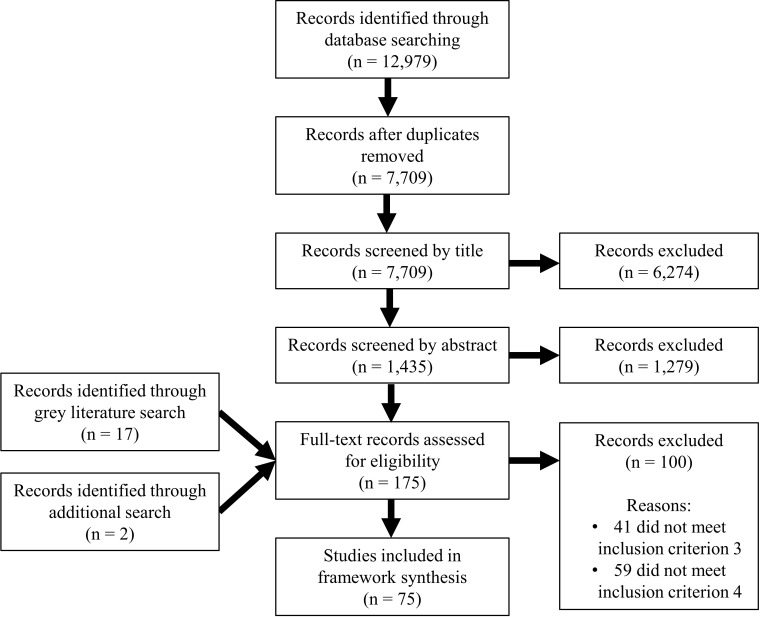
Introduction: Generating country-level political commitment will be critical to driving forward action throughout the United Nations Decade of Action on Nutrition (2016–2025). In this review of the empirical nutrition policy literature, we ask: what factors generate, sustain and constrain political commitment for nutrition, how and under what circumstances? Our aim is to inform strategic ‘commitment-building’ actions. Method: We adopted a framework synthesis method and realist review protocol. An initial framework was derived from relevant theory and then populated with empirical evidence to test and modify it. Five steps were undertaken: initial theoretical framework development; search for relevant empirical literature; study selection and quality appraisal; data extraction, analysis and synthesis and framework modification. Results: 75 studies were included. We identified 18 factors that drive commitment, organised into five categories: actors; institutions; political and societal contexts; knowledge, evidence and framing; and, capacities and resources. Irrespective of country-context, effective nutrition actor networks, strong leadership, civil society mobilisation, supportive political administrations, societal change and focusing events, cohesive and resonant framing, and robust data systems and available evidence were commitment drivers. Low-income and middle-income country studies also frequently reported international actors, empowered institutions, vertical coordination and capacities and resources. In upper-middle-income and high-income country studies, private sector interference frequently undermined commitment. Conclusion: Political commitment is not something that simply exists or emerges accidentally; it can be created and strengthened over time through strategic action. Successfully generating commitment will likely require a core set of actions with some context-dependent adaptations. Ultimately, it will necessitate strategic actions by cohesive, resourced and strongly led nutrition actor networks that are responsive to the multifactorial, multilevel and dynamic political systems in which they operate and attempt to influence. Accelerating the formation and effectiveness of such networks over the Nutrition Decade should be a core task for all actors involved.
Overview
The claims and statistics of this paper haven’t been checked yet.
Free: it reads the open-access text and checks the first 5 claims that cite a source we can check. Create a free account to check every claim.
Integrity signals
Registry
Cites
Statistics
Figures
Verification
Claims the paper makes
The claims and statistics of this paper haven’t been checked yet.
Free: it reads the open-access text and checks the first 5 claims that cite a source we can check. Create a free account to check every claim.
Claims other papers make about this one
Each is checked against this paper’s own text: does it say what the citing paper says it does?
The source backs part of the claim, not all of it — or backs it for a different population, condition or comparison.
In the citing paper
“Policy actions in many countries are informed by reductionist approaches, including nutrient-profiling models, to assess the healthiness of foods 198,199 .”
From Ultra‐processed foods and the nutrition transition: global, regional and national trends, food systems transformations and political economy drivers (2020) · cites this paper as [199]
Experimental — accuracy not yet measuredThe check wasn’t confident either way, so it gives no verdict — never disputed.
In the citing paper
“Foodbased dietary guidelines (FBDGs) adopted in most countries are a foundation for nutrition policy and guidance 199,204 .”
From Ultra‐processed foods and the nutrition transition: global, regional and national trends, food systems transformations and political economy drivers (2020) · cites this paper as [199]
Experimental — accuracy not yet measured
Self-check
Percentages, sums and reported differences re-computed from the paper’s own numbers.
The self-check needs the paper’s full text.
Citations
Cites
(1998) · Sage eBooks · Cited by 38,631
Basics of Qualitative Research (3rd ed.): Techniques and Procedures for Developing Grounded Theory
Corbin, J., & Strauss, A. (2008) · SAGE · doi:10.4135/9781452230153 · Cited by 12,136
(2005) · Cited by 9,479
Agendas, alternatives, and public policies
Kingdon, J. W. (1984) · Cited by 9,299
Qualitative research in health care: Analysing qualitative data
Pope, C. (2000) · BMJ · doi:10.1136/bmj.320.7227.114 · Cited by 8,131
Qualitative data analysis for applied policy research
(2002) · Analyzing Qualitative Data · doi:10.4324/9780203413081-14 · Cited by 4,964 · cited 1×
“Populating and modifying the framework The synthesised data corresponding to modified or new factors were populated into the thematic categories of the framework to generate the final version.(16) All authors reviewed iterations of the results and final tables.”
Qualitative data analysis for applied policy research
Ritchie, J., & Spencer, L. (2010) · Analyzing qualitative data · doi:10.4324/9780203413081_chapter_9 · Cited by 4,800
Realist review - a new method of systematic review designed for complex policy interventions
Pawson, R., Greenhalgh, T., Harvey, G., & Walshe, K. (2005) · Journal of Health Services Research & Policy · doi:10.1258/1355819054308530 · Cited by 3,190
Methods for the synthesis of qualitative research: a critical review
Barnett-Page, E., & Thomas, J. (2009) · BMC Medical Research Methodology · doi:10.1186/1471-2288-9-59 · Cited by 2,042
Research works printed but not linked: 3
- Food and Agricultural Organization of the United Nations, World Health organization. Second international conference on nutrition, conference outcome document: framework for action. Rome, Italy: Food and Agricultural Organization of the United Nations, World Health organization, 2014.
- World Health Organization. Global nutrition policy review: what does it take to scale up nutrition action? Geneva, Switzerland 2013.
- Meerman J Making nutrition a national priority - review of policy process in developing countries and case study on Malawi. Rome, Italy: Food and Agriculture Organization of the United Nations, 2008.
Cited by
The Global Syndemic of Obesity, Undernutrition, and Climate Change: The Lancet Commission report
Swinburn, B. A., Kraak, V. I., Allender, S., Atkins, V. J., Baker, P. I., Bogard, J. R., Brinsden, H., Calvillo, A., De Schutter, O., Devarajan, R., et al. (2019) · The Lancet · doi:10.1016/s0140-6736(18)32822-8 · Cited by 3,081
Self-citationBaker, P., Machado, P., Santos, T., Sievert, K., Backholer, K., Hadjikakou, M., Russell, C., Huse, O., Bell, C., Scrinis, G., et al. (2020) · Obesity Reviews · doi:10.1111/obr.13126 · Cited by 1,194
“Weak worldwide responses also reflect the power of the food industry to undermine political commitment for action.(199,200) The food industry, including predominantly transnational food corpora-”
BackgroundInfluentialSelf-citationA future for the world's children? A WHO–UNICEF–Lancet Commission
Clark, H., Coll-Seck, A. M., Banerjee, A., Peterson, S., Dalglish, S. L., Ameratunga, S., Balabanova, D., Bhan, M. K., Bhutta, Z. A., Borrazzo, J., et al. (2020) · The Lancet · doi:10.1016/s0140-6736(19)32540-1 · Cited by 1,105
Turner, C., Aggarwal, A., Walls, H., Herforth, A., Drewnowski, A., Coates, J., Kalamatianou, S., & Kadiyala, S. (2018) · Global Food Security · doi:10.1016/j.gfs.2018.08.003 · Cited by 626
“Political, economic and socio-cultural factors act as macro-level influences on the food environment and the wider food system (Baker et al., 2018; Swinburn et al., 2013).”
BackgroundSelf-citationDent, E., Wright, O. R. L., Woo, J., & Hoogendijk, E. O. (2023) · The Lancet · doi:10.1016/s0140-6736(22)02612-5 · Cited by 521
The EAT–Lancet Commission on healthy, sustainable, and just food systems
Rockström, J., Thilsted, S. H., Willett, W. C., Gordon, L. J., Herrero, M., Hicks, C. C., Mason-D'Croz, D., Rao, N., Springmann, M., Wright, E. C., et al. (2025) · The Lancet · doi:10.1016/s0140-6736(25)01201-2 · Cited by 475
Food Insecurity and Hunger in Rich Countries—It Is Time for Action against Inequality
Pollard, C. M., & Booth, S. (2019) · International Journal of Environmental Research and Public Health · doi:10.3390/ijerph16101804 · Cited by 278
“’s (2018) review of factors that generated political commitment for nutrition action identified the following important drivers, irrespective of country: effective nutrition actor networks; strong leadership; civil society mobilisation; supportive political administrations; societal change and focusing events; cohesiv…”
BackgroundVillani, L., Pastorino, R., Molinari, E., Anelli, F., Ricciardi, W., Graffigna, G., & Boccia, S. (2021) · Globalization and Health · doi:10.1186/s12992-021-00680-w · Cited by 245
Baker, P., Russ, K., Kang, M., Santos, T. M., Neves, P. A. R., Smith, J., Kingston, G., Mialon, M., Lawrence, M., Wood, B., et al. (2021) · Globalization and Health · doi:10.1186/s12992-021-00708-1 · Cited by 135
“Industry-driven over-diagnosis, the invention of new feeding ‘conditions’, and the expanded consumption of specialised milks that results from this, is consistent with a strategy of ‘disease-mongering’, intended to widen the ‘boundaries of illness and grow the markets for those who sell and deliver treatments’ [190].”
ResultSelf-citationFood security, food safety & healthy nutrition: are they compatible?
Walls, H., Baker, P., Chirwa, E. W., & Hawkins, B. R. (2019) · Global Food Security · doi:10.1016/j.gfs.2019.05.005 · Cited by 181
Self-citationAssociation of low birth weight with undernutrition in preschool-aged children in Malawi
Ntenda, P. A. M. (2019) · Nutrition Journal · doi:10.1186/s12937-019-0477-8 · Cited by 147
Moodie, R., Bennett, E., Kwong, E. J. L., Santos, T. M., Pratiwi, L., Williams, J., & Baker, P. (2021) · International Journal of Health Policy and Management · doi:10.34172/ijhpm.2021.45 · Cited by 130
Self-citationBaker, P., Slater, S., White, M., Wood, B., Contreras‐Manzano, A., Corvalán, C., Gupta, A. K., Hofman, K. J., Kruger, P., Laar, A. K., et al. (2025) · The Lancet · doi:10.1016/s0140-6736(25)01567-3 · Cited by 135
Self-citationVandevijvere, S., Barquera, S., Cáceres, G., Corvalán, C., Karupaiah, T., Kroker-Lobos, M. F., L’Abbé, M. R., Ng, S., Phulkerd, S., Ramírez‐Zea, M., et al. (2019) · Obesity Reviews · doi:10.1111/obr.12819 · Cited by 127
“A recent review identified nutrition actor networks, civil society mobilization, robust data systems, and available evidence among other factors driving political commitment for nutrition irrespective of country context.(21) The Food‐EPI tool and process may hence contribute to create and strengthen several of these f…”
BackgroundHolding no-one back: The Nutrition Equity Framework in theory and practice
Nisbett, N., Harris, J., Backholer, K., Baker, P., Jernigan, V. B. B., & Friel, S. (2021) · Global Food Security · doi:10.1016/j.gfs.2021.100605 · Cited by 122
“The engine of inequity at a structural level: unfairness, injustice and exclusion—Most political economy frameworks in health and nutrition will make the connection between socio-political context and intermediate determinants (Baker et al., 2018; Nisbett et al., 2014), but in the NEF we pay particular attention to wh…”
BackgroundSelf-citationSievert, K., Lawrence, M. A., Parker, C., & Baker, P. (2020) · International Journal of Health Policy and Management · doi:10.34172/ijhpm.2020.238 · Cited by 105
“67 Discursive power is also ideological – for example, the emergence of neoliberal free-market thinking and economic policies since the 1980s, has fostered strong preferences for market-based approaches to governance (eg, public-private partnerships), deregulation and a minimal role for government…”
Self-citationCiciurkaite, G., Márquez-Velarde, G., & Brown, R. L. (2021) · Stress and Health · doi:10.1002/smi.3091 · Cited by 85
Barlow, P., & Thow, A. M. (2021) · Social Science & Medicine · doi:10.1016/j.socscimed.2021.113761 · Cited by 79
Self-citationThe Political Economy of Healthy and Sustainable Food Systems: An Introduction to a Special Issue
Baker, P., Lacy-Nichols, J., Williams, O., & Labonté, R. (2021) · International Journal of Health Policy and Management · doi:10.34172/ijhpm.2021.156 · Cited by 60
Self-citationHanley‐Cook, G., Argaw, A., de Kok, B., Vanslambrouck, K., Toe, L. C., Kolsteren, P. W., Jones, A. D., & Lachat, C. K. (2020) · British Journal Of Nutrition · doi:10.1017/s0007114520003864 · Cited by 79
Prima, S. D., Wright, P. E., Sharma, I. K., Syurina, E. V., & Broerse, J. E. W. (2021) · Global Food Security · doi:10.1016/j.gfs.2021.100595 · Cited by 75
Spencer, J., McRobie, E., Dar, O. A., Rahman-Shepherd, A., Hasan, N., Hanefeld, J., & Khan, M. S. (2019) · BMJ Global Health · doi:10.1136/bmjgh-2018-001102 · Cited by 61
“as the UN Decade of Action on Nutrition—into coherent action on the ground, where narrow coalition-building across different sectors, internal conflict between stakeholders, a lacking or inconsistent evidence base and fragmented governance arrangements have been outlined as key barriers to achieving results.(41) 49 Th…”
BackgroundRussell, C., Lawrence, M. A., Cullerton, K. B., & Baker, P. (2020) · Public Health Nutrition · doi:10.1017/s1368980019003628 · Cited by 62
Self-citationChung, A., Zorbas, C., Riesenberg, D., Sartori, A., Kennington, K., Ananthapavan, J., & Backholer, K. (2021) · Obesity Reviews · doi:10.1111/obr.13386 · Cited by 64
“Policy alignment and a common policy agenda were also identified as key facilitators to policy adoption.(21) For example, the ACT policy to restrict the promotion of unhealthy food on government-run bus services and light rail aligned with the “Towards Zero Growth: Healthy Weight Action Plan.”
BackgroundInfluentialThow, A. M., Karim, S. A., Mukanu, M. M., Gemma, A., Wanjohi, M., Gaogane, L., Amukugo, H. J., Ruhara, C. M., Ngoma, T. A., Asiki, G., et al. (2021) · Global Health Action · doi:10.1080/16549716.2021.1909267 · Cited by 62
“Political priority at the central government level is critical for the adoption of strong regulation [21].”
BackgroundSelf-citationBaker, P., Brown, A. D., Wingrove, K., Allender, S. E., Walls, H., Cullerton, K. B., Lee, A., Demaio, S., & Lawrence, M. A. (2019) · Obesity Reviews · doi:10.1111/obr.12871 · Cited by 61
“In low‐ and middle‐income country contexts, they may also involve international organizations, global multistakeholder initiatives, and international nongovernmental organizations (NGOs).(18) This diversity in potential membership may create”
BackgroundInfluentialSelf-citationFood insecurity, hunger, and malnutrition
Alaimo, K., Chilton, M. M., & Jones, S. J. (2020) · Elsevier eBooks · doi:10.1016/b978-0-12-818460-8.00017-4 · Cited by 76
Northcott, T., Lawrence, M., Parker, C., & Baker, P. (2023) · Agriculture and Human Values · doi:10.1007/s10460-022-10412-4 · Cited by 51
“Large transnational UPF corporations hold substantial material power in the form of assets and monetary resources, which can be used to support corporate political activities to delay or defeat proposed regulations that compromise their commercial interests (Baker et al. 2018; Clapp and Scrinis 2017; Moodie et al. 201…”
BackgroundSelf-citationSerra‐Majem, L. (2025) · Frontiers research topics · doi:10.3389/978-2-8325-7132-3 · Cited by 54
The complex challenge of governing food systems: The case of South African food policy
Kushitor, S. B., Drimie, S., Davids, R., Delport, C., Hawkes, C., Mabhaudhi, T., Ngidi, M. S. C., Slotow, R., & Pereira, L. M. (2022) · Food Security · doi:10.1007/s12571-022-01258-z · Cited by 61
“, 2009; Parsons & Hawkes, 2019), developmental aid (Baker et al., 2018; OECD, 2003), and health systems (Assan et al.”
BackgroundSelf-citationTrade and nutrition policy coherence: a framing analysis and Australian case study
Baker, P., Friel, S., Gleeson, D., Thow, A. M., & Labonté, R. (2019) · Public Health Nutrition · doi:10.1017/s1368980019000752 · Cited by 53
“Furthermore, few studies in the ‘political economy of nutrition’ literature have examined the role of ideational factors as enablers of or barriers to policy coherence for nutrition more generally(11).”
BackgroundResultSelf-citationClarke, B., Kwon, J., Swinburn, B. A., & Sacks, G. (2021) · PLoS ONE · doi:10.1371/journal.pone.0245535 · Cited by 49
Dodd, R., Reeve, E., Rosewarne, E., George, A., Vivili, P., Tin, S. T. W., Buresova, D., Webster, J. L., & Thow, A. M. (2019) · Public Health Nutrition · doi:10.1017/s1368980019002118 · Cited by 47
“Evaluating policy coherence across government departments has been prioritised in the Sustainable Development Goals(77) and has been identified as critical to nutrition policy(75).”
BackgroundSelf-citationGarton, K., Thow, A. M., & Swinburn, B. A. (2020) · International Journal of Health Policy and Management · doi:10.34172/ijhpm.2020.189 · Cited by 49
Self-citationCost-Based Price Calculation of Mexiletine for Nondystrophic Myotonia
van den Berg, S., van der Wel, V., de Visser, S. J., Stunnenberg, B. C., Timmers, L., van der Ree, M. H., Postema, P. G., & Hollak, C. E. M. (2021) · Value in Health · doi:10.1016/j.jval.2021.02.004 · Cited by 46
National nutrition policy in high-income countries: is health equity on the agenda?
Zorbas, C., Browne, J., Chung, A., Baker, P., Palermo, C. E., Reeve, E., Peeters, A., & Backholer, K. (2020) · Nutrition Reviews · doi:10.1093/nutrit/nuaa120 · Cited by 41
Self-citationReeve, E., Thow, A. M., Huse, O., Bell, C., Peeters, A., & Sacks, G. (2021) · Bulletin of the World Health Organization · doi:10.2471/blt.20.283366 · Cited by 43
Self-citationFuster, M., Burrowes, S., Cuadrado, C., Bernal, A. V., Lewis, S., McCarthy, B., & Shen, G. C. (2020) · Health Promotion International · doi:10.1093/heapro/daaa045 · Cited by 41
Coming to Terms with the Black Box Problem: How to Justify AI Systems in Health Care
Felder, R. M. (2021) · The Hastings Center Report · doi:10.1002/hast.1248 · Cited by 38
Baker, P., Zambrano, P., Mathisen, R., Singh-Vergeire, M. R., Escober, A. E., Mialon, M., Lawrence, M. A., Sievert, K., Russell, C., & McCoy, D. (2021) · Globalization and Health · doi:10.1186/s12992-021-00774-5 · Cited by 39
“Such mobilization is recognised as an enabling factor for breastfeeding and nutrition improvement within countries, especially for awareness-raising, strengthening accountability and giving voices to mothers and children [129, 130].”
BackgroundSelf-citationSievert, K., Lawrence, M. A., Parker, C., & Baker, P. (2022) · Environmental Science & Policy · doi:10.1016/j.envsci.2022.08.007 · Cited by 35
Self-citationGeographical Indications, public goods and sustainable development goals: A methodological proposal
Guareschi, M., Mancini, M. C., & Arfini, F. (2023) · Journal of Rural Studies · doi:10.1016/j.jrurstud.2023.103122 · Cited by 33
Thow, A. M., Waqa, G., Browne, J., Phillips, T., McMichael, C., Ravuvu, A., Tutuo, J., & Gleeson, D. (2020) · Public Health Nutrition · doi:10.1017/s1368980020000440 · Cited by 36
“Recent analysis indicates that these challenges are common across ‘all forms of malnutrition’(22), suggesting that integrated examination of policies to address undernutrition alongside diet-related NCD prevention can provide insights for addressing the complex double burden of malnutrition.”
Self-citationReeve, E., Ravuvu, A., Farmery, A. K., Mauli, S., Wilson, D., Johnson, E., & Thow, A. M. (2022) · Sustainability · doi:10.3390/su14106139 · Cited by 33
Self-citationKlemm, G. C., Kayanda, R., Kazoba, A., McCann, J. K., Nnally, L. P., & Dickin, K. L. (2022) · Current Developments in Nutrition · doi:10.1093/cdn/nzac030 · Cited by 35
“Despite growing political will to promote MSN (11), implementation remains challenging, especially at local levels.”
Clarke, B., Swinburn, B. A., & Sacks, G. (2019) · Social Science & Medicine · doi:10.1016/j.socscimed.2019.112757 · Cited by 33
Lee, E. W. J., & Yee, A. Z. H. (2020) · Frontiers in Communication · doi:10.3389/fcomm.2020.00011 · Cited by 31
Addressing Malnutrition: The Importance of Political Economy Analysis of Power
Walls, H., Nisbett, N., Laar, A. K., Drimie, S., Zaidi, S. A., & Harris, J. (2020) · International Journal of Health Policy and Management · doi:10.34172/ijhpm.2020.250 · Cited by 34
Self-citationA narrative review of regulatory governance factors that shape food and nutrition policies
Ngqangashe, Y., Goldman, S., Schram, A., & Friel, S. (2021) · Nutrition Reviews · doi:10.1093/nutrit/nuab023 · Cited by 30
Understanding relational resilience of married adults in quarantine days
Aydoğan, D., Kara, E., & Kalkan, E. (2021) · Current Psychology · doi:10.1007/s12144-021-02224-2 · Cited by 28
Nutrition policy-making in Fiji: working in and around neoliberalisation in the Global South
Phillips, T., Ravuvu, A., McMichael, C., Thow, A. M., Browne, J., Waqa, G., Tutuo, J., & Gleeson, D. (2019) · Critical Public Health · doi:10.1080/09581596.2019.1680805 · Cited by 27
“the inexorable push for economic growth (Baker et al., 2018).”
BackgroundSelf-citationAdeyemi, O., van den Bold, M., Nisbett, N., & Covic, N. M. (2022) · Food Security · doi:10.1007/s12571-022-01328-2 · Cited by 29
“Civil society engagement for conducting advocacy, facilitating accountability, generating contextual knowledge, and delivering services is further enabling, as is the harnessing of the private sector to achieve optimal nutrition outcomes through goods and services demanded of and supplied by the private sector (Baker…”
InfluentialFracassi, P., Siekmans, K., & Baker, P. (2019) · Food Policy · doi:10.1016/j.foodpol.2019.101788 · Cited by 28
Self-citationA mechanisms-based explanation of nutrition policy (dis)integration processes in Uganda
Namugumya, B. S., Candel, J., Talsma, E. F., & Termeer, C. J. A. M. (2020) · Food Policy · doi:10.1016/j.foodpol.2020.101878 · Cited by 26
Clarke, B., Swinburn, B. A., & Sacks, G. (2018) · International Journal of Environmental Research and Public Health · doi:10.3390/ijerph15112393 · Cited by 25
“However, a number of advocates recognised that the Achievement Program approach may contradict policy beliefs held by some decision-makers including Australian Liberal Party members who traditionally oppose policy responses of strong government intervention [57,58].”
ResultSchneider, H. M., van der Merwe, M., Marutla, B., Cupido, J., & Kauchali, S. (2019) · Health Policy and Planning · doi:10.1093/heapol/czz060 · Cited by 24
“, 2011) are helpful heuristics for assessing implementation but need to be understood ‘within a nonlinear and dynamic model of change’ (Baker et al., 2018).”
BackgroundBrowne, J., Gilmore, M., Lock, M., & Backholer, K. (2020) · International Journal of Health Policy and Management · doi:10.34172/ijhpm.2020.175 · Cited by 25
Lacy‐Nichols, J., Scrinis, G., & Carey, R. (2019) · Food Policy · doi:10.1016/j.foodpol.2019.101793 · Cited by 26
Maïga, A., Amouzou, A., Bagayoko, M., Fayé, C., Jiwani, S. S., Kamara, D., Koroma, I. B., & Sankoh, O. A. (2021) · BMC Health Services Research · doi:10.1186/s12913-021-06529-7 · Cited by 21
Nguyen, T. T., Darnell, A., Weissman, A., Cashin, J., Withers, M. H., Mathisen, R., Lapping, K., Mastro, T. D., & Frongillo, E. A. (2020) · Maternal and Child Nutrition · doi:10.1111/mcn.12937 · Cited by 23
“Although determining reasons for these delays was beyond the scope of this study, often policy development is affected by a lack of evidence, consensus, or champion (Baker et al., 2018; Pelletier et al., 2013).”
BackgroundZhang, Y., Lu, Y., Jin, Y., & Wang, Y. (2020) · Journal of Communications In Healthcare · doi:10.1080/17538068.2020.1858220 · Cited by 22
Multi-Sectoral Nutrition Policy and Programme Design, Coordination and Implementation in Ethiopia
Ayele, S., Zegeye, E. A., & Nisbett, N. (2020) · CGSPace A Repository of Agricultural Research Outputs (Consultative Group for International Agricultural Research) · Cited by 21
Investigating menu kilojoule labelling policy adoption from a political science perspective
Clarke, B., Swinburn, B. A., & Sacks, G. (2019) · Food Policy · doi:10.1016/j.foodpol.2019.101784 · Cited by 22
Rigutto‐Farebrother, J., & Zimmermann, M. B. (2024) · Nutrients · doi:10.3390/nu16152517 · Cited by 20
“It demands a population-based, multisectoral, and culturally relevant approach [7,83].”
BackgroundRocha, L. L., Cordeiro, N. G., Jardim, M. Z., Kurihayashi, A. Y., Gentil, P. C., Russo, G. C., & Mendes, L. L. (2023) · BMC Public Health · doi:10.1186/s12889-023-17111-7 · Cited by 22
“Considering this, involving the entire school community, including parents or guardians, school administrators, canteen staff, and civil society members, is vital for fostering consensus and promoting the effective formulation and application of regulatory measures [20, 53].”
BackgroundNgqangashe, Y., Friel, S., & Schram, A. (2021) · Public Health Nutrition · doi:10.1017/s1368980021004730 · Cited by 21
“This broad approach to causality is necessary for understanding the relationship between regulatory governance and nutrition policy because food policies are developed, adopted and implemented in complex contexts and processes(12,22).”
BackgroundMilsom, P., Smith, R., Modisenyane, S. M., & Walls, H. (2022) · Globalization and Health · doi:10.1186/s12992-022-00814-8 · Cited by 20
Self-citationMounsey, S., Vaka, A. K., Cama, T., Waqa, G., McKenzie, B. L., & Thow, A. M. (2022) · Nutrients · doi:10.3390/nu14061212 · Cited by 19
“For instance, concluding on a review of what drives political commitment for nutrition, the authors specified “strategic actions by cohesive, resourced and strongly led nutrition actor networks” as core [40].”
BackgroundSelf-citationKaltenbrun, T. A., du Plessis, L. M., & Drimie, S. (2020) · BMC Public Health · doi:10.1186/s12889-020-09440-8 · Cited by 21
Nisbett, N., Harris, J., Headey, D., van den Bold, M., Gillespie, S., Aberman, N., Adeyemi, O., Aryeetey, R., Avula, R., Becquey, E., et al. (2022) · Food Security · doi:10.1007/s12571-022-01314-8 · Cited by 18
“1 3 ways of studying nutrition policy environments (Baker et al., 2018; Gillespie et al., 2013; te Lintelo & Lakshman, 2015), these sub-themes consistently remain key concerns of stakeholders in many of the countries studied.”
BackgroundAssessing needs for interdisciplinarity in agriculture, nutrition, and health education
Roshania, R., Yates, J., McIntyre, L., Chancellor, T., Fivian, E., Hill, M., Isoto, R. E., Marinda, P., Narayanan, S., Whatford, L., et al. (2023) · Global Food Security · doi:10.1016/j.gfs.2023.100691 · Cited by 21
Schulte, L. (2021) · Management Review Quarterly · doi:10.1007/s11301-021-00225-w · Cited by 20
Fisher, L., Dahal, M., Hawkes, S., Puri, M. C., & Buse, K. (2021) · BMC Public Health · doi:10.1186/s12889-021-11257-y · Cited by 18
“[34], and as with Baker’s findings, we have noted that the factors are frequently inter-dependent and change over time.”
BackgroundMethodInfluentialAddressing embodied inequities in health: how do we enable improvement in women’s diet in pregnancy?
McKerracher, L., Oresnik, S., Moffat, T., Murray‐Davis, B., Vickers‐Manzin, J., Zalot, L. C., Williams, D., Sloboda, D. M., & Barker, M. E. (2020) · Public Health Nutrition · doi:10.1017/s1368980020001093 · Cited by 17
“So, developing service integration interventions will require a combination of political will and identification of (less expensive) opportunities to tweak existing programmes supportive of pregnancy wellbeing(22).”
BackgroundBoli, E. B., Baliwati, Y. F., & Sukandar, D. (2018) · Media Kesehatan Masyarakat Indonesia · doi:10.30597/mkmi.v14i4.5104 · Cited by 19
Reeve, E., Bell, C., Sacks, G., Mounsey, S., Waqa, G., Peeters, A., & Thow, A. M. (2023) · Obesity Reviews · doi:10.1111/obr.13651 · Cited by 15
“33,87,115,116 These findings support the need for strategies to strengthen cross-sectoral governance and accountability for nutrition policy implementation at the country level, and for the strengthening of strategic capacities of policymakers to apply skills in systems thinking, framing and…”
BackgroundSelf-citationStunting in Indonesia: Current progress and future directions
Lameky, V. Y. (2024) · Journal of Healthcare Administration · doi:10.33546/joha.3388 · Cited by 28
“They have the authority to guide public health initiatives and influence the distribution of funds for nutrition programs (Baker et al., 2018).”
BackgroundThe political economy of healthy and sustainable food systems
Baker, P., & Demaio, S. (2019) · Routledge eBooks · doi:10.4324/9781351189033-16 · Cited by 15
Self-citationJesus, T. S., Kondilis, E., Filippon, J., & Russo, G. (2019) · BMJ Open · doi:10.1136/bmjopen-2019-032972 · Cited by 17
Discursive framing in policies for restricting the marketing of food and non-alcoholic beverages
Ngqangashe, Y., Cullerton, K. B., Phulkerd, S., Schneider, C. H., Thow, A. M., & Friel, S. (2022) · Food Policy · doi:10.1016/j.foodpol.2022.102270 · Cited by 18
Self-citationNamirembe, G., Shrestha, R., Webb, P., Houser, R. F., Davis, D., Baral, K. P., Mezzano, J., & Ghosh, S. A. (2020) · International Journal of Health Policy and Management · doi:10.34172/ijhpm.2020.135 · Cited by 15
Chung, A., Zorbas, C., Peeters, A., Backholer, K., & Browne, J. (2021) · International Journal of Health Policy and Management · doi:10.34172/ijhpm.2021.82 · Cited by 15
Democratic food governance capacity at the local level: the cases of Livorno and Pisa
Berti, G., & Rossi, A. (2022) · Territory Politics Governance · doi:10.1080/21622671.2022.2093265 · Cited by 17
“We refer to political commitment as a local government ’ s intent and sustained action over time to set up and implement a democratic food governance sys-tem (Baker et al., 2018).”
BackgroundObesity and climate change: co-crises with common solutions
Behrens, P., Champagne, C. M., Halford, J. C. G., Moodie, M., Proietto, J., Rutter, G. A., Samaras, K., & Holly, J. M. P. (2025) · Frontiers in Science · doi:10.3389/fsci.2025.1613595 · Cited by 14
“The most important barriers to change are the power imbalances between the TNCs and the health sector, con fl icts of interest, and industry interference (528, 529).”
Boatwright, M., Lawrence, M. A., Russell, C., Russ, K., McCoy, D., & Baker, P. (2021) · International Journal of Health Policy and Management · doi:10.34172/ijhpm.2021.161 · Cited by 15
“88,89 Hence, we anticipated divergences in the frames used by different actor groups and sub-groups to interpret and portray each of the three issues.”
Self-citationGulich, M. P., & Petrenko, O. D. (2023) · Medicni perspektivi · doi:10.26641/2307-0404.2023.3.289218 · Cited by 13
Mounsey, S., Waqa, G., McKenzie, B. L., Reeve, E., Webster, J. L., Bell, C., & Thow, A. M. (2022) · Globalization and Health · doi:10.1186/s12992-022-00859-9 · Cited by 14
“Literature shows that policy actions are more likely to be implemented when guided by strong multisectoral governance and institutional structures which engage and hold accountable all actors of a policy process [26, 35].”
BackgroundResultSelf-citationZorbas, C., Grigsby‐Duffy, L., & Backholer, K. (2020) · Current Nutrition Reports · doi:10.1007/s13668-020-00300-w · Cited by 15
Wong, R., & van der Heijden, J. (2021) · Sustainable Development · doi:10.1002/sd.2225 · Cited by 12
Translation of policy for reducing undernutrition from national to sub-national levels in Rwanda
Iruhiriye, E., Olney, D. K., Frongillo, E. A., Niyongira, E., Nanama, S., Rwibasira, E., Mbonyi, P., & Blake, C. E. (2022) · Food Security · doi:10.1007/s12571-022-01271-2 · Cited by 13
Driessen, C., Bennett, R., Cameron, A. J., Kelly, B., Bhatti, A., & Backholer, K. (2024) · Appetite · doi:10.1016/j.appet.2024.107553 · Cited by 12
Alidoost, S., Maleki, M., & Pourasghari, H. (2021) · Journal of Education and Health Promotion · doi:10.4103/jehp.jehp_1379_20 · Cited by 14
Kikomeko, P. K., Ochola, S., Kaaya, A. N., Ogada, I. A., Birungi, T. L., & Nakitto, P. (2021) · BMC Health Services Research · doi:10.1186/s12913-021-06090-3 · Cited by 11
Stories of change in nutrition in Burkina Faso 1992–2018: a macro-level perspective
Turowska, Z., Buttarelli, E., Sombié, I., Nisbett, N., van den Bold, M., & Becquey, E. (2022) · Food Security · doi:10.1007/s12571-022-01331-7 · Cited by 12
Nguyen, T. T., Huynh, N. L., Huỳnh, P., Zambrano, P., Withers, M. H., Cashin, J., Chin, S., & Mathisen, R. (2024) · Frontiers in Nutrition · doi:10.3389/fnut.2023.1277804 · Cited by 10
Advancements in malnutrition in elderly inflammatory bowel disease patients
Mao, Y., Xu, Y., Fan, Y., Lü, B., Huang, X., & Xu, L. (2023) · Gastroenterology & Endoscopy · doi:10.1016/j.gande.2023.10.003 · Cited by 10
Operationalizing Multisectoral Nutrition Programs to Accelerate Progress
Subandoro, A. W., Holschneider, S., & Ruel‐Bergeron, J. C. (2021) · World Bank, Washington, DC eBooks · doi:10.1596/36802 · Cited by 9
“Challenges can include a lack of technical knowledge and skills to operationalize large-scale nutrition programs at the administrative level as well as of the human resources and capacity required to carry out these programs (Brown et al. 2020; Baker et al. 2018).”
Salm, L., Nisbett, N., Cuming, K., Hrynick, T. A., Lulache, A., & MacGregor, H. (2023) · Food Security · doi:10.1007/s12571-023-01361-9 · Cited by 11
Thow, A. M. (2024) · Sustainable Development · doi:10.1002/sd.3191 · Cited by 9
Self-citationBayesian network models with decision tree analysis for management of childhood malaria in Malawi
Taneja, S. B., Douglas, G. P., Cooper, G. F., Michaels, M. G., Drużdżel, M. J., & Visweswaran, S. (2021) · BMC Medical Informatics and Decision Making · doi:10.1186/s12911-021-01514-w · Cited by 9
Metadata
- Authors
- Baker, P., Hawkes, C., Wingrove, K., Demaio, A. R., Parkhurst, J., Thow, A. M., & Walls, H.
- Affiliations
- Deakin University (AU)
- City, University of London (GB)
- London School of Economics and Political Science (GB)
- The University of Sydney (AU)
- London School of Hygiene & Tropical Medicine (GB)
- Corresponding author
- Baker, Phillip
- ORCID
- Venue
- BMJ Global Health
- Publisher
- BMJ
- Published
- 2018-02
- Volume
- 3
- Issue
- 1
- Pages
- e000485
- ISSN
- 2059-7908 (ISSN-L)
- PMC
- PMC5841521
- OpenAlex
- W2783310319
- Cited by
- 204
- References
- 101
- Citations by year
- 2026: 11 · 2025: 22 · 2024: 26 · 2023: 26 · 2022: 20 · 2021: 45 · 2020: 26 · 2019: 22 · 2018: 5
- FWCI
- 40.50
- Type
- journal article
- Language
- en
- Open access
- gold
- doi.org
- Licence
- cc-by-nc
- Locations
- BMJ Global Health (publishedVersion, cc-by-nc)
- PubMed Central (publishedVersion, cc-by-nc)
- PubMed (publishedVersion)
- LSHTM Research Online (London School of Hygiene and Tropical Medicine) (acceptedVersion)
- London School of Economics and Political Science Research Online (London School of Economics and Political Science) (acceptedVersion)
- City Research Online (City University London) (acceptedVersion)
- London School of Economics and Political Science Theses Online (London School of Economics and Political Science) (submittedVersion)
- RePEc: Research Papers in Economics (submittedVersion)
- Own your potential (DEAKIN) (submittedVersion)
- Figshare (submittedVersion, cc-by-nc)
- Funders
- World Health Organization
- Topics
- Health Sciences › Medicine › Public Health, Environmental and Occupational Health › Global Public Health Policies and Epidemiology
- Life Sciences › Agricultural and Biological Sciences › Food Science › Nutrition, Health, and Society Studies
- Health Sciences › Medicine › Pediatrics, Perinatology and Child Health › Public Health and Nutrition
- Keywords
- political commitment, nutrition policy, actor networks, civil society mobilization, leadership, framing, institutional capacity, vertical coordination, low- and middle-income countries, high-income countries
About these checks
Registry, retraction, Cites and statistics results are computed, not judged, with one exception: a printed reference that no index lists is read once by a model before it counts as a citation error. Claims are extracted by a model and kept only when their quote appears verbatim in the text; each cited source is then checked, with a model’s help, for whether it says what the claim relies on. Those verdicts can be wrong — read the claim’s quote and the cited source before relying on one.
Statistics and arithmetic are recomputed, not judged.
Confidence bands are shown only for fields calibrated on our annotated test set. None is calibrated yet, so no band is shown.
What counts as a claim ›How we measure confidence ›How we check this ›
Are you an author, or do you see a problem with this page? Request a review
Data sources
Bibliographic data: Semantic Scholar, OpenAlex, Crossref.
Contains information from the Semantic Scholar Academic Graph Datasets, made available under the ODC Attribution License (ODC-BY 1.0).
Semantic Scholar’s data is described in: Kinney, R., et al. (2023). The Semantic Scholar Open Data Platform. arXiv:2301.10140.
