

Behavioural activation versus mindfulness-based guided self-help treatment administered through a smartphone application: a randomised controlled trial
Open accessThe DOI matches its Crossref record; 62 of the 62 references it cites were found in a registry or an index.
Abstract
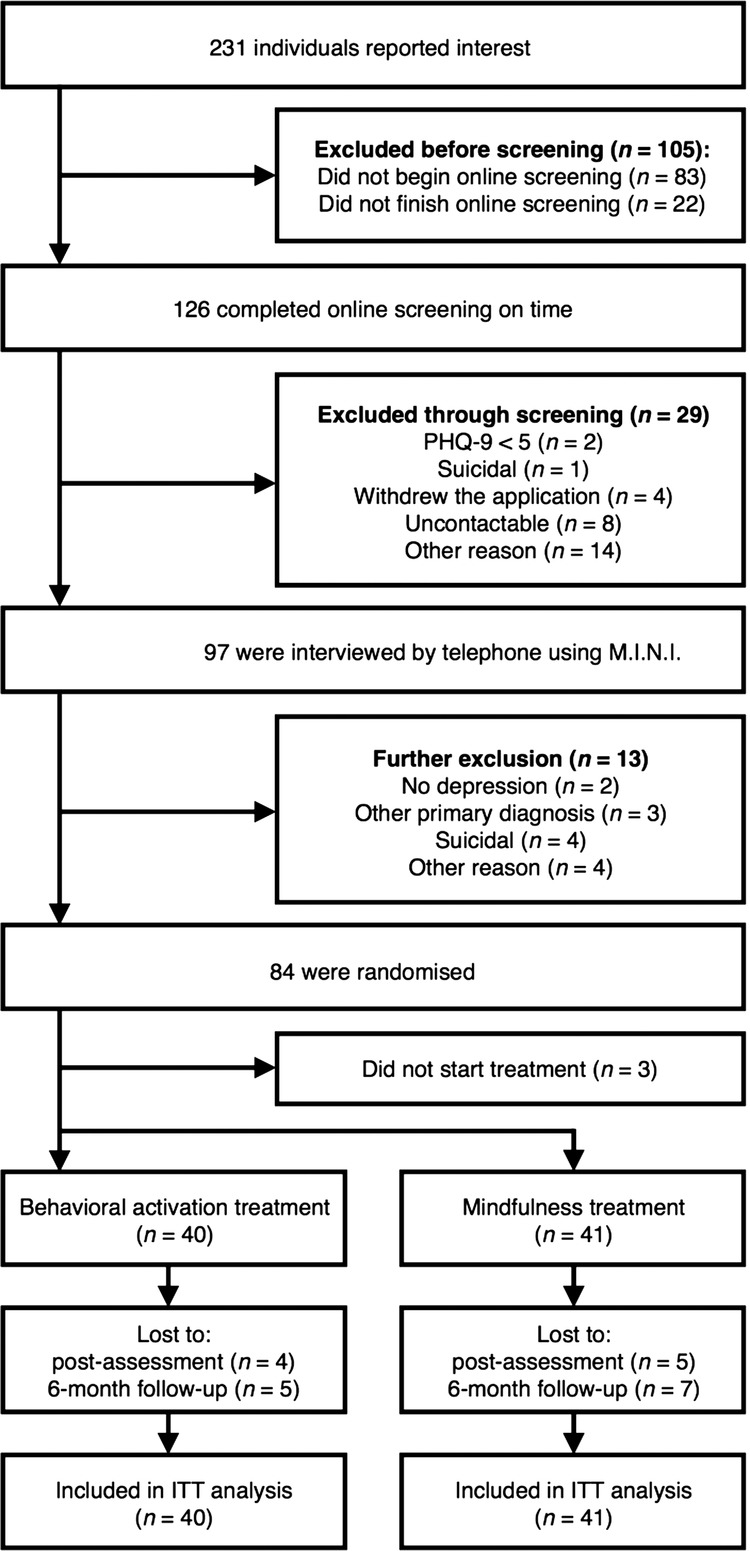
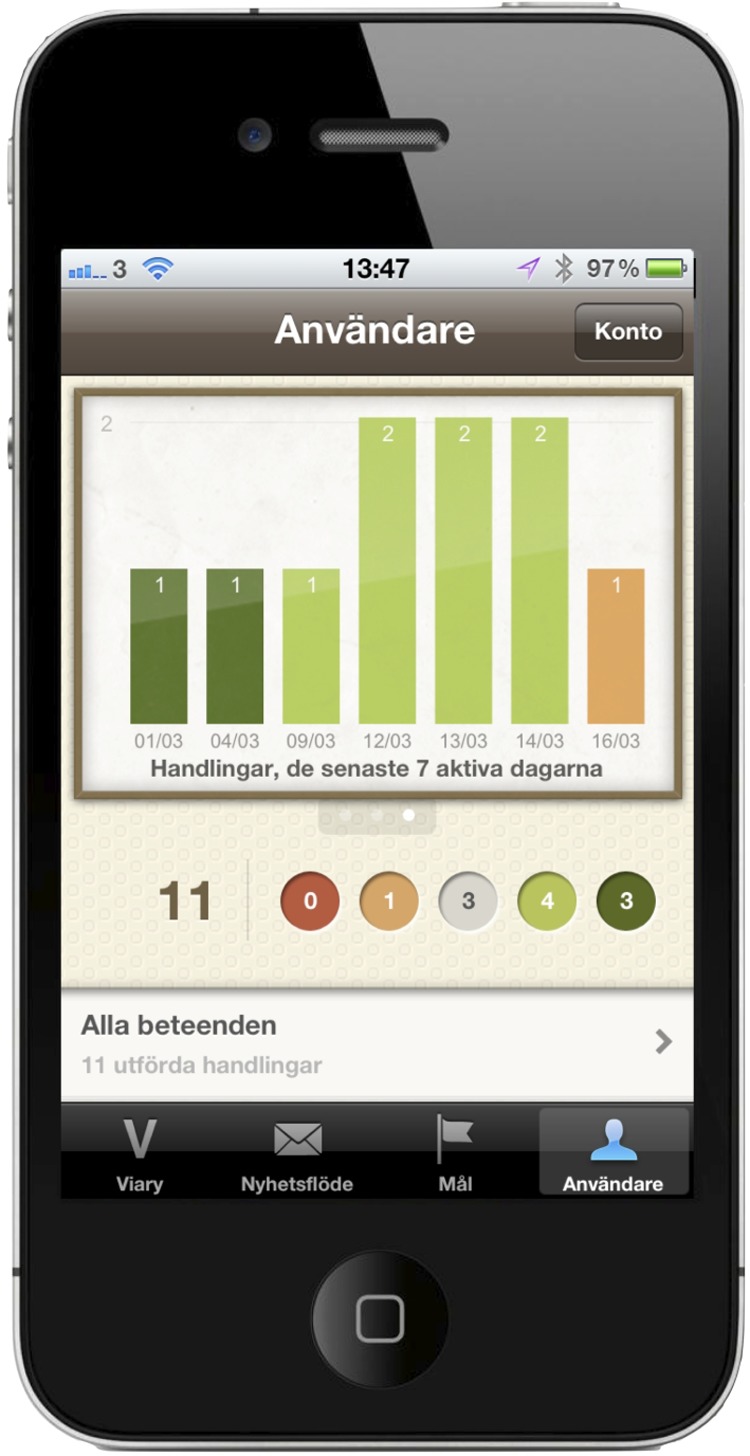
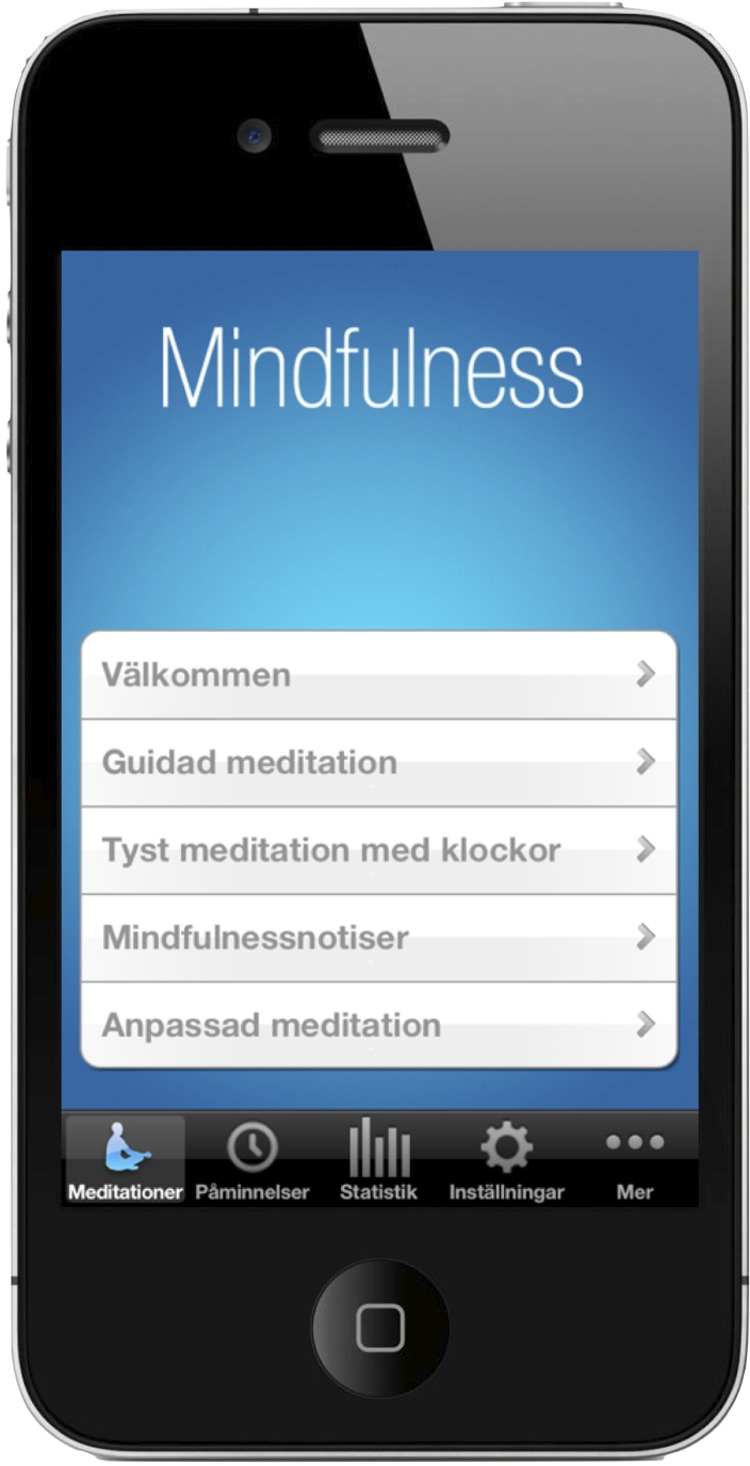
Objectives: Evaluating and comparing the effectiveness of two smartphone-delivered treatments: one based on behavioural activation (BA) and other on mindfulness. Design: Parallel randomised controlled, open, trial. Participants were allocated using an online randomisation tool, handled by an independent person who was separate from the staff conducting the study. Setting: General community, with recruitment nationally through mass media and advertisements. Participants: 40 participants diagnosed with major depressive disorder received a BA treatment, and 41 participants received a mindfulness treatment. 9 participants were lost at the post-treatment. Intervention: BA: An 8-week long behaviour programme administered via a smartphone application. Mindfulness: An 8-week long mindfulness programme, administered via a smartphone application. Main outcome measures: The Beck Depression Inventory-II (BDI-II) and the nine-item Patient Health Questionnaire Depression Scale (PHQ-9). Results: 81 participants were randomised (mean age 36.0 years (SD=10.8)) and analysed. Results showed no significant interaction effects of group and time on any of the outcome measures either from pretreatment to post-treatment or from pretreatment to the 6-month follow-up. Subgroup analyses showed that the BA treatment was more effective than the mindfulness treatment among participants with higher initial severity of depression from pretreatment to the 6-month follow-up (PHQ-9: F (1, 362.1)=5.2, p<0.05). In contrast, the mindfulness treatment worked better than the BA treatment among participants with lower initial severity from pretreatment to the 6-month follow-up (PHQ-9: F (1, 69.3)=7.7, p<0.01); BDI-II: (F(1, 53.60)=6.25, p<0.05). Conclusions: The two interventions did not differ significantly from one another. For participants with higher severity of depression, the treatment based on BA was superior to the treatment based on mindfulness. For participants with lower initial severity, the treatment based on mindfulness worked significantly better than the treatment based on BA. Trial registration: Clinical Trials NCT01463020 .
Overview
The claims and statistics of this paper haven’t been checked yet.
Free: it reads the open-access text and checks the first 5 claims that cite a source we can check. Create a free account to check every claim.
Integrity signals
Registry
Cites
Statistics
Figures
Verification
Claims the paper makes
The claims and statistics of this paper haven’t been checked yet.
Free: it reads the open-access text and checks the first 5 claims that cite a source we can check. Create a free account to check every claim.
Claims other papers make about this one
Each is checked against this paper’s own text: does it say what the citing paper says it does?
The source backs part of the claim, not all of it — or backs it for a different population, condition or comparison.
In the citing paper
“In addition, in-person MBIs seem effective at treating preinjury predictors of PSAC, such as mood disorders [14-17], somatization-related illness [14,18,19], headache disorders [20], and chronic pain [21].”
From Smartphone App–Delivered Mindfulness-Based Intervention for Mild Traumatic Brain Injury in Adolescents: Protocol for a Feasibility Randomized Controlled Trial (2024) · cites this paper as [17]
Experimental — accuracy not yet measuredThe cited source says what the claim attributes to it.
In the citing paper
“More recent research indicates that depression can be treated successfully with CBT and BA based self-help interventions delivered over the Internet [8,9,10].”
From A Systematic Review of Cognitive Behavioral Therapy and Behavioral Activation Apps for Depression (2016) · cites this paper as [9]
In the citing paper
“Ly et al [52] found no between-group effects between mobile-based behavioral activation and mindfulness apps for depression.”
From MoodHacker Mobile Web App With Email for Adults to Self-Manage Mild-to-Moderate Depression: Randomized Controlled Trial (2016) · cites this paper as [52]
Self-check
Percentages, sums and reported differences re-computed from the paper’s own numbers.
The self-check needs the paper’s full text.
Citations
Cites
The PHQ-9: Validity of a brief depression severity measure
Kroenke, K., Spitzer, R. L., & Williams, J. B. W. (2001) · Journal of General Internal Medicine · doi:10.1046/j.1525-1497.2001.016009606.x · Cited by 44,910
(1998) · The Journal of Clinical Psychiatry · Cited by 19,139
An inventory for measuring clinical anxiety: Psychometric properties.
Beck, A. T., Epstein, N., Brown, G., & Steer, R. A. (1988) · Journal of Consulting and Clinical Psychology · doi:10.1037/0022-006x.56.6.893 · Cited by 14,407
The benefits of being present: Mindfulness and its role in psychological well-being
Brown, K. W., & Ryan, R. M. (2003) · Journal of Personality and Social Psychology · doi:10.1037/0022-3514.84.4.822 · Cited by 13,448
(1998) · PubMed · Cited by 10,216
Borenstein, M., Hedges, L. V., Higgins, J. P. T., & Rothstein, H. R. (2021) · doi:10.1002/9781119558378 · Cited by 9,799
Cognitive Therapy for Depression: (675542012-001)
(2012) · PsycEXTRA Dataset · doi:10.1037/e675542012-001 · Cited by 9,663
Beck, A. T., Steer, R. A., & Brown, G. (2011) · PsycTESTS Dataset · doi:10.1037/t00742-000 · Cited by 7,535
(1993) · Cited by 7,136
(1999) · Cited by 5,934
Research works printed but not linked: 2
- Hofmann SG Sawyer AT Witt AA The effect of mindfulness-based therapy on anxiety and depression: a meta-analytic review. J Consult Clin Psychol 2010; 78: 169 20350028 PMC2848393 · DOI · Paper page
- Beck AT Cognitive therapy of depression. The Guilford Press, 1979
Cited by
Items 101–200 of 272
A meta-analysis of persuasive design, engagement, and efficacy in 92 RCTs of mental health apps
Valentine, L., Hinton, J. D. X., Bajaj, K., Boyd, L., O’Sullivan, S., Sorenson, R. P., Bell, I. H., Vega, M. S., Liu, P., Peters, W., et al. (2025) · npj Digital Medicine · doi:10.1038/s41746-025-01567-5 · Cited by 48
Individual differences in meditation interventions: A meta‐analytic study
Burić, I., Farias, M., Driessen, J. M. A., & Brazil, I. A. (2022) · British Journal of Health Psychology · doi:10.1111/bjhp.12589 · Cited by 44
Coaching to Support Mental Health Apps: Exploratory Narrative Review
Meyer, A., Wisniewski, H., & Torous, J. (2022) · JMIR Human Factors · doi:10.2196/28301 · Cited by 34
“%) of the studies used 2 or more means of contact [22,24,25,27,29,30,32,37,41,42,44-46].”
BackgroundKok, G., Bockting, C., Burger, H., Smit, F., & Riper, H. (2014) · Internet Interventions · doi:10.1016/j.invent.2014.05.002 · Cited by 36
Internet-Based Behavioral Activation for Depression: Systematic Review and Meta-Analysis
Alber, C. S., Krämer, L. V., Rosar, S. M., & Mueller-Weinitschke, C. (2023) · Journal of Medical Internet Research · doi:10.2196/41643 · Cited by 47
“…[18,19,21,22,30,32-35], of which 6 studies provided estimations for missing data (eg, via multiple imputations) and were classified as ITT [18,19,31,32,34,35]. h EQ-5D-3L: Three-Level Version of EuroQol Five-Dimensional Questionnaire. i BADS-SF: Behavioral Activation for Depression Scale –…”
Depression: Discrete or Continuous?
Bowins, B. E. (2014) · Psychopathology · doi:10.1159/000366504 · Cited by 42
Rohani, D. A., Tuxen, N., Lopategui, A. Q., Faurholt-Jepsen, M., Kessing, L. V., & Bardram, J. E. (2019) · Proceedings of the 13th EAI International Conference on Pervasive Computing Technologies for Healthcare · doi:10.1145/3329189.3329214 · Cited by 33
Victorson, D. E., Sauer, C. M., Wolters, L., Maletich, C., Lukoff, K., & Sufrin, N. (2020) · Mindfulness · doi:10.1007/s12671-020-01373-y · Cited by 33
“…the intervention, adherence ranged from 2 to 85% (Bostock et al. 2019; Buhrman et al. 2013; Dahlin et al. 2016; Dowd et al. 2015; Hearn and Finlay 2018; Henriksson et al. 2016; Kvillemo et al. 2016; Ly et al. 2014; Mak et al. 2017; Rasanen et al. 2016; Simister et al. 2018; Vesa and Liedberg 2016).”
BackgroundExploring the features of an app-based just-in-time intervention for depression
Everitt, N., Broadbent, J., Richardson, B., Smyth, J. M., Heron, K. E., Teague, S. J., & Fuller‐Tyszkiewicz, M. (2021) · Journal of Affective Disorders · doi:10.1016/j.jad.2021.05.021 · Cited by 40
A learning theory account of depression
Ramnerö, J., Folke, F., & Kanter, J. W. (2015) · Scandinavian Journal of Psychology · doi:10.1111/sjop.12233 · Cited by 43
The impact of mindfulness apps on psychological processes of change: a systematic review
Macrynikola, N., Mir, Z., Gopal, T., Rodriguez, E., Li, S., Cox, M., Yeh, G. Y., & Torous, J. B. (2024) · npj Mental Health Research · doi:10.1038/s44184-023-00048-5 · Cited by 43
“Acceptance/psychological fl exibility was examined in three studies and measured with the acceptance subscale of the Philadelphia Mindfulness Scale (PHLMS 64 ) 43 , or with the English 65 or Dutch 52 version of the Acceptance and Action Questionnaire — II (AAQ-II 66 ).”
Improving wellbeing in patients undergoing dialysis: Can meditation help?
Bennett, P. N., Ngo, T., Kalife, C., & Schiller, B. M. (2017) · Seminars in Dialysis · doi:10.1111/sdi.12656 · Cited by 29
“When used as an intervention for depressive disorders, a mindfulness smartphone application showed significantly improved scores on the Patient Health Questionnaire Depression Scale (PHQ-9) and the Beck Depression Inventory-II (BDI-II).(40).”
MethodRussell, L., Ugalde, A., Milne, D., Austin, D., & Livingston, P. M. (2018) · JMIR Mental Health · doi:10.2196/mental.9645 · Cited by 28
“…analysis: I>C for mild depression; C>I for severe depression Full adherence, 32 (78)8 weeksMBCTi-inspiredActive control (behavioral activation) Ly et al, 2014 [44] I: 27; C: 0 YesCompleted at least half the program (including retreat), 25 (83) 8 sessions per 8 weeks + 6 hours online silent…”
BackgroundMouchabac, S., Maatoug, R., Conejero, I., Adrien, V., Bonnot, O., Millet, B., Ferreri, F., & Bourla, A. (2021) · Brain Sciences · doi:10.3390/brainsci11111454 · Cited by 35
Hamamura, T., Suganuma, S., Ueda, M., Mearns, J., & Shimoyama, H. (2018) · JMIR Mental Health · doi:10.2196/mental.8984 · Cited by 27
“The literature demonstrates that mobile-based CBT is effective for reducing various psychological symptoms [13-15]; however, studies that examined standalone effects without professional contacts seemed to be limited [16].”
Lukas, C. A., Trevisi Fuentes, H., & Berking, M. (2019) · Internet Interventions · doi:10.1016/j.invent.2019.100250 · Cited by 27
Faurholt-Jepsen, M., Frost, M., Martiny, K., Tuxen, N., Rosenberg, N., Busk, J., Winther, O., Bardram, J. E., & Kessing, L. V. (2017) · Trials · doi:10.1186/s13063-017-2015-3 · Cited by 28
“Several studies have established the efficacy for behavioral activation for treating depression [43–46] including a few studies of behavioral activation using smartphones; however, not including a control standard treatment arm [47, 48].”
BackgroundHan, A., & Kim, T. H. (2022) · Journal of Psychiatric Research · doi:10.1016/j.jpsychires.2022.05.031 · Cited by 26
Toh, S. H. Y., Tan, J. H. Y., Kosasih, F. R., & Sündermann, O. (2022) · JMIR Formative Research · doi:10.2196/40723 · Cited by 29
“First, in comparison with our stress-coping SGI, the course content within these CBT-based interventions ranged from 2 weeks [77] to 2 months [78].”
InfluentialZainal, N. H., & Newman, M. G. (2023) · European Psychiatry · doi:10.1192/j.eurpsy.2023.2 · Cited by 26
“Patients may thus experience symptom changes by being more mindful and adaptable [18, 19].”
Soucy, I., Provencher, M., Fortier, M., & McFadden, T. (2017) · Cognitive Behaviour Therapy · doi:10.1080/16506073.2017.1337806 · Cited by 26
“Although behavioural activation may be a promising candidate for low-intensity formats of delivery (Ly et al., 2014), few empirical studies have investigated behavioural activation in a low-intensity format.”
BackgroundSchuster, R., Kalthoff, I., Walther, A., Köhldorfer, L., Partinger, E., Berger, T., & Laireiter, A.-R. (2019) · Journal of Medical Internet Research · doi:10.2196/11860 · Cited by 25
“The techniques developed in the field of Web-based therapy [7,18-21] can also be harnessed to improve existing forms of face-to-face therapy, resulting in a continuum of blended treatments (Figure 1).”
Wang, M., Chen, H., Yang, F., Xu, X., & Li, J. (2023) · Journal of Affective Disorders · doi:10.1016/j.jad.2023.06.057 · Cited by 25
Brief Web-Based Intervention for Depression: Randomized Controlled Trial on Behavioral Activation
Jelinek, L., Arlt, S., Moritz, S., Schröder, J., Westermann, S., & Cludius, B. (2020) · Journal of Medical Internet Research · doi:10.2196/15312 · Cited by 25
“To the best of our knowledge, there is only one internet-delivered randomized controlled trial [28] that compared BA and a mindfulness-based intervention as an active control group.”
BackgroundResultInfluentialMeyer, T. D., Casarez, R. L., Mohite, S., Rosa, N. L. L., & Iyengar, M. S. (2017) · Journal of Affective Disorders · doi:10.1016/j.jad.2017.09.012 · Cited by 34
Almodóvar, A. S., Surve, S., Axon, D. R., Cooper, D., & Nahata, M. C. (2018) · JMIR mhealth and uhealth · doi:10.2196/mhealth.9612 · Cited by 33
Contemplative Psychology: History, Key Assumptions, and Future Directions
Gordon, W. V., Sapthiang, S., & Shonin, E. (2021) · Perspectives on Psychological Science · doi:10.1177/1745691620984479 · Cited by 34
Evidence on Technology-Based Psychological Interventions in Diagnosed Depression: Systematic Review
Köhnen, M., Dreier, M., Seeralan, T., Kriston, L., Härter, M., Baumeister, H., & Liebherz, S. (2021) · JMIR Mental Health · doi:10.2196/21700 · Cited by 23
Schuster, R., Fichtenbauer, I., Sparr, V. M., Berger, T., & Laireiter, A.-R. (2018) · BMJ Open · doi:10.1136/bmjopen-2017-018412 · Cited by 23
“Interventions are usually delivered via online platforms(16) or applications for mobile phones.(17) Blended therapy is at an early stage of research, even though first studies date back to the 1980s and 1990s.”
BackgroundJesús-Romero, R. D., Holder-Dixon, A. R., Buss, J., & Lorenzo‐Luaces, L. (2024) · Journal of Medical Internet Research · doi:10.2196/50780 · Cited by 37
Development and evaluation of LLM-based suicide intervention chatbot
Cui, X., Gu, Y., Fang, H., & Zhu, T. (2025) · Frontiers in Psychiatry · doi:10.3389/fpsyt.2025.1634714 · Cited by 29
Deady, M., Johnston, D., Glozier, N., Milne, D., Choi, I., Mackinnon, A. J., Mykletun, A., Calvo, R. A., Gayed, A., Bryant, R. A., et al. (2018) · BMC Psychiatry · doi:10.1186/s12888-018-1752-5 · Cited by 26
“When delivered face-to-face, BAT has been shown to perform as well as CBT for the treatment of depression [33] and preliminary evidence that this translates in mhealth form [34].”
BackgroundJia, E., Macon, J., Doering, M. M., & Abraham, J. (2025) · Journal of Medical Internet Research · doi:10.2196/68054 · Cited by 26
“Studies that reported anxiety outcomes used the Beck Anxiety Inventory (BAI) [37,39,40], General Anxiety Disorder-7 Scale (GAD-7) [34], and the Depression Anxiety Stress Scale -21 (DASS-21) [32].”
InfluentialChittaro, L., & Vianello, A. (2016) · Interacting with Computers · doi:10.1093/iwc/iwv044 · Cited by 19
Choo, C. C., Kuek, J. H. L., & Burton, A. A. D. (2018) · International Journal of Environmental Research and Public Health · doi:10.3390/ijerph15122810 · Cited by 18
“A longitudinal study [43] and randomized controlled trials [30] showed that mindfulness interventions delivered using smartphone applications significantly improved the psychological, social, and environment quality of life [30] and the levels of mindfulness, significantly reduced depression [28,29] and general psychi…”
BackgroundPromises and risks of web-based interventions in the treatment of depression
Hegerl, U., & Oehler, C. (2020) · Dialogues in Clinical Neuroscience · doi:10.31887/dcns.2020.22.2/uhegerl · Cited by 17
Empowering caregivers in the radiotherapy process: the results of a randomized controlled trial
Uysal, N., Bağçıvan, G., Özkaraman, A., Eşer, A. K., Çetin, F., Çalışkan, B. B., Elöz, A., Gündoğdu, E. İ., Olcay, G. K., Kaya, B. V., et al. (2020) · Supportive Care in Cancer · doi:10.1007/s00520-020-05743-z · Cited by 21
“It is stated that supportive programs applied to the caregivers through the mobile application may help to reduce the level of distress by increasing the level of knowledge due to its features, such as facilitating access to healthcare personnel and offering suggestions regarding patient symptom management [16, 19, 40…”
BackgroundPlanas, R., & Yuguero, O. (2021) · Informatics for Health and Social Care · doi:10.1080/17538157.2021.1887196 · Cited by 19
“In the study by Ly, Trüschel et al.(35), which compared the use of two different applications, based on behavioral activation and mindfulness, respectively, in a sample with depressive symptoms, a reduction in depression (measured with BDI-II and PHQ-9) was noted in both groups (p < .”
Duggan, G. B. (2016) · Behaviour and Information Technology · doi:10.1080/0144929x.2016.1141320 · Cited by 24
“…(Price et al. 2013), act as a tool for communicating with therapists (Nes et al. 2012), aid planning, reminding and review of positive behaviours (Ly et al. 2014), assess and track mood over time (Matthews and Doherty 2011) or provide biofeedback on performance (Herma-nis et al. 2013) to give…”
van 't Hof, E., Heim, E., Abi Ramia, J., Burchert, S., Cornelisz, I., Cuijpers, P., El Chammay, R., Harper Shehadeh, M., Noun, P., Smit, F., et al. (2021) · JMIR Research Protocols · doi:10.2196/21585 · Cited by 16
“Behavioral activation is the main active therapeutic agent in the intervention, as it is easy for users to engage with, has a very strong evidence base for depression [22,23], and can easily be adapted to a minimally guided, internet delivery model [24].”
BackgroundEllett, L., Dannahy, L., & Chadwick, P. (2022) · Psychology and Psychotherapy Theory Research and Practice · doi:10.1111/papt.12382 · Cited by 18
“There is increasing evidence from a number of RCTs of the benefits of online MBIs for a range of mental health outcomes (e.g. Boettcher et al., 2014; Ly et al., 2014; Pots et al., 2016).”
Honoring the Past, Envisioning the Future: ABCT’s 50th Anniversary Presidential Address
Craske, M. G. (2017) · Behavior Therapy · doi:10.1016/j.beth.2017.05.003 · Cited by 18
Ledoux, A.-A., Zemek, R., Cairncross, M., Silverberg, N., Sicard, V., Barrowman, N., Goldfield, G., Gray, C., Harris, A. D., Jaworska, N., et al. (2024) · JMIR Research Protocols · doi:10.2196/57226 · Cited by 15
“In addition, in-person MBIs seem effective at treating preinjury predictors of PSAC, such as mood disorders [14-17], somatization-related illness [14,18,19], headache disorders [20], and chronic pain [21].”
BackgroundOtero, P., Hita, I., Torres, Á. J., & Vázquez, F. L. (2020) · International Journal of Environmental Research and Public Health · doi:10.3390/ijerph17124578 · Cited by 15
“(2014) [34] found no post-intervention differences between a program based on behavioral activation and another based on mindfulness.”
BackgroundA Systematic Review and Meta-Analysis of Third-Wave Online Interventions for Depression
Sierra, M. A., Ruiz, F. J., & Flórez, C. L. (2018) · Revista Latinoamericana de Psicología · doi:10.14349/rlp.2018.v50.n2.6 · Cited by 15
Liem, A., Garabiles, M. R., Pakingan, K. A., Chen, W. L., Lam, A. I. F., Burchert, S., & Hall, B. J. (2020) · Implementation Science Communications · doi:10.1186/s43058-020-00072-y · Cited by 18
“Based on previous behavioral-activation smartphone application RCT study [41], the expected pragmatic total sample size for this pilot study is 53 participants for each group.”
BackgroundMethodSchmädeke, S., & Bischoff, C. (2015) · Verhaltenstherapie · doi:10.1159/000441856 · Cited by 15
“…Achtsamkeit eingesetzt wurden, zeigen, dass sich durch smartphonegestützte Interventionen eine Reduktion der Depressionssymptomatik erreichen lässt [Ly et al., 2014]. eATROS ist ein Rehabilitationsnachsorgeprogramm, das sich leitliniengerechte Methoden der KVT zunutze macht, wie sie beim Patienten…”
BackgroundAndersson, G., Wagner, B., & Cuijpers, P. J. (2016) · Springer eBooks · doi:10.1007/978-3-319-06083-5_2 · Cited by 18
Self-citationParker, A. M., Nelliot, A., Chessare, C. M., Malik, A. M., Koneru, M., Hosey, M. M., Ozok, A. A., Lyons, K. D., & Needham, D. M. (2020) · Australian Critical Care · doi:10.1016/j.aucc.2020.02.010 · Cited by 17
An Emerging Model of Pregnancy Care: The Introduction of New Technologies in Maternal Wellbeing
Carissoli, C., Villani, D., & Riva, G. (2016) · Advances in psychology, mental health, and behavioral studies (APMHBS) book series · doi:10.4018/978-1-4666-9986-1.ch007 · Cited by 16
Kraft, S., Wolf, M., Klein, T., Becker, T. M., Bauer, S., & Puschner, B. (2017) · JMIR mhealth and uhealth · doi:10.2196/mhealth.7095 · Cited by 14
Behavioral Activation Treatments for Depression
Quigley, L., & Dobson, K. S. (2017) · Elsevier eBooks · doi:10.1016/b978-0-12-803457-6.00012-x · Cited by 22
The Impact of Digital Technology on Psychological Treatments and Their Dissemination
Fairburn, C. G., & Patel, V. (2018) · FOCUS The Journal of Lifelong Learning in Psychiatry · doi:10.1176/appi.focus.16405 · Cited by 17
“, 2016), behavioural activation (Ly et al., 2014), interpersonal psychotherapy (Donker, et al.”
BackgroundMindfulness Training & Assessment and Intelligence
Drigas, A. S., & Karyotaki, M. (2018) · International Journal of Recent Contributions from Engineering Science & IT (iJES) · doi:10.3991/ijes.v6i3.9248 · Cited by 20
(2024) · doi:10.2196/preprints.57226 · Cited by 14
Global sensitivity analysis of clinical trials with missing patient-reported outcomes
Scharfstein, D. O., & McDermott, A. (2018) · Statistical Methods in Medical Research · doi:10.1177/0962280218759565 · Cited by 18
“[93] KH Ly, A Truschel, L Jarl, S Magnusson, T Windahl, R Johansson, P Carlbring, and G Andersson.”
BackgroundGardiner, P. M., D'Amico, S., Luo, M., & Haas, N. M. (2020) · JMIR mhealth and uhealth · doi:10.2196/14768 · Cited by 15
“The findings of decreased pain interference, pain self-efficacy, and a reduction in average pain are consistent with those of studies of rural patients and international studies [50-54].”
ResultOnline Mindfulness Interventions: A Systematic Review
Ahmad, F., Wang, J. J., & El Morr, C. (2018) · Advances in Healthcare Information Systems and Administration · doi:10.4018/978-1-5225-2958-3.ch001 · Cited by 12
Bernstein, E. E., Weingarden, H. M., Greenberg, J. L., Williams, J., Hoeppner, S. S., Snorrason, Í., Phillips, K. A., Harrison, O., & Wilhelm, S. (2023) · Journal of Obsessive-Compulsive and Related Disorders · doi:10.1016/j.jocrd.2023.100781 · Cited by 17
Efficacy of Virtual Care for Depressive Disorders: Systematic Review and Meta-analysis
Schiller, C. E., Prim, J., Bauer, A. E., Lux, L. J., Lundegard, L., Kang, M., Hellberg, S. N., Thompson, K. A., Webber, T. K., Teklezghi, A. T., et al. (2023) · JMIR Mental Health · doi:10.2196/38955 · Cited by 14
“Five trials compared a virtual adaptation of an evidence-based intervention (eg, CBT [36,39,40], BA [38], or psychodynamic therapy [37]) with a virtual control (ie, mindfulness [38]) or sham condition (Table 1).”
Are Digitally Delivered Psychological Interventions for Depression the Way Forward? A Review
Stefanopoulou, E., Lewis, D., Taylor, M., Broscombe, J., Ahmad, J., & Larkin, J. (2018) · Psychiatric Quarterly · doi:10.1007/s11126-018-9576-5 · Cited by 12
Fang, C. M., McMahon, K., Miller, M. L., & Rosenthal, M. Z. (2021) · Journal of Clinical Psychology · doi:10.1002/jclp.23245 · Cited by 18
Andersson, E., Ljótsson, B., Hedman‐Lagerlöf, E., Hesser, H., Enander, J., Kaldo, V., Andersson, G., Lindefors, N., & Rück, C. (2014) · Clinical Psychology & Psychotherapy · doi:10.1002/cpp.1931 · Cited by 13
Self-citationWolf, M., Kraft, S., Tschauner, K., Bauer, S., Becker, T. M., & Puschner, B. (2016) · Mental Health & Prevention · doi:10.1016/j.mhp.2016.02.003 · Cited by 13
Positive Technology for Helping People Cope with Stress
Villani, D., Cipresso, P., Gaggioli, A., & Riva, G. (2016) · Advances in psychology, mental health, and behavioral studies (APMHBS) book series · doi:10.4018/978-1-4666-9986-1.ch014 · Cited by 14
Heffner, J. L., Watson, N. L., Serfozo, E., Mull, K. E., MacPherson, L., Gasser, M., & Bricker, J. B. (2019) · JMIR Formative Research · doi:10.2196/13728 · Cited by 10
Pilot study of psychotherapeutic text messaging for depression
Pfeiffer, P. N., Henry, J., Ganoczy, D. A., & Piette, J. D. (2016) · Journal of Telemedicine and Telecare · doi:10.1177/1357633x16659955 · Cited by 11
“mindfulness.(24) However, our subgroup analyses were in contrast to the Ly study, which found that individuals with more severe depression (PHQ-9 510) responded better to the behavioural activation smartphone application whereas those with less severe depression (PHQ-9 <10) responded better to the mindfulness applicat…”
ResultMartin, K.-J., Golijani-Moghaddam, N., & dasNair, R. (2018) · International Journal of Therapy and Rehabilitation · doi:10.12968/ijtr.2018.25.2.82 · Cited by 10
Kirk, M. A., Pirbaglou, M., Weerasekera, R., & Ritvo, P. (2022) · International Journal of Mental Health · doi:10.1080/00207411.2021.1959807 · Cited by 10
Lippmann, M., Laudel, H., Heinzle, M., & Narciss, S. (2019) · Journal of Medical Internet Research · doi:10.2196/12497 · Cited by 10
“Of these 114 studies, 18 studies matched the inclusion criteria and were, therefore, included in this systematic review [29-46].”
Radin, R. M., Epel, E. S., Mason, A. E., Vaccaro, J., Fromer, E., Guan, J., & Prather, A. A. (2023) · PLoS ONE · doi:10.1371/journal.pone.0280808 · Cited by 12
López-Ramón, M. F., Campos, V. M., Alonso-Esteban, Y., Navarro‐Pardo, E., & Marín, F. A. (2023) · Mindfulness · doi:10.1007/s12671-023-02234-0 · Cited by 15
“In this sense, the benefits on well-being derived from the use of online mind-fulness applications have already been demonstrated in previous studies (e.g., Champion et al., 2018; Howells et al., 2014; Ly et al., 2014).”
MethodSchuster, R., Berger, T., & Laireiter, A. (2017) · Psychotherapeut · doi:10.1007/s00278-017-0214-8 · Cited by 17
“Beispiel 2 – SmartphoneApplikation und persönliche Therapie von Depression Ein anderes Behandlungskonzept wurde in Schweden entwickelt (Ly et al. 2014, 2015) und basiert auf Prinzipien derVerhaltensaktivierung (Martell et al. 2001; Lejuez et al. 2001).”
BackgroundRuh Sağlığında Mobil Uygulamalar: Etkinliğe Yönelik Sistematik Bir Gözden Geçirme
AKGÜN, B. D., Gürbüz, A. A., & Yorulmaz, O. (2019) · Psikiyatride Guncel Yaklasimlar - Current Approaches in Psychiatry · doi:10.18863/pgy.441765 · Cited by 14
Uchida, H., Hiragaki, Y., Nishi, Y., Nakahara, S., Koumoto, J., Onmyoji, Y., Fujimoto, N., Kawakami, K., Ishii, M., & Hirao, K. (2020) · Internet Interventions · doi:10.1016/j.invent.2020.100340 · Cited by 10
“While no such applications exist for PSD (Pugliese et al., 2018), several have been reported to improve depressive symptoms in patients with clinical depression and subthreshold depression (Hung et al., 2016; Takahashi et al., 2019b; Ly et al., 2014; Ly et al., 2015; Fitzpatrick et al., 2017).”
BackgroundKrause, K., Gürtler, D., Bischof, G., Rumpf, H.-J., Lucht, M., John, U., & Meyer, C. (2016) · Zeitschrift für Psychiatrie, Psychologie und Psychotherapie · doi:10.1024/1661-4747/a000270 · Cited by 10
Psychotherapy and Technology: Relational Strategies and Techniques for Online Therapeutic Activity
Manfrida, G., Albertini, V., & Eisenberg, E. (2018) · European Family Therapy Association series · doi:10.1007/978-3-319-78521-9_9 · Cited by 9
Integrating Mindfulness into a Routine Schedule: The Role of Mobile-Health Mindfulness Applications
van Emmerik, A., Keijzer, R., & Schoenmakers, T. M. (2020) · Springer eBooks · doi:10.1007/978-3-030-30892-6_15 · Cited by 8
Ritvo, P., Daskalakis, Z. J., TOMLINSON, G. A., Ravindran, A. V., Linklater, R., Kirk, M., Knyahnytska, Y., Lee, J. C., Alavi, N., Bai, S., et al. (2019) · JMIR Research Protocols · doi:10.2196/11591 · Cited by 10
“On the basis of a careful review of previously successful studies [38,39,41], we determined a sample size of 42 participants per group in 4 groups (total of n=168).”
BackgroundSantopetro, N. J., Jones, D. N., Garron, A., Meyer, A., Joyner, K. J., & Hajcak, G. (2024) · JMIR Mental Health · doi:10.2196/54252 · Cited by 10
“For example, Ly and colleagues [23] administered an 8-week smartphone-based BA intervention that required a trained therapist to contact each participant weekly for no longer than 20 minutes as part of the standard intervention protocol (ie, up to 2 h and 40 min of therapist contact per…”
MethodTedder, M. L., Shi, L., Si, M., Franco, R., & Chen, L. (2015) · Medicines · doi:10.3390/medicines2040298 · Cited by 11
“Other studies using smartphone based mindfulness apps have provided similar significant differences of within-group effects on measures of stress, heartbeats-per-minute, and depression for participants using the intervention; however, between group effects were not found [29,30].”
BackgroundVázquez, F. L., Torres, Á., Fernández, O. D., Páramo, M., Otero, P., Blanco, V., & López, L. (2018) · Trials · doi:10.1186/s13063-018-2793-2 · Cited by 8
“[14] did not find any post-treatment differences between a program based on behavioral activation and another based on”
BackgroundKöhnen, M., Kriston, L., Härter, M. C., Baumeister, H., & Liebherz, S. (2020) · Journal of Medical Internet Research · doi:10.2196/24584 · Cited by 17
“Interventions of 8 weeks’ duration were the most frequent (26/89; 29%) in the included studies (see Multimedia Appendix 2 [22-99] for baseline diagnoses).”
BackgroundMethodInfluentialSiembor (2017) · Digital Repository Service (Northeastern University) · doi:10.17760/d20284631 · Cited by 13
“…“sweet spot” or optimal treatment duration between the 3- week program described by Carissoli et al. (2015) and the 8-week program described by Ly et al. (2014), that could be a cost-effective way to impart the benefits of the mindfulness-based intervention while mitigating the costs that…”
BackgroundInfluentialEast, M. L., Havard, B., & Hastings, N. B. (2016) · Journal of Technology in Human Services · doi:10.1080/15228835.2016.1233842 · Cited by 7
“Several studies investigated specific mobile phone interventions for reducing depression (Burns et al., 2011; Kauer et al., 2012; Ly et al., 2014).”
BackgroundBradley, G., Rehackova, L., Devereaux, K., Bruce, T. A., Nunn, V., Gilfellon, L., Burrows, S., Cameron, A., Watson, R., Rumney, K., et al. (2025) · PLOS Digital Health · doi:10.1371/journal.pdig.0000752 · Cited by 11
“Conversely, participants with lower initial severity, mindfulness was superior to BA [58] Deprexis [39] Meta-analysis of 12 deprexis-specific RCTs with a total of N = 2901 participants confirmed the effectiveness of deprexis for depression reduction at post-intervention (over 8-12 weeks across a…”
Fasthoff, R. M., Nolte, L., & Kortsch, T. (2023) · Merits · doi:10.3390/merits3040037 · Cited by 13
“Previous studies showed that digital and analog stress management interventions are effective in reducing stress, burnout, and anxiety symptoms as well as promoting satisfaction, resilience, and mindfulness [13,14].”
BackgroundResultCommunity mental health interventions for people with major depressive disorder: A scoping review
Tan, R. X. R., & Goh, Y. S. (2022) · International Journal of Mental Health Nursing · doi:10.1111/inm.13029 · Cited by 12
Disaster psychiatry in Asia: The potential of smartphones, mobile, and connected technologies
Sobowale, K., & Torous, J. B. (2016) · Asian Journal of Psychiatry · doi:10.1016/j.ajp.2016.03.004 · Cited by 8
“, 2013), behavioral activation therapy (Ly et al., 2014), acceptance and commitment therapy”
BackgroundPavlacic, J. M., Hampton, B. N., Young, J. N., Witcraft, S. M., Flores, C. M. N., Vázquez, A. L., & Rheingold, A. A. (2024) · Journal of Technology in Behavioral Science · doi:10.1007/s41347-024-00416-8 · Cited by 8
“…et al., 2021b; Kleiman et al., 2022; Kristjánsdóttir et al., 2013; Lahtinen et al. 2020; Lee et al. 2018; Levin et al., 2017; Levin et al., 2019a; Ly et al., 2014a; Mason et al., 2018; Mohr et al., 2017; Murphy et al., 2021; Myin-Germeys et al., 2022; Newman et al., 2014; Rizvi et al., 2016;…”
InfluentialKamarudin, S. S., Idris, I. B., Sharip, S., & Ahmad, N. (2025) · JMIR Research Protocols · doi:10.2196/63564 · Cited by 9
Pandya, S. P. (2020) · Journal of Social Work Education · doi:10.1080/10437797.2020.1817817 · Cited by 10
“Multiple randomized controlled trials have also provided empirical evidence for the effectiveness of online mindfulness-based interventions in the context of mental health and well-being (Boettcher et al., 2014; Buhrman et al., 2013; Dowd et al., 2015; Ly et al., 2014; Pots et al., 2016; Trompetter et al., 2015; Zerni…”
BackgroundSECCION IX. Síndrome Post COVID-19: complicaciones tardías y rehabilitación
Saavedra, C. (2021) · Infectio · doi:10.22354/in.v25i4.979 · Cited by 15
Immersive VR as a Promising Technology for Computer-Supported Mindfulness
De Paolis, L. T., Arpaia, P., D’Errico, G., Gatto, C., Moccaldi, N., & Nuccetelli, F. (2021) · Lecture notes in computer science · doi:10.1007/978-3-030-87595-4_12 · Cited by 5
Mo, L., He, L., Zhang, Y., Li, A., Xiong, Z., Cun, P., & Zhu, T. (2025) · Frontiers in Digital Health · doi:10.3389/fdgth.2025.1627268 · Cited by 8
Bert, F., Moro, G. L., Giacomini, G., Minutiello, E., & Siliquini, R. (2023) · Health Promotion International · doi:10.1093/heapro/daad006 · Cited by 5
Yeon, P., Kim, I.-O., Kang, S.-N., Lee, N.-E., Kim, G.-Y., Shim, H.-R., Chung, C.-Y., Lee, J.-S., Jeon, J. Y., & Shin, W.-S. (2023) · Healthcare · doi:10.3390/healthcare11233039 · Cited by 6
“Studies have attempted to determine the effectiveness of mobile applications as they become increasingly utilized [26–28].”
BackgroundTang, V. F. Y., Jiang, D., Kwok, J. Y. Y., Qian, M., Yeung, D. Y.-L., Chow, E. O. W., Choi, N. G., & Chou, K. (2024) · BMJ Open · doi:10.1136/bmjopen-2024-087245 · Cited by 6
Internet-Delivered Psychotherapy for Anxiety Disorders and Depression
Titov, N., Dear, B. F., & Andersson, G. (2014) · Focus · doi:10.1176/appi.focus.12.3.299 · Cited by 5
Self-citationReliability and construct validity testing of a questionnaire to assess nomophobia (QANP)
Ferri‐García, R., Olivencia-Carrión, M. A., Rueda, M. D. M., Jiménez-Torres, M. G., & López-Torrecillas, F. (2019) · Escritos de Psicología / Psychological Writings · doi:10.24310/espsiescpsi.v12i2.9982 · Cited by 10
Metadata
- Authors
- Ly, K. H., Trüschel, A., Jarl, L., Magnusson, S., Windahl, T., Johansson, R., Carlbring, P., & Andersson, G.
- Affiliations
- Linköping University (SE)
- Stockholm University (SE)
- Corresponding author
- Ly, Kien Hoa
- Venue
- BMJ Open
- Publisher
- BMJ
- Published
- 2014-01
- Volume
- 4
- Issue
- 1
- Pages
- e003440
- ISSN
- 2044-6055 (ISSN-L)
- PMC
- PMC3902198
- OpenAlex
- W2111116768
- Cited by
- 269
- References
- 62
- Citations by year
- 2026: 8 · 2025: 13 · 2024: 11 · 2023: 18 · 2022: 20 · 2021: 24 · 2020: 30 · 2019: 23 · 2018: 39 · 2017: 33 · 2016: 26 · 2015: 17 · 2014: 7
- FWCI
- 42.88
- Type
- journal article
- Language
- en
- Open access
- gold
- doi.org
- Licence
- cc-by-nc
- Locations
- BMJ Open (publishedVersion, cc-by-nc)
- Europe PMC (PubMed Central) (publishedVersion, cc-by-nc)
- PubMed Central (publishedVersion, cc-by-nc)
- PubMed (publishedVersion)
- DiVA (Linkoping University) (submittedVersion, other-oa)
- HighWire Press Open Archive (submittedVersion)
- Funders
- Vetenskapsrådet (2011-02476)
- Topics
- Social Sciences › Psychology › Applied Psychology › Digital Mental Health Interventions
- Social Sciences › Psychology › Clinical Psychology › Mindfulness and Compassion Interventions
- Social Sciences › Psychology › Experimental and Cognitive Psychology › Anxiety, Depression, Psychometrics, Treatment, Cognitive Processes
- Keywords
- behavioral activation, mindfulness-based interventions, guided self-help, smartphone-based intervention, major depressive disorder, depression severity, treatment effectiveness, digital mental health interventions
- MeSH terms
- Smartphone, Adult, Behavior Therapy, Major Depressive Disorder, Female, Humans, Male, Middle Aged, Psychiatric Status Rating Scales, Self Care, Young Adult, Mobile Applications, Mindfulness
About these checks
Registry, retraction, Cites and statistics results are computed, not judged, with one exception: a printed reference that no index lists is read once by a model before it counts as a citation error. Claims are extracted by a model and kept only when their quote appears verbatim in the text; each cited source is then checked, with a model’s help, for whether it says what the claim relies on. Those verdicts can be wrong — read the claim’s quote and the cited source before relying on one.
Statistics and arithmetic are recomputed, not judged.
Confidence bands are shown only for fields calibrated on our annotated test set. None is calibrated yet, so no band is shown.
What counts as a claim ›How we measure confidence ›How we check this ›
Are you an author, or do you see a problem with this page? Request a review
Data sources
Bibliographic data: Semantic Scholar, OpenAlex, Crossref.
Contains information from the Semantic Scholar Academic Graph Datasets, made available under the ODC Attribution License (ODC-BY 1.0).
Semantic Scholar’s data is described in: Kinney, R., et al. (2023). The Semantic Scholar Open Data Platform. arXiv:2301.10140.
