

Smartphone application for preventing depression: study protocol for a workplace randomised controlled trial
Open accessThe DOI matches its Crossref record; 90 of the 90 references it cites were found in a registry or an index.
Abstract
Introduction: Depression is the leading cause of life years lost due to disability. Appropriate prevention has the potential to reduce the incidence of new cases of depression, however, traditional prevention approaches face significant scalability issues. Prevention programmes delivered by via smartphone applications provide a potential solution. The workplace is an ideal setting to roll out this form of intervention, particularly among industries that are unlikely to access traditional health initiatives and whose workplace characteristics create accessibility and portability issues. The study aims to evaluate the effectiveness of a smartphone application designed to prevent depression and improve well-being. The effectiveness of the app as a universal, selective and indicated prevention tool will also be evaluated. Methods and analysis: A multicentre randomised controlled trial, to determine the effectiveness of the intervention compared with an active mood monitoring control in reducing depressive symptoms (primary outcome) and the prevalence of depression at 3 months, with secondary outcomes assessing well-being and work performance. Employees from a range of industries will be invited to participate. Participants with likely current depression at baseline will be excluded. Following baseline assessment, participants, blinded to their allocation, will be randomised to receive one of two versions of the application: headgear (a 30-day mental health intervention) or a control application (mood monitoring for 30 days). Both versions of the app contain a risk calculator to provide a measure of future risk. Analyses will be conducted within an intention-to-treat framework using mixed modelling, with additional analyses conducted to compare the moderating effect of baseline risk level and depression symptom severity on the intervention’s effectiveness. Ethics and dissemination: The current trial has received ethics approval from the University of New South Wales Human Research Ethics Committee (HC17021). Study results will be disseminated through peer-reviewed journals and conferences. Trial registration number: ACTRN12617000548336; Results.
Overview
The claims and statistics of this paper haven’t been checked yet.
Free: it reads the open-access text and checks the first 5 claims that cite a source we can check. Create a free account to check every claim.
Integrity signals
Registry
Cites
Statistics
Figures
Verification
Claims the paper makes
The claims and statistics of this paper haven’t been checked yet.
Free: it reads the open-access text and checks the first 5 claims that cite a source we can check. Create a free account to check every claim.
Self-check
Percentages, sums and reported differences re-computed from the paper’s own numbers.
The self-check needs the paper’s full text.
Citations
Cites
The PHQ-9: Validity of a brief depression severity measure
Kroenke, K., Spitzer, R. L., & Williams, J. B. W. (2001) · Journal of General Internal Medicine · doi:10.1046/j.1525-1497.2001.016009606.x · Cited by 44,910
Development of a new resilience scale: The Connor-Davidson Resilience Scale (CD-RISC)
Connor, K. M., & Davidson, J. R. T. (2003) · Depression and Anxiety · doi:10.1002/da.10113 · Cited by 11,793 · cited 2×
“Validity is high relative to other measures and reflects differentiation in resilience among diverse populations, showing that higher levels of resilience are consistent with lower levels of perceived stress vulnerability.(60) The CD-RISC has been shown to differentiate between individuals who function well after adve…”
BackgroundCook, R. J., Dickens, B. M., & Fathalla, M. F. (2003) · Reproductive Health and Human Rights · doi:10.1093/acprof:oso/9780199241323.003.0025 · Cited by 10,769
Spitzer, R. L. (1999) · JAMA · doi:10.1001/jama.282.18.1737 · Cited by 9,802
Murray, C. J. L., Vos, T., Lozano, R., Naghavi, M., Flaxman, A. D., Michaud, C., Ezzati, M., Shibuya, K., Salomon, J. A., Abdalla, S., et al. (2012) · The Lancet · doi:10.1016/s0140-6736(12)61689-4 · Cited by 8,888
SPIRIT 2013 Statement: Defining Standard Protocol Items for Clinical Trials
Chan, A.-W., Tetzlaff, J. M., Altman, D. G., Laupacis, A., Gøtzsche, P. C., Krleža-Jerić, K., Hróbjartsson, A., Mann, H., Dickersin, K., Berlin, J. A., et al. (2013) · Annals of Internal Medicine · doi:10.7326/0003-4819-158-3-201302050-00583 · Cited by 7,363
The PHQ-9: A New Depression Diagnostic and Severity Measure
Kroenke, K., & Spitzer, R. L. (2002) · Psychiatric Annals · doi:10.3928/0048-5713-20020901-06 · Cited by 5,898
Moher, D., Schulz, K. F., & Altman, D. G. (2001) · The Lancet · doi:10.1016/s0140-6736(00)04337-3 · Cited by 5,373
The PHQ-8 as a measure of current depression in the general population
Kroenke, K., Strine, T. W., Spitzer, R. L., Williams, J. B. W., Berry, J. T., & Mokdad, A. H. (2009) · Journal of Affective Disorders · doi:10.1016/j.jad.2008.06.026 · Cited by 5,121 · cited 1×
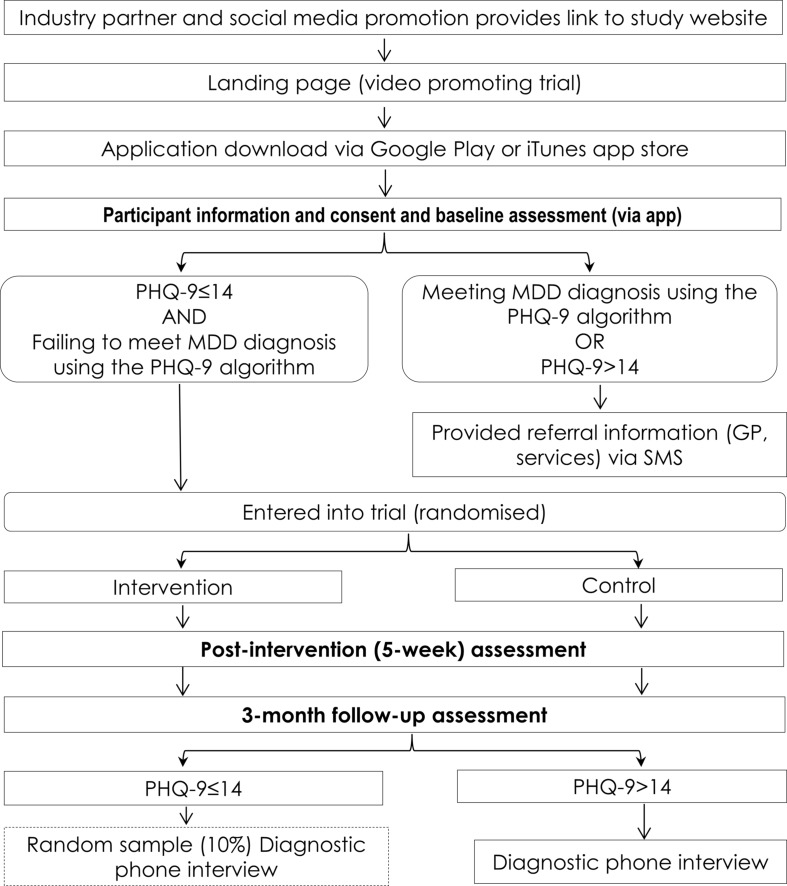
“5% will score above 14 on the PHQ-9 (or meet diagnosis using the instrument algorithm) at follow-up.(73) As this unwell group may have more motivation to participate, we might conservatively predict this to be higher (15%).”
MethodAnxiety disorders in primary care: prevalence, impairment, comorbidity, and detection
Kroenke, K., Spitzer, R. L., Williams, J. B. W., Monahan, P. O., & Löwe, B. (2007) · Annals of Internal Medicine · doi:10.7326/0003-4819-146-5-200703060-00004 · Cited by 4,741 · cited 4×
“Scale scores of ≥3 are suggested as cut-off points between the normal range and probable cases of anxiety.(59) Resilience will be measured by the CD-RISC, a 10-item self-report scale demonstrated to be psychometrically sound with high internal consistency (Cronbach’s α=0.”
BackgroundMethodInfluentialThe effect of mindfulness based therapy on anxiety and depression: A meta analytic review
Hofmann, S. G., Sawyer, A. T., Witt, A. A., & Oh, D. (2010) · Journal of Consulting and Clinical Psychology · doi:10.1037/a0018555 · Cited by 3,846
Campbell‐Sills, L., & Stein, M. B. (2007) · Journal of Traumatic Stress · doi:10.1002/jts.20271 · Cited by 3,575 · cited 1×
“The CD-RISC has been shown to differentiate between individuals who function well after adversity from those who do not and measures the core features of resilience and the ability to tolerate experiences.(69) It is believed that increased resilience may reduce rates of mental ill health.”
BackgroundLecrubier, Y., Sheehan, D., Weiller, E., Amorim, P., Bonora, I., Sheehan, K. H., Janavs, J., & Dunbar, G. (1997) · European Psychiatry · doi:10.1016/s0924-9338(97)83296-8 · Cited by 3,513 · cited 2×
“97 for non-psychotic disorders in psychiatric and non-psychiatric populations.(72)”
BackgroundMethodMoher, D., Schulz, K. F., & Altman, D. G. (2001) · BMC Medical Research Methodology · doi:10.1186/1471-2288-1-2 · Cited by 2,755
Löwe, B., Wahl, I., Rose, M., Spitzer, C., Glaesmer, H., Wingenfeld, K., Schneider, A., & Brähler, E. (2010) · Journal of Affective Disorders · doi:10.1016/j.jad.2009.06.019 · Cited by 2,473 · cited 1×
“measure has also been validated in the general population.(68) Equivalent to the parent scales, the GAD-2 begins”
BackgroundSIMR : an R package for power analysis of generalized linear mixed models by simulation
Green, P., & MacLeod, C. J. (2016) · Methods in Ecology and Evolution · doi:10.1111/2041-210x.12504 · Cited by 2,467 · cited 1×
“Power calculations were carried out using the R package simR, which can undertake power calculations for mixed models such as those proposed to use in this study using simulation techniques.(79) Power was set at 80%, alpha at 0.”
MethodManea, L., Gilbody, S., & McMillan, D. (2012) · Canadian Medical Association Journal · doi:10.1503/cmaj.110829 · Cited by 1,966
Chiesa, A., & Serretti, A. (2009) · The Journal of Alternative and Complementary Medicine · doi:10.1089/acm.2008.0495 · Cited by 1,681 · cited 1×
“The other component, mindfulness is both a process (meditation) and an outcome (mindful awareness),(42) shown to have diagnosis independent effects in reducing depression, anxiety(43) and stress levels (a risk factor for depression(44)) in healthy individuals.(45) The main therapeutic component of the headgear app tak…”
BackgroundValidity of the brief patient health questionnaire mood scale (PHQ-9) in the general population
Martin, A., Rief, W., Klaiberg, A., & Braehler, E. (2006) · General Hospital Psychiatry · doi:10.1016/j.genhosppsych.2005.07.003 · Cited by 1,379
Internet-Based and Other Computerized Psychological Treatments for Adult Depression: A Meta-Analysis
Andersson, G., & Cuijpers, P. (2009) · Cognitive Behaviour Therapy · doi:10.1080/16506070903318960 · Cited by 1,368
The Psychobiology of Depression and Resilience to Stress: Implications for Prevention and Treatment
Southwick, S. M., Vythilingam, M., & Charney, D. S. (2005) · Annual Review of Clinical Psychology · doi:10.1146/annurev.clinpsy.1.102803.143948 · Cited by 1,160 · cited 1×
“It is believed that increased resilience may reduce rates of mental ill health.(70) Well-being will be assessed using the 5-item WHO-5.”
MethodThe World Health Organization Health and Work Performance Questionnaire (HPQ)
Kessler, R. C., Barber, C., Beck, A., Berglund, P., Cleary, P. D., McKenas, D., Pronk, N., Simon, G., Stang, P., Ustun, T. B., et al. (2003) · Journal of Occupational and Environmental Medicine · doi:10.1097/01.jom.0000052967.43131.51 · Cited by 1,148
Smartphones for smarter delivery of mental health programs: A systematic review
Donker, T., Petrie, K., Proudfoot, J., Clarke, J., Birch, M.-R., & Christensen, H. (2013) · Journal of Medical Internet Research · doi:10.2196/jmir.2791 · Cited by 1,136 · cited 1×
“Such applications provide a way to deliver interventions across a wide population due to flexibility and portability, increased user retention, tracking and monitoring features, and personalised feedback and support.(26) 81 However, little is known of their utility for prevention.”
BackgroundSelf-citationTests of certain linear hypotheses and their application to some educational problems.
Johnson, P. O., & Neyman, J. (1936) · Cited by 1,128
Prevalence and incidence studies of anxiety disorders: A systematic review of the literature
Somers, J. M., Goldner, E. M., Waraich, P., & Hsu, L. (2006) · The Canadian Journal of Psychiatry · doi:10.1177/070674370605100206 · Cited by 1,114
Behavioral activation treatment for depression: returning to contextual roots
Jacobson, N. S., Martell, C. R., & Dimidjian, S. (2001) · Clinical Psychology: Science and Practice · doi:10.1093/clipsy.8.3.255 · Cited by 1,011 · cited 1×
“BA’s theoretical underpinning is that a person’s development and maintenance of depression is the result of avoidant behaviour as a coping mechanism to an environment characterised by low levels of positive reinforcement and/or high levels of aversive control.(46) Thus, by targeting the avoidance behaviours as well as…”
BackgroundDelivering interventions for depression by using the internet: randomised controlled trial
Christensen, H. (2004) · BMJ · doi:10.1136/bmj.37945.566632.ee · Cited by 928
Self-citationMental Health Smartphone Apps: Review and Evidence-Based Recommendations for Future Developments
Bakker, D., Kazantzis, N., Rickwood, D., & Rickard, N. (2016) · JMIR Mental Health · doi:10.2196/mental.4984 · Cited by 886
Harvey, S. B., Modini, M., Joyce, S., Milligan-Saville, J. S., Tan, L., Mykletun, A., Bryant, R. A., Christensen, H., & Mitchell, P. B. (2017) · Occupational and Environmental Medicine · doi:10.1136/oemed-2016-104015 · Cited by 799
Self-citationKocalevent, R.-D., Hinz, A., & Brähler, E. (2013) · General Hospital Psychiatry · doi:10.1016/j.genhosppsych.2013.04.006 · Cited by 748
Electronic Survey Methodology: A Case Study in Reaching Hard-to-Involve Internet Users
Andrews, D., Nonnecke, B., & Preece, J. (2003) · International Journal of Human-Computer Interaction · doi:10.1207/s15327590ijhc1602_04 · Cited by 747
Contemporary behavioral activation treatments for depression: Procedures, principles, and progress
Hopko, D. R., Lejuez, C. W., Ruggiero, K. J., & Eifert, G. H. (2003) · Clinical Psychology Review · doi:10.1016/s0272-7358(03)00070-9 · Cited by 634
Wood, A. M., & Joseph, S. (2010) · Journal of Affective Disorders · doi:10.1016/j.jad.2009.06.032 · Cited by 624
Richards, D. A., Ekers, D., McMillan, D., Taylor, R. S., Byford, S., Warren, F. C., Barrett, B., Farrand, P. A., Gilbody, S., Kuyken, W., et al. (2016) · The Lancet · doi:10.1016/s0140-6736(16)31140-0 · Cited by 595
Lejuez, C. W., Hopko, D. R., Acierno, R., Daughters, S. B., & Pagoto, S. L. (2011) · Behavior Modification · doi:10.1177/0145445510390929 · Cited by 574
Andrews, G., Issakidis, C., Sanderson, K., Corry, J., & Lapsley, H. (2004) · British Journal of Psychiatry · doi:10.1192/bjp.184.6.526 · Cited by 560 · cited 1×
“Although effective treatments are available, cost-effectiveness models suggest that even in the unlikely event of optimal treatment being delivered to all cases, only 35%–50% of the overall burden of common mental disorders would be alleviated.(6) As a result, effective preventative interventions, that intervene prior…”
BackgroundStice, E., Shaw, H., Bohon, C., Marti, C. N., & Rohde, P. (2009) · Journal of Consulting and Clinical Psychology · doi:10.1037/a0015168 · Cited by 553
The WHO (Ten) Well-Being Index: Validation in Diabetes
Bech, P., Gudex, C., & Staehr Johansen, K. (2010) · Psychotherapy and Psychosomatics · doi:10.1159/000289073 · Cited by 528
Prevalence and Incidence Studies of Mood Disorders: A Systematic Review of the Literature
Waraich, P., Goldner, E. M., Somers, J. M., & Hsu, L. (2004) · The Canadian Journal of Psychiatry · doi:10.1177/070674370404900208 · Cited by 522
mHealth: A Mechanism to Deliver More Accessible, More Effective Mental Health Care
Price, M., Yuen, E. K., Goetter, E. M., Herbert, J. D., Forman, E. M., Acierno, R., & Ruggiero, K. J. (2014) · Clinical Psychology & Psychotherapy · doi:10.1002/cpp.1855 · Cited by 488 · cited 1×
“Indeed, the ubiquity of personally owned devices increases the feasibility of mobile MH care interventions.(30) While the effectiveness of internet and smartphone applications as a treatment for common mental disorders has been evaluated extensively(31)—and the workplace as a specific setting for these interventions—t…”
BackgroundGarnefski, N., Teerds, J., Kraaij, V., Legerstee, J., & van den Kommer, T. (2004) · Personality and Individual Differences · doi:10.1016/s0191-8869(03)00083-7 · Cited by 460
Behavioral activation treatments for depression in adults: A meta-analysis and review.
Mazzucchelli, T., Kane, R., & Rees, C. (2009) · Clinical Psychology: Science and Practice · doi:10.1111/j.1468-2850.2009.01178.x · Cited by 438 · cited 1×
“Although primarily used as a treatment for clinically depressed clients, a recent metanalytic review has found a significant and moderately sized effect of BA interventions on well-being (a risk factor for depression(40)), regardless of depression status.(41) The other component, mindfulness is both a process (meditat…”
MethodShortfall in mental health service utilisation
Andrews, G., Issakidis, C., & Carter, G. (2001) · British Journal of Psychiatry · doi:10.1192/bjp.179.5.417 · Cited by 420
Titov, N., Dear, B. F., Johnston, L., Lorian, C., Zou, J., Wootton, B., Spence, J., McEvoy, P. M., & Rapee, R. M. (2013) · PLoS ONE · doi:10.1371/journal.pone.0062873 · Cited by 364
Barrett, P. M., Farrell, L. J., Ollendick, T. H., & Dadds, M. (2006) · Journal of Clinical Child & Adolescent Psychology · doi:10.1207/s15374424jccp3503_5 · Cited by 339
Behavioral Activation for Depression: A Clinician's Guide
Dahl, J. (2011) · Cognitive Behaviour Therapy · doi:10.1080/16506073.2010.514119 · Cited by 334
Work stress as a risk factor for major depressive episode(s)
WANG, J. (2005) · Psychological Medicine · doi:10.1017/s0033291704003241 · Cited by 269
Mobile mental health: Review of the emerging field and proof of concept study
Harrison, V., Proudfoot, J., Wee, P. P., Parker, G., Pavlovic, D. H., & Manicavasagar, V. (2011) · Journal of Mental Health · doi:10.3109/09638237.2011.608746 · Cited by 267
Proudfoot, J., Clarke, J., Birch, M.-R., Whitton, A. E., Parker, G., Manicavasagar, V., Harrison, V., Christensen, H., & Hadzi-Pavlovic, D. (2013) · BMC Psychiatry · doi:10.1186/1471-244x-13-312 · Cited by 264
Self-citationKrieger, T., Zimmermann, J., Huffziger, S., Ubl, B., Diener, C., Kuehner, C., & Grosse Holtforth, M. (2014) · Journal of Affective Disorders · doi:10.1016/j.jad.2013.12.015 · Cited by 263 · cited 1×
“84) and convergent associations with other measures of well-being.(71) Work performance will be measured using three items (performance items A10, A11, A12) from the HPQ(61) and two additional items pertaining to past month sickness absence (days absent, days absent for MH reasons) and past 6-month week-long sickness…”
MethodStratton, E., Lampit, A., Choi, I., Calvo, R. A., Harvey, S. B., & Glozier, N. (2017) · PLOS ONE · doi:10.1371/journal.pone.0189904 · Cited by 252 · cited 2×
“Recent evidence suggests mindfulness-based interventions may have particular utility in workplace-based eHealth interventions.(32) Similarly, in recent years there has been renewed interest in behavioural treatment approaches for mental disorders, particularly for depression(39) 82 and growing evidence of the effectiv…”
BackgroundSelf-citationSelf-guided psychological treatment for depressive symptoms: a meta-analysis
Cuijpers, P., Donker, T., Johansson, R., Mohr, D. C., van Straten, A., & Andersson, G. (2011) · PLoS ONE · doi:10.1371/journal.pone.0021274 · Cited by 250 · cited 1×
“25,(77) consistent with the findings from a meta-analysis published more recently.(78) Power calculations were carried out using the R package simR, which can undertake power calculations for mixed models such as those proposed to use in this study using simulation techniques.”
MethodGender, quality of life, and mental disorders in primary care: Results from the PRIME-MD 1000 study
Linzer, M., Spitzer, R., Kroenke, K., Williams, J. B., Hahn, S., Brody, D., & deGruy, F. (1996) · The American Journal of Medicine · doi:10.1016/s0002-9343(96)00275-6 · Cited by 235
Psychological treatments of subthreshold depression: a meta‐analytic review
Cuijpers, P., Smit, F., & Van Straten, A. (2007) · Acta Psychiatrica Scandinavica · doi:10.1111/j.1600-0447.2007.00998.x · Cited by 231
Deady, M., Choi, I., Calvo, R. A., Glozier, N., Christensen, H., & Harvey, S. B. (2017) · BMC Psychiatry · doi:10.1186/s12888-017-1473-1 · Cited by 222 · cited 1×
“A recent systematic review and meta-analysis suggested that there is emerging evidence that several common psychotherapeutic techniques, such as cognitive– behavioural therapy (CBT), may be effective in preventing common mental disorders in non-selected general populations.(17) To date though, large-scale studies are…”
BackgroundSelf-citationTan, L., Wang, M.-J., Modini, M., Joyce, S., Mykletun, A., Christensen, H., & Harvey, S. B. (2014) · BMC Medicine · doi:10.1186/1741-7015-12-74 · Cited by 208
Self-citationRumination and Experiential Avoidance in Depression
Cribb, G., Moulds, M. L., & Carter, S. (2006) · Behaviour Change · doi:10.1375/bech.23.3.165 · Cited by 204 · cited 1×
“Such practices are in direct contrast to the maladaptive habitual mental processes of depressive disorders which have a propensity towards an avoidance of experience and an intolerance of negative emotions and cognitions.(47) 48 Both BA and mindfulness have been shown to be some of the most popular techniques among wo…”
BackgroundLustman, P. J., Clouse, R. E., Nix, B. D., Freedland, K. E., Rubin, E. H., McGill, J. B., Williams, M. M., Gelenberg, A. J., Ciechanowski, P. S., & Hirsch, I. B. (2006) · Archives of General Psychiatry · doi:10.1001/archpsyc.63.5.521 · Cited by 202 · cited 1×
“at substantially increased risk.(16) As a result, it remains unclear which, if any, preventive interventions are effective in a more generalised population.”
BackgroundChristensen, H., Griffiths, K., Groves, C., & Korten, A. (2006) · Australian & New Zealand Journal of Psychiatry · doi:10.1080/j.1440-1614.2006.01743.x · Cited by 201 · cited 1×
“87 Reasons for attrition are complex and in reality, there are contradictory possibilities of drop-out due to dissatisfaction or lack of engagement, as opposed to drop-out due to a sense that the individual feels their needs have been met.(88) Ultimately, use of a conservative attrition rate and statistical methods ro…”
MethodSelf-citationScreening for stratification in two-phase ('two- stage') epidemiological surveys
Pickles, A., Dunn, G., & Vázquez-Barquero, J. L. (1995) · Statistical Methods in Medical Research · doi:10.1177/096228029500400106 · Cited by 189
Preventing the Incidence of New Cases of Mental Disorders: A Meta-Analytic Review
Cuijpers, P., Van Straten, A., & Smit, F. (2005) · Journal of Nervous & Mental Disease · doi:10.1097/01.nmd.0000152810.76190.a6 · Cited by 180 · cited 1×
“8 There is increasing evidence that prevention of mental disorders is possible, either via programmes based on reducing established, modifiable risk factors (including transdiagnostic factors) or by training to enhance resilience.(9) However, the cost associated with delivering most face-to-face psychological preventi…”
BackgroundLy, K. H., Topooco, N., Cederlund, H., Wallin, A., Bergström, J., Molander, O., Carlbring, P., & Andersson, G. (2015) · PLOS ONE · doi:10.1371/journal.pone.0126559 · Cited by 171 · cited 1×
“Similarly, in recent years there has been renewed interest in behavioural treatment approaches for mental disorders, particularly for depression(39) 82 and growing evidence of the effectiveness of such interventions(18) and some interest in adapting these techniques for use with mHealth technologies.(83) There is also…”
BackgroundMental health and employment: much work still to be done
Harvey, S. B., Henderson, M., Lelliott, P., & Hotopf, M. (2009) · British Journal of Psychiatry · doi:10.1192/bjp.bp.108.055111 · Cited by 159
Self-citationDonker, T., Bennett, K., Bennett, A., Mackinnon, A., van Straten, A., Cuijpers, P., Christensen, H., & Griffiths, K. M. (2013) · Journal of Medical Internet Research · doi:10.2196/jmir.2307 · Cited by 154
Self-citationThe Prevention of Depression in Children and Adolescents: A Review
Gladstone, T. R., & Beardslee, W. R. (2009) · The Canadian Journal of Psychiatry · doi:10.1177/070674370905400402 · Cited by 153
Glozier, N., Christensen, H., Naismith, S., Cockayne, N., Donkin, L., Neal, B., Mackinnon, A., & Hickie, I. (2013) · PLoS ONE · doi:10.1371/journal.pone.0059139 · Cited by 129
Self-citationImamura, K., Kawakami, N., Furukawa, T. A., Matsuyama, Y., Shimazu, A., Umanodan, R., Kawakami, S., & Kasai, K. (2014) · PLoS ONE · doi:10.1371/journal.pone.0097167 · Cited by 104
Designing Mobile Applications to Support Mental Health Interventions
Matthews, M., Doherty, G., Coyle, D., & Sharry, J. (2008) · Handbook of Research on User Interface Design and Evaluation for Mobile Technology · doi:10.4018/978-1-59904-871-0.ch038 · Cited by 102
Choi, I., Milne, D. N., Glozier, N., Peters, D., Harvey, S. B., & Calvo, R. A. (2017) · Internet Interventions · doi:10.1016/j.invent.2017.02.002 · Cited by 101 · cited 1×
“Social media advertising targeted at employed people will also be used to recruit beyond the partner organisations using a similar approach to previous studies.(37) The study will also be promoted via members of the research team presenting at partner worksites.”
ResultSelf-citationA metacognitive model of problem drinking
Spada, M. M., & Wells, A. (2009) · Clinical Psychology & Psychotherapy · doi:10.1002/cpp.620 · Cited by 98
Workplace risk factors for anxiety and depression in male-dominated industries: a systematic review
Battams, S., Roche, A. M., Fischer, J. A., Lee, N. K., Cameron, J., & Kostadinov, V. (2014) · Health Psychology and Behavioral Medicine · doi:10.1080/21642850.2014.954579 · Cited by 92 · cited 1×
“While workplace stress is not localised to any particular industry, the issue appears to be more pertinent in male-dominated industries (MDIs) where employees have been found to have elevated rates of anxiety and mood disorders compared with other industries.(21) 22 MDIs highlight the interplay between workplace-relat…”
BackgroundInternet Interventions for Mental Health and Addictions: Current Findings and Future Directions
Cunningham, J. A., Gulliver, A., Farrer, L., Bennett, K., & Carron‐Arthur, B. (2014) · Current Psychiatry Reports · doi:10.1007/s11920-014-0521-5 · Cited by 66
Rochlen, A. B., & O'Brien, K. M. (2002) · Psychology of Men & Masculinity · doi:10.1037/1524-9220.3.1.9 · Cited by 59
The efficiency of two-phase designs in prevalence surverys of mental disorders
Newman, S. C., Shrout, P. E., & Bland, R. C. (1990) · Psychological Medicine · doi:10.1017/s0033291700013362 · Cited by 59
Proinflammatory Cytokine Levels in Patients with Lung Cancer and Carcinomatous Pleurisy
Hoheisel, G., Izbicki, G., Roth, M., Chan, C. H. S., Reichenberger, F., Schauer, J., & Perruchoud, A. P. (1998) · Respiration · doi:10.1159/000029256 · Cited by 56
Worker Preferences for a Mental Health App Within Male-Dominated Industries: Participatory Study
Peters, D., Deady, M., Glozier, N., Harvey, S., & Calvo, R. A. (2018) · JMIR Mental Health · doi:10.2196/mental.8999 · Cited by 56
Self-citationSolomon, D., Proudfoot, J., Clarke, J., & Christensen, H. (2015) · Journal of Medical Internet Research · doi:10.2196/jmir.4207 · Cited by 55 · cited 1×
“However, the cost associated with delivering most face-to-face psychological prevention programmes has made large scale roll-outs unfeasible.(10) Consequently, most trials of MH prevention programmes have either used youth samples, where teachers and classrooms can be used to deliver faceto-face interventions, or adul…”
BackgroundSelf-citationThe Australian Defence Force Mental Health Prevalence and Wellbeing Study: design and methods
Van Hooff, M., McFarlane, A. C., Davies, C. E., Searle, A. K., Fairweather-Schmidt, A. K., Verhagen, A., Benassi, H., & Hodson, S. E. (2014) · European Journal of Psychotraumatology · doi:10.3402/ejpt.v5.23950 · Cited by 52
Etiology beliefs, preferences for counseling orientations, and counseling effectiveness.
Atkinson, D. R., Worthington, R. L., Dana, D. M., & Good, G. E. (1991) · Journal of Counseling Psychology · doi:10.1037/0022-0167.38.3.258 · Cited by 46
Designing smartphone mental health applications for emergency service workers
Deady, M., Peters, D., Lang, H., Calvo, R., Glozier, N., Christensen, H., & Harvey, S. B. (2017) · Occupational Medicine · doi:10.1093/occmed/kqx056 · Cited by 40 · cited 5×
“Both men and women will be recruited, though it is anticipated that more than half of the sample will be men due to the focus on MDIs.”
BackgroundInfluentialSelf-citationCockayne, N. L., Glozier, N., Naismith, S. L., Christensen, H., Neal, B., & Hickie, I. B. (2011) · BMC Psychiatry · doi:10.1186/1471-244x-11-10 · Cited by 38
Self-citationResults from a trial of an unsupported internet intervention for depressive symptoms
Leykin, Y., Muñoz, R. F., Contreras, O., & Latham, M. D. (2014) · Internet Interventions · doi:10.1016/j.invent.2014.09.002 · Cited by 34 · cited 1×
“First, since the intervention is unguided and delivered via a smartphone application, trial attrition and disengagement are potential issues.(86) 87 Reasons for attrition are complex and in reality, there are contradictory possibilities of drop-out due to dissatisfaction or lack of engagement, as opposed to drop-out d…”
Rasing, S. P. A., Creemers, D. H. M., Janssens, J., & Scholte, R. H. J. (2013) · BMC Psychiatry · doi:10.1186/1471-244x-13-316 · Cited by 32
Fernandez, A., Salvador-Carulla, L., Choi, I., Calvo, R., Harvey, S. B., & Glozier, N. (2018) · Australian & New Zealand Journal of Psychiatry · doi:10.1177/0004867417704506 · Cited by 29 · cited 1×
“The risk calculator is an algorithm consisting of 20 items developed from the Household, Income and Labour Dynamics in Australia Survey (HILDA), and has been validated in the Australian adult population.(50) The HILDA questions and response items were replicated from the original items included in the HILDA survey, ap…”
MethodSelf-citationPreventing depression: a challenge for the Australian community
Hickie, I. B. (2002) · Medical Journal of Australia · doi:10.5694/j.1326-5377.2002.tb04862.x · Cited by 15 · cited 1×
“As a result, effective preventative interventions, that intervene prior to onset of full-diagnostic disorder, must be a key component of the public health response to this problem.(7) 8 There is increasing evidence that prevention of mental disorders is possible, either via programmes based on reducing established, mo…”
BackgroundUse of a two‐phase process to identify possible cases of mental ill health in the UK military
Burdett, H. J., Fear, N. T., Jones, N., Greenberg, N. L., Wessely, S. C., & Rona, R. J. (2016) · International Journal of Methods in Psychiatric Research · doi:10.1002/mpr.1501 · Cited by 9
ROCHE, A. M., Lee, N., Pidd, K., Fischer, G., Battams, S., & Nicholas, R. S. (2012) · Cited by 9
Tan, L., Wang, M., Modini, M., Joyce, S., Mykletun, A., Christensen, H. M., & Harvey, S. B. (2014) · BMC Medicine · doi:10.1186/s12916-014-0212-4 · Cited by 8 · cited 1×
“17.(76) Similarly, unsupported internet-based treatment of depression has been shown to have a small effect size of d=0.”
BackgroundSelf-citation
Research works printed but not linked: 5
- Walpola R . What the Buddha taught. 1967: Revised edition. Bedford: Gordon Fraser Gallery,, 1967.
- 10.1046/j.1525-1497.2001.016009606.x · DOI · Paper page
- Bech, 2004, Measuring the dimensions of psychological general well-being by the WHO-5, QoL Newsletter, 32, 15
- 10.1001/jama.282.18.1737 · DOI · Paper page
- 10.1046/j.1525-1497.2001.016009606.x · DOI · Paper page
Cited by
The relationship between depression symptoms, absenteeism and presenteeism
Johnston, D. A., Harvey, S. B., Glozier, N., Calvo, R. A., Christensen, H., & Deady, M. (2019) · Journal of Affective Disorders · doi:10.1016/j.jad.2019.06.041 · Cited by 137
Self-citationPreventing depression using a smartphone app: a randomized controlled trial
Deady, M., Glozier, N., Calvo, R., Johnston, D., Mackinnon, A., Milne, D., Choi, I., Gayed, A., Peters, D., Bryant, R., et al. (2022) · Psychological Medicine · doi:10.1017/s0033291720002081 · Cited by 85
Self-citationThe impact of depression, anxiety and comorbidity on occupational outcomes
Deady, M., Collins, D., Johnston, D., Glozier, N., Calvo, R. A., Christensen, H. M., & Harvey, S. B. (2021) · Occupational Medicine · doi:10.1093/occmed/kqab142 · Cited by 70
Self-citationA pilot evaluation of a smartphone application for workplace depression
Collins, D. A. J., Harvey, S. B., Lavender, I., Glozier, N., Christensen, H., & Deady, M. (2020) · International Journal of Environmental Research and Public Health · doi:10.3390/ijerph17186753 · Cited by 37
“The current research team have previously piloted and evaluated through an RCT the impact of a smartphone application, HeadGear, designed to prevent depression and improve wellbeing amongst workers in high-risk, predominantly male, industries [18,19].”
MethodSelf-citationLeong, Q. Y., Sridhar, S., Blasiak, A., Tadeo, X., Yeo, G., Remus, A., & Ho, D. (2021) · Journal of Medical Internet Research · doi:10.2196/27388 · Cited by 40
“7% (145/8362) of articles (Multimedia Appendix 2 [22-166]).”
Metadata
- Authors
- Deady, M., Johnston, D. A., Glozier, N., Milne, D., Choi, I., Mackinnon, A., Mykletun, A., Calvo, R. A., Gayed, A., Bryant, R., Christensen, H., & Harvey, S. B.
- Affiliations
- Black Dog Institute (AU)
- The University of Sydney (AU)
- University of Technology Sydney (AU)
- Norwegian Institute of Public Health (NO)
- School of Psychiatry, UNSW, Sydney, NSW, Australia
- UNSW Sydney (AU)
- Corresponding author
- Deady, Mark
- ORCID
- Venue
- BMJ Open
- Publisher
- BMJ
- Published
- 2018-07
- Volume
- 8
- Issue
- 7
- Pages
- e020510
- ISSN
- 2044-6055 (ISSN-L)
- PMC
- PMC6089262
- OpenAlex
- W2883365611
- Cited by
- 14
- References
- 90
- Citations by year
- 2026: 2 · 2025: 2 · 2024: 2 · 2023: 2 · 2021: 2 · 2020: 3 · 2019: 1
- FWCI
- 1.89
- Type
- journal article
- Language
- en
- Open access
- gold
- doi.org
- Licence
- cc-by-nc
- Locations
- BMJ Open (publishedVersion, cc-by-nc)
- Europe PMC (PubMed Central) (publishedVersion, cc-by-nc)
- PubMed Central (publishedVersion, cc-by-nc)
- PubMed (publishedVersion)
- HighWire Press Open Archive (acceptedVersion)
- OPUS - Open Publications of UTS Scholars (University of Technology Sydney) (submittedVersion, cc-by-nc)
- Minerva Access (University of Melbourne) (submittedVersion, cc-by-nc)
- Spiral (Imperial College London) (submittedVersion, cc-by-nc)
- UNSWorks (University of New South Wales, Sydney, Australia) (submittedVersion, cc-by-nc)
- Funders
- NSW Ministry of Health
- iCare Foundation
- beyondblue
- Australian Research Council
- Topics
- Social Sciences › Psychology › Applied Psychology › Digital Mental Health Interventions
- Health Sciences › Health Professions › General Health Professions › Mobile Health and mHealth Applications
- Health Sciences › Medicine › Public Health, Environmental and Occupational Health › Workplace Health and Well-being
- Keywords
- depression prevention, mobile application, workplace mental health, depressive symptoms, well-being, employee performance, universal prevention, selective prevention, indicated prevention, mood tracking, workers
- MeSH terms
- Smartphone, Depression, Depressive Disorder, Female, Humans, Male, Multicenter Studies as Topic, Cognitive Behavioral Therapy, Randomized Controlled Trials as Topic, Workplace, Telemedicine, Mobile Applications
About these checks
Registry, retraction, Cites and statistics results are computed, not judged, with one exception: a printed reference that no index lists is read once by a model before it counts as a citation error. Claims are extracted by a model and kept only when their quote appears verbatim in the text; each cited source is then checked, with a model’s help, for whether it says what the claim relies on. Those verdicts can be wrong — read the claim’s quote and the cited source before relying on one.
Statistics and arithmetic are recomputed, not judged.
Confidence bands are shown only for fields calibrated on our annotated test set. None is calibrated yet, so no band is shown.
What counts as a claim ›How we measure confidence ›How we check this ›
Are you an author, or do you see a problem with this page? Request a review
Data sources
Bibliographic data: Semantic Scholar, OpenAlex, Crossref.
Contains information from the Semantic Scholar Academic Graph Datasets, made available under the ODC Attribution License (ODC-BY 1.0).
Semantic Scholar’s data is described in: Kinney, R., et al. (2023). The Semantic Scholar Open Data Platform. arXiv:2301.10140.
