

Effect of a machine learning-based severe sepsis prediction algorithm on patient survival and hospital length of stay: A randomised clinical trial.
Open accessThe DOI matches its Crossref record; 33 of the 33 references it cites were found in a registry or an index.
Abstract
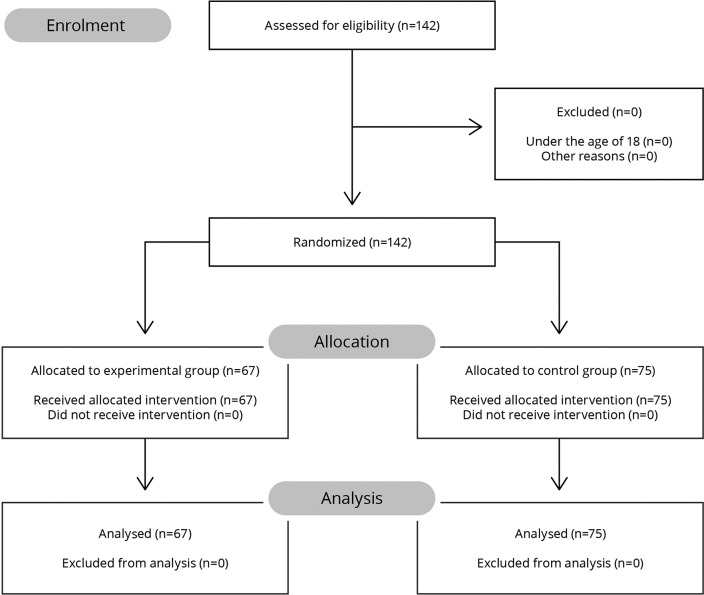
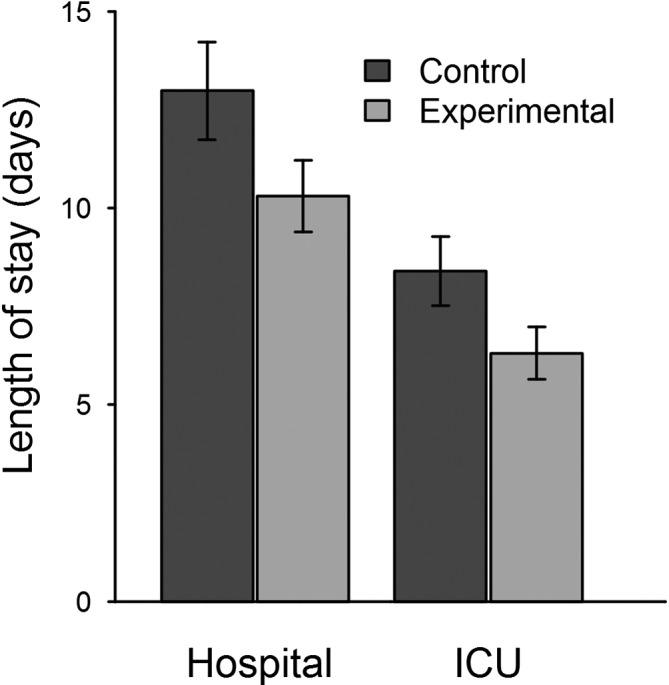
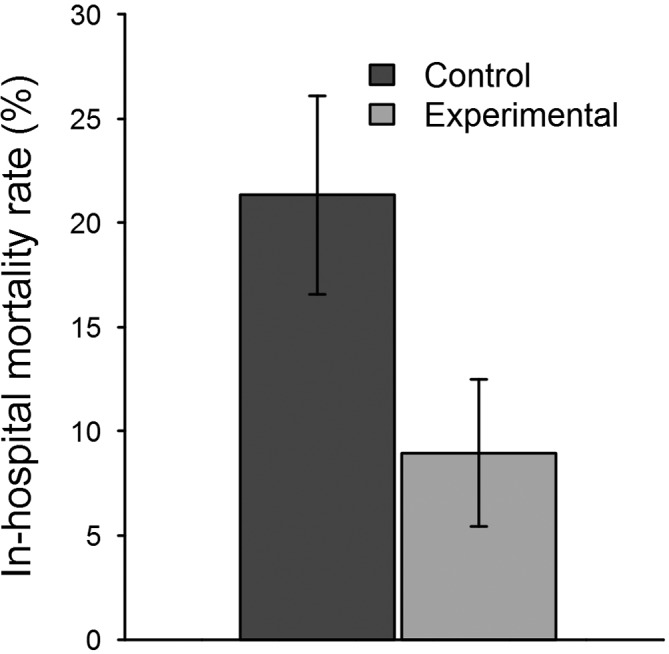
Introduction: Several methods have been developed to electronically monitor patients for severe sepsis, but few provide predictive capabilities to enable early intervention; furthermore, no severe sepsis prediction systems have been previously validated in a randomised study. We tested the use of a machine learning-based severe sepsis prediction system for reductions in average length of stay and in-hospital mortality rate. Methods: We conducted a randomised controlled clinical trial at two medical-surgical intensive care units at the University of California, San Francisco Medical Center, evaluating the primary outcome of average length of stay, and secondary outcome of in-hospital mortality rate from December 2016 to February 2017. Adult patients (18+) admitted to participating units were eligible for this factorial, open-label study. Enrolled patients were assigned to a trial arm by a random allocation sequence. In the control group, only the current severe sepsis detector was used; in the experimental group, the machine learning algorithm (MLA) was also used. On receiving an alert, the care team evaluated the patient and initiated the severe sepsis bundle, if appropriate. Although participants were randomly assigned to a trial arm, group assignments were automatically revealed for any patients who received MLA alerts. Results: Outcomes from 75 patients in the control and 67 patients in the experimental group were analysed. Average length of stay decreased from 13.0 days in the control to 10.3 days in the experimental group (p=0.042). In-hospital mortality decreased by 12.4 percentage points when using the MLA (p=0.018), a relative reduction of 58.0%. No adverse events were reported during this trial. Conclusion: The MLA was associated with improved patient outcomes. This is the first randomised controlled trial of a sepsis surveillance system to demonstrate statistically significant differences in length of stay and in-hospital mortality. Trial registration: NCT03015454.
Overview
The claims and statistics of this paper haven’t been checked yet.
Free: it reads the open-access text and checks the first 5 claims that cite a source we can check. Create a free account to check every claim.
Integrity signals
Registry
Cites
Statistics
Figures
Verification
Claims the paper makes
The claims and statistics of this paper haven’t been checked yet.
Free: it reads the open-access text and checks the first 5 claims that cite a source we can check. Create a free account to check every claim.
Claims other papers make about this one
Each is checked against this paper’s own text: does it say what the citing paper says it does?
The cited source doesn’t support the claim as written.
In the citing paper
“A pooled analysis of three RCTs did not demonstrate a mortality benefit of active screening (RR 0.90; 95% CI 0.51–1.58) [33–35].”
From Surviving sepsis campaign: international guidelines for management of sepsis and septic shock 2021 (2021) · cites this paper as [35]
Checked by a reasoning model — may be wrong.
Experimental — accuracy not yet measuredThe source backs part of the claim, not all of it — or backs it for a different population, condition or comparison.
In the citing paper
“A pooled analysis of three RCTs did not demonstrate a mortality benefit of active screening (RR, 0.90; 95% CI, 0.51-1.58)(33-35).”
From Surviving Sepsis Campaign: International Guidelines for Management of Sepsis and Septic Shock 2021. (2021) · cites this paper as [35]
Experimental — accuracy not yet measuredThe source backs part of the claim, not all of it — or backs it for a different population, condition or comparison.
In the citing paper
“Most (66%) post-implementation studies did not report real-world MLA performance (Figure 2), and of the 3 that did, one reported improved MLA performance58 while the other 2 showed marked declines,34,50”
From Deployment of machine learning algorithms to predict sepsis: systematic review and application of the SALIENT clinical AI implementation framework (2023) · cites this paper as [58]
Experimental — accuracy not yet measuredThe source backs part of the claim, not all of it — or backs it for a different population, condition or comparison.
In the citing paper
“Three papers using their own hospital data reported inquiries for data sharing were possible [28, 32, 35], two papers reported data would not be shared [25, 31].”
From Machine learning for the prediction of sepsis: a systematic review and meta-analysis of diagnostic test accuracy (2020) · cites this paper as [32]
Experimental — accuracy not yet measuredThe source backs part of the claim, not all of it — or backs it for a different population, condition or comparison.
In the citing paper
“Despite the rise in competing models and products for early sepsis detection [5], few machine learning models have been implemented as part of clinical care [6-8].”
From Integrating a Machine Learning System Into Clinical Workflows: Qualitative Study (2020) · cites this paper as [8]
Experimental — accuracy not yet measured
10 more claims about this paper
Create a free account to see every claim other papers make about this one.
Self-check
Percentages, sums and reported differences re-computed from the paper’s own numbers.
The self-check needs the paper’s full text.
Citations
Cites
The third international consensus definitions for sepsis and septic shock (Sepsis-3).
Singer, M., Deutschman, C. S., Seymour, C. W., Shankar-Hari, M., Annane, D., Bauer, M., Bellomo, R., Bernard, G. R., Chiche, J.-D., Coopersmith, C. M., et al. (2016) · JAMA · doi:10.1001/jama.2016.0287 · Cited by 28,250
Vincent, J. L., Moreno, R., Takala, J., Willatts, S., De Mendonça, A., Bruining, H., Reinhart, C. K., Suter, P. M., & Thijs, L. G. (1996) · Intensive Care Medicine · doi:10.1007/bf01709751 · Cited by 11,674
Early goal-directed therapy in the treatment of severe sepsis and septic shock
Rivers, E., Nguyen, B., Havstad, S., Ressler, J., Muzzin, A., Knoblich, B., Peterson, E., & Tomlanovich, M. (2001) · New England Journal of Medicine · doi:10.1056/nejmoa010307 · Cited by 10,743 · cited 1×
“Specifically, the prediction algorithm’s ability to identify patients with severe sepsis before onset provided the opportunity for early intervention, which has been widely shown to decrease patient mortality.(23) 24 Kumar et al 7 found that survival decreased by 7.”
MethodAngus, D. C., Linde-Zwirble, W. T., Lidicker, J., Clermont, G., Carcillo, J., & Pinsky, M. R. (2001) · Critical Care Medicine · doi:10.1097/00003246-200107000-00002 · Cited by 8,503
The Surviving Sepsis Campaign Guidelines Committee including The Pediatric Subgroup*, Dellinger, R. P., Levy, M. M., Rhodes, A., Annane, D., Gerlach, H., Opal, S. M., Sevransky, J. E., Sprung, C. L., Douglas, I. S., et al. (2013) · Intensive Care Medicine · doi:10.1007/s00134-012-2769-8 · Cited by 7,290
Kumar, A., Roberts, D., Wood, K. E., Light, B., Parrillo, J. E., Sharma, S., Suppes, R., Feinstein, D., Zanotti, S., Taiberg, L., et al. (2006) · Critical Care Medicine · doi:10.1097/01.ccm.0000217961.75225.e9 · Cited by 6,109 · cited 2×
“Although there is some controversy about the conclusions drawn by Kumar et al about the linear relationship between antibiotic timing and survival, as well as concerns that the researchers did not properly consider confounding factors in reporting their outcomes, conflicting evidence has largely shown that waiting to…”
BackgroundInfluentialA randomized trial of protocol-based care for early septic shock.
The ProCESS Investigators (2014) · New England Journal of Medicine · doi:10.1056/nejmoa1401602 · Cited by 2,414
Churpek, M. M., Snyder, A., Han, X., Sokol, S., Pettit, N., Howell, M. D., & Edelson, D. P. (2017) · American Journal of Respiratory and Critical Care Medicine · doi:10.1164/rccm.201604-0854oc · Cited by 689
Two Decades of Mortality Trends Among Patients With Severe Sepsis: A Comparative Meta-Analysis*
Stevenson, E. K., Rubenstein, A. R., Radin, G. T., Wiener, R. S., & Walkey, A. J. (2014) · Critical Care Medicine · doi:10.1097/ccm.0000000000000026 · Cited by 648
Monitor Alarm Fatigue : An Integrative Review
Cvach, M. (2012) · Biomedical Instrumentation & Technology · doi:10.2345/0899-8205-46.4.268 · Cited by 632
Cited by
Items 301–400 of 433
Machine Learning in Healthcare: Two Case Studies
Kang, R., Rantanen, E. M., & Youngstrom, E. A. (2022) · Proceedings of the Human Factors and Ergonomics Society Annual Meeting · doi:10.1177/1071181322661518 · Cited by 2
Application of artificial intelligence techniques in the intensive care unit
Ray, P., Sharma, S., & Raval, R. (2023) · International Journal of Reconfigurable and Embedded Systems (IJRES) · doi:10.11591/ijres.v12.i1.pp42-50 · Cited by 2
Abid, M. H. (2023) · Journal of clinical outcomes management · doi:10.12788/jcom.0130 · Cited by 2
Artificial Intelligence: An Overview
Jiang, H. (2023) · Springer eBooks · doi:10.1007/978-981-99-5925-9_1 · Cited by 2
Development and Validation of an Early Warning System for Septic Shock in Intensive Care Unit
Li, T., Cheng, Z., Jin, X., Lin, L., Nan, S., Lü, X., & Duan, H. (2023) · International Conference on Big Data and Information Analytics (BigDIA) · doi:10.1109/bigdia60676.2023.10429553 · Cited by 2
Using peptidomics and machine learning techniques to predict mortality of patients with septic shock
Byrne, H. (2018) · LA Referencia (Red Federada de Repositorios Institucionales de Publicaciones Científicas) · Cited by 2
Dynamic Detection of Delayed Cerebral Ischemia Using Machine LearningPreprint
Megjhani, M., Terilli, K., Alkhachroum, A. M., Roh, D. J., Agarwal, S., Connolly, E. S., Velazquez, A. G., Boehme, A. K., Claassen, J., & Park, S. (2020) · medRxiv · doi:10.1101/2020.04.15.20067041 · Cited by 2
Tsang, G. (2022) · Cronfa (Swansea University) · doi:10.23889/suthesis.61814 · Cited by 2
Yi, S. H. (2023) · DR-NTU (Nanyang Technological University) · doi:10.32657/10356/174204 · Cited by 2
Course Corrections for Clinical AI
DeGrave, A. J., Janizek, J. D., & Lee, S. (2021) · Kidney360 · doi:10.34067/kid.0004152021 · Cited by 1
Prediction of sepsis for the intensive care unit patients with stream mining and machine learning
Akyüz, M., Doğan, Y., Koçyiğit, A., & Miran, A. P. (2024) · Pamukkale University Journal of Engineering Sciences · doi:10.5505/pajes.2023.84899 · Cited by 1
Highlights from the Respiratory Failure and Mechanical Ventilation Conference 2024
Bianquis, C., Leo, G. D., Morana, G., Silva, M. A., Nolasco, S., Vilde, R., Tripipitsiriwat, A., Viegas, P., Purenkovs, M., Duiverman, M. L., et al. (2024) · Breathe · doi:10.1183/20734735.0105-2024 · Cited by 1
Cunha, W. S. P., Ferreira, M., Felipp, R. D. R. F., Saraiva, G. L., Macedo, N. C., Lima, V. O., Marques, E. L. A., Ferrari, E. C., Pacheco, A. B., Cabral, T., et al. (2025) · The American Journal of Public Health · doi:10.52338/tajoph.2025.4832 · Cited by 1
Musbahi, O., Pouris, K., Hadjixenophontos, S., Al-Saadawi, A., Soteriou, I., Cobb, J. P., & Jones, G. G. (2025) · World Journal of Methodology · doi:10.5662/wjm.v15.i4.105493 · Cited by 1
Emerging Paradigms in Sepsis Management: Critical Insights from Contemporary Clinical Trials
Sasidharan, S., & Dhillon, H. S. (2025) · APIK Journal of Internal Medicine · doi:10.4103/ajim.ajim_32_25 · Cited by 2
Ranard, B. L., Qian, M., Cummings, M. J., Zhang, D. Y., Lee, S. M., Beitler, J. R., Applebaum, J. R., Schenck, E. J., Mohamed, H., Trepp, R., et al. (2025) · BMJ Open · doi:10.1136/bmjopen-2024-088792 · Cited by 1
Severin, A.-M. N., Radu, A.-C., Rapan, I., & ULMET, L.-A. (2025) · International Journal of Academic Research in Economics and Management Sciences · doi:10.6007/ijarems/v14-i3/26215 · Cited by 1
AI-Driven Triage Systems in Emergency Healthcare
Das, B. C., Khan, K. M., & Ahmad, M. (2025) · Advances in computational intelligence and robotics book series · doi:10.4018/979-8-3373-7062-0.ch007 · Cited by 1
Intérêt de l’intelligence artificielle en anesthésie-réanimation
Ariès, P., Belot, F., Py, N., Humbert, P., & Dubost, C. (2025) · EMC-Anesthésie réanimation/Encyclopédie médico-chirurgicale. Anesthésie, réanimation · doi:10.1016/s0246-0289(25)48411-4 · Cited by 1
Ni, M., Liu, W., Li, M., Zhou, S., Cai, X., Zhang, Z., & Zhang, Y. (2026) · BMC Infectious Diseases · doi:10.1186/s12879-026-13227-4 · Cited by 1
Paez, R., Khalil, T. A., Forero, Y., Woodhouse, P., Antic, S., Holmes, H. M., Fremont, R. D., Brandt, W. S., Chen, H., Chen, S., et al. (2026) · Trials · doi:10.1186/s13063-026-09727-y · Cited by 1
Garcés, M. G., García, J. V., Triana, C. J., Montoya, J. C., & Rincón, E. H. H. (2026) · Frontiers in Digital Health · doi:10.3389/fdgth.2026.1794922 · Cited by 1
Xu, Y., Veillard, J. H. M., & Kong, J. D. (2026) · Journal of Medical Internet Research · doi:10.2196/95157 · Cited by 1
MACHINE LEARNING TO DEVELOP A MODEL THAT PREDICTS EARLY IMPENDING SEPSIS IN NEUROSURGICAL PATIENTS
Vlachos, E., Gkinis, A. S., Papastergiou, V., Tsitsipanis, C., & Giannakopoulos, G. (2022) · Hellenic Conference on Artificial Intelligence · doi:10.1145/3549737.3549795 · Cited by 1
IMPACTO DA IMPLEMENTAÇÃO DA INTELIGÊNCIA ARTIFICIAL NO DIAGNÓSTICO DE SEPSE
Pereira, G. L. S., Menezes, I. S., Oliveira, L. A., Lima, B. M., Santana, M. V., & Oliveira, D. M. D. L. (2022) · doi:10.29327/1148514.1-5 · Cited by 1
Artificial Intelligence and Anesthesia
Güçlü, Ç. Y. (2022) · Journal of Ankara University Faculty of Medicine · doi:10.4274/atfm.galenos.2022.19981 · Cited by 1
Scoring for Hemorrhage Severity in Traumatic Injury
Shickel, B., Balch, J. A., Aggas, J. R., Loftus, T. J., Kotanen, C. N., Rashidi, P., & Guiseppi‐Elie, A. (2022) · Biomarkers in disease · doi:10.1007/978-3-030-87302-8_58-1 · Cited by 1
Scoring for Hemorrhage Severity in Traumatic Injury
Shickel, B., Balch, J. A., Aggas, J. R., Loftus, T. J., Kotanen, C. N., Rashidi, P., & Guiseppi‐Elie, A. (2023) · Biomarkers in disease · doi:10.1007/978-3-031-07395-3_58 · Cited by 1
Information Management and Technology
Gruss, C. L., & Ehrenfeld, J. M. (2024) · Elsevier eBooks · doi:10.1016/b978-0-323-93273-8.00029-8 · Cited by 1
Evolution of Generative AI in Healthcare
Thakur, N. (2024) · Advances in medical technologies and clinical practice book series · doi:10.4018/979-8-3693-3731-8.ch002 · Cited by 1
Transformative AI in Biomedicine Analysis: Applications, Challenges, and Future Directions
Tiwari, N. K. (2024) · Advances in information security, privacy, and ethics book series · doi:10.4018/979-8-3693-9311-6.ch006 · Cited by 1
Inteligência artificial no combate à sepse: apoiando o diagnóstico e tratamento clínico
Silva, M. O. C., Riguetti, S. L., Vignoli, J. M., Monnerat, M. E. L. G., de Moura, F. N., Glioche, R. A., Lott, G. D. C., Ribeiro, A. C. M., Ferreira, N. L. C., & Pereira, A. F. (2025) · Revista Eletrônica Acervo Saúde · doi:10.25248/reas.e19761.2025 · Cited by 1
Silva, M. C. C. D., & Pereira, J. D. (2023) · Journal of Health Informatics and Digital Systems · doi:10.68159/a116625728 · Cited by 1
Reactive Artificial Intelligence Using Big Data in the Era of Precision Medicine—Reply
Loftus, T. J., Upchurch, G. R., & Bihorac, A. (2020) · JAMA Surgery · doi:10.1001/jamasurg.2020.0856 · Cited by 1
Opportunity Is Knocking: Brainstorming Neural Networks for Management of Acute Pancreatitis
Kothari, D. J., & Sheth, S. G. (2020) · Pancreas · doi:10.1097/mpa.0000000000001716 · Cited by 1
Chiotos, K., Sartori, L. F., & Balamuth, F. (2022) · Critical Care Medicine · doi:10.1097/ccm.0000000000005278 · Cited by 1
Utilizing HPC Systems to Serve Compute-Intensive Tasks from a Data Lake Managing Sensitive Data
Nolte, H. (2024) · eDiss (Georg-August-Universität Göttingen) · doi:10.53846/goediss-10785 · Cited by 1
León, C. (2021) · theses.fr (ABES) · doi:10.70675/5e059775z2cddz4760zacc2z72a4b3104e4e · Cited by 1
Reinventing Clinical Decision Support
Cerrato, P. L., & Halamka, J. D. (2019) · Elsevier eBooks · doi:10.1016/b978-0-12-814923-2.00007-6
Sepsis Screening Tool Increased the Usage of Sepsis Order Set
Liengsawangwong, R. (2019) · doi:10.21007/chp.hiim.0066
Impact of COVID-19 on Health Infrastructure and Wellness
Bithal, P. K., & Rath, G. P. (2020) · Journal of Neuroanaesthesiology and Critical Care · doi:10.1055/s-0040-1721520
Detecting Patient Health Trajectories Using a Full-Body Burn Physiology Model
Baird, A. J., Amos‐Binks, A., Tatum, N., White, S., Hackett, M., & Serio-Melvin, M. L. (2021) · BioMedInformatics · doi:10.3390/biomedinformatics1030009
Mining frequent patterns and their evolution in continuous-time temporal networks
Jazayeri, A. R., & Yang, C. C. (2021) · iDEA - Drexel University Institutional Repository · doi:10.17918/00000919
Ren, W., CHEN, J., Liu, J., Fu, Z., Yao, Y., Chen, X., & Teng, L. (2022) · Research Square · doi:10.21203/rs.3.rs-885651/v1
Ηθικά διλήμματα από την εφαρμογή της Τεχνητής Νοημοσύνης σε κλινικές μελέτες
Σαργιώτης, Γ.-Χ. (2023) · Bioethica · doi:10.12681/bioeth.34074
Improving COVID-19 Predictions with Multimodal Neural Networks
Boyd, I., Hedges, D. M., Carter, B. T., & Whitaker, B. M. (2023) · Intermountain Engineering, Technology and Computing (IETC) · doi:10.1109/ietc57902.2023.10152122
Vidal, I. P., Pereira, M. R., Freire, A. P., Resende, U., & Maziero, E. G. (2023) · Anais do Simpósio Brasileiro de Sistemas de Informação (SBSI) · doi:10.1145/3592813.3592918
Portable Early Prediction of Sepsis from Clinical Data on Intel Myriad X
Mathur, P. K. (2020) · Zenodo (CERN European Organization for Nuclear Research) · doi:10.5281/zenodo.3727529
Impact of Artificial Intelligence on Medical Science Post Covid 19 Pandemic
Aryaman, Y., & Tyagi, A. K. (2023) · Wiley eBooks · doi:10.1002/9781394166954.ch13
Die aktuelle Sepsisleitlinie – was müssen Sie wissen?
Kochanek, M., & David, S. (2023) · Die Innere Medizin · doi:10.1007/s00108-023-01585-z
Exploiting Electronic Data to Advance Knowledge and Management of Severe Infections
Laupland, K. B., Tabah, A., White, K. C., & Ramanan, M. (2023) · Current Infectious Disease Reports · doi:10.1007/s11908-023-00815-7
Gulati, A. (2023) · Springer eBooks · doi:10.1007/978-981-99-6472-7_1
Early Prediction of Sepsis Using Machine Learning Algorithms: A Review
Shanthi, N., Aadhishri, A., Suganthe, R. C., & Gao, X. (2024) · Communications in computer and information science · doi:10.1007/978-3-031-50993-3_10
Kochanek, M., & David, S. (2024) · Wiener klinisches Magazin · doi:10.1007/s00740-024-00527-1
Early Prediction of Sepsis Utilizing Multi-branches Multi-tasks Hybrid Deep Learning Model
Hao, P.-Y. (2024) · Lecture notes in networks and systems · doi:10.1007/978-3-031-65522-7_6
Jain, D., Gupta, A., Pandey, A. K., & Vats, P. (2024) · Wiley eBooks · doi:10.1002/9781119905202.ch26
Artificial Intelligence Liability Theories in Medicine
Griffin, F. M. (2024) · Elsevier eBooks · doi:10.1016/b978-0-443-12128-9.00005-x
Prediction of mortality in sepsis patients using stacked ensemble machine learning algorithm
Babu, M., Sappani, M., Joy, M., Chandiraseharan, V. K., Jeyaseelan, L., & Sudarsanam, T. (2024) · Journal of Postgraduate Medicine · doi:10.4103/jpgm.jpgm_357_24 · Cited by 1
Talukdar, N. B. (2024) · African Journal of Biomedical Research · doi:10.53555/ajbr.v27i5s.5216
Rahmadani, F., Simsekler, M. C. E., Omar, M., Anwar, S., & Shidi, A. M. A. (2025) · doi:10.2196/preprints.74093
Chowdary, B. L. C., & Jaisharma, K. (2025) · AIP conference proceedings · doi:10.1063/5.0264781
Heinl, P., Reichl-Streich, A.-J., & Hof, H. (2025) · IEEE International Conference on Healthcare Informatics (ICHI) · doi:10.1109/ichi64645.2025.00078
Intelligent Healthcare: Exploring the Role of AI in Medical Data Analysis and Decision Making
Amin, M. H. (2025) · Global Trends in Science and Technology · doi:10.70445/gtst.1.2.2025.84-96
Tuccio, L., Catapano, T., Elwell, J., Dupont, N., Sines, E., & Pisanelli, F. (2025) · Journal of Doctoral Nursing Practice · doi:10.1891/jdnp-2025-0034
Tıbbi Mikrobiyoloji ve Yapay Zekâ
Kocaağa, M. (2025) · Akademisyen Kitabevi eBooks · doi:10.37609/akya.3834.c1062
Burdick, H., Pino, E., Gabel-Comeau, D., Gu, C., Roberts, J., Le, S., Slote, J., Saber, N., Pellegrini, E., Green‐Saxena, A., et al. (2020) · Figshare · doi:10.6084/m9.figshare.13152208
Self-citationHoops, K. E. M., Fackler, J. C., King, A. F., Colantuoni, E., Milstone, A. M., & Woods-Hill, C. Z. (2020) · Figshare · doi:10.6084/m9.figshare.12607283
Chicco, D., & Oneto, L. (2021) · Figshare · doi:10.6084/m9.figshare.13710982
Η τεχνητή νοημοσύνη ως όχημα επιχειρηματικότητας και καινοτομίας στην υγεία
Γασπαράκης, Ν. (2022) · Dione (University of Piraeus) · doi:10.26267/unipi_dione/2580
Guo, F., Zhu, X., Wu, Z., Zhu, L., Wu, J., & Zhang, F. (2022) · Figshare · doi:10.6084/m9.figshare.20056621
Chen, Q., Li, R., Lin, C., Lai, C., Chen, D., Qu, H., Huang, Y., Lu, W., Tang, Y., & Li, L. (2024) · Figshare · doi:10.6084/m9.figshare.26558174
Hoops, K. E. M., Fackler, J. C., King, A. F., Colantuoni, E., Milstone, A. M., & Woods-Hill, C. Z. (2020) · Figshare · doi:10.6084/m9.figshare.12607286
Boussina, A. E. (2024) · eScholarship (California Digital Library)
Noboa, J. A., & Noboa, J. A. (2024) · UA Campus Repository (The University of Arizona)
Piri, R. (2025) · UTUPub (University of Turku)
Αξιολόγηση της αποτελεσματικότητας των αλγορίθμων μηχανικής μάθησης για την πρόβλεψη εμφάνισης σήψης
Κάρη, Α.-Χ. Κ., & Κάρη, Α.-Χ. Κ. (2024) · University of Thessaly Institutional Repository (University of Thessaly)
(2019) · OAPEN (The OAPEN Foundation)
The Use of Machine Learning in Assessing Suicide Risk: A Meta-analysis
Kang, R. (2021) · RIT Scholar Works (Rochester Institute of Technology)
Cano-Jiménez, R., Palencia-Viscarra, R., & Palencia-Diaz, R. (2025) · Revista CONAMED · doi:10.35366/122049
Precision Medicine in Sepsis: From Biomarkers to Bedside
MEŞE, E. A., YÜCE, Z. T., Eren, E. E., Tufan, Z. K., Eser, F., Oktay, Z., Beder, D., Yaman, M., Altındiş, M., Baddal, B., et al. (2025) · doi:10.59537/saupress.2486
Gavit, K., Mundhe, S., Khaire, S., Pawar, R., & Kothawade, N. (2026) · International Journal For Multidisciplinary Research · doi:10.36948/ijfmr.2026.v08i01.61870
Lowney, E. L., Hirth, S., Fanning, L., Duke, G. J., & Roodenburg, O. S. (2026) · Research Square · doi:10.21203/rs.3.rs-8188665/v1
Temporal Sepsis Modeling: a Relational and Explainable-by-Design FrameworkPreprint
Lemaire, V., Meloulli, N., & Jaquet, P. (2026) · arXiv (Cornell University) · doi:10.48550/arxiv.2601.21747
Artificial Intelligence in Healthcare: «Medicine» or «Poison»?
Анатольевна, К. О. (2026) · Issues of Economic Theory · doi:10.52342/2587-7666vte_2026_1_215_227
Balla, J. C. L., Cevallos, E. S. L., Vinueza, E. L. A., Jácome, B. F. R., & Chancay, K. S. S. (2026) · ASCE MAGAZINE · doi:10.70577/asce.v5i1.746
Exploring AI: Its Promise, Pitfalls and Impact on Pharmacy
Bhavyasree, A. (2025) · doi:10.61096/978-81-994851-8-1_10
Interesse dell'intelligenza artificiale in anestesia-rianimazione
Aries, P., Belot, F., Py, N., Humbert, P., & Dubost, C. (2026) · EMC - Anestesia-Rianimazione · doi:10.1016/s1283-0771(26)51713-4
Role of artificial intelligence in health sector: review of literature
Sharma, K., & Sharma, R. L. (2026) · International Journal of Community Medicine and Public Health · doi:10.18203/2394-6040.ijcmph20261451
Operational Integration and Temporal Validation of a Continuously Deployed ICU Prediction Model
Nishiyama, S. M., Uchino, S., Saito, T., Fukano, K., Ono, S., Kamio, T., & Katayama, S. (2026) · Critical Care Medicine · doi:10.1097/ccm.0000000000007181
Predicting Sepsis Onset in ICUs: A Graph Neural Network Framework with Uncertainty Estimation
Furtney, I., Bradley, R. M., & Kabuka, M. R. (2026) · ACM Transactions on Computing for Healthcare · doi:10.1145/3820761
Cosma, C., Butiurcă, V. O., Botoncea, M., Molnar, D., & Molnar, C. (2026) · Primary and Hospital Care · doi:10.3390/phc25010006
Buku Ajar Keperawatan Gawat Darurat (Kurikulum Pendidikan Ners Indonesia Tahun 2024)
Anto, A. (., Syabariyah, S. (., Asih, W. (., Safariah, T. D. (., Ernawati, E. (., Santoso, D. A. (., Vatmasari, R. A. (., Dinaryanti, R. S. (., Rebon, R. (., Musri, M. (., et al. (2026) · Neliti
Jin, Q., Mazhude, F., Rabb, J. B., Kramer, R. S., Sawyer, D. B., & Winslow, R. L. (2026) · arXiv (Cornell University) · doi:10.48550/arxiv.2607.09165
Saribu, H. J. D., Rakhmawati, W., Mediawati, A. S., Yulita, I. N., Tumanggor, R. D., & Novera, M. (2026) · Journal of Multidisciplinary Healthcare · doi:10.2147/jmdh.s619390
Feng, Q. Y., Miao, H., Li, W., & Wu, Y. (2026) · Research Square · doi:10.21203/rs.3.rs-10188056/v1
Machine Learning as Healthcare Catalyst for Data, Infrastructure, and Impact Assessment
Goswami, S., Sharma, S., & Agarwal, P. K. (2026) · International Conference on Computing Methodologies and Communication (ICCMC) · doi:10.1109/iccmc69250.2026.11624726
Classification and Prediction of Sepsis Disease using Randomized Weighted Optimization Model
Thangamma, N. G., Babby, E., & Jecintha, P. (2026) · International Conference on Inventive Computation and Information Technologies (ICICIT) · doi:10.1109/icicit69063.2026.11634212
Parzniewski, M., Ostruszka, N., Marusińska, M., Karpiński, M., Czyz, W., Kolawa, S., Markiewicz, W., Borowiec, A., Pilecka, J., & Wojciechowski, J. (2026) · International Journal of Innovative Technologies in Social Science · doi:10.31435/ijitss.3(51).2026.5768
Metadata
- Authors
- Shimabukuro, D. W., Barton, C. W., Feldman, M. D., Mataraso, S. J., & Das, R.
- Affiliations
- University of California, San Francisco (US)
- University of California, Berkeley (US)
- Dascena (United States) (US)
- Corresponding author
- Das, Ritankar
- Venue
- BMJ Open Respiratory Research
- Publisher
- BMJ
- Published
- 2017-11
- Volume
- 4
- Issue
- 1
- Pages
- e000234
- ISSN
- 2052-4439 (ISSN-L)
- PMC
- PMC5687546
- OpenAlex
- W2768083064
- Semantic Scholar
- 04df1188faf6674173ea875ce187a32c8992e911
- Cited by
- 382
- References
- 33
- Citations by year
- 2026: 38 · 2025: 38 · 2024: 60 · 2023: 46 · 2022: 50 · 2021: 48 · 2020: 60 · 2019: 34 · 2018: 7 · 2017: 1
- FWCI
- 21.84
- Type
- journal article
- Language
- en
- Open access
- gold
- doi.org
- Licence
- cc-by-nc
- Locations
- BMJ Open Respiratory Research (publishedVersion, cc-by-nc)
- Europe PMC (PubMed Central) (publishedVersion, cc-by-nc)
- PubMed Central (publishedVersion, cc-by-nc)
- PubMed (publishedVersion)
- eScholarship (California Digital Library) (submittedVersion)
- eScholarship (California Digital Library) (submittedVersion, cc-by-nc)
- Funders
- National Institute of Nursing Research
- National Science Foundation
- Topics
- Health Sciences › Medicine › Critical Care and Intensive Care Medicine › Sepsis Diagnosis and Treatment
- Physical Sciences › Computer Science › Artificial Intelligence › Machine Learning in Healthcare
- Health Sciences › Medicine › Surgery › Healthcare Technology and Patient Monitoring
- Keywords
- severe sepsis, sepsis prediction, machine learning algorithms, electronic surveillance, early warning alerts, in-hospital mortality, length of hospital stay, intensive care unit, sepsis bundle, clinical decision support
About these checks
Registry, retraction, Cites and statistics results are computed, not judged, with one exception: a printed reference that no index lists is read once by a model before it counts as a citation error. Claims are extracted by a model and kept only when their quote appears verbatim in the text; each cited source is then checked, with a model’s help, for whether it says what the claim relies on. Those verdicts can be wrong — read the claim’s quote and the cited source before relying on one.
Statistics and arithmetic are recomputed, not judged.
Confidence bands are shown only for fields calibrated on our annotated test set. None is calibrated yet, so no band is shown.
What counts as a claim ›How we measure confidence ›How we check this ›
Are you an author, or do you see a problem with this page? Request a review
Data sources
Bibliographic data: Semantic Scholar, OpenAlex, Crossref.
Contains information from the Semantic Scholar Academic Graph Datasets, made available under the ODC Attribution License (ODC-BY 1.0).
Semantic Scholar’s data is described in: Kinney, R., et al. (2023). The Semantic Scholar Open Data Platform. arXiv:2301.10140.
