

Spatial dimension of macrophage heterogeneity in liver diseases
Open accessThe DOI matches its Crossref record; 52 of the 52 references it cites were found in a registry or an index.
Abstract
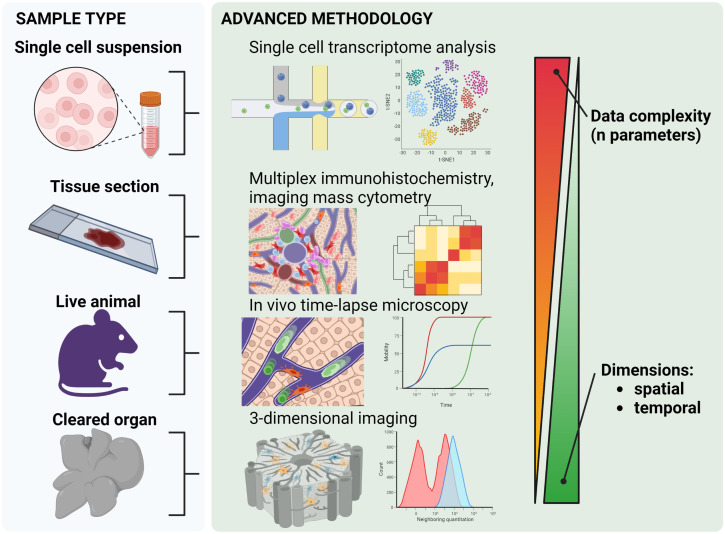
The structural and cellular organisation of the liver has unique features that define it as both a metabolic and an immunological organ. Noteworthy, liver resident macrophages, named Kupffer cells, represent the most frequent tissue resident macrophage population in the human body. Nonetheless, on acute or chronic tissue injury, Kupffer cells seem rather static and may undergo cell death, while the liver is massively infiltrated by circulating immune cells such as bone marrow-derived macrophages, also termed monocyte-derived macrophages, which drastically alter the hepatic immune landscape. Over the last decade, our knowledge on liver macrophage populations during homeostasis and liver diseases has greatly expanded. This particularly holds true in light of the recent fast-paced technological advances that brought novel dimensions to our knowledge, either in single-cell suspensions, in a two-dimensional plane or a three-dimensional space, or even in time-lapse (intravital) microscopy. This novel understanding goes from unravelling a previously underestimated macrophage diversity (eg, in terms of activation phenotype or cellular origins) to identifying spatially or temporally restricted responses that drive liver disease outcome. This review aims at providing insights into the most recent breakthroughs in our understanding of liver macrophage biology and its roles in liver (patho)physiology, in a four-dimensional perspective.
Overview
The claims and statistics of this paper haven’t been checked yet.
Free: it reads the open-access text and checks the first 5 claims that cite a source we can check. Create a free account to check every claim.
Integrity signals
Registry
Cites
Statistics
Figures
Verification
Claims the paper makes
The claims and statistics of this paper haven’t been checked yet.
Free: it reads the open-access text and checks the first 5 claims that cite a source we can check. Create a free account to check every claim.
Claims other papers make about this one
Each is checked against this paper’s own text: does it say what the citing paper says it does?
In the citing paper
“Fast-paced recent advances in single-cell-resolved technologies have allowed the scientific community to dissect the liver cellular landscape with unprecedented depth, particularly highlighting the previously overlooked intricate cellular crosstalk between the liver and immune cells [332–334].”
From Inflammation and immunity in liver homeostasis and disease: a nexus of hepatocytes, nonparenchymal cells and immune cells (2025) · doi:10.1038/s41423-025-01313-7 · cites this paper as [333]
In the citing paper
“RNA sequencing studies revealed evidence of differentiation, with early lineage genes—which are predominant in fetal liver—being downregulated in favor of increased expression of genes associated with hepatic maturation, hematopoiesis, and stromal development, reaching levels intermediate between fetal and adult human liver, accompanied by an upregulation of genes related to regeneration [23,41,42”
From Decellularized liver scaffolds for constructing drug-metabolically functional ex vivo human liver models (2025) · cites this paper as [42]
Self-check
Percentages, sums and reported differences re-computed from the paper’s own numbers.
The self-check needs the paper’s full text.
Citations
Cites
La Manno, G., Soldatov, R., Zeisel, A., Braun, E., Hochgerner, H., Petukhov, V., Lidschreiber, K., Kastriti, M. E., Lönnerberg, P., Furlan, A., et al. (2018) · Nature · doi:10.1038/s41586-018-0414-6 · Cited by 4,118
Efremova, M., Vento-Tormo, M., Teichmann, S. A., & Vento-Tormo, R. (2020) · Nature Protocols · doi:10.1038/s41596-020-0292-x · Cited by 3,449
Single-cell reconstruction of the early maternal–fetal interface in humans
Vento-Tormo, R., Efremova, M., Botting, R. A., Turco, M. Y., Vento-Tormo, M., Meyer, K. B., Park, J.-E., Stephenson, E., Polański, K., Goncalves, A., et al. (2018) · Nature · doi:10.1038/s41586-018-0698-6 · Cited by 2,358
Tissue-resident macrophages originate from yolk-sac-derived erythro-myeloid progenitors
Gomez Perdiguero, E., Klapproth, K., Schulz, C., Busch, K., Azzoni, E., Crozet, L., Garner, H., Trouillet, C., de Bruijn, M. F., Geissmann, F., et al. (2015) · Nature · doi:10.1038/nature13989 · Cited by 2,339
Resolving the fibrotic niche of human liver cirrhosis at single-cell level
Ramachandran, P., Dobie, R., Wilson-Kanamori, J. R., Dora, E. F., Henderson, B. E. P., Luu, N. T., Portman, J. R., Matchett, K. P., Brice, M., Marwick, J. A., et al. (2019) · Nature · doi:10.1038/s41586-019-1631-3 · Cited by 1,784 · cited 1×
“17 20–25 This series of studies on TREM2 + macrophages very well illustrates the value of multidimensional analyses for opening novel research avenues by highlighting markers of interest that might not have been identified yet.”
Self-citationLiver Macrophages in Tissue Homeostasis and Disease
Krenkel, O., & Tacke, F. (2017) · Nature Reviews Immunology · doi:10.1038/nri.2017.11 · Cited by 1,424
Self-citationFausto, N., Campbell, J. S., & Riehle, K. J. (2006) · Hepatology · doi:10.1002/hep.20969 · Cited by 1,378
Single-cell spatial reconstruction reveals global division of labour in the mammalian liver
Halpern, K. B., Shenhav, R., Matcovitch-Natan, O., Tóth, B., Lemze, D., Golan, M., Massasa, E. E., Baydatch, S., Landen, S., Moor, A. E., et al. (2017) · Nature · doi:10.1038/nature21065 · Cited by 1,059 · cited 1×
“33 34 This is increasingly recognised as true for liver macrophages as well.”
Spatial proteogenomics reveals distinct and evolutionarily conserved hepatic macrophage niches
Guilliams, M., Bonnardel, J., Haest, B., Vanderborght, B., Wagner, C., Remmerie, A., Bujko, A., Martens, L., Thoné, T., Browaeys, R., et al. (2022) · Cell · doi:10.1016/j.cell.2021.12.018 · Cited by 985 · cited 3×
“37 In the healthy liver, a small population of these portal area-located macrophages were identified as ‘lipid-associated macrophages’ (LAMs) due to their similarities with macrophages accumulating during liver steatosis.”
Wen, Y., Lambrecht, J., Ju, C., & Tacke, F. (2021) · Cellular & Molecular Immunology · doi:10.1038/s41423-020-00558-8 · Cited by 695 · cited 1×
“14 sIngle-Cell rnA sequenCIng reveAled mACrophAge dIversIty Recent years have seen a sharp increase in single-cell RNA sequencing data generation, mostly allowed by the systematic use of this approach and easier access to reagents, materials and bioinformatics.”
Self-citation
Cited by
Alcohol-associated liver disease
Mackowiak, B., Fu, Y., Maccioni, L., & Gao, B. (2024) · Journal of Clinical Investigation · doi:10.1172/jci176345 · Cited by 359
“However, recent studies have identified many subsets of macrophages, with some of them playing an important role in promoting liver repair and fibrosis resolution (38, 39), thus, selective inhibition of inflammatory macrophage infiltration may achieve better clinical outcomes for ALD treatment.”
Immune microenvironment in hepatocellular carcinoma: from pathogenesis to immunotherapy
Seyhan, D., Allaire, M., Fu, Y., Conti, F., Wang, X. W., Gao, B., & Lafdil, F. (2025) · Cellular and Molecular Immunology · doi:10.1038/s41423-025-01308-4 · Cited by 165
“Macrophages are generally found in two forms in the liver: in fi ltrated monocyte-derived macrophages and liver-resident macrophages named KCs, with the latter representing approximately one-third of nonparenchymal cells in the human liver [87 – 89].”
(2025) · doi:10.1038/s41423-025-01313-7 · Cited by 97
Self-citationAngiocrine signaling in sinusoidal homeostasis and liver diseases
Gao, J., Lan, T., Kostallari, E., Guo, Y., Lai, E., Guillot, A., Ding, B., Tacke, F., Tang, C., & Shah, V. H. (2024) · Journal of Hepatology · doi:10.1016/j.jhep.2024.05.014 · Cited by 90
Self-citationImmunopathogenic mechanisms and immunoregulatory therapies in MASLD
He, Y., Chen, Y., Qian, S., van Der Merwe, S., Dhar, D., Brenner, D. A., & Tacke, F. (2025) · Cellular & Molecular Immunology · doi:10.1038/s41423-025-01307-5 · Cited by 81
“Over the past decade, high-resolution methods, such as single-cell RNA sequencing (scRNAseq), single-nuclear RNA sequencing (snRNAseq), spatial transcriptomics, and spatial proteogenomics, have substantially increased our knowledge of different macrophage subsets [27].”
Self-citationMacrophage Signaling Pathways in Health and Disease: From Bench to Bedside Applications
Chi, Y., Jiang, H., Yin, Y., Zhou, X., Shao, Y., Li, Y., & Rao, J. (2025) · MedComm · doi:10.1002/mco2.70256 · Cited by 62
“…vary slightly across different tissues and organs; some are exclusively derived from the yolk sac (e.g., brain microglia), while others arise from both the yolk sac and the fetal liver (e.g., dermal Langerhans cells, alveolar macrophages, hepatic Kupffer cells (KCs), and cardiac macrophages) [14].”
Feng, D., Guan, Y., Wang, Y., Maccioni, L., Mackowiak, B., & Gao, B. (2025) · eGastroenterology · doi:10.1136/egastro-2025-100189 · Cited by 37
The Role of Mitochondrial Quality Control in Liver Diseases: Dawn of a Therapeutic Era
Li, J., Liu, W., Zhang, J., & Sun, C. (2025) · International Journal of Biological Sciences · doi:10.7150/ijbs.107777 · Cited by 29
“Recent studies through single-cell RNA sequencing have revealed that macrophages exhibit a considerably phenotypic diversity than previously established M1/M2 paradigm, underscoring the spatial and time dimension of macrophage heterogeneity in the liver [118].”
Fan, Z., Jin, M., Zhang, L., Wang, N., Li, M., Wang, C., Feng, W. Q., Zhang, P., Du, X., Sun, X., et al. (2023) · Gut · doi:10.1136/gutjnl-2023-330461 · Cited by 25
“44 Collectively, we believe that gross classification may aid in assessing the TME, especially in immunophenotyping TME throughout HCC cancer stages.”
Liu, H., Yin, G., Franco Leonardi, B., Lan, T., Ait Ahmed, Y., Berger, H., Kohlhepp, M. S., Amiridze, N., Martagón Calderón, N., Frau, C., et al. (2025) · Gut · doi:10.1136/gutjnl-2024-334425 · Cited by 23
“…Orm2 in mouse primary hepatocytes and in Od- m-BECs to obtain BEC and hepatocyte conditioned media (CM) to Cyp2e1 and Mrc1 were upregulated while the gene expression of Nos2 and Il1b were downregulated in mLMFs cultured with CM from mHepaC-si Orm2 (vs mHepaC-Ctrl) (online supplemental figure S12A).”
Self-citationWang, Y., Guan, Y., Feng, D., Maccioni, L., Parra, M. A., Peiffer, B., Mackowiak, B., Kuwabara, T., Mori, K., Mukoyama, M., et al. (2025) · Cellular & Molecular Immunology · doi:10.1038/s41423-025-01343-1 · Cited by 23
Fan, Z., Zou, X., Wang, G., Liu, Y., Jiang, Y., Wang, H., Zhang, P., Feng, W. Q., Du, X., Wang, M., et al. (2024) · Nature Communications · doi:10.1038/s41467-024-44748-8 · Cited by 23
Ahamed, F., Eppler, N., Jones, E., & Zhang, Y. (2024) · Livers · doi:10.3390/livers4030033 · Cited by 22
“Developing personalized, macrophage-targeted interventions for MASH treatment continues to present significant challenges for several reasons.”
Hou, X., Ding, H., Wang, H., Wang, J., Liu, H., Hu, H., Billington, C., Wang, R., & Zhang, L. (2025) · Gut Microbes · doi:10.1080/19490976.2025.2524540 · Cited by 18
“33 Intestinal macrophages (IMs) are uniquely programmed to tolerate exposure to bacteria without mounting potent inflammatory responses.”
Reviewing the function of macrophages in liver disease
Chen, L., Guillot, A., & Tacke, F. (2025) · Expert Review of Gastroenterology & Hepatology · doi:10.1080/17474124.2025.2508963 · Cited by 17
Self-citationMultiscale modeling of drug-induced liver injury from organ to lobule
Malka-Markovitz, A., Pinto, S. C. D., Cherkaoui, M., Levine, S. M., Anandasabapathy, S., Sood, G., Dhingra, S., Yujia, G., Vierling, J. M., & Gallo, N. R. (2025) · npj Digital Medicine · doi:10.1038/s41746-025-01736-6 · Cited by 15
Li, S., Fu, Y., Jia, X., Liu, Z., Qian, Z., Zha, H., Lei, G., Yu, L., Zhang, X., Zhang, T., et al. (2025) · Gut · doi:10.1136/gutjnl-2024-334448 · Cited by 14
Yang, J., Yang, Y., Xu, P., Yao, Y., Tian, H., Wang, X., Fang, H., Ge, S., Yao, Y., Wang, Y., et al. (2025) · International Journal of Surgery · doi:10.1097/js9.0000000000002530 · Cited by 13
Novel regulators of hepatic macrophages in liver fibrosis
Tang, X., Bai, M., Du, X., Wang, H., Liu, M., Fu, X., Zhang, H., Liang, S., & Wang, L. (2025) · Frontiers in Immunology · doi:10.3389/fimmu.2025.1705503 · Cited by 12
“MoMFs can acquire KC-like phenotypes within hours, driven by multiple signals following acute or speci fi c depletion of KCs in mice (29).”
Quenching thirst with poison? Paradoxical effect of anticancer drugs
Chai, K., Wang, C., Zhou, J., Mu, W., Gao, M., Fan, Z., & Lv, G. (2023) · Pharmacological Research · doi:10.1016/j.phrs.2023.106987 · Cited by 11
Macrophages in necrotic liver lesion repair: opportunities for therapeutical applications
Wang, Y., Rodrigues, R. M., Chen, C., Feng, D., Maccioni, L., & Gao, B. (2024) · American Journal of Physiology-Cell Physiology · doi:10.1152/ajpcell.00053.2024 · Cited by 11
Wang, W., Yi, Z., Yang, Z., Huang, Y., Chen, H., Li, Y., Jing, L., Yin, S., & Zhang, F. (2025) · Journal of Translational Medicine · doi:10.1186/s12967-025-07376-4 · Cited by 10
“Firstly, accumulating evidence from multiple studies and single-cell sequencing analyses reveals significant heterogeneity among hepatic macrophages, particularly in liver metastatic microenvironments [114–117].”
Liu, J., Hanson, A., Yin, W., Wu, Q., Wauthier, E., Diao, J., Dinh, T., Macdonald, J., Li, R., Terajima, M., et al. (2025) · Bioactive Materials · doi:10.1016/j.bioactmat.2024.09.029 · Cited by 9
“…in fetal liver — being down-regulated in favor of increased expression of genes associated with he-patic maturation, hematopoiesis, and stromal development, reaching levels intermediate between fetal and adult human liver, accompanied by an upregulation of genes related to regeneration [23,41,42].”
BackgroundChen, S., Zeng, Q., Cai, X., Xue, J., Yin, G., Song, P., Tang, L., Klein, C., Tacke, F., Guillot, A., et al. (2024) · International Journal of Biological Sciences · doi:10.7150/ijbs.98362 · Cited by 8
Self-citationRao, J., Wang, Z., Yu, F., Li, J., Li, W., Xuan, Z., Chi, Y., Zhang, F., Tang, L., & Cheng, F. (2024) · Cellular and Molecular Gastroenterology and Hepatology · doi:10.1016/j.jcmgh.2024.101402 · Cited by 9
New horizons of human genetics in digestive diseases
Chen, L., & Lv, G. (2023) · eGastroenterology · doi:10.1136/egastro-2023-100029 · Cited by 6
“19 20 Future GWAS analyses should reveal the associations of SRY region with hepatocellular carcinoma in male individuals.”
Ouyang, R., Li, X., Hao, J., Lin, J., Lan, H. Y., Peng, J., Li, X., Tian, Z., & Sun, Y. (2025) · Frontiers in Pharmacology · doi:10.3389/fphar.2025.1708240 · Cited by 5
“The critical role of this pathway is demonstrated by preclinical studies where genetic or pharmacological blockade of CCR2 signi fi cantly reduces macrophage in fi ltration and ameliorates liver injury and fi brosis (Guillot and Tacke, 2023; Nathani and Bansal, 2023).”
Huang, G., & Li, D. (2026) · Frontiers in Medicine · doi:10.3389/fmed.2026.1751290 · Cited by 6
“With the development of spatial omics and single-cell transcriptomics technologies, research on liver macrophages has broken traditional limitations (39): studies on human liver based on the 10x Genomics Visium platform show that KCs (CD68 MARCO ) are enriched in the portal area, while MoMFs (CD68…”
Hu, K., Liu, S., Sheng, S., Zhang, S., Li, B., Sun, B., & Xia, A. (2026) · iLiver · doi:10.1016/j.iliver.2026.100234 · Cited by 6
Wang, J., Liu, C., Zhang, X., Che, T., Zhao, Y., Yang, Q., Qin, X., Chen, Y., Ao, X., Shen, X., et al. (2025) · Genome Medicine · doi:10.1186/s13073-025-01567-w · Cited by 4
“The evolution of scRNA-seq and spatially resolved transcriptomics has unveiled unprecedented insights into the dynamic heterogeneity of macrophage subsets across pathological conditions in digestive organs [32, 33].”
Abdulla, A. H., Sheikhnoor, A., Ferrao, K., Stiles, L. I., & Mehta, K. J. (2026) · Clinical and Experimental Medicine · doi:10.1007/s10238-026-02102-w · Cited by 3
Advanced omics approaches in liver transplant settings: current applications and future prospectives
Wang, H., Zhou, Y., Yu, L., Liu, Z., & Zheng, S. (2025) · Frontiers in Immunology · doi:10.3389/fimmu.2025.1564248 · Cited by 2
“But also play a key role in regulating in fl ammatory response and maintaining immune tolerance (80 – 83).”
Wan, Y., Wang, T., Wang, K., Huo, Q., & Cheng, X. (2026) · International Immunopharmacology · doi:10.1016/j.intimp.2026.116640 · Cited by 2
Xu, H., Yang, L., Fang, P., Sun, J., Zhong, X., Deng, W., Li, S., Zhou, L., Fan, J., Zhang, D., et al. (2026) · Hepatology Communications · doi:10.1097/hc9.0000000000000928 · Cited by 2
Ge, T., Chen, Y., Pang, L., Shao, J., & Chen, Z. (2025) · Journal of Zhejiang University SCIENCE B · doi:10.1631/jzus.b2300678 · Cited by 2
“Similarly, the initial decrease and subsequent increase in KCs are a result of MoMFs acquiring a KC-like phenotype after acute or specific KC depletion under various signaling influences (Guillot and Tacke, 2023).”
Zhu, R., Na, J., Tan, X., Chen, X., Tian, X., Luo, J., Chen, Y., & Zhong, L. (2026) · Journal of Hepatocellular Carcinoma · doi:10.2147/jhc.s583017 · Cited by 1
“151,152 Kupffer cells, typically found lining the sinusoidal blood vessels of the liver, originate from two distinct sources: specialized progenitor cells derived from the yolk sac, which establish themselves in the liver during embryonic development, and monocytes from the bone marrow, which are…”
Xiao, P., Zai, Q., Ma, N., Zhang, J., Hao, Y., Zhou, Y., Zhang, F., Liu, T., Sun, H., Zhang, J., et al. (2026) · Journal of Hepatology · doi:10.1016/j.jhep.2026.05.025 · Cited by 1
Abad Jordà, L. (2025) · Dipòsit Digital de la Universitat de Barcelona (Universitat de Barcelona)
Salem, A. E., Nassar, N., Emam, S. M., Negm, S. H., Talib, W. H., & Raposa, B. L. (2026) · Nutrients · doi:10.3390/nu18121911
“These recruited macrophages reshape the hepatic immune landscape and contribute to inflammatory and fibrotic responses associated with chronic liver disease and HCC progression [27].”
InfluentialTang, Y. C., Zhong, X.-Y., Shi, D., Wu, Z. Y., Wu, Z., Lu, D., Wang, K., Chen, J., Xu, H., Liu, Z.-K., et al. (2026) · Hepatobiliary & pancreatic diseases international · doi:10.1016/j.hbpd.2026.07.003
Mao, F., & Shan, K. (2026) · Frontiers in Medicine · doi:10.3389/fmed.2026.1899423
Tissue-Resident Macrophages: Linking Physiology and Inflammation in Infection
Cardozo, M. E., Cirilo, T. M., Duval, I. D. B., de Oliveira, A. L. G., Magalhães, L. M. D., Bueno, L. L., Dumonteil, E., & Fujiwara, R. T. (2026) · Clinical Reviews in Allergy & Immunology · doi:10.1007/s12016-026-09195-x
姚柏宇, Xiao, F., Tian, Z., & Kong, J. (2026) · Frontiers in Nutrition · doi:10.3389/fnut.2026.1912372
Lu, W., Xu, J., Wang, K., Chen, Y., Cherubini, A., Valenti, L. V. C., Zheng, S., & Liu, Z. (2026) · Frontiers in Immunology · doi:10.3389/fimmu.2026.1954491
Li, Y., Gong, Y., Li, X., Yan, S., Yu, J., Qiu, Z., Yang, S., Yang, X., & Feng, D. (2026) · International Journal of Nanomedicine · doi:10.2147/ijn.s646535
Metadata
- Authors
- Guillot, A., & Tacke, F.
- Affiliations
- Charité – Universitätsmedizin Berlin (DE)
- Corresponding author
- Guillot, Adrien
- Tacke, Frank
- Venue
- eGastroenterology
- Publisher
- BMJ
- Published
- 2023-06
- Volume
- 1
- Issue
- 1
- Pages
- e000003
- ISSN
- 2766-0125 (ISSN-L)
- 2976-7296
- PMC
- PMC11770455
- OpenAlex
- W4385211538
- Cited by
- 40
- References
- 52
- Citations by year
- 2026: 12 · 2025: 18 · 2024: 7 · 2023: 3
- FWCI
- 1.72
- Type
- journal article
- Language
- en
- Open access
- diamond
- doi.org
- Licence
- Locations
- eGastroenterology (publishedVersion, cc-by-nc)
- PubMed Central (publishedVersion, cc-by-nc)
- PubMed (publishedVersion)
- DOAJ (DOAJ: Directory of Open Access Journals) (submittedVersion, cc-by-sa)
- Funders
- German Research Foundation (DFG SFB/TRR 296 and CRC1382, Project-ID 403224013)
- German Ministry of Education and Research
- Allergan, Bristol-Myers Squibb, Gilead and Inventiva
- Topics
- Health Sciences › Medicine › Hepatology › Liver physiology and pathology
- Life Sciences › Immunology and Microbiology › Immunology › Immune cells in cancer
- Health Sciences › Medicine › Hepatology › Liver Diseases and Immunity
- Keywords
- hepatic macrophages, Kupffer cells, monocyte-derived macrophages, macrophage heterogeneity, liver disease, spatial organization, macrophage activation, macrophage origin, liver homeostasis, intravital microscopy, single-cell analysis, 3D imaging
About these checks
Registry, retraction, Cites and statistics results are computed, not judged, with one exception: a printed reference that no index lists is read once by a model before it counts as a citation error. Claims are extracted by a model and kept only when their quote appears verbatim in the text; each cited source is then checked, with a model’s help, for whether it says what the claim relies on. Those verdicts can be wrong — read the claim’s quote and the cited source before relying on one.
Statistics and arithmetic are recomputed, not judged.
Confidence bands are shown only for fields calibrated on our annotated test set. None is calibrated yet, so no band is shown.
What counts as a claim ›How we measure confidence ›How we check this ›
Are you an author, or do you see a problem with this page? Request a review
Data sources
Bibliographic data: Semantic Scholar, OpenAlex, Crossref.
Contains information from the Semantic Scholar Academic Graph Datasets, made available under the ODC Attribution License (ODC-BY 1.0).
Semantic Scholar’s data is described in: Kinney, R., et al. (2023). The Semantic Scholar Open Data Platform. arXiv:2301.10140.
