

Dysbiotic gut microbiota causes transmissible Crohn's disease-like ileitis independent of failure in antimicrobial defence
Open accessThe DOI matches its Crossref record; 75 of the 75 references it cites were found in a registry or an index.
Abstract
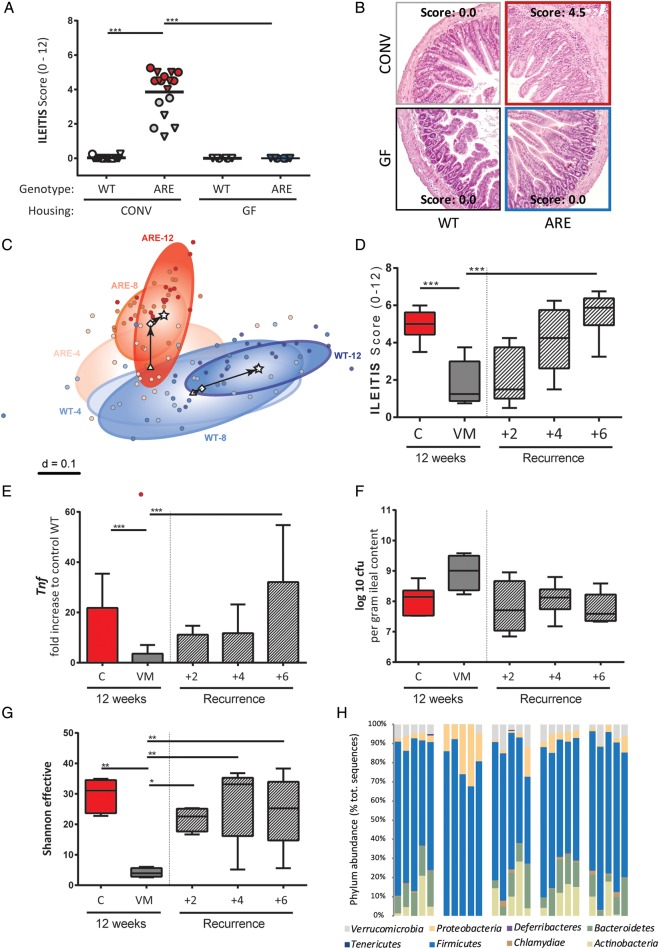
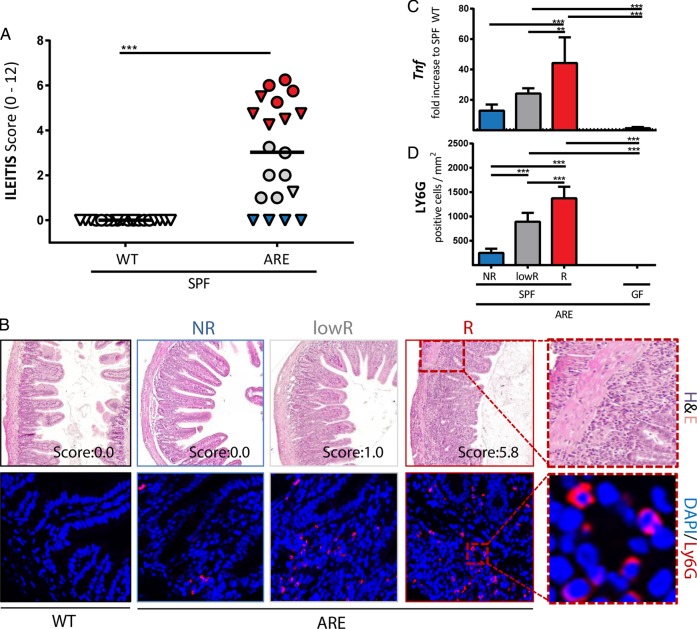
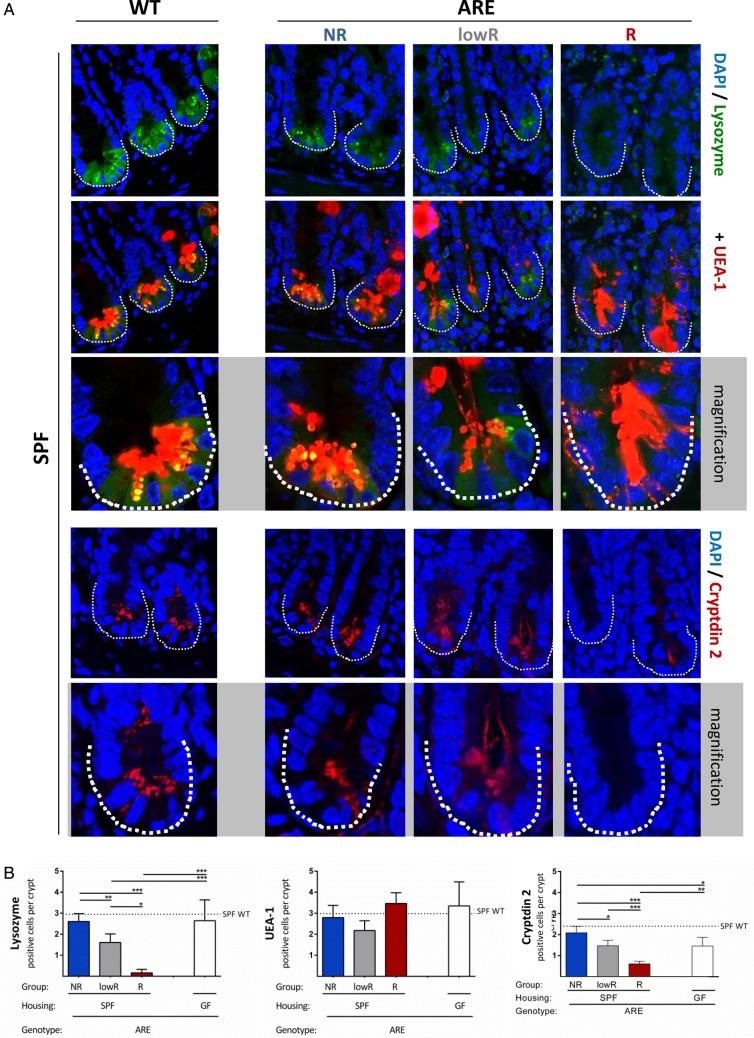
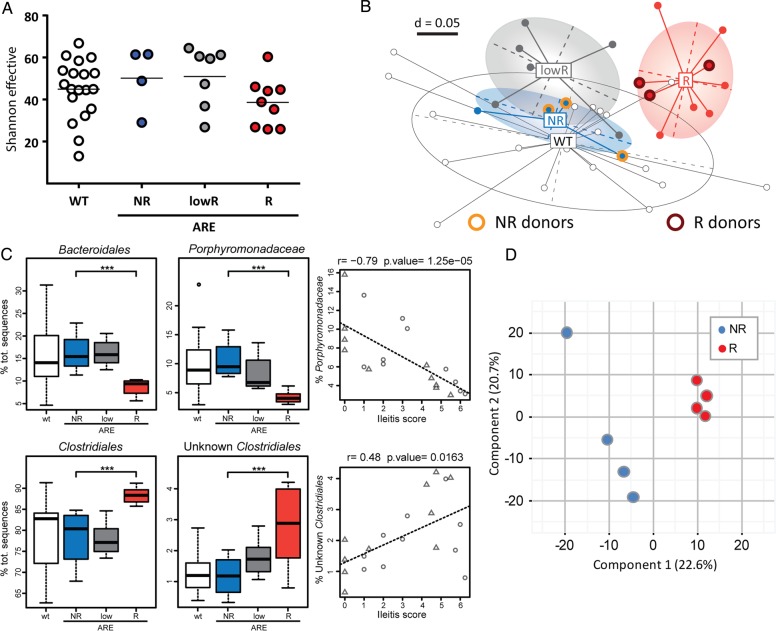
Objectives: Dysbiosis of the intestinal microbiota is associated with Crohn's disease (CD). Functional evidence for a causal role of bacteria in the development of chronic small intestinal inflammation is lacking. Similar to human pathology, TNF deltaARE mice develop a tumour necrosis factor (TNF)-driven CD-like transmural inflammation with predominant ileal involvement. Design: Heterozygous TNF deltaARE mice and wildtype (WT) littermates were housed under conventional (CONV), specific pathogen-free (SPF) and germ-free (GF) conditions. Microbial communities were analysed by high-throughput 16S ribosomal RNA gene sequencing. Metaproteomes were measured using LC-MS. Temporal and spatial resolution of disease development was followed after antibiotic treatment and transfer of microbial communities into GF mice. Granulocyte infiltration and Paneth cell function was assessed by immunofluorescence and gene expression analysis. Results: GF-TNF deltaARE mice were free of inflammation in the gut and antibiotic treatment of CONV-TNF deltaARE mice attenuated ileitis but not colitis, demonstrating that disease severity and location are microbiota-dependent. SPF-TNF deltaARE mice developed distinct ileitis-phenotypes associated with gradual loss of antimicrobial defence. 16S analysis and metaproteomics revealed specific compositional and functional alterations of bacterial communities in inflamed mice. Transplantation of disease-associated but not healthy microbiota transmitted CD-like ileitis to GF-TNF deltaARE recipients and triggered loss of lysozyme and cryptdin-2 expression. Monoassociation of GF-TNF deltaARE mice with the human CD-related Escherichia coli LF82 did not induce ileitis. Conclusions: We provide clear experimental evidence for the causal role of gut bacterial dysbiosis in the development of chronic ileal inflammation with subsequent failure of Paneth cell function.
Overview
The claims and statistics of this paper haven’t been checked yet.
Free: it reads the open-access text and checks the first 5 claims that cite a source we can check. Create a free account to check every claim.
Integrity signals
Registry
Cites
Statistics
Figures
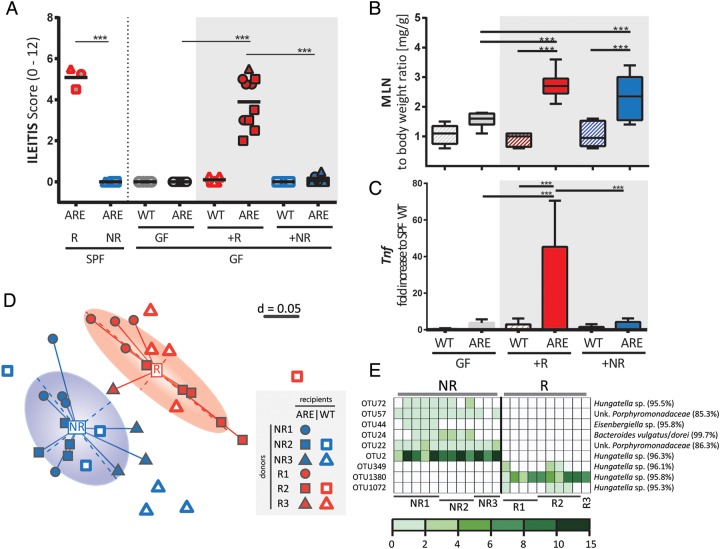
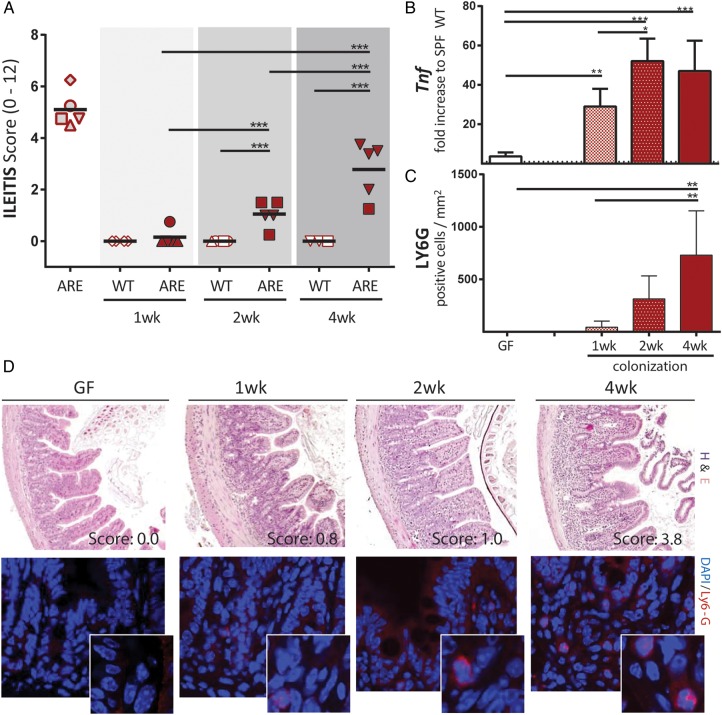
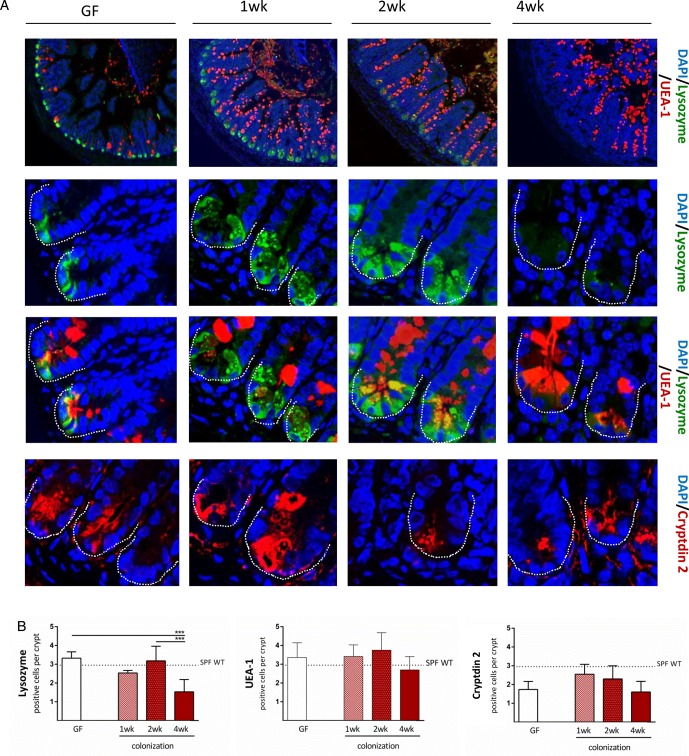
Verification
Claims the paper makes
The claims and statistics of this paper haven’t been checked yet.
Free: it reads the open-access text and checks the first 5 claims that cite a source we can check. Create a free account to check every claim.
Claims other papers make about this one
Each is checked against this paper’s own text: does it say what the citing paper says it does?
The cited source says what the claim attributes to it.
In the citing paper
“transfer of disease-associated microbiota triggers CD-like inflammation in genetically susceptible GF recipient mice.163”
From Interaction between microbiota and immunity in health and disease (2020) · cites this paper as [163]
Self-check
Percentages, sums and reported differences re-computed from the paper’s own numbers.
The self-check needs the paper’s full text.
Citations
Cites
Analysis of Relative Gene Expression Data Using Real-Time Quantitative PCR and the 2−ΔΔCT Method
Livak, K. J., & Schmittgen, T. D. (2001) · Methods · doi:10.1006/meth.2001.1262 · Cited by 180,860
A human gut microbial gene catalogue established by metagenomic sequencing
MetaHIT Consortium, Qin, J., Li, R., Raes, J., Arumugam, M., Burgdorf, K. S., Manichanh, C., Nielsen, T., Pons, N., Levenez, F., et al. (2010) · Nature · doi:10.1038/nature08821 · Cited by 11,624
Host–microbe interactions have shaped the genetic architecture of inflammatory bowel disease
The International IBD Genetics Consortium (IIBDGC), Jostins, L., Ripke, S., Weersma, R. K., Duerr, R. H., McGovern, D. P., Hui, K. Y., Lee, J. C., Philip Schumm, L., Sharma, Y., et al. (2012) · Nature · doi:10.1038/nature11582 · Cited by 4,722
Frank, D. N., St. Amand, A. L., Feldman, R. A., Boedeker, E. C., Harpaz, N., & Pace, N. R. (2007) · Proceedings of the National Academy of Sciences · doi:10.1073/pnas.0706625104 · Cited by 4,611
Autophagy and Viruses: Adversaries or Allies?
Dong, X., & Levine, B. (2013) · Journal of Innate Immunity · doi:10.1159/000346388 · Cited by 4,430
Mutation of the mouse klotho gene leads to a syndrome resembling ageing
Kuro-o, M., Matsumura, Y., Aizawa, H., Kawaguchi, H., Suga, T., Utsugi, T., Ohyama, Y., Kurabayashi, M., Kaname, T., Kume, E., et al. (1997) · Nature · doi:10.1038/36285 · Cited by 3,837
Duodenal Infusion of Donor Feces for Recurrent Clostridium difficile
van Nood, E., Vrieze, A., Nieuwdorp, M., Fuentes, S., Zoetendal, E. G., de Vos, W. M., Visser, C. E., Kuijper, E. J., Bartelsman, J. F. W. M., Tijssen, J. G. P., et al. (2013) · New England Journal of Medicine · doi:10.1056/nejmoa1205037 · Cited by 3,708
Antimicrobial Autophagy: A Conserved Innate Immune Response in Drosophila
Moy, R. H., & Cherry, S. (2013) · Journal of Innate Immunity · doi:10.1159/000350326 · Cited by 3,539
The Treatment-Naive Microbiome in New-Onset Crohn’s Disease
Gevers, D., Kugathasan, S., Denson, L. A., Vázquez-Baeza, Y., Van Treuren, W., Ren, B., Schwager, E., Knights, D., Song, S. J., Yassour, M., et al. (2014) · Cell Host & Microbe · doi:10.1016/j.chom.2014.02.005 · Cited by 3,220 · cited 1×
“9 – 11 Changes in bacterial communities were shown to be shaped by Paneth cell (PC)-derived anti-microbial peptides.”
BackgroundFord Alexander, C., Paul, M., Hanauer Steven, B., 谭蓓, & Dong, W. Z. (2001) · Cited by 3,021
Cited by
Items 301–400 of 455
Gut microbiota and its role in development of chronic disease and aging
Vesnina, A. D., Frolova, A. S., Chekushkina, D., Milentyeva, I., Luzyanin, S., & Aksenova, L. (2025) · Foods and raw materials · doi:10.21603/2308-4057-2026-1-668 · Cited by 11
Jang, S., Lee, E. J., Park, S., Lim, H. J., Ahn, B., Huh, Y., Koh, H., & Park, Y. R. (2025) · Microbiome · doi:10.1186/s40168-025-02178-8 · Cited by 8
“The etiology of Crohn’s disease (CD) remains incompletely understood, although accumulating evidence has emphasized the potential importance of interactions between the gut microbiome and aberrant host immune responses in genetically predisposed patients [1–3].”
Xia, W., Li, X., Liu, W., & Zhou, T. (2025) · Food & Function · doi:10.1039/d5fo02720a · Cited by 6
Newman, K. M., & Vaughn, B. P. (2020) · Minerva Gastroenterologica e Dietologica · doi:10.23736/s1121-421x.19.02610-2 · Cited by 6
Brüsch, I., Meier, P., Vital, M., Pieper, D. H., Selke, K., Böhlen, S., Basic, M., Meier, M., Glage, S., Hundrieser, J., et al. (2019) · Mucosal Immunology · doi:10.1038/s41385-019-0133-9 · Cited by 6
Self-citationCampillo-Gimenez, L., Ríos-Covián, D., Rivera–Nieves, J., Kiyono, H., Chu, H., & Ernst, P. B. (2021) · Frontiers in Cellular and Infection Microbiology · doi:10.3389/fcimb.2021.752304 · Cited by 6
“IBD has been associated with dysbiosis (Elson and Cong, 2012; Winter et al., 2013; Schaubeck et al., 2015; Honda and Littman, 2016; Dixit et al., 2021) that favors inflammation and enhances the presence of genotoxic strains of bacteria that impart DNA damage (Arthur et al.”
BackgroundFaecal transplantation for IBD management—pitfalls and promises
Quraishi, M. N., Critchlow, T., Bhala, N. B., Sharma, N., & Iqbal, T. H. (2017) · British Medical Bulletin · doi:10.1093/bmb/ldx040 · Cited by 9
The Gut Microbiome in Inflammatory Bowel Disease
Lavelle, A., & Sokol, H. (2019) · Springer eBooks · doi:10.1007/978-3-030-28703-0_16 · Cited by 7
Han, X., Jiang, H., Chen, M., Han, D.-Y., Zhou, S.-F., Wang, J.-W., Ji, S., Wang, L.-Y., Lou, J., & Li, M. (2025) · Frontiers in Cellular and Infection Microbiology · doi:10.3389/fcimb.2024.1469054 · Cited by 5
“…Erysipelotrichaceae in patients with colorectal cancer, and animal models of 1, 2-dimethylhydrazine-induced colon cancer or in fl ammatory bowel diseases, have been reported (Chen et al., 2012; Zhu et al., 2014; Schaubeck et al., 2016), indicating its importance in in fl ammation-related disorders.”
Barrera-Conde, M., Korchevaya, E., Kossatz, E., Veza-Estévez, E., Pujadas, M., Alechaga, É., Nebot, P., Pozo, Ó. J., de la Torre, R., Pizarro, N., et al. (2025) · Gut Microbes · doi:10.1080/19490976.2025.2551104 · Cited by 5
“48 In addition, Erysipelotrichaceae has been associated in humans with irritable bowel syndrome, 49 and TNF-α driven Crohn’s Disease, 50 suggesting that alcohol drinking during adolescence may be closely linked to microbiota alterations observed in inflammatory diseases.”
Li, S., Zhang, Z., Luo, L., Zhang, Y., Huang, K., & Guan, X. (2025) · Foods · doi:10.3390/foods14132267 · Cited by 10
“Compared with healthy people, the number of anti-inflammatory bacteria decreases, and the number of inflammatory bacteria increases in UC patients [6,7].”
Human-microbes symbiosis in health and disease, on earth and beyond planetary boundaries
Dore, J. M., & Ugalde, S. O. (2023) · Frontiers in Astronomy and Space Sciences · doi:10.3389/fspas.2023.1180522 · Cited by 5
The epithelium takes the stage in asthma and inflammatory bowel diseases
López-Posadas, R., Bagley, D., Pardo-Pastor, C., & Zapater, E. O. (2024) · Frontiers in Cell and Developmental Biology · doi:10.3389/fcell.2024.1258859 · Cited by 5
Early subclinical stages of the inflammatory bowel diseases: insights from human and animal studies
Kelly, C., Sartor, R. B., & Rawls, J. F. (2024) · American Journal of Physiology-Gastrointestinal and Liver Physiology · doi:10.1152/ajpgi.00252.2024 · Cited by 6
Streidl, T., Kumar, N., Suarez, L. N., Rohn, S., & Clavel, T. (2019) · Bergey's Manual of Systematics of Archaea and Bacteria · doi:10.1002/9781118960608.gbm01749 · Cited by 5
Self-citationEubacterium rectale detoxification mechanism increases resilience of the gut environmentPreprint
Richie, T. G., Wiechman, H., Ingold, C., Heeren, L., Kamke, A., Pogranichniy, S., Monk, K., Summers, T., Ran, Q., Sarkar, S., et al. (2024) · bioRxiv (Cold Spring Harbor Laboratory) · doi:10.1101/2024.05.09.593360 · Cited by 5
Urbauer, E., Aguanno, D., Kuellmer, K., Metwaly, A., Waldschmitt, N., Ahmed, M., Khaloian, S., Hörmannsperger, G., Planchais, J., Fromme, T., et al. (2025) · Cellular and Molecular Gastroenterology and Hepatology · doi:10.1016/j.jcmgh.2025.101656 · Cited by 6
“39 Similarly, mice lacking the anti-inflammatory cytokine IL-10 (IL-10 -/- mice) spontaneously develop colitis after weaning, whereby onset and severity of inflammation are dependent on the microbiota and the genetic background of mice, 40 with the 129/SvEv mouse line being more susceptible than…”
Self-citationGeorgopoulos, I., Mavrigiannaki, E., Stasinopoulou, S., Renieris, G., Nikolakis, G. D., Bamias, G., TINIAKOS, D. G., & Papaconstantinou, I. G. (2021) · Digestive Diseases and Sciences · doi:10.1007/s10620-021-07161-5 · Cited by 4
Brumfield, K. D., Cox, P., Geyer, J. D., & Goepp, J. G. (2023) · Pathogens · doi:10.3390/pathogens12020238 · Cited by 5
‘Social’ versus ‘asocial’ cells—dynamic competition flux balance analysis
Liu, Y., & Westerhoff, H. V. (2023) · npj Systems Biology and Applications · doi:10.1038/s41540-023-00313-5 · Cited by 5
“Imbalance between the human body and its micro-biomes may lead to additional diseases 15 .”
Yang, J., Wei, L., Xia, Y., Wang, J., Bai, Y., & Xia, Y. (2025) · Metabolites · doi:10.3390/metabo15040251 · Cited by 4
“Moreover, the corresponding relative abundance of Erysipelotrichaceae has been positively correlated with TNF-α concentration and colonic intestinal barrier integrity [39,40].”
Microbiome and Inherited Retinal Degenerations
Douglas, V. P., Douglas, K. A. A., & Iannaccone, A. (2023) · American Journal Of Pathology · doi:10.1016/j.ajpath.2023.03.005 · Cited by 5
“Studies have shown that Erysipelotrichaceae is associated with inflammatory diseases of gastrointestinal tract, such as Crohn disease-like ileitis and obesity.(51,52) Cln1 mice on C57BL/6J background had greater proportion of Streptococcaceae family bacteria but less Bacteroides genus bacteria.”
BackgroundGut-bladder axis syndrome associated with recurrent UTIs in humansPreprint
Worby, C. J., Schreiber, H. L., Straub, T. J., van Dijk, L. R., Bronson, R. A., Olson, B. S., Pinkner, J. S., Obernuefemann, C. L. P., Muñoz, V. L., Paharik, A. E., et al. (2021) · medRxiv · doi:10.1101/2021.11.15.21266268 · Cited by 4
“While IBD is a multifactorial disorder for which the causative role of gut microbes is still incompletely understood 31 , mouse models have helped to demonstrate a causal relationship between gut dysbiosis and gut inflammation 32 .”
BackgroundVega, P. N., Wang, J., Smith, E. P., Spiga, L., Simmons, A. J., Kim, T., Kim, W., Brown, M. E., Yang, Y., Kaur, H., et al. (2026) · Journal of Clinical Investigation · doi:10.1172/jci201729 · Cited by 3
“Animal models further highlight the essential role of the microbiome, with disease emerging in genetically susceptible hosts following colonization by specific disease-pro-moting microbes, often termed pathobionts (25–28).”
InfluentialGao, X., Zhang, C., Zhao, Z., Chen, Y., Lei, H., Cao, Z., Yu, W., Lin, W., He, Y., Li, X., et al. (2026) · Journal of Agricultural and Food Chemistry · doi:10.1021/acs.jafc.5c14733 · Cited by 7
Emerging Role of Gut Microbiota in Modulating Response to Therapies in IBD
Bartocci, B., GAUDIO, A. D., Murgiano, M., Papa, A., Cammarota, G., Gasbarrini, A., Scaldaferri, F., & Lopetuso, L. R. (2026) · Microorganisms · doi:10.3390/microorganisms14051082 · Cited by 5
“Furthermore, disease-associated microbial communities have been reported to transmit Crohn’s disease-like ileitis to genetically susceptible germ-free recipients [108].”
Amyloid, Crohn’s disease, and Alzheimer’s disease - are they linked?
Duda-Madej, A., Stecko, J., Szymańska, N., Miętkiewicz, A., & Szandruk-Bender, M. (2024) · Frontiers in Cellular and Infection Microbiology · doi:10.3389/fcimb.2024.1393809 · Cited by 3
Inflammation and Cancer: Role of Tight Junctions
Pravoverov, K., Barman, S., Gowrikumar, S., Fatima, I., Yadav, S. K., Otte, M. L., Tamang, R. L., Primeaux, M., Singh, A. B., & Dhawan, P. (2023) · Springer eBooks · doi:10.1007/978-981-99-2415-8_1 · Cited by 3
Keane, K., Stephens, M., Roizes, S., Xue, J., Liao, S., & von der Weid, P. (2025) · American Journal of Physiology-Gastrointestinal and Liver Physiology · doi:10.1152/ajpgi.00334.2024 · Cited by 3
Microbiome and Diseases: Inflammatory Bowel Diseases
Hildner, K., Waldschmitt, N., & Haller, D. (2018) · Springer eBooks · doi:10.1007/978-3-319-90545-7_11 · Cited by 5
Self-citationKim, S., Thapa, I., & Ali, H. (2018) · IEEE International Conference on Bioinformatics and Biomedicine (BIBM) · doi:10.1109/bibm.2018.8621179 · Cited by 4
“These two bacteria have been frequently reported to increase the risk of disease related to intestinal inflammation [26],[27],[28].”
BackgroundMetagenomics of Fermented Foods: Implications on Probiotic Development
Guleria, S., Kumar, A., Sharma, S., Kulshrestha, S., & Chauhan, A. (2017) · Springer eBooks · doi:10.1007/978-981-10-5708-3_19 · Cited by 3
Martínez-López, L. M., Perez‐Gonzalez, A., Washington, E. A., Woodward, A. P., Roth‐Schulze, A. J., Dandrieux, J. R. S., Johnstone, T., Prakash, N., Jex, A. R., & Mansfield, C. (2021) · PLoS ONE · doi:10.1371/journal.pone.0255012 · Cited by 3
Chen, W., Huang, C., Tang, D., Wan, J., Zhou, X., Wu, C., & Yang, X. L. (2024) · American Journal of Translational Research · doi:10.62347/ihnx2675 · Cited by 2
Stephens, M., Keane, K., Roizes, S., Defaye, M., Altier, C., & von der Weid, P. (2025) · Journal of Crohn s and Colitis · doi:10.1093/ecco-jcc/jjaf032 · Cited by 2
“Perhaps most importantly, global intestinal dysbiosis has been observed within the TNF ΔARE mice 22,23 and thus, these SFB-independent microorganisms may be also affected by Isoniazid treatment including resident, yet to be fully characterized, non-tuberculoid mycobacterium.”
Loeven, A. M., Brown, A. N., Ebuara, F. U., Jones, K. M., & Fadool, D. A. (2025) · Physiology & Behavior · doi:10.1016/j.physbeh.2025.115062 · Cited by 3
“Members of the phylum Firmicutes, Gram-positive Erysipelotrichaceae have been associated with inflammatory disorders such as irritable bowel syndrome and Crohn ’ s disease, but these data are variable [41 – 44].”
Anti-inflammatory effect of probiotics in patients with Blastocystis spp. infection
Abdeltawab, M. S. A., aal, S. M. A., Ali, S. M., Zaki, K. Y. W., El‐Din, S. S., & Amin, N. M. A. (2025) · Cytokine · doi:10.1016/j.cyto.2025.157013 · Cited by 3
Zheng, L., Duan, S.-L., & Wang, W. (2025) · World Journal of Gastroenterology · doi:10.3748/wjg.v31.i42.113170 · Cited by 3
Boronat-Toscano, A., Queipo‐Ortuño, M. I., Monfort-Ferré, D., Suau, R., Vañó‐Segarra, I., Valldosera, G., Cepero, C., Astiarraga, B., Clua, L., Plaza-Andrades, I. J., et al. (2025) · World Journal of Gastroenterology · doi:10.3748/wjg.v31.i45.112618 · Cited by 2
Masi, L., TROISI, S., Petito, V., Puca, P., Pane, C., Biamonte, F., MIGLIORE, G., Emoli, V., LOPETUSO, L. R., GASBARRINI, A., et al. (2026) · Minerva Gastroenterology · doi:10.23736/s2724-5985.26.04136-7 · Cited by 2
Chamaillard, M., & Radulovic, K. (2015) · Gut · doi:10.1136/gutjnl-2015-309714 · Cited by 2
Intestinal Microbiology and Ecology in Crohn’s Disease and Ulcerative Colitis
Buttó, L. F., & Haller, D. (2017) · Springer eBooks · doi:10.1007/978-3-319-33703-6_4 · Cited by 2
Self-citationEarly life host regulation of the mammalian enteric microbiota composition
van Best, N., & Hornef, M. W. (2021) · International Journal of Medical Microbiology · doi:10.1016/j.ijmm.2021.151498 · Cited by 3
Self-citationGong, S., Sun, L., Sun, Y., Ju, W., Wang, G., Zhang, J., Fu, X., Lu, C., Zhang, Y., Song, W., et al. (2025) · Marine Drugs · doi:10.3390/md23020073 · Cited by 3
“It has been reported that the transfer of fecal microbiota from colitic mice to healthy mice induces colitis [7].”
Hu, B., Yue, K., Zhang, D., Feng, S., Zhao, N., Li, G., Gao, S., Xing, Y., Han, S., & He, H. (2025) · BMC Veterinary Research · doi:10.1186/s12917-025-04524-2 · Cited by 2
“For example, compared to healthy controls, patients with colorectal cancer, inflammatory bowel disease, and animal models of Crohn’s disease showed significantly higher levels of Erysipelotrichaceae [50, 51].”
Stewart, E. C., Almatani, M. F., Hayden, M., Rompato, G., Case, J., Rice, S., Hintze, K. J., & Benninghoff, A. D. (2025) · Nutrients · doi:10.3390/nu17152482 · Cited by 3
The Immune System in IBD: Antimicrobial Peptides
Bevins, C. L. (2017) · Springer eBooks · doi:10.1007/978-3-319-33703-6_5 · Cited by 2
Barbosa, C. M., Lima, T. C., Barbosa, M. A., Pereira, A. R., Carneiro, C. M., Silva, S. D. Q., Antonini, Y., & Alzamora, A. C. (2022) · Food & Function · doi:10.1039/d1fo02838c · Cited by 2
Wu, P., Li, W., Xie, Y., Guan, W., Yang, S., Li, J., & Zhao, Y. (2024) · The FASEB Journal · doi:10.1096/fj.202302576rr · Cited by 2
Lv, Y., Fan, Y., Gao, Q., Chen, Q., Hu, Y., Wang, L., Shi, H., Chen, E., Xu, Q., Cai, Y., et al. (2025) · eLife · doi:10.7554/elife.107339 · Cited by 3
Lv, Y., Fan, Y., Gao, Q., Chen, Q., Hu, Y., Wang, L., Shi, H., Chen, E., Xu, Q., Cai, Y., et al. (2026) · eLife · doi:10.7554/elife.107339.3 · Cited by 1
Negele, J., Franz, T. J., Krone, A., Röder, M., Gelmez, E., Jantz-Naeem, N., Kershaw, O., Keitel, V., Jeron, A., Bruder, D., et al. (2025) · Biomedicines · doi:10.3390/biomedicines13092094 · Cited by 1
Decoding the Gut Microbiota: Mechanisms of Host-Microbe Interactions and Inflammatory Pathologies
Richie, T. G., & Lee, S. T. M. (2025) · Digestion · doi:10.1159/000549457 · Cited by 1
Bacterial Nutrient Acquisition and Its Function in Diseases
Soni, V., & Upadhyay, A. (2026) · Springer eBooks · doi:10.1007/978-3-031-46895-7_5 · Cited by 1
Cao, S. “., Cai, R., Xi, S., & Wang, Y. (2026) · Food and Chemical Toxicology · doi:10.1016/j.fct.2026.115991 · Cited by 1
Preliminary insights into gut microbiome shifts as screening proxy for MASLD disease progression
Llirós, M., Buxó, M., Virolés, S., Pujolassos, M., Serra, I., Martínez, J. C., Lluansí, A., Bahí, A., Calle, M. L., & Aldeguer, X. (2026) · Scientific Reports · doi:10.1038/s41598-026-42368-4 · Cited by 3
Joshi, D., Chauhan, K., Oberoi, H. S., Kumar, D., & Taneja, N. K. (2026) · Discover Biotechnology · doi:10.1007/s44340-026-00053-2 · Cited by 2
Chan, J., von Wintersdorff, C. J. H., Savelkoul, P. H. M., van Best, N., Wolffs, P. F. G., & Penders, J. (2026) · npj Biofilms and Microbiomes · doi:10.1038/s41522-026-00977-x
NOD2 drives regenerative fetal-like reprogramming in the intestinal epithelium
Tsang, D. K. L., Maisonneuve, C., Ayyaz, A., Foerster, E. G., Nissan, M., Baerg, L., Trcka, D., Ghoshal, B., Tsankov, B. K., Bayer, G., et al. (2026) · Proceedings of the National Academy of Sciences · doi:10.1073/pnas.2519981123 · Cited by 4
“Indeed, spontaneous models of IBD in mice demonstrate that the intestinal microbiota is required to induce intestinal inflammation (22–24).”
Richie, T. G., Wiechman, H., Vogt, B., Ingold, C., Heeren, L., Kamke, A., Pogranichniy, S., Monk, K., Summers, T., Ran, Q., et al. (2026) · Microbiome · doi:10.1186/s40168-026-02457-y · Cited by 7
“As seen in previous studies, we expected dysbiotic mice with induced colitis to display more severe clinical signs of inflammation compared with control mice with induced colitis, which highlights the importance of a diverse gut community on immune regulation [85–87].”
Inflammatory Bowel Diseases: What Do We Still Need to Investigate?
Taus, M., Busni, D., Fumelli, D., Paci, A., Nicolai, G., & Nicolai, A. (2015) · Open Journal of Gastroenterology · doi:10.4236/ojgas.2015.510024 · Cited by 1
Webb, C. R., & Grisham, M. B. (2017) · Springer eBooks · doi:10.1007/978-3-319-33703-6_15 · Cited by 1
Paediatric IBD: the host, diet & microbes in pathogenesis & treatment: a narrative review
Dijk, S., Armstrong, H., Valcheva, R. S., & Wine, E. (2021) · Digestive Medicine Research · doi:10.21037/dmr-20-160 · Cited by 1
“Additionally, almost all colitis animal models, such as interleukin-10 (IL-10) knockout or TNF mice, do not develop intestinal inflammation under germ-free conditions (191,192).”
BackgroundVecchia, S. D., Marchese, M., Simonati, A., & Santorelli, F. M. (2025) · International Journal of Molecular Sciences · doi:10.3390/ijms26157192 · Cited by 1
“These disease-related shifts in the gut microbiota of these mice, similar to that observed in inflammation and metabolic diseases [46,47], in depression [48], and autism [49], may play a role in the manifestation of the disease traits seen in these models.”
Schüppel, V. L., & Haller, D. (2016) · Der Diabetologe · doi:10.1007/s11428-016-0124-3 · Cited by 1
“Kausale Zusammenhänge zwischen Mikrobiota und Erkrankung konnten aber indenmeistenQuerschnittsstudiennicht abgeleitet werden, was die Notwendigkeit von prospektiven Kohortenstudien oder krankheitsrelevanten Tiermodellen unterstreicht [44].”
BackgroundSelf-citationSilverberg, M. S., & O’Donnell, S. (2017) · Clinical gastroenterology · doi:10.1007/978-3-319-53763-4_3 · Cited by 1
Darmmikrobiom und chronisch-entzündliche Darmerkrankungen
Schwerd, T., & Koletzko, S. (2019) · Monatsschrift Kinderheilkunde · doi:10.1007/s00112-019-0683-7 · Cited by 2
Rodpai, R., Sanpool, O., Janwan, P., Boonroumkaew, P., Sadaow, L., Thanchomnang, T., Intapan, P. M., & Maleewong, W. (2022) · PLoS ONE · doi:10.1371/journal.pone.0279766 · Cited by 1
“On the other hand, increased proportions of the Erysipelotrichaceae have deleterious consequences for human health which may be associated with metabolic disorder or energy metabolism [4, 47].”
Armstrong, C. W. (2017) · Minerva Access (University of Melbourne) · Cited by 1
The EBI2-oxysterol axis promotes the development of intestinal lymphoid structures and colitisPreprint
Wyss, A., Raselli, T., Schmelczer, G., Klinke, G., Perkins, N., Hersberger, M., Spalinger, M. R., Atrott, K., Lang, S., Frey-Wagner, I. M., et al. (2018) · bioRxiv (Cold Spring Harbor Laboratory) · doi:10.1101/424937 · Cited by 1
Singh, G., Brass, A., Cruickshank, S. M., & Cg, K. (2019) · bioRxiv (Cold Spring Harbor Laboratory) · doi:10.1101/790923 · Cited by 1
Tong, L., Xiao, T., Wang, L., Lü, C., Liu, L., Zhou, X., Wang, A., Qin, W., & Wang, F. (2021) · SSRN Electronic Journal · doi:10.21203/rs.3.rs-142744/v1 · Cited by 1
Kamat, M. T., Ormsby, M. J., Humphrey, S., Dixit, S. K., Thümmler, K., Lapsley, C. T., Crouch, K., Jukes, C., Hulme, H., Burchmore, R., et al. (2024) · bioRxiv (Cold Spring Harbor Laboratory) · doi:10.1101/2024.01.22.576618 · Cited by 1
Metaproteomics analysis to study functionalities of the gut microbiota in large cohorts
Bassignani, A. (2019) · theses.fr (ABES) · doi:10.70675/6dbc0f46z4298z4cd1z91b4z74df79095a59 · Cited by 9
Acker, A. V. (2016) · Ghent University Academic Bibliography (Ghent University)
Cuív, P. Ó., Burman, S., Pottenger, S., & Morrison, M. (2016) · Springer eBooks · doi:10.1007/978-3-319-46326-1_3 · Cited by 1
Gnotobiotics and Inflammatory Bowel Disease
Schoeb, T. R. (2017) · Elsevier eBooks · doi:10.1016/b978-0-12-804561-9.00008-6 · Cited by 1
Darmmikrobiom des Menschen: Status quo und Perspektiven
Clavel, T., & Hörmannsperger, G. (2017) · Pädiatrie up2date · doi:10.1055/s-0043-115278
Self-citationMicrobiota profiling in gastrointestinal health and disease
Tedjo (2018) · Research Publications (Maastricht University) · doi:10.26481/dis.20180301dt
Genetic Characterization of the Gut Microbiome of Hajj Pilgrims
Beaudoin, C. A. (2018) · King Abdullah University of Science and Technology Repository (King Abdullah University of Science and Technology) · doi:10.25781/kaust-7d8ve
Recent Advances in the Analysis of Gut Microbiota and their Relationship with Disease
Shi, L., Han, D., & Li, M. (2018) · International Conference on Biomedical Engineering and Technology (ICBET) · doi:10.1145/3208955.3208970
Savelkoul, E. H. J., Pathmakanthan, S., Hawkey, P. M., & Iqbal, T. H. (2018) · Gastrointestinal Nursing · doi:10.12968/gasn.2018.16.9.43 · Cited by 1
MicroRNA: A Signature for Cancer Diagnostics
Siddiqua, A., Kousar, S., Jamil, A., Tabassum, R., Mehmood, T., & Shafiq, N. (2020) · IntechOpen eBooks · doi:10.5772/intechopen.90063 · Cited by 1
Jurado, C. (2020) · ERA: Education and Research Archive (University of Alberta) · doi:10.7939/r3-vy9d-ne19
Surgery and stomas in Crohn's disease
Kalman, T. D. (2021) · Linköping University medical dissertations · doi:10.3384/diss.diva-172781
Francella, C., & Foster, J. A. (2021) · Wiley eBooks · doi:10.1002/0471266949.bmc297
Effects of Therapy on Host-Microbe Interactions in Pediatric Inflammatory Bowel Diseases
Dijk, S. (2020) · ERA: Education and Research Archive (University of Alberta) · doi:10.7939/r3-w5w4-2d33
Intestinal microbiota in health and disease – Seeding multidisciplinary research in Germany
Haller, D. (2021) · International Journal of Medical Microbiology · doi:10.1016/j.ijmm.2021.151514
Self-citationAutophagy in the gastrointestinal system and cross talk with microbiota
Pimentel‐Muiños, F. X. (2021) · Elsevier eBooks · doi:10.1016/b978-0-12-822003-0.00016-4
Si, X., Jia, H., Liu, N., & Wu, Z. (2021) · SSRN Electronic Journal · doi:10.2139/ssrn.3940268
Update on fecal microbial transplantation for the treatment of inflammatory bowel disease
Llirós, M., Lluansí, A., Peries, L., Bahí, A., Ramió‐Pujol, S., & Aldeguer, X. (2021) · Journal of IMIDs · doi:10.24875/jimids.m21000008 · Cited by 1
La méthode Bayésienne pour aider à évaluer l’efficacité des thérapies personnalisées
Donatini, B. (2017) · HEGEL - HEpato-GastroEntérologie Libérale · doi:10.3917/heg.072.0113 · Cited by 3
Metadata
- Authors
- Schaubeck, M., Clavel, T., Calasan, J., Lagkouvardos, I., Haange, S. B., Jehmlich, N., Basic, M., Dupont, A., Hornef, M., Bergen, M. V., Bleich, A., & Haller, D.
- Affiliations
- Technical University of Munich (DE)
- Chair of Nutrition and Immunology, Technische Universität München, Freising-Weihenstephan, Germany
- Helmholtz Centre for Environmental Research (DE)
- RWTH Aachen University (DE)
- Medizinische Hochschule Hannover (DE)
- Department of Proteomics, Helmholtz-Centre for Environmental Research—UFZ, Leipzig, Germany
- Corresponding author
- Haller, Dirk
- ORCID
- Venue
- Gut
- Publisher
- BMJ
- Published
- 2015-04-17
- Volume
- 65
- Issue
- 2
- Pages
- 225-237
- ISSN
- 0017-5749 (ISSN-L)
- 1468-3288
- PMC
- PMC4752651
- OpenAlex
- W1980475824
- Cited by
- 447
- References
- 75
- Citations by year
- 2026: 29 · 2025: 43 · 2024: 38 · 2023: 36 · 2022: 52 · 2021: 55 · 2020: 32 · 2019: 40 · 2018: 32 · 2017: 46 · 2016: 31 · 2015: 13
- FWCI
- 17.64
- Type
- journal article
- Language
- en
- Open access
- hybrid
- doi.org
- Licence
- cc-by-nc
- Locations
- Gut (publishedVersion, cc-by-nc)
- Europe PMC (PubMed Central) (publishedVersion, cc-by-nc)
- PubMed Central (publishedVersion, cc-by-nc)
- VBN Forskningsportal (Aalborg Universitet) (publishedVersion, cc-by-nc)
- PubMed (publishedVersion)
- HighWire Press Open Archive (submittedVersion)
- RWTH Publications (RWTH Aachen) (submittedVersion)
- Funders
- Deutsche Forschungsgemeinschaft (SPP-1656)
- Helmholtz-Zentrum für Umweltforschung
- European Regional Development Fund
- Topics
- Life Sciences › Biochemistry, Genetics and Molecular Biology › Molecular Biology › Gut microbiota and health
- Health Sciences › Medicine › Gastroenterology › Inflammatory Bowel Disease
- Health Sciences › Medicine › Gastroenterology › Gastrointestinal motility and disorders
- Keywords
- Crohn's disease, ileitis, gut dysbiosis, germ-free mice, specific pathogen-free mice, microbiota transplantation, Paneth cells, lysozyme, antimicrobial defense, antibiotic therapy, small bowel inflammation, metaproteomics
- MeSH terms
- Animals, Anti-Bacterial Agents, Colitis, Crohn Disease, Germ-Free Life, Ileitis, Inflammation, Intestines, Tumor Necrosis Factor-alpha, Fluoroimmunoassay, Mice, Microbiota, Dysbiosis
About these checks
Registry, retraction, Cites and statistics results are computed, not judged, with one exception: a printed reference that no index lists is read once by a model before it counts as a citation error. Claims are extracted by a model and kept only when their quote appears verbatim in the text; each cited source is then checked, with a model’s help, for whether it says what the claim relies on. Those verdicts can be wrong — read the claim’s quote and the cited source before relying on one.
Statistics and arithmetic are recomputed, not judged.
Confidence bands are shown only for fields calibrated on our annotated test set. None is calibrated yet, so no band is shown.
What counts as a claim ›How we measure confidence ›How we check this ›
Are you an author, or do you see a problem with this page? Request a review
Data sources
Bibliographic data: Semantic Scholar, OpenAlex, Crossref.
Contains information from the Semantic Scholar Academic Graph Datasets, made available under the ODC Attribution License (ODC-BY 1.0).
Semantic Scholar’s data is described in: Kinney, R., et al. (2023). The Semantic Scholar Open Data Platform. arXiv:2301.10140.
