

Dysbiotic gut microbiota causes transmissible Crohn's disease-like ileitis independent of failure in antimicrobial defence
Open accessThe DOI matches its Crossref record; 75 of the 75 references it cites were found in a registry or an index.
Abstract
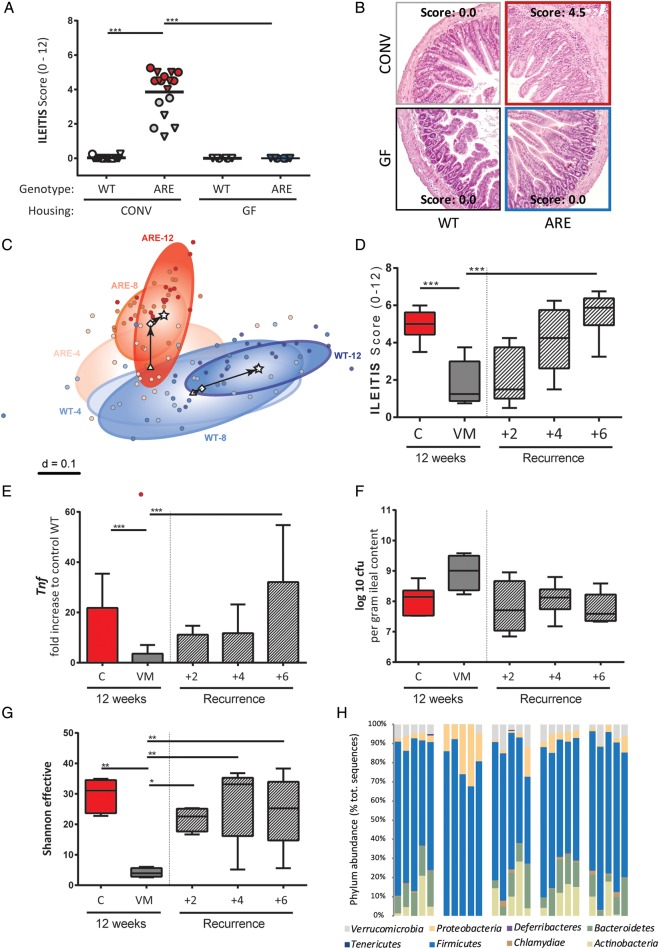
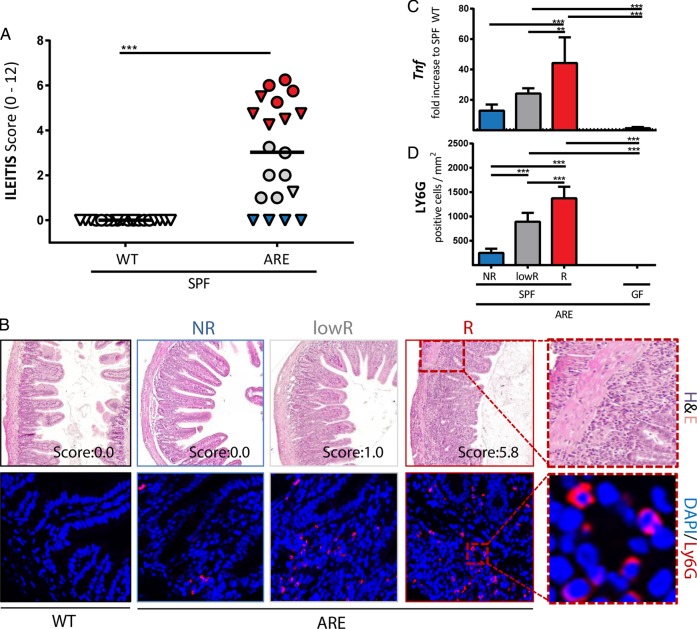
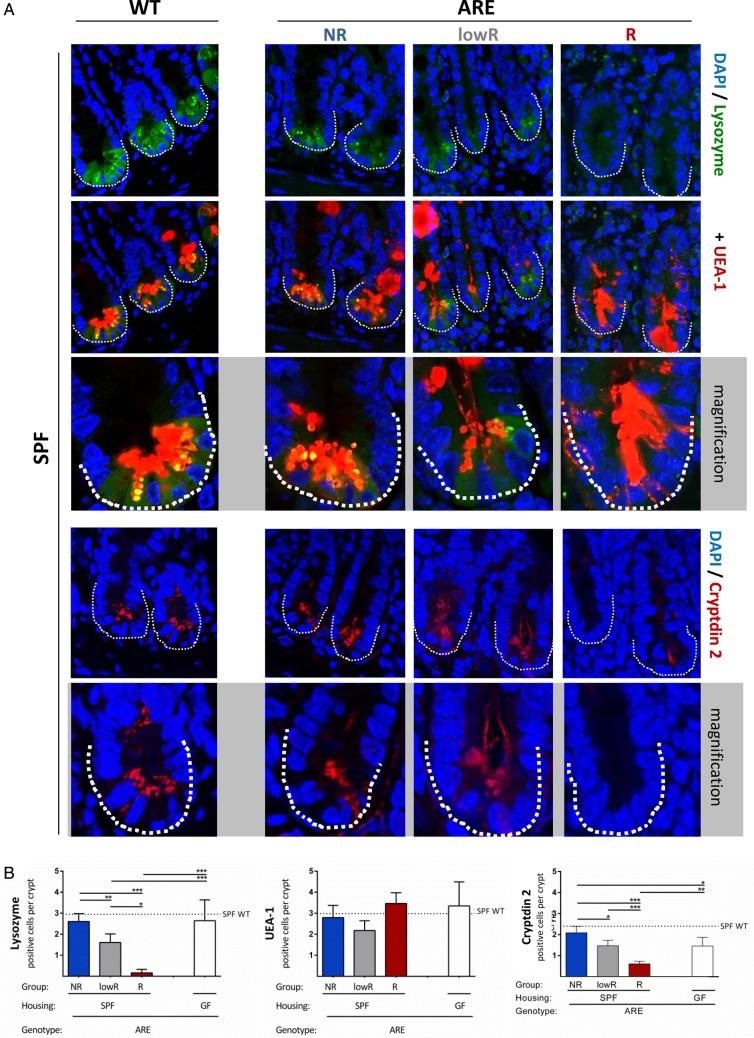
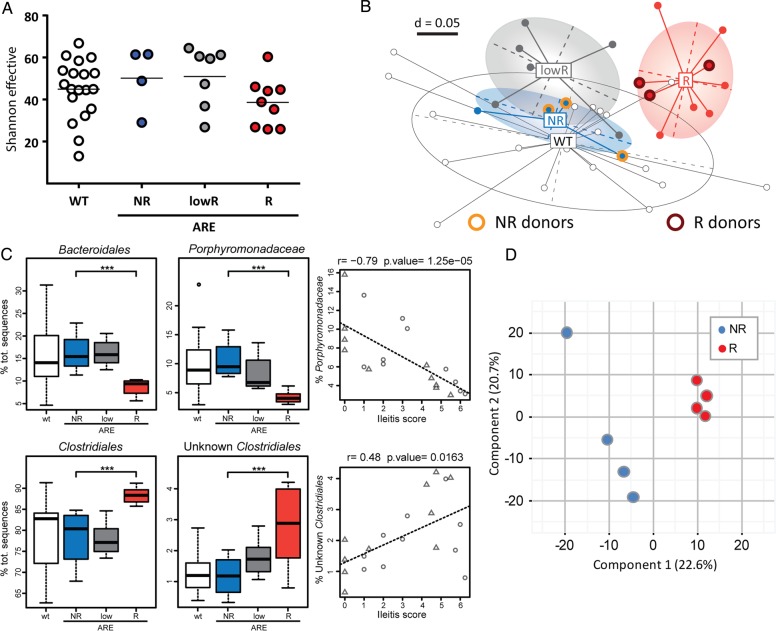
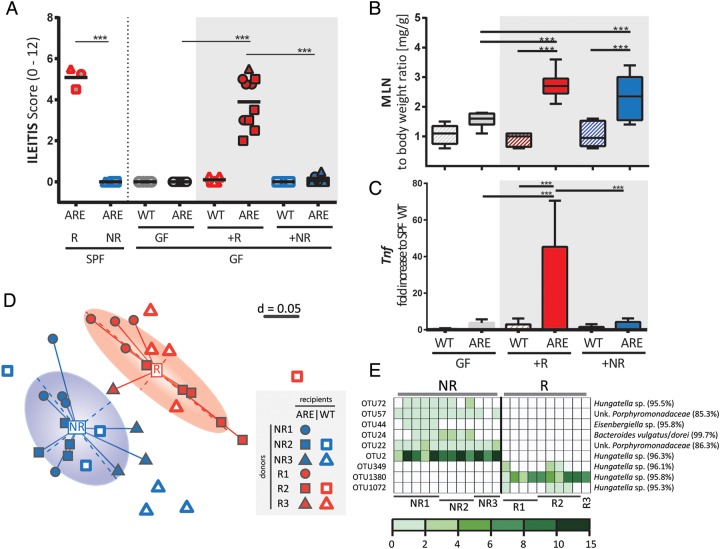
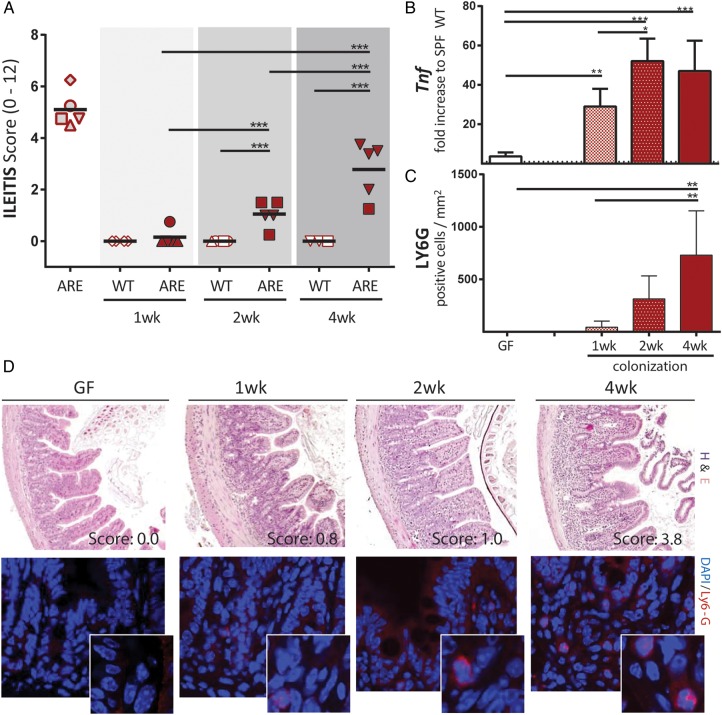
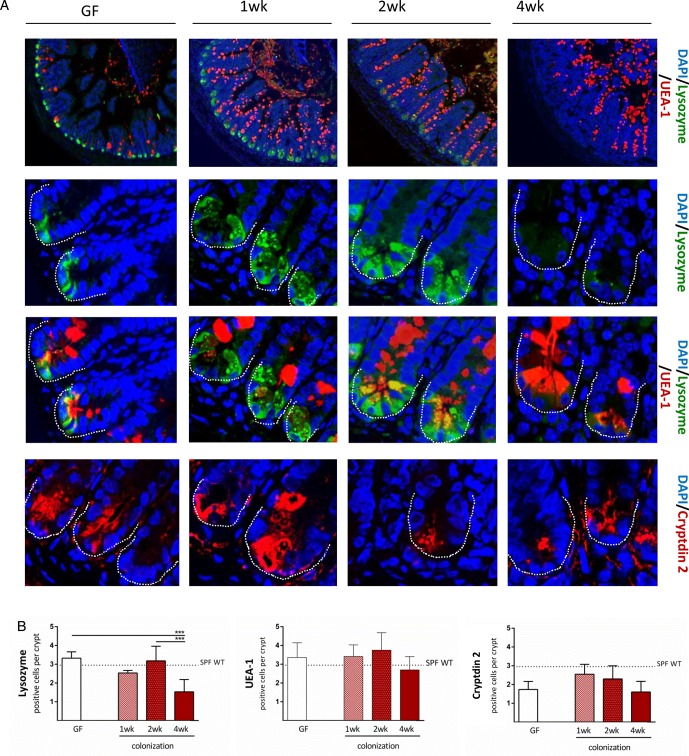
Objectives: Dysbiosis of the intestinal microbiota is associated with Crohn's disease (CD). Functional evidence for a causal role of bacteria in the development of chronic small intestinal inflammation is lacking. Similar to human pathology, TNF deltaARE mice develop a tumour necrosis factor (TNF)-driven CD-like transmural inflammation with predominant ileal involvement. Design: Heterozygous TNF deltaARE mice and wildtype (WT) littermates were housed under conventional (CONV), specific pathogen-free (SPF) and germ-free (GF) conditions. Microbial communities were analysed by high-throughput 16S ribosomal RNA gene sequencing. Metaproteomes were measured using LC-MS. Temporal and spatial resolution of disease development was followed after antibiotic treatment and transfer of microbial communities into GF mice. Granulocyte infiltration and Paneth cell function was assessed by immunofluorescence and gene expression analysis. Results: GF-TNF deltaARE mice were free of inflammation in the gut and antibiotic treatment of CONV-TNF deltaARE mice attenuated ileitis but not colitis, demonstrating that disease severity and location are microbiota-dependent. SPF-TNF deltaARE mice developed distinct ileitis-phenotypes associated with gradual loss of antimicrobial defence. 16S analysis and metaproteomics revealed specific compositional and functional alterations of bacterial communities in inflamed mice. Transplantation of disease-associated but not healthy microbiota transmitted CD-like ileitis to GF-TNF deltaARE recipients and triggered loss of lysozyme and cryptdin-2 expression. Monoassociation of GF-TNF deltaARE mice with the human CD-related Escherichia coli LF82 did not induce ileitis. Conclusions: We provide clear experimental evidence for the causal role of gut bacterial dysbiosis in the development of chronic ileal inflammation with subsequent failure of Paneth cell function.
Overview
The claims and statistics of this paper haven’t been checked yet.
Free: it reads the open-access text and checks the first 5 claims that cite a source we can check. Create a free account to check every claim.
Integrity signals
Registry
Cites
Statistics
Figures
Verification
Claims the paper makes
The claims and statistics of this paper haven’t been checked yet.
Free: it reads the open-access text and checks the first 5 claims that cite a source we can check. Create a free account to check every claim.
Claims other papers make about this one
Each is checked against this paper’s own text: does it say what the citing paper says it does?
The cited source says what the claim attributes to it.
In the citing paper
“transfer of disease-associated microbiota triggers CD-like inflammation in genetically susceptible GF recipient mice.163”
From Interaction between microbiota and immunity in health and disease (2020) · cites this paper as [163]
Self-check
Percentages, sums and reported differences re-computed from the paper’s own numbers.
The self-check needs the paper’s full text.
Citations
Cites
Analysis of Relative Gene Expression Data Using Real-Time Quantitative PCR and the 2−ΔΔCT Method
Livak, K. J., & Schmittgen, T. D. (2001) · Methods · doi:10.1006/meth.2001.1262 · Cited by 180,860
A human gut microbial gene catalogue established by metagenomic sequencing
MetaHIT Consortium, Qin, J., Li, R., Raes, J., Arumugam, M., Burgdorf, K. S., Manichanh, C., Nielsen, T., Pons, N., Levenez, F., et al. (2010) · Nature · doi:10.1038/nature08821 · Cited by 11,624
Host–microbe interactions have shaped the genetic architecture of inflammatory bowel disease
The International IBD Genetics Consortium (IIBDGC), Jostins, L., Ripke, S., Weersma, R. K., Duerr, R. H., McGovern, D. P., Hui, K. Y., Lee, J. C., Philip Schumm, L., Sharma, Y., et al. (2012) · Nature · doi:10.1038/nature11582 · Cited by 4,722
Frank, D. N., St. Amand, A. L., Feldman, R. A., Boedeker, E. C., Harpaz, N., & Pace, N. R. (2007) · Proceedings of the National Academy of Sciences · doi:10.1073/pnas.0706625104 · Cited by 4,611
Autophagy and Viruses: Adversaries or Allies?
Dong, X., & Levine, B. (2013) · Journal of Innate Immunity · doi:10.1159/000346388 · Cited by 4,430
Mutation of the mouse klotho gene leads to a syndrome resembling ageing
Kuro-o, M., Matsumura, Y., Aizawa, H., Kawaguchi, H., Suga, T., Utsugi, T., Ohyama, Y., Kurabayashi, M., Kaname, T., Kume, E., et al. (1997) · Nature · doi:10.1038/36285 · Cited by 3,837
Duodenal Infusion of Donor Feces for Recurrent Clostridium difficile
van Nood, E., Vrieze, A., Nieuwdorp, M., Fuentes, S., Zoetendal, E. G., de Vos, W. M., Visser, C. E., Kuijper, E. J., Bartelsman, J. F. W. M., Tijssen, J. G. P., et al. (2013) · New England Journal of Medicine · doi:10.1056/nejmoa1205037 · Cited by 3,708
Antimicrobial Autophagy: A Conserved Innate Immune Response in Drosophila
Moy, R. H., & Cherry, S. (2013) · Journal of Innate Immunity · doi:10.1159/000350326 · Cited by 3,539
The Treatment-Naive Microbiome in New-Onset Crohn’s Disease
Gevers, D., Kugathasan, S., Denson, L. A., Vázquez-Baeza, Y., Van Treuren, W., Ren, B., Schwager, E., Knights, D., Song, S. J., Yassour, M., et al. (2014) · Cell Host & Microbe · doi:10.1016/j.chom.2014.02.005 · Cited by 3,220 · cited 1×
“9 – 11 Changes in bacterial communities were shown to be shaped by Paneth cell (PC)-derived anti-microbial peptides.”
BackgroundFord Alexander, C., Paul, M., Hanauer Steven, B., 谭蓓, & Dong, W. Z. (2001) · Cited by 3,021
Cited by
Items 401–455 of 455
Metwaly, A., Jović, J., Waldschmitt, N., Khaloian, S., Heimes, H., Häcker, D., Hammoudi, N., Bourhis, L. L., Mayorgas, A., Siebert, K., et al. (2022) · bioRxiv (Cold Spring Harbor Laboratory) · doi:10.1101/2022.07.06.498810
Self-citationA translational swine model for Crohn’s diseasePreprint
Winogrodzki, T., Metwaly, A., Grodziecki, A., Liang, W., Klinger, B., Flisikowski, K., Flisikowska, T., Fischer, K., Steiger, K., Haller, D., et al. (2022) · bioRxiv (Cold Spring Harbor Laboratory) · doi:10.1101/2022.07.08.499360
Self-citationRehman, K. (2021) · Clinical Research Notes · doi:10.31579/2690-8816/041
Introduction: From the Gut Microbiome to the Ocular Surface Microbiome—Are They Associated?
Shivaji, S. (2022) · Springer eBooks · doi:10.1007/978-981-19-1754-7_1
Impact of indigenous microbiota in gut inflammatory disorders
Arifa, R. D. D. N., de Brito, C. B., Batista, R. R. A., Fagundes, M., Souza, D. G., & Fagundes, C. T. (2022) · Elsevier eBooks · doi:10.1016/b978-0-323-91313-3.00011-8 · Cited by 1
de Figueiredo, B. Q., Vasconcelos, A. C., Alvim, C. M., de Amorim, G. V., de Freitas, M. T. O., & Marques, P. R. C. N. (2022) · Amplla Editora eBooks · doi:10.51859/amplla.ama2378-35
A ÍNTIMA RELAÇÃO ENTRE ENDOMETRIOSE E INFERTILIDADE FEMININA
Farias, T. G., de Menezes, A. G. G., de Figueiredo, B. Q., de Macedo, D. B., Mota, J. A. B., & Batista, R. A. D. (2022) · Amplla Editora eBooks · doi:10.51859/amplla.ama2378-31
RELAÇÃO ENTRE A COVID-19 E A DOENÇA DE KAWASAKI EM INFANTES
de Figueiredo, B. Q., Araújo, I. C. L., Carvalho, M. V. D. S., Brito, M. P. S., Boavista, R. T. T. M., & da Cunha, L. L. P. (2022) · Amplla Editora eBooks · doi:10.51859/amplla.ama2378-27
EVIDÊNCIAS ACERCA DO USO DO ANTICORPO MONOCLONAL TOCILIZUMABE COMO TERAPÊUTICA PARA COVID-19
Gomes, M. J. D. A., Pinheiro, F. E. D. S., de Figueiredo, B. Q., Nogueira, A. J. D. C., Soares, C. F., Mota, J. A. B., & Loureiro, L. S. (2022) · Amplla Editora eBooks · doi:10.51859/amplla.ama2378-24
IMPACTO DA VACINAÇÃO CONTRA COVID-19 NO ESTADO DO MARANHÃO
da Cunha, T. C., dos Santos, J. L. C., Coelho, M. F. L. L., Vinent, P. R. S., Farias, T. R., Nicolau, A. D. M. F., da Silva, C. M. T., & de Carvalho, B. M. M. (2022) · Amplla Editora eBooks · doi:10.51859/amplla.ama2378-28
IMPORTÂNCIA DA MICROBIOTA INTESTINAL PARA PREVENÇÃO DE DOENÇAS METABÓLICAS E GASTROINTESTINAIS
de Oliveira, P. P. A., Rocha, A. K. A., Fernandes, C. V., & Cardi, B. A. (2022) · Amplla Editora eBooks · doi:10.51859/amplla.ama2378-41
Volatile Signatures of the Microbiome
Naddaf, R., Herren, R., & Geva‐Zatorsky, N. (2022) · Royal Society of Chemistry eBooks · doi:10.1039/9781839166990-00181
Microbiota and its relationship with Inflammatory Bowel Diseases: An overview
Al-Judaibi, A. A., Al-Hebshi, B. M., & Al-Judaibi, E. A. (2023) · Microbial Biosystems · doi:10.21608/mb.2023.211583.1072 · Cited by 1
“Though the significant role of the microbiota in disease pathogenesis is well-known (Gevers et al., 2014; Schaubeck et al., 2016), the particular bacterial taxa responsible for inducing inflammation and the underlying mechanisms have not yet been identified (Björkqvist et al., 2019; Zhulina et al.,…”
BackgroundGastrointestinal Microbiota Dysbiosis and Crohn’s Disease
Monif, G. R. G. (2023) · ACTA SCIENTIFIC MICROBIOLOGY · doi:10.31080/asmi.2023.06.1279
Enrichment, Sequencing, and Identification of DNA Bacteriophages from Fecal Samples
Lamy-Besnier, Q., & Garneau, J. R. (2023) · Methods in molecular biology · doi:10.1007/978-1-0716-3515-5_9
Danielson, S. M., Lefferts, A. R., Norman, E., Regner, E. H., Schulz, H. M., Sansone-Poe, D., Orlicky, D. J., & Kuhn, K. A. (2024) · The Journal of Immunology · doi:10.4049/jimmunol.2200556 · Cited by 1
Additional file 4 of Understanding Horizontal Gene Transfer network in human gut microbiota
Li, C., Chen, J., & Li, S. C. (2020) · Figshare · doi:10.6084/m9.figshare.12637863
Additional file 2 of Understanding Horizontal Gene Transfer network in human gut microbiota
Li, C., Chen, J., & Li, S. C. (2020) · Figshare · doi:10.6084/m9.figshare.12637857
Additional file 3 of Understanding Horizontal Gene Transfer network in human gut microbiota
Li, C., Chen, J., & Li, S. C. (2020) · Figshare · doi:10.6084/m9.figshare.12637860
Additional file 1 of Understanding Horizontal Gene Transfer network in human gut microbiota
Li, C., Chen, J., & Li, S. C. (2020) · Figshare · doi:10.6084/m9.figshare.12637854
Soil-Transmitted Helminthiasis
Wilson, M. D., de Souza, D. K., Akorli, J. E. B., & Ayi, I. (2024) · Neglected tropical diseases · doi:10.1007/978-3-031-53901-5_14 · Cited by 2
Kövilein, J., & Haller, D. (2024) · Springer eBooks · doi:10.1007/978-3-662-58895-6_10
Self-citationGeng, X., Chen, L., Ahmed, Z., Formigari, G. P., Ho, Y., Gaudio, I. D., Dátilo, M. N., Azartash-Namin, Z. J., Shan, X., Keshari, R. S., et al. (2024) · bioRxiv (Cold Spring Harbor Laboratory) · doi:10.1101/2024.09.30.615915
“Microbiota dysbiosis was also observed in mouse models of ileitis (53-55).”
BackgroundMahalakshmi, K., Kumar, K., Sankari, S. L., Dhanalakshmi, M., & Kumar, V. N. (2024) · Elsevier eBooks · doi:10.1016/b978-0-443-22348-8.00012-x
Chilukuri, A., Kim, M., Mitra, T., Gubatan, J. M. B., Urrete, J., Saxon, L., Ablack, A. L., Mikulski, Z., Dobaczewska, K., Shen, Z., et al. (2025) · Inflammatory Bowel Diseases · doi:10.1093/ibd/izae307
Loeven, A. M., Brown, A. N., Ebuara, F. U., Jones, K. M., & Fadool, D. A. (2025) · SSRN Electronic Journal · doi:10.2139/ssrn.5339087
Silvestre, C., Antih, J., Perrier, B., Fabrega, L., Bichon, F., & Poucheret, P. (2025) · Gastrointestinal Disorders · doi:10.3390/gidisord7030058
“Moreover, studies have shown a reduction in microbial diversity alongside an enrichment in pathogenic bacteria [1,3,15–17,19 –21 ,23”
Zhang, P., Tang, X., Akanyibah, F. A., Du, S., & Mao, F. (2025) · Laboratory Investigation · doi:10.1016/j.labinv.2025.104256 · Cited by 1
Tsou, A. M., Goettel, J. A., Bao, B., Biswas, A., Kang, Y. H., Redhu, N. S., Peng, K., Putzel, G., Saltzman, J. S., Kelly, R., et al. (2021) · Figshare · doi:10.6084/m9.figshare.16928817
Metwaly, A., Jović, J., Waldschmitt, N., Khaloian, S., Heimes, H., Häcker, D., Ahmed, M., Hammoudi, N., Bourhis, L. L., Mayorgas, A., et al. (2024) · Figshare · doi:10.6084/m9.figshare.26579471
Self-citationAdditional file 5 of Understanding Horizontal Gene Transfer network in human gut microbiota
Li, C., Chen, J., & Li, S. C. (2020) · Figshare · doi:10.6084/m9.figshare.12637866
Gray, S. M., Moss, A. D., Herzog, J., Kashiwagi, S., Liu, B., Young, J. B., Sun, S., Bhatt, A. P., Fodor, A. A., & Sartor, R. B. (2024) · Figshare · doi:10.6084/m9.figshare.26517865
Metwaly, A., Jović, J., Waldschmitt, N., Khaloian, S., Heimes, H., Häcker, D., Ahmed, M., Hammoudi, N., Bourhis, L. L., Mayorgas, A., et al. (2024) · Figshare · doi:10.6084/m9.figshare.26579468
Self-citationAlula, K. M., Dowdell, A. S., LeBere, B. E., Lee, J. S., Levens, C. L., Kuhn, K. A., Kaipparettu, B. A., Thompson, W. E., Blumberg, R. S., Colgan, S. P., et al. (2024) · Figshare · doi:10.6084/m9.figshare.26641396
Immunometabolic Responses upon Bacterial Infections
Soni, V., & Upadhyay, A. (2026) · Springer eBooks · doi:10.1007/978-3-031-46895-7_8
A Microbial Odyssey: Reshaping Probiotic Destinies through Advanced Delivery Technologies
Zhang, A., Rong, Y., Gao, Y., Fan, G., Zhao, A., & Qi, S. (2026) · Probiotics and Antimicrobial Proteins · doi:10.1007/s12602-026-10926-x · Cited by 2
Die Rolle des Mikrobioms bei chronisch-entzündlichen Darmerkrankungen
Cira, K., & Neumann, P. (2026) · coloproctology · doi:10.1007/s00053-026-00946-0
Тhe effect of microbiota on inflammatory processes in the intestine
Vasylyeva, I. M., & Yarmysh, N. V. (2026) · Experimental and Clinical Physiology and Biochemistry · doi:10.25040/ecpb2025.04.027
Lv, Y., Fan, Y., Gao, Q., Chen, Q., Hu, Y., Wang, L., Shi, H., Chen, E., Xu, Q., Cai, Y., et al. (2026) · eLife · doi:10.7554/elife.107339.2
Hammoudi, N. (2021) · theses.fr (ABES) · doi:10.70675/4595a58dzcce7z43f2zbd07z10eb7653d7c5
Paeslack, N., Mimmler, M., Schulz, J., Kownatzki, J., Kollar, B., Melzow, F. S., Zamor, J., Dremova, O., Kuntić, M., Kiouptsi, K., et al. (2026) · Redox Biology · doi:10.1016/j.redox.2026.104212
“Intestinal inflammation elicited by a colito-genic microbiota is a transmissible trait, as demonstrated by colitis-predisposed genetic mouse models [9] [10].”
Wang, H., Shao, S., Peng, Y., Xu, W., Zhang, J., Liu, X., Bian, X., Huang, K., & Zhang, X. (2026) · Journal of Inflammation Research · doi:10.2147/jir.s601434
Gong, L., Kong, J., Shao, X., Meng, W., Zhang, R., Zhang, Y., & Feng, Y. (2026) · Frontiers in Nutrition · doi:10.3389/fnut.2026.1848380
Pro-inflammatory microbiota mediates the effect of host risk genes in Crohn’s disease
Gong, D., Zhang, S. D., Zhu, H., Lv, J., Sun, L., Chen, Z., Zhang, L., & Zhang, S. (2026) · Frontiers in Microbiology · doi:10.3389/fmicb.2026.1856205
Microbiota-fibroblasts interactions in multi-organ fibrosis
Qi, C., Lin, Z., Gan, Y., Liang, P., Chen, L., Luo, Y., Sweren, E., Alphonse, M. P., Yang, L., Garza, L. A., et al. (2026) · Microbiological Research · doi:10.1016/j.micres.2026.128602
Zhang, G. L., Zhao, Q., Zhao, L., Liu, Y., Su, L., & Deng, F. (2026) · SSRN Electronic Journal · doi:10.2139/ssrn.7022798
Bai, X., Ihara, E., & Akiho, H. (2026) · Elsevier eBooks · doi:10.1016/b978-0-443-40306-4.00016-8
Xia, W., Li, X., Liu, W., Wang, K., & Zhou, T. (2026) · Journal of Agricultural and Food Chemistry · doi:10.1021/acs.jafc.6c04286 · Cited by 1
Feyerabend, T. B., Schochter, F., Tasdogan, A., Bechberger, M., Boutin, S., & Rodewald, H.-R. (2026) · eLife · doi:10.7554/elife.106789.2
Microbiome and Diseases: Inflammatory Bowel Diseases
Hildner, K., & Haller, D. (2026) · Springer eBooks · doi:10.1007/978-3-032-26410-7_11
Self-citationFrandeș, S. I., Frandes, O., Macarie, M., & Bataga, S. M. (2026) · Journal of Clinical Medicine · doi:10.3390/jcm15187270
“Among the most studied etiologies implicated in the development of inflammatory bowel diseases are environmental factors, immune factors, genetic susceptibility, and intestinal microbiota [4].”
Lu, M., Chen, Y., Zhou, H., & Lin, Y. (2026) · Frontiers in Immunology · doi:10.3389/fimmu.2026.1950055
“Some clinical studies suggest that, compared with healthy people, many patients with IBD suffer from gut microbiota dysbiosis, and intestinal microorganisms may play a core role in the pathogenesis of IBD (59).”
Metadata
- Authors
- Schaubeck, M., Clavel, T., Calasan, J., Lagkouvardos, I., Haange, S. B., Jehmlich, N., Basic, M., Dupont, A., Hornef, M., Bergen, M. V., Bleich, A., & Haller, D.
- Affiliations
- Technical University of Munich (DE)
- Chair of Nutrition and Immunology, Technische Universität München, Freising-Weihenstephan, Germany
- Helmholtz Centre for Environmental Research (DE)
- RWTH Aachen University (DE)
- Medizinische Hochschule Hannover (DE)
- Department of Proteomics, Helmholtz-Centre for Environmental Research—UFZ, Leipzig, Germany
- Corresponding author
- Haller, Dirk
- ORCID
- Venue
- Gut
- Publisher
- BMJ
- Published
- 2015-04-17
- Volume
- 65
- Issue
- 2
- Pages
- 225-237
- ISSN
- 0017-5749 (ISSN-L)
- 1468-3288
- PMC
- PMC4752651
- OpenAlex
- W1980475824
- Cited by
- 447
- References
- 75
- Citations by year
- 2026: 29 · 2025: 43 · 2024: 38 · 2023: 36 · 2022: 52 · 2021: 55 · 2020: 32 · 2019: 40 · 2018: 32 · 2017: 46 · 2016: 31 · 2015: 13
- FWCI
- 17.64
- Type
- journal article
- Language
- en
- Open access
- hybrid
- doi.org
- Licence
- cc-by-nc
- Locations
- Gut (publishedVersion, cc-by-nc)
- Europe PMC (PubMed Central) (publishedVersion, cc-by-nc)
- PubMed Central (publishedVersion, cc-by-nc)
- VBN Forskningsportal (Aalborg Universitet) (publishedVersion, cc-by-nc)
- PubMed (publishedVersion)
- HighWire Press Open Archive (submittedVersion)
- RWTH Publications (RWTH Aachen) (submittedVersion)
- Funders
- Deutsche Forschungsgemeinschaft (SPP-1656)
- Helmholtz-Zentrum für Umweltforschung
- European Regional Development Fund
- Topics
- Life Sciences › Biochemistry, Genetics and Molecular Biology › Molecular Biology › Gut microbiota and health
- Health Sciences › Medicine › Gastroenterology › Inflammatory Bowel Disease
- Health Sciences › Medicine › Gastroenterology › Gastrointestinal motility and disorders
- Keywords
- Crohn's disease, ileitis, gut dysbiosis, germ-free mice, specific pathogen-free mice, microbiota transplantation, Paneth cells, lysozyme, antimicrobial defense, antibiotic therapy, small bowel inflammation, metaproteomics
- MeSH terms
- Animals, Anti-Bacterial Agents, Colitis, Crohn Disease, Germ-Free Life, Ileitis, Inflammation, Intestines, Tumor Necrosis Factor-alpha, Fluoroimmunoassay, Mice, Microbiota, Dysbiosis
About these checks
Registry, retraction, Cites and statistics results are computed, not judged, with one exception: a printed reference that no index lists is read once by a model before it counts as a citation error. Claims are extracted by a model and kept only when their quote appears verbatim in the text; each cited source is then checked, with a model’s help, for whether it says what the claim relies on. Those verdicts can be wrong — read the claim’s quote and the cited source before relying on one.
Statistics and arithmetic are recomputed, not judged.
Confidence bands are shown only for fields calibrated on our annotated test set. None is calibrated yet, so no band is shown.
What counts as a claim ›How we measure confidence ›How we check this ›
Are you an author, or do you see a problem with this page? Request a review
Data sources
Bibliographic data: Semantic Scholar, OpenAlex, Crossref.
Contains information from the Semantic Scholar Academic Graph Datasets, made available under the ODC Attribution License (ODC-BY 1.0).
Semantic Scholar’s data is described in: Kinney, R., et al. (2023). The Semantic Scholar Open Data Platform. arXiv:2301.10140.
