

Dysbiotic gut microbiota causes transmissible Crohn's disease-like ileitis independent of failure in antimicrobial defence
Open accessThe DOI matches its Crossref record; 75 of the 75 references it cites were found in a registry or an index.
Abstract
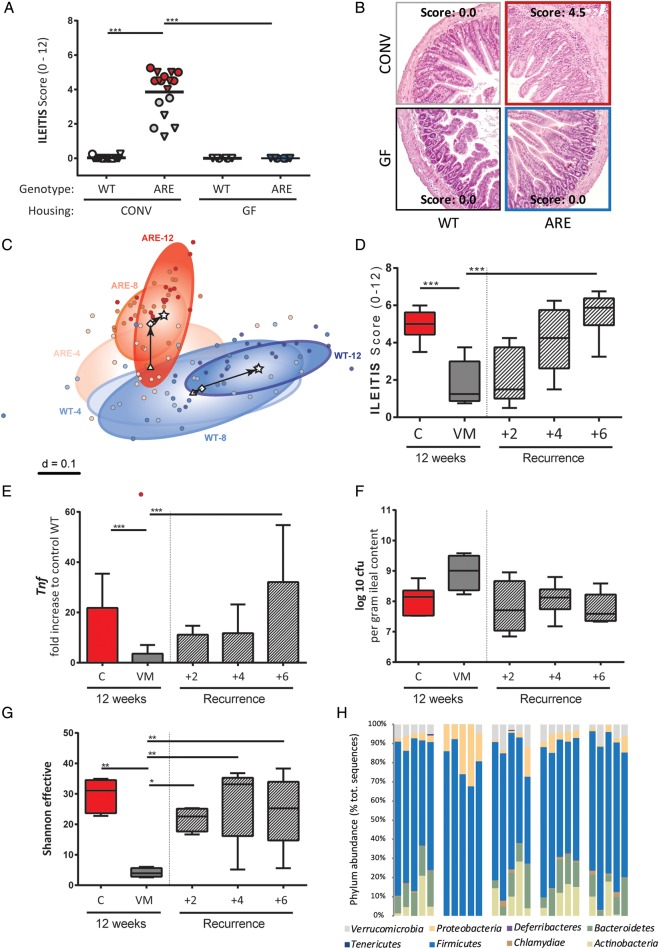
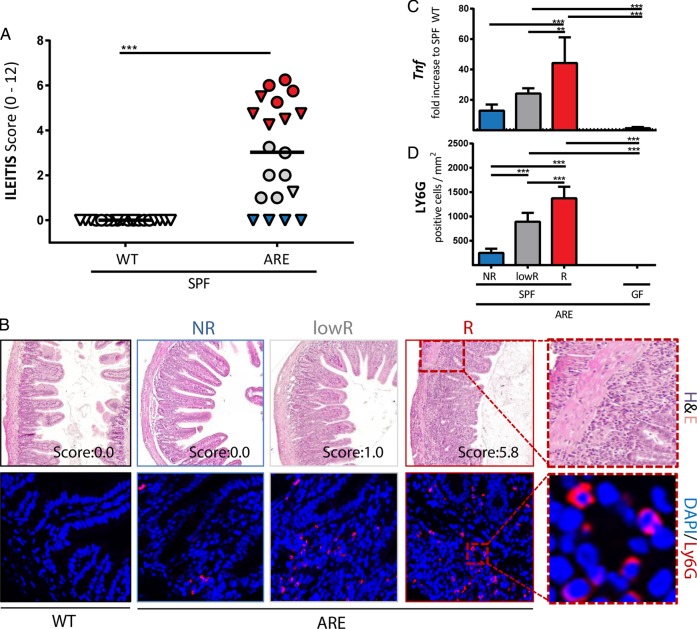
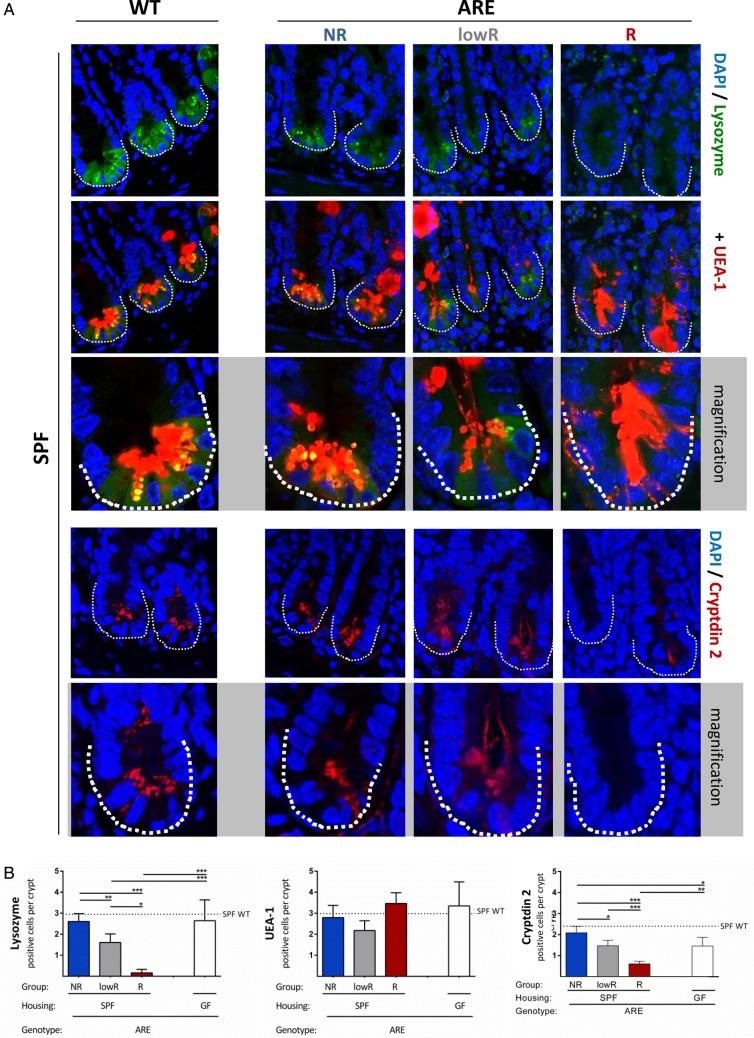
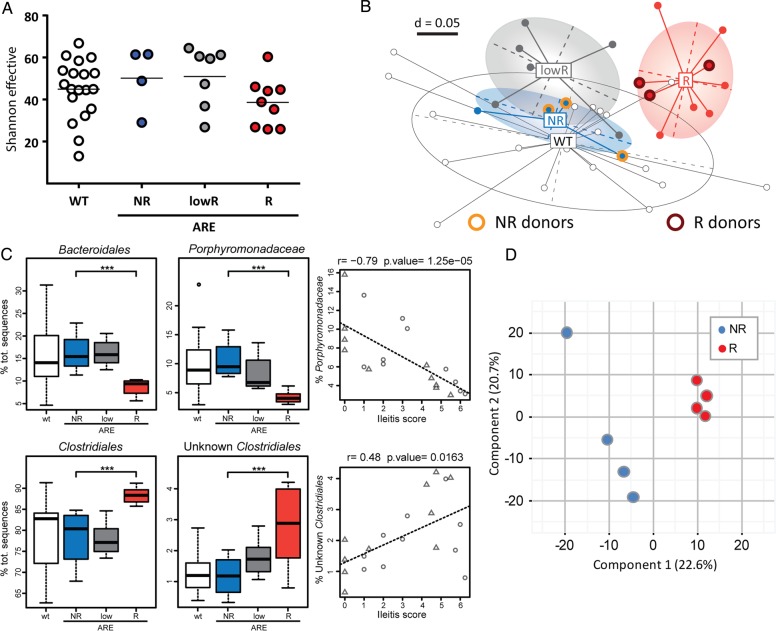
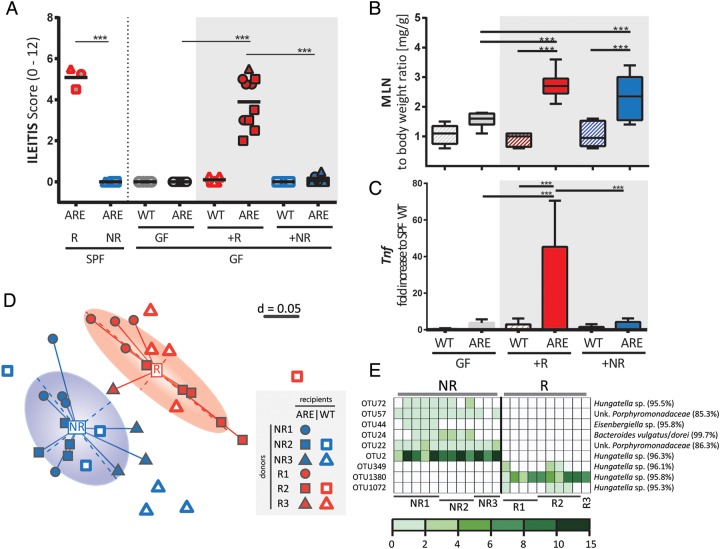
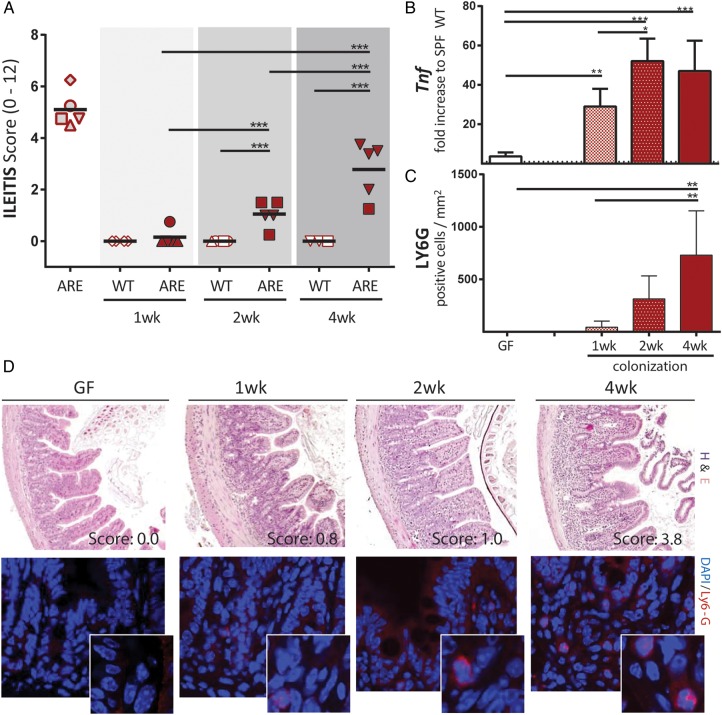
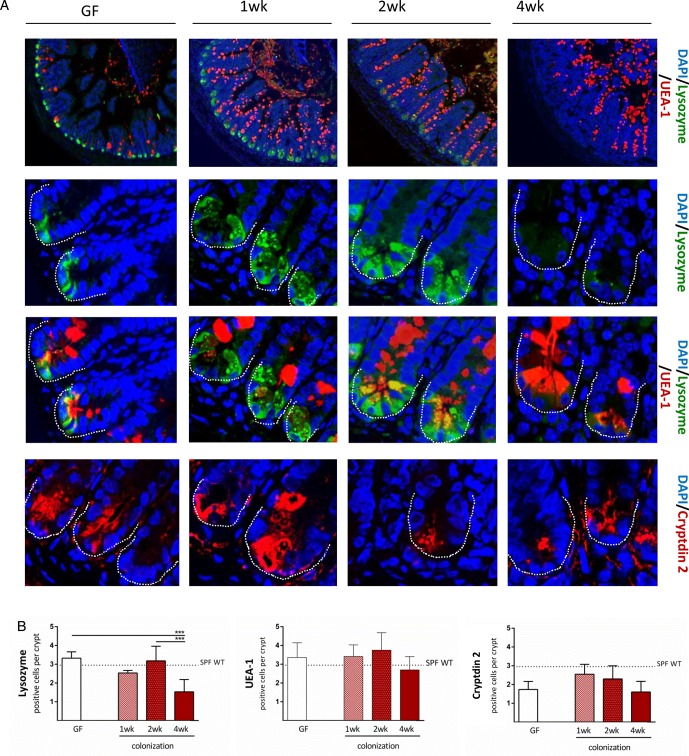
Objectives: Dysbiosis of the intestinal microbiota is associated with Crohn's disease (CD). Functional evidence for a causal role of bacteria in the development of chronic small intestinal inflammation is lacking. Similar to human pathology, TNF deltaARE mice develop a tumour necrosis factor (TNF)-driven CD-like transmural inflammation with predominant ileal involvement. Design: Heterozygous TNF deltaARE mice and wildtype (WT) littermates were housed under conventional (CONV), specific pathogen-free (SPF) and germ-free (GF) conditions. Microbial communities were analysed by high-throughput 16S ribosomal RNA gene sequencing. Metaproteomes were measured using LC-MS. Temporal and spatial resolution of disease development was followed after antibiotic treatment and transfer of microbial communities into GF mice. Granulocyte infiltration and Paneth cell function was assessed by immunofluorescence and gene expression analysis. Results: GF-TNF deltaARE mice were free of inflammation in the gut and antibiotic treatment of CONV-TNF deltaARE mice attenuated ileitis but not colitis, demonstrating that disease severity and location are microbiota-dependent. SPF-TNF deltaARE mice developed distinct ileitis-phenotypes associated with gradual loss of antimicrobial defence. 16S analysis and metaproteomics revealed specific compositional and functional alterations of bacterial communities in inflamed mice. Transplantation of disease-associated but not healthy microbiota transmitted CD-like ileitis to GF-TNF deltaARE recipients and triggered loss of lysozyme and cryptdin-2 expression. Monoassociation of GF-TNF deltaARE mice with the human CD-related Escherichia coli LF82 did not induce ileitis. Conclusions: We provide clear experimental evidence for the causal role of gut bacterial dysbiosis in the development of chronic ileal inflammation with subsequent failure of Paneth cell function.
Overview
The claims and statistics of this paper haven’t been checked yet.
Free: it reads the open-access text and checks the first 5 claims that cite a source we can check. Create a free account to check every claim.
Integrity signals
Registry
Cites
Statistics
Figures
Verification
Claims the paper makes
The claims and statistics of this paper haven’t been checked yet.
Free: it reads the open-access text and checks the first 5 claims that cite a source we can check. Create a free account to check every claim.
Claims other papers make about this one
Each is checked against this paper’s own text: does it say what the citing paper says it does?
The cited source says what the claim attributes to it.
In the citing paper
“transfer of disease-associated microbiota triggers CD-like inflammation in genetically susceptible GF recipient mice.163”
From Interaction between microbiota and immunity in health and disease (2020) · cites this paper as [163]
Self-check
Percentages, sums and reported differences re-computed from the paper’s own numbers.
The self-check needs the paper’s full text.
Citations
Cites
Analysis of Relative Gene Expression Data Using Real-Time Quantitative PCR and the 2−ΔΔCT Method
Livak, K. J., & Schmittgen, T. D. (2001) · Methods · doi:10.1006/meth.2001.1262 · Cited by 180,860
A human gut microbial gene catalogue established by metagenomic sequencing
MetaHIT Consortium, Qin, J., Li, R., Raes, J., Arumugam, M., Burgdorf, K. S., Manichanh, C., Nielsen, T., Pons, N., Levenez, F., et al. (2010) · Nature · doi:10.1038/nature08821 · Cited by 11,624
Host–microbe interactions have shaped the genetic architecture of inflammatory bowel disease
The International IBD Genetics Consortium (IIBDGC), Jostins, L., Ripke, S., Weersma, R. K., Duerr, R. H., McGovern, D. P., Hui, K. Y., Lee, J. C., Philip Schumm, L., Sharma, Y., et al. (2012) · Nature · doi:10.1038/nature11582 · Cited by 4,722
Frank, D. N., St. Amand, A. L., Feldman, R. A., Boedeker, E. C., Harpaz, N., & Pace, N. R. (2007) · Proceedings of the National Academy of Sciences · doi:10.1073/pnas.0706625104 · Cited by 4,611
Autophagy and Viruses: Adversaries or Allies?
Dong, X., & Levine, B. (2013) · Journal of Innate Immunity · doi:10.1159/000346388 · Cited by 4,430
Mutation of the mouse klotho gene leads to a syndrome resembling ageing
Kuro-o, M., Matsumura, Y., Aizawa, H., Kawaguchi, H., Suga, T., Utsugi, T., Ohyama, Y., Kurabayashi, M., Kaname, T., Kume, E., et al. (1997) · Nature · doi:10.1038/36285 · Cited by 3,837
Duodenal Infusion of Donor Feces for Recurrent Clostridium difficile
van Nood, E., Vrieze, A., Nieuwdorp, M., Fuentes, S., Zoetendal, E. G., de Vos, W. M., Visser, C. E., Kuijper, E. J., Bartelsman, J. F. W. M., Tijssen, J. G. P., et al. (2013) · New England Journal of Medicine · doi:10.1056/nejmoa1205037 · Cited by 3,708
Antimicrobial Autophagy: A Conserved Innate Immune Response in Drosophila
Moy, R. H., & Cherry, S. (2013) · Journal of Innate Immunity · doi:10.1159/000350326 · Cited by 3,539
The Treatment-Naive Microbiome in New-Onset Crohn’s Disease
Gevers, D., Kugathasan, S., Denson, L. A., Vázquez-Baeza, Y., Van Treuren, W., Ren, B., Schwager, E., Knights, D., Song, S. J., Yassour, M., et al. (2014) · Cell Host & Microbe · doi:10.1016/j.chom.2014.02.005 · Cited by 3,220 · cited 1×
“9 – 11 Changes in bacterial communities were shown to be shaped by Paneth cell (PC)-derived anti-microbial peptides.”
BackgroundFord Alexander, C., Paul, M., Hanauer Steven, B., 谭蓓, & Dong, W. Z. (2001) · Cited by 3,021
Cited by
Interaction between microbiota and immunity in health and disease
Zheng, D., Liwinski, T., & Elinav, E. (2020) · Cell Research · doi:10.1038/s41422-020-0332-7 · Cited by 3,947
“Some emerging evidence supports a causal role of gut dysbiosis in IBD, since transfer of disease-associated microbiota triggers CD-like inflammation in genetically susceptible GF recipient mice.(163) Microbiota from IBD patients transplanted to GF mice likewise induces imbalances in intestinal Th17 and RORgt regulator…”
BackgroundBeghini, F., McIver, L. J., Blanco-Míguez, A., Dubois, L., Asnicar, F., Maharjan, S., Mailyan, A., Manghi, P., Scholz, M., Thomas, A. M., et al. (2021) · eLife · doi:10.7554/elife.65088 · Cited by 2,303
(2020) · doi:10.1101/2020.11.19.388223 · Cited by 2,303
Gut microbiota and IBD: causation or correlation?
Ni, J., Wu, G. D., Albenberg, L., & Tomov, V. T. (2017) · Nature Reviews Gastroenterology & Hepatology · doi:10.1038/nrgastro.2017.88 · Cited by 1,778
Gut microbiota: Role in pathogen colonization, immune responses, and inflammatory disease
Pickard, J. M., Zeng, M. Y., Caruso, R., & Núñez, G. (2017) · Immunological Reviews · doi:10.1111/imr.12567 · Cited by 1,699
“The role of microbiota in driving intestinal inflammation has also been confirmed in a model of chronic CD-like ileitis spontaneously developed in SPF, but not germ -free, mice carrying a deletion in the tumor necrosis factor AU -rich elements (206).”
BackgroundGut microbiota dysbiosis contributes to the development of hypertension
Li, J., Zhao, F., Wang, Y., Chen, J., Tao, J., Tian, G., Wu, S., Liu, W., Cui, Q., Geng, B., et al. (2017) · Microbiome · doi:10.1186/s40168-016-0222-x · Cited by 1,685
Microbial genes and pathways in inflammatory bowel disease
Schirmer, M., Garner, A., Vlamakis, H., & Xavier, R. J. (2019) · Nature Reviews Microbiology · doi:10.1038/s41579-019-0213-6 · Cited by 956
Characterization of the gut microbiome using 16S or shotgun metagenomics
Jovel, J., Patterson, J., Wang, W., Hotte, N., O'Keefe, S., Mitchel, T., Perry, T., Kao, D., Mason, A. L., Madsen, K. L., et al. (2016) · Frontiers in Microbiology · doi:10.3389/fmicb.2016.00459 · Cited by 942
“…endeavors that have rapidly advanced our understanding of the composition and function of bacterial populations in very diverse environments (Ley et al., 2006; Garrett et al., 2010; Caporaso et al., 2011; Bolhuis et al., 2014; Huttenhower et al., 2014a; Norman et al., 2014; Yoon et al., 2015).”
BackgroundThe microbiome and inflammatory bowel disease
Glassner, K. L., Abraham, B. P., & Quigley, E. M. M. (2020) · Journal of Allergy and Clinical Immunology · doi:10.1016/j.jaci.2019.11.003 · Cited by 837
Impact of commonly used drugs on the composition and metabolic function of the gut microbiota
Vich Vila, A., Collij, V., Sanna, S., Sinha, T., Imhann, F., Bourgonje, A. R., Mujagic, Z., Jonkers, D. M. A. E., Masclee, A. A. M., Fu, J., et al. (2020) · Nature Communications · doi:10.1038/s41467-019-14177-z · Cited by 791
Host–microbiota interactions in inflammatory bowel disease
Caruso, R., Lo, B. C., & Núñez, G. (2020) · Nature Reviews Immunology · doi:10.1038/s41577-019-0268-7 · Cited by 780
Insights into the Role of Erysipelotrichaceae in the Human Host
Kaakoush, N. O. (2015) · Frontiers in Cellular and Infection Microbiology · doi:10.3389/fcimb.2015.00084 · Cited by 721
Role and Mechanism of Gut Microbiota in Human Disease
Chen, Y., Zhou, J., & Wang, L. (2021) · Frontiers in Cellular and Infection Microbiology · doi:10.3389/fcimb.2021.625913 · Cited by 627
“After transferring the gut microbes of IBD mice to germ-free mice, germ-free mice showed clinical symptoms of inflammatory bowel disease (Schaubeck et al., 2016).”
MethodGut Microbiota Diversity and Human Diseases: Should We Reintroduce Key Predators in Our Ecosystem?
Mosca, A., Leclerc, M., & Hugot, J. P. (2016) · Frontiers in Microbiology · doi:10.3389/fmicb.2016.00455 · Cited by 612
The Gut Microbiota in Inflammatory Bowel Disease
Qiu, P., Ishimoto, T., Fu, L., Zhang, J., Zhang, Z., & Liu, Y. (2022) · Frontiers in Cellular and Infection Microbiology · doi:10.3389/fcimb.2022.733992 · Cited by 591
Vich Vila, A., Imhann, F., Collij, V., Jankipersadsing, S. A., Gurry, T., Mujagic, Z., Kurilshikov, A., Bonder, M. J., Jiang, X., Tigchelaar, E. F., et al. (2018) · Science Translational Medicine · doi:10.1126/scitranslmed.aap8914 · Cited by 587
Chen, G., Ran, X., Li, B., Li, Y., He, D., Huang, B., Fu, S., Liu, J., & Wang, W. (2018) · eBioMedicine · doi:10.1016/j.ebiom.2018.03.030 · Cited by 580
“The remaining sections were used for immunofluorescence; detailed procedures can be found in Schaubeck et al. (2016).”
MethodFederici, S., Kredo-Russo, S., Valdés-Mas, R., Kviatcovsky, D., Weinstock, E., Matiuhin, Y., Silberberg, Y., Atarashi, K., Furuichi, M., Oka, A., et al. (2022) · Cell · doi:10.1016/j.cell.2022.07.003 · Cited by 542
Sample storage conditions significantly influence faecal microbiome profiles
Choo, J. M., Leong, L. E., & Rogers, G. B. (2015) · Scientific Reports · doi:10.1038/srep16350 · Cited by 511
Lagkouvardos, I., Joseph, D., Kapfhammer, M., Giritli, S., Horn, M., Haller, D., & Clavel, T. (2016) · Scientific Reports · doi:10.1038/srep33721 · Cited by 506
“Users’ raw amplicon datasets can be analyzed using the same pipeline used for processing SRA samples with some additional features, as detailed in own previously published work 45,46 .”
Self-citationIntestinal microbiota, fecal microbiota transplantation, and inflammatory bowel disease
Weingarden, A. R., & Vaughn, B. P. (2017) · Gut Microbes · doi:10.1080/19490976.2017.1290757 · Cited by 463
“In some mouse models of intestinal inflammation, the transfer of fecal pellets from conventionally raised or specific pathogen free animals with an IBD-like phenotype into germ-free animals recapitulates both the phenotype and the dysbiotic microbiota.(39,40) In certain murine models (including Nod2-deficient mice as…”
BackgroundRhea: a transparent and modular R pipeline for microbial profiling based on 16S rRNA gene amplicons
Lagkouvardos, I., Fischer, S., Kumar, N., & Clavel, T. (2017) · PeerJ · doi:10.7717/peerj.2836 · Cited by 429
Self-citationMicrobial network disturbances in relapsing refractory Crohn’s disease
Swiss IBD Cohort Investigators, Yilmaz, B., Juillerat, P., Øyås, O., Ramon, C., Bravo, F. D., Franc, Y., Fournier, N., Michetti, P., Mueller, C., et al. (2019) · Nature Medicine · doi:10.1038/s41591-018-0308-z · Cited by 428
The Super-Donor Phenomenon in Fecal Microbiota Transplantation
Wilson, B. C., Vatanen, T., Cutfield, W. S., & O'Sullivan, J. M. (2019) · Frontiers in Cellular and Infection Microbiology · doi:10.3389/fcimb.2019.00002 · Cited by 413
“Germ-free conditions have also been found to be protective against the development of colitis and ileitis in IBD-like mouse models with disease transmission only occurring after transfer of a dysbiotic gut microbiota (Sellon et al., 1998; Schaubeck et al., 2016).”
BackgroundFaecal microbiota transplantation protects against radiation‐induced toxicity
Cui, M., Xiao, H., Li, Y., Zhou, L., Zhao, S., Luo, D., Zheng, Q., Dong, J., Zhao, Y., Zhang, X., et al. (2017) · EMBO Molecular Medicine · doi:10.15252/emmm.201606932 · Cited by 328
“Published under the terms of the CC BY 4.0 license448 enteric bacteria and the radiosensitivity of hosts is unknown; moreover, whether intestinal microbes can be used to mitigate radiationinduced injury remains undocumented.”
BackgroundInfluentialThe metabolic nature of inflammatory bowel diseases
Adolph, T. E., Meyer, M., Schwärzler, J., Mayr, L., Grabherr, F., & Tilg, H. (2022) · Nature Reviews Gastroenterology & Hepatology · doi:10.1038/s41575-022-00658-y · Cited by 296
Chen, Y., Cui, W., Li, X., & Yang, H. (2021) · Frontiers in Immunology · doi:10.3389/fimmu.2021.761981 · Cited by 271
“CD can cause transmural enteritis, it can affect any part of the stomach and intestine, especially the terminal ileum and colon (5).”
BackgroundMicrobiome risk profiles as biomarkers for inflammatory and metabolic disorders
Metwaly, A., Reitmeier, S., & Haller, D. (2022) · Nature Reviews Gastroenterology & Hepatology · doi:10.1038/s41575-022-00581-2 · Cited by 264
Self-citationAlipour, M., Zaidi, D., Valcheva, R., Jovel, J., Martínez, I., Sergi, C., Walter, J., Mason, A. L., Wong, G. K.-S., Dieleman, L. A., et al. (2016) · Journal of Crohn's and Colitis · doi:10.1093/ecco-jcc/jjv223 · Cited by 248
Crosstalk between Gut Microbiota and Host Immunity: Impact on Inflammation and Immunotherapy
Campbell, C., Kandalgaonkar, M. R., Golonka, R. M., Yeoh, B. S., Vijay-Kumar, M., & Saha, P. (2023) · Biomedicines · doi:10.3390/biomedicines11020294 · Cited by 243
Bäuerl, C., Collado, M. C., Diaz Cuevas, A., Viña, J., & Pérez Martínez, G. (2018) · Letters in Applied Microbiology · doi:10.1111/lam.12882 · Cited by 238
“2014), it is abundant in inflammatory bowel disease (Schaubeck et al. 2016) and colorectal cancer (Chen et al.”
BackgroundTumour Necrosis Factor Alpha in Intestinal Homeostasis and Gut Related Diseases
Ruder, B., Atreya, R., & Becker, C. (2019) · International Journal of Molecular Sciences · doi:10.3390/ijms20081887 · Cited by 228
“These data i plicate an association between TNFα signalling, infla ation and the icrobial co position [128].”
BackgroundAlterations of the Skin and Gut Microbiome in Psoriasis and Psoriatic Arthritis
Olejniczak-Staruch, I., Ciążyńska, M., Sobolewska-Sztychny, D., Narbutt, J., Skibińska, M., & Lesiak, A. (2021) · International Journal of Molecular Sciences · doi:10.3390/ijms22083998 · Cited by 212
“Recently, it has been shown that germ-free TNF∆ARE/+ mice do not develop Crohn-like ileitis [113].”
BackgroundIntestinal microbiome and NAFLD: molecular insights and therapeutic perspectives
Hu, H., Lin, A., Kong, M., Yao, X., Yin, M., Xia, H., Ma, J., & Liu, H. (2020) · Journal of Gastroenterology · doi:10.1007/s00535-019-01649-8 · Cited by 208
Neonatal selection by Toll-like receptor 5 influences long-term gut microbiota composition
Fulde, M., Sommer, F., Chassaing, B., van Vorst, K., Dupont, A., Hensel, M., Basic, M., Klopfleisch, R., Rosenstiel, P., Bleich, A., et al. (2018) · Nature · doi:10.1038/s41586-018-0395-5 · Cited by 206
Self-citationKhaloian, S., Rath, E., Hammoudi, N., Gleisinger, E., Blutke, A., Giesbertz, P., Berger, E., Metwaly, A., Waldschmitt, N., Allez, M., et al. (2020) · Gut · doi:10.1136/gutjnl-2019-319514 · Cited by 203
Self-citationGut Microbiota Resilience: Definition, Link to Health and Strategies for Intervention
Dogra, S. K., Doré, J., & Damak, S. (2020) · Frontiers in Microbiology · doi:10.3389/fmicb.2020.572921 · Cited by 196
The influence of proton pump inhibitors and other commonly used medication on the gut microbiota
Imhann, F., Vich Vila, A., Bonder, M. J., Lopez Manosalva, A. G., Koonen, D. P. Y., Fu, J., Wijmenga, C., Zhernakova, A., & Weersma, R. K. (2017) · Gut Microbes · doi:10.1080/19490976.2017.1284732 · Cited by 192
“The effects on gut epithelial inflammation and inflammatory markers can also be studied using IBD mouse models.(40) Finally, mouse experiments can be used to investigate the metabolic effects of gut microbiota alterations.”
BackgroundRevisiting the gut–joint axis: links between gut inflammation and spondyloarthritis
Gracey, E., Vereecke, L., McGovern, D., Fröhling, M., Schett, G., Danese, S., De Vos, M., Van den Bosch, F., & Elewaut, D. (2020) · Nature Reviews Rheumatology · doi:10.1038/s41584-020-0454-9 · Cited by 193
Humans as holobionts: implications for prevention and therapy
van de Guchte, M., Blottière, H. M., & Doré, J. (2018) · Microbiome · doi:10.1186/s40168-018-0466-8 · Cited by 191
Dysbiosis in intestinal inflammation: Cause or consequence
Buttó, L. F., & Haller, D. (2016) · International Journal of Medical Microbiology · doi:10.1016/j.ijmm.2016.02.010 · Cited by 188
“In the study by chaubeck et al. (2015), the author demonstrated that histopathoogical features of ileitis are detectable in germ-free TNF ARE ecipient mice colonized with responder microbiota two weeks fter oral gavage, but TNF- mRNA transcript levels were increased lready one week after…”
BackgroundSelf-citationWorby, C. J., Schreiber, H. L., Straub, T. J., van Dijk, L. R., Bronson, R. A., Olson, B. S., Pinkner, J. S., Obernuefemann, C. L. P., Muñoz, V. L., Paharik, A. E., et al. (2022) · Nature Microbiology · doi:10.1038/s41564-022-01107-x · Cited by 188
Defective ATG16L1-mediated removal of IRE1α drives Crohn’s disease–like ileitis
Tschurtschenthaler, M., Adolph, T. E., Ashcroft, J. W., Niederreiter, L., Bharti, R., Saveljeva, S., Bhattacharyya, J., Flak, M. B., Shih, D. Q., Fuhler, G. M., et al. (2017) · Journal of Experimental Medicine · doi:10.1084/jem.20160791 · Cited by 182
“Host genetic alterations can render the microbiota inflammation inducing, e.g., as observed for colitis in Nod2 or Nlrp6 mutants upon exposure to DSS (Elinav et al., 2011; Couturier-Maillard et al., 2013) or for ileitis in the Tnf ΔARE model (Schaubeck et al., 2016).”
BackgroundLi, L.-L., Wang, Y.-T., Zhu, L.-M., Liu, Z.-Y., Ye, C.-Q., & Qin, S. (2020) · Scientific Reports · doi:10.1038/s41598-020-58048-w · Cited by 174
Talking microbes: When gut bacteria interact with diet and host organs
Cani, P. D., & Everard, A. (2016) · Molecular Nutrition & Food Research · doi:10.1002/mnfr.201500406 · Cited by 176
“Assuming that the gut microbiota composition and its metabolic capacity directly contribute to regulate host metabolism is widely accepted [26,51,52]; however, the mechanisms involved in these complex cross-talk events are only beginning to emerge.”
BackgroundMagnusson, M. K., Strid, H., Sapnara, M., Lasson, A., Bajor, A., Ung, K.-A., & Öhman, L. (2016) · Journal of Crohn's and Colitis · doi:10.1093/ecco-jcc/jjw051 · Cited by 163
Kandpal, M., Indari, O., Baral, B., Jakhmola, S., Tiwari, D., Bhandari, V., Pandey, R. K., Bala, K., Sonawane, A., & Jha, H. C. (2022) · Metabolites · doi:10.3390/metabo12111064 · Cited by 159
“However, microbial homeostasis perturbations also correspond to various diseased states, for example, inflammatory bowel disease (IBD) [6], Crohn’s disease (CD) [7], Alzheimer’s disease (AD) [8] and Parkinson’s disease (PD) [9], non-alcoholic fatty liver disease [10], atopic eczema allergies [11], gastric cancer [12],…”
BackgroundKe, X., Walker, A., Haange, S.-B., Lagkouvardos, I., Liu, Y., Schmitt-Kopplin, P., von Bergen, M., Jehmlich, N., He, X., Clavel, T., et al. (2019) · Molecular Metabolism · doi:10.1016/j.molmet.2019.01.012 · Cited by 160
“Protein extraction, LC-MS/MS measurements and bioinformatic analysis were performed as described earlier [33] and explained in more detail in the Supplementary Materials and Methods.”
MethodSelf-citationFiebiger, U., Bereswill, S., & Heimesaat, M. M. (2016) · European Journal of Microbiology and Immunology · doi:10.1556/1886.2016.00036 · Cited by 159
“Another elegant study assessed the impact of intestinal bacterial communities in a spontaneous model of chronic Crohn’s disease-like ileitis [123].”
BackgroundMethodGastro-Intestinal and Oral Microbiome Signatures Associated with Healthy Aging
Singh, H., Torralba, M. G., Moncera, K. J., DiLello, L., Petrini, J., Nelson, K. E., & Pieper, R. (2019) · GeroScience · doi:10.1007/s11357-019-00098-8 · Cited by 158
Kaulmann, A., & Bohn, T. (2016) · Oxidative Medicine and Cellular Longevity · doi:10.1155/2016/9346470 · Cited by 165
“[155], where disease associated microbiota was transplanted in amousemodel, causing CD in the transfectedmice, clearly demonstrating gut microflora as a causative agent of IBD.”
BackgroundColeman, O. I., Lobner, E. M., Bierwirth, S., Sorbie, A., Waldschmitt, N., Rath, E., Berger, E., Lagkouvardos, I., Clavel, T., McCoy, K., et al. (2018) · Gastroenterology · doi:10.1053/j.gastro.2018.07.028 · Cited by 176
Self-citationMicrobiota and mucosal defense in IBD: an update
Stange, E. F., & Schroeder, B. O. (2019) · Expert Review of Gastroenterology & Hepatology · doi:10.1080/17474124.2019.1671822 · Cited by 159
Gut dysbiosis: Ecological causes and causative effects on human disease
Winter, S., & Bäumler, A. J. (2023) · Proceedings of the National Academy of Sciences · doi:10.1073/pnas.2316579120 · Cited by 181
“Fecal microbiota profiling reveals that a shift in the species composition, termed gut dysbiosis, is observed in diseases that include leading causes of human mor bidity and mortality, such as cardiovascular disease (CVD) (6), diabetes (7, 8), colorectal cancer (CRC) (9), chronic kidney disease (CKD) (10), and inflam…”
BackgroundInfluentialRoy, U., Gálvez, E. J. C., Iljazovic, A., Lesker, T. R., Błażejewski, A. J., Pils, M. C., Heise, U., Huber, S., Flavell, R. A., & Strowig, T. (2017) · Cell Reports · doi:10.1016/j.celrep.2017.09.097 · Cited by 140
Sheng, L., Jena, P. K., Hu, Y., Liu, H., Nagar, N., Kalanetra, K. M., French, S. W., French, S. W., Mills, D. A., & Wan, Y. Y. (2017) · The Journal of Pathology · doi:10.1002/path.4983 · Cited by 133
“Moreover, the enriched Bacteroidaceae in FXR KO mice might increase the risk for development of intestinal inflammation [56].”
BackgroundPaneth cell defects in Crohn’s disease patients promote dysbiosis
Liu, T.-C., Gurram, B., Baldridge, M. T., Head, R., Lam, V., Luo, C., Cao, Y., Simpson, P., Hayward, M., Holtz, M. L., et al. (2016) · JCI Insight · doi:10.1172/jci.insight.86907 · Cited by 130
“A recent in vivo study in mice has found that gut dysbiosis leads to chronic ileal inflammation with subsequent failure of Paneth cell function (23), suggesting an alternative “pathway” that could regulate both Paneth cell phenotype and CD development.”
BackgroundThe Oral-Gut-Brain AXIS: The Influence of Microbes in Alzheimer’s Disease
Narengaowa, Kong, W., Lan, F., Awan, M. U. F., Qing, H., & Ni, J. (2021) · Frontiers in Cellular Neuroscience · doi:10.3389/fncel.2021.633735 · Cited by 149
Clavel, T., Gomes‐Neto, J. C., Lagkouvardos, I., & Ramer‐Tait, A. E. (2017) · Immunological Reviews · doi:10.1111/imr.12578 · Cited by 123
Self-citationThe role of microbiota, and probiotics and prebiotics in skin health
Maguire, M., & Maguire, G. (2017) · Archives of Dermatological Research · doi:10.1007/s00403-017-1750-3 · Cited by 159
Dysbiotic microbiota interactions in Crohn’s disease
Caparrós, E., Wiest, R., Scharl, M. M., Rogler, G., Gutiérrez, A., Yılmaz, B., Wawrzyniak, M., & Francés, R. (2021) · Gut Microbes · doi:10.1080/19490976.2021.1949096 · Cited by 149
The ecology of human microbiota: dynamics and diversity in health and disease
Karkman, A., Lehtimäki, J., & Ruokolainen, L. (2017) · Annals of the New York Academy of Sciences · doi:10.1111/nyas.13326 · Cited by 115
Gut microbiota and immunity relevance in eubiosis and dysbiosis
Al-Rashidi, H. E. (2022) · Saudi Journal of Biological Sciences · doi:10.1016/j.sjbs.2021.10.068 · Cited by 105
Gut microbiota as important modulator of metabolism in health and disease
Wang, X., Zhang, A., Miao, J.-H., Sun, H. J., Yan, G., Wu, F., & Wang, X.-J. (2018) · RSC Advances · doi:10.1039/c8ra08094a · Cited by 117
Insights into Gut Dysbiosis: Inflammatory Diseases, Obesity, and Restoration Approaches
Acevedo-Román, A., Pagán-Zayas, N., Velázquez-Rivera, L. I., Torres-Ventura, A. C., & Godoy‐Vitorino, F. (2024) · International Journal of Molecular Sciences · doi:10.3390/ijms25179715 · Cited by 142
Inflammation-independent TL1A-mediated intestinal fibrosis is dependent on the gut microbiome
Jacob, N., Jacobs, J. P., Kumagai, K., Ha, C. W. Y., Kanazawa, Y., Lagishetty, V., Altmayer, K., Hamill, A. M., Von Arx, A., Sartor, R. B., et al. (2018) · Mucosal Immunology · doi:10.1038/s41385-018-0055-y · Cited by 102
Parker, A., Vaux, L., Patterson, A. M., Modasia, A. A., Muraro, D., Fletcher, A. G., Byrne, H. M., Maini, P. K., Watson, A. J. M., & Pin, C. (2019) · Cell Death and Disease · doi:10.1038/s41419-018-1275-5 · Cited by 124
An Update Review on the Paneth Cell as Key to Ileal Crohn's Disease
Wehkamp, J., & Stange, E. F. (2020) · Frontiers in Immunology · doi:10.3389/fimmu.2020.00646 · Cited by 118
“In some models of ileitis the defective antibacterial system may be secondary to dysbiosis (93).”
BackgroundKozlova, E. V., Hegde, S. M., Roundy, C. M., Golovko, G., Saldaña, M. A., Hart, C. E., Anderson, E. R., Hornett, E. A., Khanipov, K., Popov, V. L., et al. (2020) · The ISME Journal · doi:10.1038/s41396-020-00763-3 · Cited by 104
Dietary butyrate suppresses inflammation through modulating gut microbiota in high-fat diet-fed mice
Zhai, S., Qin, S., Li, L., Zhu, L., Zou, Z., & Wang, L. (2019) · FEMS Microbiology Letters · doi:10.1093/femsle/fnz153 · Cited by 101
Mechanisms of Microbe–Host Interaction in Crohn’s Disease: Dysbiosis vs. Pathobiont Selection
Buttó, L. F., Schaubeck, M., & Haller, D. (2015) · Frontiers in Immunology · doi:10.3389/fimmu.2015.00555 · Cited by 93
“In animal models of intestinal inflammation, the causal relationship of a dysbiotic ecosystem in inducing inflammation was effectively shown by transferring the microbiota directly or by cohousing animals and thereby inducing pathology in recipients (130, 181, 290, 310).”
BackgroundInfluentialSelf-citationArmstrong, C. W., McGregor, N., Lewis, D. P., Butt, H. L., & Gooley, P. R. (2016) · Metabolomics · doi:10.1007/s11306-016-1145-z · Cited by 98
Zhang, R., Yuan, S., Ye, J., Wang, X., Zhang, X., Shen, J., Yuan, M., & Liao, W. (2020) · International Journal of Biological Macromolecules · doi:10.1016/j.ijbiomac.2020.02.044 · Cited by 92
Metaproteomics: A strategy to study the taxonomy and functionality of the gut microbiota
Wang, Y., Zhou, Y., Xiao, X., Zheng, J., & Zhou, H. (2020) · Journal of Proteomics · doi:10.1016/j.jprot.2020.103737 · Cited by 90
Tie, Y., Huang, Y., Chen, R., Li, L., Chen, M., & Zhang, S. (2023) · Gut Microbes · doi:10.1080/19490976.2023.2265028 · Cited by 100
“74 In patients with IBD, gut dysbiosis such as increased Bifidobacterium, Enterococcus faecalis, Escherichia coli, Klebsiella, Ruminococcus gnavus, Veillonella parvula and decreased Akkermansia muciniphila, Bacteroides, Clostridium, Coprococcus, Faecalibacterium prausnitzii, Lachnospira, Roseburia,…”
BackgroundMishima, Y., & Sartor, R. B. (2019) · Journal of Gastroenterology · doi:10.1007/s00535-019-01618-1 · Cited by 98
“In mouse studies, transfer of bacteria strains associated with IBD induces intestinal inflammation in susceptible gnotobiotic mice [35, 44] and fecal transplants from IBD donors to germ-free mice stimulate increased numbers of Th17 cells and inflammatory mediators compared with transfer of feces from healthy donors, w…”
BackgroundCuffaro, B., Assohoun, A. L. W., Boutillier, D., Súkeníková, L., Desramaut, J., Boudebbouze, S., Salomé‐Desnoulez, S., Hrdý, J., Waligora‐Dupriet, A., Maguin, E., et al. (2020) · Cells · doi:10.3390/cells9092104 · Cited by 94
“Moreover, microbiota transplantation from IBD patients or colitic animals to axenic recipient mice led to gut inflammation arguing that dysbiotic microbiota play an important role in the pathogenesis of inflammatory disease [18,19].”
BackgroundGut microbiome: a new player in gastrointestinal disease
Gorkiewicz, G., & Moschen, A. R. (2017) · Archiv für Pathologische Anatomie und Physiologie und für Klinische Medicin · doi:10.1007/s00428-017-2277-x · Cited by 109
“germ-free animals and demonstrated that the microbiome was indeed the driving force for inflammation in this model [118].”
BackgroundWang, S.-L., Shao, B.-Z., Zhao, S.-B., Chang, X., Wang, P., Miao, C.-Y., Li, Z.-S., & Bai, Y. (2019) · Cell Death & Disease · doi:10.1038/s41419-019-1634-x · Cited by 86
The gut virome is associated with stress-induced changes in behaviour and immune responses in mice
Ritz, N. L., Draper, L. A., Bastiaanssen, T. F. S., Turkington, C. J. R., Peterson, V. L., van de Wouw, M., Vlčková, K., Fülling, C., Guzzetta, K. E., Burokas, A., et al. (2024) · Nature Microbiology · doi:10.1038/s41564-023-01564-y · Cited by 93
Xia, Y., Chen, Y., Wang, G., Yang, Y., Song, X., Xiong, Z., Zhang, H., Lai, P. F. H., Wang, S., & Ai, L. (2020) · Journal of Functional Foods · doi:10.1016/j.jff.2020.103854 · Cited by 84
Potential mediators linking gut bacteria to metabolic health: a critical view
Janssen, A. W. F., & Kersten, S. (2017) · The Journal of Physiology · doi:10.1113/jp272476 · Cited by 82
“Conversely, the intestinal microbiota may impact the host and contribute to certain diseases (Rabot et al. 2010; Ridaura et al. 2013; Gregory et al. 2015; Schaubeck et al. 2016).”
BackgroundInteraction between smoking and ATG16L1T300A triggers Paneth cell defects in Crohn’s disease
Liu, T., Kern, J. T., VanDussen, K. L., Xiong, S., Kaiko, G. E., Wilen, C. B., Rajala, M. W., Caruso, R., Holtzman, M. J., Gao, F., et al. (2018) · Journal of Clinical Investigation · doi:10.1172/jci120453 · Cited by 93
“Paneth cell function is important for maintaining the homeostasis of the gut microbial community (31-33), and dysbiosis can develop as a downstream effect of Paneth cell defects or loss (20, 34, 35).”
BackgroundCuív, P. Ó., de Wouters, T., Giri, R., Mondot, S., Smith, W. J. M., Blottière, H. M., Begun, J., & Morrison, M. (2017) · Anaerobe · doi:10.1016/j.anaerobe.2017.06.002 · Cited by 104
Mucosal host-microbe interactions associate with clinical phenotypes in inflammatory bowel disease
Hu, S., Bourgonje, A. R., Gaćeša, R., Jansen, B. H., Björk, J. R., Bangma, A., Hidding, I. J., van Dullemen, H. M., Visschedijk, M. C., Faber, K. N., et al. (2024) · Nature Communications · doi:10.1038/s41467-024-45855-2 · Cited by 97
Hubbard, T. D., Murray, I. A., Nichols, R. G., Cassel, K., Podolsky, M. A., Kuzu, G., Tian, Y., Smith, P., Kennett, M. J., Patterson, A. D., et al. (2017) · Journal of Functional Foods · doi:10.1016/j.jff.2017.08.038 · Cited by 92
“Additionally, increases in Erysipelotrichaceae correlate with the development of TNF-driven Crohn’s disease-like transmural inflammation (Schaubeck et al., 2015).”
BackgroundMapping the T cell repertoire to a complex gut bacterial community
(2023) · doi:10.1038/s41586-023-06431-8 · Cited by 79
“c Expanded (6-500) Multiple (2-5) Single (1) NA”
BackgroundEffects of four food hydrocolloids on colitis and their regulatory effect on gut microbiota
Zhang, S., Sun, Y., Nie, Q., Hu, J., Li, Y., Shi, Z., Ji, H., Zhang, H., Zhao, M., Chen, C., et al. (2023) · Carbohydrate Polymers · doi:10.1016/j.carbpol.2023.121368 · Cited by 85
Mapping the T cell repertoire to a complex gut bacterial community
Nagashima, K., Zhao, A., Atabakhsh, K., Weakley, A., Jain, S., Meng, X., Cheng, A. G., Wang, M., Higginbottom, S., Dimas, A., et al. (2022) · doi:10.1101/2022.05.04.490632 · Cited by 79
Liu, J., Wang, K., Wang, Y., Chen, W., Jin, Z., Yao, Z., & Zhang, D. (2019) · Aquaculture · doi:10.1016/j.aquaculture.2019.01.026 · Cited by 82
Czepielewski, R. S., Erlich, E. C., Onufer, E. J., Young, S., Saunders, B. T., Han, Y.-H., Wohltmann, M., Wang, P. L., Kim, K.-W., Kumar, S., et al. (2021) · Immunity · doi:10.1016/j.immuni.2021.10.003 · Cited by 77
Novel perspectives on therapeutic modulation of the gut microbiota
McCarville, J. L., Caminero, A., & Verdu, E. F. (2016) · Therapeutic Advances in Gastroenterology · doi:10.1177/1756283x16637819 · Cited by 76
“Some animal models have shown a primary role of dysbiosis in models of IBD [Natividad et al. 2015; Schaubeck et al. 2015; Seo et al. 2015], but it has been difficult to translate this to the clinical setting [Abraham and Cho, 2009; Kaser et al.”
The intestinal microbiome and Alzheimer's disease: A review
Li, Z., Zhu, H., Zhang, L., & Qin, C. (2018) · Animal Models and Experimental Medicine · doi:10.1002/ame2.12033 · Cited by 83
“showed a tendency to increase with age in PAP transgenic mice.(98,104) Moreover, it has been showed that diabetes is associated with intestinal barrier dysfunction.”
BackgroundLevy, A. N., & Allegretti, J. R. (2019) · Therapeutic Advances in Gastroenterology · doi:10.1177/1756284819836893 · Cited by 83
Dysbiotic gut microbiome: A key element of Crohn's disease
Øyri, S. F., Műzes, G., & Sípos, F. (2015) · Comparative Immunology Microbiology and Infectious Diseases · doi:10.1016/j.cimid.2015.10.005 · Cited by 85
Gnotobiotics: Past, present and future
Basic, M., & Bleich, A. (2019) · Laboratory Animals · doi:10.1177/0023677219836715 · Cited by 80
Self-citationEnhancing metaproteomics—The value of models and defined environmental microbial systems
Herbst, F., Lünsmann, V., Kjeldal, H., Jehmlich, N., Tholey, A., von Bergen�, M., Nielsen, J. L., Hettich, R. L., Seifert, J., & Nielsen, P. H. (2016) · PROTEOMICS · doi:10.1002/pmic.201500305 · Cited by 79
“A number of metaproteomic studies such as [64] or [13] described the investigation of human and mouse derived microbiota (recently reviewed [35,65]).”
BackgroundSelf-citationZeng, H., Larson, K., Cheng, W., Bukowski, M. R., Safratowich, B. D., Liu, Z., & Hakkak, R. (2020) · The Journal of Nutritional Biochemistry · doi:10.1016/j.jnutbio.2019.108336 · Cited by 80
Phenolic Compounds Promote Diversity of Gut Microbiota and Maintain Colonic Health
Domínguez-Avila, J. A., Villa-Rodríguez, J. A., Montiel‐Herrera, M., Pacheco‐Ordaz, R., Roopchand, D. E., Venema, K., & González-Aguilar, G. A. (2020) · Digestive Diseases and Sciences · doi:10.1007/s10620-020-06676-7 · Cited by 79
“The evidence suggests that a healthy gut microbiota may exert antiinflammatory effects on inflammation-linked conditions like psoriatic arthritis [16], metabolic syndrome [17], Crohn’s disease-like ileitis [18], osteoarthritis [19], and nonalcoholic liver disease [20] among others.”
BackgroundYvon, S., Olier, M., Leveque, M., Jard, G., Tormo, H., Haimoud-Lekhal, D. A., Peter, M., & Eutamène, H. (2016) · European Journal of Nutrition · doi:10.1007/s00394-016-1304-z · Cited by 76
Metadata
- Authors
- Schaubeck, M., Clavel, T., Calasan, J., Lagkouvardos, I., Haange, S. B., Jehmlich, N., Basic, M., Dupont, A., Hornef, M., Bergen, M. V., Bleich, A., & Haller, D.
- Affiliations
- Technical University of Munich (DE)
- Chair of Nutrition and Immunology, Technische Universität München, Freising-Weihenstephan, Germany
- Helmholtz Centre for Environmental Research (DE)
- RWTH Aachen University (DE)
- Medizinische Hochschule Hannover (DE)
- Department of Proteomics, Helmholtz-Centre for Environmental Research—UFZ, Leipzig, Germany
- Corresponding author
- Haller, Dirk
- ORCID
- Venue
- Gut
- Publisher
- BMJ
- Published
- 2015-04-17
- Volume
- 65
- Issue
- 2
- Pages
- 225-237
- ISSN
- 0017-5749 (ISSN-L)
- 1468-3288
- PMC
- PMC4752651
- OpenAlex
- W1980475824
- Cited by
- 447
- References
- 75
- Citations by year
- 2026: 29 · 2025: 43 · 2024: 38 · 2023: 36 · 2022: 52 · 2021: 55 · 2020: 32 · 2019: 40 · 2018: 32 · 2017: 46 · 2016: 31 · 2015: 13
- FWCI
- 17.64
- Type
- journal article
- Language
- en
- Open access
- hybrid
- doi.org
- Licence
- cc-by-nc
- Locations
- Gut (publishedVersion, cc-by-nc)
- Europe PMC (PubMed Central) (publishedVersion, cc-by-nc)
- PubMed Central (publishedVersion, cc-by-nc)
- VBN Forskningsportal (Aalborg Universitet) (publishedVersion, cc-by-nc)
- PubMed (publishedVersion)
- HighWire Press Open Archive (submittedVersion)
- RWTH Publications (RWTH Aachen) (submittedVersion)
- Funders
- Deutsche Forschungsgemeinschaft (SPP-1656)
- Helmholtz-Zentrum für Umweltforschung
- European Regional Development Fund
- Topics
- Life Sciences › Biochemistry, Genetics and Molecular Biology › Molecular Biology › Gut microbiota and health
- Health Sciences › Medicine › Gastroenterology › Inflammatory Bowel Disease
- Health Sciences › Medicine › Gastroenterology › Gastrointestinal motility and disorders
- Keywords
- Crohn's disease, ileitis, gut dysbiosis, germ-free mice, specific pathogen-free mice, microbiota transplantation, Paneth cells, lysozyme, antimicrobial defense, antibiotic therapy, small bowel inflammation, metaproteomics
- MeSH terms
- Animals, Anti-Bacterial Agents, Colitis, Crohn Disease, Germ-Free Life, Ileitis, Inflammation, Intestines, Tumor Necrosis Factor-alpha, Fluoroimmunoassay, Mice, Microbiota, Dysbiosis
About these checks
Registry, retraction, Cites and statistics results are computed, not judged, with one exception: a printed reference that no index lists is read once by a model before it counts as a citation error. Claims are extracted by a model and kept only when their quote appears verbatim in the text; each cited source is then checked, with a model’s help, for whether it says what the claim relies on. Those verdicts can be wrong — read the claim’s quote and the cited source before relying on one.
Statistics and arithmetic are recomputed, not judged.
Confidence bands are shown only for fields calibrated on our annotated test set. None is calibrated yet, so no band is shown.
What counts as a claim ›How we measure confidence ›How we check this ›
Are you an author, or do you see a problem with this page? Request a review
Data sources
Bibliographic data: Semantic Scholar, OpenAlex, Crossref.
Contains information from the Semantic Scholar Academic Graph Datasets, made available under the ODC Attribution License (ODC-BY 1.0).
Semantic Scholar’s data is described in: Kinney, R., et al. (2023). The Semantic Scholar Open Data Platform. arXiv:2301.10140.
