

Campylobacter jejuni promotes colorectal tumorigenesis through the action of cytolethal distending toxin
Open accessThe DOI matches its Crossref record; 42 of the 42 references it cites were found in a registry or an index.
Abstract
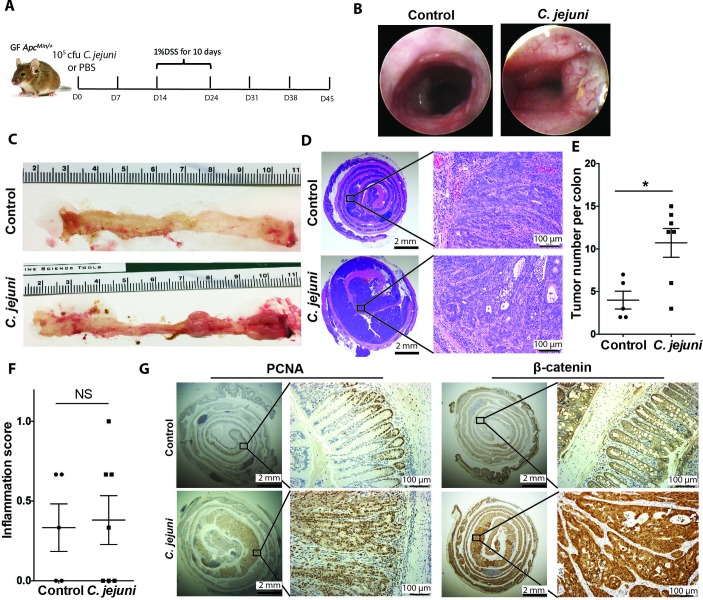
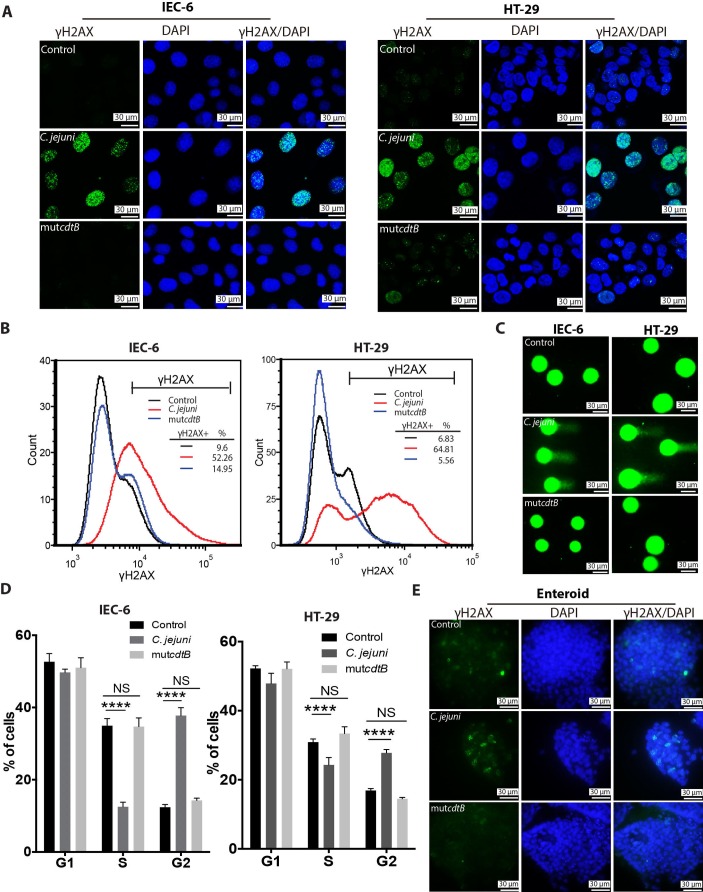
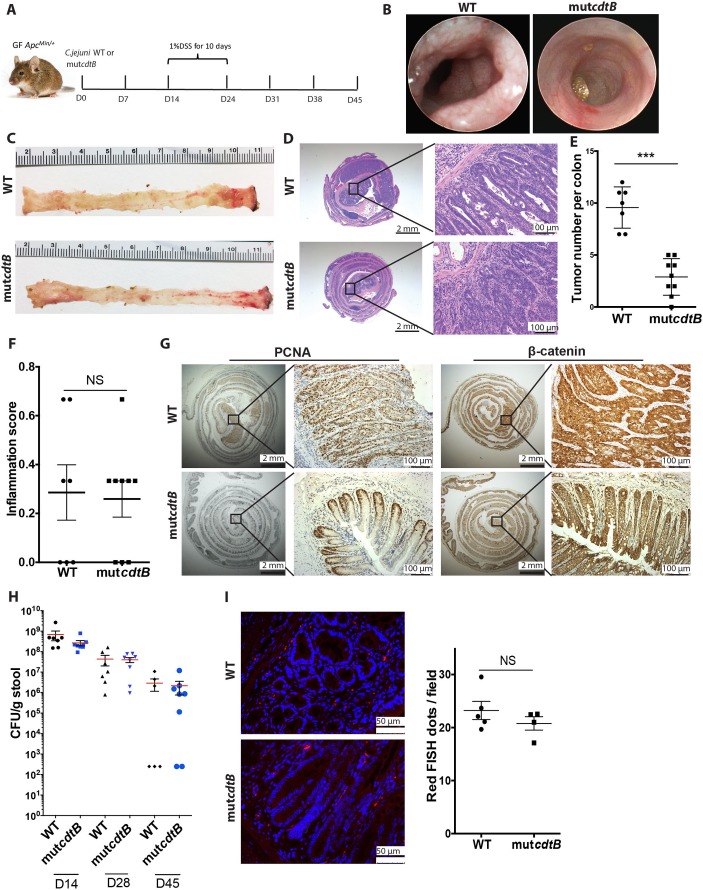
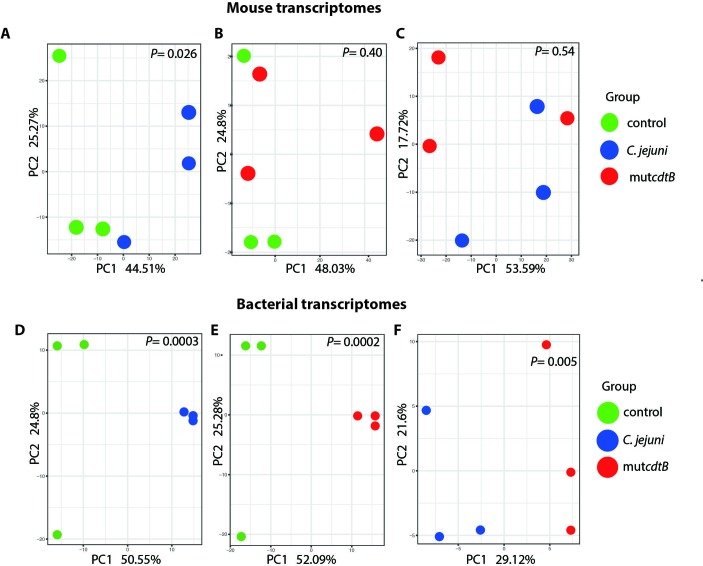
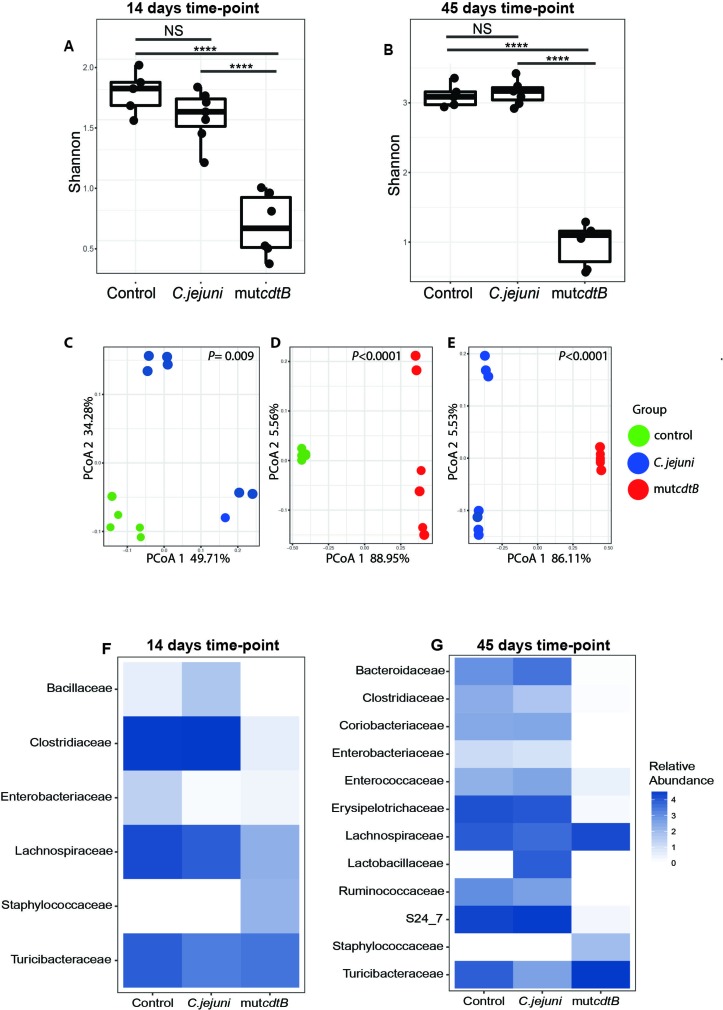
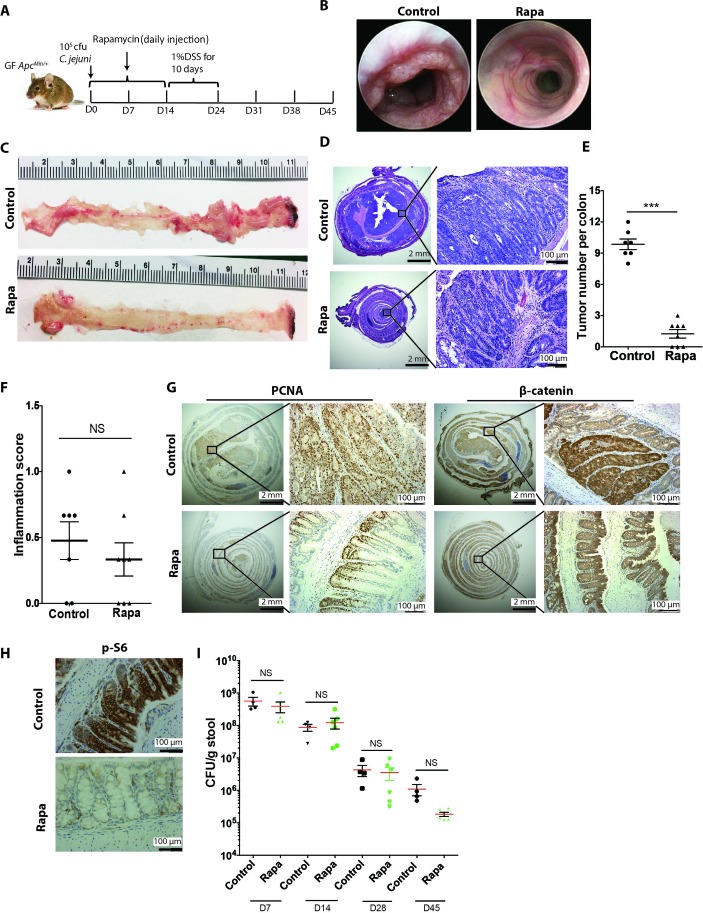
Objective: Campylobacter jejuni produces a genotoxin, cytolethal distending toxin (CDT), which has DNAse activity and causes DNA double-strand breaks. Although C. jejuni infection has been shown to promote intestinal inflammation, the impact of this bacterium on carcinogenesis has never been examined. Design: Germ-free (GF) Apc Min/+ mice, fed with 1% dextran sulfate sodium, were used to test tumorigenesis potential of CDT-producing C. jejuni . Cells and enteroids were exposed to bacterial lysates to determine DNA damage capacity via γH2AX immunofluorescence, comet assay and cell cycle assay. To examine the interplay of CDT-producing C. jejuni , gut microbiome and host in tumorigenesis, colonic RNA-sequencing and faecal 16S rDNA sequencing were performed. Rapamycin was administrated to investigate the prevention of CDT-producing C. jejuni -induced tumorigenesis. Results: GF Apc Min/+ mice colonised with human clinical isolate C. jejuni 81–176 developed significantly more and larger tumours when compared with uninfected mice. C. jejuni with a mutated cdtB subunit, mut cdtB , attenuated C. jejuni -induced tumorigenesis in vivo and decreased DNA damage response in cells and enteroids. C. jejuni infection induced expression of hundreds of colonic genes, with 22 genes dependent on the presence of c dtB. The C. jejuni -infected group had a significantly different microbial gene expression profile compared with the mut cdtB group as shown by metatranscriptomic data, and different microbial communities as measured by 16S rDNA sequencing. Finally, rapamycin could diminish the tumorigenic capability of C. jejuni . Conclusion: Human clinical isolate C. jejuni 81–176 promotes colorectal cancer and induces changes in microbial composition and transcriptomic responses, a process dependent on CDT production.
Overview
The claims and statistics of this paper haven’t been checked yet.
Free: it reads the open-access text and checks the first 5 claims that cite a source we can check. Create a free account to check every claim.
Integrity signals
Registry
Cites
Statistics
Figures
Verification
Claims the paper makes
The claims and statistics of this paper haven’t been checked yet.
Free: it reads the open-access text and checks the first 5 claims that cite a source we can check. Create a free account to check every claim.
Claims other papers make about this one
Each is checked against this paper’s own text: does it say what the citing paper says it does?
In the citing paper
“the gut microbiota and its related metabolites can disrupt the host's normal cell cycle, leading to changes in cell and protein expression that control cell division, DNA repair, and apoptosis (8,9).”
From The Role of Gut Microbiota in Lung Cancer: From Carcinogenesis to Immunotherapy (2021) · doi:10.3389/fonc.2021.720842 · cites this paper as [8]
In the citing paper
“Strong experimental evidence suggests that additional microbes initiate cancer through genotoxin-mediated mutagenesis; in particular, colibactin (a DNA alkylator), cytolethal distending toxin (CDT; direct DNAse activity), and Bacteroides fragilis toxin (Bft; ROS producer) cause mutational signatures found in colorectal, head and neck, and urinary tract cancers (22, 37–41).”
From The microbiome and human cancer (2021) · cites this paper as [39]
Self-check
Percentages, sums and reported differences re-computed from the paper’s own numbers.
The self-check needs the paper’s full text.
Citations
Cites
Siegel, R. L., Miller, K. D., & Jemal, A. (2017) · CA: A Cancer Journal for Clinicians · doi:10.3322/caac.21387 · Cited by 14,712
Sato, T., Stange, D. E., Ferrante, M., Vries, R. G. J., van Es, J. H., van den Brink, S., van Houdt, W. J., Pronk, A., van Gorp, J., Siersema, P. D., et al. (2011) · Gastroenterology · doi:10.1053/j.gastro.2011.07.050 · Cited by 3,753
Organoid Models and Applications in Biomedical Research
Xinaris, C., Brizi, V., & Remuzzi, G. (2015) · Nephron · doi:10.1159/000433566 · Cited by 3,515
Intestinal inflammation targets cancer-inducing activity of the microbiota
Arthur, J. C., Perez-Chanona, E., Mühlbauer, M., Tomkovich, S., Uronis, J. M., Fan, T.-J., Campbell, B. J., Abujamel, T., Dogan, B., Rogers, A. B., et al. (2012) · Science · doi:10.1126/science.1224820 · Cited by 2,263
Schwabe, R. F., & Jobin, C. (2013) · Nature Reviews Cancer · doi:10.1038/nrc3610 · Cited by 1,689
Self-citationGlobal Epidemiology of Campylobacter Infection
Kaakoush, N. O., Castaño-Rodríguez, N., Mitchell, H. M., & Man, S. M. (2015) · Clinical Microbiology Reviews · doi:10.1128/cmr.00006-15 · Cited by 1,529
Garrett, W. S. (2015) · Science · doi:10.1126/science.aaa4972 · Cited by 1,404
Replication of human noroviruses in stem cell–derived human enteroids
Ettayebi, K., Crawford, S. E., Murakami, K., Broughman, J. R., Karandikar, U., Tenge, V. R., Neill, F. H., Blutt, S. E., Zeng, X.-L., Qu, L., et al. (2016) · Science · doi:10.1126/science.aaf5211 · Cited by 1,305
Patients with familial adenomatous polyposis harbor colonic biofilms containing tumorigenic bacteria
Dejea, C. M., Fathi, P., Craig, J. M., Boleij, A., Taddese, R., Geis, A. L., Wu, X., DeStefano Shields, C. E., Hechenbleikner, E. M., Huso, D. L., et al. (2018) · Science · doi:10.1126/science.aah3648 · Cited by 1,105
Microbes, Microbiota, and Colon Cancer
Sears, C. L., & Garrett, W. S. (2014) · Cell Host & Microbe · doi:10.1016/j.chom.2014.02.007 · Cited by 818
Cited by
Items 201–300 of 409
Mizutani, H., Fukui, S., Oosuka, K., Ikeda, K., Kobayashi, M., Shimada, Y., Nakazawa, Y., Nishiura, Y., Suga, D., Moritani, I., et al. (2025) · Scientific Reports · doi:10.1038/s41598-025-00976-6 · Cited by 15
Zhou, P., Zhang, W., Liao, Y., Zhai, Z., Lu, S., Jiang, S., Hu, W., & Gong, W. (2025) · International Journal of Surgery · doi:10.1097/js9.0000000000002573 · Cited by 18
The Deletion of IL-17A Enhances Helicobacter hepaticus Colonization and Triggers Colitis
Zhu, L., Wu, Z., Zhu, C. X., Yin, J., Huang, Y., Feng, J., & Zhang, Q. (2022) · Journal of Inflammation Research · doi:10.2147/jir.s359100 · Cited by 12
“This expression can affect the proliferation of intestinal stem cells and has been linked to colitis and colorectal tumorigenesis.(43,44) The excessive H.”
BackgroundRetractedAhn, J., Kang, M., Seo, Y., & Kim, H. (2022) · BMB Reports · doi:10.5483/bmbrep.2022-0182 · Cited by 18
Xu, X., Hu, H., Zeng, H., Li, B., Yin, Q., Jiang, Y., Zang, L., Zhao, C., & Qian, G. (2023) · Pharmaceutical Biology · doi:10.1080/13880209.2023.2191643 · Cited by 15
“Campylobacter jejuni is a widespread foodborne bacterial pathogen that has been shown to promote intestinal inflammation (He et al. 2019).”
BackgroundOncogenic potential of Campylobacter infection in the gastrointestinal tract: narrative review
Kato, I., Minkevitch, J., & Sun, J. (2023) · Scandinavian Journal of Gastroenterology · doi:10.1080/00365521.2023.2228954 · Cited by 15
“…mice [110]. the oncogenic effects of cDt-producing cJ were then tested in ApcMin/+ mice in conjunction with post infection DSS treatment [111]. the study showed that cDt-producing cJ significantly increased tumor size compared with uninfected mice, that cJ with a mutated cdtB sub-unit…”
BackgroundInfluentialCanonico, B., Cesarini, E., Montanari, M., Sario, G. D., Campana, R., Galluzzi, L., Sola, F., Gundogdu, O., Luchetti, F., Diotallevi, A., et al. (2020) · International Journal of Molecular Sciences · doi:10.3390/ijms21062207 · Cited by 15
“jejuni and the key role of CDT in this process have been demonstrated [37].”
BackgroundIntestinal Organoids: New Tools to Comprehend the Virulence of Bacterial Foodborne Pathogens
Garcia, M. A., Hillion, K., Cappelier, J.-M., Neunlist, M., Mahé, M. M., & Haddad, N. (2022) · Foods · doi:10.3390/foods11010108 · Cited by 17
“jejuni 81–176 promotes colorectal tumorigenesis through the action of cytolethal distending toxin (CDT) [90].”
BackgroundInfluentialBacteria and macrophages in the tumor microenvironment
Xu, S. S., Xiong, Y., Fu, B., Guo, D. L., Sha, Z., Lin, X., & Wu, H. (2023) · Frontiers in Microbiology · doi:10.3389/fmicb.2023.1115556 · Cited by 14
“(2003) Prostate cancer Proteobacteria Campylobacter Lara-Tejero and Galan (2000) Prostate cancer Actinobacteria Propionibacterium Sfanos et al.”
Bacterial Therapy of Cancer: A Way to the Dustbin of History or to the Medicine of the Future?
Ikryannikova, L. N., Gorokhovets, N. V., Belykh, D. A., Kurbatov, L. K., & Zamyatnin, A. A. (2023) · International Journal of Molecular Sciences · doi:10.3390/ijms24119726 · Cited by 14
“Campylobacter jejuni small intestinal lymphomas, colorectal cancer [51,52]”
BackgroundMicrobiota as a New Target in Cancer Pathogenesis and Treatment
Algrafi, A., Jamal, A. A., & Ismaeel, D. M. (2023) · Cureus · doi:10.7759/cureus.47072 · Cited by 21
“Another organism is Campylobacter jejuni, which was found to promote the growth and enlargement of colorectal tumors in mice, and induces changes in microbial composition and transcriptomic responses, a process dependent on cytolethal distending toxin (CDT) production [19].”
BackgroundGut microbial dysbiosis in the pathogenesis of leukemia: an immune-based perspective
Goswami, M., & Bose, P. D. (2024) · Experimental Hematology · doi:10.1016/j.exphem.2024.104211 · Cited by 14
Ibeanu, G. C., Rowaiye, A. B., Okoli, J., & Eze, D. (2024) · ImmunoTargets and Therapy · doi:10.2147/itt.s486731 · Cited by 15
“29 In a certain study, Germ-free (GF) ApcMin/+ mice were used in conjunction with a 1% dextran sulfate sodium diet to investigate the tumorigenic potential of CDT-producing C. jejuni .”
Pons, B. J., Bezine, E., Hanique, M., Guillet, V., Mourey, L., Chicher, J., Frisan, T., Vignard, J., & Mirey, G. (2019) · PLoS ONE · doi:10.1371/journal.pone.0214313 · Cited by 12
Self-citationBacterial Toxins Are a Never-Ending Source of Surprises: From Natural Born Killers to Negotiators
Chiloeches, M. L., Bergonzini, A., & Frisan, T. (2021) · Toxins · doi:10.3390/toxins13060426 · Cited by 15
Piazzesi, A., & Putignani, L. (2022) · Frontiers in Microbiology · doi:10.3389/fmicb.2022.958346 · Cited by 14
Bacterial immunotherapy: is it a weapon in our arsenal in the fight against cancer?
Sharma, S., Sharma, H., & Gogoi, H. (2023) · Frontiers in Immunology · doi:10.3389/fimmu.2023.1277677 · Cited by 15
Markelova, N. N., Semenova, E. F., Синева, О. Н., & Sadykova, V. S. (2022) · International Journal of Molecular Sciences · doi:10.3390/ijms231911706 · Cited by 12
“jejuni isolate extracted from human, due to the toxic effect of CdtB, induced DNA damage, contributing to the development of colorectal cancer, while the number and size of tumors in mice decreased when they were infected with bacteria with a mutated CdtB subunit [74].”
BackgroundQiu, J., Jiang, Y., Ye, N., Jin, G., Shi, H., & Qian, D. (2024) · Journal of Translational Medicine · doi:10.1186/s12967-024-05531-x · Cited by 15
Therapeutic Modulation of the Microbiome in Oncology: Current Trends and Future Directions
Saraswat, I., & Goel, A. (2024) · Current Pharmaceutical Biotechnology · doi:10.2174/0113892010353600241109132441 · Cited by 15
Verma, M., Randhawa, S., Bathla, M., Teji, N., & Acharya, A. (2025) · Journal of Materials Chemistry B · doi:10.1039/d4tb02409e · Cited by 16
Chang, M. R., Rusanov, D. A., Arakelyan, J., Alshehri, M. M., Asaturova, A. V., Kireeva, G. S., Babak, M. V., & Ang, W. H. (2022) · Coordination Chemistry Reviews · doi:10.1016/j.ccr.2022.214923 · Cited by 12
Microbiota regulation in constipation and colorectal cancer
Wang, L., Ruan, H., Wang, B., Qin, Y., & Zhong, W. (2023) · World Journal of Gastrointestinal Oncology · doi:10.4251/wjgo.v15.i5.776 · Cited by 12
Chang, C., & Lam, H. Y. P. (2024) · Anticancer Research · doi:10.21873/anticanres.17035 · Cited by 15
“Many bacteria can also produce cytolethal-distending toxins (CDT) (28, 29), which have been proven to drive DNA damage, thereby promoting carcinogenesis (30, 31).”
BackgroundFoodborne microbial toxins and their inhibition by plant-based chemicals
Das, S., Chaudhari, A. K., Singh, A., DEEPIKA, D., Singh, V. K., Dwivedy, A. K., & Dubey, N. K. (2020) · Elsevier eBooks · doi:10.1016/b978-0-12-818593-3.00006-3 · Cited by 17
Gut microbiota interplay with autophagy-EMT dynamics in colorectal cancer
Vescovo, T., Bontempi, G., Bayat, M., Piredda, L., Fidaleo, M., Strippoli, R., & Antonioli, M. (2025) · Frontiers in Cell and Developmental Biology · doi:10.3389/fcell.2025.1608248 · Cited by 11
Martin, L. A., Touffait-Calvez, V., Everaert, M., Jia, R., Sifré, E., Seeneevassen, L., Varon, C., Dubus, P. R., & Ménard, A. (2024) · The Journal of Infectious Diseases · doi:10.1093/infdis/jiae105 · Cited by 12
Thymidylate synthase accelerates Men1-mediated pancreatic tumor progression and reduces survival
Vijayakurup, V., Maeng, K., Lee, H. S., Meyer, B. S., Burkett, S. S., Nawab, A., Dougherty, M. W., Jobin, C., Mahmud, I., Garrett, T. J., et al. (2022) · JCI Insight · doi:10.1172/jci.insight.147417 · Cited by 10
“DNA strand breaks were quantified by alkaline comet assay following the manufacturer’s protocol (4250-050-K, R&D Systems) as previously described (53) and reported according to the Minimum Information for Reporting Comet Assay (MIRCA)”
MethodSelf-citationEIF3D promotes resistance to 5‐fluorouracil in colorectal cancer through upregulating RUVBL1
Li, C., Lu, K., Yang, C., Du, W., & Liang, Z.-K. (2023) · Journal of Clinical Laboratory Analysis · doi:10.1002/jcla.24825 · Cited by 12
Dong, J., Li, Y., Xiao, H., Cui, M., & Fan, S. (2021) · Cancer Biology and Medicine · doi:10.20892/j.issn.2095-3941.2020.0476 · Cited by 15
Guragain, M., Schmidt, J. W., Kalchayanand, N., Dickey, A. M., & Bosilevac, J. M. (2022) · Scientific Reports · doi:10.1038/s41598-022-09274-x · Cited by 10
Deng, J., Huang, Y., Yu, K., Luo, H., Zhou, D., & Li, D. (2024) · Microbial Pathogenesis · doi:10.1016/j.micpath.2024.106784 · Cited by 10
Microbial Biomarkers in Liquid Biopsy for Cancer: An Overview and Future Directions
Luo, F., Wang, X., Ye, C., & Sun, H. (2024) · Cancer Control · doi:10.1177/10732748241292019 · Cited by 14
The interactions between gut microbiota and Chinese herbal medicine in colorectal cancer
Hou, X., Li, X., Chen, W., Zhu, W., Guo, H., & Zhao, L. (2025) · Acupuncture and Herbal Medicine · doi:10.1097/hm9.0000000000000153 · Cited by 12
Chen, Z., Dong, Y.-Y., Yan, Q., Li, Q., Yu, C., Lai, Y., Tan, J., Fan, M., Xu, C., Liu, L., et al. (2023) · Frontiers in Oncology · doi:10.3389/fonc.2023.1198467 · Cited by 9
“The abundance of Bacteroidota and Campilobacterota was positive related to colorectal cancer (13, 60).”
BackgroundLiu, Z., Parida, S., Wu, S., Sears, C. L., Sharma, D., & Barman, I. (2022) · ACS Sensors · doi:10.1021/acssensors.2c00232 · Cited by 8
The Microbiome in Immuno-oncology
Toker, J. S., Arora, R., & Wargo, J. A. (2020) · Advances in experimental medicine and biology · doi:10.1007/978-3-030-41008-7_19 · Cited by 12
Gut Microbiota and Alimentary Tract Injury
Chen, Y., Wu, G., & Zhao, Y. (2020) · Advances in experimental medicine and biology · doi:10.1007/978-981-15-2385-4_2 · Cited by 10
Modulation of Gut Microbial Biomarkers and Metabolites in Cancer Management by Tea Compounds
Leung, H. K. M., Lo, E. K. K., Zhang, F., Felicianna, Ismaiah, M. J., Chen, C., & El-Nezami, H. S. (2024) · International Journal of Molecular Sciences · doi:10.3390/ijms25126348 · Cited by 12
“While for Epsilonproteobacteria, it was better known for its pathogenic members Campylobacter jejuni and Helicobacter pylori, which played significant roles in the progression of gastrointestinal cancer [57–61].”
BackgroundMicrobiota-associated mechanisms in colorectal cancer
González, A., Fullaondo, A., & Odriozola, A. (2024) · Advances in genetics · doi:10.1016/bs.adgen.2024.05.002 · Cited by 8
Sammallahti, H., Rezasoltani, S., Pekkala, S., Kokkola, A., Aghdaei, H. A., Looha, M. A., Ghanbari, R., Zamani, F., Sadeghi, A., Sarhadi, V. K., et al. (2025) · Gut Pathogens · doi:10.1186/s13099-025-00698-0 · Cited by 10
“Gram-negative Campylobacterota, including the pathogens Helicobacter and Campylobacter , were enriched in Finnish PC only and have both been associated with cancer [85, 88, 89].”
Gabaran, S. G., Hassani, S., Mahmoodi, M., Salehi, M., & Rezaie, J. (2026) · Cell Communication and Signaling · doi:10.1186/s12964-025-02634-w · Cited by 10
“The internalization of the essential active subunit, CdtB, is facilitated by the CdtA and CdtC subunits mediating the toxin’s interaction with the cell membrane [139].”
Hull, R., Lolas, G., Makrogkikas, S., Jensen, L. D., Syrigos, K. N., Evangelou, G., Padayachy, L. C., Egbor, C., Mehrotra, R., Makhafola, T. J., et al. (2021) · Microorganisms · doi:10.3390/microorganisms9102129 · Cited by 8
“Clostridium orbiscindens TLR3 signaling TLR3-mediated INF-β secretion by DCs in the intestine [69]”
BackgroundMezerová, K., Starý, L., Zbořil, P., Klementa, I., Stašek, M., Špička, P., Skalický, P., & Raclavský, V. (2021) · Life · doi:10.3390/life11111165 · Cited by 10
“The genotoxic activity of CDT was also observed in rat small intestine epithelial cells and in human colon cancer cell lines, including chromosomal aberrations, cell cycle disruption, and more frequent mutations [54,55].”
BackgroundMechanisms of gastrointestinal pathogenesis and landscape of intestinal immunity
Samanta, S. (2023) · Elsevier eBooks · doi:10.1016/b978-0-323-85730-7.00023-0 · Cited by 9
Antibodies to oral pathobionts and colon cancer risk in the CLUE I cohort study
Debertin, J. G., Teles, F., Martin, L. M., Lu, J., Koestler, D. C., Kelsey, K. T., Beck, J. D., Platz, E. A., & Michaud, D. S. (2023) · International Journal of Cancer · doi:10.1002/ijc.34527 · Cited by 8
“jejuni has been shown to promote colorectal cancer in a germ free Apc mice mouse model.(29)”
BackgroundFan, Y., Gu, X., Yang, H., Chen, Y., Fang, C., Deng, H., & Dai, L. (2025) · Molecular Biomedicine · doi:10.1186/s43556-025-00376-2 · Cited by 10
“Research has shown that CDT released by Campylobacter jejuni within the TME leads to double-stranded DNA breakage, promoting CRC [41, 61].”
Bachir, A., Altaie, A. M., Bendardaf, R., Talaat, I. M., & Hamoudi, R. (2026) · Frontiers in Microbiology · doi:10.3389/fmicb.2026.1795882 · Cited by 9
“Furthermore, C. jejuni alters the host’s gut microbiota and activates the mTOR pathway, which promotes epithelial proliferation and tumor formation (He et al., 2019, 2024).”
Zhong, Y., Liu, Z., Wang, Y., Cai, S., Qiao, Z., Hu, X., Wang, T., & Yi, J. (2024) · Food Reviews International · doi:10.1080/87559129.2024.2414908 · Cited by 13
“[62,63]”
Halimeh, F. B., Rafei, R., Diene, S. M., Osman, M., Kassem, I. I., Akoum, R. J., Moudani, W. E., Hamzé, M., & Rolain, J. (2022) · Folia Microbiologica · doi:10.1007/s12223-021-00921-w · Cited by 7
Campylobacter jejuni induces differentiation of human neutrophils to the CD16hi/CD62Llo subtype
Dolislager, C. G., Callahan, S. M., Donohoe, D. R., & Johnson, J. G. (2022) · Journal of Leukocyte Biology · doi:10.1002/jlb.4a0322-155rr · Cited by 8
A mutational signature that can be made by a bacterium arises in human colon cancer
Yang, Y., & Jobin, C. (2020) · Nature · doi:10.1038/d41586-020-00818-7 · Cited by 7
Self-citationLohman, E. D. S., Duijster, J. W., Koerkamp, B. G., van der Post, R., Franz, E., Mughini‐Gras, L., & de Reuver, P. (2020) · Cancers · doi:10.3390/cancers12113348 · Cited by 7
Recent progress on drug delivery systems of regulating intratumoral bacteria for tumor therapy
Feng, J. Q., Liu, Y., Gong, L., Liu, C., Xiao, C., Chen, L., Jin, M., Gao, Z., Huang, W., & Li, Y. (2025) · Chinese Chemical Letters · doi:10.1016/j.cclet.2025.110907 · Cited by 7
Advanced strategies in organoid/organ-on-a-chip for food safety and nutrition
Zhou, Y., Wang, F., Zhao, R., Huang, T., Su, W., Wen, Y., He, Z., & Li, D. (2025) · Food Research International · doi:10.1016/j.foodres.2025.117011 · Cited by 8
Self-citationThe Gut Microbiome Role in Multiple Myeloma: Emerging Insights and Therapeutic Opportunities
George, M. Y., Gamal, N. K., Mansour, D. E., Famurewa, A. C., Bose, D., Messiha, P. A., & Cerchione, C. (2025) · Hematology Reports · doi:10.3390/hematolrep17060056 · Cited by 6
Primary tumor microbiomes predict distant metastasis of colorectal cancer
Parajuli, B., Midya, V., Kiddle, R., Jager, N. D., Eggers, S. I., Spakowicz, D. J., Hoyd, R., Salhia, B., Chan, C. H. F., Churchman, M. L., et al. (2025) · npj Precision Oncology · doi:10.1038/s41698-025-01188-x · Cited by 9
“HostDNAdamagecan also be in fl icted by protein toxins, such as the type III secretion system effector UshA in Citrobacter rodentium and cytolethal distending toxin (CDT) in Campylobacter jejuni that promote carcinogenesis in mouse models 12,13 .”
Drug delivery systems for enhanced tumour treatment by eliminating intra-tumoral bacteria
Liu, Z., Ma, Y., Ye, J.-X., Li, G., Kang, X., Xie, W., & Wang, X. (2024) · Journal of Materials Chemistry B · doi:10.1039/d3tb02362a · Cited by 7
Morita, S., Sato, S., Maruyama, S., Miyagawa, A., Nakamura, K., Nakamura, M., Asakura, H., Sugiyama, H., Takaı̈, S., Maeda, K., et al. (2022) · Comparative Immunology Microbiology and Infectious Diseases · doi:10.1016/j.cimid.2022.101766 · Cited by 6
Park, C. J., Li, J., Zhang, X., Gao, F., Benton, C. S., & Andam, C. P. (2020) · Journal of Clinical Microbiology · doi:10.1128/jcm.02070-19 · Cited by 6
“jejuni and is reported to be associated with local acute inflammation in enterocolitis (38), 303 hyper-invasion (39) and colorectal tumorigenesis (40).”
BackgroundFunctional Study of Haemophilus ducreyi Cytolethal Distending Toxin Subunit B
Pons, B. J., Loiseau, N., Hashim, S., Tadrist, S., Mirey, G., & Vignard, J. (2020) · Toxins · doi:10.3390/toxins12090530 · Cited by 7
“actinomycetemcomitans [59], or even carcinogenesis [13,15].”
Self-citationNervous system–gut microbiota–immune system axis: future directions for preventing tumor
Wang, J., Cheng, W., & Yang, R. (2025) · Frontiers in Immunology · doi:10.3389/fimmu.2025.1535955 · Cited by 11
Jiang, L., Li, M., & Zhao, Z. (2025) · Journal of Applied Microbiology · doi:10.1093/jambio/lxaf230 · Cited by 6
Zhai, Z., Li, X., Shang, S., Ma, S., Liang, X., Yin, S., Wu, M., Yu, J., Song, Q., & Chen, D. (2026) · Cell Communication and Signaling · doi:10.1186/s12964-025-02623-z · Cited by 5
“For example, B. fragilis toxins and Campylobacter jejuni ’s cell-lethal bulking toxin both contribute to the upregulation of spermine oxidase, thereby inducing ROS to damage DNA [93].”
Yang, X., Zhang, K., Xia, L., & Li, J. (2026) · iMetaMed · doi:10.1002/imm3.70030 · Cited by 5
Zhang, J., Chen, X., Zou, J., Li, C., Kang, W., Guo, Y., Liu, S., Zhao, W., Mou, X., Huang, J., et al. (2022) · Microbiology Spectrum · doi:10.1128/spectrum.02116-22 · Cited by 9
Bones and guts – Why the microbiome matters
Contino, K. F., Cook, K. L., & Shiozawa, Y. (2024) · Journal of bone oncology · doi:10.1016/j.jbo.2024.100523 · Cited by 5
Man, L., Soh, P. X. Y., McEnearney, T. E., Cain, J. A., Dale, A. L., & Cordwell, S. J. (2024) · Microorganisms · doi:10.3390/microorganisms12050860 · Cited by 5
“CiaI has been linked with chicken colonisation [88], while elevated abundances of the cytolethal-distending toxin subunits CdtB/CdtC in a food-like environment is potentially of major concern [89].”
BackgroundThe Intestinal Microbiome in Humans: Its Role for a Healthy Life and in the Onset of Diseases
Gașpar, B. S., Profir, M., Roşu, O. A., Ionescu, R. F., & Creţoiu, S. M. (2024) · Physiology · doi:10.5772/intechopen.113719 · Cited by 7
Lin, Y., Zhu, N., Liu, J., Wen, S., Xu, Y., Xu, X., & Cai, X. (2024) · Veterinary Microbiology · doi:10.1016/j.vetmic.2024.110168 · Cited by 5
Zhai, X., Lin, D., Shen, Y., Zhai, N., Fan, Y., Zhang, J., Lin, Y., Wang, Y., Zhou, Q., & Zheng, X. E. (2025) · Frontiers in Oncology · doi:10.3389/fonc.2024.1492571 · Cited by 6
“Microbiota and its derived metabolite exert one of the main functions of its carcinogenesis and tumor progression (38, 39).”
Musthafa, K. S., Sirirak, T., Paosen, S., & Voravuthikunchai, S. P. (2021) · Journal of Food Measurement & Characterization · doi:10.1007/s11694-021-00951-5 · Cited by 5
Randall‐Demllo, S., Al-Qadami, G. H., Raposo, A. E., Ma, C., Priebe, I. K., Hor, M., Singh, R., & Fung, K. Y. C. (2024) · Cancers · doi:10.3390/cancers16213664 · Cited by 6
Zhang, Y., Yang, N., Li, Q., Tang, Y., Bai, B., & Liu, G. (2025) · Virology · doi:10.1016/j.virol.2025.110595 · Cited by 4
Clinical Detection and Management of Colorectal Cancer Concerning the Gut Microbiome
Farahani, H. E., Pourhajibagher, M., & Bahador, A. (2025) · Scientifica · doi:10.1155/sci5/1945321 · Cited by 6
“Together with pks-positive E. coli , these bacteria contribute signifcantly to CRC by fostering an infammatory environment and promoting epithelial transformation [57, 61].”
Chitre, S., Gharaibeh, R. Z., & Jobin, C. (2025) · Gut Microbes · doi:10.1080/19490976.2025.2600053 · Cited by 4
“…with our findings that C. jejuni carrying the genotoxin cytolethal-distending toxin (CDT) promotes the development of primary and metastatic CRC. 9,10 In contrast, Enterobacteriaceae-dominated regions exhibited robust expression of antimicrobial peptides and TLR-related genes, consistent with…”
Self-citationColorectal microenvironment determines the prognosis of colorectal cancer
Bang, Y. H., Choi, J. H., Park, K., Lee, B., Han, K. Y., Pyo, D. H., Cho, Y. B., Kim, T. M., Park, K. J., Ryoo, S., et al. (2026) · Experimental & Molecular Medicine · doi:10.1038/s12276-025-01599-7 · Cited by 5
“By analyzing the bulk-level transcriptomes of NBT, we were able to classify the subgroups with distinct prognostic outcomes that exhibited varying levels of microniche abundance within the tumors.”
Chen, X., Zhu, X., Liu, Y., Ma, L., Li, L., Dong, J., Li, Z., Wang, T., Zhang, J., & Xu, Y. (2026) · Journal of Oral Microbiology · doi:10.1080/20002297.2026.2613536 · Cited by 4
“The suspension was sonicated on ice (four cycles of 30 s on, 30 s off) [23], and the protein concentration was assessed.”
Microbial dysbiosis in cholangiocarcinoma
Liu, Y., Huang, S., Zhang, Y., Zhang, Y., Xu, Y., Tang, Y., Guo, S., & Zhang, Z. (2026) · Frontiers in Microbiology · doi:10.3389/fmicb.2026.1727736 · Cited by 5
The landscape of tissue-resident microbiota across normal, polyp, and colorectal cancer tissues
Xiang, H., Shen, B., Lao, W., Bai, B., Chen, M., Zhou, L., Yu, G., Zhang, W., Chen, H., Wang, Y., et al. (2026) · Nature Communications · doi:10.1038/s41467-026-69705-5 · Cited by 6
“These group-speci fi c signatures, further validated through FISH, indicate consistent associations between TRM composition and histological category, and are compatible with proposed mechanisms involving immune modulation and epithelial barrier disruption 40 – 42 .”
Ding, W., Chen, L., Xia, J., Dong, G., Song, B., Pei, B., & Li, X. (2024) · Medicine · doi:10.1097/md.0000000000037735 · Cited by 5
“…jejuni can generate a genotoxin with DNase activity to provoke DNA double-strand breaks by directly, which can cause the parox-ysm of CC. [50] In, [51] the characteristics of microbiota in 276 patients with GC was obsessed that the cancerous, paracan-cerous and normal tissues took over…”
BackgroundRAGE participates in the intracellular transport of Campylobacter jejuni cytolethal distending toxin
Chang, Y., Huang, Y.-P., Chou, C.-H., Ho, M., Lin, H., Chun-ya, C., Wu, H.-Y., Lai, Y.-R., Lee, Y.-H., Chiu, C., et al. (2024) · Journal of Microbiology Immunology and Infection · doi:10.1016/j.jmii.2024.07.007 · Cited by 5
Alkhalil, S. S., Almanaa, T. N., Altamimi, R. A., Abdalla, M., & El‐Arabey, A. A. (2024) · PLoS ONE · doi:10.1371/journal.pone.0312590 · Cited by 5
Kiouri, D. P., Batsis, G., Mavromoustakos, T., Giuliani, A., & Chasapis, C. T. (2025) · BioTech · doi:10.3390/biotech14010013 · Cited by 4
“It is hypothesized that the scale-free character of the degree distribution is at least partially due to gene duplication events, because it is thought to underlie the phenomenon of preferential attachment [121].”
Molecular Mechanisms of Gut Microbiota-Associated Colorectal Carcinogenesis
Shao, Y., & Zeng, X. (2020) · Infectious Microbes & Diseases · doi:10.1097/im9.0000000000000030 · Cited by 5
“Molecular mechanisms of gut microbiotaassociated colorectal carcinogenesis Substantial studies have been done to investigate the relationship of gut microbiota and colorectal carcinogenesis, especially aetiological and molecular mechanisms that serve as the basements for clinic translation, such as the development of…”
BackgroundInfluentialMezerová, K., Raclavský, V., & Starý, L. (2021) · Biomedical Papers · doi:10.5507/bp.2021.054 · Cited by 7
Plitt, T., & Faith, J. J. (2023) · Seminars in Immunology · doi:10.1016/j.smim.2023.101735 · Cited by 3
Campylobacter jejuni causes colorectal cancer
Gervaz, P., Campos, Á. D., & Caeiro, A. (2022) · World Journal of Colorectal Surgery · doi:10.4103/wjcs.wjcs_19_22 · Cited by 4
Bodie, A. R., Dittoe, D. K., Applegate, S. F., Stephens, T. P., & Ricke, S. C. (2023) · Foods · doi:10.3390/foods13010056 · Cited by 4
“This method is also aligned with current United States industry standards and can potentially provide the poultry industry with a more rapid and accurate quantitative method for Campylobacter enumeration to ensure that process controls are working adequately to provide safe products to consumers.”
MethodMicrobes in Tumoral In Situ Tissues and in Tumorigenesis
Xue, F., Han, L., Ma, S., Zhao, L., Wang, L., Zhang, K., Yin, P., Guo, L., Wei, J., & Li, Q. (2020) · Frontiers in Cellular and Infection Microbiology · doi:10.3389/fcimb.2020.572570 · Cited by 6
“could induce double-strand DNA break via its deoxyribonuclease activity to develop cancer (Cuevas-Ramos et al., 2010; He et al., 2019).”
BackgroundInfluentialThe close interrelation between colorectal cancer, infection and microbiota
Massaut, E., Hendlisz, B., & Klastersky, J. A. (2019) · Current Opinion in Oncology · doi:10.1097/cco.0000000000000543 · Cited by 4
“jejuni promote colorectal cancer and induce changes in microbial composition and transcriptomic responses, a process depending on cytholethal distending toxin [45].”
BackgroundColorectal cancer chemoprevention: Exploring the path from molecular mechanisms to available drugs
Ivy, D. M., Bordone, R., Magno, L. D., Coni, S., & Canettieri, G. (2025) · Biochimica et Biophysica Acta (BBA) - Reviews on Cancer · doi:10.1016/j.bbcan.2025.189439 · Cited by 5
Intra-tumoral microbiota: Key modulators of tumor immunity and therapeutic potential
He, J., Tan, H. Z., Qiu, Y., Dan, Y., Wan, Q., Li, L., Wu, J., Song, Q., Chen, H., & Xu, B. (2025) · Genes & Diseases · doi:10.1016/j.gendis.2025.101963 · Cited by 5
Feng, H., Chen, K., Xi, Z., Xia, B., Chen, X., Huang, Y., Huang, Z., Guo, J., Zhu, D., Ling, F., et al. (2026) · Nature Communications · doi:10.1038/s41467-026-68649-0 · Cited by 4
The microbiome: regulating anti-tumor immunity
Tao, Y.-L., Wu, X.-X., Wang, J.-R., Liu, M., Liu, Y.-N., Lian, Y.-Q., Liang, Z., & Zhu, S.-F. (2026) · Frontiers in Immunology · doi:10.3389/fimmu.2026.1781872 · Cited by 5
“In addition, Campylobacter jejuni produces cytolethal distending toxin (CDT), a gene toxin with DNase activity that can cause double-stranded DNA breaks (5, 6).”
Intratumoral Microbiota in Tumor: Current Understandings and Future Perspectives
Chen, J., Bai, Y., Shen, L., Ying, J., Xu, J. Q., Tang, J., & Bao, Y.-J. (2026) · MedComm · doi:10.1002/mco2.70825 · Cited by 3
Gut microbiota in health and disease
Li, Y. N., Xiao, X., Jiang, X., Li, X., WANG, W., & Lin, R. (2026) · Molecular Biomedicine · doi:10.1186/s43556-026-00512-6 · Cited by 8
Kienesberger, S., & Perez-Perez, G. I. (2021) · Elsevier eBooks · doi:10.1016/b978-0-12-819519-2.00013-x · Cited by 6
Highly specific vaginal microbiome signature for gynecological cancers
Han, M., Wang, N., Han, W., Liu, X., Sun, T., & Xu, J. (2024) · Open Life Sciences · doi:10.1515/biol-2022-0850 · Cited by 3
Gut microbiome and lung cancer: mechanisms, interactions, and dietary interventions
Chakraborty, J., Singh, N. L., & Das, B. K. (2025) · Gut Microbes Reports · doi:10.1080/29933935.2025.2501313 · Cited by 3
Metadata
- Authors
- He, Z., Gharaibeh, R. Z., Newsome, R. C., Pope, J. L., Dougherty, M. W., Tomkovich, S., Pons, B., Mirey, G., Vignard, J., Hendrixson, D. R., & Jobin, C.
- Affiliations
- Sun Yat-sen University (CN)
- University of Florida (US)
- University of Florida Health (US)
- Toxalim (Research Center in Food Toxicology), Université de Toulouse, INRA, ENVT, INP- Purpan, UPS, Toulouse, France
- Université Toulouse III - Paul Sabatier (FR)
- The University of Texas Southwestern Medical Center (US)
- Corresponding author
- Jobin, Christian
- ORCID
- Venue
- Gut
- Publisher
- BMJ
- Published
- 2018-10-30
- Volume
- 68
- Issue
- 2
- Pages
- 289-300
- ISSN
- 0017-5749 (ISSN-L)
- 1468-3288
- PMC
- PMC6352414
- OpenAlex
- W2899303925
- Cited by
- 409
- References
- 42
- Citations by year
- 2026: 46 · 2025: 56 · 2024: 59 · 2023: 64 · 2022: 58 · 2021: 57 · 2020: 48 · 2019: 21
- FWCI
- 29.57
- Type
- journal article
- Language
- en
- Open access
- hybrid
- doi.org
- Licence
- cc-by-nc
- Locations
- Gut (publishedVersion, cc-by-nc)
- Europe PMC (PubMed Central) (publishedVersion, cc-by-nc)
- PubMed Central (publishedVersion, cc-by-nc)
- PubMed (publishedVersion)
- HAL (submittedVersion, cc-by-nc)
- HighWire Press Open Archive (submittedVersion)
- Funders
- Division of Intramural Research, National Institute of Allergy and Infectious Diseases
- National Institute of Diabetes and Digestive and Kidney Diseases
- Topics
- Life Sciences › Agricultural and Biological Sciences › Food Science › Salmonella and Campylobacter epidemiology
- Life Sciences › Biochemistry, Genetics and Molecular Biology › Molecular Biology › Gut microbiota and health
- Health Sciences › Medicine › Gastroenterology › Helicobacter pylori-related gastroenterology studies
- Keywords
- Campylobacter jejuni, cytolethal distending toxin, colorectal carcinogenesis, colorectal cancer, DNA damage response, ApcMin/+ mice, germ-free mice, gut microbiota, cdtB, dextran sulfate, enteroids, metatranscriptomics, rapamycin, bacterial genotoxins, DNA double-strand breaks
- MeSH terms
- Gastrointestinal Microbiome, Animals, Bacterial Toxins, DNA Damage, DNA, Neoplasm, Feces, Humans, RNA, Neoplasm, Colorectal Neoplasms, Gene Expression, Campylobacter jejuni, Sirolimus, Mice, Transcriptome, Carcinogenesis
About these checks
Registry, retraction, Cites and statistics results are computed, not judged, with one exception: a printed reference that no index lists is read once by a model before it counts as a citation error. Claims are extracted by a model and kept only when their quote appears verbatim in the text; each cited source is then checked, with a model’s help, for whether it says what the claim relies on. Those verdicts can be wrong — read the claim’s quote and the cited source before relying on one.
Statistics and arithmetic are recomputed, not judged.
Confidence bands are shown only for fields calibrated on our annotated test set. None is calibrated yet, so no band is shown.
What counts as a claim ›How we measure confidence ›How we check this ›
Are you an author, or do you see a problem with this page? Request a review
Data sources
Bibliographic data: Semantic Scholar, OpenAlex, Crossref.
Contains information from the Semantic Scholar Academic Graph Datasets, made available under the ODC Attribution License (ODC-BY 1.0).
Semantic Scholar’s data is described in: Kinney, R., et al. (2023). The Semantic Scholar Open Data Platform. arXiv:2301.10140.
