

Campylobacter jejuni promotes colorectal tumorigenesis through the action of cytolethal distending toxin
Open accessThe DOI matches its Crossref record; 42 of the 42 references it cites were found in a registry or an index.
Abstract
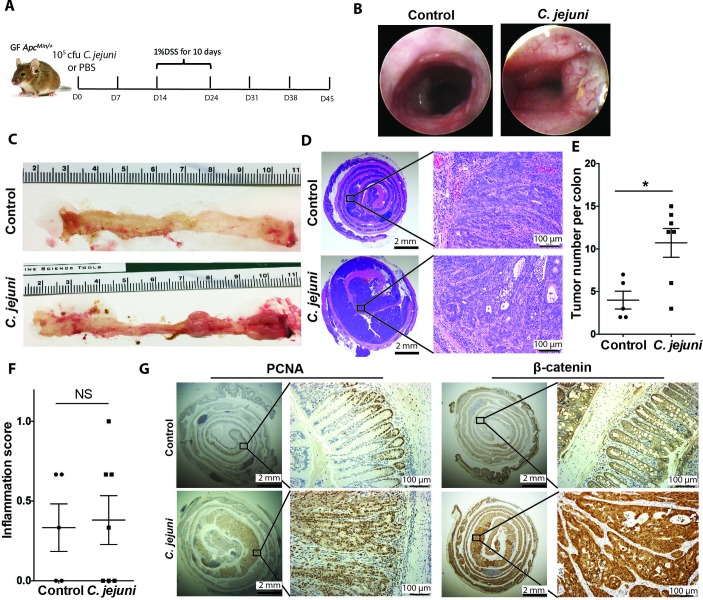
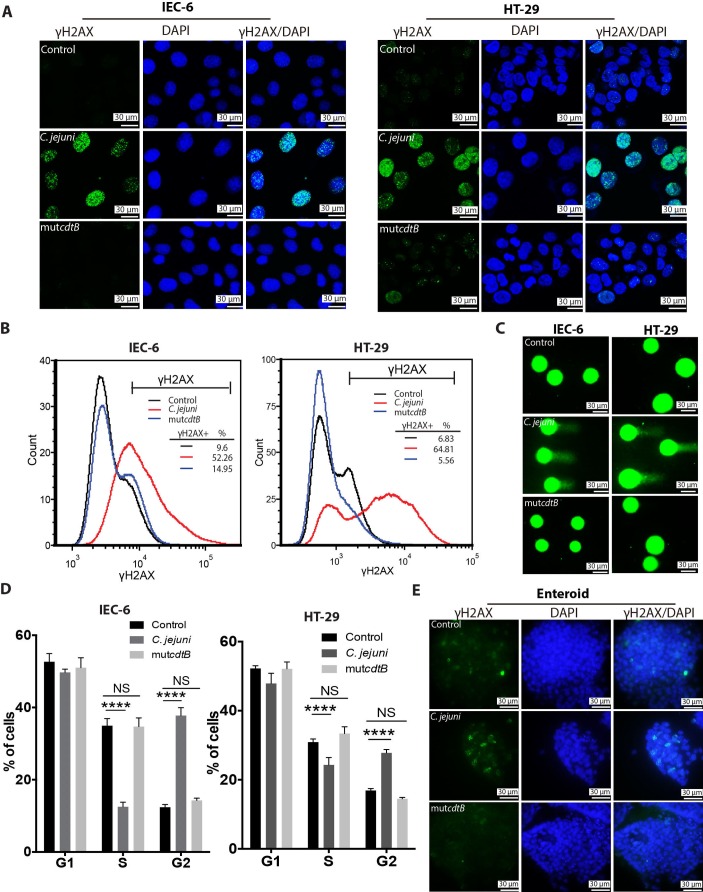
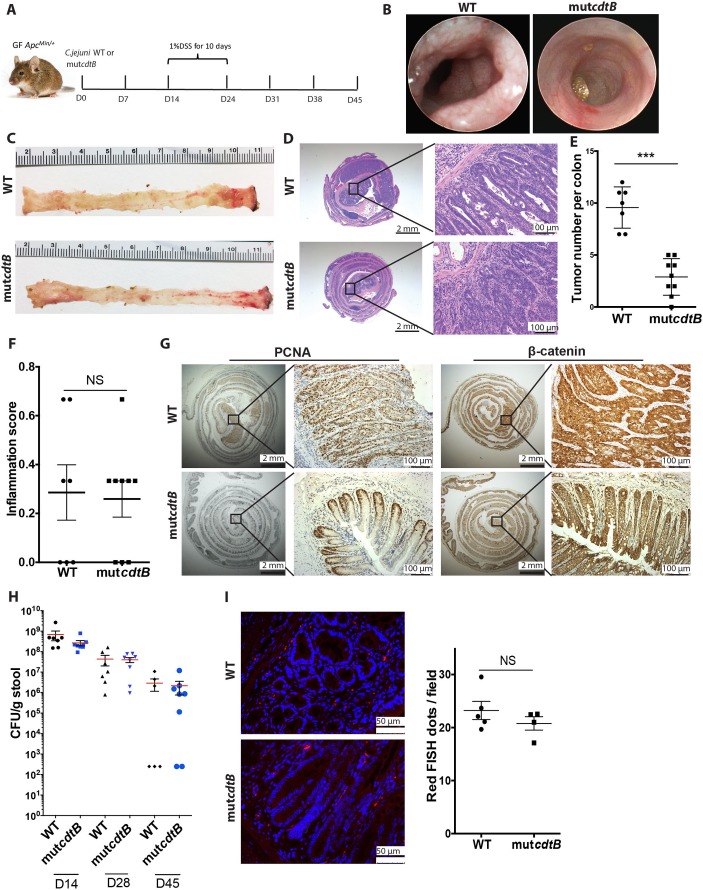
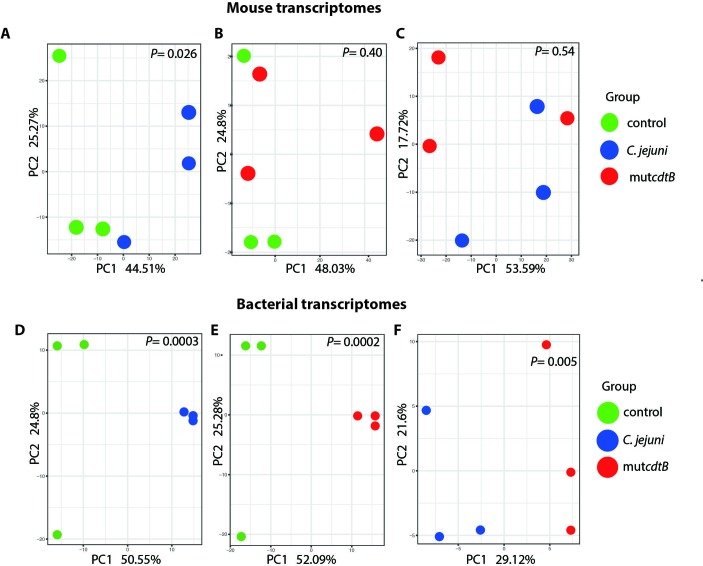
Objective: Campylobacter jejuni produces a genotoxin, cytolethal distending toxin (CDT), which has DNAse activity and causes DNA double-strand breaks. Although C. jejuni infection has been shown to promote intestinal inflammation, the impact of this bacterium on carcinogenesis has never been examined. Design: Germ-free (GF) Apc Min/+ mice, fed with 1% dextran sulfate sodium, were used to test tumorigenesis potential of CDT-producing C. jejuni . Cells and enteroids were exposed to bacterial lysates to determine DNA damage capacity via γH2AX immunofluorescence, comet assay and cell cycle assay. To examine the interplay of CDT-producing C. jejuni , gut microbiome and host in tumorigenesis, colonic RNA-sequencing and faecal 16S rDNA sequencing were performed. Rapamycin was administrated to investigate the prevention of CDT-producing C. jejuni -induced tumorigenesis. Results: GF Apc Min/+ mice colonised with human clinical isolate C. jejuni 81–176 developed significantly more and larger tumours when compared with uninfected mice. C. jejuni with a mutated cdtB subunit, mut cdtB , attenuated C. jejuni -induced tumorigenesis in vivo and decreased DNA damage response in cells and enteroids. C. jejuni infection induced expression of hundreds of colonic genes, with 22 genes dependent on the presence of c dtB. The C. jejuni -infected group had a significantly different microbial gene expression profile compared with the mut cdtB group as shown by metatranscriptomic data, and different microbial communities as measured by 16S rDNA sequencing. Finally, rapamycin could diminish the tumorigenic capability of C. jejuni . Conclusion: Human clinical isolate C. jejuni 81–176 promotes colorectal cancer and induces changes in microbial composition and transcriptomic responses, a process dependent on CDT production.
Overview
The claims and statistics of this paper haven’t been checked yet.
Free: it reads the open-access text and checks the first 5 claims that cite a source we can check. Create a free account to check every claim.
Integrity signals
Registry
Cites
Statistics
Figures
Verification
Claims the paper makes
The claims and statistics of this paper haven’t been checked yet.
Free: it reads the open-access text and checks the first 5 claims that cite a source we can check. Create a free account to check every claim.
Claims other papers make about this one
Each is checked against this paper’s own text: does it say what the citing paper says it does?
In the citing paper
“the gut microbiota and its related metabolites can disrupt the host's normal cell cycle, leading to changes in cell and protein expression that control cell division, DNA repair, and apoptosis (8,9).”
From The Role of Gut Microbiota in Lung Cancer: From Carcinogenesis to Immunotherapy (2021) · doi:10.3389/fonc.2021.720842 · cites this paper as [8]
In the citing paper
“Strong experimental evidence suggests that additional microbes initiate cancer through genotoxin-mediated mutagenesis; in particular, colibactin (a DNA alkylator), cytolethal distending toxin (CDT; direct DNAse activity), and Bacteroides fragilis toxin (Bft; ROS producer) cause mutational signatures found in colorectal, head and neck, and urinary tract cancers (22, 37–41).”
From The microbiome and human cancer (2021) · cites this paper as [39]
Self-check
Percentages, sums and reported differences re-computed from the paper’s own numbers.
The self-check needs the paper’s full text.
Citations
Cites
Siegel, R. L., Miller, K. D., & Jemal, A. (2017) · CA: A Cancer Journal for Clinicians · doi:10.3322/caac.21387 · Cited by 14,712
Sato, T., Stange, D. E., Ferrante, M., Vries, R. G. J., van Es, J. H., van den Brink, S., van Houdt, W. J., Pronk, A., van Gorp, J., Siersema, P. D., et al. (2011) · Gastroenterology · doi:10.1053/j.gastro.2011.07.050 · Cited by 3,753
Organoid Models and Applications in Biomedical Research
Xinaris, C., Brizi, V., & Remuzzi, G. (2015) · Nephron · doi:10.1159/000433566 · Cited by 3,515
Intestinal inflammation targets cancer-inducing activity of the microbiota
Arthur, J. C., Perez-Chanona, E., Mühlbauer, M., Tomkovich, S., Uronis, J. M., Fan, T.-J., Campbell, B. J., Abujamel, T., Dogan, B., Rogers, A. B., et al. (2012) · Science · doi:10.1126/science.1224820 · Cited by 2,263
Schwabe, R. F., & Jobin, C. (2013) · Nature Reviews Cancer · doi:10.1038/nrc3610 · Cited by 1,689
Self-citationGlobal Epidemiology of Campylobacter Infection
Kaakoush, N. O., Castaño-Rodríguez, N., Mitchell, H. M., & Man, S. M. (2015) · Clinical Microbiology Reviews · doi:10.1128/cmr.00006-15 · Cited by 1,529
Garrett, W. S. (2015) · Science · doi:10.1126/science.aaa4972 · Cited by 1,404
Replication of human noroviruses in stem cell–derived human enteroids
Ettayebi, K., Crawford, S. E., Murakami, K., Broughman, J. R., Karandikar, U., Tenge, V. R., Neill, F. H., Blutt, S. E., Zeng, X.-L., Qu, L., et al. (2016) · Science · doi:10.1126/science.aaf5211 · Cited by 1,305
Patients with familial adenomatous polyposis harbor colonic biofilms containing tumorigenic bacteria
Dejea, C. M., Fathi, P., Craig, J. M., Boleij, A., Taddese, R., Geis, A. L., Wu, X., DeStefano Shields, C. E., Hechenbleikner, E. M., Huso, D. L., et al. (2018) · Science · doi:10.1126/science.aah3648 · Cited by 1,105
Microbes, Microbiota, and Colon Cancer
Sears, C. L., & Garrett, W. S. (2014) · Cell Host & Microbe · doi:10.1016/j.chom.2014.02.007 · Cited by 818
Cited by
Items 301–400 of 409
Intratumoral microbiota: a new perspective in cancer initiation, development, and therapy
Liu, H., Luo, Z. K., Luo, F., Wang, X., Wei, H., & Yu, C. (2025) · RSC Pharmaceutics · doi:10.1039/d5pm00045a · Cited by 3
Prospective role of prebiotics and probiotics in gut immunity
Samanta, S. (2022) · Elsevier eBooks · doi:10.1016/b978-0-12-822238-6.00014-5 · Cited by 4
Gloria, L. D., & Niccolai, E. (2022) · Exploration of Immunology · doi:10.37349/ei.2022.00078 · Cited by 3
“nucleatum), Bilophila wadsworthia, and Desulfovibrio desulfurican [11] cause DNA oxidative stress by producing reactive oxygen species, while Campylobacter jejuni [12] generate double-stranded DNA breaks, driving tumorigenesis.”
BackgroundShen, Z., Wang, Y., & Shen, J. (2024) · Elsevier eBooks · doi:10.1016/b978-0-12-818619-0.00075-7 · Cited by 4
Ülger, Y., Delik, A., & Akkız, H. (2024) · Genes & Genomics · doi:10.1007/s13258-024-01538-2 · Cited by 6
“Campylobacter jejuni 81–176 cytole - thal toxin is associated with DNA double-strand breaks, a strong tumorigenic effect, and changes in microbial compo - sition (He et al., 2019).”
Okwan-Duodu, D. K., Pandiri, A. R., & Adams, D. J. (2024) · Annual Review of Cancer Biology · doi:10.1146/annurev-cancerbio-060424-052905 · Cited by 3
Global biogeography and projection of antimicrobial toxin genes
Liu, Y., Geng, Y., Jiang, Y., Sun, J., Li, J., Li, Y., & Zhang, Z. (2025) · Microbiome · doi:10.1186/s40168-025-02038-5 · Cited by 4
Colorectal cancer and gut microbiota
Ereemeeva, I. A., Багдасарова, Д. В., Артёмова, Е. В., Андреевна, К. А., & Феденко, А. А. (2024) · P A Herzen Journal of Oncology · doi:10.17116/onkolog20241302160 · Cited by 2
Improved Key Microbial Biomarker Discovery Using Ensemble Statistical Methods
Pirovano, W., Gangopadhyay, Y., Baak, M. L., de Leeuw, C., Bongoni, R., & Klaassens, E. S. (2025) · Advanced Gut & Microbiome Research · doi:10.1155/agm3/9676659 · Cited by 3
“Similarly, studies linked an increased abundance of Campylobacter spp. to CRC proliferation, particularly the oral pathogenic strain C. jejuni in a mouse study [70].”
Xiang, S., Shan, Y., Shi-hong, X., Wang, J., Luo, M., Zhou, J., & Chen, Q. (2025) · Advanced Science · doi:10.1002/advs.202501820 · Cited by 2
The Potential Anticancer Mechanisms of Probiotics: A Comprehensive Review
Tang, C., Qian, Y., Jia, S., Zhang, J., Zhang, Y., Ren, Y., Yong, H., Xu, J., Kan, J., & Liu, J. (2025) · Probiotics and Antimicrobial Proteins · doi:10.1007/s12602-025-10753-6 · Cited by 2
“…-produced conjugated linoleic acid, and Lactobacillus casei ATCC 334-secreted ferrichrome promote the apoptosis of cancer cells and suppress cancer cell proliferation by activating PTEN pathway, and/or blocking MAPK, NF-κB, or c-Jun N-terminal kinase (JNK) signaling pathways [73, 154, 155].”
He, J., Jia, J., Qu, W., Zhang, S., Fan, K., Lin, R., Zhao, W., Niu, Y., Huang, Y.-Q., & Jia, L. (2025) · Frontiers in Immunology · doi:10.3389/fimmu.2025.1696701 · Cited by 3
“…bacteria observed in patients with CRC. Studies have shown that B.o, as a symbiotic bacterium capable of ef fi ciently utilizing plant and host glycans (38, 39), can signi fi cantly improve intestinal barrier function and alleviate insulin resistance through the metabolism of glucomannan (40).”
Tumor-associated bacterial effectors: novel frontiers in tumor biology and immunity
Dai, J.-H., Lu, Y.-Q., Feng, S.-Y., Tan, X.-R., Li, L., Zeng, Y.-C., Chen, J., Ma, J., & Liu, N. (2026) · Science Bulletin · doi:10.1016/j.scib.2026.04.034 · Cited by 4
Gut microbiota and diet in colorectal cancer: Converging determinants of carcinogenesis
Thakur, B. K., Choudhury, S. R., Turpin, W., & Martín, A. (2026) · Gut Microbes · doi:10.1080/19490976.2026.2664684 · Cited by 4
“…(CDT), a genotoxin capable of inducing DNA double-strand breaks and promoting intestinal tumorigenesis and metastasis in pre-clinical models of CRC. 90,91 Beyond CDT-mediated genotoxicity, several Campylobacter species can activate oncogenic signaling pathways, including mTOR and β -catenin, and…”
Microbiome, immune system and cancer: three sides of the one medal
Belyavskaya, V. A., Чердынцева, Н. В., Kzhyshkowska, J. G., & Litvyakov, N. V. (2023) · Siberian Journal of Oncology · doi:10.21294/1814-4861-2022-21-6-131-144 · Cited by 5
Newsome, R. C., McGriff, C., Gharaibeh, R. Z., & Jobin, C. (2025) · Journal of Visualized Experiments · doi:10.3791/68029 · Cited by 3
Self-citationNanodrug-based therapeutic interventions for tumor-associated microbiota modulation
Nie, C., Yao, Q., Wang, T., Shan, Y., Xie, C., Jiang, Z., Ke, Z., Zhang, L., Du, S. M., Xiong, H., et al. (2025) · Journal of Controlled Release · doi:10.1016/j.jconrel.2025.114196 · Cited by 5
Correlation between Microbiota and Oncogenesis: Research Progress
宋, 晓. (2020) · Bioprocess · doi:10.12677/bp.2020.103003 · Cited by 2
Bioinformatic Analysis to Investigate Metaproteome Composition Using Trans‐Proteomic Pipeline
He, S., & Ranganathan, S. (2022) · Current Protocols · doi:10.1002/cpz1.506 · Cited by 3
“…recent years and has led to many scientific discoveries across a myriad of various diseases, such as a causative role for Campylobacter jejuni in colorectal cancer tumorigenesis (He et al., 2019), and has provided insight into new possible methods for diagnosis and treatment (Cullen et al., 2020).”
BackgroundGenetic and environmental reprogramming of the sarcoma epigenome
Grand’Maison, A., Kohrn, R., Omole, E. B., Shah, M., Fiorica, P. N., Sims, J., & Ohm, J. E. (2022) · Advances in pharmacology · doi:10.1016/bs.apha.2022.10.001 · Cited by 3
Jacobs, S., Payne, C., Shaboodien, S., Kgatla, T., Pretorius, A., Jumaar, C., Sanni, O., BUTROUS, G. S., & Maarman, G. J. (2023) · Pulmonary Circulation · doi:10.1002/pul2.12277 · Cited by 1
Cytolethal Distending Toxin: from mitotic DNA damage to cGAS-dependent pro-inflammatory responsePreprint
Pons, B. J., Pettes-Duler, A., Naylies, C., Taieb, F. E., Hashim, S., Tadrist, S., Lippi, Y., Mirey, G., & Vignard, J. (2020) · bioRxiv (Cold Spring Harbor Laboratory) · doi:10.1101/2020.06.09.141648 · Cited by 2
“jej CDT were produced and purified as previously described [7,10,19].”
MethodSelf-citationNew Paradigms in the Diet and Microbiome Relationship
González, S. (2023) · Nutrients · doi:10.3390/nu15245035 · Cited by 2
Draft Genome Sequences of Novel Campylobacter Species Isolated from Nonhuman Primates
Mannion, A. J., Shen, Z., Sheh, A., & Fox, J. G. (2020) · Microbiology Resource Announcements · doi:10.1128/mra.00146-20 · Cited by 1
“Campylobacter species strain MIT 99-7217 from a cotton-top tamarin, Campylobacter species MIT 12-5580 from a lemur, and Campylobacter species MIT 19-121 from a marmoset also harbor cytolethal distending toxin (CDT), a known genotoxin, which exacerbates gastrointestinal inflammation and carcinogenesis (15, 16).”
BackgroundDas, P., Dhar, K., Pal, S., & Bhattacharya, S. (2024) · Journal of The Academy of Clinical Microbiologists · doi:10.4103/jacm.jacm_13_23 · Cited by 1
Elkhichi, P. A., Mojarad, E. N., Dabiri, H., Rezasoltani, S., Yadegar, A., Looha, M. A., Mojtahedi, A., & Nasiri, M. J. (2024) · Archives of Clinical Infectious Diseases · doi:10.5812/archcid-132362 · Cited by 2
Human microbiome, cancer and cancer therapy
Veerasamy, R., Karunakaran, R., & Vasu, S. (2024) · Elsevier eBooks · doi:10.1016/b978-0-443-15435-5.00007-4 · Cited by 1
Oncomicrobial vaccines mitigate tumor progression via precisely targeting oncomicrobes in mice
Mao, Y., Li, Y., Xiao, X., Mai, J., Lin, G., Liu, S., Huang, J., Zhou, X., Mou, X., & Zhao, W. (2025) · Protein & Cell · doi:10.1093/procel/pwae067 · Cited by 1
“1G and 1H, C. jejuni-gavaged mice had significantly higher tumor incidence compared to the mock group, indicating the successful reproduction of this previously reported model (He et al., 2019).”
InfluentialLink between dysbiosis and cancer: Contributing mechanisms and factors
Turner, N., Colunga-Minutti, J., Alekseev, S., Jenq, R. R., & Nurieva, R. (2025) · International review of cytology · doi:10.1016/bs.ircmb.2024.12.004 · Cited by 1
Unraveling the Dual Role of Campylobacter jejuni: From Pathogen to Potential Tumorigenesis Catalyst
Amina, Z., Merzoug, M., Leksir, C., Merzouk, Y., Chentouf, H. F., & Djaballi, I. (2025) · Foodborne Pathogens and Disease · doi:10.1089/fpd.2025.0003 · Cited by 3
Helicobacter pylori base-excision restriction enzyme in stomach carcinogenesis
Fukuyo, M., Takahashi, N. K., Hanada, K., Ishikawa, K., Venclovas, Č., Yahara, K., Yonezawa, H., Terabayashi, T., Katsura, Y., Osada, N., et al. (2025) · PNAS Nexus · doi:10.1093/pnasnexus/pgaf244 · Cited by 3
“Importantly, these genotoxins are associated with carcinogenesis (10, 11), with colibactin, for instance, being linked to mutational signatures observed in colorectal cancer (12).”
Potential Pathogens Associated with Colorectal Cancer
Nezhadi, J., Kafil, H. S., Mahdavi, F., Sadrkabir, M., Hashemzadeh, S., Moaddab, S. Y., Nouri, R., Mohammadzadeh-Asl, Y., Sattarpour, S., & Rezaee, M. A. (2025) · Current Pharmaceutical Biotechnology · doi:10.2174/0113892010338997241216053634 · Cited by 1
Emerging Issues Regarding the Effects of the Microbiome on Lung Cancer Immunotherapy
Papavassiliou, K. A., Sofianidi, A. A., Spiliopoulos, F. G., Margoni, A., & Papavassiliou, A. G. (2025) · Biomolecules · doi:10.3390/biom15111525 · Cited by 1
Intratumoral microbiota in colorectal cancer: roles, therapeutic potential, and challenges
Zhang, X., Qi, J., Dong, C., Zhang, L., Chen, J., Li, M., Jiang, T., & Song, J. (2025) · Journal of Advanced Research · doi:10.1016/j.jare.2025.11.067 · Cited by 5
“…demonstrated that C. jejuni secretes a cell-killing toxin called Cytolethal Distending Toxin (CDT) in which the CdtB subunit exhibits DNase like activity, directly inducing DNA DSBs while activating b -catenin nuclear translocation and cell proliferation pathways, thereby promoting CRC onset [56].”
Yuwei, Z. H. A. O., Tong, Z., Liu, L., Yang, R., Chen, Z., & Wang, Z. (2026) · Frontiers in Immunology · doi:10.3389/fimmu.2025.1675448 · Cited by 2
Campylobacter jejuni infection impacts host-derived miRNAs targeting bacterial and host genes
Chitre, S., Gharaibeh, R. Z., Newsome, R. C., Jiang, J., Brock, A. A., Schmittgen, T. D., & Jobin, C. (2026) · Microbiology Spectrum · doi:10.1128/spectrum.03184-25 · Cited by 3
Self-citationCao, Y., Huang, J., Wu, W., Xu, Z., Wang, C., Wu, X., Zhan, C., Xing, J., Liu, J., Zhu, M., et al. (2026) · Infection and Drug Resistance · doi:10.2147/idr.s568562 · Cited by 1
“26 Besides, coinfections in cancer patients tend to result in worse clinical outcomes.”
Guo, S., Cao, M., Wu, J. I. A. H. U. I., Ma, W., Liang, D., Xie, H., Xie, Y., Luo, Z., Lai, P., Liu, D., et al. (2026) · Clinical and Translational Medicine · doi:10.1002/ctm2.70667 · Cited by 1
“To further clarify the role of specific microbiota in CRC, we applied multivariable linear models with MaAsLin3 to evaluate the relationship between microbiota and CRC.”
InfluentialSelf-citationChen, J., Zhao, J., Zhang, X., & Zhu, H. (2026) · Frontiers in Pharmacology · doi:10.3389/fphar.2026.1768252 · Cited by 1
Plitt, T., Piessevaux, A., Rajpal, U., Fischer, J., Spindler, M. P., Ruprecht, C., Li, Z., Mogno, I., Yang, Y., Desch, A. N., et al. (2026) · Cell Reports · doi:10.1016/j.celrep.2026.117645 · Cited by 1
Self-citationLi, Y., Yang, Y., Zhang, X., Huang, Z., Zhang, X., & Wen, J. (2026) · Virulence · doi:10.1080/21505594.2026.2696642 · Cited by 1
“Certain bacterial species within the intestinal microbiota are capable of producing genotoxic metabolites that directly or indirectly damage host cell DNA, thereby inducing genetic mutations and laying the groundwork for colorectal carcinogenesis [98].”
Mechanisms linking the gut microbiota to colorectal cancer development and progression
Zheng, H., Zhang, W., Pang, Q., & Deng, H. (2026) · Microbiological Research · doi:10.1016/j.micres.2026.128689 · Cited by 1
Long-acting response of COX-2-mediated metastasis inhibition by oxaliplatin-based CP-L-OHP
Hu, J., Ma, Z., He, X., Wu, Y.-G., Chen, Q., Song, X., Wang, G.-Y., Li, Y.-H., & Xu, J. (2022) · New Journal of Chemistry · doi:10.1039/d2nj01196d · Cited by 1
Bacteriotherapy in colorectal cancer
Wankhede, N. L., Kale, M. B., Bawankule, A. K., Taksande, B. G., Umekar, M. J., & Upaganlawar, A. (2024) · Elsevier eBooks · doi:10.1016/b978-0-443-13870-6.00008-8 · Cited by 1
Baldelli, G., Santi, M. D., Ateba, C. N., Cifola, G., Amagliani, G., Tchatchouang, C.-D. K., Montso, P. K., Brandi, G., & Schiavano, G. F. (2024) · BMC Microbiology · doi:10.1186/s12866-024-03240-5 · Cited by 3
Steinbach, A., Kun, J., Urban, P. P., Palkovics, T., Polgár, B., & Schneider, G. (2024) · Pathogens · doi:10.3390/pathogens13050386 · Cited by 1
“The slight increase in the expression levels of genes associated with tumor genesis supports recent assumptions and findings that certain bacterial infections increase the risk of developing malignant tumors in the colon [118], the biliary tract [119], and the esophagus [120].”
Background(Mögliche) Rolle des Mikrobioms in der Diagnostik, Therapie und Genese des Kolonkarzinoms
Schulz, C., Neuner, A., & Jacobi, C. A. (2020) · Der Onkologe · doi:10.1007/s00761-020-00882-8 · Cited by 1
Rodriguez‐Palacios, A. (2021) · Physiology in health and disease · doi:10.1007/978-3-030-67951-4_14 · Cited by 1
Effects of Normal and Cancer Host Tissues on Microbiota Development, Persistence, and Dynamics
Amadei, S. S., & Notario, V. (2021) · Springer eBooks · doi:10.1007/978-3-030-77595-7_20 · Cited by 1
Diagnostic and Therapeutic Uses of the Microbiome in the Field of Oncology
Anipindi, M., & Bitetto, D. (2022) · Cureus · doi:10.7759/cureus.24890 · Cited by 3
“Campylobacter species Produces genotoxins leading to DNA damage [182]”
BackgroundDucarmon, Q. R., Hornung, B., Geelen, A. R., Kuijper, E. J., & Zwittink, R. D. (2019) · bioRxiv (Cold Spring Harbor Laboratory) · doi:10.1101/751123 · Cited by 1
“fecal microbiome 401 As colorectal cancer development has been associated with specific gut bacteria, we were 402 interested to see if colorectal cancer tissue itself also contained bacteria (45, 46).”
BackgroundPereko, K. K. A., Afoakwah, N. A., Mahunu, G. K., & Opara, C. (2024) · Springer eBooks · doi:10.1007/978-3-031-62839-9_16 · Cited by 1
Arora, R., Hermann, A., & Wargo, J. A. (2019) · Springer eBooks · doi:10.1007/978-1-4614-7322-0_41-1
Gut Microbiota: The Servant of Human Being and the Accessary of Tumorigenesis
Gu, P., Li, D., Xu, G., Sun, Y., & Wu, M. (2020) · Trends in Oncology · doi:10.37155/2717-5278-0301-5
Die Rolle des Mikrobioms in der gastrointestinalen Karzinogenese
Vasapolli, R., Macke, L., & Schulz, C. (2021) · TumorDiagnostik & Therapie · doi:10.1055/a-1257-7670
“Die aktuell bevorzugte Hypothese ist, dass die simultane Interaktion unterschiedlicher Erreger („drivers“) mit den Darmzellen zur Entstehung eines onkogenen Milieus, in dem inflammatorische Prozesse und bakterielle Metaboliten und Toxine zu einer Akkumulation von DNA-Alterationen führt und dadurch die Entstehung eines…”
BackgroundMicrobiota y su relación en el cáncer
Ordóñez, G. D. B., Anguisaca, C. F. O., & Carpio, C. A. M. (2021) · Revista del Centro de Investigación de la Universidad la Salle · doi:10.26457/recein.v14i56.2853
Arora, R., Hermann, A., & Wargo, J. A. (2019) · Springer eBooks · doi:10.1007/978-1-4614-7147-9_41
Die Rolle des Mikrobioms in der gastrointestinalen Karzinogenese
Vasapolli, R., Macke, L., & Schulz, C. (2022) · Deutsche Zeitschrift für Onkologie · doi:10.1055/a-1822-7690 · Cited by 1
“…Erreger („drivers“) mit den Darmzellen zur Entstehung eines onkogenen Milieus führt, in dem inflammatorische Prozesse und bakterielle Metaboliten und Toxine zu einer Akkumulation von DNA-Alterationen beitragen, und dadurch die Entstehung eines malignen Wachstums begünstigt wird [28, 29].”
BackgroundLiu, W., & Chi, Z. (2023) · bioRxiv (Cold Spring Harbor Laboratory) · doi:10.1101/2023.02.22.529591
Gut Bacterial Characteristics and Noninvasive Detection of Colorectal Lesions
Zhang, B., Chen, Q., Fan, Y., Cao, M., Zhao, Y., Yan, C., Yang, X., Liu, J., Xu, H., & Ren, J. (2023) · Cancer Screening and Prevention · doi:10.14218/csp.2022.00017
Gut Microbiota and Host Immune System in Cancer
Sunita, P., Pattanayak, S. P., Ranjan, G., & Bose, P. (2023) · BENTHAM SCIENCE PUBLISHERS eBooks · doi:10.2174/9789815124781123030004
Chen, L., Lin, J., Zhuang, W.-L., Peng, S.-R., Li, X.-B., Li, D., & Xie, L.-K. (2023) · Research Square · doi:10.21203/rs.3.rs-3107278/v1
Systemic Onco-Sphere: Host Microbiome and Cancer
Saw, P. E., & Song, E. (2023) · Springer eBooks · doi:10.1007/978-981-99-1183-7_25
Gut Microbiota and its impact on the inflammation-dysplasia-cancer sequence
Lazarchuk, I., Parmar, S., & Woźniak, S. (2023) · Medical Journal of Cell Biology · doi:10.2478/acb-2023-0004
Intestinal Flora and Gastrointestinal Tumors
Mei, M., & Xiang, J.-J. (2023) · Journal of Biosciences and Medicines · doi:10.4236/jbm.2023.1110017
Park, W., Bang, Y. H., Choi, J. H., Park, K., Lim, J., Lee, B., Han, K. Y., Pyo, D. H., Cho, Y. B., Kim, T., et al. (2023) · Research Square · doi:10.21203/rs.3.rs-3375190/v1
Research Progress of Intestinal Flora in Colorectal Cancer
Wei, W., & Zhang, Q. H. (2024) · Journal of Biosciences and Medicines · doi:10.4236/jbm.2024.123010
The Emerging Role of the Microbiome in Carcinogenesis
Gates, T. J., Dietz, M. A., Martell, M., Balbo, S., Subramanian, S., & Staley, C. M. (2024) · Elsevier eBooks · doi:10.1016/b978-0-323-95488-4.00093-0
Cancer Induction by Microbial Metabolites and Toxins
Gutierrez-Villagomez, J. M., & Vázquez-Martínez, J. (2024) · Springer eBooks · doi:10.1007/978-3-031-62558-9_17
Inflammatory disorders of the large intestine
Feakins, R. M. (2024) · Wiley eBooks · doi:10.1002/9781119423195.ch35
Microbiome and Circadian Rhythms: Implications for Sleep, Aging, and Therapeutic Strategies
Najumuddin, Ullah, I., Taqveem, A., & Khurshid, M. (2024) · Springer eBooks · doi:10.1007/978-981-97-3790-1_10
Qiao, H., & Xiao, H. (2024) · Journal of Contemporary Medical Practice · doi:10.53469/jcmp.2024.06(09).25
Plitt, T., Piessevaux, A., Rajpal, U., Fisher, J., Spindler, M. P., Li, Z., Mogno, I., Yang, Y., Desch, A. N., Chu, G., et al. (2025) · bioRxiv (Cold Spring Harbor Laboratory) · doi:10.1101/2025.04.18.649375
Self-citationBioreactor Assembly for Continuous Culture of Complex Fecal Communities
McGriff, C., Newsome, R. C., Lunin, M., Gharaibeh, R. Z., & Jobin, C. (2025) · Journal of Visualized Experiments · doi:10.3791/68035
Self-citationRighetti, F., Massara, M., & Calcinotto, A. (2025) · The microbiomes of humans, animals, plants, and the environment · doi:10.1007/978-3-031-84065-4_8
Mousa, W. K., Ali, A., Abdelmoteleb, R. W. A., Shami, R. A., Alramadan, N., Moutraji, S. A., & Ghemrawi, R. (2025) · Targeted Cancer Therapy Connect · doi:10.69709/ciconnect.2025.154988
The Role of the Microbiome in Surgical Diseases and Their Management
Thomas, R. M. (2025) · Success in academic surgery · doi:10.1007/978-3-031-83034-1_18
Cancer Association with Bacterial Biofilm
Vignesh, K., Bavyataa, V., Sri, K. D., Balasubramani, R., Mariappan, V., & Moorthi, P. V. (2025) · Springer eBooks · doi:10.1007/978-981-96-8975-0_13
Yadav, T., & Tripathi, C. (2026) · Russian Journal of Genetics · doi:10.1134/s1022795426700316
“…major or minor pathogens but have been reported to be associated with gastroenteritis, including Previous studies have indicated the association of cytolethal distending toxin ( Cdt ) of Campylobacter jejuni with initiation of colon cancer in patients suffering from chronic infections [29, 84–88].”
Future Trends in NSCLC and Care
Shahraki, R. A. (2025) · IGI Global eBooks · doi:10.4018/979-8-3373-2096-0.ch013
Baldelli, G., Santi, M. D., Ateba, C. N., Cifola, G., Amagliani, G., Tchatchouang, C.-D. K., Montso, P. K., Brandi, G., & Schiavano, G. F. (2024) · Figshare · doi:10.6084/m9.figshare.26693829
Friends and foes: impact of bacteria on genome stability
Gajski, G., Szewczyk-Roszczenko, O. K., Roszczenko, P., Vassetzky, Y. S., & Sjakste, N. (2026) · Critical Reviews in Microbiology · doi:10.1080/1040841x.2026.2641726
“DNA damage is also caused by cDt, whose activity induces DSBs. infection by C. jejuni strongly modifies the profile of gene expression in gut cells (He et al. 2019).”
Freiche, V. (2019) · theses.fr (ABES) · doi:10.70675/7b5abe45z2da3z46c3zbeb8zbb7fed42946b · Cited by 2
Etude de l'activité de la Cytolethal Distending Toxin et des dommages induits en mitose
Pons, B. J. (2019) · theses.fr (ABES) · doi:10.70675/ac14ccf6z85d7z4dfaz8f52ze1d6acf93235
Self-citationPopulation structure and phenotypical traits of Campylobacter jejuni circulating in Luxembourg
Nennig, M. (2022) · theses.fr (ABES) · doi:10.70675/430b01bdz5ca7z4d53zb8cdz32d38a494205
The Role of the Microbiome in Cancer Development
Wang, Y., Shi, Y., Duan, J., Tang, H., Liu, S., & Yang, J. (2026) · Cancer Biome and Targeted Therapy · doi:10.66505/cbtt.v1i1.19
The Microbiome and Cancer: Exploring the Gut Connection
Om, H., Reshamwala, S. M. S., & Devarajan, P. V. (2026) · BENTHAM SCIENCE PUBLISHERS eBooks · doi:10.2174/9798898814113126010010
Significance and challenges in dissecting cancer-bacteriome interactions
Alshareedah, I., Brunner, J. D., Chain, P. S. G., & Kumar, A. (2026) · BJC Reports · doi:10.1038/s44276-026-00229-7
Contieri, R., Saita, A., Paciotti, M., Uleri, A., Avolio, P. P., Fasulo, V., Cella, L., Mancon, S., Sordelli, F., Finocchiaro, A., et al. (2026) · Cancers · doi:10.3390/cancers18091444
Zeng, Q., Ye, Y., Wu, K., Wang, K., Zhou, X., Zhou, W., Zhao, S., Zhang, T., & Chen, T. (2026) · Genes & Diseases · doi:10.1016/j.gendis.2026.102260
Qi, Z., Qi, P., Tang, H., & Qi, P. (2026) · Phenomics · doi:10.1007/s43657-025-00243-8
Gut microbiota from health to disease: A role for biofilms?
Buret, A. G., & Allain, T. (2026) · Elsevier eBooks · doi:10.1016/b978-0-443-40306-4.00011-9 · Cited by 1
The role of gut microbiota in cancer development and translational modulation strategies
Bai, X., Kang, X., & Wong, S. H. (2026) · Elsevier eBooks · doi:10.1016/b978-0-443-40306-4.00017-x
Mohammed, O. A., Awlqadr, F. H., Faraj, A. M., Qadir, S. A., Morya, S., & Saeed, M. N. (2026) · Molecular Biology Reports · doi:10.1007/s11033-026-12302-y
“This data provides a biologically plausible association between Campylobacter persistence and colorectal cancer development rather than an additional observational relationship [18].”
Virulome over taxonomy: refining the driver-passenger model in colorectal carcinogenesis
Glazunova, E. V., Kurnosov, A., Bogacheva, A., Makarov, V., & Zlobovskaya, O. A. (2026) · Frontiers in Cellular and Infection Microbiology · doi:10.3389/fcimb.2026.1858868
Glazunova, E. V., Astakhova, L., Kurnosov, A., Doludin, Y. V., Lyundup, A., Kostin, A., Makarov, V., Yudin, S., & Zlobovskaya, O. A. (2026) · Frontiers in Cellular and Infection Microbiology · doi:10.3389/fcimb.2026.1887826
Xiang, Z., Li, T., Wu, W. Z., Ge, M., & Kang, Y. (2026) · Advanced Functional Materials · doi:10.1002/adfm.77508
Wen, Y., Luo, Z., Li, Z., Li, K., Li, J., Yin, S., Zou, Y., Zhang, H., Zhang, Y., Chen, K., et al. (2026) · Functional & Integrative Genomics · doi:10.1007/s10142-026-02025-5
“Fusobacterium , Campylobacter , and Candidatus are reportedly associated with colorectal can - cer, which our clinical-level study corroborates (Wang and Fang 2023, He et al. 2019, Wolfe et al. 2020 ).”
Metadata
- Authors
- He, Z., Gharaibeh, R. Z., Newsome, R. C., Pope, J. L., Dougherty, M. W., Tomkovich, S., Pons, B., Mirey, G., Vignard, J., Hendrixson, D. R., & Jobin, C.
- Affiliations
- Sun Yat-sen University (CN)
- University of Florida (US)
- University of Florida Health (US)
- Toxalim (Research Center in Food Toxicology), Université de Toulouse, INRA, ENVT, INP- Purpan, UPS, Toulouse, France
- Université Toulouse III - Paul Sabatier (FR)
- The University of Texas Southwestern Medical Center (US)
- Corresponding author
- Jobin, Christian
- ORCID
- Venue
- Gut
- Publisher
- BMJ
- Published
- 2018-10-30
- Volume
- 68
- Issue
- 2
- Pages
- 289-300
- ISSN
- 0017-5749 (ISSN-L)
- 1468-3288
- PMC
- PMC6352414
- OpenAlex
- W2899303925
- Cited by
- 409
- References
- 42
- Citations by year
- 2026: 46 · 2025: 56 · 2024: 59 · 2023: 64 · 2022: 58 · 2021: 57 · 2020: 48 · 2019: 21
- FWCI
- 29.57
- Type
- journal article
- Language
- en
- Open access
- hybrid
- doi.org
- Licence
- cc-by-nc
- Locations
- Gut (publishedVersion, cc-by-nc)
- Europe PMC (PubMed Central) (publishedVersion, cc-by-nc)
- PubMed Central (publishedVersion, cc-by-nc)
- PubMed (publishedVersion)
- HAL (submittedVersion, cc-by-nc)
- HighWire Press Open Archive (submittedVersion)
- Funders
- Division of Intramural Research, National Institute of Allergy and Infectious Diseases
- National Institute of Diabetes and Digestive and Kidney Diseases
- Topics
- Life Sciences › Agricultural and Biological Sciences › Food Science › Salmonella and Campylobacter epidemiology
- Life Sciences › Biochemistry, Genetics and Molecular Biology › Molecular Biology › Gut microbiota and health
- Health Sciences › Medicine › Gastroenterology › Helicobacter pylori-related gastroenterology studies
- Keywords
- Campylobacter jejuni, cytolethal distending toxin, colorectal carcinogenesis, colorectal cancer, DNA damage response, ApcMin/+ mice, germ-free mice, gut microbiota, cdtB, dextran sulfate, enteroids, metatranscriptomics, rapamycin, bacterial genotoxins, DNA double-strand breaks
- MeSH terms
- Gastrointestinal Microbiome, Animals, Bacterial Toxins, DNA Damage, DNA, Neoplasm, Feces, Humans, RNA, Neoplasm, Colorectal Neoplasms, Gene Expression, Campylobacter jejuni, Sirolimus, Mice, Transcriptome, Carcinogenesis
About these checks
Registry, retraction, Cites and statistics results are computed, not judged, with one exception: a printed reference that no index lists is read once by a model before it counts as a citation error. Claims are extracted by a model and kept only when their quote appears verbatim in the text; each cited source is then checked, with a model’s help, for whether it says what the claim relies on. Those verdicts can be wrong — read the claim’s quote and the cited source before relying on one.
Statistics and arithmetic are recomputed, not judged.
Confidence bands are shown only for fields calibrated on our annotated test set. None is calibrated yet, so no band is shown.
What counts as a claim ›How we measure confidence ›How we check this ›
Are you an author, or do you see a problem with this page? Request a review
Data sources
Bibliographic data: Semantic Scholar, OpenAlex, Crossref.
Contains information from the Semantic Scholar Academic Graph Datasets, made available under the ODC Attribution License (ODC-BY 1.0).
Semantic Scholar’s data is described in: Kinney, R., et al. (2023). The Semantic Scholar Open Data Platform. arXiv:2301.10140.
