

Campylobacter jejuni promotes colorectal tumorigenesis through the action of cytolethal distending toxin
Open accessThe DOI matches its Crossref record; 42 of the 42 references it cites were found in a registry or an index.
Abstract
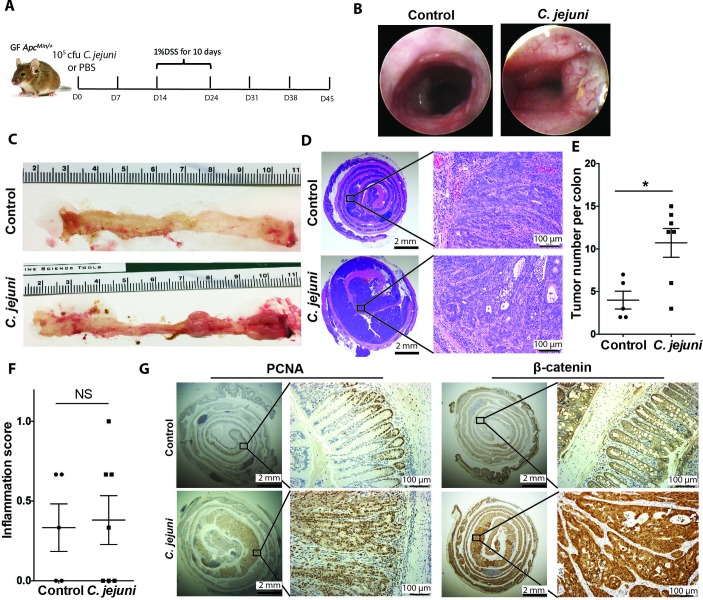
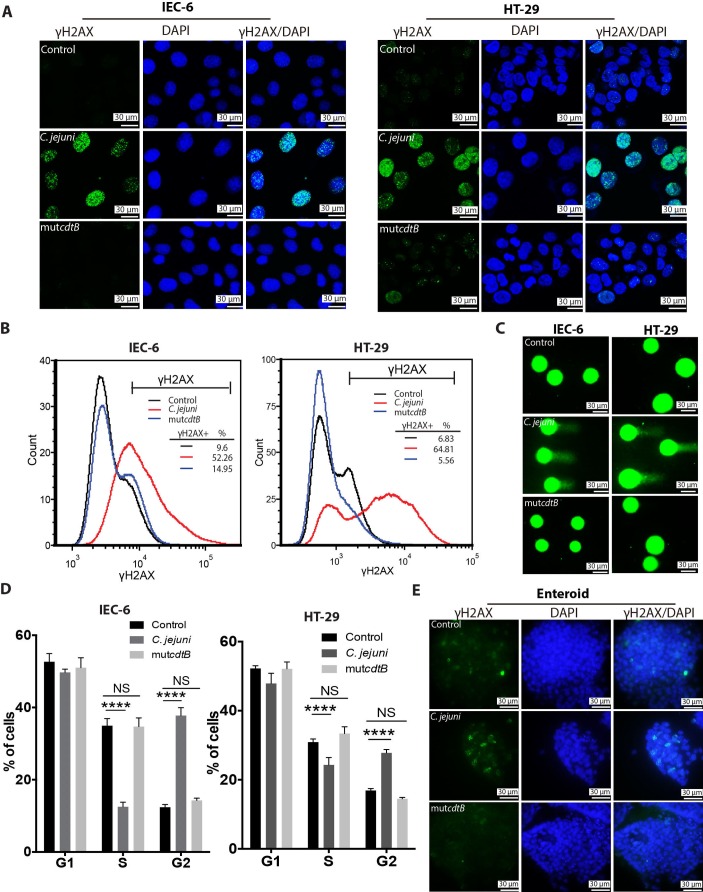
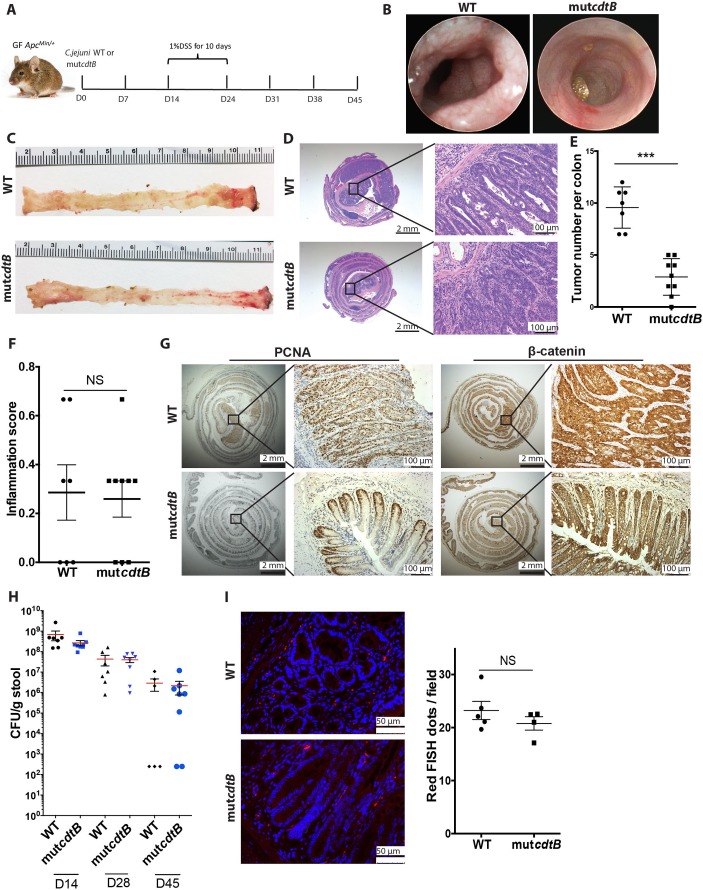
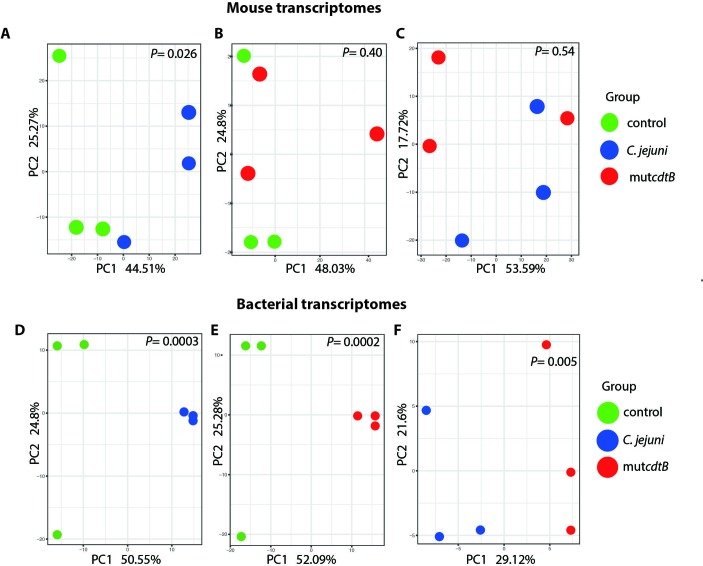
Objective: Campylobacter jejuni produces a genotoxin, cytolethal distending toxin (CDT), which has DNAse activity and causes DNA double-strand breaks. Although C. jejuni infection has been shown to promote intestinal inflammation, the impact of this bacterium on carcinogenesis has never been examined. Design: Germ-free (GF) Apc Min/+ mice, fed with 1% dextran sulfate sodium, were used to test tumorigenesis potential of CDT-producing C. jejuni . Cells and enteroids were exposed to bacterial lysates to determine DNA damage capacity via γH2AX immunofluorescence, comet assay and cell cycle assay. To examine the interplay of CDT-producing C. jejuni , gut microbiome and host in tumorigenesis, colonic RNA-sequencing and faecal 16S rDNA sequencing were performed. Rapamycin was administrated to investigate the prevention of CDT-producing C. jejuni -induced tumorigenesis. Results: GF Apc Min/+ mice colonised with human clinical isolate C. jejuni 81–176 developed significantly more and larger tumours when compared with uninfected mice. C. jejuni with a mutated cdtB subunit, mut cdtB , attenuated C. jejuni -induced tumorigenesis in vivo and decreased DNA damage response in cells and enteroids. C. jejuni infection induced expression of hundreds of colonic genes, with 22 genes dependent on the presence of c dtB. The C. jejuni -infected group had a significantly different microbial gene expression profile compared with the mut cdtB group as shown by metatranscriptomic data, and different microbial communities as measured by 16S rDNA sequencing. Finally, rapamycin could diminish the tumorigenic capability of C. jejuni . Conclusion: Human clinical isolate C. jejuni 81–176 promotes colorectal cancer and induces changes in microbial composition and transcriptomic responses, a process dependent on CDT production.
Overview
The claims and statistics of this paper haven’t been checked yet.
Free: it reads the open-access text and checks the first 5 claims that cite a source we can check. Create a free account to check every claim.
Integrity signals
Registry
Cites
Statistics
Figures
Verification
Claims the paper makes
The claims and statistics of this paper haven’t been checked yet.
Free: it reads the open-access text and checks the first 5 claims that cite a source we can check. Create a free account to check every claim.
Claims other papers make about this one
Each is checked against this paper’s own text: does it say what the citing paper says it does?
In the citing paper
“the gut microbiota and its related metabolites can disrupt the host's normal cell cycle, leading to changes in cell and protein expression that control cell division, DNA repair, and apoptosis (8,9).”
From The Role of Gut Microbiota in Lung Cancer: From Carcinogenesis to Immunotherapy (2021) · doi:10.3389/fonc.2021.720842 · cites this paper as [8]
In the citing paper
“Strong experimental evidence suggests that additional microbes initiate cancer through genotoxin-mediated mutagenesis; in particular, colibactin (a DNA alkylator), cytolethal distending toxin (CDT; direct DNAse activity), and Bacteroides fragilis toxin (Bft; ROS producer) cause mutational signatures found in colorectal, head and neck, and urinary tract cancers (22, 37–41).”
From The microbiome and human cancer (2021) · cites this paper as [39]
Self-check
Percentages, sums and reported differences re-computed from the paper’s own numbers.
The self-check needs the paper’s full text.
Citations
Cites
Siegel, R. L., Miller, K. D., & Jemal, A. (2017) · CA: A Cancer Journal for Clinicians · doi:10.3322/caac.21387 · Cited by 14,712
Sato, T., Stange, D. E., Ferrante, M., Vries, R. G. J., van Es, J. H., van den Brink, S., van Houdt, W. J., Pronk, A., van Gorp, J., Siersema, P. D., et al. (2011) · Gastroenterology · doi:10.1053/j.gastro.2011.07.050 · Cited by 3,753
Organoid Models and Applications in Biomedical Research
Xinaris, C., Brizi, V., & Remuzzi, G. (2015) · Nephron · doi:10.1159/000433566 · Cited by 3,515
Intestinal inflammation targets cancer-inducing activity of the microbiota
Arthur, J. C., Perez-Chanona, E., Mühlbauer, M., Tomkovich, S., Uronis, J. M., Fan, T.-J., Campbell, B. J., Abujamel, T., Dogan, B., Rogers, A. B., et al. (2012) · Science · doi:10.1126/science.1224820 · Cited by 2,263
Schwabe, R. F., & Jobin, C. (2013) · Nature Reviews Cancer · doi:10.1038/nrc3610 · Cited by 1,689
Self-citationGlobal Epidemiology of Campylobacter Infection
Kaakoush, N. O., Castaño-Rodríguez, N., Mitchell, H. M., & Man, S. M. (2015) · Clinical Microbiology Reviews · doi:10.1128/cmr.00006-15 · Cited by 1,529
Garrett, W. S. (2015) · Science · doi:10.1126/science.aaa4972 · Cited by 1,404
Replication of human noroviruses in stem cell–derived human enteroids
Ettayebi, K., Crawford, S. E., Murakami, K., Broughman, J. R., Karandikar, U., Tenge, V. R., Neill, F. H., Blutt, S. E., Zeng, X.-L., Qu, L., et al. (2016) · Science · doi:10.1126/science.aaf5211 · Cited by 1,305
Patients with familial adenomatous polyposis harbor colonic biofilms containing tumorigenic bacteria
Dejea, C. M., Fathi, P., Craig, J. M., Boleij, A., Taddese, R., Geis, A. L., Wu, X., DeStefano Shields, C. E., Hechenbleikner, E. M., Huso, D. L., et al. (2018) · Science · doi:10.1126/science.aah3648 · Cited by 1,105
Microbes, Microbiota, and Colon Cancer
Sears, C. L., & Garrett, W. S. (2014) · Cell Host & Microbe · doi:10.1016/j.chom.2014.02.007 · Cited by 818
Gut mucosal microbiome across stages of colorectal carcinogenesis
Nakatsu, G., Li, X., Zhou, H., Sheng, J., Wong, S. H., Wu, W. K. K., Ng, S. C., Tsoi, H., Dong, Y., Zhang, N., et al. (2015) · Nature Communications · doi:10.1038/ncomms9727 · Cited by 701 · cited 3×
“24 We reana-lysed the data and confirmed a significantly higher abundance of Campylobacter in both carcinoma and its adjacent tissue compared with normal tissue (online supplementary figure 1).”
BackgroundMethodInfluentialA Bacterial Toxin That Controls Cell Cycle Progression as a Deoxyribonuclease I-Like Protein
Lara-Tejero, M., & Galán, J. E. (2000) · Science · doi:10.1126/science.290.5490.354 · Cited by 549
High Prevalence of Mucosa-Associated E. coli Producing Cyclomodulin and Genotoxin in Colon Cancer
Buc, E., Dubois, D., Sauvanet, P., Raisch, J., Delmas, J., Darfeuille-Michaud, A., Pezet, D., & Bonnet, R. (2013) · PLoS ONE · doi:10.1371/journal.pone.0056964 · Cited by 535 · cited 2×
“12 15 The genotoxin CDT is composed of three subunits CdtA, CdtB and CdtC, with CdtB carrying on M a r c h 30 , 2024 b y gue s t.”
BackgroundDysbiosis Signature of Fecal Microbiota in Colorectal Cancer Patients
Wu, N., Yang, X., Zhang, R., Li, J., Xiao, X., Hu, Y., Chen, Y., Yang, F., Lu, N., Wang, Z., et al. (2013) · Microbial Ecology · doi:10.1007/s00248-013-0245-9 · Cited by 454
Gradel, K. O., Nielsen, H. L., Schønheyder, H. C., Ejlertsen, T., Kristensen, B., & Nielsen, H. (2009) · Gastroenterology · doi:10.1053/j.gastro.2009.04.001 · Cited by 424
Arthur, J. C., Gharaibeh, R. Z., Mühlbauer, M., Perez-Chanona, E., Uronis, J. M., McCafferty, J., Fodor, A. A., & Jobin, C. (2014) · Nature Communications · doi:10.1038/ncomms5724 · Cited by 392
Self-citationCo-occurrence of anaerobic bacteria in colorectal carcinomas
Warren, R. L., Freeman, D. J., Pleasance, S., Watson, P., Moore, R. A., Cochrane, K., Allen-Vercoe, E., & Holt, R. A. (2013) · Microbiome · doi:10.1186/2049-2618-1-16 · Cited by 348
Picco, M. F. (2010) · Yearbook of Gastroenterology · doi:10.1016/s0739-5930(09)79399-7 · Cited by 315
Locoregional Effects of Microbiota in a Preclinical Model of Colon Carcinogenesis
Tomkovich, S., Yang, Y., Winglee, K., Gauthier, J., Mühlbauer, M., Sun, X., Mohamadzadeh, M., Liu, X., Martin, P., Wang, G. P., et al. (2017) · Cancer Research · doi:10.1158/0008-5472.can-16-3472 · Cited by 252
Self-citationColorectal cancer screening: prospects for molecular stool analysis
Davies, R. J., Miller, R., & Coleman, N. (2005) · Nature Reviews Cancer · doi:10.1038/nrc1569 · Cited by 233
Hendrixson, D. R., Akerley, B. J., & DiRita, V. J. (2001) · Molecular Microbiology · doi:10.1046/j.1365-2958.2001.02376.x · Cited by 203
Self-citationRole of colonic microbiota in colorectal carcinogenesis: A systematic review
Borges Canha, M. (2015) · Revista Española de Enfermedades Digestivas · doi:10.17235/reed.2015.3830/2015 · Cited by 193
Ge, Z., Rogers, A. B., Feng, Y., Lee, A., Xu, S., Taylor, N. S., & Fox, J. G. (2007) · Cellular Microbiology · doi:10.1111/j.1462-5822.2007.00939.x · Cited by 173
The search for the retinoblastoma cell of origin
Dyer, M. A., & Bremner, R. (2005) · Nature Reviews Cancer · doi:10.1038/nrc1545 · Cited by 170
The search for the retinoblastoma cell of origin
Dyer, M. A., & Bremmer, R. (2005) · American Journal of Ophthalmology · doi:10.1016/j.ajo.2005.05.013 · Cited by 168
The Biology of the Cytolethal Distending Toxins
Guerra, L., Cortes-Bratti, X., Guidi, R., & Frisan, T. (2011) · Toxins · doi:10.3390/toxins3030172 · Cited by 142
Mansfield, L. S., Bell, J. A., Wilson, D. L., Murphy, A. J., Elsheikha, H. M., Rathinam, V. A. K., Fierro, B. R., Linz, J. E., & Young, V. B. (2006) · Infection and Immunity · doi:10.1128/iai.00833-06 · Cited by 141
Allali, I., Delgado, S., Marron, P. I., Astudillo, A., Yeh, J. J., Ghazal, H., Amzazi, S., Keku, T., & Azcarate-Peril, M. A. (2015) · Gut Microbes · doi:10.1080/19490976.2015.1039223 · Cited by 124
The Cytolethal Distending Toxin Effects on Mammalian Cells: A DNA Damage Perspective
Bezine, E., Vignard, J., & Mirey, G. (2014) · Cells · doi:10.3390/cells3020592 · Cited by 103
Self-citationCampylobacter jejuni Induces Colitis Through Activation of Mammalian Target of Rapamycin Signaling
Sun, X., Threadgill, D., & Jobin, C. (2011) · Gastroenterology · doi:10.1053/j.gastro.2011.09.042 · Cited by 84
Self-citationMicrobiota-Derived Metabolic Factors Reduce Campylobacteriosis in Mice
Sun, X., Winglee, K., Gharaibeh, R. Z., Gauthier, J., He, Z., Tripathi, P., Avram, D., Bruner, S., Fodor, A., & Jobin, C. (2018) · Gastroenterology · doi:10.1053/j.gastro.2018.01.042 · Cited by 84
Self-citationCAMPYLOBACTER JEJUNI CAUSING FLARE-UP IN INFLAMMATORY BOWEL DISEASE
Newman, A., & Lambert, J. (1980) · The Lancet · doi:10.1016/s0140-6736(80)92078-4 · Cited by 74
Xiao, H., Yin, W., Khan, M. A., Gulen, M. F., Zhou, H., Sham, H. P., Jacobson, K., Vallance, B. A., & Li, X. (2010) · Gastroenterology · doi:10.1053/j.gastro.2010.04.043 · Cited by 60
Lippert, E., Karrasch, T., Sun, X., Allard, B., Herfarth, H. H., Threadgill, D., & Jobin, C. (2009) · PLoS ONE · doi:10.1371/journal.pone.0007413 · Cited by 57
Self-citationGe, Z., Feng, Y., Ge, L., Parry, N., Muthupalani, S., & Fox, J. G. (2017) · Cellular Microbiology · doi:10.1111/cmi.12728 · Cited by 57
The immunobiology of Campylobacter jejuni: Innate immunity and autoimmune diseases
Phongsisay, V. (2015) · Immunobiology · doi:10.1016/j.imbio.2015.12.005 · Cited by 49
Lin, C.-D., Lai, C.-K., Lin, Y.-H., Hsieh, J., Sing, Y.-T., Chang, Y.-C., Chen, K., Wang, W., Su, H.-L., & Lai, C. (2011) · Infection and Immunity · doi:10.1128/iai.05175-11 · Cited by 48
Sun, X., Liu, B., Sartor, R. B., & Jobin, C. (2012) · The Journal of Immunology · doi:10.4049/jimmunol.1201825 · Cited by 46
Self-citationRapamycin Inhibition of Polyposis and Progression to Dysplasia in a Mouse Model
Hardiman, K. M., Liu, J., Feng, Y., Greenson, J. K., & Fearon, E. R. (2014) · PLoS ONE · doi:10.1371/journal.pone.0096023 · Cited by 41
Lone, A. G., Selinger, L. B., Uwiera, R. R. E., Xu, Y., & Inglis, G. D. (2013) · PLoS ONE · doi:10.1371/journal.pone.0075325 · Cited by 27
Is there a risk of cancer development after Campylobacter infection?
Brauner, A., Brandt, L., Frisan, T., Thelestam, M., & Ekbom, A. (2010) · Scandinavian Journal of Gastroenterology · doi:10.3109/00365521003734133 · Cited by 22
Dassanayake, R. P., Griep, M. A., & Duhamel, G. E. (2005) · FEMS Microbiology Letters · doi:10.1016/j.femsle.2005.08.005 · Cited by 21
Cited by
Gut microbiota in colorectal cancer: mechanisms of action and clinical applications
Wong, S. H., & Yu, J. (2019) · Nature Reviews Gastroenterology & Hepatology · doi:10.1038/s41575-019-0209-8 · Cited by 1,331
The microbiome and human cancer
Sepich-Poore, G. D., Zitvogel, L., Straussman, R., Hasty, J., Wargo, J. A., & Knight, R. (2021) · Science · doi:10.1126/science.abc4552 · Cited by 1,332
The microbiome, cancer, and cancer therapy
Helmink, B. A., Khan, M. A. W., Hermann, A., Gopalakrishnan, V., & Wargo, J. A. (2019) · Nature Medicine · doi:10.1038/s41591-019-0377-7 · Cited by 1,200
The gut microbiome as a modulator of healthy ageing
Ghosh, T. S., Shanahan, F., & O’Toole, P. W. (2022) · Nature Reviews Gastroenterology & Hepatology · doi:10.1038/s41575-022-00605-x · Cited by 817
Gut microbiota in colorectal cancer development and therapy
Wong, C. C., & Yu, J. (2023) · Nature Reviews Clinical Oncology · doi:10.1038/s41571-023-00766-x · Cited by 721
Metadata
- Authors
- He, Z., Gharaibeh, R. Z., Newsome, R. C., Pope, J. L., Dougherty, M. W., Tomkovich, S., Pons, B., Mirey, G., Vignard, J., Hendrixson, D. R., & Jobin, C.
- Affiliations
- Sun Yat-sen University (CN)
- University of Florida (US)
- University of Florida Health (US)
- Toxalim (Research Center in Food Toxicology), Université de Toulouse, INRA, ENVT, INP- Purpan, UPS, Toulouse, France
- Université Toulouse III - Paul Sabatier (FR)
- The University of Texas Southwestern Medical Center (US)
- Corresponding author
- Jobin, Christian
- ORCID
- Venue
- Gut
- Publisher
- BMJ
- Published
- 2018-10-30
- Volume
- 68
- Issue
- 2
- Pages
- 289-300
- ISSN
- 0017-5749 (ISSN-L)
- 1468-3288
- PMC
- PMC6352414
- OpenAlex
- W2899303925
- Cited by
- 409
- References
- 42
- Citations by year
- 2026: 46 · 2025: 56 · 2024: 59 · 2023: 64 · 2022: 58 · 2021: 57 · 2020: 48 · 2019: 21
- FWCI
- 29.57
- Type
- journal article
- Language
- en
- Open access
- hybrid
- doi.org
- Licence
- cc-by-nc
- Locations
- Gut (publishedVersion, cc-by-nc)
- Europe PMC (PubMed Central) (publishedVersion, cc-by-nc)
- PubMed Central (publishedVersion, cc-by-nc)
- PubMed (publishedVersion)
- HAL (submittedVersion, cc-by-nc)
- HighWire Press Open Archive (submittedVersion)
- Funders
- Division of Intramural Research, National Institute of Allergy and Infectious Diseases
- National Institute of Diabetes and Digestive and Kidney Diseases
- Topics
- Life Sciences › Agricultural and Biological Sciences › Food Science › Salmonella and Campylobacter epidemiology
- Life Sciences › Biochemistry, Genetics and Molecular Biology › Molecular Biology › Gut microbiota and health
- Health Sciences › Medicine › Gastroenterology › Helicobacter pylori-related gastroenterology studies
- Keywords
- Campylobacter jejuni, cytolethal distending toxin, colorectal carcinogenesis, colorectal cancer, DNA damage response, ApcMin/+ mice, germ-free mice, gut microbiota, cdtB, dextran sulfate, enteroids, metatranscriptomics, rapamycin, bacterial genotoxins, DNA double-strand breaks
- MeSH terms
- Gastrointestinal Microbiome, Animals, Bacterial Toxins, DNA Damage, DNA, Neoplasm, Feces, Humans, RNA, Neoplasm, Colorectal Neoplasms, Gene Expression, Campylobacter jejuni, Sirolimus, Mice, Transcriptome, Carcinogenesis
About these checks
Registry, retraction, Cites and statistics results are computed, not judged, with one exception: a printed reference that no index lists is read once by a model before it counts as a citation error. Claims are extracted by a model and kept only when their quote appears verbatim in the text; each cited source is then checked, with a model’s help, for whether it says what the claim relies on. Those verdicts can be wrong — read the claim’s quote and the cited source before relying on one.
Statistics and arithmetic are recomputed, not judged.
Confidence bands are shown only for fields calibrated on our annotated test set. None is calibrated yet, so no band is shown.
What counts as a claim ›How we measure confidence ›How we check this ›
Are you an author, or do you see a problem with this page? Request a review
Data sources
Bibliographic data: Semantic Scholar, OpenAlex, Crossref.
Contains information from the Semantic Scholar Academic Graph Datasets, made available under the ODC Attribution License (ODC-BY 1.0).
Semantic Scholar’s data is described in: Kinney, R., et al. (2023). The Semantic Scholar Open Data Platform. arXiv:2301.10140.
