

A unifying theory for cognitive abnormalities in functional neurological disorders, fibromyalgia and chronic fatigue syndrome: systematic review
Open accessThe DOI matches its Crossref record; 189 of the 189 references it cites were found in a registry or an index.
Abstract
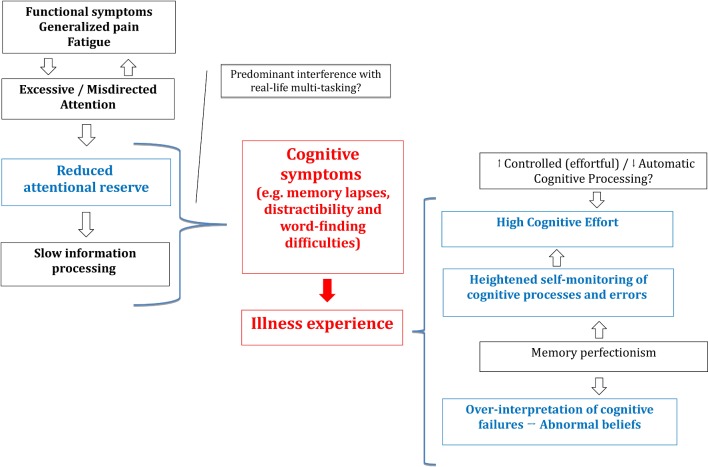
Background: Functional cognitive disorder (FCD) describes cognitive dysfunction in the absence of an organic cause. It is increasingly prevalent in healthcare settings yet its key neuropsychological features have not been reported in large patient cohorts. We hypothesised that cognitive profiles in fibromyalgia (FM), chronic fatigue syndrome (CFS) and functional neurological disorders (FNDs) would provide a template for characterising FCD. Methods: We conducted a systematic review of studies with cognition-related outcomes in FM, CFS and FND. Results: We selected 52 studies on FM, 95 on CFS and 39 on FND. We found a general discordance between high rates of subjective cognitive symptoms, including forgetfulness, distractibility and word-finding difficulties, and inconsistent objective neuropsychological deficits. Objective deficits were reported, including poor selective and divided attention, slow information processing and vulnerability to distraction. In some studies, cognitive performance was inversely correlated with pain, exertion and fatigue. Performance validity testing demonstrated poor effort in only a minority of subjects, and patients with CFS showed a heightened perception of effort. Discussion: The cognitive profiles of FM, CFS and non-cognitive FND are similar to the proposed features of FCD, suggesting common mechanistic underpinnings. Similar findings have been reported in patients with mild traumatic brain injury and whiplash. We hypothesise that pain, fatigue and excessive interoceptive monitoring produce a decrease in externally directed attention. This increases susceptibility to distraction and slows information processing, interfering with cognitive function, in particular multitasking. Routine cognitive processes are experienced as unduly effortful. This may reflect a switch from an automatic to a less efficient controlled or explicit cognitive mode, a mechanism that has also been proposed for impaired motor control in FND. These experiences might then be overinterpreted due to memory perfectionism and heightened self-monitoring of cognitive performance.
Overview
The claims and statistics of this paper haven’t been checked yet.
Free: it reads the open-access text and checks the first 5 claims that cite a source we can check. Create a free account to check every claim.
Integrity signals
Registry
Cites
Statistics
Figures
Verification
Claims the paper makes
The claims and statistics of this paper haven’t been checked yet.
Free: it reads the open-access text and checks the first 5 claims that cite a source we can check. Create a free account to check every claim.
Claims other papers make about this one
Each is checked against this paper’s own text: does it say what the citing paper says it does?
The cited source says what the claim attributes to it.
In the citing paper
“Disturbance of attention is thought to be responsible for the symptoms,4 as with other functional neurological disorders,5 although the underlying pathophysiological mechanisms remain unknown.”
From Feasibility randomised controlled trial of online group Acceptance and Commitment Therapy for Functional Cognitive Disorder (ACT4FCD) (2023) · cites this paper as [4]
Self-check
Percentages, sums and reported differences re-computed from the paper’s own numbers.
The self-check needs the paper’s full text.
Citations
Cites
Functional somatic syndromes: one or many?
Wessely, S., Nimnuan, C., & Sharpe, M. (1999) · The Lancet · doi:10.1016/s0140-6736(98)08320-2 · Cited by 1,211 · cited 1×
“15 In our clinical practice, it is very common to see patients with FND and comorbid FM and/or CFS. Importantly, FM and CFS are also associated with subjective cognitive difficulties, sometimes referred to as ‘brain fog’.”
BackgroundToward a rational and mechanistic account of mental effort
Shenhav, A., Musslick, S., Lieder, F., Kool, W., Griffiths, T. L., Cohen, J. D., & Botvinick, M. M. (2017) · Annual Review of Neuroscience · doi:10.1146/annurev-neuro-072116-031526 · Cited by 1,077 · cited 1×
“160 A switch from an automatic to a controlled mode of cognitive processing may therefore underlie the increase in cognitive effort.”
BackgroundWhite, P., Goldsmith, K., Johnson, A., Potts, L., Walwyn, R., DeCesare, J., Baber, H., Burgess, M., Clark, L., Cox, D., et al. (2011) · The Lancet · doi:10.1016/s0140-6736(11)60096-2 · Cited by 897
An internet survey of 2,596 people with fibromyalgia
Bennett, R. M., Jones, J., Turk, D. C., Russell, I. J., & Matallana, L. (2007) · BMC Musculoskeletal Disorders · doi:10.1186/1471-2474-8-27 · Cited by 865
A Bayesian account of ‘hysteria’
Edwards, M. J., Adams, R. A., Brown, H., Parees, I., & Friston, K. J. (2012) · Brain · doi:10.1093/brain/aws129 · Cited by 825 · cited 1×
“14 limitations Evidence for the presence and characteristics of cognitive abnormalities in FNDs, FM and CFS is remarkably heterogeneous.”
BackgroundSelf-citationNeurobiology of fibromyalgia and chronic widespread pain
Sluka, K. A., & Clauw, D. J. (2016) · Neuroscience · doi:10.1016/j.neuroscience.2016.06.006 · Cited by 671
A comprehensive review of the Paced Auditory Serial Addition Test (PASAT)
TOMBAUGH, T. (2006) · Archives of Clinical Neuropsychology · doi:10.1016/j.acn.2005.07.006 · Cited by 648
Symptoms following mild head injury: expectation as aetiology.
Mittenberg, W., DiGiulio, D. V., Perrin, S., & Bass, A. E. (1992) · Journal of Neurology, Neurosurgery & Psychiatry · doi:10.1136/jnnp.55.3.200 · Cited by 510
Wessely, S., & Powell, R. (1989) · Journal of Neurology, Neurosurgery & Psychiatry · doi:10.1136/jnnp.52.8.940 · Cited by 481
Cognitive-behavioral therapy for psychogenic nonepileptic seizures: A pilot RCT
Goldstein, L. H., Chalder, T., Chigwedere, C., Khondoker, M. R., Moriarty, J., Toone, B. K., & Mellers, J. D. C. (2010) · Neurology · doi:10.1212/wnl.0b013e3181e39658 · Cited by 477
Cited by
Items 101–200 of 240
Memory for forgetting in adults with persistent symptoms following concussion
Rioux, M., Wardell, V., Palombo, D. J., Picon, E. L., Le, M. L., & Silverberg, N. D. (2022) · Journal of Clinical and Experimental Neuropsychology · doi:10.1080/13803395.2022.2067326 · Cited by 15
“People with memory concerns may more readily notice memory lapses (Larner, 2021; Teodoro et al., 2018).”
BackgroundThe neuropsychology of functional neurological disorders
Patten, R. V., & Bellone, J. A. (2023) · Journal of Clinical and Experimental Neuropsychology · doi:10.1080/13803395.2024.2322798 · Cited by 14
“However, there is interest in FCD (and/or a “functional cognitive overlay”) in a variety of conditions, including mild TBI (mTBI), long COVID, other FNDs, fibromyalgia, and chronic fatigue syndrome, among others (Silverberg & Rush, 2023; Teodoro et al., 2018, 2023; Walzl et al., 2022).”
BackgroundInfluentialVilyte, G., Butler, J. T., Ives-Deliperi, V. L., & Pretorius, C. (2024) · Seizure · doi:10.1016/j.seizure.2024.06.001 · Cited by 11
“They also tend to report more signs and symptoms, such as chronic pain [19], chronic fatigue [9], fibro-myalgia [9,20], suicidal attempts [21], and cognitive complaints such as memory, concentration and word-finding difficulties [22].”
BackgroundPatten, R. V., Lü, M., Austin, T. A., Cotton, E., Chan, L., Bellone, J. A., Mordecai, K. L., Twamley, E. W., Sawyer, K., & LaFrance, W. C., Jr. (2024) · The Clinical Neuropsychologist · doi:10.1080/13854046.2024.2440949 · Cited by 13
“…FS, which suggests an unstable and inflexible cognitive/emotional neural system (Baslet, 2011) that could lead to mismatches in cognitive performance and experienced emotions, reflected in incongruent neuropsychological test results versus mental health outcome assessments (Teodoro et al., 2018).”
InfluentialRecent research in myalgic encephalomyelitis/chronic fatigue syndrome: an evidence map
Todhunter‐Brown, A., Campbell, P., Broderick, C. A., Cowie, J., Davis, B., Fenton, C., Markham, S., Sellers, C., & Thomson, K. (2025) · Health Technology Assessment · doi:10.3310/btbd8846 · Cited by 14
Mavroudis, I. A., Petridis, F., Franekova, K., Visternicu, M., Rarinca, V., Burlui, V., Ciobica, A. S., Novac, B., Dobrin, I., Hogas, M. M., et al. (2025) · Frontiers in Aging Neuroscience · doi:10.3389/fnagi.2025.1665510 · Cited by 11
Emotional arousal and valence in patients with fibromyalgia: a pilot study
Ciuffini, R., Cofini, V., Muselli, M., Necozione, S., Piroli, A., & Marrelli, A. (2023) · Frontiers in Pain Research · doi:10.3389/fpain.2023.1075722 · Cited by 10
Boylan, K. A., Dworetzky, B. A., Baslet, G. C., Polich, G. R., O’Neal, M. A., & Reinsberger, C. (2024) · Epilepsy & Behavior Reports · doi:10.1016/j.ebr.2024.100682 · Cited by 12
“…described in FND and comorbid disorders, suggesting potential shared underlying mechanisms; for example, patients with functional seizures report fatigue similar to those with chronic fatigue syndrome, and both patients with FND and fibro-myalgia often report pain as a debilitating symptom [5,7].”
BackgroundØie, M. G., Rødø, A. S. B., Bølgen, M. S., Pedersen, M., Asprusten, T. T., & Wyller, V. B. (2022) · Journal of Psychosomatic Research · doi:10.1016/j.jpsychores.2022.111063 · Cited by 12
The Role of Environmental Distractions in the Experience of Fibrofog in Real‐World Settings
Kratz, A. L., Whibley, D., Kim, S., Williams, D. A., Clauw, D. J., & Sliwinski, M. J. (2020) · ACR Open Rheumatology · doi:10.1002/acr2.11130 · Cited by 12
“The reduced attentional resources can lead to greater susceptibility to distraction and slow information processing (10).”
BackgroundResultInfluentialStanculescu, D., Larsson, L., & Bergquist, J. (2021) · Frontiers in Medicine · doi:10.3389/fmed.2021.672370 · Cited by 10
The role of neuropsychology in the care of patients with functional neurological symptom disorder
Patten, R. V., Mordecai, K. L., & LaFrance, W. C., Jr. (2024) · Journal of the International Neuropsychological Society · doi:10.1017/s1355617724000249 · Cited by 10
“…interventions (Jacob et al., 2018; Jimenez et al., 2019; Lidstone et al., 2020), although the role of neuropsychology has been largely neglected, in spite of the prominence of cognitive dysfunction across FNSD subtypes (Carle-Toulemonde et al., 2023; Jones et al., 2016; Teodoro et al., 2018).”
InfluentialPrecipitating Factors for Functional Cognitive Disorder
Cabreira, V., McWhirter, L., Stone, J., & Carson, A. J. (2025) · European Journal of Neurology · doi:10.1111/ene.70082 · Cited by 13
“The symptoms are typically amplified through self-monitoring, hypervigilance, anticipatory and performance anxiety [34], which in turn further reduce the amount of attentional resources available for information processing and task performance [4, 32, 35].”
Price, A., Sumner, P., & Powell, G. (2025) · Vision Research · doi:10.1016/j.visres.2025.108640 · Cited by 17
“Fibromyalgia and PPPD are both neurological conditions that have been associated with, or considered under the umbrella of, functional neurological disorder (FND; Steinruecke et al., 2024; Teodoro et al., 2018; Trinidade et al., 2023).”
Neuropsychiatric Treatment for Mild Traumatic Brain Injury: Nonpharmacological Approaches
Mollica, A., Dey, A., Cairncross, M., Silverberg, N. D., & Burke, M. J. (2022) · Seminars in Neurology · doi:10.1055/s-0041-1742143 · Cited by 12
Marks, D. F. (2022) · Archives of Epidemiology & Public Health Research · doi:10.33140/aephr.01.02.06 · Cited by 19
Self-perceived cognitive function and neuropsychological performance in women with fibromyalgia
Elgueta-Aguilera, N., Guede-Rojas, F., Mendoza, C., Carvajal-Parodi, C., & Jerez‐Mayorga, D. (2022) · Revista médica de Chile · doi:10.4067/s0034-98872022001101450 · Cited by 12
Zhuo, C., Xu, Y. J., Zhang, L., Jing, R., & Zhou, C. (2019) · Frontiers in Genetics · doi:10.3389/fgene.2019.00092 · Cited by 10
Functional Cognitive Disorders: Update On Diagnostic Status
Larner, A. J. (2020) · Neurodegenerative Disease Management · doi:10.2217/nmt-2019-0038 · Cited by 10
Hamilton, C. A., Matthews, F. E., Attems, J., Donaghy, P. C., Erskine, D., Taylor, J., & Thomas, A. J. (2024) · The British Journal of Psychiatry · doi:10.1192/bjp.2024.25 · Cited by 9
Functional cognitive disorder in Alzheimer's disease
Cabreira, V., Zeidler, M., McWhirter, L., Pal, S., Stone, J., & Carson, A. J. (2025) · Journal of the Neurological Sciences · doi:10.1016/j.jns.2025.123618 · Cited by 9
“While most of the FCD-AD cases presented with low cognitive scores, this should be interpreted with care as underperformance on neuropsychological testing is well recognised in FCD, particularly in the domains of selective and divided attention [2,20].”
Stoffel, N., Sojka, P., Gninenko, N., Mouthon, M., von der Weid, L., Serranová, T., & Aybek, S. (2025) · Brain Communications · doi:10.1093/braincomms/fcaf283 · Cited by 13
“48 This finding is similar to previous work showing that the interoceptive trait prediction error—defined as the difference between subjective self-reported interoceptive sensitivity and objective performance on an interoceptive task—was correlated with symptom severity (as measured by the SDQ-20),…”
A broader perspective: Functional symptoms beyond Neurology
Benbadis, S. R., Ledford, R., Sawchuk, T., & Dworetzky, B. A. (2021) · Epilepsy & Behavior Reports · doi:10.1016/j.ebr.2021.100506 · Cited by 9
“These range from the typical executive functioning deficits accompanying major depression (slower speed of cognitive processing) and anxiety disorders (reduced working memory and attention) to the forgetfulness, distractibility and word-finding difficulties (‘‘brain fog”) often described in a number of disorders inclu…”
BackgroundProminent Fatigue but No Motor Fatigability in Non-Hospitalized Patients With Post-COVID-Syndrome
Weich, C., Dettmers, C., Saile, R., Schleicher, L., Vieten, M., & Joebges, M. (2022) · Frontiers in Neurology · doi:10.3389/fneur.2022.902502 · Cited by 10
“The subjective-objective cognitive mismatch in ME/CFS caused even a comparison to the functional cognitive disorder spectrum [(46) cited from (47)].”
BackgroundGoing ‘meta’: a systematic review of metacognition and functional neurological disorder
Sadnicka, A., Strudwick, A.-M., Grogan, J. P., Manohar, S., & Nielsen, G. (2024) · Brain Communications · doi:10.1093/braincomms/fcaf014 · Cited by 9
Veinot, J., Cane, D. B., & Hashmi, J. A. (2025) · Journal of Pain · doi:10.1016/j.jpain.2025.104795 · Cited by 11
Issak, S., Williams, G. P., Kanaan, R., Fini, N. A., & Nielsen, G. (2025) · Brain and Behavior · doi:10.1002/brb3.70208 · Cited by 7
“Other co-existing symptoms that may impact ambulation and disability include sensory impairment, cognitive difficulties, and functional seizures (Baker et al. 2021; Goldstein et al. 2020; Revell 2019; Teodoro, Edwards, and Isaacs 2018), but their relative prevalence and impact in FGD remain unknown.”
Brain Fog and Cognitive Dysfunction in Posttraumatic Stress Disorder: An Evidence-Based Review
Sanger, B., Alarachi, A., McNeely, H. E., McKinnon, M. C., & McCabe, R. E. (2025) · Psychology Research and Behavior Management · doi:10.2147/prbm.s461173 · Cited by 10
Persistent prosopagnosia following COVID-19
Kieseler, M., & Duchaine, B. (2023) · Cortex · doi:10.1016/j.cortex.2023.01.012 · Cited by 9
FIBROMYALGIA: PERSPECTIVE OF PATIENTS, MEDICAL STUDENTS AND PROFESSIONALS
Vijayan, B. V., & Nair, V. C. P. (2018) · Journal of Evidence Based Medicine and Healthcare · doi:10.18410/jebmh/2018/508 · Cited by 7
Chronische Schmerzsyndrome und andere persistierende funktionelle Körperbeschwerden
Roenneberg, C., Henningsen, P., & Hausteiner‐Wiehle, C. (2020) · Der Nervenarzt · doi:10.1007/s00115-020-00917-w · Cited by 9
Functional cognitive disorder: Beyond pseudodementia
Marín‐Medina, D. S., Arenas-Vargas, P. A., Velásquez-Duque, M. D. P., & Bagnati, P. (2024) · Neurology Perspectives · doi:10.1016/j.neurop.2024.100179 · Cited by 8
Ivanovska, M., Homadi, M. S., Angelova, G., Taskov, H. B., & Murdjeva, M. (2025) · Biomedicines · doi:10.3390/biomedicines13112797 · Cited by 21
“ME/CFS patients frequently report cognitive impairments, with common difficulties including slowed information processing, poor memory function, mental fatigue, and reduced thinking speed [62,63].”
Valentine, T. R., & Kratz, A. L. (2023) · Journal of the International Neuropsychological Society · doi:10.1017/s1355617723000073 · Cited by 7
“…issue is particularly salient when studying FM, as individuals with this condition exhibit higher susceptibility to distraction (Bell et al., 2018; Teodoro et al., 2018) and hypersensitivity to sensory stimuli (Carrillo-de-la-Pe ˜ na et al., 2006; Harte et al., 2016; Hollins et al., 2009; Kosek…”
BackgroundFunctional neurological disorders
Chutko, L. S., & Surushkina, S. Y. (2021) · S S Korsakov Journal of Neurology and Psychiatry · doi:10.17116/jnevro202112101198 · Cited by 6
Joustra, M. L., Hartman, C. A., Bakker, S. J. L., & Rosmalen, J. G. M. (2022) · Psychosomatic Medicine · doi:10.1097/psy.0000000000001117 · Cited by 9
“Mood and anxiety disorders are more prevalent in individuals with CFS and FM (12), and both psychiatric disorders and the severity of somatic symptoms can interact with cognitive functioning (8,13).”
BackgroundResultA Case of Functional Cognitive Disorder: Psychotherapy and Speech and Language Therapy Insights
Godena, E. J., Freeburn, J. L., Silverberg, N. D., & Perez, D. L. (2023) · Harvard Review of Psychiatry · doi:10.1097/hrp.0000000000000379 · Cited by 9
The Biopsychosocial Formulation for Functional Movement Disorder
MacGillivray, L., & Lidstone, S. C. (2022) · Current clinical neurology · doi:10.1007/978-3-030-86495-8_3 · Cited by 8
Mavroudis, I. A., Franekova, K., Petridis, F., Ciobica, A. S., Papagiannopoulos, S., & Kazis, D. A. (2025) · Brain Sciences · doi:10.3390/brainsci15090997 · Cited by 8
“Patients with this trait exhibit heightened concern about any perceived lapses, even when these fall within normal ranges of cognitive function [41].”
Galvez-Sánchez, C. M., Duschek, S., & del Paso, G. A. R. (2024) · Psychology Research and Behavior Management · doi:10.2147/prbm.s446798 · Cited by 5
“30 Similar associations were reported for patients with RA.”
Functional seizure therapy via transauricular vagus nerve stimulation
Das, A., & Dutta, A. (2024) · Medical Hypotheses · doi:10.1016/j.mehy.2024.111462 · Cited by 7
Krámská, L., Myers, L., Hrešková, L., Krámský, D., Chvál, M., & Vojtěch, Z. (2022) · Epilepsy & Behavior · doi:10.1016/j.yebeh.2022.108584 · Cited by 5
“Both of these are strongly correlated with comorbid mood disorders and are possibly compounded by medication [30,31].”
BackgroundBogolepova, A. N., Zakharov, V. V., Illarioshkin, S. N., Litvinenko, I., Mkhitaryan, E. A., Пизова, Н. В., & Yakupov, E. Z. (2023) · S S Korsakov Journal of Neurology and Psychiatry · doi:10.17116/jnevro2023123091131 · Cited by 9
Ball, H. A., Coulthard, E. J., Fish, M., Bayer, A. J., Gallacher, J., & Ben‐Shlomo, Y. (2023) · BMJ Open · doi:10.1136/bmjopen-2023-073205 · Cited by 6
“…it is associated with increased self-focused attention, 40 subjective cognitive decline may be a vulnerability point from which some people go on to develop FCD, so clinicians should be aware of this condition and aim to positively diagnose it when this would be beneficial to patient management.”
BackgroundMcWhirter, L. (2024) · Practical Neurology · doi:10.1136/pn-2024-004112 · Cited by 5
Güler, M. A., & ÇAKIT, M. O. (2020) · Archives of Rheumatology · doi:10.46497/archrheumatol.2020.7683 · Cited by 8
Acute non-traumatic tetraparesis – Differential diagnosis
de Oliveira, R. T. V., Rocha, F. R., Teodoro, T. P., & Santos, M. O. (2021) · Journal of Clinical Neuroscience · doi:10.1016/j.jocn.2021.02.024 · Cited by 6
Self-citationKelleher, E. M., Tai, X.-Y., Schrepf, A., Rathod‐Mistry, T., Nichols, T. E., Tracey, I., & Irani, A. (2025) · British Journal of Anaesthesia · doi:10.1016/j.bja.2025.08.002 · Cited by 6
“56”
Hypnosis for acquired brain injury: Four patient cases and five testable predictions
Lindeløv, J. K., Kvamme, T. L., Thomsen, K. R., Overgaard, R., & Overgaard, M. S. (2023) · New Ideas in Psychology · doi:10.1016/j.newideapsych.2023.101046 · Cited by 8
Fibromyalgia and Depression: A Network Analysis Approach
Malka, T., Marom-Harel, H., Frumer, L., Agmon‐Levin, N., Taub, R., Glick, I., Admon, R., Hanuka, S., Peretz-Tamari, N., Brown, A., et al. (2025) · Behavior Therapy · doi:10.1016/j.beth.2025.06.003 · Cited by 6
Speech Therapy: Being Understood Clearly
Freeburn, J. L. (2022) · Current clinical neurology · doi:10.1007/978-3-030-86495-8_25 · Cited by 7
The cumulative effect of fibromyalgia symptoms on cognitive performance: The mediating role of pain
Ramos‐Henderson, M., Calderón, C., Toro-Roa, I., Aguilera-Choppelo, R., Palominos, D., Soto‐Añari, M., López, N., & Domic‐Siede, M. (2022) · Applied Neuropsychology Adult · doi:10.1080/23279095.2022.2122828 · Cited by 6
“…other words, pain and high interoceptive monitoring might lead to reduced attention performance in cognitively demanding tasks or activities, in turn increasing the susceptibility to distraction and slowing down the information processing, interfering with cognitive function (Teodoro et al., 2018).”
InfluentialLiu, X., Liu, S., Ren, R., Wang, X., Han, C., & Liu, Z. (2024) · Frontiers in Neuroscience · doi:10.3389/fnins.2023.1286340 · Cited by 6
Feasibility trial of a self-help digital intervention for functional cognitive disorder
Cabreira, V., Frostholm, L., Stone, J., & Carson, A. J. (2025) · Brain Communications · doi:10.1093/braincomms/fcaf248 · Cited by 4
“5,6 Around 50% of the patients have comorbid depression, anxiety and sleep problems.”
Taking Control of Your Functional Cognitive Symptoms: Workbook —A Novel Intervention
Cotton, E., Mordecai, K. L., McWhirter, L., Cabreira, V., Patten, R. V., Silverberg, N. D., Kaat, A. J., & LaFrance, W. C., Jr. (2025) · Journal of Neuropsychiatry · doi:10.1176/appi.neuropsych.20240231 · Cited by 5
Saccadic eye movements differentiate functional cognitive disorder from mild cognitive impairment
Wilcockson, T. D. W., Roy, S., & Crawford, T. J. (2025) · Perception · doi:10.1177/03010066251359215 · Cited by 3
“This distinction is important, as attentional processing speed has been hypothesised to be impaired in FCD (Teodoro et al., 2018).”
Belviranlı, M., Okudan, N., & Sezer, T. (2025) · Molecular Neurobiology · doi:10.1007/s12035-025-05585-y · Cited by 4
“Furthermore, cognitive dysfunction and memory impairments—often referred to as "fibrofog"— constitute some of the most common and severe manifestations of the disease [4, 5].”
Cole, R. H., Smythe, L., Edwards, M. J., Happe, F. G. E., & Nicholson, T. R. (2025) · Autism · doi:10.1177/13623613251393504 · Cited by 4
“…(e.g., gut-brain axis) may contribute especially to certain FSS subtypes (Mayer et al., 2023), growing evidence suggests overlapping clinical and aetiological features between FND and FSS, including attentional dysregulation and interoceptive alterations (Sharp et al., 2021; Teodoro et al., 2018).”
Self-citationPsychotherapie bei funktionellen neurologischen Bewegungsstörungen
Bolte, C., Geritz, J., Alvarez‐Fischer, D., & Hoheisel, M. (2023) · Nervenheilkunde · doi:10.1055/a-2105-9390 · Cited by 3
“Die Unterbrechung von Grübelschleifen sowie übermäßiger Aufmerksamkeit für die Kognitionsleistungen sind daher wesentliche Therapiebestandteile [24, 25].”
BackgroundCognitive profile in functional disorders
Roivainen, E., Peura, M., & Pätsi, J. (2023) · Cognitive Neuropsychiatry · doi:10.1080/13546805.2023.2275336 · Cited by 3
“In a review by Teodoro et al. (2018) that examined 186 studies on cognitive symptoms in FM, CSF, and FND, it was found that cognitive pro fi les in di ff erent functional syndromes are similar to each other and to those in FCD.”
ResultForensic assessment of somatoform and functional neurological disorders
Datta, V., & Blum, A. W. (2024) · Behavioral Sciences & the Law · doi:10.1002/bsl.2651 · Cited by 3
Cognitive mechanisms of mindfulness-based pain management in chronic pain
Mohr, E., Matthew, S., Narisetti, L., Duff, C., & Schoenberg, P. L. A. (2024) · Social Sciences & Humanities Open · doi:10.1016/j.ssaho.2024.101261 · Cited by 3
Functional Neurological Disorders
Chutko, L. S., & Surushkina, S. Y. (2021) · Neuroscience and Behavioral Physiology · doi:10.1007/s11055-021-01184-1 · Cited by 4
Unfeignable biomarkers in functional neurological disorder: drifting back to Pierre Janet
Stone, J. (2019) · Brain · doi:10.1093/brain/awz420 · Cited by 4
A qualitative analysis of patients' day-to-day living with functional cognitive disorder (FCD).
Mantovani, N., Poole, N., Cope, S., Vanzan, S., Duffus, A., Williams, T., Smith, J. G., Barrett, B., Scicluna, M., Beardmore, S., et al. (2025) · Disability and Rehabilitation · doi:10.1080/09638288.2025.2460725 · Cited by 2
Self-citationSleep in Functional Motor Disorders: A Case–Control Polysomnographic Study
Nepožitek, J., Dostálová, S., Jirásek, M., Chaloupková, G., Forejtová, Z., Nováková, L., Rottová, V., Konvičná, V., Šonka, K., Edwards, M. J., et al. (2025) · Journal of Sleep Research · doi:10.1111/jsr.70163 · Cited by 4
“Cognitive symptoms are very common in people with FMD and other functional neurological or somatic symptom disorders, and have a major impact on their health-related quality of life (Forejtova et al. 2023; Teodoro et al. 2018; Vechetova et al. 2018).”
Self-citationFunctional Neurological Disorder: A Neurobiological Perspective on Maladaptive Plasticity
Mavroudis, I. A., Petrides, F., Franekova, K., Ciobica, A. S., & Kazis, D. (2025) · IntechOpen eBooks · doi:10.5772/intechopen.1011452 · Cited by 3
Westlin, C., Rioux, M., Lee, J., Panenka, W. J., Palombo, D. J., Todd, R. M., Silverberg, N. D., & Perez, D. L. (2025) · NeuroImage Clinical · doi:10.1016/j.nicl.2025.103936 · Cited by 4
“Theoretical models of FND highlight the role of aberrant attentional processes, symptom-focused hypervigilance, and avoidance behaviors in the persistence of symptoms, which likely also contribute to FCD (Burke & Silverberg, 2025; Espay et al., 2018a; Teodoro et al., 2018).”
Metacognitive performance in Functional Cognitive Disorder (FCD): A meta-analysis
Franekova, K., Petridis, F., Ciobica, A. S., Papagiannopoulos, S., Kazis, D. A., & Mavroudis, I. A. (2025) · Acta Neurologica Belgica · doi:10.1007/s13760-025-02969-8 · Cited by 3
“According to this model, FCD may arise when the prior expectation of cognitive failure overwhelms incoming evidence of success, resulting in persistent misappraisal of cognitive function [1].”
Pick, S., Millman, L. S. M., Gursoy, E. G., Basamh, Y., Uloyok-Job, J., Davies, J., Blunstone, L., Bhuma, S., Coebergh, J. A., David, A. S., et al. (2026) · Psychological Medicine · doi:10.1017/s0033291726103420 · Cited by 2
“…metacognition has been indicated by the presence of elevated self-reported cognitive symptoms and/or poorer self-evaluations of everyday cognitive functioning, in the absence of observable performance deficits (Alluri et al., 2020; Pick et al., 2023; Sadnicka et al., 2025; Teodoro et al., 2018).”
InfluentialSelf-citationFlow Meditation Improves Emotion Regulation and Pain Management in Female Fibromyalgia Patients
Amutio, A., Franco, C., Ayala, E. S., & Gordon, W. V. (2022) · Mindfulness · doi:10.1007/s12671-022-01981-w · Cited by 4
“Difficulty in identifying and understanding feelings and emotions along with low trait mindfulness levels are positively associated with FMS (Geenen et al., 2012; Teodoro et al., 2018).”
BackgroundCan a single dose of psilocybin improve cognitive control in functional dissociative seizures?
Chupin, J., López‐Castromán, J., Brière, C., Pereira, F., Hingray, C., & Conejero, I. (2023) · Medical Hypotheses · doi:10.1016/j.mehy.2023.111163 · Cited by 2
Faiman, I., Young, A. H., & Shotbolt, P. (2024) · Epilepsy & Behavior · doi:10.1016/j.yebeh.2024.109952 · Cited by 2
Functional cognitive disorders
Chutko, L. S., & Surushkina, S. Y. (2022) · S S Korsakov Journal of Neurology and Psychiatry · doi:10.17116/jnevro202212202143 · Cited by 3
Popkirov, S. (2020) · Springer eBooks · doi:10.1007/978-3-662-61272-9_5 · Cited by 2
Case 7-2022: A 65-Year-Old Woman with Depression, Recurrent Falls, and Inability to Care for Herself
Forst, D. A., Restrepo, J. A., González, R. G., Jones, P. S., & Marshall, M. S. (2022) · New England Journal of Medicine · doi:10.1056/nejmcpc2115853 · Cited by 3
Ramos‐Henderson, M., Toro-Roa, I., Aguilera-Choppelo, R., Palominos, D., Soto‐Añari, M., López, N., & Domic‐Siede, M. (2021) · Research Square · doi:10.21203/rs.3.rs-866271/v1 · Cited by 2
Sánchez, V., Kim, C. K., Locatelli, E. V. T., Cohen, A. K., Cabrera, K., Aenlle, K. K., Klimas, N. G., O’Brien, R. C., & Galor, A. (2023) · Clinical and Experimental Ophthalmology · doi:10.1111/ceo.14313 · Cited by 2
Fox, J., Bollig, M. K., Mishra, M., & Jacobs, M. L. (2024) · Epilepsy Research · doi:10.1016/j.eplepsyres.2024.107340 · Cited by 1
“…was unrelated to the patient ’ s epilepsy given that similar findings are found in other type of functional neurological disorder (FND) and there was no difference in epilepsy localization or lateralization between the ES + FS and ES groups in this study (Teodoro, Edwards and Isaacs, 2018).”
ResultGutkin, M., Kanaan, R., McLean, L., Cartoon, J., & Brown, R. J. (2024) · Counselling and Psychotherapy Research · doi:10.1002/capr.12805 · Cited by 1
Karpin, H., Deutsch, R., Lahav, Y., & Bar‐Shalita, T. (2025) · American Journal of Occupational Therapy · doi:10.5014/ajot.2025.050931 · Cited by 2
Hromas, G. A., Novoa, M. A., & Davis, J. J. (2025) · Journal of Head Trauma Rehabilitation · doi:10.1097/htr.0000000000001075 · Cited by 3
Early maladaptive schemas in functional movement disorders: A cross-sectional study
Carle, G., Houot, M., Roze, E. F., Mesrati, F., Gendre, T., Levy, R., Degos, B., & Garcin, B. (2025) · Journal of Psychosomatic Research · doi:10.1016/j.jpsychores.2025.112348 · Cited by 2
Shi, S., Fisher, A. J., Rabinowitz, A. R., & Silverberg, N. D. (2026) · Journal of the International Neuropsychological Society · doi:10.1017/s1355617726101854 · Cited by 1
“…driven by other symptoms, such as psychological distress (Abramovitch et al., 2021; Shi et al., 2024) or being distracted by physical symptoms (Teodoro et al., 2018), or conversely, that cognitive symptoms may contribute to the activation or reinforcement of other symptoms within the network.”
Recommendations for Refining the Diagnosis of Functional Cognitive Disorder
Patten, R. V. (2026) · Journal of Neuropsychiatry · doi:10.1176/appi.neuropsych.20250279 · Cited by 1
Patten, R. V. (2026) · Archives of Clinical Neuropsychology · doi:10.1093/arclin/acag023 · Cited by 1
Jones, A., Smakowski, A., Hughes, A. M., David, A. S., & Chalder, T. (2021) · European Journal of Health Psychology · doi:10.1027/2512-8442/a000093 · Cited by 1
Ageing 2023: Proceedings of 6th Gerontological Interdisciplinary Conference
(2023) · Univerzita Karlova eBooks · doi:10.14712/9788090734746 · Cited by 1
Response to ‘Functional neurological disorder in people with long COVID : A systematic review’
Kachaner, A., Lemogne, C., Ranque, B., Meppiel, E., & de Broucker, T. (2023) · European Journal of Neurology · doi:10.1111/ene.15911 · Cited by 1
“Teodoro et al. stressed that another key feature of FND is fluctuation over time.”
BackgroundInfluentialBarak, S., Landa, J., Eisenstein, E. M., Gerner, M., Vulkan, T. R., Neeman-Verblun, E., & Silberg, T. (2024) · Computational and Structural Biotechnology Journal · doi:10.1016/j.csbj.2024.04.045 · Cited by 2
“However, given the considerable heterogeneity in the literature and methodological shortcomings, further research is warranted before dissociating the nature of cognitive difficulties in FNSD from those in FCD [58].”
BackgroundBorze, T. F., Pallag, A., Tarcău, E., CIOBANU, D. I., Andronie-Cioară, F. L., Nistor-Cseppento, C. D., Ciavoi, G., & Muresan, M. E. (2025) · Medicina · doi:10.3390/medicina61020285 · Cited by 2
“Fibromyalgia is a complex syndrome characterized by chronic pain, joint stiffness, fatigue, sleep disturbances, brain dysfunction, and depression [1,2].”
Funktionelle kognitive und amnestische Störungen
Popkirov, S. (2020) · Springer eBooks · doi:10.1007/978-3-662-61272-9_12 · Cited by 1
Funktionelle polysymptomatische Syndrome
Popkirov, S. (2020) · Springer eBooks · doi:10.1007/978-3-662-61272-9_14 · Cited by 1
Hedonicity in functional motor disorders: a chemosensory study assessing taste
Cecchini, M. P., Tamburin, S., Zanini, A., Boschi, F., Demartini, B., Goeta, D., Dallocchio, C., Marotta, A., Fiorio, M., & Tinazzi, M. (2020) · Journal of Neural Transmission · doi:10.1007/s00702-020-02244-5 · Cited by 1
Mateen, B. A., Boakye, N. T., Sonabend, R., Russell, N., & Saverino, A. (2020) · Journal of Neuropsychology · doi:10.1111/jnp.12239 · Cited by 2
Popkirov, S. (2020) · Springer eBooks · doi:10.1007/978-3-662-61272-9_13 · Cited by 1
Russell, L. A., Carrick, R., Turner, A., & Yates, P. (2019) · The Neuropsychologist · doi:10.53841/bpsneur.2019.1.7.47 · Cited by 1
Gusnanto, A., Earl, K., Sakellariou, G. K., Owens, D., Lightfoot, A., Fawcett, S. A., Owen, E. M., Staunton, C. A., Shu, T., Croden, F., et al. (2020) · medRxiv · doi:10.1101/2020.08.17.20164715 · Cited by 2
“Such changes have been well characterised in a number of other studies where patients have reported deficits including poor selective and divided attention, slow information processing and vulnerability to distraction (74).”
BackgroundResultEine Reise durch die neurologische Rehabilitation: die letzten 20 und die nächsten 30 Jahre
Wade, D. T. (2019) · neuroreha · doi:10.1055/a-0829-5672
“Die vielleicht interessanteste größere Veränderung in der Neurologie in den letzten 20 Jahren war die Erkennung funktioneller neurologischer Störungen [3] und das Forschungsinteresse daran, wie sie entstehen [13] und behandelt werden können.”
BackgroundDawood, S. (2019) · The European Journal of Psychiatry · doi:10.1016/j.ejpsy.2019.02.001
Metadata
- Authors
- Teodoro, T., Edwards, M. J., & Isaacs, J. D.
- Affiliations
- National Health Service (GB)
- Corresponding author
- Isaacs, Jeremy D
- Venue
- Journal of Neurology, Neurosurgery & Psychiatry
- Publisher
- BMJ
- Published
- 2018-05-07
- Volume
- 89
- Issue
- 12
- Pages
- 1308-1319
- ISSN
- 0022-3050 (ISSN-L)
- 1468-330X
- PMC
- PMC6288708
- OpenAlex
- W2802124756
- Cited by
- 241
- References
- 189
- Citations by year
- 2026: 22 · 2025: 37 · 2024: 32 · 2023: 33 · 2022: 39 · 2021: 26 · 2020: 26 · 2019: 18 · 2018: 6
- FWCI
- 2.89
- Type
- journal article
- Language
- en
- Open access
- bronze
- doi.org
- Locations
- Journal of Neurology Neurosurgery & Psychiatry (publishedVersion)
- Europe PMC (PubMed Central) (publishedVersion, cc-by)
- PubMed Central (publishedVersion, cc-by)
- PubMed (publishedVersion)
- St George's Online Research Archive (St George's University of London) (acceptedVersion)
- HighWire Press Open Archive (submittedVersion)
- Funders
- Fundação para a Ciência e Tecnologia
- Wellcome Trust
- Medical Research Council
- Topics
- Health Sciences › Medicine › Psychiatry and Mental health › Fibromyalgia and Chronic Fatigue Syndrome Research
- Health Sciences › Medicine › Psychiatry and Mental health › Psychosomatic Disorders and Their Treatments
- Health Sciences › Medicine › Clinical Neurology › Long-Term Effects of COVID-19
- Keywords
- functional cognitive disorder, conversion disorder, fibromyalgia, chronic fatigue syndrome, cognitive impairment, attention deficits, divided attention, performance validity, effort perception, pain and fatigue, interoception, self-monitoring, neuropsychological deficits
- MeSH terms
- Cognition Disorders, Fibromyalgia, Humans, Nervous System Diseases, Psychological Theory, Fatigue Syndrome, Chronic
About these checks
Registry, retraction, Cites and statistics results are computed, not judged, with one exception: a printed reference that no index lists is read once by a model before it counts as a citation error. Claims are extracted by a model and kept only when their quote appears verbatim in the text; each cited source is then checked, with a model’s help, for whether it says what the claim relies on. Those verdicts can be wrong — read the claim’s quote and the cited source before relying on one.
Statistics and arithmetic are recomputed, not judged.
Confidence bands are shown only for fields calibrated on our annotated test set. None is calibrated yet, so no band is shown.
What counts as a claim ›How we measure confidence ›How we check this ›
Are you an author, or do you see a problem with this page? Request a review
Data sources
Bibliographic data: Semantic Scholar, OpenAlex, Crossref.
Contains information from the Semantic Scholar Academic Graph Datasets, made available under the ODC Attribution License (ODC-BY 1.0).
Semantic Scholar’s data is described in: Kinney, R., et al. (2023). The Semantic Scholar Open Data Platform. arXiv:2301.10140.
