

A unifying theory for cognitive abnormalities in functional neurological disorders, fibromyalgia and chronic fatigue syndrome: systematic review
Open accessThe DOI matches its Crossref record; 189 of the 189 references it cites were found in a registry or an index.
Abstract
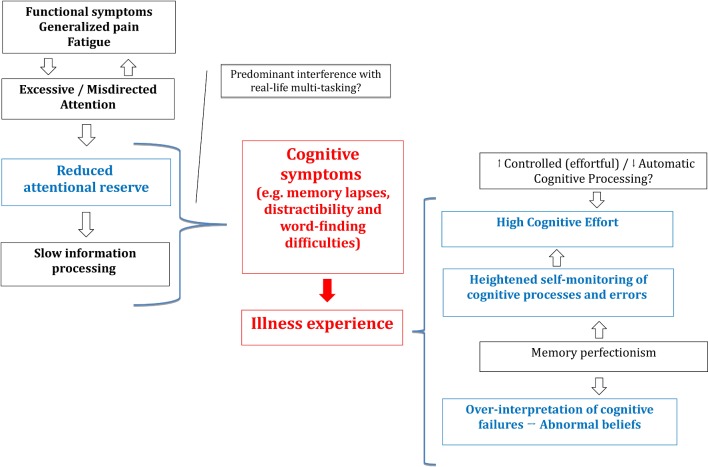
Background: Functional cognitive disorder (FCD) describes cognitive dysfunction in the absence of an organic cause. It is increasingly prevalent in healthcare settings yet its key neuropsychological features have not been reported in large patient cohorts. We hypothesised that cognitive profiles in fibromyalgia (FM), chronic fatigue syndrome (CFS) and functional neurological disorders (FNDs) would provide a template for characterising FCD. Methods: We conducted a systematic review of studies with cognition-related outcomes in FM, CFS and FND. Results: We selected 52 studies on FM, 95 on CFS and 39 on FND. We found a general discordance between high rates of subjective cognitive symptoms, including forgetfulness, distractibility and word-finding difficulties, and inconsistent objective neuropsychological deficits. Objective deficits were reported, including poor selective and divided attention, slow information processing and vulnerability to distraction. In some studies, cognitive performance was inversely correlated with pain, exertion and fatigue. Performance validity testing demonstrated poor effort in only a minority of subjects, and patients with CFS showed a heightened perception of effort. Discussion: The cognitive profiles of FM, CFS and non-cognitive FND are similar to the proposed features of FCD, suggesting common mechanistic underpinnings. Similar findings have been reported in patients with mild traumatic brain injury and whiplash. We hypothesise that pain, fatigue and excessive interoceptive monitoring produce a decrease in externally directed attention. This increases susceptibility to distraction and slows information processing, interfering with cognitive function, in particular multitasking. Routine cognitive processes are experienced as unduly effortful. This may reflect a switch from an automatic to a less efficient controlled or explicit cognitive mode, a mechanism that has also been proposed for impaired motor control in FND. These experiences might then be overinterpreted due to memory perfectionism and heightened self-monitoring of cognitive performance.
Overview
The claims and statistics of this paper haven’t been checked yet.
Free: it reads the open-access text and checks the first 5 claims that cite a source we can check. Create a free account to check every claim.
Integrity signals
Registry
Cites
Statistics
Figures
Verification
Claims the paper makes
The claims and statistics of this paper haven’t been checked yet.
Free: it reads the open-access text and checks the first 5 claims that cite a source we can check. Create a free account to check every claim.
Claims other papers make about this one
Each is checked against this paper’s own text: does it say what the citing paper says it does?
The cited source says what the claim attributes to it.
In the citing paper
“Disturbance of attention is thought to be responsible for the symptoms,4 as with other functional neurological disorders,5 although the underlying pathophysiological mechanisms remain unknown.”
From Feasibility randomised controlled trial of online group Acceptance and Commitment Therapy for Functional Cognitive Disorder (ACT4FCD) (2023) · cites this paper as [4]
Self-check
Percentages, sums and reported differences re-computed from the paper’s own numbers.
The self-check needs the paper’s full text.
Citations
Cites
Functional somatic syndromes: one or many?
Wessely, S., Nimnuan, C., & Sharpe, M. (1999) · The Lancet · doi:10.1016/s0140-6736(98)08320-2 · Cited by 1,211 · cited 1×
“15 In our clinical practice, it is very common to see patients with FND and comorbid FM and/or CFS. Importantly, FM and CFS are also associated with subjective cognitive difficulties, sometimes referred to as ‘brain fog’.”
BackgroundToward a rational and mechanistic account of mental effort
Shenhav, A., Musslick, S., Lieder, F., Kool, W., Griffiths, T. L., Cohen, J. D., & Botvinick, M. M. (2017) · Annual Review of Neuroscience · doi:10.1146/annurev-neuro-072116-031526 · Cited by 1,077 · cited 1×
“160 A switch from an automatic to a controlled mode of cognitive processing may therefore underlie the increase in cognitive effort.”
BackgroundWhite, P., Goldsmith, K., Johnson, A., Potts, L., Walwyn, R., DeCesare, J., Baber, H., Burgess, M., Clark, L., Cox, D., et al. (2011) · The Lancet · doi:10.1016/s0140-6736(11)60096-2 · Cited by 897
An internet survey of 2,596 people with fibromyalgia
Bennett, R. M., Jones, J., Turk, D. C., Russell, I. J., & Matallana, L. (2007) · BMC Musculoskeletal Disorders · doi:10.1186/1471-2474-8-27 · Cited by 865
A Bayesian account of ‘hysteria’
Edwards, M. J., Adams, R. A., Brown, H., Parees, I., & Friston, K. J. (2012) · Brain · doi:10.1093/brain/aws129 · Cited by 825 · cited 1×
“14 limitations Evidence for the presence and characteristics of cognitive abnormalities in FNDs, FM and CFS is remarkably heterogeneous.”
BackgroundSelf-citationNeurobiology of fibromyalgia and chronic widespread pain
Sluka, K. A., & Clauw, D. J. (2016) · Neuroscience · doi:10.1016/j.neuroscience.2016.06.006 · Cited by 671
A comprehensive review of the Paced Auditory Serial Addition Test (PASAT)
TOMBAUGH, T. (2006) · Archives of Clinical Neuropsychology · doi:10.1016/j.acn.2005.07.006 · Cited by 648
Symptoms following mild head injury: expectation as aetiology.
Mittenberg, W., DiGiulio, D. V., Perrin, S., & Bass, A. E. (1992) · Journal of Neurology, Neurosurgery & Psychiatry · doi:10.1136/jnnp.55.3.200 · Cited by 510
Wessely, S., & Powell, R. (1989) · Journal of Neurology, Neurosurgery & Psychiatry · doi:10.1136/jnnp.52.8.940 · Cited by 481
Cognitive-behavioral therapy for psychogenic nonepileptic seizures: A pilot RCT
Goldstein, L. H., Chalder, T., Chigwedere, C., Khondoker, M. R., Moriarty, J., Toone, B. K., & Mellers, J. D. C. (2010) · Neurology · doi:10.1212/wnl.0b013e3181e39658 · Cited by 477
Cited by
Functional neurological disorder: new subtypes and shared mechanisms
Hallett, M., Aybek, S., Dworetzky, B. A., McWhirter, L., Staab, J. P., & Stone, J. (2022) · The Lancet Neurology · doi:10.1016/s1474-4422(21)00422-1 · Cited by 538
Sherman, E. M. S., Slick, D. J., & Iverson, G. L. (2020) · Archives of Clinical Neuropsychology · doi:10.1093/arclin/acaa019 · Cited by 382
Pick, S., Goldstein, L. H., Perez, D. L., & Nicholson, T. R. (2019) · Journal of Neurology, Neurosurgery & Psychiatry · doi:10.1136/jnnp-2018-319201 · Cited by 296
Functional cognitive disorders: a systematic review
McWhirter, L., Ritchie, C., Stone, J., & Carson, A. (2020) · The Lancet Psychiatry · doi:10.1016/s2215-0366(19)30405-5 · Cited by 240
Functional cognitive disorder: dementia’s blind spot
Ball, H. A., McWhirter, L., Ballard, C., Bhome, R., Blackburn, D. J., Edwards, M. J., Fleming, S. M., Fox, N. C., Howard, R., Huntley, J., et al. (2020) · Brain · doi:10.1093/brain/awaa224 · Cited by 203
Self-citationThe aetiology of psychogenic non‐epileptic seizures: risk factors and comorbidities
Popkirov, S., Asadi‐Pooya, A. A., Duncan, R., Gigineishvili, D., Hingray, C., Miguel Kanner, A., LaFrance, W. C., Pretorius, C., Reuber, M., & on behalf of the ILAE PNES Task Force (2019) · Epileptic Disorders · doi:10.1684/epd.2019.1107 · Cited by 195
A practical review of functional neurological disorder (FND) for the general physician
Bennett, K., Diamond, C., Hoeritzauer, I., Gardiner, P., McWhirter, L., Carson, A., & Stone, J. (2021) · Clinical Medicine · doi:10.7861/clinmed.2020-0987 · Cited by 169
Management of functional neurological disorder
Gilmour, G. S., Nielsen, G., Teodoro, T., Yogarajah, M., Coebergh, J. A., Dilley, M. D., Martino, D., & Edwards, M. J. (2020) · Journal of Neurology · doi:10.1007/s00415-020-09772-w · Cited by 159
Self-citationJurado-Priego, L. N., Cueto‐Ureña, C., Ramírez-Expósito, M. J., & Martínez-Martos, J. M. (2024) · Biomedicines · doi:10.3390/biomedicines12071543 · Cited by 177
“…infectious diseases [9], including parvovirus, brucellosis, or Lyme disease; diabetes [10]; rheumatic diseases [11]; and neurological disorders [1,12,13]. diseases [9], including parvovirus, brucellosis, or Lyme disease; diabetes [10]; rheumatic diseases [11]; and neurological disorders [1,12,13].”
Chronic fatigue syndrome (CFS): Suggestions for a nutritional treatment in the therapeutic approach
Bjørklund, G., Dadar, M., Pen, J. J., Chirumbolo, S., & Aaseth, J. (2018) · Biomedicine & Pharmacotherapy · doi:10.1016/j.biopha.2018.10.076 · Cited by 113
Brietzke, A. P., Zortéa, M., Carvalho, F. M., Sanches, P. R. S., Silva, D. P. J., Torres, I. L. D. S., Fregni, F., & Caumo, W. (2019) · Journal of Pain · doi:10.1016/j.jpain.2019.06.013 · Cited by 108
Brain fog of post-COVID-19 condition and Chronic Fatigue Syndrome, same medical disorder?
Azcue, N., Gómez‐Esteban, J. C., Acera, M., Tijero, B., Fernández, T., Ayo-Mentxakatorre, N., Concha, T. P., Murueta‐Goyena, A., Lafuente, J. V., Prada, A. J., et al. (2022) · Journal of Translational Medicine · doi:10.1186/s12967-022-03764-2 · Cited by 98
McWhirter, L., Smyth, H., Hoeritzauer, I., Couturier, A., Stone, J., & Carson, A. J. (2022) · Journal of Neurology Neurosurgery & Psychiatry · doi:10.1136/jnnp-2022-329683 · Cited by 85
Understanding Functional Neurological Disorder: Recent Insights and Diagnostic Challenges
Mavroudis, I. A., Kazis, D. A., Kamal, F. Z., Gurzu, I. L., Ciobica, A. S., Pădurariu, M., Novac, B., & Iordache, A. (2024) · International Journal of Molecular Sciences · doi:10.3390/ijms25084470 · Cited by 97
“Attention deficits can also result in distractibility, difficulty concentrating, or problems with sustained focus on tasks [96].”
BackgroundChronic fatigue syndrome: progress and possibilities
Sandler, C. X., & Lloyd, A. R. (2020) · The Medical Journal of Australia · doi:10.5694/mja2.50553 · Cited by 82
Chronic fatigue syndrome: an emerging sequela in COVID-19 survivors?
Mantovani, E., Mariotto, S., Gabbiani, D., Dorelli, G., Bozzetti, S., Federico, A., Zanzoni, S., Girelli, D., Crisafulli, E., Ferrari, S., et al. (2021) · Journal of NeuroVirology · doi:10.1007/s13365-021-01002-x · Cited by 82
“The subjective–objective cognitive mismatch suggests that ME/CFS-like cognitive complaints may fall within the functional cognitive disorder spectrum (Teodoro et al. 2018).”
BackgroundInfluentialLong COVID, the Brain, Nerves, and Cognitive Function
Reiss, A. B., Greene, C., Dayaramani, C., Rauchman, S. H., Stecker, M. M., Leon, J. D., & Pinkhasov, A. (2023) · Neurology International · doi:10.3390/neurolint15030052 · Cited by 76
“Teodoro proposed that reduced externally directed attention due to injury or pain could cause the clinical symptoms and is responsible for the suggested overlap between syndromes [61,63].”
BackgroundMetacognition in functional cognitive disorder
Bhome, R., McWilliams, A., Price, G., Poole, N. A., Howard, R. J., Fleming, S. M., & Huntley, J. D. (2022) · Brain Communications · doi:10.1093/braincomms/fcac041 · Cited by 59
“16 In this study, we evaluated and compared global and local metacognition in FCD participants.”
Overall comorbidities in functional neurological disorder: A narrative review
Carle, G., Goutte, J., Do-Quang-Cantagrel, N., Mouchabac, S., Joly, C., & Garcin, B. (2023) · L Encéphale · doi:10.1016/j.encep.2023.06.004 · Cited by 67
Cognition, Cognitive Rehabilitation, and Occupational Performance
(2019) · American Journal of Occupational Therapy · doi:10.5014/ajot.2019.73s201 · Cited by 72
Functional pain disorders – more than nociplastic pain
Popkirov, S., Enax‐Krumova, E., Mainka, T., Hoheisel, M., & Hausteiner‐Wiehle, C. (2020) · Neurorehabilitation · doi:10.3233/nre-208007 · Cited by 68
“Thecognitivedysfunction("fibrofog")isgener-allycharacterizedbydistractibility,forgetfulnessand disorganizedthought,attributabletoareducedatten-tionalreserve(Teodoro,Edwards,&Isaacs,2018).”
Functional neurological disorder: Clinical manifestations and comorbidities; an online survey
Ducroizet, A., Zimianti, I., Golder, D., Hearne, K., Edwards, M. J., Nielsen, G., & Coebergh, J. A. (2023) · Journal of Clinical Neuroscience · doi:10.1016/j.jocn.2023.02.014 · Cited by 66
Self-citationKachaner, A., Lemogne, C., Dave, J., Ranque, B., de Broucker, T., & Meppiel, E. (2022) · Journal of Neurology Neurosurgery & Psychiatry · doi:10.1136/jnnp-2021-327899 · Cited by 63
Functional Cognitive Disorders: Demographic and Clinical Features Contribute to a Positive Diagnosis
Bharambe, V., & Larner, A. J. (2018) · Neurodegenerative Disease Management · doi:10.2217/nmt-2018-0025 · Cited by 48
Metacognition in functional cognitive disorder- a potential mechanism and treatment target
Bhome, R., McWilliams, A., Huntley, J. D., Fleming, S. M., & Howard, R. J. (2019) · Cognitive Neuropsychiatry · doi:10.1080/13546805.2019.1651708 · Cited by 48
“These are excessive concerns about cognitive performance, increased monitoring of cognitive lapses (Metternich et al., 2009), and misinterpretation of actual attentional lapses that arise due to reduced externally directed attention (Teodoro et al., 2018).”
BackgroundReduced drift rate: a biomarker of impaired information processing in functional movement disorders
Sadnicka, A., Daum, C., Meppelink, A.-M., Manohar, S., & Edwards, M. (2020) · Brain · doi:10.1093/brain/awz387 · Cited by 47
Self-citationGlial Activation and Expression of the Serotonin Transporter in Chronic Fatigue Syndrome
Noda, M., Ifuku, M., Hossain, M. S., & Katafuchi, T. (2018) · Frontiers in Psychiatry · doi:10.3389/fpsyt.2018.00589 · Cited by 44
Bhome, R., Huntley, J. D., Price, G., & Howard, R. J. (2019) · Cognitive Neuropsychiatry · doi:10.1080/13546805.2019.1590190 · Cited by 45
“profiles lacked detailed assessment of attention which has recently been proposed as a cognitive domain that is affected in functional disorders (Teodoro et al., 2018).”
BackgroundInfluentialJoffe, A. R., & Elliott, A. (2023) · SAGE Open Medicine · doi:10.1177/20503121231194400 · Cited by 56
The complex syndrome of functional neurological disorder
Forejtová, Z., Serranová, T., Sieger, T., Slovák, M., Nováková, L., Věchetová, G., Růžička, E., & Edwards, M. J. (2023) · Psychological Medicine · doi:10.1017/s0033291721005225 · Cited by 44
Self-citationFunctional neurological disorder in people with long COVID : A systematic review
Teodoro, T., Chen, J., Gelauff, J., & Edwards, M. J. (2023) · European Journal of Neurology · doi:10.1111/ene.15721 · Cited by 55
“to investigate an objective impairment of attention in people with long COVID [32, 41, 42].”
BackgroundSelf-citationClinical signs in functional cognitive disorders: A systematic review and diagnostic meta-analysis
Cabreira, V., Frostholm, L., McWhirter, L., Stone, J., & Carson, A. (2023) · Journal of Psychosomatic Research · doi:10.1016/j.jpsychores.2023.111447 · Cited by 43
Identifying functional cognitive disorder: a proposed diagnostic risk model
McWhirter, L., Ritchie, C., Stone, J., & Carson, A. (2022) · CNS Spectrums · doi:10.1017/s1092852921000845 · Cited by 40
“FCD have been described as a heterogeneous but overlapping set of clinical presentations which produce genuine cognitive symptoms that are internally inconsistent and not the direct result of brain disease; including memory symptoms in anxiety or depression; excessive attentional focus on everyday memory problems; hea…”
BackgroundOriuwa, C., Mollica, A., Feinstein, A., Giacobbe, P., Lipsman, N., Perez, D. L., & Burke, M. J. (2022) · Journal of Neurology Neurosurgery & Psychiatry · doi:10.1136/jnnp-2021-327025 · Cited by 45
Rasouli, O., Gotaas, M. E., Stensdotter, A., Skovlund, E., Landrø, N. I., Dåstøl, P., & Fors, E. A. (2019) · Neuropsychology · doi:10.1037/neu0000550 · Cited by 44
Defining brain fog across medical conditions
Denno, P., Zhao, S., Husain, M., & Hampshire, A. (2025) · Trends in Neurosciences · doi:10.1016/j.tins.2025.01.003 · Cited by 50
Patten, R. V., Mulhauser, K. R. W., Austin, T. A., Bellone, J. A., Cotton, E., Chan, L. C. N., Twamley, E. W., Sawyer, K., & LaFrance, W. C., Jr. (2025) · Clinical Psychology Review · doi:10.1016/j.cpr.2025.102648 · Cited by 47
Alluri, P. R., Solit, J., Leveroni, C. L., Goldberg, K., Vehar, J. V., Pollak, L. E., Colvin, M. K., & Perez, D. L. (2020) · Cognitive and Behavioral Neurology · doi:10.1097/wnn.0000000000000218 · Cited by 39
Anti-annexin V antibodies and digital ischemia in patients with scleroderma.
Sugiura, K., & Muro, Y. (1999) · PubMed · Cited by 44
Misdirected attentional focus in functional tremor
Huys, A.-C. M. L., Haggard, P., Bhatia, K. P., & Edwards, M. J. (2021) · Brain · doi:10.1093/brain/awab230 · Cited by 37
“Using attentional resources for movements that are generally performed implicitly places a strain on the limited cognitive resources, leading to likely secondary executive difficulties with subsequent cognitive complaints and fatigue.(42,43) This study did not elucidate whether increased attention to the ongoing visua…”
Self-citationA New Look on Long-COVID Effects: The Functional Brain Fog Syndrome
Orfei, M. D., Porcari, D. E., D’Arcangelo, S., Maggi, F., Russignaga, D., & Ricciardi, E. (2022) · Journal of Clinical Medicine · doi:10.3390/jcm11195529 · Cited by 44
“Chronic fatigue syndrome is another frequent postinfection sequela characterized by low energy and easiness of weakness even after light activities [18], making the individual perceive cognitive and motor tasks as extremely effortful [23,24].”
BackgroundFunctional (psychogenic non-epileptic/dissociative) seizures: why and how?
Ertan, D., Aybek, S., LaFrance, W. C., Jr., Kanemoto, K., Tarrada, A., Maillard, L. G., El‐Hage, W., & Hingray, C. (2021) · Journal of Neurology Neurosurgery & Psychiatry · doi:10.1136/jnnp-2021-326708 · Cited by 50
Gardoki-Souto, I., Redolar-Ripoll, D., Fontana, M., Hogg, B., Castro, M. J., Blanch, J. M., Ojeda, F., Solanes, A., Radua, J., Valiente-Gómez, A., et al. (2022) · Pain Research and Management · doi:10.1155/2022/2114451 · Cited by 36
“In addition, FM is often diagnosed alongside chronic fatigue syndrome (CFS), due to the overlap between their symptoms and their underlying biological mechanisms [3].”
BackgroundA Comprehensive Examination of Severely Ill ME/CFS Patients
Chang, C.-J., Hung, L.-Y., Kogelnik, A. M., Kaufman, D. L., Aiyar, R. S., Chu, A. M., Wilhelmy, J., Li, P., Tannenbaum, L., Xiao, W., et al. (2021) · Healthcare · doi:10.3390/healthcare9101290 · Cited by 35
Neuropsychological evaluation of functional cognitive disorder: A narrative review
Silverberg, N. D., & Rush, B. K. (2023) · The Clinical Neuropsychologist · doi:10.1080/13854046.2023.2228527 · Cited by 41
“The most relevant perpetuating factors in FCD may include hypervigilance to cognitive lapses, catastrophic misinterpretation of benign/normal-range cognitive lapses, and avoidance of normal memory use (griem et al., 2016; Teodoro et al., 2018).”
BackgroundResultInfluentialGonzález-Villar, A. J., Triñanes, Y., Gómez‐Perretta, C., & Carrillo‐de‐la‐Peña, M. T. (2020) · NeuroImage · doi:10.1016/j.neuroimage.2020.117266 · Cited by 44
Young, G. C. (2020) · Psychological Injury and Law · doi:10.1007/s12207-020-09395-6 · Cited by 41
“…and Taylor (2019) on stress reactivity), and the psychosocial (e.g., Faulkner et al. (2020) on psychological inflexibility; Stenberg et al. (2020), Teodoro, Edwards, and Isaacs (2018) on factors that increase bodily focus; Anderson and Fitzgerald (2018) on problematic coping and illness…”
BackgroundTeodoro, T., Koreki, A., Chen, J., Coebergh, J. A., Poole, N. A., Ferreira, J. J., Edwards, M. J., & Isaacs, J. D. (2022) · Brain · doi:10.1093/brain/awac363 · Cited by 43
Self-citationNelson, A., Gavelin, H. M., Boraxbekk, C., Eskilsson, T., Josefsson, M., Järvholm, L. S., & Neely, A. S. (2021) · BMC Psychology · doi:10.1186/s40359-021-00576-9 · Cited by 39
Nahin, R. L., & DeKosky, S. T. (2020) · Clinical Journal of Pain · doi:10.1097/ajp.0000000000000863 · Cited by 34
“The combined variables resulted in 9 discrete categories: (1) no cognitive problems and no pain (reference group); (2) no cognitive problems but acute pain or LICP; (3) no cognitive problems but HICP; (4) LSCI but no pain; (5) LSCI and acute pain or LICP; (6) LSCI and HICP; (7) substantial CI or dementia, but no pain;…”
BackgroundCaumo, W., Alves, R. L., Serrano, P. V., Alves, C. F. D. S., Medeiros, L. F., Ramalho, L., Tomeddi, R., Bruck, S. M., Boher, L., Sanches, P. R. S., et al. (2023) · Journal of Pain · doi:10.1016/j.jpain.2023.09.001 · Cited by 35
Interoception and stress in patients with functional neurological symptom disorder
Williams, I. A., Reuber, M., & Levita, L. (2021) · Cognitive Neuropsychiatry · doi:10.1080/13546805.2020.1865895 · Cited by 29
Functional Cognitive Disorders (FCD): How Is Metacognition Involved?
Larner, A. J. (2021) · Brain Sciences · doi:10.3390/brainsci11081082 · Cited by 27
“Some preliminary evidence in support of this theory has been presented, finding a shared profile of cognitive deficits in fibromyalgia and FCD [29].”
ResultSalivary cortisol is associated with cognitive changes in patients with fibromyalgia
Lin, Y.-J., Ko, Y., Chow, L., Hsiao, F., Liu, H., Wang, P., & Chen, W. (2021) · Scientific Reports · doi:10.1038/s41598-020-79349-0 · Cited by 28
Differentiating Functional Cognitive Disorder from Early Neurodegeneration: A Clinic-Based Study
Ball, H. A., Swirski, M., Newson, M., Coulthard, E. J., & Pennington, C. M. (2021) · Brain Sciences · doi:10.3390/brainsci11060800 · Cited by 29
“This extra cognitive load may be due to a switch from a more automatic to a more explicit mode of processing, as is hypothesised to occur in patients with FCD [13].”
InfluentialPicon, E. L., Perez, D. L., Burke, M. J., Debert, C. T., Iverson, G. L., Panenka, W. J., & Silverberg, N. D. (2021) · Journal of Psychosomatic Research · doi:10.1016/j.jpsychores.2021.110661 · Cited by 31
Autism Spectrum Disorder May Be Highly Prevalent in People with Functional Neurological Disorders
González‐Herrero, B., Morgante, F., Pagonabarraga, J., Stanton, B. R., & Edwards, M. J. (2022) · Journal of Clinical Medicine · doi:10.3390/jcm12010299 · Cited by 30
Self-citationPatten, R. V., Austin, T. A., Cotton, E., Chan, L., Bellone, J. A., Mordecai, K. L., Altalib, H. H., Correia, S., Twamley, E. W., Jones, R. N., et al. (2024) · The Lancet Psychiatry · doi:10.1016/s2215-0366(24)00132-9 · Cited by 32
Arbula, S., Pisanu, E., Bellavita, G., Menichelli, A., Lunardelli, A., Furlanis, G., Manganotti, P., Cappa, S. F., & Rumiati, R. I. (2024) · Scientific Reports · doi:10.1038/s41598-024-54613-9 · Cited by 35
“This pattern, along with a higher incidence of anxiety and depression, is also reported in people suffering from functional cognitive disorder 31 .”
Attentional function in fibromyalgia and rheumatoid arthritis
Galvez-Sánchez, C. M., de la Coba, P., Colmenero, J. M., del Paso, G. A. R., & Duschek, S. (2021) · PLoS ONE · doi:10.1371/journal.pone.0246128 · Cited by 27
“Considering possible influences of medication [5, 17] and affective alterations [2, 18, 19] on cognitive performance, effects of analgesic and psychotropic drugs and comorbid depression and anxiety disorders on attention were additionally investigated in patients.”
BackgroundFibromyalgia Syndrome and Cognitive Decline: The Role of Body Mass Index and Clinical Symptoms
de Guevara, C. M. L., del Paso, G. A. R., Serrano, M. J. F., & Montoro, C. I. (2022) · Journal of Clinical Medicine · doi:10.3390/jcm11123404 · Cited by 28
Cabreira, V., Alty, J., Antic, S., Araújo, R., Aybek, S., Ball, H. A., Baslet, G., Bhome, R., Coebergh, J., Dubois, B., et al. (2025) · European Journal of Neurology · doi:10.1111/ene.16318 · Cited by 24
“…self-efficacy and intolerance to minor memory lapses, increased anxiety about the symptoms, increased vigilance over cognitive complaints, and impaired global metacognition (i.e., the way one's own thoughts are appraised) [5, 6, 14, 15], all feeding into a loop of symptom perpetuation [6, 12, 16].”
InfluentialSelf-citationStanculescu, D., Larsson, L., & Bergquist, J. (2021) · Frontiers in Medicine · doi:10.3389/fmed.2021.628029 · Cited by 33
Rehabilitation of Neuropsychiatric Symptoms in Patients With Long COVID: Position Statement
Sacks-Zimmerman, A. L., Bergquist, T. F., Farr, E. M., Cornwell, M. A., & Kanellopoulos, D. (2022) · Archives of Physical Medicine and Rehabilitation · doi:10.1016/j.apmr.2022.10.001 · Cited by 31
Speech, language and swallowing impairments in functional neurological disorder: a scoping review
Barnett, C., Armes, J., & Smith, C. H. (2018) · International Journal of Language & Communication Disorders · doi:10.1111/1460-6984.12448 · Cited by 27
Cognitive Testing in the COVID-19 Era: Can Existing Screeners Be Adapted for Telephone use?
Larner, A. J. (2020) · Neurodegenerative Disease Management · doi:10.2217/nmt-2020-0040 · Cited by 23
Cuoco, S., Nisticò, V., Cappiello, A., Scannapieco, S., Gambini, O., Barone, P., Erro, R., & Demartini, B. (2021) · Journal of Psychosomatic Research · doi:10.1016/j.jpsychores.2021.110539 · Cited by 22
Memory Perfectionism is Associated with Persistent Memory Complaints after Concussion
Picon, E. L., Todorova, E. V., Palombo, D. J., Perez, D. L., Howard, A. K., & Silverberg, N. D. (2022) · Archives of Clinical Neuropsychology · doi:10.1093/arclin/acac021 · Cited by 22
Functional neurological disorder is common in patients attending chronic pain clinics
Mason, I., Renée, J., Marples, I. L., McWhirter, L., Carson, A. J., Stone, J., & Hoeritzauer, I. (2023) · European Journal of Neurology · doi:10.1111/ene.15892 · Cited by 28
Wade, D. T. (2019) · Clinical Rehabilitation · doi:10.1177/0269215519853013 · Cited by 24
Emerging Knowledge of the Neurobiology of COVID-19
Butler, M., Cross, B., Hafeez, D., Lim, M. F., Morrin, H., Rengasamy, E. R., Pollak, T. A., & Nicholson, T. R. (2021) · Psychiatric Clinics of North America · doi:10.1016/j.psc.2021.11.001 · Cited by 23
“such as functional neurologic disorder, chronic fatigue syndrome/myalgic encephalomyelitis (CFS/ME), and fibromyalgia.(100)”
Functional Cognitive Disorder: Differential Diagnosis of Common Clinical Presentations
Kemp, S., Kapur, N., Graham, C. D., & Reuber, M. (2022) · Archives of Clinical Neuropsychology · doi:10.1093/arclin/acac020 · Cited by 27
Cabreira, V., McWhirter, L., & Carson, A. J. (2023) · Neurologic Clinics · doi:10.1016/j.ncl.2023.02.004 · Cited by 24
Finley, J. A., Cladek, A., Gonzalez, C., & Brook, M. A. (2023) · The Clinical Neuropsychologist · doi:10.1080/13854046.2023.2241190 · Cited by 24
“…or functional neurologic disorder (e.g. esmael et al., 2021; Hill et al., 2016; Hughes et al., 2019; Hutchinson et al., 2012; Rasouli et al., 2019; Teodoro et al., 2018), or with circumscribed patient populations such as military veterans or first responders (e.g. Donnelly et al., 2018; Stein et…”
BackgroundFunctional cognitive disorders: clinical presentations and treatment approaches
McWhirter, L., & Carson, A. (2023) · Practical Neurology · doi:10.1136/pn-2022-003608 · Cited by 20
Pathophysiology and Clinical Implications of Cognitive Dysfunction in Fibromyalgia
Ibraheem, W., Mckenzie, S., Wilcox-Omubo, V., Abdelaty, M., Saji, S. E., Siby, R., Alalyani, W. M., & Mostafa, J. A. (2021) · Cureus · doi:10.7759/cureus.19123 · Cited by 32
“It was also demonstrated that cognitive function impairment can be triggered by stress and worsened by pain experience; hence, proper management of stress and pain in fibromyalgia can improve cognitive function [18-29].”
BackgroundGonzález‐Herrero, B., Happe, F. G. E., Nicholson, T. R., Morgante, F., Pagonabarraga, J., Deeley, Q., & Edwards, M. J. (2024) · Brain and Behavior · doi:10.1002/brb3.70168 · Cited by 22
Self-citationAita, S. L., Bene, V. A. D., Knapp, D., Demming, C. E., Ikonomou, V. C., Owen, T., Campbell, I., Wagaman, B., Borgogna, N. C., Caron, J. E., et al. (2024) · Neuropsychology Review · doi:10.1007/s11065-024-09654-2 · Cited by 22
Ye, K., Foster, E., Johnstone, B., Carney, P. W., Velakoulis, D., O'Brien, T. J., Malpas, C. B., & Kwan, P. (2020) · Epilepsy Research · doi:10.1016/j.eplepsyres.2020.106342 · Cited by 18
The Flip Side of Distractibility—Executive Dysfunction in Functional Movement Disorders
Huys, A. M. L., Bhatia, K. P., Edwards, M. J., & Haggard, P. (2020) · Frontiers in Neurology · doi:10.3389/fneur.2020.00969 · Cited by 21
Self-citationBodily Illusions and Motor Imagery in Fibromyalgia
Scandola, M., Pietroni, G., Landuzzi, G., Polati, E., Schweiger, V., & Moro, V. (2022) · Frontiers in Human Neuroscience · doi:10.3389/fnhum.2021.798912 · Cited by 18
McCombs, K. E., MacLean, J., Finkelstein, S. A., Goedeken, S., Perez, D. L., & Ranford, J. (2024) · Neurology Clinical Practice · doi:10.1212/cpj.0000000000200286 · Cited by 21
Functional Stroke Symptoms: A Narrative Review and Conceptual Model
Jones, A., O’Connell, N., David, A. S., & Chalder, T. (2019) · Journal of Neuropsychiatry · doi:10.1176/appi.neuropsych.19030075 · Cited by 22
Galvez-Sánchez, C. M., & Montoro, C. I. (2023) · Behavioral Sciences · doi:10.3390/bs13050415 · Cited by 30
“In addition, there is also evidence of cognitive problems in FMS (also called “fibro fog” [4,5]), comprising deficits in attention, perception, concentration, memory, and higher cognitive functions [4,6–9].”
BackgroundPick, S., Millman, L. S. M., Sun, Y., Short, E., Stanton, B. R., Winston, J. S., Mehta, M. A., Nicholson, T. R., Reinders, A. A. T. S., David, A. S., et al. (2023) · Journal of Clinical and Experimental Neuropsychology · doi:10.1080/13803395.2023.2245110 · Cited by 17
“An isolated phenotype of subjective cognitive complaints is increasingly recognized, which can be diagnosed as functional cognitive disorder (FCD; Hallett et al., 2022; Stone et al., 2015; Teodoro et al., 2018).”
BackgroundSelf-citationCabreira, V., Wilkinson, T., Frostholm, L., Stone, J., & Carson, A. J. (2024) · npj Digital Medicine · doi:10.1038/s41746-024-01280-9 · Cited by 18
Attentional Processing and Interpretative Bias in Functional Neurological Disorder
Keynejad, R. C., Fenby, E., Pick, S., Moss-Morris, R. E., Hirsch, C. R., Chalder, T., Hughes, A. M., & Nicholson, T. R. (2020) · Psychosomatic Medicine · doi:10.1097/psy.0000000000000821 · Cited by 19
Functional cognitive disorders: identification and management
Poole, N. A., Cope, S. R., Bailey, C., & Isaacs, J. D. (2019) · BJPsych Advances · doi:10.1192/bja.2019.38 · Cited by 15
“Category 5: memory symptoms in the context of another functional disorder Impaired memory and concentration with word-fi nding dif fi culties are frequent complaints in all functional disorders (Teodoro 2018).”
InfluentialSelf-citationWhibley, D., Williams, D. A., Clauw, D. J., Sliwinski, M. J., & Kratz, A. L. (2021) · Pain · doi:10.1097/j.pain.0000000000002370 · Cited by 18
Psychological Contributions to Symptom Provocation Testing After Concussion
Terpstra, A. R., Louie, D. R., Iverson, G. L., Yeates, K. O., Picon, E. L., Leddy, J. J., & Silverberg, N. D. (2022) · Journal of Head Trauma Rehabilitation · doi:10.1097/htr.0000000000000796 · Cited by 15
Attention impairment in motor functional neurological disorders: a neuropsychological study
Věchetová, G., Nikolai, T., Slovák, M., Forejtová, Z., Vranka, M. A., Straková, E., Teodoro, T., Růžička, E., Edwards, M. J., & Serranová, T. (2022) · Journal of Neurology · doi:10.1007/s00415-022-11211-x · Cited by 15
“A valid performance along with findings of multiple attentional impairments and a slow processing speed should not be automatically interpreted as resulting from an “organic” neurological condition but is instead a profile commonly seen in people with FND and other somatic symptom disorders [53].”
BackgroundMethodResultInfluentialSelf-citationCabreira, V., Alty, J., Antić, S., Araújo, R., Aybek, S., Ball, H. A., Baslet, G. C., Bhome, R., Coebergh, J. A., Dubois, B., et al. (2025) · BMJ Neurology Open · doi:10.1136/bmjno-2024-000918 · Cited by 15
Self-citationComma-shaped venular segments of conjunctiva in chronic granulocytic leukemia.
Swartz, M., & Lm, J. (1975) · PubMed · Cited by 15
Poole, N., Cope, S., Vanzan, S., Duffus, A., Mantovani, N., Smith, J., Barrett, B. M., Tokley, M., Scicluna, M., Beardmore, S., et al. (2023) · BMJ Open · doi:10.1136/bmjopen-2023-072366 · Cited by 14
“[3] Disturbance of attention is thought to be responsible for the symptoms,[4] as with other functional neurological disorders,[5] although the underlying pathophysiological mechanisms remain unknown.”
BackgroundSelf-citationFöyen, L. F., Sennerstam, V., Kontio, E., Lekander, M., Hedman‐Lagerlöf, E., & Lindsäter, E. (2023) · BMC Psychiatry · doi:10.1186/s12888-023-05048-5 · Cited by 18
“A recently published scoping review of all published studies on ED indicated that the diagnostic construct is heterogeneous and that there is little empirical evidence to support the specificity of the diagnosis [23].”
Functional neurological disorders in personal injury
Phillips, W. E. (2021) · BMJ Neurology Open · doi:10.1136/bmjno-2020-000100 · Cited by 15
“29 The symptoms of PCS are nonspecific and also occur in non-head injury trauma controls, 30 31 healthy volunteers 32 and personal injury litigants without head injury.”
BackgroundFactors perpetuating functional cognitive symptoms after mild traumatic brain injury
Picon, E. L., Wardell, V., Palombo, D. J., Todd, R. M., Aziz, B., Bedi, S., & Silverberg, N. D. (2023) · Journal of Clinical and Experimental Neuropsychology · doi:10.1080/13803395.2023.2247601 · Cited by 13
“Memory perfectionism, a personality trait characterized by having high standards for one’s own memory and intolerance to minor lapses, has been proposed as a (predisposing and) perpetuating factor for FCD (Teodoro et al., 2018).”
BackgroundResultInfluentialRioux, M., Mamman, R., Byworth, M., Panenka, W. J., Howard, A. K., Perez, D. L., Schmidt, J., Courchesne, C., LeMoult, J., Heran, M. K. S., et al. (2024) · BMJ Neurology Open · doi:10.1136/bmjno-2024-000666 · Cited by 17
“12 12–14 Individuals who find memory lapses distressing are motivated to avoid them.”
BackgroundMcWhirter, L., Sargent, B., Ritchie, C. W., Stone, J., & Carson, A. J. (2019) · CNS Spectrums · doi:10.1017/s1092852919001329 · Cited by 13
“Subjective report of memory impairment generally correlates poorly with performance on cognitive tests, and performance on cognitive screening tests is unpredictable in those with functional disorders: some patients achieve normal scores, but some score very poorly, especially in tests ofmemory, attention and executiv…”
BackgroundLi, Y., Wu, K., Hu, X., Xu, T., Li, Z., Zhang, Y., & Li, K. (2022) · Frontiers in Neurology · doi:10.3389/fneur.2022.858833 · Cited by 15
Metadata
- Authors
- Teodoro, T., Edwards, M. J., & Isaacs, J. D.
- Affiliations
- National Health Service (GB)
- Corresponding author
- Isaacs, Jeremy D
- Venue
- Journal of Neurology, Neurosurgery & Psychiatry
- Publisher
- BMJ
- Published
- 2018-05-07
- Volume
- 89
- Issue
- 12
- Pages
- 1308-1319
- ISSN
- 0022-3050 (ISSN-L)
- 1468-330X
- PMC
- PMC6288708
- OpenAlex
- W2802124756
- Cited by
- 241
- References
- 189
- Citations by year
- 2026: 22 · 2025: 37 · 2024: 32 · 2023: 33 · 2022: 39 · 2021: 26 · 2020: 26 · 2019: 18 · 2018: 6
- FWCI
- 2.89
- Type
- journal article
- Language
- en
- Open access
- bronze
- doi.org
- Locations
- Journal of Neurology Neurosurgery & Psychiatry (publishedVersion)
- Europe PMC (PubMed Central) (publishedVersion, cc-by)
- PubMed Central (publishedVersion, cc-by)
- PubMed (publishedVersion)
- St George's Online Research Archive (St George's University of London) (acceptedVersion)
- HighWire Press Open Archive (submittedVersion)
- Funders
- Fundação para a Ciência e Tecnologia
- Wellcome Trust
- Medical Research Council
- Topics
- Health Sciences › Medicine › Psychiatry and Mental health › Fibromyalgia and Chronic Fatigue Syndrome Research
- Health Sciences › Medicine › Psychiatry and Mental health › Psychosomatic Disorders and Their Treatments
- Health Sciences › Medicine › Clinical Neurology › Long-Term Effects of COVID-19
- Keywords
- functional cognitive disorder, conversion disorder, fibromyalgia, chronic fatigue syndrome, cognitive impairment, attention deficits, divided attention, performance validity, effort perception, pain and fatigue, interoception, self-monitoring, neuropsychological deficits
- MeSH terms
- Cognition Disorders, Fibromyalgia, Humans, Nervous System Diseases, Psychological Theory, Fatigue Syndrome, Chronic
About these checks
Registry, retraction, Cites and statistics results are computed, not judged, with one exception: a printed reference that no index lists is read once by a model before it counts as a citation error. Claims are extracted by a model and kept only when their quote appears verbatim in the text; each cited source is then checked, with a model’s help, for whether it says what the claim relies on. Those verdicts can be wrong — read the claim’s quote and the cited source before relying on one.
Statistics and arithmetic are recomputed, not judged.
Confidence bands are shown only for fields calibrated on our annotated test set. None is calibrated yet, so no band is shown.
What counts as a claim ›How we measure confidence ›How we check this ›
Are you an author, or do you see a problem with this page? Request a review
Data sources
Bibliographic data: Semantic Scholar, OpenAlex, Crossref.
Contains information from the Semantic Scholar Academic Graph Datasets, made available under the ODC Attribution License (ODC-BY 1.0).
Semantic Scholar’s data is described in: Kinney, R., et al. (2023). The Semantic Scholar Open Data Platform. arXiv:2301.10140.
