

Artificial intelligence in healthcare: past, present and future
Open accessThe DOI matches its Crossref record; 63 of the 63 references it cites were found in a registry or an index; 25 of the 96 sources its claims cite were checked for support.
Abstract
Artificial intelligence (AI) aims to mimic human cognitive functions. It is bringing a paradigm shift to healthcare, powered by increasing availability of healthcare data and rapid progress of analytics techniques. We survey the current status of AI applications in healthcare and discuss its future. AI can be applied to various types of healthcare data (structured and unstructured). Popular AI techniques include machine learning methods for structured data, such as the classical support vector machine and neural network, and the modern deep learning, as well as natural language processing for unstructured data. Major disease areas that use AI tools include cancer, neurology and cardiology. We then review in more details the AI applications in stroke, in the three major areas of early detection and diagnosis, treatment, as well as outcome prediction and prognosis evaluation. We conclude with discussion about pioneer AI systems, such as IBM Watson, and hurdles for real-life deployment of AI.
Overview
CoChat Summary
TL;DR
This review surveys artificial intelligence in healthcare, covering motivations, data types, machine learning and natural language processing techniques, major disease areas, and stroke applications. It argues AI will assist rather than replace physicians in the foreseeable future, while real-world deployment faces regulatory and data-sharing hurdles.
Key findings
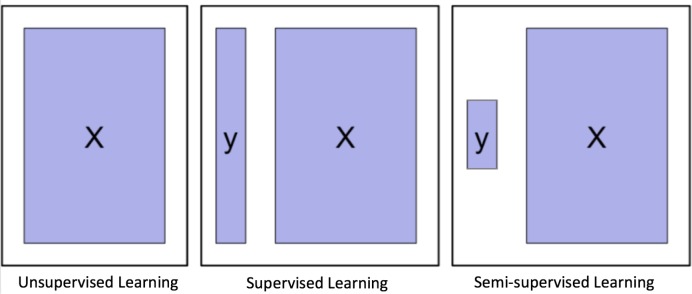
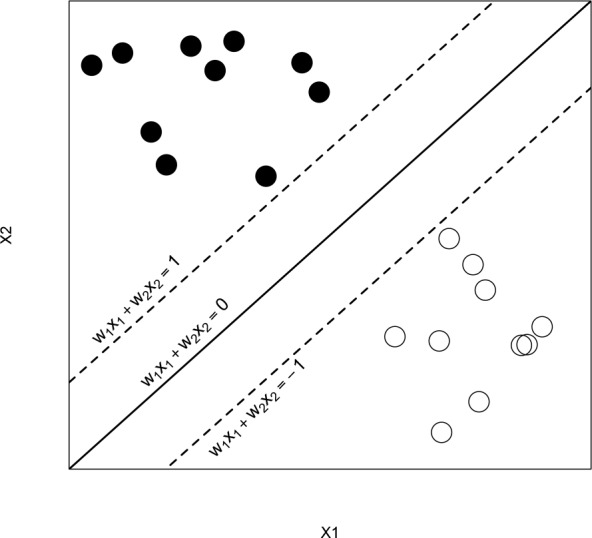
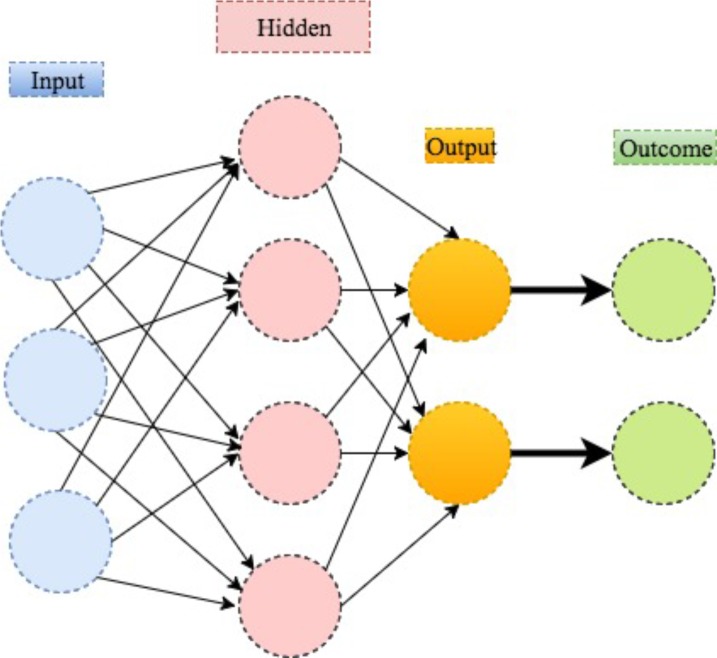
- AI techniques divide into machine learning for structured data (imaging, genetic, electrophysiological) and natural language processing for unstructured clinical text; supervised learning is most common in healthcare, with support vector machines and neural networks the most popular classical methods.
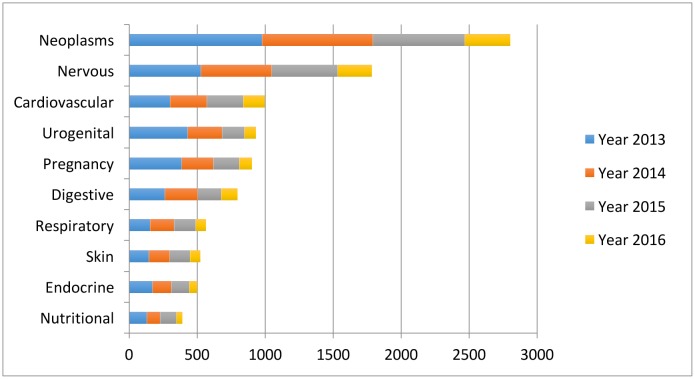
- Major disease areas using AI are cancer, nervous system disease, and cardiovascular disease; stroke applications span early detection and diagnosis, treatment, and outcome prediction/prognosis evaluation.
- Reported performance examples include CNN accuracy over 90% for congenital cataract diagnosis and treatment suggestion; sensitivity and specificity both over 90% for skin cancer and referable diabetic retinopathy; 90.5% correct gait classification; 87.6% SVM stroke classification; 97.5% accuracy for brain arteriovenous malformation outcome prediction versus 43% for standard regression; 95% training and 86% validation accuracy for NLP cerebral aneurysm classification; and 99% of IBM Watson treatment recommendations coherent with physician decisions.
- IBM Watson is described as a pioneer system with both ML and NLP modules; Arterys Cardio DL received FDA clearance as a deep learning clinical platform.
Methods
- Narrative review/survey of AI in healthcare, not a systematic review or meta-analysis.
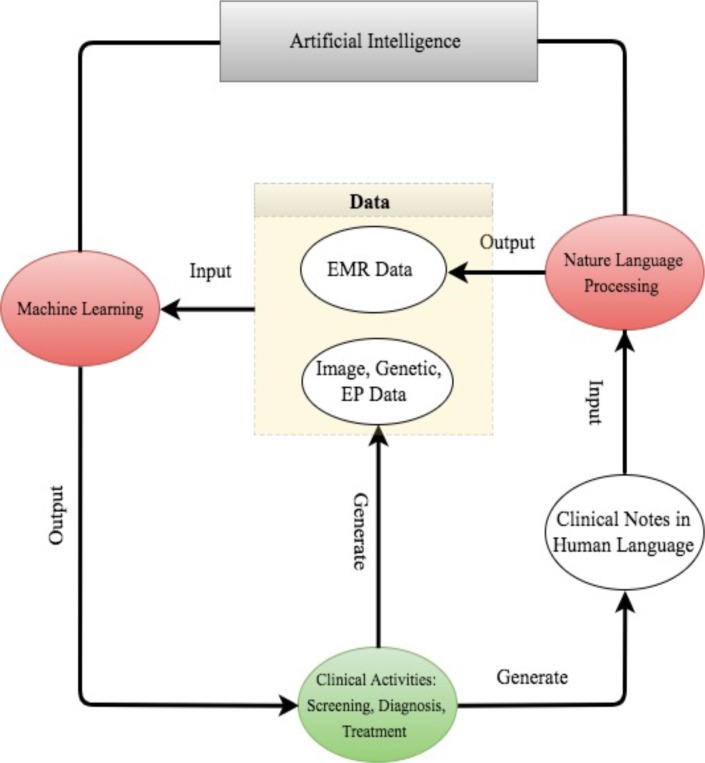
- Reviews four aspects: motivations for AI in healthcare, healthcare data types, AI devices (classical ML, deep learning, NLP), and disease types, then details AI applications in stroke.
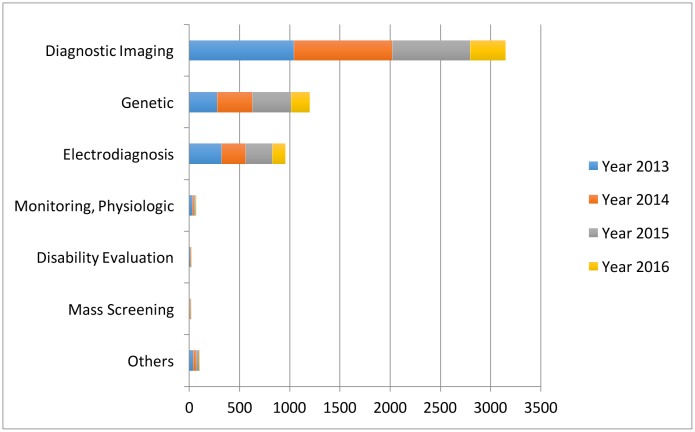
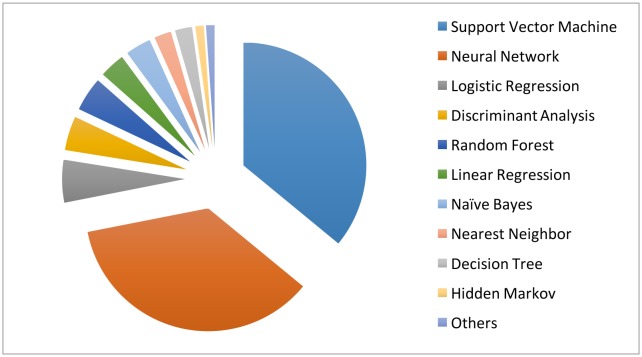
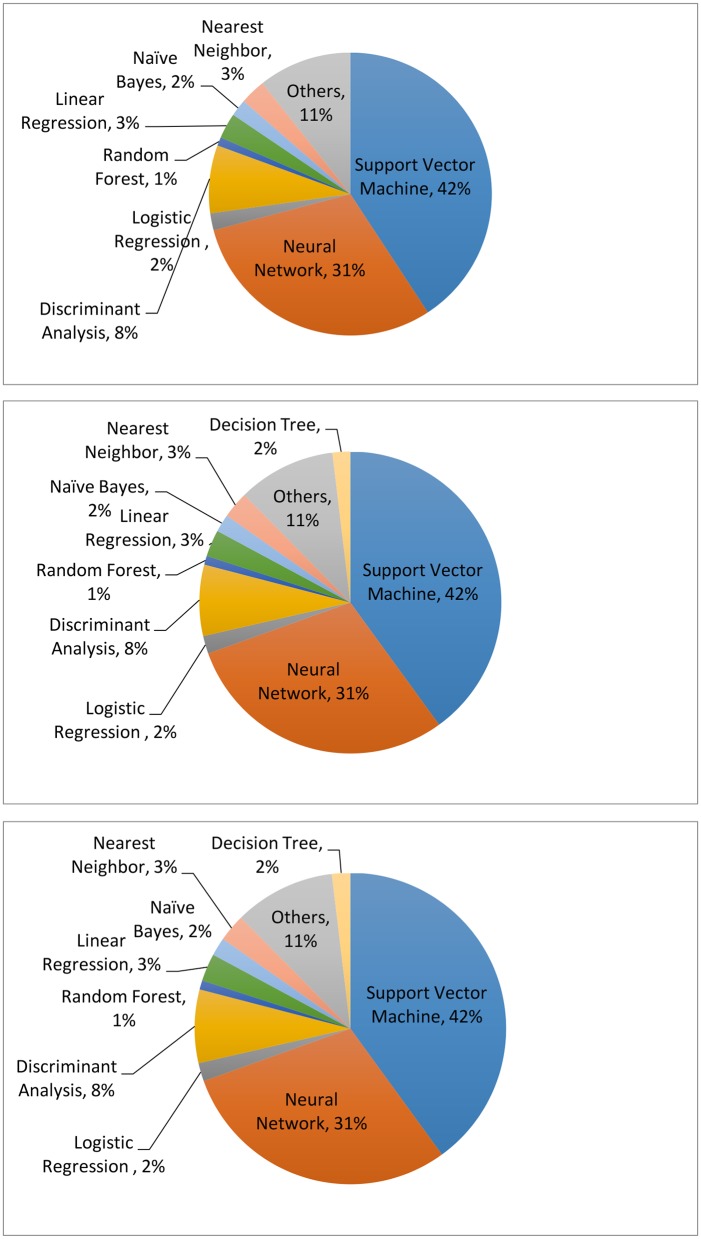
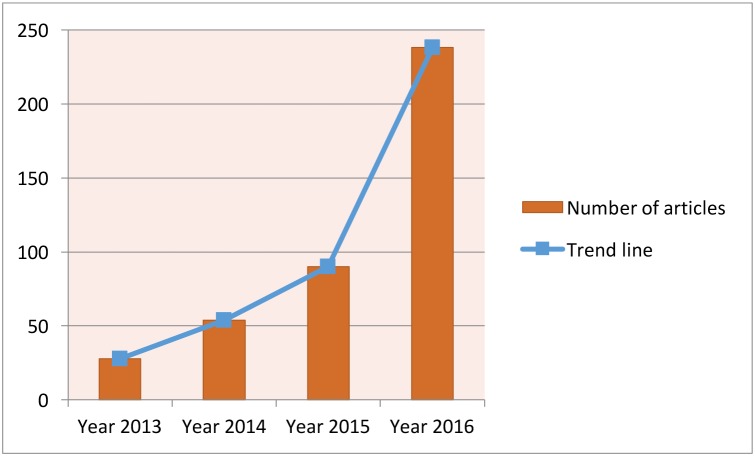
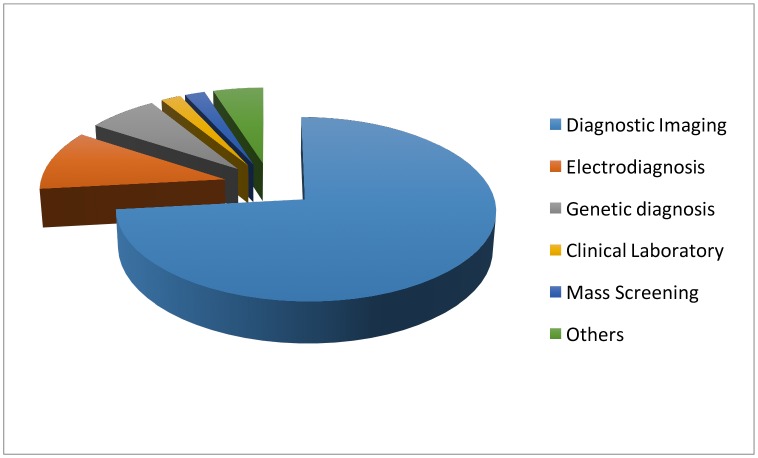
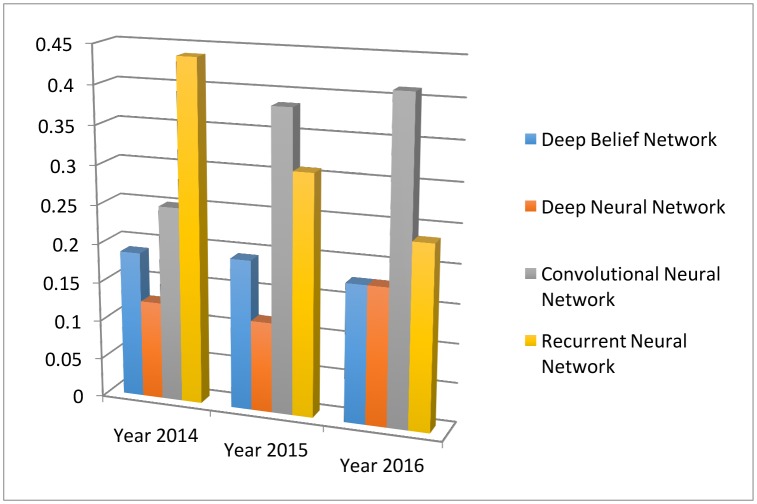
- Figures summarize PubMed searches on diagnosis techniques, disease types, ML algorithms, and deep learning trends; no formal search strategy or quality appraisal is reported.
Limitations
- The paper states real-life implementation hurdles: current regulations lack standards to assess AI system safety and efficacy, and the current healthcare environment lacks incentives for continuous data sharing.
- Evident from the text: as a narrative survey, it does not report systematic search terms, inclusion criteria, study counts, or risk-of-bias assessment; performance figures are cited from individual studies without meta-analysis.
- The paper includes a correction notice that a scripting error affected some publisher names in references and that figures 6–9 were corrected; competing interests are none declared, and no additional data are available.
Model-written summary. Check it against the paper before relying on it.
Integrity signals
Registry
Cites
Statistics
Figures
Verification
Claims the paper makes
22 Valid · 5 Not valid · 62 Not checked · 22 Own results and interpretations
At least one cited source doesn’t support this claim or points to a different paper, and none confirmed it — see the verdicts below.
In the paper
“Miller et al used NLP to automatically monitor the laboratory-based adverse effects.44”
§ Artificial intelligence in healthcare: past, present and future > natural language processing
What the sources say
- Disputedcites [44] Miller TP, Li Y, Getz KD, et al. Using electronic medical record data to report laboratory adverse events. Br J Haematol 2017;177:283-6. sourceExperimental — accuracy not yet measured
The Discussion says the study automated laboratory adverse-event ascertainment, but explicitly states that it did not include free-text laboratory results requiring NLP. It describes NLP as a possible future approach, not a method Miller et al. used. (LLM, conf=0.93)
Checked by a reasoning model — may be wrong.
plainstates a cause- Asserted: passes — The authors put it forward as true.
- Checkable: passes — It can be checked against evidence.
- Load-bearing: unclear — It is unclear whether the paper’s conclusions depend on it.
- Based: passes — The paper gives a reason why it holds.
- Disputed
Every source the paper cites for this claim was checked and supports it.
In the paper
“Esteva et al analysed clinical images to identify skin cancer subtypes.20”
§ Artificial intelligence in healthcare: past, present and future > disease focus
What the sources say
- Supportedcites [20] Esteva A, Kuprel B, Novoa RA, et al. Dermatologist-level classification of skin Cancer with deep neural networks. Nature 2017;542:115-8. source
The Abstract (p. 1) states the authors trained and tested a single CNN on a dataset of 129,450 clinical images against 21 board-certified dermatologists on the binary tasks 'keratinocyte carcinomas versus benign seborrheic keratoses' and 'malignant melanomas versus benign nevi', and (Abstract, p. 8) across three tasks including keratinocyte carcinoma and melanoma classification. Methods > Datasets (p. 1) enumerates the subtypes covered: malignant basal and squamous cell carcinomas, intraepithelial carcinomas, pre-malignant actinic keratosis, and melanomas versus benign nevi. Both elements of the paraphrase — analysis of clinical images and identification of skin cancer subtypes — are stated in our copy. (LLM, conf=0.92)
plain- Asserted: passes — The authors put it forward as true.
- Checkable: passes — It can be checked against evidence.
- Load-bearing: unclear — It is unclear whether the paper’s conclusions depend on it.
- Based: passes — The paper gives a reason why it holds.
- Supported
Every source the paper cites for this claim was checked and supports it.
In the paper
“Esteva et al performed the CNN to identify skin cancer from clinical images.20”
§ Artificial intelligence in healthcare: past, present and future > neural network
What the sources say
- Supportedcites [20] Esteva A, Kuprel B, Novoa RA, et al. Dermatologist-level classification of skin Cancer with deep neural networks. Nature 2017;542:115-8. source
The Abstract (p.1) states the paper demonstrates 'classification of skin lesions using a single CNN, trained end-to-end from images directly' using 'a dataset of 129,450 clinical images', tested on biopsy-proven clinical images for keratinocyte carcinomas and melanomas versus benign lesions — i.e. identifying skin cancer from clinical images. The Discussion (p.4) reiterates the development of a CNN matching dermatologists at melanoma and carcinoma classification. The paraphrase is fully consistent with the source. (LLM, conf=0.95)
plain- Asserted: passes — The authors put it forward as true.
- Checkable: passes — It can be checked against evidence.
- Load-bearing: unclear — It is unclear whether the paper’s conclusions depend on it.
- Based: passes — The paper gives a reason why it holds.
- Supported
The cited sources support only part of this claim — read each source’s verdict below.
In the paper
“Similarly, Maninini et al proposed a wearable device for collecting data about normal/pathological gaits for stroke prediction.49”
§ Artificial intelligence in healthcare: past, present and future > early detection and diagnosis
What the sources say
- Partly supportedcites [49] Mannini A, Trojaniello D, Cereatti A, et al. A machine Learning Framework for Gait classification using inertial sensors: application to Elderly, Post-Stroke and Huntington's Disease Patients. Sensors 2016;16:134. sourceExperimental — accuracy not yet measured
The Acquisition Protocol describes wearable inertial sensors used to collect gait data, and the Abstract reports classifying healthy elderly, post-stroke, and Huntington’s disease subjects. The paper used existing sensors rather than proposing a new wearable device, and it classified gait in people who had already had a stroke; it did not predict strokes. The indexed copy provides section labels but no page numbers. (LLM, conf=0.90)
plain- Asserted: passes — The authors put it forward as true.
- Checkable: passes — It can be checked against evidence.
- Load-bearing: unclear — It is unclear whether the paper’s conclusions depend on it.
- Based: passes — The paper gives a reason why it holds.
- Partly supported
Every source the paper cites for this claim was checked and supports it.
In the paper
“The result is comparable with human expert manual lesion delineation.”
§ Artificial intelligence in healthcare: past, present and future > early detection and diagnosis
What the sources say
- Supportedcites [51] Griffis JC, Allendorfer JB, Szaflarski JP. Voxel-based gaussian naïve Bayes classification of ischemic stroke lesions in individual T1- weighted MRI scans. J Neurosci Methods 2016;257:97-108. source
The Results section reports that post-processed out-of-sample predictions on 30 cases showed "high spatial overlap (mean Dice similarity coefficient = 0.66) and volume agreement (mean percent volume difference = 28.91; Pearson's r = 0.97) with manual lesion delineations", where the ground truth was hand-drawn delineation by an experienced neuroanatomist (Section 2.3). The Conclusions state "Our automated approach agrees with manual tracing", and Section 4.2 adds that the method's PVDs "compare favorably" to other automated methods and lie between those and what would be expected from inter-rater variability in manual delineation. Section 2.5 notes DSC 0.6-0.8 is regarded as "good", so characterizing the naïve Bayes result as comparable with expert manual delineation is faithful to the source. (LLM, conf=0.88)
plain- Asserted: passes — The authors put it forward as true.
- Checkable: passes — It can be checked against evidence.
- Load-bearing: unclear — It is unclear whether the paper’s conclusions depend on it.
- Based: passes — The paper gives a reason why it holds.
- Supported
63 more claims · 15 with their cited sources checked
Create a free account to see all 111 claims and to verify the 71 references still open.
- Probably not a substantial claim. 33
- It may state two separate claims as one. 12
Claims other papers make about this one
Each is checked against this paper’s own text: does it say what the citing paper says it does?
The source backs part of the claim, not all of it — or backs it for a different population, condition or comparison.
In the citing paper
“AI applications have proven effective in various clinical domains, such as reducing documentation burdens for clinicians, improving image interpretation in radiology, supporting intraoperative surgical guidance, and facilitating public health risk stratification2,3.”
From Developing a Canadian artificial intelligence medical curriculum using a Delphi study (2024) · cites this paper as [2]
Experimental — accuracy not yet measuredThe source backs part of the claim, not all of it — or backs it for a different population, condition or comparison.
In the citing paper
“The integration of artificial intelligence (AI) in healthcare is transformative, enhancing diagnostic accuracy, risk stratification, and treatment efficiency1,2.”
From Developing a Canadian artificial intelligence medical curriculum using a Delphi study (2024) · cites this paper as [2]
Experimental — accuracy not yet measuredThe source backs part of the claim, not all of it — or backs it for a different population, condition or comparison.
In the citing paper
“AI has evolved from an academic concept to a practical tool that is reshaping various sectors, including healthcare [17].”
From Opportunities, challenges, and requirements for Artificial Intelligence (AI) implementation in Primary Health Care (PHC): a systematic review (2025) · cites this paper as [17]
Experimental — accuracy not yet measuredThe check wasn’t confident either way, so it gives no verdict — never disputed.
In the citing paper
“For instance, only about one-fifth of the available trial results are used when diagnosing and treating cancer patients.18”
From Artificial intelligence: opportunities and implications for the health workforce (2020) · cites this paper as [18]
Experimental — accuracy not yet measuredIn the citing paper
“Furthermore, AI applications can aid in image-based diagnoses of conditions such as stroke and heart diseases.7”
From Artificial intelligence and endo-histo-omics: new dimensions of precision endoscopy and histology in inflammatory bowel disease (2024) · cites this paper as [7]
3 more claims about this paper
Create a free account to see every claim other papers make about this one.
Self-check
Percentages, sums and reported differences re-computed from the paper’s own numbers.
Each contradiction between two passages listed here was confirmed by an independent check.
Rated minor: it would not touch a result — a value no result rests on, a p-value that stays on the same side of the significance level, or a conflict that is clerical, resolved elsewhere in the paper, or outside its own findings.
In the paper
§ Artificial intelligence in healthcare: past, present and future > early detection and diagnosis
“Similarly, King et al used SVM to predict stroke mortality at discharge.62”
§ Artificial intelligence in healthcare: past, present and future > References
“62. Ho KC, Speier W, El-Saden S, et al. Predicting discharge mortality after acute ischemic stroke using balanced data. AMIA Annu Symp Proc 2014;2014:1787-96.”
Rated minor: it would not touch a result — a value no result rests on, a p-value that stays on the same side of the significance level, or a conflict that is clerical, resolved elsewhere in the paper, or outside its own findings.
In the paper
§ Artificial intelligence in healthcare: past, present and future > 2. Neurology: Bouton et al developed an AI system to
“The decision rule then follows that if a i >0, the ith patient is classified to group 1, that is, labelling Y i = -1; if a i <0, the patient is classified to group 2, that is, labelling Y i =1.”
§ Artificial intelligence in healthcare: past, present and future > 2. Neurology: Bouton et al developed an AI system to
“Intuitively, the best weights must allow (1) the sign of a i to be the same as Y i so the classification is correct;”
Rated minor: it would not touch a result — a value no result rests on, a p-value that stays on the same side of the significance level, or a conflict that is clerical, resolved elsewhere in the paper, or outside its own findings.
In the paper
§ Artificial intelligence in healthcare: past, present and future > motivation
“For example, Jha and Topol urged radiologists to adopt AI technologies when analysing diagnostic images that contain vast data information.13”
§ Artificial intelligence in healthcare: past, present and future > References
“13. Gillies RJ, Kinahan PE, Hricak H. Radiomics: images are more than pictures, they are data. Radiology 2016;278:563-77.”
Citations
Cites
LeCun, Y., Bengio, Y., & Hinton, G. (2015) · Nature · doi:10.1038/nature14539 · Cited by 84,126
Gradient-based learning applied to document recognition
Lecun, Y., Bottou, L., Bengio, Y., & Haffner, P. (1998) · Proceedings of the IEEE · doi:10.1109/5.726791 · Cited by 58,805 · cited 1×
“The CNN was first proposed and advocated for the high-dimensional image analysis by Lecun et al.(38) The”
MethodDermatologist-level classification of skin cancer with deep neural networks
Esteva, A., Kuprel, B., Novoa, R. A., Ko, J., Swetter, S. M., Blau, H. M., & Thrun, S. (2017) · Nature · doi:10.1038/nature21056 · Cited by 14,362
An Introduction to Statistical Learning
James, G., Witten, D., Hastie, T., & Tibshirani, R. (2013) · Springer Texts in Statistics · doi:10.1007/978-1-4614-7138-7 · Cited by 12,106
(2016) · Cited by 11,679
Pattern Recognition and Machine Learning
(2006) · doi:10.1007/978-0-387-45528-0 · Cited by 9,824
Foundations of statistical natural language processing
Manning, C. D., & Schütze, H. (1999) · Cited by 9,816
TensorFlow: Large-Scale Machine Learning on Heterogeneous Distributed Systems
Abadi, M., Agarwal, A., Barham, P., Brevdo, E., Chen, Z., Citro, C., Corrado, G. S., Davis, A., Dean, J., Devin, M., et al. (2016) · arXiv · doi:10.48550/arxiv.1603.04467 · Cited by 9,408 · cited 2×
“The implementation of CNN has been included in popular software packages such as Caffe from Berkeley AI Research, 39 CNTK from Microsoft 40 and TensorFlow from Google.”
MethodRadiomics: Images Are More than Pictures, They Are Data
Gillies, R. J., Kinahan, P. E., & Hricak, H. (2016) · Radiology · doi:10.1148/radiol.2015151169 · Cited by 8,421
(2006) · Springer eBooks · Cited by 8,123
Research works printed but not linked: 2
- Pearson T. How to replicate Watson hardware and systems design for your own use in your basement. 2011 https://www. ibm. com/ developerworks/ community/ blogs/ InsideSystemStorage/ entry/ ibm_ watson_ how_ to_ build_ your_ own_ watson_ jr_ in_ your_ basement7? lang= en (accessed 1 Jun 2017).
- Kayyali B, Knott D, Kuiken SV. The big-data revolution in US health care: accelerating value and innovation. 2013 http://www. mckinsey. com/ industries/ healthcare-systems-and-services/ our-insights/ the- big-data-revolution-in-us-health-care (accessed 1 Jun 2017). on July 18, 2023 by guest. Protected by copyright. http://svn.bmj.com/ Stroke Vasc Neurol: first published as 10.1136/svn-2017-000101 on 21 June 2017. Downloaded from
Cited by
Items 101–200 of 1,034
Human-Centered and Sustainable Artificial Intelligence in Industry 5.0: Challenges and Perspectives
Martini, B., Bellisario, D., & Coletti, P. (2024) · Sustainability · doi:10.3390/su16135448 · Cited by 250
Artificial intelligence and effective governance: A review, critique and research agenda
Sharma, G. D., Yadav, A., & Chopra, R. (2020) · Sustainable Futures · doi:10.1016/j.sftr.2019.100004 · Cited by 248
Explainable Artificial Intelligence for Predictive Modeling in Healthcare
Yang, C. C. (2022) · Journal of Healthcare Informatics Research · doi:10.1007/s41666-022-00114-1 · Cited by 246
Artificial intelligence aids in development of nanomedicines for cancer management
Tan, P., Chen, X., Zhang, H., Wei, Q., & Luo, K. (2023) · Seminars in Cancer Biology · doi:10.1016/j.semcancer.2023.01.005 · Cited by 246
Foundation Model for Advancing Healthcare: Challenges, Opportunities and Future Directions
He, Y., Huang, F., Jiang, X., Nie, Y., Wang, M., Wang, J., & Chen, H. (2024) · IEEE Reviews in Biomedical Engineering · doi:10.1109/rbme.2024.3496744 · Cited by 247
Artificial intelligence in reproductive medicine
Wang, R., Pan, W., Jin, L., Li, Y., Geng, Y., Gao, C., Chen, G., Wang, H., Ma, D., & Liao, S. (2019) · Reproduction · doi:10.1530/rep-18-0523 · Cited by 243
Nebeker, C., Torous, J., & Bartlett Ellis, R. J. (2019) · BMC Medicine · doi:10.1186/s12916-019-1377-7 · Cited by 241
“For example, electronic health records provide training data for machine learning that inform algorithms, which can detect anomalies more accurately than trained humans – particularly in the fields of cancer, cardiology, and retinopathy [8].”
BackgroundMirbabaie, M., Stieglitz, S., & Frick, N. R. J. (2021) · Health and Technology · doi:10.1007/s12553-021-00555-5 · Cited by 241
Operationalising AI governance through ethics-based auditing: an industry case study
Mökander, J., & Floridi, L. (2023) · AI and Ethics · doi:10.1007/s43681-022-00171-7 · Cited by 129
Leveraging Artificial Intelligence in Business: Implications, Applications and Methods
Sestino, A., & De Mauro, A. (2022) · Technology Analysis & Strategic Management · doi:10.1080/09537325.2021.1883583 · Cited by 235
“Within this topic, we have found that papers report opportunities of AI Industrial Applications in several sectors: medical sciences (Jiang et al. 2017; Szolovits 2019) and speci fi cally either in diseases cure such as in cardiology (Johnson et al. 2018) and radiology (Hosny et al. 2018), in…”
BackgroundSmart Tactile Gloves for Haptic Interaction, Communication, and Rehabilitation
Ozioko, O., & Dahiya, R. (2022) · Advanced Intelligent Systems · doi:10.1002/aisy.202100091 · Cited by 233
Future of Artificial Intelligence—Machine Learning Trends in Pathology and Medicine
Hanna, M. G., Pantanowitz, L., Dash, R., Harrison, J. H., Deebajah, M., Pantanowitz, J., & Rashidi, H. H. (2025) · Modern Pathology · doi:10.1016/j.modpat.2025.100705 · Cited by 231
Natural Language Processing for Smart Healthcare
Zhou, B., Yang, G., Shi, Z., & Ma, S. (2024) · IEEE Reviews in Biomedical Engineering · doi:10.1109/rbme.2022.3210270 · Cited by 230
Self-citationThe Convergence of Artificial Intelligence and Blockchain: The State of Play and the Road Ahead
Bhumichai, D., Smiliotopoulos, C., Benton, R., Kambourakis, G., & Damopoulos, D. (2024) · Information · doi:10.3390/info15050268 · Cited by 233
On the Privacy Risks of Model Explanations
Shokri, R., Strobel, M., & Zick, Y. (2021) · Proceedings of the 2021 AAAI/ACM Conference on AI, Ethics, and Society · doi:10.1145/3461702.3462533 · Cited by 111
Corny, J., Rajkumar, A., Martin, O., Dode, X., Lajonchère, J.-P., Billuart, O., Bézie, Y., & Buronfosse, A. (2020) · Journal of the American Medical Informatics Association · doi:10.1093/jamia/ocaa154 · Cited by 225
“The increasingly widespread availability of electronic health records and the development of big data analytics are currently paving the way for the use of artificial intelligence, which relies on sophisticated algorithms with the capacity to analyze vast quantities of data to make medication review more effective and…”
BackgroundArtificial intelligence in product lifecycle management
Wang, L., Liu, Z., Liu, A., & Tao, F. (2021) · The International Journal of Advanced Manufacturing Technology · doi:10.1007/s00170-021-06882-1 · Cited by 223
CURATE.AI: Optimizing Personalized Medicine with Artificial Intelligence
Blasiak, A., Khong, J., & Kee, T. (2020) · SLAS Technology · doi:10.1177/2472630319890316 · Cited by 222
“118,119 PPM seeks to expand the capabilities and utili zation of AI to the interventional domain, providing guidance for identifying the appropriate treatment for the individual.”
BackgroundPublic Perception of Artificial Intelligence in Medical Care: Content Analysis of Social Media
Gao, S., He, L., Chen, Y., Li, D., & Lai, K. (2020) · Journal of Medical Internet Research · doi:10.2196/16649 · Cited by 221
“The application of artificial intelligence (AI), a field of computer science that aims to mimic human cognitive functions with computer algorithms [2,3], in medical care can reduce the burden on doctors and nurses, improve patient care, and alleviate the human resource crisis in health care [4].”
BackgroundDiagnosing of disease using machine learning
Singh, P., Singh, N., Singh, K. K., & Singh, A. (2021) · Elsevier eBooks · doi:10.1016/b978-0-12-821229-5.00003-3 · Cited by 220
Comprehensive systematic review of information fusion methods in smart cities and urban environments
Fadhel, M. A., Duhaim, A. M., Saihood, A., Sewify, A., Al-Hamadani, M. N. A., Albahri, A. S., Alzubaidi, L., Gupta, A., Mirjalili, S., & Gu, Y. (2024) · Information Fusion · doi:10.1016/j.inffus.2024.102317 · Cited by 219
Impact of artificial intelligence investment on firm value
Lui, A. K. H., Lee, M. C. M., & Ngai, E. W. T. (2021) · Annals of Operations Research · doi:10.1007/s10479-020-03862-8 · Cited by 219
Artificial intelligence revolutionizing drug development: Exploring opportunities and challenges
Tiwari, P. C., Pal, R., Chaudhary, M. J., & Nath, R. (2023) · Drug Development Research · doi:10.1002/ddr.22115 · Cited by 221
A Review on Innovation in Healthcare Sector (Telehealth) through Artificial Intelligence
Amjad, A., Kordel, P., & Fernandes, G. (2023) · Sustainability · doi:10.3390/su15086655 · Cited by 218
Artificial Intelligence in Healthcare: Review, Ethics, Trust Challenges & Future Research Directions
Kumar, P., Chauhan, S., & Awasthi, L. K. (2023) · Engineering Applications of Artificial Intelligence · doi:10.1016/j.engappai.2023.105894 · Cited by 218
Recent advances in electrochemical biosensors – A brief review
Sumitha, M. S., & Xavier, T. S. (2023) · Hybrid Advances · doi:10.1016/j.hybadv.2023.100023 · Cited by 218
Gama, F., Tyskbo, D., Nygren, J., Barlow, J., Reed, J., & Svedberg, P. (2022) · Journal of Medical Internet Research · doi:10.2196/32215 · Cited by 216
“However, to date, most of the research literature on AI in health care deals with the development, application, and evaluation of advanced analytic techniques and models [10-12], primarily within computer science, engineering, and medical informatics.”
BackgroundSquires, M., Tao, X., Elangovan, S., Gururajan, R., Zhou, X., Acharya, U. R., & Li, Y. (2023) · Brain Informatics · doi:10.1186/s40708-023-00188-6 · Cited by 224
Mienye, I. D., Obaido, G., Jere, N., Mienye, E., Aruleba, K., Emmanuel, I. D., & Ogbuokiri, B. (2024) · Informatics in Medicine Unlocked · doi:10.1016/j.imu.2024.101587 · Cited by 212
Applications of Artificial Intelligence in Nursing Care: A Systematic Review
Martinez-Ortigosa, A., Martinez-Granados, A., Gil-Hernández, E., Rodriguez-Arrastia, M., Ropero-Padilla, C., & Roman, P. (2023) · Journal of Nursing Management · doi:10.1155/2023/3219127 · Cited by 131
Graham, S. A., Lee, E. E., Jeste, D. V., Van Patten, R., Twamley, E. W., Nebeker, C., Yamada, Y., Kim, H.-C., & Depp, C. A. (2020) · Psychiatry Research · doi:10.1016/j.psychres.2019.112732 · Cited by 211
Data Privacy in Healthcare: In the Era of Artificial Intelligence
Yadav, N., Pandey, S., Gupta, A., Dudani, P., Gupta, S., & Rangarajan, K. (2023) · Indian Dermatology Online Journal · doi:10.4103/idoj.idoj_543_23 · Cited by 210
dos Reis, F. J. J., Alaiti, R. K., Vallio, C. S., & Hespanhol, L. (2024) · Brazilian Journal of Physical Therapy · doi:10.1016/j.bjpt.2024.101083 · Cited by 213
Wang, D., Wang, L., Zhang, Z., Wang, D., Zhu, H., Gao, Y., Fan, X., & Tian, F. (2021) · Proceedings of the 2021 CHI Conference on Human Factors in Computing Systems · doi:10.1145/3411764.3445432 · Cited by 209
“, [10, 10, 11, 14, 38, 71, 76, 91, 95, 96]), very little is published on the usage of AI-CDSS in practice [9, 32].”
BackgroundBenefits and Risks of AI in Health Care: Narrative Review
Chustecki, M. (2024) · Interactive Journal of Medical Research · doi:10.2196/53616 · Cited by 208
“The lack of industry rules on the ethical usage of AI in health care further complicates the accountability issue [60].”
Artificial Intelligence in Biological Sciences
Bhardwaj, A., Kishore, S., & Pandey, D. K. (2022) · Life · doi:10.3390/life12091430 · Cited by 210
The impact of machine learning on patient care: A systematic review
Ben-Israel, D., Jacobs, W. B., Casha, S., Lang, S., Ryu, W. H. A., de Lotbiniere-Bassett, M., & Cadotte, D. W. (2020) · Artificial Intelligence in Medicine · doi:10.1016/j.artmed.2019.101785 · Cited by 207
A survey on multi-objective hyperparameter optimization algorithms for machine learning
Morales-Hernández, A., Van Nieuwenhuyse, I., & Rojas Gonzalez, S. (2023) · Artificial Intelligence Review · doi:10.1007/s10462-022-10359-2 · Cited by 204
“, 2005), and supporting healthcare-related tasks (Jiang et al., 2017).”
BackgroundMehta, N., Pandit, A., & Shukla, S. (2019) · Journal of Biomedical Informatics · doi:10.1016/j.jbi.2019.103311 · Cited by 204
Artificial intelligence: opportunities and implications for the health workforce
Hazarika, I. (2020) · International Health · doi:10.1093/inthealth/ihaa007 · Cited by 203
A Review on Explainable Artificial Intelligence for Healthcare: Why, How, and When?
Bharati, S., Mondal, M. R. H., & Podder, P. (2024) · IEEE Transactions on Artificial Intelligence · doi:10.1109/tai.2023.3266418 · Cited by 203
“techniques for healthcare are discussed in the literature [29], [30], [31], while medical image analysis is described in [32-34].”
MethodCurrent applications and development of artificial intelligence for digital dental radiography
Putra, R. H., Doi, C., Yoda, N., Astuti, E. R., & Sasaki, K. (2022) · Dentomaxillofacial Radiology · doi:10.1259/dmfr.20210197 · Cited by 203
The Role of AI in Nursing Education and Practice: Umbrella Review
El Arab, R. A., Al Moosa, O. A., Abuadas, F. H., & Somerville, J. (2025) · Journal of Medical Internet Research · doi:10.2196/69881 · Cited by 202
“In health care, AI has been leveraged for tasks such as disease diagnosis, treatment planning, patient monitoring, and administrative operations [16,17].”
Application of Artificial Intelligence in Healthcare: Chances and Challenges
Manne, R., & Kantheti, S. C. (2021) · Current Journal of Applied Science and Technology · doi:10.9734/cjast/2021/v40i631320 · Cited by 202
“And based on these answers the algorithm compares its actual output to the correct outputs, and if its wrong it will learn by it and improves its efficiency [8].”
InfluentialRise of the Machines: Advances in Deep Learning for Cancer Diagnosis
Levine, A. B., Schlosser, C., Grewal, J., Coope, R., Jones, S. J. M., & Yip, S. (2019) · Trends in Cancer · doi:10.1016/j.trecan.2019.02.002 · Cited by 201
Barrett, M., Boyne, J., Brandts, J., Brunner-La Rocca, H.-P., De Maesschalck, L., De Wit, K., Dixon, L., Eurlings, C., Fitzsimons, D., Golubnitschaja, O., et al. (2019) · EPMA Journal · doi:10.1007/s13167-019-00188-9 · Cited by 200
Babel, A., Taneja, R., Mondello Malvestiti, F., Monaco, A., & Donde, S. (2021) · Frontiers in Digital Health · doi:10.3389/fdgth.2021.669869 · Cited by 199
Machine Learning Algorithm Validation
Maleki, F., Muthukrishnan, N., Ovens, K., Reinhold, C., & Forghani, R. (2020) · Neuroimaging Clinics of North America · doi:10.1016/j.nic.2020.08.004 · Cited by 140
Apell, P., & Eriksson, H. (2023) · Technology Analysis & Strategic Management · doi:10.1080/09537325.2021.1971188 · Cited by 152
Artificial Intelligence Applications in Health Care Practice: Scoping Review
Sharma, M., Savage, C., Nair, M., Larsson, I., Svedberg, P., & Nygren, J. M. (2022) · Journal of Medical Internet Research · doi:10.2196/40238 · Cited by 198
“Others see a role complementary to humans; for example, decision support or decision augmentation where humans (in the roles of clinicians or programmers) provide oversight and collaborate [4-7].”
The current state of artificial intelligence in ophthalmology
Kapoor, R., Walters, S. P., & Al-Aswad, L. A. (2019) · Survey of Ophthalmology · doi:10.1016/j.survophthal.2018.09.002 · Cited by 198
Gupta, N. S., & Kumar, P. (2023) · Computers in Biology and Medicine · doi:10.1016/j.compbiomed.2023.107051 · Cited by 203
Leckey, C., van Dyk, N., Doherty, C., Lawlor, A., & Delahunt, E. (2024) · British Journal of Sports Medicine · doi:10.1136/bjsports-2024-108576 · Cited by 210
Zahlan, A., Ranjan, R. P., & Hayes, D. (2023) · Technology in Society · doi:10.1016/j.techsoc.2023.102321 · Cited by 152
Artificial intelligence in cancer diagnosis and therapy: Current status and future perspective
Sufyan, M., Shokat, Z., & Ashfaq, U. A. (2023) · Computers in Biology and Medicine · doi:10.1016/j.compbiomed.2023.107356 · Cited by 199
History and application of artificial neural networks in dentistry
Park, W. J., & Park, J.-B. (2018) · European Journal of Dentistry · doi:10.4103/ejd.ejd_325_18 · Cited by 196
“So far, the most active areas of medical AI are diagnostics and prediction of prognoses.[40] Medical sector AI is contributing significantly to help make decisions related to medical practice while presenting a considerable level of potential for sound diagnosis and prediction.”
BackgroundApplication of Artificial Intelligence for the Diagnosis and Treatment of Liver Diseases
Ahn, J. C., Connell, A., Simonetto, D. A., Hughes, C., & Shah, V. H. (2021) · Hepatology · doi:10.1002/hep.31603 · Cited by 196
Machine learning-based models for the prediction of breast cancer recurrence risk
Zuo, D., Yang, L., Jin, Y. Q., Qi, H., Liu, Y., & Li, R. (2023) · BMC Medical Informatics and Decision Making · doi:10.1186/s12911-023-02377-z · Cited by 195
Artificial intelligence for assisting diagnostics and assessment of Parkinson’s disease—A review
Belić, M., Bobić, V., Badža, M., Šolaja, N., Đurić-Jovičić, M., & Kostić, V. S. (2019) · Clinical Neurology and Neurosurgery · doi:10.1016/j.clineuro.2019.105442 · Cited by 194
At the Dawn of Generative AI Era: A Tutorial-cum-Survey on New Frontiers in 6G Wireless Intelligence
Celik, A., & Eltawil, A. M. (2024) · IEEE Open Journal of the Communications Society · doi:10.1109/ojcoms.2024.3362271 · Cited by 196
Machine Learning Techniques in Adaptive and Personalized Systems for Health and Wellness
Oyebode, O., Fowles, J. R., Steeves, D., & Orji, R. (2022) · International Journal of Human-Computer Interaction · doi:10.1080/10447318.2022.2089085 · Cited by 192
Guenduez, A. A., & Mettler, T. (2023) · Government Information Quarterly · doi:10.1016/j.giq.2022.101719 · Cited by 124
Olsen, C. R., Mentz, R. J., Anstrom, K. J., Page, D. I., & Patel, P. A. (2020) · American Heart Journal · doi:10.1016/j.ahj.2020.07.009 · Cited by 191
Automated clinical coding: what, why, and where we are?
Dong, H., Falis, M., Whiteley, W., Alex, B., Matterson, J., Ji, S., Chen, J., & Wu, H. (2022) · npj Digital Medicine · doi:10.1038/s41746-022-00705-7 · Cited by 129
Sahu, M., Gupta, R., Ambasta, R. K., & Kumar, P. (2022) · Progress in Molecular Biology and Translational Science · doi:10.1016/bs.pmbts.2022.03.002 · Cited by 188
Healthcare Digitalization and Pay-For-Performance Incentives in Smart Hospital Project Financing
Visconti, R. M., & Morea, D. (2020) · International Journal of Environmental Research and Public Health · doi:10.3390/ijerph17072318 · Cited by 190
Witkowski, K., Dougherty, R. B., & Neely, S. R. (2024) · BMC Medical Ethics · doi:10.1186/s12910-024-01066-4 · Cited by 141
Lin, M., Guo, J., Gu, Z., Tang, W., Tao, H., You, S., Jia, D., Sun, Y., & Jia, P. (2025) · Journal of Translational Medicine · doi:10.1186/s12967-025-06425-2 · Cited by 191
The Rise of Artificial Intelligence under the Lens of Sustainability
Khakurel, J., Penzenstadler, B., Porras, J., Knutas, A., & Zhang, W. (2018) · Technologies · doi:10.3390/technologies6040100 · Cited by 187
“AI can be described as a cluster of technologies [15] and approaches, that is, statistical and symbolic [16] that aim at mimicking human cognitive functions [17] or exhibiting aspects of human intelligence by performing various tasks, mostly preceding analytical, analytical mostly preceding intuitive and intuitive mos…”
BackgroundGiray, G. (2021) · Journal of Systems and Software · doi:10.1016/j.jss.2021.111031 · Cited by 187
Healthcare 4.0: A review of frontiers in digital health
Jayaraman, P. P., Forkan, A. R. M., Morshed, A., Haghighi, P. D., & Kang, Y. (2020) · WIREs Data Mining and Knowledge Discovery · doi:10.1002/widm.1350 · Cited by 187
“More descriptions of the use of these models in the medical areas can be found in F. Jiang et al. (2017).”
BackgroundMethodInfluentialRadiomics and Machine Learning in Oral Healthcare
Leite, A. F., Vasconcelos, K. D. F., Willems, H., & Jacobs, R. (2020) · PROTEOMICS - CLINICAL APPLICATIONS · doi:10.1002/prca.201900040 · Cited by 192
Kalogiannidis, S., Kalfas, D., Papaevangelou, O., Giannarakis, G., & Chatzitheodoridis, F. (2024) · Risks · doi:10.3390/risks12020019 · Cited by 192
Artificial Intelligence Applications in K-12 Education: A Systematic Literature Review
Zafari, M., Bazargani, J. S., Sadeghi-Niaraki, A., & Choi, S.-M. (2022) · IEEE Access · doi:10.1109/access.2022.3179356 · Cited by 185
Bayesian networks in healthcare: Distribution by medical condition
McLachlan, S., Dube, K., Hitman, G. A., Fenton, N. E., & Kyrimi, E. (2020) · Artificial Intelligence in Medicine · doi:10.1016/j.artmed.2020.101912 · Cited by 182
Artificial intelligence in diabetic retinopathy: A natural step to the future
Kumar, A., Padhy, S., Takkar, B., & Chawla, R. (2019) · Indian Journal of Ophthalmology · doi:10.4103/ijo.ijo_1989_18 · Cited by 140
Hung, K. F., Yeung, A. W. K., Tanaka, R., & Bornstein, M. M. (2020) · International Journal of Environmental Research and Public Health · doi:10.3390/ijerph17124424 · Cited by 183
Li, P., Bastone, A., Mohamad, T. A., & Schiavone, F. (2023) · Journal of Innovation & Knowledge · doi:10.1016/j.jik.2023.100340 · Cited by 183
The Road to corporate sustainability: The importance of artificial intelligence
Chen, P., Chu, Z., & Zhao, M. (2023) · Technology in Society · doi:10.1016/j.techsoc.2023.102440 · Cited by 181
Wearable sensors and machine learning in post-stroke rehabilitation assessment: A systematic review
Boukhennoufa, I., Zhai, X., Utti, V., Jackson, J., & McDonald-Maier, K. D. (2022) · Biomedical Signal Processing and Control · doi:10.1016/j.bspc.2021.103197 · Cited by 180
Artificial intelligence in healthcare delivery: Prospects and pitfalls
Olawade, D. B., David-Olawade, A. C., Wada, O. Z., Asaolu, A. J., Adereni, T., & Ling, J. (2024) · Journal of Medicine, Surgery, and Public Health · doi:10.1016/j.glmedi.2024.100108 · Cited by 180
Duong, L. T., Le, N. H., Tran, T. B., Ngo, V. M., & Nguyen, P. T. (2021) · Expert Systems with Applications · doi:10.1016/j.eswa.2021.115519 · Cited by 179
Contemporary Role and Applications of Artificial Intelligence in Dentistry
Bonny, T., Nassan, W. A., Obaideen, K., Mallahi, M. N. A., Mohammad, Y., & El-Damanhoury, H. M. (2023) · F1000Research · doi:10.12688/f1000research.140204.1 · Cited by 180
Ellahham, S., Ellahham, N., & Simsekler, M. C. E. (2020) · American Journal of Medical Quality · doi:10.1177/1062860619878515 · Cited by 177
“The FDA supports the use of real-world evidence and adaptive design in clinical trials to assess the performance and operation of AI in health care.(50) Regulatory reforms are needed to enable more efficient and safe exchange and sharing of data.”
Healthcare system: Moving forward with artificial intelligence
Dicuonzo, G., Donofrio, F., Fusco, A., & Shini, M. (2023) · Technovation · doi:10.1016/j.technovation.2022.102510 · Cited by 177
Current state and future prospects of artificial intelligence in ophthalmology: a review
Hogarty, D. T., Mackey, D. A., & Hewitt, A. W. (2019) · Clinical & Experimental Ophthalmology · doi:10.1111/ceo.13381 · Cited by 176
WHF IASC Roadmap on Chagas Disease
Echeverría, L. E., Marcus, R. R., Novick, G. E., Sosa‐Estáni, S., Ralston, K., Zaidel, E. J., Forsyth, C., Ribeiro, A. L. P., Mendoza, I. J., Falconi, M. L., et al. (2020) · Global Heart · doi:10.5334/gh.484 · Cited by 176
Faa$T: A Transparent Auto-Scaling Cache for Serverless Applications
Romero, F., Chaudhry, G. I., Goiri, Í., Gopa, P., Batum, P., Yadwadkar, N. J., Fonseca, R., Kozyrakis, C., & Bianchini, R. (2021) · ACM Symposium on Cloud Computing (SoCC) · doi:10.1145/3472883.3486974 · Cited by 179
Aravazhi, P. S., Gunasekaran, P., Benjamin, N. Z. Y., Thai, A., Chandrasekar, K. K., Kolanu, N. D., Prajjwal, P., Tekuru, Y., Villacreses-Brito, L. C., & Inban, P. (2025) · Disease-a-Month · doi:10.1016/j.disamonth.2025.101882 · Cited by 182
Machine Learning for Perovskite Solar Cells and Component Materials: Key Technologies and Prospects
Liu, Y., Tan, X., Liang, J., Han, H., Xiang, P., & Yan, W. (2023) · Advanced Functional Materials · doi:10.1002/adfm.202214271 · Cited by 174
Dzobo, K., Adotey, S. K., Thomford, N. E., & Dzobo, W. (2020) · OMICS A Journal of Integrative Biology · doi:10.1089/omi.2019.0038 · Cited by 176
Machine learning and orthodontics, current trends and the future opportunities: A scoping review
Mohammad‐Rahimi, H., Nadimi, M., Rohban, M. H., Shamsoddin, E., Lee, V. Y., & Motamedian, S. R. (2021) · American Journal of Orthodontics and Dentofacial Orthopedics · doi:10.1016/j.ajodo.2021.02.013 · Cited by 175
Kasyapa, M. S. B., & Vanmathi, C. (2024) · Frontiers in Digital Health · doi:10.3389/fdgth.2024.1359858 · Cited by 129
The Evolving Use of Electronic Health Records (EHR) for Research
Kim, E., Rubinstein, S. M., Nead, K. T., Wojcieszynski, A. P., Gabriel, P. E., & Warner, J. L. (2019) · Seminars in Radiation Oncology · doi:10.1016/j.semradonc.2019.05.010 · Cited by 172
Ames, C. P., Smith, J. S., Pellisé, F., Kelly, M. P., Alanay, A., Acaroglu, E. R., Pérez-Grueso, F. J. S., Kleinstück, F. S., Obeid, I., Vila-Casademunt, A., et al. (2019) · Spine · doi:10.1097/brs.0000000000002974 · Cited by 172
The potential for AI to revolutionize conservation: a horizon scan
Reynolds, S. A., Beery, S., Burgess, N. D., Burgman, M. A., Butchart, S. H. M., Cooke, S. J., Coomes, D. A., Danielsen, F., Minin, E. D., Durán, A. P., et al. (2024) · Trends in Ecology & Evolution · doi:10.1016/j.tree.2024.11.013 · Cited by 176
AI-driven healthcare: A review on ensuring fairness and mitigating bias
Chinta, S. V., Wang, Z., Palikhe, A., Zhang, X., Kashif, A., Smith, M. A., Liu, J., & Zhang, W. (2025) · PLOS Digital Health · doi:10.1371/journal.pdig.0000864 · Cited by 171
Application of machine learning in ophthalmic imaging modalities
Tong, Y., Lü, W., Yu, Y., & Shen, Y. (2020) · Eye and Vision · doi:10.1186/s40662-020-00183-6 · Cited by 173
Wang, L., Zhang, Z., Wang, D., Cao, W., Zhou, X., Zhang, P., Liu, J., Fan, X., & Tian, F. (2023) · Frontiers in Computer Science · doi:10.3389/fcomp.2023.1187299 · Cited by 104
Salimimoghadam, S., Ghanbaripour, A. N., Tumpa, R. J., Rahimi, A. K., Golmoradi, M., Rashidian, S., & Skitmore, M. (2025) · Buildings · doi:10.3390/buildings15071130 · Cited by 170
Metadata
- Authors
- Jiang, F., Jiang, Y., Zhi, H., Dong, Y., Li, H., Ma, S., Wang, Y., Dong, Q., Shen, H., & Wang, Y.
- Affiliations
- University of Hong Kong (HK)
- Capital Medical University (CN)
- Fudan University (CN)
- China National Clinical Research Center for Neurological Diseases, Beijing, China
- DotHealth, Shanghai, China
- Beijing Tian Tan Hospital (CN)
- Corresponding author
- Wang, Yongjun
- Venue
- Stroke and Vascular Neurology
- Publisher
- BMJ
- Published
- 2017-06-21
- Volume
- 2
- Issue
- 4
- Pages
- 230-243
- ISSN
- 2059-8688 (ISSN-L)
- 2059-8696
- PMC
- PMC5829945
- OpenAlex
- W2664267452
- Semantic Scholar
- 10f919b1a5161b560504c225cfb2d1b3a4768f80
- Cited by
- 4,837
- References
- 63
- Citations by year
- 2026: 655 · 2025: 1052 · 2024: 817 · 2023: 620 · 2022: 523 · 2021: 508 · 2020: 385 · 2019: 212 · 2018: 59 · 2017: 4
- FWCI
- 5.26
- Type
- journal article
- Language
- en
- Open access
- gold
- doi.org
- Licence
- cc-by-nc
- Locations
- Stroke and Vascular Neurology (publishedVersion, cc-by-nc)
- Europe PMC (PubMed Central) (publishedVersion, cc-by-nc)
- PubMed Central (publishedVersion, cc-by-nc)
- PubMed (publishedVersion)
- eScholarship (California Digital Library) (submittedVersion, cc-by-nc)
- Topics
- Health Sciences › Medicine › Health Informatics › Artificial Intelligence in Healthcare and Education
- Health Sciences › Health Professions › Health Information Management › Artificial Intelligence in Healthcare
- Physical Sciences › Computer Science › Artificial Intelligence › Machine Learning in Healthcare
- Keywords
- artificial intelligence in healthcare, deep learning, natural language processing, machine learning, stroke, early detection and diagnosis, treatment, outcome prediction, prognosis, IBM Watson, deployment barriers, health data
- MeSH terms
- Artificial Intelligence, Delivery of Health Care, Diagnosis, Computer-Assisted, Diffusion of Innovation, Forecasting, Humans, Predictive Value of Tests, Prognosis, Therapy, Computer-Assisted, Stroke, Early Diagnosis, History, 20th Century, History, 21st Century, Data Mining
About these checks
Registry, retraction, Cites and statistics results are computed, not judged, with one exception: a printed reference that no index lists is read once by a model before it counts as a citation error. Claims are extracted by a model and kept only when their quote appears verbatim in the text; each cited source is then checked, with a model’s help, for whether it says what the claim relies on. Those verdicts can be wrong — read the claim’s quote and the cited source before relying on one.
The claim verdicts this report counts are experimental: their accuracy is not yet measured.
A language model drew the claims from the paper on 2026-10-04, under version 3 of the claim definition (model deepseek-v4.1-flash, prompt extract-v3).
A second model labelled each claim on 2026-10-04 (model jev-1.13-20260917, definition revision gold-guideline-v0.2).
Cited sources are checked with a language model’s help (gpt-6-sol and qwen3.8-omni-flash).
Statistics and arithmetic are recomputed, not judged.
Confidence bands are shown only for fields calibrated on our annotated test set. None is calibrated yet, so no band is shown.
What counts as a claim ›How we measure confidence ›How we check this ›
Are you an author, or do you see a problem with this page? Request a review
Data sources
Bibliographic data: Semantic Scholar, OpenAlex, Crossref.
Contains information from the Semantic Scholar Academic Graph Datasets, made available under the ODC Attribution License (ODC-BY 1.0).
Semantic Scholar’s data is described in: Kinney, R., et al. (2023). The Semantic Scholar Open Data Platform. arXiv:2301.10140.
