

Artificial intelligence in healthcare: past, present and future
Open accessThe DOI matches its Crossref record; 63 of the 63 references it cites were found in a registry or an index; 25 of the 96 sources its claims cite were checked for support.
Abstract
Artificial intelligence (AI) aims to mimic human cognitive functions. It is bringing a paradigm shift to healthcare, powered by increasing availability of healthcare data and rapid progress of analytics techniques. We survey the current status of AI applications in healthcare and discuss its future. AI can be applied to various types of healthcare data (structured and unstructured). Popular AI techniques include machine learning methods for structured data, such as the classical support vector machine and neural network, and the modern deep learning, as well as natural language processing for unstructured data. Major disease areas that use AI tools include cancer, neurology and cardiology. We then review in more details the AI applications in stroke, in the three major areas of early detection and diagnosis, treatment, as well as outcome prediction and prognosis evaluation. We conclude with discussion about pioneer AI systems, such as IBM Watson, and hurdles for real-life deployment of AI.
Overview
CoChat Summary
TL;DR
This review surveys artificial intelligence in healthcare, covering motivations, data types, machine learning and natural language processing techniques, major disease areas, and stroke applications. It argues AI will assist rather than replace physicians in the foreseeable future, while real-world deployment faces regulatory and data-sharing hurdles.
Key findings
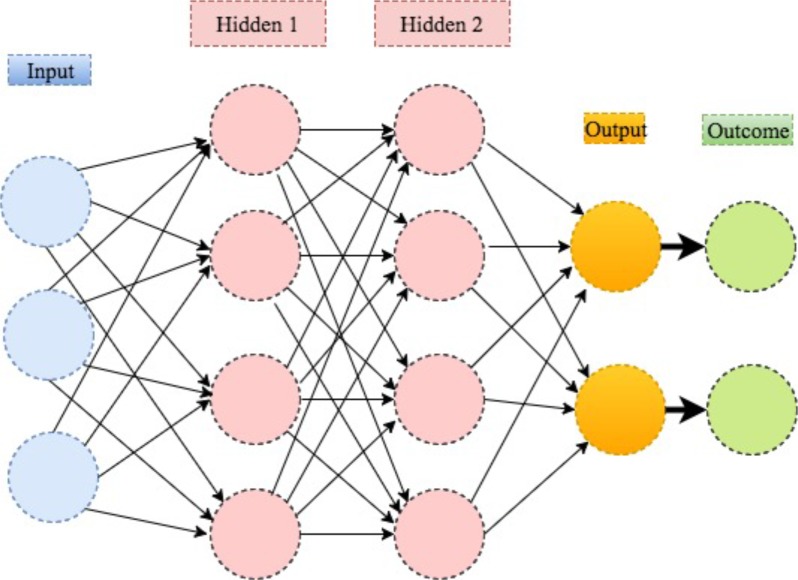
- AI techniques divide into machine learning for structured data (imaging, genetic, electrophysiological) and natural language processing for unstructured clinical text; supervised learning is most common in healthcare, with support vector machines and neural networks the most popular classical methods.
- Major disease areas using AI are cancer, nervous system disease, and cardiovascular disease; stroke applications span early detection and diagnosis, treatment, and outcome prediction/prognosis evaluation.
- Reported performance examples include CNN accuracy over 90% for congenital cataract diagnosis and treatment suggestion; sensitivity and specificity both over 90% for skin cancer and referable diabetic retinopathy; 90.5% correct gait classification; 87.6% SVM stroke classification; 97.5% accuracy for brain arteriovenous malformation outcome prediction versus 43% for standard regression; 95% training and 86% validation accuracy for NLP cerebral aneurysm classification; and 99% of IBM Watson treatment recommendations coherent with physician decisions.
- IBM Watson is described as a pioneer system with both ML and NLP modules; Arterys Cardio DL received FDA clearance as a deep learning clinical platform.
Methods
- Narrative review/survey of AI in healthcare, not a systematic review or meta-analysis.
- Reviews four aspects: motivations for AI in healthcare, healthcare data types, AI devices (classical ML, deep learning, NLP), and disease types, then details AI applications in stroke.
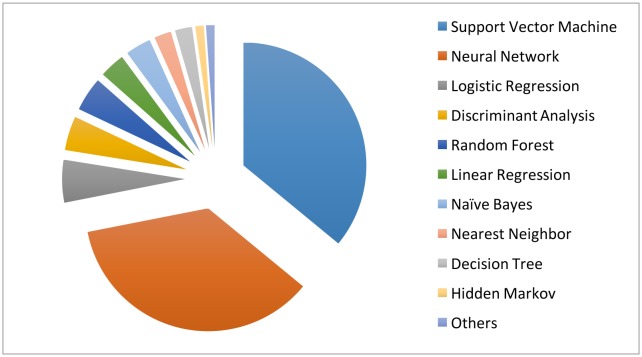
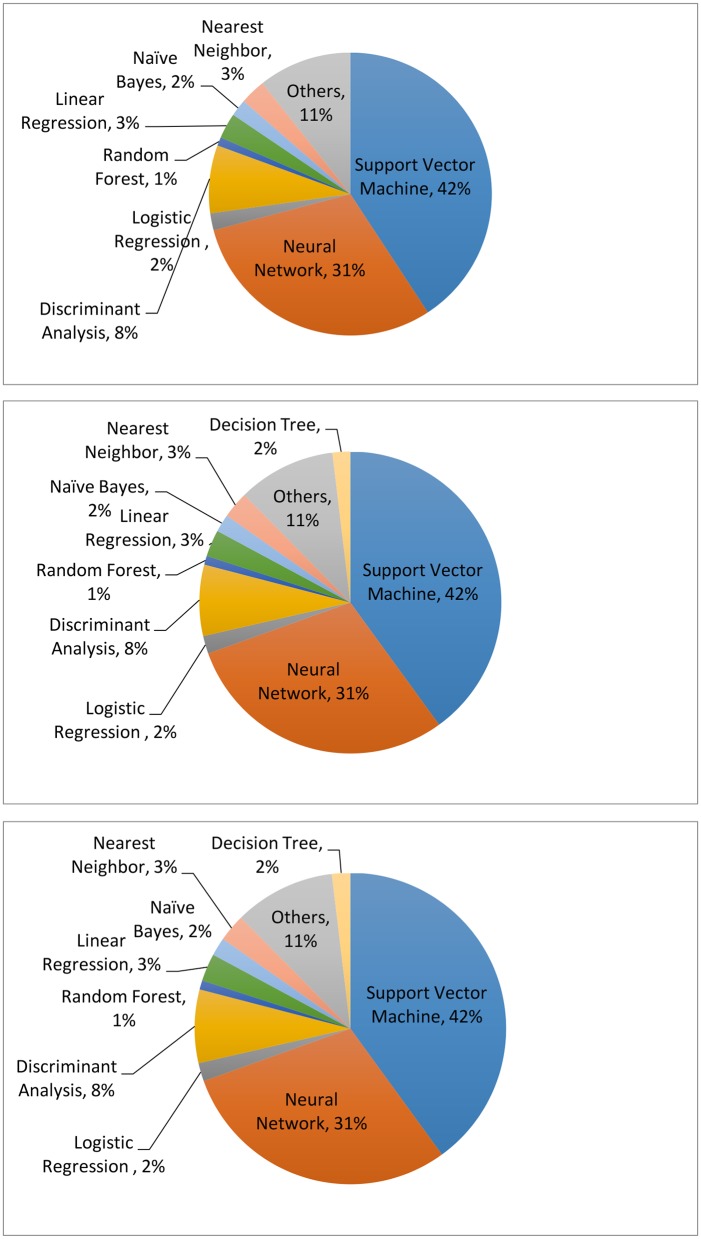
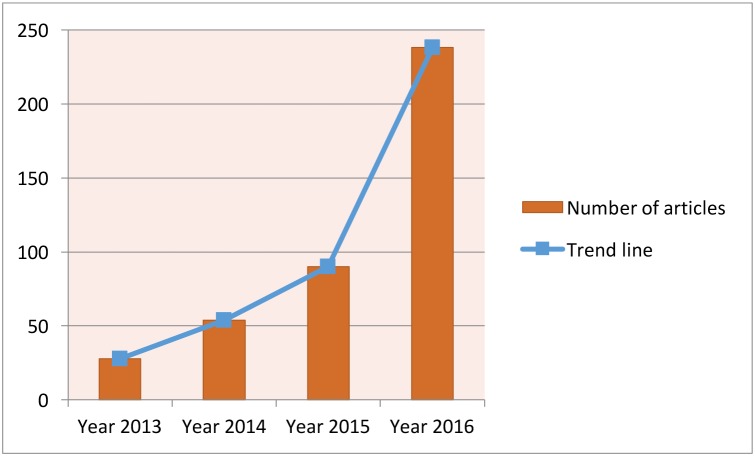
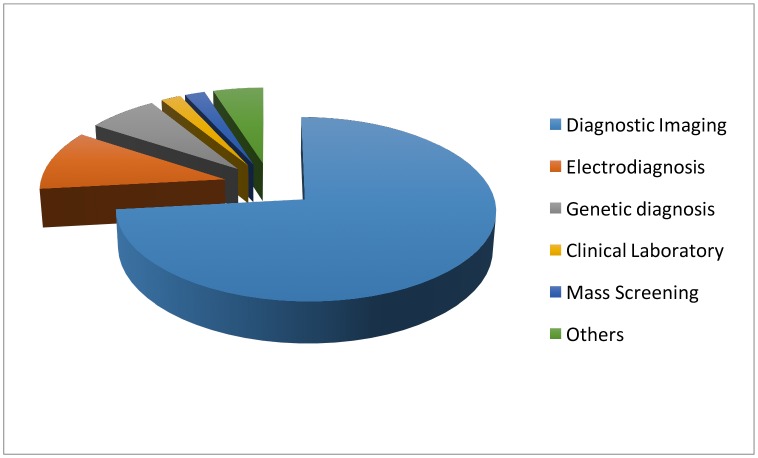
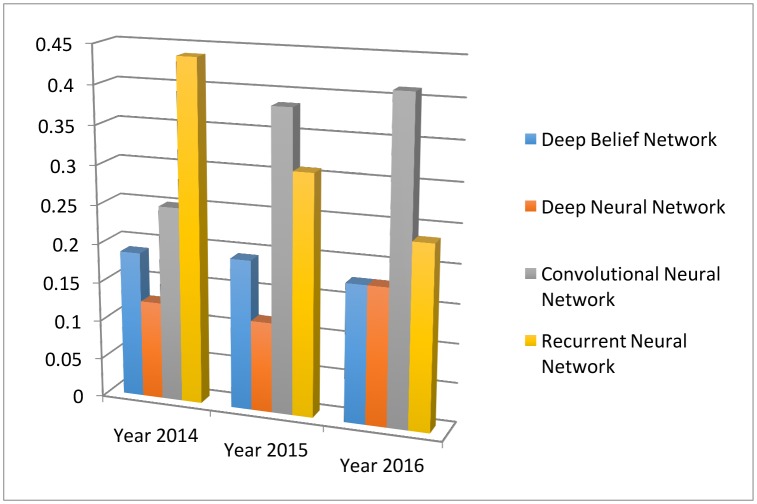
- Figures summarize PubMed searches on diagnosis techniques, disease types, ML algorithms, and deep learning trends; no formal search strategy or quality appraisal is reported.
Limitations
- The paper states real-life implementation hurdles: current regulations lack standards to assess AI system safety and efficacy, and the current healthcare environment lacks incentives for continuous data sharing.
- Evident from the text: as a narrative survey, it does not report systematic search terms, inclusion criteria, study counts, or risk-of-bias assessment; performance figures are cited from individual studies without meta-analysis.
- The paper includes a correction notice that a scripting error affected some publisher names in references and that figures 6–9 were corrected; competing interests are none declared, and no additional data are available.
Model-written summary. Check it against the paper before relying on it.
Integrity signals
Registry
Cites
Statistics
Figures
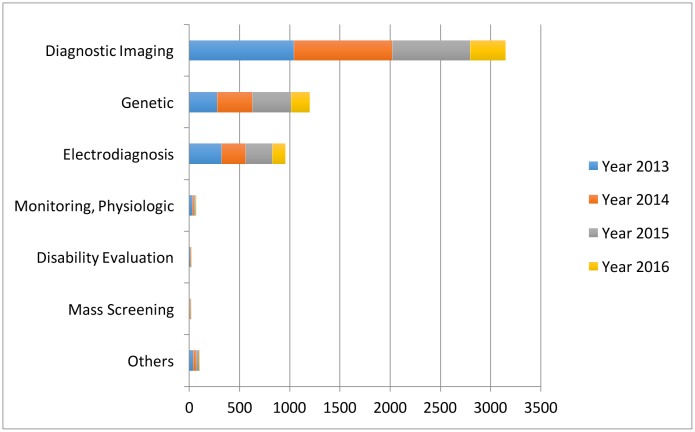
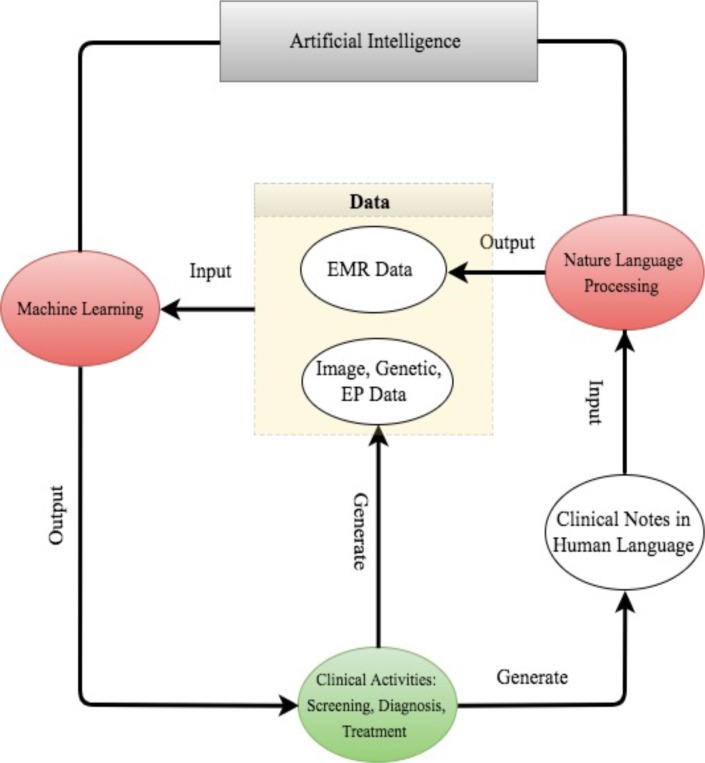
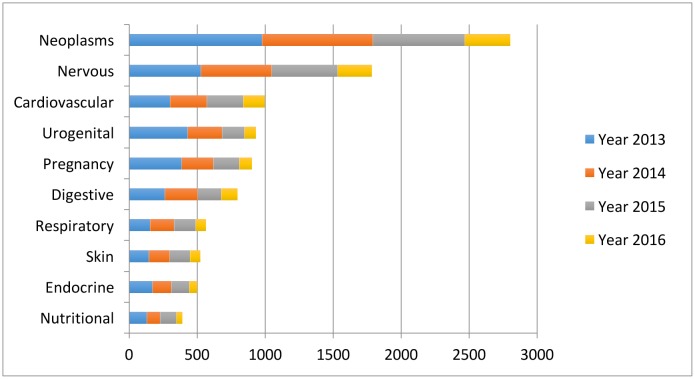
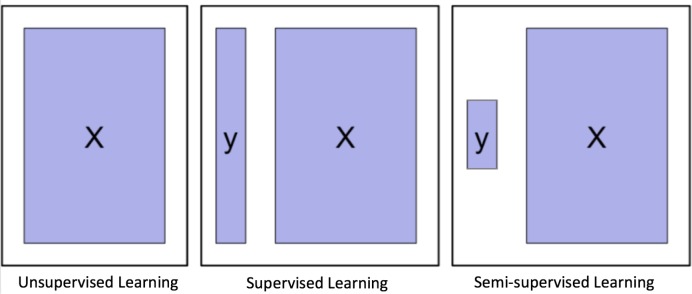
Verification
Claims the paper makes
22 Valid · 5 Not valid · 62 Not checked · 22 Own results and interpretations
At least one cited source doesn’t support this claim or points to a different paper, and none confirmed it — see the verdicts below.
In the paper
“Miller et al used NLP to automatically monitor the laboratory-based adverse effects.44”
§ Artificial intelligence in healthcare: past, present and future > natural language processing
What the sources say
- Disputedcites [44] Miller TP, Li Y, Getz KD, et al. Using electronic medical record data to report laboratory adverse events. Br J Haematol 2017;177:283-6. sourceExperimental — accuracy not yet measured
The Discussion says the study automated laboratory adverse-event ascertainment, but explicitly states that it did not include free-text laboratory results requiring NLP. It describes NLP as a possible future approach, not a method Miller et al. used. (LLM, conf=0.93)
Checked by a reasoning model — may be wrong.
plainstates a cause- Asserted: passes — The authors put it forward as true.
- Checkable: passes — It can be checked against evidence.
- Load-bearing: unclear — It is unclear whether the paper’s conclusions depend on it.
- Based: passes — The paper gives a reason why it holds.
- Disputed
Every source the paper cites for this claim was checked and supports it.
In the paper
“Esteva et al analysed clinical images to identify skin cancer subtypes.20”
§ Artificial intelligence in healthcare: past, present and future > disease focus
What the sources say
- Supportedcites [20] Esteva A, Kuprel B, Novoa RA, et al. Dermatologist-level classification of skin Cancer with deep neural networks. Nature 2017;542:115-8. source
The Abstract (p. 1) states the authors trained and tested a single CNN on a dataset of 129,450 clinical images against 21 board-certified dermatologists on the binary tasks 'keratinocyte carcinomas versus benign seborrheic keratoses' and 'malignant melanomas versus benign nevi', and (Abstract, p. 8) across three tasks including keratinocyte carcinoma and melanoma classification. Methods > Datasets (p. 1) enumerates the subtypes covered: malignant basal and squamous cell carcinomas, intraepithelial carcinomas, pre-malignant actinic keratosis, and melanomas versus benign nevi. Both elements of the paraphrase — analysis of clinical images and identification of skin cancer subtypes — are stated in our copy. (LLM, conf=0.92)
plain- Asserted: passes — The authors put it forward as true.
- Checkable: passes — It can be checked against evidence.
- Load-bearing: unclear — It is unclear whether the paper’s conclusions depend on it.
- Based: passes — The paper gives a reason why it holds.
- Supported
Every source the paper cites for this claim was checked and supports it.
In the paper
“Esteva et al performed the CNN to identify skin cancer from clinical images.20”
§ Artificial intelligence in healthcare: past, present and future > neural network
What the sources say
- Supportedcites [20] Esteva A, Kuprel B, Novoa RA, et al. Dermatologist-level classification of skin Cancer with deep neural networks. Nature 2017;542:115-8. source
The Abstract (p.1) states the paper demonstrates 'classification of skin lesions using a single CNN, trained end-to-end from images directly' using 'a dataset of 129,450 clinical images', tested on biopsy-proven clinical images for keratinocyte carcinomas and melanomas versus benign lesions — i.e. identifying skin cancer from clinical images. The Discussion (p.4) reiterates the development of a CNN matching dermatologists at melanoma and carcinoma classification. The paraphrase is fully consistent with the source. (LLM, conf=0.95)
plain- Asserted: passes — The authors put it forward as true.
- Checkable: passes — It can be checked against evidence.
- Load-bearing: unclear — It is unclear whether the paper’s conclusions depend on it.
- Based: passes — The paper gives a reason why it holds.
- Supported
The cited sources support only part of this claim — read each source’s verdict below.
In the paper
“Similarly, Maninini et al proposed a wearable device for collecting data about normal/pathological gaits for stroke prediction.49”
§ Artificial intelligence in healthcare: past, present and future > early detection and diagnosis
What the sources say
- Partly supportedcites [49] Mannini A, Trojaniello D, Cereatti A, et al. A machine Learning Framework for Gait classification using inertial sensors: application to Elderly, Post-Stroke and Huntington's Disease Patients. Sensors 2016;16:134. sourceExperimental — accuracy not yet measured
The Acquisition Protocol describes wearable inertial sensors used to collect gait data, and the Abstract reports classifying healthy elderly, post-stroke, and Huntington’s disease subjects. The paper used existing sensors rather than proposing a new wearable device, and it classified gait in people who had already had a stroke; it did not predict strokes. The indexed copy provides section labels but no page numbers. (LLM, conf=0.90)
plain- Asserted: passes — The authors put it forward as true.
- Checkable: passes — It can be checked against evidence.
- Load-bearing: unclear — It is unclear whether the paper’s conclusions depend on it.
- Based: passes — The paper gives a reason why it holds.
- Partly supported
Every source the paper cites for this claim was checked and supports it.
In the paper
“The result is comparable with human expert manual lesion delineation.”
§ Artificial intelligence in healthcare: past, present and future > early detection and diagnosis
What the sources say
- Supportedcites [51] Griffis JC, Allendorfer JB, Szaflarski JP. Voxel-based gaussian naïve Bayes classification of ischemic stroke lesions in individual T1- weighted MRI scans. J Neurosci Methods 2016;257:97-108. source
The Results section reports that post-processed out-of-sample predictions on 30 cases showed "high spatial overlap (mean Dice similarity coefficient = 0.66) and volume agreement (mean percent volume difference = 28.91; Pearson's r = 0.97) with manual lesion delineations", where the ground truth was hand-drawn delineation by an experienced neuroanatomist (Section 2.3). The Conclusions state "Our automated approach agrees with manual tracing", and Section 4.2 adds that the method's PVDs "compare favorably" to other automated methods and lie between those and what would be expected from inter-rater variability in manual delineation. Section 2.5 notes DSC 0.6-0.8 is regarded as "good", so characterizing the naïve Bayes result as comparable with expert manual delineation is faithful to the source. (LLM, conf=0.88)
plain- Asserted: passes — The authors put it forward as true.
- Checkable: passes — It can be checked against evidence.
- Load-bearing: unclear — It is unclear whether the paper’s conclusions depend on it.
- Based: passes — The paper gives a reason why it holds.
- Supported
63 more claims · 15 with their cited sources checked
Create a free account to see all 111 claims and to verify the 71 references still open.
- Probably not a substantial claim. 33
- It may state two separate claims as one. 12
Claims other papers make about this one
Each is checked against this paper’s own text: does it say what the citing paper says it does?
The source backs part of the claim, not all of it — or backs it for a different population, condition or comparison.
In the citing paper
“AI applications have proven effective in various clinical domains, such as reducing documentation burdens for clinicians, improving image interpretation in radiology, supporting intraoperative surgical guidance, and facilitating public health risk stratification2,3.”
From Developing a Canadian artificial intelligence medical curriculum using a Delphi study (2024) · cites this paper as [2]
Experimental — accuracy not yet measuredThe source backs part of the claim, not all of it — or backs it for a different population, condition or comparison.
In the citing paper
“The integration of artificial intelligence (AI) in healthcare is transformative, enhancing diagnostic accuracy, risk stratification, and treatment efficiency1,2.”
From Developing a Canadian artificial intelligence medical curriculum using a Delphi study (2024) · cites this paper as [2]
Experimental — accuracy not yet measuredThe source backs part of the claim, not all of it — or backs it for a different population, condition or comparison.
In the citing paper
“AI has evolved from an academic concept to a practical tool that is reshaping various sectors, including healthcare [17].”
From Opportunities, challenges, and requirements for Artificial Intelligence (AI) implementation in Primary Health Care (PHC): a systematic review (2025) · cites this paper as [17]
Experimental — accuracy not yet measuredThe check wasn’t confident either way, so it gives no verdict — never disputed.
In the citing paper
“For instance, only about one-fifth of the available trial results are used when diagnosing and treating cancer patients.18”
From Artificial intelligence: opportunities and implications for the health workforce (2020) · cites this paper as [18]
Experimental — accuracy not yet measuredIn the citing paper
“Furthermore, AI applications can aid in image-based diagnoses of conditions such as stroke and heart diseases.7”
From Artificial intelligence and endo-histo-omics: new dimensions of precision endoscopy and histology in inflammatory bowel disease (2024) · cites this paper as [7]
3 more claims about this paper
Create a free account to see every claim other papers make about this one.
Self-check
Percentages, sums and reported differences re-computed from the paper’s own numbers.
Each contradiction between two passages listed here was confirmed by an independent check.
Rated minor: it would not touch a result — a value no result rests on, a p-value that stays on the same side of the significance level, or a conflict that is clerical, resolved elsewhere in the paper, or outside its own findings.
In the paper
§ Artificial intelligence in healthcare: past, present and future > early detection and diagnosis
“Similarly, King et al used SVM to predict stroke mortality at discharge.62”
§ Artificial intelligence in healthcare: past, present and future > References
“62. Ho KC, Speier W, El-Saden S, et al. Predicting discharge mortality after acute ischemic stroke using balanced data. AMIA Annu Symp Proc 2014;2014:1787-96.”
Rated minor: it would not touch a result — a value no result rests on, a p-value that stays on the same side of the significance level, or a conflict that is clerical, resolved elsewhere in the paper, or outside its own findings.
In the paper
§ Artificial intelligence in healthcare: past, present and future > 2. Neurology: Bouton et al developed an AI system to
“The decision rule then follows that if a i >0, the ith patient is classified to group 1, that is, labelling Y i = -1; if a i <0, the patient is classified to group 2, that is, labelling Y i =1.”
§ Artificial intelligence in healthcare: past, present and future > 2. Neurology: Bouton et al developed an AI system to
“Intuitively, the best weights must allow (1) the sign of a i to be the same as Y i so the classification is correct;”
Rated minor: it would not touch a result — a value no result rests on, a p-value that stays on the same side of the significance level, or a conflict that is clerical, resolved elsewhere in the paper, or outside its own findings.
In the paper
§ Artificial intelligence in healthcare: past, present and future > motivation
“For example, Jha and Topol urged radiologists to adopt AI technologies when analysing diagnostic images that contain vast data information.13”
§ Artificial intelligence in healthcare: past, present and future > References
“13. Gillies RJ, Kinahan PE, Hricak H. Radiomics: images are more than pictures, they are data. Radiology 2016;278:563-77.”
Citations
Cites
LeCun, Y., Bengio, Y., & Hinton, G. (2015) · Nature · doi:10.1038/nature14539 · Cited by 84,126
Gradient-based learning applied to document recognition
Lecun, Y., Bottou, L., Bengio, Y., & Haffner, P. (1998) · Proceedings of the IEEE · doi:10.1109/5.726791 · Cited by 58,805 · cited 1×
“The CNN was first proposed and advocated for the high-dimensional image analysis by Lecun et al.(38) The”
MethodDermatologist-level classification of skin cancer with deep neural networks
Esteva, A., Kuprel, B., Novoa, R. A., Ko, J., Swetter, S. M., Blau, H. M., & Thrun, S. (2017) · Nature · doi:10.1038/nature21056 · Cited by 14,362
An Introduction to Statistical Learning
James, G., Witten, D., Hastie, T., & Tibshirani, R. (2013) · Springer Texts in Statistics · doi:10.1007/978-1-4614-7138-7 · Cited by 12,106
(2016) · Cited by 11,679
Pattern Recognition and Machine Learning
(2006) · doi:10.1007/978-0-387-45528-0 · Cited by 9,824
Foundations of statistical natural language processing
Manning, C. D., & Schütze, H. (1999) · Cited by 9,816
TensorFlow: Large-Scale Machine Learning on Heterogeneous Distributed Systems
Abadi, M., Agarwal, A., Barham, P., Brevdo, E., Chen, Z., Citro, C., Corrado, G. S., Davis, A., Dean, J., Devin, M., et al. (2016) · arXiv · doi:10.48550/arxiv.1603.04467 · Cited by 9,408 · cited 2×
“The implementation of CNN has been included in popular software packages such as Caffe from Berkeley AI Research, 39 CNTK from Microsoft 40 and TensorFlow from Google.”
MethodRadiomics: Images Are More than Pictures, They Are Data
Gillies, R. J., Kinahan, P. E., & Hricak, H. (2016) · Radiology · doi:10.1148/radiol.2015151169 · Cited by 8,421
(2006) · Springer eBooks · Cited by 8,123
Research works printed but not linked: 2
- Pearson T. How to replicate Watson hardware and systems design for your own use in your basement. 2011 https://www. ibm. com/ developerworks/ community/ blogs/ InsideSystemStorage/ entry/ ibm_ watson_ how_ to_ build_ your_ own_ watson_ jr_ in_ your_ basement7? lang= en (accessed 1 Jun 2017).
- Kayyali B, Knott D, Kuiken SV. The big-data revolution in US health care: accelerating value and innovation. 2013 http://www. mckinsey. com/ industries/ healthcare-systems-and-services/ our-insights/ the- big-data-revolution-in-us-health-care (accessed 1 Jun 2017). on July 18, 2023 by guest. Protected by copyright. http://svn.bmj.com/ Stroke Vasc Neurol: first published as 10.1136/svn-2017-000101 on 21 June 2017. Downloaded from
Cited by
Items 201–300 of 1,034
Industry 4.0 Disruption and Its Neologisms in Major Industrial Sectors: A State of the Art
Bongomin, O., Yemane, A., Kembabazi, B., Malanda, C., Chikonkolo Mwape, M., Sheron Mpofu, N., & Tigalana, D. (2020) · Journal of Engineering · doi:10.1155/2020/8090521 · Cited by 169
Roosan, D., Padua, P., Khan, R., Khan, H., Verzosa, C., & Wu, Y. (2024) · Journal of the American Pharmacists Association · doi:10.1016/j.japh.2023.11.023 · Cited by 121
Borgohain, D. J., Bhardwaj, R. K., & Verma, M. K. (2022) · Library Hi Tech · doi:10.1108/lht-07-2022-0331 · Cited by 172
Privacy, ethics, transparency, and accountability in AI systems for wearable devices
Radanliev, P. (2025) · Frontiers in Digital Health · doi:10.3389/fdgth.2025.1431246 · Cited by 173
A Review of Explainable Deep Learning Cancer Detection Models in Medical Imaging
Gulum, M. A., Trombley, C. M., & Kantardzic, M. (2021) · Applied Sciences · doi:10.3390/app11104573 · Cited by 145
Advancing Patient Care: How Artificial Intelligence Is Transforming Healthcare
Poalelungi, D. G., Musat, C. L., Fulga, A., Neagu, M., Neagu, A. I., Piraianu, A. I., & Fulga, I. (2023) · Journal of Personalized Medicine · doi:10.3390/jpm13081214 · Cited by 166
Next-generation agentic AI for transforming healthcare
Karunanayake, N. (2025) · Informatics and Health · doi:10.1016/j.infoh.2025.03.001 · Cited by 165
Cossich, V. R. A., Carlgren, D., Holash, R. J., & Katz, L. (2023) · Applied Sciences · doi:10.3390/app132312965 · Cited by 165
Artificial Intelligence in Health Care: Current Applications and Issues
Park, C.-W., Seo, S. W., Kang, N., Ko, B., Choi, B. W., Park, C., Chang, D. K., Kim, H., Kim, H., Lee, H., et al. (2020) · Journal of Korean Medical Science · doi:10.3346/jkms.2020.35.e379 · Cited by 165
Reliable and Resilient AI and IoT-Based Personalised Healthcare Services: A Survey
Taimoor, N., & Rehman, S. (2022) · IEEE Access · doi:10.1109/access.2021.3137364 · Cited by 165
“Different approaches [142]–[145] have sketched various limitations of application techniques in healthcare and have devised ways to address them in a way that requires developers to handle various resilience concerns while developing such applications, e.”
BackgroundKourou, K., Exarchos, K. P., Papaloukas, C., Sakaloglou, P., Exarchos, T., & Fotiadis, D. I. (2021) · Computational and Structural Biotechnology Journal · doi:10.1016/j.csbj.2021.10.006 · Cited by 165
“dous progress of AI in the medical practice landscape [2,3].”
BackgroundDigital technologies, healthcare and Covid-19: insights from developing and emerging nations
Chandra, M., Kumar, K., Thakur, P., Chattopadhyaya, S., Alam, F., & Kumar, S. (2022) · Health and Technology · doi:10.1007/s12553-022-00650-1 · Cited by 165
Roy, S., Meena, T., & Lim, S.-J. (2022) · Diagnostics · doi:10.3390/diagnostics12102549 · Cited by 164
Efficient Automated Disease Diagnosis Using Machine Learning Models
Kumar, N., Narayan Das, N., Gupta, D., Gupta, K., & Bindra, J. (2021) · Journal of Healthcare Engineering · doi:10.1155/2021/9983652 · Cited by 164
“It is bringing a paradigm shift to healthcare, powered by the increasing availability of healthcare data and rapid progress of analytics techniques [1].”
BackgroundHep-Pred: Hepatitis C Staging Prediction Using Fine Gaussian SVM
M. Ghazal, T., Anam, M., Kamrul Hasan, M., Hussain, M., Sajid Farooq, M., Muhammad Ammar Ali, H., Ahmad, M., & Rahim Soomro, T. (2021) · Computers, Materials & Continua · doi:10.32604/cmc.2021.015436 · Cited by 164
Smart Materials Enabled with Artificial Intelligence for Healthcare Wearables
Zheng, Y., Tang, N., Omar, R., Hu, Z., Duong, T. D., Wang, J., Wu, W., & Haick, H. (2021) · Advanced Functional Materials · doi:10.1002/adfm.202105482 · Cited by 167
Explainable AI meets Healthcare: A Study on Heart Disease Dataset
Dave, D., Naik, H., Singhal, S., & Patel, P. (2020) · arXiv (Cornell University) · doi:10.48550/arxiv.2011.03195 · Cited by 72
Bizopoulos, P., & Koutsouris, D. (2019) · IEEE Reviews in Biomedical Engineering · doi:10.1109/rbme.2018.2885714 · Cited by 163
“Mayer 2015 [237] Big data in cardiology changes how insights are discovered Austin 2016 [238] overview of big data, its benefits, potential pitfalls and future impact in cardiology Greenspan 2016 [239] lesion detection, segmentation and shape modeling Miotto 2017 [240] imaging, EHR, genome and wearable data and needs…”
MethodStanfill, M. H., & Marc, D. T. (2019) · Yearbook of Medical Informatics · doi:10.1055/s-0039-1677913 · Cited by 163
Artificial intelligence and Psychiatry: An overview
Ray, A., Bhardwaj, A., Malik, Y. K., Singh, S., & Gupta, R. (2022) · Asian Journal of Psychiatry · doi:10.1016/j.ajp.2022.103021 · Cited by 134
Javaid, M., Haleem, A., & Singh, R. P. (2024) · Informatics and Health · doi:10.1016/j.infoh.2024.05.001 · Cited by 167
Implementing AI in the public sector
Mergel, I., Dickinson, H., Stenvall, J., & Gasco, M. (2023) · Public Management Review · doi:10.1080/14719037.2023.2231950 · Cited by 162
Big data and artificial intelligence based early risk warning system of fire hazard for smart cities
Zhang, Y., Geng, P., Sivaparthipan, C. B., & Muthu, B. A. (2021) · Sustainable Energy Technologies and Assessments · doi:10.1016/j.seta.2020.100986 · Cited by 162
SinGAN-Seg: Synthetic training data generation for medical image segmentation
Thambawita, V. L., Salehi, P., Sheshkal, S. A., Hicks, S. A., Hammer, H. L., Parasa, S., de Lange, T., Halvorsen, P., & Riegler, M. A. (2022) · PLoS ONE · doi:10.1371/journal.pone.0267976 · Cited by 163
Subramanian, M., Shanmugavadivel, K., & Nandhini, P. S. (2022) · Neural Computing and Applications · doi:10.1007/s00521-022-07246-w · Cited by 163
Marcinkowski, F., Kieslich, K., Starke, C., & Lünich, M. (2020) · Proceedings of the 2020 Conference on Fairness, Accountability, and Transparency · doi:10.1145/3351095.3372867 · Cited by 159
Applications of Deep Learning to Neuro-Imaging Techniques
Zhu, G., Jiang, B., Tong, L., Xie, Y., Zaharchuk, G., & Wintermark, M. (2019) · Frontiers in Neurology · doi:10.3389/fneur.2019.00869 · Cited by 159
A universal artificial intelligence platform for collaborative management of cataracts
Wu, X., Huang, Y., Liu, Z., Lai, W., Long, E., Zhang, K., Jiang, J., Lin, D., Chen, K., Yu, T., et al. (2019) · The Lancet · doi:10.1016/s0140-6736(19)32358-x · Cited by 159
Chen, M., Jiang, H., Liao, W., & Zhao, T. (2022) · Information and Inference A Journal of the IMA · doi:10.1093/imaiai/iaac001 · Cited by 163
Operationalising ethics in artificial intelligence for healthcare: a framework for AI developers
Solanki, P., Grundy, J., & Hussain, W. (2023) · AI and Ethics · doi:10.1007/s43681-022-00195-z · Cited by 157
“AI for healthcare encompasses numerous approaches, including machine learning (ML) algorithms on structured text- or image-based data, and natural language processing (NLP) on unstructured data such as clinical notes or medical journals [3].”
BackgroundWindows into human health through wearables data analytics
Witt, D. R., Kellogg, R. A., Snyder, M. P., & Dunn, J. (2019) · Current Opinion in Biomedical Engineering · doi:10.1016/j.cobme.2019.01.001 · Cited by 157
Ghoreishi, M., & Happonen, A. (2020) · AIP Conference Proceedings · doi:10.1063/5.0001339 · Cited by 113
Eling, M., Nuessle, D., & Staubli, J. (2022) · The Geneva Papers on Risk and Insurance Issues and Practice · doi:10.1057/s41288-020-00201-7 · Cited by 156
Fosso Wamba, S., & Queiroz, M. M. (2023) · Information Systems Frontiers · doi:10.1007/s10796-021-10142-8 · Cited by 125
Requirements Engineering Challenges in Building AI-Based Complex Systems
Belani, H., Vuković, M., & Car, Ž. (2019) · IEEE International Requirements Engineering Conference Workshops (REW) · doi:10.1109/rew.2019.00051 · Cited by 155
Privacy-Preserving Artificial Intelligence Techniques in Biomedicine
Torkzadehmahani, R., Nasirigerdeh, R., Blumenthal, D. B., Kacprowski, T., List, M., Matschinske, J., Spaeth, J., Wenke, N. K., & Baumbach, J. (2022) · Methods of Information in Medicine · doi:10.1055/s-0041-1740630 · Cited by 111
Impact of Artificial Intelligence on Interventional Cardiology
Sardar, P., Abbott, J. D., Kundu, A., Aronow, H. D., Granada, J. F., & Giri, J. (2019) · JACC: Cardiovascular Interventions · doi:10.1016/j.jcin.2019.04.048 · Cited by 151
Artificial intelligence in clinical decision support systems for oncology
Wang, L., Chen, X., Zhang, L., Li, L., Huang, Y., Sun, Y., & Yuan, X. (2022) · International Journal of Medical Sciences · doi:10.7150/ijms.77205 · Cited by 151
Quality assurance of computer-aided detection and diagnosis in colonoscopy
Vinsard, D. G., Mori, Y., Misawa, M., Kudo, S.-E., Rastogi, A., Bagci, U., Rex, D. K., & Wallace, M. B. (2019) · Gastrointestinal Endoscopy · doi:10.1016/j.gie.2019.03.019 · Cited by 137
Artificial Intelligence in Clinical Health Care Applications: Viewpoint
van Hartskamp, M., Consoli, S., Verhaegh, W., Petkovic, M., & van de Stolpe, A. (2019) · Interactive Journal of Medical Research · doi:10.2196/12100 · Cited by 123
Shinners, L., Aggar, C., Grace, S., & Smith, S. (2020) · Health Informatics Journal · doi:10.1177/1460458219874641 · Cited by 148
“41,50–52 E-Health E-Health mobile applications utilising AI in their technology are being used in primary healthcare and in mental health.”
MethodGeneral Practitioners’ Attitudes Toward Artificial Intelligence–Enabled Systems: Interview Study
Buck, C., Doctor, E., Hennrich, J., Jöhnk, J., & Eymann, T. (2022) · Journal of Medical Internet Research · doi:10.2196/28916 · Cited by 147
Kieslich, K., Lünich, M., & Marcinkowski, F. (2021) · International Journal of Social Robotics · doi:10.1007/s12369-020-00734-w · Cited by 106
Surianarayanan, C., Lawrence, J. J., Chelliah, P. R., Prakash, E., & Hewage, C. (2023) · Sensors · doi:10.3390/s23063062 · Cited by 109
Mohamed, E. S., Naqishbandi, T. A., Bukhari, S. A. C., Rauf, I., Sawrikar, V., & Hussain, A. (2023) · Healthcare Analytics · doi:10.1016/j.health.2023.100185 · Cited by 148
A comprehensive review and analysis of solar forecasting techniques
Singla, P., Duhan, M., & Saroha, S. (2021) · Frontiers in Energy · doi:10.1007/s11708-021-0722-7 · Cited by 146
Multi-modality approaches for medical support systems: A systematic review of the last decade
Salvi, M., Loh, H. W., Seoni, S., Barua, P. D., García, S., Molinari, F., & Acharya, U. R. (2024) · Information Fusion · doi:10.1016/j.inffus.2023.102134 · Cited by 144
Bichel-Findlay, J., Koch, S., Mantas, J., Abdul, S. S., Al-Shorbaji, N., Ammenwerth, E., Baum, A., Borycki, E. M., Demiris, G., Hasman, A., et al. (2023) · International Journal of Medical Informatics · doi:10.1016/j.ijmedinf.2022.104908 · Cited by 97
Romero-Brufau, S., Wyatt, K. D., Boyum, P., Mickelson, M., Moore, M., & Cognetta-Rieke, C. (2020) · International Journal of Medical Informatics · doi:10.1016/j.ijmedinf.2019.104072 · Cited by 143
Recent patient health monitoring platforms incorporating internet of things-enabled smart devices
Kang, M., Park, E., Cho, B. H., & Lee, K.-S. (2018) · International Neurourology Journal · doi:10.5213/inj.1836144.072 · Cited by 143
The integration of AI in nursing: addressing current applications, challenges, and future directions
Wei, Q., Pan, S., Liu, X., Hong, M., Nong, C., & Zhang, W. (2025) · Frontiers in Medicine · doi:10.3389/fmed.2025.1545420 · Cited by 143
Artificial intelligence and primary care research: a scoping review
Kueper, J. K., Terry, A. L., Zwarenstein, M., & Lizotte, D. J. (2020) · The Annals of Family Medicine · doi:10.1370/afm.2518 · Cited by 143
“) independently reviewed the full text of each document for the following eligibility criteria: (1) was a research study, (2) developed or used AI (Table 1S, Supplemental Appendix 3, http://www.”
BackgroundMethodArtificial intelligence applications in dermatology: Where do we stand?
Gomolin, A., Netchiporouk, E., Gniadecki, R., & Litvinov, I. V. (2020) · Frontiers in Medicine · doi:10.3389/fmed.2020.00100 · Cited by 142
Wen, A., Fu, S., Moon, S., El Wazir, M., Rosenbaum, A., Kaggal, V. C., Liu, S., Sohn, S., Liu, H., & Fan, J. (2019) · npj Digital Medicine · doi:10.1038/s41746-019-0208-8 · Cited by 142
Xie, Y., Chen, M., Kao, D., Gao, G., & Chen, X. '. (2020) · Proceedings of the 2020 CHI Conference on Human Factors in Computing Systems · doi:10.1145/3313831.3376807 · Cited by 141
“Started in the 1950s [44], medical AI has been widely applied in many subfields such as early detection, diagnosis, and treatment planning [35].”
BackgroundMethodGomez Rossi, J., Rojas-Perilla, N., Krois, J., & Schwendicke, F. (2022) · JAMA Network Open · doi:10.1001/jamanetworkopen.2022.0269 · Cited by 141
Thapa, C., Chamikara, M. A. P., & Camtepe, S. A. (2021) · Studies in computational intelligence · doi:10.1007/978-3-030-70604-3_4 · Cited by 143
Tettey, F., Parupelli, S. K., & Desai, S. S. (2023) · Biomedical Materials & Devices · doi:10.1007/s44174-023-00113-9 · Cited by 143
Parekh, A.-D. E., Shaikh, O. A., Simran, Manan, S., & Hasibuzzaman, M. A. (2023) · Annals of Medicine and Surgery · doi:10.1097/ms9.0000000000001320 · Cited by 141
Basal Glucose Control in Type 1 Diabetes Using Deep Reinforcement Learning: An In Silico Validation
Zhu, T., Li, K., Herrero, P., & Georgiou, P. (2020) · IEEE Journal of Biomedical and Health Informatics · doi:10.1109/jbhi.2020.3014556 · Cited by 141
Huang, H.-Y., Hsu, B. W., Lee, C., & Tseng, V. S. M. (2020) · The Journal of Dermatology · doi:10.1111/1346-8138.15683 · Cited by 142
Uche-Anya, E., Anyane-Yeboa, A., Berzin, T. M., Ghassemi, M., & May, F. P. (2022) · Gut · doi:10.1136/gutjnl-2021-326271 · Cited by 112
Kibriya, H., Amin, R., Alshehri, A. H., Masood, M., Alshamrani, S. S., & Alshehri, A. (2022) · Computational Intelligence and Neuroscience · doi:10.1155/2022/7897669 · Cited by 140
Artificial Intelligence: Applications in orthognathic surgery
Bouletreau, P., Makaremi, M., Ibrahim, B., Louvrier, A., & Sigaux, N. (2019) · Journal of Stomatology, Oral and Maxillofacial Surgery · doi:10.1016/j.jormas.2019.06.001 · Cited by 112
Motozawa, N., An, G., Takagi, S. T., Kitahata, S., Mandai, M., Hirami, Y., Yokota, H., Akïba, M., Tsujikawa, A., Takahashi, M., et al. (2019) · Ophthalmology and Therapy · doi:10.1007/s40123-019-00207-y · Cited by 137
Fernandez, E. I., Ferreira, A. S., Cecílio, M. H. M., Chéles, D. S., de Souza, R. C. M., Nogueira, M. F. G., & Rocha, J. C. (2020) · Journal of Assisted Reproduction and Genetics · doi:10.1007/s10815-020-01881-9 · Cited by 137
Artificial intelligence in nursing: an integrative review of clinical and operational impacts
Hassanein, S., El Arab, R. A., Abdrbo, A., Abu-Mahfouz, M. S., Gaballah, M. K. F., Seweid, M. M., Almari, M., & Alzghoul, H. (2025) · Frontiers in Digital Health · doi:10.3389/fdgth.2025.1552372 · Cited by 134
Deep learning in dermatology: a systematic review of current approaches, outcomes, and limitations
Jeong, H. K., Park, C., Henao, R., & Kheterpal, M. (2023) · JID Innovations · doi:10.1016/j.xjidi.2022.100150 · Cited by 134
“INTRODUCTION Artificial intelligence (AI) in healthcare is the application of machine learning (ML) algorithms in medical fields to potentially improve diagnosis and predict clinical outcomes (Jiang et al., 2017).”
BackgroundIntegrating AI into radiology workflow: levels of research, production, and feedback maturity
Dikici, E., Bigelow, M. T., Prevedello, L. M. S., White, R., & Erdal, B. S. (2020) · Journal of medical imaging · doi:10.1117/1.jmi.7.1.016502 · Cited by 134
Graafsma, J., Murphy, R. M., van de Garde, E. M. W., Karapinar‐Çarkit, F., Derijks, H. J., Hoge, R. H. L., Klopotowska, J. E., & van den Bemt, P. M. L. A. (2024) · Journal of the American Medical Informatics Association · doi:10.1093/jamia/ocae076 · Cited by 135
Ye, J., Woods, D. M., Jordan, N., & Starren, J. B. (2024) · PubMed Central · Cited by 137
Teaching AI Ethics in Medical Education: A Scoping Review of Current Literature and Practices
Weidener, L., & Fischer, M. (2023) · Perspectives on Medical Education · doi:10.5334/pme.954 · Cited by 133
“Moreover, the use of AI in medicine is expected to reduce health-related expenditures and improve the accessibility of health services for patients [8, 14, 15].”
BackgroundHuang, C., Murugiah, K., Mahajan, S., Li, S., Dhruva, S. S., Haimovich, J. S., Wang, Y., Schulz, W. L., Testani, J. M., Wilson, F. P., et al. (2018) · PLoS Medicine · doi:10.1371/journal.pmed.1002703 · Cited by 133
Self-citationHowcroft, A., Bennett‐Weston, A., Khan, A. H., Griffiths, J., Gay, S. P., & Howick, J. (2025) · British Medical Bulletin · doi:10.1093/bmb/ldaf017 · Cited by 137
Mobile and Wearable Technology for the Monitoring of Diabetes-Related Parameters: Systematic Review
Rodriguez-León, C., Villalonga, C., Munoz-Torres, M., Ruiz, J. R., & Banos, O. (2021) · JMIR mHealth and uHealth · doi:10.2196/25138 · Cited by 132
“In addition, a growing number of health care companies are applying AI algorithms to discover relevant clinical information from large amounts of data [27].”
BackgroundRequirements engineering for artificial intelligence systems: A systematic mapping study
Ahmad, K., Abdelrazek, M., Arora, C., Bano, M., & Grundy, J. (2023) · Information and Software Technology · doi:10.1016/j.infsof.2023.107176 · Cited by 132
What Do Turkish Pre-Service Teachers Think About Artificial Intelligence?
Haseski, H. I. (2019) · International Journal of Computer Science Education in Schools · doi:10.21585/ijcses.v3i2.55 · Cited by 78
Remote patient monitoring using artificial intelligence
Jeddi, Z., & Bohr, A. (2020) · Elsevier eBooks · doi:10.1016/b978-0-12-818438-7.00009-5 · Cited by 132
Multiclass wound image classification using an ensemble deep CNN-based classifier
Rostami, B., Anisuzzaman, D., Wang, C., Gopalakrishnan, S., Niezgoda, J., & Yu, Z. (2021) · Computers in Biology and Medicine · doi:10.1016/j.compbiomed.2021.104536 · Cited by 132
Practical cucumber leaf disease recognition using improved Swin Transformer and small sample size
Wang, F., Rao, Y., Luo, Q., Jin, X., Jiang, Z., Wu, Z., & Li, S. (2022) · Computers and Electronics in Agriculture · doi:10.1016/j.compag.2022.107163 · Cited by 132
AI in medical diagnosis: AI prediction & human judgment
Göndöcs, D., & Dörfler, V. (2024) · Artificial Intelligence in Medicine · doi:10.1016/j.artmed.2024.102769 · Cited by 90
Zhu, S., Gilbert, M., Chetty, I., & Siddiqui, F. (2022) · International Journal of Medical Informatics · doi:10.1016/j.ijmedinf.2022.104828 · Cited by 131
Artificial Intelligence (AI) and Cardiovascular Diseases: An Unexpected Alliance
Romiti, S., Vinciguerra, M., Saade, W., Cortajarena, I. A., & Greco, E. (2020) · Cardiology Research and Practice · doi:10.1155/2020/4972346 · Cited by 129
Applications of artificial intelligence in drug development using real-world data
Chen, Z., Liu, X., Hogan, W., Shenkman, E., & Bian, J. (2021) · Drug Discovery Today · doi:10.1016/j.drudis.2020.12.013 · Cited by 103
Llama: A Heterogeneous & Serverless Framework for Auto-Tuning Video Analytics Pipelines
Romero, F., Zhao, M., Yadwadkar, N. J., & Kozyrakis, C. (2021) · ACM Symposium on Cloud Computing (SoCC) · doi:10.1145/3472883.3486972 · Cited by 130
Artificial intelligence in veterinary medicine
Appleby, R. B., & Basran, P. S. (2022) · Journal of the American Veterinary Medical Association · doi:10.2460/javma.22.03.0093 · Cited by 129
Brain tumor segmentation using synthetic MR images - A comparison of GANs and diffusion models
Akbar, M. U., Larsson, M., Blystad, I., & Eklund, A. (2024) · Scientific Data · doi:10.1038/s41597-024-03073-x · Cited by 129
Chan, C. K. Y. (2025) · Education and Information Technologies · doi:10.1007/s10639-024-13151-7 · Cited by 128
Deep Learning and Big Data in Healthcare: A Double Review for Critical Beginners
Bote-Curiel, L., Muñoz-Romero, S., Guerrero-Curieses, A., & Rojo‐Álvarez, J. L. (2019) · Applied Sciences · doi:10.3390/app9112331 · Cited by 130
Khanijahani, A., Iezadi, S., Dudley, S., Goettler, M., Kroetsch, P., & Wise, J. (2022) · Health Policy and Technology · doi:10.1016/j.hlpt.2022.100602 · Cited by 128
Aggregation-Induced Emission Luminogen: Role in Biopsy for Precision Medicine
Duo, Y., Han, L., Yang, Y., Wang, Z., Wang, L., Chen, J., Xiang, Z., Yoon, J., Luo, G., & Tang, B. Z. (2024) · Chemical Reviews · doi:10.1021/acs.chemrev.4c00244 · Cited by 126
A healthy debate: Exploring the views of medical doctors on the ethics of artificial intelligence
Martinho, A., Kroesen, M., & Chorus, C. (2021) · Artificial Intelligence in Medicine · doi:10.1016/j.artmed.2021.102190 · Cited by 124
Multinational Attitudes Toward AI in Health Care and Diagnostics Among Hospital Patients
Busch, F., Hoffmann, L., Xu, L., Zhang, L. J., Hu, B., García-Juárez, I., Toapanta-Yanchapaxi, L. N., Gorelik, N., Gorelik, V., Rodriguez-Granillo, G. A., et al. (2025) · JAMA Network Open · doi:10.1001/jamanetworkopen.2025.14452 · Cited by 124
van den Bemt, B. J. F., Gettings, L., Domańska, B., Bruggraber, R., Mountian, I., & Kristensen, L. E. (2019) · Drug Delivery · doi:10.1080/10717544.2019.1587043 · Cited by 124
Meske, C., & Bunde, E. (2020) · Lecture notes in computer science · doi:10.1007/978-3-030-50334-5_4 · Cited by 131
Eke, C. I., & Shuib, L. M. (2024) · Neural Computing and Applications · doi:10.1007/s00521-024-10868-x · Cited by 127
Mursch‐Edlmayr, A. S., Ng, W. S., Diniz‐Filho, A., Sousa, D. C., Arnould, L., Schlenker, M. B., Dueñas-Ángeles, K., Keane, P. A., Crowston, J. G., & Jayaram, H. (2020) · Translational Vision Science & Technology · doi:10.1167/tvst.9.2.55 · Cited by 125
Concepts, procedures, and applications of artificial neural network models in streamflow forecasting
Malekian, A., & Chitsaz, N. (2021) · Elsevier eBooks · doi:10.1016/b978-0-12-820673-7.00003-2 · Cited by 122
Emerging Technologies for Next Generation Remote Health Care and Assisted Living
Ahmad, I., Asghar, Z., Kumar, T., Li, G., Manzoor, A., Mikhaylov, K., Shah, S. A., Höyhtyä, M., Reponen, J., Huusko, J., et al. (2022) · IEEE Access · doi:10.1109/access.2022.3177278 · Cited by 129
Rahman, M. A., Victoros, E., Ernest, J., Davis, R., Shanjana, Y., & Islam, M. R. (2024) · Clinical Pathology · doi:10.1177/2632010x241226887 · Cited by 122
Metadata
- Authors
- Jiang, F., Jiang, Y., Zhi, H., Dong, Y., Li, H., Ma, S., Wang, Y., Dong, Q., Shen, H., & Wang, Y.
- Affiliations
- University of Hong Kong (HK)
- Capital Medical University (CN)
- Fudan University (CN)
- China National Clinical Research Center for Neurological Diseases, Beijing, China
- DotHealth, Shanghai, China
- Beijing Tian Tan Hospital (CN)
- Corresponding author
- Wang, Yongjun
- Venue
- Stroke and Vascular Neurology
- Publisher
- BMJ
- Published
- 2017-06-21
- Volume
- 2
- Issue
- 4
- Pages
- 230-243
- ISSN
- 2059-8688 (ISSN-L)
- 2059-8696
- PMC
- PMC5829945
- OpenAlex
- W2664267452
- Semantic Scholar
- 10f919b1a5161b560504c225cfb2d1b3a4768f80
- Cited by
- 4,837
- References
- 63
- Citations by year
- 2026: 655 · 2025: 1052 · 2024: 817 · 2023: 620 · 2022: 523 · 2021: 508 · 2020: 385 · 2019: 212 · 2018: 59 · 2017: 4
- FWCI
- 5.26
- Type
- journal article
- Language
- en
- Open access
- gold
- doi.org
- Licence
- cc-by-nc
- Locations
- Stroke and Vascular Neurology (publishedVersion, cc-by-nc)
- Europe PMC (PubMed Central) (publishedVersion, cc-by-nc)
- PubMed Central (publishedVersion, cc-by-nc)
- PubMed (publishedVersion)
- eScholarship (California Digital Library) (submittedVersion, cc-by-nc)
- Topics
- Health Sciences › Medicine › Health Informatics › Artificial Intelligence in Healthcare and Education
- Health Sciences › Health Professions › Health Information Management › Artificial Intelligence in Healthcare
- Physical Sciences › Computer Science › Artificial Intelligence › Machine Learning in Healthcare
- Keywords
- artificial intelligence in healthcare, deep learning, natural language processing, machine learning, stroke, early detection and diagnosis, treatment, outcome prediction, prognosis, IBM Watson, deployment barriers, health data
- MeSH terms
- Artificial Intelligence, Delivery of Health Care, Diagnosis, Computer-Assisted, Diffusion of Innovation, Forecasting, Humans, Predictive Value of Tests, Prognosis, Therapy, Computer-Assisted, Stroke, Early Diagnosis, History, 20th Century, History, 21st Century, Data Mining
About these checks
Registry, retraction, Cites and statistics results are computed, not judged, with one exception: a printed reference that no index lists is read once by a model before it counts as a citation error. Claims are extracted by a model and kept only when their quote appears verbatim in the text; each cited source is then checked, with a model’s help, for whether it says what the claim relies on. Those verdicts can be wrong — read the claim’s quote and the cited source before relying on one.
The claim verdicts this report counts are experimental: their accuracy is not yet measured.
A language model drew the claims from the paper on 2026-10-04, under version 3 of the claim definition (model deepseek-v4.1-flash, prompt extract-v3).
A second model labelled each claim on 2026-10-04 (model jev-1.13-20260917, definition revision gold-guideline-v0.2).
Cited sources are checked with a language model’s help (gpt-6-sol and qwen3.8-omni-flash).
Statistics and arithmetic are recomputed, not judged.
Confidence bands are shown only for fields calibrated on our annotated test set. None is calibrated yet, so no band is shown.
What counts as a claim ›How we measure confidence ›How we check this ›
Are you an author, or do you see a problem with this page? Request a review
Data sources
Bibliographic data: Semantic Scholar, OpenAlex, Crossref.
Contains information from the Semantic Scholar Academic Graph Datasets, made available under the ODC Attribution License (ODC-BY 1.0).
Semantic Scholar’s data is described in: Kinney, R., et al. (2023). The Semantic Scholar Open Data Platform. arXiv:2301.10140.
