

Artificial intelligence in healthcare: past, present and future
Open accessThe DOI matches its Crossref record; 63 of the 63 references it cites were found in a registry or an index; 25 of the 96 sources its claims cite were checked for support.
Abstract
Artificial intelligence (AI) aims to mimic human cognitive functions. It is bringing a paradigm shift to healthcare, powered by increasing availability of healthcare data and rapid progress of analytics techniques. We survey the current status of AI applications in healthcare and discuss its future. AI can be applied to various types of healthcare data (structured and unstructured). Popular AI techniques include machine learning methods for structured data, such as the classical support vector machine and neural network, and the modern deep learning, as well as natural language processing for unstructured data. Major disease areas that use AI tools include cancer, neurology and cardiology. We then review in more details the AI applications in stroke, in the three major areas of early detection and diagnosis, treatment, as well as outcome prediction and prognosis evaluation. We conclude with discussion about pioneer AI systems, such as IBM Watson, and hurdles for real-life deployment of AI.
Overview
CoChat Summary
TL;DR
This review surveys artificial intelligence in healthcare, covering motivations, data types, machine learning and natural language processing techniques, major disease areas, and stroke applications. It argues AI will assist rather than replace physicians in the foreseeable future, while real-world deployment faces regulatory and data-sharing hurdles.
Key findings
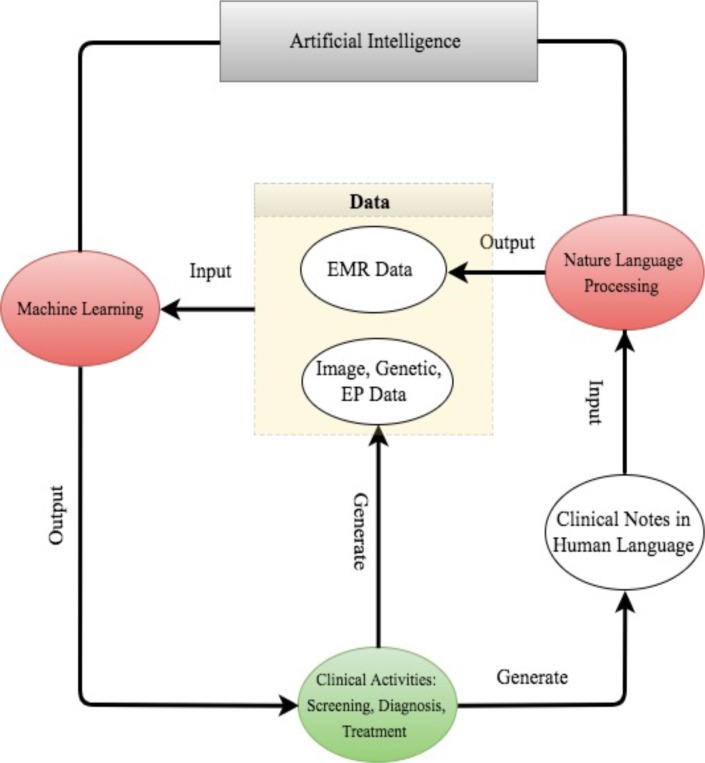
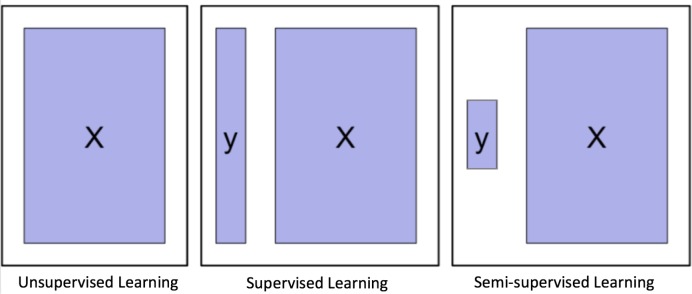
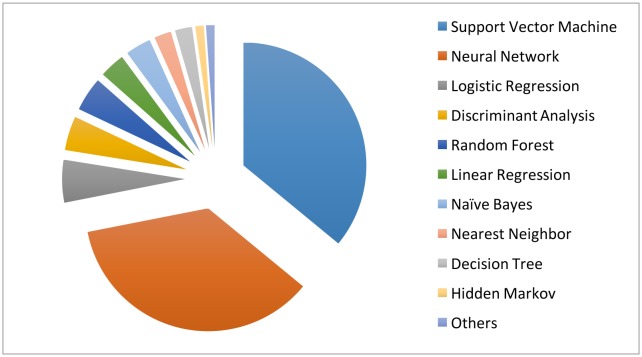
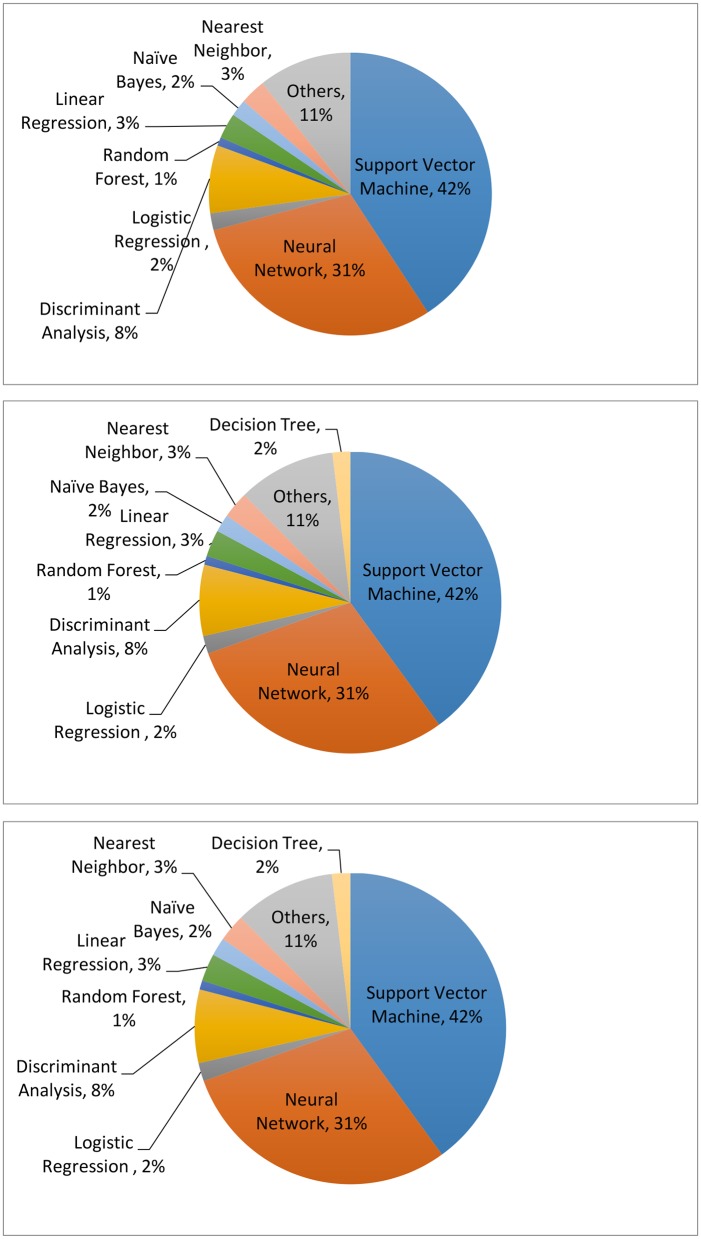
- AI techniques divide into machine learning for structured data (imaging, genetic, electrophysiological) and natural language processing for unstructured clinical text; supervised learning is most common in healthcare, with support vector machines and neural networks the most popular classical methods.
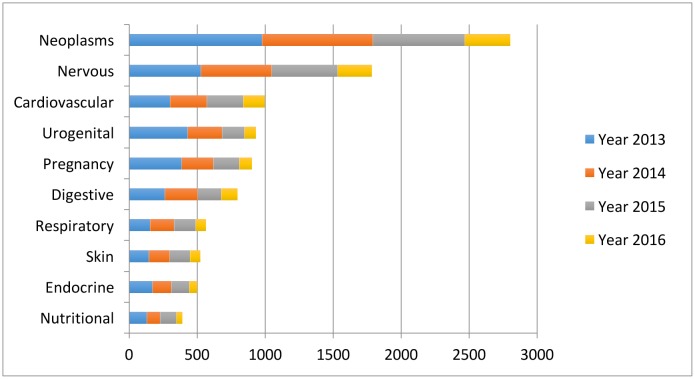
- Major disease areas using AI are cancer, nervous system disease, and cardiovascular disease; stroke applications span early detection and diagnosis, treatment, and outcome prediction/prognosis evaluation.
- Reported performance examples include CNN accuracy over 90% for congenital cataract diagnosis and treatment suggestion; sensitivity and specificity both over 90% for skin cancer and referable diabetic retinopathy; 90.5% correct gait classification; 87.6% SVM stroke classification; 97.5% accuracy for brain arteriovenous malformation outcome prediction versus 43% for standard regression; 95% training and 86% validation accuracy for NLP cerebral aneurysm classification; and 99% of IBM Watson treatment recommendations coherent with physician decisions.
- IBM Watson is described as a pioneer system with both ML and NLP modules; Arterys Cardio DL received FDA clearance as a deep learning clinical platform.
Methods
- Narrative review/survey of AI in healthcare, not a systematic review or meta-analysis.
- Reviews four aspects: motivations for AI in healthcare, healthcare data types, AI devices (classical ML, deep learning, NLP), and disease types, then details AI applications in stroke.
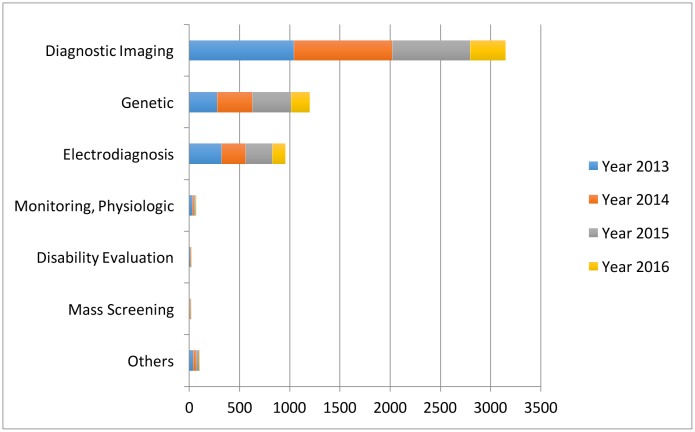
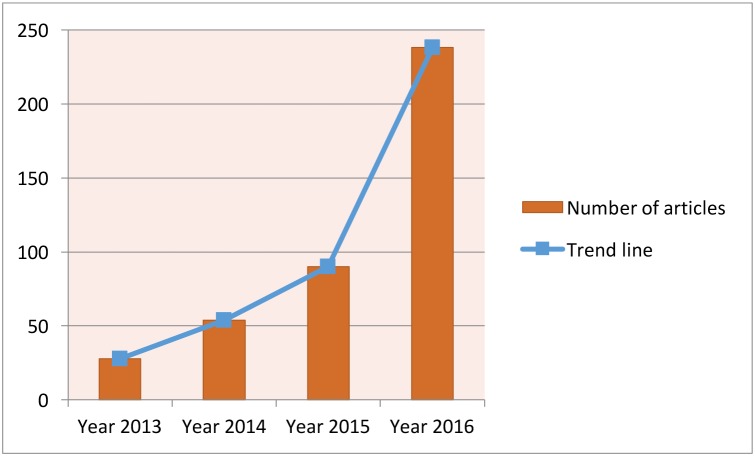
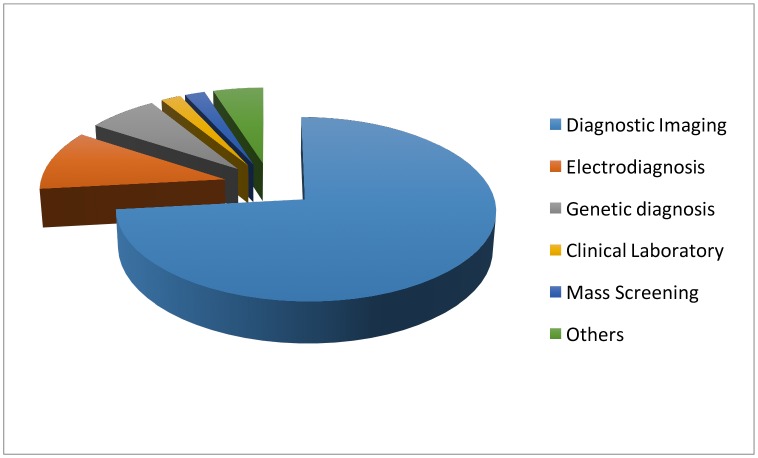
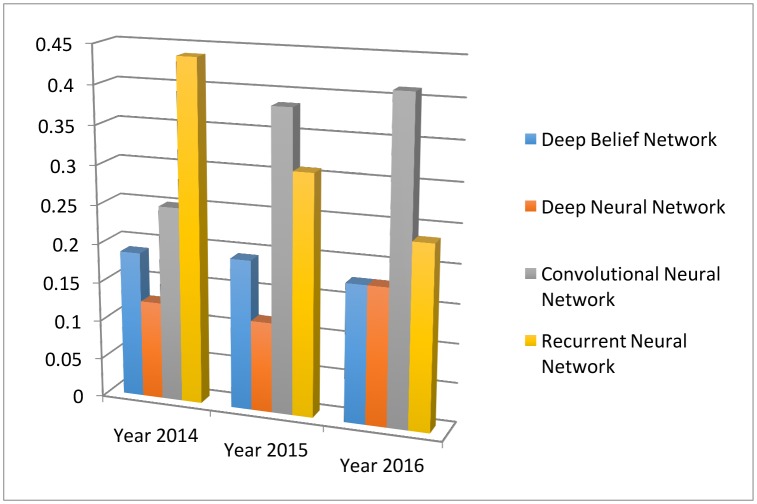
- Figures summarize PubMed searches on diagnosis techniques, disease types, ML algorithms, and deep learning trends; no formal search strategy or quality appraisal is reported.
Limitations
- The paper states real-life implementation hurdles: current regulations lack standards to assess AI system safety and efficacy, and the current healthcare environment lacks incentives for continuous data sharing.
- Evident from the text: as a narrative survey, it does not report systematic search terms, inclusion criteria, study counts, or risk-of-bias assessment; performance figures are cited from individual studies without meta-analysis.
- The paper includes a correction notice that a scripting error affected some publisher names in references and that figures 6–9 were corrected; competing interests are none declared, and no additional data are available.
Model-written summary. Check it against the paper before relying on it.
Integrity signals
Registry
Cites
Statistics
Figures
Verification
Claims the paper makes
22 Valid · 5 Not valid · 62 Not checked · 22 Own results and interpretations
At least one cited source doesn’t support this claim or points to a different paper, and none confirmed it — see the verdicts below.
In the paper
“Miller et al used NLP to automatically monitor the laboratory-based adverse effects.44”
§ Artificial intelligence in healthcare: past, present and future > natural language processing
What the sources say
- Disputedcites [44] Miller TP, Li Y, Getz KD, et al. Using electronic medical record data to report laboratory adverse events. Br J Haematol 2017;177:283-6. sourceExperimental — accuracy not yet measured
The Discussion says the study automated laboratory adverse-event ascertainment, but explicitly states that it did not include free-text laboratory results requiring NLP. It describes NLP as a possible future approach, not a method Miller et al. used. (LLM, conf=0.93)
Checked by a reasoning model — may be wrong.
plainstates a cause- Asserted: passes — The authors put it forward as true.
- Checkable: passes — It can be checked against evidence.
- Load-bearing: unclear — It is unclear whether the paper’s conclusions depend on it.
- Based: passes — The paper gives a reason why it holds.
- Disputed
Every source the paper cites for this claim was checked and supports it.
In the paper
“Esteva et al analysed clinical images to identify skin cancer subtypes.20”
§ Artificial intelligence in healthcare: past, present and future > disease focus
What the sources say
- Supportedcites [20] Esteva A, Kuprel B, Novoa RA, et al. Dermatologist-level classification of skin Cancer with deep neural networks. Nature 2017;542:115-8. source
The Abstract (p. 1) states the authors trained and tested a single CNN on a dataset of 129,450 clinical images against 21 board-certified dermatologists on the binary tasks 'keratinocyte carcinomas versus benign seborrheic keratoses' and 'malignant melanomas versus benign nevi', and (Abstract, p. 8) across three tasks including keratinocyte carcinoma and melanoma classification. Methods > Datasets (p. 1) enumerates the subtypes covered: malignant basal and squamous cell carcinomas, intraepithelial carcinomas, pre-malignant actinic keratosis, and melanomas versus benign nevi. Both elements of the paraphrase — analysis of clinical images and identification of skin cancer subtypes — are stated in our copy. (LLM, conf=0.92)
plain- Asserted: passes — The authors put it forward as true.
- Checkable: passes — It can be checked against evidence.
- Load-bearing: unclear — It is unclear whether the paper’s conclusions depend on it.
- Based: passes — The paper gives a reason why it holds.
- Supported
Every source the paper cites for this claim was checked and supports it.
In the paper
“Esteva et al performed the CNN to identify skin cancer from clinical images.20”
§ Artificial intelligence in healthcare: past, present and future > neural network
What the sources say
- Supportedcites [20] Esteva A, Kuprel B, Novoa RA, et al. Dermatologist-level classification of skin Cancer with deep neural networks. Nature 2017;542:115-8. source
The Abstract (p.1) states the paper demonstrates 'classification of skin lesions using a single CNN, trained end-to-end from images directly' using 'a dataset of 129,450 clinical images', tested on biopsy-proven clinical images for keratinocyte carcinomas and melanomas versus benign lesions — i.e. identifying skin cancer from clinical images. The Discussion (p.4) reiterates the development of a CNN matching dermatologists at melanoma and carcinoma classification. The paraphrase is fully consistent with the source. (LLM, conf=0.95)
plain- Asserted: passes — The authors put it forward as true.
- Checkable: passes — It can be checked against evidence.
- Load-bearing: unclear — It is unclear whether the paper’s conclusions depend on it.
- Based: passes — The paper gives a reason why it holds.
- Supported
The cited sources support only part of this claim — read each source’s verdict below.
In the paper
“Similarly, Maninini et al proposed a wearable device for collecting data about normal/pathological gaits for stroke prediction.49”
§ Artificial intelligence in healthcare: past, present and future > early detection and diagnosis
What the sources say
- Partly supportedcites [49] Mannini A, Trojaniello D, Cereatti A, et al. A machine Learning Framework for Gait classification using inertial sensors: application to Elderly, Post-Stroke and Huntington's Disease Patients. Sensors 2016;16:134. sourceExperimental — accuracy not yet measured
The Acquisition Protocol describes wearable inertial sensors used to collect gait data, and the Abstract reports classifying healthy elderly, post-stroke, and Huntington’s disease subjects. The paper used existing sensors rather than proposing a new wearable device, and it classified gait in people who had already had a stroke; it did not predict strokes. The indexed copy provides section labels but no page numbers. (LLM, conf=0.90)
plain- Asserted: passes — The authors put it forward as true.
- Checkable: passes — It can be checked against evidence.
- Load-bearing: unclear — It is unclear whether the paper’s conclusions depend on it.
- Based: passes — The paper gives a reason why it holds.
- Partly supported
Every source the paper cites for this claim was checked and supports it.
In the paper
“The result is comparable with human expert manual lesion delineation.”
§ Artificial intelligence in healthcare: past, present and future > early detection and diagnosis
What the sources say
- Supportedcites [51] Griffis JC, Allendorfer JB, Szaflarski JP. Voxel-based gaussian naïve Bayes classification of ischemic stroke lesions in individual T1- weighted MRI scans. J Neurosci Methods 2016;257:97-108. source
The Results section reports that post-processed out-of-sample predictions on 30 cases showed "high spatial overlap (mean Dice similarity coefficient = 0.66) and volume agreement (mean percent volume difference = 28.91; Pearson's r = 0.97) with manual lesion delineations", where the ground truth was hand-drawn delineation by an experienced neuroanatomist (Section 2.3). The Conclusions state "Our automated approach agrees with manual tracing", and Section 4.2 adds that the method's PVDs "compare favorably" to other automated methods and lie between those and what would be expected from inter-rater variability in manual delineation. Section 2.5 notes DSC 0.6-0.8 is regarded as "good", so characterizing the naïve Bayes result as comparable with expert manual delineation is faithful to the source. (LLM, conf=0.88)
plain- Asserted: passes — The authors put it forward as true.
- Checkable: passes — It can be checked against evidence.
- Load-bearing: unclear — It is unclear whether the paper’s conclusions depend on it.
- Based: passes — The paper gives a reason why it holds.
- Supported
63 more claims · 15 with their cited sources checked
Create a free account to see all 111 claims and to verify the 71 references still open.
- Probably not a substantial claim. 33
- It may state two separate claims as one. 12
Claims other papers make about this one
Each is checked against this paper’s own text: does it say what the citing paper says it does?
The source backs part of the claim, not all of it — or backs it for a different population, condition or comparison.
In the citing paper
“AI applications have proven effective in various clinical domains, such as reducing documentation burdens for clinicians, improving image interpretation in radiology, supporting intraoperative surgical guidance, and facilitating public health risk stratification2,3.”
From Developing a Canadian artificial intelligence medical curriculum using a Delphi study (2024) · cites this paper as [2]
Experimental — accuracy not yet measuredThe source backs part of the claim, not all of it — or backs it for a different population, condition or comparison.
In the citing paper
“The integration of artificial intelligence (AI) in healthcare is transformative, enhancing diagnostic accuracy, risk stratification, and treatment efficiency1,2.”
From Developing a Canadian artificial intelligence medical curriculum using a Delphi study (2024) · cites this paper as [2]
Experimental — accuracy not yet measuredThe source backs part of the claim, not all of it — or backs it for a different population, condition or comparison.
In the citing paper
“AI has evolved from an academic concept to a practical tool that is reshaping various sectors, including healthcare [17].”
From Opportunities, challenges, and requirements for Artificial Intelligence (AI) implementation in Primary Health Care (PHC): a systematic review (2025) · cites this paper as [17]
Experimental — accuracy not yet measuredThe check wasn’t confident either way, so it gives no verdict — never disputed.
In the citing paper
“For instance, only about one-fifth of the available trial results are used when diagnosing and treating cancer patients.18”
From Artificial intelligence: opportunities and implications for the health workforce (2020) · cites this paper as [18]
Experimental — accuracy not yet measuredIn the citing paper
“Furthermore, AI applications can aid in image-based diagnoses of conditions such as stroke and heart diseases.7”
From Artificial intelligence and endo-histo-omics: new dimensions of precision endoscopy and histology in inflammatory bowel disease (2024) · cites this paper as [7]
3 more claims about this paper
Create a free account to see every claim other papers make about this one.
Self-check
Percentages, sums and reported differences re-computed from the paper’s own numbers.
Each contradiction between two passages listed here was confirmed by an independent check.
Rated minor: it would not touch a result — a value no result rests on, a p-value that stays on the same side of the significance level, or a conflict that is clerical, resolved elsewhere in the paper, or outside its own findings.
In the paper
§ Artificial intelligence in healthcare: past, present and future > early detection and diagnosis
“Similarly, King et al used SVM to predict stroke mortality at discharge.62”
§ Artificial intelligence in healthcare: past, present and future > References
“62. Ho KC, Speier W, El-Saden S, et al. Predicting discharge mortality after acute ischemic stroke using balanced data. AMIA Annu Symp Proc 2014;2014:1787-96.”
Rated minor: it would not touch a result — a value no result rests on, a p-value that stays on the same side of the significance level, or a conflict that is clerical, resolved elsewhere in the paper, or outside its own findings.
In the paper
§ Artificial intelligence in healthcare: past, present and future > 2. Neurology: Bouton et al developed an AI system to
“The decision rule then follows that if a i >0, the ith patient is classified to group 1, that is, labelling Y i = -1; if a i <0, the patient is classified to group 2, that is, labelling Y i =1.”
§ Artificial intelligence in healthcare: past, present and future > 2. Neurology: Bouton et al developed an AI system to
“Intuitively, the best weights must allow (1) the sign of a i to be the same as Y i so the classification is correct;”
Rated minor: it would not touch a result — a value no result rests on, a p-value that stays on the same side of the significance level, or a conflict that is clerical, resolved elsewhere in the paper, or outside its own findings.
In the paper
§ Artificial intelligence in healthcare: past, present and future > motivation
“For example, Jha and Topol urged radiologists to adopt AI technologies when analysing diagnostic images that contain vast data information.13”
§ Artificial intelligence in healthcare: past, present and future > References
“13. Gillies RJ, Kinahan PE, Hricak H. Radiomics: images are more than pictures, they are data. Radiology 2016;278:563-77.”
Citations
Cites
LeCun, Y., Bengio, Y., & Hinton, G. (2015) · Nature · doi:10.1038/nature14539 · Cited by 84,126
Gradient-based learning applied to document recognition
Lecun, Y., Bottou, L., Bengio, Y., & Haffner, P. (1998) · Proceedings of the IEEE · doi:10.1109/5.726791 · Cited by 58,805 · cited 1×
“The CNN was first proposed and advocated for the high-dimensional image analysis by Lecun et al.(38) The”
MethodDermatologist-level classification of skin cancer with deep neural networks
Esteva, A., Kuprel, B., Novoa, R. A., Ko, J., Swetter, S. M., Blau, H. M., & Thrun, S. (2017) · Nature · doi:10.1038/nature21056 · Cited by 14,362
An Introduction to Statistical Learning
James, G., Witten, D., Hastie, T., & Tibshirani, R. (2013) · Springer Texts in Statistics · doi:10.1007/978-1-4614-7138-7 · Cited by 12,106
(2016) · Cited by 11,679
Pattern Recognition and Machine Learning
(2006) · doi:10.1007/978-0-387-45528-0 · Cited by 9,824
Foundations of statistical natural language processing
Manning, C. D., & Schütze, H. (1999) · Cited by 9,816
TensorFlow: Large-Scale Machine Learning on Heterogeneous Distributed Systems
Abadi, M., Agarwal, A., Barham, P., Brevdo, E., Chen, Z., Citro, C., Corrado, G. S., Davis, A., Dean, J., Devin, M., et al. (2016) · arXiv · doi:10.48550/arxiv.1603.04467 · Cited by 9,408 · cited 2×
“The implementation of CNN has been included in popular software packages such as Caffe from Berkeley AI Research, 39 CNTK from Microsoft 40 and TensorFlow from Google.”
MethodRadiomics: Images Are More than Pictures, They Are Data
Gillies, R. J., Kinahan, P. E., & Hricak, H. (2016) · Radiology · doi:10.1148/radiol.2015151169 · Cited by 8,421
(2006) · Springer eBooks · Cited by 8,123
Research works printed but not linked: 2
- Pearson T. How to replicate Watson hardware and systems design for your own use in your basement. 2011 https://www. ibm. com/ developerworks/ community/ blogs/ InsideSystemStorage/ entry/ ibm_ watson_ how_ to_ build_ your_ own_ watson_ jr_ in_ your_ basement7? lang= en (accessed 1 Jun 2017).
- Kayyali B, Knott D, Kuiken SV. The big-data revolution in US health care: accelerating value and innovation. 2013 http://www. mckinsey. com/ industries/ healthcare-systems-and-services/ our-insights/ the- big-data-revolution-in-us-health-care (accessed 1 Jun 2017). on July 18, 2023 by guest. Protected by copyright. http://svn.bmj.com/ Stroke Vasc Neurol: first published as 10.1136/svn-2017-000101 on 21 June 2017. Downloaded from
Cited by
Items 601–700 of 1,034
Deep Learning Based Image Processing for Robot Assisted Surgery: A Systematic Literature Survey
Hussain, S. M., Brunetti, A., Lucarelli, G. T., Memeo, R., Bevilacqua, V., & Buongiorno, D. (2022) · IEEE Access · doi:10.1109/access.2022.3223704 · Cited by 62
Zúñiga Salazar, G., Zúñiga, D., Vindel, C. L., Yoong, A. M., Hincapie, S., Zúñiga, A. B., Zúñiga, P., Salazar, E., & Zúñiga, B. (2023) · Cureus · doi:10.7759/cureus.45473 · Cited by 51
Artificial intelligence in perinatal mental health research: A scoping review
Kwok, W. H., Zhang, Y., & Wang, G. (2024) · Computers in Biology and Medicine · doi:10.1016/j.compbiomed.2024.108685 · Cited by 62
Federated Learning: Breaking Down Barriers in Global Genomic Research
Calvino, G., Peconi, C., Strafella, C., Trastulli, G., Megalizzi, D., Andreucci, S., Cascella, R., Caltagirone, C., Zampatti, S., & Giardina, E. (2024) · Genes · doi:10.3390/genes15121650 · Cited by 62
Cox, J. L., Parkash, R., Foster, G., Xie, F., MacKillop, J. H., Ciaccia, A., Choudhri, S. H., Hamilton, L. M., Nemis-White, J. M., & Thabane, L. (2020) · American Heart Journal · doi:10.1016/j.ahj.2020.02.019 · Cited by 62
Evaluation of machine learning solutions in medicine
Antoniou, T., & Mamdani, M. (2021) · Canadian Medical Association Journal · doi:10.1503/cmaj.210036 · Cited by 62
Daley, B. J., Ni’Man, M., Neves, M. R., Huda, M. S. B., Marsh, W., Fenton, N., Hitman, G. A., & McLachlan, S. (2021) · Diabetic Medicine · doi:10.1111/dme.14735 · Cited by 62
Outlining the Design Space of Explainable Intelligent Systems for Medical DiagnosisPreprint
Xie, Y., Gao, G., & Chen, X. (2019) · arXiv (Cornell University) · doi:10.48550/arxiv.1902.06019 · Cited by 64
Review of Artificial Intelligence Techniques in Chronic Obstructive Lung Disease
Exarchos, K., Aggelopoulou, A., Oikonomou, A., Biniskou, T., Beli, V., Antoniadou, E., & Κostikas, Κ. (2021) · IEEE Journal of Biomedical and Health Informatics · doi:10.1109/jbhi.2021.3135838 · Cited by 61
Quan, S. Y., Wei, M. T., Lee, J., Mohi-Ud-Din, R., Mostaghim, R., Sachdev, R., Siegel, D., Friedlander, Y., & Friedland, S. (2022) · Scientific Reports · doi:10.1038/s41598-022-10597-y · Cited by 55
Utilization of Artificial Intelligence in Health Care: Nursesꞌ Perspectives and Attitudes
Sabra, H., Abd Elaal, H., Sobhy, K., & Bakr, M. (2023) · Menoufia Nursing Journal · doi:10.21608/menj.2023.297411 · Cited by 27
A Novel Approach for Brain Tumor Classification Using an Ensemble of Deep and Hand-Crafted Features
Kibriya, H., Amin, R., Kim, J., Nawaz, M., & Gantassi, R. (2023) · Sensors · doi:10.3390/s23104693 · Cited by 61
Rabaan, A. A., Bakhrebah, M. A., Alotaibi, J., Natto, Z. S., Alkhaibari, R. S., Alawad, E., Alshammari, H. M., Alwarthan, S. M., Alhajri, M. M., AlMogbel, M. S., et al. (2023) · Journal of Infection and Public Health · doi:10.1016/j.jiph.2023.08.021 · Cited by 61
Türkiye ve Dünyada Sağlık Hizmetlerinde Yapay Zekâ
TARCAN, G. Y., BALÇIK, P. Y., & Sebik, N. B. (2024) · Mersin Üniversitesi Tıp Fakültesi Lokman Hekim Tıp Tarihi ve Folklorik Tıp Dergisi · doi:10.31020/mutftd.1278529 · Cited by 65
Unpacking Human-AI Interaction in Safety-Critical Industries: A Systematic Literature Review
Bach, T. A., Kristiansen, J. K., Babić, A., & Jacovi, A. (2024) · IEEE Access · doi:10.1109/access.2024.3437190 · Cited by 62
Mikkonen, K., Tuunainen, S., Oikarinen, A., Jansson, M. M., Woo, B., Zhou, W., Tam, W., Tuomikoski, A., Kaakinen, P., Juntunen, J., et al. (2025) · Journal of Clinical Nursing · doi:10.1111/jocn.70156 · Cited by 61
Artificial Intelligence in Dentistry: A Concise Review of Reporting Checklists and Guidelines
Khurshid, Z., Osathanon, T., Shire, M. A., Schwendicke, F., & Samaranayake, L. P. (2025) · International Dental Journal · doi:10.1016/j.identj.2025.109322 · Cited by 61
Shrivastav, L. K., & Jha, S. K. (2020) · Applied Intelligence · doi:10.1007/s10489-020-01997-6 · Cited by 62
Web-based chatbot for Frequently Asked Queries (FAQ) in Hospitals
Mittal, M., Battineni, G., Singh, D., Nagarwal, T., & Yadav, P. (2021) · Journal of Taibah University Medical Sciences · doi:10.1016/j.jtumed.2021.06.002 · Cited by 61
Artificial intelligence in thoracic surgery: past, present, perspective and limits
Etienne, H., Hamdi, S., Le Roux, M., Camuset, J., Khalife-Hocquemiller, T., Giol, M., Debrosse, D., & Assouad, J. (2020) · European Respiratory Review · doi:10.1183/16000617.0010-2020 · Cited by 60
“AI is able to [1]: recognise patterns; anticipate future events; make good decisions; learn from its mistakes; assist clinical decision-making; and uncover relevant information from data.”
BackgroundOn the Role of Artificial Intelligence in Genomics to Enhance Precision Medicine
Álvarez-Machancoses, Ó., deAndrés‐Galiana, E. J., Cernea, A., de la Viña, J. F. S., & Fernández‐Martínez, J. L. (2020) · Pharmacogenomics and Personalized Medicine · doi:10.2147/pgpm.s205082 · Cited by 60
Wu, J., Nishida, T., Weinreb, R. N., & Lin, J. (2021) · American Journal of Ophthalmology · doi:10.1016/j.ajo.2021.12.008 · Cited by 60
Langenberger, B., Schrednitzki, D., Halder, A. M., Busse, R., & Pross, C. M. (2023) · Bone and Joint Research · doi:10.1302/2046-3758.129.bjr-2023-0070.r2 · Cited by 60
Assessment of ChatGPT’s performance on neurology written board examination questions
Chen, T. C., Multala, E., Kearns, P., Delashaw, J., Dumont, A., Maraganore, D., & Wang, A. (2023) · BMJ Neurology Open · doi:10.1136/bmjno-2023-000530 · Cited by 51
Maida, E., Moccia, M., Palladino, R., Borriello, G., Affinito, G., Clerico, M., Repice, A. M., Sapio, A. D., Iodice, R., Spiezia, A. L., et al. (2024) · Journal of Neurology · doi:10.1007/s00415-024-12328-x · Cited by 60
Ćirković, A. (2020) · Journal of Medical Internet Research · doi:10.2196/18097 · Cited by 53
Froomkin, A. M., Kerr, I., & Pineau, J. (2025) · Robot Law: Volume II · doi:10.4337/9781800887305.00012 · Cited by 59
Boosting machines for predicting shear strength of CFS channels with staggered web perforations
Degtyarev, V. V., & Naser, M. Z. (2021) · Structures · doi:10.1016/j.istruc.2021.09.060 · Cited by 60
Cécile, P., Aude, M., Jean-Louis, D., & Catherine, R. (2020) · Studies in Health Technology and Informatics · doi:10.3233/shti200312 · Cited by 62
“As a result, health care is often presented as one of the most propitious domains in the upcoming "AI revolution" [7][8].”
BackgroundA federated learning framework for healthcare IoT devices
Yuan, B., Ge, S., & Xing, W. (2020) · arXiv · doi:10.48550/arxiv.2005.05083 · Cited by 59
“Machine learning is bringing a paradigm shift to healthcare, powered by increasing availability of healthcare data and rapid progress of analytic techniques (Jiang et al., 2017).”
BackgroundAI-based clinical decision-making systems in palliative medicine: ethical challenges
Panfilis, L. D., Peruselli, C., Tanzi, S., & Botrugno, C. (2021) · BMJ Supportive & Palliative Care · doi:10.1136/bmjspcare-2021-002948 · Cited by 59
Extreme value theory inspires explainable machine learning approach for seizure detection
Karpov, O. E., Grubov, V., Александрович, М. В., Kurkin, S., Smirnov, N. M., Павлович, У. Н., Andrikov, D. A., Shusharina, N. N., & Hramov, A. E. (2022) · Scientific Reports · doi:10.1038/s41598-022-15675-9 · Cited by 59
Artificial Intelligence (AI) Vs. Human in Hip Fracture Detection
Twinprai, N., Boonrod, A., Boonrod, A., Chindaprasirt, J., Sirithanaphol, W., Chindaprasirt, P., & Twinprai, P. (2022) · Heliyon · doi:10.1016/j.heliyon.2022.e11266 · Cited by 59
Literature analysis of artificial intelligence in biomedicine
Hulsen, T. (2022) · Annals of Translational Medicine · doi:10.21037/atm-2022-50 · Cited by 43
Using AI in Optimizing Oral and Dental Diagnoses—A Narrative Review
Surdu, A. E., Budală, D. G., Luchian, I. A., Foia, L. G., Botnariu, G. E., & Scutariu, M. M. (2024) · Diagnostics · doi:10.3390/diagnostics14242804 · Cited by 59
A comprehensive overview of Generative AI (GAI): Technologies, applications, and challenges
Zhang, Z., Zhang, J., Zhang, X., & Mai, W. (2025) · Neurocomputing · doi:10.1016/j.neucom.2025.129645 · Cited by 61
A validated framework for responsible AI in healthcare autonomous systems
Alelyani, T. (2025) · Scientific Reports · doi:10.1038/s41598-025-25266-z · Cited by 61
Leveraging explainable AI for sustainable agriculture: a comprehensive review of recent advances
Rajbongshi, A., Johora, F. T., Hossain, A., Sarker, M. S., Rahman, M. H., Rahman, M. W., Alotaibi, F. T., & Moni, M. A. (2026) · Artificial Intelligence Review · doi:10.1007/s10462-025-11459-5 · Cited by 62
European Spine Study Group, Ames, C. P., International Spine Study Group, Smith, J. S., Pellisé, F., Kelly, M. P., Gum, J. L., Alanay, A., Acaroglu, E. R., Pérez-Grueso, F. J. S., et al. (2019) · European Spine Journal · doi:10.1007/s00586-019-06079-x · Cited by 59
Schiavone, F., & Ferretti, M. (2021) · Futures · doi:10.1016/j.futures.2021.102849 · Cited by 60
Intelligent Telehealth in Pharmacovigilance: A Future Perspective
Edrees, H. H., Song, W., Syrowatka, A., Simona, A., Amato, M. G., & Bates, D. W. (2022) · Drug Safety · doi:10.1007/s40264-022-01172-5 · Cited by 59
Is High-Fidelity Important for Human-like Virtual Avatars in Human Computer Interactions?
Cao, Q., Yu, H. L., Charisse, P., Qiao, S., & Stevens, B. (2023) · International Journal of Network Dynamics and Intelligence · doi:10.53941/ijndi0201008 · Cited by 58
Artificial Intelligence applications in healthcare: A bibliometric and topic model-based analysis
Alhashmi, S. M., Hashem, M., & Al-Qudah, I. (2023) · Intelligent Systems with Applications · doi:10.1016/j.iswa.2023.200299 · Cited by 58
Armenia, S., Franco, E., Iandolo, F., Maielli, G., & Vito, P. (2024) · Technological Forecasting and Social Change · doi:10.1016/j.techfore.2023.123131 · Cited by 59
The Impact of Digital Technology on Healthcare Delivery and Patient Outcomes
Alawiye, T. R. (2024) · E-Health Telecommunication Systems and Networks · doi:10.4236/etsn.2024.132002 · Cited by 58
The illusion of safety: A report to the FDA on AI healthcare product approvals
Abulibdeh, R., Celi, L. A., & Sejdić, E. (2025) · PLOS Digital Health · doi:10.1371/journal.pdig.0000866 · Cited by 58
Artificial Intelligence for Participatory Health: Applications, Impact, and Future Implications
Denecke, K., Gabarrón, E., Grainger, R., Konstantinidis, S. T., Lau, A. Y. S., Rivera-Romero, O., Miron‐Shatz, T., & Merolli, M. (2019) · Yearbook of Medical Informatics · doi:10.1055/s-0039-1677902 · Cited by 58
Healthcare Operations and Black Swan Event for COVID-19 Pandemic: A Predictive Analytics
Devarajan, J. P., Arunmozhi, M., & Sreedharan, V. R. (2021) · IEEE Transactions on Engineering Management · doi:10.1109/tem.2021.3076603 · Cited by 58
Camara, J., Neto, A., Pires, I. M., Villasana, M. V., Zdravevski, E., & Cunha, A. M. T. D. S. (2022) · Journal of Imaging · doi:10.3390/jimaging8020019 · Cited by 58
Gauriau, R., Bridge, C. P., Chen, L., Kitamura, F., Tenenholtz, N., KIRSCH, J. E., Andriole, K. P., Michalski, M. H., & Bizzo, B. C. (2020) · Journal of Imaging Informatics in Medicine · doi:10.1007/s10278-019-00308-x · Cited by 57
Gatinel, D., Debellemanière, G., Saad, A., Dubois, M., & Rampat, R. (2021) · Translational Vision Science & Technology · doi:10.1167/tvst.10.4.27 · Cited by 57
Zhang, S., Suresh, L., Yang, J., Zhang, X., & Tan, S. C. (2022) · Advanced Intelligent Systems · doi:10.1002/aisy.202100194 · Cited by 59
Chen, P.-C., Lu, Y.-R., Kang, Y., & Chang, C. (2022) · Journal of Medical Internet Research · doi:10.2196/27694 · Cited by 57
Beard, K., Pennington, A. M., Gauff, A. K., Mitchell, K. C., Smith, J. M., & Marion, D. W. (2024) · Biomedicines · doi:10.3390/biomedicines12112459 · Cited by 57
Prediction of Stroke Using Deep Learning Model
Chantamit-o-pas, P., & Goyal, M. L. (2017) · Lecture notes in computer science · doi:10.1007/978-3-319-70139-4_78 · Cited by 57
Geleceğin Teknolojisinde Hemşirelik
Şendir, M., Şimşekoğlu, N., Kaya, A., & Sümer, K. (2019) · Sağlık Bilimleri Üniversitesi Hemşirelik Dergisi · Cited by 57
Saudi Arabia Health Systems Challenging and Future Transformation With Artificial Intelligence
Saeed, A., Saeed, A. B., & AlAhmri, F. A. (2023) · Cureus · doi:10.7759/cureus.37826 · Cited by 57
Developing a Canadian artificial intelligence medical curriculum using a Delphi study
Singla, R., Pupic, N., Ghaffarizadeh, S.-A., Kim, C., Hu, R., Forster, B. B., & Hacihaliloglu, I. (2024) · npj Digital Medicine · doi:10.1038/s41746-024-01307-1 · Cited by 56
Lessons Learned from Designing an AI-Enabled Diagnosis Tool for Pathologists
Gu, H., Huang, J., Hung, L., & Chen, X. '. (2021) · Proceedings of the ACM on Human-Computer Interaction · doi:10.1145/3449084 · Cited by 56
“Imaging provides an abundant source of clinical data in medicine [34].”
BackgroundTruong, N. M., Vo, T. Q., Tran, H. T. B., Nguyen, H. T., & Pham, V. N. H. (2023) · Heliyon · doi:10.1016/j.heliyon.2023.e22653 · Cited by 56
“These AI capabilities extend to assisting the healthcare industry in management, diagnosis, treatment planning, medical education, medical record mining, drug formulation, and evaluation classification [18 – 21].”
BackgroundChoudhury, A. (2022) · JMIR Human Factors · doi:10.2196/35421 · Cited by 56
Build confidence and acceptance of AI-based decision support systems - Explainable and liable AI
Nicodème, C. (2020) · Conference on Human System Interactions · doi:10.1109/hsi49210.2020.9142668 · Cited by 56
Carriere, J., Shafi, H., Brehon, K., Manhas, K. P., Churchill, K., Ho, C., & Tavakoli, M. (2021) · Frontiers in Artificial Intelligence · doi:10.3389/frai.2021.613637 · Cited by 56
Distinct but correct: generating diversified and entity-revised medical response
Li, B., Sun, B., Li, S., Chen, E., Liu, H., Weng, Y., Bai, Y., & Hu, M. (2024) · Science China Information Sciences · doi:10.1007/s11432-021-3534-9 · Cited by 56
Joshi, S., Bisht, B., Kumar, V., Singh, N., Begum, J. P. S., Singh, N., & Kumar, S. (2023) · Systems Microbiology and Biomanufacturing · doi:10.1007/s43393-023-00200-4 · Cited by 56
Radaelli, D., Di Maria, S., Jakovski, Z., Alempijevic, D., Al-Habash, I., Concato, M., Bolcato, M., & D’Errico, S. (2024) · Healthcare · doi:10.3390/healthcare12191996 · Cited by 37
Artificial intelligence in cancer pathology: Applications, challenges, and future directions
Wang, J.-L., Wang, T., Han, R., Shi, D., & Chen, B. (2025) · CytoJournal · doi:10.25259/cytojournal_272_2024 · Cited by 57
100 Years of evolving gene–disease complexities and scientific debutants
Zeeshan, S., Xiong, R., Liang, B. T., & Ahmed, Z. (2019) · Briefings in Bioinformatics · doi:10.1093/bib/bbz038 · Cited by 56
Challenges and opportunities in software-driven medical devices
Gordon, W. J., & Stern, A. D. (2019) · Nature Biomedical Engineering · doi:10.1038/s41551-019-0426-z · Cited by 56
Yoon, J., Han, J., Park, J. I., Hwang, J. S., Han, J. M., Sohn, J., Park, K. H., & Hwang, D. D.-J. (2020) · Scientific Reports · doi:10.1038/s41598-020-75816-w · Cited by 56
Early diagnosis of lung cancer using magnetic nanoparticles-integrated systems
Rastogi, A., Yadav, K., Mishra, A., Singh, M. S., Chaudhary, S., Manohar, R., & Parmar, A. S. (2022) · Nanotechnology Reviews · doi:10.1515/ntrev-2022-0032 · Cited by 57
Ailia, M. J., Thakur, N., Abdul‐Ghafar, J., Jung, C. K., Yim, K., & Chong, Y. (2022) · Cancers · doi:10.3390/cancers14102400 · Cited by 56
A systematic review of current AI techniques used in the context of the SDGs
Greif, L., Röckel, F., Kimmig, A., & Ovtcharova, J. (2025) · International Journal of Environmental Research · doi:10.1007/s41742-024-00668-5 · Cited by 55
Viscaíno, M., Bustos, J. A. T., Muñoz, P., Cheein, C. A., & Cheein, F. A. (2021) · World Journal of Gastroenterology · doi:10.3748/wjg.v27.i38.6399 · Cited by 55
Manlhiot, C., den Eynde, J. V., Kutty, S., & Ross, H. J. (2021) · Canadian Journal of Cardiology · doi:10.1016/j.cjca.2021.11.009 · Cited by 55
Oprescu, A. M., Amarante, G. M., García‐Díaz, L., Rey, V. E., Chimenea, Á., Martinez-Martinez, R. L., & Ternero, M. D. C. R. (2022) · Information Fusion · doi:10.1016/j.inffus.2022.03.011 · Cited by 55
The medical profession transformed by artificial intelligence: Qualitative study
Mosch, L., Fürstenau, D., Brandt, J., Wagnitz, J., Klopfenstein, S. A., Poncette, A.-S., & Balzer, F. (2022) · DIGITAL HEALTH · doi:10.1177/20552076221143903 · Cited by 39
Balla, Y., Tirunagari, S., & Windridge, D. (2023) · Indian Pediatrics · doi:10.1007/s13312-023-2936-8 · Cited by 57
Doctor-patient interactions in the age of AI: navigating innovation and expertise
Hryciw, B. N., Fortin, Z., Ghossein, J., & Kyeremanteng, K. (2023) · Frontiers in Medicine · doi:10.3389/fmed.2023.1241508 · Cited by 40
Artificial intelligence for access to primary healthcare in rural settings
Lamem, M. F. H., Sahid, M. I., & Ahmed, A. (2024) · Journal of Medicine Surgery and Public Health · doi:10.1016/j.glmedi.2024.100173 · Cited by 55
Abdelmohsen, S. A., & Al‐Jabri, M. M. (2025) · Journal of Nursing Scholarship · doi:10.1111/jnu.70040 · Cited by 56
Mansoor, I., Abdullah, M., Rizwan, M. D., & Fraz, M. M. (2025) · Health Information Science and Systems · doi:10.1007/s13755-025-00403-0 · Cited by 56
Delivering high‐tech, AI‐based health care at Apollo Hospitals
Agarwal, Y., Jain, M., Sinha, S., & Dhir, S. (2019) · Global Business and Organizational Excellence · doi:10.1002/joe.21981 · Cited by 55
Learning Disease Causality Knowledge From the Web of Health Data
Yu, H. Q., & Reiff‐Marganiec, S. (2022) · International Journal on Semantic Web and Information Systems · doi:10.4018/ijswis.297145 · Cited by 54
Jussupow, E., Spohrer, K., & Heinzl, A. (2022) · Business & Information Systems Engineering · doi:10.1007/s12599-022-00750-2 · Cited by 56
Shi, J., Wei, S., Gao, Y., Mei, F., Tian, J., Zhao, Y., & Li, Z. (2023) · Journal of Nursing Scholarship · doi:10.1111/jnu.12852 · Cited by 35
Machine learning models in predicting graft survival in kidney transplantation: meta-analysis
Ravindhran, B., Chandak, P., Schafer, N., Kundalia, K., Hwang, W., Antoniadis, S., Haroon, U., & Zakri, R. H. (2023) · BJS Open · doi:10.1093/bjsopen/zrad011 · Cited by 54
Successes and challenges of artificial intelligence in cardiology
Vandenberk, B., Chew, D. S., Prasana, D., Gupta, S., & Exner, D. V. (2023) · Frontiers in Digital Health · doi:10.3389/fdgth.2023.1201392 · Cited by 54
Integration of Blockchain and AI: Exploring Application in the Digital Business
Xuan, T. R., & Ness, S. (2023) · Journal of Engineering Research and Reports · doi:10.9734/jerr/2023/v25i8955 · Cited by 55
Alghamdi, S. A., & Alashban, Y. I. (2024) · Journal of Radiation Research and Applied Sciences · doi:10.1016/j.jrras.2023.100815 · Cited by 56
Qutieshat, A. S., Rusheidi, A. A., Ghammari, S. A., Alarabi, A., Salem, A., & Zelihic, M. (2024) · Diagnosis · doi:10.1515/dx-2024-0034 · Cited by 54
Twala, B. (2025) · Frontiers in Aging Neuroscience · doi:10.3389/fnagi.2025.1638340 · Cited by 55
CBN: Constructing a clinical Bayesian network based on data from the electronic medical record
Shen, Y., Zhang, L., Zhang, J., Yang, M., Tang, B., Li, Y., & Lei, K. (2018) · Journal of Biomedical Informatics · doi:10.1016/j.jbi.2018.10.007 · Cited by 55
Thomford, N. E., Bope, C. D., Agamah, F. E., Dzobo, K., Ateko, R. O., Chimusa, E. R., Mazandu, G. K., Ntumba, S. B., Dandara, C., & Wonkam, A. (2019) · OMICS A Journal of Integrative Biology · doi:10.1089/omi.2019.0142 · Cited by 54
Syed-Abdul, S., Firdani, R.-P., Chung, H., Uddin, M., Hur, M., Park, J. H., Kim, H. W., Gradišek, A., & Dovgan, E. (2020) · Scientific Reports · doi:10.1038/s41598-020-61247-0 · Cited by 55
Artificial Intelligence in Cyber Security
Sadiku, M. N. O., Fagbohungbe, O. I., & Musa, S. M. (2020) · International Journal of Engineering Research and Advanced Technology · doi:10.31695/ijerat.2020.3612 · Cited by 54
Mukherjee, S., Yadav, G., & Kumar, R. (2021) · World Journal of Stem Cells · doi:10.4252/wjsc.v13.i6.521 · Cited by 54
Mazlan, A. U., Sahabudin, N. A., Remli, M. A., Ismail, N. S. N., Mohamad, M. S., Nies, H. W., & Warif, N. B. A. (2021) · Processes · doi:10.3390/pr9081466 · Cited by 54
Recent Patient Health Monitoring Platforms Incorporating Internet of Things-Enabled Smart Devices
Kang, M., Park, E., Cho, B. H., & Lee, K. (2018) · International Neurourology Journal · doi:10.5213/inj.1820corr.001 · Cited by 54
Alsobhi, M., Sachdev, H. S., Chevidikunnan, M. F., Basuodan, R., K U, D. K., & Khan, F. (2022) · International Journal of Environmental Research and Public Health · doi:10.3390/ijerph192315919 · Cited by 53
Metadata
- Authors
- Jiang, F., Jiang, Y., Zhi, H., Dong, Y., Li, H., Ma, S., Wang, Y., Dong, Q., Shen, H., & Wang, Y.
- Affiliations
- University of Hong Kong (HK)
- Capital Medical University (CN)
- Fudan University (CN)
- China National Clinical Research Center for Neurological Diseases, Beijing, China
- DotHealth, Shanghai, China
- Beijing Tian Tan Hospital (CN)
- Corresponding author
- Wang, Yongjun
- Venue
- Stroke and Vascular Neurology
- Publisher
- BMJ
- Published
- 2017-06-21
- Volume
- 2
- Issue
- 4
- Pages
- 230-243
- ISSN
- 2059-8688 (ISSN-L)
- 2059-8696
- PMC
- PMC5829945
- OpenAlex
- W2664267452
- Semantic Scholar
- 10f919b1a5161b560504c225cfb2d1b3a4768f80
- Cited by
- 4,837
- References
- 63
- Citations by year
- 2026: 655 · 2025: 1052 · 2024: 817 · 2023: 620 · 2022: 523 · 2021: 508 · 2020: 385 · 2019: 212 · 2018: 59 · 2017: 4
- FWCI
- 5.26
- Type
- journal article
- Language
- en
- Open access
- gold
- doi.org
- Licence
- cc-by-nc
- Locations
- Stroke and Vascular Neurology (publishedVersion, cc-by-nc)
- Europe PMC (PubMed Central) (publishedVersion, cc-by-nc)
- PubMed Central (publishedVersion, cc-by-nc)
- PubMed (publishedVersion)
- eScholarship (California Digital Library) (submittedVersion, cc-by-nc)
- Topics
- Health Sciences › Medicine › Health Informatics › Artificial Intelligence in Healthcare and Education
- Health Sciences › Health Professions › Health Information Management › Artificial Intelligence in Healthcare
- Physical Sciences › Computer Science › Artificial Intelligence › Machine Learning in Healthcare
- Keywords
- artificial intelligence in healthcare, deep learning, natural language processing, machine learning, stroke, early detection and diagnosis, treatment, outcome prediction, prognosis, IBM Watson, deployment barriers, health data
- MeSH terms
- Artificial Intelligence, Delivery of Health Care, Diagnosis, Computer-Assisted, Diffusion of Innovation, Forecasting, Humans, Predictive Value of Tests, Prognosis, Therapy, Computer-Assisted, Stroke, Early Diagnosis, History, 20th Century, History, 21st Century, Data Mining
About these checks
Registry, retraction, Cites and statistics results are computed, not judged, with one exception: a printed reference that no index lists is read once by a model before it counts as a citation error. Claims are extracted by a model and kept only when their quote appears verbatim in the text; each cited source is then checked, with a model’s help, for whether it says what the claim relies on. Those verdicts can be wrong — read the claim’s quote and the cited source before relying on one.
The claim verdicts this report counts are experimental: their accuracy is not yet measured.
A language model drew the claims from the paper on 2026-10-04, under version 3 of the claim definition (model deepseek-v4.1-flash, prompt extract-v3).
A second model labelled each claim on 2026-10-04 (model jev-1.13-20260917, definition revision gold-guideline-v0.2).
Cited sources are checked with a language model’s help (gpt-6-sol and qwen3.8-omni-flash).
Statistics and arithmetic are recomputed, not judged.
Confidence bands are shown only for fields calibrated on our annotated test set. None is calibrated yet, so no band is shown.
What counts as a claim ›How we measure confidence ›How we check this ›
Are you an author, or do you see a problem with this page? Request a review
Data sources
Bibliographic data: Semantic Scholar, OpenAlex, Crossref.
Contains information from the Semantic Scholar Academic Graph Datasets, made available under the ODC Attribution License (ODC-BY 1.0).
Semantic Scholar’s data is described in: Kinney, R., et al. (2023). The Semantic Scholar Open Data Platform. arXiv:2301.10140.
